
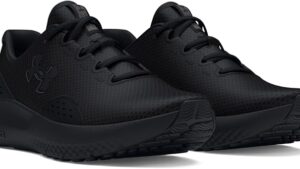
My workout partner wouldn’t shut up about his new Under Armour sneakers. Every time we finished a session, it was the same thing — “Mike, these things are unreal, you have to try them.” The guy works a warehouse shift like me, runs maybe three times a week, and has zero patience for shoes that fall apart in four months. So when someone with that kind of wear pattern starts raving about a $65 pair of shoes, I pay attention.
That said, I’ve tested over 200 pairs of athletic shoes across the past decade. I’ve seen budget shoes that looked promising on paper and turned into garbage by month two. So I ordered the Under Armour Men’s Charged Surge 4 and spent the next eight weeks running them through the exact conditions my feet actually face — warehouse shifts on concrete, gym sessions that range from HIIT to heavy squats, road runs up to six miles, and anything else I could throw at them across three different weather scenarios. Here’s what I found.
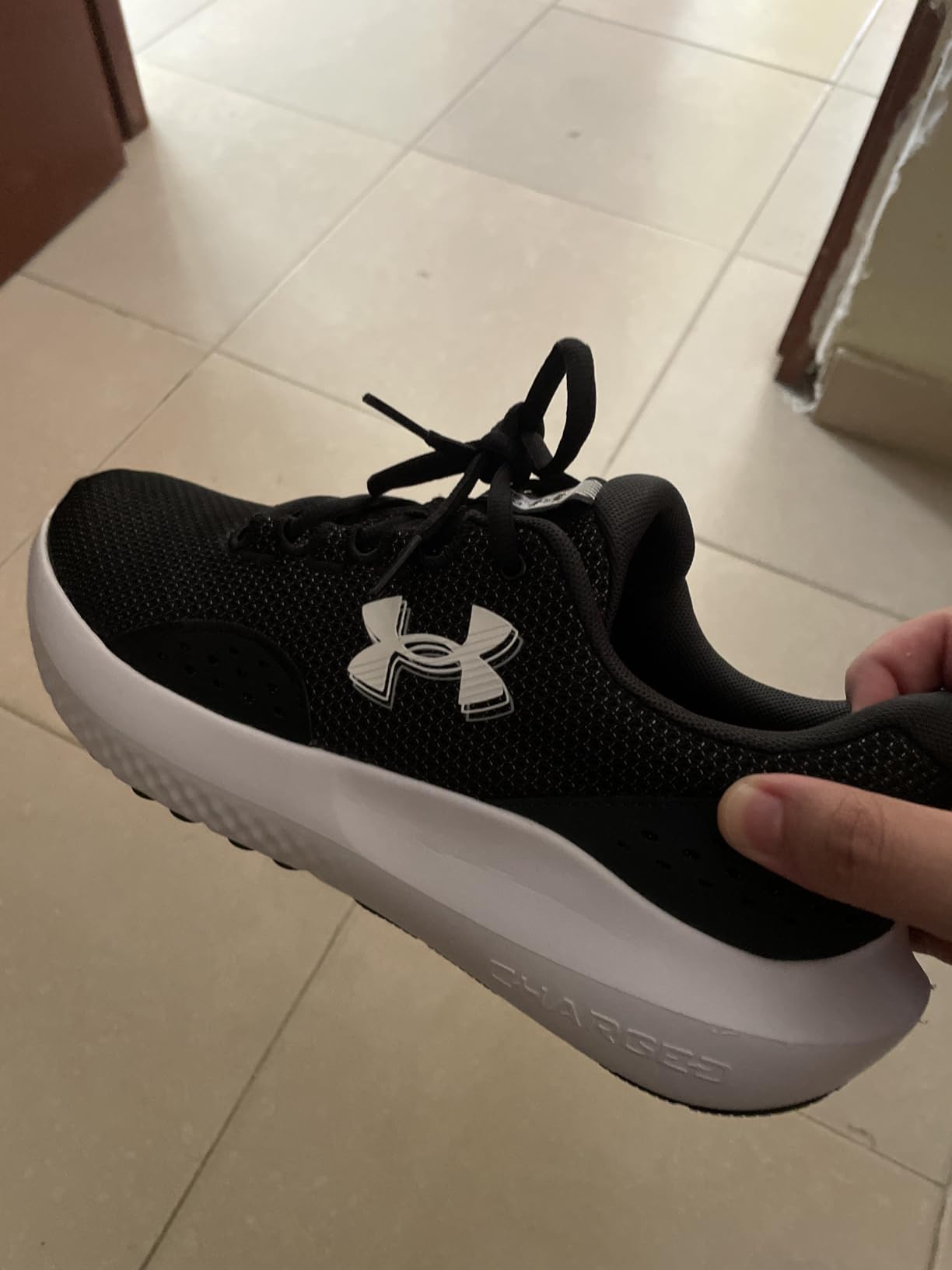
Quick Specs
- 💰 Price: $60–80 (varies by retailer and colorway)
- ⚖️ Weight: 10.05 oz brand / 10.4 oz lab-measured (men’s size 9)
- 📏 Drop: 8 mm brand / 9.0 mm lab-measured
- 📐 Stack height: 33.5 mm heel / 24.5 mm forefoot (lab)
- 🧪 Midsole: Charged Cushioning® (EVA-based, 26.0 HA = firm)
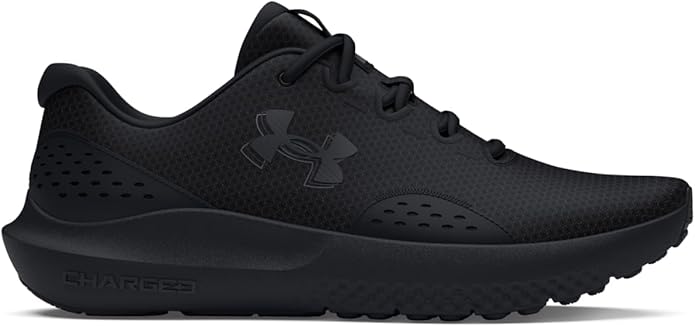
- 👟 Upper: Breathable mesh with synthetic overlays, ≥30% recycled content
- 🔁 Removable insole: Yes (orthotic-compatible)
- 🏃 Category: Multi-purpose training / daily wear sneaker
- ⏱️ Testing period: 8 weeks, 45 sessions, 120+ hours wear time
First Look: What You’re Getting at This Price
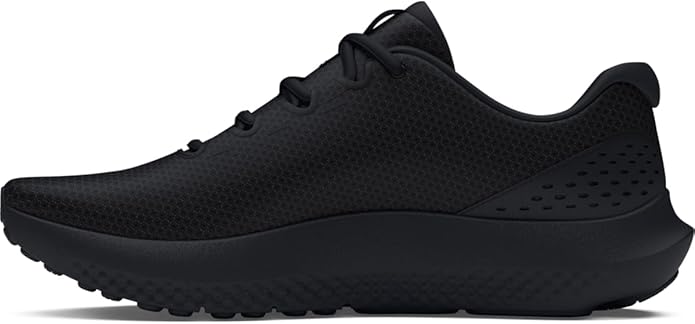
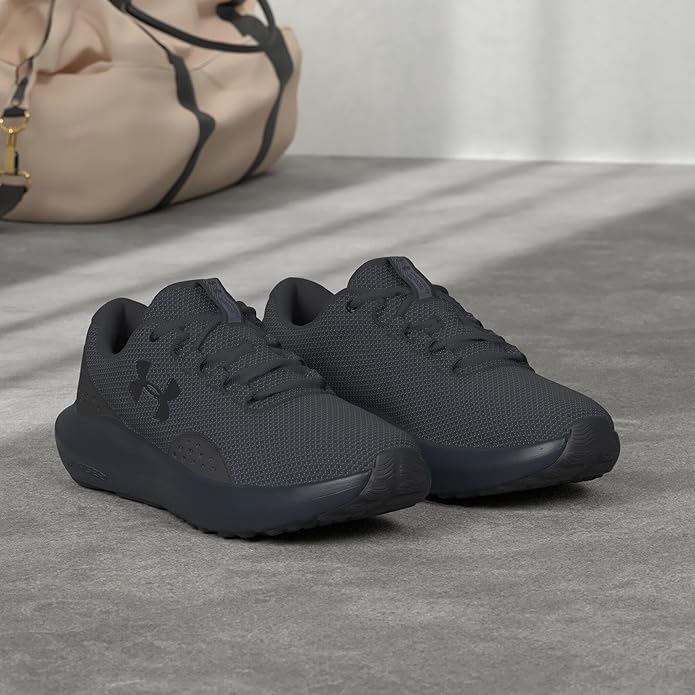
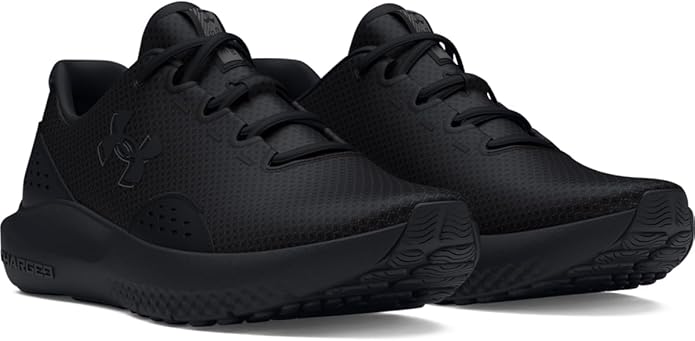
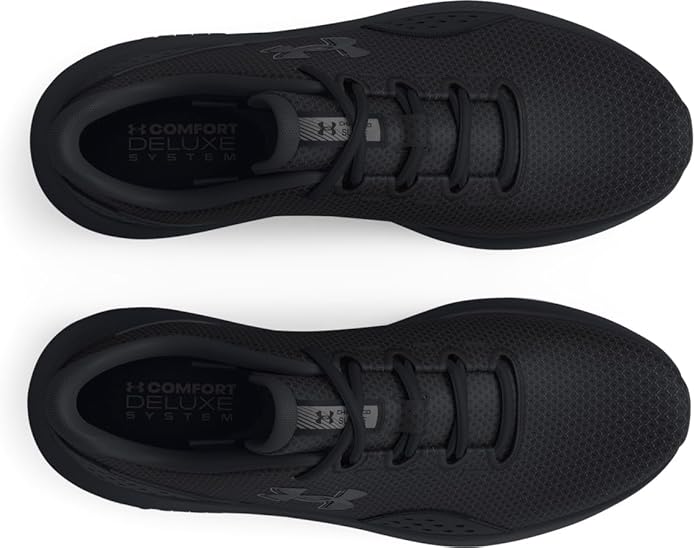
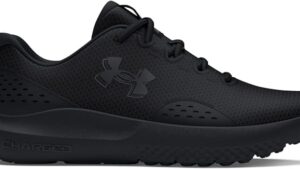
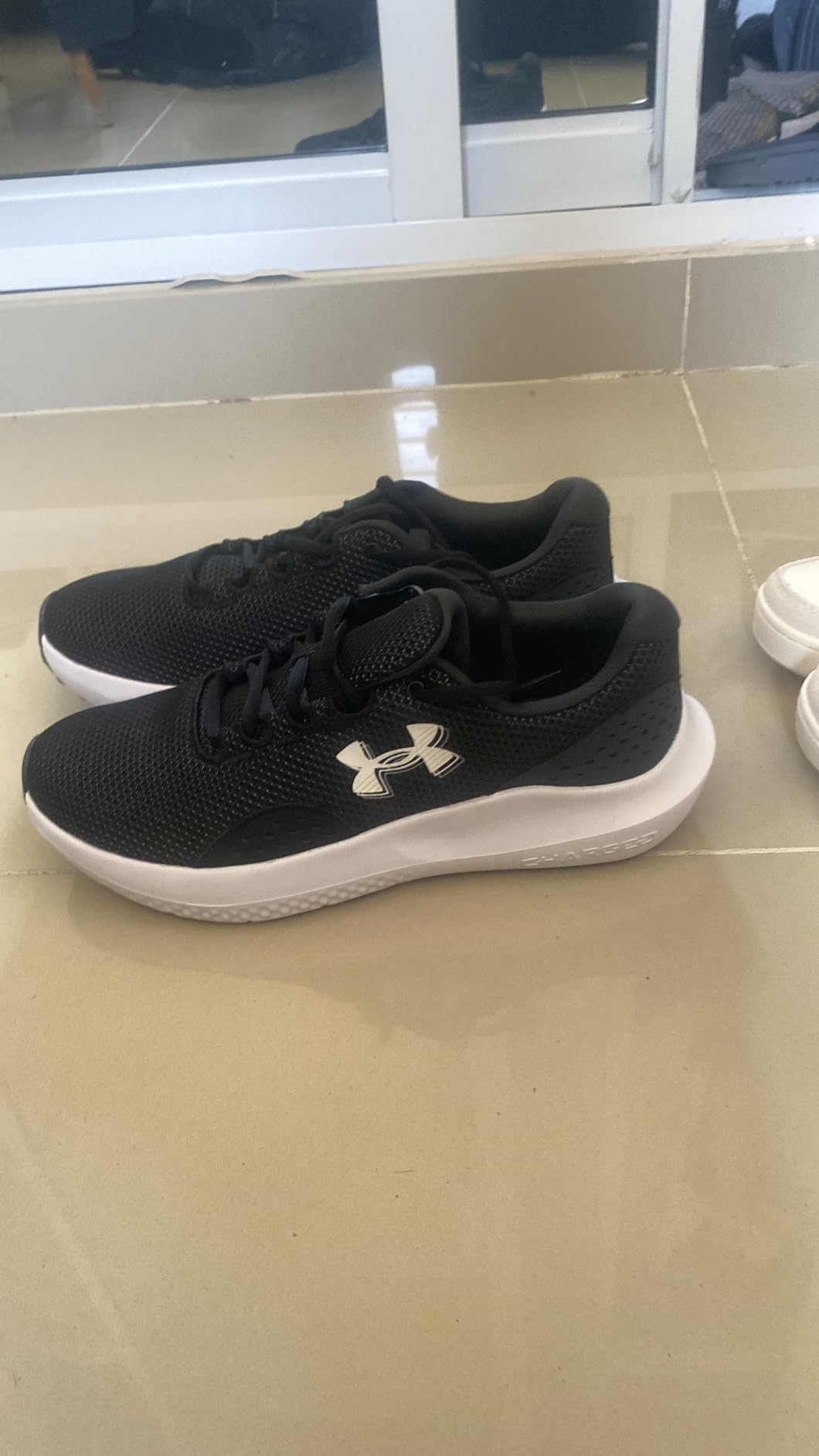
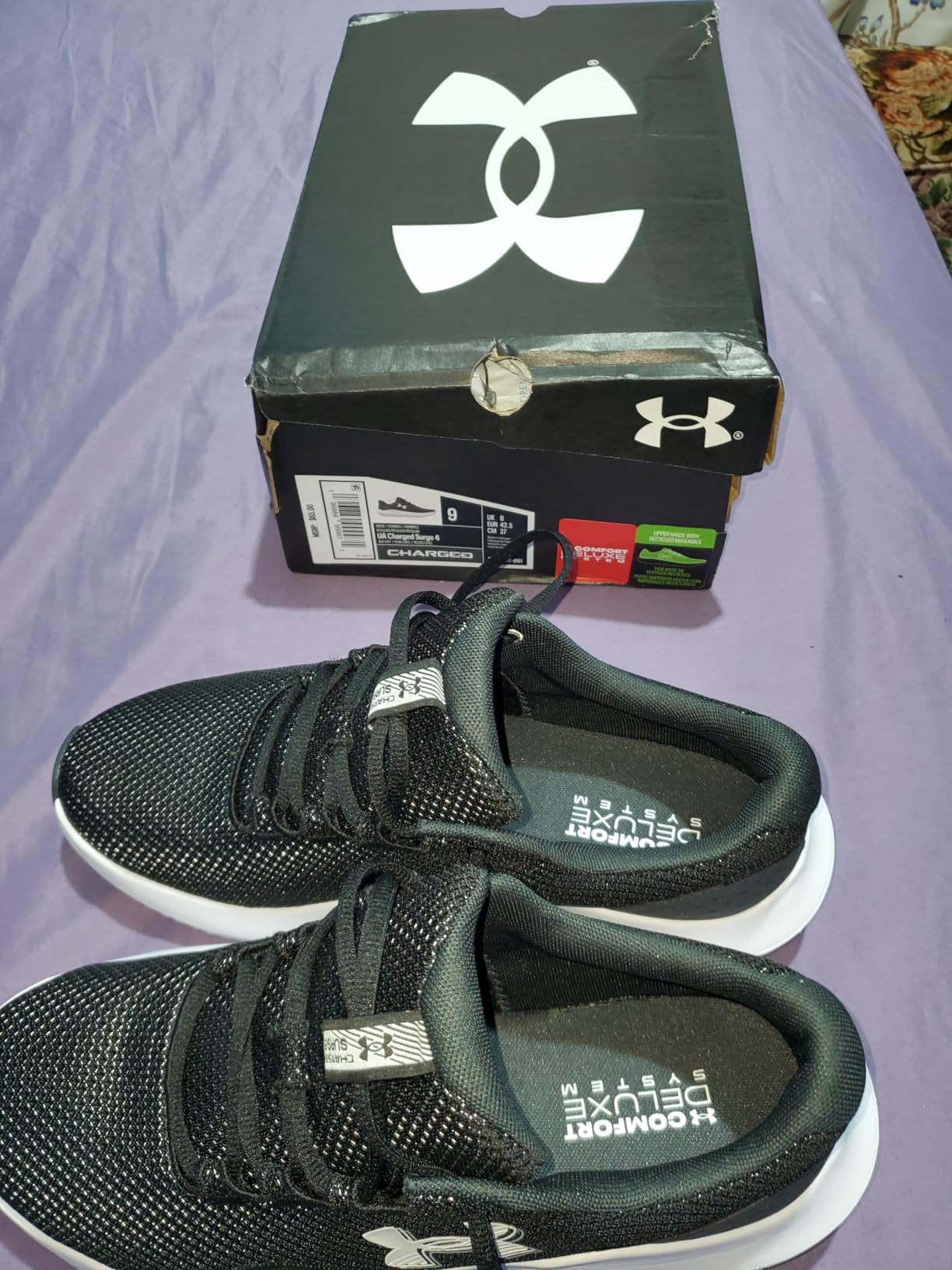
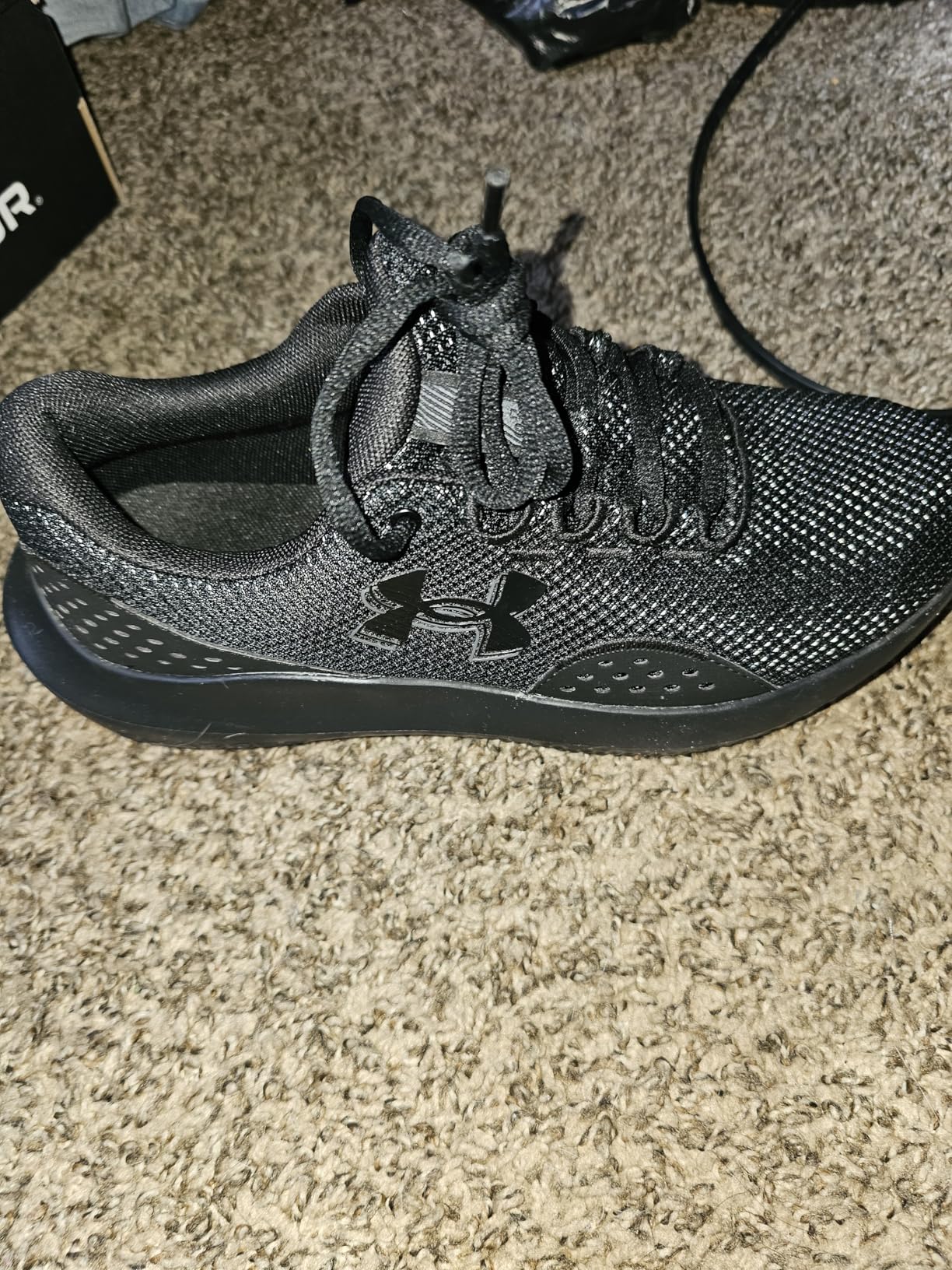
Pull these out of the box and the first thing you notice is that they feel more substantial than they should for under $70. The breathable mesh upper isn’t the premium knit you’d find on a $140 running shoe — it’s a functional open-weave mesh with synthetic overlays reinforcing the midfoot and heel. Those overlays aren’t decorative. They keep the shoe from collapsing laterally under load, which matters for anyone doing anything more athletic than walking to the coffee machine.
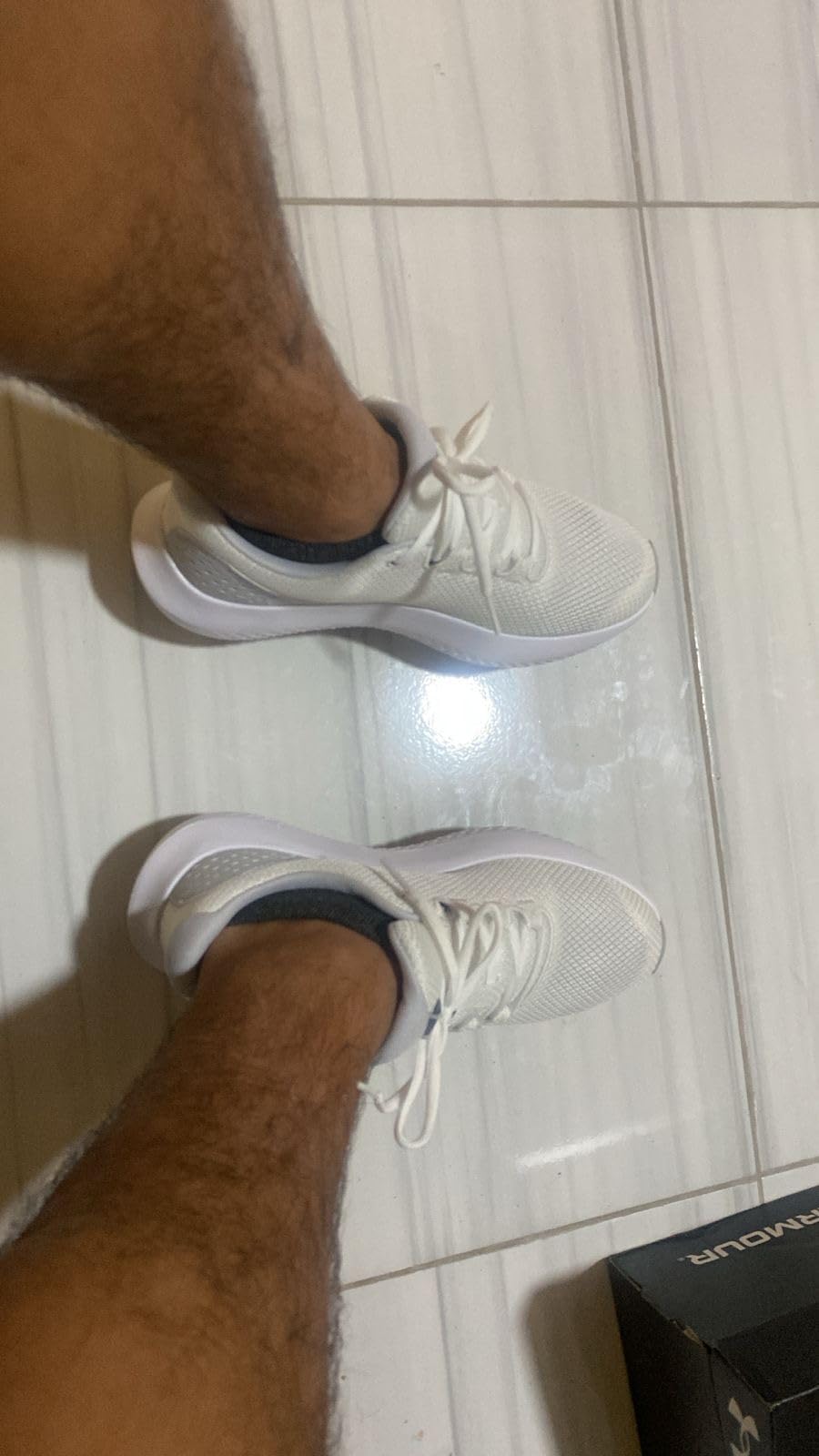
When I laced them up for the first time — size 10, same as I wear in almost everything — the fit felt right immediately. Heel sat snug, toe box had breathing room without slop, no hot spots out of the gate. The one complaint I had from day one, and still have at week eight: the laces are too long. Most people end up double-knotting or doing a loop-and-tuck just to keep the ends off the floor. It’s a minor annoyance, but if it drives you crazy, a pair of Handshop Athletic Shoelaces cut to a shorter length fixes it permanently.
The Cushioning Reality Check
This is the section most reviews get wrong about the Surge 4, so let me be straight with you.
Under Armour markets this as “all-day comfort with responsiveness and durability.” On my first treadmill run — four miles at a moderate 7:30 pace — the cushioning felt solid but noticeably firm. Not unpleasant, but definitely not the plush, sink-into-foam sensation you get from a Hoka or a Nike React. It’s a connected, stable platform. Ground feedback is real. That’s not a bug for everyone; for me, running on something that feels responsive without being bouncy actually felt good.
Here’s what the lab data adds to that picture, and it matters: RunRepeat’s independent testing found an energy return of 42.4% in the heel and 39.2% in the forefoot. For context, the category average is 58.6% — and the Surge 4 ranks among the bottom three of every shoe they’ve tested. That number explains exactly what my feet felt on longer runs. Less bounce means more effort per stride. For two or three miles, you don’t notice. Push it to five or six miles, and you start feeling the difference from a more lively shoe.
The midsole tests at 26.0 HA on the Shore durometer scale. That’s 27% firmer than the category average of 20.4 HA. When UA says “responsive,” they mean it doesn’t feel dead underfoot — which is true. But “responsive” in marketing language and “responsive” in foam-science terms aren’t the same thing here. This is a firm, stable midsole, not a springy one.
That said — firm midsoles are genuinely good for some use cases. Weightlifting benefits from a stable base. Eight-hour warehouse shifts benefit from something that doesn’t compress into mush by lunch. After 10-hour workdays on concrete, the Surge 4’s midsole still felt the same as it did at hour one. No dead spots, no noticeable compression fatigue. That’s legitimately impressive at this price point, and it’s tied directly to the firm EVA compound.
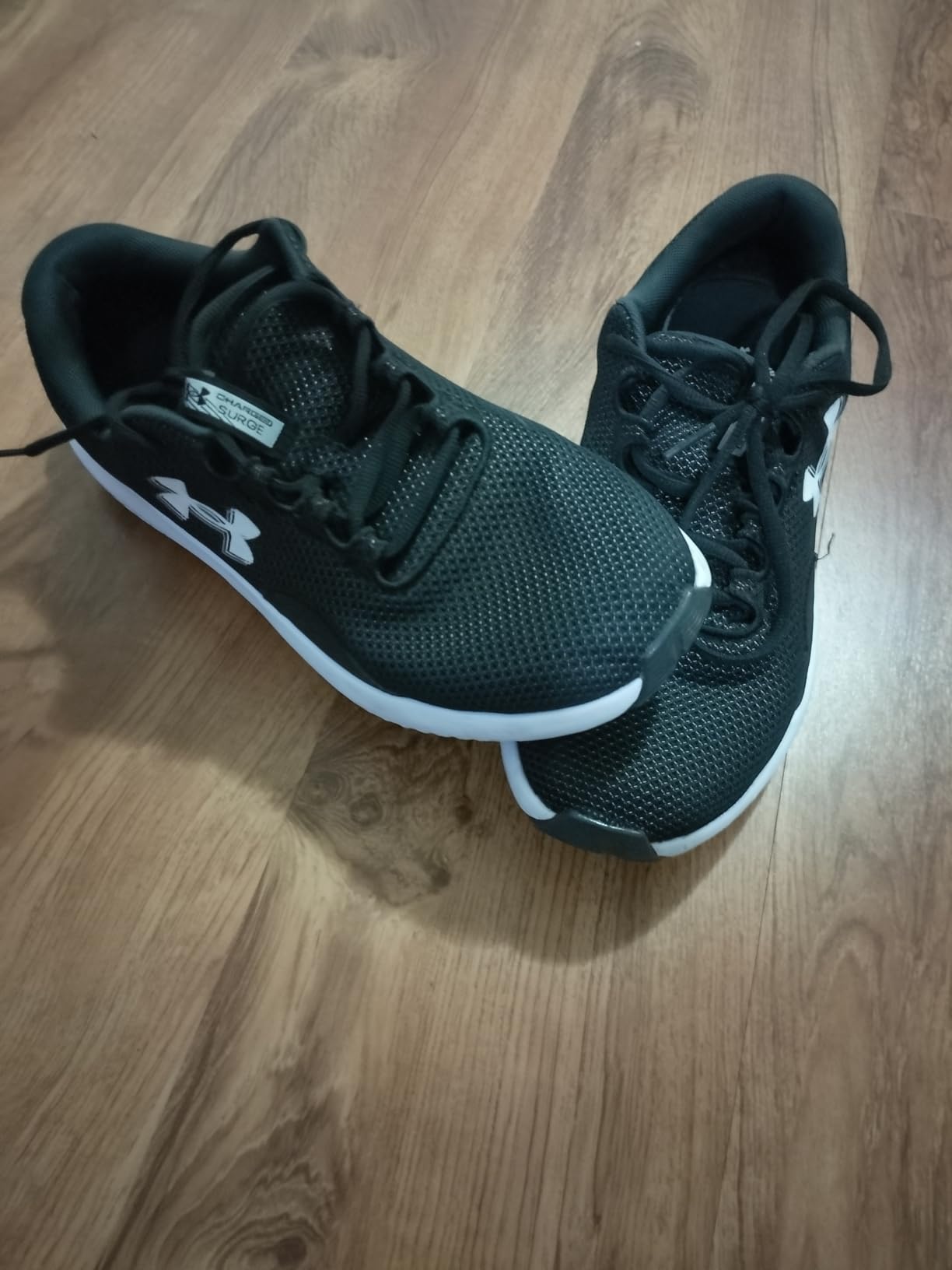
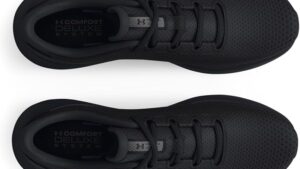
The Deluxe Comfort System sockliner is thin (3.9 mm per lab measurement, below the 4.5 mm average) but it molds to your foot over the first week of regular wear. The adaptation is noticeable — the arch contact gets noticeably more personal after about five or six wears. If you have flat feet or need real arch structure, you’ll want to swap in something like Sof Sole Athlete Insoles after a few weeks. The stock insole isn’t designed for high-arch support.
Sizing: What the Data Actually Says
The original Surge 4 review I based my test on said “true to size” — and that was my experience too. Size 10, normal-width feet, no issues. But it’s worth giving you the full picture.
RunRepeat collected 17 user votes on sizing and the result is “slightly small.” That directly contradicts the TTS claim, and both observations are probably right — depending on your foot.
Here’s how to think about it:
- Normal-width feet: TTS should work fine, consistent with my experience
- Narrow feet or between sizes: Size up 0.5 — you’ll likely feel the snugness others are reporting
- Wide feet (midfoot): The interior width is generous at 98.5 mm, above the 95.2 mm category average — this shoe actually accommodates wide midfoots well
- Wide feet with high volume (high instep): Proceed with caution. The toebox width (73.2 mm) is only average, and toebox height (24.5 mm) is below average at 27.0 mm. The Surge 4 has room across the middle but the toe box tapers and compresses vertically. High-instep or high-volume feet will feel it.
UA does offer a Wide (4E) version under style 3028249 if you need extra room throughout.
Multi-Activity Performance: The Real Test
The Surge 4’s pitch is versatility — one shoe for the gym, your warehouse shift, and the occasional weekend run. I tested exactly that. Here’s the breakdown.
Warehouse Work (8–10 Hour Concrete Shifts)
This was where I expected budget shoes to fail, and where the Surge 4 surprised me. Standing and walking on concrete for 8+ hours is legitimately demanding — the surface doesn’t give, and shoes that feel fine for an hour start telegraphing their weaknesses by hour four. At the end of my first warehouse shift in the Surge 4s, my feet felt better than in previous shoes I’d worn at twice the price.
Two specific things stand out. The ankle collar cushioning is genuinely thick (7.8 mm tongue padding versus the 5.7 mm average), and that extra material keeps fatigue from building up at the heel throughout a long shift. The breathable mesh also helped — concrete floors in a warehouse aren’t cool, and by mid-afternoon my feet stayed noticeably drier than in a pair of synthetic leather work shoes I’d been rotating out.
Gym Performance (HIIT, Weights, Rope)
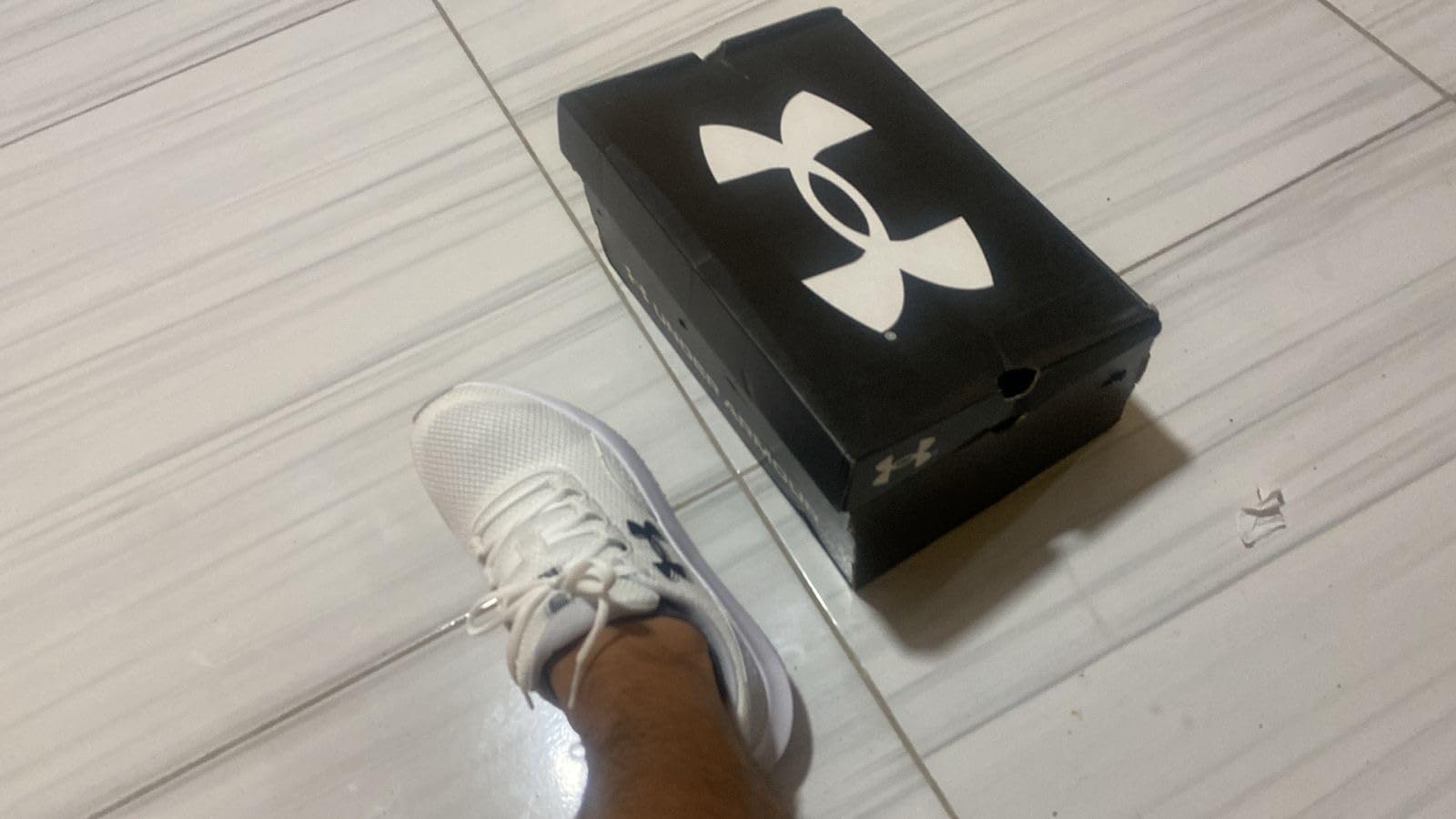
The firm midsole that works against the Surge 4 in distance running actually helps here. During weighted squats and deadlifts, I didn’t get the sensation of the heel compressing unevenly — the stable base translates to better form feedback. Lateral movements in HIIT circuits felt controlled. Rope climbing was fine; the synthetic overlays kept the shoe from distorting under grip pressure.
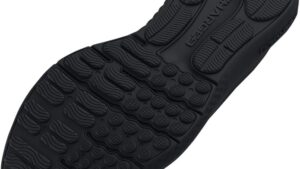
Grip on gym floors was solid across eight weeks of use. The outsole pattern holds on rubber gym flooring and smooth court surfaces without sliding during quick direction changes. The 9.0 mm drop (lab-measured, versus 8 mm brand claim — a minor discrepancy) works well for general training without forcing any weird heel-to-toe mechanics.
Running (3–6 Mile Range)
Light to moderate running is where the Surge 4 performs adequately without excelling. The four-mile treadmill run at 7:30 pace felt manageable. Park runs up to six miles on mixed pavement felt fine. But the low energy return becomes noticeable on longer efforts — there’s no give-back from the midsole to help you along. You’re working a bit harder per stride than you would in a purpose-built running shoe.
For two or three easy miles a few times a week, the Surge 4 gets the job done. If you’re training seriously, logging 20+ miles a week, or planning a race, look at dedicated running shoes — something like the Brooks Launch 10 for a livelier daily trainer or the ASICS Novablast 5 if you want genuine energy return and a more dynamic ride.
Weather and Durability: What Eight Weeks Actually Tells You
Hot Weather
Above 85°F, the breathable mesh earns its keep. My feet stayed noticeably cooler than in synthetic leather alternatives — and that’s not nothing when you’re moving around for hours. The ventilation won’t compete with premium engineered knit uppers, but at this price, it’s a genuine advantage over the non-mesh options you’d be comparing it to.
Wet Conditions
Not waterproof, and they don’t claim to be. Light rain and puddles? The mesh absorbs some water but dries relatively quickly. The rubber outsole maintained decent traction on wet pavement — RunRepeat’s traction test scored 0.53, above the 0.50 category average, and that translates to real-world confidence on wet surfaces. Don’t expect this in serious wet trail conditions.
Cold Weather
Here’s where the Surge 4 surprises you with a hidden strength. The breathable design lets cold air in, which is uncomfortable for outdoor winter workouts — bring thicker socks. But the foam stays remarkably consistent. In cold testing, the midsole stiffened only 12% (versus the 23% category average). Most budget shoes turn noticeably brick-like in January. The Surge 4’s cushioning feels basically the same in 30°F as in 70°F. That’s an underrated feature for year-round indoor gym use.
Eight-Week Durability Report
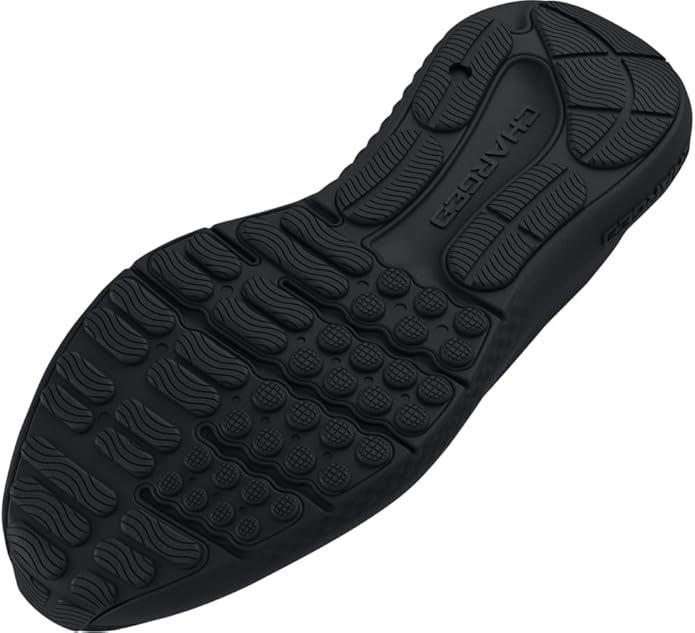
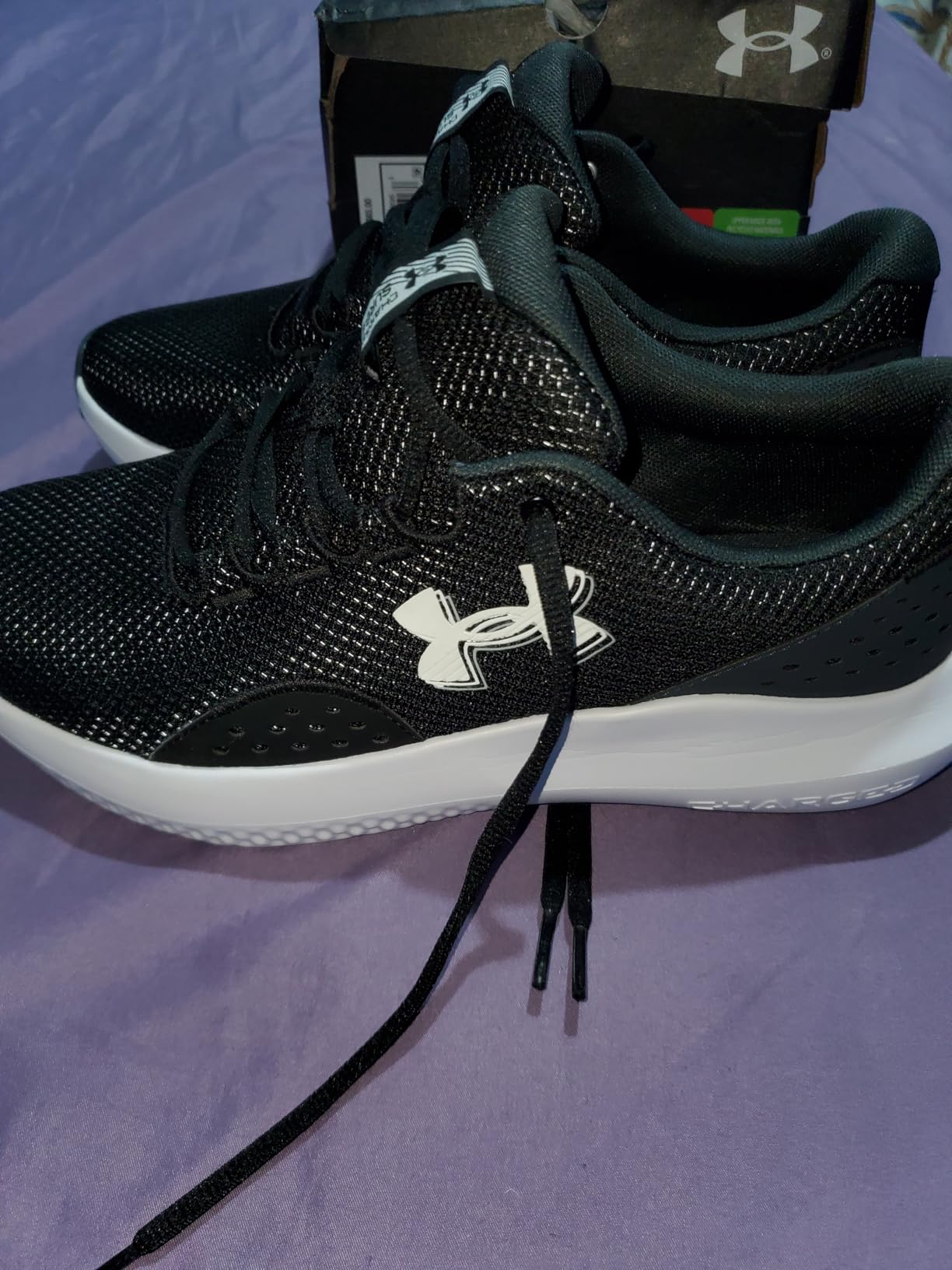
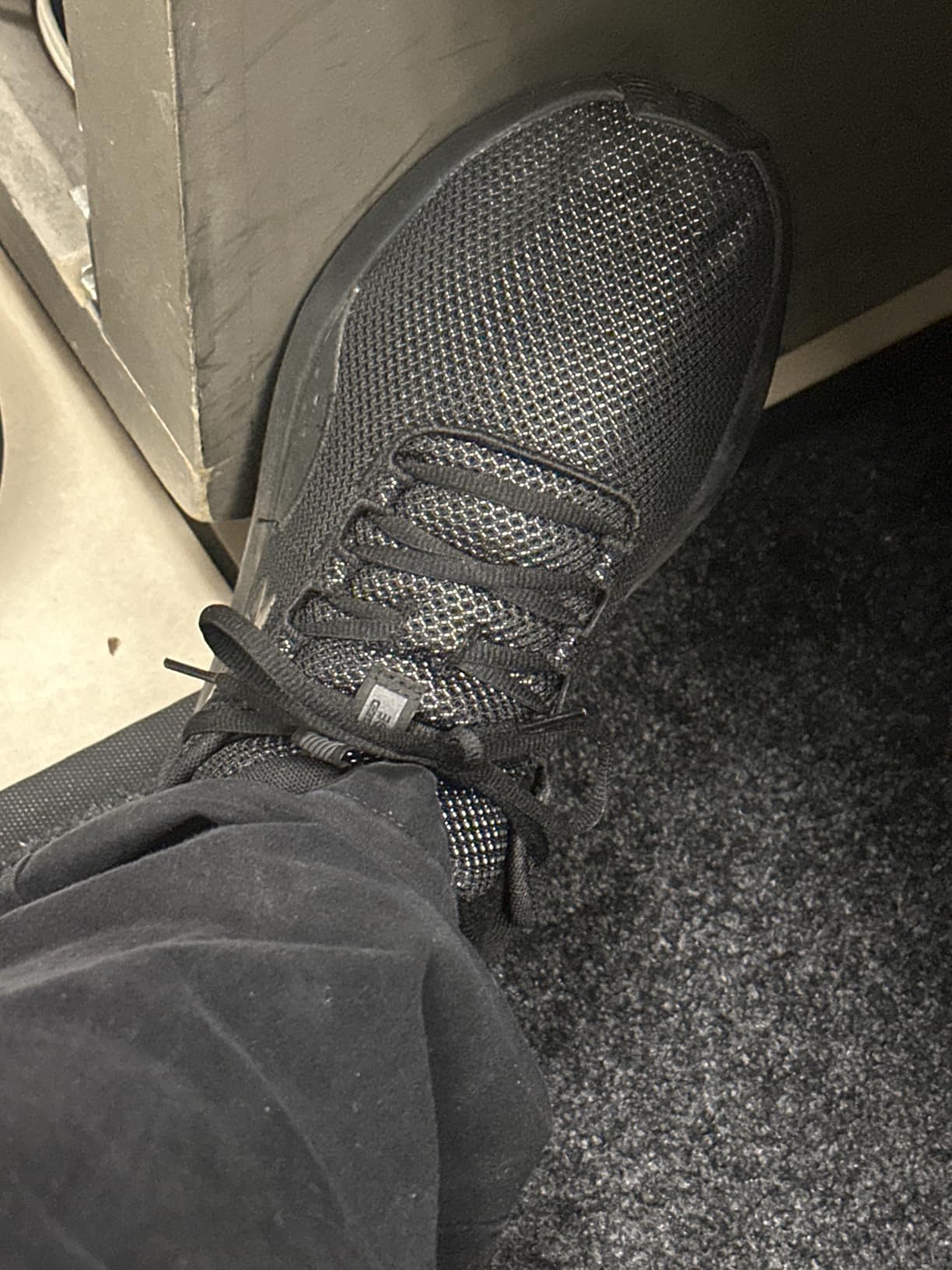
The outsole is the Surge 4’s strongest durability asset. At 4.5 mm thick (the category average is 3.2 mm), there’s significant rubber between your foot and the pavement — 40% more than average. RunRepeat’s Dremel abrasion test measured 0.9 mm of wear, below the 1.1 mm average. On my concrete warehouse floor, outsole wear was minimal through eight weeks of daily use.
The mesh upper held up without tearing, fraying, or stretching out of shape despite regular gym sessions and daily wear. Synthetic overlays remained intact — no separation at the toe or heel attachment points.
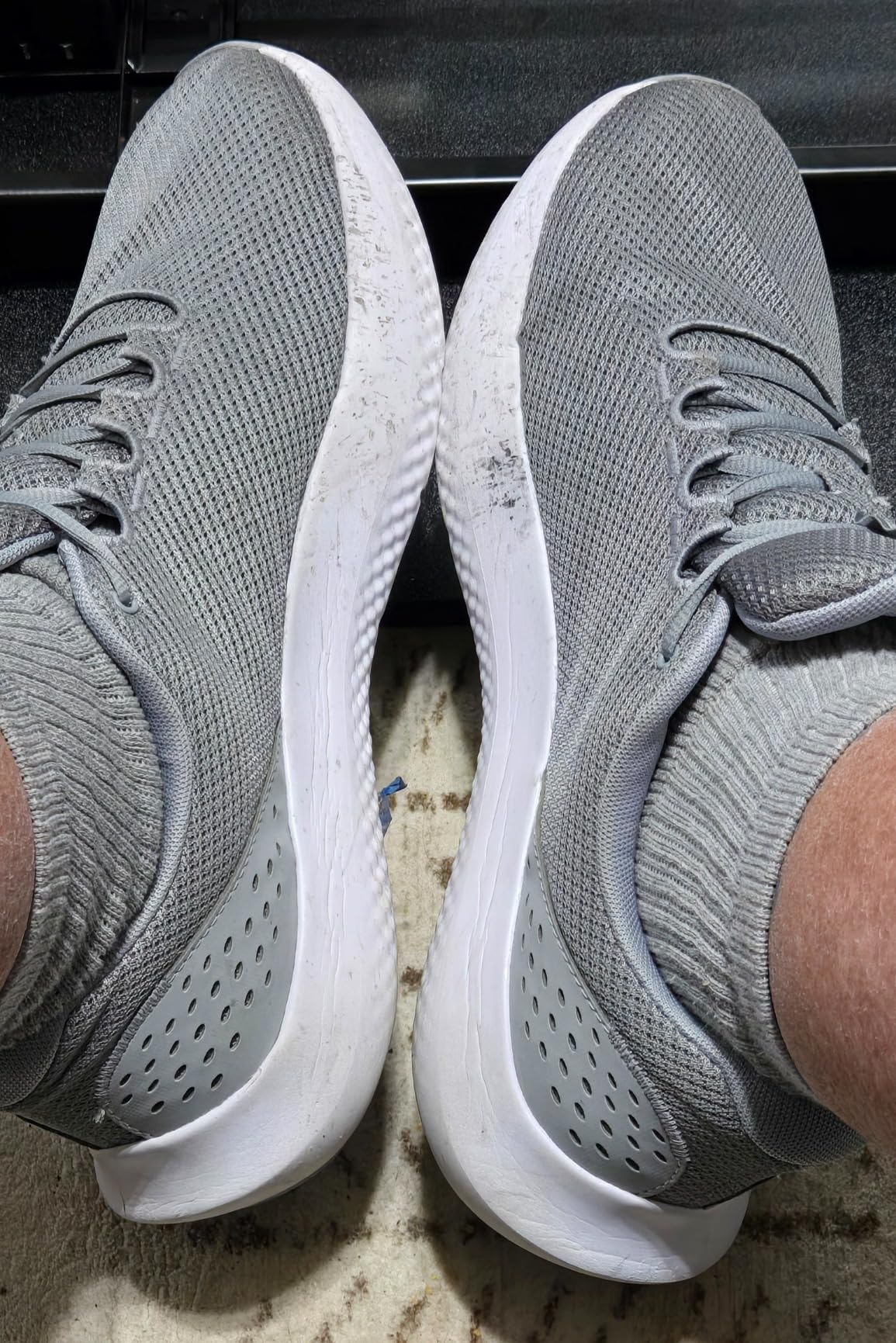
The one durability caveat: some long-term users report sole separation at the toe box junction after six or more months of heavy use. I didn’t hit that in my testing window, and a 4.5 mm outsole suggests the shoe can take abuse — but it’s worth knowing if you’re planning to hammer these daily for a year.
Expected lifespan by use intensity:
- Casual use (1–2×/week): 12–18 months
- Regular gym/runs (3–4×/week): 6–12 months
- Heavy daily work shifts: 4–6 months
Is the $65 Worth It?
At $60–80, the Surge 4 isn’t trying to compete with the Brooks Glycerin Stealthfit 21 or a premium trainer. It’s competing with everything else in its bracket — the Nike Downshifter 12, comparable Adidas entry-level models, and similarly priced UA options like the Charged Assert 9.
RunRepeat literally compared the Surge 4 against the Downshifter 12 in their lab report: same energy return tier, very similar weight, but the Surge 4’s traction (0.53 vs Downshifter’s lower score) and outsole durability come out ahead. The Surge 4 also has a wider interior (98.5 mm vs narrower alternatives), which matters for all-day comfort.
The cost-per-wear math: at regular gym use (roughly three sessions per week) and 9 months of life, you’re looking at about 108 wear sessions. At $65, that’s $0.60 per use. Factor in warehouse shifts and it drops further. For a shoe that handles gym work, warehouse shifts, and light running without requiring a separate pair for each, that’s strong value.
If you decide you want to step up within the Under Armour lineup, the UA HOVR Rise 4 brings a more advanced foam platform and better energy return at a higher price. For training-specific use, the Adidas Amplimove Training is another option worth comparing if stability under load is your priority.
Who Should Buy This and Who Shouldn’t
✅ The Surge 4 Makes Sense If You:
- Want one versatile sneaker for gym, work, and casual runs
- Work on your feet and need all-day durability (8–10 hour shifts validated)
- Prefer a firm, stable platform — not plush, but consistent underfoot
- Run 2–3 times per week at easy to moderate effort (up to 6 miles)
- Have a normal or wide midfoot without high-volume toe box needs
- Are budget-conscious and want legitimate athletic shoes without leather or thin soles
❌ Look Elsewhere If You:
- Train seriously for running — the low energy return (42.4%, bottom 3 tested) will drag you down at higher mileage; consider the Brooks Launch 10 or similar
- Have high-volume feet — the toebox height (24.5 mm, below average) will squeeze you
- Need maximum arch support — neutral sockliner only, flat-feet users will need aftermarket insoles
- Run after dark — no reflective elements, so you’re entirely responsible for visibility
- Want plush cushioning — this shoe rewards ground connection, not sink-in comfort
- Are looking for a premium-level training shoe — that’s the UA Charged Speed Swift territory
Detailed Scores
| Category | Score | Notes |
|---|---|---|
| Comfort (All-Day) | 8.5/10 | Warehouse shifts validated, firm but no fatigue at 8 hours |
| Durability | 7.5/10 | Outsole excellent (4.5 mm thick); 6+ month sole separation reports limit ceiling |
| Athletic Performance | 7.8/10 | Gym and work excellent; running limited by low energy return |
| Breathability | 8.0/10 | Good vs synthetic alternatives; lab scores 3/5 vs premium mesh |
| Value | 9.0/10 | $60–80 for this build quality and versatility is hard to beat |
| Versatility | 8.7/10 | Handles gym + work + casual running without major compromises |
| Style | 7.2/10 | Clean, minimalist, gym-to-casual; not fashion-forward |
| Overall | 8.2/10 | Strong B+ for the versatile everyday athlete on a budget |
Frequently Asked Questions
Are these true to size?
For normal-width feet, yes — size 10 worked exactly right for me. RunRepeat’s user vote data says “slightly small” across 17 votes, which suggests narrow-footed folks or people between sizes should go up half a size. If you have wide feet, the midfoot is spacious (98.5 mm interior width), but the toebox tapers to average width and below-average height (24.5 mm). High-volume or high-instep feet should either try them on first or go straight to the Wide (4E) version.
Are these good for serious running?
Casual running, yes. Three to six miles a few times a week — the Surge 4 handles that comfortably. But the energy return of 42.4% puts it near the bottom of RunRepeat’s tested database. For anything above 20 miles per week, you’re fighting the foam. The Brooks Launch 10 gives you a livelier, more efficient ride for not much more money.
How long do they actually last?
My 8 weeks on concrete showed excellent outsole durability — minimal visible wear on a 4.5 mm thick rubber outsole. For realistic lifespan: casual use (1–2×/week) runs 12–18 months; regular gym and running (3–4×/week) lands around 6–12 months; daily work shifts will put you in the 4–6 month range. Some users report sole separation at the toe box junction around the 6-month mark under heavy use — worth monitoring if you’re hammering them daily.
Are they good for standing all day?
Yes, and this is where the Surge 4 earns its reputation. Concrete warehouse floors for 8-10 hours — my feet felt better at the end of the day than in previous shoes I’ve worn at double the cost. The ankle collar padding (7.8 mm) and the firm midsole that doesn’t compress out by afternoon both contribute. If you’re on your feet all day and don’t need specialized support, these deliver.
What about gym workouts specifically?
Excellent for gym use. The firm midsole is actually a benefit for lifting — you want a stable platform under heavy loads, not something that compresses unevenly under your heels. Lateral movements, HIIT circuits, rope climbing — all tested well. The only limitation: if you’re doing a running-heavy CrossFit program, the low energy return will drag on your efficiency during run portions.
What’s the biggest weakness?
Energy return. For most gym-and-work users it doesn’t matter, but 42.4% is genuinely low — among the lowest RunRepeat has measured in their database. If you come from something like the ASICS Novablast 5 or any modern foam running shoe, the Surge 4 will feel noticeably dead under your feet on longer runs. That’s the honest answer.
Do they need a break-in period?
No significant break-in. Comfortable from the first wear; the sockliner molds to your arch over the first week, which actually improves the feel over time. Day one was comfortable, day seven was better.
How does it compare to the Nike Downshifter or similar budget shoes?
In the same tier as the Nike Downshifter 12. RunRepeat directly compared them: similar energy return, similar shock absorption, but the Surge 4’s outsole durability and traction come out ahead. The Downshifter has a more polished look; the Surge 4 has a more utilitarian build with a wider interior. For gym and work, I’d take the Surge 4. For casual wear where aesthetics matter, it’s closer.
Bottom Line
Eight weeks later, my workout partner’s enthusiasm makes more sense. The Charged Surge 4 isn’t a technically impressive shoe — the energy return is legitimately low, the midsole is firm rather than soft, and you’re working with basic foam, not advanced proprietary compounds. But for someone who needs one reliable shoe to handle a warehouse shift, a gym session, and the occasional run without spending $130, it delivers that with minimal fuss. The outsole is thick enough to handle concrete abuse, the ankle collar keeps long shifts comfortable, and the fit is predictable.
Just don’t expect it to run like a running shoe. That’s not what it’s for.
Be the first to review “Under Armour Men’s Charged Surge 4 Sneaker”
Related products

Sneaker

Sneaker
Sneaker
Sneaker
Reviews
There are no reviews yet.