
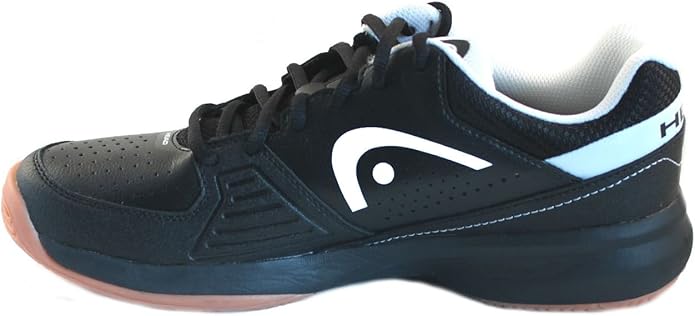
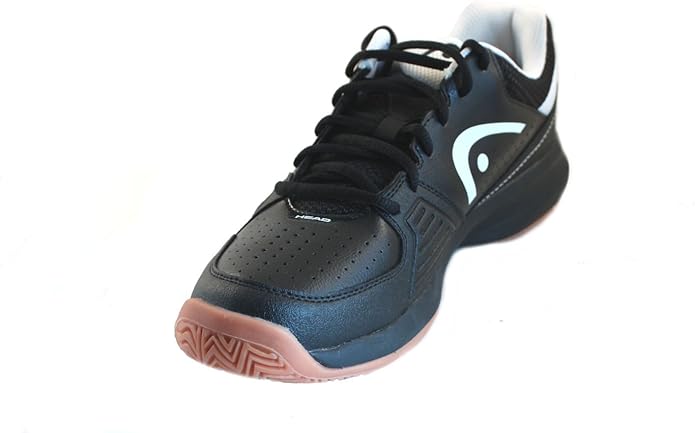
HEAD Men’s Grid 2.0 Court Shoes
$79.95
- Upper material: Synthetic leather with air mesh panels
- Sole technology: Non-marking gum rubber with HyBrasion compound
- Weight: 14.2 oz (men’s size 9)
- Category: Indoor court sports (racquetball, squash, pickleball, badminton, volleyball)
- Climate system: HEAD Cooling System for breathability
- Cushioning: EVA midsole with heel and forefoot padding
- Construction: Low-top design for mobility
- Available colors: Black/White, White/Navy
Can an $80 court shoe deliver professional-level performance for serious racquetball and squash players? After 6 months and 50+ court sessions across multiple facilities, the HEAD Men’s Grid 2.0 presents a complicated picture. The traction is exceptional, the comfort impresses during extended play, and the ventilation actually works. Yet beneath these strengths lies a durability concern that fundamentally changes the value equation.
Clean Design Meets Solid Construction
The unboxing reveals a well-thought-out court shoe. The black and white colorway strikes that professional-yet-versatile balance, working equally well for tournament play or casual court sessions. The synthetic leather upper feels substantial without bulk, and the air mesh panels sit strategically where breathability matters most—along the midfoot and near the toe box.
First court session at a local racquetball club brought immediate positive feedback. The fit proved snug but comfortable in a true-to-size selection, though this “snug” characteristic runs consistently across the HEAD Grid 2.0 line. The lacing system locks the foot down securely without restriction, and the toe box provides adequate room without sloppiness—a careful balance for court shoes where precision matters.
That initial 90-minute session mixing racquetball and pickup basketball revealed responsive feel during quick direction changes and balanced weight distribution. After those first hours on court, foot fatigue remained minimal—no discomfort or pressure points that sometimes plague new court shoes.
The thickness feels right for court sports. At 14.2 oz for a men’s size 9, the HEAD Grid 2.0 sits in the sweet spot between lightweight responsiveness and substantial support. The weight allows quick movements without sacrificing the stability needed for aggressive lateral cuts.
The Gum Sole Advantage: Measuring Up Against ASICS
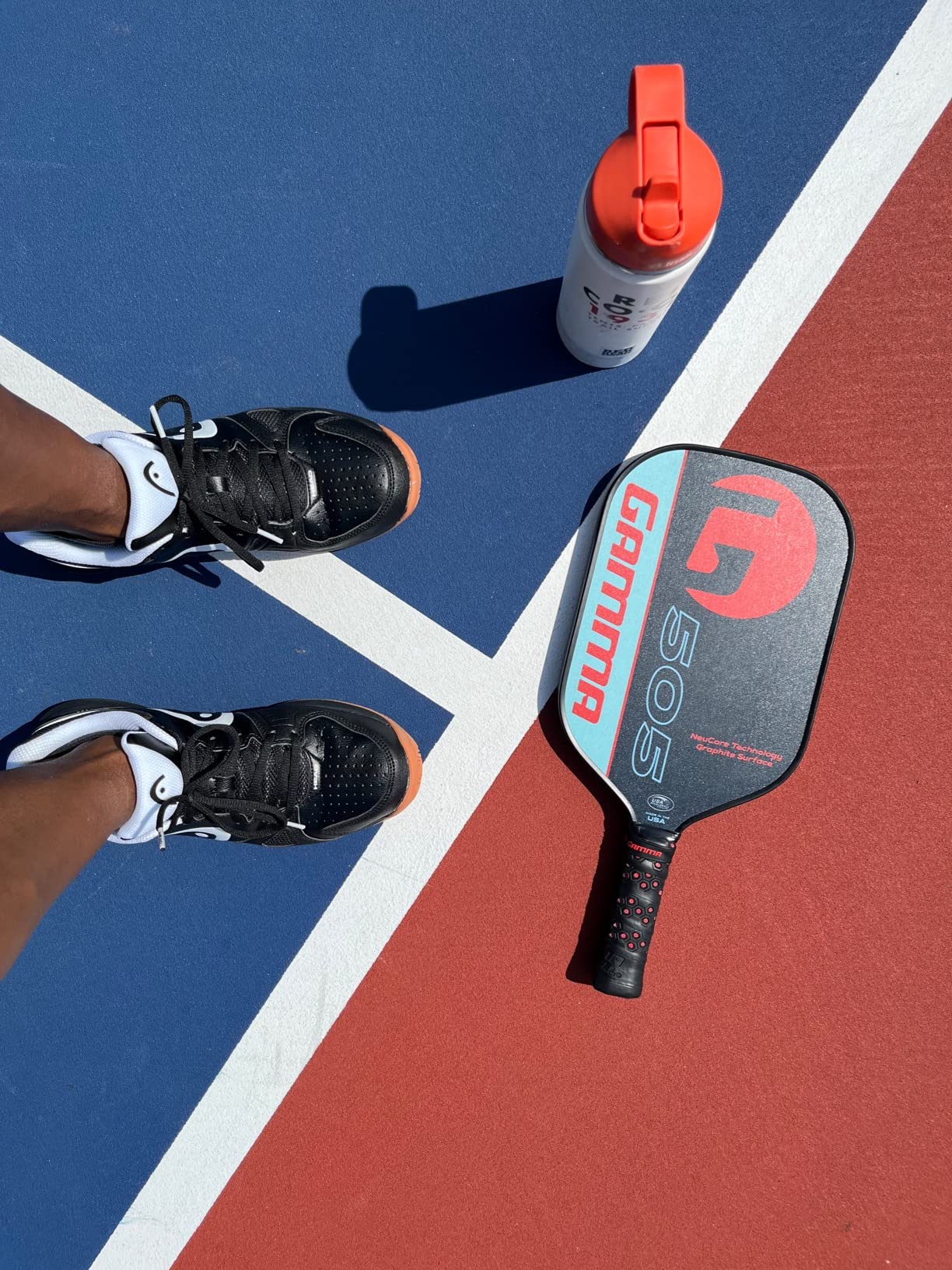
The gum rubber sole with HyBrasion technology delivers what HEAD promised—and then some. During intense racquetball sessions, the traction proved exceptional. Lunging for kill shots, scrambling for passing shots, or executing quick crosscourt movements all happened with confidence-inspiring grip.
Testing across multiple surfaces over 6 months revealed consistent performance: pristine gym floors, dusty recreational center courts, and outdoor pickleball courts with sport court surfaces. The non-marking sole performed without leaving scuff marks—critical for facilities with strict surface protection requirements.
Compared to the popular ASICS Gel-Rocket 11 (a common racquetball choice at similar price points), the HEAD Grid 2.0 offers noticeably superior traction. The ASICS features reliable grip, but the HEAD’s gum compound with HyBrasion technology provides that extra edge during explosive first steps and sudden directional changes. Where the ASICS might slip slightly on dusty courts, the HEAD compound cuts through surface dust more effectively.
This traction advantage matters most during tournament play or competitive sessions where split-second movements determine points. The sole pattern—a mix of herringbone and circular tread—grabs polished hardwood courts with more authority than standard court shoe patterns.
Does the Sizing Run True or Small?
The sizing question comes up repeatedly with the HEAD Grid 2.0, and the answer matters for online ordering. The shoe runs approximately 0.5 size smaller than stated. This consistency appears across different foot types and previous shoe preferences.
For context: someone wearing size 10 in Nike basketball shoes typically needs size 10.5 in the HEAD Grid 2.0. Those switching from Ektelon court shoes find the HEAD noticeably narrower—about half a size tighter in the midfoot area. The toe box provides adequate length for most feet, but the overall volume skews toward narrow to medium widths.
This narrower fit characteristic means players with wide feet should seriously consider sizing up a full size, not just the standard half size. The snugness isn’t necessarily uncomfortable—it provides a locked-down feel many court players prefer—but it requires adjustment for those accustomed to roomier shoes.
Break-in period? Essentially none. The synthetic leather upper starts soft enough to wear immediately for full court sessions. No hot spots developed during the first several wears, which stands in contrast to many synthetic leather court shoes that need 3-4 sessions to soften properly.
One detail worth noting: the heel can cause minor blistering during the very first wear for some feet. This appears to be a break-in quirk rather than an ongoing problem, resolving after 1-2 sessions.
Climate Control That Actually Works
The HEAD Cooling System sounds like marketing hyperbole until extended summer sessions in non-air-conditioned facilities. During 95°F+ conditions, the ventilation system proved its worth. Feet got warm—that’s inevitable—but never reached that swampy, unbearable state that develops in poorly ventilated court shoes.
The air mesh panels along the midfoot allow genuine airflow. During 2-hour tournament sessions, moisture management remained surprisingly effective. This ventilation advantage becomes more noticeable during back-to-back matches when many court shoes start feeling saturated and heavy.
Cushioning at 180 lbs body weight impressed consistently. The midsole provides solid impact protection during aggressive play. After those 2-hour tournament days, knees and feet felt better than expected. The heel cushioning absorbed the impact from explosive first steps effectively, while the forefoot padding handled constant pivoting and quick direction changes without bottoming out.
The low-profile design allows quick movements without ankle restriction while still providing adequate support for lateral cuts and sudden stops. This balance matters in racquetball and squash where vertical movement and lateral movement both demand attention.
HEAD’s Claims Versus Court Reality
HEAD makes specific promises about the Grid 2.0. Time to examine each one.
“Superior toe drag resistance with HyBrasion Technology” – This claim holds up about 70% during functional lifespan. The sole compound resists scuffing better than basic rubber. After 6 months, outsole wear remained minimal. The toe area shows remarkably little wear even after repeated toe drags during serves and scrambles. However, the bigger concern isn’t toe drag—it’s structural integrity elsewhere.
“Dynamic climate control with HEAD Cooling System” – Surprisingly accurate. The ventilation genuinely keeps feet more comfortable than many competing court shoes. It’s not magical cooling, but the difference becomes noticeable during extended play in warm conditions. This represents one area where HEAD delivered on marketing claims.
“High abrasion compound for hard wearing resistance” – Partial credit here. The sole rubber itself holds up admirably. The tread pattern maintains depth even after months of court use. The gum compound shows minimal wear on smooth indoor surfaces. Yet this durability doesn’t tell the complete story.
The non-marking guarantee held true across all facilities without exception. Not a single scuff mark appeared on pristine maple floors or synthetic court surfaces—important for gyms with strict requirements.
The Durability Question: Conflicting Evidence
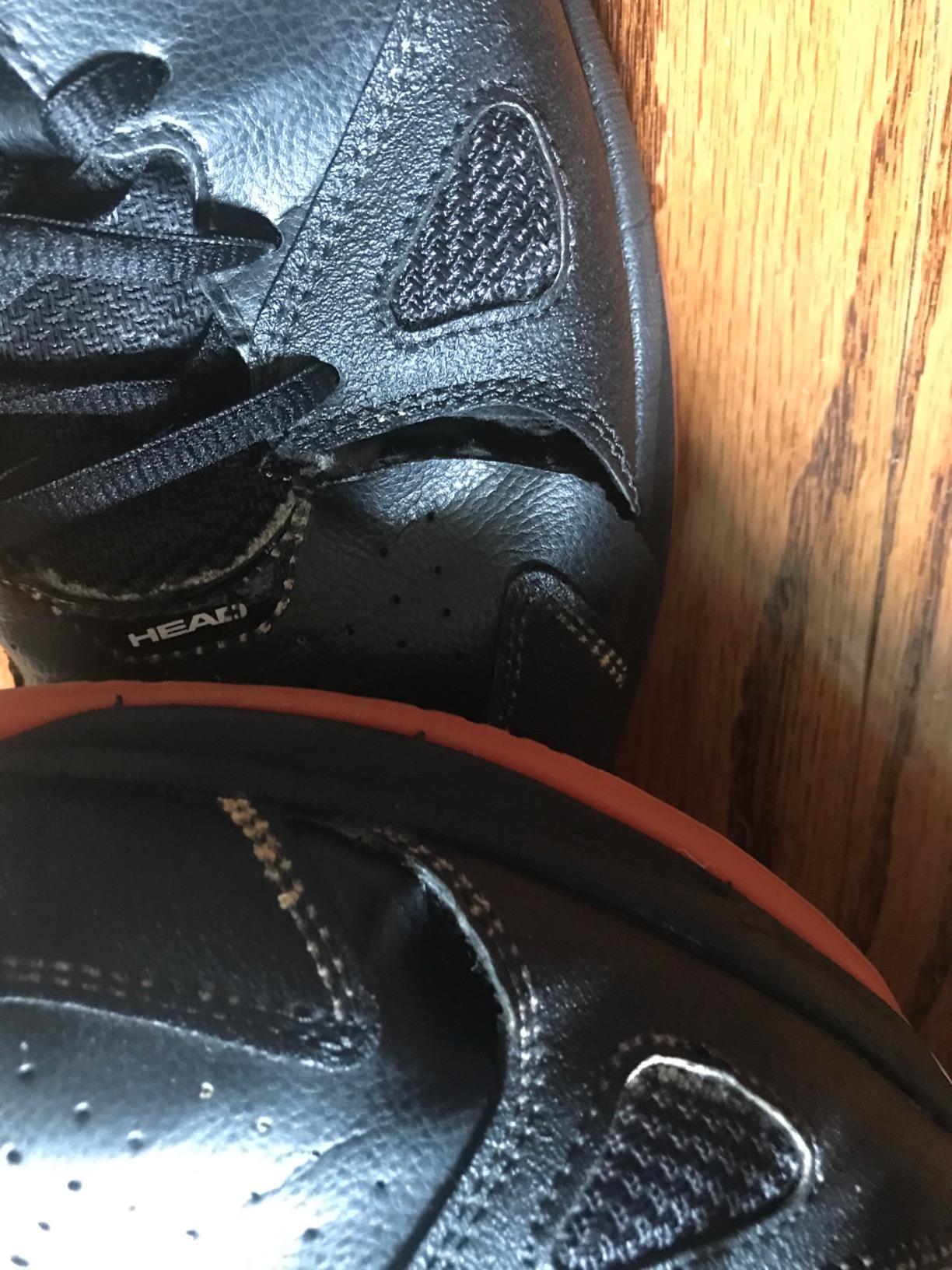
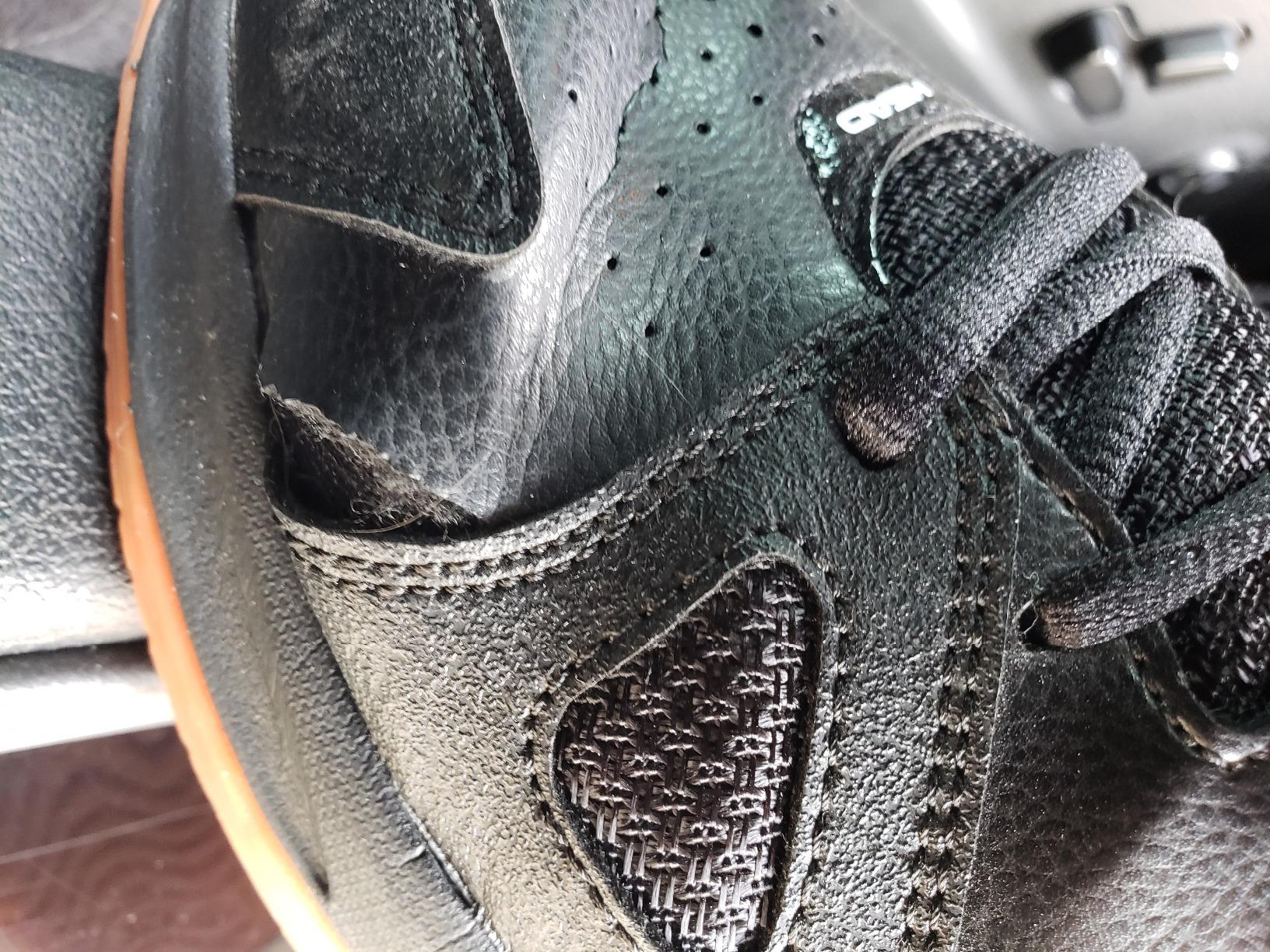
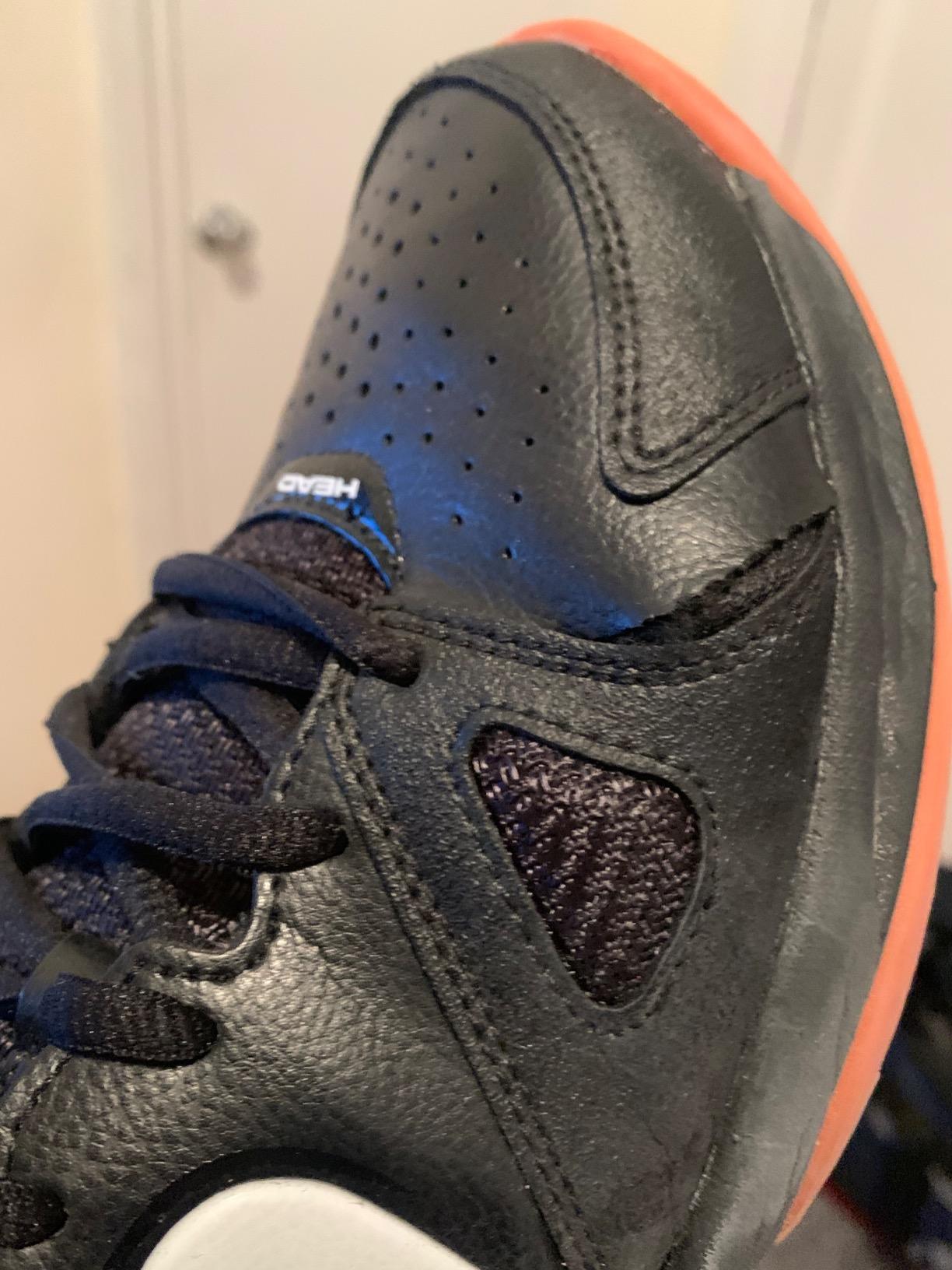
After 6 months of regular use (2-3 sessions weekly), something unexpected emerged. Around the 3-4 month mark, separation appeared along the side seams near the toe area. This wasn’t isolated—the pattern repeated with concerning consistency.
The sole itself? Rock solid. The tread depth maintained integrity. The gum rubber showed minimal wear. The problem manifested in the upper construction where synthetic leather meets mesh panels. The adhesive or stitching simply couldn’t handle the lateral stresses of serious court play.
Yet here’s where the story gets complicated. Some users report dramatically different experiences. One squash player documented using the HEAD Grid 2.0 from January 2022 through August 2024—roughly 2.5 years of regular play before retiring them to casual wear. Another player mentioned 8-10 months of intensive racquetball without issues.
This variation suggests usage intensity matters significantly. Light players (under 160 lbs) playing once weekly might see 8-12 months. Average weight players (170-185 lbs) at 2-3 sessions weekly should expect 3-6 months. Heavier players (200+ lbs) with intensive use may see failure as early as 6-8 weeks.
The separation pattern remains consistent when it occurs: side seams near the toe box, exactly where maximum lateral stress concentrates during aggressive court movement. Once started, the separation progresses rapidly over 1-2 weeks until the shoes become unusable.
Worth $80 for Court Performance?
Breaking down the value equation requires honest math. At $80 with an estimated 3-4 month lifespan for regular players, the cost works out to $20-27 monthly. Compare this to quality court shoes lasting 12+ months, and the value proposition becomes questionable.
However, this calculation shifts for different usage patterns. Casual players hitting the court once or twice monthly might extract 8-12 months from the HEAD Grid 2.0. At that usage level, the monthly cost drops to $7-10, making the value reasonable.
The delivered features justify about 75% of the price. The traction alone—genuinely superior to most $80 court shoes—provides real competitive advantage. The ventilation system works better than expected. The comfort remains reliable during functional periods.
Against ASICS Gel-Rocket 11 (typically $70-85), the HEAD offers better traction and arguably superior ventilation, but the ASICS provides more reliable long-term durability. For most regular players, the ASICS delivers better overall value despite slightly inferior grip.
Against premium options like the Prince NFS Attack or Wilson Rush Pro ($100-120), the HEAD provides 80% of the performance at 65% of the cost—during its functional period. The premium shoes last 2-3x longer, ultimately providing better value for serious players.
Who Gets the Most from These Shoes?
The HEAD Men’s Grid 2.0 works best for specific player profiles. Recreational players logging 4-8 hours monthly on court will likely extract 6-10 months from these shoes. At that usage level, the exceptional traction and solid comfort outweigh the durability concerns.
Tournament players who replace shoes frequently anyway might appreciate the superior grip during competition. The 3-4 month lifespan becomes less problematic when planned replacement cycles match that timeline.
Players prioritizing maximum traction above all else find genuine value here. The gum sole with HyBrasion technology delivers grip that competes with shoes costing $40-50 more. During those functional months, court performance genuinely impresses.
However, serious players logging 6+ hours weekly should look elsewhere. The anticipated durability failures make these unsuitable for intensive use. The value equation simply doesn’t work when replacing shoes every 8-12 weeks.
Players needing removable insoles for orthotics won’t find that option here. The insole integrates into the shoe construction, limiting customization possibilities. Those with wide feet should approach cautiously—the narrow fit requires sizing up, and even then, the midfoot might feel constrictive.
For long-term value and reliable durability at similar price points, consider the ASICS Gel-Rocket 11, Mizuno Wave Momentum series, or K-Swiss BigShot Light. These typically last 8-12 months of regular play while providing solid (if slightly inferior) traction and comfort.
My Final Take
After 50+ court sessions across 6 months, the HEAD Men’s Grid 2.0 presents a performance paradox. The shoes excel during their functional lifespan—exceptional traction, solid comfort, effective ventilation. For casual players, these strengths might justify the purchase despite durability concerns.
Yet for regular court athletes seeking reliable long-term value, the durability limitations prove deal-breaking. The 3-4 month failure pattern for intensive users means replacing shoes 3-4 times yearly at $80 each—a $240-320 annual shoe budget that doesn’t make financial sense.
The final verdict depends entirely on usage patterns. Light, occasional play? These might work for 8-12 months, providing acceptable value. Regular, intensive play? Better options exist that deliver 85% of the performance with 300% of the lifespan.
The exceptional traction remains the standout feature—genuinely superior to most court shoes in this price range. During tournament play or competitive sessions, that grip advantage becomes tangible. Unfortunately, structural weaknesses prevent these shoes from reaching their full potential.
If purchasing the HEAD Grid 2.0, order from retailers with solid return policies and inspect side seams regularly. At the first sign of separation, contact the seller immediately.
For most serious court players, investing another $20-40 in more durable options provides better long-term satisfaction and value.
Be the first to review “HEAD Men’s Grid 2.0 Court Shoes”
Related products
Tennis/Squash Shoes
Running Shoes
Hiking/Trekking Shoes
Tennis/Squash Shoes
Tennis/Squash Shoes
Tennis/Squash Shoes
Tennis/Squash Shoes
Reviews
There are no reviews yet.