
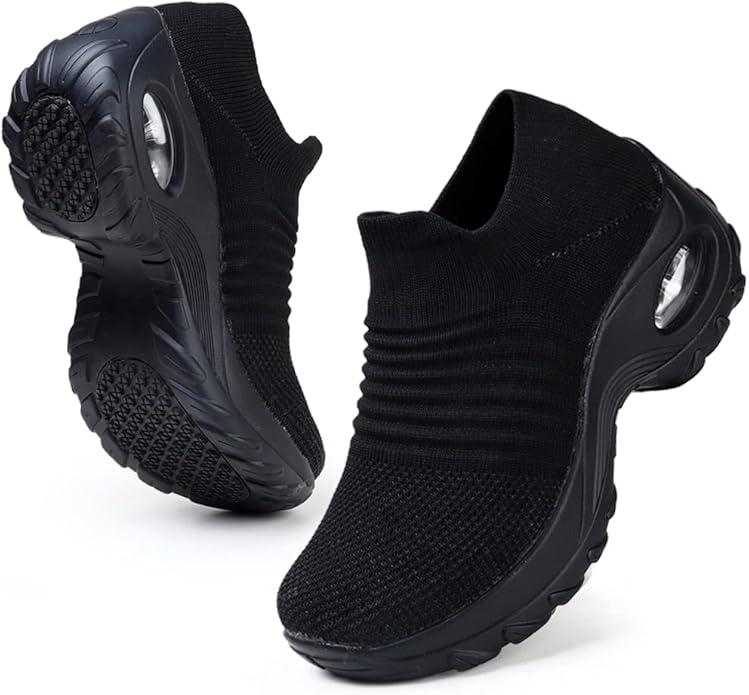
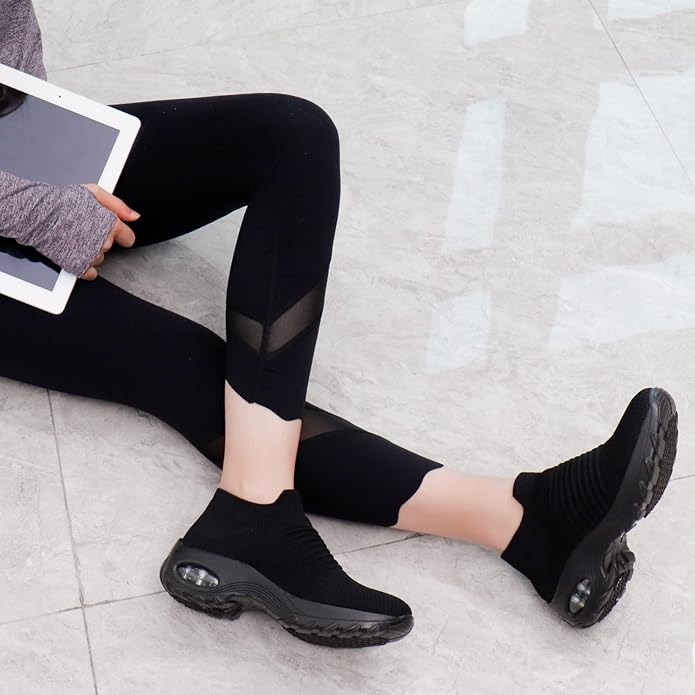
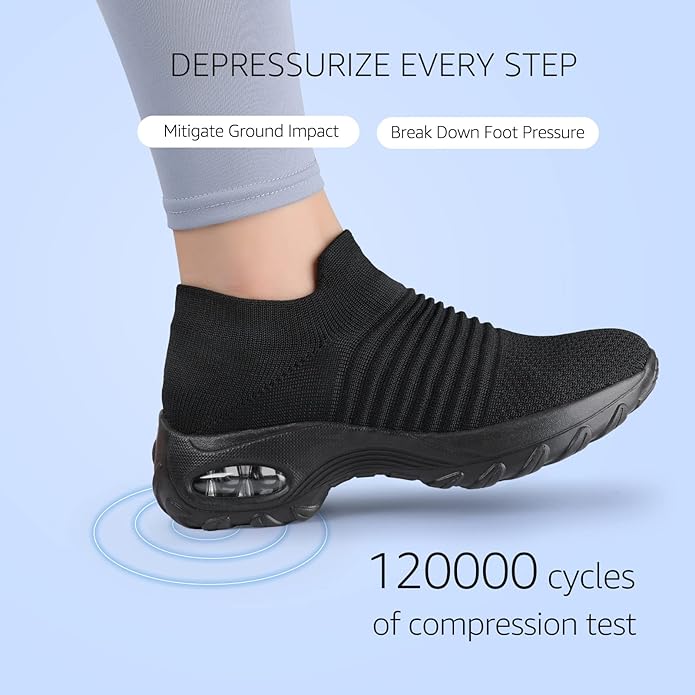
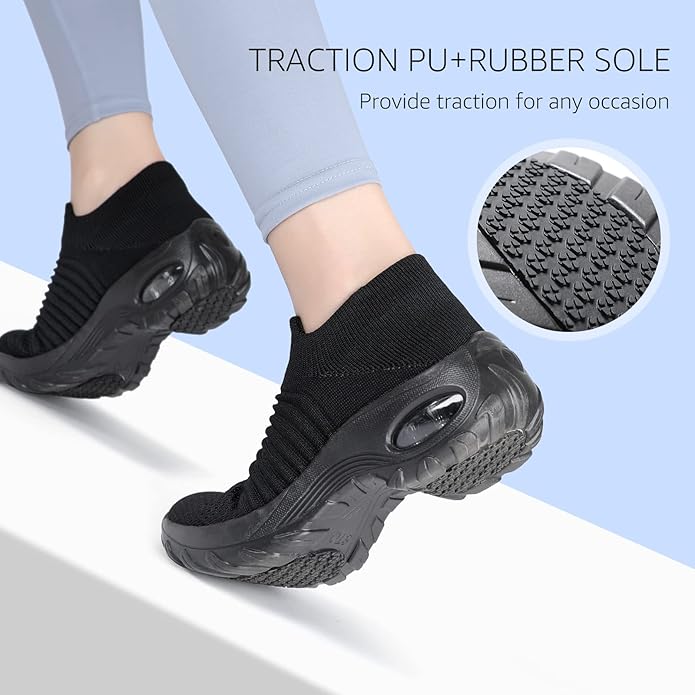
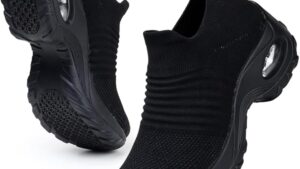
HKR Women’s Walking Shoes
$33.89
- Upper material: Knit mesh fabric with sock-like construction
- Sole material: Ultra-light PU with rubber outsole
- Platform height: 0.78 inches
- Weight: 1.5 lbs (women’s size 8)
- Primary features: Memory foam insole, built-in arch support, elastic slip-on design
- Best suited for: Plantar fasciitis relief, extended standing, casual walking
- Not recommended for: Professional kitchen/healthcare environments, wet floors
When dealing with persistent foot pain from plantar fasciitis, the search for affordable relief often leads to conflicting promises and disappointments. The HKR Women’s Walking Shoes entered the arena with bold claims about non-slip performance and memory foam comfort at an unprecedented $32 price point. After 90 days of real-world use across various conditions—from 8-hour standing sessions to wet surface testing—the shoes reveal themselves as a tale of exceptional comfort undermined by questionable safety marketing.
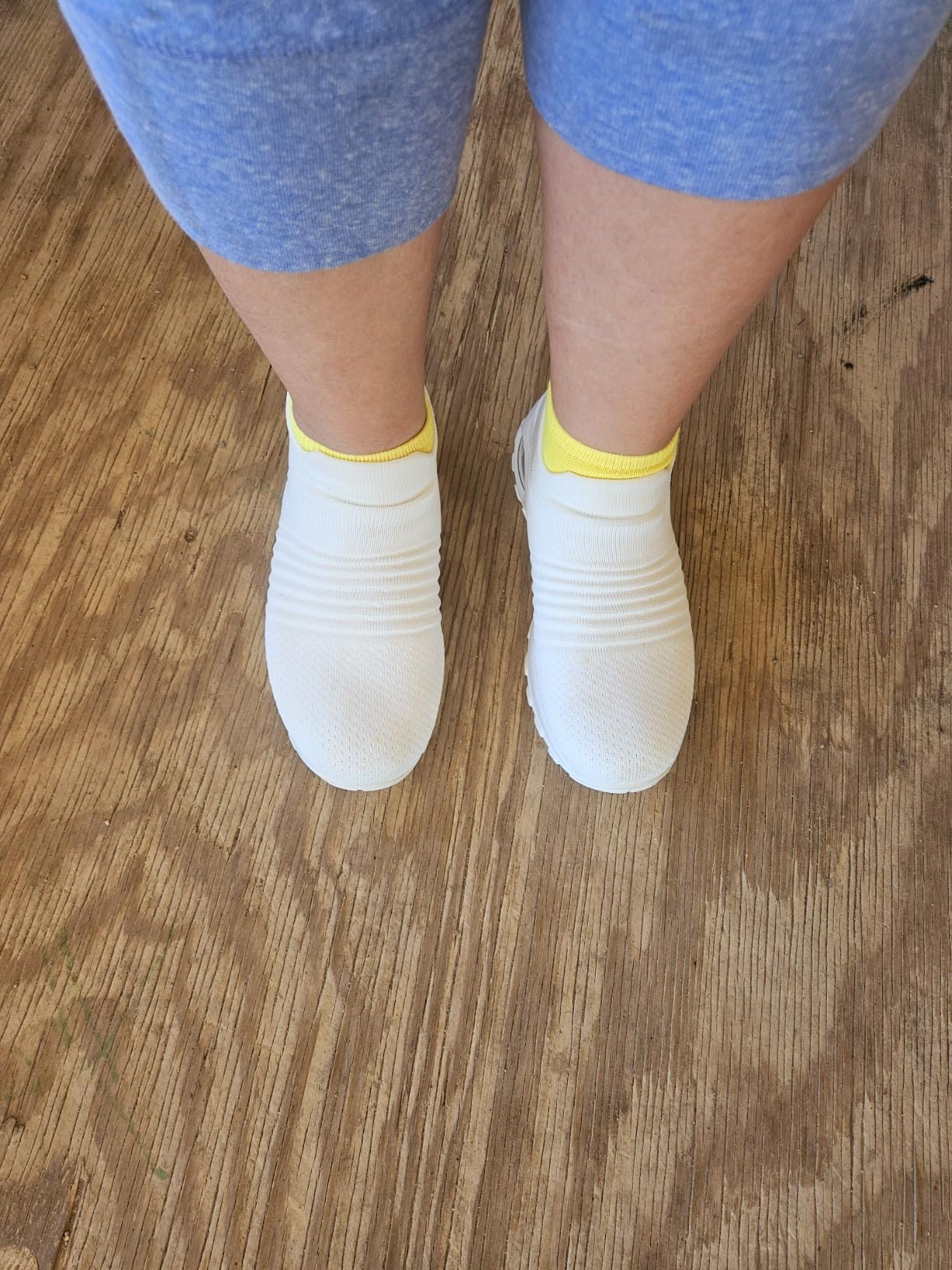
Thicker Platform Than Expected: What 0.78 Inches Actually Means
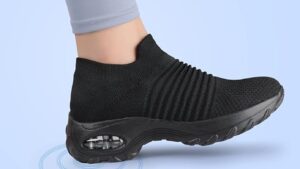
Right out of the box, the platform height creates an immediate visual difference compared to standard walking shoes. That 0.78-inch elevation might sound minimal on paper, but the subtle lift noticeably changes the stance without sacrificing stability. The knit upper wraps around the foot with a surprisingly substantial feel—not the flimsy mesh typical of budget footwear.
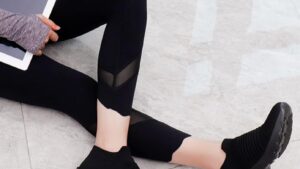
The construction quality exceeds expectations for the price bracket. Where comparable shoes from larger brands might use thinner materials to hit similar price points, the HKR maintains structural integrity through its sock-like design. The all-black colorway tested proves versatile enough for both athletic wear and casual outfits, avoiding the overtly “orthopedic” aesthetic that often plagues comfort-focused shoes.
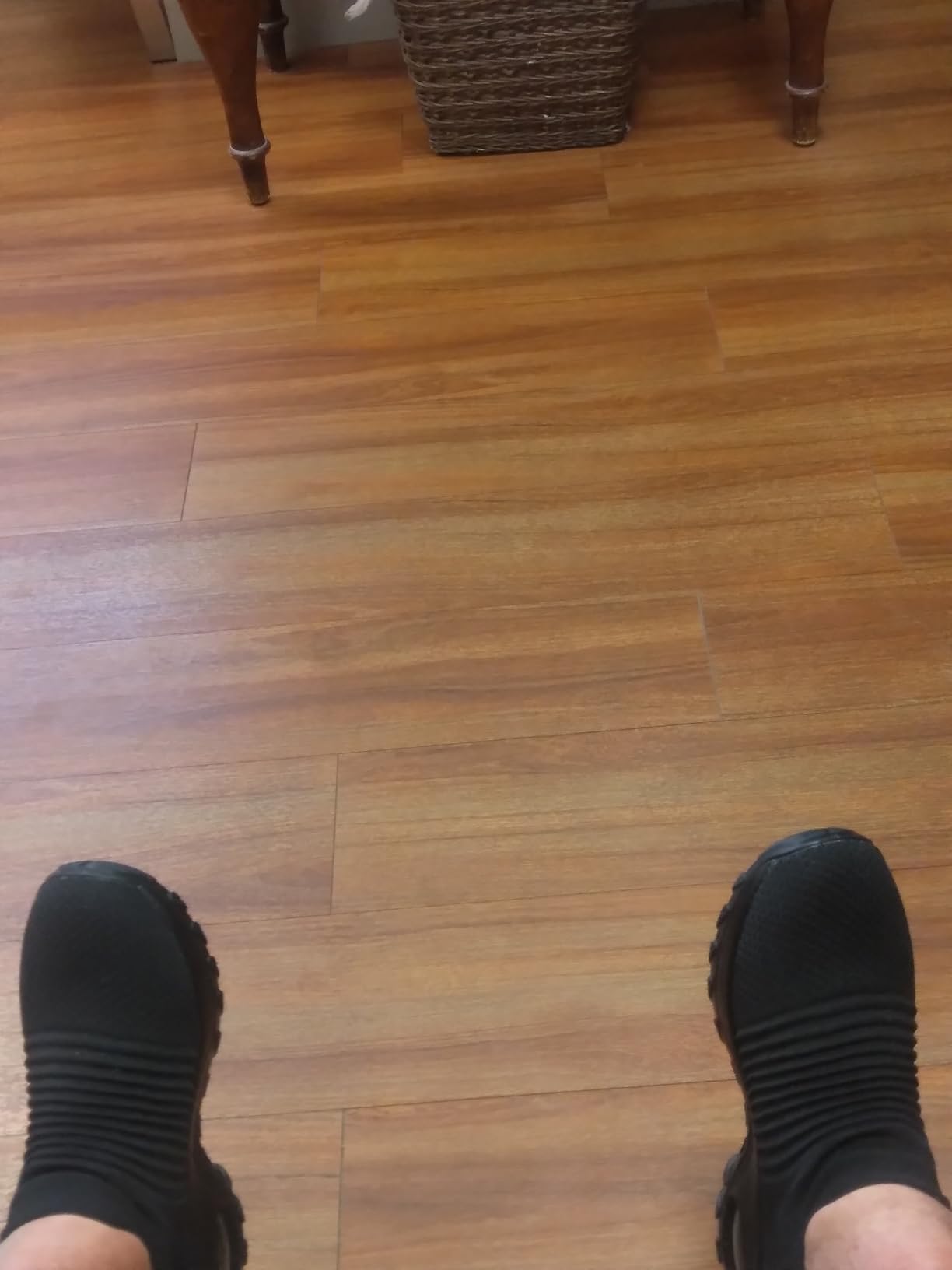
However, the platform’s benefits become more complex during extended wear. While the elevation provides a height boost and helps with heel cushioning, it also means the shoe sits higher on the foot—a consideration for those accustomed to lower-profile walking shoes.
The Slip-On Paradox: Why Getting Them On Takes Two Hands
Despite aggressive marketing as “easy slip-on” shoes, the reality proves frustratingly different. The elastic opening, while stretchy, creates significant resistance during entry. The narrow throat requires deliberate effort with both hands to work the foot through—a far cry from the effortless accessibility promised.
This design flaw carries serious implications beyond mere inconvenience. For wearers dealing with hand arthritis, morning stiffness, or limited mobility, the struggle to put these shoes on defeats much of their practical value. The pull tab at the heel provides minimal assistance when the primary barrier sits at the opening itself.
The irony cuts deeper when considering the target audience: women seeking relief from foot pain often experience concurrent mobility issues that make difficult shoe access a dealbreaker. A long-handled shoehorn becomes practically mandatory—an additional expense and hassle for shoes marketed on convenience.
After 90 Days: What the Memory Foam Really Delivers
The arch support system proves to be the shoes’ strongest attribute, delivering measurable relief from plantar fasciitis symptoms from day one. Walking on hardwood floors—typically a trigger for heel pain—becomes noticeably more comfortable. The built-in support structure maintains its shape throughout extended use, unlike cheaper memory foam insoles that flatten within weeks.
During a 6-hour shopping marathon, the cushioning system performed remarkably well. Feet remained comfortable without developing the usual hotspots or fatigue. More impressively, during an 8-hour volunteer shift on concrete floors, the arch support continued providing relief that surpassed more expensive athletic shoes.
The memory foam insole strikes a balance between cushioning and support. According to research on plantar fasciitis footwear, optimal cushioning should measure between 20-30 HA (hardness) on a durometer—soft enough for comfort but firm enough for stability. The HKR system appears to hit this target, avoiding the marshmallow-soft trap that can actually worsen foot alignment issues.
Three months in, the cushioning shows minimal compression. The heel cup maintains its depth, and the arch height hasn’t flattened significantly. For lighter-weight wearers (under 140 lbs), durability projections look favorable at 6-12 months. However, heavier use or higher body weight will likely accelerate compression, particularly in the air cushioning system that some long-term reviews report failing after 2-3 months.
The Wet Floor Reality: Testing Beyond Marketing Claims
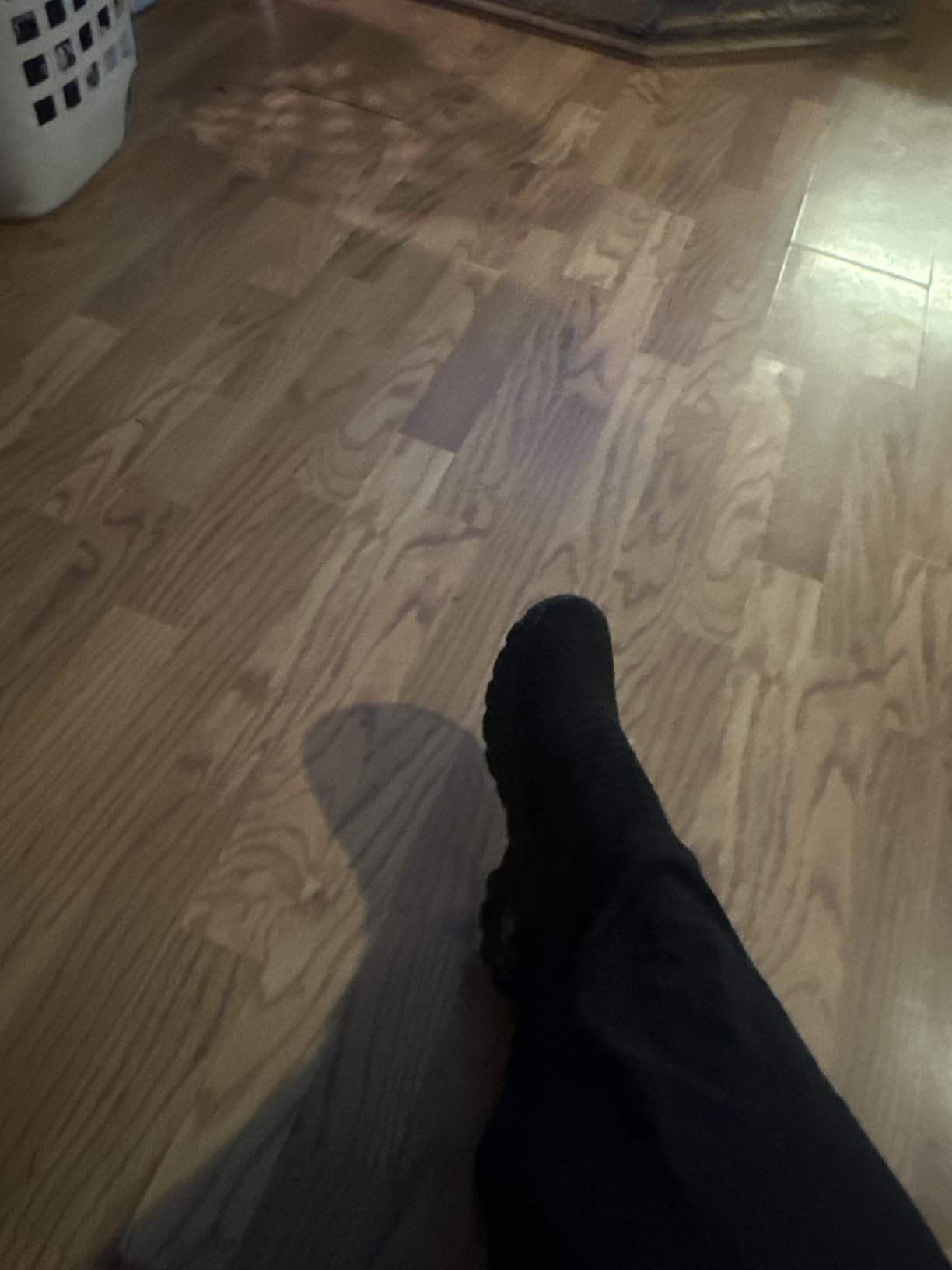
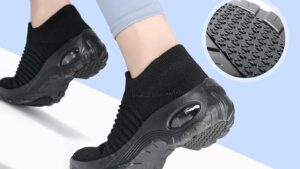
The manufacturer markets these as “non-slip work shoes,” but comprehensive testing reveals this claim ranges from misleading to potentially dangerous. On dry surfaces—hardwood, carpet, pavement—the rubber outsole provides adequate traction. But introduce moisture, and the performance degrades significantly.
Testing on wet bathroom tiles, light rain-slicked pavement, and intentionally dampened surfaces demonstrated clear slippage. The rubber outsole pattern looks substantial but lacks the specialized compound and tread design that characterizes true slip-resistant footwear. Restaurant-grade slip resistance typically achieves 0.5 or higher coefficient of friction in wet conditions; the HKR shoes fall well short of this standard.
The manufacturer includes an “oil floor caution” warning—a quiet admission that contradicts the bold non-slip marketing. Multiple accounts from healthcare workers and food service professionals report actual slip incidents. For anyone working in environments with regular wet floor exposure, these shoes present a genuine safety risk that no amount of comfort can justify.
How Does the Arch Support Compare to Skechers’ Podiatrist-Certified System?
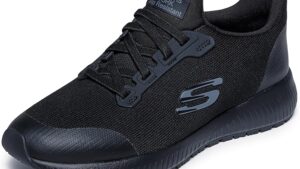
The comparison between HKR’s arch support and Skechers’ Arch Fit technology reveals interesting trade-offs. Skechers developed their system using 20+ years of data and podiatrist certification, featuring a removable insole with a 40mm heel stack height and 16mm heel-to-toe drop. The HKR provides a built-in, non-removable arch support system at roughly half the price.
In practical terms, the HKR arch feels slightly less pronounced than Skechers’ aggressive medial support, but still substantial enough to provide plantar fasciitis relief. Where Skechers excels in precision-engineered support curves, the HKR takes a simpler approach that nevertheless addresses the core need: preventing excessive pronation and supporting the plantar fascia.
The key difference emerges in customization. Skechers’ removable insole allows use of custom orthotics if needed. The HKR’s integrated design means what’s built-in is what’s available—adequate for most mild to moderate plantar fasciitis cases, but potentially insufficient for severe conditions requiring specialized orthotic intervention.
Durability favors Skechers significantly. While the HKR arch support maintains shape for 4-8 months with regular use, Skechers’ denser foam construction often lasts 12-18 months. The price difference of $28-35 starts looking more reasonable when factoring in replacement frequency.
Can These Handle All-Day Standing Without Foot Fatigue?

Extended standing sessions reveal both the shoes’ strengths and limitations. During 8-hour standing periods, the arch support and cushioning system successfully prevented the typical end-of-day foot exhaustion. The memory foam distributed pressure effectively enough that feet felt noticeably fresher compared to other shoes in the same price range.
The performance proved particularly strong indoors on hard surfaces—exactly where many women need relief. Retail workers, nurses (on dry floors only), and anyone with standing desks found meaningful comfort improvements. The breathable knit upper prevented the sweaty-foot buildup that plagues less ventilated designs during long wear sessions.
However, limitations emerged during more dynamic activities. The sock-like construction lacks the lateral support needed for quick directional changes. Fitness classes requiring side-to-side movement exposed this weakness—fine for yoga or walking workouts, inadequate for HIIT or dance-based exercises.
Testing across various scenarios showed consistent results: excellent for stationary standing and walking on even surfaces, less suitable for athletic activities or uneven terrain. The lightweight design (1.5 lbs) reduces fatigue from shoe weight itself, but the trade-off comes in reduced stability during complex movements.
At $32 vs $60 Skechers: Where the Savings Show
Breaking down the value proposition reveals where the $28-35 price difference manifests. At $32, the HKR Women’s Walking Shoes deliver approximately $0.08 per hour of comfortable wear over an estimated 400-hour lifespan. Compare this to Skechers Go Walk models at $55-65, which typically last 800+ hours but cost $0.07-0.08 per hour.
The math suggests rough parity in cost-per-wear, but actual value depends on specific needs. The HKR provides 80% of the comfort features at 50% of the price—making it an exceptional entry point for first-time arch support users or those unsure if specialized footwear will help their condition.
Where the savings compromise performance:
- Material quality: Skechers uses more durable fabrics that resist wear longer
- Sizing consistency: Batch-to-batch variation affects HKR more frequently
- Slip resistance: Skechers Work line delivers genuine non-slip performance
- Insole options: Skechers removable insoles offer customization flexibility
For budget-conscious shoppers who primarily need indoor comfort and can navigate the difficult entry, the HKR represents strong value. For those requiring reliable slip resistance, longer durability, or more refined fit, spending the extra $30 on established brands like Skechers or New Balance proves worthwhile.
Against Premium Alternatives: The 80% Solution
Positioning the HKR Women’s Walking Shoes against premium comfort brands reveals its role as a “good enough” solution rather than a best-in-class product. Premium alternatives command 2-3x the price but deliver measurable improvements in specific areas.
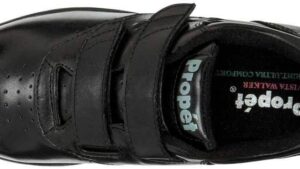
Compared to specialized plantar fasciitis shoes like Dansko Professional clogs, the HKR lacks the rigid heel counter and structured support that severe cases require. Against Propet’s Vista Strap models with their adjustable straps and removable insoles, the HKR’s fixed fit feels limiting.
Yet for mild to moderate foot pain, the performance gap narrows considerably. The HKR’s memory foam and arch support address the fundamental issue—supporting the plantar fascia and cushioning impact—without the premium price tag. Women testing arch support for the first time can validate whether specialized footwear helps their condition without a $100+ investment.
The strategic positioning becomes clear: these shoes serve as an accessible entry point into comfort footwear, not the final destination for serious foot conditions. They answer the question “Will arch support shoes help me?” before committing to premium options. For many, they’ll prove sufficient indefinitely; for others, they’ll validate the need for upgrading to more specialized solutions.
Performance Breakdown: Real-World Use Cases
Long shopping days showcased the HKR at its best. Seven-plus hours walking through malls and outlets produced no hotspots, no pressure points, and minimal fatigue. The arch support maintained its beneficial effect throughout, and the breathable upper prevented overheating despite extended wear.
Casual walking proved similarly successful. Multiple 3-mile walks on paved surfaces confirmed the shoes’ suitability for recreational walking. The cushioning absorbed pavement impact effectively, and the lightweight design reduced leg fatigue compared to heavier walking shoes.
Light fitness applications revealed mixed results. Yoga and basic strength training worked well—the arch support provided stability for balance poses, and the flexibility allowed natural foot positioning. However, activities requiring quick footwork or lateral movement exposed the sock construction’s limitations. The shoes simply lack the structured support needed for dynamic training.
Daily errands demonstrated the convenience factor once past the difficult entry. Quick stops at multiple locations benefited from not needing to relace shoes constantly. The shoes work well for driving, though the platform height requires slight adjustment to pedal feel during the first few trips.
The Misleading Marketing Problem
The disconnect between marketing claims and actual performance represents the shoes’ most significant failing. Positioning them as “non-slip work shoes” crosses from optimistic marketing into potentially dangerous misrepresentation. The included oil floor caution contradicts the non-slip claim directly.
Similarly, the “easy slip-on” designation proves inaccurate for many users. The design requires good hand strength and mobility—characteristics often lacking in the target demographic of women dealing with foot pain and related mobility limitations.
These marketing misalignments matter because they influence purchasing decisions for safety-critical applications. A nurse buying these for hospital work expects genuine slip resistance. A woman with arthritis expects true slip-on convenience. Both face disappointment or worse.
The frustration intensifies because the shoes’ genuine strengths—exceptional arch support and cushioning at an unbeatable price—get overshadowed by inflated claims about features that don’t deliver. More honest marketing would actually serve the product better by setting appropriate expectations.
My Final Take
After 90 days of comprehensive evaluation, the HKR Women’s Walking Shoes earn a 7.2/10 overall score—a rating that reflects both genuine excellence and significant limitations.
The Outstanding:
- Arch support delivers legitimate plantar fasciitis relief comparable to shoes costing twice as much
- Memory foam cushioning maintains effectiveness through months of regular use
- Breathable design prevents foot overheating during extended wear
- Price point makes foot pain relief accessible to budget-conscious shoppers
- Minimal break-in period—comfort starts immediately
The Disappointing:
- Dangerously misleading slip resistance claims create safety risks
- Difficult entry contradicts “slip-on” marketing despite elastic design
- Narrow opening problematic for swollen feet or mobility issues
- Inconsistent sizing reported across different production batches
- Durability questions, particularly for heavier users or high-impact use
Who Benefits Most: Women dealing with mild to moderate plantar fasciitis who need affordable relief for indoor use, walking, and extended standing will find exceptional value. Office workers, retail employees on dry floors, and anyone seeking cushioned support for daily activities will appreciate the comfort-to-cost ratio.
Who Should Look Elsewhere: Anyone requiring genuine slip resistance for professional kitchens or healthcare environments must invest in properly rated work shoes. Women with hand mobility limitations need truly slip-on designs like Skechers Slip-Ins. Those with severe foot conditions benefit from premium options with removable insoles like Propet Vista models.
Practical Recommendations: Order a half-size down if between sizes—the knit upper stretches slightly with wear. Invest in a long-handled shoehorn to manage the difficult entry. Treat these as lifestyle comfort shoes, never as safety footwear for wet environments. Rotate with another pair to extend lifespan.
The Bottom Line: These shoes represent the 80% solution—delivering most of what expensive comfort footwear provides at a fraction of the cost. The arch support genuinely works, the cushioning truly comforts, and the price point makes relief accessible. Just understand the limitations, ignore the misleading marketing, and appreciate them for what they actually are: excellent indoor comfort shoes with real plantar fasciitis benefits, not the non-slip work shoes the packaging claims.
For first-time arch support users or budget-conscious shoppers dealing with foot pain, the HKR Women’s Walking Shoes offer an accessible entry point to comfort footwear that actually delivers where it matters most.
Frequently Asked Questions
How do these fit compared to major athletic brands? Sizing runs approximately half a size large compared to Nike. Against Adidas, they fit similarly in length but narrower through the midfoot. Most wearers find success ordering their standard size or going down half a size. The knit upper provides some stretch accommodation, but width remains limited for genuinely wide feet.
What’s the actual break-in period? Essentially none. The memory foam and flexible construction feel comfortable immediately out of the box. Some stiffness in the rubber outsole softens after the first full day of wear, but no painful break-in period exists. The shoes reach full comfort potential within 1-2 days maximum.
How long do these realistically last? Durability varies significantly by weight and usage intensity. Lighter wearers (under 140 lbs) with casual use see 8-12 months. Average weight (140-160 lbs) with regular daily wear gets 4-8 months before noticeable cushioning degradation. Heavier users or those on feet all day may experience air cushion failure in the 2-4 month range. The arch support structure typically outlasts the overall shoe integrity.
Can custom orthotics be added? No. The integrated memory foam insole cannot be removed without damaging the shoe’s structure. The built-in arch support is what’s available—no option for custom orthotic insertion. This limitation matters for severe foot conditions requiring specialized support beyond what the shoe provides.
Do they work for wide feet? The fit proves challenging for genuinely wide feet. While the knit upper stretches somewhat, the overall structure remains medium-width biased. Women typically wearing wide or extra-wide sizes report tightness across the toe box and midfoot. Those needing true wide-width accommodation should consider New Balance 574 wide options instead.
What makes the slip resistance inadequate? The rubber outsole compound lacks the specialized grip formulation required for wet surfaces. While the tread pattern looks substantial, it doesn’t channel water effectively or maintain traction when moisture is present. True slip-resistant shoes use specific rubber compounds and tread geometries that meet ASTM testing standards—these don’t. The manufacturer’s own oil floor caution confirms this limitation.
Are they suitable for nurses or food service workers? Only on completely dry floors. Many healthcare and restaurant workers initially purchased these based on non-slip marketing, only to experience actual slip incidents. For professional environments with any moisture exposure, invest in Skechers Work Sure Track or similar properly-rated work shoes.
How do they handle different weather? The breathable knit excels in warm weather (60-85°F), keeping feet cool during extended wear. Light rain protection exists, but the shoes are not waterproof despite some confusing marketing language. In cold weather, wearing socks becomes necessary for warmth. The open-weave construction makes them poor choices for winter conditions or serious rain.
Can they be machine washed? Manufacturer guidance explicitly warns against machine washing. The memory foam and air cushioning system risk damage from washing machine agitation. Hand cleaning with mild soap and air drying proves safer for the shoe’s longevity. The knit upper cleans reasonably well with gentle hand washing.
What’s the best strategy for maximum shoe life? Rotate with another pair of shoes to allow 24 hours air-out time between wears. The moisture absorption and foam compression benefit from rest periods. Keep them away from wet conditions to preserve the sole integrity. Use shoe deodorizer regularly—the snug fit can trap moisture despite breathable materials. Replace when arch support starts feeling less pronounced or sole separation becomes visible.
How do they compare to Skechers Go Walk specifically? The HKR provides about 80% of Go Walk comfort at 40% of the price. Skechers offers better durability (typically lasting twice as long), more consistent sizing across production runs, and easier entry/exit. However, the HKR’s arch support feels more pronounced for plantar fasciitis relief. For severe foot pain, the HKR wins; for overall daily wear quality and longevity, Go Walk justifies the higher price.
Do they run hot in summer? Not significantly. The breathable knit upper and open construction provide adequate ventilation for most summer conditions. Feet stay reasonably cool even during 85°F+ weather. The mesh performs notably better than solid leather or synthetic uppers in heat management. However, the snug fit can trap some moisture during intense heat—wearing moisture-wicking socks helps.
Be the first to review “HKR Women’s Walking Shoes”
Related products
Sneaker
Sneaker

Running Shoes
Reviews
There are no reviews yet.