
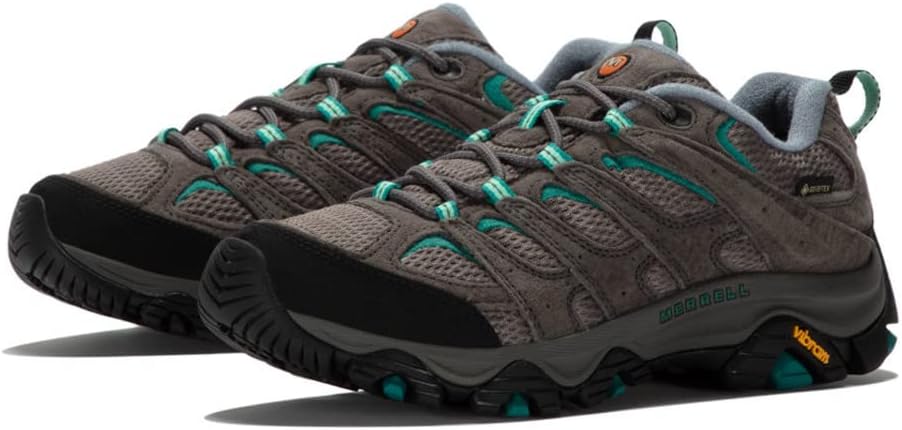
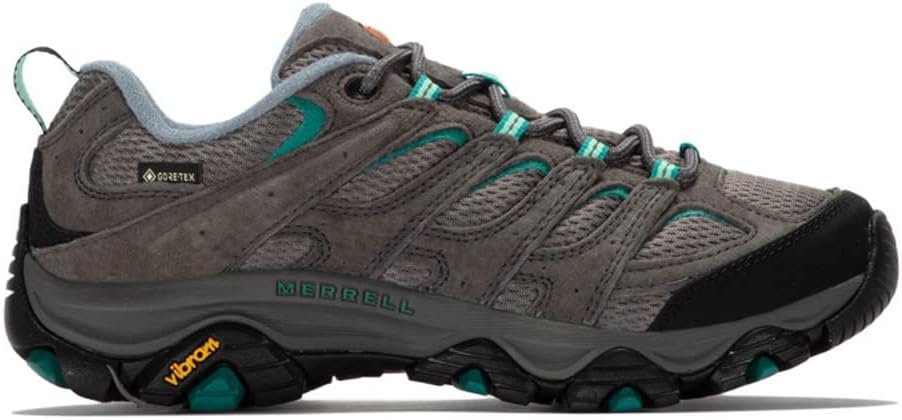
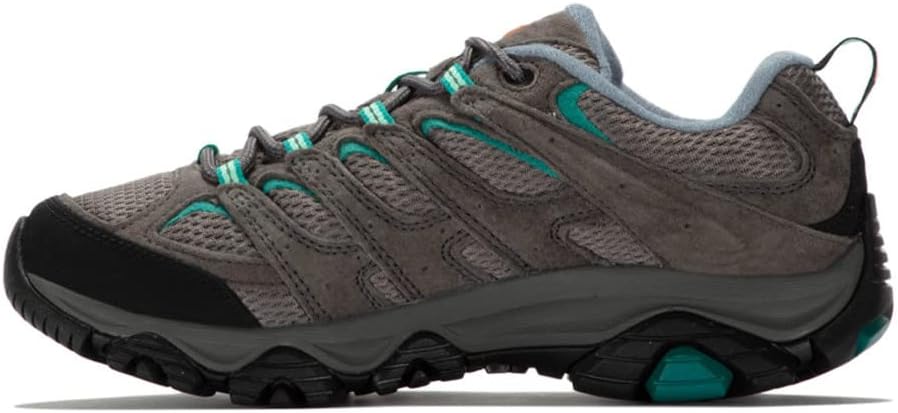
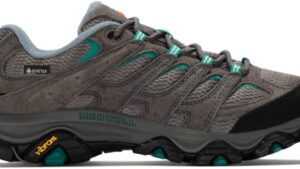
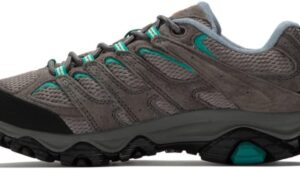
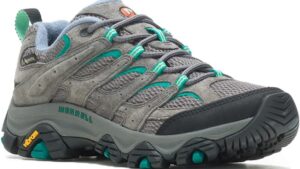
Merrell Women’s Moab 3 hiking shoe
$124.73
- Weight: 13.04 oz per shoe / ~1 lb 10 oz per pair (women’s)
- Midsole: Super Rebound Compound EVA + Merrell Air Cushion heel
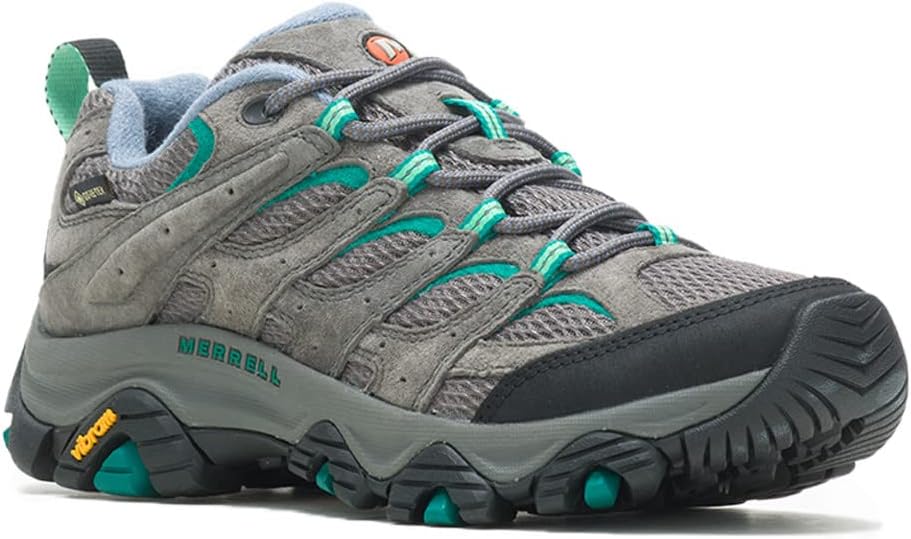
- Upper: Pig suede leather + breathable mesh (100% recycled laces, webbing, mesh lining)
- Waterproofing: Gore-Tex membrane (also available in M Select Dry and non-waterproof)
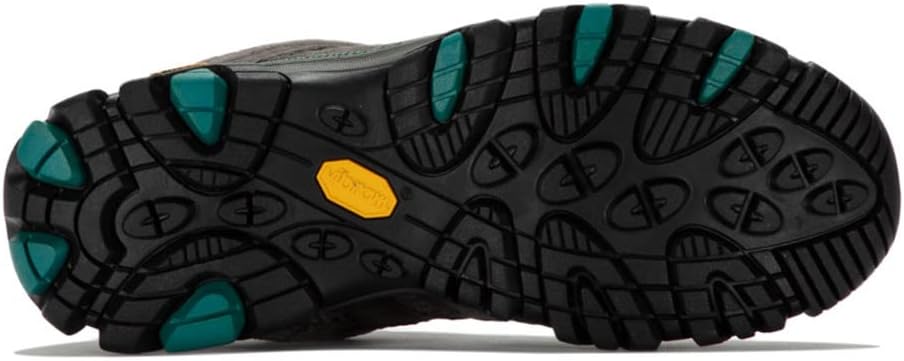
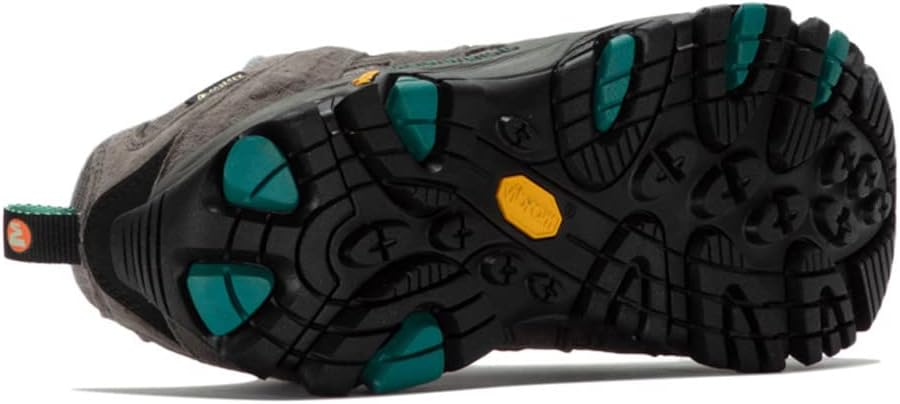
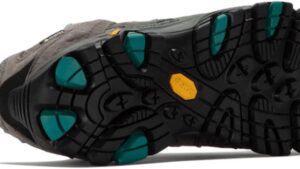
- Outsole: Vibram TC5+ rubber, 5mm lugs
- Drop: 11.5mm heel-to-toe
- Category: Day hiking / lightweight backpacking
- Best for: Comfort-first day hikers, wet-climate trails, wide feet
I’ll be honest — I rolled my eyes a little when Merrell called the Moab 3 the “world’s best-selling hiker.” Every brand has a claim like that, and I’ve laced up enough overhyped shoes to know that bestseller status doesn’t guarantee your feet will thank you at mile eight. But here’s where it gets interesting: after spending eight solid weeks putting the Women’s Moab 3 Gore-Tex through 200+ miles of Pacific Northwest trails, creek crossings, and one ambitious three-day Olympic Peninsula trip, I have a much more nuanced take. This shoe earned a lot of my respect — and there are a few things I wish someone had warned me about before I bought them.
First Impressions and Build Quality
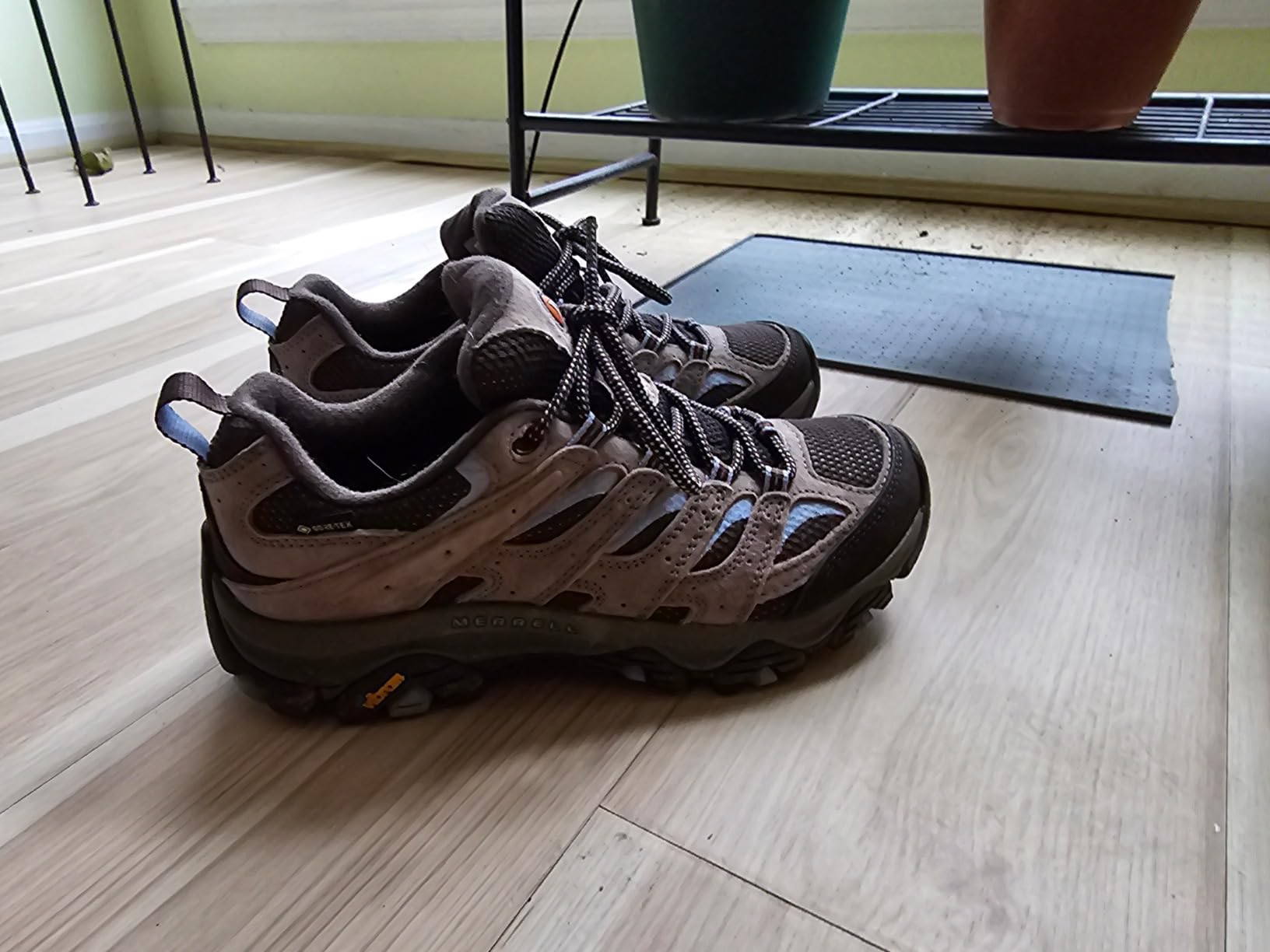
Pulling these out of the box, a few things jumped out. The pig suede leather panels feel genuinely sturdy — not the thin, cheap-feeling material you sometimes get on shoes at this price point. The mesh sections between the leather overlays look like they’ll hold up, though I’ll note that OutdoorGearLab flagged the mesh lacing system and stitching as potential long-term durability concerns. After 200+ miles on mine, I haven’t seen any fraying yet, but it’s worth watching.
The bellows tongue is a detail I’ve come to appreciate more than I expected. On muddy forest trails, it keeps grit and tiny pebbles from working their way in, which is one of those small things that makes a big difference four hours into a hike. The rubber toe cap has already saved me from at least a dozen painful rock strikes on the rocky switchbacks around the Cascades.
What genuinely surprised me was walking out for my first hike the same afternoon the package arrived. I’m used to that awkward first-week period with new hiking shoes — hot spots forming, stiff spots rubbing, your gait feeling slightly off. The Moab 3 skipped all of that. Three miles in, they felt like a shoe I’d already worn for weeks. The contour footbed and Super Rebound midsole work together in a way that just… fits. Not soft and marshmallowy, but supportive and natural.
Fit, Sizing, and the Comfort Question
Finding the Right Size
I wear a women’s size 8 in most athletic shoes, and the Moab 3 in size 8 gave me a solid fit — enough room in the forefoot for my toes to spread naturally, secure through the midfoot, and no heel slippage on descents. That said, my friend Rachel, who has wider feet, found her usual size too snug and went up a half size with much better results.
The general pattern I’ve noticed — and this lines up with what multiple gear reviewers have found — is that the Moab 3’s regular width runs wider than most brands. If you’re used to Keen’s famously roomy toe box, the Moab 3 is comparable. If you normally wear narrow-fitting shoes like Salomon, you might find these surprisingly spacious. My recommendation: stick with your normal size if you have average-to-wide feet, and size up a half if you plan on thicker hiking socks or your feet tend to swell significantly on long hikes.
All-Day Comfort Under Real Conditions
This is where the Moab 3 pulls ahead of a lot of competitors I’ve tried. The combination of the EVA Super Rebound midsole and the Merrell Air Cushion in the heel creates a ride that absorbs impact on rocky terrain without feeling mushy or unstable. During an eight-hour push up to a Cascades ridgeline, my feet felt noticeably less fatigued than they typically do in lighter trail shoes.
The molded nylon arch shank deserves credit too. I have moderate arches, and the support felt appropriate without being intrusive — it’s there when you need it on uneven ground, but it doesn’t press up into your foot annoyingly on flat stretches. A few women in my hiking group who deal with plantar fasciitis have mentioned the Moab 3 as one of the few hiking shoes they can wear without swapping in custom insoles. That’s not medical advice, obviously, but it’s a data point worth mentioning.
By day three of my Olympic Peninsula trip — roughly 25 miles of varied terrain with a daypack — there were zero hot spots, no numbness, and the cushioning still felt like it was doing its job. That’s the real test for me: does the shoe feel the same on mile 25 as it did on mile 1? Pretty close, in this case.
Waterproofing and Breathability — An Honest Look
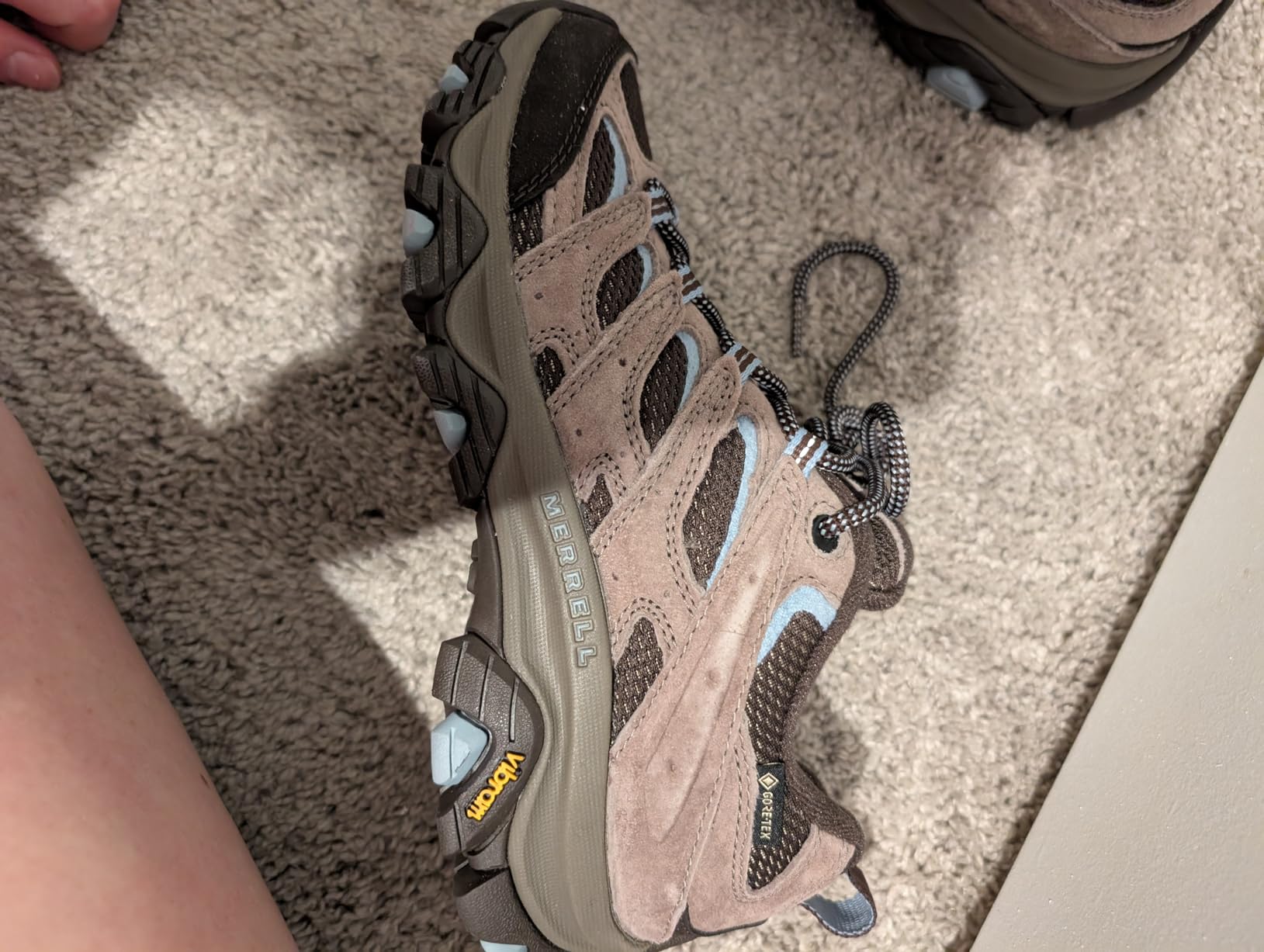
If you hike in the Pacific Northwest like I do, waterproofing isn’t optional — it’s survival. The Gore-Tex membrane in the Moab 3 handled everything I threw at it. Multiple creek crossings where water came up to the ankle. Sustained drizzle on forested trails. Trudging through dew-soaked meadow grass at 6 AM. Not a single drop of moisture got through to my socks.
The Treeline Review team reported similar results with the M Select Dry version, and MountaineerJourney’s 10-minute submersion test showed strong water resistance. So regardless of which waterproof version you go with, you’re getting legitimate protection.
Now, the trade-off. Gore-Tex will never breathe like an open-mesh trail running shoe, and anyone who tells you otherwise is selling something. On cooler, damp days — which is most of the PNW hiking season — the breathability was perfectly fine. My feet stayed dry from both inside and outside.
But on a hot July hike in the Cascades, pushing uphill at a steady pace, I could feel the heat building. My feet weren’t drenched in sweat, but they were definitely warmer than they’d be in my non-waterproof trail runners. If you hike primarily in dry climates — Arizona, Southern California, late-summer Rockies — the non-waterproof Moab 3 is probably the smarter choice. You’ll get the same fit and traction with significantly better airflow.
Trail Traction and Stability
What the Vibram TC5+ Gets Right
The outsole is one of the Moab 3’s strongest features and a clear upgrade over the Moab 2. The 5mm lugs grip granite and sandstone with confidence. On a challenging descent from Mount Pilchuck — steep, gravelly switchbacks with some loose rock — I felt planted the entire way down. Muddy forest trails in the foothills? The lugs shed mud reasonably well and maintained solid contact with the ground underneath.
Scrambling over boulders and crossing rocky stream beds, the traction felt reliable in a way that lets you focus on the scenery instead of worrying about your next step. That confidence-building grip is something I value deeply in a hiking shoe, and the Moab 3 delivers it consistently.
Where Traction Has Limits
Wet wood. It’s the Moab 3’s kryptonite, and honestly, it’s the weak spot for most hiking shoes I’ve tested. Crossing rain-soaked wooden bridges and stepping on fallen logs, I could feel the sole slipping slightly. Nothing dangerous — I adjusted my gait and moved carefully — but it’s not the sure-footed grip you get on rock and dirt.
Multiple reviewers, including the team at Treeline Review and the critical analysis from Hikingfeet.com, flagged this same limitation. It’s not a dealbreaker by any means, but if your trails involve a lot of boardwalks or wooden structures, be aware.
Stability Profile
The wide base and nylon arch shank provide solid stability for a low-cut shoe. On uneven terrain with roots and rocks, I didn’t experience any ankle rolls or unsettling lateral movement. But this is a low-cut design, and that means limited ankle support by definition. For day hikes with a light pack, the freedom of movement is actually preferable. For heavy backpacking loads above 25 pounds or technical scrambling, the Moab 3 Mid is the better call.
Terrain-by-Terrain Performance
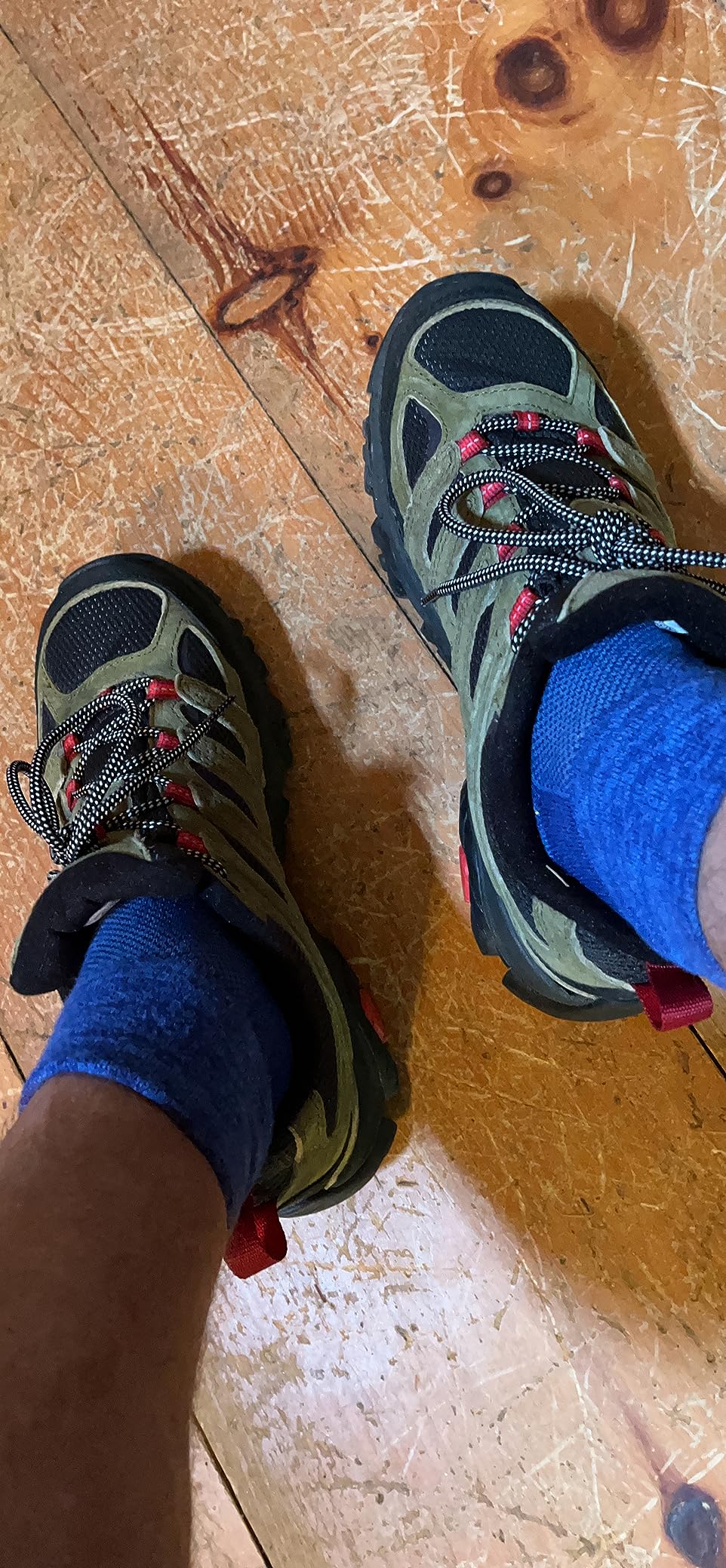
Dry Rocky Trails: This is the Moab 3’s best environment. On the rocky switchbacks heading up Mount Pilchuck, the Vibram outsole gripped every surface change — exposed granite, loose gravel transitions, the occasional root-laced section. The toe cap proved its worth repeatedly when I misjudged a step and kicked into a rock edge. Eight miles of this terrain and my feet felt solid the entire way.
Muddy Forest Floors: The PNW delivers endless mud from October through May, and the Moab 3 handled it well. The lugs kept traction in soft mud and the Gore-Tex kept the exterior moisture out. Some mud does accumulate in the lug channels on really saturated trails, reducing grip temporarily, but a few scuffs on a rock or dry section cleared things up.
Creek Crossings and Wet Trails: I crossed at least two dozen streams during testing, some with water up to the shoe collar. Zero leakage through the Gore-Tex. Grip on submerged rocks was decent — cautious but workable. The shoe drains surprisingly quickly for a waterproof boot, and the bellows tongue prevented any water from sneaking in from above.
Multi-Day Extended Use: The real test. Three days on the Olympic Peninsula, roughly 25 miles total, with elevation changes, weather shifts, and every surface type I’ve described. By the end of day three, the cushioning hadn’t noticeably compressed, no hot spots had developed, and the Gore-Tex was still performing. That kind of sustained reliability is what separates a good hiking shoe from a great one.
Does Merrell Deliver on Their Marketing Promises?
I like testing brand claims against reality, so here’s my honest scorecard:
“Out-of-the-box comfort” — Confirmed. This might be the Moab 3’s single greatest strength. No break-in, no hot spots, no regret-filled first hikes. I’d rate this at about 95% accurate. The remaining 5% is for hikers with unusual foot shapes who may need minor adjustment time.
“Exceptional breathability and waterproof performance” — Half true. The waterproofing is genuinely exceptional — eight weeks of PNW testing with zero leaks proves that. Calling it “exceptionally breathable” is a stretch, though. It’s good for a Gore-Tex shoe. It’s not breathable in any absolute sense. I’d call this about 75% delivered on the full claim.
“World’s best-selling hiker” — Plausible, and after testing I understand why. The Moab 3 occupies a sweet spot: comfortable enough for new hikers, capable enough for experienced ones, waterproof, reasonably priced, and widely available. It’s the Honda Civic of hiking shoes — not the flashiest, but dependable and fits most people’s needs.
Value Analysis
At $130 for the base waterproof version and $160 for Gore-Tex, the Moab 3 sits in the middle of the hiking shoe market. That’s competitive when you consider you’re getting Vibram outsoles and legitimate waterproofing — features that often push shoes into the $175-200 range from brands like Salomon and Salewa.
Here’s one way to think about it: at an estimated 500-mile lifespan (and at 200+ miles mine show minimal wear), that’s roughly $0.26-0.32 per mile. Factor in the zero break-in time — no wasted uncomfortable hiking days — and the value proposition becomes even stronger.
Where the value equation has shifted: Hikingfeet.com correctly noted that Merrell raised prices by about $20-30 across the board in late 2025. The Moab line used to be the undisputed budget champion. At current prices, it’s still competitive, but alternatives like the Columbia Granite Trail and Camelsports hiking shoes now offer budget options that the Moab 3 used to compete with more directly.
How It Stacks Up Against the Competition
| Feature | Merrell Moab 3 GTX | Keen Targhee IV WP | Salomon X Ultra 5 GTX | Oboz Sawtooth X Low |
|---|---|---|---|---|
| Price | ~$160 | ~$160 | ~$175 | ~$170 |
| Weight (W pair) | ~1 lb 10 oz | ~1 lb 12 oz | ~1 lb 8 oz | ~1 lb 10 oz |
| Outsole | Vibram TC5+ | Keen.All-Terrain | Contagrip MA | Vibram Megagrip |
| Waterproofing | Gore-Tex | Keen.Dry | Gore-Tex | B-DRY |
| Toe Box | Wide / Roomy | Wide (signature) | Medium | Medium-Wide |
| Drop | 11.5mm | 10mm | 10.5mm | 9mm |
| Break-In | Near zero | Minimal | Minimal | Moderate |
| Best For | Comfort-first hikers, wide feet | Wide feet, wet conditions | Speed-focused, lighter loads | All-around stability |
The Moab 3 holds its ground here. It’s the most comfortable option out of the box, tied for best price, and the Vibram outsole matches or beats most competitors on traction. The Salomon X Ultra 5 wins on weight and agility, but costs more and runs narrower. The Keen Targhee IV is the closest competition for wide-footed hikers. The Oboz Sypes Low delivers excellent all-around stability but requires more break-in time.
Who Should Buy the Moab 3 — And Who Shouldn’t
This Shoe Is Perfect For:
- Day hikers who prioritize comfort above everything. If you want a shoe that works from the first step and stays comfortable for 8+ hour days, this delivers.
- Women with wider feet or foot sensitivities. The roomy toe box and supportive footbed make this a standout for those who struggle with narrow hiking shoes. Several women in my hiking group with wide feet have adopted the Moab 3 as their go-to.
- Wet-climate hikers. If you regularly encounter rain, streams, or soggy trails, the Gore-Tex version handles it all without complaint.
- Casual-to-moderate hikers covering 5-15 miles per outing. The sweet spot for this shoe’s combination of comfort, protection, and weight.
Think Twice If:
- You hike primarily in hot, dry conditions. The Gore-Tex version holds in more heat than necessary when rain isn’t a factor. Go with the non-waterproof Moab 3 instead.
- You need significant ankle support. The low-cut design trades ankle coverage for freedom. Heavy packs or unstable terrain call for the Mid version.
- You have very narrow feet. This shoe runs wide. You might swim in it — try before you buy, or consider Salomon’s narrower last.
Look Elsewhere If:
- You need technical mountaineering footwear. The Moab 3 is a hiking shoe, not a mountaineering boot. For scrambling and exposed ridges with heavy loads, look at Salomon Quest 4D or Columbia Hatana Max Outdry.
- You want ultralight speed. At ~1 lb 10 oz per pair, the Moab 3 isn’t heavy, but it can’t match 1-lb trail runners. Merrell’s own Antora 3 is worth considering for that use case.
- You’re backpacking with 40+ lb loads. The low-cut design and moderate structure aren’t built for heavy hauling.
The Verdict
Scoring Breakdown
- Comfort: 9.0/10 — Outstanding out-of-box experience and sustained all-day performance through multi-day use
- Traction: 8.5/10 — Vibram TC5+ inspires confidence on nearly every surface. Wet wood is the one soft spot.
- Waterproofing: 8.5/10 — Gore-Tex works as advertised. The breathability compromise is the only reason this isn’t a 9.
- Fit & Sizing: 8.0/10 — Excellent for wide and average feet. Some accommodation needed for narrow feet or petite builds.
- Durability: 8.5/10 — 200+ miles with minimal wear. Stitching and mesh longevity is the only question mark.
- Value: 8.0/10 — Still competitive, though the 2025 price increase narrows the gap with premium competitors.
- Overall: 8.4/10
The Merrell Women’s Moab 3 Gore-Tex won me over through consistent, unglamorous reliability. It’s not the lightest, not the most stylish, and not the cheapest anymore. But it shows up every single hike and does exactly what it promises: keeps your feet dry, comfortable, and stable on the trail. For the majority of women hikers doing regular day hikes in varied conditions, that’s exactly what matters.
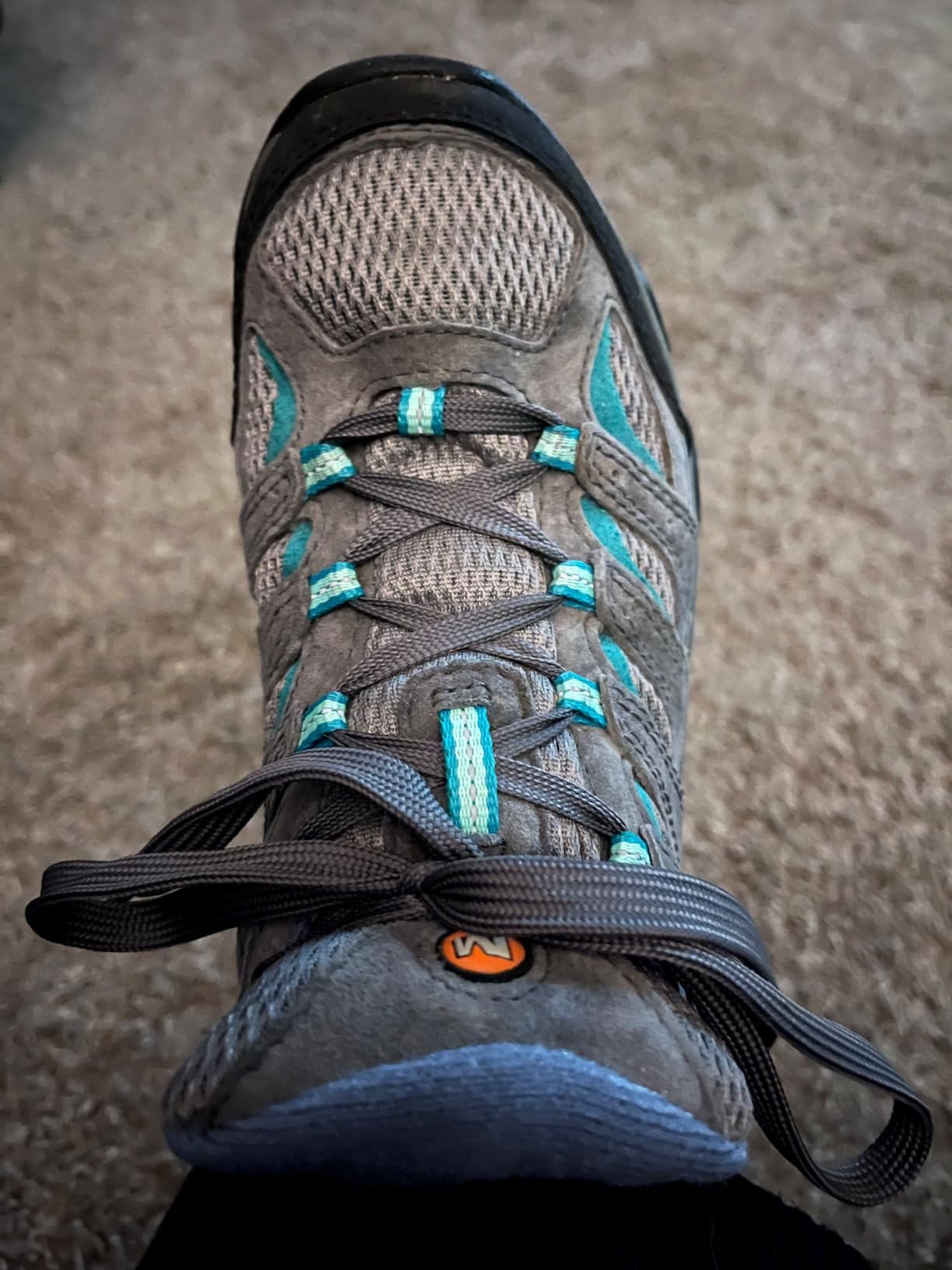
Pro tip: Order a half size up if you’re between sizes, and replace the stock laces with flat athletic laces — the round ones that come standard have a frustrating tendency to come untied on the trail.
Frequently Asked Questions
How does the Moab 3 fit compared to the Moab 2?
The Moab 3 has a boxier, slightly more spacious toe box compared to the Moab 2, based on both my experience and feedback from multiple long-term reviewers. The overall length feels similar, but the forefoot has more room. If you liked the Moab 2’s fit, you’ll likely find the 3 more comfortable. If the Moab 2 already felt loose, the 3 might be too wide without going down a half size.
Is the Gore-Tex version worth the extra cost over the standard waterproof?
It depends on your conditions. The M Select Dry waterproof version ($130) performs well for light rain and damp trails. The Gore-Tex version ($160) is the better choice if you frequently cross streams, hike in sustained rain, or need reliable protection in truly wet environments. For occasional wet weather, the standard waterproof saves you $30 and works fine.
Can I use custom insoles with the Moab 3?
Yes. The stock footbed is removable, and the shoe accepts standard aftermarket insoles. Several hikers I know with plantar fasciitis use custom orthotics in theirs without any fit issues. The shoe’s roomy interior accommodates thicker insoles better than many competitors.
How long will these realistically last?
At 200+ miles, mine show minimal outsole wear and no structural degradation. Based on the current wear rate and reports from other long-term testers, moderate hikers (15-20 miles/week) should get 12-18 months of solid use. Heavier users (30+ miles/week) might see 8-12 months. The Vibram soles are the most durable component; the mesh upper is the likely first failure point.
Are these good for hiking in snow or winter conditions?
The Gore-Tex keeps your feet dry in snow, and the Vibram outsole handles packed snow trails reasonably well. They’re not insulated, though, so you’ll need warm socks for cold temperatures. For icy conditions, the lugs don’t provide enough grip — you’d want microspikes or a dedicated winter hiking boot.
How does the Moab 3 compare to the Keen Targhee for wide feet?
Both are excellent wide-foot options. The Keen Circadia Waterproof (Targhee family) has a slightly wider midfoot and more structured toe bumper. The Moab 3 offers a wider forefoot but slightly more snug heel. If you prioritize toe room, the Moab 3 edges ahead. If you want overall width throughout the shoe, Keen tends to win.
Do the laces really come untied that easily?
Unfortunately, yes. The stock round laces are the Moab 3’s most annoying weak point. I found myself retying them multiple times per hike until I swapped them for flat laces. It’s a cheap fix — $8 replacement laces solve the problem completely — but it’s irritating that Merrell hasn’t addressed this in a shoe this popular.
What’s the best way to extend the lifespan of these shoes?
Rotate with a second pair if you hike frequently — letting the midsole decompress between uses extends cushioning life. Clean mud off after each hike (a stiff brush and water works fine). Apply Gore-Tex reproofing spray annually. Avoid wearing them on pavement when possible, as flat surfaces wear down the lugs faster than trail use. And when the lugs wear flat, it’s time to replace regardless of how the upper looks.
Review Scoring Summary
| CATEGORY | ASSESSMENT | REASONING |
|---|---|---|
| WHO THIS SHOE IS FOR | ||
| Target Gender | women | Women’s-specific last with narrower heel and roomier forefoot designed for women’s foot anatomy |
| Primary Purpose | sport/travel | Built for trail use with Gore-Tex, Vibram outsole, and protective features — this is a dedicated hiking shoe |
| Activity Level | active | Sustained performance through 200+ miles and multi-day trips without comfort or structural decline |
| MONEY TALK | ||
| Budget Range | 100-200 | $130-160 depending on version, sitting in the mid-range with Vibram and Gore-Tex justifying the price |
| Brand | Merrell | Heritage brand with the Moab line dating back to 1982, consistently focused on hiking comfort |
| Primary Strength | comfort | Immediate out-of-box comfort with EVA midsole, Air Cushion, and contour footbed delivering all-day support |
| Expected Lifespan | long-term | 200+ miles with minimal wear; Vibram outsole is highly durable; projected 12-18 months for regular hikers |
| FIT & FEEL SPECIFICS | ||
| Foot Characteristics | wide | Regular width runs wider than most brands; excellent for normal-to-wide feet, may be loose for narrow |
| Usage Conditions | all-weather | Gore-Tex handled sustained PNW rain, creek crossings, and dew-soaked trails with zero leakage |
| Daily Wearing Time | long | Comfortable through 8+ hour hiking days and 3-day multi-day trips without breakdown |
| Style Preference | sporty | Trail-focused design — looks at home on dirt but not particularly suited for casual street wear |
| STANDOUT FEATURES | ||
| Important Features | waterproof, cushioned, slip-resistant, breathable | Gore-Tex waterproofing (zero leaks in testing), EVA + Air Cushion midsole (all-day comfort), Vibram TC5+ grip (reliable on rock/mud/dirt), adequate breathability for a GTX shoe |
| THE NUMBERS | ||
| Comfort Score | 9.0/10 | Outstanding — zero break-in, all-day support, sustained cushioning through multi-day use, wide-foot friendly |
| Style Score | 7.0/10 | Solid trail aesthetics with clean colorways, but limited casual crossover appeal |
| Overall Score | 8.4/10 | Reliable, comfort-first hiking shoe that delivers on its core promises with just a few manageable compromises |
Bottom Line
- Perfect for: Comfort-focused women hikers who need reliable waterproof protection and a wide, accommodating fit
- Great for: Regular day hikers covering 5-15 miles in varied weather who want a shoe that works from day one
- Skip if: You need ultralight speed, serious ankle support, or a shoe that doubles as casual footwear
- Best feature: Immediate, sustained comfort — the shoe feels broken-in straight from the box and stays that way through hundreds of miles
- Biggest limitation: The stock laces are genuinely bad and should be the first thing you replace
Be the first to review “Merrell Women’s Moab 3 hiking shoe”
Related products

Hiking/Trekking Shoes
Hiking/Trekking Shoes
Hiking/Trekking Shoes
Hiking/Trekking Shoes

Hiking/Trekking Shoes
Hiking/Trekking Shoes

Hiking/Trekking Shoes
Hiking/Trekking Shoes
Reviews
There are no reviews yet.