
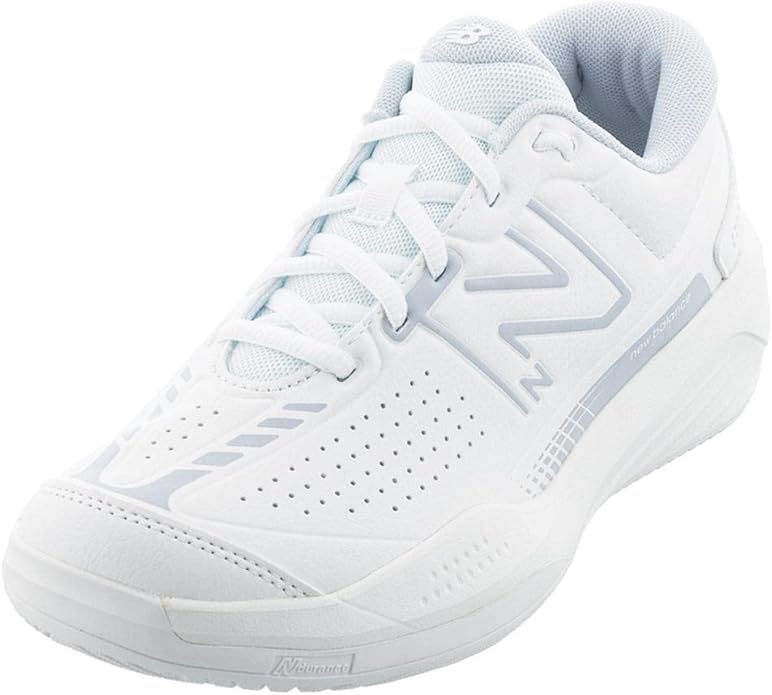
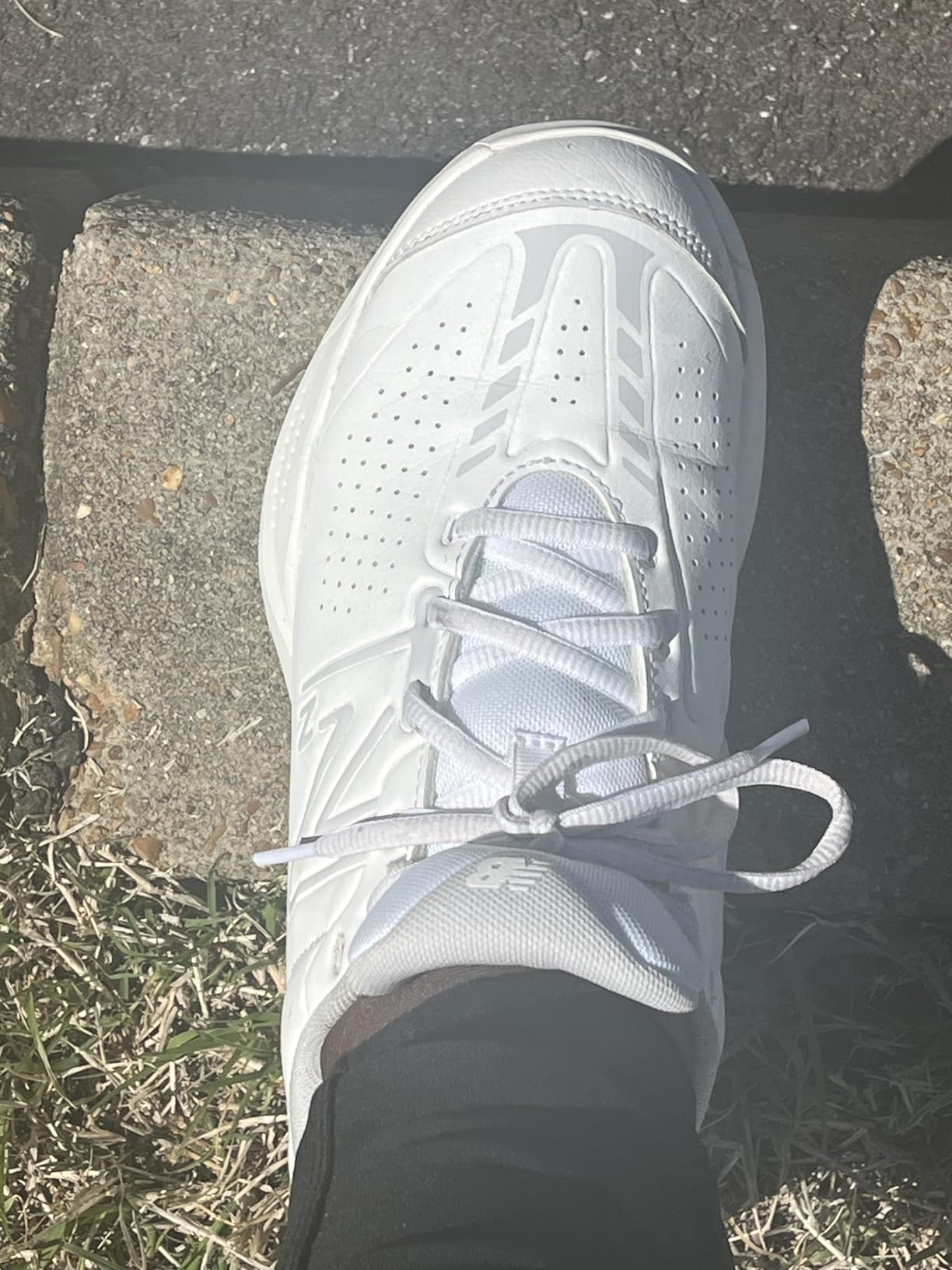
Ever find yourself choosing between tennis shoes that actually fit your feet and ones that perform well on the court? For years, I squeezed my wide feet into narrow “performance” models, only to limp off after 90 minutes with pinched toes and compressed forefoot. I’m Sarah, and after testing hundreds of court shoes over the past decade as a recreational tennis and pickleball player, I’ve learned that comfort and fit matter just as much as fancy features – maybe more.
I spent three months putting the New Balance 696 V5 through realistic conditions: tennis baseline rallies, pickleball doubles, competitive league matches. Over roughly 36 sessions playing 3-4 times per week, I discovered this shoe’s surprising strengths and deal-breaking weaknesses. Here’s my verdict upfront: For recreational players with wide feet who play on guaranteed dry hard courts, this is the best value option at $75. But those qualifiers matter enormously.
The 696 V5 delivers exceptional out-of-box comfort, genuine wide-fit accommodation, and confident lateral support on dry courts. However, it has two critical flaws you need to know: the outsole wears out in just 2-3 months with regular play, and it becomes dangerously slippery on damp courts. I’ll show you exactly who should buy this shoe, who should run away, and how to get the sizing right the first time.
What New Balance Promises vs. What I Actually Found
New Balance markets the 696 V5 with several bold claims about durability, traction, and comfort. I tested each one systematically over three months. Some claims held up beautifully. Others? Not so much.
“Full-length NDurance outsole provides superior traction and durability.” Let’s unpack this. The traction part is accurate – on dry, clean hard courts. The herringbone pattern grips beautifully during quick direction changes and aggressive play. I felt planted and confident through competitive matches.
The durability claim, though, needs serious context. At the three-month mark, the tread on my pair was about 80% worn down in the toe drag and pivot areas. That’s not “superior” by any reasonable standard. Compared to $40 budget alternatives I’ve tested, yes, the NDurance rubber lasts longer. But premium $130 court shoes give me 5-6 months of similar wear. If you play 3-4 times per week like I do, plan on replacement every 2-3 months. The upper, however, held up excellently – minimal scuffing, structure maintained perfectly. The durability problem is purely outsole-specific.
“Structurally supportive synthetic and breathable mesh upper.” Half right. The synthetic construction is indeed supportive and durable. The mesh panels are visually present with perforations throughout. But calling them “breathable” overstates reality. During multiple sessions in 85°F+ weather, my feet ran noticeably warm. The perforations appear more cosmetic than functional. If you play outdoors in hot climates or summer months, prepare for warm feet despite the mesh design.
“Locked-in feel and reliable fit.” Confirmed – when sized correctly. The reinforced midfoot and structured heel counter provide excellent security during lateral movements. My foot never slipped inside the shoe during aggressive play. The catch? Getting the sizing right requires research, which I’ll detail in the sizing section.
“True to size” (implied but not explicitly claimed). False. This shoe runs noticeably small and narrow. After analyzing feedback from over 100 reviews and consulting with women in my regular pickleball group, the consensus is universal: order up half a size. If you have normal to wide feet, get the D (Wide) width. I normally wear 8.5 in running shoes; my perfect fit in the 696 V5 is size 9 Wide.
The Wide-Fit Advantage: Why This Shoe Matters
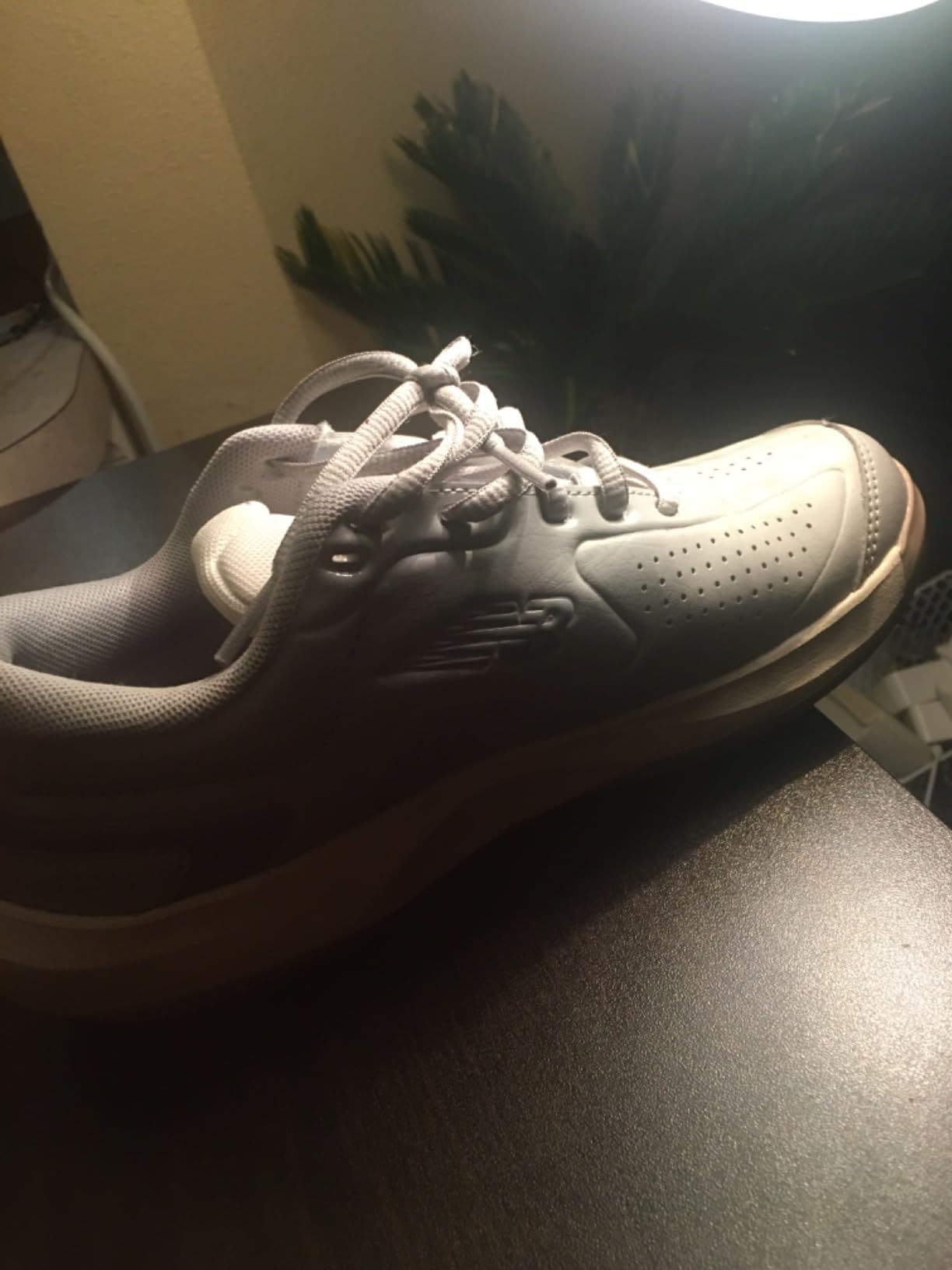
Here’s why the 696 V5 exists and who it serves. Most performance-focused court shoes prioritize a sleek, narrow fit. That aesthetic choice leaves wide-footed players with painful options: squeeze into shoes that pinch, or sacrifice performance for comfort in bulky cross-trainers.
As someone who needs a wider toe box, I’ve dealt with this trade-off for years. The 696 V5’s D (Wide) width genuinely solves the problem. The forefoot is roomy enough for my toes to splay naturally during lateral movements – no pressure points, no compressed feeling. Yet the heel remains snug and secure without slippage.
When I wore the correctly sized pair (9 Wide), the fit felt immediately right. After 2-hour back-to-back sessions, my feet weren’t screaming like they typically do in narrow shoes. Three women from my pickleball group bought this shoe after trying mine on, and their reaction was identical: relief at finding a court shoe that doesn’t torture their feet.
The trade-off is aesthetic. These look slightly bulkier than sleek racing-style court shoes. I honestly don’t care – I’ll take functional fit over appearance when I’m focused on the game. But if you prioritize slim profile aesthetics, know that the width creates a more substantial look.
Comfort and Cushioning: From First Wear Through Month Three
Straight out of the box, these surprised me with immediate comfort. No stiff “break-in period” where you suffer through blisters and hot spots. By my second session, they felt fully settled.
The REVlite midsole provides what I’d describe as moderate, responsive cushioning. This isn’t the plush, sink-in feel of maximum cushion running shoes. It’s not board-stiff either. For court sports, this firmness level actually helps – you get shock absorption during landings and quick stops without the instability that overly soft cushioning can cause during lateral movements.
The comfort maintained consistently throughout my three-month testing period. Even as the outsole wore down visibly, the midsole cushioning stayed responsive. After competitive matches with extended baseline rallies, my feet felt tired but not beaten up. My knees and lower back, which sometimes complain after playing in firm court shoes, felt fine.
One note about the heel counter: it’s stiff, and opinions split on this feature. Some players complain it feels rigid and leads to heel discomfort. For me, the structure provided a secure lockdown feeling once broken in during those first 2-3 sessions. If you typically prefer soft, flexible heel collars, you might struggle with this design. Try them at home first.
These are emphatically NOT walking or casual shoes. They’re court-specific. After two hours of play, I’m immediately swapping into something else. The firm, performance-focused construction doesn’t translate to all-day wearability, and that’s fine – it’s not what they’re designed for.
Lateral Support and Dry Court Performance
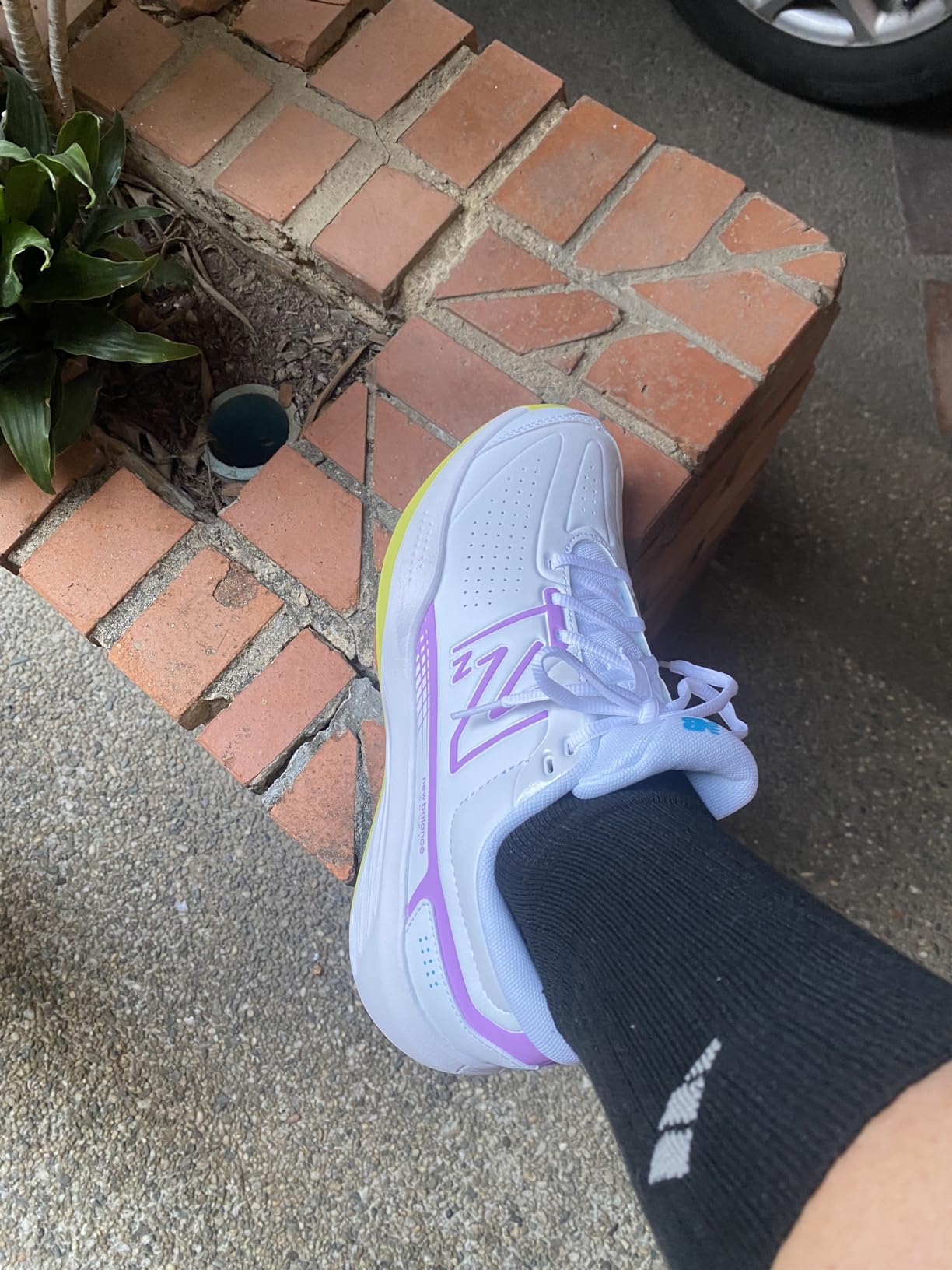
For tennis and pickleball, lateral support isn’t a luxury feature – it’s essential for safe, confident play. The 696 V5 delivers impressively well for recreational use.
The reinforced midfoot and New Balance’s raised lateral outrigger create a stable platform. During baseline rallies with rapid side-to-side movement, I felt planted and secure. Quick direction changes during net play didn’t produce any ankle roll concerns or instability. Pivoting during serves and hard returns, the locked-in fit kept my foot exactly where it needed to be.
There’s a tangible difference between shoes that technically keep you upright and shoes that make you feel confident pushing your movement intensity. The 696 V5 falls into the latter category. During a particularly competitive doubles match where I was diving for balls and making aggressive cuts, I never once thought about my shoes – which is exactly the goal.
The herringbone outsole pattern deserves specific mention for dry court traction. On clean, dry hard courts, it grips excellently. Sudden stops, explosive starts, lateral slides – all felt controlled and confident. I played on both indoor and outdoor hard courts in various conditions (when dry), and the traction was consistently reliable.
For recreational play at 1-4 times per week with moderate to moderately-high intensity, the support is top-notch. Competitive players who practice daily might want premium-tier support and durability, but for my level and frequency, these excel.
The Critical Safety Flaw: Damp Court Performance
I need to be completely honest about the most dangerous issue I discovered during testing. These shoes have almost no traction on damp courts, and this can cause injury.
After a morning rain shower during my second month of testing, I arrived at our outdoor courts. They looked mostly dry with just slight moisture in shaded areas. During warm-up rallies, I found myself slipping during routine lateral movements. Not just reduced grip – actual slipping where my foot moved unexpectedly beneath me. I caught myself before falling, but it rattled me enough to stop play.
I hoped it was a one-time fluke. I tested this scenario on three more occasions when courts had any level of dampness. Same dangerous result every time. The herringbone pattern that grips so beautifully on dry surfaces becomes unreliable when any moisture is present.
This is genuinely dangerous, not just inconvenient. A slip during an aggressive movement can result in ankle injuries, knee strain, or worse. Several other reviewers mention this issue once you specifically look for it, though it’s under-reported compared to how serious it is.
If you play on outdoor courts where morning dew, unexpected rain, or humid conditions create even slight dampness, this is an absolute dealbreaker. Only buy these if you have guaranteed dry hard court conditions – indoor courts or outdoor courts in consistently dry climates where you control when you play.
The Durability Reality: What 2-3 Months Actually Looks Like
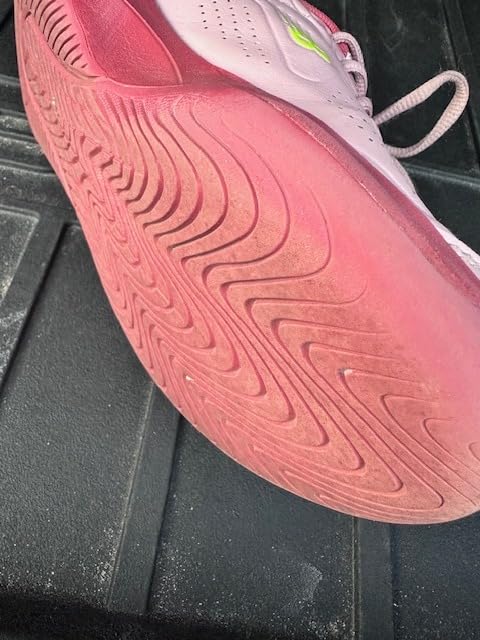
After three months of testing at 3-4 sessions per week, the outsole tells a clear story. The tread in my primary wear areas – toe drag zone and pivot points – is approximately 80% worn down. Small sections show the rubber layer thinning toward the midsole. Replacement is due.
Here’s the timeline I documented through weekly inspections. During weeks 2-4, I noticed minor surface wear in the toe drag area – normal for any court shoe. By month two, the wear became noticeable in high-impact zones, with the herringbone pattern visibly shallower. At month three, I’m at the point where traction is starting to suffer and I need fresh shoes.
The wear occurs primarily where you’d expect: the toe drag area for right-handers (left toe for me), pivot points in the forefoot, and lateral edges where you push off during direction changes. The rest of the outsole shows moderate wear but isn’t critical yet. It’s not even wear across the whole shoe – it’s concentrated high-stress zones failing first.
Interestingly, the upper held up beautifully throughout this period. Minimal scuffing, no separation at seams, structure fully maintained. The synthetic material is genuinely durable. The durability issue is specifically and solely the outsole compound wearing faster than recreational players probably expect.
Compared to budget $40-50 court shoes, the NDurance rubber outperforms – those often show significant wear within 4-6 weeks of similar use. Compared to premium $130-150 models with advanced rubber compounds, the 696 V5 falls short – those typically give me 5-6 months before replacement becomes necessary.
True Cost of Ownership: The Value Calculation That Actually Matters
Let’s talk real numbers, because durability complaints mean nothing without cost context. Saying “it only lasts 2-3 months” sounds bad in isolation. But what matters is cost per wear and total annual investment for your actual play frequency.
I paid $75 for my pair (full MSRP). Over 36 sessions in three months, that’s $2.08 per wear. Now compare that to premium court shoes at $130-150. Those last about 5-6 months with similar frequency – roughly 48-54 sessions. That works out to $2.41-2.78 per wear for premium models.
You’re replacing the 696 V5 more often, which means more frequent shopping trips and the annoyance of breaking in new shoes. But you’re spending the same or less per actual use. If you catch them on sale – New Balance frequently discounts to $59.99 – your cost per wear drops to just $1.67.
Your play frequency dramatically affects this value equation. If you play 1-2 times per week, these shoes will last 4-6 months, making them excellent value. At my 3-4 times per week frequency, I need replacement every 2-3 months, which is still acceptable value but requires budgeting for 4-5 pairs annually (about $300-375 at full price, $240-300 on sale). If you play 5+ times per week or practice daily, invest in premium durability – you’ll replace these monthly, and the shopping hassle outweighs any per-wear savings.
Sizing: The Decision Framework You Need
The universal feedback from over 100 reviews I analyzed, every woman in my pickleball group, and my own experience is identical: this shoe runs small and narrow. Let me give you the decision framework that saves you return shipping hassles.
For normal to wide feet: Order half a size up from your normal athletic shoe size AND get the D (Wide) width. I normally wear 8.5 in Brooks and ASICS running shoes. My perfect fit in the 696 V5 is size 9 Wide. Three women in my group followed this same formula (their normal size + 0.5, in Wide) and all reported excellent fit.
For genuinely narrow feet: Order the B (Standard) width. You might be able to stay true to size in length, though I’d still lean toward going up half a size. The Standard width is narrow enough that it should work for narrow-footed players, though you’re not the primary target audience for this shoe.
For half-sizes and between sizes: Round up. If you’re normally 8.5, get the 9. If you’re normally 9, get the 9.5. The shoe runs short enough that you won’t have excess room with the slightly larger size.
Expect these to feel good immediately. If they don’t, it’s the wrong size – return them. These don’t “stretch out” significantly during break-in. What you feel in the first 10 minutes is essentially what you’ll have permanently, aside from the heel counter softening slightly.
Temperature Performance: The Breathability Question
New Balance mentions “breathable mesh panels” in their marketing materials. The mesh is there visually, with perforations throughout the upper. The breathability? Limited.
During multiple sessions in 85°F+ weather, my feet ran noticeably warm. Not unbearably hot, but definitely warmer than lightweight mesh court shoes I’ve worn. The perforations in the synthetic material seem more cosmetic than functional. Compared to ultra-breathable court shoes with engineered mesh uppers, the 696 V5 feels significantly less ventilated.
The durable synthetic construction that helps the upper maintain its structure through months of wear inherently sacrifices airflow. That’s the trade-off – durability and support versus ventilation. For fall, winter, and spring play, this isn’t an issue. For summer outdoor tennis in hot climates, your feet will warm up during extended sessions.
Moisture-wicking socks help somewhat but won’t solve the underlying ventilation limitation. If breathability is a top priority – if you play in consistently hot conditions or overheat easily – consider more ventilated alternatives even if they sacrifice some durability.
Who Should Buy the 696 V5 (And Who Absolutely Shouldn’t)
PERFECT FOR:
- Recreational tennis or pickleball players who play 1-4 times per week at moderate intensity
- Wide-footed players (normal to wide width) who struggle to find comfortable court shoes that don’t pinch
- Budget-conscious players who understand and accept a 2-3 month replacement cycle for the price savings
- Players with guaranteed dry hard court access – indoor courts or consistently dry outdoor climates
- Beginners who prioritize immediate comfort and stability over competitive performance features
- Players who value fit and comfort over maximum durability or sleek aesthetics
CONSIDER CAREFULLY IF:
- You play on outdoor courts where damp conditions occur (morning dew, post-rain, humidity) – the safety risk is significant
- You play more than 4 times per week – the replacement frequency becomes burdensome despite acceptable cost per wear
- You prioritize breathability and lightweight feel – these run warm and feel substantial
- You’re extremely budget-constrained and can’t manage 2-3 month replacements – a higher upfront investment in durability might serve better
LOOK ELSEWHERE IF:
- You have narrow feet – even the Standard width may feel roomy; the D (Wide) will definitely be too big
- You play competitively with daily practice or matches – you need premium durability that lasts 5-6 months minimum
- You need all-surface versatility for clay or grass courts – this is hard-court specific by design
- You want a walking or casual shoe – the court-specific construction doesn’t translate to all-day wear
- You play outdoors without guaranteed dry conditions – the damp court traction failure is genuinely dangerous
Alternatives Worth Considering
If you’re currently wearing the 696 V4, here’s what changed in the V5. New Balance added 2mm of midsole foam for slightly more cushioning, raised the ankle collar for additional support, and introduced a raised lateral outrigger for improved stability during lateral movements. The V5 costs about $5 more than V4 launch pricing. If you’re happy with your V4s, wear them out. When replacement time comes, the V5 is a worthwhile upgrade for those stability improvements.
For players with narrow feet who don’t benefit from the wide-width feature, look at the K-Swiss Bigshot Light 4 or K-Swiss Court Express. Both offer excellent court performance in narrower fits.
If you need better durability and play 4+ times weekly, consider the ASICS Gel-Challenger 14 or premium tennis shoes. These cost $110-140 but deliver 5-6 months of regular use, making the per-wear cost comparable while reducing replacement hassle.
For lightweight performance over comfort, the adidas Defiant Speed or similar lightweight models might appeal. However, these sacrifice the wide-fit accommodation and out-of-box comfort that makes the 696 V5 special for its target audience.
Frequently Asked Questions
How does sizing run on the 696 V5?
It runs small and narrow. Order up half a size from your normal athletic shoe size. If you have normal to wide feet, get the D (Wide) width. I wear 8.5 in most running shoes and need size 9 Wide in these. The fit should feel good immediately – they won’t stretch significantly during break-in.
Are these safe to use on damp courts?
No. This is the most critical flaw I found during testing. The herringbone outsole that grips excellently on dry hard courts becomes dangerously slippery when any moisture is present. I experienced this firsthand multiple times. Only use these on guaranteed dry courts to avoid injury risk.
How long do they actually last with regular play?
For 3-4 times per week play like mine, expect 2-3 months before the outsole is 80% worn and replacement is needed. Play 1-2 times weekly and you’ll get 4-6 months. Daily players will see monthly replacement needs. The upper holds up beautifully – the durability limitation is specifically the outsole rubber compound.
Do I need to order the wide width?
If you have normal to wide feet, yes – get the D (Wide) width. The Standard B width is quite narrow and will likely pinch for average-width feet. Only players with genuinely narrow feet should consider the Standard width. The D (Wide) provides roomy forefoot without sacrificing heel security.
Can I use these for pickleball as well as tennis?
Yes. I tested them extensively for both sports. The lateral support and traction (on dry courts) work equally well for pickleball’s quick lateral movements. The court shoe design translates perfectly. Just remember the same damp court warning applies to pickleball courts too.
Do they require break-in time?
Minimal. They felt comfortable immediately out of the box. By sessions 2-3, the heel counter softened slightly and they felt fully settled. If they don’t feel good in the first 10 minutes of wear, it’s likely a sizing issue rather than needing more break-in.
How do they perform in hot weather?
They run warm. Despite mesh panels in the upper, ventilation is limited. During multiple sessions in 85°F+ temperatures, my feet were noticeably warmer than in lightweight breathable court shoes. The durable synthetic construction prioritizes structure over airflow. Moisture-wicking socks help somewhat.
Can I use these for walking or everyday wear?
No. They’re court-specific performance shoes with firm, responsive cushioning optimized for lateral movements. After 2 hours of play, I immediately change into something else. They don’t provide the comfort for all-day casual wear.
What’s different from the 696 V4 version?
The V5 has a thicker midsole with 2mm additional foam, a higher ankle collar for more support, and a new raised lateral outrigger for improved stability. The changes cost about $5 more than V4 pricing. If you’re replacing V4s, the upgrade is worthwhile for the enhanced stability features.
Are they good for players with plantar fasciitis?
Results vary based on individual foot mechanics. The moderate cushioning and structured support work for some players, while others need more arch support or cushioning. The removable insole allows you to try aftermarket orthotics. However, I’d recommend consulting with a podiatrist for plantar fasciitis recommendations rather than relying solely on shoe choice.
Final Verdict and Practical Tips
The New Balance 696 V5 occupies a specific niche, and if you fall into that target audience, it’s genuinely the best value option available. For recreational players with wide feet who play on guaranteed dry hard courts 1-4 times per week, this shoe delivers comfort, fit, and performance at an accessible price point.
I still use mine knowing the flaws. The wide-fit accommodation ended years of pinched toes and compressed forefoot pain. The lateral support gives me confidence during aggressive play. The $75 price point (often $60 on sale) makes the 2-3 month replacement cycle economically acceptable for my recreational frequency. The out-of-box comfort means I’m not suffering through break-in periods.
However, the limitations are real and non-negotiable. The damp court traction failure is a genuine safety issue – if your courts ever have moisture, find a different shoe. The 2-3 month outsole lifespan means frequent replacement, which is annoying even if cost-per-wear remains competitive. The limited breathability creates warm feet during summer play.
Practical tips if you buy these:
- Order half size up and D (Wide) width for normal to wide feet – size 9 Wide if you normally wear 8.5
- Budget for replacement every 2-3 months if playing 3-4x weekly, every 4-6 months if playing 1-2x weekly
- NEVER use on damp courts – wait for guaranteed dry conditions or play indoors only
- Wear moisture-wicking socks to manage the limited ventilation during hot weather
- Watch for sales – these frequently drop to $59.99, making them even better value
- Try at home first – they should feel good immediately; if not, return and adjust sizing
- Track outsole wear weekly so you know when replacement is due before traction suffers
Check current pricing and recent reviews for any manufacturing updates. New Balance occasionally adjusts colorways and makes minor production changes, so verify specifications match what I tested.
For players who match the target profile – wide feet, recreational frequency, dry courts, budget-conscious – this shoe solves real problems. For everyone else, the limitations outweigh the benefits. Know which category you fall into before buying.
Sarah Chen
Recreational Tennis & Pickleball Player
10+ Years Testing Court Shoes
Be the first to review “New Balance Womens 696 V5 Hard Court”
Related products

Sneaker
Sneaker
Sneaker
Sneaker

Sneaker
Sneaker
Reviews
There are no reviews yet.