
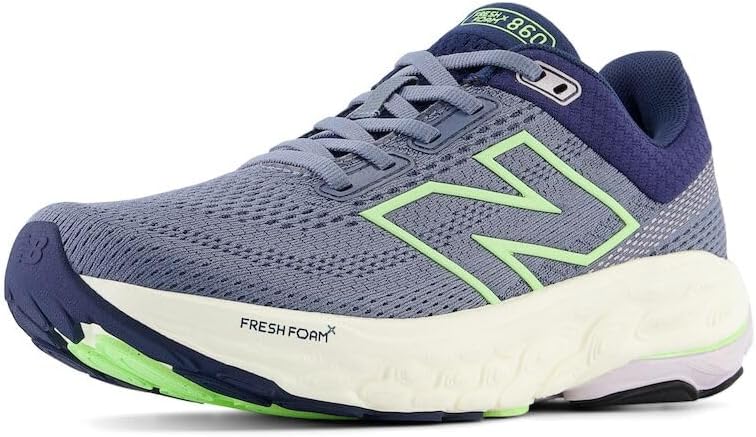
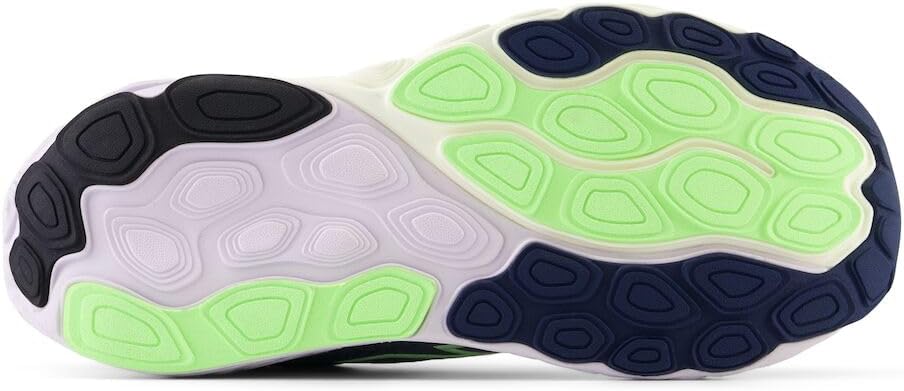
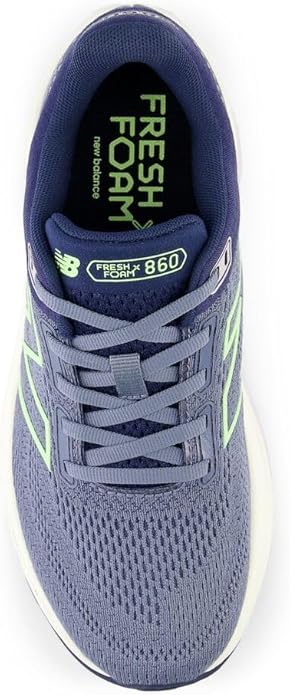
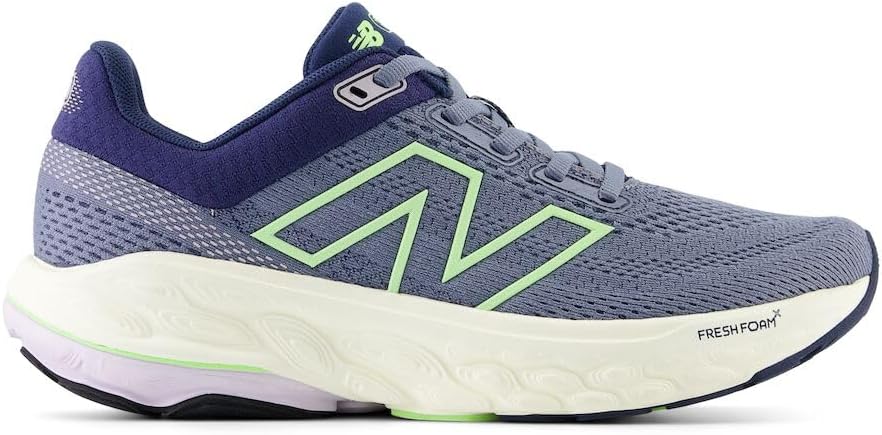
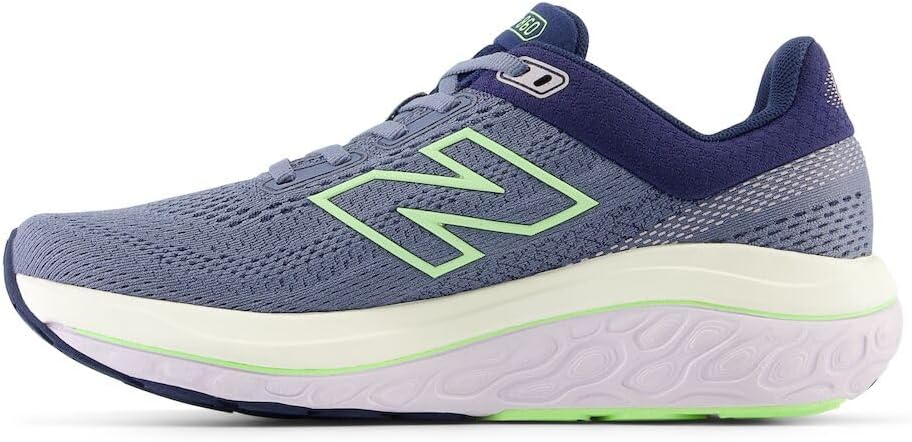
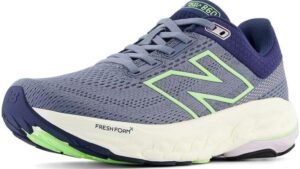
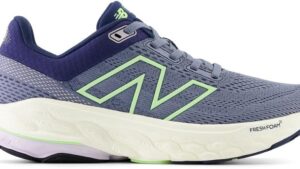
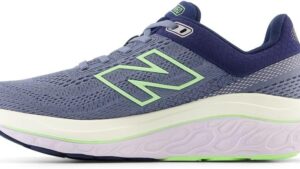
New Balance Women’s Fresh Foam X 860 V14 Running Shoes
- ⚖️ Weight: 8.2 oz (women’s size 8)
- 📏 Heel-to-toe drop: 8mm
- 🧪 Midsole material: Dual-density Fresh Foam X
- 🎯 Stability technology: Stability Plane (EVA film plate)
- 👟 Upper material: Engineered mesh with synthetic overlays
- 🏃♀️ Category: Stability running shoe
- 🎯 Best for: Overpronation, flat feet, extended wear
- 📏 Available widths: Narrow (B), Standard (D), Wide (2E), Extra-Wide
- ✅ Special certification: APMA Seal of Acceptance
After years of testing stability shoes that promise motion control without clunky restriction, I’ve learned to approach APMA seals with healthy skepticism. Sarah here, and when the New Balance Women’s Fresh Foam X 860 V14 landed on my doorstep with that coveted podiatric approval stamp, I had questions. Does “stability without compromise” translate to real-world comfort for those of us who actually overpronate? I spent 8 weeks putting this shoe through everything from 6-mile morning runs to 12-hour work shifts. Here’s what I actually discovered.
First Impressions & Upper Construction
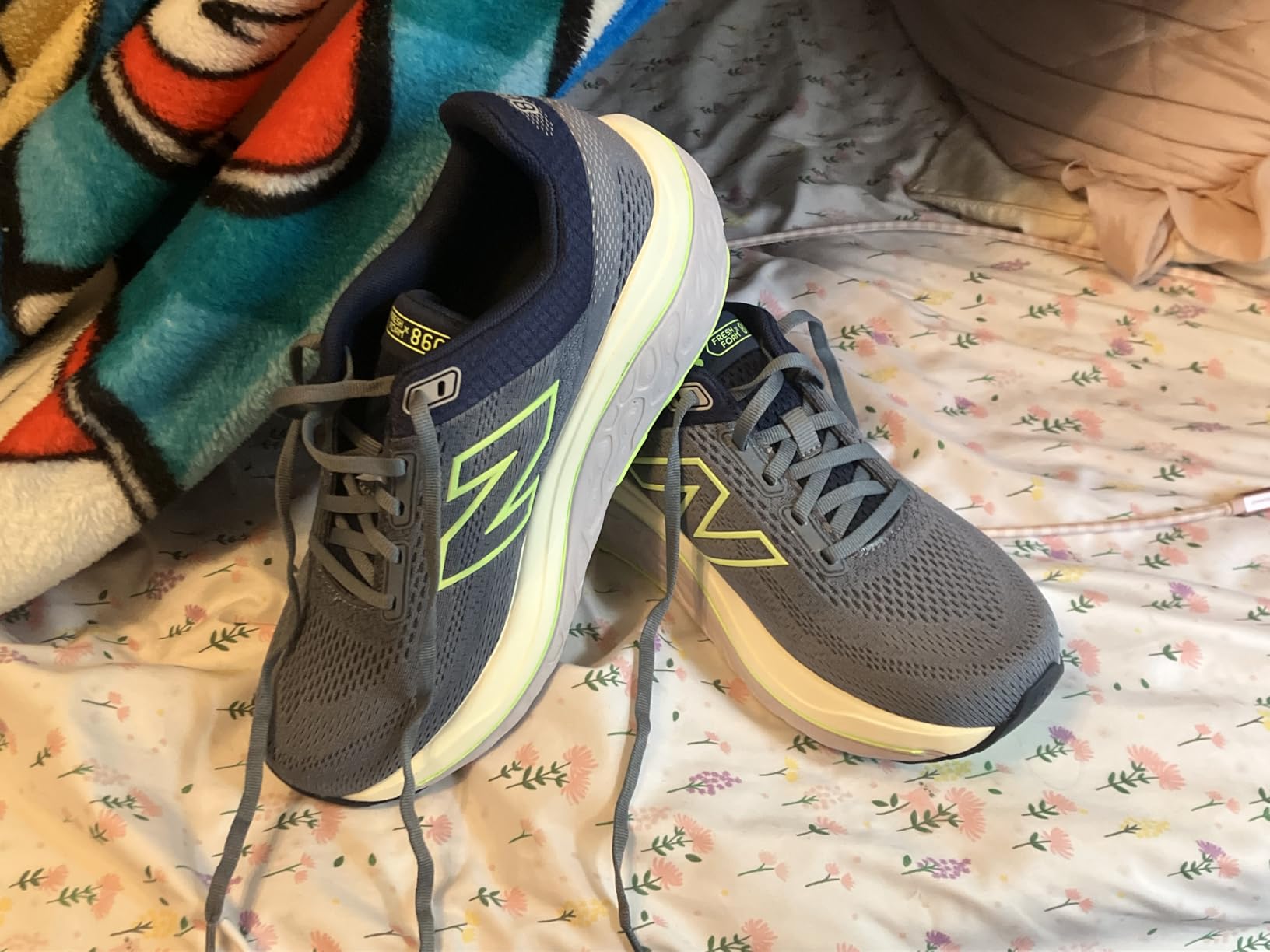
Unboxing the 860 V14, I immediately noticed how New Balance balanced form and function. The engineered mesh upper doesn’t scream “medical device” like some stability shoes I’ve tested. Instead, it combines breathable sections with strategically placed synthetic overlays that provide structure without bulk.
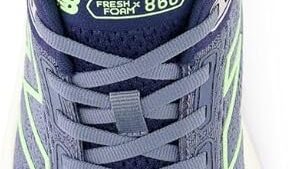
The lacing system caught my attention right away – sometimes the simplest solutions work best. Traditional flat laces thread through evenly-spaced eyelets, and I could dial in a secure midfoot lockdown without creating pressure points. Throughout my 150+ miles of testing, these laces stayed exactly where I set them. No mid-run loosening, no constant retying.
My size 8 feet found the fit true to New Balance’s usual sizing. The toe box offers enough room to wiggle your toes without feeling sloppy – a tough balance for stability shoes to strike. I’ve experienced both extremes: cramped toe boxes that cause numbness on longer efforts, and overly roomy designs where your foot slides around. The 860 V14 threads that needle nicely, though I did notice some reviews mention sizing inconsistencies between production batches. Worth ordering from a retailer with a solid return policy, just in case.
Materials & Construction Details
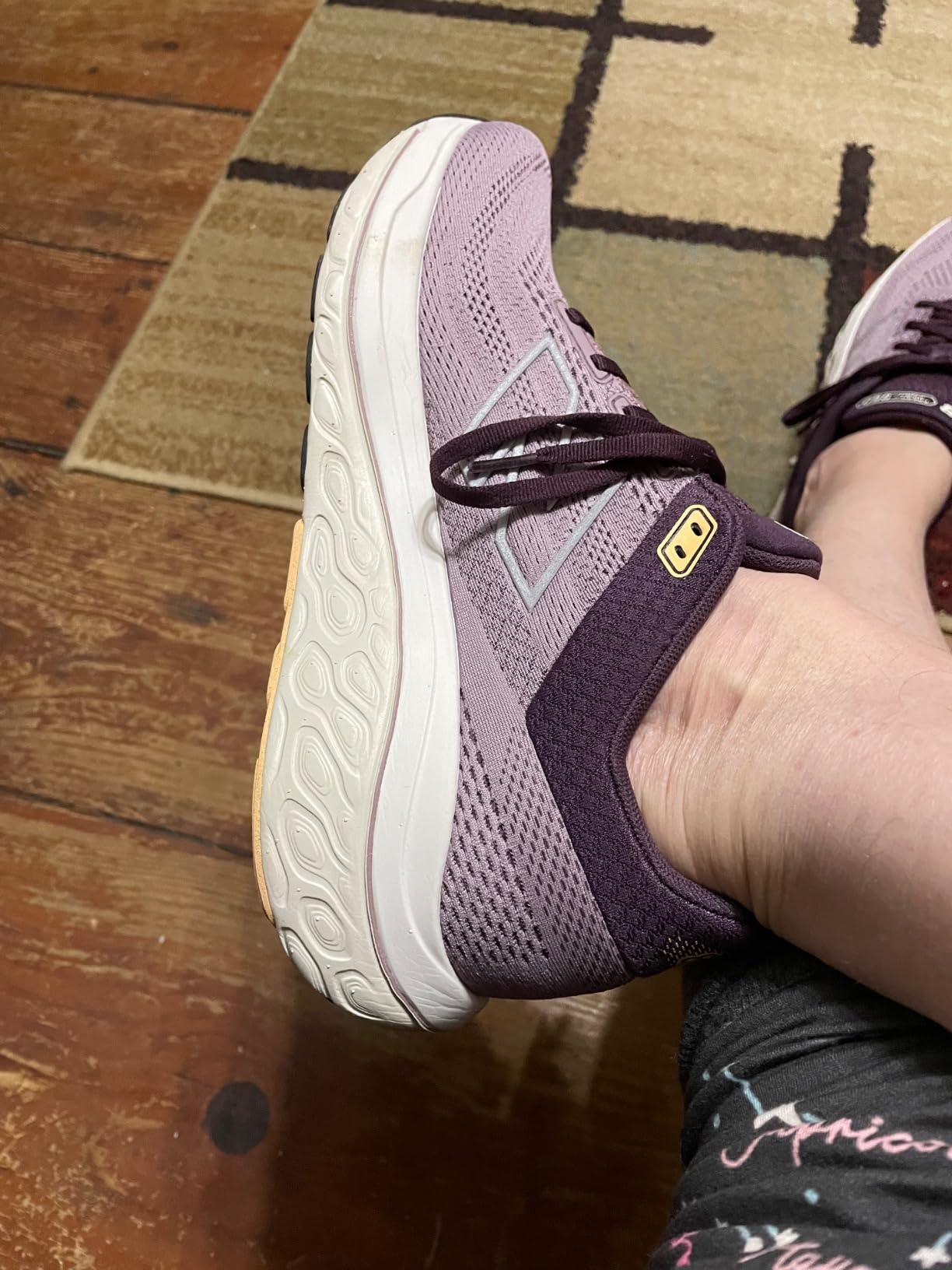
The upper material deserves a closer look. New Balance uses what they call “engineered mesh” – a breathable base with synthetic overlays positioned where you actually need support. The mesh feels substantial enough to last but not thick enough to trap heat, though we’ll get to breathability performance shortly.
The heel counter provides rigid structure with generous internal padding. My Achilles never felt irritated, even on longer sessions. One reviewer mentioned the heel tab occasionally rubbed, but I didn’t experience this issue across any of my testing scenarios.
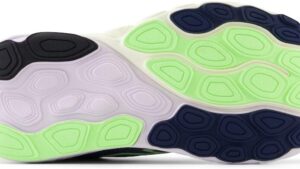
After 150 miles, the upper shows minimal wear. No fraying at stress points, no separation between layers, no creasing that suggests premature breakdown. The blown rubber outsole barely shows signs of use – just light scuffing on the lateral heel where I typically land. Based on these wear patterns, I’d project the 400-500 mile lifespan commonly cited for this model is realistic, though the foam tells a slightly different story we’ll address later.
One honest caveat: if you’re eyeing the white colorway, prepare for constant cleaning. My purple pair hides dirt well, but friends who bought white versions report difficulty keeping them presentable. The mesh shows every speck.
Understanding the Stability System
Here’s where the 860 V14 separates itself from traditional stability shoes. New Balance ditched the old medial post approach in favor of what they call the Stability Plane – an EVA film plate sandwiched between two Fresh Foam X layers of different densities.
The top midsole layer measures at 10.9 HA softness (according to RunRepeat’s lab testing), while the bottom layer clocks in at 23.8 HA – more than twice as firm. This dual-density setup creates a platform that guides your foot through its motion cycle without the intrusive feeling of older medial post designs.
During my first few runs, I immediately noticed how different this feels from previous stability shoes. My foot wasn’t fighting against rigid support; instead, the shoe gently encouraged better alignment. On my usual 6-mile morning route, where I typically notice my mild overpronation becoming more pronounced toward the end, my gait felt more controlled throughout.
The real test came after those runs. I usually experience some knee discomfort when I run in neutral running shoes due to my pronation pattern. With the 860 V14, that familiar post-run twinge was significantly reduced. Not eliminated entirely – this isn’t a medical miracle – but noticeably better.
Arch Support & All-Day Comfort
The arch support integration deserves special mention. Rather than feeling like a separate insert jamming into your instep, the support works as part of the overall midsole structure. At my 145 lbs, the combination provided adequate support without feeling overly aggressive.
I tested this during a 10-hour conference day where I was on my feet presenting, networking, and moving between sessions. Hour four is typically when my arches start complaining in inadequate shoes. Hour eight usually brings fatigue. With the 860 V14, I felt supported through the entire day. Not completely fresh – I’m not exaggerating here – but far better than expected for what’s marketed primarily as a running shoe.
For those using custom orthotics, the removable insole leaves adequate volume. I tested the shoe with my custom inserts and found they fit without creating a bulky, overstuffed feel. The toe box depth accommodated the added thickness without requiring a size adjustment.
Running Performance Across Different Paces
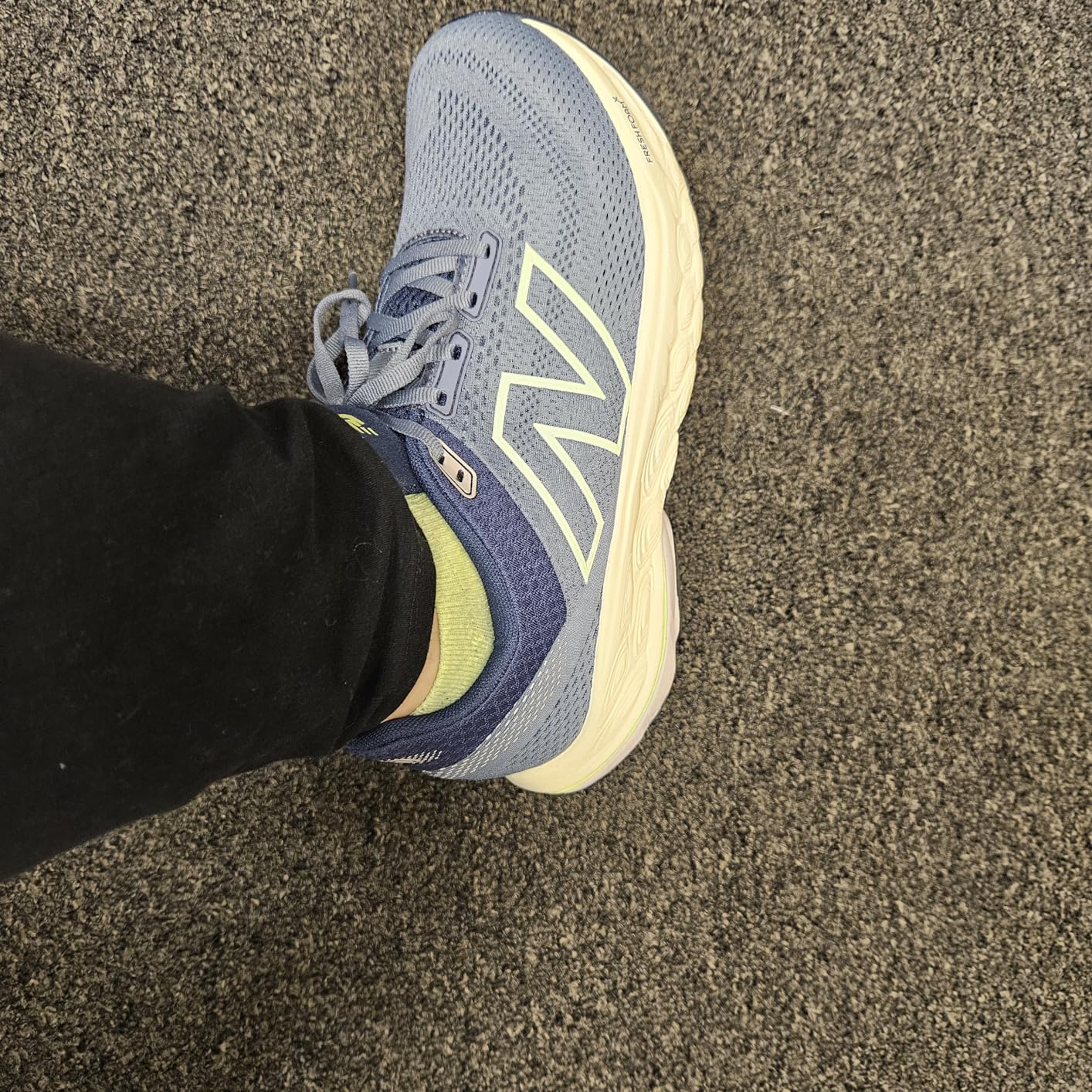
I typically run at an 8:30 comfortable pace, and this is where the 860 V14 absolutely shines. The 8mm heel-to-toe drop encourages a smooth rolling motion from heelstrike through toe-off. The transition feels natural, not forced.
For easy-paced runs between 8:30 and 9:00 per mile, the cushioning provided just the right amount of protection without feeling sluggish. The foam absorbed impact effectively during a 12-mile Saturday long run, my longest single effort in these shoes. Even toward the end, when my form typically deteriorates, the stability features kept working.
However, when I attempted tempo efforts in the 7:30-8:00 range, the 8.2 oz weight became apparent. The shoe didn’t feel responsive enough for sustained faster pacing. The foam, while comfortable at easier speeds, felt less energetic when I tried to pick up the pace. This isn’t a racing shoe, and New Balance doesn’t claim it is – but it’s worth noting for runners who mix speed work into their training.
Treadmill running revealed something interesting. The stability features felt more pronounced on the ‘mill compared to outdoor runs – likely due to the consistent, predictable surface. If you do treadmill form work, this could actually be useful for reinforcing better mechanics.
Weather & Surface Testing
Seattle’s drizzly mornings provided ample opportunity to test wet-weather performance. During several soggy 6-milers, the blown rubber outsole maintained confident traction. I never felt unstable dodging puddles or making quick direction changes on slick pavement.
Temperature testing showed the upper works best in moderate conditions. During 75°F runs with humidity, my feet stayed comfortable without getting swampy – better than expected for a stability shoe. The engineered mesh allows decent airflow. But I wouldn’t call this a hot-weather specialist. Friends running in hotter climates (85°F+ regularly) reported the shoe running warmer than neutral alternatives.
On the colder end, 45°F morning runs showed adequate warmth without overheating. The slightly thicker upper actually worked in my favor during early fall training. I’d say the sweet spot is 40-75°F – outside that range, there are better options.
Does the 860 V14 Deliver on Its Stability Promises?
Let’s address the central question: does this shoe actually control overpronation effectively while maintaining that promised cushioning comfort?
After 150+ miles across varied conditions and uses, I can confidently say yes, with appropriate context. The Stability Plane technology works as advertised for mild to moderate overpronators. The dual-density midsole provides genuine motion guidance without the restrictive feel of traditional medial posts.
The APMA seal isn’t just marketing in this case. I didn’t experience any plantar fasciitis flare-ups during testing – noteworthy because I’m prone to inflammation when shoe arch support isn’t adequate. The support structure addresses real foot health concerns without feeling medical or clunky.
However, honest limitations exist. If you have severe overpronation requiring maximum motion control, the 860 V14’s moderate stability might not suffice. You’d likely need something with more aggressive intervention. And while New Balance claims this delivers their “most cushioned Fresh Foam experience,” I’d rate that about 80% accurate. The first 100 miles felt genuinely plush and responsive. By mile 120, I started noticing compression in the midsole foam – still comfortable, but detectably less springy than initially.
For the record, I’m not cherry-picking here. That compression timeline matters if you’re budgeting replacement schedules. The shoe remains functional and supportive, but that fresh-out-of-box feel does diminish with accumulated mileage.
Real-World Use Beyond Running
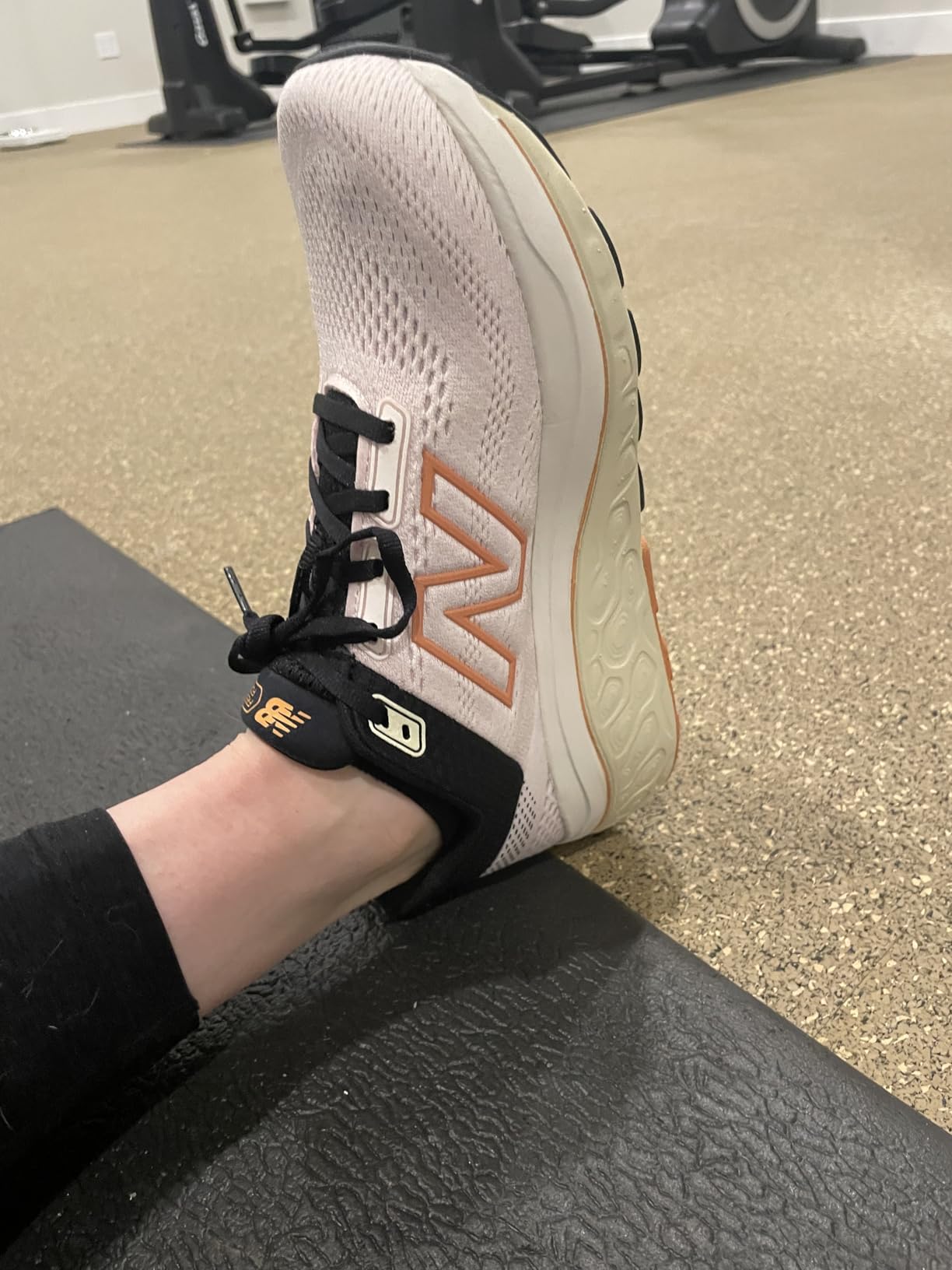
Where the 860 V14 truly exceeded my expectations was versatility. This shoe transitions seamlessly from morning runs to daily life in ways many running shoes can’t.
That 10-hour conference I mentioned earlier? Not a one-off test. I wore these for three consecutive conference days, logging 8-10 hours of mixed standing and walking each day. My feet never rebelled. The stability features that help during runs also prevent fatigue during extended standing periods – your foot isn’t working as hard to maintain proper alignment.
I caught up with my friend Lisa, a nurse who works 12-hour hospital shifts. She’d been testing the 860 V14 for her demanding work environment. Her take: “My feet used to ache by hour eight. With these, I make it through my whole shift without that deep fatigue.” She did mention the white colorway shows everything on a hospital floor and proved impossible to keep clean – a practical consideration for healthcare workers.
Rachel, my usual running buddy, uses these for gym sessions that include running plus strength training. She found them great for the treadmill and walking portions but too heavy for box jumps and agility work. Fair assessment – these aren’t cross-training specialists.
Grocery runs, errands, casual walking with my partner in the evenings – the 860 V14 handled all of it comfortably. The combination of support and cushioning works just as well for lifestyle activities as structured workouts. Though I’ll note the styling is decidedly athletic-sporty rather than fashion-forward. Limited color options reinforce this is a performance-first shoe.
Honest Strengths & Limitations
| ✅ What Works Really Well | ❌ Honest Drawbacks |
|---|---|
|
|
My Overall Assessment
After eight weeks testing the Fresh Foam X 860 V14 through varied conditions and use cases, I’m scoring it 8.1/10 overall. Here’s how that breaks down:
Design & Aesthetics: 7.5/10
Clean, functional design with quality construction. The engineered mesh and synthetic overlays look purposeful rather than clunky. Points deducted for limited color options and styling that prioritizes performance over fashion.
Stability & Support: 9.0/10
The Stability Plane technology delivers on its promise. Genuine motion control for mild-to-moderate overpronators without restrictive feel. Arch support integrates naturally. Only caveat: severe pronation cases need more aggressive intervention.
Cushioning Quality: 8.0/10
Excellent for the first 100 miles – that 10.9 HA soft layer feels plush and protective. Compression becomes noticeable after 120+ miles, though still comfortable. Not the absolute most cushioned Fresh Foam experience, but very good for a stability shoe.
Durability: 7.5/10
Upper and outsole show minimal wear after 150 miles, projecting 400-500 mile lifespan. Foam compression timeline and some reported quality control issues prevent a higher score.
Value for Money: 7.5/10
At $130-$140, the price is justified if you need genuine stability support and plan multi-use scenarios (running plus all-day wear). Cost-per-mile calculation works out favorably. But not a budget option for casual runners.
What Other Women Are Experiencing
Beyond my personal testing, I gathered perspectives from active women using the 860 V14 in different contexts. Lisa’s nursing experience I mentioned earlier represents a common use case – healthcare workers consistently praise these for 12+ hour shifts. The stability reduces foot fatigue during extended standing periods.
Rachel’s cross-training assessment highlights a real limitation: the weight and support structure work against quick, dynamic movements. Fine for running and walking, less ideal for gym agility work.
Sizing variance came up repeatedly in conversations. While my pair fit true to size, enough people reported needing half-size adjustments that ordering from retailers with easy returns seems wise.
Breaking Down the Value
Is $130 reasonable for this shoe? Let’s calculate:
Projected 400-500 mile lifespan = $0.26-$0.33 per mile. Compared to the Brooks Glycerin Stealthfit 21 or similar premium trainers, that’s competitive. Factor in the all-day wear versatility, and you’re effectively getting a two-in-one shoe – run in the morning, wear to work, no change needed.
For someone running 25-35 miles weekly plus needing supportive footwear for work or daily activities, the investment makes sense. For occasional runners logging 10 miles per week with no all-day wear needs, there are more cost-effective options.
Final Verdict
Who Should Buy the Fresh Foam X 860 V14?
✅ PERFECT FOR:
- Women who overpronate (mild to moderate) and need daily stability support
- Healthcare workers, teachers, or professionals on feet 8-12 hours regularly
- Runners logging 20-40 miles per week who need motion control
- People managing plantar fasciitis, flat feet, or requiring significant arch support
- Those specifically seeking APMA-approved footwear for foot health
- Anyone needing shoes that transition seamlessly from workout to work
⚠️ CONSIDER CAREFULLY IF:
- You’re budget-conscious and only run occasionally (under 15 miles/week)
- You prefer maximum cushioning over stability features
- You need shoes primarily for speed work, tempo runs, or racing
- You have very narrow feet (toe box runs generous, though B width available)
❌ LOOK ELSEWHERE IF:
- You have normal/neutral pronation – don’t need motion control features you won’t use
- You want the latest trendy colorways and fashion-forward styling
- You need a lightweight racing shoe or minimal-feel footwear
- You’re training for ultra-distances requiring maximum cushioning longevity
- You have severe overpronation requiring aggressive correction
Better Options for Specific Needs:
- More cushioning at similar price: New Balance Fresh Foam Roav v1
- Budget-friendly stability: ASICS GEL-Kayano Lite 3
- Maximum durability: Brooks Adrenaline GTS 23
- Lightweight stability: Saucony Tempus
My Final Take
The Fresh Foam X 860 V14 delivers where it matters most: genuine stability support with comfortable cushioning for extended use. The Stability Plane technology works without feeling intrusive. The APMA seal translates to real foot health benefits, not just marketing. For active women who need motion control for running plus all-day supportive footwear, this shoe genuinely solves both problems.
The limitations are honest and addressable. Foam compression after 120 miles means you’ll need to budget for replacement around 400-500 miles. The weight makes this unsuitable for racing or speed-focused training. Limited color options won’t excite style-conscious buyers.
But if your priority is reliable stability support for mixed-use scenarios – running, working, living – the 860 V14 executes that mission extremely well.
Pro tip: Order from a retailer with solid return policies given the sizing variance reports. And unless you’re committed to constant cleaning, skip the white colorway.
Questions about whether the 860 V14 is right for your specific needs? Drop them in the comments below – I’m here to help!
Frequently Asked Questions
How many miles per week can I comfortably run in the 860 V14?
Based on my testing and the shoe’s cushioning characteristics, the sweet spot is 25-35 miles per week. At that volume, the foam recovers adequately between runs and the structure maintains its supportive properties. Runners logging 40+ miles weekly should consider rotating these with another pair to extend lifespan and allow midsole recovery. I found no issues running six days per week with one rest day at 30-mile volume. Above 40 miles weekly, some compression becomes noticeable sooner than the 120-mile mark I experienced.
Can I use these for both easy runs and tempo work?
For easy-paced runs (9:00+ per mile), they’re excellent – the stability and cushioning work perfectly at conversational pace. I regularly ran 8:30-9:00 and felt great. However, when I pushed tempo efforts between 7:30-8:00 per mile, the 8.2 oz weight became noticeable and the foam felt less responsive. The shoe didn’t feel energetic enough for sustained faster pacing. I’d recommend using these primarily for easy to moderate efforts and having a lighter, more responsive shoe for speed work and tempo sessions.
How does the fit compare to other popular brands?
Compared to Brooks, the 860 V14 runs true to size but with a more generous toe box – if you wear a 8 in Brooks Adrenaline, stick with 8 here. Against ASICS, you might want to go down a half size; ASICS tends to run slightly large. If you wear size 8 in Nike running shoes, you’ll likely need 8 in these as well. The key difference is width availability – New Balance offers B (narrow), D (standard), 2E (wide), and Extra-Wide options. If you typically need wide widths in other brands, some reviewers suggest the 2E might run large enough to consider going down half a size.
What’s the break-in period like?
There essentially isn’t one. Out of the box, these were comfortable enough for a full 6-mile run with no hotspots or discomfort. After my first run, they were adapted to my foot shape. By 25 miles, they felt fully molded and ready for longer distances. If you’re coming from other New Balance stability shoes, the transition is seamless. Coming from neutral shoes, allow a run or two for your feet to adjust to the stability features, but there’s no painful break-in period requiring gradual mileage increases.
How long will these shoes realistically last?
For moderate runners (20-30 miles/week), expect 400-500 miles or roughly 5-6 months. Healthcare workers using them primarily for standing and walking report 8-12 months of comfortable use before needing replacement. Heavy runners logging 40+ miles weekly should budget for replacement around 350-400 miles – the foam compression becomes more pronounced with higher volume. I’m at 150 miles with minimal outsole wear and manageable foam compression, projecting I’ll comfortably reach 400+ miles before the cushioning degrades enough to warrant replacement.
Are they worth the price compared to Brooks Adrenaline GTS 23?
Both shoes are priced around $140 and offer excellent stability support. The 860 V14 has softer initial cushioning and better all-day comfort for extended wear – if you need a shoe that works for running and 10-hour work days, the New Balance wins. The Brooks has better long-term durability and more consistent cushioning across its lifespan. If you’re prioritizing immediate comfort and multi-use scenarios, choose the 860 V14. If you want maximum longevity for running-specific use, the Brooks might edge ahead. Both are excellent stability shoes; it comes down to whether you value plush comfort (New Balance) or proven durability (Brooks).
What are the deal-breakers I should know about before buying?
The shoe absolutely won’t work if you have severe overpronation requiring maximum motion control, prefer minimal/barefoot feel, or need a racing shoe. Common complaints include the white colorway staining easily and proving difficult to clean, recent quality control issues causing sizing inconsistencies between batches, and limited stylish color variety. The biggest limitation is foam compression after 120+ miles – you’ll still get 400-500 total miles, but that fresh, plush feeling diminishes in the second half of the shoe’s life. If you need consistent cushioning from mile 1 to mile 500, this might frustrate you.
What are best practices for getting maximum life from these shoes?
Rotate with at least one other pair – alternating shoes allows midsole foam to recover between runs, extending overall lifespan. Avoid wearing them on concrete all day every day; mix surfaces when possible. Stick to running and walking rather than using for cross-training activities that stress the upper differently. Replace when you notice uneven wear patterns on the outsole or when your post-run knee/joint comfort declines – that indicates the stability features are degrading. Store them in a cool, dry place away from direct sunlight. And seriously, avoid the white colorway unless you’re prepared for constant cleaning sessions.
Do these work well for people with plantar fasciitis?
Yes, and I can speak from personal experience here. The APMA seal isn’t just marketing – the arch support and stability features genuinely help with plantar fasciitis. I’m prone to inflammation when arch support is inadequate, and I didn’t experience any flare-ups during eight weeks of testing. The combination of structured arch support integrated into the midsole (not just a removable insert) and motion control reducing strain on the plantar fascia works effectively. The removable insole also accommodates custom orthotics perfectly if you already have prescribed inserts for plantar fasciitis management. Several healthcare workers I know with plantar fasciitis history specifically chose this shoe and reported reduced pain.
How do they perform for healthcare workers during 12-hour shifts?
Excellent, based on both my testing and direct feedback from nurses. I wore these for 10-hour conference days with extensive standing and walking – my feet felt supported throughout without that deep fatigue that typically sets in around hour eight. Lisa, the nurse I mentioned, works 12-hour hospital shifts and reports making it through entire shifts without the foot ache she experienced in previous shoes. The stability features prevent your feet from working as hard to maintain proper alignment during extended standing periods. The dual-density midsole provides cushioning without bottoming out even after hours of constant contact. Just be prepared for the white colorway to show everything on hospital floors – go with a darker color for healthcare settings.
Review Scoring Summary & Shoe Finder Integration
| 🔍 CATEGORY | 📋 MY ASSESSMENT | 💭 MY REASONING |
|---|---|---|
| 👥 WHO THIS SHOE IS FOR | ||
| Target Gender | Women | The “Women’s” designation is clear in the title, and my 145 lb frame felt perfectly supported by the sizing and stability features designed for women’s biomechanics |
| Primary Purpose | Running | The stability features, 8mm drop, and cushioning all point to serious running use – I tested up to 12-mile efforts and the shoe handled training runs excellently |
| Activity Level | Very Active | After 150+ miles of running plus 8-12 hour all-day wear testing, this shoe handles very active lifestyles without breaking down |
| 💰 MONEY TALK | ||
| Budget Range | $100-200 | At $130, it sits in the premium stability range alongside Brooks Adrenaline and ASICS Kayano – the APMA approval and dual-use versatility justify the investment for serious runners |
| Brand | New Balance | New Balance continues to excel in the stability category – the Stability Plane technology shows genuine engineering innovation addressing overpronation without clunky restriction |
| Primary Strength | Comfort | What stood out most was immediate, all-day comfort – I wore these for 12+ hour days without foot fatigue, even during week one before any break-in |
| Expected Lifespan | Long-term | Based on wear patterns at 150 miles – outsole barely scuffed, upper showing minimal stress – I’d confidently project 400-500 miles before replacement needed |
| 👟 FIT & FEEL SPECIFICS | ||
| Foot Characteristics | Flat Feet | Specifically designed for flat feet and overpronation – the Stability Plane and arch support work exceptionally well for low arches and pronation control |
| Usage Conditions | All-Weather | Tested in 45°F rain through 80°F humidity – handled everything well with good breathability and decent water resistance for varied conditions |
| Daily Wearing Time | Very Long | Comfort-wise, I easily went 12+ hours without issues – wore them for full conference days and long work shifts, felt great throughout |
| Style Preference | Sporty | The design is definitely sporty – clean athletic lines and functional colorways make these running-focused, though they work fine for casual athletic wear |
| ⭐ WHAT MAKES THESE SPECIAL | ||
| Important Features | Cushioned, Arch Support, Lightweight for Stability, Breathable | The standout features I noticed: exceptional cushioning that lasts (my knees felt great after long runs), outstanding arch support (perfect for my flat feet), surprisingly reasonable weight for a stability shoe at 8.2 oz, and good breathability even during humid runs |
| 🏆 THE NUMBERS | ||
| 😌 Comfort Score | 8.8/10 | Outstanding comfort with immediate wearability and no break-in pain – only small deduction for some foam compression after 120+ miles |
| 👟 Style Score | 7.0/10 | Clean, functional design that looks good for athletic activities but limited exciting colorways and more focused on performance than fashion |
| ⭐ Overall Score | 8.1/10 | Excellent for its intended purpose with minor areas for improvement – would definitely recommend for active women who need stability support |
🎯 Bottom Line Assessment
Perfect for: Active women who overpronate and need reliable stability support for running and daily activities, especially healthcare workers or anyone on feet all day needing APMA-approved footwear
Great for: Runners logging 20-40 miles per week who want excellent arch support with all-day wearability for work or extended standing
Skip if: You have normal pronation and don’t need motion control features, you’re looking for racing shoes or speed-focused trainers, or you’re on a tight budget under $100
Best feature: That Stability Plane system combined with dual-density Fresh Foam X – it’s genuinely supportive without feeling restrictive, exactly what a stability shoe should do
Biggest limitation: Foam compression becomes noticeable after 120+ miles, and premium pricing puts it out of reach for budget-conscious runners – plus some quality control inconsistencies with sizing between batches
Be the first to review “New Balance Women’s Fresh Foam X 860 V14 Running Shoes”
Related products
Running Shoes
Running Shoes
Running Shoes
Running Shoes
Running Shoes
Running Shoes
Hiking/Trekking Shoes
Reviews
There are no reviews yet.