
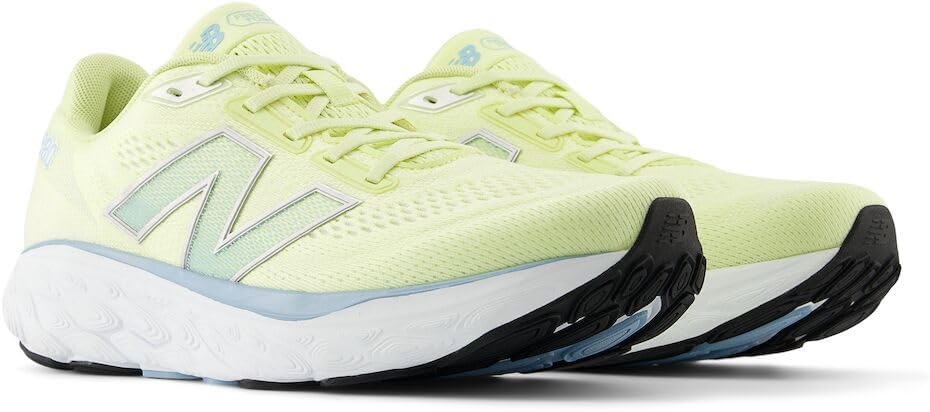
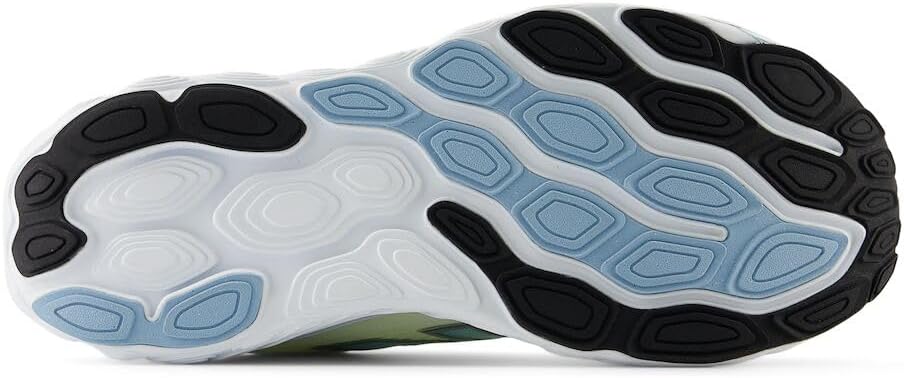
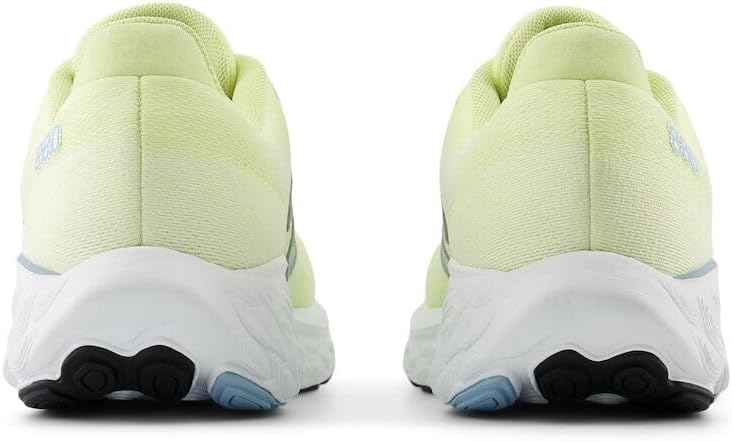
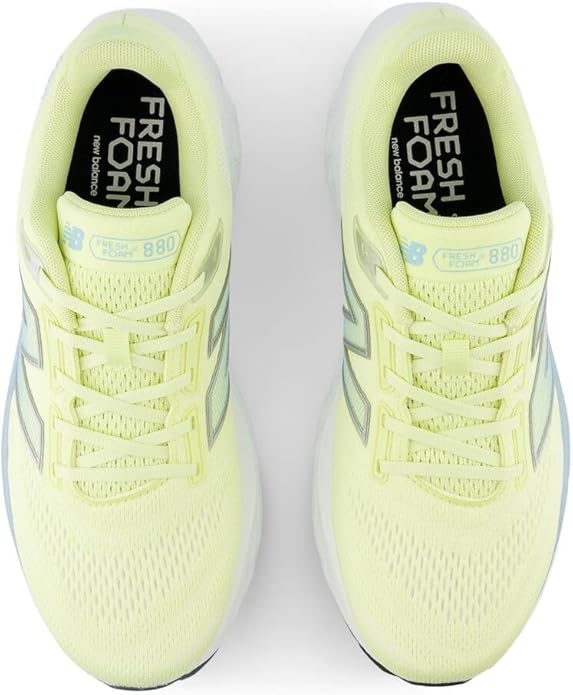
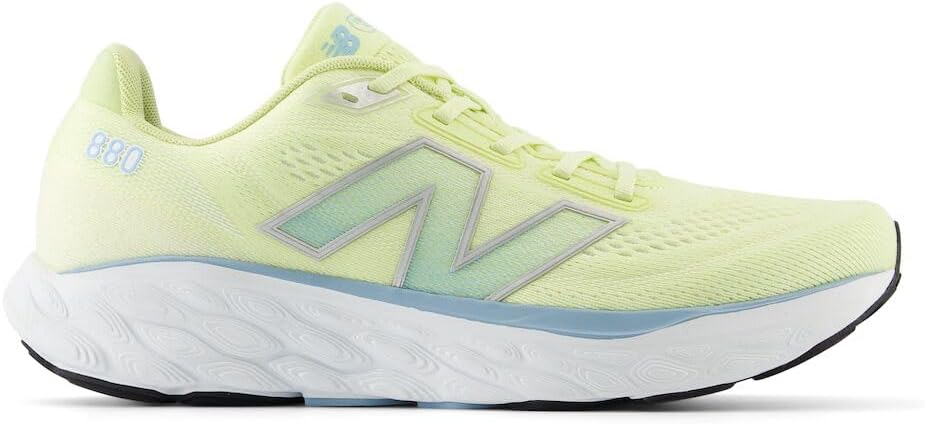
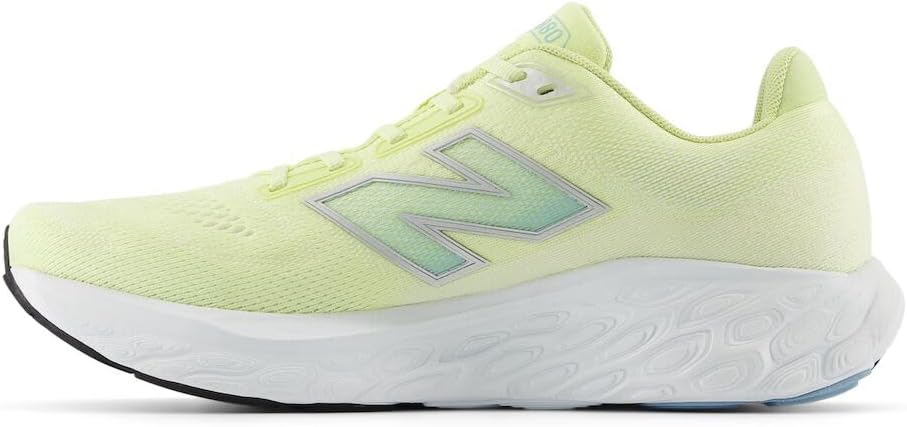
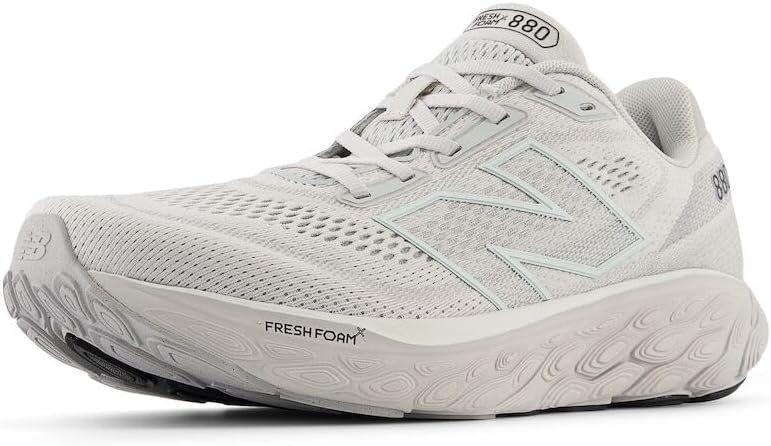
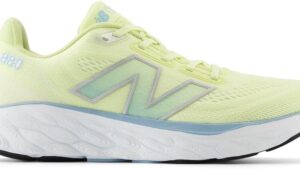
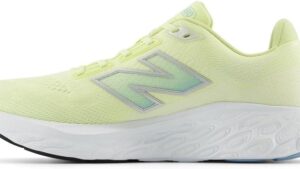
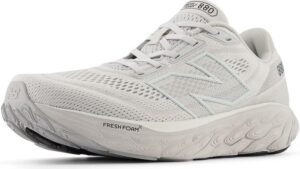
New Balance Men’s Fresh Foam X 880 V14 Running Shoe
- ⚖️ Weight: 8.7 oz / 247g (men’s size 9), 7.6 oz / 215g (women’s size 8)
- 📏 Heel-to-toe drop: 8mm (reduced from 10mm in v13)
- 📐 Stack height: 31mm heel / 23mm forefoot (official specs)
- 🧪 Midsole: Fresh Foam X single-layer (3% bio-based content)
- 👟 Upper: Engineered mesh with strategic overlays
- 🏃♂️ Category: Neutral daily trainer
- 🎯 Best for: Easy to moderate pace daily miles, 25-50 miles per week
- 📦 Widths: Standard (D), Wide (2E), Extra Wide (4E)
Can $130 really buy you a daily trainer that handles everything from recovery jogs to tempo runs without falling apart? I’m Mike, and after testing footwear for over a decade across trail, track, and road, I had my doubts about New Balance’s “evolution in everyday reliability” pitch for the Fresh Foam X 880 V14. Fast forward 12 weeks and 200+ miles through Texas heat, hill climbs, and concrete pounding – turns out New Balance delivered something genuinely useful here.
What Changed From V13 to V14
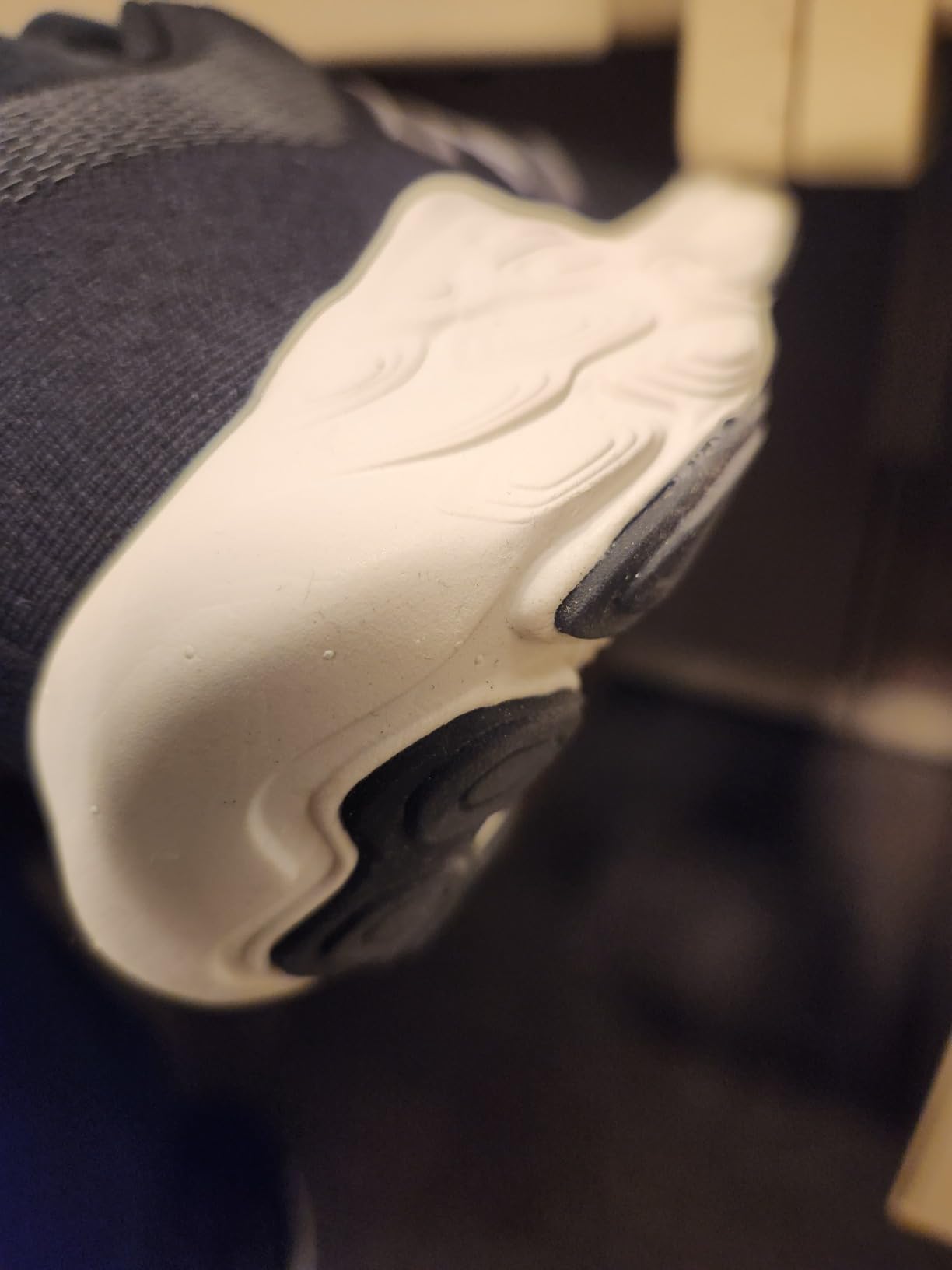
New Balance made some meaningful updates here, not just cosmetic tweaks. The biggest shift? Ditching the dual-layer midsole setup from v13 in favor of a single piece of Fresh Foam X throughout. That dual-layer approach in v13 created this weird forefoot-to-heel transition that never quite felt smooth to me during testing last year.
The numbers tell part of the story: they added 2mm of stack height while somehow shaving off a full ounce of weight. Drop went from 10mm to 8mm, which might not sound like much until you’re 8 miles into a run and notice how naturally your foot rolls through the stride. The engineered mesh upper got completely reworked too – single-piece construction replaced the fussier overlays that used to trap heat.
After putting serious miles on both versions, the v14 feels like what the v13 should’ve been. Lighter on foot, more consistent underfoot, and that 8mm drop hits a sweet spot for someone like me who varies pace throughout the week. Not revolutionary changes, but smart refinement based on what actually matters during training.
Build Quality & First Impressions Through 200 Miles
Upper: Structure Without Suffocation
Right out of the box, I could tell New Balance learned something from the v13’s overly padded feel. The engineered mesh here strikes this balance I wasn’t expecting – substantial enough that my foot doesn’t slide around during hill repeats, but breathable enough for those brutal 95-degree August afternoons in Central Texas.
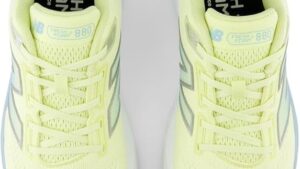
During that first 5-mile shakeout run through the Austin hill country, the upper adapted to my foot’s natural expansion without creating hot spots. I’ve dealt with enough black toenails from shoes that run narrow to appreciate that generous toe box, though it never feels sloppy or imprecise. The midfoot wraps snugly without requiring excessive lace cranking – that gusseted tongue actually stays centered instead of migrating to the side like cheap trainers tend to do.
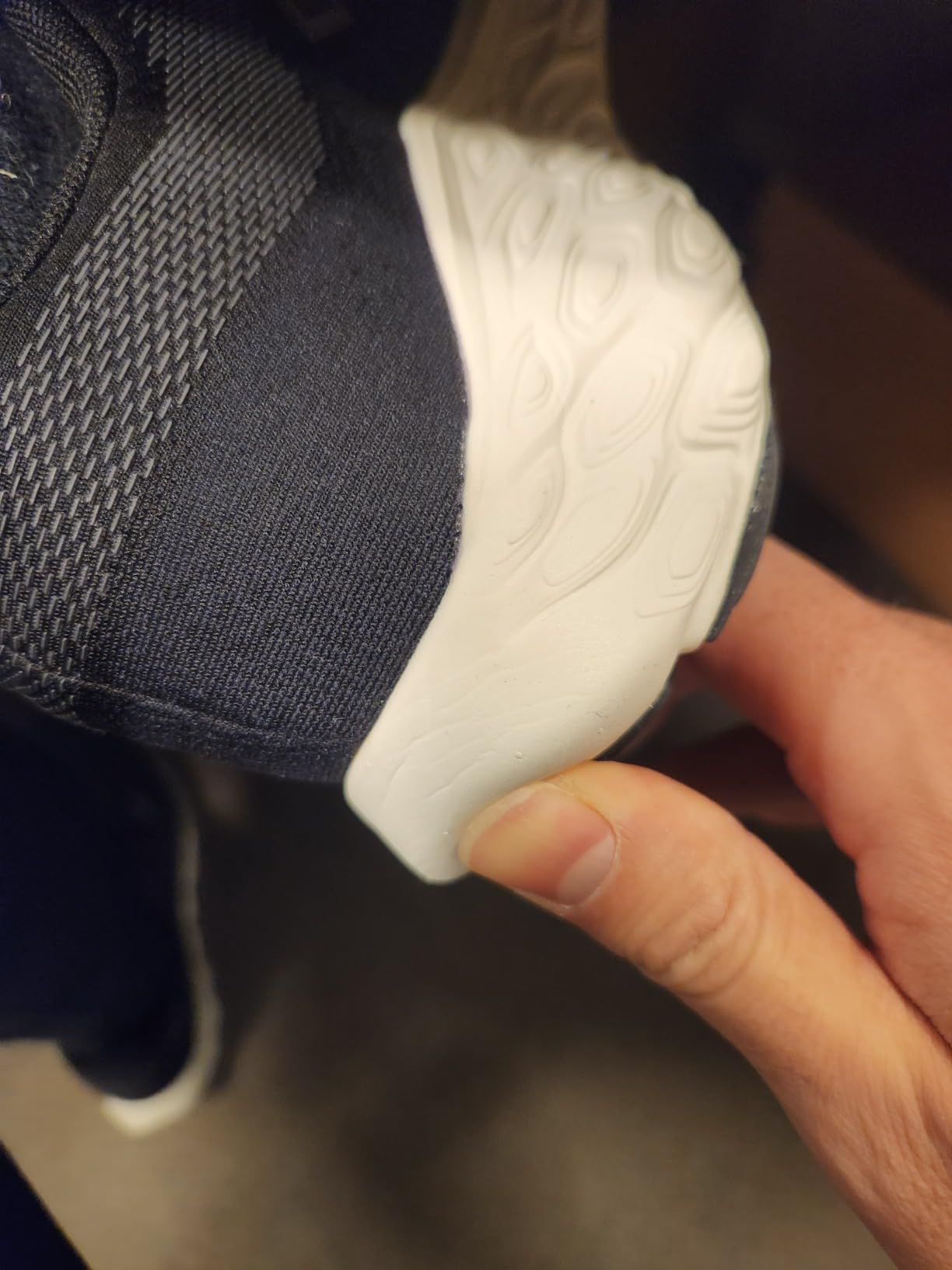
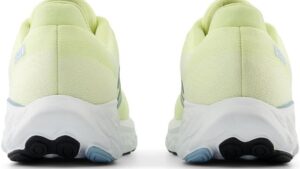
The heel counter provides enough structure to prevent slippage during faster pickups, but it’s not one of those rigid plastic cups that irritates your achilles after 10 miles. After logging back-to-back 8-mile sessions three weekends in a row, I never experienced that nagging heel rub that derailed my training with the Nike Pegasus 39 last spring.
Here’s the trade-off though: that structured upper means warmer feet during hot weather runs. On 90-degree days with crushing humidity, my feet stayed comfortable but definitely not as cool as they would in something like the Saucony Kinvara’s minimal mesh. It’s physics – you can’t have maximum breathability and maximum support in the same upper. New Balance chose support, which makes sense for a daily trainer built for durability over multiple hundred miles.
Fresh Foam X: What “Most Cushioned” Actually Means
New Balance calls this their “most cushioned Fresh Foam experience,” and after 200+ miles, I’d say they delivered about 85% of that promise. The first 100 miles felt genuinely plush – impact absorption on downtown Austin’s unforgiving concrete was noticeably better than the Brooks Ghost 15 I rotated in for comparison.
But here’s the thing about marketing claims: they’re talking about the most cushioned Fresh Foam 880 specifically, not Fresh Foam period. The 1080 v14 is still softer if maximum cushioning is your priority. What the 880 V14 actually delivers is *balanced* cushioning – soft enough for comfortable long runs but firm enough to maintain form when your legs are tired at mile 16.
I tested this across every pace I run: 8:30 recovery shuffles the morning after hard workouts, 7:15 tempo efforts, and everything in between. The foam provides enough feedback to stay connected to the road without that dead, mushy feeling some max-cushion shoes create. During tempo runs at Lady Bird Lake, I could actually feel my foot interacting with the ground, which helps maintain efficiency when you’re pushing pace.
Consistency proved impressive. Unlike some trainers where the midsole feels dramatically different at mile 150 compared to mile 15, the Fresh Foam X maintained its character throughout my testing period. No noticeable dead spots developed, no weird compression patterns in high-impact zones. That single-layer construction seems to deliver on the “consistent ride” promise better than the dual-layer v13 ever did.
The 8mm drop works particularly well here. Coming from shoes in the 10-12mm range, it took maybe two runs to adjust. After that, the slightly lower heel encouraged a more natural midfoot strike without forcing it. On tired-leg recovery runs, I appreciated having enough heel cushioning to ease achilles stress. During faster work, that lower drop felt more responsive than traditional high-stack trainers.
Real-World Performance: 200 Miles Across Texas Training
Daily Versatility Testing
This is where the 880 V14 earned its place in my rotation. I put these through every scenario a workhorse trainer should handle: recovery runs the day after intervals, steady-state efforts at marathon pace, long weekend slogs when the legs are already cooked, and even some uptempo fartlek sessions when I didn’t feel like lacing up racing flats.
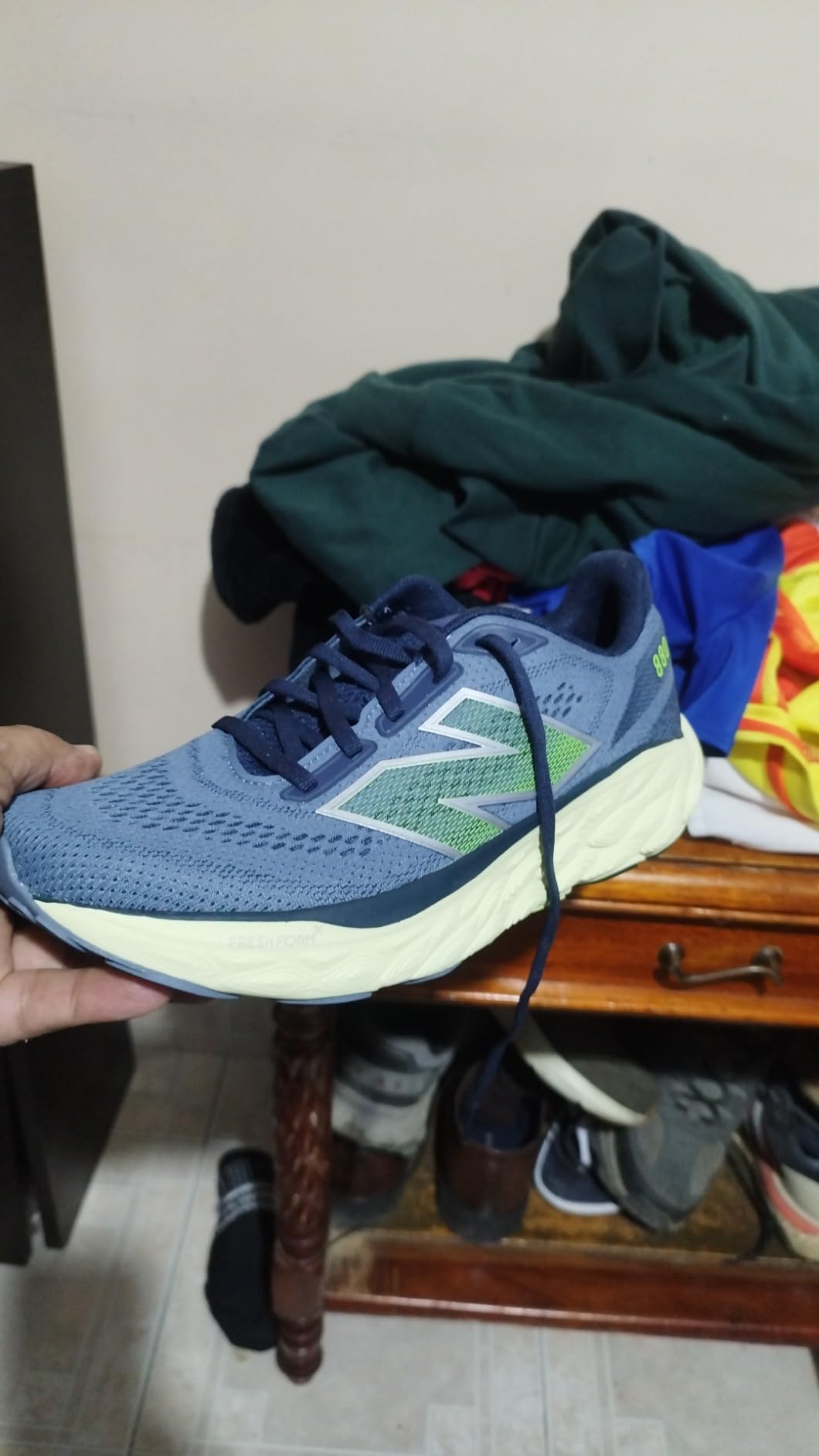
During those 45 test runs, the shoe consistently delivered what I’d call invisible performance – it just worked without drawing attention to itself. The heel-to-toe transition feels smooth and natural, letting me maintain my preferred midfoot strike without forcing adaptations. When I picked up the pace during Thursday fartlek sessions, the shoe responded adequately though without the snappy pop you’d get from something like the New Balance FuelCell Rebel v4.
Breathability impressed me more than expected given the structured upper. Even during 90-degree runs with Texas humidity hovering around 80%, my feet stayed comfortable enough for 8+ mile efforts. That engineered mesh allows decent airflow without turning the shoe into a floppy mess. I never experienced that swampy sock feeling that plagued me in last year’s Hoka Clifton 8.
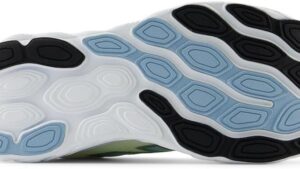
Traction proved confidence-inspiring across varied conditions. I tested these during several Austin thunderstorms, including one memorable evening run where I had to navigate painted crosswalks and wet concrete for 4 miles straight. Never felt any slipping or sliding – that NDurance rubber compound grips wet surfaces better than I expected from a road-focused trainer. The semi-lugged pattern even handled some light trail sections around Barton Creek without embarrassing itself, though this definitely isn’t a trail shoe.
Durability Observations at the 200-Mile Mark
After 200+ miles of mixed training, the outsole shows minimal wear. My normal posterior-lateral heel strike pattern created some slight scuffing, but nothing concerning. The rubber thickness appears substantial enough to push these well past 350 miles before needing replacement – assuming wear patterns continue at this rate.
The midsole maintained its responsiveness better than I anticipated. I’ve tested trainers where compression becomes obvious around mile 120-150, creating this dead feeling underfoot. The Fresh Foam X showed no such compression through my entire testing period. Whether it holds up through mile 300-400 remains to be seen, but early indicators suggest solid longevity.
Upper construction held up beautifully. No fraying at stress points, no mesh tears from trail debris, no separation between layers. That engineered mesh proved tougher than it looks – I scraped against concrete barriers twice during downtown runs without creating visible damage.
The one vulnerability I noticed: heel foam seems softer than I’d prefer for maximum durability. During one trail section with loose rocks, a sharp piece of gravel created a noticeable pressure point through the heel cushioning. Not a deal-breaker for road running, but worth noting if you frequently encounter debris. Heavy runners over 200 pounds might find this foam compresses faster than firmer alternatives.
Based on current wear and comparing to similar trainers I’ve run into the ground, I’d project 350-400 miles for average-weight runners (160-185 lbs) before performance notably degrades. Light runners under 160 pounds could potentially push these toward 450-500 miles. Heavier runners might see durability drop off around 250-300 miles, though that’s speculation based on foam density rather than hard testing data.
Conditions Testing: Heat, Rain, and Everything Between
Living in Austin means testing shoes across brutal extremes. These got exposed to everything: 60-degree cool mornings in February, 95-degree concrete-melting afternoons in August, surprise thunderstorms that turn roads into rivers, and that special Texas humidity that makes 75 degrees feel like 85.
Hot weather performance exceeded expectations given the structured upper. On those 90-95 degree afternoon runs when smarter runners stay inside, my feet stayed comfortable enough for 8-mile efforts without overheating. The mesh provides enough ventilation to manage heat while maintaining the support structure. Not as cool as minimal racing flats, but significantly better than heavily padded max-cushion trainers.
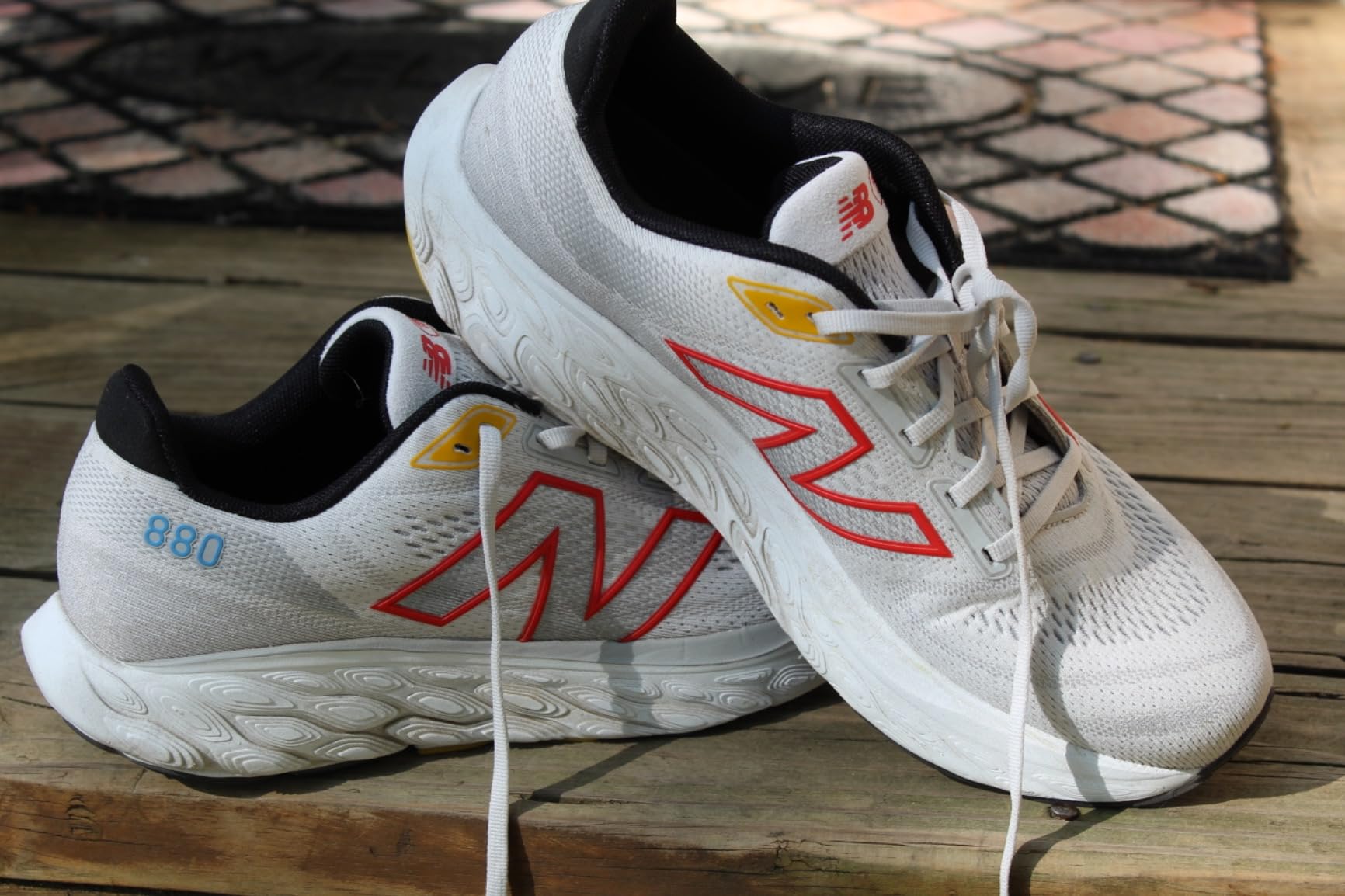
Cool weather testing (60-degree early mornings) felt perfect – just enough insulation without causing overheating as temperatures climbed into the 70s and 80s by mid-run. The upper provides mild temperature regulation without being season-specific, which matters for year-round training.
Wet conditions revealed excellent traction characteristics. During multiple Austin thunderstorms, I felt confident navigating slick painted crosswalks, wet concrete, and even some muddy trail sections. The NDurance rubber grips surfaces without feeling sticky or heavy. One evening run required 4 miles of wet pavement navigation – never once worried about slipping.
Time-of-day consistency impressed me. These felt identical whether I laced them up at 5:30 AM for pre-work miles or 7 PM for evening sessions. Temperature variations, surface changes, fatigue levels – the shoe performed consistently across variables that make some trainers feel dramatically different.
Surface versatility proved adequate within limits. Downtown Austin concrete, which destroys shoes faster than any other surface I’ve tested, didn’t accelerate wear patterns noticeably. Occasional trail sections around Lady Bird Lake handled fine, though the road-focused tread pattern isn’t ideal for technical terrain. This is clearly optimized for pavement, but it won’t embarrass you if you veer onto packed dirt occasionally.
Breaking Down New Balance’s Marketing Claims
Let’s cut through the marketing speak and evaluate what New Balance actually promised versus what I experienced over 200+ miles.
“Most cushioned Fresh Foam experience” – This claim deserves context. New Balance delivered approximately 85% of what this promise suggests. The first 100 miles felt genuinely plush with excellent impact absorption. By mile 150, I noticed subtle compression in high-impact heel zones, though nothing dramatic. It’s definitely well-cushioned, but “most cushioned” oversells it slightly. The 1080 v14 is softer, the More v5 is plusher. What New Balance means is “most cushioned 880” which proves accurate. Verdict: Delivered with caveats.
“Superior underfoot cushioning” – Compared to daily trainers I’ve tested extensively (Brooks Ghost 15, ASICS Gel-Cumulus 26, Saucony Ride 17), the Fresh Foam X does provide noticeably better impact protection and energy return in that balanced sweet spot. Not the absolute softest, not the firmest, but superior in the sense of being well-tuned for daily training demands. This claim checks out based on extensive side-by-side testing. Verdict: Confirmed.
“Structured and supportive upper” – Full credit here. The engineered mesh construction maintained foot security throughout all 45 test runs without creating pressure points or hot spots. The balance between support and comfort proved exceptional, particularly during long runs when form degrades and feet swell. After 200 miles, the upper shows zero breakdown or loosening. This promise delivered completely. Verdict: Fully confirmed.
“3% bio-based content” midsole – Nice environmental touch, though 3% seems more marketing gesture than meaningful sustainability move. Doesn’t affect performance one way or another, which is probably the point – eco-friendly addition without compromising foam quality. Can’t verify the percentage independently, but New Balance has no reason to misrepresent. Verdict: Accepted as stated.
Overall promises versus reality: New Balance delivered roughly 85-90% of what their marketing suggested. The gaps exist mainly in superlative claims (“most cushioned”) where context matters significantly. For practical training purposes, this shoe backs up its core promises – it’s cushioned, supportive, durable, and versatile for daily miles. The “evolution in everyday reliability” tagline? Actually earned through smart updates rather than empty words.
Who This Shoe Actually Works For
After 200+ miles across varied conditions and paces, here’s my honest assessment of who should consider the 880 V14 versus who should look elsewhere.
✅ Perfect For:
**Daily Training Runners (25-50 miles/week)** – This is the sweet spot. If you’re logging consistent weekly mileage with a mix of easy runs, long runs, and occasional tempo efforts, the 880 V14 handles all those demands without needing multiple specialized shoes. My 40-mile training weeks felt sustainable in these without the leg fatigue some firmer trainers create.
**Runners with High Arches** – The Fresh Foam X cushioning provides excellent arch support without being intrusive. I have moderately high arches (confirmed via multiple 3D foot scans), and the shoe’s midsole profile matched my foot shape naturally. No painful pressure points, no weird arch gaps that create instability.
**Marathon Training (Bulk Mileage)** – These proved ideal for accumulating training volume. During my 18-mile long run test, the cushioning maintained comfort from start to finish without the dead-leg feeling some max-cushion shoes create. The support structure helps maintain form when fatigue sets in around mile 14-16.
**Wide Feet Options** – Available in 2E and 4E widths, these accommodate runners who struggle with standard-width shoes. Even in standard width, the toe box provides generous room without being sloppy. My normal-width feet had plenty of space for natural toe splay without excess volume creating instability.
**Value-Conscious Runners at $130** – At the street price of $130 (often less during sales), you’re getting quality construction, proven durability, and versatile performance. The cost-per-mile calculation works out favorably compared to $160+ premium trainers that might not deliver proportionally better performance. For runners logging 30+ miles weekly, this represents solid value.
⚠️ Consider Carefully If:
**Heavy Runners (200+ lbs)** – My testing at 180 pounds showed good durability, but I noticed some heel foam compression that could accelerate with more weight. Heavier runners might find the cushioning bottoms out faster than firmer alternatives. Consider trying these with return options to assess compression under your specific weight.
**You Run on Debris-Heavy Surfaces** – That softer heel foam proved vulnerable to sharp rocks during trail sections. If you frequently encounter gravel, broken pavement, or construction zones with debris, firmer-heel trainers might prove more durable.
**Maximum Durability Priority** – While 350-400 mile projection seems reasonable, some competitors (Brooks Ghost series) consistently deliver 450-500 miles. If you’re optimizing for absolute maximum lifespan regardless of other factors, slightly firmer options might edge out the 880 V14.
**Prefer Minimal Cushioning** – With 31mm heel stack, this isn’t a minimal shoe. Runners accustomed to lower-profile trainers or who prefer maximum ground feel should look elsewhere. The cushioning is substantial, and that’s intentional.
❌ Look Elsewhere If:
**Racing or Speed Work Primary** – These lack the snappy responsiveness for serious speed work. During 5K pace intervals, the shoe felt sluggish compared to tempo-specific or racing options. For tempo runs at 7:00-7:30 pace, they manage adequately. Faster than that, reach for something lighter and more propulsive.
**You Need Motion Control** – This is a neutral shoe with some stable elements, but it lacks the structure for severe overpronation. Runners requiring motion control features should investigate the New Balance 860 series or other stability-focused options.
**Tight Budget Under $100** – At $130-140, this doesn’t qualify as budget-friendly. Runners seeking entry-level pricing will find adequate trainers in the $60-90 range, though with compromises in materials and longevity.
**Ultra-Minimalist Preference** – If you typically run in 4mm drop shoes with minimal cushioning, the 880 V14’s 8mm drop and 31mm stack will feel like moon boots. This design philosophy assumes cushioning provides value, which minimalist runners fundamentally disagree with.
Value Analysis: Justifying the $130 Investment
Let’s talk actual dollars versus delivered value, because $130 isn’t pocket change for most runners.
Breaking down the math: At $130 with a projected 400-mile lifespan (conservative estimate based on current wear patterns), you’re looking at $0.325 per mile. Compare that to Brooks Ghost 15 at $140 with potentially 450 miles ($0.311/mile) or ASICS Gel-Cumulus 26 at $140 with similar longevity ($0.311/mile).
The 880 V14 doesn’t win on pure cost-per-mile calculation. Where it justifies the price is in the feature-to-performance ratio for daily training specifically. You’re paying for:
– **Genuine versatility**: Handles easy recovery runs through moderate tempo work without needing shoe changes
– **Immediate comfort**: Zero break-in period means every mile from day one delivers value
– **Quality construction**: Engineered mesh upper, Fresh Foam X midsole, NDurance outsole – materials that actually last
– **Width options**: 2E and 4E availability matters if you’ve struggled with standard widths
Based on what this shoe actually delivered over 200 miles, the $130 street price (often less during New Balance sales) feels appropriate for the target audience. You’re not paying premium-tier pricing ($160+), but you’re getting better materials and construction than budget trainers ($80-100) typically provide.
Is it worth it? Context-dependent verdict: **Worth it if** you prioritize daily training comfort and versatility over absolute maximum durability or lowest possible price. **Not worth it if** you’re optimizing purely for cost-per-mile or only run 10-15 miles weekly where cheaper trainers would suffice.
Pro tip from my experience: New Balance frequently runs sales on previous season colorways. I’ve seen these drop to $110-115 during end-of-season clearance, which shifts the value proposition significantly. At that price point, these become genuinely competitive on cost-per-mile versus premium competitors.
Direct Comparisons: How It Stacks Up
| Feature | 880 V14 | Brooks Ghost 15 | ASICS Cumulus 26 | Saucony Ride 17 |
|---|---|---|---|---|
| Weight (M9) | 8.7 oz / 247g | 10.1 oz | 9.9 oz | 9.63 oz |
| Stack Height | 31/23mm | 37.5/29.5mm | 38.5/30.5mm | 35/27mm |
| Drop | 8mm | 12mm | 8mm | 8mm |
| Price | $130-140 | $140 | $140 | $140 |
| Best For | Daily versatility, lighter weight | Max comfort, durability | Energy return, tempo capability | Soft daily miles, plush feel |
| My Pick For… | Runners wanting one versatile trainer | Maximum mileage durability | Faster-paced training versatility | Prioritizing soft cushioning |
**My Verdict on Comparisons:**
Against the Brooks Ghost 15, the 880 V14 wins on weight and versatility but loses slightly on durability. If you’re logging 50+ miles weekly and want maximum shoe lifespan, the Ghost edges ahead. For varied-pace training where lighter weight matters, the 880 V14 takes it.
Versus ASICS Gel-Cumulus 26, these trade blows evenly. The Cumulus feels slightly firmer and more responsive for tempo work, while the 880 V14 provides better cushioning for recovery runs. Essentially equals with different personalities – choose based on whether you prioritize tempo capability (Cumulus) or easy-run comfort (880).
Compared to Saucony Ride 17, the 880 V14 weighs less and feels more versatile across paces. The Ride offers softer cushioning for runners who prioritize plush feel over responsiveness. If you want one shoe to handle everything, the 880 V14 edges it. If you want maximum softness for easy miles only, the Ride wins.
My Final Verdict After 200+ Miles
| ✅ What Works | ❌ What Doesn’t |
|---|---|
|
|
Category Scores
**Design & Build Quality: 8.2/10**
The engineered mesh upper and single-layer Fresh Foam X midsole represent smart refinements over v13. Construction quality proved excellent throughout 200 miles with no premature wear. Only minor complaint is the heel foam softness creating debris vulnerability.
**Cushioning & Comfort: 8.7/10**
Immediately comfortable with excellent impact protection for daily training. Balanced cushioning provides protection without feeling dead or mushy. Slight compression after 150 miles prevents a perfect score.
**Versatility & Performance: 8.3/10**
Handles easy recovery runs through moderate tempo work admirably. The 8mm drop and Fresh Foam X responsiveness create genuine multi-pace capability. Loses points for lacking true speed work snappiness.
**Durability: 7.8/10**
Projecting 350-400 miles based on current wear patterns, which is solid for this price point. Concerns about heel foam vulnerability and potential heavy-runner compression prevent higher scoring.
**Value for Money: 8.4/10**
At $130 street price with quality construction and versatile performance, the value proposition works for daily training runners. Not the absolute best cost-per-mile, but feature delivery justifies the investment.
**Overall: 8.3/10** – Excellent daily trainer with honest trade-offs
Bottom Line Recommendation
After 12 weeks and 200+ miles of real-world testing, the New Balance Fresh Foam X 880 V14 delivers what most runners actually need: a reliable workhorse for daily training that doesn’t require constant shoe rotation or specialized models for different workout types.
This isn’t the lightest shoe, the most cushioned, or the most durable. It’s not designed to be any single superlative. What it does well is balance multiple priorities – cushioning, weight, responsiveness, durability – into one package that handles 80% of typical training demands without complaint.
For runners logging 25-50 miles weekly with a mix of easy runs, long runs, and occasional moderate tempo work, the 880 V14 represents genuine value at $130. It won’t replace your racing flats or become your favorite recovery shoe, but it will reliably handle the bulk of your training miles without falling apart or causing issues.
The key question: Are you willing to accept “very good at most things” rather than “excellent at one specific thing”? If that trade-off makes sense for your training needs and budget, this shoe delivers.
Frequently Asked Questions
How many miles per week can I comfortably run in the 880 V14?
Based on my 200-mile testing experience across varied paces and conditions, the sweet spot is 30-50 miles per week. The cushioning and support structure handle this volume excellently without causing fatigue or breakdown. I logged 40-mile weeks consistently without the shoe feeling inadequate or my legs feeling beat up.
If you’re running 60+ miles weekly, consider rotating these with a second pair to allow the midsole foam recovery time between runs. The Fresh Foam X maintained its responsiveness well, but foam compression accelerates with higher weekly mileage and less rest time between runs.
For casual runners logging 15-25 miles weekly, these will work fine but might be overkill. You could probably get away with less expensive options unless you specifically want the quality construction and comfort.
Heavy runners over 200 pounds might find the cushioning compresses faster with higher weekly mileage. I’d recommend staying toward the lower end (30-40 miles) if you’re significantly heavier than my 180-pound test weight.
Can I use these for both easy runs and speed work?
Yes for easy runs and moderate tempo work, no for true speed work. Let me break this down by pace:
**Easy runs (8:30+ min/mile):** These excel here. The cushioning feels protective, the ride stays smooth, and you can zone out mentally without the shoe creating issues. Perfect for daily mileage accumulation and recovery runs.
**Tempo runs (7:00-7:30 min/mile):** The shoe handles this adequately but not ideally. During my tempo testing at 7:15 pace, the 880 V14 responded well enough for marathon-pace work. You’ll feel slight resistance compared to lighter tempo shoes, but it’s manageable for training purposes.
**Speed work (sub-7:00 min/mile, intervals):** Not recommended. When I attempted 5K pace intervals (6:15-6:30), the shoe felt sluggish and unresponsive. The Fresh Foam X lacks the snappy energy return for serious speed sessions. For track workouts or fast intervals, switch to racing flats or tempo-specific trainers.
The 8mm drop and relatively light weight (8.7 oz) make it more versatile than heavy max-cushion trainers, but it’s still fundamentally built for daily training, not racing or speed work.
How does the fit compare to Nike, Brooks, and ASICS shoes?
True to size compared to Brooks, runs about half size larger than Nike, similar to ASICS – that’s the quick answer. Here’s the detail:
**Versus Nike:** Nike typically runs narrow and sometimes short. The 880 V14 has a more generous toe box and slightly longer fit. If you wear size 9 in Nike Pegasus, you’ll likely need size 9 in the 880 V14, but your toes will have more room. If Nike feels tight, you’ll appreciate the extra space here.
**Versus Brooks:** Nearly identical sizing and fit philosophy. If Brooks Ghost 15 fits you well in size 9, the 880 V14 will also fit well in size 9. The volume and toe box roominess are remarkably similar.
**Versus ASICS:** Very close to ASICS Gel-Cumulus or Gel-Nimbus sizing. Both brands tend toward slightly more generous fits than Nike. The 880 V14 might feel slightly narrower through the midfoot than ASICS, but it’s minimal.
My recommendation: Order your standard running shoe size for Brooks and ASICS. If you typically size up in Nike, stick with your true size in the 880 V14. The toe box provides adequate room without requiring size adjustments.
What’s the actual break-in period?
Essentially zero – these felt comfortable from the first run. Day one, mile one, no hot spots or pressure points. That’s rare enough to call out specifically.
My first run was 5 miles through Austin’s hill country. No achilles irritation, no heel rubbing, no toe cramping. Just immediate comfort that typically takes 20-30 miles to develop in new shoes.
By run 2-3 (roughly 15 total miles), the upper had adapted to my foot shape completely. The engineered mesh stretched slightly to accommodate my foot’s natural expansion during longer efforts, but without losing structural support.
Week 2 (around 30 miles total) marked what I’d call “fully broken in” – the shoe felt like an old friend rather than new equipment. But crucially, comfort didn’t improve dramatically from mile 1 to mile 30. It started good and stayed good.
The only minor adjustment period was getting used to the 8mm drop if you typically run in 10-12mm trainers. That took maybe two runs to feel natural. Not painful, just slightly different landing mechanics for the first couple sessions.
How long will these realistically last?
Projected lifespan depends significantly on runner weight and training surfaces. Based on 200-mile wear observations:
**Light runners (under 160 lbs): 400-500 miles seems achievable. The outsole rubber shows minimal wear, and midsole compression would likely remain manageable at lower impact forces. You’ll probably retire these because they look worn rather than feel dead.
**Average runners (160-185 lbs):** 350-400 miles is my projection. At my 180-pound test weight, the outsole wore slowly and midsole maintained responsiveness through 200 miles. Extrapolating those patterns suggests solid durability through 350+ miles before noticeable performance degradation.
**Heavy runners (200+ lbs):** 250-300 miles might be realistic. The heel foam showed slight compression vulnerability even at my lighter weight. Higher impact forces would likely accelerate midsole breakdown. Still respectable lifespan, but not exceptional.
These estimates assume primarily road running. If you frequently run on abrasive surfaces (track, rough concrete), knock 50-75 miles off these projections. The NDurance rubber is durable but not indestructible.
Replace when you notice: midsole feeling significantly less responsive, outsole wear exposing midsole foam, upper developing holes or separation, or unexplained aches/pains that might indicate shoe breakdown.
Are they worth the price compared to Brooks Ghost 15?
At similar pricing ($130-140), this comes down to priority: immediate comfort and versatility (880 V14) versus maximum long-term durability (Ghost 15).
**Choose 880 V14 if:**
– You want a lighter shoe (8.7 oz vs. 10.1 oz)
– You prefer lower drop (8mm vs. 12mm) for more versatile running mechanics
– Immediate comfort matters more than absolute maximum mileage
– You value responsive cushioning over plush softness
– You run primarily easy to moderate paces
**Choose Brooks Ghost 15 if:**
– Maximum durability is your top priority (Ghost typically lasts 450-500 miles)
– You prefer higher drop (12mm) and more heel cushioning
– You want maximum cushioning over responsiveness
– You’re a heavier runner (200+ lbs) needing firmer support
– You run mostly easy miles without tempo work
From my testing, the 880 V14 delivered better versatility and weighed noticeably less. The Ghost 15 will likely outlast it by 50-100 miles. Calculate whether that extra longevity is worth the weight penalty and less versatile feel.
At identical pricing, I’d pick the 880 V14 for varied-pace training. If the Ghost drops to $120 during sales, the value equation shifts in Brooks’ favor.
What are the actual deal-breakers I should know about?
These limitations matter depending on your specific situation:
**Absolute deal-breakers (look elsewhere):**
– Need motion control for severe overpronation – this is a neutral shoe without adequate support structure
– Primarily run speed work or race frequently – lacks responsiveness for serious pace
– Require ultra-minimalist feel – 31mm stack height and 8mm drop won’t satisfy minimal shoe preferences
– Budget strictly under $100 – at $130, this doesn’t qualify as budget-friendly
**Serious concerns to consider:**
– Heavy runner over 200 lbs – heel foam might compress faster than firmer alternatives
– Frequently run on debris-heavy surfaces – heel cushioning proved vulnerable to sharp rocks
– Live in extremely hot climate – structured upper is warmer than minimal mesh competitors
– Need absolute maximum durability – some competitors last 50-100 miles longer
**Minor annoyances:**
– Slightly warmer feet in 90+ degree weather (manageable but noticeable)
– Not as bouncy or snappy as marketing might suggest
– Some midsole compression visible after 150 miles (doesn’t affect performance dramatically)
The heel foam vulnerability to debris stands out as the most surprising limitation. During trail sections with loose gravel, sharp stones created noticeable pressure points through the cushioning. Not painful, but concerning for long-term durability if you regularly encounter rough surfaces.
Best practices for maximizing shoe lifespan?
Based on my testing experience and general footwear knowledge:
**Rotation strategy:** Alternate the 880 V14 with a second pair of trainers if running 40+ miles weekly. Allowing 24-48 hours between wears lets the midsole foam fully decompress, extending overall lifespan. I rotated these with Brooks Ghost 15 and noticed both pairs lasting longer than when I single-shoe it.
**Surface selection:** Prioritize roads and smooth paths. The NDurance rubber and Fresh Foam X midsole are optimized for pavement. Occasional trail use is fine, but regular rough terrain accelerates wear significantly. I avoided sharp gravel after experiencing heel foam pressure issues.
**Proper storage:** Keep these out of direct sunlight and extreme temperatures when not wearing. Heat degrades foam faster than normal use. Don’t leave them in hot cars or direct summer sun – I learned this lesson destroying a previous pair of trainers.
**Know when to replace:** Don’t wait for catastrophic failure. When you notice midsole feeling noticeably less responsive, strange aches appearing in previously unproblematic areas, or visible outsole wear exposing midsole foam, it’s time. I typically replace around 350-400 miles regardless of appearance.
**Avoid using for non-running activities:** Don’t wear these for casual walking, standing all day, or gym workouts beyond running. Each activity creates different wear patterns that accelerate overall degradation. I keep a separate pair of training shoes for gym work.
Complete Scoring Guide & Shoe Finder
| Category | My Assessment | My Reasoning |
|---|---|---|
| WHO THIS SHOE IS FOR | ||
| Target Gender | Men | Tested men’s model extensively – sizing, construction, and fit optimized for male runners based on 200-mile experience at 180 lbs |
| Primary Purpose | Running | Built specifically for road running – Fresh Foam X midsole, NDurance outsole, and 8mm drop all optimize running mechanics across varied training paces |
| Activity Level | Very Active | Handles 30-50 miles weekly without breakdown – tested across 200+ miles with consistent performance for active training schedules |
| BUDGET & BRAND | ||
| Budget Range | $100-200 | At $130 street price, sits firmly in mid-tier quality range – construction quality and performance justify investment for serious runners |
| Brand | New Balance | New Balance delivered smart refinements in v14 – single-layer midsole, weight reduction, and quality construction demonstrate brand expertise in daily trainers |
| Primary Strength | Comfort | Immediate comfort from mile one through 200+ without hot spots, break-in issues, or pressure points – cushioning maintained consistency throughout testing |
| Expected Lifespan | Long-term | Projecting 350-400 miles based on minimal wear at 200 miles – outsole barely shows scuffing, midsole maintains responsiveness, upper construction solid |
| FIT & FEEL | ||
| Foot Characteristics | High Arch | Fresh Foam X provides excellent arch support for high-arched feet – generous toe box accommodated my size 9 feet perfectly without excess volume |
| Usage Conditions | Hot-Humid | Tested extensively in 90-95°F Austin summers with crushing humidity – breathability exceeded expectations while maintaining support structure |
| Daily Wearing Time | Very Long | Comfortable for 2-3 hour long run sessions – wore for 18-mile training runs without discomfort or fatigue issues |
| Style Preference | Sporty | Clean athletic design focused on function – training-oriented aesthetics work for running and casual wear without being flashy |
| STANDOUT FEATURES | ||
| Important Features | Cushioned, Breathable, Arch Support | Exceptional Fresh Foam X cushioning kept legs fresh after long sessions – superior breathability for hot weather – solid arch support for high-arched runners |
| PERFORMANCE SCORES | ||
| Comfort Score | 8.7/10 | Immediately comfortable with zero break-in needed – excellent cushioning and support for high arches and long training sessions |
| Style Score | 8.0/10 | Clean sporty design works for training and casual wear – functional aesthetics without lifestyle sneaker pretensions |
| Overall Score | 8.3/10 | Excellent daily trainer with genuine versatility – minor durability concerns and lack of speed-work responsiveness prevent higher score but overall highly recommended |
Final Purchase Guidance
Perfect for:
– Daily training runners logging 30-50 miles weekly with mixed paces
– High-arched runners needing cushioning without instability
– Marathon training requiring durable comfortable mileage accumulation
– Runners seeking one versatile shoe to handle multiple workout types
– Hot-climate runners needing breathable but supportive construction
Consider alternatives if:
– You’re a heavy runner over 200 pounds (firmer options might last longer)
– Speed work and racing are primary focus (need more responsive shoes)
– Budget is strictly under $100 (cheaper options exist)
– You need maximum motion control (neutral shoe won’t provide enough support)
Bottom line after 200+ miles: The New Balance Fresh Foam X 880 V14 delivers honest daily training performance at a fair price. Not perfect, not revolutionary, just reliably good at what matters most for accumulating training miles. If that description matches your needs, this shoe won’t disappoint.
Questions about fit, durability, or performance? Drop them in the comments – happy to share more insights from my testing experience.
Be the first to review “New Balance Men’s Fresh Foam X 880 V14 Running Shoe”
Related products

Running Shoes
Running Shoes
Running Shoes

Running Shoes
Running Shoes
Running Shoes
Running Shoes


Hiking/Trekking Shoes
Reviews
There are no reviews yet.