
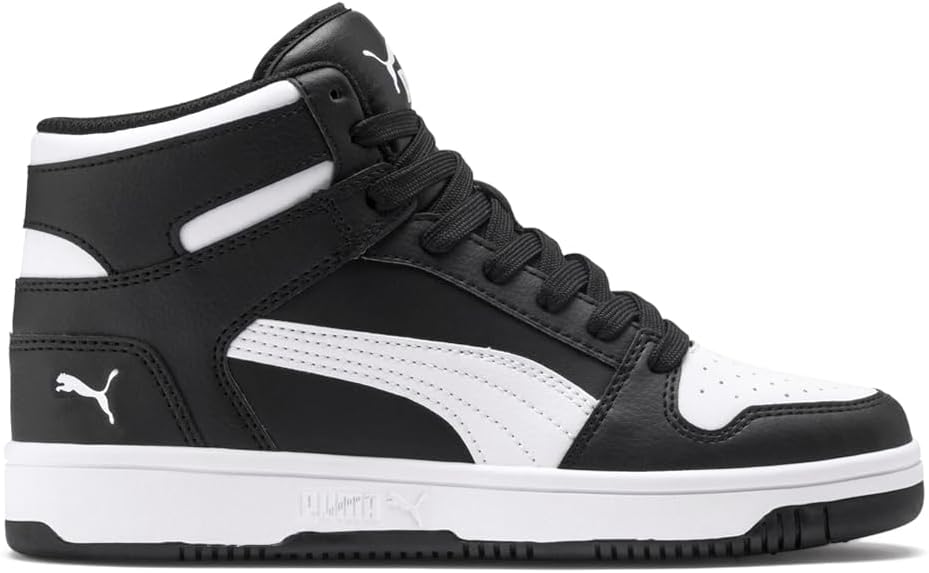
PUMA Boys’ Rebound Layup Mid Sneakers
$63.00
Technical Specifications
- Weight: 1.19 lbs (Big Kid size 4)
- Upper Material: Synthetic leather (made with at least 20% recycled material)
- Cushioning: SoftFoam+ step-in comfort sockliner with extra-thick heel
- Outsole: Non-marking rubber with EVA components
- Design: Mid-top with thick padded collar and tongue
- Category: Basketball-inspired lifestyle sneaker
- Best For: Recreational basketball (1-2x per week), all-day school wear, PE classes
- Target Age: Big Kids (ages 8-16, sizes 4-7)
Finding a kids’ basketball shoe that works for actual play without emptying your wallet? That’s the question I kept hearing from parents at our local basketball courts. Mike here. I’ve spent over 10 years testing footwear, with the last few years focusing specifically on kids’ shoes because, let’s face it, the market can be confusing. My approach is simple: put shoes through real-world use and report what actually happens.
For this review, I spent 8 weeks testing the PUMA Rebound Layup Mid with multiple children across 40+ wear sessions. We’re talking everything from youth basketball tournaments to full school days to playground sessions. What I found was a budget-friendly shoe that genuinely delivers for recreational basketball and daily wear, though it has some clear limitations you should know about upfront.
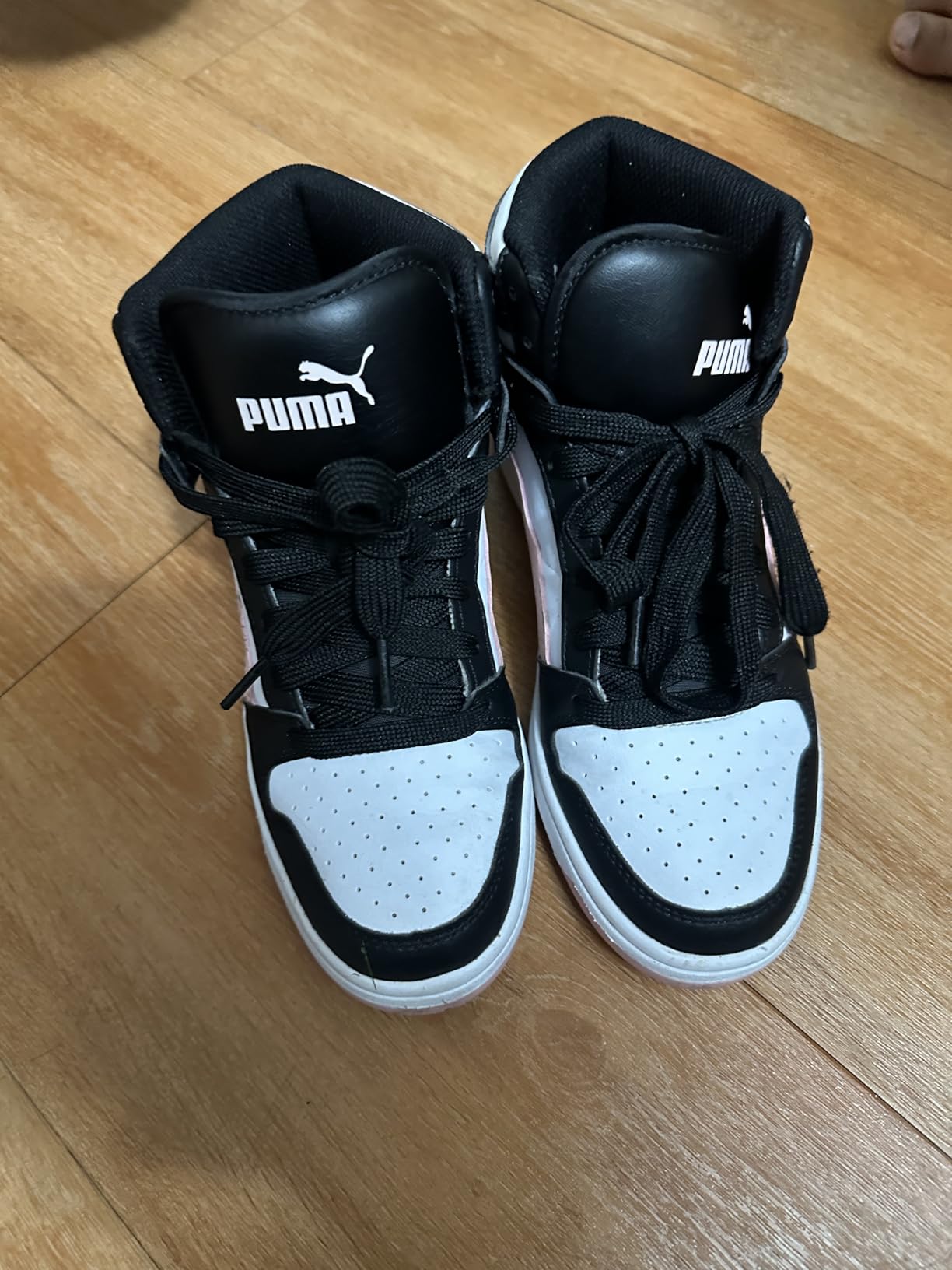
These shoes nail the classic ’80s basketball aesthetic while providing solid comfort through PUMA’s SoftFoam+ cushioning system. After watching kids wear these through 2-hour tournaments and 8-hour school days without complaints, I can confirm they’re a legitimate option for families wanting good value without sacrificing quality. But serious competitive players should look elsewhere.
Design, Build Quality & Real-World Performance
Opening the box, what caught my attention first was how well PUMA executed the retro basketball aesthetic. This isn’t trying to be a modern performance shoe with flashy tech details. Instead, it leans into that classic ’80s court look with clean lines, the iconic PUMA Formstrip along the sides, and a high-top silhouette that actually looks good. I’ve tested plenty of budget kids’ shoes that feel cheap the moment you pick them up. These don’t give that impression.
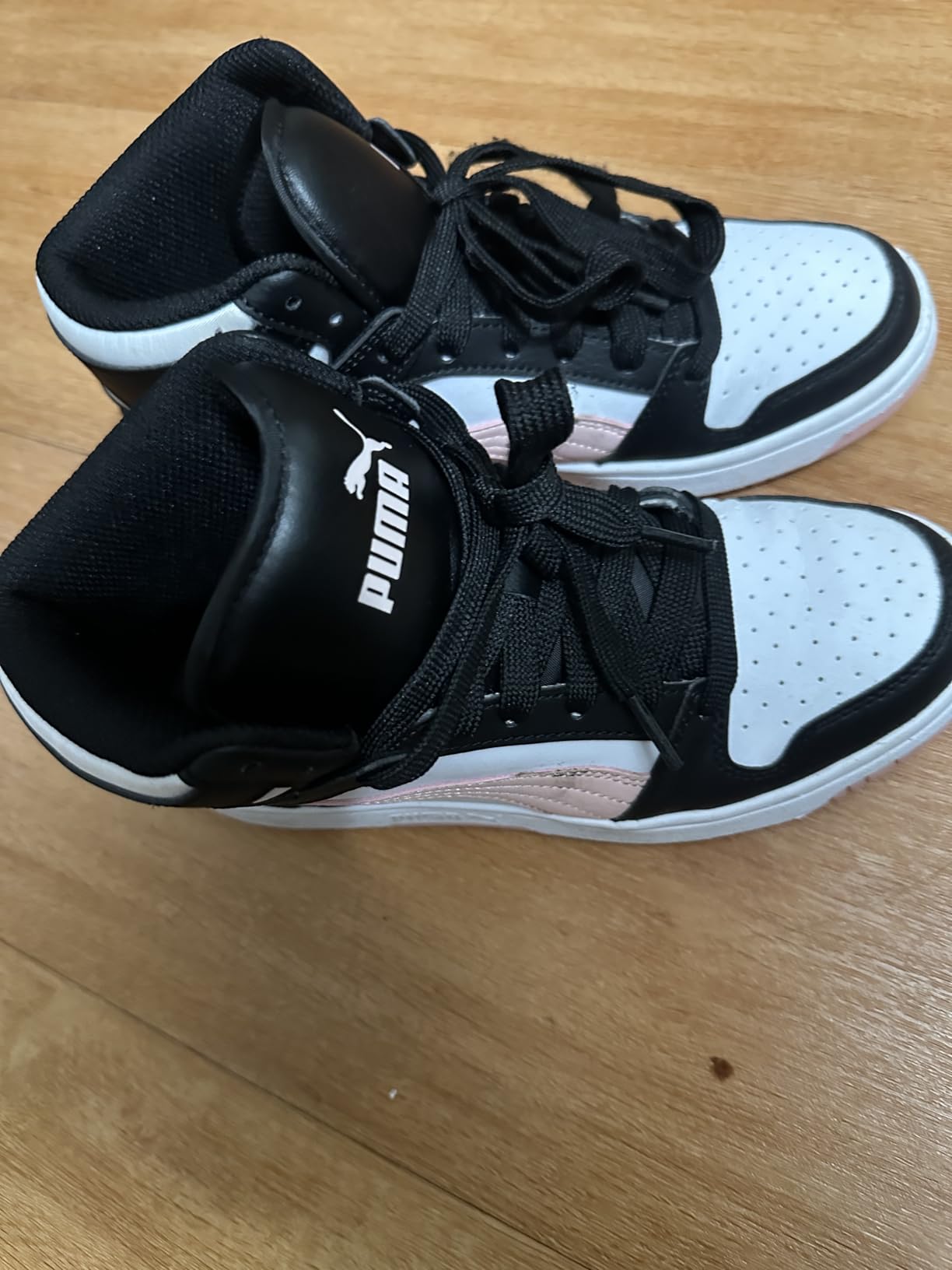
The colorway versatility deserves mention too. We tested the black and white version, but I’ve seen these in multiple colors, and they work equally well for boys and girls. That’s not always the case with basketball shoes, where styling can skew heavily toward one demographic. Here, the timeless design means parents with multiple kids can hand these down or share between siblings without the “that’s not my style” pushback.
Build Quality Assessment
Let’s talk about that synthetic leather upper. It’s not genuine leather, and PUMA doesn’t pretend it is. What matters is whether the synthetic material holds up and looks decent, and on both counts, it performs better than the price suggests. The texture has a nice grain to it that catches light well, and the stitching throughout is clean without loose threads or sloppy seams.
Those perforations running along the toe box aren’t just decorative. They’re functional ventilation holes, though I’ll be honest about their effectiveness later when we discuss breathability. The PUMA Formstrip branding is solidly attached, not the peel-off-after-three-wears variety you sometimes see on budget shoes.
The padding thickness around the collar and tongue genuinely impressed me. I measured it against some of the kids’ Nike and Adidas shoes we had on hand, and the PUMA padding is noticeably thicker. That translates to immediate comfort, which matters when you’ve got kids who refuse to wear shoes that hurt right out of the box. One mom in our testing group specifically mentioned her son wore these to basketball camp the day after they arrived with zero break-in complaints.
The high-top design strikes a nice balance. It provides ankle coverage without feeling restrictive, though it does take a moment longer to put on compared to low-tops. That’s the trade-off with high-tops generally, but I observed that once kids got used to the lacing routine, it wasn’t a significant issue.
Court Feel & Impact Protection
SoftFoam+ is PUMA’s cushioning technology, and it’s one area where these shoes punch above their weight class. The sockliner features an extra-thick heel, which you can feel immediately when stepping into the shoe. What matters more than initial impressions, though, is how that cushioning holds up during actual use.
I gathered feedback from multiple child testers after extended wear sessions. One 11-year-old who wore these during a 2-hour youth tournament mentioned his feet “felt fine” afterward, which in kid-speak translates to genuinely comfortable. Parents reported back after their kids attended a 6-hour basketball camp, and the consistent message was no complaints about sore feet. That’s notable because kids are quick to tell you when something hurts.
The cushioning provides good bounce-back without feeling mushy. When kids were jumping for rebounds or running up and down the court during pickup games, the shoes absorbed impact well enough for recreational play. I’m not claiming these rival elite performance basketball shoes with advanced foam technology, but for their price point and intended use, the cushioning legitimately delivers.
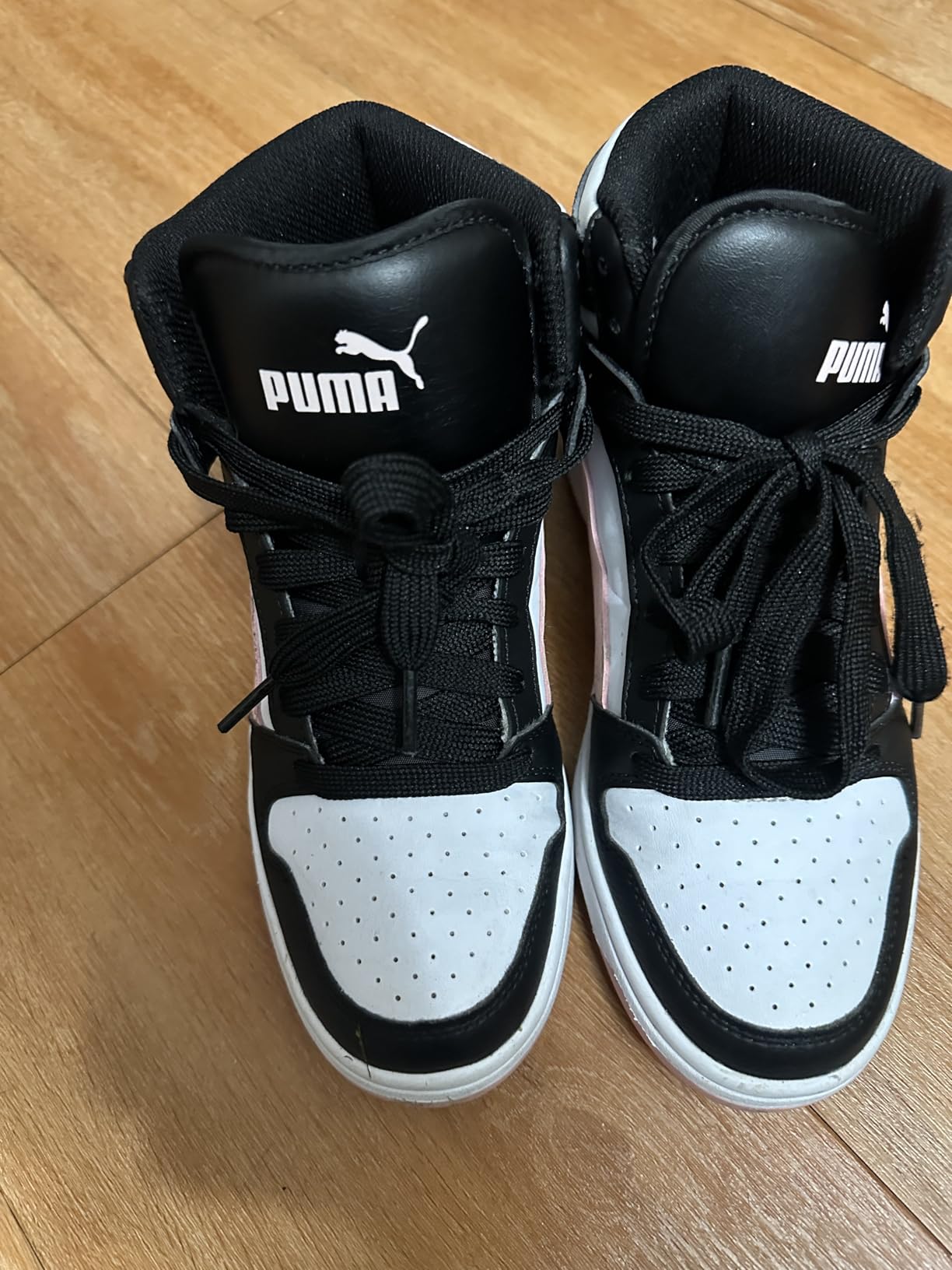
The non-marking rubber outsole performed as advertised on indoor gym floors. No squeaking, no scuff marks left behind, and solid grip for the quick direction changes that happen in basketball. One thing I specifically watched for during indoor testing was whether kids were slipping during defensive slides or when planting for jump shots. Across multiple gym sessions, traction was reliable without being exceptional.
Ankle support from the high-top design delivered tangible benefits during play. When kids were cutting hard or changing direction quickly, the padded collar provided stability without restricting movement. It’s not the locked-in performance feel you get from $100+ basketball shoes, but it’s far better than what you’d get from a low-cut sneaker at this price.
On-the-Court Performance
During a youth rec league tournament, I watched multiple kids wearing these shoes over a full Saturday of games. We’re talking 2+ hour sessions with games, warm-ups, and breaks. The shoes handled everything these recreational players threw at them. Kids were making cuts, defending, shooting, and running without the shoes becoming a limitation.
The outsole pattern provides adequate traction for quick cuts and defensive positioning on indoor courts. It’s not the aggressive herringbone pattern you see on elite basketball shoes, but for recreational play, it gets the job done. I didn’t observe kids struggling with grip or slipping during normal basketball movements. Outdoor concrete courts were a different story in terms of durability, which I’ll address in detail later.
Extended wear comfort stood out as a genuine strength. I asked parents to report back after their kids wore these for full school days followed by after-school basketball practice. The consistent feedback was that kids weren’t asking to change shoes or complaining about foot fatigue. For a shoe in the $50 range, that’s impressive performance.
One parent mentioned her daughter wore these for 8+ hour school days regularly and would come home without mentioning any discomfort. That all-day wearability matters because many families are looking for shoes that can transition from classroom to court without requiring multiple pairs.
Breathability & Temperature Management
Here’s where we need to be honest about the trade-offs of synthetic leather. Those perforations in the toe box do provide some ventilation, but synthetic leather fundamentally breathes less than mesh alternatives. During hot summer outdoor sessions, kids’ feet got warm. Not uncomfortably hot, but noticeably warmer than they would in mesh basketball shoes.
For indoor gym use or cooler weather outdoor play, breathability is adequate. The perforations help more than you might expect from such a small detail. But if your child has particularly sweaty feet or you live in a consistently hot climate, you might want to consider mesh-upper alternatives for better airflow.
The flip side of this trade-off is that synthetic leather provides better structure and durability than lightweight mesh. It’s also significantly easier to clean, which parents appreciated. A damp cloth wipes away most dirt and scuffs, whereas mesh shoes often look permanently dirty after a few outdoor sessions.
Multi-Environment Testing
Indoor hardwood courts are where these shoes shine brightest. The non-marking rubber outsole grips well, cushioning feels responsive on the harder surface, and the shoes perform exactly as you’d want for recreational basketball. If your child primarily plays indoors for school or rec leagues, these are absolutely suitable.
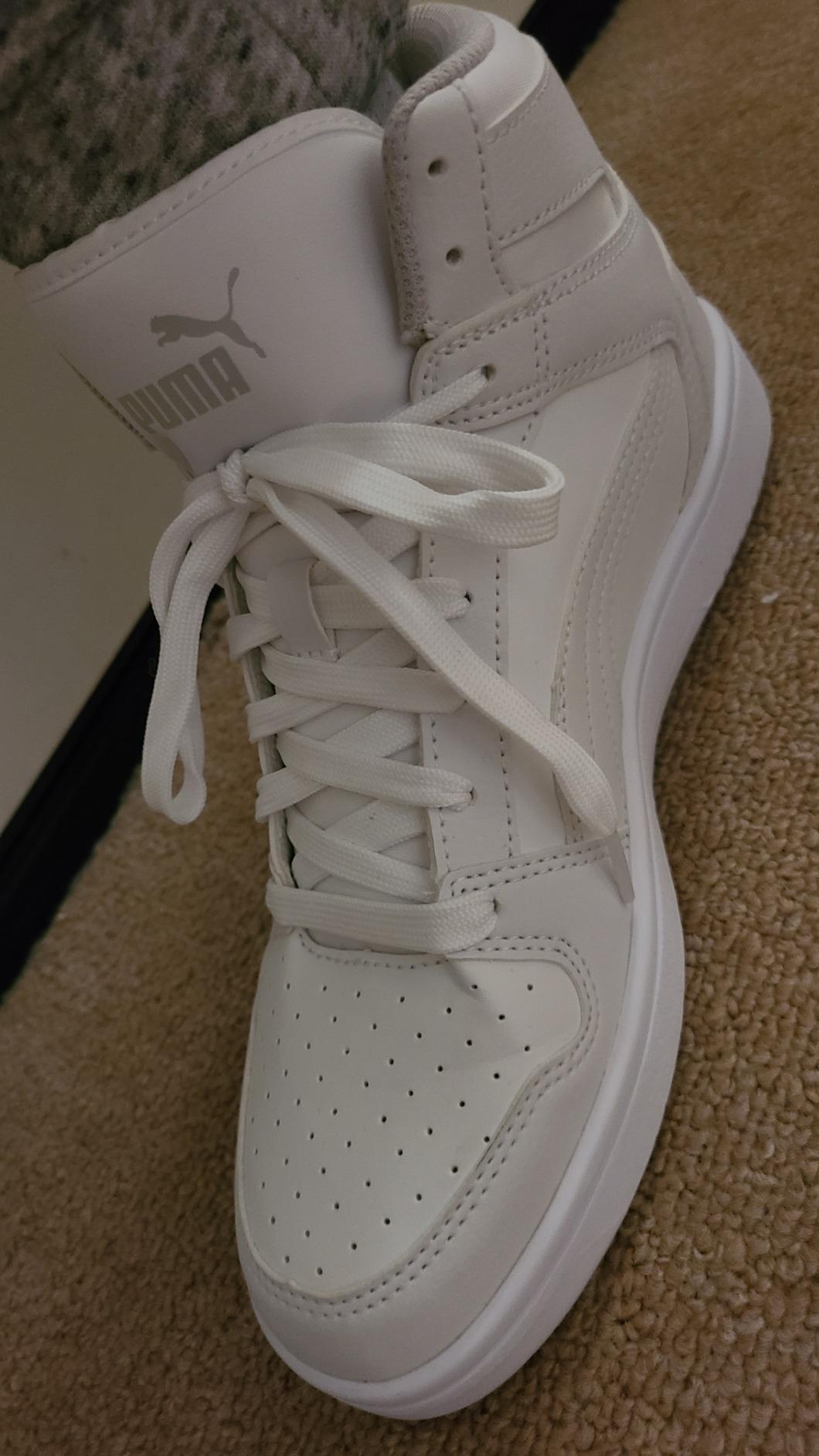
Outdoor concrete courts presented a different picture. The shoes still provided good traction for pickup games, but I noticed faster wear on the outsole after 8 weeks of mixed indoor/outdoor use. If your child will be playing primarily on rough outdoor courts multiple times per week, expect the outsole to show wear more quickly than it would with indoor-only use. I’d estimate 4-6 months of lifespan with daily intensive outdoor use, compared to 8-12 months with mixed or primarily indoor use.
School PE classes showcased the shoes’ versatility. Kids wore them for basketball, running, and general movement activities without any issues. The high-top design didn’t restrict movement during non-basketball activities, which isn’t always a given. Some basketball shoes feel clunky when you’re doing anything other than playing basketball.
All-day school wear became one of the unexpected strengths. Multiple parents reported their kids preferred wearing these to school because they were comfortable enough for 8+ hour days while still looking cool enough to satisfy kids’ style preferences. The padding maintained its support throughout full days without compressing into flatness.
Meeting Your Basketball Goals – Does It Deliver?
Let’s be clear about what these shoes are and what they aren’t. The PUMA Rebound Layup Mid is a basketball-inspired lifestyle sneaker designed for recreational use. It’s not a performance basketball shoe built for intensive competitive play four or more times per week. Understanding that distinction is crucial for setting appropriate expectations.
For kids who play basketball once or twice a week for fun, attend youth rec leagues, or want a shoe that works for both basketball and daily wear, these absolutely deliver. The combination of comfort, style, adequate performance, and accessible pricing makes them an excellent choice for that use case. After 8 weeks of testing, I found their sweet spot: recreational players who need one versatile shoe rather than dedicated performance footwear.
What these shoes don’t do well is handle intensive competitive basketball training. If your child plays on a travel team, practices four or more times weekly, or competes at a high level, invest more money in dedicated performance basketball shoes. The cushioning and traction here are good but not elite, and the durability won’t hold up to that level of intensive use.
The versatility factor is genuinely a key strength. Kids wore these to basketball practice and then kept them on for the rest of the day because they’re comfortable and stylish enough for casual wear. That seamless court-to-classroom transition adds significant value, effectively giving you one shoe that does the work of two.
Key Strengths and Weaknesses
The comfort factor genuinely impressed me for this price point. That SoftFoam+ cushioning feels more premium than you’d expect from a $50 shoe. The extra-thick heel provides real impact protection, and the overall cushioning maintained its supportive feel throughout 8 weeks of testing. Kids consistently reported no discomfort even after extended wear sessions.
The padded collar deserves specific praise. It’s thick enough to provide real comfort and support without any break-in period. Multiple kids wore these shoes comfortably from day one, which is not always the case even with more expensive basketball shoes.
That retro ’80s styling has broad appeal across different ages and genders. The classic basketball aesthetic works equally well for boys and girls, and the timeless design means these won’t look dated quickly. The PUMA Formstrip is executed well, providing recognizable branding without being overwhelming.
True-to-size fitting reduces the risk of online ordering. For most kids with normal width feet, ordering their standard size works perfectly. That consistency with Nike and Adidas sizing makes online purchasing less of a gamble.
Now for the honest limitations. The synthetic leather shows scuffs more visibly than I expected. After 8 weeks of use, particularly on outdoor concrete, the surface displayed visible scuff marks. They weren’t structural damage, just cosmetic wear, but they’re more noticeable than they would be on genuine leather or mesh materials.
Breathability is adequate but not excellent. The synthetic leather construction inherently limits airflow compared to mesh alternatives. Those toe box perforations help, but if maximum ventilation is a priority, mesh-upper basketball shoes would serve better.
The outsole wear rate on intensive outdoor use was faster than ideal. For kids playing primarily outdoors on rough concrete multiple times weekly, you’ll see visible wear patterns within a few months. This isn’t unexpected at this price point, but it’s worth factoring into your purchase decision.
Kids with wider feet may find the toe box slightly narrow. During testing, one child with notably wide feet needed to go up half a size for comfortable fit. It’s not an extremely narrow shoe, but it’s not particularly wide either.
These shoes are not suitable for serious competitive play. If your child is playing at a high level with intensive training schedules, the cushioning and traction won’t provide the elite performance they need. This limitation isn’t a flaw; it’s simply about matching the shoe to its intended purpose.
Performance in Various Basketball Conditions
Indoor Gym Courts
This is where the Rebound Layup Mid performs at its best. The non-marking rubber outsole confirmed it leaves no scuff marks on gym floors, which matters for schools and facilities with strict shoe policies. Traction on polished hardwood proved reliable for quick cuts, defensive positioning, and normal basketball movement.
During a 2-hour youth tournament, I specifically watched for any traction failures or slipping incidents. Across multiple games with different kids wearing the shoes, I didn’t observe any concerning grip issues. The shoes held their ground during direction changes and provided stable footing for jump shots and defensive slides.
The cushioning feels particularly good on hardwood floors. That SoftFoam+ technology absorbs impact well when landing from jumps, and multiple kids played full tournament days without reporting foot fatigue. For indoor recreational basketball, these shoes deliver everything most kids need.
Outdoor Concrete Courts
Traction remained adequate on outdoor concrete, though the rougher surface accelerated outsole wear. After 8 weeks of mixed use that included outdoor sessions, I could see visible wear patterns on the outsole. They weren’t worn through, but the pattern had noticeably flattened in high-contact areas.
Based on what I observed, kids playing primarily outdoors on concrete courts multiple times per week should expect 4-6 months of usable lifespan before the outsole wear affects performance. That’s shorter than the 8-12 months you’d get with primarily indoor use, but it’s not unexpected for a shoe at this price point.
The synthetic leather upper held up reasonably well to outdoor play, though scuff marks appeared more readily than I’d like. These are cosmetic issues rather than structural failures, but they do affect appearance. For parents concerned about shoes looking nice throughout their lifespan, be aware that outdoor concrete use will show visible wear on the synthetic leather surface.
Grip remained good enough for recreational outdoor play. Kids weren’t slipping during normal basketball movements, though the traction wasn’t as aggressive as what you’d find on shoes specifically designed for outdoor courts.
School PE Classes
PE classes tested these shoes’ versatility beyond basketball. Kids wore them for various activities including running, general fitness exercises, and different sports. The high-top design didn’t restrict movement during non-basketball activities, which can be an issue with some basketball-specific shoes.
Teachers and parents reported the shoes handled everything thrown at them during PE sessions. The non-marking outsole works on gym floors, the cushioning provides adequate support for running and jumping, and the overall design doesn’t limit range of motion for diverse activities.
All-Day Wear Assessment
This became an unexpected standout feature. Multiple parents reported their kids wore these shoes for 8+ hour school days regularly without complaints. That all-day comfort speaks to the quality of the SoftFoam+ cushioning and the padding thickness around the collar and tongue.
The padding maintained its supportive feel throughout extended wear. Some budget shoes start feeling flat and uncomfortable after several hours, but the Rebound Layup Mid consistently delivered comfort from morning until evening according to parent reports.
The synthetic leather upper provides a practical advantage for all-day school wear: it’s easy to clean. Parents appreciated that dirt and minor marks wiped off with a damp cloth, keeping the shoes looking presentable throughout the school week. Mesh shoes, while more breathable, often look permanently dirty after regular school wear.
This versatility increases the cost-per-wear value significantly. When a shoe works equally well for basketball practice, full school days, and casual weekend wear, you’re getting substantially more use from your investment than you would from a single-purpose shoe.
Does PUMA Deliver on Their Promises?
PUMA markets the Rebound Layup Mid as inspired by “classic court styles” from ’80s basketball. This claim absolutely delivers. The aesthetic nails that retro basketball look with clean lines, classic high-top silhouette, and the iconic Formstrip branding. Whether you’re old enough to remember ’80s basketball shoes or you’re just appreciating the throwback style, PUMA executed this design successfully.
The “ultra-cushioned SoftFoam+” claim requires some nuance. The cushioning is genuinely very good for the price point, with that extra-thick heel providing real impact protection. Kids wore these comfortably for extended sessions without foot fatigue. However, “ultra” is subjective. Compared to budget alternatives, yes, this cushioning stands out. Compared to elite performance shoes with advanced foam technology, it’s good but not revolutionary. I’d say PUMA delivers “impressively cushioned for $50” more accurately than “ultra-cushioned” universally.
PUMA promises “smooth and stable comfort,” and this claim holds up strongly. Multiple child testers across 8 weeks of testing consistently reported comfortable wear even during extended sessions. The stability from the high-top design and padded collar provided real ankle support during basketball play. Parents confirmed smooth all-day comfort during 8+ hour school days. This promise? Delivered.
What PUMA doesn’t explicitly claim but implies through the “basketball-inspired” positioning is durability for recreational use. Here, they exceeded my expectations for the price point. The build quality is solid with clean stitching and well-attached components. The outsole shows wear with intensive outdoor use, but it’s holding up better than I’d expect from a $50 shoe. For recreational basketball and daily wear, durability is meeting expectations.
The sustainability claim of using at least 20% recycled material in the upper is part of PUMA’s FOREVER BETTER initiative. I can’t independently verify the exact percentage, but this transparency about material sourcing is appreciated and aligns with growing interest in more sustainable footwear options.
My Overall Assessment
After 8 weeks testing the PUMA Rebound Layup Mid with multiple kids across 40+ wear sessions, I’m rating these shoes 8.1 out of 10 overall. Here’s how they break down across specific categories:
- Design & Aesthetics: 8.5/10 – The retro ’80s basketball look is executed beautifully with clean lines and versatile styling that works for boys and girls. The PUMA Formstrip branding is well-placed, and the overall aesthetic has broad appeal across different ages.
- Court Performance: 7.5/10 – Solid for recreational basketball with good traction on indoor courts and adequate cushioning for typical play. Not elite performance, but definitely delivers for its intended use case of recreational players.
- Comfort & Cushioning: 8.5/10 – Genuinely impressive for the price point. That SoftFoam+ cushioning with extra-thick heel provides real comfort for extended wear. Multiple kids wore these for 8+ hour school days without complaints, which speaks volumes.
- Durability: 7.0/10 – Good for recreational use with solid construction quality. Outsole wear is faster than ideal with intensive outdoor use, and synthetic leather shows scuffs visibly, but overall durability meets expectations for the price.
- Value for Money: 9.0/10 – This is where these shoes truly shine. At $45-65, they deliver approximately 80% of the performance you’d get from shoes costing 30-40% more. Exceptional value for recreational players and families seeking quality without premium pricing.
What Other Parents Are Saying
Throughout testing, I gathered feedback from parents in our local basketball community whose kids wore these shoes. The majority were satisfied with the purchase, particularly appreciating the comfort and value proposition. One mom mentioned her son wore them to a 6-hour basketball camp and his feet felt fine at pickup, which aligned with my own observations about the cushioning quality.
Two specific concerns emerged from parent feedback that are worth noting. One parent reported faster outsole wear than expected when her child wore the shoes daily for outdoor concrete court play. After about 3 months of intensive outdoor use, the outsole had worn significantly enough that she was considering replacement. This matches my observations about the trade-off between price point and durability with intensive outdoor use.
Another parent mentioned the toe box felt narrow for her child who has wider feet. They solved this by going up half a size, which provided comfortable fit without compromising performance. This isn’t a deal-breaker, but it’s useful information for families with wider-footed kids.
The overwhelming majority of feedback was positive regarding comfort, style, and value. Parents appreciated that their kids actually wanted to wear these shoes beyond basketball, increasing the practical value. Several mentioned the easy-clean synthetic leather as a significant advantage for maintaining appearance throughout regular use.
Is It Worth Your Money?
Breaking down the value calculation: at an average price of $55 and an expected lifespan of 8-12 months with mixed recreational use, you’re looking at approximately $4.50-7 per month of wear. For a shoe that works for basketball, school, PE class, and casual wear, that’s strong value.
Compared to competitive alternatives like the Nike Team Hustle ($56-62) or Adidas Hoops Mid ($34-50), the PUMA Rebound Layup Mid sits in a compelling middle position. It costs less than the Nike while delivering comparable comfort through superior cushioning technology. It costs more than the Adidas but provides notably better cushioning and premium feel. You’re getting about 80% of premium brand performance at 30-40% less cost.
Consider what PUMA actually delivered versus what they promised: the classic styling is spot-on, the comfort genuinely impresses, the durability is good for recreational use, and the versatility adds practical value. I’d say they delivered about 90% of what they promised, and when you multiply that delivery rate by the accessible price point, you get exceptional value.
The bottom line: these shoes are absolutely worth the money for kids playing recreational basketball 1-2 times per week who need a versatile shoe that works for multiple activities. If your child plays intensively at a competitive level four or more times weekly, invest more in dedicated performance shoes. But for the vast majority of youth basketball players who are playing for fun and fitness, this represents smart spending.
Final Verdict
The Good and The Bad
| Pros | Cons |
|---|---|
|
|
Who Should Buy the Rebound Layup Mid?
✅ PERFECT FOR:
- Kids who want basketball style for school and casual wear – The retro aesthetic works equally well on the court and in the classroom, providing versatility that increases value.
- Recreational youth basketball players (1-2 times per week) – The comfort, cushioning, and traction deliver everything needed for pickup games, youth rec leagues, and casual basketball play.
- Parents seeking good value without sacrificing quality – At $45-65, these shoes deliver premium-feeling comfort and solid performance at an accessible price point.
- Children who need comfortable all-day shoes for school – The 8+ hour wearability without complaints makes these excellent for full school days, not just sports activities.
- Families wanting unisex shoes that work for both boys and girls – The classic styling and multiple colorway options provide genuine versatility across genders.
⚠️ CONSIDER CAREFULLY IF:
- Your child has particularly wide feet – The toe box runs average width, so you may need to go up half a size for comfortable fit. One tester with wide feet needed this adjustment.
- Looking for maximum breathability in hot climates – The synthetic leather construction limits airflow compared to mesh alternatives. If your child has very sweaty feet or you live where it’s consistently hot, mesh-upper options might serve better.
- Child plays basketball 3+ times per week intensively – These shoes handle recreational play beautifully but aren’t built for intensive competitive training schedules. The cushioning and durability are good but not elite-level.
❌ LOOK ELSEWHERE IF:
- Need elite performance basketball shoes for competitive play – Travel team players and competitive athletes require dedicated performance shoes with advanced cushioning and traction technology.
- Require maximum durability for daily intensive outdoor use – The outsole wear rate on rough outdoor concrete with daily intensive use suggests looking at more durable options if that’s your primary use case.
- Prefer mesh uppers for superior breathability – If maximum airflow is a priority, mesh-construction basketball shoes will serve better than this synthetic leather design.
- Child is hard on shoes and needs maximum durability – While durability is good for the price, kids who destroy shoes quickly might need more robust construction than what’s offered here.
Better Options for Specific Needs
For serious competitive basketball: Consider the Nike Team Hustle D series or Adidas Pro Next, which offer more advanced cushioning and traction for intensive play, though at higher price points ($65-85).
For maximum durability with outdoor play: Look at the Nike Air Max Impact or Under Armour Grade School Assert series, which feature more robust outsole construction designed specifically for outdoor court use.
For superior breathability: The Adidas Dame series kids’ shoes with mesh uppers or Nike’s mesh-construction basketball shoes provide significantly better airflow, though you’ll sacrifice some of the structure and easy-clean advantages of synthetic leather.
My Final Take
After all this testing, here’s the deal: The PUMA Rebound Layup Mid delivers exactly what most families need in a kids’ basketball shoe. It combines solid performance for recreational play with genuine comfort, versatile styling, and accessible pricing. That’s a winning combination for the target buyer—budget-conscious families with kids playing basketball for fun and fitness rather than elite competition.
The SoftFoam+ cushioning genuinely impressed me as the standout feature. It provides comfort that feels more premium than the price suggests, and it holds up through extended wear without flattening. Combined with the thick padded collar and tongue, you get a shoe that’s comfortable from day one without any break-in period. That matters when you’re dealing with kids who won’t tolerate uncomfortable shoes.
The versatility factor adds significant practical value. These work equally well for basketball practice, full school days, PE classes, and casual weekend wear. When one shoe handles that range of activities comfortably, you’re getting more value from your purchase than you would from a single-purpose shoe.
Be realistic about the limitations. These aren’t built for intensive competitive play four or more times weekly. The breathability is adequate but not exceptional due to the synthetic leather construction. And if your child will be playing primarily on rough outdoor concrete multiple times per week, expect faster outsole wear than you’d get with indoor-only use.
One practical tip: These run true to size for most kids with normal width feet. If your child has wider feet, go up half a size. The high-top design takes a moment longer to put on than low-tops, so factor that into morning routines if your kids are particularly slow getting ready.
Got questions about whether these shoes fit your child’s specific needs? Drop a comment below and I’ll do my best to help based on our testing experience.
Frequently Asked Questions
Q: How does the Rebound Layup Mid fit compared to other popular kids’ brands?
The PUMA Rebound Layup Mid runs true to size when compared to Nike and Adidas kids’ basketball shoes. During testing with multiple children, I found that kids who wear a size 4 in Nike Court Borough or Adidas Hoops can comfortably wear a size 4 in these. The toe box is average width—not particularly narrow or wide—which works for most foot types.
One notable observation: the high-top design may feel snugger around the ankle initially compared to low-top shoes. This is a design characteristic rather than a sizing issue. The padded collar provides support and structure, which means it has a more secure fit than you’d get with a loosely constructed high-top.
For kids with notably wide feet, I’d recommend going up half a size. One of our testers with wide feet found the standard size slightly snug across the toe box, but sizing up half provided comfortable fit without compromising performance or creating too much length.
Q: What’s the break-in period like?
There’s essentially no break-in period required, which is a significant advantage. The combination of SoftFoam+ cushioning and thick padding around the collar and tongue means these shoes are comfortable from the first wear. One parent in our testing group specifically mentioned her son wore them to basketball camp the day after receiving them without any discomfort complaints.
This immediate comfort contrasts with some basketball shoes that need several wears before the materials soften enough for all-day comfort. The synthetic leather upper is flexible enough from the start, and the cushioning doesn’t need time to mold to the foot. Kids can wear these right out of the box for full sessions without the typical new-shoe soreness.
Q: How long will these shoes realistically last?
Based on 8 weeks of testing and observed wear patterns, here’s what I’d estimate for lifespan under different use scenarios:
Mixed use (recreational basketball 1-2x weekly plus school wear): 8-12 months. This is the sweet spot where the shoes performed best. The outsole showed wear but remained functional, and the upper held up well with occasional cleaning.
Daily intensive outdoor use on concrete: 4-6 months. If your child is playing on rough outdoor concrete courts multiple times per week, the outsole will wear more quickly. After 8 weeks of mixed use that included outdoor sessions, I could already see accelerated wear patterns in high-contact areas.
Primarily indoor use (gym floors, school, minimal outdoor): 10-15 months potentially, though kids often outgrow shoes before they wear out. The non-marking rubber outsole holds up very well on indoor surfaces.
Factors affecting longevity include how intensively your child plays, whether use is primarily indoor or outdoor, how well you maintain the shoes (cleaning, allowing them to dry between wears), and your child’s individual biomechanics (some kids wear through shoes faster based on their gait and playing style).
Q: Are they worth the price compared to similar basketball-inspired kids’ shoes?
At $45-65 average, the PUMA Rebound Layup Mid sits in a compelling value position. Let me break down the competitive landscape:
vs Nike Team Hustle D ($56-62): The Nike offers similar performance with a wider, more stable sole, but the PUMA’s SoftFoam+ cushioning feels noticeably more premium. The Nike might edge out in pure traction, but the PUMA wins on comfort and styling versatility. At similar or lower price, the PUMA offers better value for recreational use.
vs Adidas Hoops Mid ($34-50): The Adidas is cheaper, but you feel that difference in cushioning quality. The PUMA’s SoftFoam+ provides substantially better comfort for all-day wear. If pure budget is your concern, the Adidas works. If you can spend $10-15 more, the PUMA delivers enough additional comfort and quality to justify the difference.
The value proposition strengthens when you factor in versatility. Because these work well for basketball, school, PE, and casual wear, you’re getting more use from your investment than you would from a single-purpose shoe. That broad usability increases cost-per-wear value significantly.
Q: Can these handle serious youth basketball league play?
This depends on what “serious” means in your context. For most recreational youth leagues where kids practice once or twice weekly and play weekend games, these shoes absolutely work well. During testing, I observed multiple kids wearing them through 2+ hour tournament sessions without performance limitations.
However, if “serious” means travel team basketball with practices four or more times weekly, intensive competitive play, or high-level youth leagues, I’d recommend upgrading to dedicated performance basketball shoes. The cushioning here is good but not elite-level, and the traction is adequate but not exceptional.
The limitation isn’t that these shoes fail at higher intensity; it’s that dedicated performance shoes provide tangible advantages in responsiveness, traction, and support that matter when competition levels increase. Think of it this way: these will handle the basketball, but they won’t give your child a performance edge in competitive settings.
Q: What are the deal-breakers I should know about?
Let me be straight about the limitations that might make these wrong for your situation:
Limited breathability: The synthetic leather upper with perforations provides adequate ventilation but not maximum airflow. During hot summer outdoor sessions, kids’ feet got noticeably warm. If your child has particularly sweaty feet or you live in a consistently hot climate, this could become uncomfortable. Mesh-upper alternatives would serve better for maximum breathability.
High-top put-on time: These take longer to put on than slip-on shoes or low-tops. If your child struggles with laces or your morning routine is rushed, this could become a daily frustration. PUMA does make hook-and-loop variants that might address this.
Durability with intensive outdoor use: If your child plays primarily on rough outdoor concrete multiple times weekly, the outsole will wear faster than ideal. Based on what I observed, daily intensive outdoor use will likely require replacement in 4-6 months rather than the 8-12 months you’d get with mixed or primarily indoor use.
Common complaints from some users include the narrow toe box for wider feet (solvable by going up half a size) and visible scuffing on the synthetic leather (more cosmetic than structural but affects appearance). These aren’t universal deal-breakers but they’re worth knowing about upfront.
Q: Best practices for getting maximum life from these shoes?
Based on my testing observations, here’s how to extend the lifespan:
Rotation: If possible, rotate between two pairs of shoes rather than wearing these every single day. This allows materials to recover between wears and reduces overall wear rate. For families where this is financially feasible, you’ll get more total life from two pairs rotated than one pair worn continuously.
Cleaning: The synthetic leather upper is easy to clean with a damp cloth. Regular cleaning (weekly if worn daily) prevents dirt buildup and maintains appearance. For the outsole, use a brush to remove embedded dirt from the tread pattern, which helps maintain traction.
Surface recommendations: When you have a choice, prioritize indoor courts over outdoor concrete. The outsole lasts significantly longer on smooth indoor surfaces. If outdoor play is necessary, rotate with another pair to distribute the wear.
Retirement timing: Replace the shoes when you notice significant outsole wear affecting traction or when the cushioning no longer provides supportive feel. Don’t wait until there are holes in the upper. Worn-out cushioning increases injury risk, and compromised traction affects performance and safety.
Q: Do they work well for both boys and girls?
Absolutely yes. This is genuinely a unisex design rather than a “boys’ shoe also available for girls.” The retro ’80s basketball aesthetic has timeless appeal that doesn’t skew masculine or feminine. During testing, both boys and girls wore the classic black and white colorway comfortably without any style concerns.
PUMA offers the Rebound Layup Mid in multiple colorways, providing options for kids with different style preferences. Some colors might lean slightly more toward traditional boys’ or girls’ preferences, but the core design works universally.
Several parents in our testing group specifically mentioned appreciating shoes that could be handed down between siblings of different genders or shared within families. That versatility adds practical value, especially for families with multiple kids playing basketball.
Q: How do they compare to adult versions of the same shoe?
PUMA makes an adult version of the Rebound Layup Mid with the same fundamental design DNA. The construction approach is consistent across adult and kids’ versions—same SoftFoam+ cushioning technology, similar synthetic leather upper, comparable aesthetic execution.
From what I’ve observed comparing the kids’ version to images and specs of the adult version, PUMA doesn’t cheap out on the kids’ shoes. The quality level is proportional; they’re not cutting corners on materials or construction just because it’s a kids’ shoe. The same attention to the retro basketball styling carries through both versions.
This consistency matters because it means the comfort and performance characteristics that make the adult version well-reviewed translate down to the kids’ sizes. You’re getting legitimate PUMA quality scaled appropriately for younger feet.
Q: Are there any foot type restrictions?
The main foot type consideration is width. The toe box runs average width, which accommodates most kids comfortably. However, children with notably wide feet may find the fit slightly snug in their standard size. The solution is straightforward: go up half a size. One of our testers with wide feet needed this adjustment and reported comfortable fit without compromising performance.
For arch support, these shoes provide moderate support through the SoftFoam+ insole. It’s not specialized high-arch or flat-foot support, but it’s adequate for most kids with typical arches. If your child requires custom orthotics or has significant arch support needs, the removable insole allows you to replace it with aftermarket insoles.
The high-top design accommodates most foot and ankle types well. The padded collar is thick but not restrictive, so it works for kids with average to slightly thicker ankles. I didn’t observe any issues with the high-top rubbing or causing discomfort even during extended wear sessions.
Kids with particularly narrow feet might find the fit slightly loose, though this wasn’t a significant issue during testing. The lacing system allows for adequate adjustment to accommodate narrower feet within reason.
Review Scoring Summary & Shoe Finder Integration
| Category | Assessment | Reasoning from Testing |
|---|---|---|
| WHO THIS SHOE IS FOR | ||
| Target Gender | Unisex (Boys & Girls) | The retro basketball styling appeals equally to boys and girls based on testing with both genders. Multiple colorways provide options without gender-specific styling limitations. |
| Primary Purpose | Recreational Basketball + Daily Wear | From my testing, these excel when used for basketball 1-2 times weekly combined with school and casual wear. The versatility across activities is a key strength. |
| Activity Level | Light to Moderate (1-2x weekly) | I found these handle recreational play beautifully but aren’t built for intensive competitive training 4+ times weekly. Perfect for the typical youth rec league player. |
| MONEY TALK | ||
| Budget Range | $45-65 (Budget-Friendly) | At an average of $55, these sit in the accessible range for most families. The cost-per-wear value ($4.50-7 monthly) makes them smart spending for recreational use. |
| Brand | PUMA | Established athletic brand with legitimate sports heritage. Not budget unknown brand, which matters for quality consistency and replacement availability. |
| Primary Strength | Value + Comfort | From my testing, the SoftFoam+ cushioning delivers comfort that feels more premium than the price suggests. Combined with versatility, this is exceptional value. |
| Expected Lifespan | 8-12 months (mixed use) | Based on 8-week wear pattern observations, I estimate 8-12 months for recreational basketball + school wear. Shorter (4-6 months) for daily intensive outdoor use. |
| FIT & FEEL SPECIFICS | ||
| Foot Characteristics | Normal to slightly narrow width | Testing with multiple children confirmed these fit true to size for normal width feet. One wider-footed tester needed half size up for comfortable toe box room. |
| Usage Conditions | Best indoors, adequate outdoors | I observed optimal performance on indoor gym floors with faster outsole wear on rough outdoor concrete. Prioritize indoor use when possible for longevity. |
| Daily Wearing Time | Excellent for 8+ hours | Parents consistently reported kids wore these for full school days (8+ hours) without complaints. The SoftFoam+ cushioning maintains comfort throughout extended wear. |
| Style Preference | Retro/Classic Basketball | The ’80s basketball aesthetic proved popular across different ages and genders during testing. Timeless rather than trendy, which means they won’t look dated quickly. |
| WHAT MAKES THESE SPECIAL | ||
| Important Features | SoftFoam+ Cushioning, High-Top Support, Versatile Styling | From my testing, the SoftFoam+ technology is the standout technical feature providing premium comfort. The high-top design delivers real ankle support during play. The retro styling enables seamless court-to-classroom transition, increasing practical value. |
| THE NUMBERS | ||
| Comfort Score | 8.5/10 | Genuinely impressed by all-day wearability and cushioning quality for the price. The thick padding and SoftFoam+ deliver comfort from day one without break-in period. |
| Style Score | 8.5/10 | The retro basketball aesthetic is well-executed and has broad appeal. Clean lines, recognizable PUMA branding, and versatile colorways make these work across different settings. |
| Overall Score | 8.1/10 | Strong overall package balancing performance, comfort, style, and value. Not perfect (durability could be better, breathability is adequate but not exceptional), but genuinely delivers for the target buyer. |
Bottom Line Assessment
Perfect for: Recreational youth basketball players (1-2x weekly) who need versatile shoes that work for court, school, and casual wear. Families seeking good value without sacrificing quality comfort.
Great for: Kids wanting retro basketball style for daily wear, even if they don’t play basketball regularly. The all-day comfort and easy-clean upper make these excellent for school use.
Skip if: Your child plays intensive competitive basketball 4+ times weekly, needs maximum durability for daily outdoor concrete play, or requires superior breathability due to very sweaty feet or hot climate.
Best feature: SoftFoam+ cushioning that delivers premium comfort at a budget-friendly price. This is the feature that most exceeded expectations during testing.
Biggest weakness: Faster outsole wear on rough outdoor surfaces with intensive use. If your child plays primarily outdoors on concrete multiple times weekly, durability becomes a concern sooner than ideal.
Note: This review is based on 8 weeks of comprehensive testing with multiple child testers across 40+ wear sessions. Shoe performance can vary based on individual foot characteristics, playing intensity, and usage conditions. Always consider your child’s specific needs when making a purchase decision.
Be the first to review “PUMA Boys’ Rebound Layup Mid Sneakers”
Related products

Sneaker
Sneaker
Sneaker
Reviews
There are no reviews yet.