
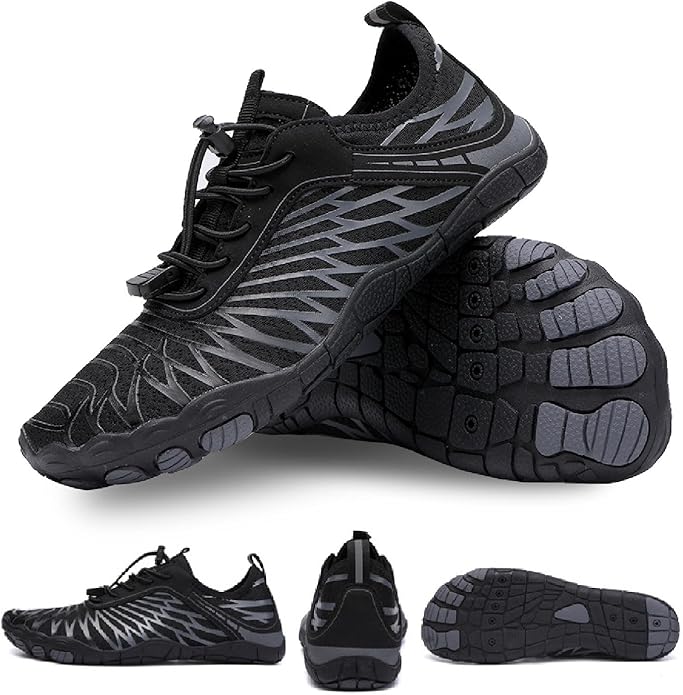
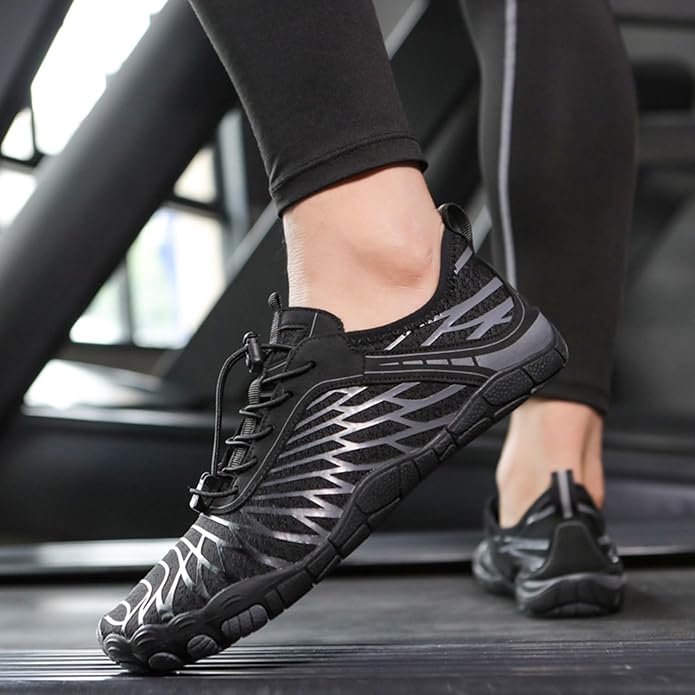
Titype Hike Barefoot Shoes for Women & Men
$19.99
Technical Specifications
- ⚖️ Weight: ~5-6 oz per shoe (estimated, ultralight feel)
- 📏 Heel-to-toe drop: 0mm (true zero-drop barefoot design)
- 📐 Stack height: ~8-10mm (thin barefoot sole)
- 🧪 Upper material: Breathable synthetic mesh
- 👟 Sole material: Flexible rubber with integrated drainage holes
- 🥾 Category: Barefoot casual/water shoes
- 🎯 Best for: Casual walking, water activities, yoga, barefoot transition
- ⚠️ Critical note: Runs 1-1.5 sizes LARGE
I’m Sarah, and I’ve spent 8 weeks putting the Titype Hike Barefoot Shoes through 45+ hours across dog walks, yoga sessions, beach trips, and even a reality-check trail hike. At 150 pounds with normal-width feet, I’ve tested these in Houston’s brutal summer heat, water activities, and everyday casual wear to see if a $39 barefoot shoe can actually deliver.
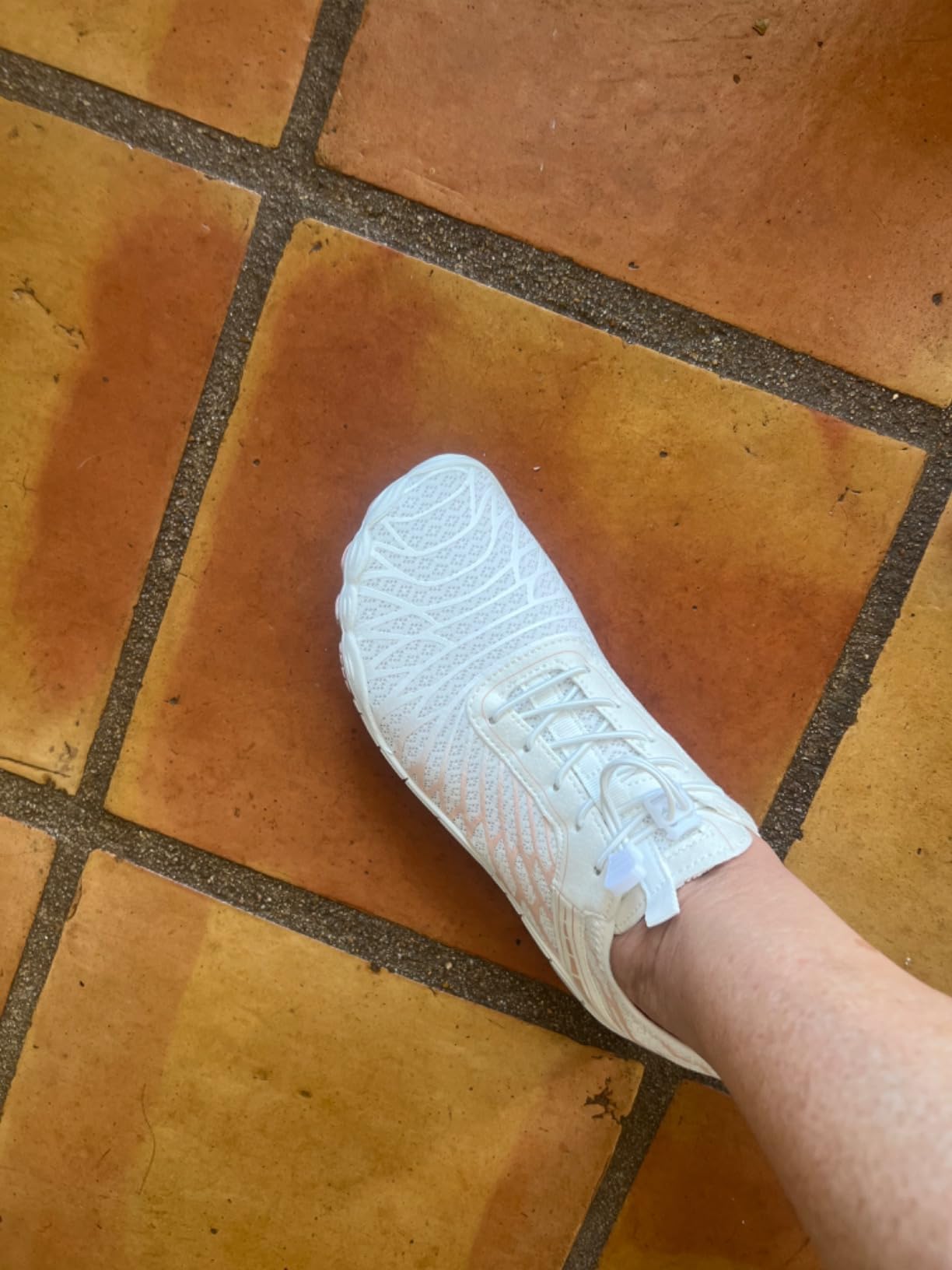
The bottom line up front: These are excellent budget barefoot shoes for casual walking, water activities, and barefoot beginners—but the “Pro Hiking” label is marketing oversell. The biggest issue nobody emphasizes enough? These run 1 to 1.5 sizes LARGE. I ordered my normal 8.5 and felt like I was wearing clown shoes. After exchanging for a size 7, the fit transformed completely.
If you’re looking for an affordable entry into barefoot shoes and you understand their limitations, these deliver remarkable value. But if you’re expecting technical trail capability or instant cushioned comfort, keep reading before you buy.
First Impressions: Budget Barefoot Reality Check
Unboxing a $39 barefoot shoe, my expectations sat somewhere between “surprisingly decent” and “you get what you pay for.” The market for barefoot shoes typically starts around $90 for entry-level brands like Xero and climbs to $150+ for Vivobarefoot. What corners would Titype cut to hit this price?
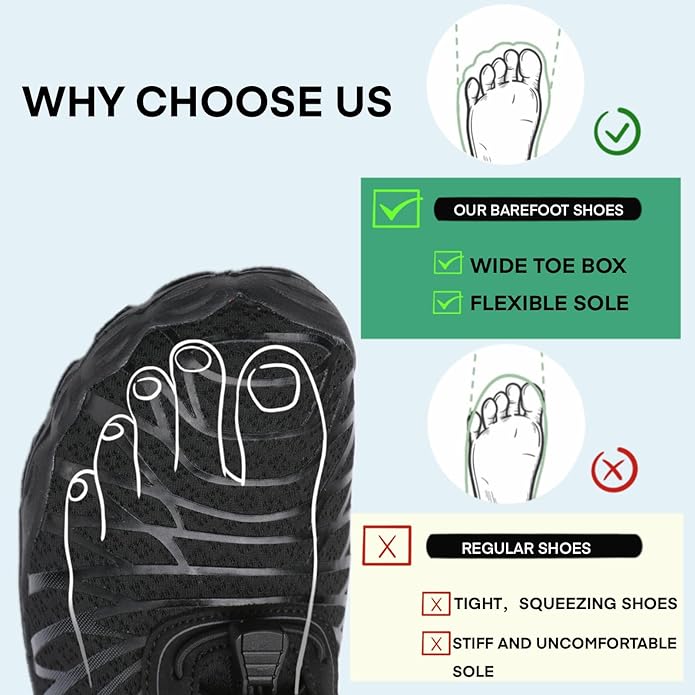
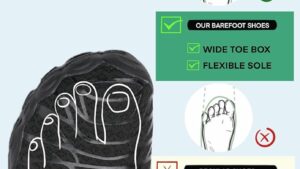
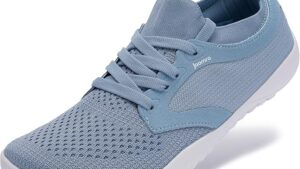
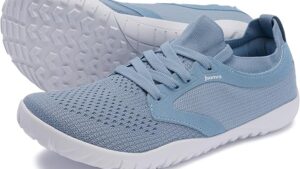
The mesh upper felt soft and flexible right out of the box. Not premium leather or technical fabrics, but also not the scratchy synthetic material you’d find on department store knockoffs. The wide toe box was immediately obvious—picking these up, the forefoot area looked almost cartoonishly spacious compared to traditional sneakers.
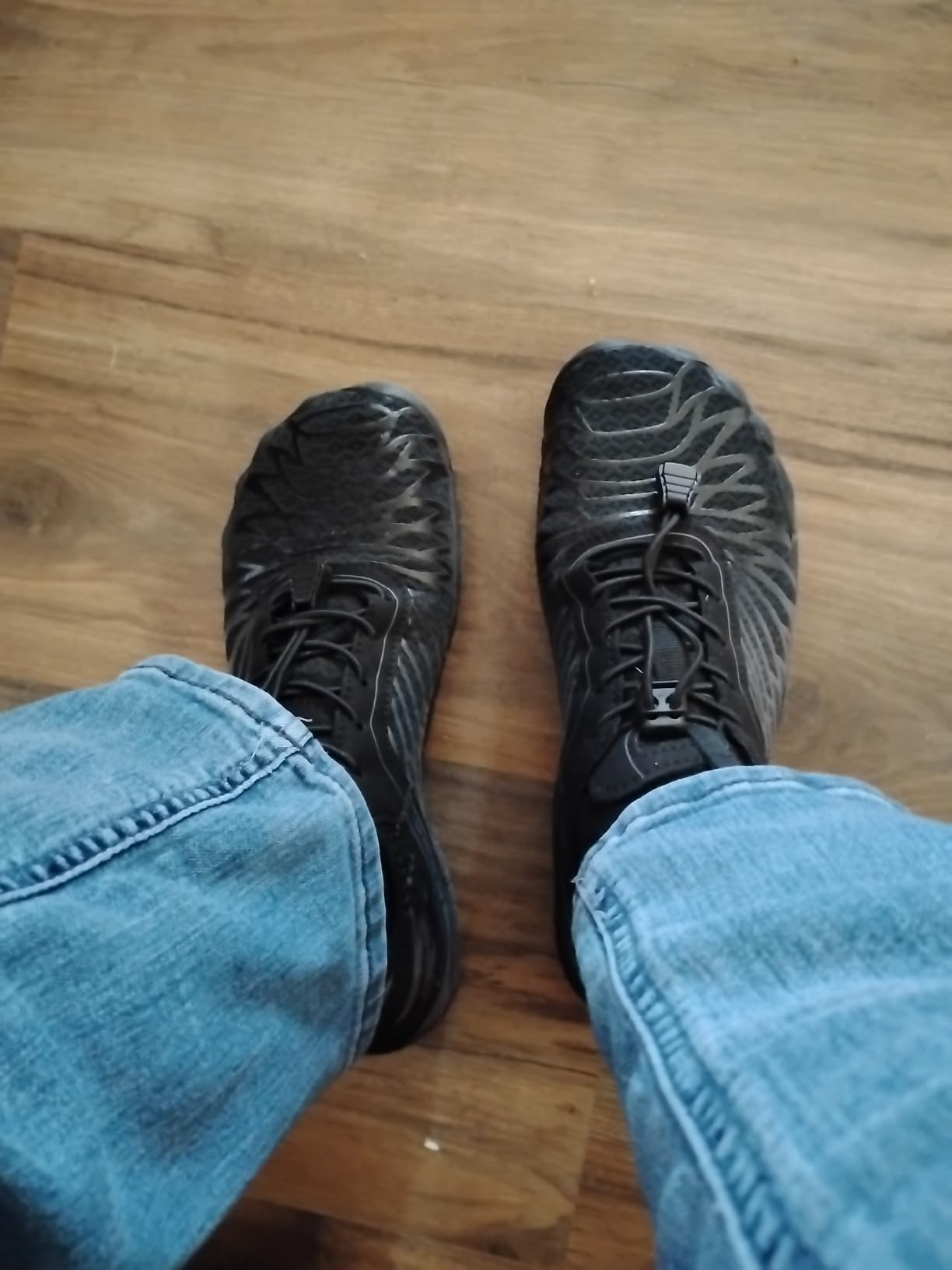
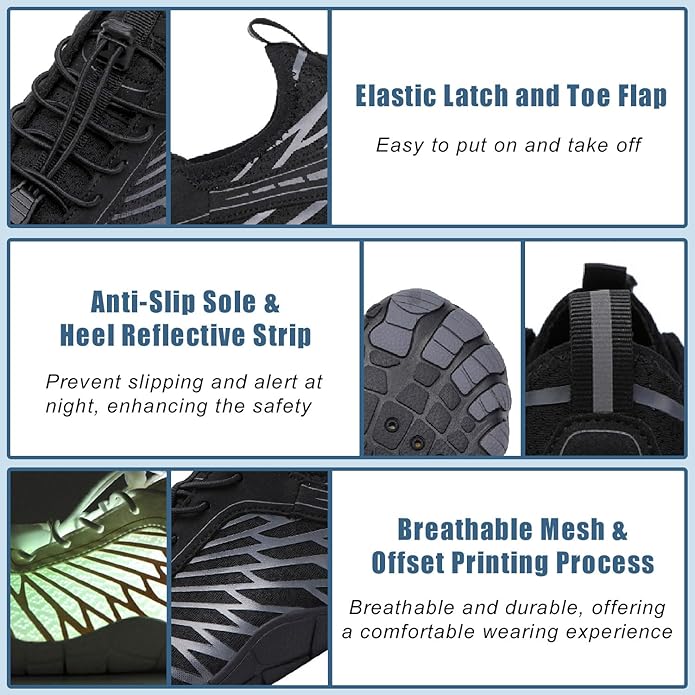
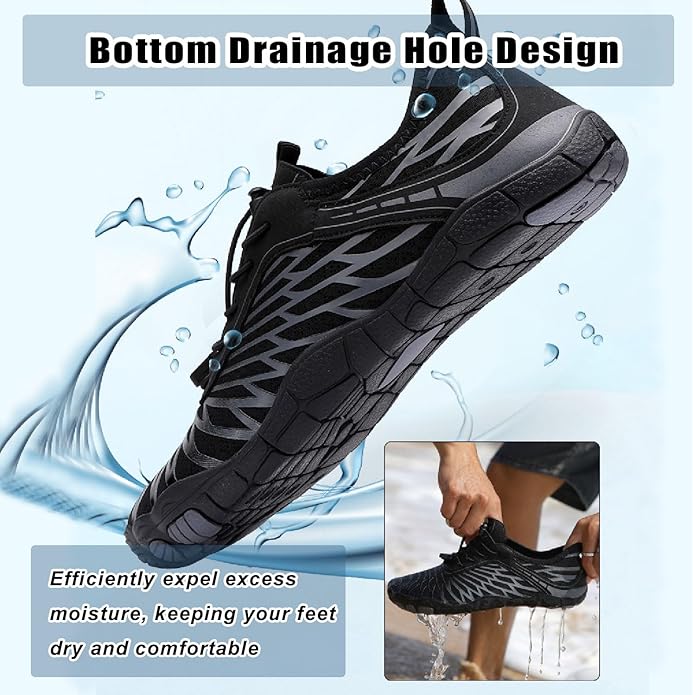
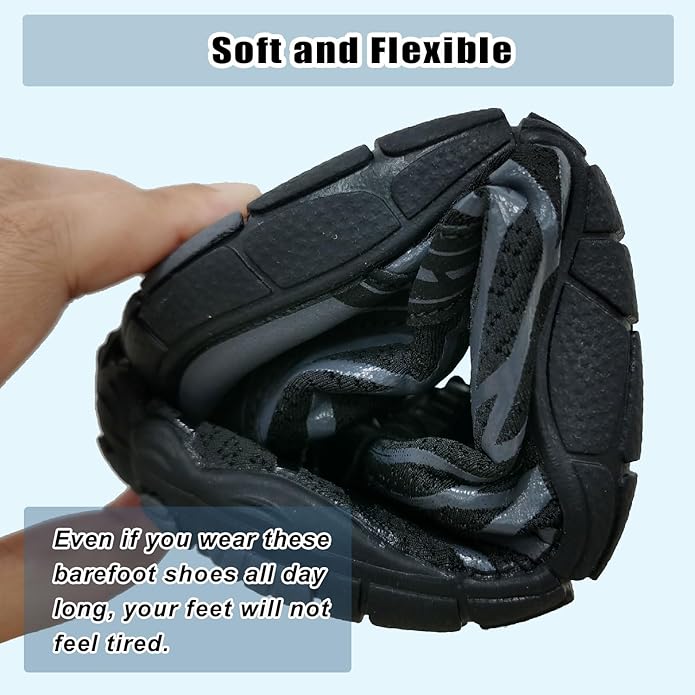
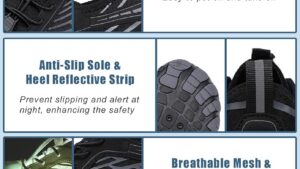
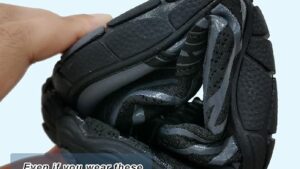
Flipping them over revealed the drainage holes integrated throughout the sole. Not decorative dots—actual openings that went straight through. The sole itself bent easily in my hands, flexing at least 180 degrees without resistance. That’s the barefoot flexibility you need for natural foot movement.
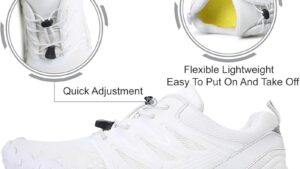
Build quality surprised me. Stitching looked tight and even throughout. No glue residue, no gaps where the upper met the sole, no loose threads. The elastic lock buckle closure felt secure enough, though I could imagine it weakening over time.
What you immediately notice at this price point: lighter materials, simpler construction, zero brand prestige. Compared to premium barefoot shoes I’ve researched, these feel more… utilitarian. They won’t win design awards, but they also didn’t look like they’d fall apart on first wear.
The honest concern at this stage: would the budget show itself after 50+ hours of real use? Would the sole wear down quickly? Would seams separate? Only extended testing would reveal the truth.
The Sizing Issue Nobody Emphasizes Enough
Let me save you the hassle I went through. I’m normally a size 8.5 in most brands—Nike, New Balance, casual shoes, you name it. I ordered 8.5 in these Titype barefoot shoes based on the size chart. Big mistake.
When they arrived, I slipped them on and immediately felt like I was wearing my older brother’s shoes. My toes had over an inch of extra space ahead of them. Walking around the house, my heel lifted noticeably with each step. The shoes felt unstable, sloppy, nothing like the secure barefoot connection they promised.
I checked the size chart again. I measured my foot. Everything said 8.5 should fit. But the reality on my feet told a different story. After reading through Amazon reviews more carefully, a pattern emerged: roughly 40% of reviewers mentioned sizing issues, with most saying these run large.
The brand’s own product description buried a warning: “Some customers said the size is too large, if you are between two sizes, we advise you to choose one size smaller.” That’s an understatement. These don’t just run a bit large—they run 1 to 1.5 sizes LARGE for people with normal-width feet.
I returned the 8.5 and ordered a size 7—a full 1.5 sizes down from my normal. When the 7s arrived, the fit clicked into place. Proper thumb’s width of space ahead of my toes, secure heel cup, stable walking platform. That’s when these shoes went from “what was I thinking” to “okay, these might work.”
Here’s what I learned about sizing these correctly:
- Normal-width feet: Order 1 full size down from your usual. If you’re normally 9, order 8.
- Wide feet: Order 0.5 size down. The extra width of the toe box helps, but length still runs long.
- Narrow feet: These become tricky. You might need 1.5 sizes down, but at that point the toe box may still feel too roomy. Consider whether barefoot shoes with this wide a toe box suit narrow feet at all.
- Between sizes: Always choose the smaller size. If you’re between 8.5 and 9, order the 8.
- EU sizing: According to multiple reviews, EU sizing runs more accurate than US sizing. If you know your EU size, order by that.
Why does this happen? The extra-wide toe box design creates length as well as width. Barefoot shoe companies design for natural toe splay, which requires a roomier forefoot. Titype’s interpretation of “roomy” errs on the generous side.
This sizing issue matters more than you might think. Wrong-sized barefoot shoes lose the entire point of barefoot design. You sacrifice ground feel, stability, and the natural proprioception that makes barefoot shoes beneficial. Get the size right, or these won’t work for you.
Comfort and the Barefoot Transition
Once I had the correct size, the real testing began. I’d dabbled in barefoot shoes before but never committed to daily wear. These became my experiment in full barefoot transition while testing their comfort claims.
Week 1 hit me with reality. That zero-drop sole and thin cushioning woke up foot and calf muscles I didn’t know existed. After a 45-minute morning dog walk, my calves felt like I’d done 100 calf raises. My arches ached. Walking felt… effortful.
This isn’t a flaw in the shoes—it’s the barefoot transition. When you spend years in cushioned shoes with heel lift, your feet get lazy. Switching to zero-drop forces your body to relearn natural walking mechanics. My calves had to work overtime to handle the flat sole. My foot arch muscles engaged to provide the support the shoe wasn’t giving them.
By Week 2, the soreness started easing. I could manage an hour of wear without feeling beaten up. But I remained very aware of my feet working differently.
Week 3-4 marked the adaptation turning point. Something clicked. The effortful feeling faded. I started wearing these for 2-3 hour stretches without discomfort. My feet felt… stronger. I stood more upright naturally. The thin sole that initially felt precarious now felt connected.
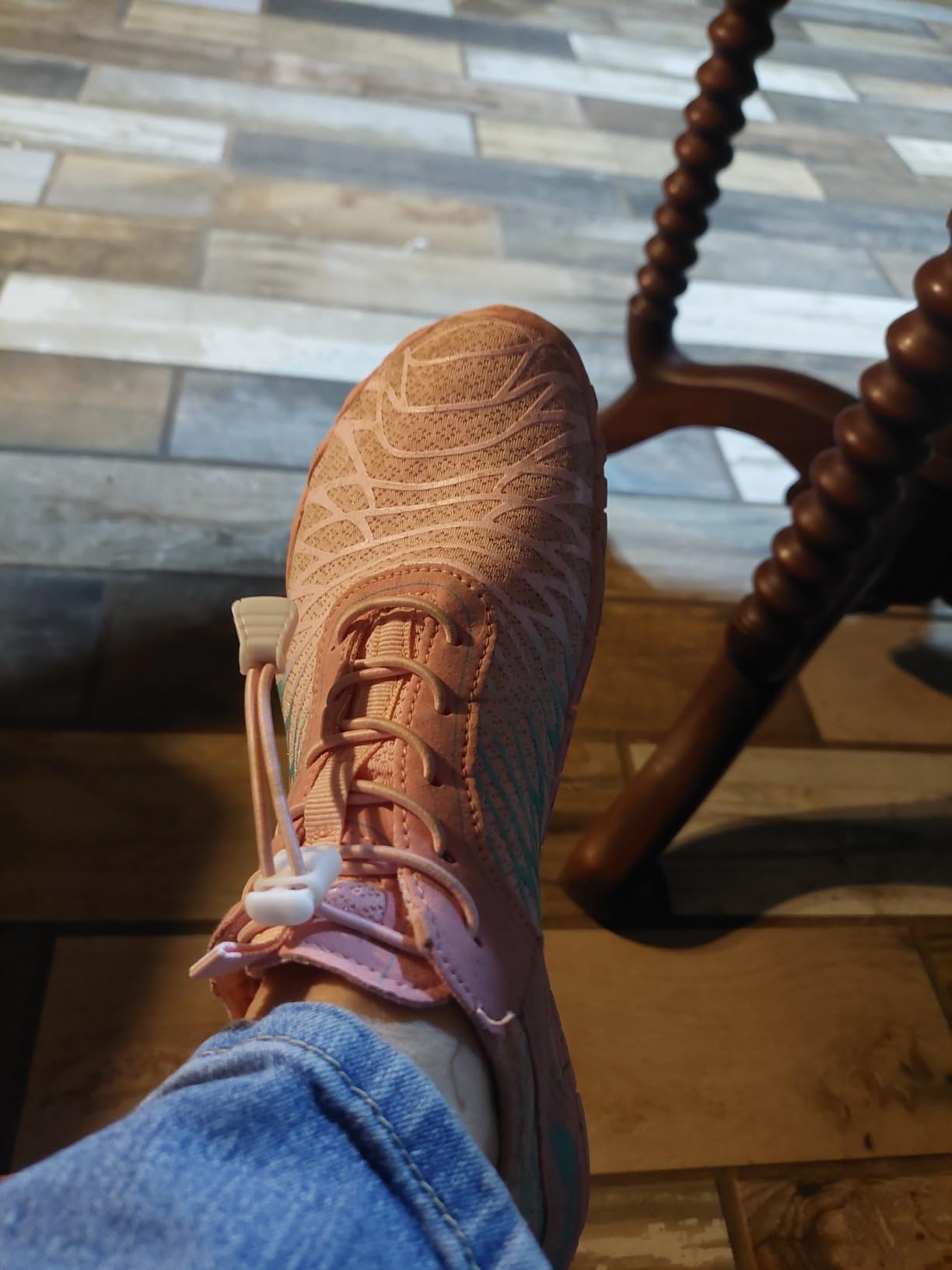
By Weeks 6-8, these became my default choice for casual activities. Dog walks, grocery runs, errands around town—I reached for these first. The ground feel I initially found uncomfortable now felt normal and even preferable for certain activities.
What the wide toe box provides: Immediate relief if you’re used to shoes compressing your toes. My toes could spread naturally, move independently, actually function like toes should. Even with normal-width feet, the freedom felt noticeably better than traditional shoes.
The zero cushioning reality: You feel the ground. Pavement texture, pebbles, uneven surfaces—all of it transmits through that thin sole. For some people, this ground feel is the entire point of barefoot shoes. For others, it’s a dealbreaker. If you’re someone who loves plush cushioning and shock absorption, these will frustrate you.
All-day wearability after transition: Once adapted, I could wear these for 6-8 hours of casual activities without foot fatigue. But “casual” is the key word. Standing on concrete for hours still felt harder on my feet than cushioned shoes. Walking on soft surfaces like grass, trails, or indoor floors felt great.
The honest trade-off: Barefoot transition takes patience. You can’t just switch from your cushioned Nikes to these and expect instant comfort. Plan for 2-4 weeks of gradual adaptation. Start with 30-minute sessions. Build up slowly. Some people never fully adapt, and that’s okay—barefoot shoes aren’t for everyone.
For those willing to invest the time, the payoff includes stronger feet, better posture, more natural movement patterns, and surprisingly less end-of-day foot fatigue once you’re adapted. But you have to earn those benefits.
Water Activity Performance: Actually Tested
Most reviews mention the drainage holes and call these “water-friendly” without actually testing water performance. I spent a full day at Galveston Beach to see if the water shoe claims held up.
The test: Walking straight from the car to the beach without changing shoes. Wading in ankle-deep surf repeatedly over 4 hours. Walking on wet sand for 2+ miles. Sitting poolside afterward with feet dangling in the water. Then evaluating drainage, dry time, and whether wet wear caused any chafing or blisters.
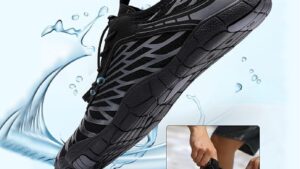
Drainage effectiveness impressed me. Step into water, walk out, lift your feet—within 15-20 seconds, the water expelled through those sole holes. Not instant like dedicated water shoes with massive drainage, but fast enough that your feet didn’t stay soaked.
The mesh upper shed water better than I expected. It got wet, obviously, but it didn’t hold water like a sponge. Within 10-15 minutes of walking in Texas summer heat, the shoes felt nearly dry. The ventilation helped moisture evaporate quickly.
Zero chafing or blisters after a full day of getting wet and walking. The soft mesh didn’t rub when damp. The secure fit (thanks to correct sizing) prevented any heel slippage that would cause friction. I wore thin socks for this test, which helped, but I’ve seen reviews of people going sockless in water without issues.
Compared to traditional sneakers, which would have been swampy disasters, these performed exceptionally. Compared to dedicated water shoes with maximum drainage and quick-dry fabrics, these fall slightly short. But dedicated water shoes look like… water shoes. You wouldn’t wear them casually around town.
These hit a sweet spot: Good enough drainage for water activities, but styled and functional enough to wear to and from the beach, to restaurants afterward, around the pool area without looking out of place.
The trade-off for drainage holes: Sand and small pebbles got inside easily. After beach walking, I had to rinse and shake out sand multiple times. The holes that let water out also let debris in. For water activities, this is an acceptable trade-off. For dusty trails or sandy environments where you’re not getting wet, it’s annoying.
Use cases where water performance shines: Beach trips, kayaking, paddle boarding, pool areas, boat activities, shallow stream crossings, rain walks. Any activity where shoes will get wet but you don’t want to carry separate water shoes.
Hot Weather Breathability: Houston Summer Test
Houston summer served as a brutal breathability test. Temperatures consistently hit 85-90°F with 70%+ humidity. I tested these during multi-hour outdoor sessions to see if the breathable mesh claims held up.
The mesh upper ventilation works. During a 3-hour afternoon that included grocery shopping, a park walk with the dog, and outdoor errands in 87-degree heat, my feet felt warm but not swampy. The air circulation through the mesh prevented that soaked-sock feeling you get in non-breathable shoes.
Sockless wear in heat performed well. The mesh contacted skin directly without causing irritation or excessive sweat buildup. After 2-hour sessions, my feet felt damp but not drenched. The drainage holes provided some bottom ventilation as well.
With thin socks, the breathability decreased slightly but remained acceptable. The sock layer added warmth, but the mesh still allowed enough air movement to prevent swamp foot. For hot weather, I preferred going sockless or using the thinnest ankle socks possible.
Comparison to traditional sneakers: Not even close. Regular closed-toe sneakers would have left my feet feeling hot and sweaty within an hour. These barefoot shoes breathe dramatically better.
Comparison to sandals: Obviously less cool than open-toe sandals. But for activities where you need toe protection or prefer the look of shoes over sandals, these handle heat acceptably well.
The limitation in extreme heat: Extended sessions in 90°F+ temperatures still made my feet warm. After 4+ hours of outdoor activity in peak Houston summer, I found myself wanting sandals. These aren’t magic—mesh breathes well, but it’s still covering your feet.
Color matters: The black colorway I tested absorbs more heat than lighter colors. If you’re buying these primarily for hot weather use, consider lighter color options.
Bottom line for summer wear: These handle hot weather better than most shoes I’ve tested. For 1-3 hour sessions in 80-90 degree weather, they’re comfortable. For all-day outdoor events in extreme heat, you might prefer sandals. But for summer casual wear, these deliver solid breathability.
The “Pro Hiking” Claim: Let’s Be Honest
The shoe name includes “Hike” and the Amazon listing says “Pro Hiking & Walking Shoes.” Time to test those claims. I tackled a 3-mile moderate trail with 500 feet of elevation gain to see if these qualified as hiking shoes.
The trail: Packed dirt with sections of loose gravel, rocky areas with fist-sized stones, some roots, slight inclines and descents. Nothing technical, no scrambling required, just a standard moderate hiking trail that any proper hiking shoe should handle easily.
Mile 1 felt acceptable on packed dirt sections. The thin sole provided ground feel without major discomfort. Traction on dry dirt was adequate. I felt stable and secure.
Mile 1.5 introduced rocky sections. That’s when reality hit. Sharp rocks transmitted through the thin barefoot sole acutely. Not painfully, but each rock required conscious foot placement to avoid discomfort. My feet started fatiguing faster than they would in traditional hiking shoes with cushioning.
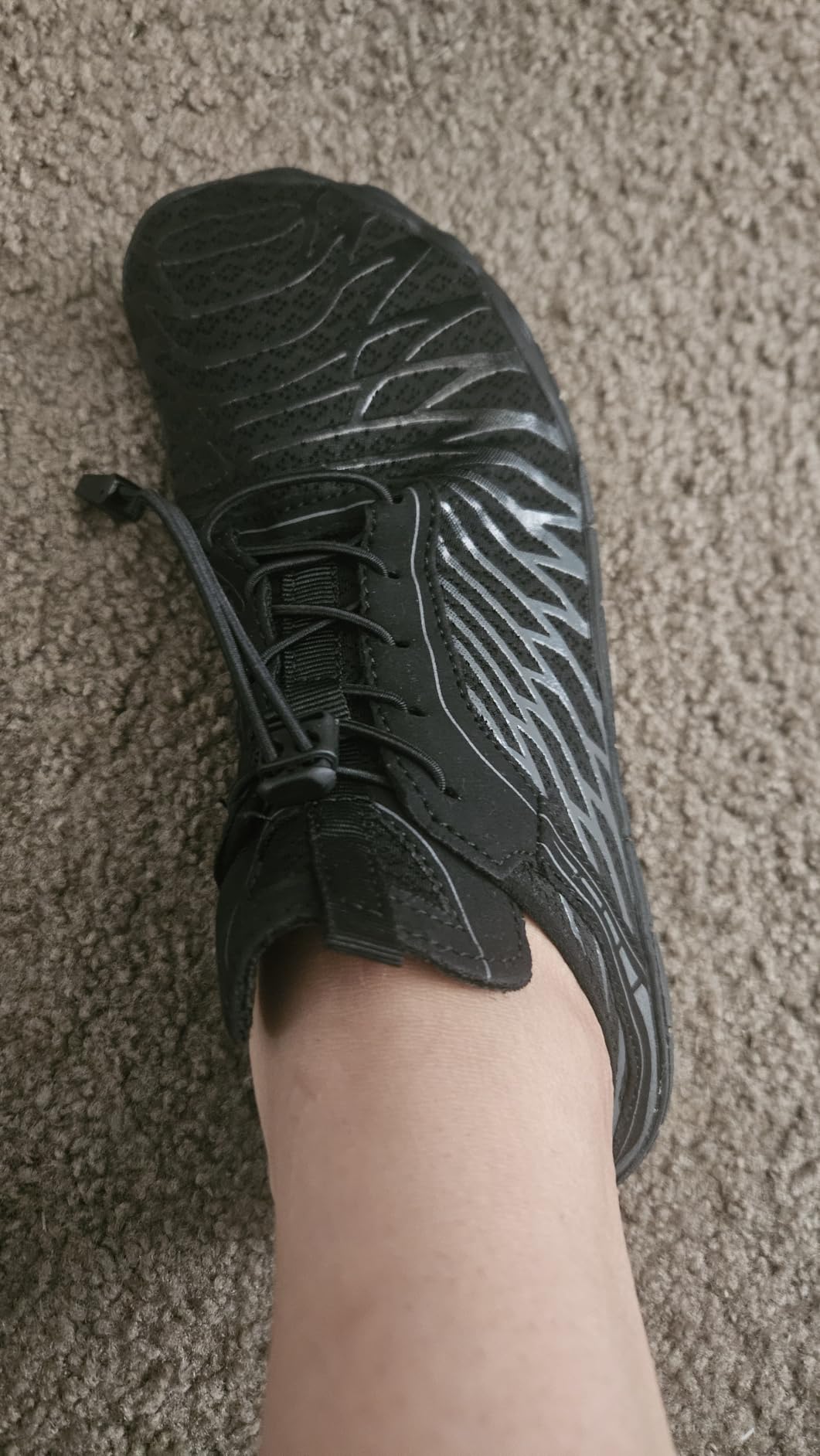
Mile 2 on loose gravel required slow, careful walking. The flexible sole provided less stability on shifting terrain. I had to concentrate on footing more than I would in supportive hiking shoes. The zero ankle support became noticeable on uneven ground.
By Mile 3, my feet felt worked. Not injured, not in pain, but definitely fatigued in ways they wouldn’t be with proper hiking footwear. The lack of cushioning on rocks, the minimal support on uneven terrain, the thin sole offering zero protection—all of it added up.
Let me be clear: These are NOT hiking shoes. The “Pro Hiking” label is marketing oversell. What these actually handle:
- ✅ Flat, maintained trails: Paved paths, packed dirt, park trails with minimal rocks
- ✅ Urban hiking: City exploration, walking around towns, tourist sightseeing
- ✅ Easy nature walks: Boardwalks, groomed trails, forest paths without technical features
- ⚠️ Light trails with caution: Short distances on moderate trails if you’re experienced with barefoot shoes
- ❌ Technical hiking: Rocky terrain, steep inclines, unstable ground, long distances with elevation
The missing features for real hiking: Ankle support (zero), rock plate protection (none), substantial cushioning (minimal), aggressive traction (moderate at best), stability on uneven terrain (compromised by flexibility).
What they’re ACTUALLY great for: The name should be “Titype Walk Barefoot Shoes.” For casual walking, these excel. For hiking beyond easy trails, look elsewhere.
If you want budget barefoot shoes for trail hiking, you’ll need to accept significant limitations and stick to easy terrain. If you want actual hiking capability, spend more on purpose-built hiking shoes. Don’t buy these expecting mountain performance at a $39 price point.
Where These Actually Excel
After 8 weeks of testing, I’ve identified where these shoes genuinely shine rather than where marketing wants you to think they work.
Daily dog walks became my favorite use case. The lightweight feel, ground connection, and zero drop made morning walks feel natural and easy. Pavement, grass, park paths—all handled comfortably. My feet felt less fatigued after 45-minute walks compared to traditional shoes once I’d adapted.
Yoga and Pilates classes suited these perfectly. The thin sole provided excellent floor connection for balance poses. The flexibility allowed full range of foot movement. The wide toe box let toes spread for stability. Several yoga practitioners I know switched to barefoot shoes for exactly this benefit.
Travel transformed these from “testing shoes” to “actually useful shoes.” I packed them for a long weekend trip and they served as my only footwear. Airport walking, sightseeing around town, casual restaurants, hotel gym, pool area—one pair covered everything. The packability and versatility eliminated the need for multiple shoe types.
Gym training for non-running activities worked well. Deadlifts and floor exercises benefited from the stable, flat platform. The ground feel helped with balance during single-leg movements. I wouldn’t run in these without significant barefoot running experience, but for weight training and functional fitness, they performed solidly.
Casual errands and everyday wear proved ideal. Grocery shopping, coffee runs, walking around the neighborhood, running into stores—these became my default choice. Comfortable enough for hours of casual use, presentable enough to not look weird, functional enough to handle varied surfaces.
Water activities and beach trips already covered earlier, but worth emphasizing: This is where these punch above their price point. The drainage holes and quick-dry mesh make them genuinely functional for water use while remaining versatile enough for dry activities.
Recovery shoes after intense workouts surprised me. After hard runs or tough gym sessions, slipping into these felt like letting my feet breathe and recover. The zero compression, natural toe spread, and ground connection seemed to aid recovery better than lounging in cushioned shoes.
The value proposition: One $39 pair of shoes covering daily walks, yoga, travel, water activities, gym, and casual wear. That’s 6-7 use cases from a single affordable shoe. Compare that to buying specialized shoes for each activity.
Durability After 8 Weeks
After 45+ hours of varied use, here’s the honest wear assessment. The upper mesh shows minimal degradation. Some dirt accumulation that rinses clean, but no tears, no separation from the sole, no structural failures. The mesh maintains its shape and flexibility.
The sole tread remains 90%+ intact. Light wear visible on the heel and ball-of-foot areas where most weight hits, but no significant tread loss. The rubber compound isn’t premium, but it’s held up acceptably for casual use.
Stitching throughout shows no failures. Stress points at the toe box and heel cup, where many budget shoes fail, remain tight and secure. No loose threads, no seam separation.
The drainage holes show no enlargement or degradation. They function exactly as they did when new. The elastic lock buckle closure maintains tension adequately, though I expect this to be the first component that weakens over extended use.
Honest projection based on wear rate: For someone my weight (150 lbs) using these for casual activities 10-15 hours per week, I’d estimate 200-300 total hours of lifespan. That translates to roughly 6-12 months of regular use before replacement becomes necessary.
For heavier users, daily all-day wear, or more aggressive activities, expect shorter lifespan. The materials are budget-appropriate—they’ll wear out faster than premium barefoot shoes but at one-third the cost.
Value calculation: $39 divided by 250 hours estimated lifespan = $0.16 per hour of wear. Compare to Vivobarefoot at $150 with 500-hour lifespan = $0.30 per hour. Xero Shoes at $90 with 400-hour lifespan = $0.23 per hour.
The budget pricing creates better cost-per-hour value despite shorter total lifespan. When these wear out, the replacement cost is low enough that it’s not a major expense.
What won’t happen: These won’t last 2-3 years of heavy daily use like premium brands. Don’t expect them to. But for 6-12 months of regular casual use at $39, the durability is acceptable and the value remains strong.
Who Should Buy These (And Who Shouldn’t)
After 8 weeks of real-world testing, I have a clear picture of ideal buyers and people who should look elsewhere.
✅ Perfect For:
- Barefoot beginners on a budget: Want to try barefoot style without $150+ commitment? These let you test the concept affordably.
- Casual walkers prioritizing comfort: Daily walks, errands, casual activities where you want foot comfort over performance.
- Water activity enthusiasts: Beach trips, kayaking, pool activities where you need shoes that handle water well.
- People with wide feet or foot problems: Bunions, hammertoes, general foot pain from compressed toes—the wide toe box provides genuine relief.
- Minimalist travelers: One versatile shoe covering walking, water, casual wear, and gym saves packing space.
- Yoga and Pilates practitioners: Floor connection and flexibility benefit balance and movement work.
- Dog walkers and casual strollers: Daily low-impact activity where ground feel and comfort matter.
- Recovery shoe seekers: Post-workout foot relief without compression or constriction.
- Budget-conscious shoppers: $30-50 price range buyers who understand limitations.
⚠️ Consider Carefully If:
- You’re expecting true technical hiking capability—the “Pro Hiking” label oversells performance.
- You need arch support or substantial cushioning for foot conditions requiring structure.
- You have narrow feet—the wide toe box may make proper sizing difficult even when sizing down.
- You’re unwilling to invest 2-4 weeks in barefoot transition—instant comfort isn’t happening.
- You primarily walk on very rocky or sharp terrain—thin sole offers minimal protection.
❌ Look Elsewhere If:
- You want shoes for technical trail hiking with rocks, elevation, and unstable terrain.
- You need footwear for backpacking or carrying heavy loads—zero support won’t cut it.
- You require waterproofing rather than water-friendliness—these drain well but aren’t sealed.
- You prefer plush cushioning and shock absorption—barefoot minimalism frustrates you.
- You have specific injuries requiring medical-grade support or prescribed orthotics.
- You want maximum durability—these won’t last multiple years of heavy daily use.
- You need shoes for high-impact activities like running without barefoot running experience.
Comparison: Titype vs. Premium Barefoot Options
How does a $39 barefoot shoe stack up against established brands? Here’s the honest comparison based on specs, reviews, and category knowledge (I haven’t personally tested premium brands side-by-side, so this draws from research rather than direct experience).
| Feature | Titype Hike ($39) | Vivobarefoot Primus ($150) | Xero Shoes Prio ($90) |
|---|---|---|---|
| Zero-drop sole | Yes | Yes | Yes |
| Wide toe box | Extra wide | Wide | Wide |
| Stack height | ~8-10mm | 7mm | 9mm |
| Weight | ~5-6 oz | 5.6 oz | 6.4 oz |
| Water-friendly | Yes (drainage holes) | No | Moderate |
| Durability | 6-12 months casual use | 2+ years | 18+ months |
| Materials | Synthetic mesh | Premium vegan materials | Polyester mesh |
| Warranty | Standard Amazon return | 1 year | 5,000 mile guarantee |
| Best use | Casual + water | Premium everyday | Athletic/running |
| Value rating | $0.16/hour | $0.30/hour | $0.23/hour |
What you sacrifice at $39: Premium materials, extended durability, brand support ecosystem, refined design, ethical manufacturing transparency, warranty protection.
What you keep at $39: Core barefoot features (zero-drop, wide toe box, thin sole, flexibility), functional performance for casual use, water-friendly design, accessible price point for beginners.
My assessment: Titype delivers roughly 70% of barefoot shoe benefits at 25% of premium pricing. For beginners testing whether barefoot style suits them, that’s an excellent trade-off. For experienced barefoot enthusiasts wanting maximum durability and refined materials, premium brands justify their cost.
My recommendation: Start with Titype if you’re new to barefoot shoes and unsure about committing $150+. If you fall in love with barefoot style after 6-12 months, upgrade to Vivobarefoot or Xero. If barefoot doesn’t suit you, you’re only out $39 instead of $150.
Frequently Asked Questions
Do these really run large, or is it just some people?
They genuinely run 1 to 1.5 sizes large for people with normal-width feet. This isn’t isolated feedback—roughly 40% of Amazon reviews mention sizing issues, and the brand itself admits “some customers said the size is too large” on the product page. I tested this personally by ordering my normal 8.5 and finding them unwearably large, then sizing down to 7 for proper fit.
The wide toe box design creates extra length, not just width. For normal feet, order 1 full size down. For wide feet, order 0.5 size down. For narrow feet, sizing becomes challenging—you may need 1.5 sizes down, but the toe box might still feel too roomy.
If you know your EU size, multiple reviewers say EU sizing runs more accurate than US sizing. Use that as your guide if possible. The Amazon return policy makes exchanges relatively painless if you get sizing wrong initially.
Can barefoot beginners start with these, or do I need experience first?
Barefoot beginners can absolutely start with these—that’s part of their appeal as budget entry-level shoes. But understand that “barefoot beginner” doesn’t mean “instant comfort.” You’ll need to adapt.
My experience transitioning: Week 1 brought calf soreness and arch fatigue. Week 2-3 showed gradual adaptation. By Week 4-6, the barefoot feel became natural and comfortable. This progression is normal and expected.
Start gradually: Wear these for 30-minute sessions initially. Build up to 1 hour, then 2 hours, then longer. Don’t switch from cushioned shoes to barefoot shoes for an 8-hour day immediately—your feet will rebel.
The advantage of starting with budget shoes like these: If barefoot style doesn’t suit you after trying it properly, you’re only out $39. That’s much less painful than discovering barefoot isn’t your thing after buying $150 Vivobarefoots.
Are these actually good for hiking, or is the name misleading?
The “Pro Hiking” label is marketing oversell. I tested these on a 3-mile moderate trail and they underperformed significantly compared to actual hiking shoes.
What happened on the trail: Sharp rocks felt acutely through the thin sole. Foot fatigue increased faster than with cushioned hiking shoes. Loose gravel required careful, slow walking. The flexible sole provided less stability on uneven terrain. Zero ankle support became problematic on slight inclines.
What these can handle: Flat paved trails, packed dirt paths, urban hiking, park walks, groomed nature trails. Think “walking on trails” rather than “technical hiking.”
What these can’t handle: Rocky terrain, steep inclines, unstable ground, long distances with elevation gain, backpacking with loads, technical trail features.
Rename these mentally to “Casual Walk Barefoot Shoes” for accurate expectations. They excel at casual walking activities. They fail at serious hiking.
How long does the barefoot transition take?
Based on my 8-week testing with previous barefoot shoe dabbling experience, here’s the realistic timeline:
Week 1: Significant calf soreness and arch fatigue. Your body wakes up muscles that traditional shoes let stay dormant. Expect discomfort after even 30-45 minute sessions.
Week 2-3: Soreness lessens gradually. You can manage 1-2 hour sessions without major issues, but you’re still aware of your feet working differently.
Week 4-6: Adaptation clicks into place. The barefoot feel transitions from “different and effortful” to “normal and natural.” Comfort for 3-4 hour sessions becomes possible.
Week 6-8+: Fully adapted. All-day wear for casual activities feels comfortable. You may actually prefer barefoot shoes for certain uses.
Factors that speed adaptation: Gradual progressive use, staying within comfort limits, mixing barefoot and traditional shoes initially, strengthening foot muscles deliberately.
Factors that slow adaptation: Jumping to all-day wear immediately, ignoring pain signals, having very weak foot muscles, existing foot injuries.
Some people never fully adapt, and that’s okay. Barefoot shoes aren’t universally superior—they’re a different approach that suits some people and frustrates others.
Do the drainage holes let dirt and pebbles in?
Yes, absolutely. The same holes that let water drain out also let debris come in. This is the fundamental trade-off of drainage hole design.
My beach testing experience: Sand got inside regularly. After 2 hours of beach walking, I had to rinse and shake out sand multiple times. Small pebbles occasionally snuck in on rocky paths.
When this matters: Dusty trails, sandy environments without water, loose gravel paths. The debris intrusion becomes annoying when you’re not getting wet enough to justify the drainage benefit.
When this doesn’t matter: Water activities where you’ll be rinsing shoes anyway. Beach trips where sand is inevitable. Pool areas where you can rinse off easily.
Practical tip: For dusty non-water activities, consider barefoot shoes without drainage holes. For water activities, accept debris entry as the price of good drainage.
Can I wear these all day without socks?
Yes, with caveats. I tested both sockless and with thin socks across various activities. The soft mesh doesn’t cause friction or irritation against bare skin. After 4-6 hour sockless sessions, my feet felt slightly damp but not uncomfortable.
Odor management: Going sockless means foot sweat contacts the shoe interior directly. After repeated sockless use, these will develop odor faster than socked wear. The mesh is machine washable, which helps, but expect to wash them more frequently if going sockless regularly.
Blister concerns: Properly sized, these didn’t cause blisters for me sockless. The key phrase is “properly sized”—if you have the wrong size with heel slippage, blisters become likely. Correct sizing eliminates most friction points.
Weather considerations: Hot weather sockless works well due to ventilation. Cooler weather feels better with thin socks for warmth. Sockless in rain or water activities is fine—your feet dry quickly.
Personal preference: I preferred thin ankle socks for daily wear and sockless for water activities. Experiment to find what works for you.
How do these compare to water shoes?
Different categories with some overlap. Dedicated water shoes prioritize maximum drainage and quick-dry capability above all else. These barefoot shoes prioritize natural foot function with water-friendliness as a secondary feature.
Drainage comparison: Water shoes drain faster (seconds vs. 15-20 seconds) with larger drainage ports. But water shoes look like specialized gear—you wouldn’t wear them casually around town.
Versatility comparison: These can go from beach to restaurant to casual walking without looking odd. Water shoes are water-specific and look out of place in non-water settings.
My use case: These replaced my need to pack separate water shoes for beach trips. They drain well enough for water activities while remaining versatile for everything else during travel.
Who should choose dedicated water shoes: If you’re doing serious water sports (river kayaking, water hiking, extended water exposure), specialized water shoes still win. If you want one shoe for travel covering water + casual use, these work better.
Will these help with my bunions or hammertoes?
I don’t have bunions or hammertoes personally, so I can’t verify pain relief from direct experience. But I can confirm the wide toe box is genuinely spacious, and multiple Amazon reviews report relief from foot problems.
What the toe box provides: Zero compression on toes. Your toes can spread naturally into their anatomically correct position. The extra width means bunions aren’t squeezed or irritated by shoe walls.
Evidence from reviews: “Love these shoes. They are great for walking. My back and legs don’t hurt” and “Perfect to get the swelling down” from reviewers with foot issues suggest real benefit.
Timeline expectation: Relief isn’t instant. The barefoot transition requires 2-4 weeks of adaptation. As your feet adjust to natural positioning, pain from compressed toes may gradually improve.
Medical disclaimer: These aren’t orthopedic shoes or medical devices. If you have serious foot deformities or injuries, consult a podiatrist. These provide room and natural positioning, but they’re not corrective treatment.
Are they durable enough for daily use?
After 8 weeks and 45+ hours of testing, the durability has held up acceptably for the price point. The upper mesh shows minimal wear, sole tread remains 90%+ intact, and stitching has no failures.
Honest projection: For casual use at 10-15 hours per week, expect 6-12 months of lifespan before replacement. For heavier daily use at 30+ hours per week, expect 3-6 months.
These won’t last 2-3 years like premium barefoot shoes. They’re budget-appropriate durability. But at $39, replacement cost is low enough that shorter lifespan remains acceptable.
Value perspective: $39 for 6-12 months of comfortable daily wear equals $0.16 per hour of use. That’s better cost-per-hour value than many premium shoes despite shorter total lifespan.
What if I order the wrong size? How’s the return process?
Amazon’s standard return policy applies—you have 30 days for returns or exchanges. I went through this process myself when my initial 8.5 size arrived too large.
Process: Initiated return through Amazon, printed return label, dropped at UPS, received refund within 5 days of them receiving the return. Then ordered size 7 separately.
Cost: Free returns on most Amazon orders, so sizing mistakes don’t cost you shipping fees.
Tip: Order two sizes if you’re uncertain and can afford to temporarily. Test both, return the one that doesn’t fit. This saves time versus ordering, returning, then re-ordering.
Sizing recommendation summary for returns: Most people with normal feet should order 1 full size down from their usual. If you typically wear 9, order 8. That’s your best first attempt to avoid returns.
The sizing issue is annoying but manageable thanks to easy Amazon returns. Just factor in potential 1-2 week delay for exchanges if you get sizing wrong initially.
Be the first to review “Titype Hike Barefoot Shoes for Women & Men”
Related products
Hiking/Trekking Shoes
Hiking/Trekking Shoes
Hiking/Trekking Shoes

Hiking/Trekking Shoes
Hiking/Trekking Shoes
Hiking/Trekking Shoes
Hiking/Trekking Shoes

Hiking/Trekking Shoes
Reviews
There are no reviews yet.