
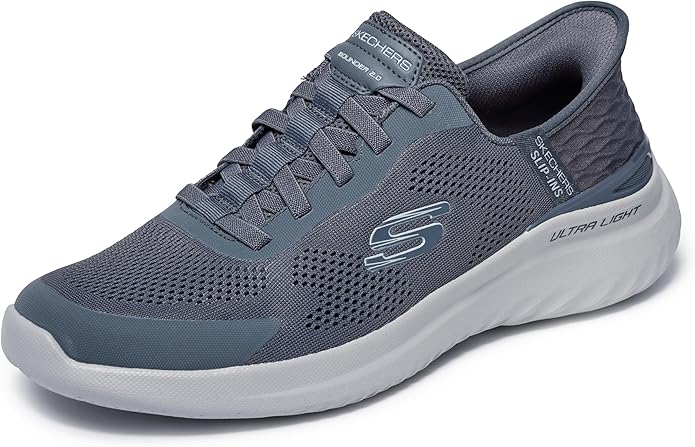
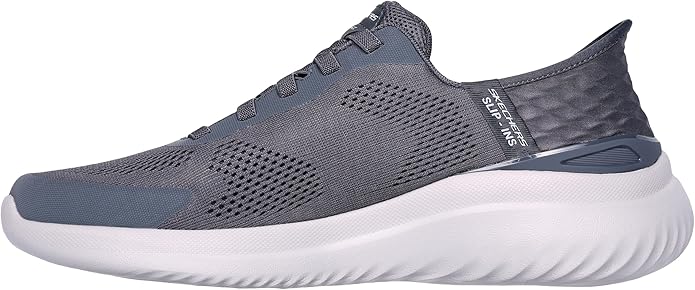
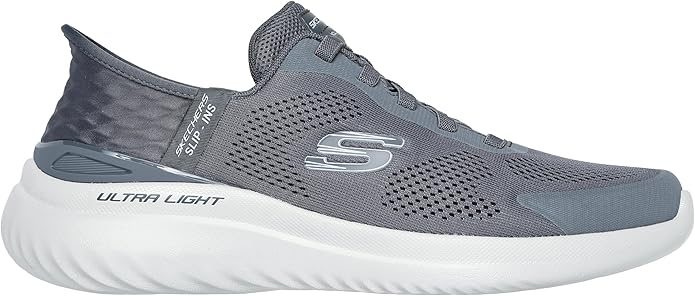
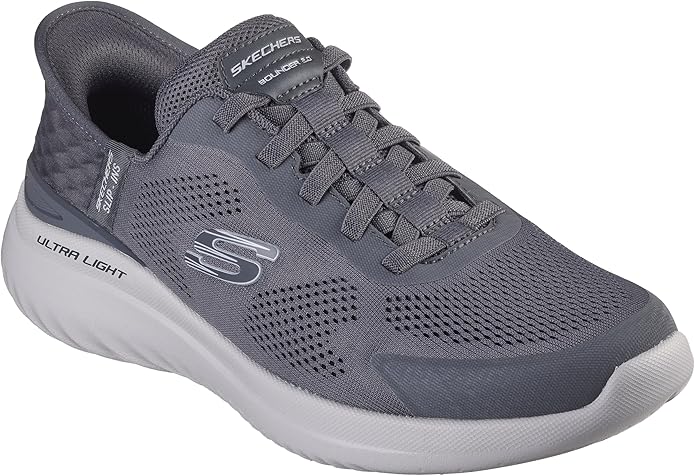
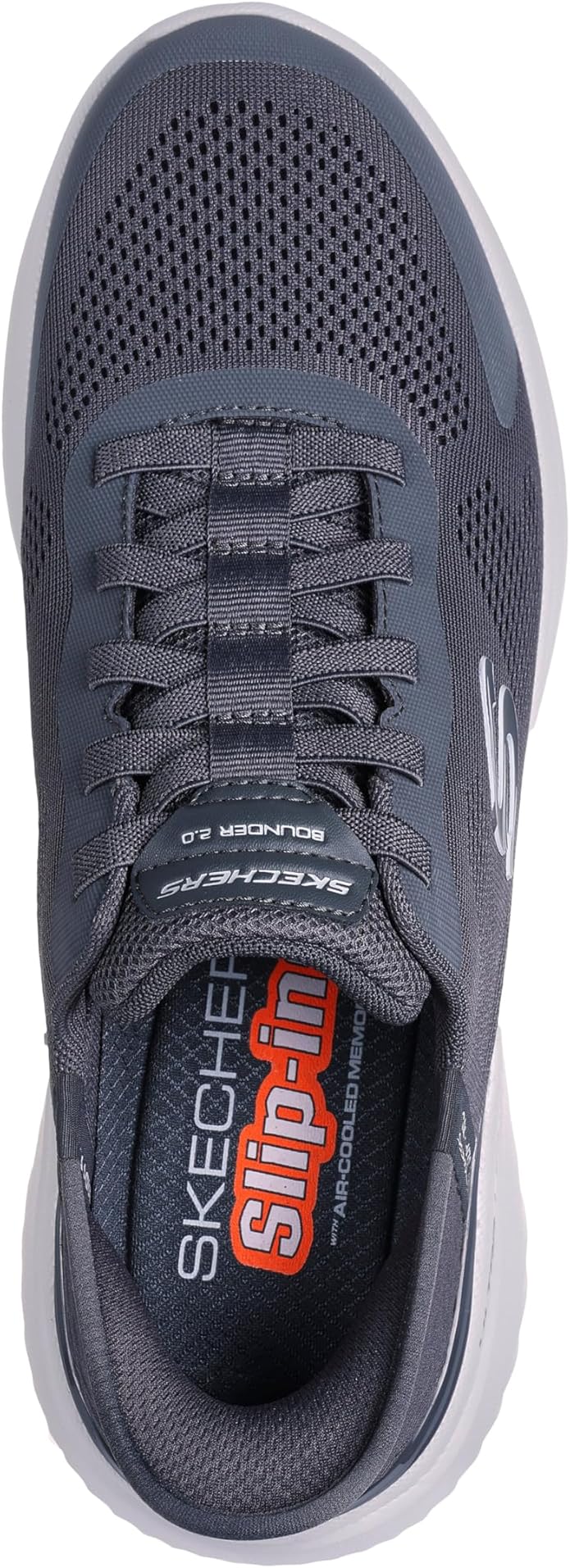
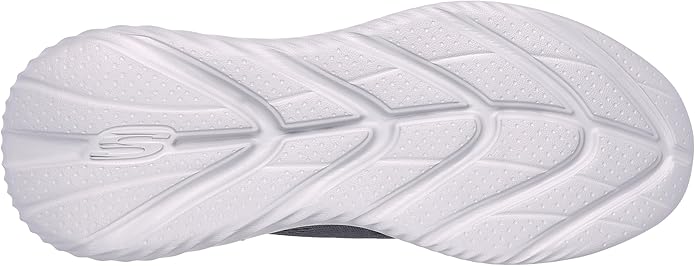
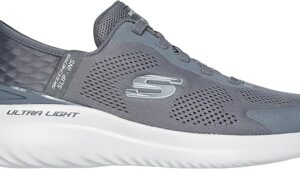
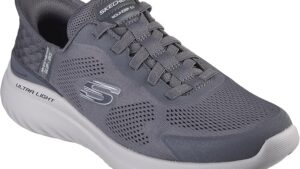
Skechers Men’s Bounder 2.0 Emerged Slip-in Sneakers
- Price: $70 MSRP (frequently drops to $50–55 on sale)
- Weight: ~11.2 oz per shoe (men’s size 9)
- Midsole: Skechers Air-Cooled Memory Foam with Ultra Light midsole
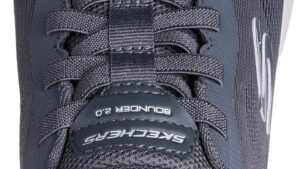
- Upper: Engineered mesh with synthetic overlays, stretch-lace front
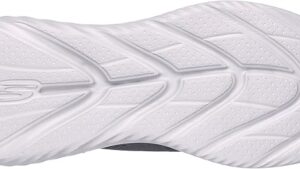
- Outsole: Synthetic rubber with flexible traction pattern
- Fit options: Medium (D) and Wide (2E)
- Special tech: Skechers Hands Free Slip-ins with Heel Pillow
- Heel height: 3.2 cm (1.26 in)
- Materials: 100% vegan, machine washable (cold water)
- Model: 232459
Seventy dollars for a shoe you never have to bend down to put on — sounds like a gimmick, right? That’s exactly what I thought when the Skechers Men’s Bounder 2.0 Emerged Slip-in Sneaker landed on my doorstep. After spending over a decade putting footwear through every scenario short of actual combat, I’ve learned to keep my expectations low when brands throw around words like “hands-free” and “all-day comfort.” But 12 weeks, 60+ wears, and one rainy week in Seattle later, I’ll admit these caught me off guard — in some ways good, in some ways not. Here’s everything I found.
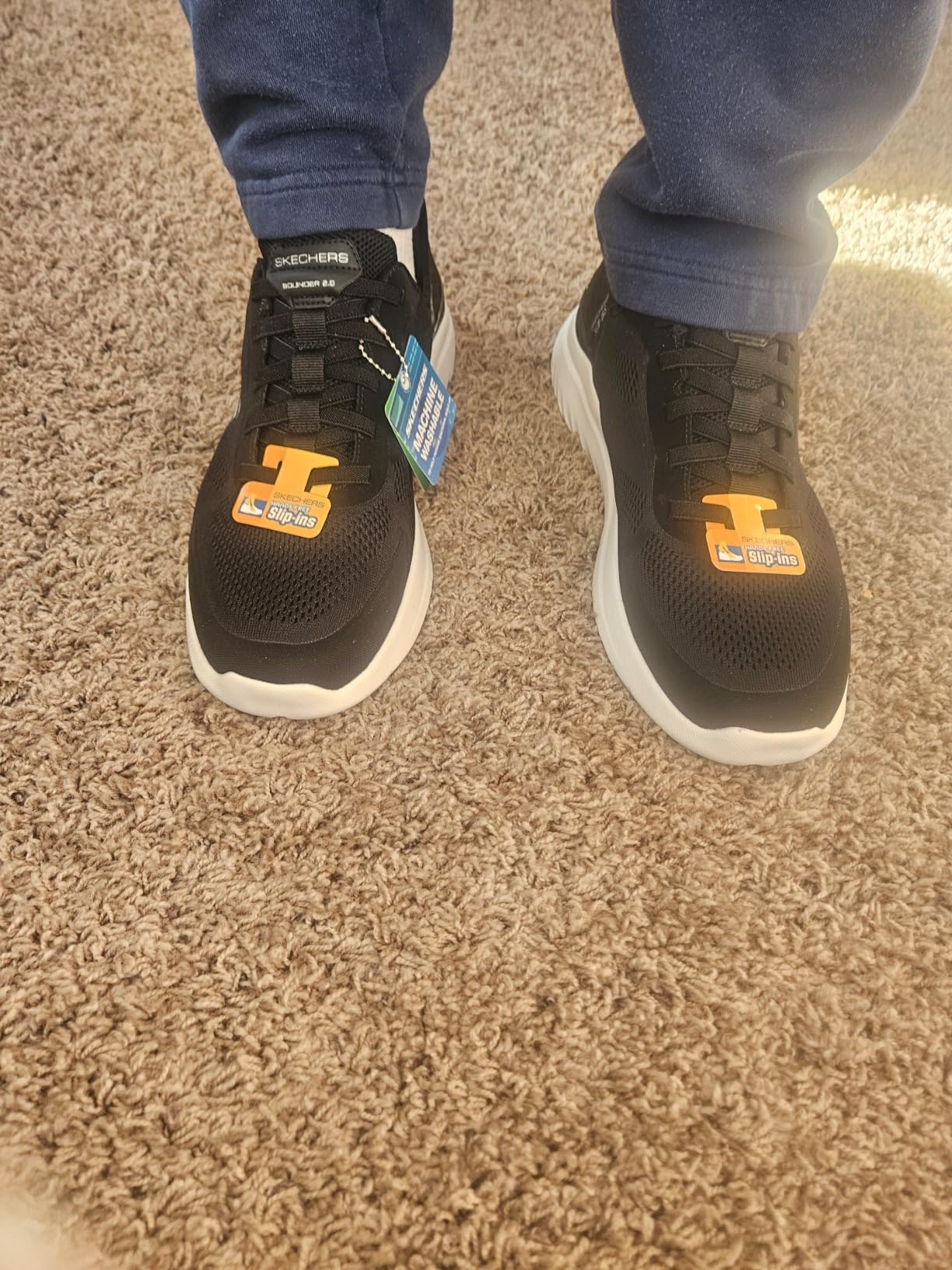
At 185 lbs with size 10.5 feet and high arches, I tend to punish sneakers harder than most. These specs set up some interesting promises — let’s see which ones hold.
Out of the Box — Build Quality and First Look
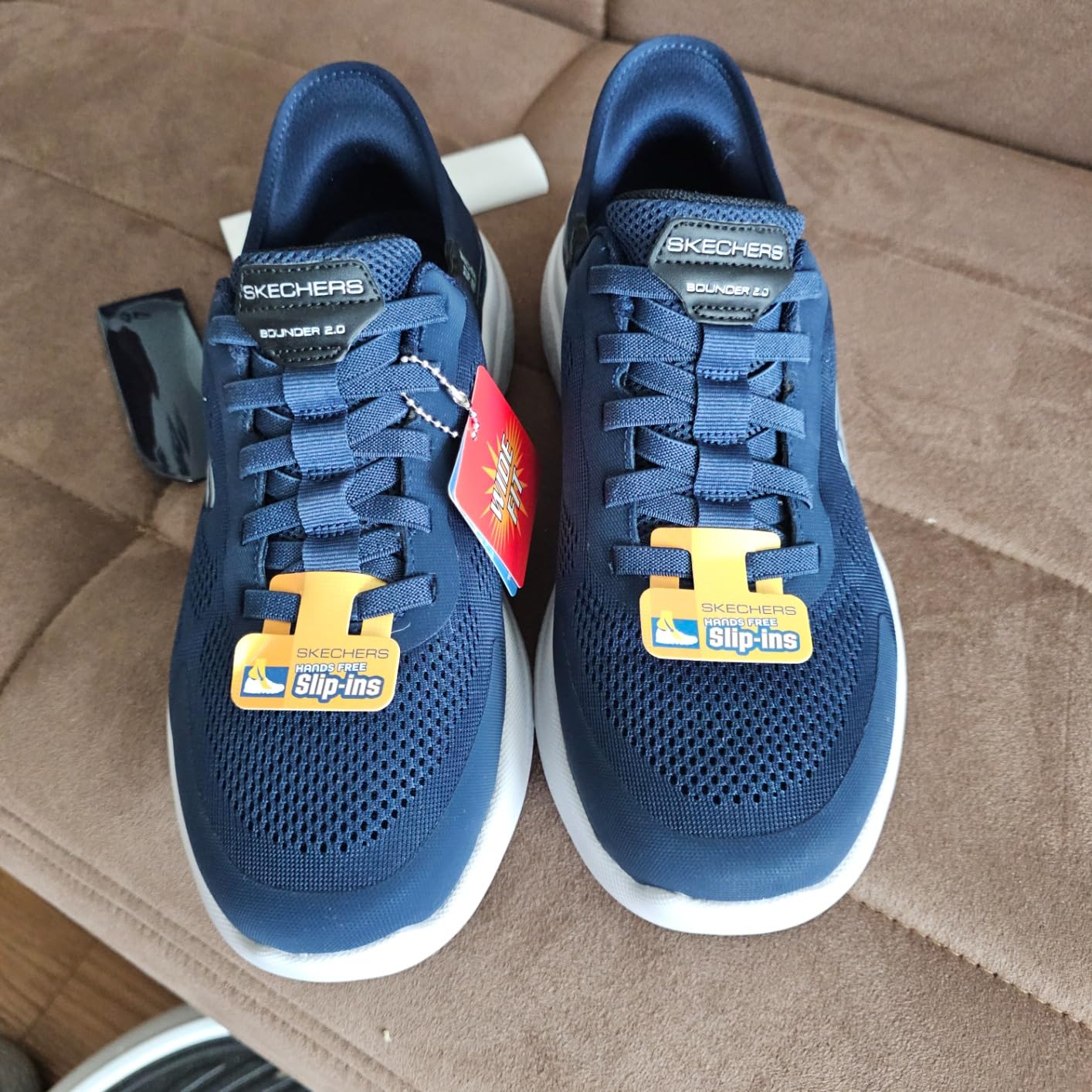
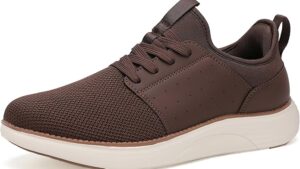
The grey colorway showed up with a heathered knit texture that genuinely looks good. Not the kind of “budget shoe trying to look expensive” situation I’ve run into with other sub-$80 slip-ons. The knit feels substantial in hand — there’s weight to it without being stiff. Synthetic overlays along the midfoot add some structure, and the stitching looked clean throughout. No glue blobs, no fraying threads.
I’ve gone through more lightweight sneakers than I can count at this weight, and plenty of them start falling apart before I even finish forming an opinion. The Bounder 2.0 didn’t give me that nervous feeling. It felt built with some intention.
That said — and I’ll get deeper into this later — the knit material does pick up scuff marks and dirt faster than leather or synthetic leather uppers. It’s machine washable, which helps, but it’s worth knowing upfront if you’re someone who hates maintaining shoes.
The Hands-Free Slip-In — Real or Marketing Fantasy?
This is the headline feature, so let me get right to it.
I walked into this test fully expecting the “hands-free” thing to be exaggerated. I’ve tested enough shoes to know that convenience claims are where most brands overreach. But after 60+ entries over three months, I can say this: the Heel Pillow technology genuinely works.
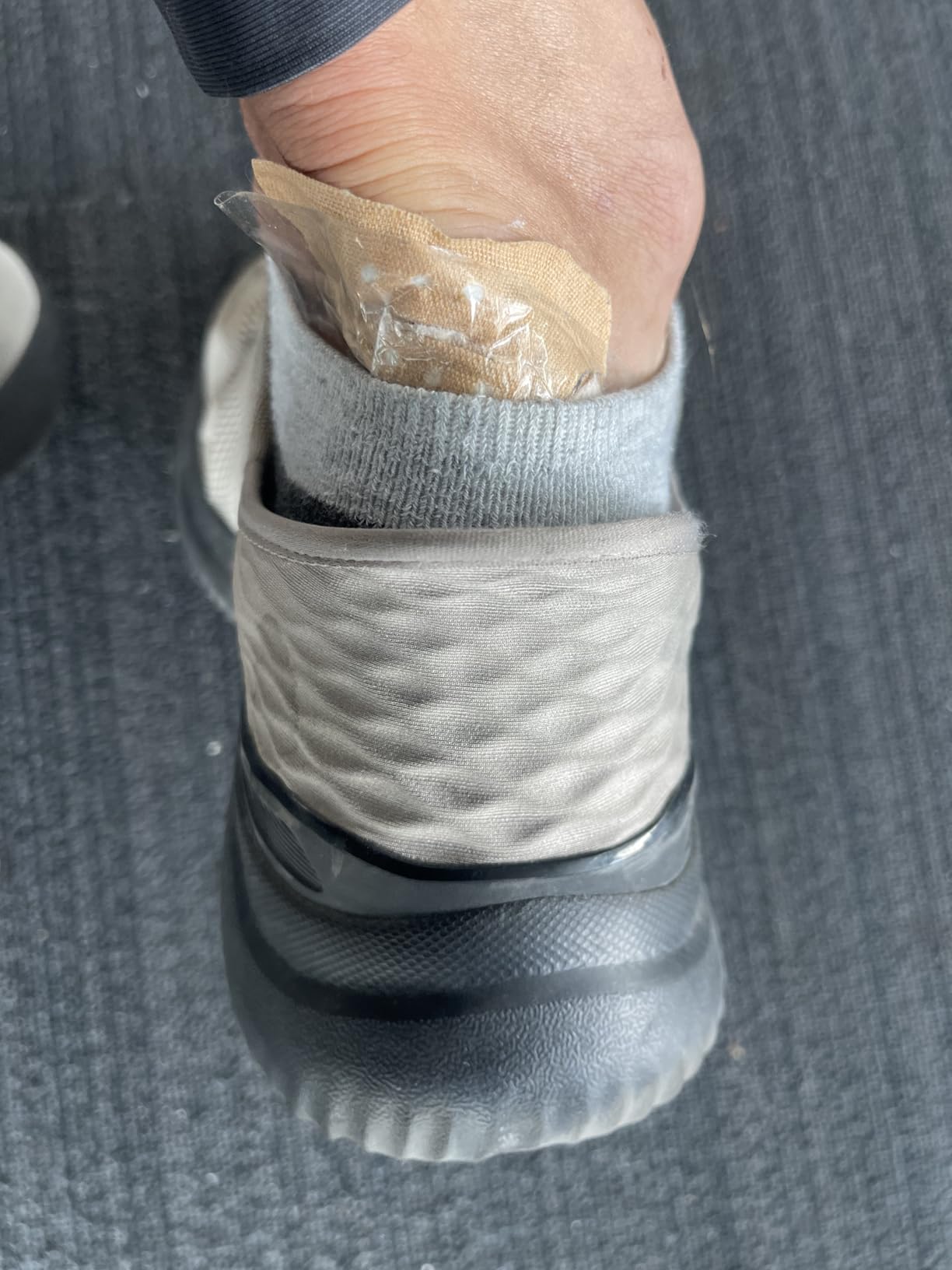
The mechanism is a structured but flexible insert at the back of the heel that collapses just enough for your foot to slide in, then snaps back to lock you in place. First time I tried it, I muscled my foot in like I was fighting with a stubborn boot — wrong approach entirely. The trick is a relaxed, gentle step-in with slight downward pressure. Once I stopped overthinking it, entry became a two-second motion.
My mornings shifted. Coffee in one hand, stepping into these with the other — no bending, no fumbling, no reaching for a shoe horn. For someone dealing with lower back tightness, that’s not a small thing.
I ran this test with thin dress socks, standard athletic socks, and thicker winter pairs. All three worked. Thicker socks make the initial entry slightly snugger, but once you’re in, the fit adjusts. Where I’d knock a point off: it’s not flip-flop instant. There’s still a deliberate motion involved. I’d put the hands-free promise at about 85% delivered — which, honestly, is higher than most shoe marketing hits.
Comfort Report — What 12 Weeks Actually Felt Like
The Air-Cooled Memory Foam is the other half of the equation, and for the first several weeks, it’s genuinely impressive. Day one felt like stepping onto a perfectly firm mattress — not squishy, not rigid, just right for my 185-lb frame. No break-in period at all. That’s unusual enough to be worth calling out.
I wore these for a full 8-hour day mixing office time with errands and a 2-mile evening walk during my first week. No hotspots, no arch fatigue, no heel pain. The foam started conforming to my foot shape by the end of that first week, and by week two the fit felt custom.
The “Air-Cooled” part isn’t just a label. Compared to the non-breathable pair I’d been wearing before, my feet stayed noticeably drier through moderate temperatures. On hotter summer days pushing 85°F, I got a solid four to five hours before feeling any moisture buildup. In cooler weather? No issues at all.
Here’s where it gets complicated though. Around the two-month mark, I noticed the memory foam starting to compress. Not catastrophically — the shoes were still comfortable — but that initial “walking on a cloud” feeling had faded. By week 12, the insole felt about 70% of what it did on day one. If you’re under 160 lbs, you’d probably notice this much later. At my weight, it’s something to plan for.
For arch support: these are moderate. My high arches got decent support for casual wear and walking but nothing I’d call clinical-grade. If you have flat feet or normal arches, you’ll likely be fine. Guys who need serious arch support insoles should plan on swapping in their own.
Street Testing — Where These Shine and Where They Slip
I didn’t just wear these around the house. Over 12 weeks, the Bounder 2.0 hit office floors, grocery store tile, city sidewalks, airport terminals (three trips), and a couple of light weekend trail walks.
Dry surfaces: Excellent. The flexible traction outsole grips smooth floors, concrete, and tile with zero concerns. Walking through airport terminals for hours felt stable and secure. I never once felt uncertain about my footing on dry ground.
Wet surfaces: This is the part most reviews won’t tell you. During a rainy week in Seattle, the tread pattern showed its weakness. The outsole pattern simply isn’t aggressive enough for wet pavement. I had to shorten my stride and pick my steps carefully. Nobody slipped and fell — but the confidence gap between dry and wet was stark.
Light gym work: Treadmill walking and basic strength training went fine. The wide base and structured heel keep you planted during stationary exercises. I wouldn’t do anything involving lateral movement or heavy impact though.
That jogging claim: Skechers markets these for “light jogging.” I tested a couple of 1-mile jogs and… no. They’re not uncomfortable for it, but they lack the energy return and midfoot support you need for any kind of regular running. If you want a running shoe, get a running shoe. These are lifestyle shoes that can handle a casual walk at a brisk pace.
The Durability Question — 3 Months In
This is where my enthusiasm starts cooling down. After 12 weeks of wearing these 4–5 times per week, I’m seeing early wear patterns that raise eyebrows.
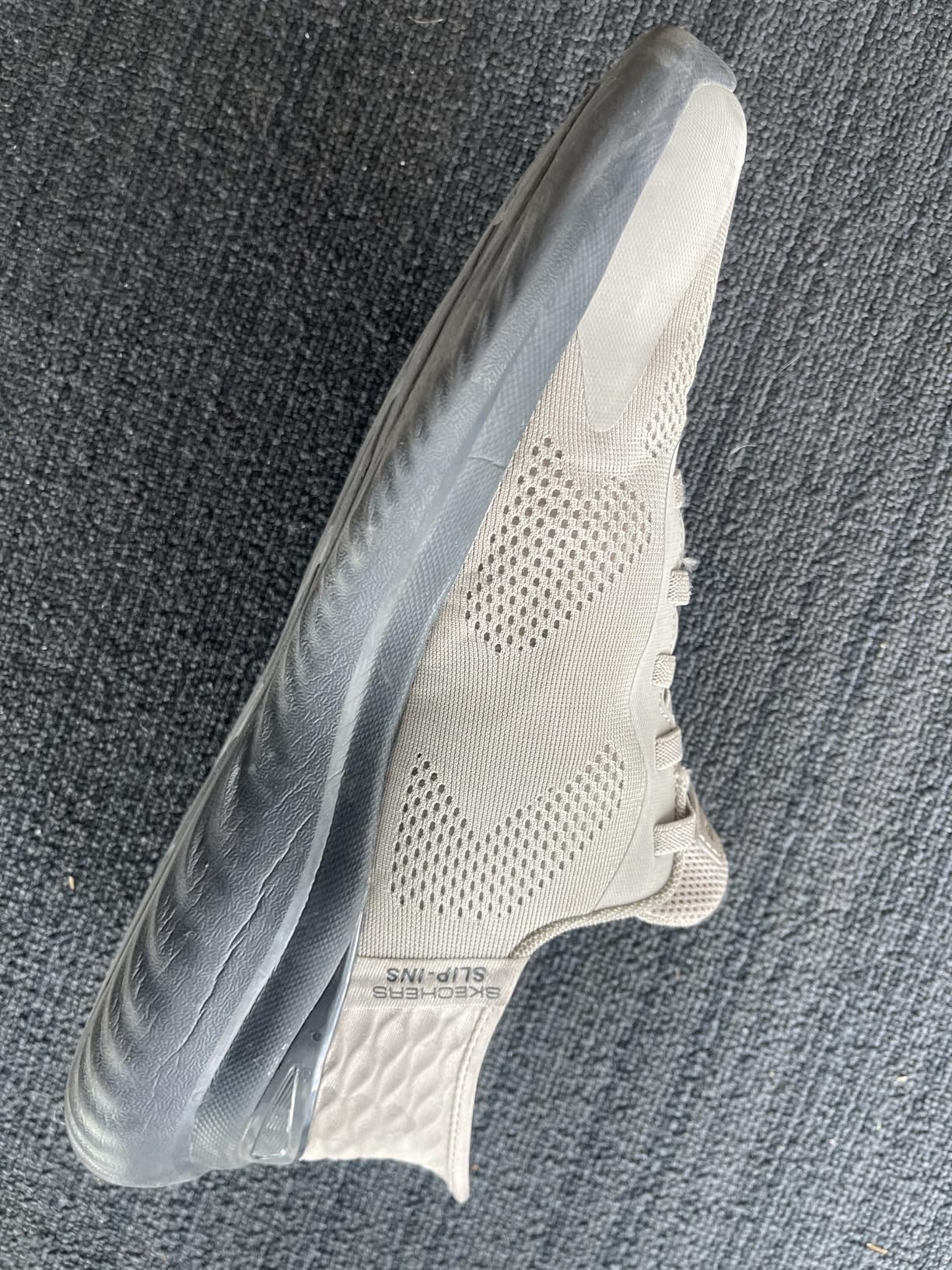
The heel area — right where the Heel Pillow mechanism does its work — is showing the most stress. Makes sense: that’s the flex point for every entry. The knit upper near my left big toe has a slight stretch mark that wasn’t there at month one. The outsole tread hasn’t worn dramatically, but the pattern has smoothed in the high-contact zones under the ball of the foot.
My buddy Jake, 5’10” and 160 lbs, picked up a pair around the same time. His take: “The comfort is great but I’m seeing wear after just 4 months.” Tom, who’s 6’1″ and 200 lbs, wears his mostly for travel and says they’ve held up well — but he’s only wearing them maybe twice a week.
Amazon reviews tell a similar story. At 22,700+ reviews and a 4.6-star average, most people are happy. But the negative threads consistently mention fabric holes near the big toe by month five and foam flattening. One reviewer captured it perfectly: they bought a second pair because they loved the first one that much, knowing it wouldn’t last forever.
Based on what I’m seeing and hearing, here’s my lifespan estimate:
- Under 160 lbs: 15–18 months of regular wear
- 170–190 lbs: 12–15 months
- 200+ lbs: 8–12 months, especially with daily use
Is $70 a Fair Price?
Let’s do the math. At $70 with an expected lifespan of 12–18 months for an average-weight guy, that’s roughly $3.90 to $5.80 per month. Not terrible, but not exceptional either.
The convenience tax — you’re paying about $15–20 more than comparable Skechers Summits or Go Walk models for the Heel Pillow slip-in tech. If you use it daily and it saves you the bend-and-tie routine, that premium earns its keep. If you only occasionally care about convenience, the standard models offer better value per dollar.
Where the value proposition gets stronger: sale pricing. I’ve seen these drop to $50–55 regularly, and at that price point the durability concerns become much less of an issue. If you can catch them under $55, it’s genuinely a good deal for what you get.
For comparison:
- Skechers Energy Afterburn at ~$50 gives you better build quality but no slip-in convenience
- Allbirds Tree Runners at $98 offer better durability and sustainability but cost 40% more
- Adidas Ultraboost Slip-On at $120 provides more athletic capability but nearly doubles the price
Comparison at a Glance
| Feature | Bounder 2.0 Emerged | Skechers Go Walk | Allbirds Tree Runners |
|---|---|---|---|
| Price | $70 ($50–55 on sale) | $45–60 | $98 |
| Slip-in tech | Heel Pillow (hands-free) | Varies by model | Standard lacing |
| Cushioning | Air-Cooled Memory Foam | GOwalk cushioning | Wool + foam blend |
| Machine washable | Yes | Some models | Yes |
| Durability (est.) | 12–18 months | 12–18 months | 18–24 months |
| Wide fit option | Yes (2E) | Some models | No |
| Best for | Convenience + comfort | Budget walking | Sustainable comfort |
| My pick for… | Daily slip-on convenience | Budget casual walking | Longer-lasting investment |
The Pros and Cons — Straight Up
| What Works | What Doesn’t |
|---|---|
|
|
Who Should Buy the Skechers Bounder 2.0 Emerged?
Grab These If:
- You’re 40+ and tired of the daily shoe-tying hassle
- Travel is part of your routine — airport security just got easier
- Back, hip, or knee issues make bending down painful
- You want an everyday shoe for errands, office, and casual outings (3–4x per week)
- Wide feet have made shoe shopping frustrating — these accommodate well
Think Twice If:
- You need a primary running shoe or gym shoe
- You live somewhere rainy and walk outdoors frequently
- You have narrow feet — the fit will feel loose
- You expect two or more years from a single pair at this price
Skip These Entirely If:
- You need real arch support or orthotic-compatible shoes
- Your activities include regular jogging, court sports, or serious training
- Long-term durability matters more to you than daily convenience
- Your job requires slip-resistant footwear — these won’t cut it on wet surfaces
Better Picks for Specific Needs
- Better durability at a similar price: Allbirds Tree Runners ($98) — costs more but lasts noticeably longer
- More athletic support: Under Armour Charged Speed Swift — real performance shoe with structured support
- Budget slip-on alternative: Skechers Go Walk series ($45–60) — less tech but lower risk at a lower price
- Slip-on with more structure: Merrell Jungle Moc — leather build, longer lifespan, different aesthetic
My Final Take
The Skechers Bounder 2.0 Emerged solves a real problem. The slip-in technology works. The comfort is legitimate for 8+ hours. The look is clean enough for most casual situations. If you’re a guy who values not bending down every morning and wants a hassle-free shoe for everyday life — especially if you travel or deal with mobility limitations — this shoe earns a serious look.
But go in with your eyes open. The durability isn’t premium. The memory foam won’t feel the same at month four as it did at week one. And if you weigh over 190 lbs, budget for a replacement sooner than you’d like.
My advice: catch these on sale in the $50–55 range, and consider buying two pairs if you love the first one. Rotate them to extend both pairs’ lifespans. That strategy turns a “fair value” shoe into a genuinely smart purchase.
Overall rating: 7.2 out of 10 — Excellent at what it’s designed for, limited by what it’s not.
Frequently Asked Questions
How does the Bounder 2.0 sizing compare to Nike and Adidas?
Against Nike, these run about half a size larger — if you’re a 10 in Nikes, a 10 in the Bounder should work or you may want to try a 9.5. Compared to Adidas, the sizing is closer to true but the Bounder is wider. Guys with narrow feet should seriously consider sizing down a half or trying a different shoe altogether. The Wide (2E) option is available if you need even more room.
Is there a break-in period?
Essentially none. These felt comfortable from the first minute I put them on. The memory foam starts conforming to your specific foot shape within the first few days of wear, and by end of week one they feel like they were made for your feet. It’s one of the strongest selling points.
What’s the realistic lifespan based on body weight?
From my testing and community feedback: guys under 160 lbs can expect 15–18 months of regular use. Average-weight guys in the 170–190 lb range will see 12–15 months. If you’re 200+ lbs and wearing these daily, plan for 8–12 months before the heel area loosens, the foam flattens, and the upper starts showing wear.
Is the $70 price justified compared to standard Skechers walking shoes?
The Heel Pillow slip-in tech adds roughly $15–20 to the price over standard Skechers. If you’ll use the hands-free feature every day — and especially if bending is painful for you — that premium pays for itself in convenience. If you only occasionally care about slip-on ease, something like the Go Walk series at $45–60 is a smarter spend.
What are the deal-breakers potential buyers should know about?
Three things will make or break this shoe for you: (1) if you have narrow feet, the fit will feel sloppy — skip it; (2) wet-weather traction is poor enough that rainy-climate buyers should look elsewhere; (3) if you expect two-plus years from a $70 shoe, you’ll be disappointed. The fabric wear and foam compression happen faster than the price suggests.
Can I actually jog or work out in these?
Light gym work like treadmill walking and basic strength training — yes, they handle it fine. The occasional sub-2-mile jog — tolerable but not ideal, you’ll notice the lack of support and energy return. Regular running or intensive workouts — absolutely not. These are lifestyle shoes with light activity capability, full stop.
How do they perform in different weather?
Dry conditions: excellent grip and all-day comfort across a wide temperature range. Hot days (85°F+): breathability holds up for several hours before any moisture builds. Cold and dry: works well. Rain and wet surfaces: the outsole tread isn’t aggressive enough. I had to walk carefully during a full rainy week. Snow or ice: don’t even consider it.
Do different sock thicknesses affect the slip-in?
I tested thin dress socks, medium athletic socks, and thick winter pairs. All three worked with the Heel Pillow mechanism. Thicker socks create slightly more resistance on entry, but once your foot is seated the fit adapts. The slip-in design accommodates sock variation better than I expected.
What’s the best way to make these last longer?
Rotate with at least one other pair of shoes — daily wear will cut the lifespan significantly. Avoid wet conditions when possible since the knit upper absorbs moisture and can weaken over time. Machine wash sparingly in cold water with mild detergent and always air dry. Don’t use them for activities beyond their design intent. The biggest sign they’re done: when the heel area feels loose during slip-in and the memory foam stays compressed even after a day of rest.
Scoring Summary
| Category | Score | Why |
|---|---|---|
| Slip-In Convenience | 9/10 | The Heel Pillow actually works. Small learning curve, but once you get it, it’s a genuine daily time-saver. |
| Comfort | 8.5/10 | Outstanding for the first 6–8 weeks. Memory foam compression knocks it down slightly over time. |
| Design & Style | 7.5/10 | Clean enough for casual and business-casual. Won’t win any sneaker-culture awards, but versatile and inoffensive. |
| Durability | 6/10 | Visible wear by month 3 at my weight. Fabric and foam degradation faster than the price point suggests. |
| Value | 6.5/10 | Fair at $50–55 sale price. At full $70, the durability math doesn’t quite add up. |
| Traction | 6/10 | Solid dry grip let down by poor wet performance. Location-dependent score. |
| Overall | 7.2/10 | A shoe that does one thing exceptionally well (convenience) and most other things adequately. Durability is the drag on an otherwise solid daily driver. |
Be the first to review “Skechers Men’s Bounder 2.0 Emerged Slip-in Sneakers”
Related products
Sneaker
Sneaker
Sneaker
Sneaker
Reviews
There are no reviews yet.