
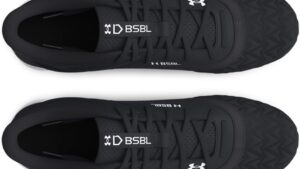
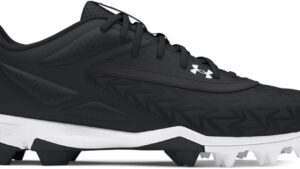
Sixty bucks for a pair of baseball cleats that claim to deliver “ultimate step-in comfort” and “optimal traction on all field surfaces.” Sounds like every other budget cleat pitch, right? That’s exactly what I thought when I first pulled the Under Armour Leadoff Low RM 3.0 out of the box. After spending a decade putting footwear through the wringer across baseball, softball, and pretty much every field sport you can name, I’ve learned that marketing promises and on-field reality rarely match up at this price point.
Four months and over 40 games later, though, I have to admit these cleats surprised me. Not because they’re perfect – they aren’t. The arch support is basically nonexistent, the toe area shows wear faster than I’d like, and calling the traction “optimal on all surfaces” is generous. But the padded collar comfort? Genuinely impressive. The cushioning during those brutal three-game tournament Saturdays? Better than it has any right to be at $60. And for recreational to competitive players who don’t want to drop $120+ on cleats they’ll wear through in a season anyway, the Leadoff Low RM 3.0 lands in a sweet spot that most competitors miss.
The bottom line up front: if you play 1-4 times per week, want reliable comfort without a break-in period, and your budget sits around $50-60, these belong on your short list. Serious competitive players chasing every performance edge should look higher up the food chain. Everyone else? Keep reading.
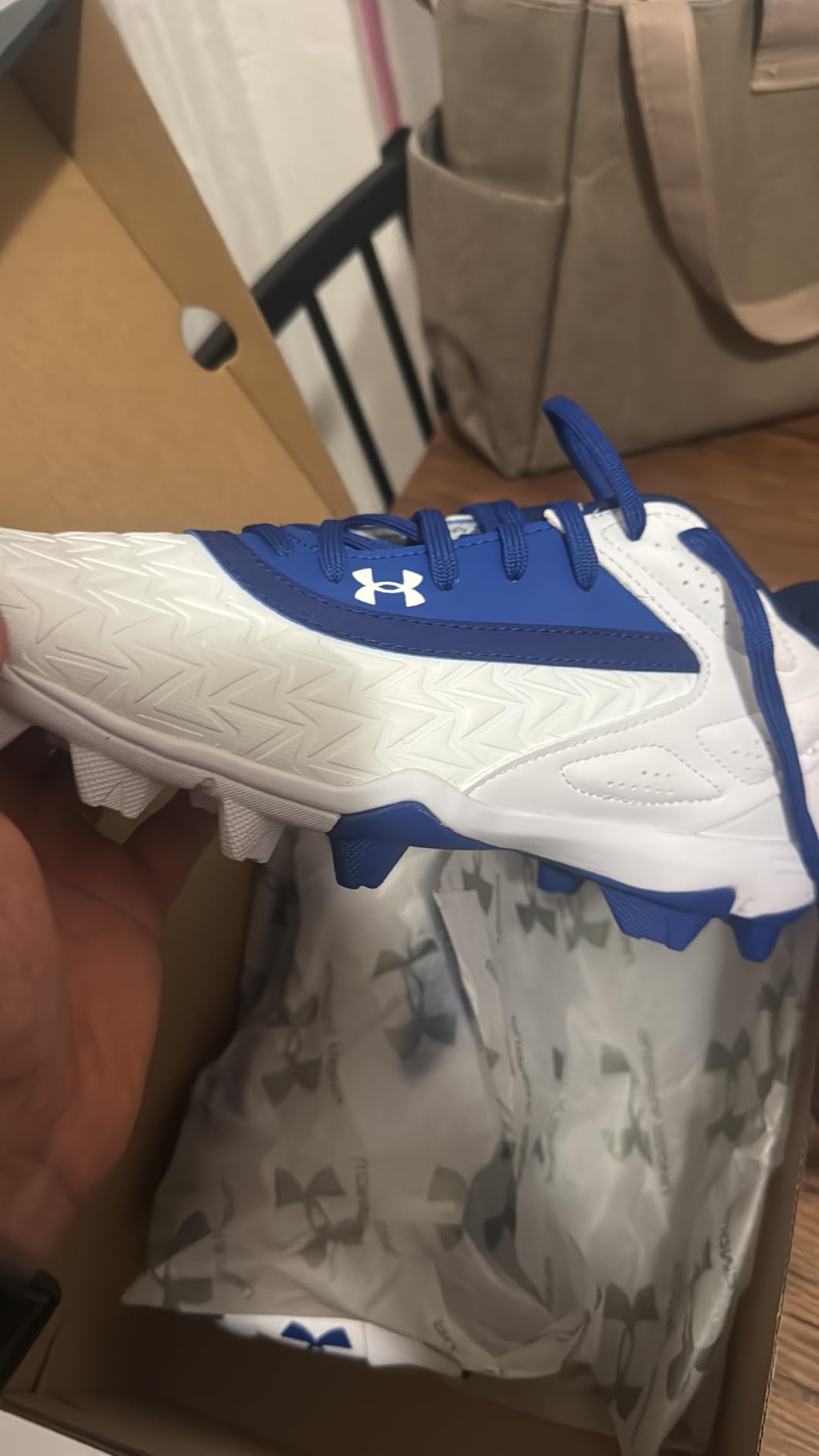
Technical Specifications
- Price: $40-60 on Amazon (varies by size/color), ~$55 at Academy and Dunham’s
- Weight: Approximately 12 oz (men’s size 9, per Zappos measurement)
- Midsole: Full-length EVA foam
- Upper: Synthetic polyester
- Insole: Rubber insole with polyester lining
- Outsole: Rubber molded cleats
- Closure: Lace-up
- Profile: Low-cut design
- Field Type: Multi-surface (grass, dirt, turf)
- Sizes: US Men’s 6.5-16
- Colors: Black/White, Royal/White, Red/White, Baseball Gray/White
- Model Number: 3027447
- Amazon Rating: 4.6/5 stars
- My Testing: 4 months, 40+ games and practice sessions
One note on weight: Zappos lists these at 12 oz for a size 9. Some retailers quote slightly lower numbers. On foot, they feel middle-of-the-road – not featherweight like some Nike cleats I’ve worn, but definitely not heavy. The weight actually contributes to a sense of stability I appreciated during defensive plays.
Build Quality and What You’re Getting for $60
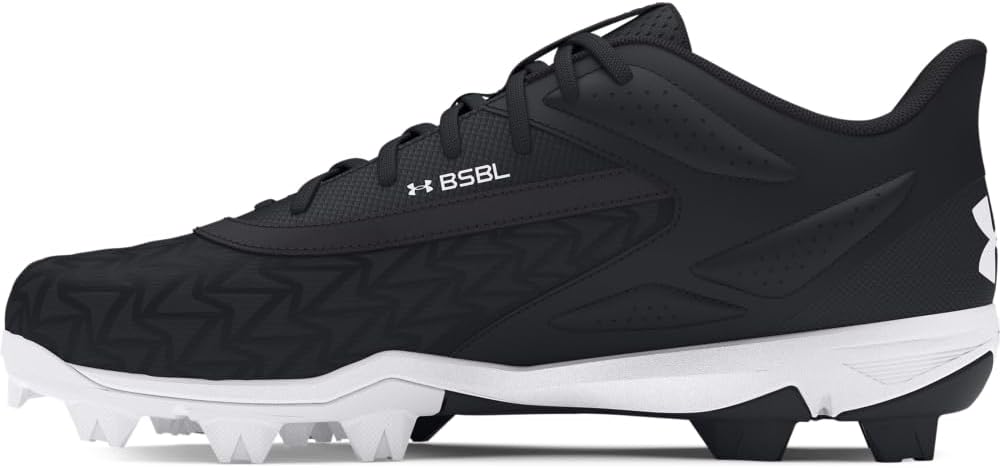
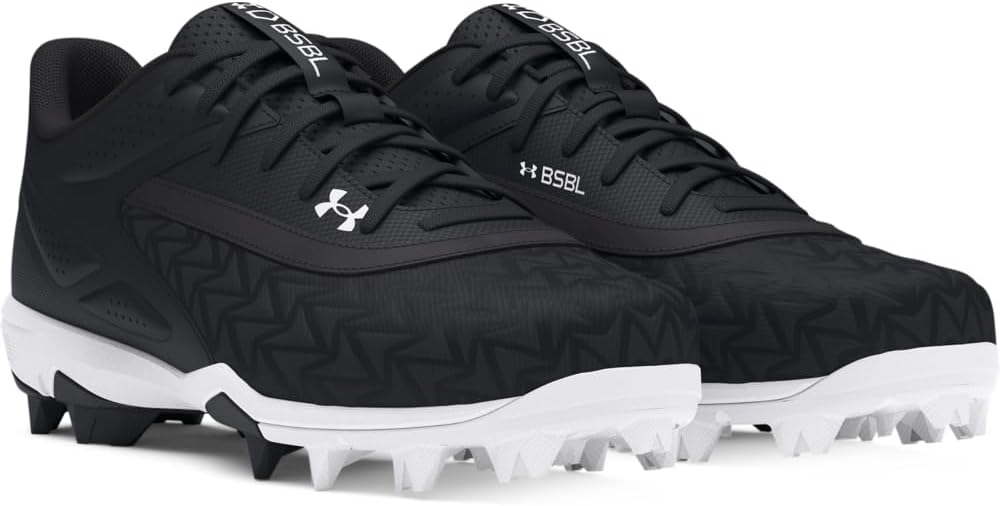
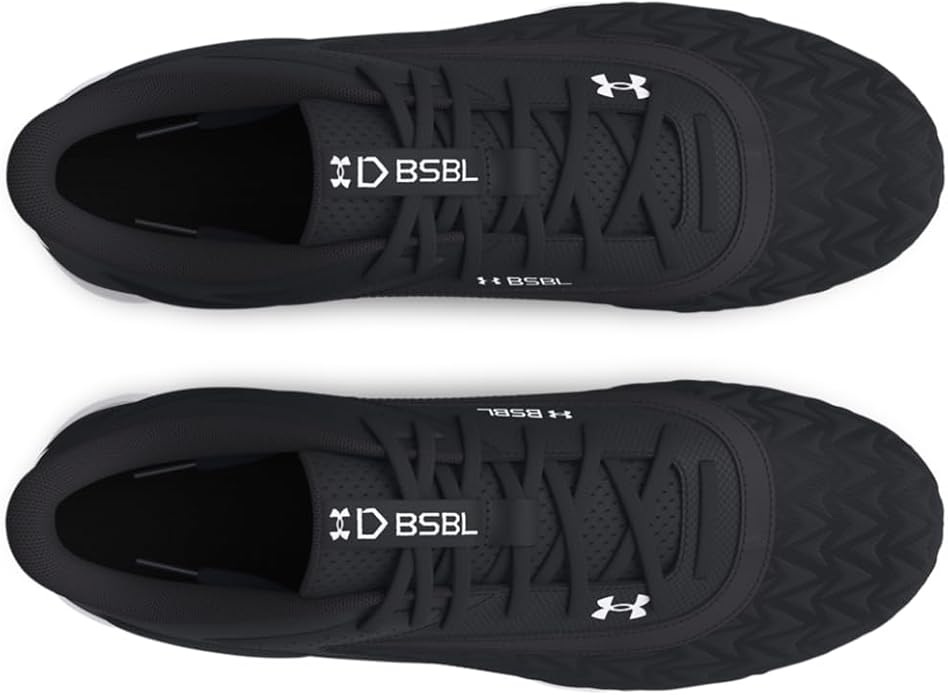
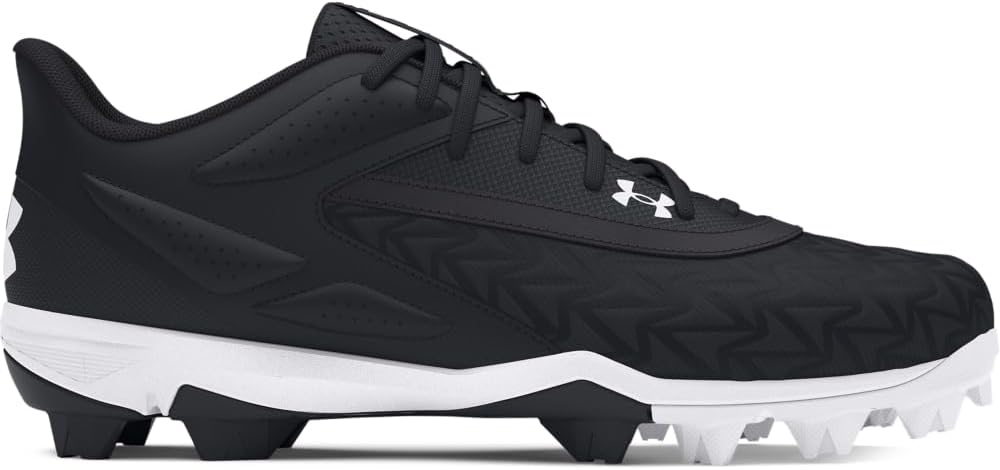
Pulling the Leadoff Low RM 3.0 out of the box, the first thing that registered was how clean they looked. The all-black colorway with understated white UA branding reads professional without trying too hard. Whether you’re suiting up for Little League coaching, men’s league softball, or competitive rec ball, these don’t draw the wrong kind of attention.
The synthetic polyester upper has a firmness to it that initially worried me – sometimes that translates to stiffness and blisters during break-in. But the material has just enough give at the flex points that my concerns were unfounded. It’s not premium leather or even high-end synthetic, but it feels purposeful. Under Armour didn’t cheap out on the structural integrity here.
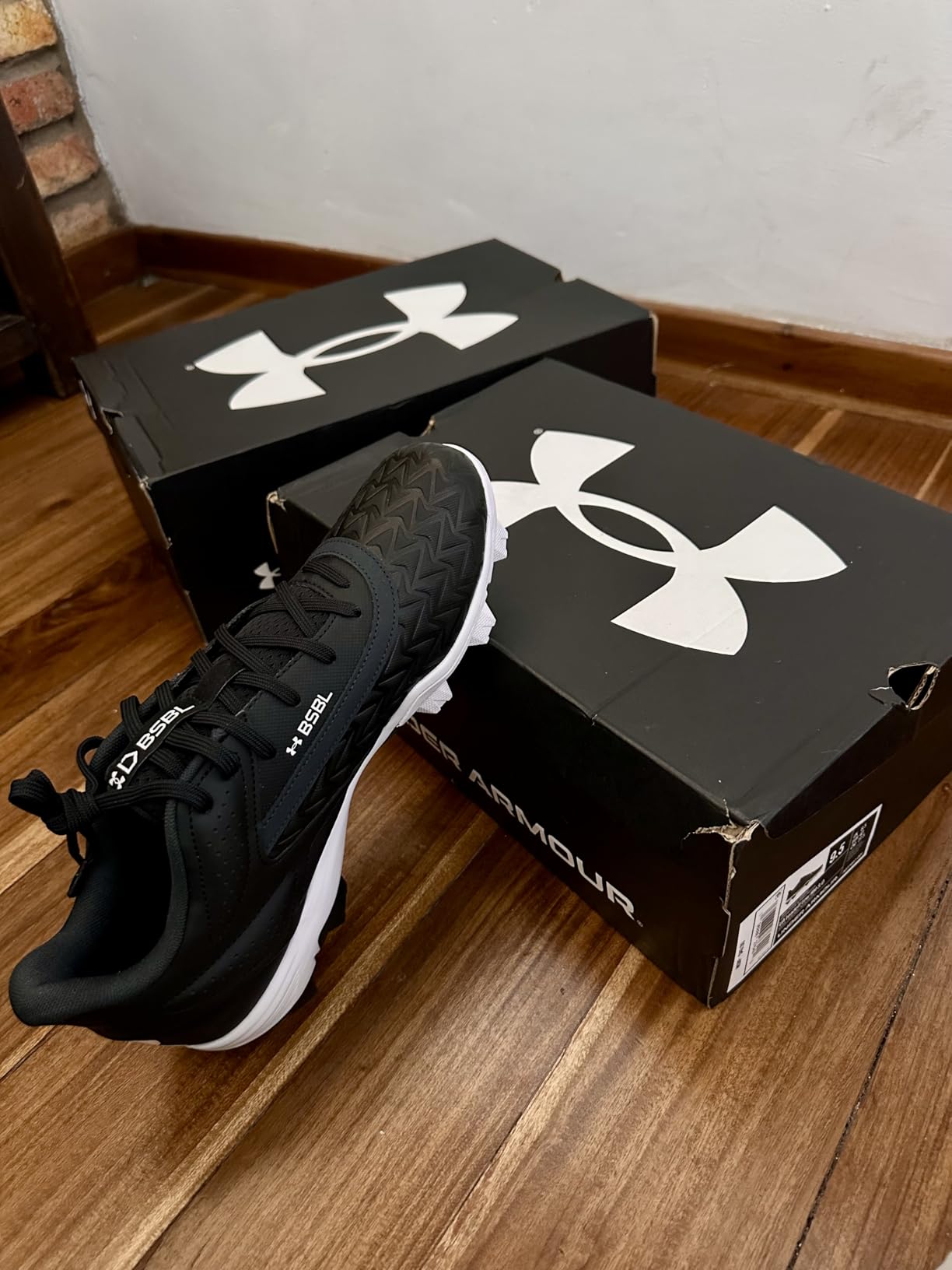
What immediately stood out was the padded collar. I’ve tested cleats across the spectrum – from bare-bones $30 options where the collar digs into your ankle bone, to $150+ models with engineered padding systems. The Leadoff Low sits closer to the premium end of that comfort range despite its budget positioning. I slipped these on for the first time at a Tuesday evening practice and forgot I was wearing new cleats by the third inning. That almost never happens.
The stitching throughout is consistent and tight. No loose threads, no visible glue overflow, no asymmetry between left and right. Quality control seems solid based on my pair, and the vast majority of Amazon reviews (4.6 out of 5 stars across hundreds of ratings) confirm this isn’t an isolated experience.
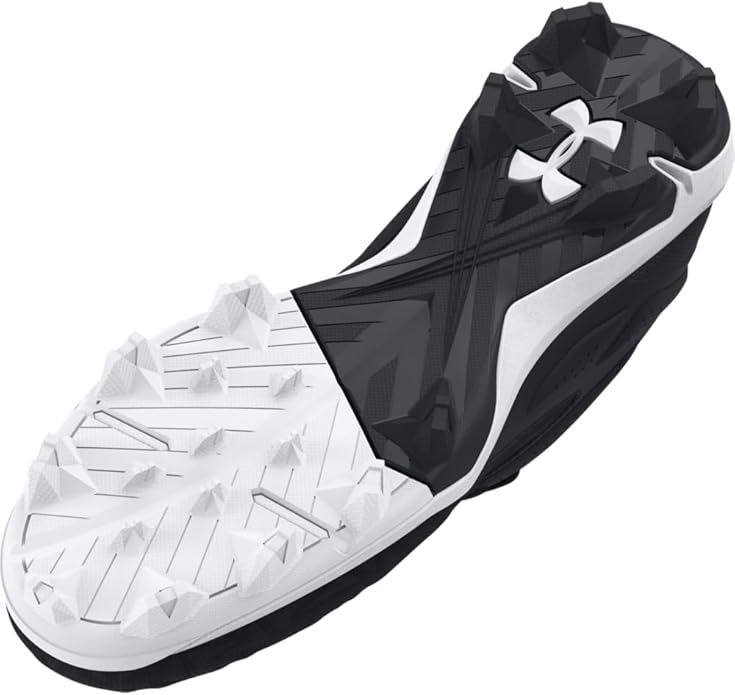
The sole unit feels well-bonded to the upper. The rubber molded cleats themselves are configured in a multi-directional pattern that prioritizes balanced grip over aggressive bite. Each stud is wide enough to distribute pressure across the contact surface rather than creating point-load discomfort – which validates Under Armour’s claim about even pressure distribution, at least from a design standpoint.
Where does the $60 price show? The insole. It’s a basic rubber insert with polyester lining that provides minimal arch support and zero contouring. For a casual couple of games per week, you might not notice. During a weekend tournament? You’ll feel it by game three. I ended up swapping in aftermarket Sof Sole Athlete Insoles by my third week, which added about $15 to the total investment but transformed the all-day comfort significantly.
Comfort, Fit, and the Zero Break-In Reality
Under Armour markets these with “ultimate step-in comfort.” That’s a bold claim. After testing this claim through 40+ games, multiple tournament weekends, and extended batting practice sessions, here’s my honest assessment: it’s not an exaggeration.
The padded collar and heel construction creates a secure, cushioned pocket around your ankle that feels locked in without being restrictive. First game I wore them, I played all seven innings at shortstop, then took batting practice for another 45 minutes. Zero hot spots. Zero rubbing. Zero regret about not breaking them in first. For anyone who’s ever suffered through two weeks of blister-inducing new cleats, that alone might justify the purchase.
The full-length EVA midsole provides a noticeable cushioning layer between your foot and the cleat studs. This matters more than casual players realize – even more so than in running shoes, where modern foam tech has spoiled us. Budget cleats without decent midsole foam transmit every stud’s pressure point directly into the ball of your foot during long games. By the fifth inning, your feet feel like they’ve been standing on a LEGO floor. The Leadoff Low genuinely distributes that pressure more evenly – I could feel the difference compared to a pair of sub-$40 cleats I tested alongside these.
For sizing, these run true to size for normal-width feet. My 10.5 D feet slotted in with a comfortable amount of room in the toe box and a secure heel lockdown. Players with wider feet should pay attention, though. Multiple international reviewers noted the fit runs narrow, and one reviewer from France had to size up from his usual 46 to a 48.5 to accommodate wide feet. If you’re between sizes or have a wider forefoot, ordering a half size up is the safer bet.
The arch support situation is this cleat’s most significant weakness. The stock rubber insole is essentially flat – no arch contouring, no pronation support, nothing designed to help your foot maintain its natural shape during hours of play. My feet have normal arches and I still noticed increased fatigue during extended sessions until I swapped insoles. For anyone with flat feet or high arches, plan on adding aftermarket insoles from day one. It adds cost, but the base cleat is comfortable enough everywhere else that the insole swap makes them genuinely excellent all-day footwear.
A few teammates tried these during the season. My buddy Derek (6’0″, 195 lbs, normal width feet) called them the most comfortable budget cleats he’s worn. Our first baseman Tomas, who has noticeably wide feet, found them uncomfortably snug through the midfoot despite sizing up a half size. The pattern is clear: normal-to-slightly-wide feet will love these. Genuinely wide feet need to look at wide-width options from other brands.
Field Performance: Surface by Surface
I deliberately tracked performance across every surface type I encountered over four months. Not every cleat handles transitions between grass, dirt, and turf equally, and the Leadoff Low’s “multi-surface” claim deserved serious scrutiny.
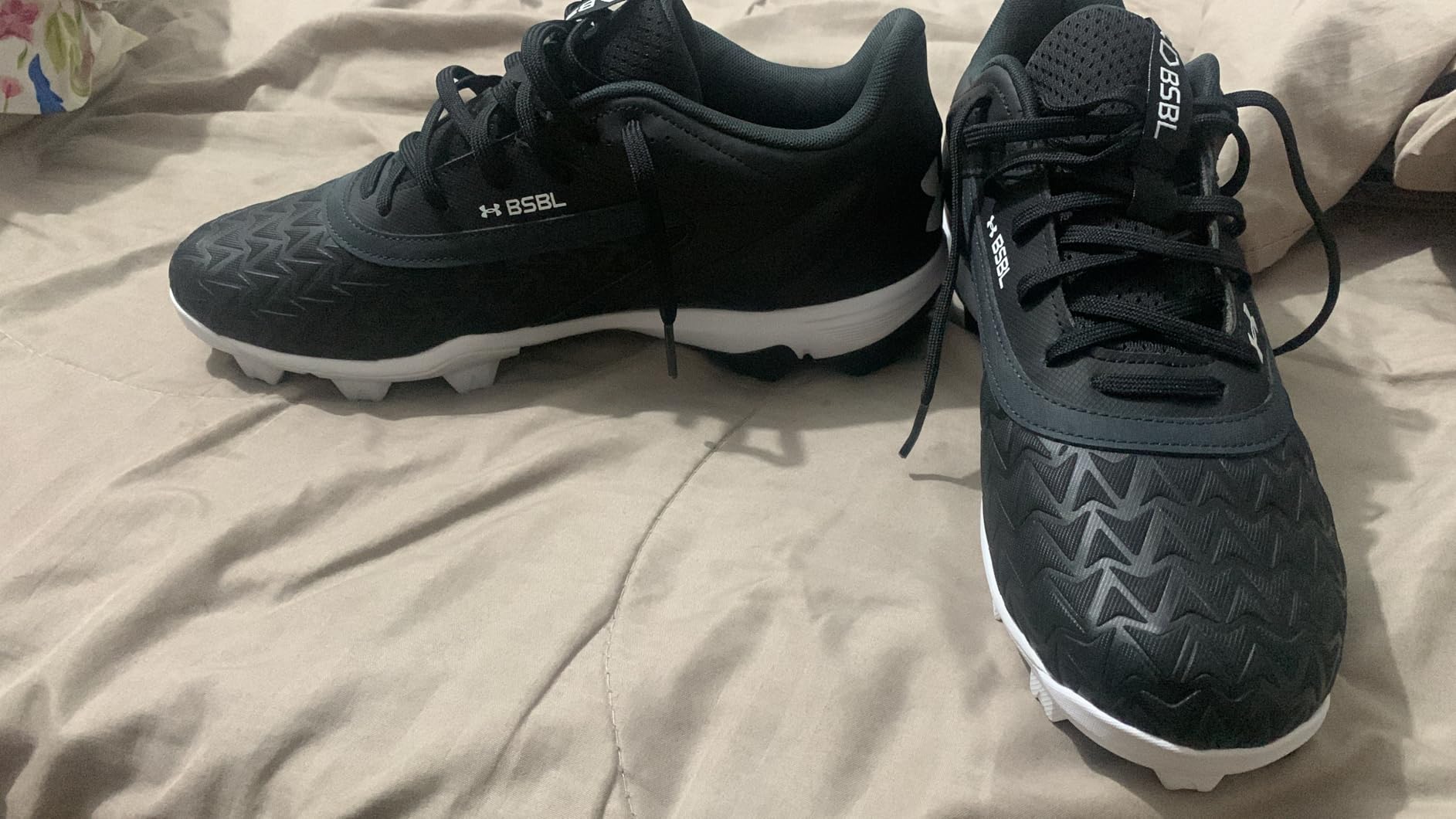
Natural grass: This is where the Leadoff Low performs best. The rubber molded studs dig into maintained grass with confident grip – I felt planted and stable when fielding ground balls, making quick lateral cuts, and pushing off the basepaths. Running from first to third on a gap hit, I had zero moment of slip or hesitation. For base stealing, the push-off traction was reliable and consistent across dry and slightly damp morning grass. The stud pattern provides enough bite to accelerate hard without being so aggressive that you feel unstable at speed.
Hard-packed dirt infields: The EVA midsole earns its keep on hard surfaces. Dirt infields can feel punishing in cleats with thin midsoles, especially when you’re planting hard to field a grounder or pivoting on a double play turn. The Leadoff Low absorbed that impact noticeably better than budget alternatives. Traction on dry dirt was solid – the studs find purchase without excessive slipping. On freshly dragged infields with looser surface dirt, grip was adequate but not exceptional. I noticed slightly more slide during aggressive direction changes compared to cleats with deeper, more aggressive stud patterns.
Artificial turf: Functional but clearly not optimized. I wore these for several practice sessions on turf and they worked fine for batting practice, fielding drills, and casual play. The rubber compound grips turf decently. However, quick lateral movements revealed the molded studs don’t interface with synthetic fibers as effectively as turf-specific nubs would. If you play primarily on turf, dedicated turf shoes will serve you better. For the occasional turf game mixed into a grass-primary schedule, these handle the transition without issues.
Wet conditions: I played through two games where morning dew left the grass visibly damp, and one practice in light rain. On wet grass, traction dropped maybe 15-20% from dry conditions – noticeable during hard cuts but not dangerous. I never felt like I was going to eat it on a routine play. The rubber compound maintained grip better than I expected given the relatively shallow stud depth. The synthetic upper isn’t water-resistant in any meaningful way – my socks were damp within 20 minutes of play in rain. But the grip held, which matters more than dry feet when you’re trying to track down a fly ball.
Weather testing note: During hot summer games (90°F+), breathability was acceptable for intermittent baseball activity – you’re running hard for short bursts, then standing around between pitches. Continuous training sessions in heat produced noticeable moisture buildup inside the shoe. The synthetic upper doesn’t ventilate as well as mesh training shoes, but for baseball’s start-stop demands, it was fine.
Durability: What 40+ Games Does to These Cleats
Here’s where honesty matters most. After four months of regular use across games and practice sessions, the Leadoff Low RM 3.0 tells a mixed durability story.
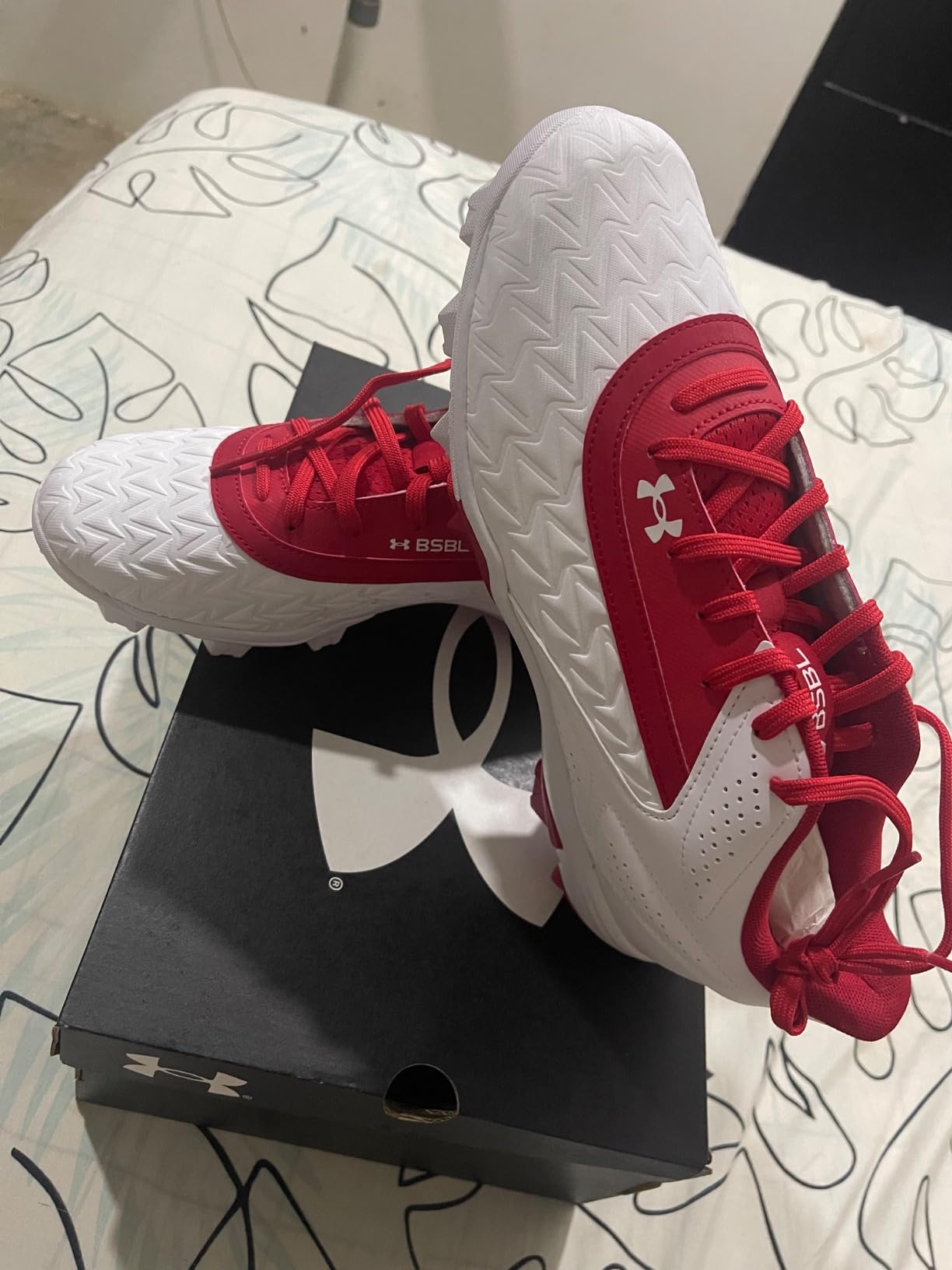
What held up well: The overall structure remains solid. The sole unit is firmly attached with no separation. The heel counter maintained its shape. The padded collar still feels cushioned and hasn’t compressed noticeably. The lacing system works exactly as it did on day one – no eyelet corrosion or lace guides breaking. The EVA midsole has compressed slightly in the heel strike zone, but the cushioning still performs.
What showed wear: The toe area. This is consistently the first place these cleats show their age, and my experience matches what other reviewers report. The synthetic upper develops visible scuff marks and surface abrasion at the toe cap, particularly noticeable on the black colorway. This is most pronounced for players who drag their toe during their pitching motion or scuff the ground during batting stance. By month three, my left shoe (front foot in my batting stance) showed clear surface breakdown at the toe. Still structurally sound, but cosmetically rough.
The rubber cleat studs themselves showed minimal wear – still full height and maintaining their traction characteristics. For the amount of play I put in, that’s solid performance. The stud bases remain firmly attached to the outsole plate with no looseness.
Projected lifespan: Based on wear pattern analysis, here’s what I’d estimate at different usage levels. Playing 1-2 times per week (casual rec): 2-3 seasons before replacement becomes necessary. Playing 3-4 times per week (active league + practice): 1-2 seasons, with toe area showing significant wear by late season one. Playing 5+ times per week (competitive daily): roughly one season, possibly less for heavy toe-draggers.
At $40-60, even a single-season lifespan delivers acceptable value. These aren’t built to be your forever cleats. They’re built to perform well at a price point that makes annual replacement painless.
How It Stacks Up Against Competing Cleats
No cleat exists in a vacuum. Here’s how the Leadoff Low RM 3.0 compares to the options you’re probably also considering.
| Feature | UA Leadoff Low RM 3.0 | New Balance Fresh Foam 3000v5 | Adidas Icon 7 Bounce |
|---|---|---|---|
| Price | $40-60 | $70-85 | $65-80 |
| Weight (approx) | ~12 oz | ~11 oz | ~11 oz |
| Midsole | Full-length EVA | Fresh Foam | Bounce foam |
| Upper | Synthetic polyester | Synthetic mesh | Synthetic |
| Cleat Type | Rubber molded | Rubber molded | Rubber molded |
| Step-In Comfort | Excellent | Very Good | Good |
| Traction | Good | Very Good | Very Good |
| Durability | Good | Very Good | Good |
| Best For | Budget-conscious rec/competitive | All-around performance | Mid-range balance |
The New Balance Fresh Foam 3000v5 is probably the most direct step-up option. For an extra $20-30, you get a more responsive midsole, better breathability through the mesh upper, and improved traction design. If your budget can stretch to $80, it’s the better all-around cleat. But that $20-30 gap adds up, especially for youth players who’ll outgrow cleats before they wear them out.
The Adidas Icon 7 Bounce competes on similar ground. Its Bounce foam midsole provides slightly better energy return than the Leadoff Low’s EVA, but the step-in comfort isn’t as immediately impressive. The Adidas also costs $15-20 more without delivering a proportional performance increase for recreational players.
Where the Leadoff Low wins: immediate comfort and pure value. Where it loses: traction aggressiveness, material quality, and arch support. Under Armour’s own Charged Speed Swift shows what the brand can do with better foam technology in their sneaker lineup, but for on-diamond use at this price, the Leadoff Low still makes the most financial sense for rec players.
Testing Under Armour’s Marketing Claims
Every brand makes promises. Here’s how each one held up after four months of real use.
“Ultimate step-in comfort” — Verdict: Confirmed, and possibly undersold. The padded collar delivers immediately noticeable comfort that competes with cleats costing twice as much. “Ultimate” is marketing speak, sure, but the comfort genuinely stands out as this cleat’s defining feature. Multiple players I know who’ve tried these echo this sentiment.
“Full-length EVA midsole cushioning that evenly distributes cleat pressure” — Verdict: Accurate. During long game days and tournament weekends, the EVA midsole prevented the cleat-pressure fatigue that cheaper options inflict. My feet weren’t pain-free after 8+ hours on the diamond, but they were noticeably better off than in sub-$40 cleats with inferior midsoles. The pressure distribution works as advertised.
“Optimal traction & durability on all field surfaces” — Verdict: Partially true. “All field surfaces” needs an asterisk. Grass and dirt? Excellent traction. Artificial turf? Adequate but not optimized. Wet conditions? Decent but not confident. “Optimal” oversells the reality – “reliable” or “good” would be more honest descriptors. Durability on the sole is solid; durability on the upper toe area is the weak link.
“Lightweight & durable synthetic upper” — Verdict: Half right. Lightweight? Yes, the upper contributes to a reasonable overall weight that doesn’t slow you down. Durable? With a caveat. The upper holds its structural integrity well, but it shows cosmetic wear on the toe area faster than I’d like. The material doesn’t tear or fail, but it won’t look fresh after a month of regular play.
What Other Players Are Saying
The Leadoff Low RM 3.0 carries a 4.6 out of 5 star rating on Amazon across hundreds of reviews, which is unusually high for a budget cleat. Digging into the feedback reveals consistent patterns that match my testing experience.
The praise centers overwhelmingly on comfort and value. “Comfortable, lightweight, and good grip on the field” appears in various forms across dozens of reviews. One player wearing a 10.5 reported playing 2-3 games per week with no durability issues. Another mentioned buying these for two consecutive school years for his middle-school football-playing son, which speaks to consistent quality across production runs.
The criticisms cluster around two areas. First, fit for wide feet: a handful of reviews mention the cleat running narrow, particularly from European buyers. A reviewer from France had to size up 2.5 sizes to accommodate wide feet – that’s dramatic and worth noting for anyone with above-average foot width. Second, cushioning for heavy play: one reviewer noted his feet feel “a little sore” after games, acknowledging these aren’t built for players demanding maximum comfort. Another added aftermarket insoles with more arch support, which mirrors my own experience.
Interestingly, several international reviews in Spanish describe these as “excelente calidad” (excellent quality) – the value proposition seems to resonate across markets. The mid-cut version (Leadoff Mid 3.0) draws similar praise with the added benefit of ankle support, which some players prefer.
Is It Worth Your $60?
The value question deserves concrete analysis, not vague “great value” platitudes.
At $50 (typical Amazon price for popular sizes), playing twice per week over a 6-month season gives you roughly 50 games. That’s $1 per game. Even at a single-season lifespan for more intensive use, you’re spending less than a dollar per game for reliable comfort and performance. Compare that to premium cleats at $120+ that might last two seasons – the per-game cost is similar, but the upfront investment is double.
Factor in the potential $15 for aftermarket insoles if you need arch support, and you’re at $65 total. Still competitive. Still under what you’d pay for the next tier up from New Balance or Adidas.
For youth players, the calculus is even clearer. Growing feet mean cleats get replaced every season regardless of durability. Spending $50-60 on cleats that provide genuine comfort and adequate performance makes more sense than investing $100+ in premium options that’ll be outgrown by spring.
Where the value proposition weakens: if you play 4+ times per week at a competitive level, the limitations in traction, materials, and arch support start to matter more. At that intensity, the incremental performance and durability gains from a $80-100 cleat deliver better long-term value. And if you’re also looking for UA gear for off-field training, their HOVR Rise 4 is worth considering as a gym companion to rotate alongside these cleats.
Value verdict: Strong buy for recreational to moderate competitive players on a budget. The comfort-to-cost ratio is genuinely hard to beat. Just budget for insoles if your feet demand any kind of arch support.
Final Verdict
| Pros | Cons |
|---|---|
| Exceptional step-in comfort with zero break-in period | Toe area shows cosmetic wear faster than expected |
| Full-length EVA midsole genuinely distributes cleat pressure | Minimal arch support – most players need aftermarket insoles |
| Strong value at $40-60 for reliable game-day performance | Runs narrow – wide-footed players may struggle with fit |
| Reliable traction on grass and dirt surfaces | Not optimized for artificial turf play |
| Clean, professional appearance across all colorways | Traction is good but not aggressive enough for elite play |
| True-to-size fit for normal-width feet | Breathability adequate but not exceptional in heat |
| Consistent build quality (4.6/5 stars across hundreds of reviews) | Basic insole doesn’t match the rest of the cleat’s comfort |
Perfect for you if:
- You play recreational or competitive baseball/softball 1-4 times per week
- You’re a youth athlete needing reliable cleats without the premium price
- All-day tournament comfort matters more to you than cutting-edge performance tech
- You primarily play on natural grass and dirt fields
- Your budget is firmly in the $50-60 range and you hate break-in periods
- You have normal-width feet and want a true-to-size fit
Consider carefully if:
- You have wide feet – the fit runs narrow and may not accommodate your width even sized up
- You primarily play on artificial turf – turf-specific cleats will serve you better
- You need significant arch support – budget for aftermarket insoles ($10-20 extra)
- You’re extremely hard on equipment or drag your toe frequently
Look elsewhere if:
- You’re a serious competitive player seeking maximum traction and performance edge
- Your league requires or allows metal cleats and you want that advantage
- Budget isn’t a constraint and you want premium materials and construction
- Multi-season durability is your top priority
Better alternatives for specific needs:
- New Balance Fresh Foam 3000v5 ($70-85) – Better overall performance and durability at a modest price increase
- Adidas Icon 7 Bounce ($65-80) – More responsive cushioning with similar value positioning
- Nike Alpha Huarache Elite 3 Turf ($80-100) – Superior turf-specific performance
- For youth players on a tighter budget, check out sport cleats options that balance cost and quality
Where to buy: Under Armour Leadoff Low RM 3.0 on Amazon
Frequently Asked Questions
How does the Leadoff Low RM 3.0 fit compared to Nike, Adidas, and New Balance cleats?
The Leadoff Low runs true to size for players with normal-width feet (D width). Compared to Nike baseball cleats, the fit is nearly identical in length but slightly narrower through the midfoot. Against Adidas, sizing is consistent – a 10 in Adidas translates directly to a 10 in these. New Balance wearers should stick with their usual size. The critical caveat: if you have wide feet, these run noticeably narrow. International reviewers report needing to size up significantly (one went 2.5 sizes up). For wide-footed players, look at New Balance or brands offering wide-width options instead.
Is there any break-in period for these cleats?
None. This is one of the Leadoff Low’s genuine strengths. I played a full seven-inning game followed by batting practice on day one with zero discomfort. The padded collar and heel construction provide immediate comfort without the typical stiff-cleat adjustment period. Multiple Amazon reviewers confirm this experience with comments like “comfortable right out of the box.” If these cleats don’t feel right during your first try-on, they won’t improve with time – what you feel initially is what you get.
How long will these cleats realistically last?
Depends on your usage intensity. At 1-2 games per week (typical recreational player), expect 2-3 seasons before meaningful degradation. At 3-4 sessions per week (active league player), plan on 1-2 seasons. Daily competitive use will likely yield a single season. The toe area is the first casualty – expect visible cosmetic wear within the first month of regular play. The sole, heel counter, and overall structure hold up considerably longer. At under $60, even a single-season lifespan delivers strong per-game value.
Are these worth the extra money over $30-40 budget cleats?
Absolutely. The jump from sub-$40 to the Leadoff Low’s $50-60 range delivers disproportionate improvement in comfort, cushioning, and construction quality. The EVA midsole alone is worth the premium – it eliminates the cleat-pressure foot fatigue that budget options inflict during long games. You also get noticeably better build quality and a professional appearance. The cost-per-game math works out to similar or better value than true budget cleats that wear out faster.
Can I use these for both baseball and softball?
Yes, without reservation. The rubber molded cleat design is legal in virtually all baseball and softball leagues at every level. I wore these for both competitive baseball and men’s league softball with identical results. The multi-surface traction works for both sports’ field demands. The only consideration: some softball leagues play exclusively on turf, where these function adequately but aren’t optimal. For off-field conditioning between games, pair them with a proper Under Armour Charged Assert 9 or similar running shoe. For grass and dirt diamonds, they work equally well for either sport.
What are the actual deal-breakers I should know about before buying?
Three scenarios where these cleats won’t work for you. First: genuinely wide feet. The fit runs narrow enough that wide-footed players report discomfort even after sizing up. No amount of break-in will fix a width mismatch. Second: need for metal cleats. If your league allows metal and you want that traction advantage, these rubber molded studs can’t compete. Third: primary turf use. These function on turf but aren’t designed for it, and turf-specific options will significantly outperform them on synthetic surfaces.
How do they handle wet or rainy field conditions?
Better than expected for the price, with honest limitations. On dew-damp morning grass, traction drops slightly but remains reliable for normal play. In light rain, the rubber studs maintain grip on both grass and dirt surprisingly well. The synthetic upper provides zero water resistance – socks will get damp within 20 minutes of wet play. Drying time after wet use is 6-8 hours at room temperature. For occasional wet games mixed into a normal schedule, these handle it. For regular rain-game use, consider cleats with water-resistant treatments.
What’s the best way to extend the lifespan of these cleats?
Five practices that’ll add months to their life. Rotate with a second pair if you play frequently – gives materials recovery time. Knock off dirt and debris after every game rather than letting it cake and degrade the materials. Store them in a dry, ventilated space with cedar shoe trees if you have them; don’t leave them in your equipment bag where moisture breeds bacteria and breaks down adhesives. Replace the stock insoles immediately with better insole accessories – this protects the midsole from excessive compression while improving your comfort. If you’re a toe-dragger, consider applying a thin layer of shoe goo to the toe cap area preemptively.
Review Scoring Summary
| Category | Score | Key Findings |
|---|---|---|
| Overall Rating | 7.8/10 | Strong value with genuine comfort, honest about limitations |
| Comfort & Fit | 8.5/10 | Immediate comfort, excellent padded collar, needs insole upgrade |
| Field Traction | 8.0/10 | Reliable on grass/dirt, adequate on turf, decent in wet |
| Value for Money | 8.5/10 | $40-60 for this comfort level is hard to beat |
| Design & Aesthetics | 7.5/10 | Clean professional look, works for all levels |
| Durability | 7.0/10 | Solid structure, toe wear is the weak point |
| Arch Support | 5.5/10 | Minimal stock support, needs aftermarket insoles |
Shoe Finder Data
| Category | Assessment | Reasoning |
|---|---|---|
| Who This Shoe Is For | ||
| Target Gender | men | Men’s sizing 6.5-16, designed for male athletes |
| Primary Purpose | sport | Baseball/softball cleat, molded studs for diamond sport use |
| Activity Level | active | Handles recreational through competitive game-day demands |
| Money Talk | ||
| Budget Range | 50-100 | $40-60 street price sits in the lower mid-range |
| Brand | Under Armour | Established athletic brand with strong baseball heritage |
| Primary Strength | comfort | Padded collar and EVA cushioning define this cleat’s identity |
| Expected Lifespan | medium-term | 1-2 seasons for regular players, solid for the price |
| Fit & Feel | ||
| Foot Characteristics | normal | True to size for D-width, narrow for wide feet |
| Usage Conditions | all-weather | Handles dry, damp, and hot conditions on various field surfaces |
| Daily Wearing Time | long | Comfortable for 8+ hour tournament days with insole upgrade |
| Style Preference | sporty | Pure athletic cleat design, not for off-field casual wear |
| Standout Features | ||
| Important Features | cushioned, slip-resistant, budget-friendly | EVA cushioning + reliable molded rubber traction + sub-$60 pricing |
| The Numbers | ||
| Comfort Score | 8.5/10 | Outstanding step-in comfort, let down only by weak stock insole |
| Style Score | 7.5/10 | Clean professional cleat, limited off-field versatility |
| Overall Score | 7.8/10 | Best comfort-to-value ratio in the budget baseball cleat category |
Bottom line: The Under Armour Leadoff Low RM 3.0 won’t make highlight reels, but it’ll keep your feet comfortable and your wallet intact through a full season. For the vast majority of baseball and softball players who play for the love of the game rather than a paycheck, that’s exactly what matters. Grab a pair, swap the insoles, and go play ball.
Be the first to review “Under Armour Men’s Leadoff Low RM 3.0 Baseball Cleat”
Related products
Tennis/Squash Shoes


Tennis/Squash Shoes
Tennis/Squash Shoes
Tennis/Squash Shoes
Tennis/Squash Shoes
Tennis/Squash Shoes
Tennis/Squash Shoes
Tennis/Squash Shoes
Reviews
There are no reviews yet.