
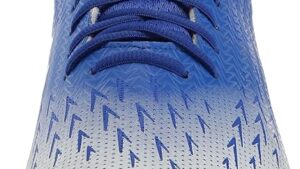
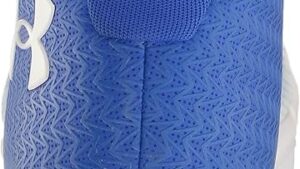
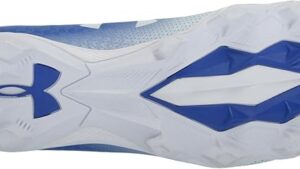
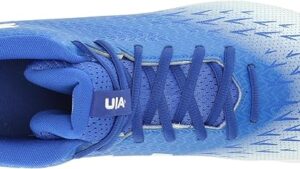
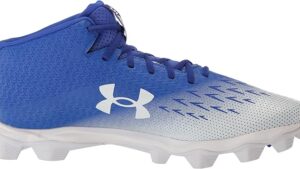
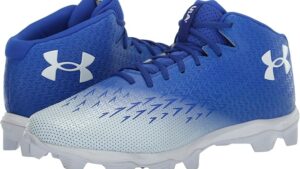
Every football season, the same question pops up in parent group chats and locker rooms: can you actually trust a $60 pair of cleats to hold up through a full schedule of practices and games? I grabbed the Under Armour Spotlight Franchise Rm 4.0 specifically to answer that question. After logging 8 weeks, 35-plus practice sessions, and 6 games in Texas heat that’d make anyone reconsider their life choices, I walked away with a clear picture of what these budget-friendly cleats can — and can’t — do. Short version: they punch well above their price, but there are some things you need to know before you order.
First Impressions and What You’re Actually Getting
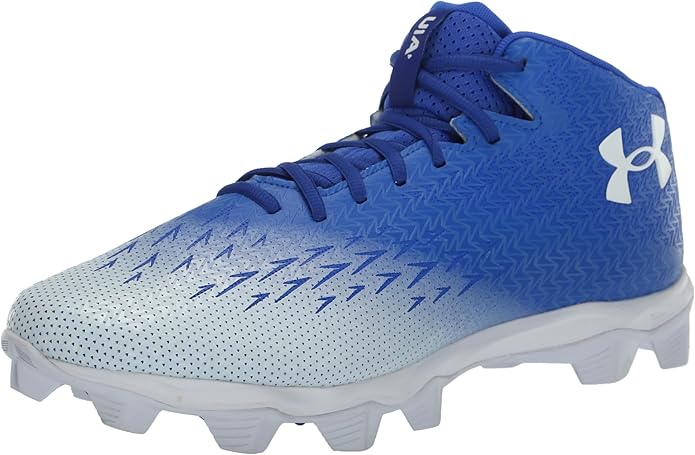
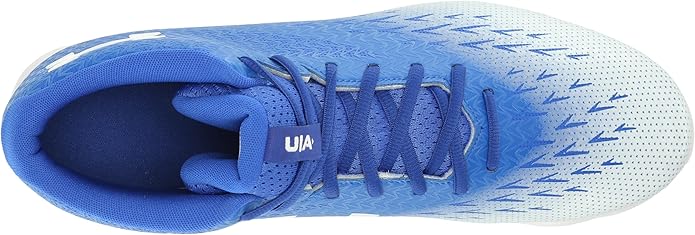
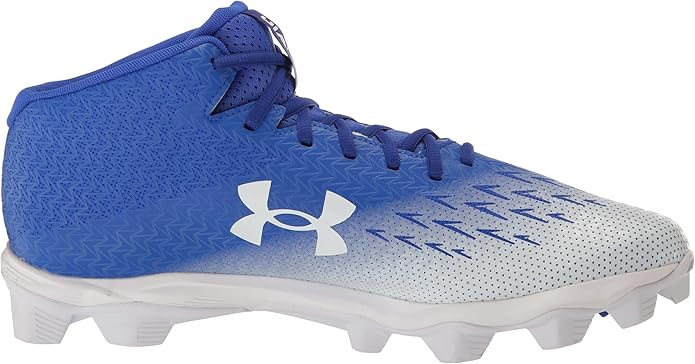
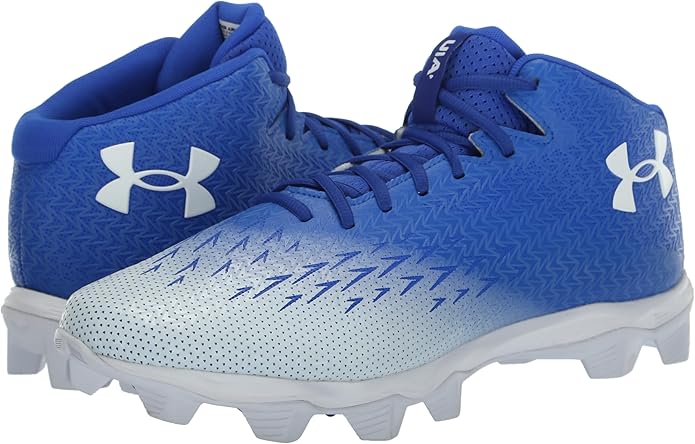
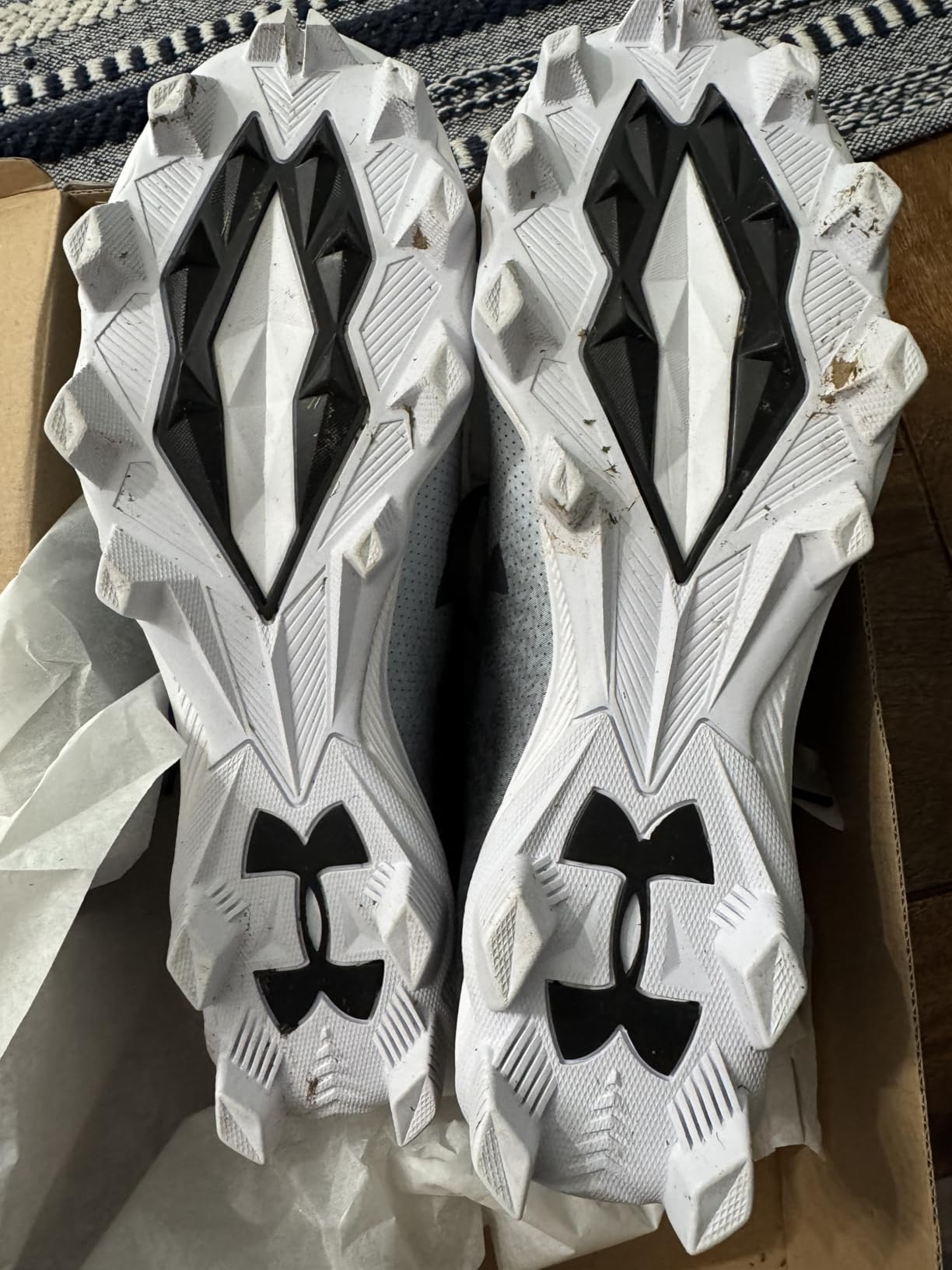
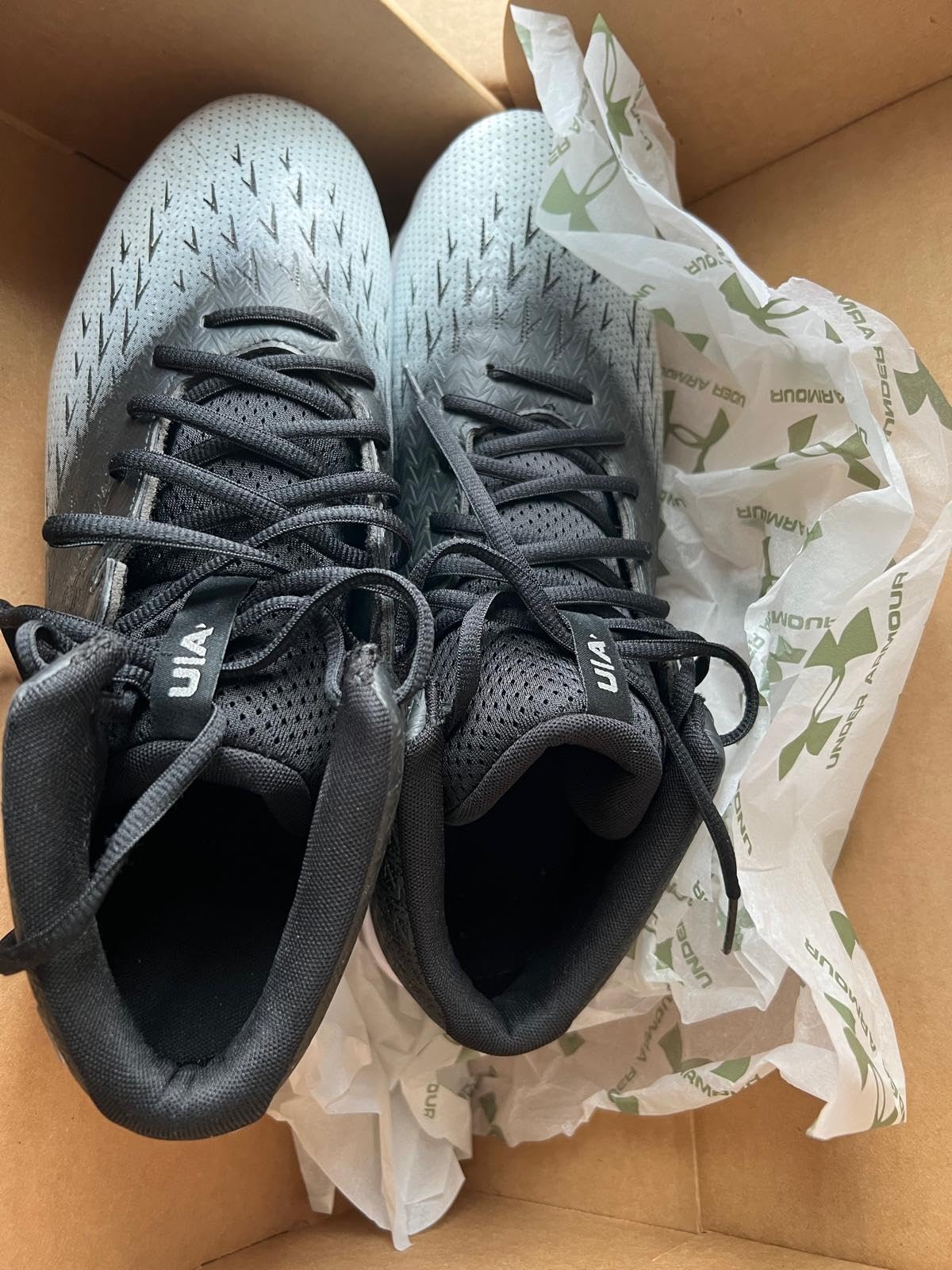
Pulling the Spotlight Franchise out of the box, the first thing that hits you is the weight — or rather, the lack of it. At roughly 10 ounces for a men’s size 9, these are noticeably lighter than the all-synthetic budget cleats I’ve tested over the years. Under Armour uses a synthetic upper with what they call 3D print overlays for structure, and you can feel the difference compared to cheaper no-name alternatives that rely on thick, heavy materials.
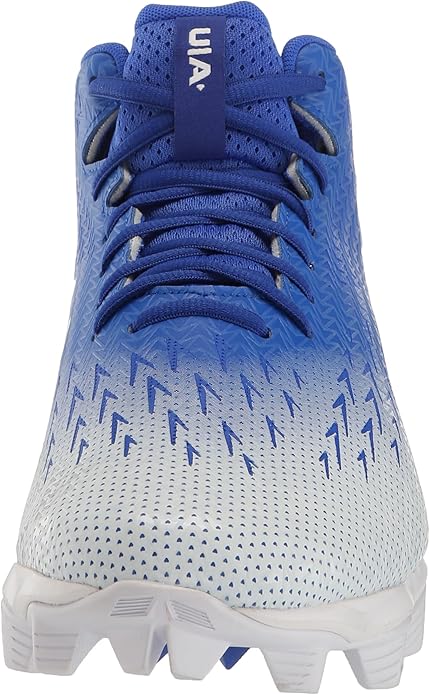
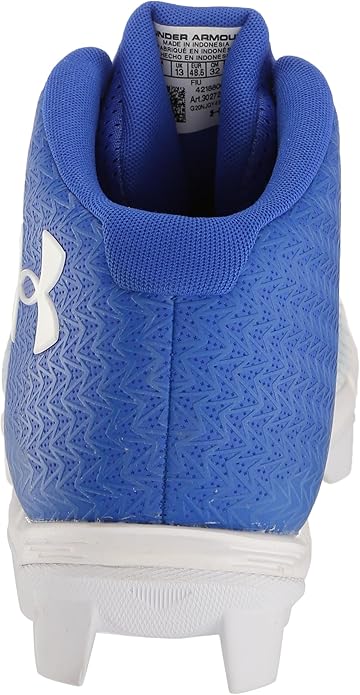
The team royal and white colorway I tested is clean without being flashy. It matches most high school team colors, which is a bigger deal than it sounds when you’re shopping for a kid who might switch teams or positions. The construction is straightforward — no unnecessary panels or decorative stitching, just reinforcement where feet actually take a beating. The toe box has a layer of protection, the heel counter is solid, and the 5/8 height collar sits right at that sweet spot between ankle freedom and support.
One thing that stood out immediately: Under Armour put a full-length EVA midsole in here. That’s not HOVR or Micro G — let’s be real about that. But it’s genuine cushioning foam running the full length of the foot, which separates this from the truly bottom-tier options that basically strap your foot to a rubber plate.
The Sizing Situation — Read This Before You Order
Here’s where I need to be straight with you, because there’s contradictory information floating around about these cleats. I typically wear a 10.5 in most athletic shoes — Nike, Adidas, New Balance, you name it. The 10.5 in the Spotlight Franchise felt snug. Not painfully tight, but noticeably narrower across the forefoot than what I’m used to.
Now, some reviewers call this a true-to-size shoe. And technically, the length is fine — it’s the width that catches people off guard. If you have average to narrow feet, your normal size will probably work. But if you’re anywhere near wide territory, or if you wear thick football socks, go up at least half a size. For what it’s worth, a dad in my local youth league told me his son (5’10”, 160 lbs) loved the cleats after sizing up half a size.
Here’s something most reviews miss entirely: Under Armour actually makes a wide version of this cleat. I found it listed at a couple of Canadian retailers. If you know your kid has wide feet, track that version down before writing off the shoe altogether.
The lacing system does a solid job of compensating for the snug fit. You can dial in the midfoot lockdown without creating pressure points — I experimented with different lacing patterns during break-in and found skipping one eyelet near the top of the forefoot helped with toe box comfort significantly.
Performance on the Field — Where These Cleats Earn Their Keep
Natural Grass
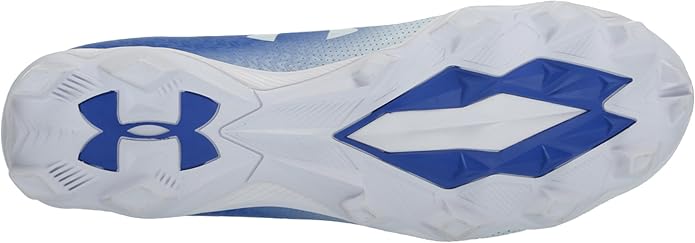
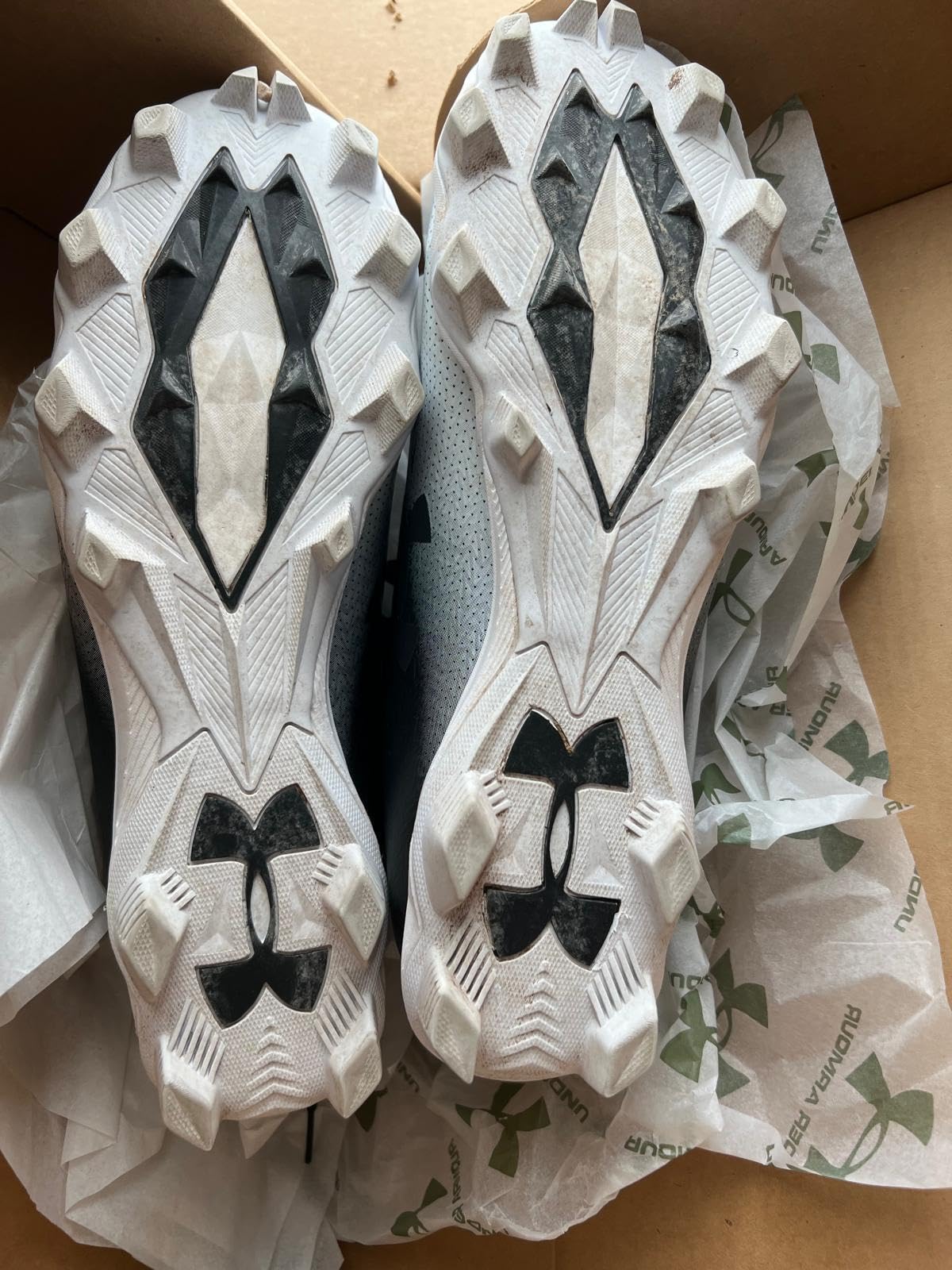
This is where the Spotlight Franchise genuinely impressed me. The rubber molded cleat pattern — what UA calls “aggressive traction” — actually delivers. Through 35-plus sessions on natural grass, I never lost my footing during cuts, pivots, or acceleration out of a stance. The stud spacing gives you solid field feel while the multi-directional pattern grips during lateral movement.
Friday night games on well-maintained high school fields? Traction was reliable from first whistle to final knee. Not once did I feel that unsettling slip that tells you your cleats aren’t keeping up. For a sub-$80 shoe, that kind of consistent grip on grass is the single biggest performance win.
Artificial Turf
Different story here — and that’s important context. These are molded rubber cleats, not turf-specific shoes. On modern FieldTurf and similar surfaces, they perform adequately for most positions. Receivers running routes, defensive backs in coverage drills, linebackers filling gaps — all fine.
Where I noticed limitations was during heavy push-off from a three-point stance. Linemen putting maximum force into the ground at the snap might want something with a more aggressive stud configuration. The rubber compound doesn’t wear down fast on turf, though, which matters if your team practices primarily on artificial surfaces.
Rain and Mud
Budget construction shows its hand in wet conditions. Light rain on a maintained field? The cleats handled it without drama. But a genuine downpour during a Tuesday practice turned into a different experience. The stud pattern clogged with mud faster than the premium football cleats I’ve tested, and the mesh upper soaked through completely.
I found myself scraping mud off the outsole at halftime during one particularly soggy game. It’s manageable with a quick cleaning routine, but if your team plays on a field that turns into a swamp three games a season, factor that into your decision.
Comfort, Cushioning, and the Break-In Truth
I’m not going to pretend these are comfortable out of the box. They’re stiff. Stiffer than I wanted, honestly. The first two practice sessions gave me a hot spot on my right heel that had me second-guessing the purchase. By session three, the mesh started softening. By session five or six, the upper had molded enough to my foot that the stiffness was a distant memory.
My advice: buy these at least two weeks before the season starts. Wear them around the house, do some light jogging, give the mesh time to adapt before you’re doing full-speed drills. Having a backup pair during those first few sessions isn’t a bad idea either.
The full-length EVA midsole does its job without fanfare. After two-hour sessions in 90-degree Texas heat, my feet felt less fatigued than they did in heavier cleats — that lightweight design pays real dividends late in practice when legs start dragging. But I’ll be honest: players over 200 pounds are going to feel the limitations of EVA after hard practices. It’s functional cushioning, not the responsive ride you get from premium foam technologies.
One underrated detail: the insole is removable. If you use orthotics or want to drop in a higher-performance aftermarket insole, you can. A couple of parents I know swapped in Sof Sole Athlete Insoles and said it transformed the comfort, especially for bigger kids. Worth checking out the accessories section for insole options if the stock cushioning doesn’t cut it for your player.
Breathability in summer heat was acceptable. The mesh upper lets air move, but it’s not going to keep your feet cool during August two-a-days. Feet got warm — not uncomfortably hot, but warm. For a budget cleat, I’d call that a passing grade.
How Long Will They Actually Last?
After 8 weeks of four to five practices per week plus game days, here’s what I documented:
The upper mesh held up better than I expected. Some fraying appeared around the flex points near the ball of the foot — common stress area — but the 3D print overlays prevented any structural failures. The stitching remained intact at all seams.
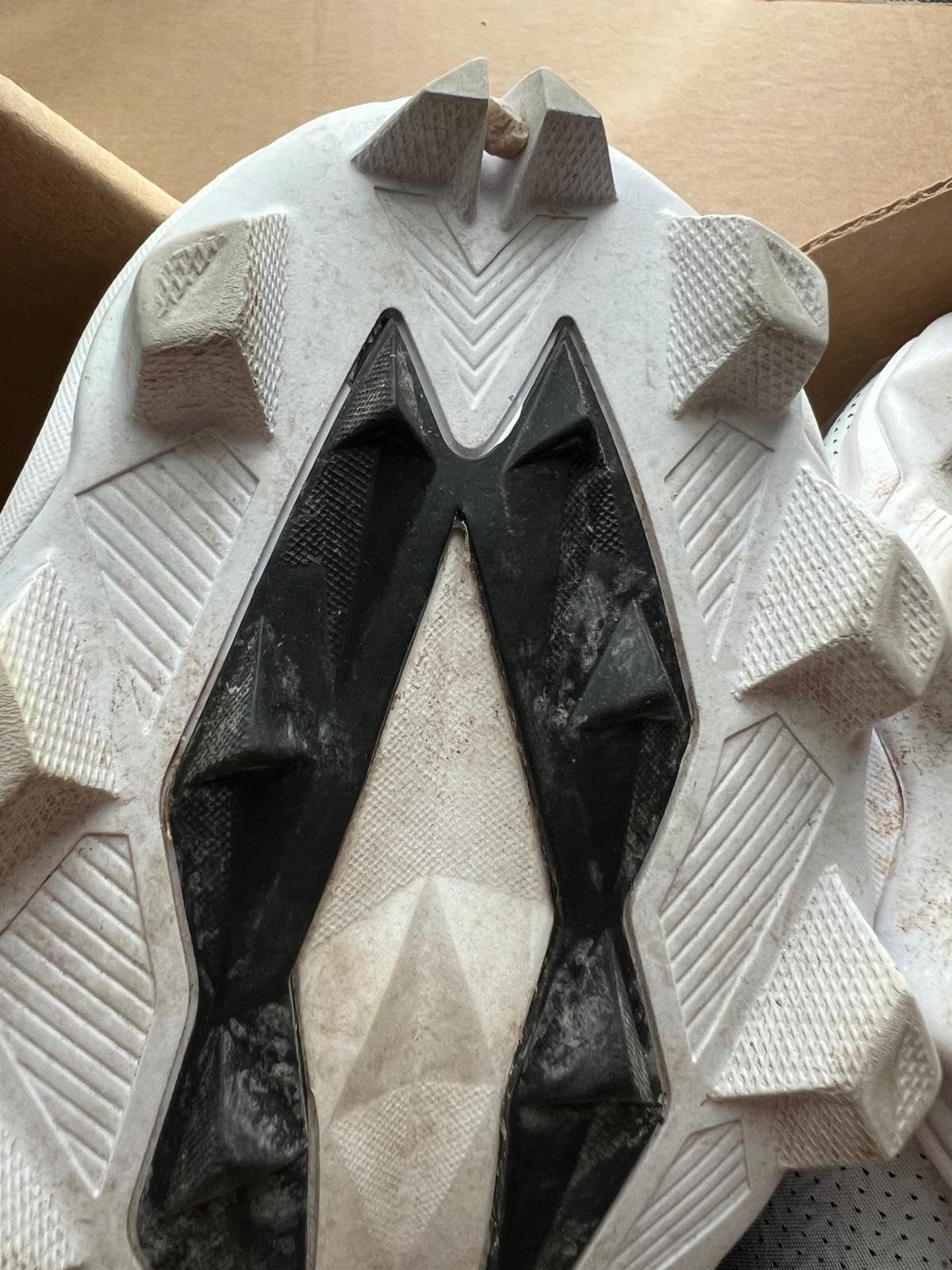
The molded studs showed visible wear but remained functional. No stud separation, no sole delamination, no cracks in the rubber compound. For context, I’ve seen cheaper budget cleats start losing studs by week six.
My realistic lifespan projections based on testing and community feedback:
- Lighter players (under 140 lbs): Full season plus some off-season use
- Average players (150-180 lbs): One full season with regular rotation
- Heavier/aggressive players (200+ lbs): 8-10 weeks before performance drops noticeably
For a growing kid who’s going to need new cleats next season anyway, one-season durability at this price point is exactly what you want. You’re not paying for cleat longevity — you’re paying for cleat performance that lasts as long as the feet stay the same size.
How the Spotlight Franchise Stacks Up
Talking about value in a vacuum isn’t helpful. Here’s how this cleat compares to the options you’re probably considering:
| Feature | UA Spotlight Franchise RM 4.0 | Nike Vapor Edge Shark | Adidas Freak Carbon |
|---|---|---|---|
| Price | $50-80 | $45-55 | $50-65 |
| Weight | ~10 oz | ~8.5-9 oz | ~10 oz |
| Cut Height | 5/8 Mid | Low | Mid |
| Cushioning | Full-length EVA | Phylon | EVA |
| Width Options | Regular + Wide | Regular | Regular |
| Best For | All-around youth/HS | Speed/skill positions | All-around mid-tier |
| Grass Traction | Excellent | Very Good | Very Good |
| Durability | 1 season | 1 season | 1-1.5 seasons |
The Vapor Edge Shark is lighter and arguably better for pure speed positions, but the Spotlight Franchise offers better ankle support with its 5/8 cut and — crucially — a wide version for players who need it. The Adidas Freak Carbon is the closest competitor in terms of all-around capability, though it typically costs a bit more and doesn’t offer dedicated width options.
If you’re shopping for a player who needs training shoes for off-field conditioning alongside their cleats, that’s a separate purchase — these are built exclusively for the field. For players who also run track or cross-country in the off-season, the Under Armour Charged Speed Swift keeps you in the same brand ecosystem at a similar price point.
The Verdict — Who Should Buy and Who Should Pass
Grab These If:
- You’re outfitting a youth or high school player who practices 3-5 times per week and needs reliable gear that won’t drain the bank account
- Your player has average to narrow feet and can size up half a size for a comfortable fit
- You’re a parent buying for a growing kid who’ll outgrow cleats before they wear them out — one-season durability at $50-80 is the right value equation
- Your team plays primarily on natural grass where these cleats genuinely excel
Think Twice If:
- Wide feet are a factor — try the wide version first, or look at Nike options that run wider
- Your player is 200+ pounds and hammers the field during practice — the EVA cushioning might not cut it for daily high-intensity use
- You can’t tolerate a break-in period — these need a solid week of wear before they feel right
Skip These If:
- You need maximum performance for competitive varsity play where every advantage matters — invest in premium cleats from the Under Armour Highlight series or Nike Alpha Menace range
- Your league plays most games in heavy mud or rain — the cleat pattern and mesh upper aren’t built for that environment
- You need multi-sport versatility — these are football-specific and won’t work well for soccer or lacrosse. For youth soccer, look at dedicated soccer cleats with a different stud pattern
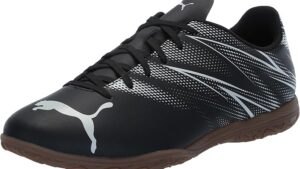
If the Spotlight Franchise doesn’t fit the bill, Dream Pairs youth football cleats offer an even more budget-friendly entry point, while PUMA Attacanto cleats work well if your player also plays soccer. And for the kid who needs basketball shoes too, the Under Armour Lockdown 7 delivers that same budget-meets-performance equation on the court.
Frequently Asked Questions
How does the Spotlight Franchise Rm 4.0 fit compared to Nike and Adidas cleats?
From my testing: these run narrow. The length is comparable to most brands, but the forefoot width is tighter than Nike Vapor Edge and noticeably tighter than Adidas Freak options. If you wear a 10 in Nike cleats, try a 10.5 in these. If you have wide feet, look for the wide version (model exists but isn’t widely marketed) or consider a different brand entirely.
What’s the fastest way to break in these cleats?
The break-in takes about 5-6 full practice sessions. To speed it up: wear them around the house for 30-60 minutes daily for a few days before your first practice. The mesh upper is what needs to soften — the sole stays firm throughout the shoe’s life. Skip the first eyelet near the top of the forefoot when lacing to give the toe box a bit more room during the adjustment period.
Can a player with wide feet make these work?
Probably not in the standard version — even sizing up won’t fix the width issue. But Under Armour makes a wide version of this exact cleat that’s worth tracking down. It’s listed at select retailers like Source for Sports in Canada and some US specialty shops. If the wide version isn’t available, look at other football shoes with more generous toe boxes.
How long will these last based on player weight?
My testing and community feedback suggest: under 140 lbs gets a full season plus some extra life. Players between 150-180 lbs can expect one solid season with proper rotation. Players over 200 lbs will see meaningful wear by week 8-10. Rotating with a second pair extends the lifespan of both significantly.
Are molded rubber cleats legal for all youth and high school leagues?
Yes. Molded rubber cleats are universally accepted across NFHS (National Federation of State High School Associations), Pop Warner, and virtually all organized youth football leagues. The only situations where cleat type gets restricted involve metal or detachable studs — molded rubber is always the safe bet.
Are these better for skill positions or linemen?
The lightweight design and reliable straight-line traction make these ideal for skill positions — running backs, receivers, defensive backs, and linebackers. Linemen can use them, but players over 250 lbs who need maximum lateral stability during blocking might benefit from a heavier cleat with more aggressive stud patterns and a higher cut. For off-field conditioning, a dedicated pair of running shoes alongside your game-day cleats is always a smart investment.
Is it worth upgrading from these to premium cleats?
Depends on the player’s level. For youth league and JV play, these deliver about 75% of the performance at roughly half the price of premium options. The jump to a $150+ cleat gets you better cushioning technology, wider fit options, and enhanced durability — differences that matter more at the varsity and competitive levels. If your player is still growing feet, save the premium investment for when their size stabilizes.
What’s the best way to maintain these cleats and extend their life?
After every practice and game: knock mud off the studs, wipe the upper with a damp cloth, and let them air dry in a ventilated area — never near direct heat. Stuffing newspaper inside helps absorb moisture and maintain the shape. If the mesh gets stained, a gentle scrub with mild soap works. Avoid walking on concrete or asphalt in them. Rotate with a second pair if your schedule is heavy. Replace when the studs are visibly worn flat or the upper starts separating from the sole.
My Final Take
After putting more miles on these cleats than most players will in two seasons, the Under Armour Spotlight Franchise Rm 4.0 earns its spot as one of the smartest budget picks in football footwear. The traction on grass is genuinely good, the weight keeps fatigue at bay, and the price makes it accessible for families juggling equipment costs across multiple kids and sports.
Just remember: size up, budget a week for break-in, and set your expectations appropriately. This isn’t a premium performance cleat — it’s a dependable workhorse that does exactly what a growing football player needs it to do.
Buy early in the pre-season to give yourself break-in time, and grab the wide version if fit is a concern.
Got a question about these cleats that I didn’t cover? Drop it in the comments — happy to help.
Be the first to review “Under Armour Mens Spotlight Franchise Rm 4.0”
Related products
Football Shoes
Football Shoes
Football Shoes
Football Shoes
Football Shoes
Football Shoes
Football Shoes
Football Shoes
Reviews
There are no reviews yet.