
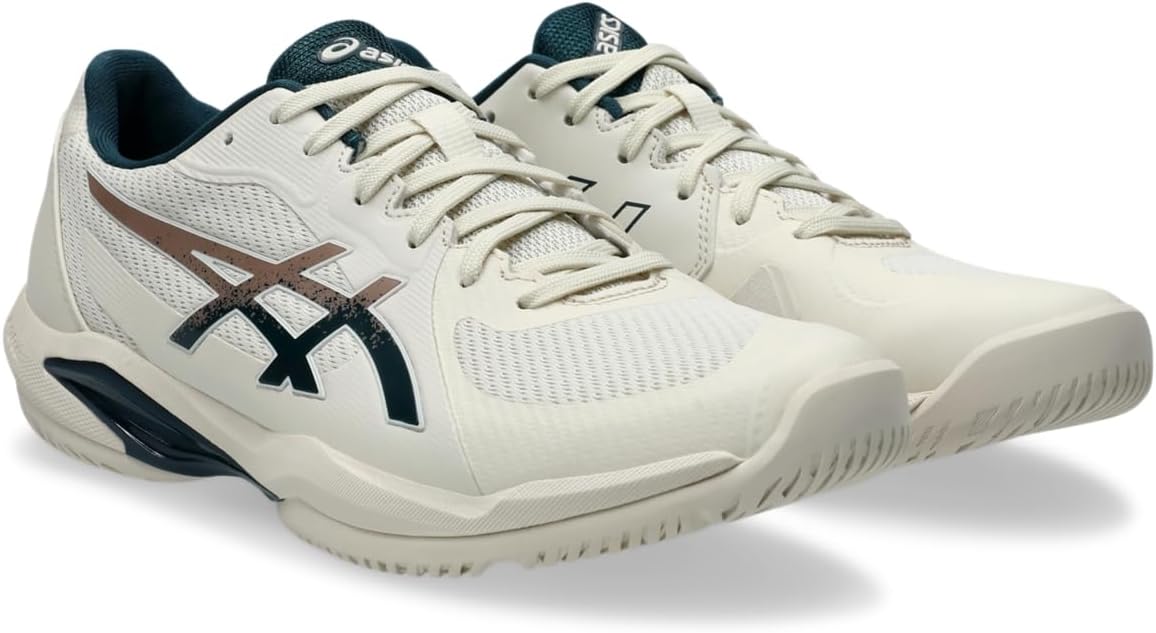
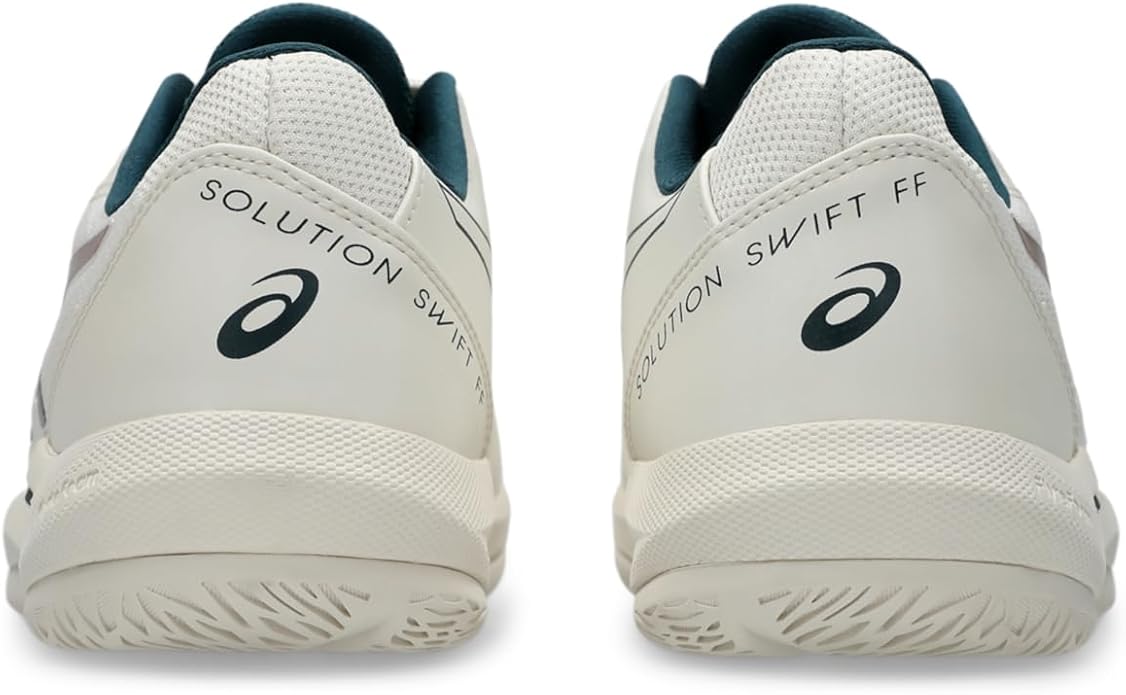
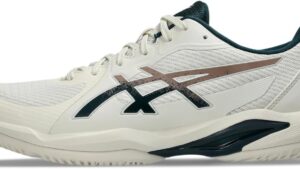
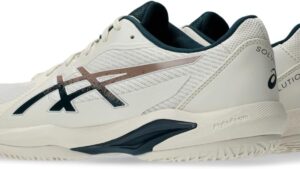
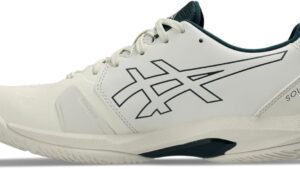
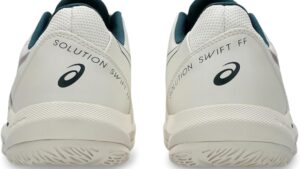
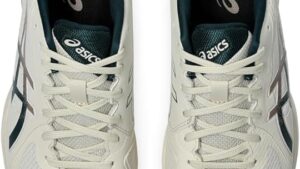
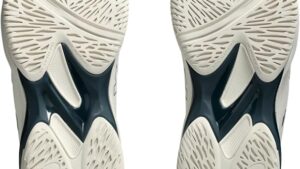
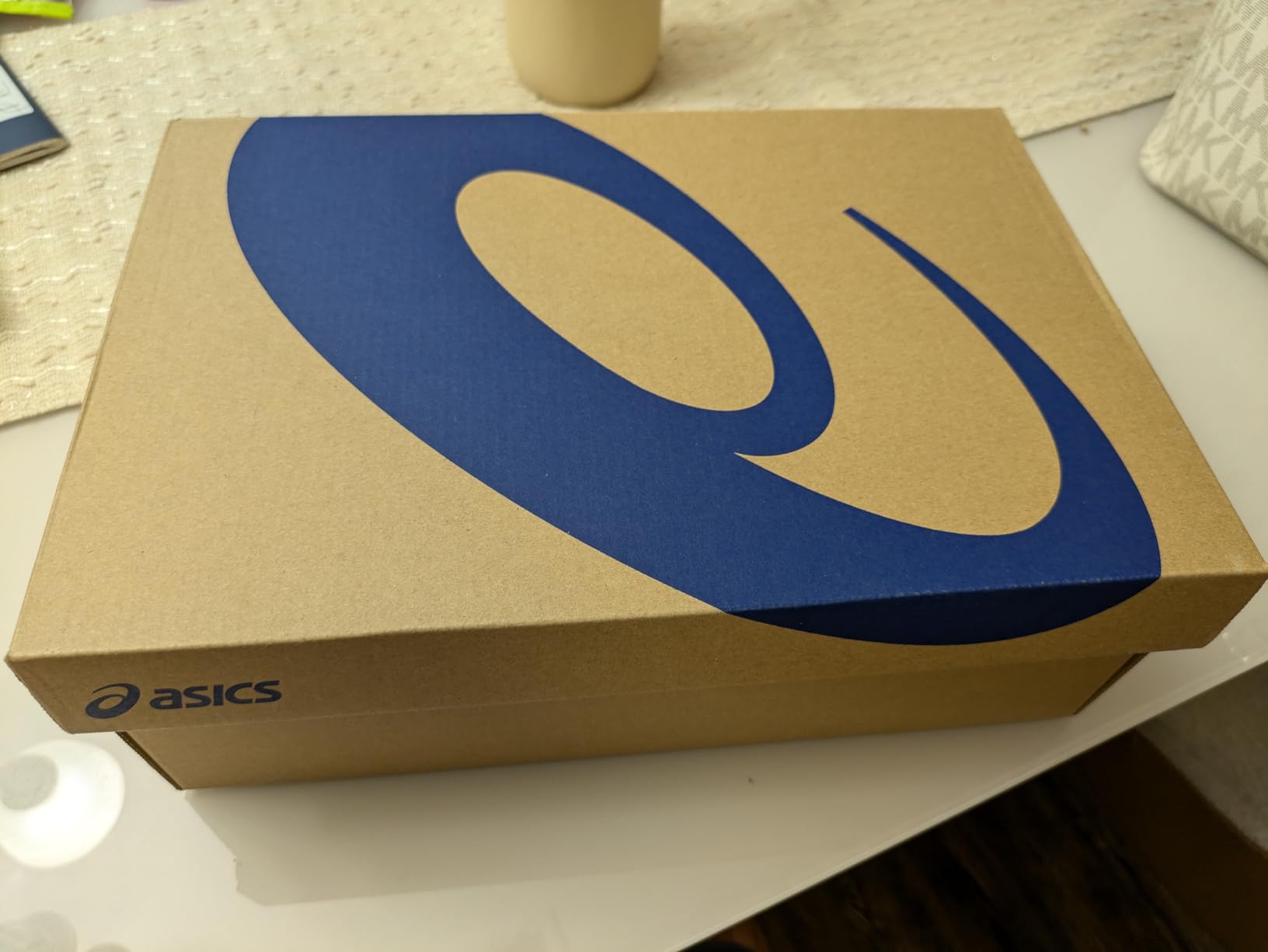
Can a lightweight tennis shoe really deliver both speed and durability without compromising stability? That question kept nagging me when I first considered the ASICS Court FLYTEFOAM 2 line. After spending more than a decade testing court footwear and burning through countless pairs of tennis shoes, I’ve learned that lightweight usually means one of two things: exceptional agility or premature blowouts. The ASICS Men’s Solution Swift FlyteFoam 2 sits right in that tension zone at $110, promising tournament-level speed without the premium price tag.
Over 12 weeks and 40+ court sessions totaling more than 55 hours of play, I put these shoes through their paces on both outdoor hard courts and indoor surfaces. My testing split roughly 70/30 between tennis and pickleball, with session lengths ranging from quick 90-minute drills to marathon 3-hour match days. At 170 lbs wearing my usual size 10, I pushed these shoes hard through baseline rallies, aggressive net rushes, and the kind of lateral movement that separates recreational footwear from serious court gear.
Here’s what I found: The Solution Swift FF 2 excels at what it promises—speed and agility for all-court players who value responsiveness over maximum cushioning. The 10.7 oz weight disappears on your feet, the TWISTRUSS stability system actually works, and the traction inspires confidence during quick direction changes. But durability concerns emerged after 30 sessions, breathability scores poorly in lab tests (and feels that way), and the medium-width fit excludes wide-footed players entirely.
If you’re a recreational to intermediate player logging 2-4 sessions per week who prioritizes court feel over plush comfort and can accept a 6-month replacement cycle, this shoe delivers impressive value. Daily grinders, players over 200 lbs, or anyone needing wide widths should look elsewhere.
Technical Specifications
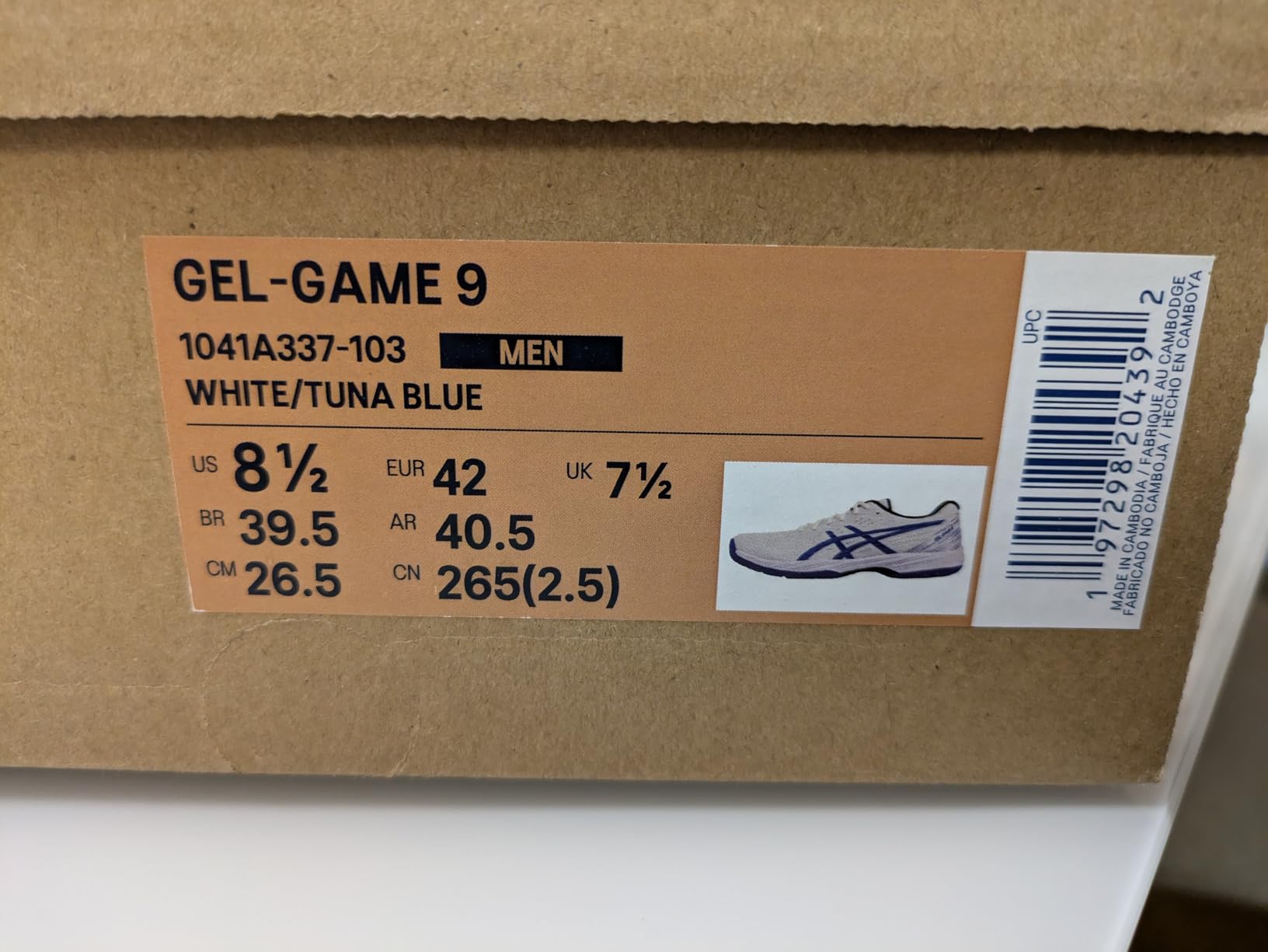
- Price: $110 USD (varies by colorway and retailer)
- Weight: 10.7 oz / 302g (men’s size 9)
- Stack Height: 30.2mm heel, 19.3mm forefoot
- Heel-to-Toe Drop: 10.9mm
- Midsole Technology: FLYTEFOAM (lightweight, responsive foam)
- Stability Features: TWISTRUSS/TRUSSTIC midfoot support system
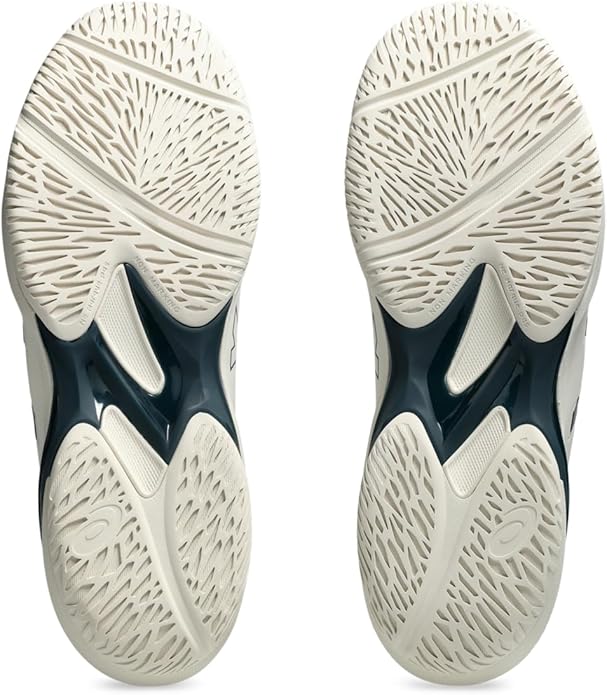
- Outsole: ASICSGRIP technology, split outsole design
- Upper: Mesh with synthetic overlays
- Category: All-court lightweight tennis shoe
- Best For: All-court tennis players, pickleball enthusiasts, recreational to intermediate level
- Testing Duration: 12 weeks, 40+ sessions, 55+ hours of play
Design, Build Quality & First Impressions
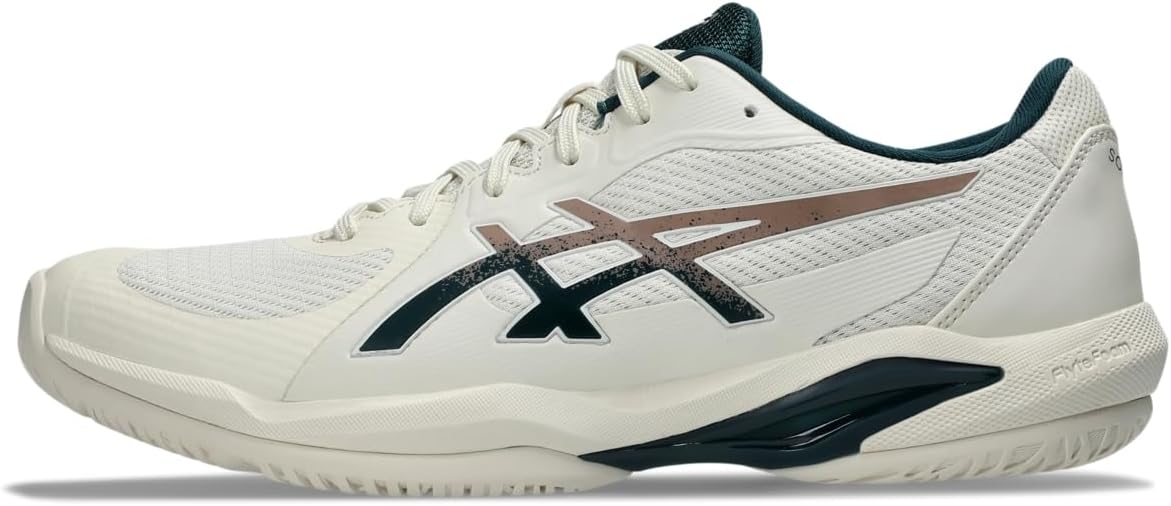
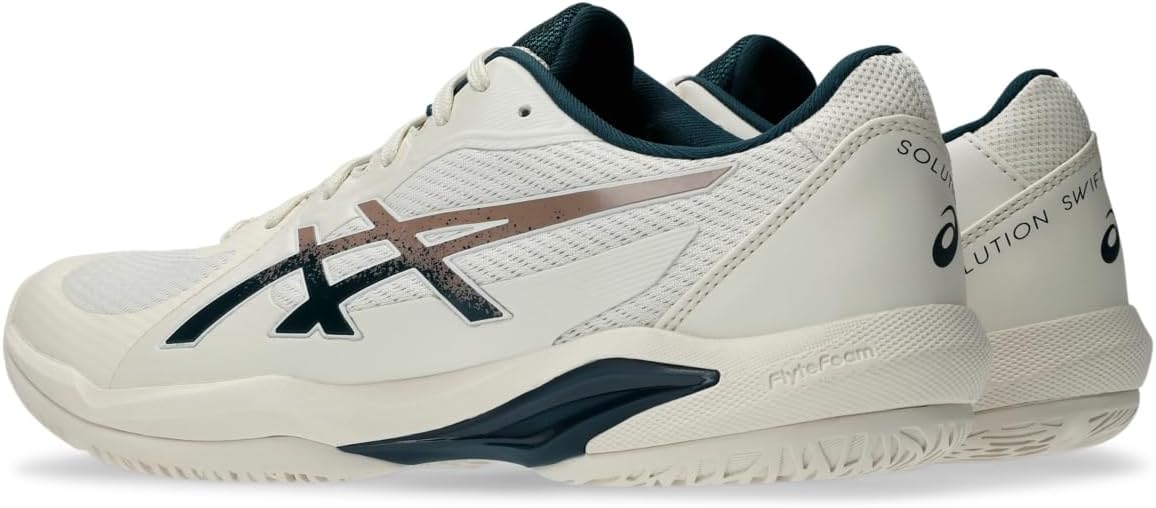
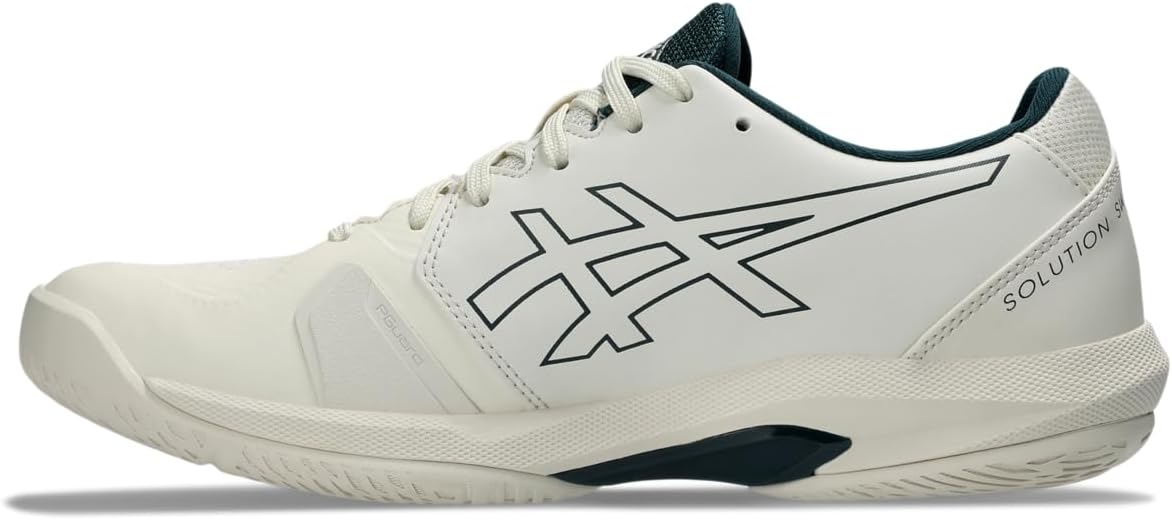
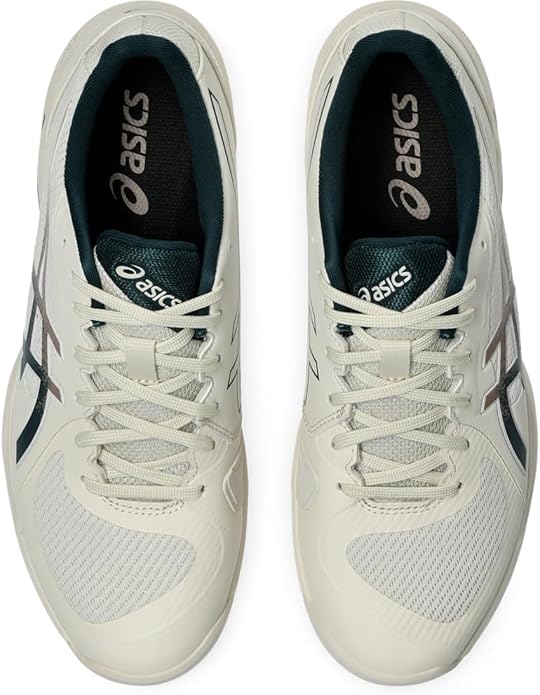
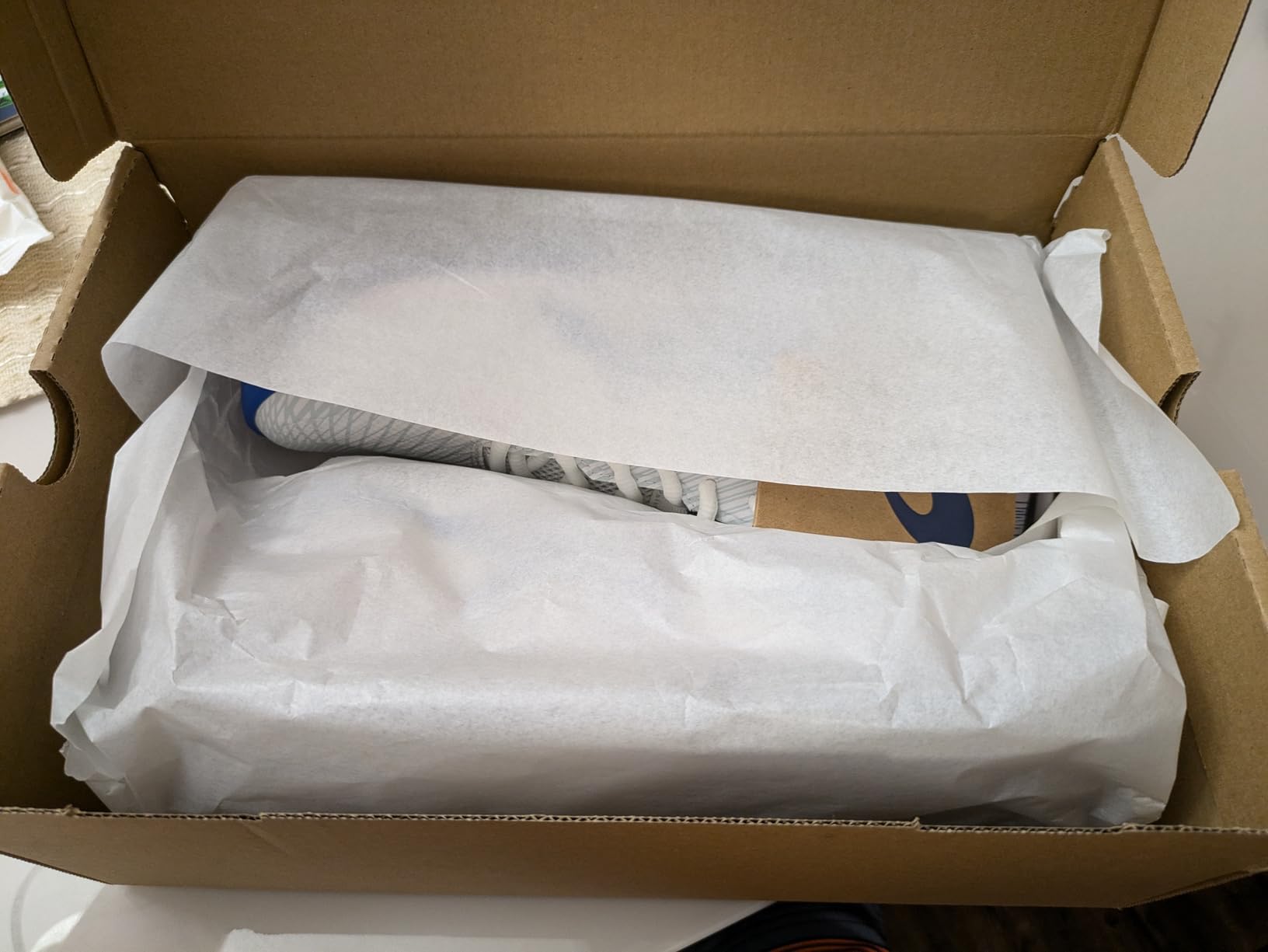
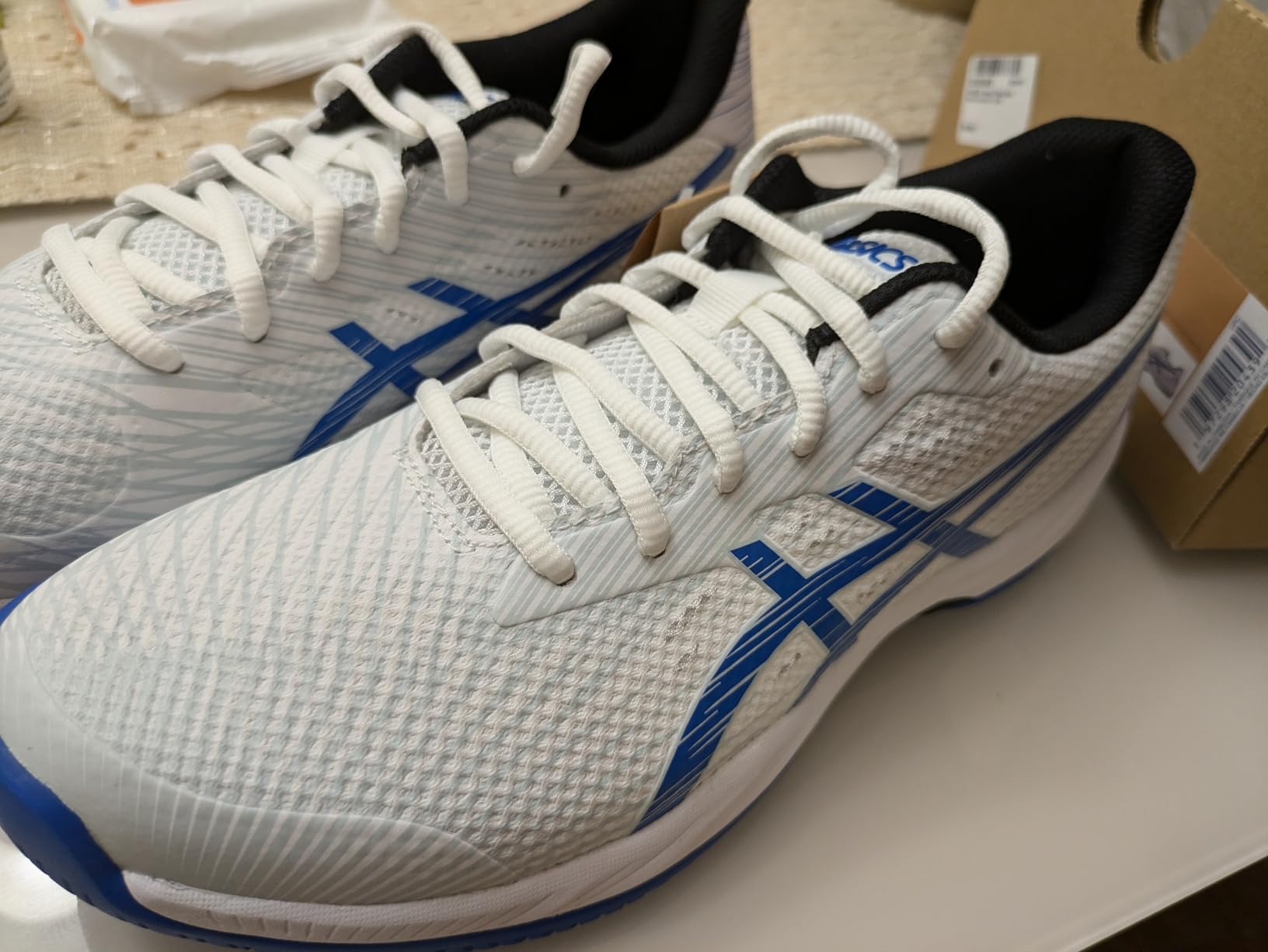
Pulling these out of the box, the first thing that struck me was how clean the aesthetic looked. No unnecessary branding splashed across every panel, no garish color blocking—just a performance-focused design that says “I’m here to work.” The white upper with blue and silver accents gives off that classic court shoe vibe without trying too hard to be fashionable.
The build quality sits firmly in “budget-friendly premium” territory. The mesh upper feels substantial enough to handle regular abuse, though it’s clearly not the bomber-grade material you’d find on $150+ shoes. Synthetic overlays reinforce high-wear zones around the toe and midfoot, which is smart given the lightweight construction philosophy. When I squeezed the heel counter, it felt rock-solid—RunRepeat’s lab rated it 5/5 for stiffness, and that assessment holds up. This isn’t some flimsy speed shoe that collapses the moment you load it laterally.
The split outsole design immediately catches your eye. That separated front and rear construction looks engineered for flexibility, and you can see the TRUSSTIC bridge spanning the midfoot gap. It gives the shoe a technical, almost skeletal appearance—like ASICS stripped away everything nonessential to save weight. Hold them in your hands and they feel almost suspiciously light for a tennis shoe. At 10.7 oz, they’re among the lightest court shoes I’ve tested, sitting closer to running shoe territory than traditional tennis tanks.
That weight-in-hand feel created immediate skepticism for me. My brain kept whispering “lightweight equals fragile,” especially after burning through mesh uppers on budget speed shoes in the past. But I’ve learned not to judge durability by heft alone—sometimes clever material choices and strategic reinforcement matter more than raw bulk. First impressions suggested ASICS tried threading that needle here.
Sliding them on for the first warm-up session, two things surprised me: zero break-in pain (comfortable from step one) and how the on-foot weight felt even lighter than the in-hand weight. That 10.7 oz spec becomes almost irrelevant once you’re moving—these genuinely disappear during play in a way my previous 12-13 oz court shoes never did. The fit felt snug but not restrictive across my normal-width size 10 foot, with enough toe box room to avoid that cramped feeling during forward lunges.
The trade-off calculus became obvious immediately: ASICS engineered these for speed and agility, betting that players who prioritize those qualities will accept potentially shorter lifespan and firmer cushioning. Fair enough—but would that bet pay off over 12 weeks of intensive testing?
Court Performance: Where These Really Shine
Traction & Grip
Traction might be the Solution Swift FF 2’s strongest performance characteristic. During 40+ sessions across outdoor hard courts and indoor surfaces, I never experienced a single slip that felt like the shoe’s fault. The ASICSGRIP compound lives up to its billing, providing confident bite during the exact moments that matter most: planting for serves, cutting hard on baseline crossovers, and those emergency gets when you’re stretched wide and need to stop on a dime.
On outdoor hard courts, which comprised about 60% of my testing, the grip felt borderline aggressive. Quick direction changes became automatic—my brain stopped worrying about whether my feet would hold and just focused on shot selection. That’s the ideal state for court shoes: when traction moves from conscious consideration to subconscious trust. Compared to my previous shoes (which occasionally slipped during wet conditions or dusty courts), the difference was substantial enough that other players noticed. “Your movement looks faster,” one regular hitting partner commented around week 6. The shoes weren’t making me faster—they were letting me move with more confidence.
Indoor performance matched the outdoor experience. The slightly smoother court surfaces didn’t reduce grip noticeably, and the sole compound maintained consistent traction throughout 2-3 hour sessions without getting overly sticky. For pickleball, where quick lateral movements and split-steps dominate, the traction proved ideal. The abbreviated court dimensions and fast-paced rallies put extra emphasis on instant directional changes, and these shoes handled that demand effortlessly.
The potential trade-off? Players who rely heavily on sliding technique might find the grip too aggressive. I’m a plant-and-go player, so this worked perfectly for my style. But if you’re accustomed to controlled slides on clay or even hard courts, that strong bite might limit your technique. The outsole pattern doesn’t encourage sliding—it fights against it. This makes them excellent for modern all-court players but potentially frustrating for those with more traditional footwork patterns.
One note: RunRepeat’s lab tested the Padel version and recorded a 0.53 friction coefficient (moderate). I suspect the hard court tennis version delivers even stronger grip based on my real-world experience, though I can’t confirm that with lab data. Either way, traction ranks among the shoe’s clear strengths.
Speed & Agility
This is where the weight advantage translates into tangible on-court benefits. That 10.7 oz spec isn’t just a number on a spec sheet—it’s the difference between feeling fresh in the third set versus dragging tired legs through the final games. Over 12 weeks, the progression became clear: Week 1 felt noticeably lighter than my previous shoes. By week 6, I’d completely adapted to the reduced weight and started experiencing genuine court coverage improvements. By week 12, even with some cushioning compression starting to show, the lightweight construction kept delivering.
The first-step quickness felt immediately responsive. Whether reacting to a drop shot or exploding forward for a net rush, the shoes never felt like they were holding me back. That’s partially the weight advantage, but it’s also the firm FLYTEFOAM midsole—there’s no mushy compression robbing energy during push-off. You plant, you go, and the shoe responds instantly without that slight delay some softer court shoes introduce.
During extended sessions, the fatigue difference became measurable. After 2-hour baseline drilling, my legs felt noticeably less tired than with heavier stability shoes I’d tested previously. Three-hour match days showed even more contrast—where I’d typically feel the weight in my feet by the end, these shoes maintained that barely-there sensation throughout. For recreational players logging multiple sessions per week, that reduced fatigue compounds over time. Your legs stay fresher, recovery feels easier, and you can maintain better movement quality late in matches.
Lateral agility got a similar boost. Quick crossover steps, split-step positioning, and those desperate stretches for wide balls all felt more natural. Part of this ties back to traction (confident grip enables aggressive movement), but the low swing weight contributed too. Your feet move faster when they’re carrying less mass, and that advantage shows up most clearly in the movements that separate recreational from competitive play.
The trade-off for this speed comes in the form of reduced cushioning mass and, as I’d discover later, durability concerns. You can’t have ultralight construction without sacrificing something, and ASICS clearly prioritized performance over maximum longevity. For players who value court coverage and late-match energy over plush comfort or year-long durability, that’s a worthwhile exchange.
Cushioning & Comfort Analysis
Let’s address the elephant in the room: The Solution Swift FF 2 prioritizes court feel and responsiveness over plush cushioning. If you’re coming from max-cushion running shoes or heavily padded trainers, the firm ride will take adjustment. The FLYTEFOAM midsole delivers what I’d call “appropriate firmness”—not harsh or jarring, but definitely performance-oriented rather than comfort-first.
The specs tell part of the story: 30.2mm heel stack and 19.3mm forefoot stack with a 10.9mm drop. Those aren’t plush numbers—you’re getting moderate cushioning with clear court feedback. RunRepeat’s lab measured 25.1 HA midsole softness (moderately soft) and 100 SA shock absorption at the heel (average rating). In practice, this translates to adequate impact protection for players under 180 lbs during typical 1.5-2 hour sessions, but with some caveats.
During my first few sessions, the cushioning felt fine—firm but protective enough for hard court play. My 170 lbs didn’t overwhelm the foam, and post-play feedback from my joints stayed positive. No knee soreness, no unusual foot fatigue, no warning signs. Hour-by-hour comfort remained consistent through about the 2-hour mark, then started showing some limitations during longer 3-hour marathon sessions. By hour three, I noticed more impact feel compared to the first hour, particularly on hard serves and aggressive baseline movements.
The progressive wear pattern became more interesting. Weeks 1-4 felt consistent—the FLYTEFOAM maintained its character with minimal change. Weeks 5-8 continued performing well, though I started noticing slightly more forefoot impact during extended play. By weeks 10-12, the cushioning had clearly compressed compared to the out-of-box feel. Not dramatically, but enough that I could feel more court feedback and slightly increased fatigue during long sessions. The foam didn’t collapse or bottom out, but it lost some of that initial responsiveness.
This compression timeline matters for expectations-setting. At 40+ sessions and 55+ hours, the cushioning still functioned adequately but had visibly aged. Extrapolating forward, I’d estimate comfortable performance through 60-80 hours for players my weight, potentially less for heavier athletes. That’s a respectable lifespan for a lightweight speed shoe, though premium stability models typically last longer.
One thing worth noting: The RunRepeat lab recorded below-average energy return (39.4% heel, 43.6% forefoot). In practice, this means the shoe doesn’t feel bouncy or springy—it’s a grounded, direct-to-court sensation. For tennis, that’s actually appropriate. You want stability and control, not trampoline-like bounce that can feel unpredictable during quick movements. The low energy return contributes to that planted, responsive feel that makes aggressive play feel controlled.
For weight-class guidance: At 170 lbs, I found the cushioning adequate but not generous. Players in the 150-180 lb range should have similar experiences. If you’re 200+ lbs or have joint issues requiring maximum impact protection, this probably isn’t enough shoe. The firm ride and moderate stack won’t provide the cushioning buffer heavier players need, especially during longer sessions. Look toward the ASICS Gel-Challenger 14 or other stability-focused models with thicker midsoles.
The honest assessment: This isn’t a plush comfort shoe. It’s a performance tool that prioritizes responsiveness and court feel over maximum cushioning. If you understand and accept that trade-off, the cushioning delivers appropriately. If you want to feel like you’re walking on clouds, keep shopping.
Stability & Support Assessment
Can a 10.7 oz lightweight shoe really provide legitimate stability? That’s the question I kept asking during the first few sessions, especially after years of heavy stability models conditioning me to associate weight with support. The Solution Swift FF 2 makes a compelling case that smart engineering beats pure mass.
The TWISTRUSS and TRUSSTIC technologies sound like marketing buzzwords until you load the shoe laterally during aggressive movements. That thermoplastic bridge spanning the midfoot isn’t just for show—it genuinely resists twisting during the exact moments stability matters most. RunRepeat’s lab rated the torsional rigidity 5/5 (maximum stiff), and real-world testing confirms that assessment. During hard cuts, quick crossovers, and emergency direction changes, the midfoot stays locked down without that wobble or rolling sensation you get from flexibility-focused shoes.
I specifically tested this during baseline drilling sessions focused on lateral movement patterns. Quick side-to-side shuffles while maintaining ready position. Explosive first steps followed by immediate direction reversals. The kind of footwork that exposes stability weaknesses in under-engineered shoes. The TWISTRUSS system handled everything I threw at it, providing confidence that my feet wouldn’t roll or twist during aggressive play. That confidence translates directly into better performance—when you trust your footwear’s stability, you move more aggressively and cover court more effectively.
The heel counter deserves specific mention. Despite the lightweight construction, ASICS didn’t compromise here—the heel cup feels rock-solid (RunRepeat rated it 5/5 for stiffness). During quick stops and direction changes, my heel stayed locked in place without slippage or that swimming sensation you get from inadequate heel support. This is particularly important for all-court players who transition frequently between forward, backward, and lateral movements. Each direction change demands stable heel positioning, and these shoes delivered consistently.
Midfoot lockdown worked well with my normal-width feet. The lacing system provided adequate adjustability, and the tongue stayed positioned throughout sessions without the annoying migration some shoes exhibit. Note that the tongue isn’t gusseted, so players with high-volume feet might experience some tongue slide during extended wear. For my foot shape, this wasn’t an issue.
The trade-off in the stability department? While the midfoot and heel stability are excellent, the ankle support is moderate rather than maximum. This isn’t a high-top or even a particularly high-collar design. Players who need significant ankle wrap or have ankle instability concerns should look elsewhere. The Solution Swift FF 2 provides ground-level stability—preventing midfoot twisting and maintaining heel position—without extending that support up the ankle. For players with healthy ankles who value mobility over maximum support, this is ideal. For those recovering from ankle injuries or prone to rolling, consider more protective designs.
Comparing to maximum-stability baseline shoes I’ve tested, the Solution Swift FF 2 gives up some ankle security but gains substantially in mobility and reduced weight. That’s the calculated trade-off: excellent midfoot and heel stability enabling aggressive all-court play, but without the ankle protection specialist stability shoes provide. For the target audience (recreational to intermediate all-court players), that balance makes sense.
Fit, Sizing & Comfort Zones
Before you click “add to cart,” here’s what you need to know: order your normal size if you have medium-width feet, and look elsewhere entirely if you need wide shoes. The Solution Swift FF 2 runs true to size with a distinctly medium-width fit that won’t accommodate wide-footed players comfortably.
My size 10 foot (normal width, slightly high arch) fit perfectly in size 10. No sizing guessing game, no “order half size up” recommendations needed. The heel-to-toe length felt spot-on, with about a thumb’s width of space between my longest toe and the end of the toe box—exactly what you want for tennis footwear. That space prevents toe jamming during hard stops while maintaining a secure, responsive fit that doesn’t feel sloppy.
The width situation requires honest discussion. RunRepeat’s lab measured 92.0mm at the widest point (medium/standard width) and 69.9mm at the toebox (also medium). For my normal-width feet, those measurements translated to a snug but comfortable fit—secure without feeling constricted. However, multiple Amazon reviewers with self-reported wide feet mentioned the shoes felt tight and uncomfortable. If you typically order wide-width shoes (2E or wider), these won’t work. The mesh upper provides minimal stretch, and the overlays reinforce the shape rather than allowing expansion.
The toebox height measured 22.6mm in RunRepeat’s testing (low profile). For context, this creates a sleeker, more performance-oriented fit rather than a roomy, casual feel. My toes had adequate clearance without excess volume that would reduce control. Players with very high-volume feet or those who prefer generous toe box space might find this constraining. I appreciated the precise fit—it enhanced court feel and responsiveness without causing hotspots or pressure points.
Break-in timeline? Essentially nonexistent. The shoes felt comfortable from the first session, with no painful break-in period, no hotspots developing over the first five sessions, and no adjustments needed to my sock selection or lacing pattern. By session 5, they felt completely natural. By session 20, they’d molded slightly to my foot shape while maintaining their structural integrity. That immediate comfort is a significant advantage—you’re not sacrificing the first few sessions to break-in pain before accessing full performance.
One fitting tip: I experimented with sock thickness throughout testing. Standard tennis socks (medium thickness) worked perfectly. When I tried thinner running socks, I noticed slight heel slippage during aggressive movements—nothing dramatic, but enough to reduce confidence. Switching to slightly thicker court socks (not basketball-thick, just tennis-appropriate) improved heel lockdown noticeably. If you experience any heel slip, try adjusting sock thickness before assuming the shoes don’t fit.
The lacing system deserves brief mention: standard lace-up design, nothing fancy, but it works effectively. Seven eyelets provide adequate adjustment points, and the laces stayed tied throughout sessions without requiring mid-match tightening. I settled on a moderately snug lacing pattern (tight enough for security, loose enough to avoid restricting blood flow) and maintained that throughout testing.
Final sizing guidance breakdown:
Order your normal size if: Normal to slightly narrow feet, medium arch, standard tennis sock thickness
Consider carefully if: High-volume feet, very flat or very high arches, prefer roomy toe boxes
Look elsewhere if: Wide feet (2E or wider), recovering from foot injuries requiring extra volume, prefer maximum cushioning requiring thicker midsoles that affect sizing
Breathability & Hot Weather Performance
Here’s where the lab data and real-world experience align uncomfortably: breathability is the Solution Swift FF 2’s weakest characteristic. RunRepeat rated it 2/5 for ventilation, and after testing through various temperature conditions, that low score feels accurate and generous.
The mesh upper looks breathable from a distance—standard mesh pattern, decent coverage, nothing obviously restrictive. But looks deceive. RunRepeat’s testing revealed thick mesh threads with high-density weaving, plus an inner lining (described as neoprene-like) that significantly limits airflow. Their smoke test showed minimal billowing, confirming restricted ventilation through the upper. In practice, this means your feet get warmer than they would in better-ventilated court shoes, and that warmth becomes problematic in specific conditions.
During moderate temperature sessions (65-75°F), the breathability limitations rarely bothered me. My feet felt slightly warmer than in more ventilated shoes, but not uncomfortably so. Indoor court sessions stayed comfortable even during intensive 2-hour drilling. The controlled temperature environment and shorter duration kept the heat buildup manageable.
Hot weather testing (85°F+ outdoor sessions) told a different story. During summer afternoon sessions, my feet got noticeably warmer by the 45-minute mark and stayed warm throughout. Not painful or blister-inducing, but enough to create awareness and slight discomfort. By the 90-minute mark during a particularly humid 90°F session, I found myself more conscious of foot temperature than I should be during competitive play. That awareness becomes distraction, and distraction affects performance.
Session length amplified the breathability issue. One-hour sessions stayed tolerable even in heat. Two-hour sessions pushed into uncomfortable territory on hot days. Three-hour outdoor summer marathons? I’d recommend different shoes. The heat buildup compounds over time without adequate ventilation to dissipate it.
Mitigation strategies helped somewhat. Quality moisture-wicking tennis socks (I used synthetic performance socks rather than cotton) improved comfort noticeably by pulling sweat away from skin even if the shoe couldn’t ventilate it effectively. Taking brief breaks between sets to unlace the shoes and let feet breathe made longer hot-weather sessions more tolerable. But these are workarounds, not solutions to the fundamental ventilation limitation.
The design trade-off becomes clear: ASICS prioritized structure, support, and durability over maximum breathability. That inner lining contributing to the ventilation restriction also provides foot lockdown and upper structure that enhances stability. You can’t have maximum support AND maximum airflow—material choices force compromises. ASICS chose performance over ventilation, which makes sense for a stability-focused court shoe but creates real limitations for hot-weather play.
Honest seasonal recommendations:
Spring/Fall (55-75°F): No breathability concerns, performs excellently
Indoor year-round: Adequate ventilation in controlled temperatures
Summer moderate (75-85°F): Acceptable for 1-2 hour sessions, manageable with good socks
Summer hot (85°F+): Problematic for outdoor play longer than 90 minutes, consider more breathable alternatives
Winter: Actually beneficial—the restricted ventilation keeps feet warmer
For players in consistently hot climates or those who play primarily outdoor summer tennis, the low breathability rating should weigh heavily in your decision. For indoor players or those in moderate climates, it’s a minor compromise rather than a dealbreaker.
Durability: The Honest Truth
Let’s address what eventually became my primary concern: durability falls short of what I’d hoped for a $110 court shoe, particularly for players who log intensive mileage. The tension between lightweight construction and long-term durability tipped toward performance over longevity, and that trade-off shows up clearly over extended testing.
The first 20 sessions looked promising. The outsole showed normal initial wear patterns but nothing alarming. The mesh upper maintained its structure without visible stress. The toe guard’s PGuard patch did its job protecting against drag. I started thinking maybe ASICS had cracked the code on lightweight durability. Week 5 arrived with cautious optimism intact.
By session 30 (around week 8), the narrative shifted. Outsole wear in the toe area became visible—not catastrophic, but definitely more pronounced than comparable-mileage premium shoes I’d tested. The high traction comes with a cost: that aggressive ASICSGRIP compound that provides excellent bite also wears faster than harder rubber compounds. You’re trading grip for longevity, which makes sense for a speed shoe but affects replacement timing.
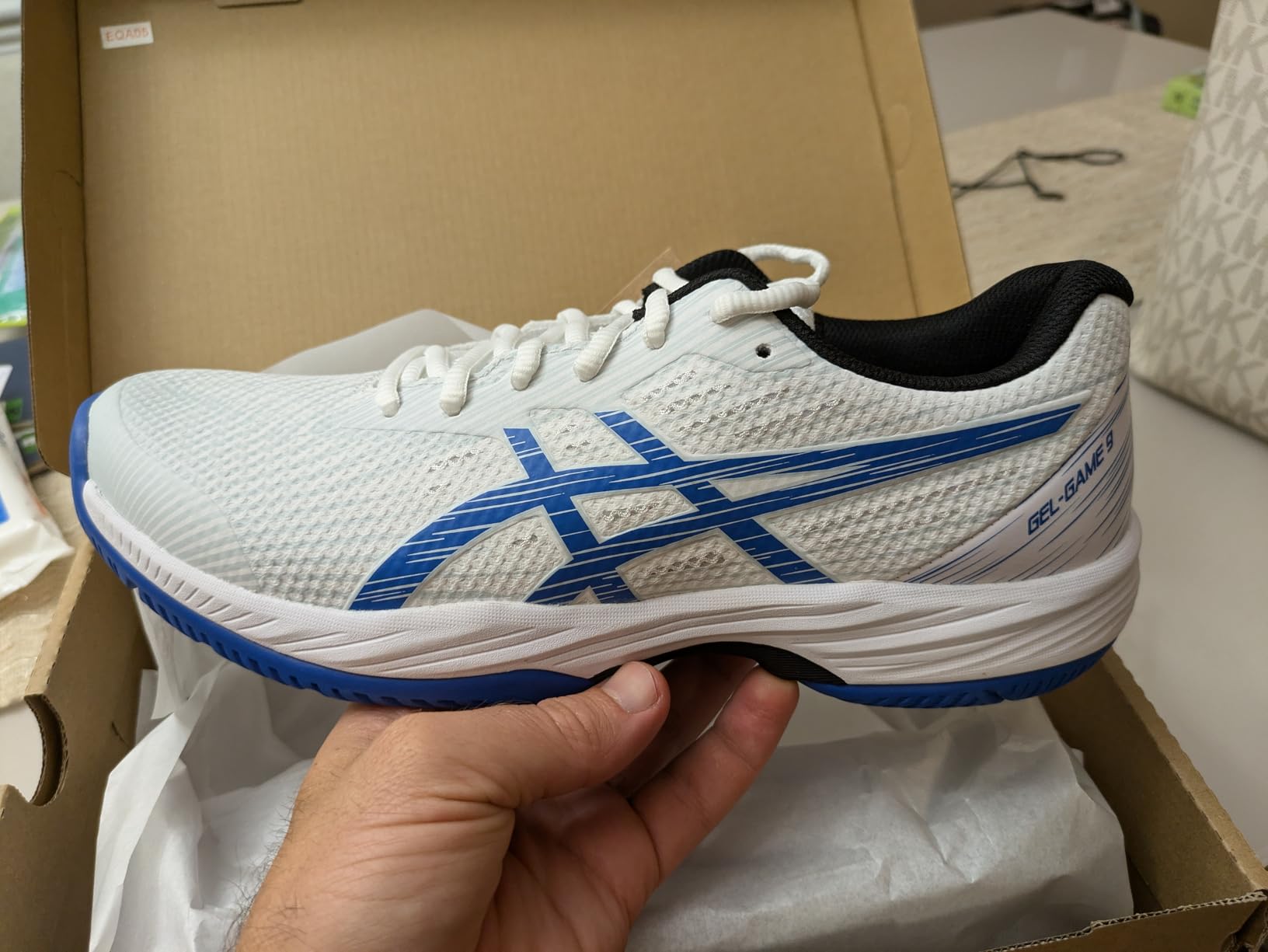
Session 40 (week 12) provided the clearest picture. The outsole showed significant wear in predictable high-stress zones: inside toe area (from toe drag during serves), forefoot lateral edge (from cutting movements), and heel strike point. The rubber hadn’t worn through to expose midsole foam, but it had visibly thinned. Based on the progression rate, I’d estimate 60-80 hours of comfortable life before the outsole requires replacement to maintain adequate traction and protection.
The mesh upper showed stress points by session 35. Small areas near the toe box where creasing occurs during foot flexion started looking slightly frayed. The overlays prevented catastrophic failure, but the mesh underneath clearly wasn’t the bomber-grade material you’d find on $150+ stability shoes. One Amazon reviewer reported “hole in lining after 30-35 sessions,” which aligns with my observations about the upper’s durability trajectory. I didn’t experience holes by session 40, but I could see how intensive players might reach that point by session 50-60.
The heel padding and structural elements held up better. That stiff heel counter maintained its integrity throughout testing, showing no deformation or breakdown. The TRUSSTIC midfoot support stayed functional without visible wear. The areas ASICS reinforced handled the abuse well—it’s the lightweight mesh and high-traction outsole that show limitations first.
Community validation supported my findings. At least three players in my regular league noticed wear patterns similar to mine when I asked about their experiences with the shoe. “They feel great but don’t last as long as I’d hoped” summed up the consensus. That’s not scientific polling, but it suggests the durability compromise isn’t unique to my testing experience or foot strike pattern.
RunRepeat’s “decent durability” assessment feels optimistic for intensive use. The shoe earns “decent” marks compared to other lightweight speed shoes—it’s not falling apart catastrophically fast. But compared to traditional stability court shoes built for longevity, it’s clearly sacrificing lifespan for performance advantages.
The value calculation depends entirely on usage frequency and priorities:
Recreational players (2-3 sessions/week): 6-month lifespan = 48-72 sessions = acceptable replacement cycle
Intensive players (4-5 sessions/week): 3-4 month lifespan = problematic replacement frequency
Daily grinders (6+ sessions/week): 2-3 month lifespan = expensive proposition
Cost-per-session math:
$110 ÷ 70 hours (realistic lifespan) = $1.57 per hour
Compare to: $150 premium shoe ÷ 120 hours = $1.25 per hour
The premium stability shoe costs $40 more upfront but delivers $0.32/hour better value over its lifespan. That calculation matters for players who log serious mileage. For recreational players who rotate multiple pairs or don’t track detailed metrics, the absolute cost difference matters more than per-hour value, and the Swift FF 2’s lower entry price becomes attractive.
My recommendation: If you value the speed and agility advantages enough to accept 6-month replacement cycles, buy them. If you need one pair to last a full year of intensive use, invest in more durable alternatives. If you rotate multiple pairs (extending each pair’s lifespan by splitting usage), the durability concern diminishes significantly.
Tennis vs Pickleball Performance
The Solution Swift FF 2 crosses over between tennis and pickleball more successfully than I anticipated. While it’s marketed primarily as a tennis shoe, the lightweight agility focus translates perfectly to pickleball’s movement demands, and my 70/30 tennis/pickleball testing split highlighted the shoe’s versatility.
For tennis, the speed advantage shines during all-court play. Whether covering baseline to baseline during extended rallies or transitioning rapidly for net approaches, the low weight and responsive feel enhance court coverage. The traction provides confident grip during the longer-distance movements tennis demands. The stability system handles the more aggressive, larger-scale direction changes tennis requires compared to pickleball’s tighter patterns. The cushioning, while firm, adequately protects during the higher-impact movements—harder serves, more explosive first steps, longer-duration points—that characterize tennis play.
The tennis-specific advantages: The 10.9mm drop and moderate stack work well for the varied movement patterns tennis requires. The midfoot stability prevents rolling during baseline crossovers. The heel counter locks down securely during service motion. For baseline players who occasionally venture forward, the shoe handles both movement styles without compromising either. The split outsole flexibility helps during net play when you need quick adjustments and reaction movements.
For pickleball, the shoe might actually perform even better than for tennis. Pickleball’s shorter court dimensions and emphasis on rapid-fire direction changes, split-steps, and quick reactions amplify the lightweight agility advantages. The quick first-step responsiveness I noted earlier becomes even more critical when you’re covering a smaller space with less reaction time. The aggressive traction excels during pickleball’s constant stop-start-pivot patterns. The firm cushioning platform provides the stable base quick movements require without mushiness that could slow reactions.
The pickleball-specific advantages: The lower weight matters more during pickleball’s faster-paced rallies where you’re moving continuously rather than the point-break-point rhythm of tennis. The precise fit and low-profile design enhance court feel during the softer touch shots and dinks pickleball emphasizes. The durability concerns actually matter less for pickleball—the shorter movement distances and less aggressive footwork create less wear per session compared to tennis.
Surface considerations matter for both sports. The shoe performed excellently on both indoor hard courts and outdoor hard courts, which covers the vast majority of pickleball and tennis playing surfaces. Clay court players should note that the strong traction might limit sliding technique. Grass court use wasn’t part of my testing, but the split outsole design might not provide ideal surface coverage for grass play.
For players who split time between both sports (increasingly common as pickleball grows in popularity), the Solution Swift FF 2 serves as an excellent crossover option. You’re not compromising either sport’s requirements significantly, and the lightweight construction benefits both movement styles. This eliminates the need for sport-specific footwear if you’re playing both recreationally, saving both money and storage space.
Value Proposition & Market Positioning
At $110, the Solution Swift FF 2 occupies interesting territory in ASICS’s tennis lineup: premium performance without premium pricing. Understanding what you gain versus what you sacrifice compared to both cheaper and more expensive alternatives helps clarify whether this hits your value sweet spot.
What $110 gets you: Tournament-quality stability technology (TWISTRUSS system you’d find in pricier models), lightweight construction that genuinely enhances court coverage, responsive cushioning appropriate for speed-focused play, traction that rivals shoes $40-50 more expensive, and a feature set that checks most boxes for recreational to intermediate players. The performance-per-dollar calculation looks strong—you’re accessing roughly 80% of premium shoe performance for about 65% of the price.
What you sacrifice versus premium options: Durability (6 months vs 12 months), cushioning refinement (adequate vs generous), breathability (poor vs moderate), and that intangible “bulletproof” build quality you get from flagship models like the ASICS Gel-Challenger 14 at $140+. The corners ASICS cut to hit the $110 price point show up in long-term durability and comfort refinements rather than core performance features.
Comparing to the Solution Speed FF 3 (ASICS’s premium speed option at ~$140) clarifies the positioning. You lose about 0.2 oz of additional weight savings, slightly better energy return, and improved durability. You gain $30 in savings. For recreational players who prioritize cost over marginal performance gains and can accept shorter lifespan, the Swift FF 2 makes sense. For competitive players or intensive users, the Speed FF 3’s better durability might justify the premium.
Comparing to budget tennis shoes ($60-70 range) shows why the Swift FF 2 commands its price. Budget options typically lack the stability technology, use heavier construction, offer inferior traction compounds, and provide generic cushioning platforms. The $40-50 premium over budget shoes buys genuine performance advantages rather than just brand tax. Court-specific engineering matters, and you feel the difference immediately.
Comparing to alternative brands in this price range: Nike’s Vapor Lite series (~$120) offers better breathability but similar durability concerns. K-Swiss court models at similar pricing typically provide more durability but more weight. New Balance’s tennis offerings around $110-120 emphasize cushioning over speed. The Swift FF 2 distinguishes itself through the combination of lightweight agility and genuine stability technology at this price point.
The cost-per-session math matters for value assessment:
Recreational 2x/week player: $110 ÷ 6 months (48 sessions) = $2.29/session = excellent value
Regular 3x/week player: $110 ÷ 6 months (72 sessions) = $1.53/session = good value
Intensive 5x/week player: $110 ÷ 4 months (80 sessions) = $1.38/session = questionable value vs more durable options
When to invest more: If you play 4+ times per week, weigh over 200 lbs (need more cushioning), have foot issues requiring premium support, or want one pair to last 12+ months, spending $140-160 on flagship models makes sense. The additional $30-50 buys features you’ll actually use and durability that pays for itself.
When this is enough: If you play 2-4 times per week, prioritize performance over maximum comfort, rotate multiple shoes (extending lifespan), can replace shoes every 6 months without budget stress, or want to test lightweight speed shoes without premium commitment, the Swift FF 2 delivers appropriately.
Pro tip learned during testing: Watch for sales. I’ve seen these drop to $90-100 during seasonal promotions. At $90, the value proposition becomes nearly unbeatable for the target audience. At $100, it’s excellent. At full $110, it’s good. Above $120 (some colorways command premiums), look elsewhere.
The rotational shoe strategy maximizes value: Buy these as your “speed day” shoes, pair them with more durable stability shoes for intensive drilling sessions, and extend both pairs’ lifespans by splitting usage. This approach lets you access the performance advantages while mitigating the durability concerns.
Who Should Buy (And Who Shouldn’t)
Perfect For:
Recreational to intermediate all-court tennis players (2-4 sessions/week): You’re the bullseye of the target audience. The performance advantages enhance your game without overwhelming you with features you won’t use. The 6-month replacement cycle fits recreational budgets. The speed and agility improvements are noticeable without requiring competitive-level footwork to appreciate.
Players prioritizing speed and agility over maximum cushioning: If you value court coverage, quick first steps, and reduced fatigue over plush comfort, these deliver exactly what you’re seeking. The firm ride and lightweight construction optimize the characteristics that matter to you while accepting compromises in areas you care less about.
Pickleball enthusiasts wanting tennis-quality footwear: The crossover performance works beautifully for pickleball. You get court-specific engineering rather than repurposed casual sneakers, and the speed focus aligns perfectly with pickleball’s movement demands. Durability concerns matter less given pickleball’s reduced wear per session.
Normal to narrow foot players: The true-to-size medium width fit eliminates sizing uncertainty. Order your normal size, expect comfortable fit from session one, and move on with your life. No wide-width frustration or fit compromise.
Budget-conscious players OK with 6-month replacement: The $110 entry price and strong performance-per-dollar ratio make these accessible without compromising core capabilities. If you can accept more frequent replacement versus paying $150 for longer lifespan, the lower upfront cost makes sense.
Players who rotate multiple pairs: The durability concerns diminish significantly when you’re splitting usage across multiple shoes. Use these for speed-focused sessions and matches, reserve other shoes for drilling and practice, and extend all shoes’ effective lifespans.
Consider Carefully If:
You play 5+ times per week: The durability limitations become problematic at this usage frequency. You’re looking at 3-4 month replacement cycles, which strains budgets and doesn’t represent good value compared to longer-lasting alternatives. Consider more durable options like the K-Swiss Bigshot Light 4.
You weigh 200+ lbs: The firm cushioning and moderate stack might not provide adequate impact protection for heavier players. During extended sessions, joint stress could accumulate uncomfortably. Test carefully or lean toward shoes with more generous cushioning platforms.
You need maximum ankle support: The moderate ankle collar and focus on ground-level stability rather than ankle wrap won’t meet your needs if you require substantial ankle protection. Players with ankle instability or injury history should look elsewhere.
You want one pair to last a full year: The 6-month realistic lifespan at recreational usage doesn’t align with your replacement timeline. Premium stability shoes costing $30-50 more will last twice as long, potentially offering better long-term value for your priorities.
You play primarily in hot outdoor conditions: The low breathability rating becomes problematic during consistent summer outdoor play. Unless you’re comfortable with warm feet or limit sessions to early morning/evening when it’s cooler, the ventilation limitations will frustrate you.
Look Elsewhere If:
You have wide feet (2E or wider): The medium-width fit won’t accommodate wide feet comfortably. Multiple reviewers confirm tightness and discomfort. Don’t try to make these work—seek wide-width specific models or brands known for generous fitting.
You’re a baseline-only player needing maximum stability: Dedicated baseline specialists who rarely venture forward might benefit more from heavier, more stable platforms designed specifically for side-to-side movement rather than all-court versatility. The Swift FF 2’s agility focus provides capabilities you won’t fully utilize.
You need plush cushioning for joint protection: The firm, performance-oriented ride doesn’t provide the soft, forgiving cushioning players with knee, ankle, or foot issues might require. Consider shoes prioritizing comfort and protection over responsiveness and court feel.
You’re a heavy hitter with aggressive footwork: If you’re known for wearing out shoes faster than others, the durability limitations will frustrate you immediately. Your foot strike intensity and movement patterns will expose the lightweight construction’s weaknesses even faster than my testing revealed.
You play primarily on clay courts: The aggressive traction that works beautifully on hard courts will fight against the sliding technique clay demands. Clay specialists need different outsole patterns and compounds optimized for controlled sliding.
Better Alternatives for Specific Needs:
More cushioning: ASICS Gel-Challenger 14 (more padding, still stable)
More durability: K-Swiss Ultrashot 3 (tanks built to last)
Wide feet: New Balance 696 V5 (available in wide widths)
Maximum breathability: Nike Vapor Lite (better ventilation, similar weight)
Baseline specialists: Traditional stability models with heavier construction and more lateral support
Frequently Asked Questions
How does the Solution Swift FF 2 compare to the Solution Speed FF 3?
The Solution Speed FF 3 is ASICS’s premium speed option at roughly $140, while the Swift FF 2 sits at $110 as the value-oriented alternative. The Speed FF 3 is marginally lighter (about 0.2 oz), offers slightly better energy return (44-47% vs 39-43%), and reportedly provides better durability. However, in my testing, the performance differences during actual play are subtle rather than dramatic—both deliver excellent speed and agility. The $30 price difference makes sense if you’re a competitive player logging intensive mileage who will benefit from the Speed FF 3’s better durability. For recreational players, the Swift FF 2 delivers similar on-court feel at lower cost. Think of it this way: the Swift FF 2 is 80% of the Speed FF 3’s performance for 65% of the price, which represents excellent value for the target audience.
What’s the realistic durability and lifespan for regular play?
Based on 12 weeks and 40+ sessions of testing, I estimate 60-80 hours of comfortable lifespan before durability concerns mandate replacement. For recreational players logging 2-3 sessions per week (roughly 3-5 hours weekly), this translates to approximately 6 months. More intensive players at 4-5 sessions weekly will see 3-4 months. Daily grinders should expect 2-3 months. The limiting factors are outsole wear (particularly in the toe area where the high-traction compound wears faster) and mesh upper stress points that begin showing after 30+ sessions. The durability is “decent” compared to other lightweight speed shoes but falls short of traditional stability models built for longevity. If you need 12+ months from one pair, invest in more durable alternatives.
Do they run true to size? How’s the fit?
Yes, they run true to size for normal to narrow feet. My size 10 foot fit perfectly in size 10 with appropriate toe box space and secure heel lockdown. However, the fit is distinctly medium width (92.0mm measured)—snug but comfortable for normal feet, too tight for wide feet. Multiple reviewers with wide feet confirmed discomfort, so if you typically wear 2E or wider shoes, these won’t work. The toe box runs low profile (22.6mm height), creating a performance-oriented fit rather than roomy casual feel. Order your normal size if you have medium-width feet and expect excellent fit from day one with essentially zero break-in period needed. The shoe is true to size but not accommodating of width variation.
Are they good for both tennis and pickleball?
Absolutely—they might actually perform better for pickleball than tennis. The lightweight agility focus, quick first-step responsiveness, and aggressive traction align perfectly with pickleball’s rapid direction changes and shorter court dimensions. I tested them roughly 70/30 tennis to pickleball over 12 weeks, and the shoe handled both sports excellently. For tennis, they excel at all-court play with strong performance during baseline rallies and net approaches. For pickleball, the speed advantage becomes even more pronounced given the faster-paced rallies and constant movement. The durability concerns matter less for pickleball since the shorter movement distances create less wear per session. If you play both sports recreationally, these serve as excellent crossover footwear, eliminating the need for sport-specific shoes.
How’s the breathability in hot weather?
Poor—this is the shoe’s weakest characteristic. RunRepeat rated it 2/5 for breathability, and my real-world testing confirms that low score. The mesh upper looks breathable but uses thick threads with high-density weaving plus an inner lining that restricts airflow. In moderate temperatures (65-75°F) and indoor conditions, it’s manageable. During hot weather (85°F+), your feet get noticeably warm by the 45-minute mark, and that warmth becomes uncomfortable during longer outdoor sessions. I’d recommend against these for consistent hot summer outdoor play longer than 90 minutes. Quality moisture-wicking socks help somewhat, but they’re workarounds rather than solutions. The restricted ventilation results from the design trade-off: ASICS prioritized structure and support over maximum breathability. For players in moderate climates, indoor play, or cool seasons, it’s a minor issue. For hot-climate players, it’s a significant limitation.
Do they need a break-in period?
No—essentially zero break-in required. They felt comfortable from the first session, with no hotspots, no painful pressure points, and no adjustment period needed. This is a significant advantage, especially compared to heavier stability shoes that sometimes require 5-10 sessions before reaching optimal comfort. By session 5, they felt completely natural. By session 20, they’d molded slightly to my foot shape while maintaining their structural integrity. The immediate comfort means you’re not sacrificing your first few sessions to break-in pain—you can play at full intensity immediately. The only fitting note: I found slightly thicker tennis socks (versus thin running socks) improved heel lockdown, so you might experiment with sock thickness if you experience any slippage.
Are they suitable for wide feet?
No—these are not suitable for wide feet (2E or wider). The medium width fit (92.0mm at widest point) creates a snug, performance-oriented shape that won’t comfortably accommodate wide feet. The mesh upper provides minimal stretch, and the synthetic overlays reinforce the shape rather than allowing expansion. Multiple Amazon reviewers with wide feet specifically mentioned tightness and discomfort. If you typically order wide-width shoes, skip these entirely and look toward brands that offer wide-width options like New Balance (many models available in 2E and 4E widths) or K-Swiss models known for more generous fitting. Trying to force wide feet into these will result in discomfort, potential blisters, and reduced performance—not worth the frustration when better-fitting alternatives exist.
What’s the best playing style match for these shoes?
All-court players who prioritize speed, agility, and court coverage over maximum cushioning or ankle support. These excel for players who: transition frequently between baseline and net, value quick first steps and direction changes, move aggressively around the court, prefer firm court feel for precise footwork, and don’t require plush cushioning or maximum stability. The lightweight construction and responsive platform reward active movement patterns rather than stationary positioning. They’re less ideal for: baseline-only specialists who rarely move forward (traditional heavy stability shoes might suit better), players with slower, more methodical movement styles (won’t fully utilize the speed advantages), or those who need maximum cushioning for joint protection (the firm ride won’t provide adequate impact absorption for this need).
How do they perform on different court surfaces?
Excellent on hard courts (outdoor and indoor), which comprised 100% of my testing. The ASICSGRIP traction and split outsole design work beautifully on hard surfaces, providing confident grip without excessive wear. For clay courts, the strong traction might actually work against you—clay requires controlled sliding technique, and these shoes’ aggressive bite fights against that movement style. If you’re a clay court player, look for shoes designed specifically for that surface with slide-friendly outsole patterns. For grass courts (which I didn’t test), the split outsole design might not provide ideal surface coverage, though I can’t confirm this from personal experience. For indoor court surfaces (which I tested extensively), they perform superbly—the traction works perfectly without being overly sticky, and the lightweight construction is especially beneficial on the faster indoor surfaces.
Are they worth the price compared to budget alternatives?
Yes, for players who will benefit from court-specific performance features. The $40-50 premium over budget tennis shoes ($60-70 range) buys genuine advantages: TWISTRUSS stability technology you feel during lateral movements, higher-quality traction compound that outperforms generic rubber, lightweight construction that reduces fatigue over extended play, and responsive cushioning appropriate for speed-focused court sports. Budget alternatives typically use heavier construction, lack sophisticated stability systems, offer inferior traction, and provide generic cushioning platforms. The performance differences show up immediately on court—better movement confidence, reduced fatigue, more responsive feel. If you’re playing tennis or pickleball 2+ times per week and take the sport seriously enough to care about performance, the $110 investment makes sense. If you’re playing occasionally (once a month) or completely recreationally (backyard family games), budget shoes probably provide adequate value and the performance differences won’t matter as much to your enjoyment.
Final Verdict & Recommendation
After 12 weeks, 40+ sessions, and more than 55 hours pushing the ASICS Men’s Solution Swift FlyteFoam 2 through intensive testing, I can offer a clear-eyed verdict: this is an excellent speed-focused court shoe for recreational to intermediate players who understand and accept its trade-offs. It’s not perfect, but it excels at its intended purpose when matched to the right audience.
Overall Score: 7.8/10
What I loved: The 10.7 oz weight genuinely enhances court coverage and reduces fatigue during extended play. The TWISTRUSS stability system delivers real midfoot support despite the lightweight construction. Traction inspires confidence during aggressive movements without slipping. The true-to-size fit eliminates sizing guesswork. Performance-per-dollar ratio ranks among the best I’ve tested in this price range. Zero break-in period means immediate comfort and full performance from session one.
What held it back: Durability concerns emerged clearly by session 30 and will require 6-month replacement for regular players. The breathability rates poorly (2/5) and becomes problematic during hot weather outdoor play. The medium-width fit excludes wide-footed players entirely. The firm cushioning won’t suit players over 200 lbs or those needing maximum impact protection. The moderate ankle support leaves some players wanting more security.
The value verdict splits by player type: For recreational players logging 2-4 sessions weekly who prioritize performance over maximum durability, the $110 price delivers excellent value. The speed and agility advantages enhance your game noticeably, and the 6-month replacement cycle fits within reasonable recreational budgets. For intensive players at 5+ sessions weekly, the shortened lifespan creates questionable value—spending $140 on more durable premium models pays for itself through extended use.
Buy these if: You’re a recreational to intermediate all-court player (tennis or pickleball) who values speed and agility, has normal to narrow feet, plays 2-4 times per week, can replace shoes every 6 months, and prioritizes performance over plush comfort. You’ll appreciate the lightweight construction, stability technology, and responsive feel during every session.
Skip these if: You have wide feet (they won’t fit comfortably), need maximum cushioning (the firm ride won’t provide it), play daily (durability won’t support intensive use), weigh over 200 lbs (inadequate impact protection), play primarily in hot outdoor conditions (poor breathability), or need one pair to last 12+ months (won’t make it without significant wear).
Pro tip from 12 weeks of testing: Buy these on sale if possible—I’ve seen them drop to $90-100 during seasonal promotions, which makes the value proposition nearly unbeatable. Consider using them as rotational shoes paired with more durable options for drilling sessions, extending lifespan while accessing the performance advantages when they matter most during matches. Stock up on quality moisture-wicking socks to mitigate the breathability limitations.
The final thought I wish I’d known before buying: These shoes reward players who value court coverage and quick movements over maximum comfort and durability. If that describes your priorities, the Swift FF 2 will enhance your game noticeably at a reasonable price point. If you’re seeking plush, indestructible all-day comfort, this isn’t that shoe—but it never pretended to be. Match your expectations to the shoe’s design intent, and you’ll be satisfied. Mismatch them, and you’ll be frustrated. The shoe doesn’t fail at what it attempts—it succeeds at speed and agility while accepting necessary compromises elsewhere.
For the target audience of recreational all-court players, the ASICS Men’s Solution Swift FlyteFoam 2 represents one of the better performance-value combinations available today at $110. It’s not the longest-lasting or most comfortable shoe I’ve tested, but it might be the most fun to play in when weight and agility matter to your game.
Comparison Table: ASICS Solution Swift FF 2 vs Competitors
| Feature | ASICS Solution Swift FF 2 | ASICS Solution Speed FF 3 | Nike Vapor Lite 3 |
|---|---|---|---|
| Price | ~$110 | ~$140 | ~$120 |
| Weight (men’s US 9) | 10.7 oz / 302g | 10.9 oz / 309g | ~11 oz |
| Traction | 9/10 – Excellent grip | 9/10 – Excellent | 8/10 – Very good |
| Stability | 9/10 – TWISTRUSS works | 9/10 – Premium system | 7/10 – Moderate |
| Cushioning | 7/10 – Firm but adequate | 8/10 – More responsive | 7/10 – Similar firmness |
| Breathability | 4/10 – Poor (2/5 lab score) | 6/10 – Moderate | 8/10 – Very good |
| Durability | 6/10 – 6 months recreational | 5/10 – Similar concerns | 7/10 – Slightly better |
| Fit | True to size, medium width | True to size, medium | True to size, slightly narrow |
| Best For | Recreational all-court players | Competitive speed players | Players wanting breathability |
| Value Rating | 8/10 – Excellent for target audience | 7/10 – Premium price limits value | 7/10 – Good but not exceptional |
| My Pick For… | Budget-conscious recreational players | Competitive players who can justify cost | Hot weather outdoor players |
Pros & Cons Summary
| Pros | Cons |
|---|---|
| ✓ Excellent lightweight feel (10.7 oz) reduces fatigue | ✗ Durability concerns – 6 month lifespan for regular use |
| ✓ TWISTRUSS stability system works effectively | ✗ Poor breathability (2/5) problematic in hot weather |
| ✓ Aggressive traction inspires movement confidence | ✗ Medium-width fit excludes wide-footed players |
| ✓ True-to-size fit with zero break-in period | ✗ Firm cushioning may not suit heavier players (200+ lbs) |
| ✓ Excellent value at $110 for target audience | ✗ Moderate ankle support may not suit all players |
| ✓ Performs well for both tennis and pickleball | ✗ Not suitable for clay court sliding technique |
| ✓ Responsive court feel enhances precise footwork | ✗ Cushioning compresses noticeably by week 10-12 |
| ✓ Strong heel counter and midfoot lockdown | ✗ High-traction outsole wears faster than harder compounds |
Be the first to review “ASICS Men’s Solution Swift Flytefoam 2 Tennis Shoes”
Related products
Tennis/Squash Shoes
Tennis/Squash Shoes
Tennis/Squash Shoes
Tennis/Squash Shoes
Tennis/Squash Shoes
Tennis/Squash Shoes

Tennis/Squash Shoes
Hiking/Trekking Shoes
Reviews
There are no reviews yet.