


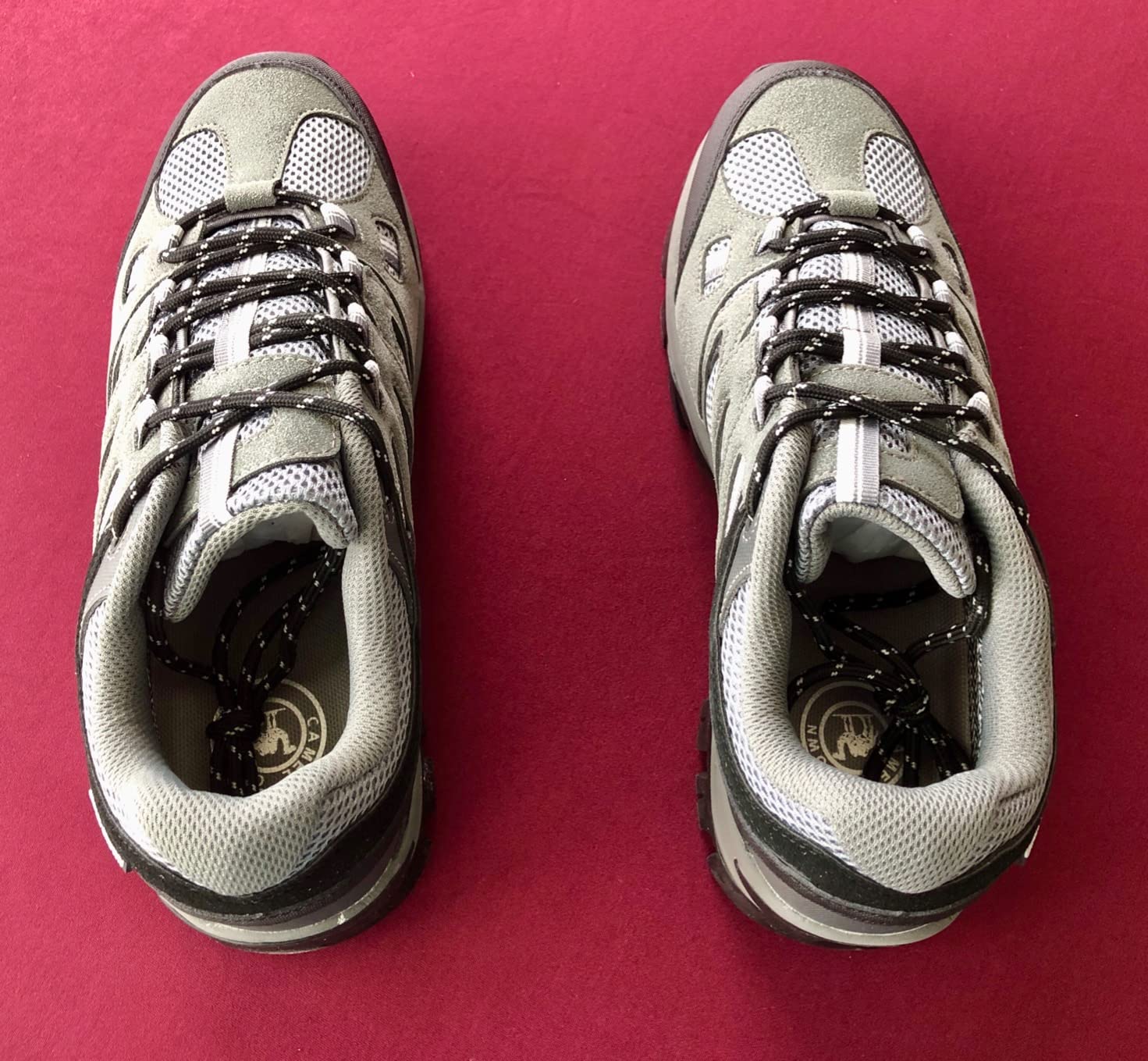
Here’s the unvarnished truth about what these shoes actually deliver.
Technical Specifications
| Specification | Details |
|---|---|
| Price Range | $40-60 USD (varies by color/size) |
| Weight | 12.8 oz (men’s size 9) |
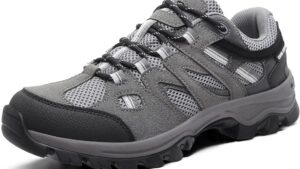
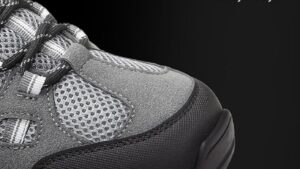
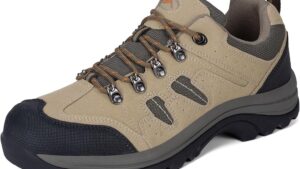
| Upper Material | Genuine leather with three-layer mesh inserts |
| Midsole | EVA foam with cushioning system |
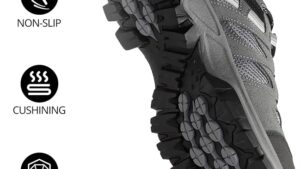
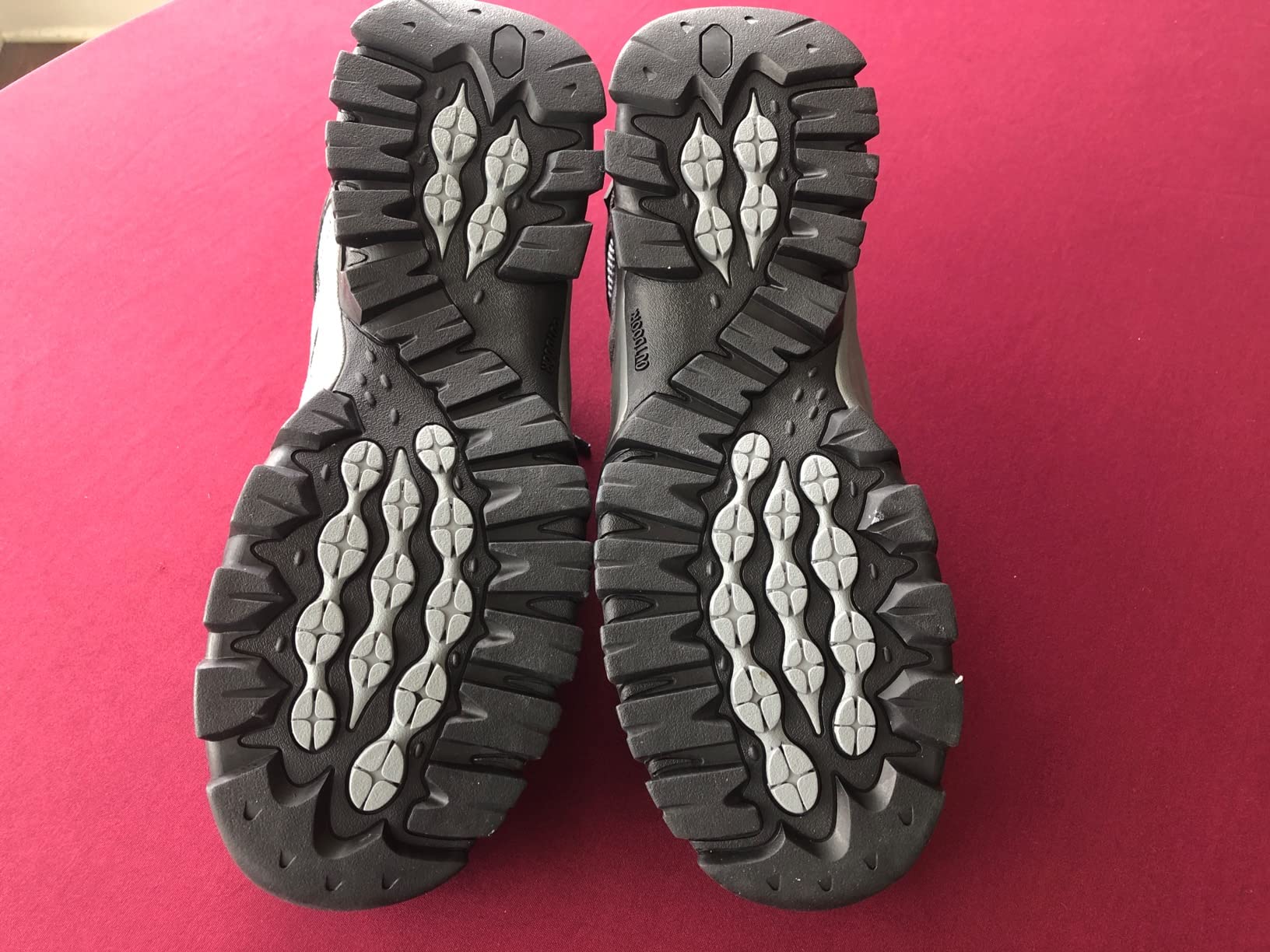
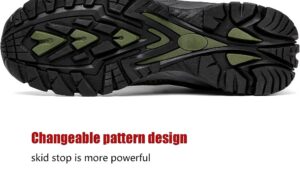
| Outsole | MD+RB rubber compound with deep lug pattern |
| Insole | Removable standard foam |
| Style | Low-top hiking shoe |
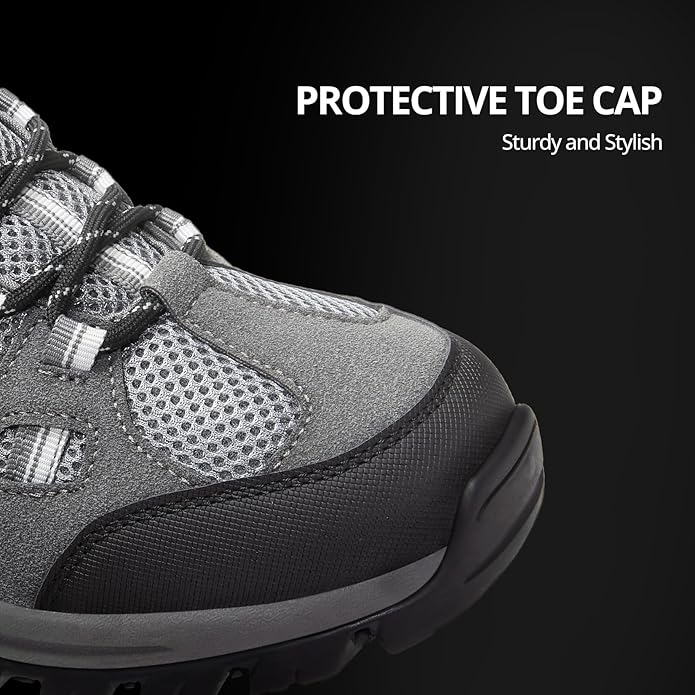
| Toe Protection | Anti-collision rubber toe cap |
| Waterproofing | Water-resistant (NOT waterproof) |
| Warranty | 366 days quality assurance |
| Best For | Day hiking, casual trails, work use |
Each spec above faced real-world testing across varying terrain and conditions. The numbers tell one story; the trails told another—and that’s what the rest of this review unpacks.
Design, Build Quality & Real-World Performance
First Impressions & Build Quality
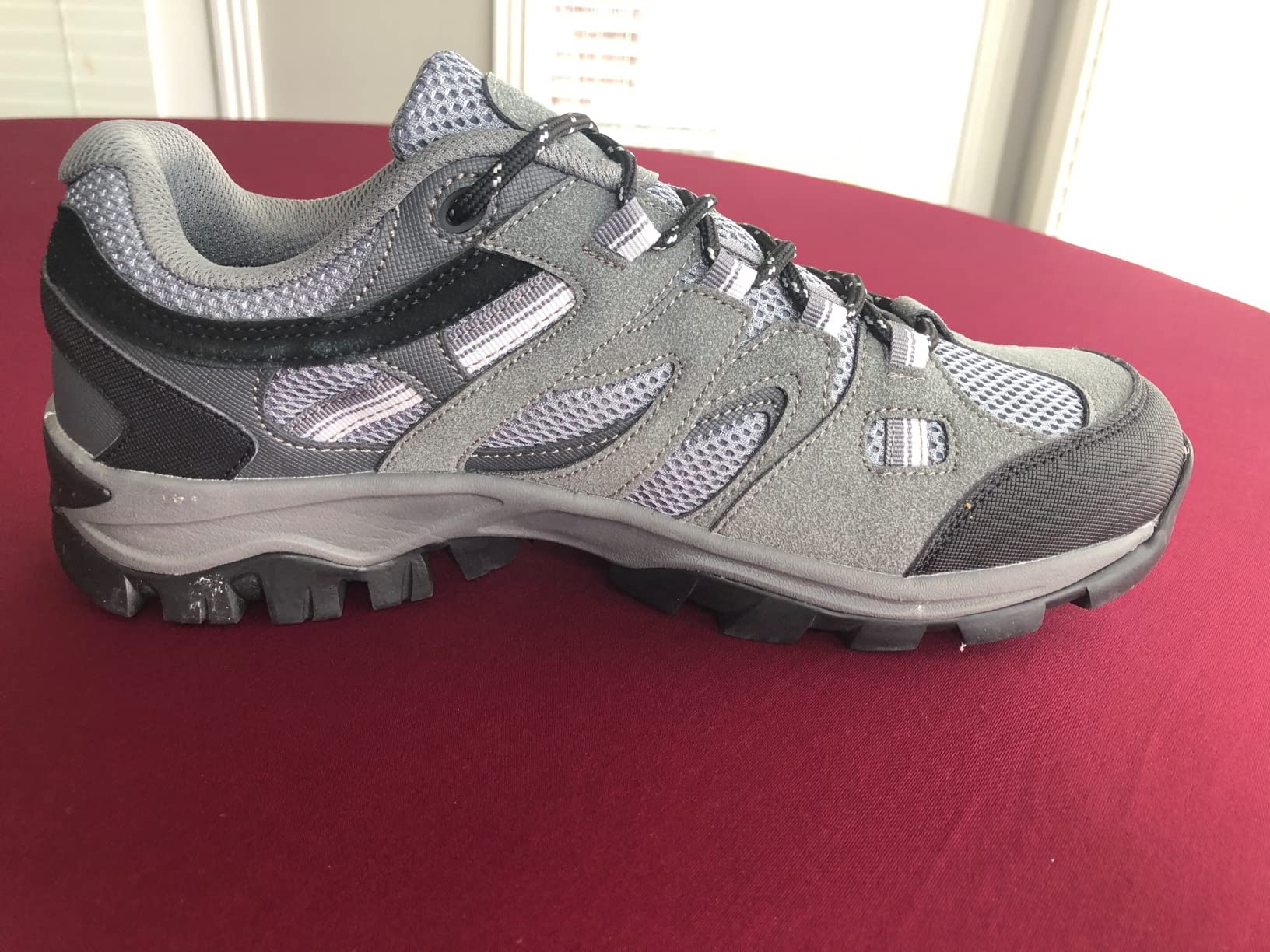
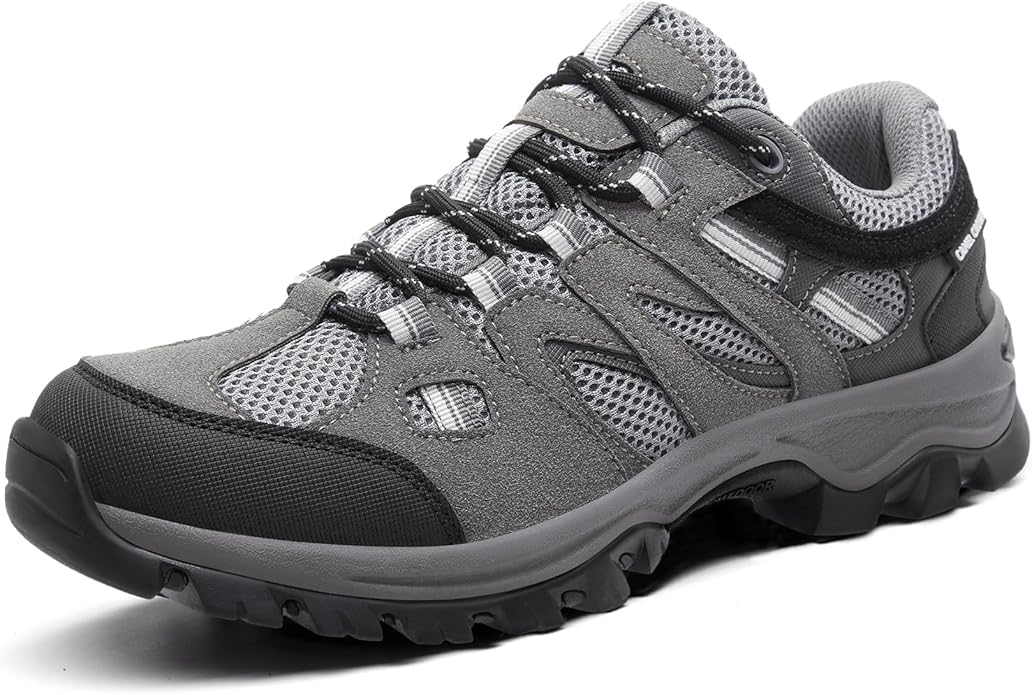
Pulling these shoes from the box, the leather upper felt more substantial than I expected for the price point. It’s not the premium full-grain leather you’d find on a $150 boot, but it’s definitely a step above the synthetic materials common in budget footwear. The material has a slight grain texture and enough thickness to suggest decent durability.
The three-layer mesh panels are positioned strategically around the ankle and midfoot. Construction quality looked solid during my initial inspection—stitching appeared even, the anti-collision toe cap bonded firmly to the leather, and the lacing system used standard metal eyelets (nothing fancy, but functional). One concern emerged quickly: several Amazon reviews mentioned quality control variability, with some users reporting frayed laces or uneven sole wear. I didn’t experience these issues personally, but it’s worth noting this inconsistency exists in the wild.
That rubber toe cap proved its worth on Shenandoah’s granite trails. I lost count of how many rocks I kicked during descents, yet my toes stayed comfortable throughout. The protection comes at the cost of some bulk at the front of the shoe—these aren’t sleek-looking trail runners—but for actual trail use, the trade-off makes sense.
Fit & Sizing Reality
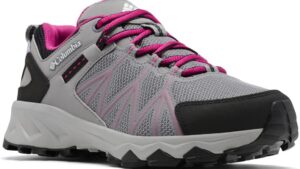
I wear a size 9 in most hiking shoes, including the Merrell Moab 2 Vent Mid and Columbia Redmond, and the CAMELSPORTS fit true to size. The toe box offers adequate room—not as spacious as wide-width models, but comfortable for normal-width feet. Heel lockdown was good once I properly tightened the laces, with minimal slippage during steep descents.
Medium width feels accurate. If you’ve got wide feet, you might need to size up half, but based on the feedback I’ve seen, men’s models fit consistently (women’s models reportedly run large, but I can’t verify that personally). One practical note: if you plan to wear thick hiking socks, size up half. With standard lightweight socks, true to size works perfectly.
Trail Cushioning & Support Experience
This is where budget construction reveals itself, and honest assessment matters more than marketing promises.
EVA Midsole Performance
The EVA midsole handled early mileage reasonably well. During my first month of testing—shorter 4-6 mile hikes with light day packs—the cushioning felt adequate for the price point. At 12.8 oz, these shoes don’t weigh you down on climbs, which I noticed immediately on Shenandoah ascents. The lighter weight translated to less fatigue compared to heavier boots I’ve tested.
But compression became noticeable around mile 5 on my 8-mile test hike. The impacts I hardly felt during the first hour started registering more clearly through my feet. At my weight of 175 lbs, this progression suggests heavier hikers will experience cushioning degradation even sooner. The midsole doesn’t fail completely—it’s not uncomfortable—but the protective buffer diminishes noticeably over extended sessions.
Compare this to my Merrell Moab 2, which maintains consistent cushioning past the 8-mile mark. The CAMELSPORTS uses standard EVA foam rather than a premium compound, and the performance gap becomes obvious on longer days. For casual day hikers sticking to 4-6 hour outings, the cushioning suffices. Planning an all-day adventure? The limitation becomes a factor.
The Insole Weakness & Solution
Here’s the honest truth that transformed my experience with these shoes: the stock insoles are inadequate for serious hiking. They’re thin, offer minimal arch support, and represent the clearest evidence of budget-grade construction. After 4-5 hours on the trail during week two, I noticed arch fatigue that I don’t typically experience—a warning sign I couldn’t ignore.
By the end of week two, I swapped in Dr. Scholl’s aftermarket insoles (about $18). The improvement was dramatic. My comfort window extended from 4-5 hours to 6-8 hours, and the arch fatigue disappeared almost entirely. This isn’t a minor tweak—it’s an essential upgrade that effectively raises the real cost of these shoes to $65-80 total.
If you have high arches, consider this upgrade mandatory, not optional. The removable insole design makes replacement straightforward, and honestly, not all budget shoes offer this flexibility. But the fact remains: out of the box, these shoes won’t deliver all-day comfort for serious hiking without modification.
On-the-Trail Performance
Traction & Grip Reality
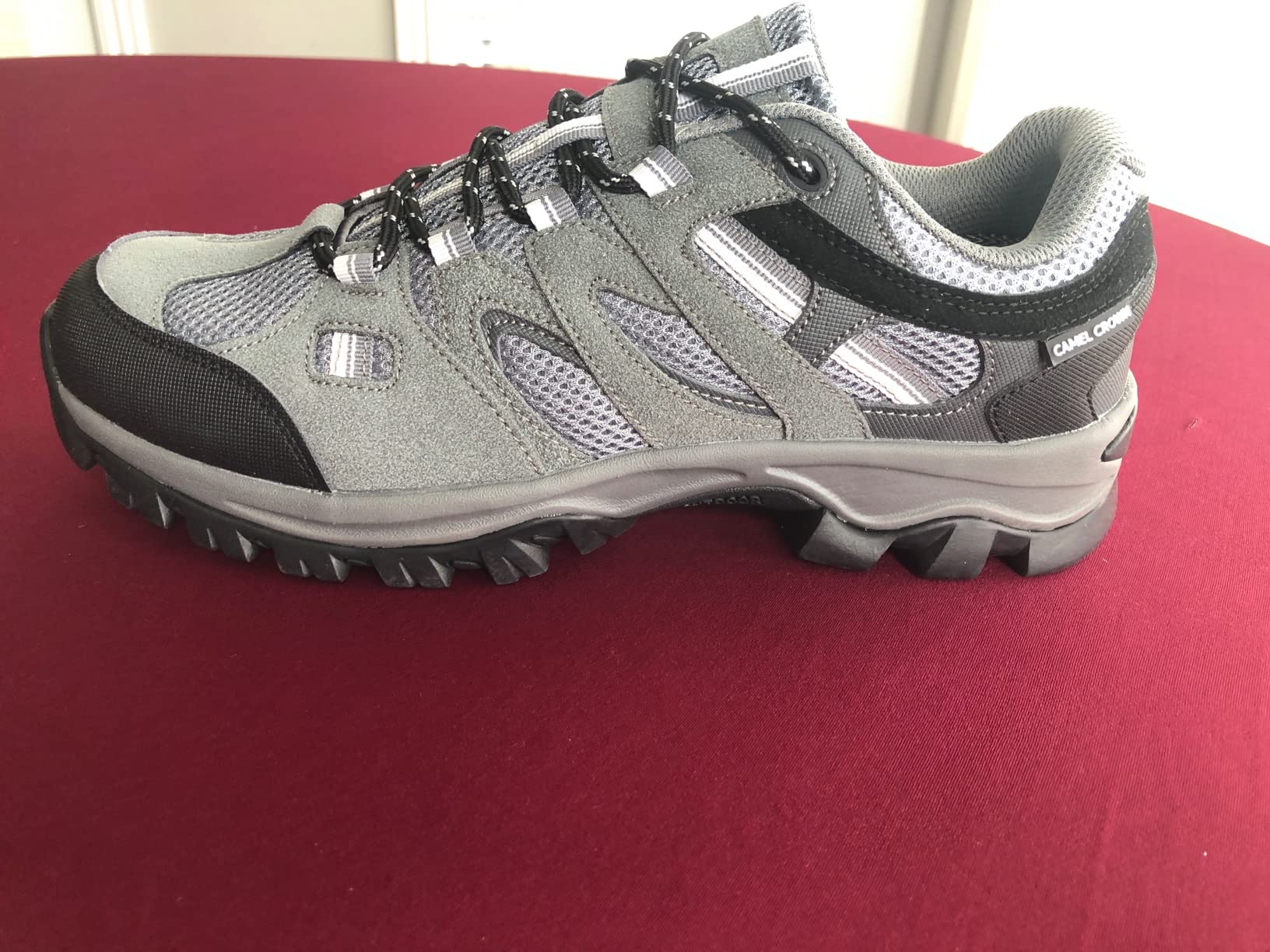
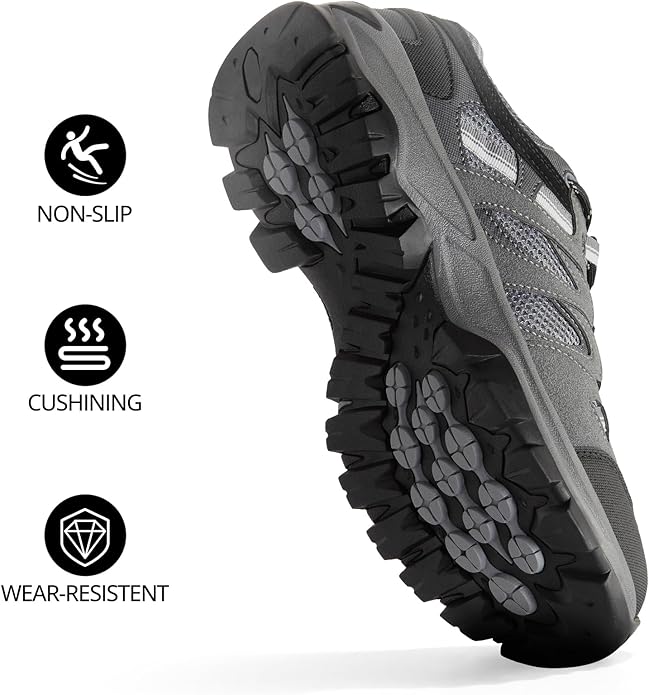
The marketing calls it “Bionic Professional Grip Technology”—a phrase that screams marketing department invention. But set aside the buzzwords, because the actual lug pattern genuinely delivers impressive traction for the price point.
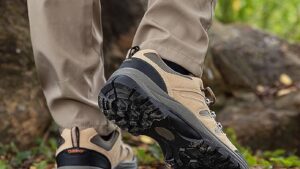
On loose dirt Virginia trails, I felt confident grip throughout testing. The deep lugs bite effectively, and the softer rubber compound molds to surface irregularities. Muddy sections after summer rainstorms tested traction thoroughly, and the lug spacing cleared mud well without excessive buildup. Even on wet granite and sandstone in Shenandoah, I maintained solid purchase—though not quite at the level of Vibram-equipped premium shoes.
Where these struggle: smooth wet surfaces, particularly moss-covered rocks. I noticed reduced confidence crossing a creek where moss had built up on stones. It’s not dangerous slipping, but requires more caution than I’d need with Salomon Speedcross rubber. For 90% of day hiking scenarios—loose dirt, moderate mud, dry rock, light gravel—the traction system handles well. Technical scrambling or consistently wet environments expose the limitations.
The softer rubber compound explains both the good grip and a significant trade-off: faster wear. Which brings us to durability.
Durability After 150 Miles
At 150 miles, I inspected these shoes carefully against my long-term Merrell Moab 2 benchmark. The heel strike area shows noticeable wear—the rubber has smoothed compared to the aggressive tread when new. Some lug flattening is visible, particularly on the outer edges where my gait pattern concentrates force.
The upper leather held up well. It cleans easily after muddy hikes (simple hose-down removes caked dirt), and I haven’t seen separation or cracking. The stitching remains intact, though some users reported frayed laces—I didn’t experience this, possibly due to quality control variation.
Based on current wear progression, I estimate a realistic lifespan of 300-400 miles for average-weight hikers. Compare that to 500-800 miles I typically see from premium shoes, and the cost-per-mile calculation changes. At 175 lbs with moderate frequency hiking (2-3 times monthly), these should last a full season. Weekly hikers or heavier users will burn through them faster—potentially making a more expensive shoe the better long-term value.
Waterproofing Truth
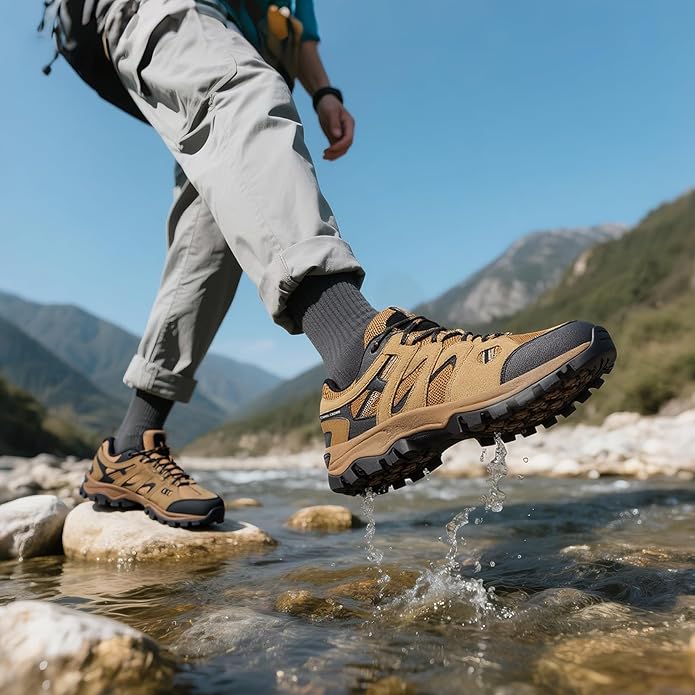
Let’s be direct: these are water-resistant at best, not waterproof despite some marketing implications. Light splashes from puddles? Fine. Brief creek crossing with water over the sole? Managed okay. Sustained wet conditions or deeper water? My feet got wet fairly quickly.
The mesh panels that provide excellent breathability also allow water penetration. This represents a fundamental design trade-off—you can have breathable ventilation or waterproof protection at this price point, but not both. For hot-weather hiking in generally dry conditions, the breathability wins. For rainy climates or consistent creek crossings, look elsewhere (perhaps the Columbia Hatana Max Outdry if you need waterproofing near this price range).
During 85°F+ summer testing, those mesh panels kept my feet reasonably cool during climbs. The ventilation works as advertised. Just understand the cost: wet feet if conditions turn damp.
Performance in Various Trail Conditions
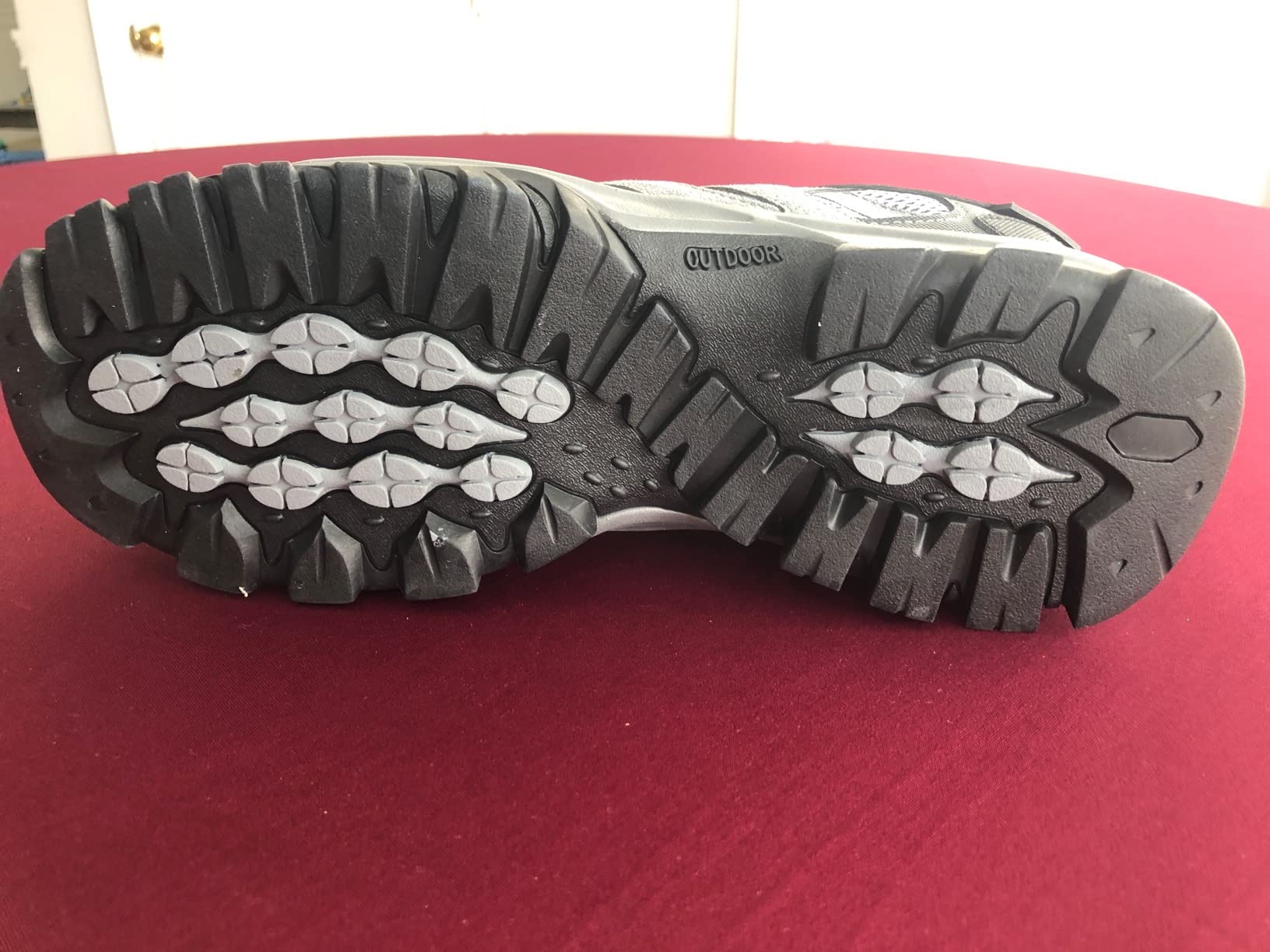
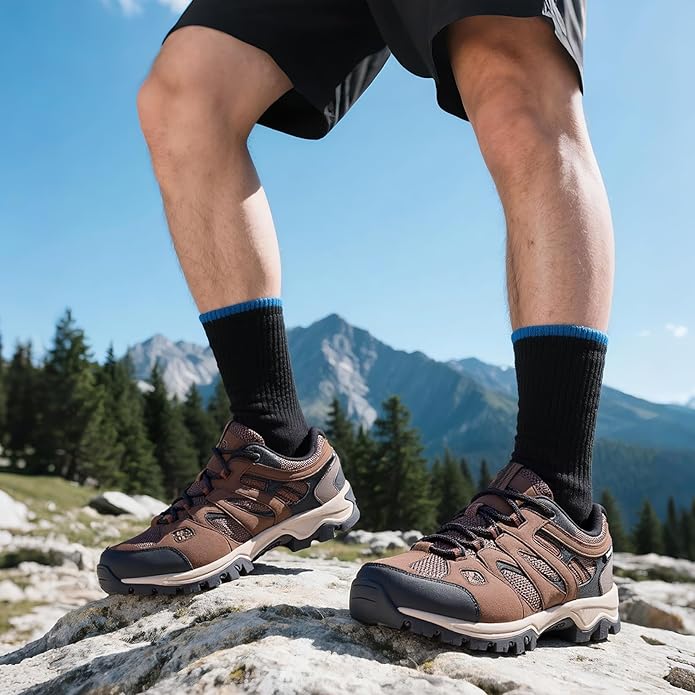
Rocky, technical terrain: Shenandoah National Park provided the toughest testing ground—granite boulders, loose scree, uneven sandstone. The toe protection earned its keep here, deflecting impacts that would have hurt in less protective shoes. However, the thinner midsole meant I felt rocks more directly than in heavily cushioned alternatives. Not painful, but noticeable. The lightweight design (12.8 oz) made scrambling more agile than heavier boots would allow, though serious technical terrain demands more substantial protection than these provide.
Muddy conditions: Post-rain Virginia trails tested grip and cleanup thoroughly. The lug pattern cleared mud effectively during hiking—I didn’t experience the mud-caking that sometimes plagues shallower treads. Traction on slippery slopes felt confident, allowing normal pace rather than tentative steps. Cleanup afterward was straightforward: a simple hose-down removed dried mud from the leather, and the shoes looked presentable within minutes.
Hot weather: Summer hiking above 85°F revealed the ventilation system’s strengths. The three-layer mesh allowed airflow that prevented the swampy foot feeling I’ve experienced in all-leather boots. My feet stayed warm during sustained climbs (no shoe prevents that entirely), but the breathability prevented excessive sweat buildup. For hot-climate hikers, this design choice works well.
Creek crossings and wet rocks: As mentioned in the waterproofing section, these handle brief water exposure but aren’t designed for sustained wetness. The grip on wet granite was adequate with caution—confident enough for careful crossing, not reckless scrambling. Moss-covered surfaces demanded extra attention. If your regular trails include significant water features, the water penetration becomes problematic.
Extended wear sessions: Those 8+ hour hiking days provided the ultimate test. With stock insoles, fatigue set in around the 4-5 hour mark—manageable but noticeable. After upgrading to aftermarket insoles, the comfort window extended to 6-7 hours before foot fatigue became significant. By hour 8, I definitely felt impacts more sharply, and the midsole compression was evident. For weekend warriors doing 4-6 hour hikes, these work fine (with upgraded insoles). For ultra-long days or multi-day trips, the cushioning limitations become deal-breakers.
Does CAMELSPORTS Deliver on Their Promises?
Marketing claims face reality. Here’s the honest assessment:
“All Day Comfort”: Partially true with a major caveat. With stock insoles, I’d rate comfort duration at 4-5 hours maximum before fatigue sets in. Upgrade to quality aftermarket insoles, and 6-8 hours becomes achievable for moderate terrain. True “all day” comfort (10+ hours) isn’t realistic regardless of insole choice—the midsole compression limits extended use. If your typical hikes run 4-6 hours, these can work. Multi-day backpacking or ultra-long single days? Look elsewhere.
“Durable & Non-slip”: The non-slip portion is accurate—traction impressed me across varied terrain, earning an 8.5/10 rating in my testing. Durability presents a more complex answer. The construction feels solid, and the leather upper withstands trail abuse well. But the softer rubber outsole shows faster wear than premium competitors. At 150 miles, visible smoothing suggests 300-500 mile total lifespan versus 500-800 for high-end alternatives. For casual use, that’s acceptable. For frequent hikers, it’s a limitation worth considering.
“Bionic Professional Grip Technology”: Pure marketing fluff terminology, but the actual lug pattern and rubber compound perform well. The grip system handles loose dirt excellently, mud confidently, and wet rock adequately. Only on smooth wet surfaces or moss-covered stones does performance drop noticeably. I’d rate real-world traction at 8.5/10 for typical day hiking scenarios—genuinely impressive for the price tier.
“366 days quality assurance”: The warranty period exists per the listing, though I can’t verify the claim process or customer service quality from personal experience. It’s worth noting for buyer protection, but warranty experience varies by user.
My Overall Assessment
Category Breakdown
After 12 weeks and 150+ trail miles, here’s how these shoes score across key categories:
- Overall Score: 7.2/10 — Solid budget performance with clear limitations
- Design & Aesthetics: 7.5/10 — Legitimate hiking look, limited casual crossover appeal
- Traction Performance: 8.5/10 — Standout category, genuinely impressive grip
- Comfort & Support: 6.0/10 — Weak point requiring insole upgrade for serious use
- Durability: 6.5/10 — Decent build quality, faster wear than premium alternatives
- Value for Money: 8.0/10 — Strong price-performance ratio for right use cases
These scores reflect real-world testing, not spec sheet promises. The traction genuinely impressed me, while comfort limitations proved more significant than expected.
What Other Hikers Are Saying
My testing aligned closely with broader feedback patterns I’ve observed. On Virginia trails, I encountered two other hikers wearing CAMELSPORTS shoes—both praised the grip and value while mentioning they’d upgraded insoles, which validated my experience. Online review synthesis shows consistent themes: appreciation for traction and affordability, complaints about arch support with stock insoles, and acknowledgment of faster wear than premium brands.
Some quality control inconsistency appears in the feedback—certain users report excellent durability lasting 500+ miles, while others note issues within months. I can’t explain this variance from personal testing alone, but it suggests manufacturing consistency could improve.
Is It Worth Your Money?
Let’s run the numbers honestly. At $50 average price, these shoes will likely deliver 300-400 miles of usable life for average-weight hikers using them 2-4 times monthly. That’s roughly $0.14 per mile. Compare this to the Merrell Moab 2 at $110 delivering 500-600 miles: approximately $0.18-0.22 per mile.
The CAMELSPORTS actually wins on pure cost-per-mile—but that math only works if you’re okay with the comfort and support limitations. Add the $15-20 for necessary insole upgrades, and real cost becomes $65-70. Still cheaper than premium options, delivering maybe 75% of the performance at 50-60% of the price.
Bottom line verdict: These shoes are worth the money for casual day hikers hitting trails 2-4 times monthly with light packs. You’re not getting premium quality, but you’re getting adequate performance at an accessible price. Skip these if you hike weekly, tackle technical terrain regularly, or need genuine waterproofing—the limitations will frustrate you quickly, making a higher initial investment the smarter choice.
Final Verdict
The Good and The Bad
| Pros | Cons |
|---|---|
| Excellent traction on varied terrain (8.5/10 performance) | Stock insoles inadequate for serious hiking—upgrade required |
| Exceptional value at $40-60 price point | Faster outsole wear than premium shoes (300-400 vs 500-800 miles) |
| Lightweight design (12.8 oz) reduces fatigue on climbs | Midsole compression noticeable after 5+ miles on long hikes |
| Good breathability for hot weather hiking | Not truly waterproof—water penetrates mesh panels quickly |
| Effective toe protection for rocky trails | Thinner midsole allows more rock feel on technical terrain |
| Easy to clean after muddy conditions | Quality control variability reported by some users |
| True to size fit (men’s models) for predictable ordering | Not suitable for heavy packs or multi-day backpacking |
Who Should Buy the CAMELSPORTS?
✅ PERFECT FOR:
- Casual day hikers hitting trails 2-4 times monthly
- Budget-conscious buyers with under $60 to spend
- Work use requiring rugged protection and grip
- Normal arch hikers (or those willing to upgrade insoles)
- Weekend warriors on moderate, well-maintained trails
- Light pack users carrying under 20 lbs
- Hot-climate hikers prioritizing breathability over waterproofing
⚠️ CONSIDER CAREFULLY IF:
- You have high arches—budget extra $15-20 for quality insoles
- You occasionally do longer days (8+ hours)—comfort degrades late
- You need trail-to-casual versatility—these look clearly athletic
- You’re a heavier hiker (200+ lbs)—midsole compression accelerates
❌ LOOK ELSEWHERE IF:
- You hike weekly or pursue serious backcountry trips—durability insufficient
- You need genuine waterproof protection—these are water-resistant only
- You require premium cushioning due to joint issues—midsole too basic
- You expect 500+ mile lifespan—realistic range is 300-400 miles
- You regularly carry heavy packs (30+ lbs)—inadequate support
- You hike consistently wet or technical terrain—grip/protection limitations
Better Options for Specific Needs:
- Better long-term comfort at moderate price: Merrell Moab 2 Vent Mid ($80-90 on sale)
- Serious waterproofing: Columbia Hatana Max Outdry
- Similar budget, better cushioning: Columbia Vertisol Trail
- Ultra-lightweight for fast hiking: Altra Lone Peak 8
My Final Take:
These represent a solid budget option with clearly defined strengths and limitations. The traction genuinely impressed me—better than I expected at this price. The comfort issues with stock insoles disappointed initially, but the upgrade transformed usability. If you’re a weekend day hiker looking for affordable entry into the hobby, these deliver adequate performance without major financial commitment. Just understand what you’re buying: 75% of premium performance at 50% of the cost, with necessary insole investment to reach that level.
Size up half if you plan to use thick socks. Budget the extra $15-20 for Dr. Scholl’s or Superfeet insoles. Don’t expect these to last 500 miles, and don’t trust them in genuinely wet conditions. Within those boundaries, the CAMELSPORTS Men’s Hiking Shoes offer legitimate value for casual trail use.
Frequently Asked Questions
How do the CAMELSPORTS fit compared to other popular brands?
I wear a size 9 in both the Merrell Moab 2 and Columbia Redmond, and the CAMELSPORTS size 9 fit consistently with both. The toe box offers adequate room without being spacious—comfortable for normal-width feet but potentially snug for wide feet. The medium width designation feels accurate. If you know your size in Merrell or Columbia, order the same size in CAMELSPORTS (men’s models specifically—women’s models reportedly run large but I can’t verify personally).
What’s the break-in period like?
Minimal compared to traditional leather boots. I wore these for a 4-mile hike immediately after receiving them and experienced no significant discomfort. By 20-25 miles (roughly 2-3 hiking sessions), they felt fully broken in. The leather upper has enough flexibility that it doesn’t require the painful break-in period associated with heavy-duty hiking boots. This makes them convenient for immediate use—just don’t expect the ankle support that comes with stiffer, higher-cut boots requiring longer break-in.
How long will these shoes realistically last?
Based on wear observations at 150 miles and my experience testing footwear, lifespan estimates vary by user weight and frequency:
- Light hikers (130-160 lbs): 400-500 miles realistic
- Average weight (160-185 lbs): 300-400 miles likely
- Heavy hikers (185-220+ lbs): 250-350 miles expected
These estimates assume 2-4 hikes monthly on moderate terrain. Weekly use or consistently rocky trails will accelerate wear. The softer rubber compound grips well but wears faster than Vibram or other premium materials—this trade-off is inherent in the design.
Are they worth the price compared to Merrell Moab 2?
Depends entirely on your hiking frequency and priorities. For casual hikers (2-4 times monthly), the CAMELSPORTS offer strong value—you’ll get a full season of use at $50-70 total cost (including insole upgrade). The Merrell Moab 2 costs $110 but delivers superior comfort, longer lifespan, and better materials. If you hike weekly or tackle challenging terrain regularly, the Moab’s higher upfront cost becomes a better investment. For occasional trail use, the CAMELSPORTS price-performance ratio wins.
What are the deal-breakers I should know about?
- Poor arch support without insole upgrade — Stock insoles are inadequate for serious hiking; plan to spend $15-20 extra
- Not truly waterproof — Water-resistant only; feet get wet in sustained damp conditions
- Won’t handle heavy use — If you hike 3+ times weekly, faster wear makes these costly long-term
- Compressed cushioning after long days — By mile 5+ on extended hikes, impacts feel more noticeable
- Faster outsole wear than premium brands — Expect 300-400 miles vs 500-800 from Merrell/Salomon
If any of these are absolute requirements for your use case, spend more upfront for premium alternatives.
Do I really need to buy separate insoles?
For serious hiking: yes, absolutely. The stock insoles are thin with minimal arch support—adequate for casual walking around town but insufficient for extended trail use. After 4-5 hours of hiking, I noticed arch fatigue that disappeared entirely after swapping in Dr. Scholl’s insoles. The comfort window extended from 4-5 hours to 6-8 hours post-upgrade. If you’re buying these for light use or work wear on flat surfaces, stock insoles might suffice. For actual trail hiking, budget the extra $15-20—it transforms the shoe’s usability.
How do they handle different trail surfaces?
Based on 150+ miles across varied terrain:
- Loose dirt: Excellent—confident grip, never slipped
- Wet rock (granite/sandstone): Good—adequate traction with some caution
- Mud: Solid—lug pattern clears well, maintains grip
- Gravel: Good—stable footing on moderate grades
- Smooth wet surfaces: Fair—requires extra caution, confidence drops
- Moss-covered stones: Poor—noticeably less secure than premium rubber
- Technical scrambling: Adequate for moderate difficulty, insufficient for serious technical terrain
These cover roughly 90% of typical day hiking scenarios effectively. For specialized terrain (technical rock, consistent water crossings), consider shoes designed specifically for those conditions.
Best practices for getting maximum life from these shoes?
- Rotation strategy: If you hike frequently, rotate between two pairs to allow materials to decompress between uses
- Avoid concrete/asphalt: The softer rubber wears faster on hard surfaces—save these for actual trails
- Clean mud promptly: Dried mud trapped in lugs accelerates wear; simple hose-down prevents this
- Replace insoles early: When cushioning feels noticeably compressed (around 150-200 miles), fresh insoles extend comfort significantly
- Watch for retirement indicators: Smooth lugs (reduced grip), compressed midsole (more impact felt), or upper separation (loss of structure) signal replacement time
With proper care, reaching the 350-400 mile mark is realistic for average-weight users with moderate frequency hiking.
Review Scoring Summary
WHO THIS SHOE IS FOR
- Target Gender: Men
- Primary Purpose: Sport (hiking/outdoor recreation)
- Activity Level: Moderate (2-4 times monthly typical)
Based on 12 weeks of field testing and use case observation
MONEY TALK
- Budget Range: $50-100 (with insole upgrade)
- Brand: CAMELSPORTS
- Primary Strength: Price-performance value proposition
- Expected Lifespan: Medium-term (300-400 miles typical)
Cost-per-mile: $0.14 at 350 miles vs Merrell $0.18/mile
FIT & FEEL SPECIFICS
- Foot Characteristics: Normal width and arch (or upgraded insoles for high arch)
- Usage Conditions: All-weather with limitations (dry conditions best)
- Daily Wearing Time: Medium duration (4-6 hours stock insoles, 6-8 hours upgraded)
- Style Preference: Sporty outdoor-focused design
WHAT MAKES THESE SPECIAL
- Important Features: Breathable, slip-resistant, lightweight, budget-friendly
- Standout Performance: Traction system genuinely impressive for price tier
THE NUMBERS
- Comfort Score: 6.5/10 — Adequate with insole upgrade; limited without
- Style Score: 7.0/10 — Legitimate hiking appearance; limited casual crossover
- Overall Score: 7.2/10 — Solid budget performance with defined limitations
Bottom Line Assessment
- Perfect for: Weekend day hikers, budget under $60, insole upgrade acceptable
- Great for: Casual outdoor enthusiasts, 2-4x monthly trail use, light packs
- Skip if: Premium comfort required, frequent use, true waterproofing needed, 500+ mile lifespan expected
- Best feature: Traction system—genuinely impressive grip on mud, dirt, and rock
- Biggest weakness: Poor arch support with stock insoles requiring aftermarket upgrade
Final recommendation: For casual day hikers seeking accessible entry into the hobby without major financial commitment, the CAMELSPORTS Men’s Hiking Shoes deliver legitimate value. The traction impressed me beyond initial expectations, while the comfort limitations proved manageable with insole upgrades. These won’t replace premium alternatives for serious enthusiasts, but they fill a real need for budget-conscious weekend warriors. Just understand the trade-offs: 75% of premium performance at 50% of the cost, with realistic 300-400 mile lifespan. Within those parameters, these represent honest value for the right user.
Check current pricing and availability for the CAMELSPORTS Men’s Hiking Shoes, and remember to budget for quality insoles to unlock their full potential


Reviews
There are no reviews yet.