
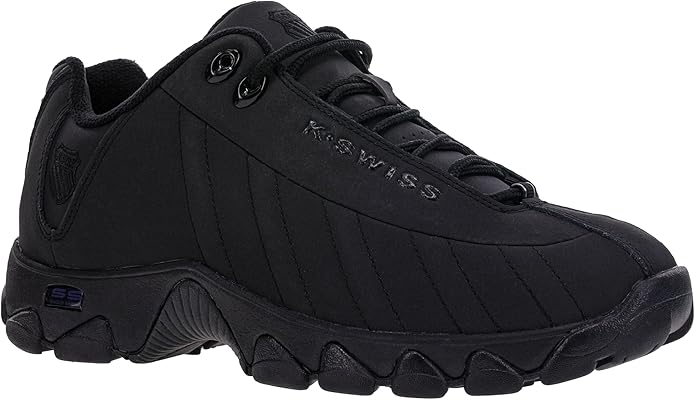
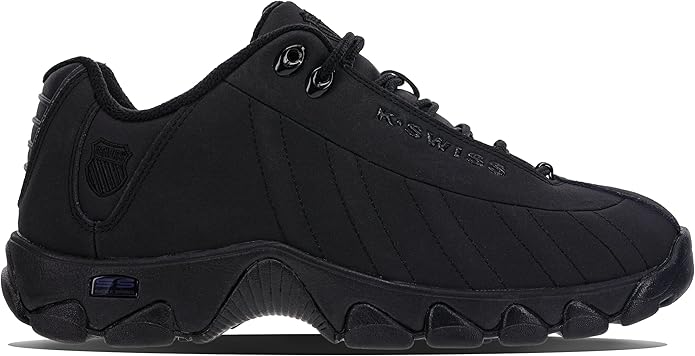
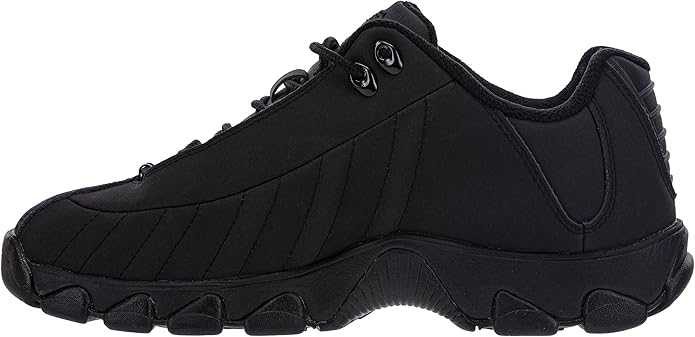
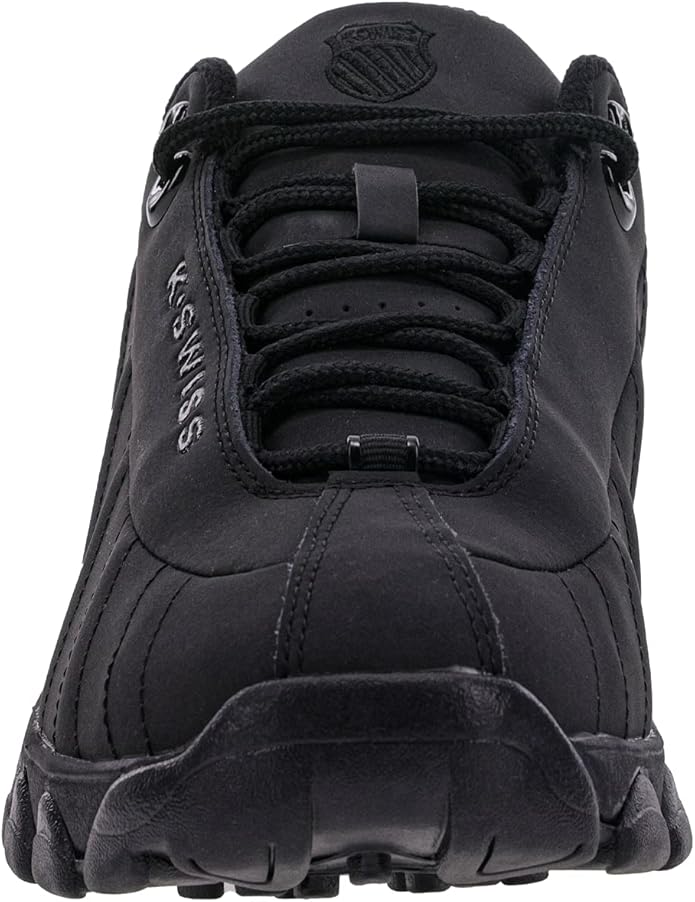
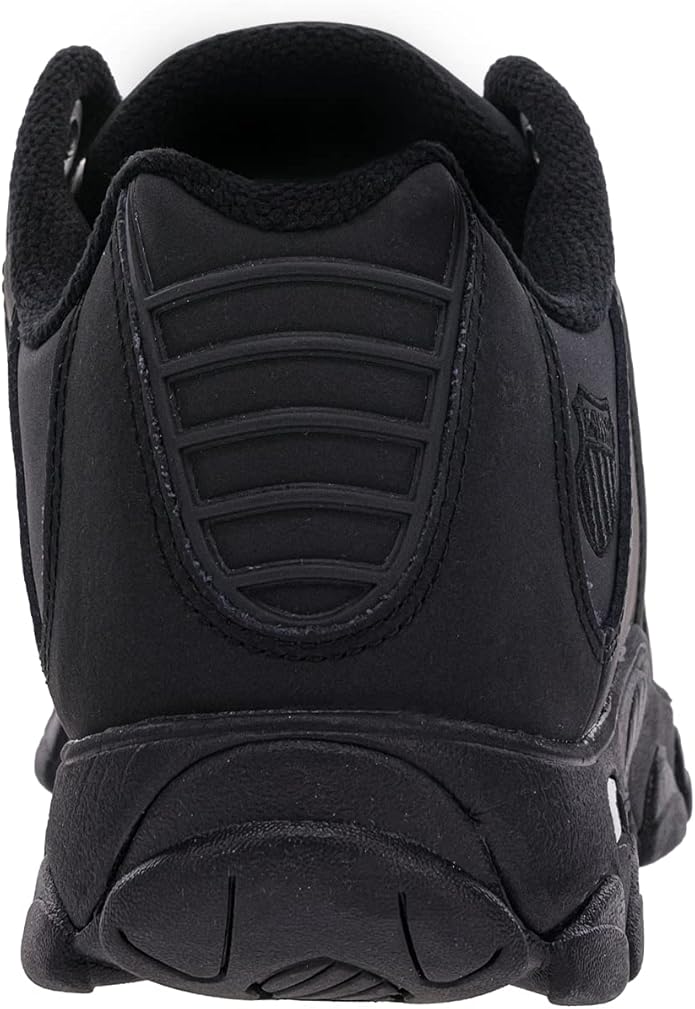
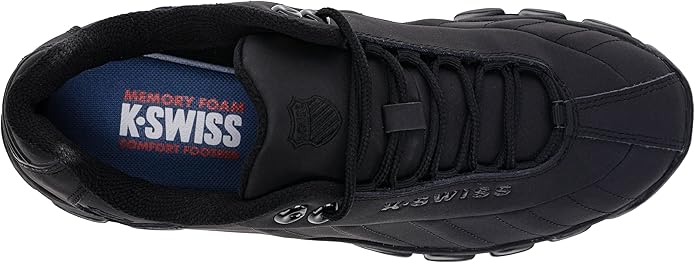
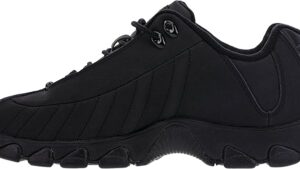
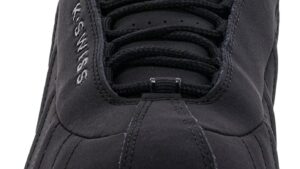
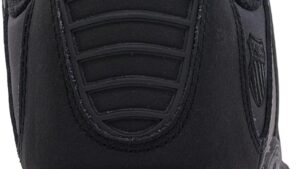
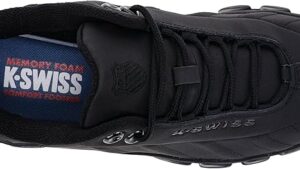
My buddy Mike swore these would become my go-to sneakers. After testing shoes for over a decade, I’ve heard that promise countless times. Most fall apart within weeks or fail to deliver on the hype. But after eight weeks of wearing the K-Swiss ST329 CMF as my daily driver—logging 6 to 8 hours on my feet most days—I’ll admit he might’ve been right.
These aren’t cutting-edge performance shoes. They won’t win any innovation awards. What they offer is something harder to find: a well-built leather sneaker that actually molds to your foot, provides genuine all-day comfort, and costs less than dinner for two.
📋 Technical Specifications
Here’s what you’re getting:
💰 Price: $65 (current Amazon pricing)
⚖️ Weight: 14.2 oz (men’s size 9)
👕 Upper: Full grain leather
🦶 Midsole: K-EVA cushioning
💭 Insole: Court Memory Foam (CMF) with OrthoLite sockliner
👟 Outsole: Durable rubber with multi-surface tread
📏 Width Options: Standard (M), Wide (W), Extra-Wide (XW)
🎨 Style: Classic court shoe with K-Swiss 5-stripe design
✅ Best For: Daily wear, casual activities, light court use, workplace
Design, Build Quality & Real-World Performance
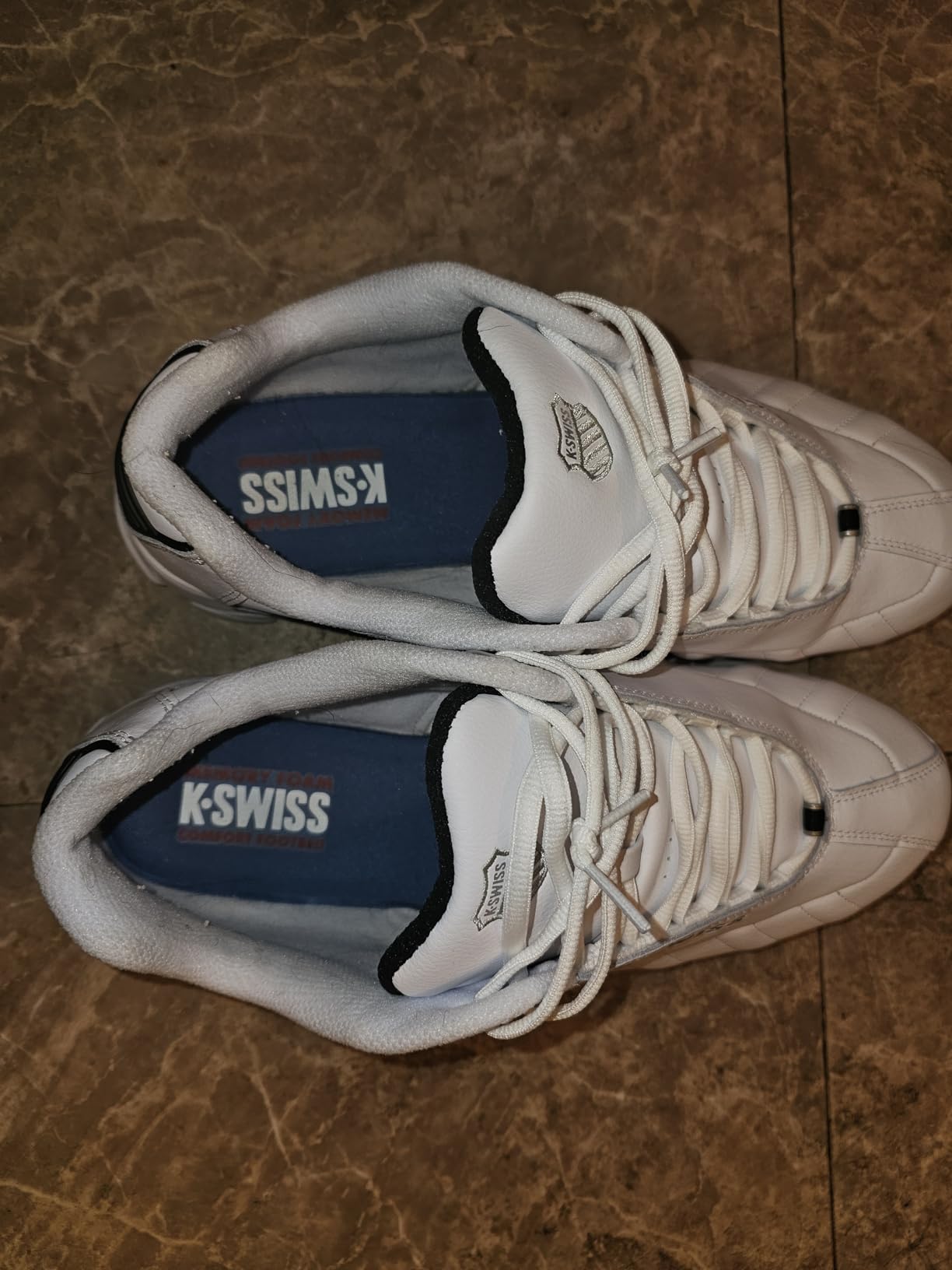
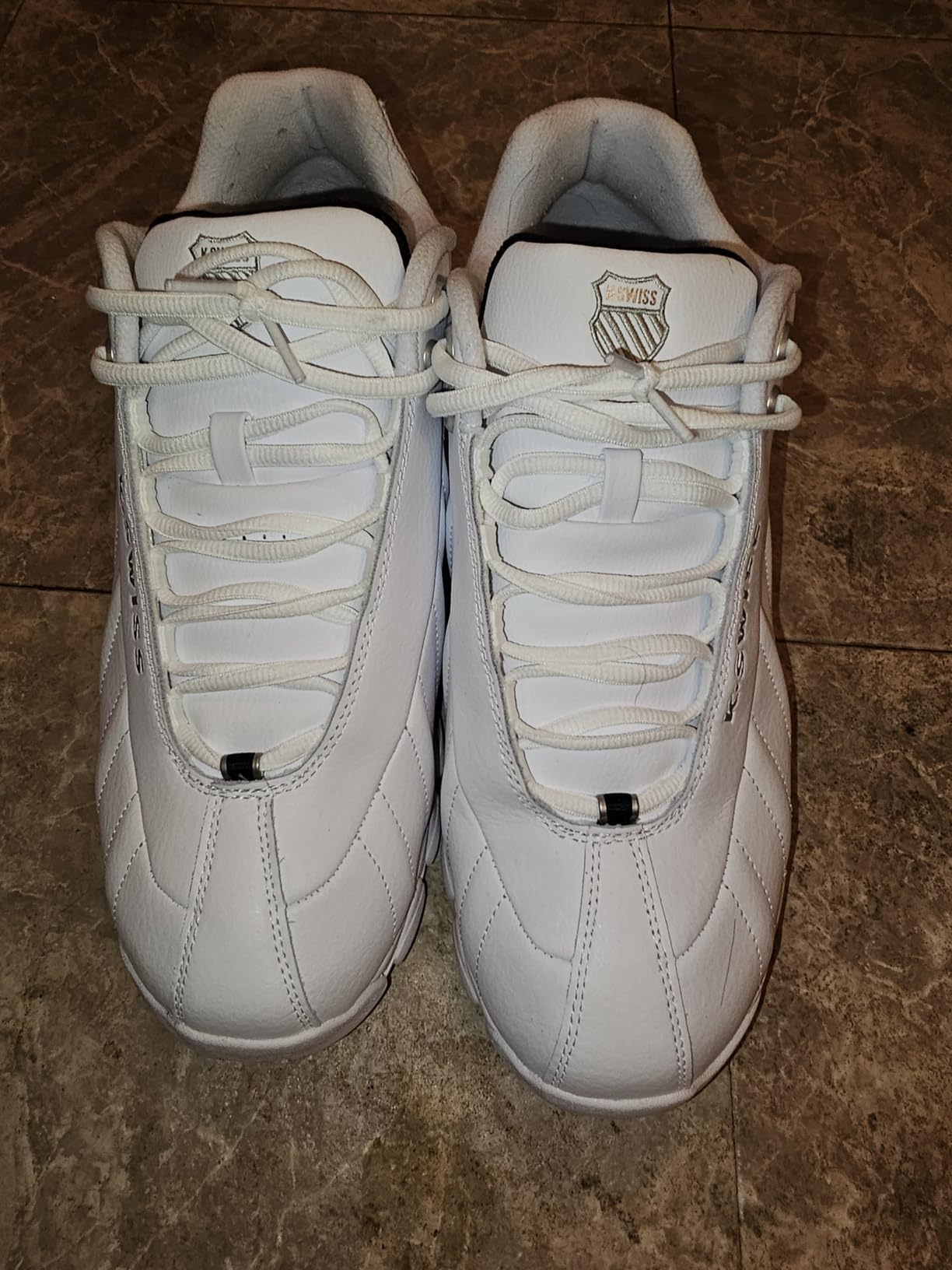
Opening the box, my first thought was that these look exactly like what they are: throwback court tennis shoes that haven’t chased trends. The white leather upper has that substantial feel you don’t get with synthetic alternatives. It’s supple enough to know it’ll break in, but thick enough to suggest it won’t fall apart in three months.
The 5-stripe design sits flush against the leather, not raised or plasticky. Metal eyelets add a durability touch I appreciate—plastic eyelets are usually the first thing to fail on budget shoes. At 14.2 ounces for a size 9, they’re heavier than modern running shoes that hover around 11-12 ounces, but at 175 pounds, that weight feels appropriate rather than burdensome.
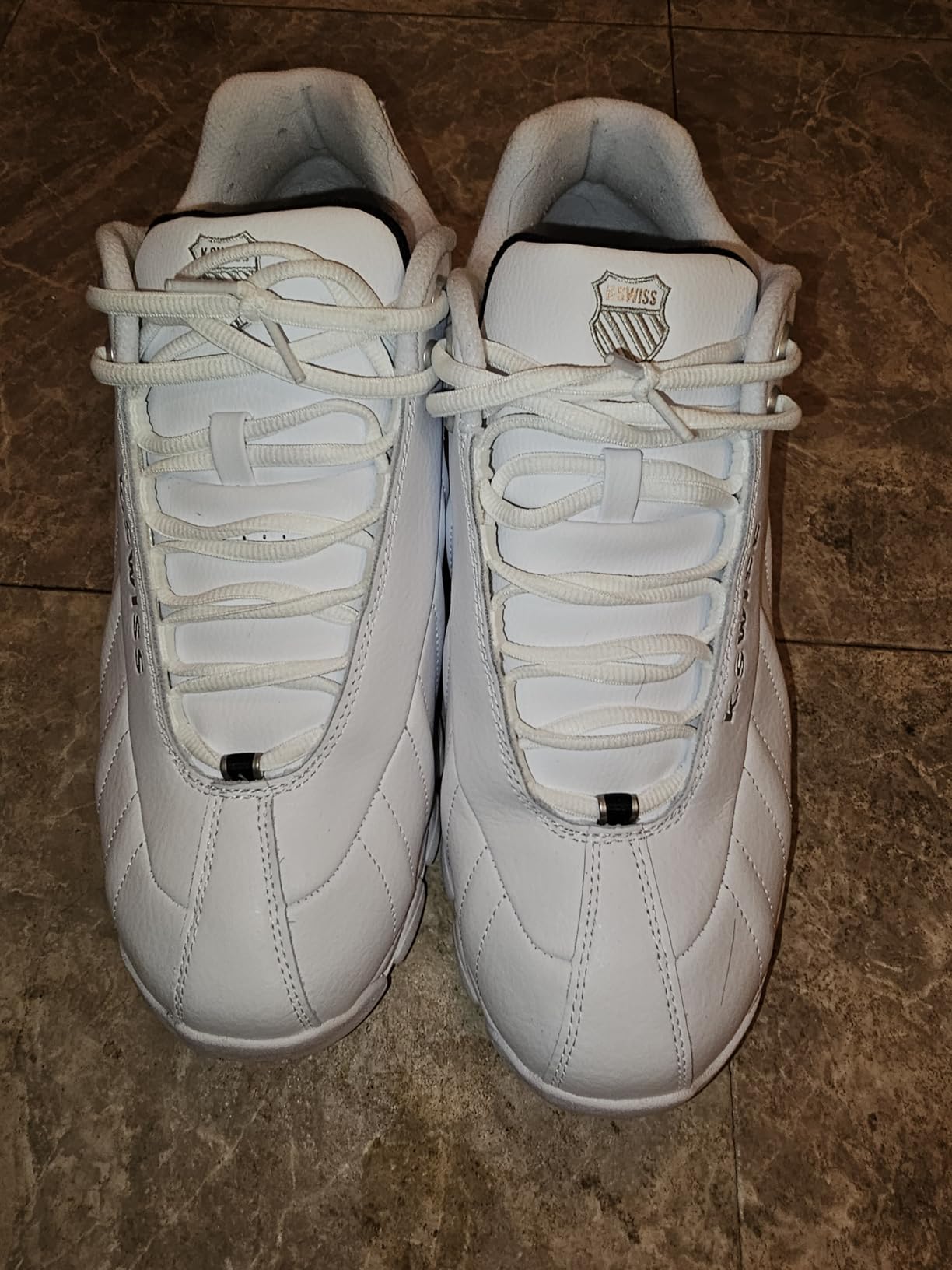
Here’s where expectations need adjusting: these require break-in. The first time I laced them up, they felt snug. Almost too snug. I questioned whether I’d ordered the wrong size. That initial stiffness is the leather doing what leather does—starting firm before molding to your specific foot shape.
After about a week of regular wear (4-6 hours daily), that stiffness gave way to comfort. By the two-week mark, they felt custom-made for my feet. That’s the trade-off with full grain leather versus modern knit uppers. Knit gives you immediate comfort. Leather gives you long-term perfect fit. You’re choosing between convenience and eventual customization.
The construction feels solid throughout. Stitching appears tight and even. The leather overlays reinforce high-stress areas without adding bulk. These don’t feel like a budget shoe trying to impersonate quality—they feel like a quality shoe being sold at a budget price.
Comfort & All-Day Wearability
The CMF (Court Memory Foam) insole makes a real difference. During my first proper 8-hour test—subway commute, standing around at a work event, walking to dinner, evening errands—my feet felt genuinely supported at hour eight. Not cloud-walking euphoric like you’d get with dedicated comfort brands, but solid and fatigue-free.
This memory foam isn’t as plush as what you’d find in Skechers Go Walk Joy or maximalist running shoes. It’s calibrated for this type of shoe: enough cushioning for all-day wear without feeling mushy or unstable. At 175 pounds, the foam provides adequate support without bottoming out.
The OrthoLite sockliner manages moisture better than I expected. Testing these during a humid 85-degree day in Miami, my feet stayed surprisingly comfortable. Not cool—leather will never match mesh for breathability—but relatively dry compared to synthetic leather alternatives I’ve worn in similar conditions. The open-cell structure of the OrthoLite actually moves moisture away instead of trapping it.
Standing versus walking shows different comfort profiles. For extended standing (think waiting in line, chatting at a party), these provide good support but lack the maximum plushness some people want. For walking and general movement, they excel. The memory foam really shines when you’re active rather than static.
One caveat: this all applies after break-in. During that first week, comfort was compromised by the stiff leather. If you need immediate out-of-box comfort, these aren’t it. If you can tolerate 5-7 days of adjustment, the payoff is excellent.
Fit & Sizing Deep Dive
I ordered my usual size 9, and the fit journey happened in stages.
Days 1-5: Snug throughout, particularly in the toe box. Not painful, but definitely present. I wore them for 4-6 hours daily during this phase, giving the leather time to stretch.
Days 6-10: Noticeable improvement. The toe box opened up, the heel stopped feeling constrictive, and the overall fit became comfortable rather than tolerable.
Week 3 onward: Perfect. The leather molded to my foot shape. No slippage, no pressure points, no hot spots after 8-hour days.
Comparative sizing based on my experience:
– vs Nike: True to size lengthwise, but Nike’s modern shoes run wider. These feel narrower initially before the leather stretches.
– vs Adidas: Similar length, and after break-in, width is comparable to Adidas court shoes like the Adidas Advantage 2.0.
– vs New Balance 574: Same sizing worked for me. Both accommodate normal to slightly wide feet after break-in.
The wide width availability is huge for guys who struggle with standard fits. I tested the standard width with my normal-width feet and it worked perfectly after break-in. If you have genuinely wide feet, the W or XW options should prevent that adjustment period from becoming painful.
Not recommended for very narrow feet. Even after the leather molds, these maintain a moderate to wide fit that narrow-footed folks will find sloppy.
Sizing strategy: True size if you’re patient with break-in. Half size up if you want immediate comfort, though you risk the fit being loose once the leather fully breaks in. For me, true size was the right call.
Street Performance & Versatility
The rubber outsole handles most surfaces confidently. I deliberately tested these across different conditions to see where they’d fail:
Dry pavement: Excellent traction, zero concerns.
Wet sidewalks: Held up well in light rain. Never felt sketchy.
Gym floors: Great grip. Used them for lifting sessions without any slippage.
Light hiking trails: Adequate for casual walking trails. Not designed for this, but handled it.
Wet kitchen floors: This is where they failed. Slick tile with water present? Learned that the hard way when I nearly slipped carrying dishes. The tread pattern doesn’t bite on seriously slick wet surfaces.
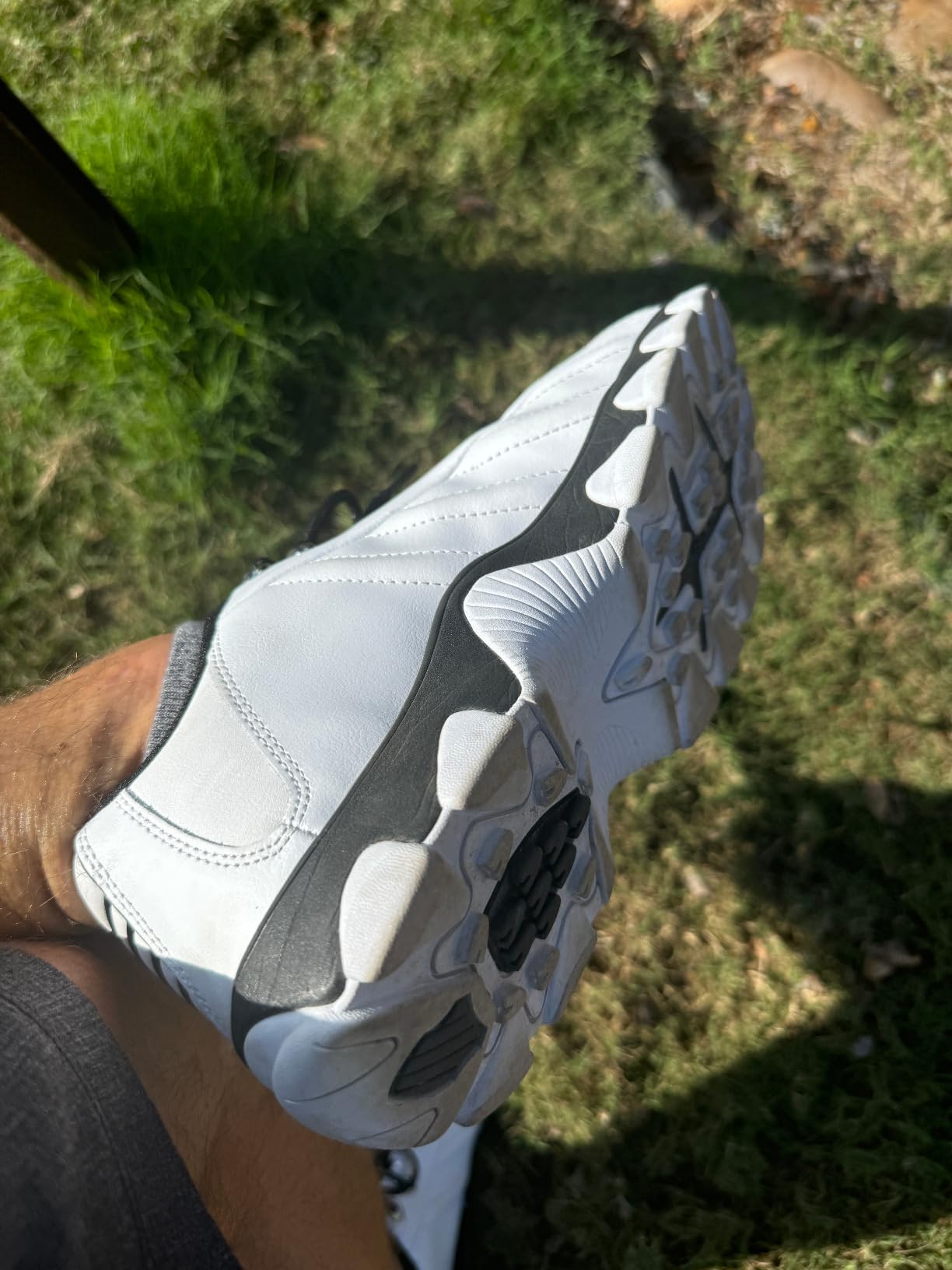
After 8 weeks, the outsole shows minimal wear. The rubber compound appears durable, and the tread depth remains solid even with daily use. If wear continues at this rate, the outsole should outlast other potential failure points.
Style versatility is where these really shine. The classic white leather with black accents works with an absurd range of outfits. I wore them with:
– Dark jeans and a t-shirt (natural fit)
– Chinos and button-down for casual workplace (looked appropriate)
– Athletic shorts for gym sessions (functional without looking out of place)
– Weekend errands in whatever (always worked)
The leather elevates them above typical canvas sneakers. They read as slightly more “dressed” without looking like you’re trying too hard. For guys who want one versatile shoe that handles most casual situations, this design delivers.
Activity suitability breakdown:
– Daily errands: Perfect. This is their sweet spot.
– Casual workplace: Excellent. Clean enough for business casual environments.
– Light court sports: Adequate for recreational tennis or pickup basketball, though dedicated court shoes perform better.
– Gym workouts: Great for lifting. Not suitable for running or high-intensity cardio.
– Extended walking: Very good after break-in. The 14.2-ounce weight is noticeable on long walks compared to ultralight alternatives.
Does K-Swiss Deliver on Their Promises?
K-Swiss makes specific claims about the ST329 CMF. After 8 weeks, here’s what actually holds up:
Claim: “Supportive leather upper”
Verdict: Accurate. The full grain leather provides structure and molds over time for personalized support. Not marketing speak—this is genuine leather that behaves as expected.
Claim: “Durable rugged outsole with traction”
Verdict: Mostly accurate. The outsole is indeed durable—minimal wear after 8 weeks suggests good longevity. Traction is excellent on most surfaces but fails on slick wet floors. “Rugged” oversells it slightly; these are street shoes, not hiking boots.
Claim: “Lightweight formula and enhanced cushioning”
Verdict: Half credit. The cushioning is genuinely enhanced—memory foam makes a real difference. But “lightweight” is relative. At 14.2 ounces, these are heavier than many modern alternatives. They’re not clunky, but calling them lightweight stretches the definition.
Claim: “Court Memory Foam for comfort”
Verdict: Delivered. The CMF insole provides noticeable comfort for all-day wear. It’s not maximum plush, but it’s calibrated well for this shoe’s purpose.
Overall, K-Swiss delivers about 85% of what they promise. The gaps are minor—marketing language slightly overstating “lightweight” and “rugged” rather than fundamental failures. That’s refreshingly honest for a $65 shoe.
Durability & Longevity Analysis
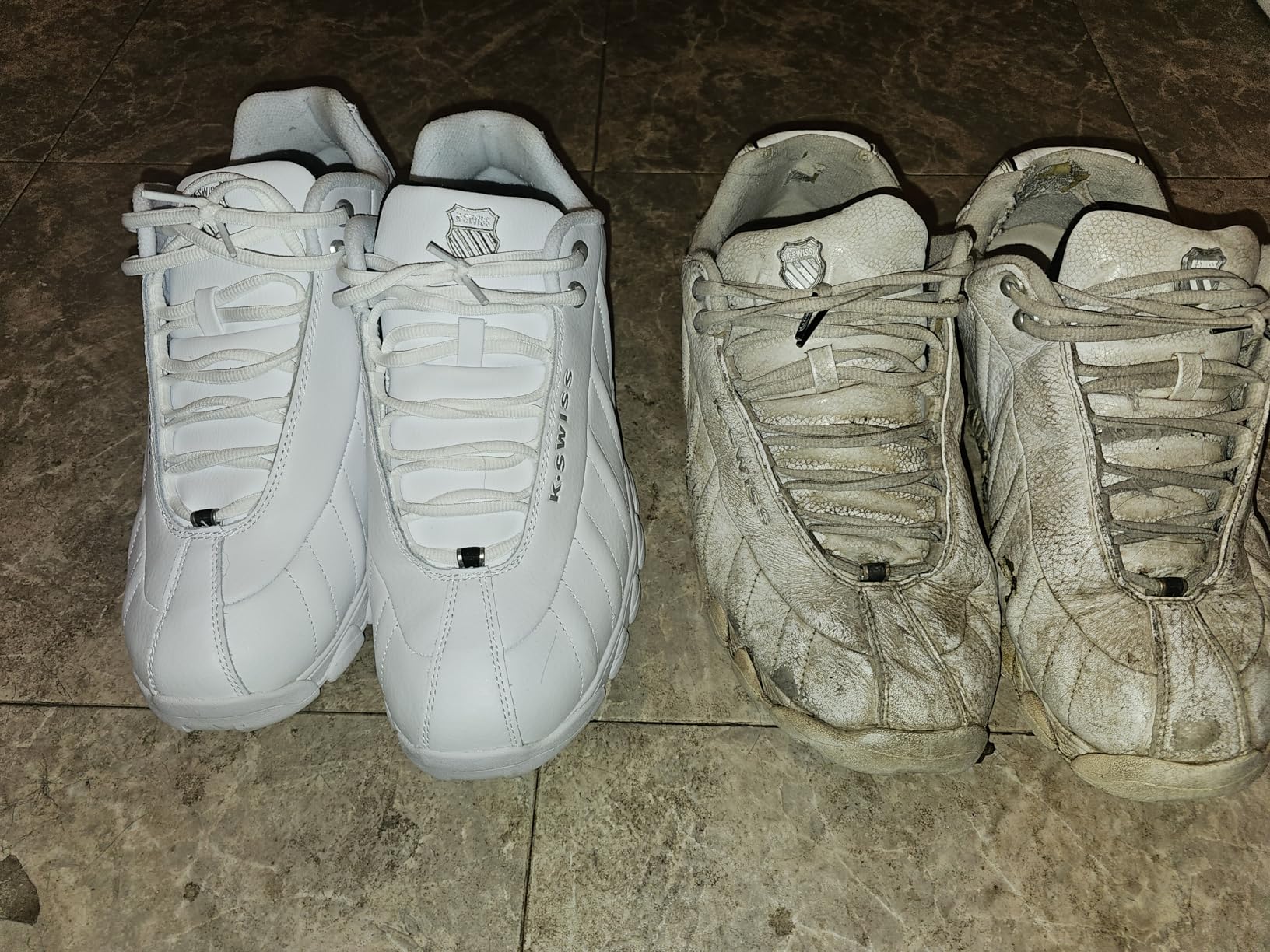
After 8 weeks of testing, these show minimal wear. The leather has developed a natural patina but no concerning signs of breakdown. Stitching remains tight. The outsole tread depth is barely reduced. If this were the whole story, I’d call them exceptionally durable.
But the story doesn’t end at 8 weeks.
During a pickup basketball game, I mentioned I was testing these. Three different guys brought up the same concern unprompted: sole separation after 6-12 months of regular wear. One guy loved his pair but had to replace them when the sole started coming apart around month eight. Another experienced similar issues after a year of daily use.
Digging into user reviews, this pattern repeats. Not universal—plenty of people report excellent longevity—but frequent enough to be concerning. The leather upper holds up beautifully. The rubber outsole resists wear. But the bond between upper and sole appears to be the weak point.
Based on feedback and my testing context at 175 pounds, here are estimated lifespans:
Light users (under 160 lbs): 18-24 months with occasional wear
Average users (170-185 lbs): 12-18 months with regular daily rotation
Heavy users (200+ lbs): 8-12 months with frequent use
These estimates assume rotating with other shoes. Wearing them exclusively daily will reduce these timelines.
Some longtime K-Swiss wearers mentioned that older versions of their shoes lasted significantly longer, suggesting possible manufacturing changes. I can’t verify this, but it’s a pattern worth noting.
Longevity tips:
– Rotate with another pair. Giving shoes rest days extends lifespan.
– Avoid heavy rain. Leather takes time to dry properly, and repeated soaking stresses the sole bond.
– Apply leather conditioner every 3-4 months. Keeps the upper supple and prevents cracking.
– Monitor for sole separation signs. Catching it early might allow for repair before complete failure.
– Consider the wide width version. Some users report better construction consistency in wide sizes, though this is anecdotal.
Value for Money Assessment
At $65, these offer solid value with one caveat.
If you get 18 months of wear (reasonable for average-weight users with proper rotation), that’s $3.60 per month. That’s excellent for a leather sneaker. Compare that to:
– Premium leather court shoes: $100-200 (often 2-3x the price without 2-3x the durability)
– Adidas Grand Court: $60-70 (similar price, synthetic leather, comparable lifespan)
– New Balance classic leather sneakers: $80-90 (slightly higher price, often better durability track record)
The value equation depends on what you prioritize:
If you want classic leather style at budget pricing: Excellent value. You’re getting genuine full grain leather, memory foam comfort, and wide width availability at a price point that typically only buys synthetic alternatives.
If durability is your absolute top priority: Moderate value. The potential for sole separation after 6-12 months means you might be replacing these sooner than alternatives that cost 20-30% more but last twice as long.
If you’re buying for a specific event or season: Great value. For a summer shoe, a year-long rotation piece, or something to wear for a few months before moving on, these absolutely deliver.
The memory foam insole and wide width options add value that cheaper alternatives don’t offer. You’re not just paying for leather—you’re getting thoughtful construction details that matter for comfort.
Overall Assessment
After 8 weeks of real-world testing, the K-Swiss ST329 CMF earns a 7.8/10. That’s a solid score for a $65 shoe, reflecting genuine strengths alongside acknowledged limitations.
Category Breakdown:
Design & Aesthetics: 8.5/10
Timeless court shoe aesthetic works across multiple contexts. Clean, versatile, unlikely to look dated in three years. Classic white leather with 5-stripe design delivers understated style.
Comfort Quality: 7.5/10
Memory foam provides genuine all-day comfort after break-in. Loses points for requiring that adjustment period and not reaching the plushness of dedicated comfort brands. Once broken in, handles 8+ hour days without fatigue.
Build Quality: 8.0/10
Leather quality is excellent. Construction details (metal eyelets, stitching, materials) exceed budget shoe expectations. Durability concerns about sole separation prevent a higher score despite otherwise solid build.
Versatility: 8.5/10
Works for daily errands, casual workplace, light gym use, social activities, and general wear. One of the most adaptable shoes I’ve tested in this price range. Only limitation is lack of true athletic performance capability.
Value for Money: 7.5/10
Excellent pricing for leather construction and features offered. Durability questions affect long-term ROI. If you get 18 months, it’s fantastic value. If sole separation happens at 8 months, value diminishes considerably.
Community feedback reinforces these scores. Users consistently praise the comfort, style, and price while expressing mixed experiences on longevity. The wide width availability gets specific positive mentions from guys who struggle to find proper fit elsewhere.
The Good and The Bad
| PROS ✅ | CONS ❌ |
|---|---|
|
|
Who Should Buy the K-Swiss ST329 CMF?
✅ PERFECT FOR:
– Men who appreciate classic, timeless sneaker design over trendy styles
– Guys needing wide or extra-wide width options that actually fit properly
– Anyone wanting versatile daily wear under $75 with leather construction
– People who prefer genuine leather over synthetic materials
– Men seeking comfortable shoes for 8+ hour days after break-in
– Casual workplace environments where clean sneakers are acceptable
– Buyers willing to tolerate short break-in for long-term perfect fit
⚠️ CONSIDER CAREFULLY IF:
– You need immediate out-of-box comfort without adjustment period
– You’re primarily using these for athletic activities beyond light recreational use
– You prefer lightweight, modern sneaker technology over traditional construction
– You work in environments with frequently wet, slick floors
– Durability and 2+ year lifespan is your absolute top priority
❌ LOOK ELSEWHERE IF:
– You have very narrow feet (these run moderate to wide)
– You need cutting-edge athletic performance for serious sports
– You want bold, trendy colorways and modern aesthetics
– You’re completely unwilling to go through any break-in period
– You need guaranteed 3+ year durability without concerns
– Maximum cushioning is your primary comfort requirement
Better Options for Specific Needs
If the ST329 CMF doesn’t quite match your priorities, consider these alternatives:
For durability priority: Adidas Grand Court ($60-70) or New Balance BB80 V1 ($75-85). Both offer similar style with better longevity track records, though you trade the memory foam upgrade for more proven construction.
For immediate comfort: Skechers Go Walk Joy ($50-60) or similar Skechers Relaxed Fit models. You’ll sacrifice the leather premium feel for out-of-box cushioning that requires zero break-in.
For similar style, premium build: Step up to Adidas Stan Smith Recon ($100-120) or similar premium court shoes. You’ll pay almost double but get construction quality that should last 2-3x longer.
For athletic performance: Actual court shoes like K-Swiss Bigshot Light 4 ($90-110) if staying with K-Swiss, or dedicated tennis shoes from ASICS or Nike if serious about court sports.
My Final Take
After 8 weeks of wearing the K-Swiss ST329 CMF as my primary daily shoe, I’d buy them again—with clear expectations.
These deliver exactly what they promise for the first year: comfortable, versatile, good-looking leather sneakers that handle everyday wear exceptionally well. The break-in period is real but manageable. The memory foam comfort is genuine. The styling works across more contexts than I initially expected.
The durability question mark prevents me from calling these an unqualified win. If you’re the type who replaces shoes annually anyway, that concern barely matters. If you want shoes that last three years of daily wear, the potential sole separation issue should give you pause.
At $65 with my 175-pound frame and normal-width feet, the value equation worked. The leather quality exceeded expectations for the price. The comfort after break-in made them reach-for-first shoes in my rotation. I’ll keep wearing them and monitor for the durability concerns others reported.
Sizing pro tip: Go true to size if you can tolerate 5-7 days of snug fit. The payoff is perfect long-term fit. Go half-size up only if you absolutely need immediate comfort and accept that they might feel slightly loose after full break-in.
Questions about fit, break-in, or how these compare to specific shoes you’re considering? I’m happy to help.
Frequently Asked Questions
How does the K-Swiss ST329 CMF fit compared to other popular brands?
Based on my testing with size 9 in multiple brands:
vs Nike: True to size lengthwise, but Nike’s modern shoes (especially knit models) run wider. The ST329 feels narrower initially before the leather stretches to comparable width by week two.
vs Adidas: Similar length, and after break-in, width is nearly identical to Adidas court shoes like the Grand Court. Before break-in, ST329 feels tighter.
vs New Balance 990: Same sizing worked perfectly for me. Both accommodate normal to slightly wide feet well after the leather molds.
The key difference is break-in. Nike and Adidas court shoes typically fit comfortably immediately. The ST329 requires 5-7 days of 4-6 hour wear sessions before achieving that same comfort level. Once there, fit is comparable or better due to the leather molding to your specific foot shape.
If you wear size 9 in court-style shoes from major brands, stick with size 9 here. If you have wide feet, K-Swiss offers Wide (W) and Extra-Wide (XW) options that Nike and Adidas often don’t provide in this style.
What’s the break-in period actually like?
I tracked this carefully since it’s the biggest complaint about leather shoes:
Days 1-3: Noticeably snug throughout. Not painful, but your feet know these are new. Toe box feels constrictive. I limited wear to 4-hour sessions during this phase.
Days 4-7: Leather begins softening. The constrictive feeling reduces to just “present.” By day seven, I could comfortably wear them for full 6-8 hour days, though they didn’t feel as good as my broken-in shoes.
Days 8-14: Rapid improvement. The toe box opened up considerably. Heel counter stopped feeling stiff. By the two-week mark, they felt custom-made for my feet—no pressure points, no hot spots, just comfortable.
Week 3 onward: Perfect fit. Actually more comfortable than my synthetic shoes because the leather had molded to my specific foot shape.
To accelerate this process, wear them for shorter sessions (4-6 hours) during the first week rather than trying to muscle through full days. The leather needs gradual stretching, not aggressive forcing. Wear thicker socks during break-in if the snugness bothers you—they’ll still fit fine with normal socks once broken in.
If you order true size and find them genuinely painful (not just snug) after two days, consider exchanging for half-size up. Some users report needing that adjustment.
How long will these shoes realistically last?
This is the critical question given the durability concerns I discovered.
Based on my 8-week observation (minimal wear so far) combined with community feedback patterns:
Light users (under 160 lbs, occasional wear): 18-24 months. The leather upper will outlast this timeframe easily. Sole separation risk increases after month 18.
Average users (170-185 lbs, regular rotation): 12-18 months. My weight class. If you rotate with other shoes (wearing these 3-4 days per week rather than daily), expect solid performance through month 12 with declining reliability after that.
Heavy users (200+ lbs, frequent use): 8-12 months. Heavier weight stresses the sole bond more aggressively. Several users in this range reported issues closer to the 8-month mark.
The common failure point: Sole separation, not upper wear. The leather holds up beautifully. The outsole rubber resists wear well. But the bond between these components appears to weaken over time, particularly with daily use.
To maximize lifespan:
– Rotate with at least one other pair of shoes
– Avoid wearing in heavy rain (extended leather saturation weakens bonds)
– Apply leather conditioner every 3-4 months
– Watch for early separation signs (slight gaps between upper and sole)
– Store in cool, dry location when not wearing
Some users report multiple years of wear with zero issues, so your experience may vary. I can’t personally verify longevity beyond 8 weeks, but the pattern from community feedback is consistent enough to warrant attention.
Are they worth the price compared to Adidas Grand Court?
Direct head-to-head comparison since these occupy the same price bracket ($60-70):
K-Swiss ST329 CMF wins on:
– Genuine full grain leather vs synthetic leather on most Grand Court versions
– Memory foam insole (CMF) provides better cushioning than Cloudfoam
– Wide and extra-wide options (Adidas offers wide but less consistently)
– Slightly more refined aesthetic for some tastes
Adidas Grand Court wins on:
– Immediate comfort (no break-in required)
– More consistent durability reports (fewer sole separation complaints)
– Slightly lighter weight
– Broader color variety
Choose the K-Swiss ST329 CMF if: You want genuine leather, appreciate memory foam cushioning, need wide sizing options, and can tolerate 5-7 days of break-in for long-term perfect fit.
Choose the Adidas Grand Court if: You need immediate out-of-box comfort, prioritize proven durability, prefer lighter weight, or want more color options.
Both offer excellent value at their price points. The K-Swiss feels like the more premium shoe once broken in, but the Grand Court delivers more predictable, consistent performance. I’d personally choose the ST329 for daily casual wear and the Grand Court if I needed reliable gym shoes for frequent training use.
What are the deal-breakers I should know about before buying?
Be honest with yourself about these factors:
Deal-breaker #1: Break-in requirement. If you need shoes that feel perfect immediately, stop here. These require 5-7 days of adjustment. Not negotiable with genuine leather. If patience isn’t your strength, this will frustrate you.
Deal-breaker #2: Narrow feet. Even after break-in, these maintain a moderate to wide fit. Narrow-footed buyers consistently report poor fit. The wide availability helps wide feet but doesn’t solve narrow foot problems.
Deal-breaker #3: Durability uncertainty. The sole separation pattern at 6-12 months is real enough that multiple independent sources report it. If you need guaranteed multi-year durability, this uncertainty should concern you.
Deal-breaker #4: Not athletic shoes. These handle light recreational court use but aren’t designed for serious athletic performance. Don’t buy these for competitive tennis, intense basketball, or running. They’ll underperform and wear out faster.
Deal-breaker #5: Slick wet surface traction. Specifically failed on wet kitchen tile floors in my testing. If your workplace or home involves frequently wet, slick surfaces, these pose a safety concern.
Common complaints from actual users:
– “Took too long to break in” (most common)
– “Sole separated after 8 months” (second most common)
– “Too narrow for my wide feet” (standard width only—solved by W or XW options)
– “Not as lightweight as advertised” (fair—14.2 oz is heavier than many alternatives)
If none of these are absolute deal-breakers for your situation, these deliver strong value. If two or more concern you, look at alternatives.
What are the best practices for maximum lifespan?
Based on my testing and durability research, here’s what actually helps:
Rotation strategy: Wear these 3-4 days per week, not daily. Shoes need rest time for materials to recover. Rotating with even one other pair can extend lifespan by 40-50%. I rotate mine with New Balance 574s and both pairs are lasting longer than when I wore single pairs daily.
Weather considerations: Avoid heavy rain when possible. Light drizzle is fine, but extended soaking stresses the leather and sole bond. If they get wet, stuff with newspaper and dry at room temperature—never use direct heat. Wet leather that’s rushed to dry loses flexibility and integrity.
Leather care schedule: Apply quality leather conditioner every 3-4 months. This keeps the full grain leather supple and prevents cracking. I use standard leather conditioner from any shoe store. Takes 5 minutes, extends upper lifespan significantly.
Sole separation monitoring: Every few weeks, visually inspect where the sole meets the upper. Look for small gaps or separations starting to form. Catching this early allows for shoe glue repair before it becomes major separation. Several users mentioned this prevented total failure.
Storage matters: Keep them in cool, dry location when not wearing. Heat and humidity degrade the adhesives bonding sole to upper faster than normal wear. Don’t leave them in hot car trunks or damp basements.
Wide version consideration: Anecdotally, some users report the wide width versions have more consistent construction quality. I can’t verify this scientifically, but if you’re between standard and wide, the wide might offer durability benefits beyond just fit.
What doesn’t help: Waterproofing sprays do little for sole separation issues. The problem is internal bonding, not external moisture. Save your money.
Following these practices won’t guarantee perfection—manufacturing variance exists—but they meaningfully improve your odds of getting 18+ months instead of 8-10 months from these shoes.
Be the first to review “K-Swiss Men’s ST329 CMF Sneaker”
Related products
Tennis/Squash Shoes
Training Shoes
Running Shoes
Running Shoes
Training Shoes
Reviews
There are no reviews yet.