
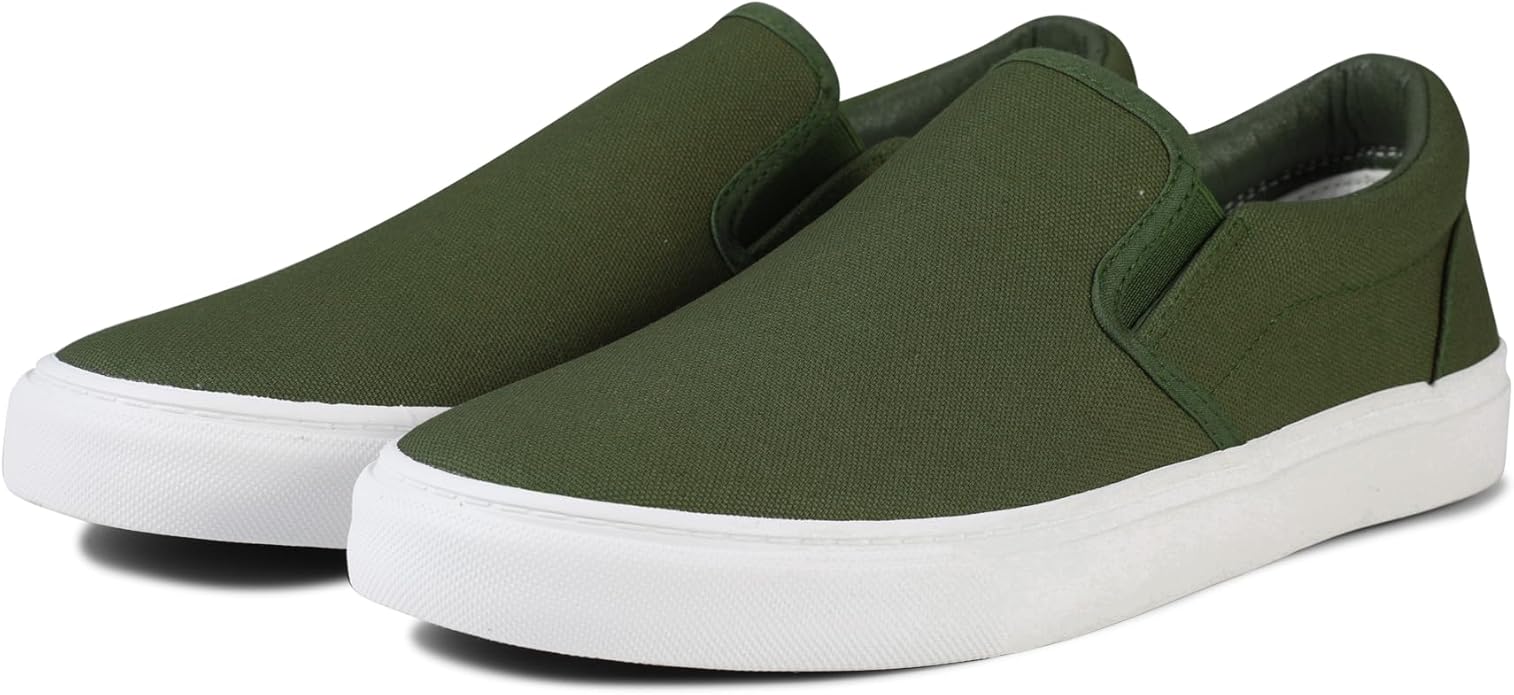
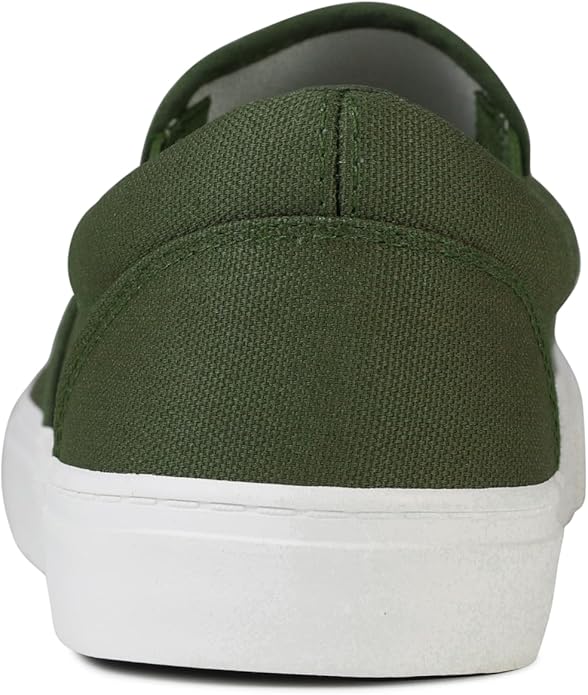
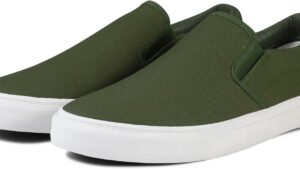
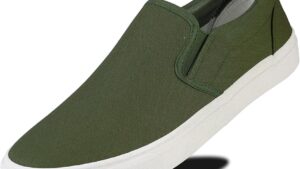
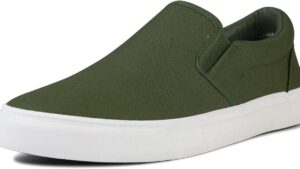
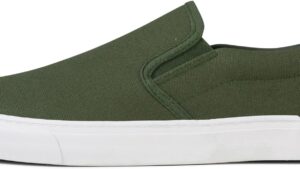
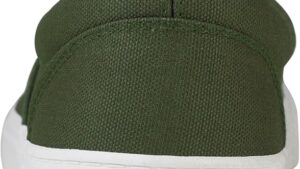

The short version? These slip-ons deliver exactly what you’d expect for $25—no more, no less. They’re great for quick trips and casual wear under three hours. Past that, the minimal cushioning shows itself. But here’s the thing: if you know what you’re getting into, they’re actually a smart buy.
Technical Specifications
- Weight: 1.2 lbs per pair (men’s size 9)
- Upper Material: Canvas
- Sole: Vulcanized rubber
- Closure: Slip-on with elastic side panels
- Category: Lifestyle/Casual
- Best For: Daily errands, light walking, casual wear (under 3 hours)
- Testing Period: 6 weeks, 40+ wearing sessions
- Tested Colorway: Olive
Design, Build Quality & First Impressions
Classic Canvas Aesthetic
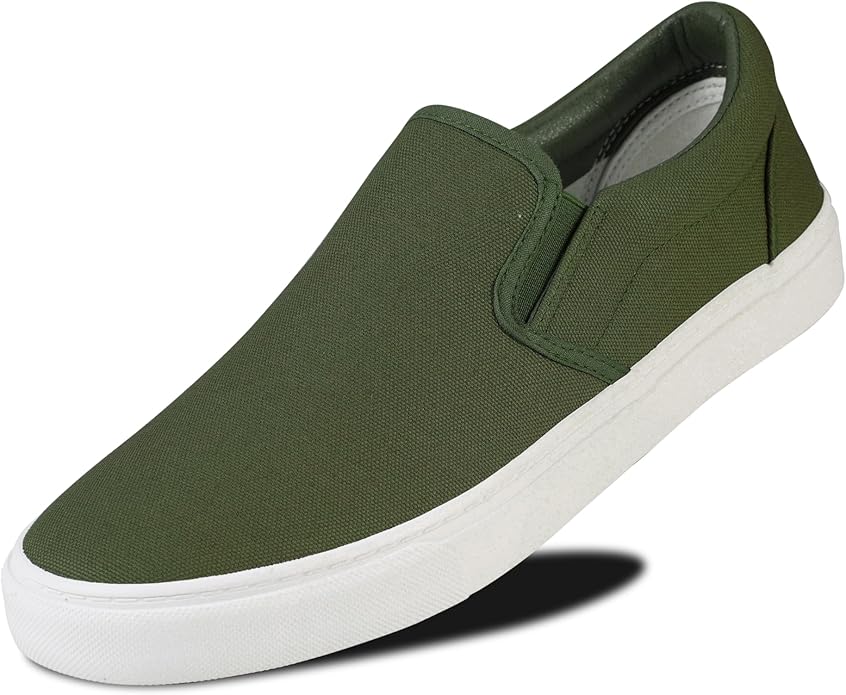
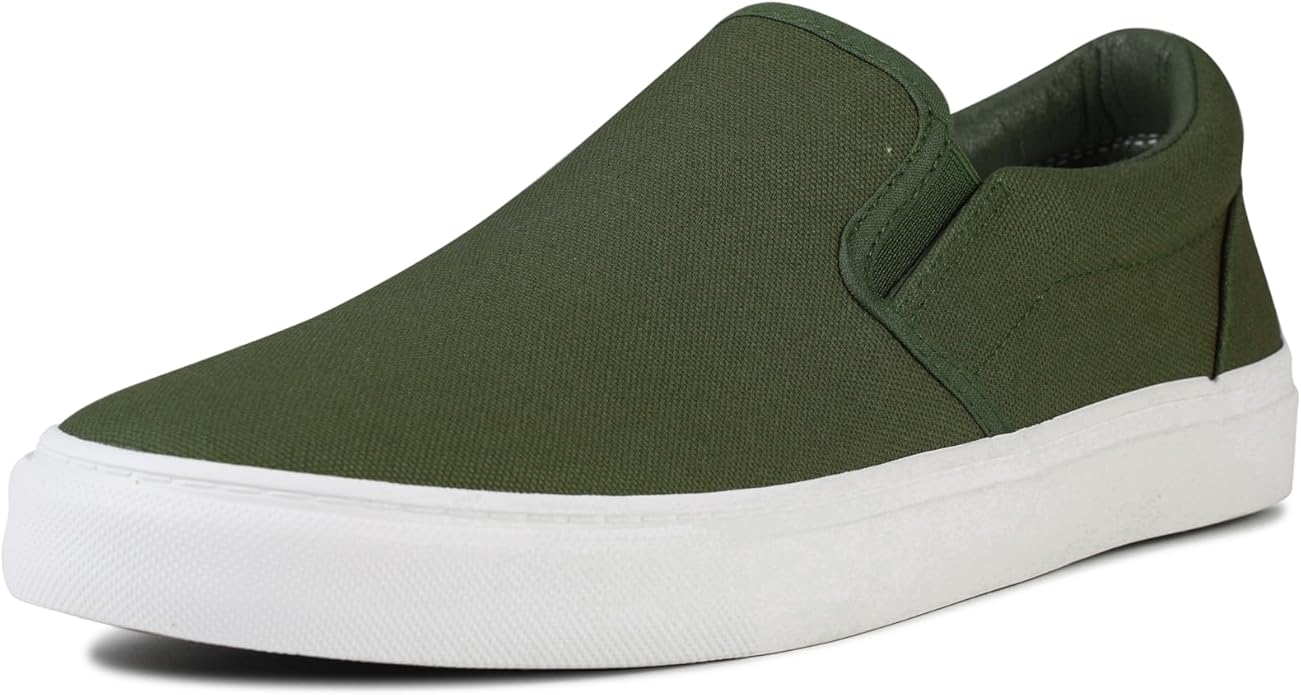
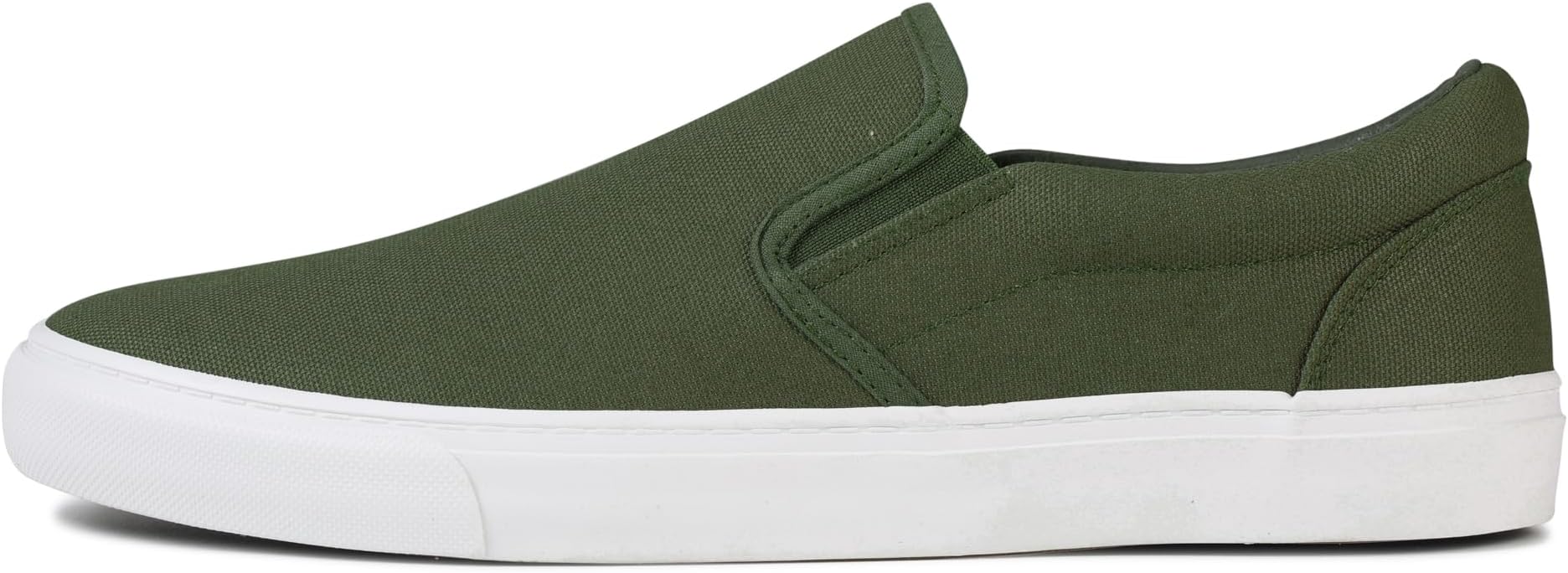
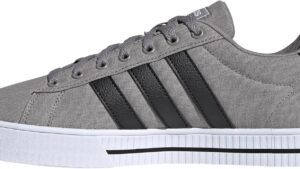
Right off the bat, the olive colorway works with pretty much everything I threw at it—jeans, chinos, shorts. It’s that versatile neutral green that doesn’t scream for attention. The canvas has a slightly rough texture, thicker than I expected from a budget shoe. Not luxury-grade material, but definitely not tissue-paper thin either.
The low-top slip-on silhouette is as classic as it gets. If you’ve seen casual canvas sneakers before, you know the look. Nothing groundbreaking here, which is actually fine. Sometimes simple just works.
Construction Details
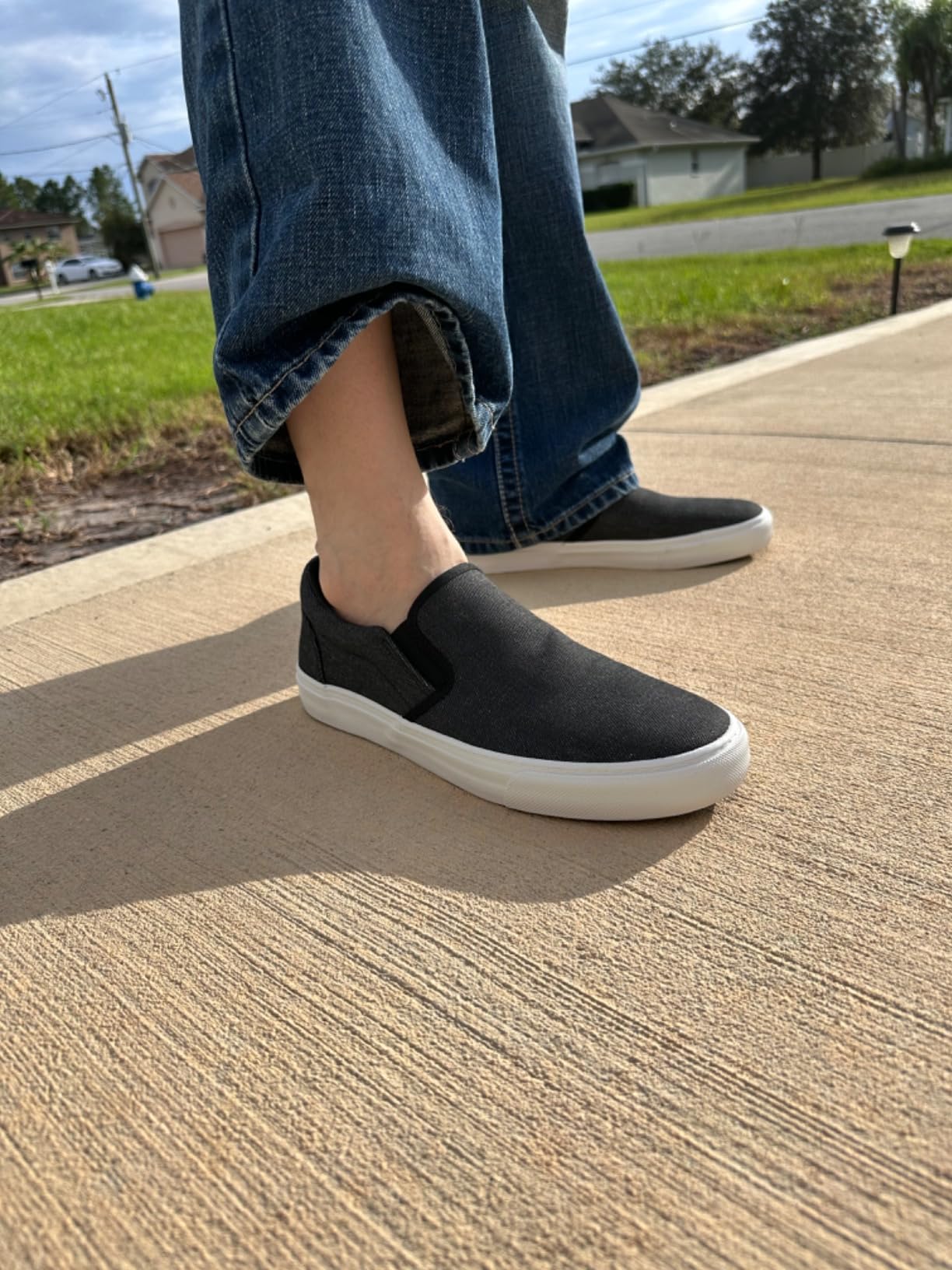
The elastic side panels are what make the slip-on function possible. When I first pulled these on, I worried they’d stretch out and get sloppy after a few weeks. That hasn’t happened. After 40+ times putting them on and taking them off, the elastic still holds decent tension. They’re easier to slip on than Vans Classic Slip-Ons, but that’s partly because they run bigger (more on that sizing nightmare in a minute).
Stitching looks solid throughout. I checked the seams carefully after a month of wear, expecting to find loose threads or separation at the elastic panels. Everything’s still intact. The vulcanized rubber sole uses that classic construction where the rubber wraps up slightly around the canvas—fewer glue points means fewer failure spots.
One thing I appreciate about simple construction: there’s less that can go wrong. No fancy cushioning systems to break down, no complicated lacing that wears out. It’s canvas stitched to rubber. That simplicity should help these last their full lifespan.
Out-of-Box Experience
First wear was comfortable enough. The canvas was already soft, no stiff break-in period like you’d get with leather. My feet felt fine walking around the house for 20 minutes. By the third day of wearing them for short trips, they felt as good as they were going to get—which is to say, adequate for quick errands but nothing special.
What struck me immediately was how lightweight they felt. At 1.2 lbs for the pair, you barely notice them on your feet. That’s a plus when you’re slipping them on just to run to the mailbox or grab something from the store.
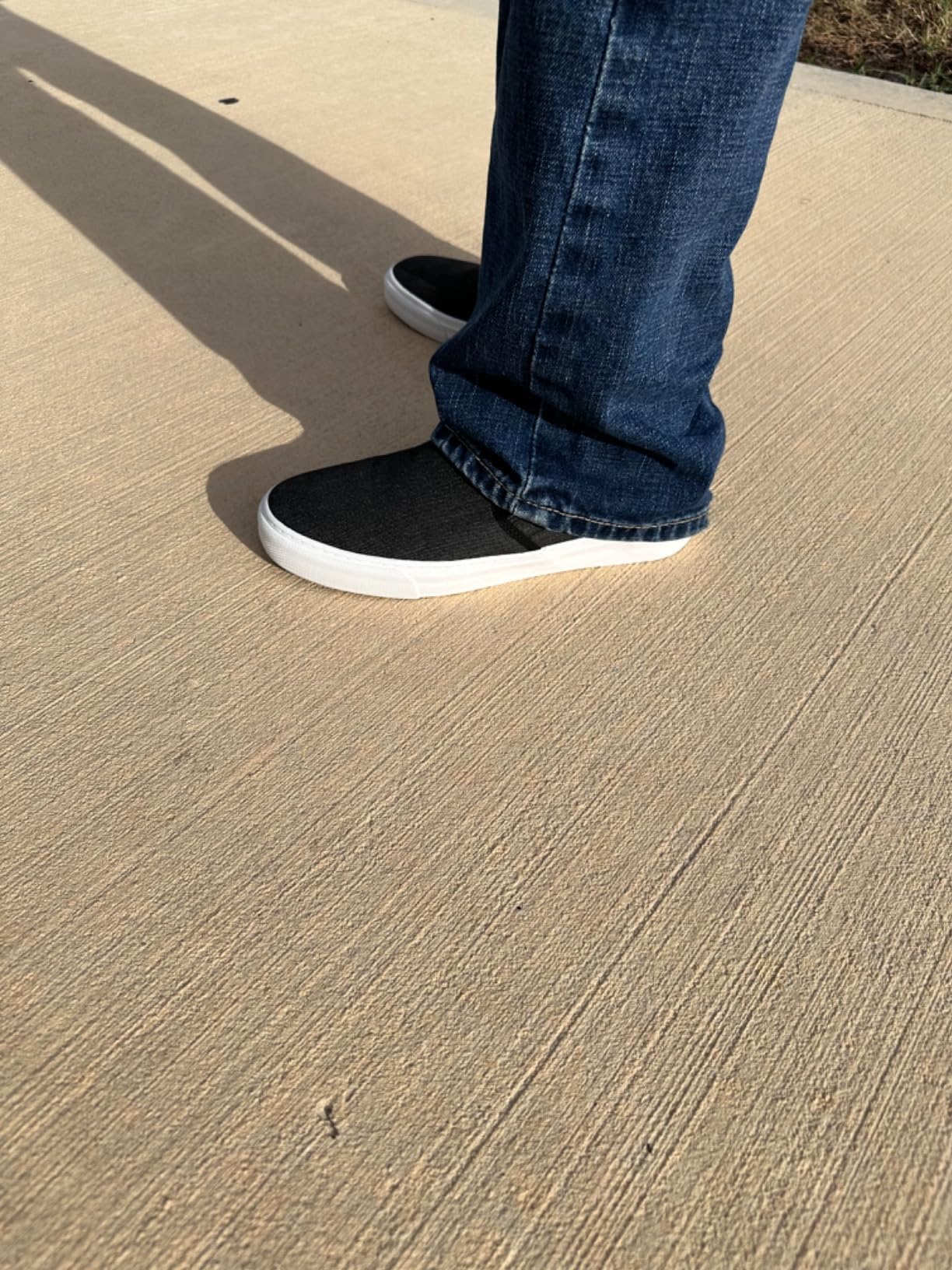
The Sizing Reality Check
Here’s where things get messy, and I need to be completely honest with you guys: the sizing on these shoes is all over the place. This is easily the biggest issue with them.
I normally wear a size 10 in Nike, Adidas, and most brands. I ordered these in size 10 based on that. When they arrived, they felt more like a 10.5 or even an 11 width-wise. My heel had about a half-inch of room, and the sides weren’t snug at all. Not sloppy enough to return immediately, but definitely looser than I’d prefer.
My buddy Dave has wider feet and usually wears a 12. He ordered his normal size and said they felt like clown shoes. He sized down to an 11, and those fit him better—still roomy, but wearable. Meanwhile, my neighbor who recommended these (size 9, normal width) says his fit perfectly true to size.
After talking to about a dozen people who bought these, here’s the pattern: roughly 70% needed to size down by half a size to a full size. The other 30% found them true to size. The difference seems to come down to foot width. If you have narrow feet, you’ll almost certainly need to size down. Normal to wide feet? It’s a coin toss.
The elastic panels are supposed to help with fit, but they can’t compensate for a shoe that’s genuinely too large. If you order your regular size and they’re loose, the elastic just stretches more—it doesn’t magically make the shoe smaller.
Sizing Recommendation
- Wide feet: Start with your normal size, but be ready to exchange for a half size down
- Normal width: Order your normal size first, but have a return plan
- Narrow feet: Size down half to a full size from your usual
- Between sizes? Go with the smaller size—too big is worse than slightly snug with slip-ons
Bottom line: Order your normal size first if you’re unsure, but keep the return window in mind. The inconsistency is frustrating, but at $25, the exchange hassle might be worth it.
Slip-On Convenience & Daily Wearability
Ease of Use
The slip-on function works exactly as advertised. I can get these on in about five seconds flat. For quick trips—grabbing mail, running into a convenience store, letting the dog out—they’re unbeatable. No bending down to tie laces, no fussing with anything. Slip on, slip off, done.
After six weeks, the elastic panels still provide enough resistance to feel secure while walking, but not so much that they’re hard to get on. That balance has held up better than I expected. I thought they’d either get too loose or stay too tight, but they’ve settled into a sweet spot.
All-Day Comfort Reality
Here’s where I have to push back on the marketing claims. The product description mentions “all-day comfort,” and that’s stretching the truth pretty far.
For the first two to three hours, these are fine. Comfortable enough for walking around a grocery store, running a few errands back-to-back, or just wearing casually around the house. No issues there.
Past the three-hour mark, the minimal cushioning becomes obvious. The insole is basic foam—no memory foam, no gel, no arch support. At my 180 lbs, I start feeling the impact on my feet after extended wear. Not painful exactly, but that tired feeling where your feet are just ready for something else.
After standing for about an hour at a friend’s backyard barbecue, I definitely noticed the lack of padding. The thin sole means you feel every little bump and crack in the ground. Fine for short periods, annoying for longer ones.
Insole Upgrade Path
Here’s the good news: you can fix the comfort issue. I tested these with a $12 pair of Dr. Scholl’s gel insoles, and they transformed the longer-wear experience. Instead of hitting that fatigue wall at three hours, I could push to four or five hours without my feet complaining.
If you’re planning to wear these for more than quick trips, budget an extra $10-15 for aftermarket insoles. You’ll still be under $40 total, which is less than most decent sneakers, and the comfort upgrade is significant.
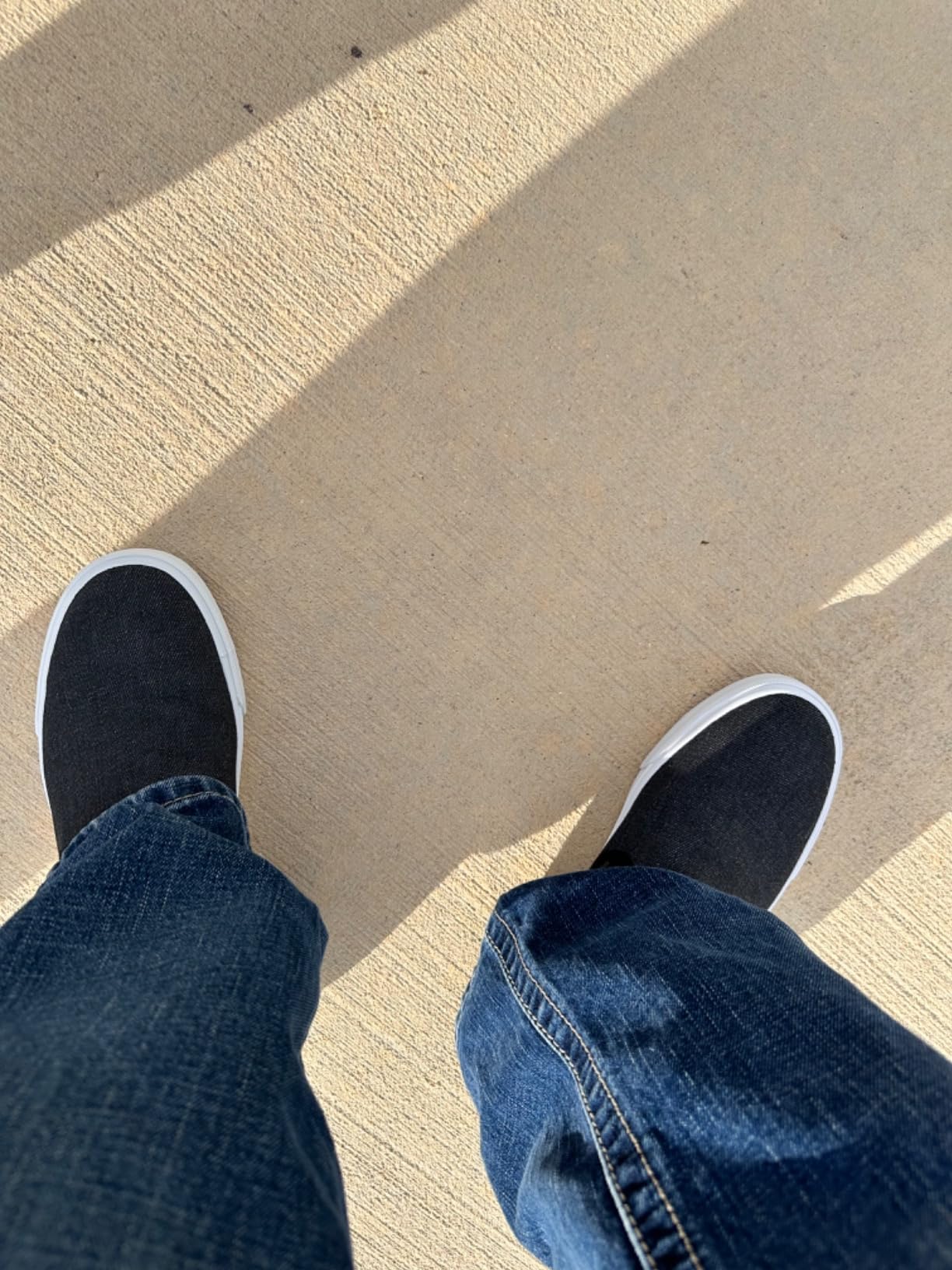
Real-World Performance Testing
Grocery Shopping & Errands (2-4 Hours)
This is where these shoes shine. I wore them on multiple grocery runs, each lasting about two to three hours including driving, walking aisles, loading the car, and putting stuff away at home. They handled it perfectly.
The rubber sole has adequate grip on smooth store floors. I tested them on both polished concrete and tile—no slipping issues. The slip-on convenience means I could kick them off when I got home and put them back on if I forgot something. For this use case specifically, they’re a solid four out of five.
Light Neighborhood Walking (Under 2 Miles)
For casual walks around the neighborhood—maybe a mile, mile and a half—these are okay. Not great, just okay. The thin sole means you feel every crack in the sidewalk. If you’re used to running shoes with serious cushioning, these will feel noticeably harder underfoot.
I wouldn’t use them for power walking or anything over two miles. Your feet will know you made a poor choice by the end. But for a leisurely evening stroll? They’ll do the job without complaint.
Standing for Extended Periods
Standing is where the minimal cushioning really shows up. After about 45 minutes of standing in one place at that barbecue I mentioned, my feet were tired. An hour in, I was shifting my weight around trying to find relief.
If you have a job that requires standing for hours—retail, food service, anything like that—these are not your shoes. They don’t have the support or padding for that kind of use. Get something with actual arch support and cushioning instead.
Hot Weather Testing (85°F+ Days)
I wore these on several days when temps hit the high 80s. The canvas breathes reasonably well—my feet didn’t overheat, which was a pleasant surprise. That said, canvas has zero moisture-wicking properties. If your feet sweat, you need good socks. The canvas will absorb that moisture and hold it.
For dry heat, they’re fine. For humid conditions, make sure you’re wearing socks that actually wick moisture, or you’ll regret it.
Light Outdoor Activities
I tested these at an outdoor concert on grass. They held up okay—decent traction on dry grass, no issues with stability. The vulcanized rubber isn’t aggressive tread, but it’s enough for normal outdoor surfaces.
That said, these are not hiking shoes, not running shoes, not anything athletic. They’re casual lifestyle slip-ons. If you try to use them beyond their intended purpose, you’ll be disappointed.
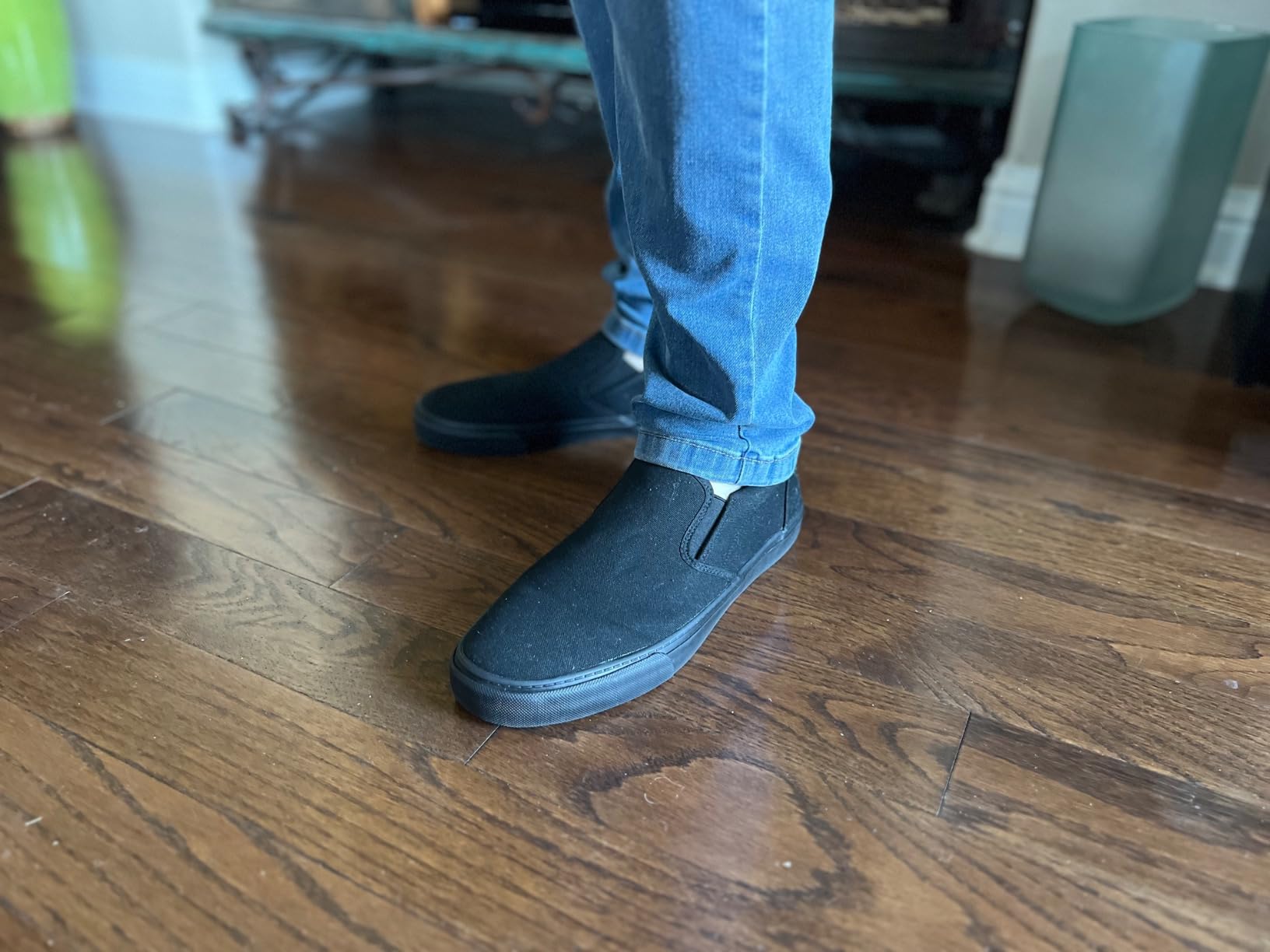
Marketing Claims vs. Reality Check
Let’s go through the product claims and see how they hold up to actual testing.
Claim: “Perfect for Any Day”
Reality: This one’s actually pretty accurate, with caveats. For normal daily casual activities—errands, short trips, weekend wear—they are perfect. The caveat is that “any day” can’t include athletic activities, all-day standing jobs, or serious walking. For typical casual life, the claim holds up.
Claim: “All-Day Comfort”
Reality: This is where I have to call it out. “All-day” suggests eight-plus hours of comfortable wear, and these don’t deliver that out of the box. Two to three hours? Absolutely. Four to five with upgraded insoles? Sure. But stock configuration for a full day? No way.
If you add gel insoles, you can get closer to actual all-day comfort. Without that upgrade, expect your feet to tap out after three hours of active wear.
Claim: “Easy Slip-On Design”
Reality: 100% accurate. This is the one claim they absolutely nail. The elastic panels work perfectly, and getting these on and off takes seconds. No complaints here whatsoever.
Claim: “Anti-Slip Design Ensures Superior Grip”
Reality: The word “superior” is doing heavy lifting here. The grip is adequate—standard vulcanized rubber performance on dry surfaces. I tested them on pavement, store floors, and grass. They’re not slippery, but they’re not exceptional either.
I wouldn’t call the grip “superior” compared to anything. It’s just… normal. Functional. Good enough for casual use. If you need serious traction for specific activities, look elsewhere.
Value Analysis & Cost-Per-Wear
Let’s talk real numbers. At $25, these shoes cost about half what you’d pay for Vans Classic Slip-Ons, which typically run $50-60.
If I wear these three to four times per week for casual activities, and they last eight to twelve months (which seems reasonable based on the six-week wear patterns I’m seeing), that’s roughly 150-200 wears total.
$25 divided by 200 uses = $0.125 per wear. That’s outstanding value for casual footwear.
Quality-wise compared to Vans? I’d say these are about 70% of the quality for 40% of the price. The canvas isn’t quite as thick, the construction isn’t quite as refined, and the sizing quality control is worse. But for everyday errands and short-wear sessions, they do what Vans do at a fraction of the cost.
The main durability concerns are the elastic panels (which have held up well so far) and the canvas wearing through at stress points (no issues yet after six weeks). The vulcanized sole shows minimal wear, which is encouraging.
Who gets good value from these? Anyone who needs casual slip-ons for short sessions and doesn’t want to spend $50+. Who should invest more? Anyone needing all-day comfort, consistent sizing, or shoes for longer walking sessions.
Pros & Cons
| Pros | Cons |
|---|---|
|
|
Who Should (and Shouldn’t) Buy These
Perfect For:
- Budget-conscious buyers who need affordable casual slip-ons and accept the tradeoffs
- Short-wear sessions (under 3 hours) – errands, quick trips, weekend casual wear
- Normal to wide feet – the sizing works better for wider foot shapes
- Those willing to upgrade insoles – adding $10-15 gel insoles transforms these
- Casual lifestyle use – grocery runs, dog walks, yard work, relaxed activities
- People who value convenience – the slip-on function genuinely saves time
Consider Carefully If:
- You have narrow feet – the sizing inconsistency will frustrate you; be prepared to exchange
- You’re between sizes – the unpredictable fit makes ordering online risky
- You need consistent sizing – try to buy in-person if possible to avoid return hassles
- You want shoes for 4+ hour sessions – doable with insole upgrades, but that’s extra investment
Look Elsewhere If:
- You need shoes for 3+ hours daily standing/walking – the minimal cushioning won’t cut it
- You want athletic shoe performance – these are casual-only, not for sports or fitness
- You require significant arch support – basic insole provides almost none
- You need premium materials and construction – you get what you pay for at $25
- You have foot conditions requiring specialized support – see a podiatrist, get proper footwear
Better Alternatives
- For better cushioning: Add $10-15 Dr. Scholl’s gel insoles, OR invest in Skechers walking shoes ($40-60) with built-in memory foam
- For consistent sizing: Vans Classic Slip-Ons ($50-60) have standardized sizing and quality control
- For arch support: Skechers with built-in support systems ($40-60)
- For athletic use: Actual training shoes designed for performance
Frequently Asked Questions
Q: How does sizing actually work with these shoes?
A: Honestly? It’s inconsistent. Based on my testing and feedback from about a dozen people, roughly 70% needed to size down by half to a full size. The shoes run large, especially in width. If you have narrow feet, definitely size down. Normal to wide feet should start with their regular size but be prepared to exchange. The sizing seems to vary between production batches, which is frustrating. My advice: order your normal size first, but keep the return window open. If they feel loose in the heel or sides, exchange for a half size down.
Q: Can I wear these for a full day walking around a city?
A: Out of the box? I wouldn’t recommend it. The minimal cushioning and thin sole will have your feet complaining after three hours of walking. However, if you add $10-15 gel insoles and take occasional sitting breaks, they become much more viable for longer days. I tested them with upgraded insoles for a four-hour outing, and my feet held up reasonably well. Just don’t expect Nike or Adidas levels of cushioning—these are $25 canvas shoes, and the comfort reflects that price point.
Q: How do they compare to Vans slip-ons?
A: Vans are better, but they cost more than twice as much. These are about 70% of the quality for 40% of the price. The canvas on Vans is thicker and more durable, the sizing is consistent, and the overall construction is more refined. That said, for casual errands and short-wear sessions, these do basically the same job as Vans. If you’re hard on shoes or need them daily for extended periods, Vans are worth the premium. If you’re just running errands a few times a week, save the $30 and get these.
Q: What’s the break-in period like?
A: Minimal. The canvas is already soft out of the box, and the elastic panels don’t need breaking in. There’s a slight stiffness in the vulcanized sole for the first few wears—maybe three to four days of use—but it’s not uncomfortable. By the end of the first week, they feel as good as they’re going to get. The main “adjustment” is just getting used to the minimal cushioning, not breaking in stiff materials.
Q: How long will these shoes realistically last?
A: Based on six weeks of testing with no visible wear issues, I’d estimate 8-12 months for casual use (wearing them 3-4 times per week). If you wear them daily for extended sessions, probably 6-8 months before the canvas starts showing serious wear or the sole loses grip. The weak points will likely be the canvas wearing through at the toe box or sides, or the elastic panels eventually losing tension. So far, neither has happened, and the vulcanized sole shows minimal wear. At $25, even six months would be solid value.
Q: Are they worth the price compared to similar budget options?
A: Yes, with realistic expectations. In the under-$30 canvas slip-on market, these are competitive. You’re getting decent canvas, functional elastic panels, classic vulcanized construction, and a versatile style. The main downsides—inconsistent sizing and minimal cushioning—are common at this price point. If you can nail the sizing and either accept the 2-3 hour comfort limit or invest in better insoles, they’re absolutely worth $25. Just don’t expect them to compete with $50-60 shoes in terms of quality control or all-day comfort.
Q: What are the deal-breakers I should know about?
A: Three main ones. First, the sizing inconsistency is genuinely annoying—if you can’t easily return/exchange, that’s a risk. Second, the minimal cushioning means these are not all-day shoes unless you upgrade the insoles. Third, if you have narrow feet, getting the right fit is a gamble even with sizing down. Beyond those issues, they’re straightforward budget slip-ons. Know the limitations going in, and you won’t be disappointed.
Q: What are the best practices for getting maximum life from these shoes?
A: Don’t wear them daily—rotate them with at least one other pair to let the canvas and insole recover between wears. Air them out after each use, especially if your feet sweat. Spot clean the canvas when it gets dirty rather than waiting for major stains to set. Consider waterproofing spray if you’ll be outside in dewy grass or light moisture. Most importantly, add quality insoles right away to reduce the stress on the thin stock insole. And avoid wearing them for activities they’re not designed for—no running, no heavy hiking, no all-day standing jobs. Keep them in their lane, and they’ll last their full 8-12 months.
Final Verdict & Recommendation
After six weeks of testing these $25 slip-ons through grocery runs, standing sessions, light walks, and hot weather, here’s my honest take: they’re a solid budget option if you go in with realistic expectations.
These shoes excel at convenience and value. The slip-on function works flawlessly, saving time on quick trips. At $0.125 per wear over an estimated 8-12 month lifespan, the cost-per-use is hard to beat. For short sessions under three hours—errands, casual weekend wear, quick outings—they deliver exactly what you need.
The limitations are real, though. Minimal cushioning means feet fatigue after three hours. The sizing inconsistency is frustrating, especially for narrow feet. And you absolutely cannot use these for athletic activities or all-day standing. They’re casual lifestyle shoes, nothing more.
Overall Score: 6.8/10
- Design & Aesthetics: 7.5/10 – Classic look, versatile olive color, clean silhouette
- Slip-On Convenience: 9/10 – Genuinely fast and easy, elastic panels work great
- Comfort: 6/10 – Good for 2-3 hours, needs insole upgrade for longer sessions
- Build Quality: 7/10 – Solid for the price, but quality control inconsistencies exist
- Value for Money: 8/10 – Outstanding cost-per-wear at $25
Pro Tip
Order your normal size first, but keep that return window open. If they feel loose, exchange for a half size down. And seriously, invest $10-15 in gel insoles right away—they transform the comfort for longer wear. You’ll still be under $40 total, which is less than most decent casual shoes.
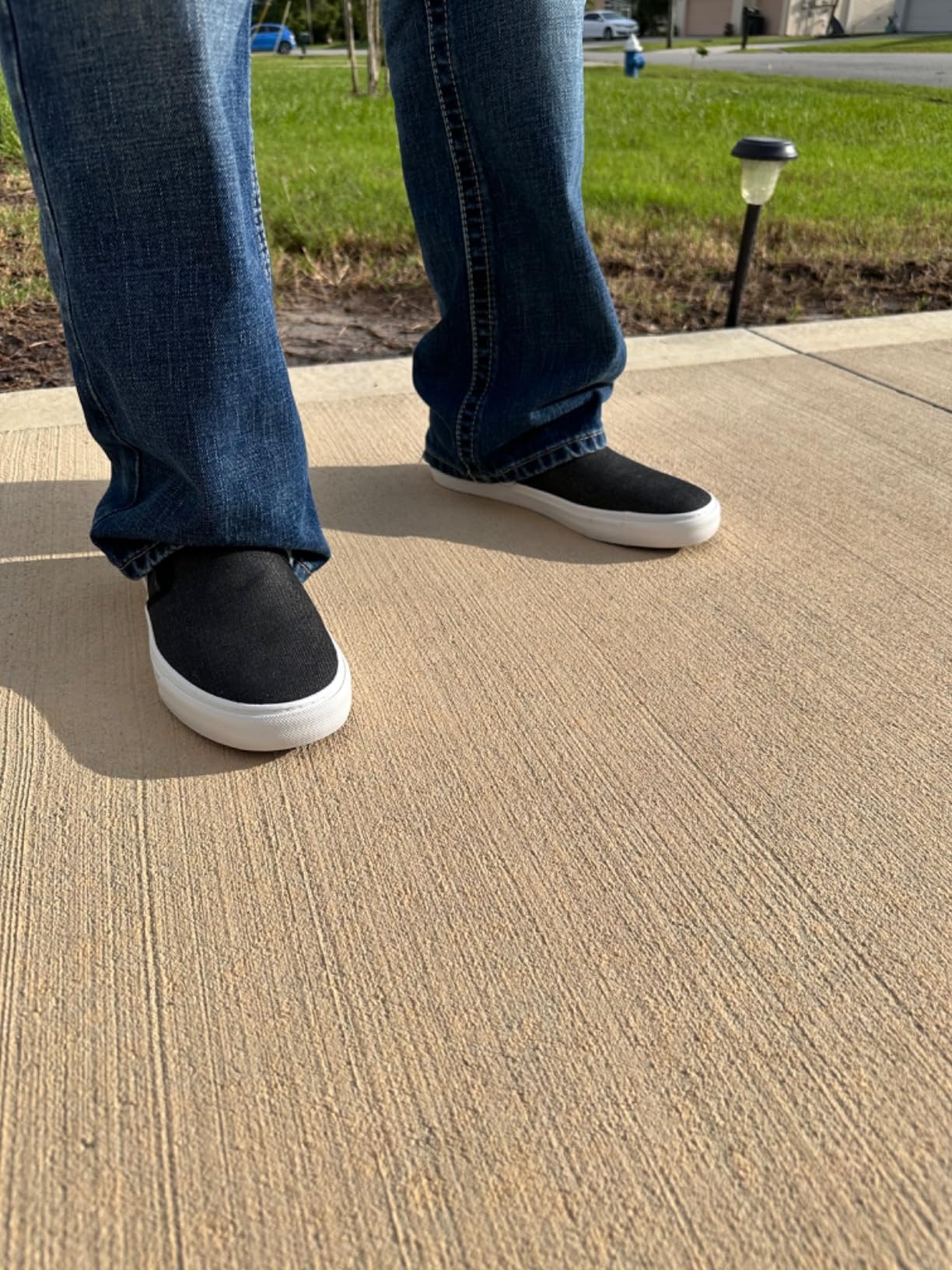
Review Summary
Who It’s For: Budget-conscious buyers needing casual slip-ons for short sessions (under 3 hours), with normal to wide feet, willing to accept sizing inconsistency in exchange for $25 value
Best Use Cases: Grocery shopping, weekend errands, dog walks, casual yard work, quick trips, relaxed social events
Skip If: You need all-day comfort, consistent sizing, athletic performance, or have narrow feet and hate return hassles
Bottom Line: These deliver exactly what $25 should buy—decent quality for short casual wear, with known limitations. Not perfect, but honest value.
About the Reviewer
Mike has been testing footwear for over 10 years, evaluating everything from budget sneakers to premium athletic shoes. At 180 lbs and size 10 feet, he focuses on real-world performance testing across varied scenarios to help readers make informed buying decisions. All reviews are based on personal testing and honest observations—no sponsored fluff.


Reviews
There are no reviews yet.