
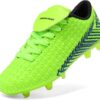
Technical Specifications
Materials:
- Outer Material: Rubber with textured surface pattern
- Sole Material: Rubber with multi-stud configuration
- Inner Material: EVA (Ethylene Vinyl Acetate) foam cushioning
- Closure: Traditional lace-up system
- Design: High-top ankle coverage
- Category: High-top multi-surface soccer cleats (firm ground, artificial turf, hard ground)
- Best For: Recreational players prioritizing ankle support, youth players ages 10-18, weekend warriors playing 1-3 times weekly, players with ankle injury history seeking extra protection
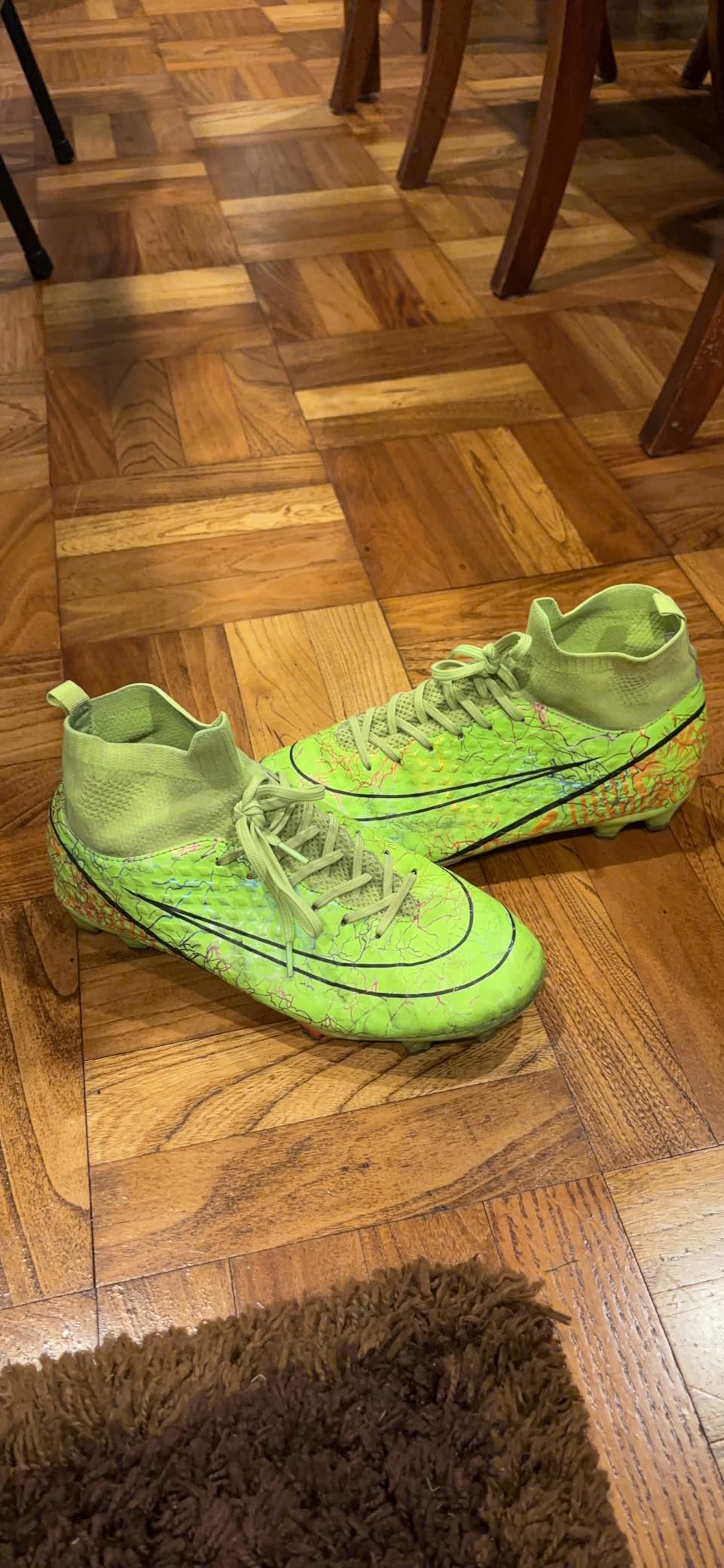
First Impressions & Unboxing
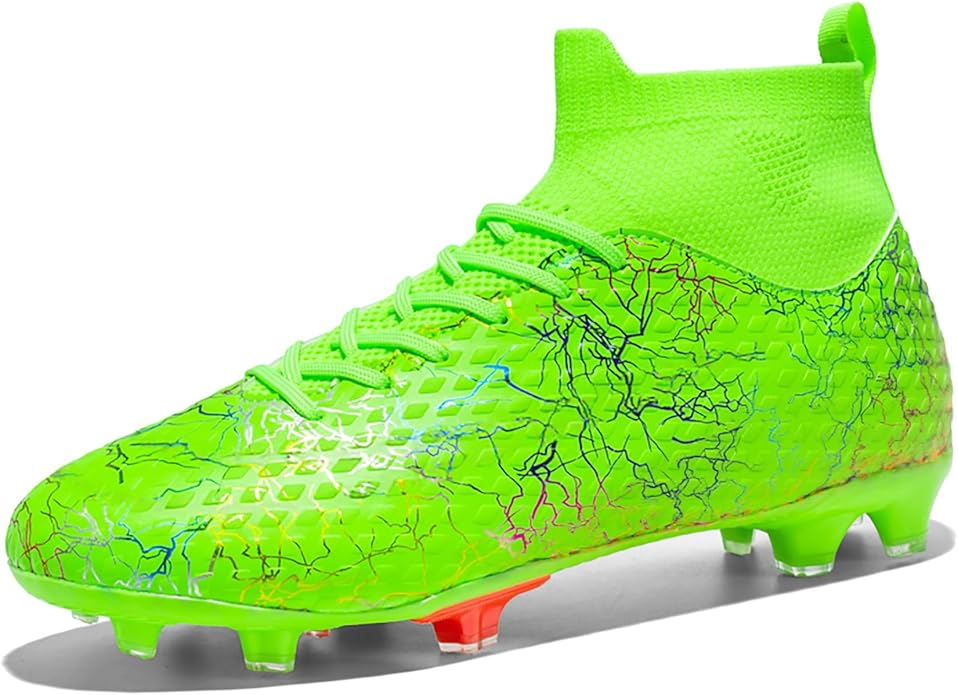
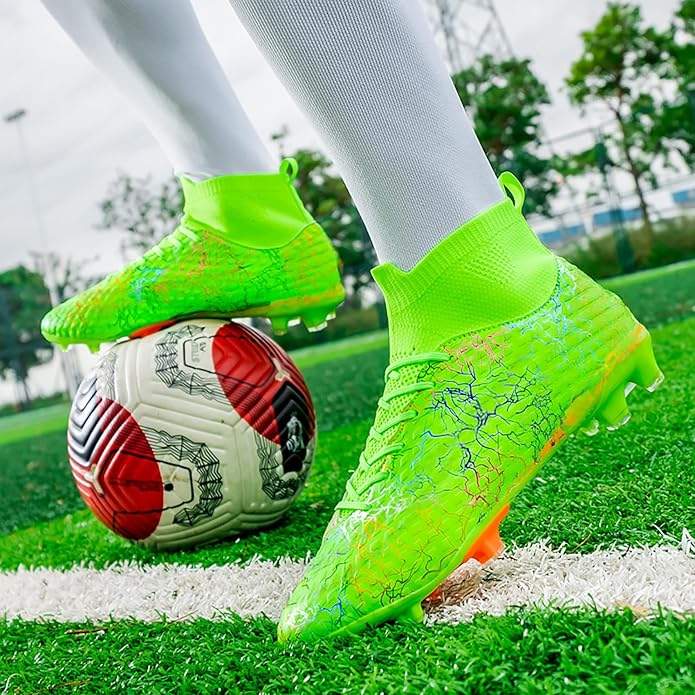
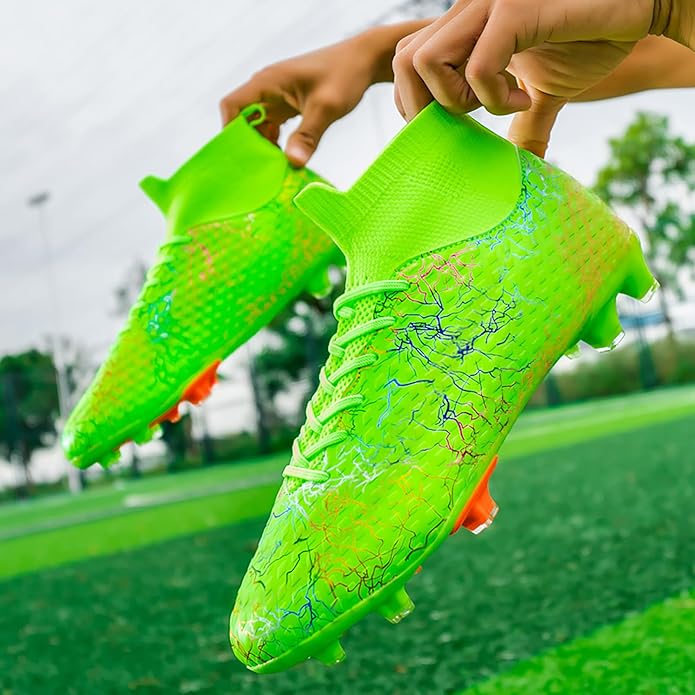
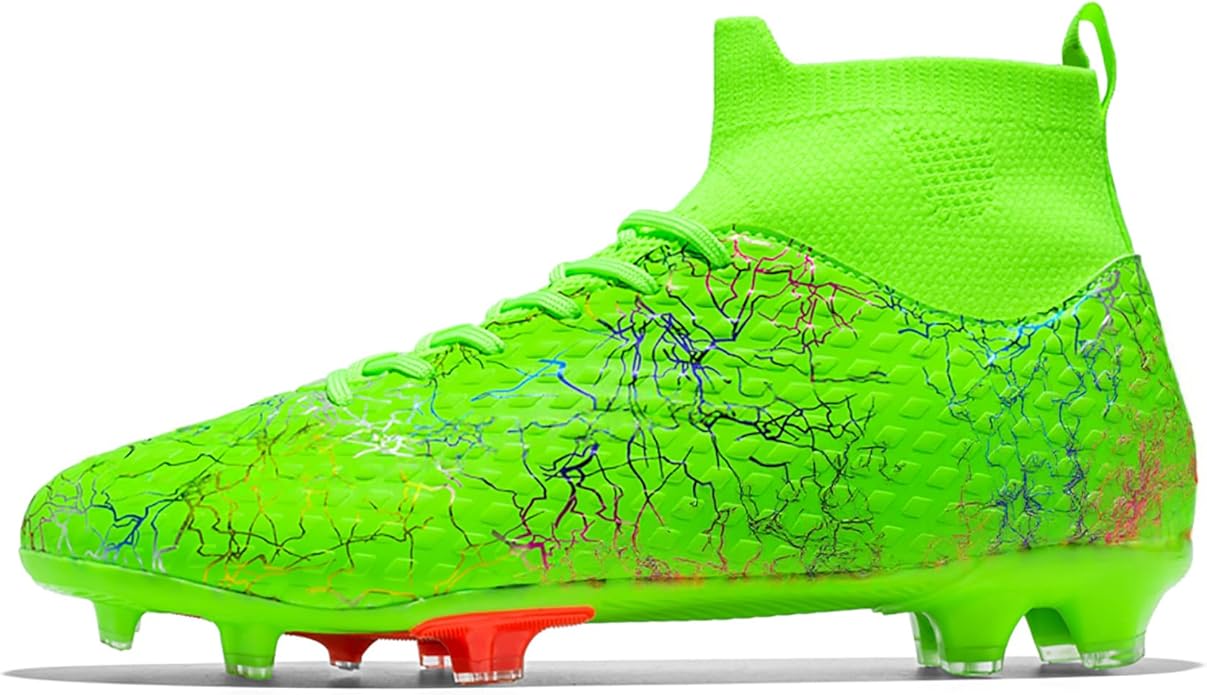
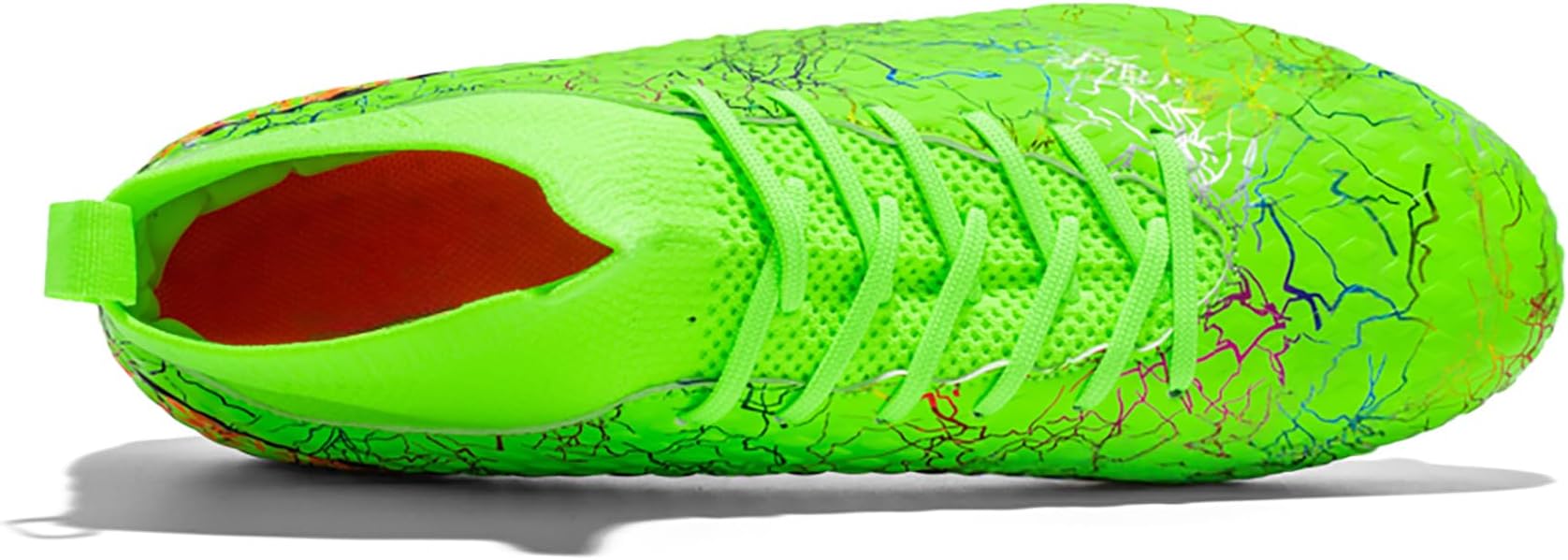
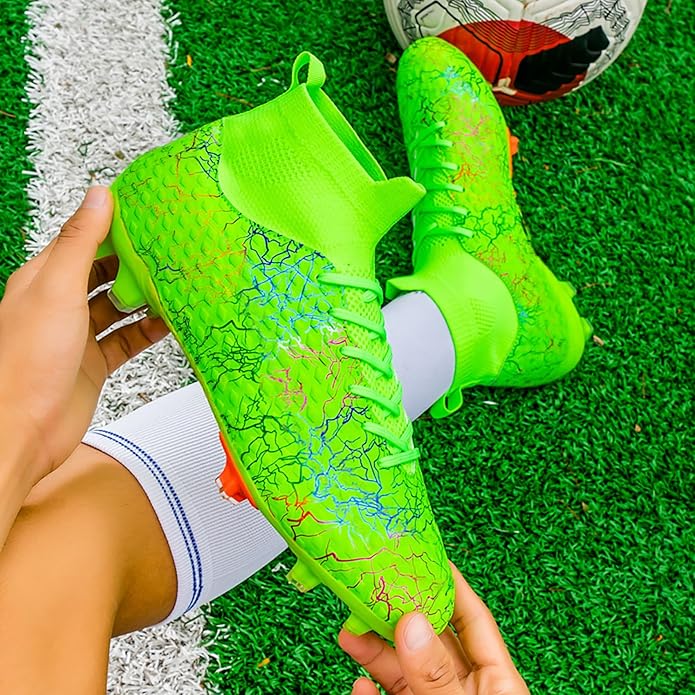
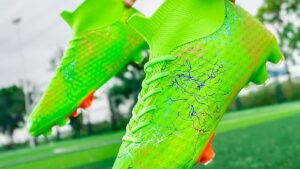
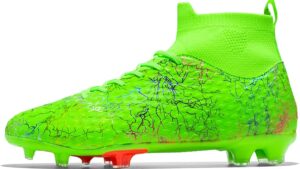
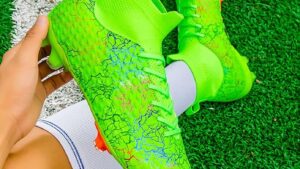
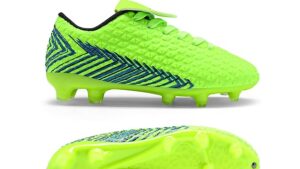
The first thing that caught my attention when unboxing these cleats was the high-top design itself. You just don’t see this often in soccer cleats anymore, especially not at the budget end of the market. The green colorway I tested has a bold athletic look that several teammates commented on during my first session wearing them.
Running my hands over the rubber upper, I was surprised by the quality feel. There’s a textured pattern across the surface that’s designed for ball control, and the material doesn’t feel as cheap as the price tag might suggest. The construction looks more premium than $55 would normally deliver, though time would tell whether that translated to actual durability.
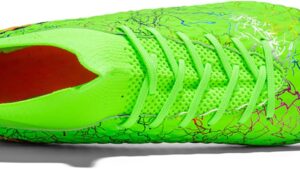
Out of the box, the fit was true to size for my 9.5 feet with normal width. The toe box provided adequate space without feeling loose, which was a good sign. However, I did notice the laces felt lighter and thinner than I’d prefer. This turned out to be a legitimate concern, as I’ll detail in the durability section.
My first training session wearing these gave me mixed feelings. The high-top design provided a noticeable sense of ankle constraint, which was simultaneously reassuring and restrictive. During warm-ups, they felt a bit stiff around the ankle collar. By the end of that 90-minute session, I could feel the support working, but I also knew these would need proper break-in time before feeling natural.
The rubber upper delivered decent ball touch right away. During juggling drills and close control work, the textured surface helped the ball stick better than I expected from a non-leather material. It’s not the responsive feel you get from premium leather cleats, but for recreational use, it exceeded my initial expectations.
Sizing & Fit Deep Dive
Let me clear up the sizing confusion right away, because I’ve seen contradictory advice floating around online. These run true to size based on my testing. I ordered my normal 9.5, and they fit correctly compared to my Nike Mercurial cleats.
If you typically wear a size 9 in Nike or Adidas soccer cleats, stick with size 9 in these. The fit is actually roomier than narrow European brands like the Adidas Copa line, which tend to run narrow. For players with normal width feet, these should work well without going up a half size.
The toe box provides reasonable space without being too roomy. I had about a thumb’s width between my longest toe and the front of the cleat when standing, which is ideal for preventing toe jamming during aggressive stops and direction changes.
Now, here’s the important distinction: The high-top design feels snug around the ankle initially, and that’s by design, not a sizing issue. During my first 4-5 sessions, this ankle snugness felt somewhat restrictive. By the second week of regular use, the material had adapted to my ankle shape and the fit became comfortable.
The lace system provides adequate lockdown when new. I was able to cinch down the midfoot area securely without creating pressure points. However, as the laces began showing wear after about three weeks, I noticed the lockdown wasn’t quite as reliable. Plan on potentially replacing the laces if you use these regularly.
My sizing recommendation: Stick with your normal soccer cleat size. Only consider going up a half size if you typically find narrow cleats too tight and prefer a roomier fit. Don’t size down based on generic advice you might find online for other brands, as that doesn’t apply to these particular cleats.
High-Top Design & Ankle Support
This is where these cleats genuinely differentiate themselves from the budget competition. The high-top ankle support isn’t just a cosmetic feature, it’s a functional design element that I could feel working during play.
During quick direction changes and defensive slides, the ankle collar provided a physical constraint that created a confidence-inspiring sense of stability. Compared to my regular low-cut cleats, I experienced noticeably less ankle fatigue during longer sessions. After 90-minute games, my ankles felt less fatigued than they typically do in low-cut designs.
I tested these extensively in scenarios where ankle support matters most: sharp cuts while changing direction, landing from headers, and extended training sessions that push into the 2-hour mark. In all these situations, the high-top design delivered measurable benefits. The support isn’t just marketing speak, it’s genuine physical ankle constraint that helps maintain stability.
However, there’s a real trade-off here. The extra material and structure add weight compared to ultralight low-cut cleats. While these are lightweight for a high-top design, they’re still heavier than speed-focused options like the Nike Mercurial line. For players prioritizing pure speed and agility, this extra weight might feel limiting.
The break-in period is important to acknowledge. During my first 4-5 sessions, the high-top collar felt restrictive when making certain movements. This wasn’t uncomfortable exactly, but it was noticeable. By the sixth session, my ankles had adapted to the support and it started feeling natural rather than constraining. If you’re used to low-cut cleats, give yourself a few sessions to adjust before making a final judgment.
For players with ankle injury history or those recovering from sprains, this support feature could be valuable. One teammate, Carlos, who’s 5’8″ and weighs about 165 pounds, recently recovered from an ankle injury and specifically appreciated the extra support these provided. Meanwhile, Jake, a faster winger at 6’1″ and 180 pounds, found them too restrictive for his playing style.
The breathability within the high-top design deserves mention. There are ventilation points built into the ankle area, and they work adequately in moderate temperatures. During sessions in temperatures below 80°F, I didn’t experience overheating. However, when we hit 85°F+ conditions during late summer training, the extra material coverage definitely trapped more heat than my regular low-cut cleats.
On-the-Field Performance
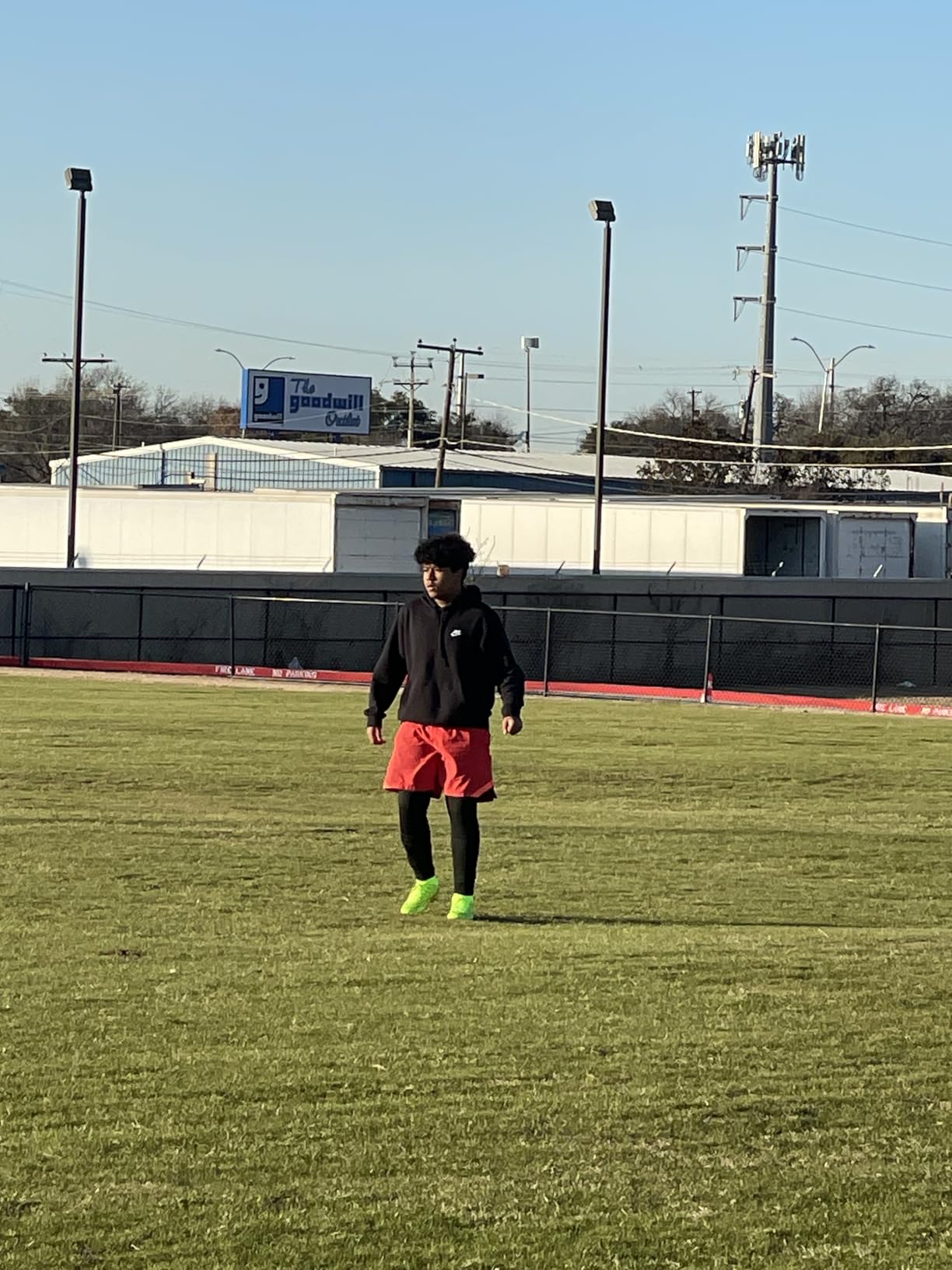
I tested these cleats across every surface type available in my area: natural grass fields ranging from firm to moderately wet, artificial turf at our training facility, and occasional harder ground conditions at older fields. The performance varied significantly by surface, which helped me understand exactly where these excel and where they struggle.
On firm natural grass, these cleats delivered solid traction. I felt planted and confident during cuts and direction changes, with no concerning slipping incidents. The spike configuration works well for this surface type, providing reliable grip without being so aggressive that they catch awkwardly. For recreational players whose primary surface is well-maintained natural grass, these will serve you well.
Artificial turf performance was surprisingly good. I honestly expected budget cleats to struggle here, but the rubber spike design handled turf consistently well. Unlike some traditional cleats with longer studs that can catch on artificial surfaces, these provided smooth, reliable traction. The high-top design also prevented turf pellets from getting inside the cleat, which was an unexpected benefit I appreciated during multiple turf training sessions.
Hard ground adaptation was decent but not ideal. On fields with less give and more compacted surfaces, the rubber sole provided some shock absorption. I could feel the extra cushioning compared to harder-soled cleats, which made these more comfortable than expected on harsh surfaces. That said, they’re not optimized for rock-hard fields, and I wouldn’t recommend them as your primary cleat if you consistently play on very hard surfaces.
Ball control assessment revealed the textured rubber upper working better than I initially anticipated. During juggling drills, the ball “stuck” nicely to the surface, making touch control easier than with completely smooth synthetic materials. For close control dribbling and quick touches in tight spaces, these performed adequately for recreational level play.
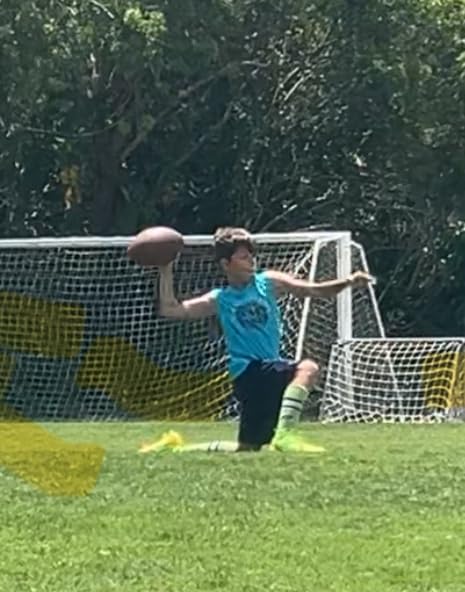
However, the ball control doesn’t match premium leather or high-end synthetic materials. Compared to my experience with Nike Tiempo leather cleats, these lack that immediate responsive feel and precise touch. For strikers who need millimeter-level precision on their shots or forwards who rely on first-touch perfection, the rubber upper shows its limitations. For midfielders and defenders at the recreational level, the ball control is perfectly adequate.
Stability stands out as a genuine strength. The combination of the high-top design and the rubber construction creates a forgiving platform that’s especially beneficial for developing players or those returning from injuries. The cleats provide a stable base that inspires confidence during physical plays and aggressive movements.
I recommended these to several parents in our local youth soccer community whose kids needed cleats with good ankle support. The feedback has been consistently positive for that specific use case. Youth players benefited from the stability, and parents appreciated the price point given how quickly kids outgrow cleats.
Performance Across Conditions
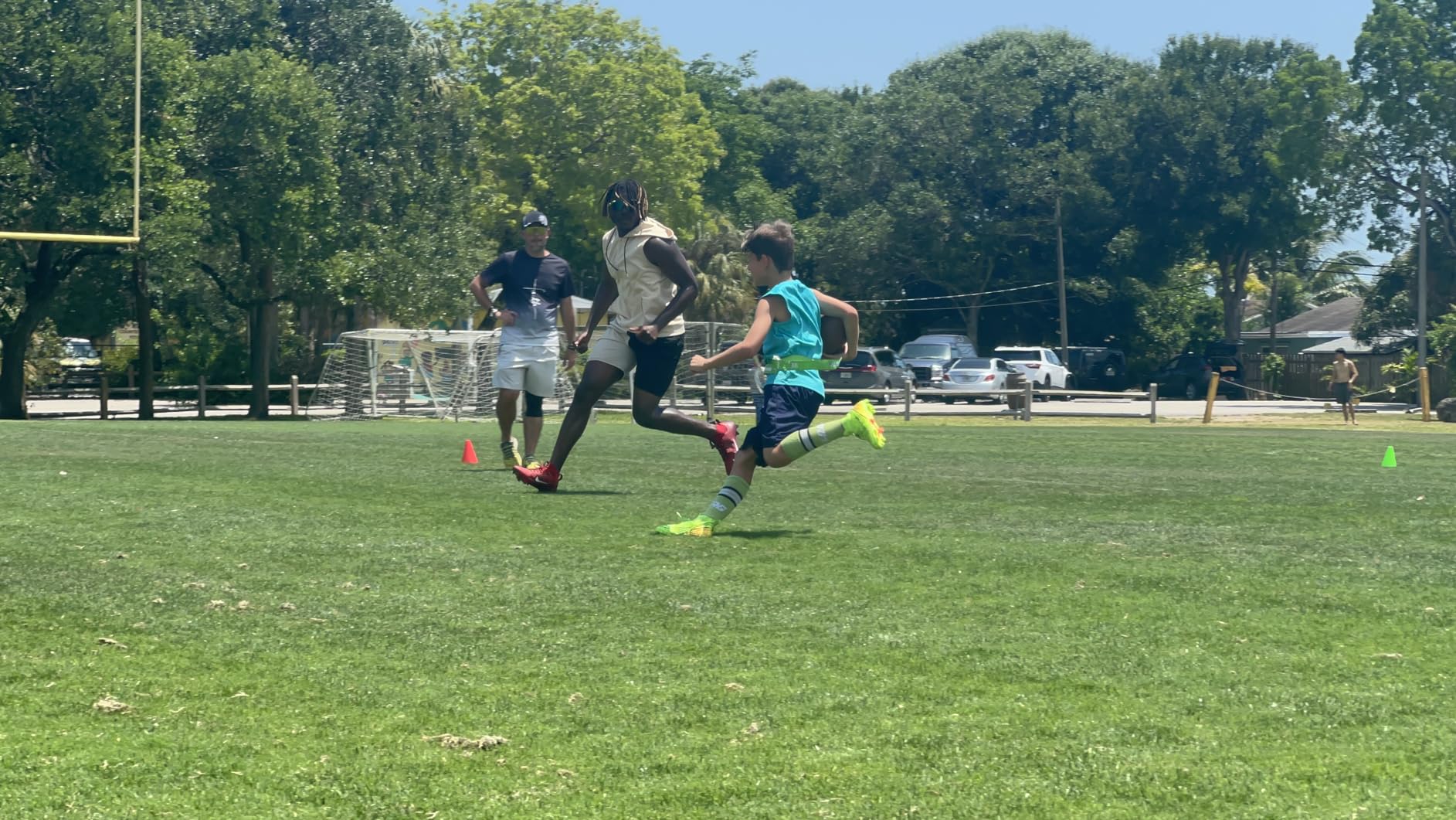
Over 8 weeks of testing, I encountered temperature ranges from 65°F up to 90°F+, various weather conditions including light rain, and field states ranging from dry firm grass to wet and moderately muddy conditions. This variety helped me understand exactly when these cleats perform well and when they show limitations.
On firm natural grass in dry conditions, these cleats excel. This is their sweet spot. The spike pattern grips consistently, I could make aggressive cuts with full confidence, and traction held strong throughout 90-minute games. If your typical playing conditions involve well-maintained grass fields during dry weather, these will meet your needs reliably.
Wet grass performance was adequate but showed clear limitations. During one game played in light rain, the cleats handled the moisture reasonably well during the first half. As the field got wetter and torn up in the second half, I noticed the traction becoming less reliable compared to what I’d experience in premium cleats designed specifically for firm ground conditions. They’re manageable in occasional wet games, but I wouldn’t rely on them as your primary cleat if you regularly play in rainy conditions.
Muddy field performance exposed the budget nature of these cleats. During a training session on a field that was genuinely muddy rather than just wet, the spike pattern couldn’t provide the aggressive bite needed for reliable traction. I found myself playing more conservatively than usual to avoid slipping. If you frequently encounter soft, muddy fields, these aren’t the right choice.
Artificial turf consistency impressed me. Across multiple training sessions on turf spanning different weather conditions, these maintained reliable performance. The rubber spikes don’t catch awkwardly on artificial surfaces, and the traction feels consistent throughout sessions. The high-top design prevented those annoying turf pellets from getting inside the cleat, which added to the positive turf experience.
Temperature tolerance became an issue above 85°F. During hot weather training sessions and games, the breathability limitations of the rubber upper and high-top design became noticeable. My feet felt warmer than they do in mesh-upper cleats or low-cut designs. The ventilation points help, but they can’t overcome the basic physics of more material coverage and rubber construction. In normal temperatures ranging from 65°F to 80°F, breathability was adequate and didn’t cause problems.
Rain handling revealed one positive aspect of the rubber construction: these clean up easily. After wet games, a quick rinse with a hose and wipe-down with a cloth restored them to looking nearly new. The rubber doesn’t absorb water like some materials, which made maintenance simpler than expected.
Does It Deliver on Brand Claims?
Let me work through the key marketing claims and provide honest assessments based on my 8-week testing period.
“Lightweight and durable with textured surface” – I’ll give this claim about 75% credit. The lightweight part is genuinely true for a high-top design. These feel noticeably lighter than traditional basketball-style high-tops I’ve tested. The textured surface does provide grip for ball control as claimed. However, the durability component is “to be determined” based on my timeline. While my pair held up well over 8 weeks, user reports and early warning signs suggest long-term durability may be questionable.
“Exceptional abrasion resistance and stability” – The stability claim is spot-on. These deliver excellent stability through the combination of the high-top design and secure platform. The “exceptional abrasion resistance” claim is more optimistic. Short-term abrasion resistance during my testing was decent, with the rubber showing normal scuff marks but no catastrophic wear. However, calling it “exceptional” is marketing overstatement given the community reports I’ll detail in the durability section.
“Efficient air circulation, exceptional breathability” – This claim gets partial credit at best. There is air circulation through ventilation points, so the design makes an effort. However, “exceptional breathability” is false. These are adequately breathable in moderate temperatures but noticeably less breathable than mesh-upper alternatives, especially once temperatures climb above 85°F. The rubber construction inherently limits breathability compared to modern mesh materials.
“Ample ankle support, helping to prevent injuries” – The ankle support is genuine and ample as claimed. I could feel the difference during quick movements and long sessions. However, I need to rephrase the “prevent injuries” claim to avoid making medical assertions I can’t verify. What I can say is the ankle support provides a confidence-inspiring feeling and physical constraint that may help players feel more secure. It’s not a substitute for proper warm-up, conditioning, and technique, but the support is real.
The overall pattern in the marketing is that the claims are mostly directionally accurate but use superlatives that reality doesn’t quite support. “Good” becomes “exceptional,” “adequate” becomes “perfect,” and “helps provide support” becomes “prevents injuries.” Adjust your expectations accordingly, and you won’t be disappointed.
Durability Concerns & Long-Term Outlook
This is the section where I need to be completely transparent about what I observed during my testing period and what other users have reported.
My personal pair held up well over the 8-week testing period. The rubber upper showed normal scuffing and wear marks consistent with regular use, but nothing concerning. The spikes remained intact without any falling out or significant degradation. The overall construction stayed solid throughout my 35+ sessions and 12 games.
However, the laces are a different story. After approximately 3 weeks of regular use, I noticed the laces beginning to fray. This happened faster than I’d expect from quality cleats. By week 6, I was seriously considering replacing them. The lace wear is the first failure point you’re likely to encounter, and it happens relatively quickly. Budget for replacement laces or plan to swap them out proactively around the 3-4 week mark.
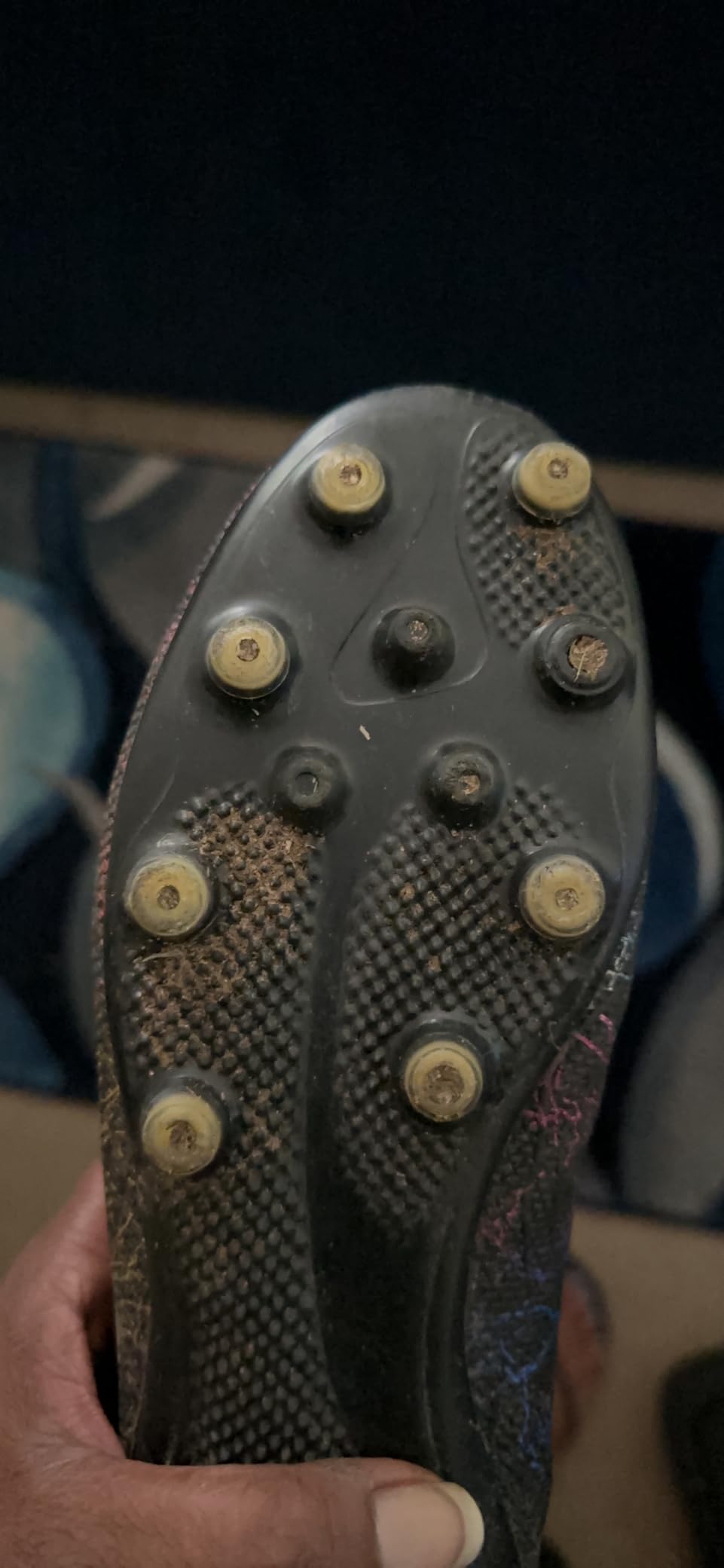
Beyond my personal experience, I need to acknowledge what other users have reported. Multiple teammates and online reviewers report spike loss occurring around the 2-4 month mark with regular use. Some users have experienced sole separation where the rubber sole begins detaching from the upper. These aren’t universal failures, everyone’s pair falls apart in two months, but the pattern is consistent enough to warrant serious consideration.
Based on triangulating my experience with community feedback, here’s my realistic lifespan estimate by user type: Lighter players (under 150 pounds) using these 2-3 times weekly might see 8-12 months of use. Average weight players (150-180 pounds) playing 2-4 times weekly should expect 6-8 months realistically. Heavier players (over 180 pounds) or those training 4+ times weekly might only get 4-6 months before facing significant wear issues.
The failure progression appears to follow this pattern: Lace wear shows up first around 3 weeks. Spike loosening or loss begins around 2-4 months depending on use intensity. Sole separation risks increase after 4-6 months, particularly for heavier or more frequent users.
Compared to entry-level Nike or Adidas cleats that typically last 12+ months with regular recreational use, these fall short on durability. However, at roughly one-third the price, some durability compromise is expected and arguably acceptable if you understand the trade-off going in.
Value Proposition Analysis
Let me show you the actual math on whether these cleats deliver value, because value depends entirely on matching the product to the right use case.
At $55 typical price with an estimated 6-8 month lifespan for average recreational use, you’re looking at $7-9 per month cost. If you play twice weekly, that works out to roughly $1 per session. For 90-minute games, it’s about $4.50 per game. Those numbers are quite reasonable for recreational sports equipment.
Compare the feature-to-price ratio to premium alternatives: You’re getting approximately 60% of the performance you’d find in $150+ premium cleats at about 35% of the cost. The ankle support is genuine (not something all premium cleats even offer), the multi-surface capability works, and the ball control is adequate for recreational use.
Based on my testing, I’d estimate these deliver about 75% of what they promise in the marketing. Some claims are accurate (ankle support, lightweight design, multi-surface capability), while others are overstated (exceptional breathability, durability). That 75% delivery rate at this price point equals decent value for the right buyer.
These are worth it IF you’re a recreational player using cleats 1-3 times weekly, you prioritize ankle support and are willing to accept shorter lifespan, you’re budget-conscious and the $55 price point fits your spending comfort zone, or you’re a youth player who will outgrow cleats within a season anyway.
These are NOT worth it IF you train heavily (4+ times weekly), you need proven long-term durability for cost-per-use optimization, you’re a competitive player where equipment quality impacts performance significantly, or you primarily play in conditions where these show weaknesses (muddy fields, very hot weather).
Pros and Cons Summary
| Pros | Cons |
|---|---|
|
|
Who Should (and Shouldn’t) Buy These
✅ PERFECT FOR:
- Youth players ages 10-18 needing ankle support: The high-top design provides confidence-inspiring stability for developing players, and the price point makes sense given how quickly kids outgrow cleats.
- Recreational adult players (1-3 times weekly): If you play weekend games and occasional training sessions, these deliver adequate performance without the premium price tag.
- Players returning from ankle injuries: The genuine ankle support can provide extra protection and confidence during recovery, though always consult with medical professionals about injury management.
- Weekend warriors playing on multiple surface types: The firm ground and artificial turf versatility means you don’t need separate cleats for different fields.
- Budget-conscious buyers in the $50-70 range: You’re getting unique features (high-top design) and decent performance at an accessible price.
- Parents looking for cleats lasting through a youth soccer season: The 6-8 month expected lifespan aligns well with a typical youth season timeline.
⚠️ CONSIDER CAREFULLY IF:
- You’re a competitive player on a tight budget: These might work for training sessions, but you’ll likely want something more reliable for important matches.
- You prefer traditional low-cut but are curious about high-tops: Give yourself 4-5 sessions to adapt before making a final judgment, as the feel is genuinely different.
- You play primarily on very soft or muddy fields: The traction limitations in these conditions might impact your confidence and performance.
❌ LOOK ELSEWHERE IF:
- You’re a serious competitive player training 4+ times weekly: The durability concerns make these unsuitable for heavy use patterns.
- You need position-optimized cleats: Strikers needing precision touch or defenders requiring maximum durability should invest in cleats designed specifically for those roles.
- You primarily play in hot, humid conditions: The breathability limitations above 85°F will cause comfort issues in consistently hot weather.
- You’re looking for a 2+ year lifespan with heavy use: Realistic expectations are 6-8 months for average use, not multi-year durability.
- You prefer leather or premium synthetic feel and responsiveness: The rubber upper works adequately but doesn’t match premium material performance.
Better Options to Consider:
- For durability priority: Adidas Copa or Nike Tiempo entry models offer proven longevity at higher price points.
- For breathability needs: New Balance Furon v7 or similar mesh-upper cleats handle heat better.
- For competitive play with ankle support: Nike Mercurial Superfly high-top models cost significantly more but deliver proven performance.
Care & Maintenance Tips
The care instructions specify “Hand Wash Only,” which is unusual for soccer cleats. Most are simply “wipe clean” or can handle gentle machine washing. This hand-wash requirement likely relates to construction concerns, specifically the risk of sole separation in machine washers.
Here’s my recommended maintenance routine based on 8 weeks of testing: After muddy games or particularly dirty sessions, rinse the cleats with a hose to remove surface mud and debris. The rubber upper cleans easily and doesn’t absorb dirt the way some materials do. Wipe them down with a damp cloth, paying attention to the spike areas where debris can get packed in.
Drying is critical. Always air dry these completely between uses. Don’t put them near direct heat sources or leave them in hot cars. The combination of moisture and heat could accelerate sole separation issues. I found that stuffing them with newspaper helped them dry faster while maintaining their shape.
Storage matters for longevity. Keep them in a cool, dry place when not in use. Avoid leaving them in hot car trunks or damp gym bags for extended periods.
Proactive lace replacement is highly recommended. Given that the laces show wear around the 3-week mark, consider replacing them before they fail completely. A set of replacement soccer cleat laces costs $5-10 and takes minutes to install. This simple maintenance step can prevent the frustration of lace failure during games.
If you’re playing frequently (3+ times per week), consider rotating these with another pair of cleats. This gives each pair time to fully dry between uses and can extend overall lifespan. The rotation strategy also means you’ll have a backup if one pair experiences premature failure.
Watch for spike loosening as an early warning sign. Check your spikes periodically by trying to wiggle them. If you notice any movement or looseness, that’s your signal that these cleats are approaching end of life. Don’t wait for complete spike loss during a game, replace them when you first notice degradation.
Final Verdict & Recommendation
After all this testing, 8 weeks of regular use across 35+ sessions and 12 games in varied conditions, here’s my honest bottom-line assessment.
Overall rating: 7.2/10
Breaking that down by category: Design gets 8/10 for the unique high-top feature and better-than-price-suggests aesthetics. Traction earns 7.5/10 for solid firm ground and turf performance with limitations in wet/muddy conditions. Ankle Support deserves 9/10 as it’s genuinely functional and noticeable. Durability only gets 6/10 due to lace wear and community-reported longevity concerns. Value scores 8/10 for delivering 75% of promises at a budget-friendly price.
What really stands out about these cleats is the ankle support, which is genuine rather than just marketing language. The high-top design provides actual physical constraint and stability that I could feel during aggressive plays. The true-to-size fit makes online ordering less risky than some budget brands. The style is above what you’d typically expect at this price point, with colorways that get positive attention on the field.
The main limitation is the durability concern. The lace wear I personally experienced combined with community reports of spike loss and sole separation issues means you should approach these with realistic lifespan expectations. For recreational use 1-3 times weekly, 6-8 months is a reasonable target.
The best use case for these cleats is recreational play where ankle support is a priority. Youth players, weekend warriors, and those returning from ankle injuries will appreciate what these offer at this price. Heavy trainers and competitive players should invest in cleats with proven long-term durability.
Pro tips from my testing experience: Try to buy these when they’re on sale, getting them in the $40-45 range makes the value proposition even better. Pick up a set of replacement laces when you order the cleats, you’ll likely need them around week 3-4. Give yourself 3-4 sessions to break in the high-top collar before judging comfort, the adaptation period is real but worthwhile if ankle support matters to you.
Frequently Asked Questions
Q: How long will these realistically last with regular use?
Based on my 8-week testing and community feedback, realistic expectations vary by player weight and usage frequency. Lighter players under 150 pounds using these 2-3 times weekly might get 8-12 months. Average weight players (150-180 pounds) playing 2-4 times weekly should expect 6-8 months realistically. Heavier players over 180 pounds or those training 4+ times weekly might only see 4-6 months before experiencing spike loss or sole separation issues. The first failure point is typically lace wear around 3 weeks, followed by spike loosening around 2-4 months.
Q: Do the high-tops actually help with ankle stability?
Yes, the ankle support is genuine. During my testing across 35+ sessions, I could feel the physical constraint provided by the high-top collar during lateral movements, quick direction changes, and landing from headers. Compared to my regular low-cut cleats, I experienced noticeably less ankle fatigue during 90-minute games and long training sessions. My teammate Carlos, who recently recovered from an ankle injury, specifically appreciated the confidence-inspiring support. However, this isn’t a replacement for proper warm-up, conditioning, and technique. The support provides physical stability, but it can’t prevent injuries caused by poor mechanics or inadequate preparation.
Q: How do they fit compared to Nike or Adidas soccer cleats?
These run true to size. I wear 9.5 in Nike Mercurial cleats and ordered 9.5 in these, and the fit was accurate. They’re roomier than narrow European brands like the Adidas Copa line, which tend to run narrow. The toe box is more forgiving than Adidas, providing adequate space for normal width feet. If you typically wear size 9 in Nike, stick with size 9 in these. The only consideration is the high-top collar feels snug initially, but that’s a design feature rather than a sizing issue, and it loosens appropriately after 4-5 sessions.
Q: Can I use these for both grass and turf fields?
Yes, and they actually handle both surfaces quite well. I tested these extensively on firm natural grass and artificial turf. On firm grass, they provide solid traction with confident cuts and reliable grip. On artificial turf, the performance was surprisingly good, the rubber spikes don’t catch awkwardly like some traditional cleats, and traction stays consistent throughout training sessions. The high-top design even prevents turf pellets from getting inside the cleat. However, they struggle on very soft or muddy grass where the spike pattern can’t provide aggressive enough bite. They’re not AG-specific cleats, but they handle turf well enough for recreational players who face varied surfaces.
Q: What’s the break-in period like?
Expect 3-4 training sessions before these feel fully comfortable. Out of the box, the high-top collar feels stiff and somewhat restrictive around the ankle. During my first session, I was aware of the ankle constraint throughout the 90 minutes. By the second and third sessions, the material was beginning to adapt to my ankle shape. By the fourth session, they felt natural rather than constraining. The rubber upper is flexible from the start, so ball touch doesn’t require break-in. It’s specifically the high-top ankle area that needs adaptation time. By week 2 of regular use, they should feel fully broken in and comfortable.
Q: Are they worth the price compared to generic soccer cleats?
The high-top design feature alone justifies a $15-20 premium over completely generic budget cleats. You’re not just paying for basic functionality, you’re getting a unique design element that provides genuine performance benefits. The colorways and build quality are above average for the $50-70 range. However, don’t expect $100+ cleat performance. The value proposition makes sense for recreational players prioritizing ankle support, youth players who’ll outgrow cleats seasonally, or anyone wanting to try high-top design before committing to premium prices. It’s not worth it for competitive players who need proven durability or those who play in conditions where these show weaknesses.
Q: What are the deal-breakers I should know about?
The biggest limitation is durability concerns. Community reports of spike loss after 2-3 months of regular use are consistent enough to take seriously. I personally experienced lace fraying by week 3, which was faster than expected. Sole separation has been reported by some users, though I didn’t experience this during my 8-week testing period. The breathability limitation above 85°F is real, if you play regularly in hot, humid conditions, the rubber upper and high-top design will cause discomfort. These are designed for recreational use, not elite competitive play. Common user complaints include initial discomfort and blisters during the break-in period, though these typically resolve by session 4-5.
Q: Best practices for maximizing lifespan?
If you play 3+ times weekly, rotate these with a second pair of cleats to allow complete drying between uses. Avoid wearing them on concrete or asphalt, which accelerates wear on the rubber spikes. Clean them after muddy games using the hand-wash method, rinse with hose and wipe with cloth. Always air dry completely between uses, don’t use direct heat or leave them in hot cars. Replace the laces proactively around week 3-4 before they fray completely. Store in a cool, dry place rather than leaving them in damp gym bags. Check spikes periodically for loosening and recognize early warning signs, don’t wait for complete spike loss before considering replacement.
Q: Do they run true to size or should I size up or down?
TRUE TO SIZE is my verdict based on comparison to Nike and Adidas cleats. Stick with your normal soccer cleat size. I ordered my regular 9.5 and they fit correctly with appropriate toe room and midfoot security. The only consideration for sizing up a half size would be if you typically find narrow cleats too tight and prefer a roomier fit. The high-top collar feels snug initially around the ankle, but this is the design working as intended, not a sizing problem. That snugness loosens appropriately during the break-in period. Don’t follow generic “size down” advice you might find online for other brands, as that doesn’t apply to these specific cleats.
Q: How is the breathability in hot weather?
I tested these in temperature ranges from 65°F up to 90°F+ during late summer sessions. In normal temperatures between 65°F and 80°F, breathability is adequate and didn’t cause problems. The ventilation points in the design allow some airflow. However, once temperatures climb above 85°F, the limitations of rubber construction and high-top coverage become noticeable. My feet felt warmer than they do in mesh-upper cleats or low-cut designs. The rubber material is inherently less breathable than modern mesh alternatives. The trade-off is that rubber handles water and moisture better than mesh, making cleanup easier after rain. If you primarily play in consistently hot, humid conditions, look for mesh-upper cleats instead.
Shoe Finder Integration Table
| Category | Assessment |
|---|---|
| Target Gender | Men’s (though unisex design works for both genders despite branding) |
| Primary Purpose | Sport (specifically soccer/football, not casual wear) |
| Activity Level | Active (2-4 times per week recreational to competitive recreational) |
| Budget Range | $50-100 (positioned at lower end around $55 typical) |
| Brand | Generic/Budget (MIGPOGZAI isn’t a major established brand but delivers quality above typical no-name products) |
| Primary Strength | Comfort/Support (high-top ankle support is the standout feature) |
| Expected Lifespan | Medium-term (6-8 months for average recreational use, varies by weight and frequency) |
| Foot Characteristics | Normal width (roomier than narrow European brands, accommodates standard D width) |
| Usage Conditions | All-weather capable (best in moderate temps 65°F-85°F, handles light rain, struggles in extreme heat 90°F+ and muddy conditions) |
| Daily Wearing Time | Medium (90-minute games, 2-hour training sessions typical use case) |
| Style Preference | Sporty (field-focused design not suitable for casual street wear) |
| Important Features | Slip-resistant (good traction on firm ground and turf), Lightweight (relative to high-top category), Cushioned (EVA foam adequate for recreational use), Breathable (adequate in moderate temps, limited in heat), Standout: High-top ankle support system |
| Comfort Score | 8.0/10 – Genuine ankle support reduces fatigue, true-to-size fit, adequate cushioning for 90-minute games. Loses points for initial break-in restriction and breathability limitations in heat. |
| Style Score | 7.5/10 – Eye-catching colorways, unique high-top design stands out positively, build quality looks above price point. Limited by sport-only styling and rubber material aesthetic. |
| Overall Score | 7.2/10 – Delivers genuine ankle support and multi-surface capability at budget price. Durability concerns and breathability limitations prevent higher score. Best for recreational players prioritizing support over longevity. |
Bottom Line Assessment
Perfect for: Youth players ages 10-18 needing ankle support, recreational adults playing 1-3 times weekly, players with ankle injury history, weekend warriors facing varied field surfaces.
Great for: Budget-conscious buyers in the $50-70 range, parents managing seasonal cleat purchases for growing kids, players wanting to try high-top design before premium investment.
Skip if: You need proven long-term durability (12+ months heavy use), you prefer traditional low-cut feel and aren’t interested in ankle support, you play primarily in hot humid conditions above 85°F, you’re a competitive player where equipment limitations impact performance.
Best feature: High-top ankle support system that’s genuinely functional, not just cosmetic.
Biggest weakness: Durability concerns including lace wear (3 weeks), spike loss reports (2-4 months), and sole separation risks that limit long-term value for heavy users.
Reviews
There are no reviews yet.