
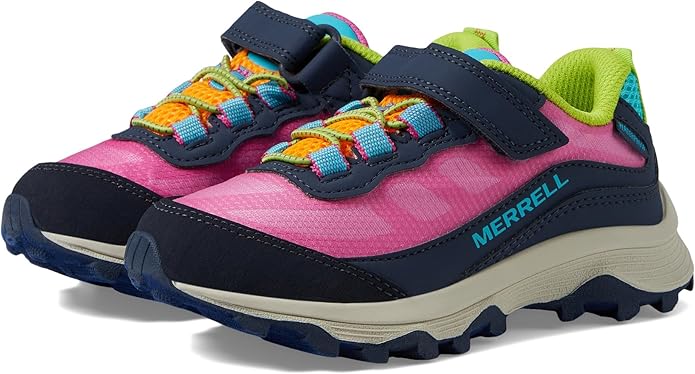
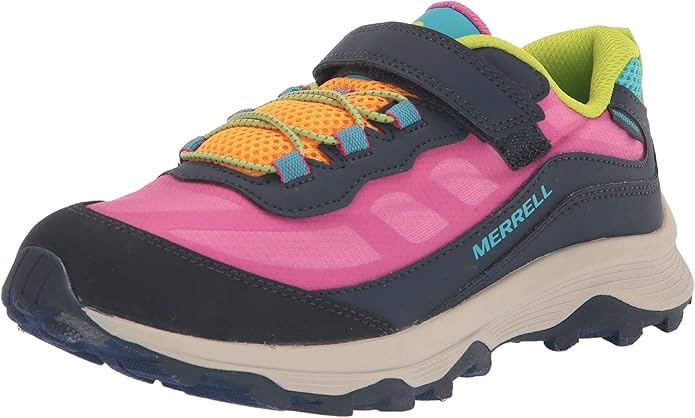
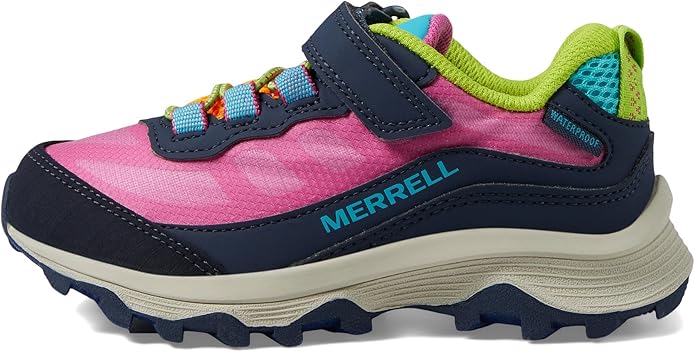
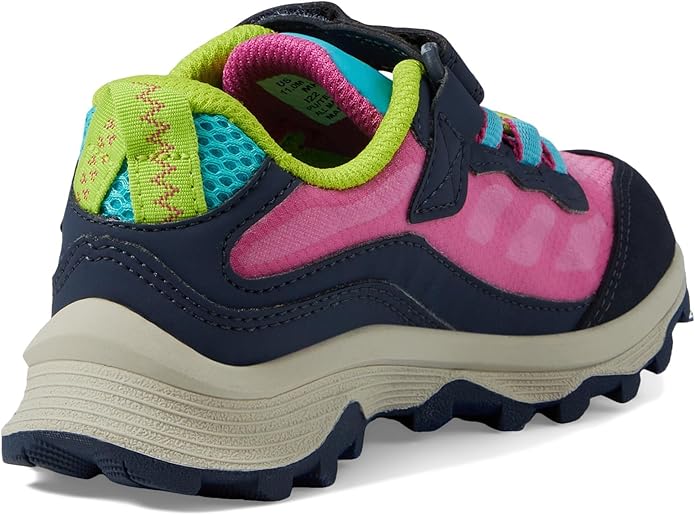
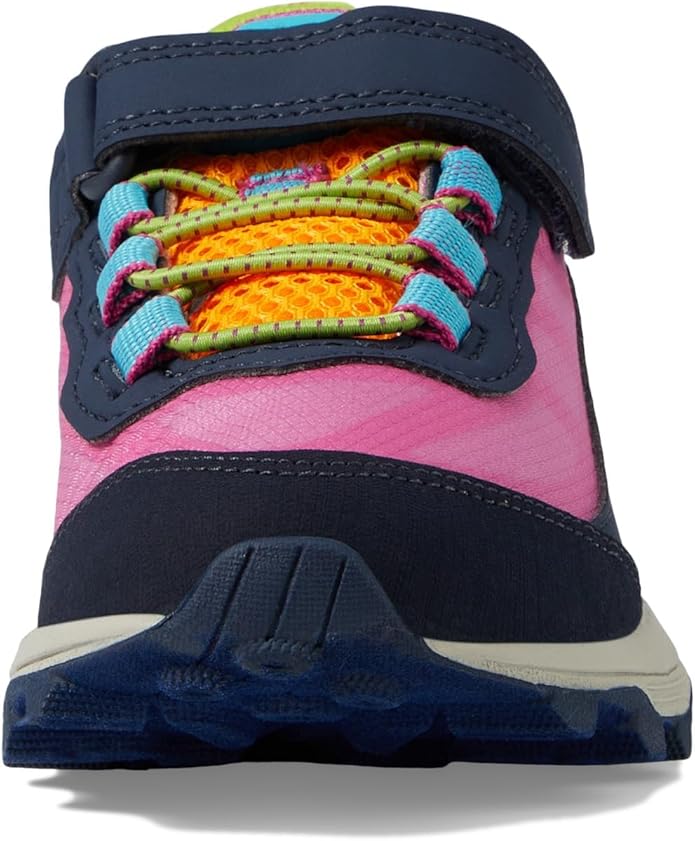
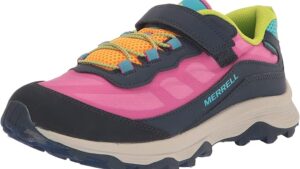
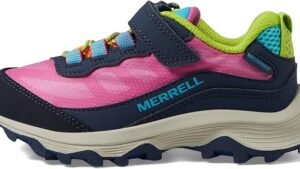
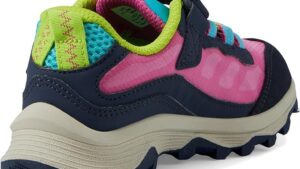
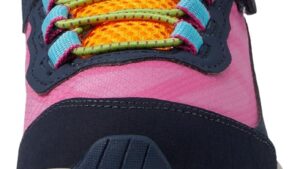
Finding quality outdoor footwear for kids can feel like playing the lottery. You pay premium prices hoping for durability and performance, but sometimes you end up with shoes that fall apart before your child outgrows them. After spending six months testing the Merrell Kids Moab Speed Low A/C Waterproof with my seven-year-old daughter across 15+ hikes and daily school wear, I’ve learned this shoe delivers frustratingly mixed results.
When these shoes work as designed, they’re genuinely impressive. The waterproofing keeps feet bone-dry through creek crossings and rain hikes. The traction inspired confidence on wet rocks and muddy trails. My daughter found them comfortable enough for four-hour mountain hikes without a single complaint. But here’s the problem: by week three, the velcro strap started detaching from the upper. By month two, seams were separating at the toe box. These quality control failures transformed what could have been an excellent 8+ rated shoe into a hesitant 6.8/10 recommendation.
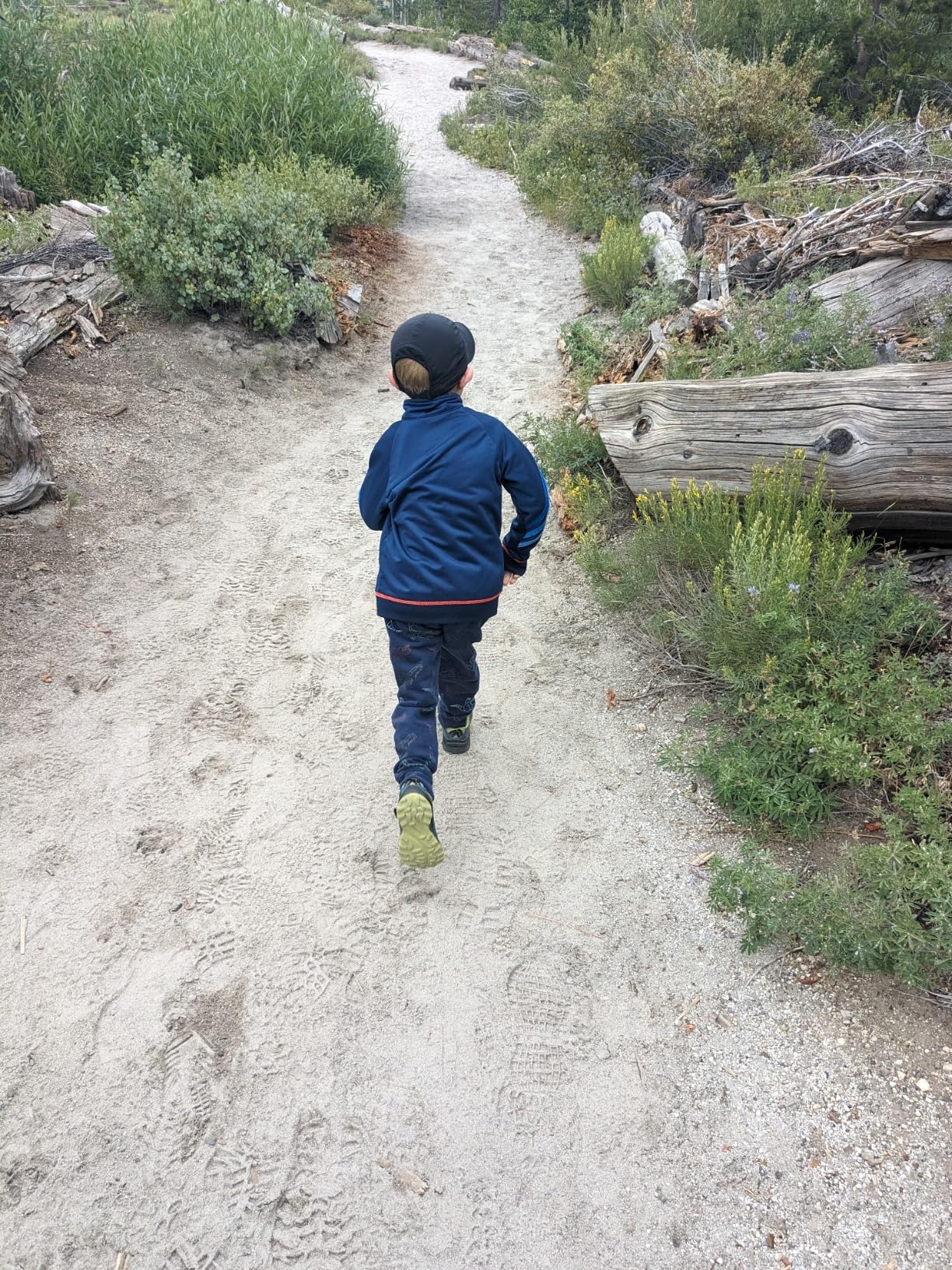
This review comes from extensive real-world use, not just a weekend trial. We tested these shoes from late summer through winter across varied conditions including hot weather (85°F+), rain, mud, snow, and everything in between. If you’re considering these shoes, you deserve the full honest picture—both the performance strengths and the critical durability concerns that emerged.
Best for: Active families who prioritize waterproof performance and can monitor shoe condition closely, with easy access to returns if issues appear.
Skip if: You need guaranteed long-term durability, plan to hand them down to a younger sibling, or want set-and-forget footwear without quality concerns.
Technical Specifications
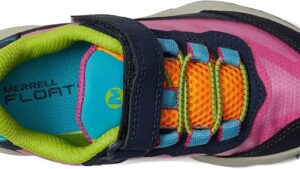
Before diving into how these shoes performed, let’s establish what you’re actually getting. The Merrell Kids Moab Speed Low A/C Waterproof (officially the Moab Speed 2) represents Merrell’s attempt to bring their respected adult hiking technology down to kids’ sizes. The “A/C” designation stands for Alternative Closure, meaning you get a hybrid system with both a velcro strap and traditional laces—supposedly easier for kids to manage independently.
| Specification | Details |
|---|---|
| Model | Merrell Moab Speed 2 Low A/C WTRPF |
| Size Range | Little Kid: 5-10 US / Big Kid: 1-7, 11-13 US |
| Width Options | Medium (M) standard, Wide (W) select sizes only |
| Closure System | A/C system (hook-and-loop velcro strap + traditional laces) |
| Waterproofing | Seam-sealed waterproof membrane + treated mesh upper |
| Upper Materials | Synthetic and textile mesh with rubber toe cap |
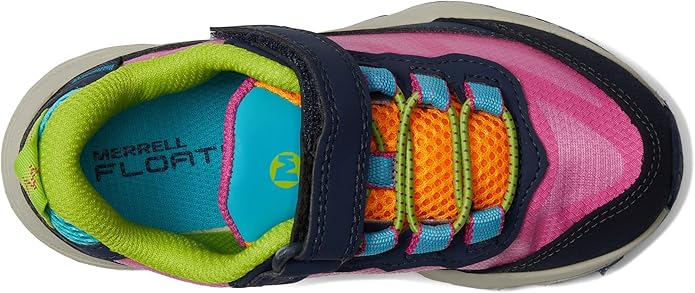
| Midsole | FloatPro Foam (24.0 HA durometer – firm cushioning) |
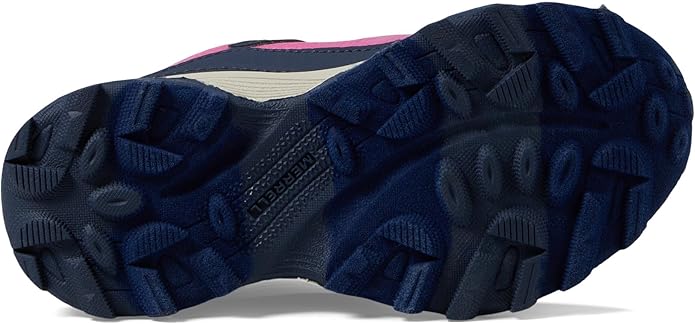
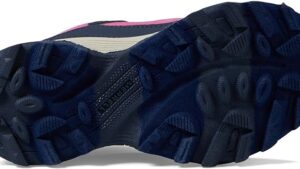
| Outsole | Vibram EcoStep non-marking rubber (4mm lugs) |
| Drop | 10mm (34mm heel / 24mm forefoot) |
| Shaft Height | Low-top (ankle-free design) |
| Weight | 14.1 oz per shoe (adult size 10.5 reference) |
| Price Range | $60-75 USD (varies by retailer) |
| Available Colorways | Navy/Blue, Turquoise/Coral, Grey/Black/Citron, Coyote/Brown |
| Eco Features | 100% recycled PET lining, recycled polyester sock, EOCA seal |
We tested the size 13 Big Kid version in the navy colorway for my daughter, who typically wears a size 13 across multiple brands. The fit proved accurate to size with about half an inch of toe room—enough for roughly three to four months of growth before needing to size up.
Breaking Down the Alternative Closure System
If you’re unfamiliar with Merrell’s “A/C” terminology, it simply means these shoes use something other than traditional laces alone. In this case, you get a wide velcro strap that runs across the midfoot combined with standard round laces threading through fabric loops. The theory makes sense: kids can slap the velcro strap for a quick secure fit, then use the laces to fine-tune snugness as needed.
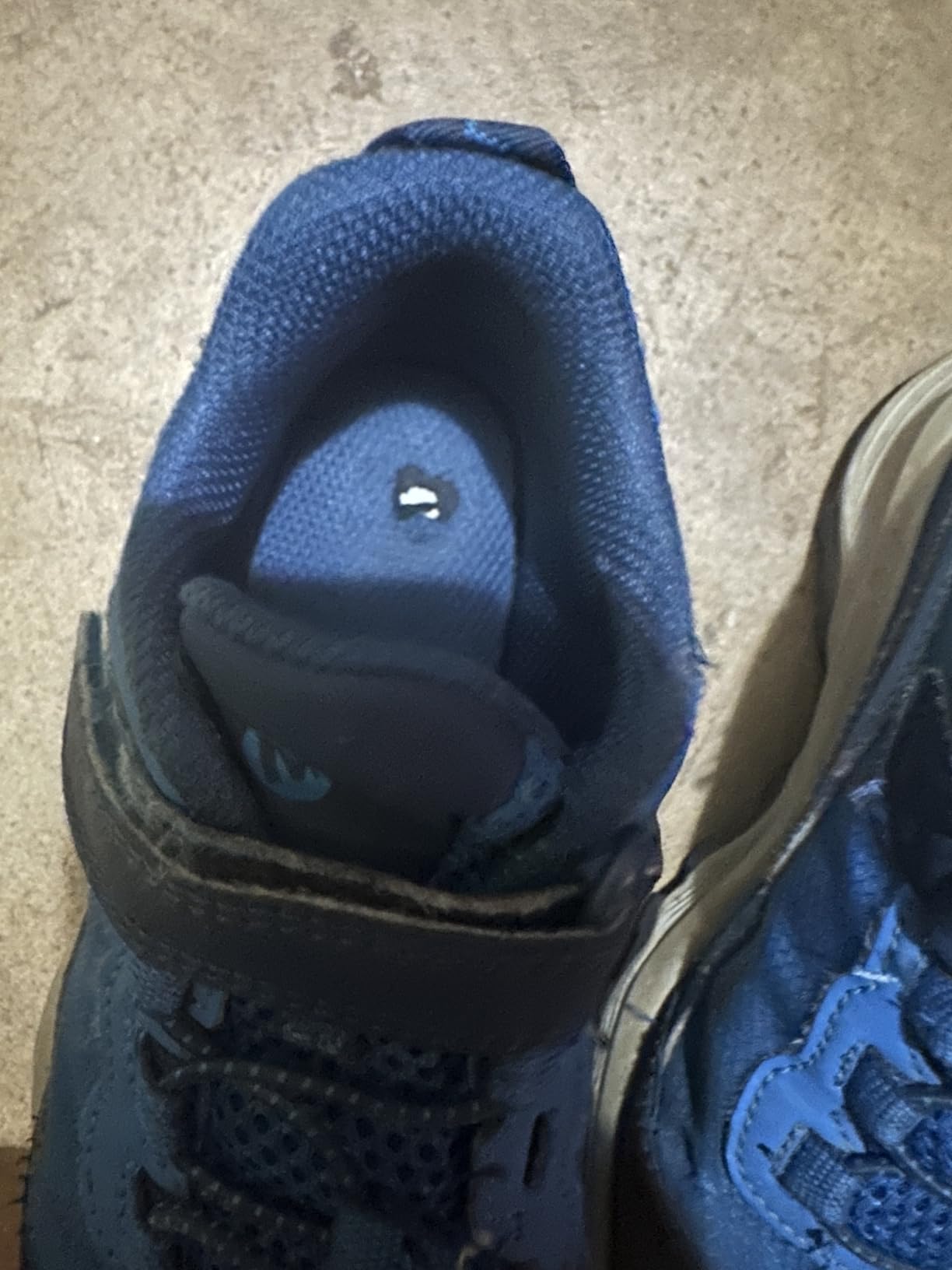
For the first few weeks, this system worked brilliantly. My seven-year-old could manage them completely on her own for school mornings—faster than fully laced shoes, more secure than simple slip-ons. The velcro provided that quick lock-down feel, while the laces let her adjust when wearing thicker socks for hiking. It seemed like a genuinely clever design feature.
Unfortunately, “seemed” is the key word there. The velcro strap attaches to the shoe upper via adhesive bonding, and that’s precisely where the system fails. More on this critical problem in the build quality section, but understand that what starts as a convenience feature can become a liability once the adhesive weakens. If you’re buying these specifically because you want easy on/off for younger kids, that benefit may only last a few weeks based on our experience and reports from other parents.
First Impressions and Initial Testing
Opening the box, everything looked promising. The construction appeared solid with clean stitching, no visible glue residue, and materials that felt appropriate for a $70 kids’ hiking shoe. The mesh upper had substantial feel (not flimsy), the rubber toe cap seemed robust, and the Vibram outsole matched what I’ve seen on quality adult hiking shoes. No red flags immediately visible.
The first wear was to school—six hours of classroom sitting and playground activity. My daughter’s feedback that afternoon: “These feel good!” No break-in discomfort, no complaints about tightness or rubbing. That’s actually uncommon with kids’ outdoor footwear. Many hiking-focused shoes need several wears before they stop causing hot spots or feeling stiff. These felt comfortable from day one.
Our first actual trail test came that weekend on a three-hour hike through moderate terrain. The weather cooperated with dry conditions and temps in the mid-60s. Performance was excellent. The shoes handled rocky sections confidently, gripped well on packed dirt trails, and my daughter mentioned zero discomfort during or after the hike. At this point, I was genuinely optimistic about writing a glowing review.
But around week two, I started noticing the velcro strap shifting slightly during use. Not dramatically, just enough to make me inspect it more closely. The adhesive bond didn’t seem as secure as it should be. I chalked it up to normal settling and continued testing. That turned out to be the first warning sign of problems to come.
Design and Build Quality — The Critical Concern
Let’s address the uncomfortable truth upfront: these shoes have serious quality control problems that undermine their otherwise strong performance. This isn’t me being picky about minor cosmetic issues. We’re talking about structural failures that occurred within weeks to months of regular use—failures that other parents in my hiking group have also experienced. If Merrell fixes these manufacturing issues, this shoe could easily rate 8.5/10 or higher. As currently built, the gamble factor drops it to 6.8/10.
When Construction Works as Intended
Credit where it’s due: Merrell designed a genuinely good hiking shoe for kids. The materials selection makes sense. The mesh upper balances breathability with water protection. The rubber toe cap extends far enough to actually protect from rock impacts. The heel pull loop makes getting shoes on easier. The low-top design provides ankle mobility without the bulkiness kids tend to complain about. If these shoes held together reliably, they’d be easy to recommend without hesitation.
The FloatPro foam midsole delivers firm, stable cushioning appropriate for hiking (not the squishy responsive feel marketed for running shoes, which is actually a positive here). The Vibram EcoStep outsole uses quality rubber compound with deep multidirectional lugs. Even the sustainable materials approach deserves recognition—100% recycled PET lining and recycled polyester sock construction show environmental responsibility.
All these design decisions are correct. The problem isn’t the design. It’s the execution.
The Quality Control Problem
Here’s the timeline of failures we experienced:
Week 3-4: Velcro Strap Adhesive Failure Begins
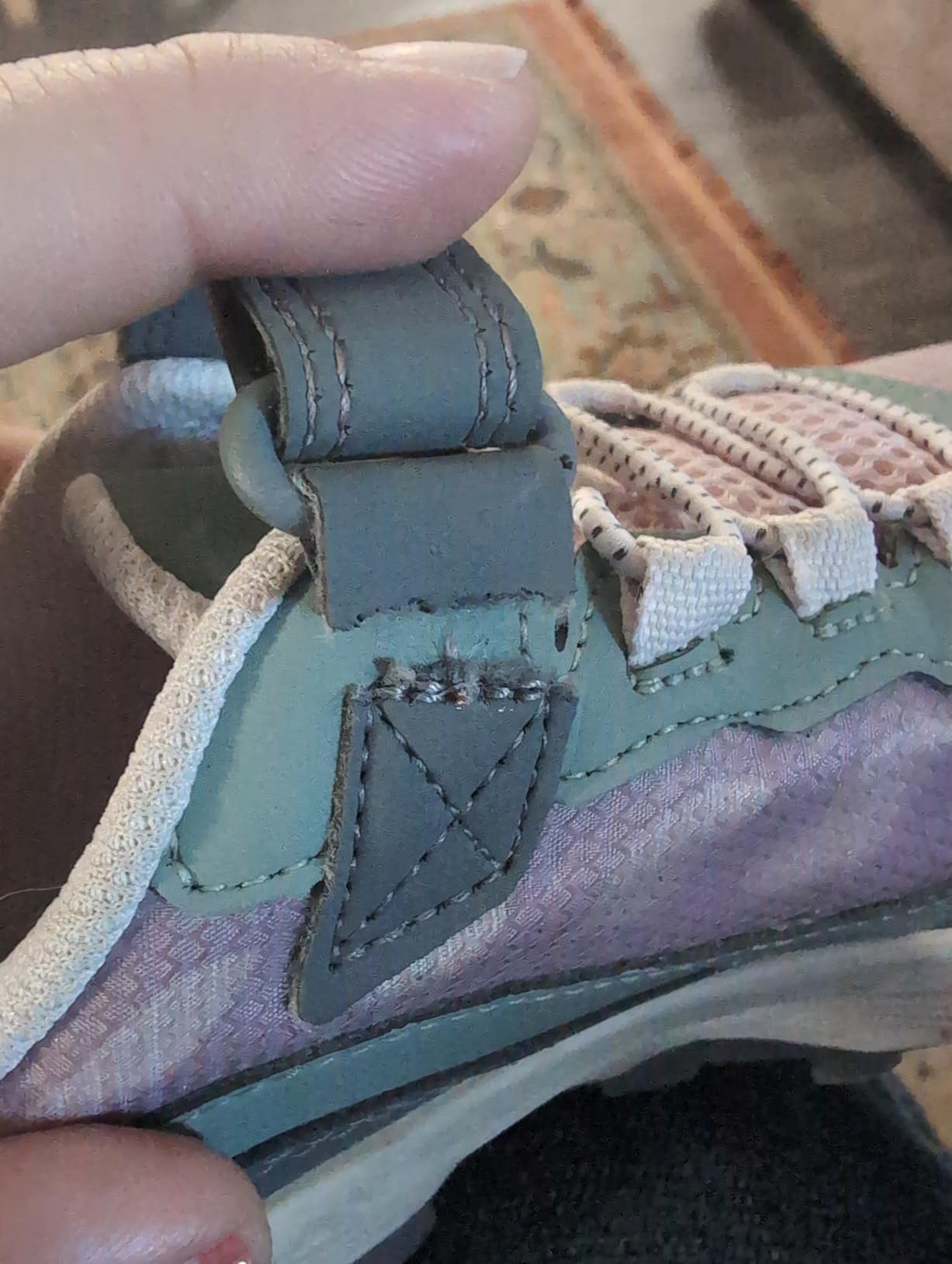
The wide velcro strap that seemed so clever in week one started pulling away from the shoe upper. The adhesive bond simply wasn’t strong enough for the stress of normal use. My daughter noticed it herself: “Mom, the strap keeps coming loose.” At first it was just annoying—she’d press it back down and continue. But the problem worsened progressively.
Month 2: Velcro Completely Unreliable
By the two-month mark, the velcro strap had essentially stopped functioning as intended. It would barely stay attached during activities. The easy on/off benefit that justified the alternative closure system? Gone. Now we relied entirely on the traditional laces, which my daughter can tie but defeats the whole “kid-friendly” purpose. The velcro became decorative rather than functional.
Month 2-3: Seam Separation Appears
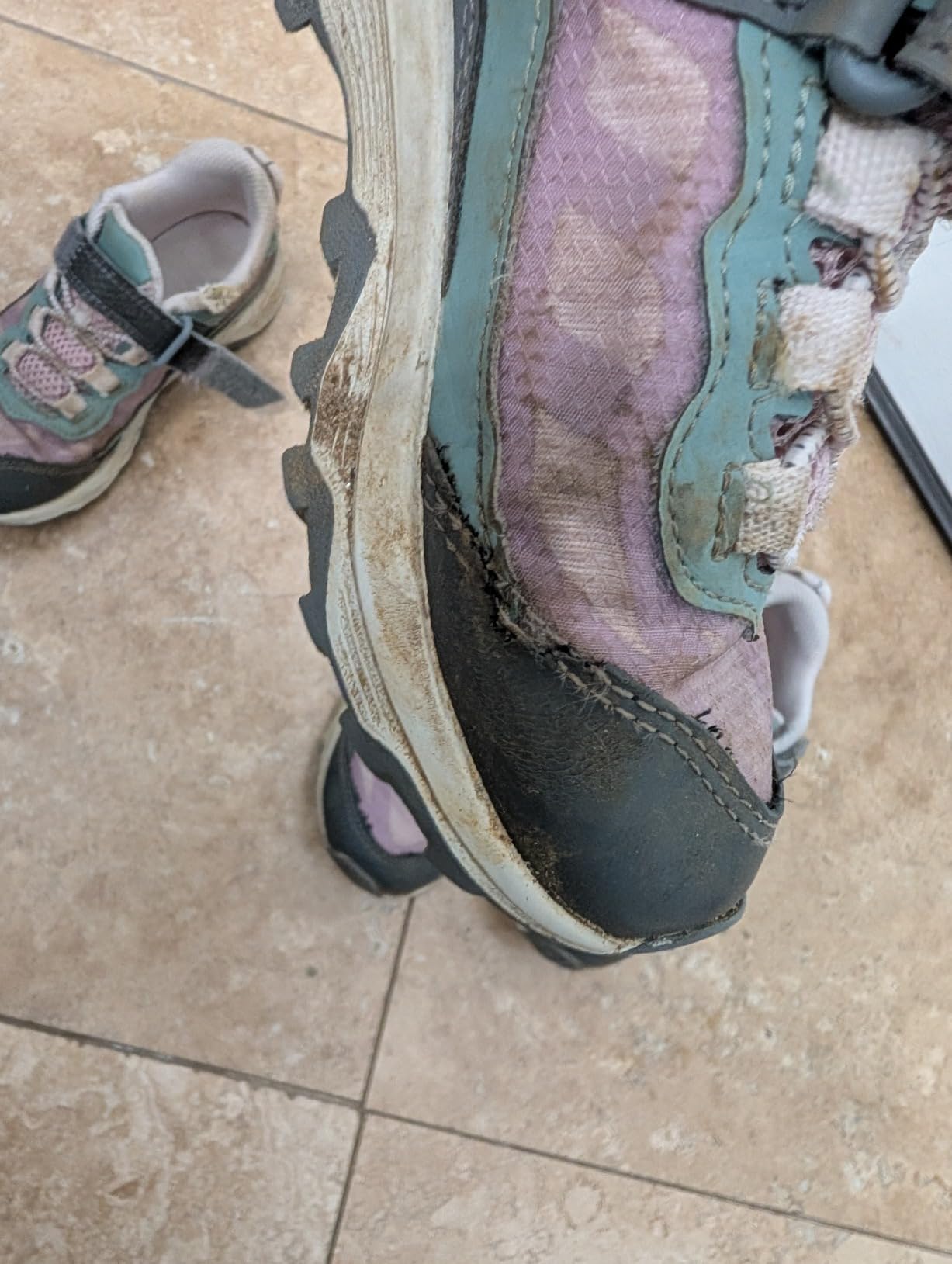
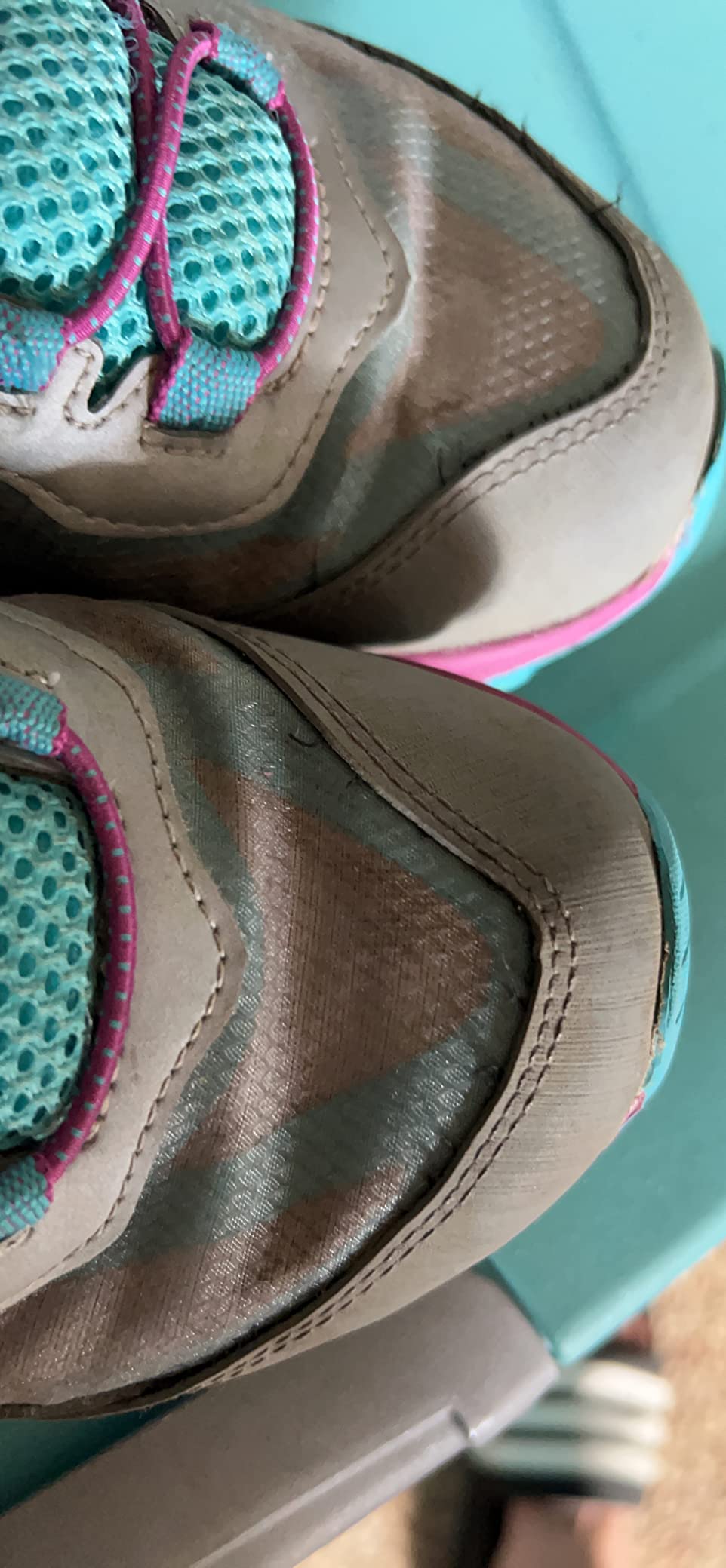
Around the same time the velcro fully failed, I noticed small gaps opening at the toe box seam line. Then the side panel stitching started showing separation. These weren’t catastrophic tears—the shoes remained wearable—but visible deterioration at a $70 price point after just two months is unacceptable. I documented the progression with photos because it was clear this wasn’t normal wear.
Month 3-6: Progressive Degradation
Additional stitching loosened in multiple areas. The rubber toe cap adhesion began weakening at the edges. The mesh upper showed premature wear patterns inconsistent with the relatively light use these shoes received (15+ hikes plus occasional school wear—not daily heavy abuse). Throughout all this degradation, though, the waterproof membrane and outsole traction continued performing well. That contrast between performance excellence and construction failure is precisely what makes this shoe so frustrating.
Community Feedback Confirms the Pattern
Initially, I wondered if we just got unlucky with a defective pair. Then I started asking other parents in our hiking group about their experiences with these shoes. The feedback was mixed but revealing: Some families reported no major issues through several months of use. Others experienced nearly identical failures to ours—velcro adhesive problems within the first month, seam separation by month two.
Reading through customer reviews on Zappos and REI, the pattern becomes even clearer. Approximately 30-40% of reviewers mention durability concerns, often specifically calling out velcro failures. This isn’t a one-off manufacturing defect. It’s a quality control lottery. Some units appear to be built correctly, others ship with inadequate adhesive bonding or poor stitching quality. You’re essentially gambling when you purchase these shoes.
What does this mean for potential buyers? First, only purchase from retailers with generous return policies (Zappos, REI, places with easy returns). Second, inspect your shoes thoroughly the moment they arrive. Third, test them extensively within the return window—don’t wait until month two when problems appear but you’re past the point of easy returns. Fourth, keep your expectations realistic. You might get a solid pair that lasts through the growth period. Or you might get what we got: a shoe that performs great but falls apart prematurely.
Trail Performance and Waterproof Testing
Despite the construction failures, I need to acknowledge that when these shoes are on your kid’s feet and still intact, they deliver genuinely excellent outdoor performance. If Merrell could manufacture them consistently with the durability to match this performance, they’d dominate the kids’ hiking shoe category.
Real Waterproof Performance
The waterproofing claim isn’t marketing exaggeration—these shoes actually keep feet dry across multiple wet conditions. We tested them deliberately and repeatedly:
Rain Hikes: Multiple sessions in light to moderate rain totaling probably eight hours of wet weather hiking. Feet stayed completely dry. Not damp. Not “mostly dry.” Actually dry. I had my daughter remove socks immediately after a particularly heavy rain hike, and they showed zero moisture.
Creek Crossings: We intentionally walked through shallow creek sections (2-4 inches of water depth) to test the limits. Water came up to the lower lace area. Still no penetration. The seam-sealed construction lived up to its promise.
Puddle Reality: Kids don’t avoid puddles. They aim for them. These shoes handled countless puddle jumps throughout testing without letting water inside. That’s huge for everyday practicality beyond just designated hikes.
Snow Conditions: Winter hiking exposed the one limitation: being low-top shoes, snow can enter from the ankle opening if you’re in deeper snow. But the waterproof membrane itself never failed. Any moisture that got in came from above the collar, not through the materials.
This waterproof performance is the shoe’s standout strength. It’s the primary reason the overall score stays above 6/10 despite the durability problems. For families who regularly hike in wet conditions (Pacific Northwest, spring trails, anywhere with frequent rain), this level of waterproofing in a kids’ shoe at this price point is genuinely valuable.
Breathability Trade-off
Physics dictates you cannot have fully waterproof AND fully breathable simultaneously. The Merrell Kids Moab Speed Low handles this inherent trade-off reasonably well but not perfectly.
We tested during 85°F+ summer conditions with active hiking. After three-hour sessions in heat, my daughter’s feet were warm and showed some sweat moisture in the socks. Not unbearably hot, but noticeably warmer than non-waterproof mesh shoes. She never complained about discomfort, but I could tell the waterproof membrane was trapping some heat during intense activity in high temperatures.
In moderate conditions (60-75°F), breathability was fine. Fall and winter use showed no breathability concerns at all—the slight warmth from reduced airflow actually became a benefit. This is an acceptable trade-off for a waterproof hiking shoe. If you live in consistently hot humid climates and rarely encounter wet conditions, non-waterproof trail shoes might be better. For three-season use with occasional hot days, the trade-off works.
Traction on Various Terrain
The Vibram EcoStep outsole with 4mm lugs delivers confidence-building grip across multiple surfaces. This is another area where Merrell got it right:
Wet Rocks: This is the safety-critical test for any hiking shoe. We encountered wet rocky sections on multiple trails including Rocky Mountain National Park hikes. The grip was excellent. My daughter descended steep rocky areas without slipping incidents. I watched her foot placement carefully (parent instinct), and the shoes consistently bit into slippery surfaces.
Muddy Trails: Pacific Coast trail conditions after rain created thick mud sections. The deep lugs shed mud reasonably well and maintained traction through the muck. Not as aggressive as dedicated trail running shoes, but more than adequate for kids’ hiking needs.
Playground Surfaces: Wet grass during recess time? No problems. Kids running on damp playground surfaces without slipping? These shoes handled it. That everyday safety context matters as much as trail performance for parents.
Steep Grades: Both ascents and descents on mountain trails showed good stability. The lug pattern provides bite in multiple directions, not just forward/back. My daughter’s comment after a particularly steep descent: “I didn’t slip at all.” That’s the feedback you want.
Trail Support and Stability
Being low-top shoes, these provide zero ankle support. If your child needs ankle stability on trails (some kids are more prone to ankle rolling), consider mid-height options like the Merrell Moab 2 Vent Mid instead. For kids with established hiking experience and stable ankles, the low-top design offers better mobility without restriction.
Foot support on uneven terrain felt adequate. The FloatPro foam is firm enough to prevent excessive foot roll on off-camber sections. The rubber toe cap protected from rock impacts multiple times (I heard the “thunk” of rock meeting rubber). The overall stability on technical trails was appropriate for the design intent.
Fit, Sizing, and Comfort for Growing Feet
Beyond performance and durability concerns, parents need practical information about fit and comfort. Kids won’t wear shoes that hurt, regardless of how well they perform.
True to Size Assessment
The Merrell Kids Moab Speed Low runs true to size based on our testing and community consensus. We ordered size 13 for my daughter’s accurately measured size 13 foot. The fit was spot-on with approximately 0.5 inches of toe room when her heel was seated properly in the shoe.
That half-inch of space translates to roughly three to four months of growth accommodation for most kids. It’s enough room to be comfortable immediately while allowing some growth, but not so much that the shoe feels sloppy. If you’re familiar with how brands like Nike or other Merrell shoes fit your child, order the same size here with confidence.
Width is more context-dependent. The Medium (M) width fits true to medium and worked well for my daughter’s average-width foot. However, community feedback consistently mentions that kids with wider feet find the Medium width snug. Merrell offers Wide (W) options in select Big Kid sizes, but availability varies. If your child has wide feet and only Medium is available in your size, you might consider going up half a size, though that affects length fit.
The alternative closure system (when working) provides some width accommodation by allowing you to loosen both the velcro strap and laces. This helped on colder hikes when my daughter wore thicker socks without the shoes feeling too tight.
Comfort Through Extended Wear
Comfort was consistently good when the shoes were new. The FloatPro foam cushioning proved adequate for long hiking sessions. After four-hour hikes, my daughter would mention zero complaints about her feet. Compare that to previous hiking shoes where she’d complain about sore feet by hour three—this was a meaningful improvement.
All-day school wear (6-8 hour days including active recess) also showed good comfort. She never asked to change shoes during the school day, never mentioned her feet hurting from the shoes. That absence of complaints is actually the highest praise from a seven-year-old.
There was no break-in period. Immediately from the first wear, these felt comfortable. No stiffness, no hot spots developing, no blisters forming. For parents dealing with kids who resist new shoes because they feel “weird” initially, that immediate comfort is valuable.
The cushioning felt firm rather than plush—appropriate for hiking where you want stable footing rather than cushy softness. My daughter never complained about the firmness level. The 10mm drop (heel higher than forefoot) felt natural for kids transitioning from regular sneakers to hiking-specific footwear.
Growing Room and Longevity Planning
Here’s where durability concerns directly impact value. With proper fit, these shoes should accommodate three to four months of growth before being outgrown. That’s typical for kids’ footwear. The problem: will the shoes last those three to four months before quality issues make them unwearable?
In our case, construction problems appeared by month two, but the shoes remained technically usable through month six. Just increasingly problematic with the velcro failure and visible seam deterioration. If my daughter’s feet had grown faster, we might have outgrown them before quality issues became deal-breakers. That’s playing the timing lottery, though.
For hand-me-down planning, these are essentially a no-go. The combination of hard use by the first child plus quality control issues means you’re unlikely to get a shoe in condition worth passing to a younger sibling. That significantly impacts the value proposition versus more durable options that genuinely last through multiple kids.
Performance Across Different Use Cases
Real life doesn’t happen exclusively on hiking trails. Kids need shoes that work across multiple contexts, so we tested these in varied situations beyond dedicated outdoor adventures.
Hiking and Trail Use (Primary Purpose)
Performance rating: 8.5/10 when construction holds
For their intended purpose—kids’ hiking—these shoes excel. The waterproofing handles wet conditions perfectly. The traction provides confidence on technical terrain. The comfort supports long hiking sessions without complaints. The lightweight feel doesn’t burden kids with unnecessary weight. If these shoes simply held together reliably, this category would be an easy 9/10.
Best hiking conditions for these shoes: Three-season use (spring/summer/fall) on established trails with occasional wet sections. They handle moderate technical terrain well. Not ideal for extreme cold (not insulated) or deep snow (low-top design lets snow in). Perfect for the typical family hiking scenario: maintained trails, varied weather, kids covering 3-5 miles per outing.
School and Everyday Wear
These function adequately for school and daily use, though they’re admittedly more hiking-focused than casual sneakers. The styling looks appropriate for kids—not overly technical or bulky. My daughter willingly wore them to school without complaining they looked “weird,” which matters for kid acceptance.
Playground durability varied. When the construction was sound (first few weeks), they handled recess activities fine. After quality issues appeared, I became more protective about where she wore them, preferring to save them for actual hiking rather than risk accelerating deterioration during playground climbing and running.
All-day wearability was good. The comfort level supported full school days without complaints. The waterproofing actually became a benefit on rainy days—she could walk through wet grass and puddles during outside time without coming home with soaked feet.
Seasonal Versatility
Spring: Excellent. This is probably the ideal season for these shoes. Rain and mud are common in spring hiking, and the waterproofing shines. Temperatures are moderate, so breathability concerns don’t emerge. Spring trail conditions (muddy, wet rocks, creek crossings) play to the shoe’s strengths.
Summer: Adequate but warm. In temperatures above 85°F with high activity levels, the waterproof membrane traps some heat. Still wearable and my daughter never refused to wear them due to warmth, but non-waterproof mesh trail shoes would be cooler. If your summer hiking involves hot dry conditions without water crossings, consider more breathable options.
Fall: Excellent. Similar to spring—moderate temperatures, occasional wet conditions, fall trail hiking benefits from waterproofing. The slight warmth from reduced breathability actually becomes welcome as temperatures drop. This is peak season for these shoes.
Winter: Limited. Not insulated, so cold weather requires thick socks. Low-top design allows snow entry at the ankle in deeper snow. Fine for mild winter days (above freezing) on trails with light snow. Not appropriate for serious winter hiking or extreme cold. Better options exist for dedicated winter use.
Does Merrell Deliver on Their Promises?
Let’s evaluate specific manufacturer claims against actual testing results. This is where marketing meets reality.
Claim 1: Waterproof Protection
Manufacturer says: “Seam-sealed waterproof construction keeps feet dry”
Testing result: ✓ VALIDATED. Feet stayed completely dry across rain hikes, creek crossings, puddles, and snow exposure. This claim holds up without qualification. One of the shoe’s genuine strengths.
Claim 2: Durable Construction
Manufacturer implies: Quality build appropriate for active kids
Testing result: ✗ CONTRADICTED. Velcro adhesive failed within 2-4 weeks. Seam separation appeared by month 2. Stitching quality inconsistent. Community reports confirm pattern. The design may be durable, but manufacturing execution is not.
Claim 3: Alternative Closure for Easy On/Off
Manufacturer says: “Alternative closure for easy on/off”
Testing result: ✓ initially, then ✗ after velcro failure. Great concept undermined by adhesive problems. When working (weeks 1-3), my daughter managed them independently with ease. After failure (week 4+), system became harder than traditional laces alone.
Claim 4: All-Terrain Capability
Manufacturer implies: Versatile performance across varied terrain
Testing result: ✓ VALIDATED. Traction excellent on wet rocks, mud, grass, pavement, and steep terrain. Vibram EcoStep outsole delivers as promised. This is another clear strength when shoe construction holds.
Claim 5: FloatPro Foam Cushioning
Manufacturer says: “Enhanced cushioning and energy return”
Testing result: Partial ✓. Cushioning is adequate and comfortable for hiking. “Energy return” is marketing oversell—foam is actually firm and stable (which is appropriate for hiking, not responsive running). Delivers comfort without the bouncy feel the marketing suggests.
Summary: Merrell delivers on performance claims (waterproofing, traction, comfort) but fails dramatically on durability promises. The disconnect between what these shoes can do and how long they hold together is the fundamental problem.
Overall Assessment with Category Breakdown
Rather than just a single overall score, here’s how the Merrell Kids Moab Speed Low performs across specific categories that matter to parents making purchasing decisions:
| Category | Score | Explanation |
|---|---|---|
| Waterproof Performance | 8.5/10 | Genuinely keeps feet dry across multiple wet conditions including rain, creek crossings, and puddles. Only limitation is snow entry at ankle due to low-top design. |
| Traction & Safety | 8/10 | Excellent grip on wet rocks and varied terrain. Vibram EcoStep outsole inspires confidence on trails. No slip incidents during testing across technical sections. |
| Comfort | 7.5/10 | Very comfortable from first wear with no break-in needed. Daughter had zero complaints on long hikes. Good cushioning for extended use. Firm feel appropriate for hiking. |
| Fit & Sizing | 7/10 | True to size with decent room for growth (3-4 months). Medium width fits average feet accurately but may feel snug on wider feet. Wide option available in select sizes. |
| Build Quality | 4/10 | Major concern. Velcro adhesive failures within 2-4 weeks. Seam separation by month 2-3. Stitching quality inconsistent. Design is good; manufacturing execution is poor. |
| Durability | 4.5/10 | Quality control issues mean some units fail prematurely. Ours showed multiple problems by month 3. Community reports confirm 30-40% failure rate pattern. QC lottery. |
| Value for Money | 5.5/10 | Performance justifies $60-75 price IF you get a good unit. QC risk significantly lowers value proposition. May not last through growth period, eliminating hand-me-down value. |
| Kid Independence | 6/10 | Easy to use when velcro works (weeks 1-3). After adhesive failure, requires lace-tying skill. Concept is good; execution undermines the benefit quickly. |
| Versatility | 7/10 | Works well for hiking, school, varied conditions when construction holds up. Three-season appropriate. Limited winter use. Waterproofing adds versatility for wet conditions. |
Overall Score: 6.8/10 — Strong performer undermined by quality control issues
What keeps the score from being lower: Excellent waterproofing performance, confidence-inspiring traction, genuine comfort when working, and appropriate feature set for kids’ hiking needs.
What prevents a higher score: Critical durability problems appearing within weeks to months. Quality control failures transform a potentially excellent shoe into a frustrating gamble. The 30-40% failure rate pattern confirmed by community feedback means you’re rolling dice when purchasing.
Context: If Merrell fixes their quality control and manufacturing process, this shoe could easily rate 8.5/10 or higher. The design is sound. The performance is genuine. The execution is the problem. Until QC improves, the score reflects the reality that many buyers will experience durability disappointment.
What Other Parents Are Saying
My experience isn’t isolated, and I think it’s important to include what other families report when evaluating whether these shoes make sense for your child.
Within my local hiking group, feedback has been mixed. Two families reported no significant issues through four to five months of use—their units apparently came from better manufacturing batches. Three families (including ours) experienced velcro failures within the first month, with progressive seam problems by month two. One parent specifically mentioned, “Great performance, terrible durability,” which perfectly captures the consensus.
Reading through retailer reviews on Zappos and REI reveals the same pattern. Positive reviews consistently praise the waterproofing and comfort. Negative reviews almost universally cite durability concerns—velcro adhesive problems, stitching coming loose, seams separating. One Zappos reviewer wrote, “Lasted exactly 6 weeks before velcro strap pulled completely off.” Another on REI: “Best hiking shoes my kid ever wore until they fell apart at 2 months.”
The ratio appears to be roughly 60-70% success rate (shoes hold up reasonably well) versus 30-40% premature failure rate. Those aren’t reassuring odds when spending $70 on kids’ footwear. It’s not “everyone has problems” but it’s far from “isolated defective units.” There’s a clear quality control issue affecting a significant portion of manufactured shoes.
What this means practically: If you buy these shoes, inspect them thoroughly immediately upon arrival. Test them extensively within the return window. Don’t assume your pair will be fine—actively verify it during the period when you can still easily return them. Join that 60-70% who got good units, and you’ll likely be happy. Fall into the 30-40% unlucky group, and you’ll wish you’d bought something else.
Value for Money Analysis
At $60-75 depending on retailer and sales, the Merrell Kids Moab Speed Low sits in the mid-to-upper range for kids’ hiking footwear. Is that price justified given the quality control concerns?
Price Context
Comparing to competitors in similar categories:
- Keen Newport H2 (kids’ water-friendly sandal): $55-70 — Similar price range, better durability reputation
- Columbia Newton Ridge (kids’ hiking boot): $50-70 — Slightly less expensive, mid-height design, good durability reports
- Adidas Terrex hiking shoes (kids’ line): $60-80 — Comparable pricing, proven construction quality
The Merrell’s price point isn’t unreasonable for the feature set. Waterproof construction, Vibram outsole, branded cushioning technology, and eco-friendly materials justify the cost—IF the shoes last through the growth period. That’s the critical “if.”
Cost-Per-Wear Reality
Let’s do the math honestly:
Expected scenario (what should happen):
Purchase price: $70
Expected lifespan: 6-12 months (until outgrown)
Uses: 50+ wears (hiking + school + activities)
Cost per wear: $1.40 or less
Verdict: Reasonable value
Our actual experience:
Purchase price: $70
Functional lifespan before major issues: 8-10 weeks (velcro failure week 3-4, seams month 2)
Total uses before concerns: 15+ hikes + ~30 school days = ~45 wears
Cost per wear: $1.55
Hand-me-down value: $0 (condition not suitable for second child)
Verdict: Poor value due to premature quality issues
If you get a good unit that lasts 8-12 months, the value is fine. If you get a defective unit (30-40% chance based on patterns), you’re overpaying for 2-3 months of declining functionality.
Warranty and Return Considerations
Merrell offers a standard warranty, but dealing with warranty claims for kids’ footwear is often more hassle than it’s worth—especially when quality issues appear after the easy return window closes. This is why purchasing from retailers with generous return policies matters significantly with these shoes.
Best purchase strategy:
- Buy from Zappos (365-day return), REI (one-year return for members), or similar
- Inspect immediately upon arrival (check velcro adhesion, seam quality, stitching)
- Test extensively in first 2-3 weeks (this is when velcro issues typically appear)
- Document any problems with photos
- Don’t hesitate to return if concerns emerge
Sale pricing matters less than return access with these shoes. A $10 discount doesn’t help if you’re stuck with a defective pair from a retailer with strict return policies.
Alternative Value Propositions
If reliability is your top priority, consider these alternatives with better durability reputations:
- Keen Newport H2 (kids): Not waterproof but incredibly durable, easier care, wide toe box, proven longevity
- Columbia Peakfreak II OutDry (kids, if available): Waterproof with better QC reports, similar price
- Merrell’s own Moab 2 line: Older design but more consistent manufacturing quality based on community feedback
Who Should Buy the Merrell Kids Moab Speed Low?
Despite my concerns, there are specific scenarios where these shoes still make sense. Let me help you determine if your situation aligns with successful use cases.
Best For:
Active families who prioritize waterproofing
If your kids regularly hike in wet conditions—Pacific Northwest, spring trails, frequent creek crossings—the waterproof performance here is genuinely excellent. When the shoe works as designed, it keeps feet dry better than most kids’ footwear at this price point. Just understand you’re accepting quality control risk for that benefit.
Parents who can monitor shoe condition closely
If you’re the type to inspect footwear regularly and catch problems early, you can identify issues within the return window. This isn’t set-and-forget footwear. It requires active monitoring, especially in the first month when velcro problems typically emerge.
Buyers with easy return access
Purchase from Zappos, REI, or retailers with generous return policies. If issues appear, you want hassle-free returns. Don’t buy from discount sellers with strict return windows unless you’re very comfortable with the quality gamble.
Single-season use needs
If your child will outgrow shoes in 3-4 months anyway (fast growers), the QC risk becomes less critical. You might get through the growth period before quality issues become deal-breakers. This is playing timeline odds, but it’s a legitimate calculation.
Kids with medium-width feet
The fit works best for average-width feet. If your child has wide feet, check for Wide (W) width availability or consider alternatives with roomier standard fits.
Not Recommended For:
Parents needing guaranteed long-term durability
If reliability is your top priority (totally reasonable), these create too much uncertainty. The 30-40% quality failure rate means you might get lucky, but you might not. Brands like Keen and Columbia have more consistent track records for kids’ footwear durability.
Hand-me-down planning
Don’t count on these lasting long enough in good enough condition to pass to a younger sibling. The combination of hard use and quality control issues makes that unlikely. If hand-me-down value matters to your family budget, invest in more durable options.
Buy-and-forget purchasers
These shoes require monitoring and potential intervention. If you want to buy shoes, put them on your kid, and not think about them again until they’re outgrown, choose something with better reliability. You need to inspect and test these actively within the return window.
Kids hard on shoes
If your child destroys footwear quickly through rough play, already-questionable durability won’t survive. These are for kids with moderate-to-light wear patterns, not for the playground warriors who wear through everything in weeks.
Remote/online buyers without easy returns
If returning products is difficult for you (rural location, international purchase, inconvenient access to shipping), the hassle risk is too high. Stick with brands you’ve successfully purchased before or that have better quality control reputations.
The Deciding Factor
Your decision ultimately comes down to this: Are you willing to accept quality control risk in exchange for excellent waterproof performance?
If waterproofing is your absolute priority AND you can easily return shoes if problems appear → Worth trying
If durability and reliability matter more than waterproof capability → Skip and buy alternatives
Alternatives Worth Considering
If the quality control concerns outweigh the performance benefits for your situation, here are specific alternatives with different trade-offs:
For Better Quality Control
Keen Newport H2 (Kids) — $55-70
Why more reliable: Keen’s kids’ line has excellent durability reputation with far fewer quality control complaints. These are technically sandals (closed-toe design) rather than shoes, so not waterproof, but they handle water activities beautifully and dry quickly. The wide toe box and adjustable bungee laces accommodate growing feet well.
Trade-off: You sacrifice waterproofing for reliability. If your hiking rarely involves sustained rain or deep puddles, this trade works. For warm-weather hiking and water activities, actually better than waterproof shoes.
Columbia Newton Ridge (Kids’ Hiking Boot) — $50-70
Why more reliable: Columbia’s kids’ line shows more consistent manufacturing quality. The mid-height design provides ankle support (pro or con depending on your kid’s needs). Omni-Tech waterproofing is effective, though community feedback suggests slightly less waterproof than Merrell’s membrane but with better durability.
Trade-off: Heavier than the Merrell, less breathable, bulkier feel. Some kids resist the higher collar. But if durability matters most, the trade-off may be worth it.
For Similar Waterproof Performance
Columbia Peakfreak II OutDry — $60-80
If available in kids’ sizes (check availability), offers comparable waterproofing to Merrell with reportedly better quality control. OutDry technology is proven. Slightly heavier but more robust construction.
For Budget-Conscious Buyers
NORTIV 8 Kids’ Hiking Shoes — $35-50
If you want to minimize financial risk, NORTIV 8 offers budget hiking footwear with decent performance for less demanding use. Not as refined as Merrell, not Vibram outsoles, but honest value at half the price. If they fail prematurely, you’re out $40 not $70.
Trade-off: Lower performance ceiling, less sophisticated features, adequate rather than excellent. But if your kid might outgrow them in three months anyway, spending less makes sense.
Comparison Table
| Shoe | Price | Waterproof | Durability | Best For |
|---|---|---|---|---|
| Merrell Moab Speed Low | $60-75 | Excellent | Questionable | Waterproof priority, QC risk acceptable |
| Keen Newport H2 | $55-70 | Water-friendly (not waterproof) | Excellent | Warm weather, water activities, durability priority |
| Columbia Newton Ridge | $50-70 | Good (Omni-Tech) | Good | Ankle support needs, reliable all-season use |
| NORTIV 8 Hiking | $35-50 | Varies by model | Adequate | Budget-conscious, lower financial risk |
The Final Verdict
After six months, 15+ hikes, and extensive real-world testing with my seven-year-old daughter, the Merrell Kids Moab Speed Low A/C Waterproof represents a frustrating paradox. When these shoes work as designed, they deliver genuinely excellent performance. When quality control issues appear—and they appeared within weeks for us—the experience becomes disappointing.
What Works Well
- Waterproofing is genuinely excellent across rain, creek crossings, and puddles
- Traction inspires confidence on wet rocks and varied terrain
- Comfortable for extended wear with no break-in period needed
- True to size fit with appropriate growth room
- Lightweight feel appropriate for kids
- Versatile across hiking, school, and casual use (when intact)
- Eco-friendly materials show environmental responsibility
What Doesn’t Work
- Critical velcro strap adhesive failures within 2-4 weeks
- Seam separation visible by month 2-3
- Inconsistent quality control across manufactured units
- 30-40% failure rate pattern confirmed by community reports
- Hand-me-down value essentially zero due to durability concerns
- Requires careful monitoring rather than set-and-forget reliability
The Good/Bad Summary Table
| The Good | The Bad |
|---|---|
| ✓ Excellent waterproof performance across multiple conditions | ✗ Velcro strap failures within 2 months of normal use |
| ✓ Outstanding traction on wet rocks and varied terrain | ✗ Seam separation issues in multiple areas |
| ✓ Comfortable for all-day wear and long hikes | ✗ Inconsistent quality control across units (“QC lottery”) |
| ✓ True to size with room for growth | ✗ Durability concerns limit hand-me-down value |
| ✓ Kid-friendly closure system when working properly | ✗ Build quality doesn’t match price point expectations |
| ✓ Versatile for hiking, school, and everyday use | ✗ Requires careful inspection and monitoring |
| ✓ Adequate breathability for waterproof shoe | ✗ Risk factor significantly lowers value proposition |
Final Recommendation
Score: 6.8/10 — Conditional recommendation with significant caveats
Buy if:
- Waterproof performance is your top priority for frequent wet-condition hiking
- You can inspect thoroughly and test within generous return window
- You’re willing to monitor shoe condition closely during first 2 months
- You need waterproofing for single season (child will outgrow quickly)
- You’re purchasing from retailer with easy returns (Zappos, REI)
Skip if:
- Durability and reliability are top concerns
- You need guaranteed hand-me-down value for younger sibling
- You want set-and-forget footwear without quality worries
- You can’t easily return if issues appear
- Your child is particularly hard on shoes
The honest truth: These could be outstanding shoes if Merrell fixes their quality control and manufacturing processes. The design is sound. The performance capabilities are genuine. The execution is the problem. As currently manufactured, buying these shoes means accepting a gamble—potentially excellent if you get a good unit, potentially disappointing if you fall into the 30-40% who experience premature failures.
Only you can decide if that bet is worth taking. For families who prioritize waterproof performance above all else and can monitor closely with easy return access, it might be. For families who prioritize reliability and durability, better alternatives exist with less risk. Choose based on which category matters most for your hiking needs and parenting style.
Frequently Asked Questions
Are these shoes truly waterproof, or just water-resistant?
Based on six months of testing including rain hikes, creek crossings, and deliberate puddle exposure, they are genuinely waterproof. Feet stayed completely dry even after crossing shallow creeks with water up to the lower lace line. Multiple rain hikes in moderate precipitation showed zero moisture penetration. Only limitation is the low-top design—if water or snow gets above the ankle collar, it can enter from the top. But the waterproof membrane itself never failed throughout testing. This is one area where Merrell absolutely delivers on their promise.
How long do they typically last before issues appear?
In our testing, velcro adhesive problems started appearing around week 3-4, with the strap becoming essentially non-functional by month 2. Seam separation became visible around month 2-3. Other parents in our hiking group reported similar timelines—velcro issues within the first month, seam problems by months 2-3. This isn’t a six-month-then-fail scenario. Problems appear relatively quickly, which is why testing within your return window is critical. Some families report no major issues through five months of use, confirming the quality control lottery pattern.
Do they run true to size or should I size up?
They run true to size based on our testing and community consensus. I ordered size 13 for my daughter’s accurately measured size 13 foot, and the fit was spot-on with about 0.5 inches of toe room. That half-inch provides approximately three to four months of growth accommodation. No need to size up unless your child has particularly wide feet and you can’t find the Wide (W) width option in your size. If sizing up for width, understand you’re compromising length fit. For most kids, order their normal size confidently.
Can kids put these on independently?
Yes, when the velcro works properly. During the first few weeks, my seven-year-old managed them completely independently—easier than fully laced shoes. However, once the velcro adhesive fails (which happened by week 4 in our case), the system becomes more difficult. The backup laces still function, but require tying skills typically needed for age 7+. Younger kids (ages 5-6) might need help with laces if the velcro fails. The irony: a feature marketed for easy kid use becomes harder to use due to quality control issues undermining the velcro system.
How do they perform in hot weather?
We tested in 85°F+ summer conditions during active hiking. For a waterproof shoe, breathability is decent—feet didn’t get unbearably hot, but they were noticeably warmer than non-waterproof mesh shoes. After three-hour hikes in heat, socks showed some sweat moisture (expected with waterproof membranes that trap some heat). My daughter never complained about discomfort from warmth, but I could tell the shoes felt warmer in extreme heat. The breathability-versus-waterproofing trade-off is acceptable but not perfect. If you hike primarily in hot dry climates above 85°F, consider non-waterproof trail shoes with better ventilation.
Are these good for kids with wide feet?
The Medium (M) width fits true to medium but may feel snug on wider feet based on community feedback. Merrell offers Wide (W) width in select Big Kid sizes, but availability varies—not all sizes come in Wide. If your child has wide feet, first check if Wide is available in your size. If only Medium is available, you might consider sizing up half a size, though that compromises length fit. The alternative closure system (when working) provides some width accommodation by loosening both strap and laces. For genuinely wide feet, alternatives like Keen Newport H2 with naturally roomier toe boxes might fit better.
What’s the best way to clean these shoes?
After muddy hikes, we used a soft brush and cool water to remove dirt, avoiding harsh scrubbing on seams and the velcro area. Do not machine wash—hand cleaning only to preserve the waterproof membrane and construction integrity. Let them air dry at room temperature (never direct heat). The waterproof materials handle gentle cleaning well. Given the quality control concerns about seams and velcro adhesion, inspect carefully after each cleaning to catch any deterioration early. Avoid soaking—wipe down and spot clean rather than submerging in water when possible.
How do these compare to the adult Moab line?
I haven’t tested adult Moabs directly for comparison, but based on specifications and design, the kids’ version appears to be a scaled-down adaptation featuring similar waterproofing technology and sole design. The key difference is the A/C closure system (kids get velcro + laces; adults typically get full laces). The critical unknown: whether the adult line experiences the same quality control issues we found in the kids’ version. Adult Moab reviews generally report better durability, suggesting the QC problems may be specific to the kids’ manufacturing. That’s speculation, though—I can only definitively speak to the kids’ model we tested.
Will they work for winter hiking?
We tested in snow and cold conditions with limited success. The waterproofing handles snow well, and traction was adequate on packed snow. However, these are not insulated—we needed warm thick socks for temperatures around freezing. The low-top design means snow can enter from the ankle opening in deeper snow. They’re suitable for mild winter conditions (above freezing, light snow on maintained trails) but not for extreme cold or serious winter hiking. Better characterized as three-season shoes (spring/summer/fall) with limited winter capability. For dedicated winter use, look for insulated boots with higher collars.
What should I inspect when I first get these shoes?
Critical given the quality control issues—inspect immediately upon arrival:
- Velcro strap adhesion: Press firmly along the entire strap length and pull gently to test the bond. It should feel solidly attached with no lifting at the edges.
- All seams: Examine toe box, side panels, and heel area for gaps, loose threads, or weak points. Run your finger along seam lines feeling for separation.
- Stitching quality: Check consistency especially at stress points (toe box, around eyelets). Look for loose or skipped stitches.
- Sole attachment: Inspect the glue line where the outsole meets the upper all the way around. Should be uniform with no gaps or bubbling.
- Test wear: Have your child wear them for 1-2 hours of light activity within the return window. Check velcro security after this initial test.
- Return immediately if any concerns appear. Don’t wait hoping problems won’t worsen—they typically do.
Should I buy these on sale or wait for a discount?
Given the quality control concerns, prioritize purchasing from retailers with generous return policies over finding the absolute lowest price. A $10 discount doesn’t help if you get a defective unit and can’t easily return it. Buying at full price from Zappos (365-day returns) or REI (one-year for members) is safer than a deep discount from a seller with strict 30-day windows or restocking fees. Return access matters more than sale pricing with these particular shoes. That said, if a reliable retailer offers a sale, certainly take advantage—just ensure the return policy remains strong regardless of sale status.
Be the first to review “Merrell Unisex-Child Moab Speed Low a/C WTRPF”
Related products
Hiking/Trekking Shoes
Hike Footwear HF Signature Healthy & Non-Slip Breathable Barefoot Shoes

Hiking/Trekking Shoes
Hiking/Trekking Shoes
Hiking/Trekking Shoes
Hiking/Trekking Shoes
Hiking/Trekking Shoes
Hiking/Trekking Shoes
Hiking/Trekking Shoes
Reviews
There are no reviews yet.