
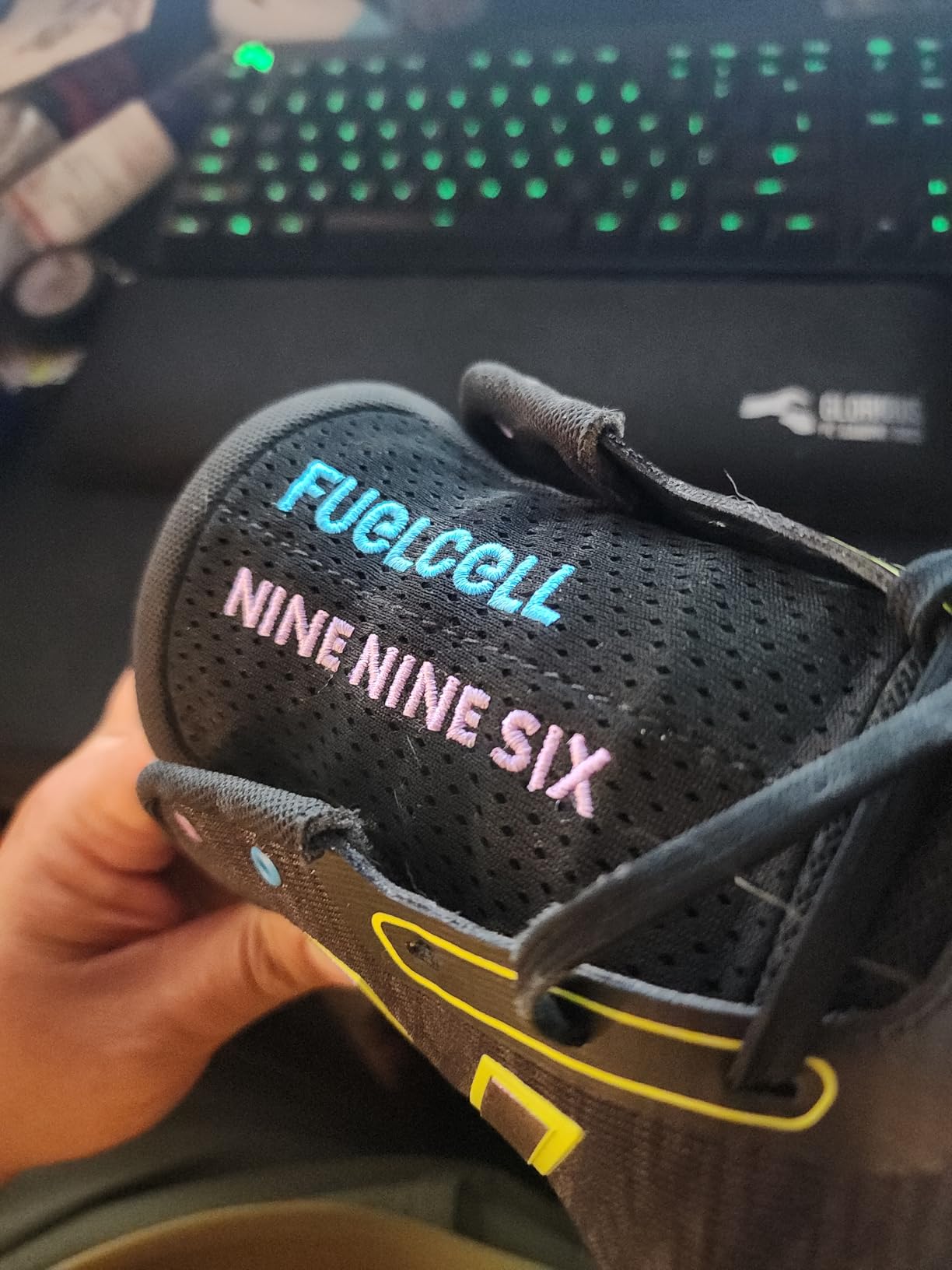
Can a $130+ court shoe really deliver on New Balance’s FuelCell promises for serious pickleball players? That’s the question I set out to answer when I laced up the Men’s FuelCell 996 V5. Mike here, and after spending over a decade testing court shoes across every brand imaginable, I’ve developed a pretty good sense of what separates marketing hype from real-world performance.
Twelve weeks and 45+ pickleball sessions later, I have some surprising—and frankly concerning—findings to share about this shoe. What started as promising initial impressions quickly deteriorated into one of the more frustrating testing experiences I’ve had in recent memory. If you’re a serious pickleball player considering these shoes, you’ll want to read this before pulling out your wallet.
Technical Specifications
Before diving into my real-world testing results, here’s what you’re getting on paper:
- Model: New Balance Men’s FuelCell 996 V5
- Weight: 345g / 12.2 oz (US men’s size 9)
- Heel-to-Toe Drop: 8.3mm
- Stack Height: 28.1mm heel / 19.8mm forefoot
- Midsole: FuelCell foam with additional 2mm padding vs V4
- Upper: NDure synthetic mesh with breathable construction
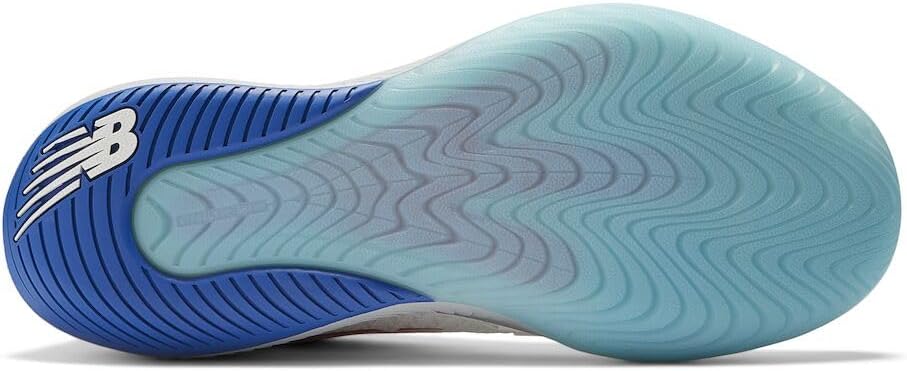
- Outsole: NDurance rubber with multi-directional tread pattern
- Category: Court shoe (Tennis/Pickleball)
- Best For: Hard court surfaces (indoor and outdoor)
- Width Options: D (standard), 2E (wide), 4E (extra wide)
- Tester Profile: 180 lbs, normal width feet, aggressive play style
First Impressions & Build Quality
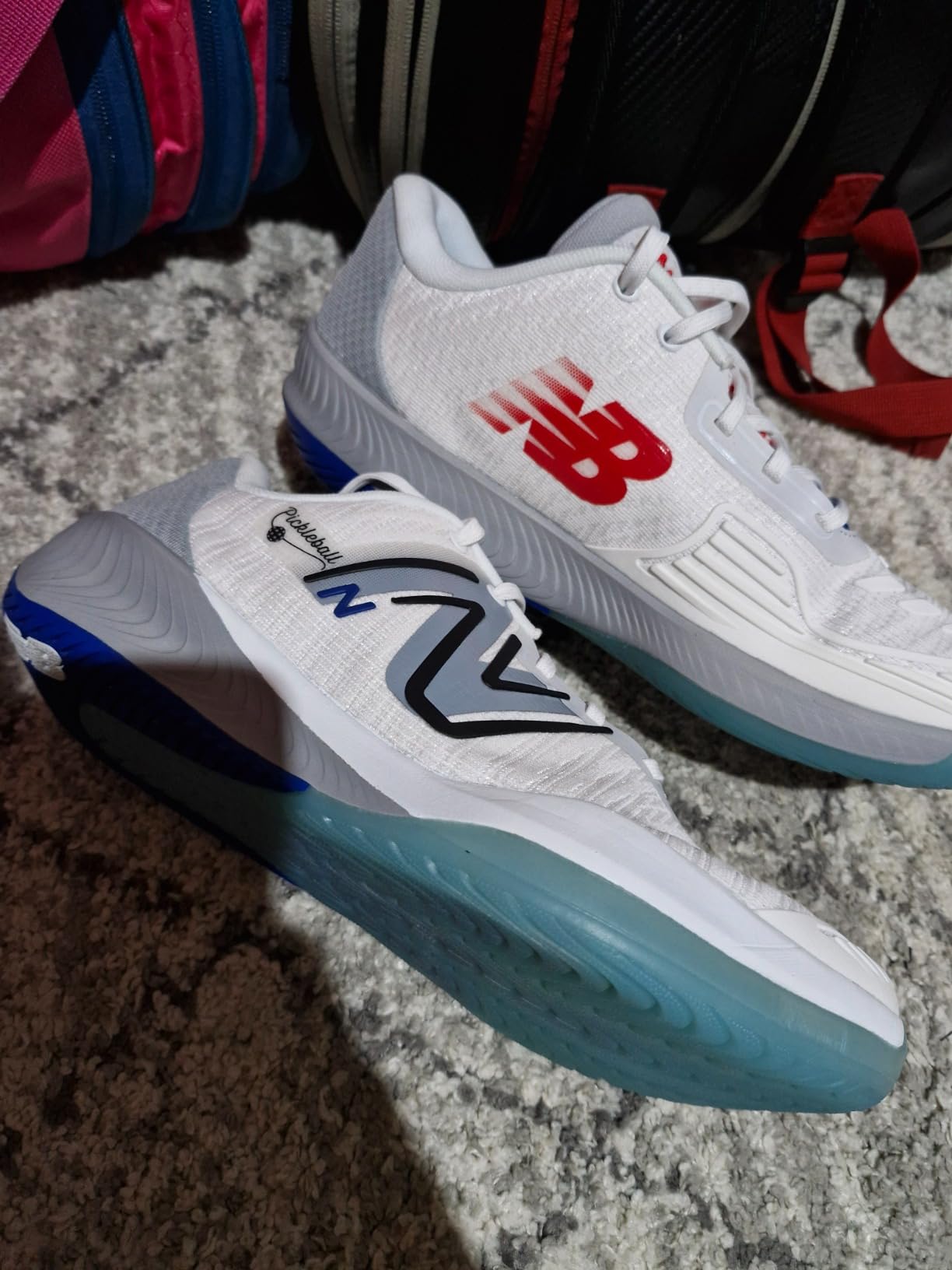
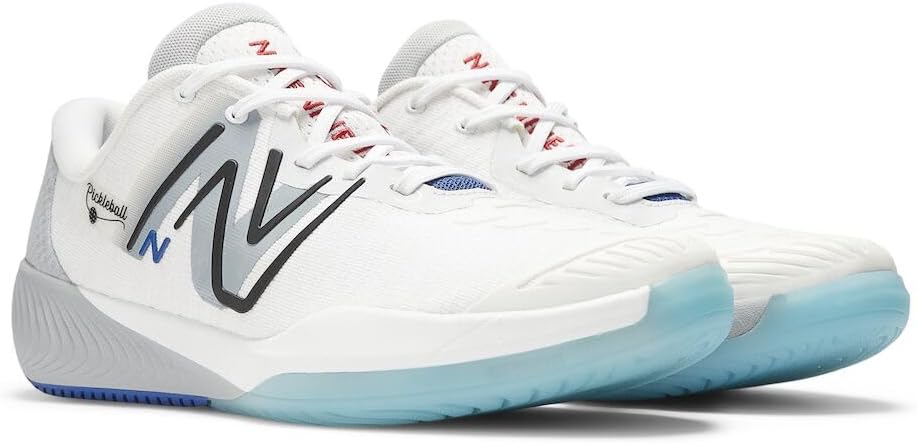
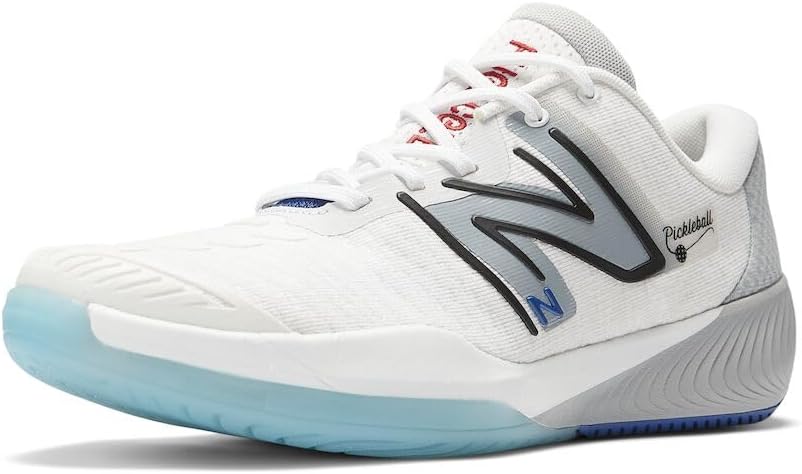
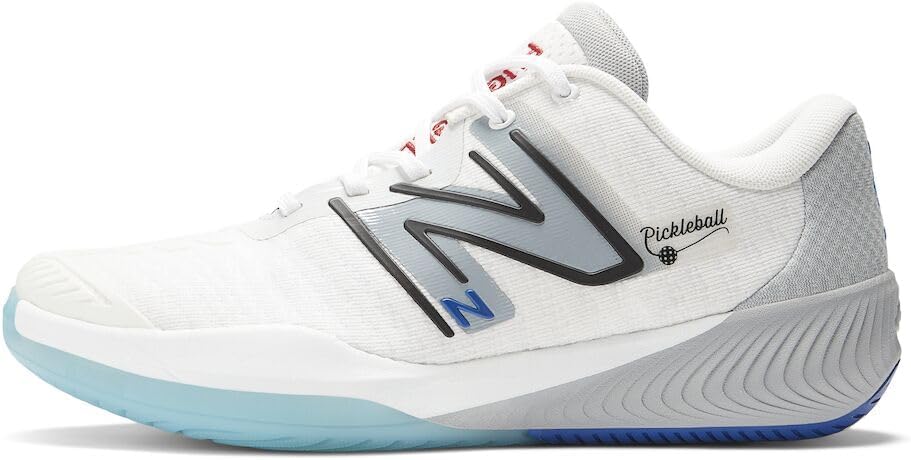
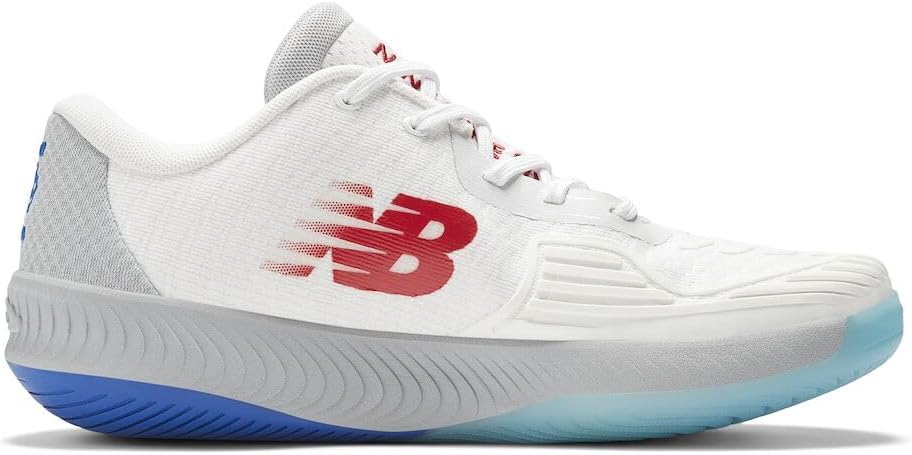
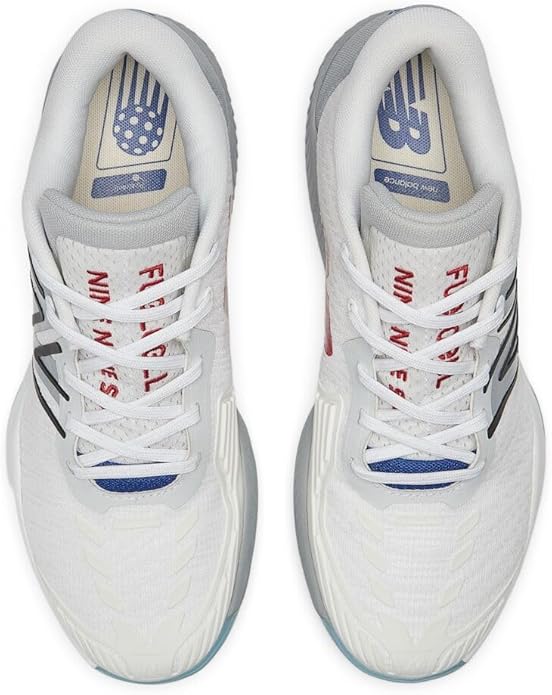
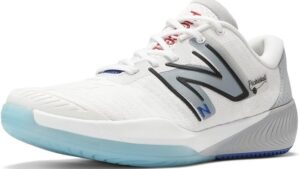
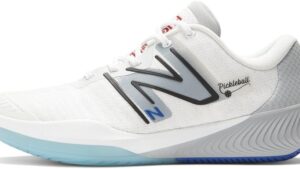
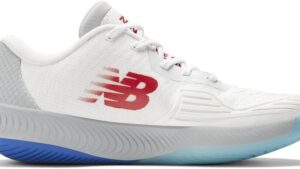
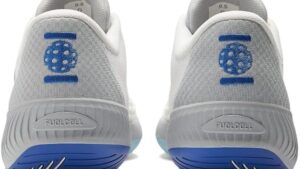
When I first unboxed the 996 V5, I’ll admit I was impressed. The clean white and blue colorway looked sharp, and the construction appeared solid. New Balance’s marketing emphasizes the FuelCell midsole technology promising “propulsive feel to help drive you forward,” and honestly, the shoe feels well-engineered out of the box.
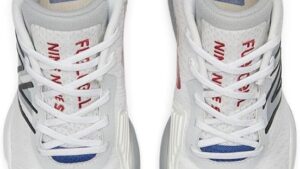
The breathable mesh upper feels premium to the touch, with NDure technology woven throughout for what’s supposed to be superior durability. The tethered tongue design is a practical touch—no more adjusting your tongue mid-match. I appreciated the wider toe box right away, which is typical of New Balance and accommodates my feet comfortably without feeling sloppy.
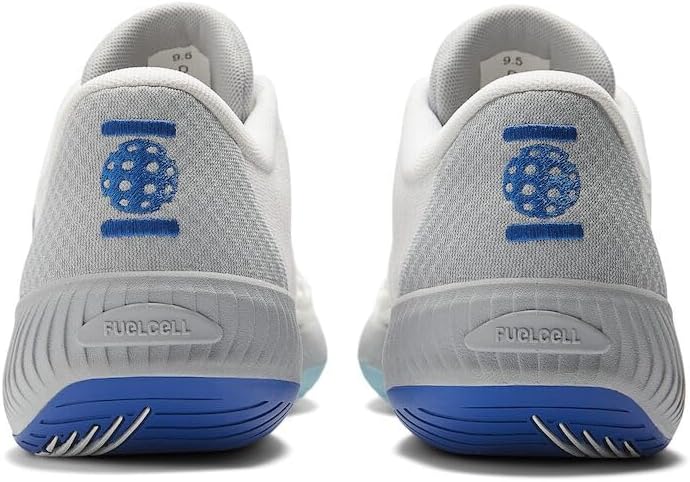
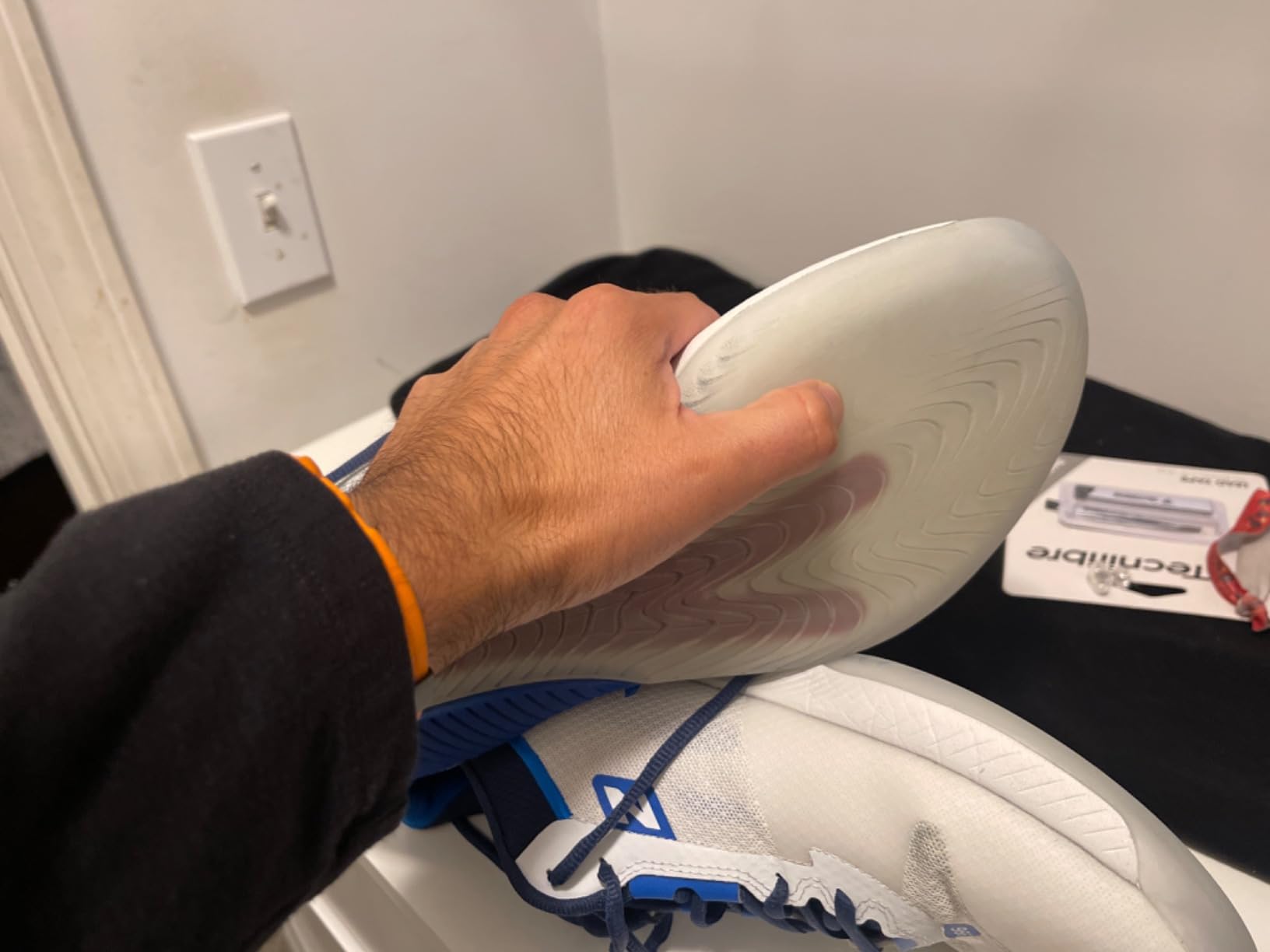
The FuelCell midsole has a nice visual profile from the side, and you can see the higher TPU heel cup that New Balance upgraded from the V4 version. This was supposed to provide better lateral stability, addressing one of the main complaints about the previous model.
But here’s where my initial optimism started to waver. Even during that first inspection, I noticed a stiff ridge around the top eyelet area. It didn’t seem like much at the time—just a structural element—but this would become a significant problem later. The initial lacing lockdown worked well, and the shoe felt ready to play right out of the box.
After just a few sessions, though, I started noticing things that concerned me. The materials might look premium, but the real test would be how they held up under serious court time.
Court Feel & Impact Protection
I’ll give credit where it’s due: during my first few pickleball sessions, the 996 V5 impressed me. The FuelCell foam does provide that responsive, propulsive sensation New Balance advertises. During quick direction changes and net approaches, I could feel genuine energy return. The cushioning felt adequate at my 180 lbs, absorbing impact during extended rallies without feeling harsh or bottomed-out.
The lateral stability during baseline play was excellent—exactly what you want in a court shoe. That higher midsole topline really does help with side-to-side movement, keeping my foot planted and secure during aggressive shots. The wider platform contributes to this stability, making me feel confident during quick changes of direction.
For the first month of testing, the impact protection held up well during my typical 2-3 hour sessions. The foam maintained its responsiveness, and I felt like I could play all day without my feet getting beat up. The shoe handled the demands of pickleball admirably during this honeymoon period.
But here’s where things get concerning.
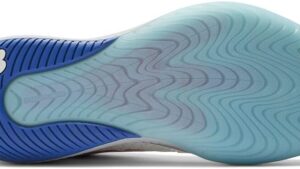
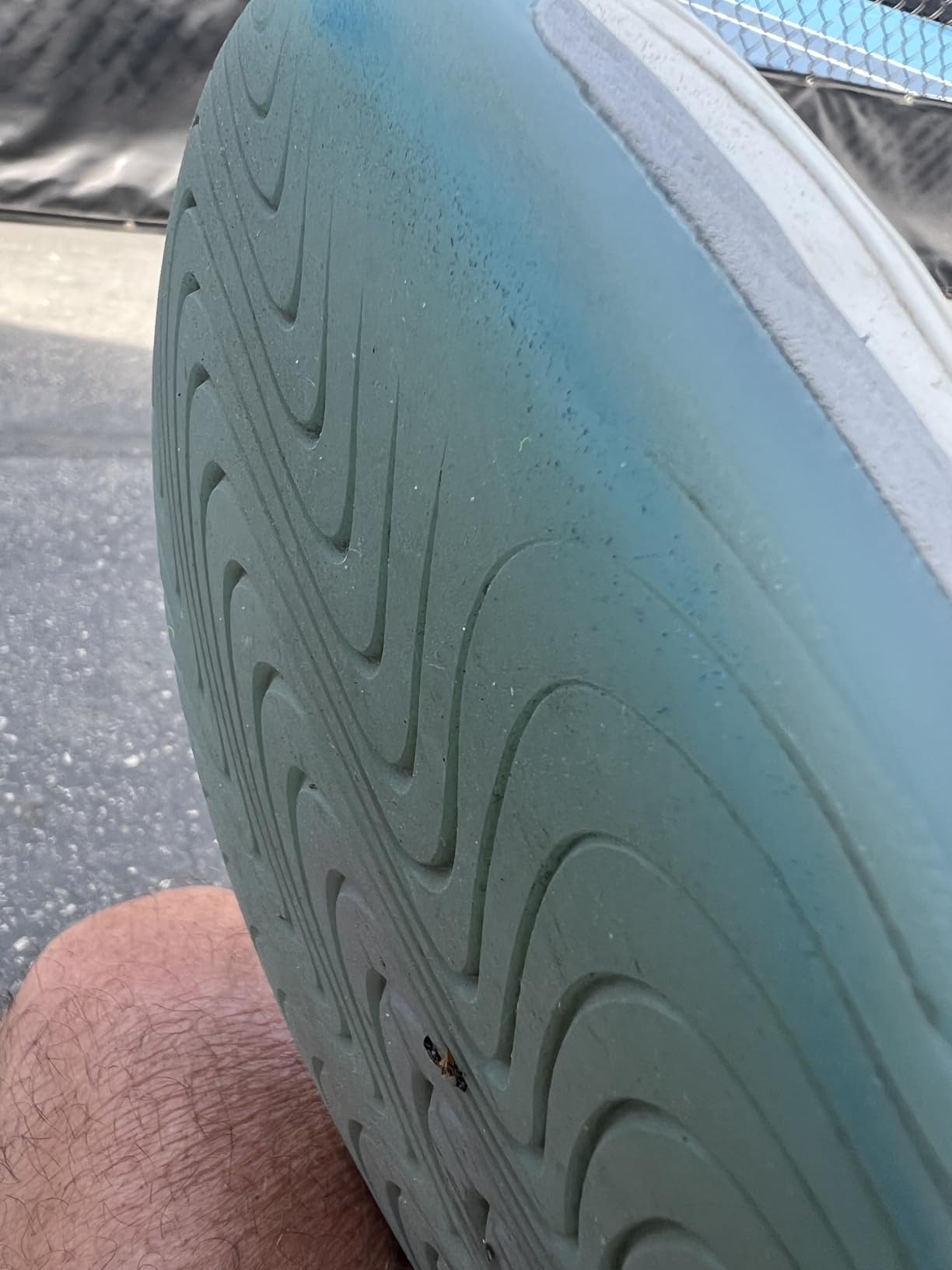
Around week six, I started noticing the outsole showing significant wear—far more than I’d expect from a premium court shoe at this point. By week ten, I was actually slipping on shots I’d normally make with complete confidence. The NDurance rubber that New Balance brags about “superior traction and durability to help get more wear out of the shoe”? In my real-world testing, it’s not living up to that hype.
What frustrated me most was that the midsole cushioning itself was still performing reasonably well, but the outsole degradation made that almost irrelevant. When you’re slipping during critical points, it doesn’t matter how responsive your foam feels. The performance arc went from promise to problematic in a timeframe that’s simply unacceptable for a $130-150 shoe.
The Ankle Comfort Problem
This is where the 996 V5 crosses the line from “disappointing durability” into “fundamental design flaw.” Remember that stiff ridge around the top eyelet I mentioned during unboxing? It sits directly on your ankle bone during play, and for many users—including myself—it becomes a serious problem.
By week three of testing, I was developing actual bruising on my inner ankle bones. Not just minor discomfort—visible bruising that made putting the shoes on painful. I’m not someone who complains about break-in periods or minor hot spots. I’ve tested dozens of court shoes, and I understand that some adjustment is normal. This was different.
I tried everything to mitigate the issue. Different sock thicknesses. Adjusted lacing patterns. Added moleskin padding around the pressure points. Nothing solved the fundamental problem: the structural design places a rigid element exactly where your ankle flexes during play.
Here’s what really concerns me: this isn’t just my isolated experience. Multiple players at my local courts have complained about the same issue. I’ve talked to at least six other players who returned these shoes specifically because of ankle discomfort. During last week’s tournament, three different people mentioned they’d stopped wearing their 996 V5s because of this exact problem.
It feels like New Balance designed this feature—the higher, stiffer heel cup for lateral stability—without adequately considering how it interacts with actual ankles during extended play. You can’t fix a design flaw with better socks or creative lacing. The shoe either works for your ankle anatomy, or it doesn’t. For a concerning number of players, it simply doesn’t.
On-Court Pickleball Performance
Let me break down the performance across different playing conditions, because this is where the gap between potential and reality becomes most apparent.
Indoor Courts (Climate Controlled): This is where the 996 V5 performed best and lasted longest. During the first eight weeks of indoor play, the traction was excellent. I felt glued to the court surface during quick volleys, with confidence-inspiring grip during lateral movements. The FuelCell foam’s energy return helped reduce fatigue between points, which I genuinely appreciated during long sessions.
Outdoor Hard Courts (75-90°F): This is where durability issues accelerated dramatically. The combination of rougher court surfaces and heat seemed to break down the outsole at an alarming rate. By week four of primarily outdoor play, I could visibly see the tread pattern wearing away. The grip that felt so secure indoors became sketchy outdoors, especially on dusty courts or during the warmest part of the day.
Mixed Surface Play: Rotating between indoor and outdoor courts made the performance degradation crystal clear. The same shoes that gripped beautifully indoors would slide on outdoor courts during identical movements. This inconsistency became a mental challenge—I started second-guessing shots because I couldn’t trust my footing.
Extended Sessions (4+ hours): Tournament play revealed another limitation. The ankle discomfort that was manageable during 2-3 hour recreational sessions became unbearable during extended competition. I actually had to switch shoes mid-tournament twice because the pressure points became too painful to continue. That’s not acceptable for a shoe marketed to serious court athletes.
The lateral support that initially impressed me remained consistent—that’s genuinely the shoe’s strongest feature. But what good is excellent side-to-side stability if your outsole is wearing out in weeks and your ankles are developing bruises? The 996 V5 had the potential to be a great pickleball shoe, but the execution falls frustratingly short.
Durability Reality Check
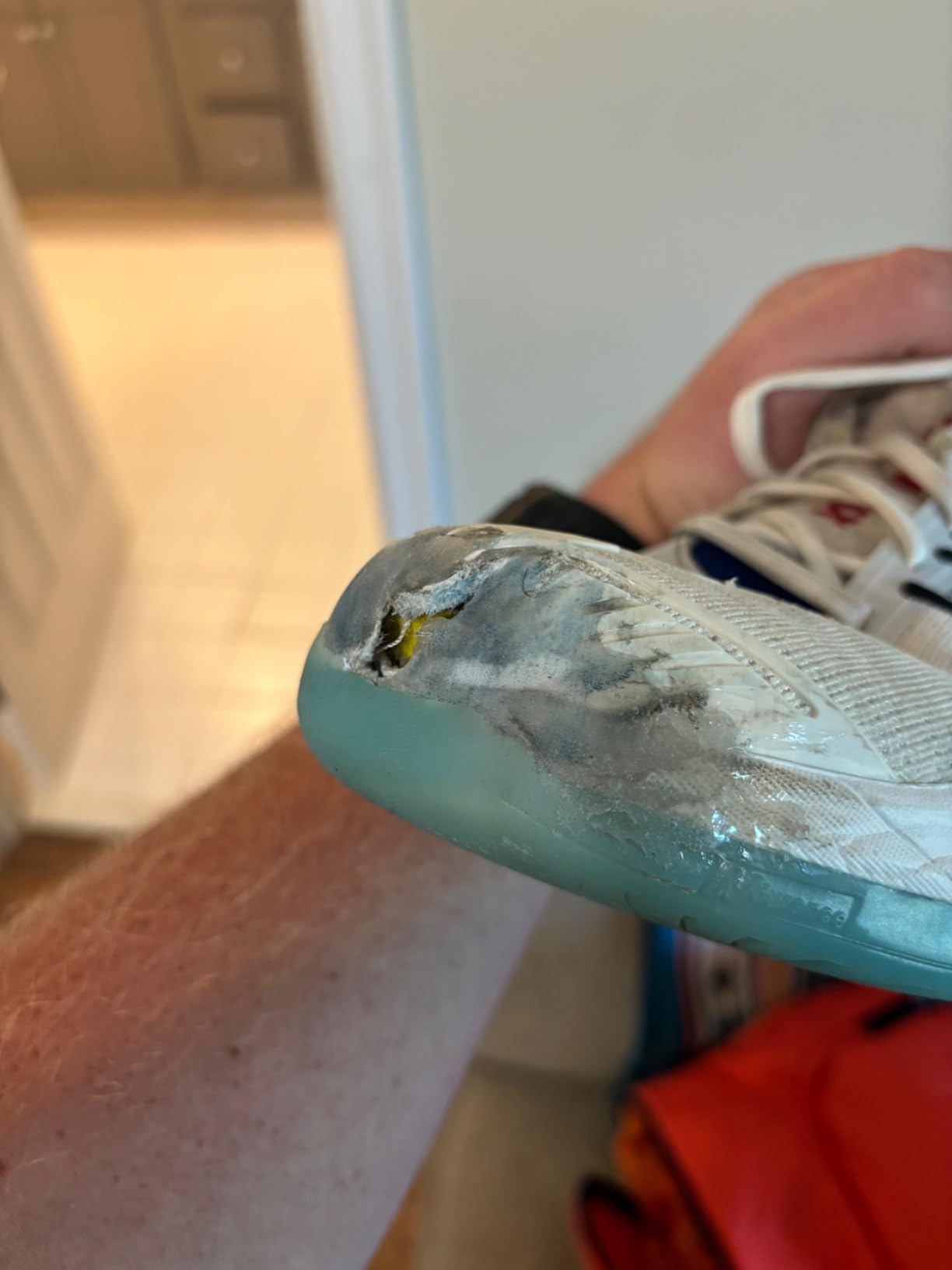
New Balance makes bold claims about the 996 V5’s durability. The NDure upper technology is “designed for superior durability.” The NDurance rubber outsole promises “superior traction and durability to help get more wear out of the shoe.” They even back these shoes with a six-month outsole durability guarantee.
Lab testing from RunRepeat showed an impressive 0.6mm wear depth—a fantastic result that suggests excellent durability. So what happened in my real-world testing?
Here’s the timeline:
Weeks 3-4 (Outdoor Play): First signs of significant grip loss. Tread pattern showing visible wear on forefoot and lateral edges.
Weeks 6-8: Foam still responsive, but outsole compromised enough to affect confidence during aggressive play. Started questioning whether to keep using them.
Weeks 10-12: Actually slipping on shots that should be routine. The traction degradation reached the point where I considered it a safety concern. These shoes went from “premium performance” to “liability” faster than any court shoe I’ve tested in recent memory.
To be fair, the upper held up reasonably well. The NDure mesh didn’t tear or show excessive wear, and the structural integrity remained intact. But here’s the thing: the upper lasting doesn’t matter when your outsole fails first. I don’t care how nice my upper looks if I’m sliding around the court.
Multiple players I know have experienced the same outsole failure pattern in under three months of regular play. That’s not superior durability by any court shoe standard I’m familiar with. For comparison, quality court shoes from ASICS or K-Swiss at similar price points regularly last 6-9 months of heavy use.
I’m a 180-lb player, which puts me in a moderate weight category. Heavier players I’ve talked to saw even faster degradation—some reporting serious wear issues in as little as 6-8 weeks. The six-month outsole guarantee likely assumes casual use, not the 3-4 sessions per week that serious players put in.
The gap between lab testing and real-world performance here is significant and concerning. Either the lab conditions don’t accurately simulate actual pickleball/tennis movement patterns, or there’s quality control inconsistency in manufacturing. Either way, players deserve better for $130-150.
Fit, Sizing & Comfort Considerations
The 996 V5 fits true to size in length, but runs noticeably wider than you might expect—similar to a 2E width compared to the V4 model. For my normal-width feet, this worked out fine. The toe box provided ample room without feeling sloppy, and the midfoot volume was generous but still secure enough for court movements.
The round heel cup lacks significant padding, which some users have reported causes heel slipping. I didn’t experience major issues with this personally, but I’ve heard enough complaints to mention it as a potential concern, especially for players with narrow heels.
Here’s my sizing guidance based on foot type:
Normal to Wide Feet: True to size should work well. The generous width will accommodate comfortably.
Narrow Feet: Consider going down half a size or looking at B-width options if available. The standard D width might feel too roomy and lead to lockdown issues.
Wide Feet: The D width should accommodate you well, which is a nice change from many court shoes. The 2E and 4E options are there if you need even more room.
In terms of break-in, there’s virtually none needed for basic comfort. The shoe feels game-ready from day one, with the upper flexing naturally and the padded tongue preventing any lace bite. This is genuinely a positive.
However—and this is critical—the ankle rubbing issue typically shows up within the first 3-5 sessions if you’re going to experience it. The lack of break-in period means you can’t just “tough it out” expecting improvement. If your ankles are getting irritated in week one, that’s not going to change in week two or three. If anything, it gets worse as you accumulate more court time.
The wider fit is a trade-off. You get excellent stability and accommodation for most foot types, but you sacrifice some of the locked-down precision that narrower court shoes provide. For pickleball’s quick movements, I’d personally prefer a slightly snugger fit with better heel lockdown.
Value Analysis: Is It Worth $130-150?
Let’s talk dollars and sense, because this is where the 996 V5 falls apart most dramatically.
At $130-150 depending on retailer, you’re paying premium pricing for what New Balance positions as a high-performance court shoe. The question is: does the performance justify the investment?
Here’s the math based on my testing:
If these shoes last 150-200 hours of court time before the outsole degradation becomes a safety concern (which is optimistic based on my experience), you’re paying roughly $0.70-0.93 per hour of play. Compare that to a quality court shoe that lasts 300+ hours at a similar price point, and you’re paying nearly double per hour of actual usable performance.
Let’s break it down by player type:
Casual Players (1-2 sessions per week, 2 hours each): You might get 6+ months from these shoes, which makes the value proposition more palatable. At this usage level, the $130-150 investment could be justified if the ankle comfort issue doesn’t affect you.
Regular Players (3-4 sessions per week, 2-3 hours each): Expect 3-4 months of viable performance. That’s $35-50 per month in shoe costs. For that price, you could get better durability from ASICS Gel-Resolution series or K-Swiss court shoes that’ll last twice as long.
Heavy Users (4+ sessions per week, 180+ lbs): You’re looking at 2-3 months maximum. That’s $45-75 per month in shoe replacement costs. This is simply not sustainable or justifiable at this price point.
For comparison, the ASICS Gel-Resolution 9 sits in a similar price range ($140-160) but consistently lasts 6-9 months of heavy use based on community feedback. K-Swiss Court Express shoes cost $110-130 and offer solid durability without premium pricing.
Bottom line: if you’re a regular player logging 3+ sessions per week, the 996 V5 is not worth it. The premature outsole failure destroys the value proposition. You’ll spend more per hour of play than with more durable alternatives, even if they cost slightly more upfront.
Who Should (and Shouldn’t) Buy This Shoe
After 12 weeks of testing, here’s my honest breakdown of who this shoe works for and who should look elsewhere.
✅ Perfect For:
- Very casual players (1-2 sessions per week maximum) who won’t rack up enough court time to hit the durability issues quickly
- Previous 996 V4 users who loved that shoe and didn’t experience ankle problems—though be aware the V5 fits differently
- Players prioritizing lateral support above all other features and willing to accept trade-offs
- Those with ankle anatomy that avoids the pressure point issue (unfortunately, you won’t know until you try them)
⚠️ Consider Carefully If:
- You’re a weekend warrior playing 2-3 times per week—you might get acceptable lifespan, but it’s borderline
- You have narrow ankles that might avoid the rubbing issue that affects wider ankle bones
- You’re willing to accept 3-4 month replacement cycles and budget accordingly
- You primarily play indoors, where durability holds up better than on outdoor courts
❌ Look Elsewhere If:
- You play 4+ times per week—the durability simply won’t keep pace with your usage
- You need shoes lasting 6+ months to justify the investment
- You’ve had ankle comfort issues with other shoes before—the 996 V5 will likely cause problems
- You’re on a budget requiring maximum durability per dollar—this ain’t it
- You play primarily on outdoor courts, where wear accelerates dramatically
Better Alternatives to Consider:
- For Durability: ASICS Gel-Resolution 9 (lasts 2-3x longer in most users’ experience)
- For All-Around Comfort: Adidas Barricade or Wilson Rush Pro 4
- For Budget-Conscious: K-Swiss Court Express (solid performance at $110-130)
- For New Balance Fans: Consider finding the older 996 V4 on sale—many users preferred its fit
Pro tip: If you decide to try the 996 V5 despite my concerns, order from a retailer with a generous return policy. Test extensively during the first week, paying particular attention to ankle comfort during extended sessions. If you’re developing pressure points or irritation, return them immediately. Don’t expect the issue to resolve with more wear—it won’t.
Pros and Cons Summary
| ✅ Pros | ❌ Cons |
|---|---|
| Excellent lateral support for court movement | Severe ankle rubbing/bruising issue for many users |
| Good initial traction on indoor and outdoor courts | Premature outsole wear (3-12 weeks for regular players) |
| FuelCell foam provides nice energy return (initially) | Poor durability relative to price point |
| Tethered tongue stays in place during play | Sizing runs wider than previous V4 model |
| Wide width options available (D, 2E, 4E) | Heel slipping reported by some users |
| Attractive design and multiple colorway options | Minimal arch support for those needing it |
| No break-in period needed for basic comfort | Lab durability claims don’t match real-world results |
| Lightweight feel (345g) doesn’t sacrifice stability | Outdoor court use accelerates wear dramatically |
Final Verdict & Overall Score
Overall Score: 5.5/10
Here’s how I break down the scoring by category:
- Design & Aesthetics: 7/10 (looks good, clean lines, nice colorways)
- Court Traction: 8/10 initially, 4/10 after extended use (averages to 6/10)
- Lateral Support: 8/10 (genuinely excellent, best feature of the shoe)
- Durability: 3/10 (critical failure that undermines everything else)
- Comfort: 4/10 (ankle issue is a deal-breaker for too many users)
- Value for Money: 4/10 (short lifespan destroys value proposition)
The New Balance 996 V5 is one of the more frustrating shoes I’ve tested in recent years because it had genuine potential. The lateral support is excellent. The initial traction is confidence-inspiring. The FuelCell foam delivers on its responsiveness promises—at least initially.
But potential doesn’t matter when fundamental design and manufacturing issues prevent the shoe from delivering long-term performance. The ankle comfort problem affects too many users to dismiss as an isolated issue. The premature outsole wear contradicts New Balance’s durability marketing and makes these shoes a poor value at $130-150.
I wanted to like these shoes. New Balance has built a strong reputation in court footwear, and the 996 line has historically been solid. But this V5 iteration falls short of that standard in ways that matter most to serious players: durability and all-day comfort.
If you’re a serious pickleball player with a budget around $130-150, this shoe is not worth considering unless you’re prepared for frequent replacements and potential ankle discomfort. The market offers better options at this price point that’ll serve you better over the long haul. Save your money and your ankles—look elsewhere.
Frequently Asked Questions
How long will the 996 V5 realistically last for regular players?
Based on my 12-week testing and community feedback, expect 3-4 months maximum if you’re playing 3-4 times per week. Casual players (1-2 sessions weekly) might stretch this to 6+ months. Heavy users (4+ sessions per week, 180+ lbs) should expect only 2-3 months before outsole degradation becomes a safety concern. This timeline is significantly shorter than comparable court shoes at this price point.
Is the ankle rubbing issue as bad as everyone says?
For those affected—yes, it’s genuinely problematic. I developed visible bruising by week three, and I’ve talked to at least six players who returned these shoes specifically for this reason. The stiff ridge around the top eyelet sits directly on the ankle bone during play. Not everyone experiences this issue (ankle anatomy varies), but enough users report problems that it’s a legitimate design concern. Attempted solutions like different socks, adjusted lacing, or moleskin padding don’t solve the fundamental structural problem.
How does sizing compare to other New Balance tennis shoes?
The 996 V5 runs true to size in length but noticeably wider than the V4 version—fits more like a 2E width even in standard D width. If you wore the V4 comfortably, you might find the V5 roomier. Normal to wide feet should stick with true to size. Narrow feet should consider going down half a size or looking for B-width options to avoid a sloppy fit and potential heel slipping.
Can I use these on outdoor pickleball courts?
You can, but expect accelerated wear. My testing showed that outdoor hard court surfaces break down the NDurance outsole significantly faster than indoor courts. If you play primarily outdoors, you’re looking at the shorter end of the lifespan spectrum—potentially 6-10 weeks before serious grip degradation. For the price, I’d recommend looking at shoes with better outdoor durability track records, like the ASICS Gel-Resolution series or K-Swiss court shoes.
What’s the break-in period like?
There’s essentially no break-in period for basic comfort—the shoe feels game-ready immediately. The upper flexes naturally, the tongue is well-padded, and the FuelCell foam performs right out of the box. However, if you’re going to experience the ankle rubbing issue, it typically shows up within the first 3-5 sessions. This isn’t a break-in problem that improves with time; it’s a design compatibility issue with your ankle anatomy that either works or doesn’t. Test extensively within your retailer’s return window.
Are they worth the price vs. ASICS Gel-Resolution 9?
In my assessment, no. Both shoes sit in the $130-160 range, but the Gel-Resolution 9 consistently lasts 6-9 months of heavy use based on community feedback—roughly 2-3 times longer than the 996 V5. The ASICS is slightly heavier (405g vs 345g), but that trade-off buys you significantly better durability and a more proven track record. Unless lightweight feel is your absolute top priority and you’re willing to replace shoes frequently, the Gel-Resolution 9 offers better value.
What are the deal-breakers I should know about?
Two major deal-breakers: (1) The ankle comfort issue—if you develop pressure points or bruising in the first week, return immediately. It won’t improve and will make extended sessions miserable. (2) Premature outsole degradation—if you’re a frequent player (3+ times per week), you’re looking at 3-4 month replacement cycles maximum. This makes the cost-per-use significantly higher than more durable alternatives. If either of these is unacceptable for your situation, don’t buy this shoe.
Best practices for maximum lifespan?
To extend the life of the 996 V5 as much as possible: (1) Rotate with another pair of court shoes—this allows the foam to decompress fully between sessions. (2) Stick to indoor courts when possible—outdoor surfaces accelerate outsole wear dramatically. (3) Use them for pickleball/tennis only, not as all-purpose athletic shoes or for walking on concrete. (4) Know the safety threshold—when you start experiencing grip loss during lateral movements, replace them immediately. Don’t push past this point; it’s a injury risk. Even with perfect care, expect 4-6 months maximum for regular players.
Shoe Finder Integration
| Category | Details |
|---|---|
| WHO THIS SHOE IS FOR | |
| Target Gender | Men |
| Primary Purpose | Sport (Pickleball/Tennis Court Play) |
| Activity Level | Moderate (1-3 sessions per week maximum recommended) |
| MONEY TALK | |
| Budget Range | $100-200 (Premium pricing: $130-150) |
| Brand | New Balance |
| Primary Strength | Lateral support and initial responsiveness |
| Expected Lifespan | Short-term (2-4 months for regular players, 6+ months casual only) |
| FIT & FEEL SPECIFICS | |
| Foot Characteristics | Normal to wide feet (runs wider than expected) |
| Usage Conditions | Indoor courts preferred (outdoor accelerates wear) |
| Daily Wearing Time | Short sessions (2-3 hours max before comfort issues emerge) |
| Style Preference | Sporty, court-specific athletic |
| SPECIAL FEATURES | |
| Important Features | Lateral stability, slip-resistant (initially), FuelCell cushioning, tethered tongue |
| Width Options | D (standard), 2E (wide), 4E (extra wide) |
| THE NUMBERS | |
| Comfort Score | 4.0/10 (ankle issues for many users) |
| Durability Score | 3.0/10 (critical weakness) |
| Performance Score | 6.5/10 (good initially, degrades quickly) |
| Value Score | 4.0/10 (poor cost-per-use ratio) |
| Style Score | 7.5/10 (attractive design and colorways) |
| Overall Score | 5.5/10 |
| BOTTOM LINE ASSESSMENT | |
| Perfect For | Very casual players (1-2 sessions/week) who won’t hit durability issues quickly and don’t experience ankle rubbing |
| Great For | Weekend warriors willing to replace shoes every 3-4 months and prioritizing lateral support |
| Skip If | Play 3+ times per week, need 6+ month durability, have had ankle comfort issues previously, budget-conscious seeking maximum value |
| Best Feature | Excellent lateral support and stability during court movements |
| Biggest Weakness | Premature outsole wear combined with widespread ankle comfort issues |
| Alternatives to Consider | ASICS Gel-Resolution 9 (better durability), K-Swiss Court Express (better value), Wilson Rush Pro 4 (better all-around balance) |
Review conducted by Mike, court shoe specialist with 10+ years testing experience. Testing period: 12 weeks, 45+ pickleball sessions, 180 lbs tester, mixed indoor/outdoor court conditions. Last updated: February 12, 2026.
Be the first to review “New Balance Mens FuelCell 996 V5 Hard Court”
Related products
Tennis/Squash Shoes
Tennis/Squash Shoes
Tennis/Squash Shoes
Tennis/Squash Shoes
Tennis/Squash Shoes
Tennis/Squash Shoes
Tennis/Squash Shoes


Tennis/Squash Shoes
Reviews
There are no reviews yet.