
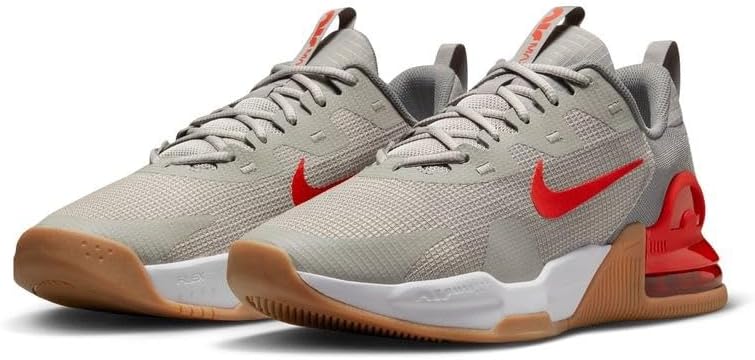
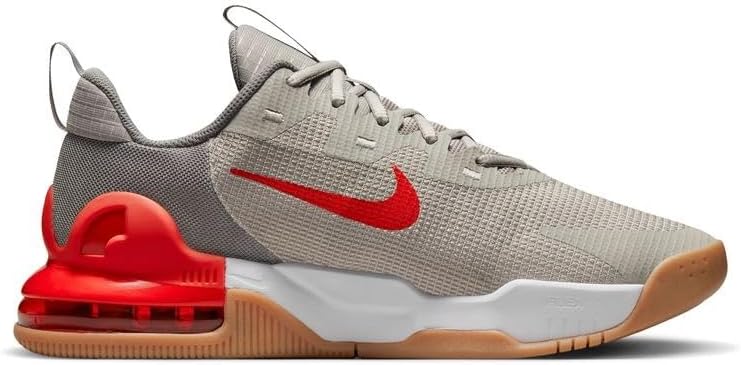
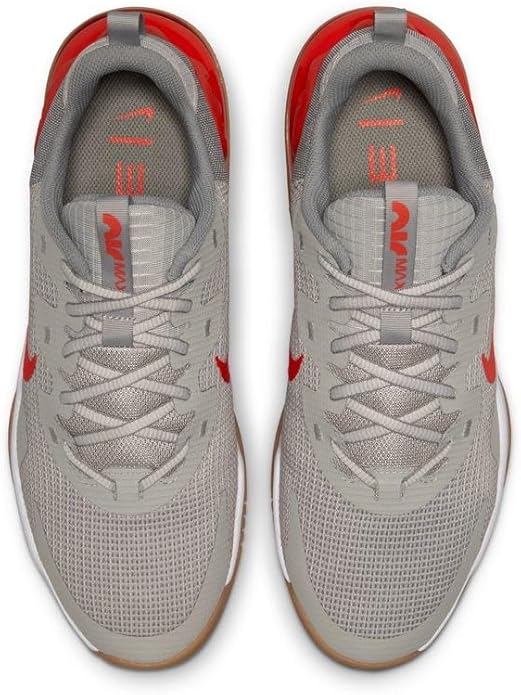
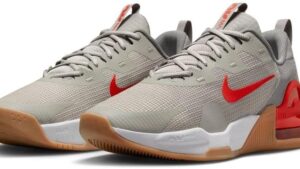
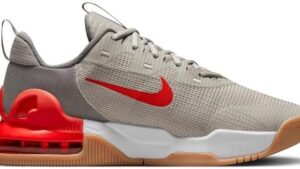
Nike Men’s Nike Air Max Alpha Trainer 5 Sneaker
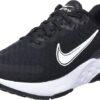
$85.00
- Weight: 12.8 oz (men’s size 9)
- Midsole: Foam with Air Max cushioning unit at heel (36.2mm stack height)
- Upper: Breathable mesh with synthetic leather reinforcements
- Drop: 12mm (unusual for training shoes)
- Category: Cross-training/Gym shoes
- Best For: HIIT, circuit training, weight sessions, plyometric work
Can an $85 training shoe really deliver Nike’s stability technology without compromising performance? I’ve spent the
last eight weeks putting the Air Max Alpha Trainer 5 through its paces to find out—logged 40+ training sessions
across HIIT workouts, weight training, circuit routines, and plyometric drills. I’m Mike, and I’ve been testing
footwear across every sport imaginable for over a decade. At 180 lbs with normal width feet (size 10.5 D), I’ve got
some surprising findings to share about these mid-tier trainers.
Design, Build Quality & Real-World Performance
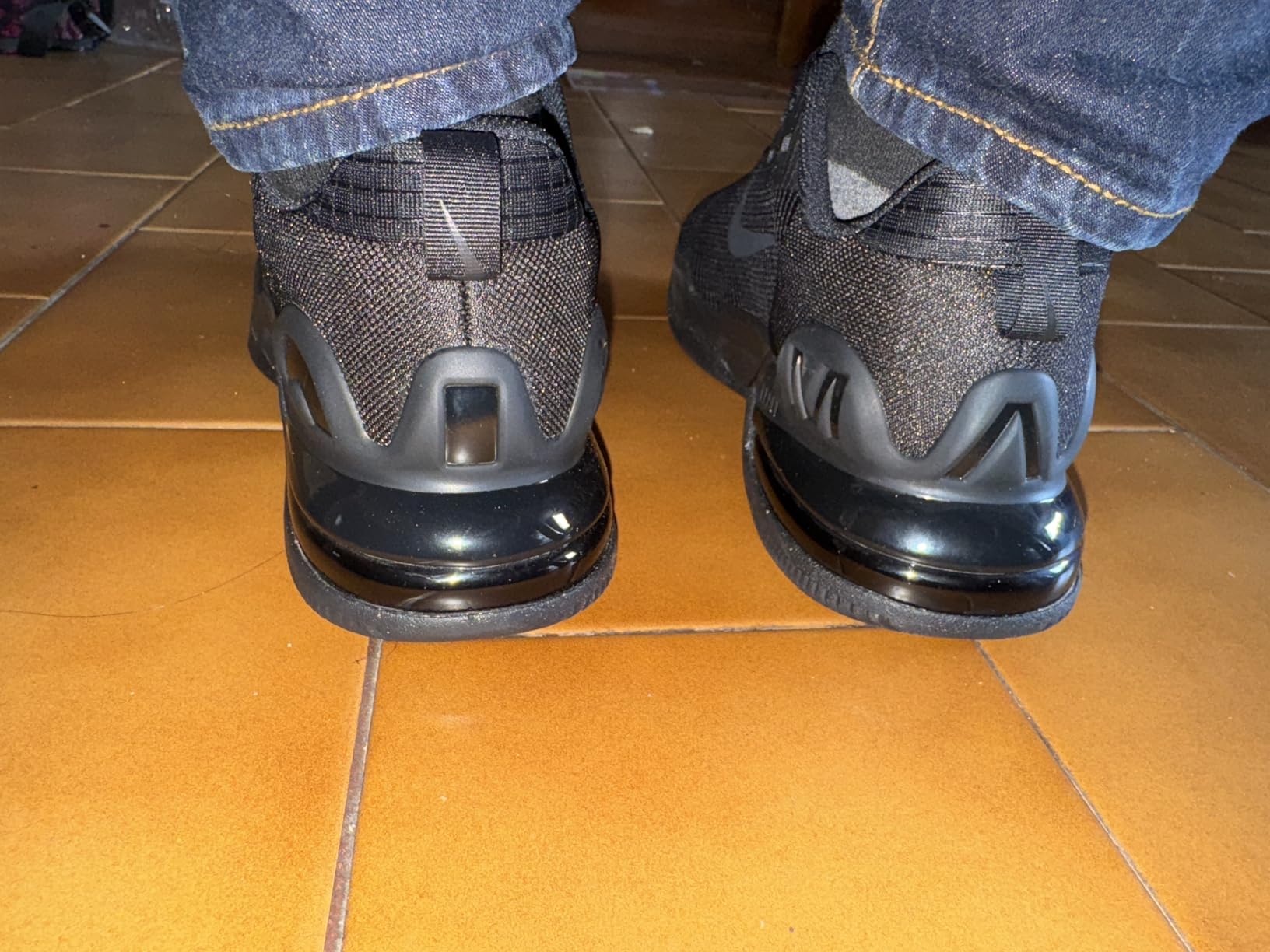
When I first pulled these from the box, my initial reaction was mixed. The cobblestone colorway looked sharp enough
for the gym, but immediately I noticed glue residue along the toe box seams—quality control already raising an
eyebrow. Not a deal-breaker, but coming from a brand like Nike at this price point, I expected cleaner execution.
The mesh and leather combination strategy makes sense in theory. During rope climbs and repeated box jumps, those
leather reinforcements around the forefoot held up solidly over eight weeks. Pure mesh would’ve shown serious wear
by now. But here’s the trade-off: lab testing confirms what I suspected—that toebox mesh is thin. One second of
drill penetration in durability tests. Outdoor bootcamp sessions on concrete showed faster wear patterns than I’d
like. Keep these for indoor gym use if you want to maximize their lifespan.
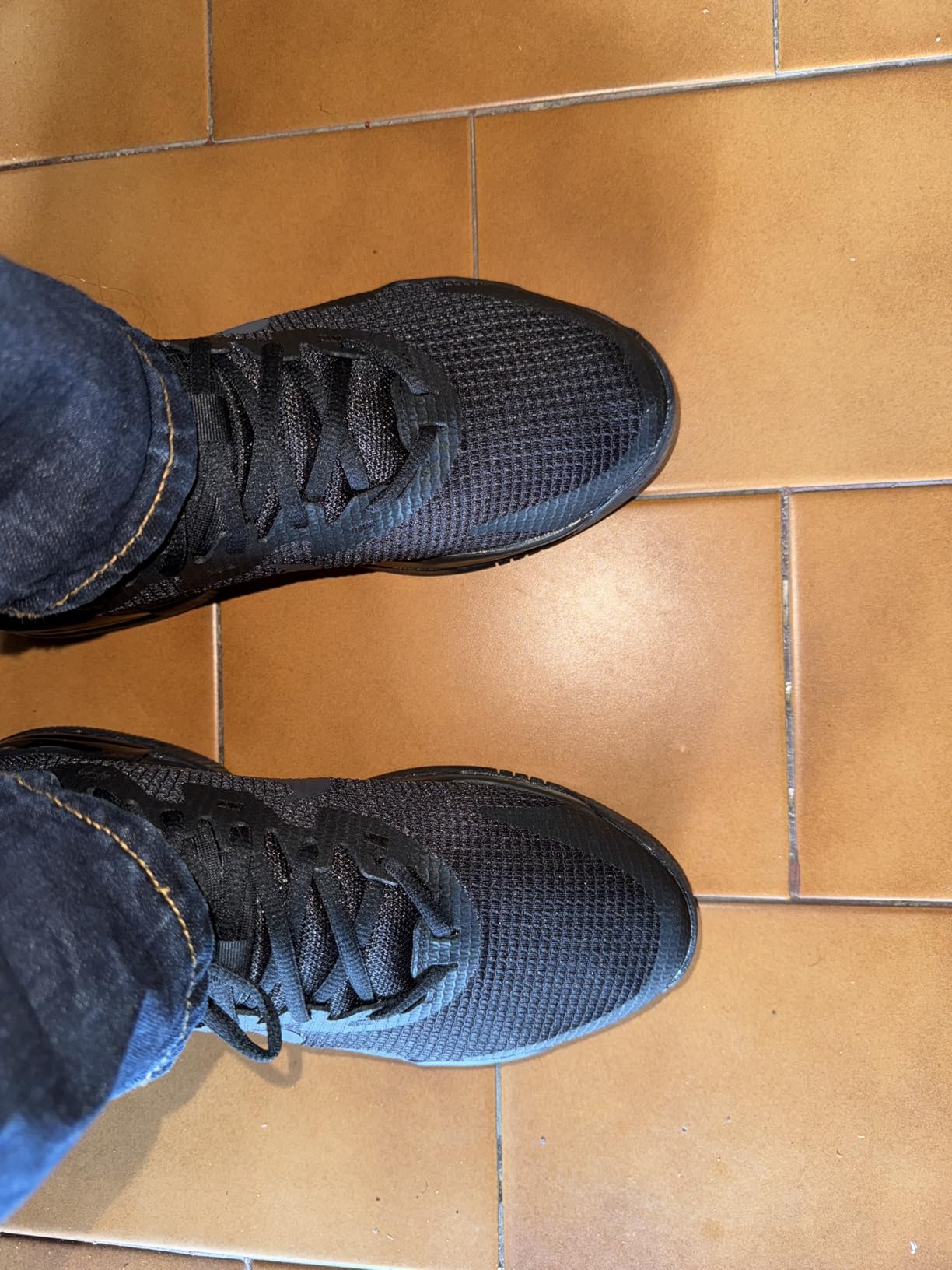
Lockdown during explosive laterals presented some limitations. At my 180 lbs, I felt slight foot shift during
aggressive direction changes—not enough to cause problems in typical HIIT circuits, but noticeable enough during
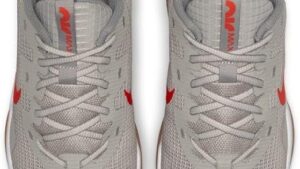
basketball-style defensive slides. The lacing system does its job for moderate training, but if you’re heavier (200+
lbs) or doing serious agility work, you might notice more movement than you’d want.
That quality control issue I mentioned? Turns out it’s not just my pair. Training partners reported similar glue
residue, and I’ve seen sizing inconsistency complaints online. One guy ordered his usual size and received a pair
that fit half a size off. This isn’t acceptable at any price point, but especially frustrating when you’re paying
for Nike’s name.
Cushioning & Impact Protection During Training
Here’s where things get interesting. My first HIIT session with the Air Max Alpha Trainer 5 felt genuinely
responsive. That heel Air Max unit provided solid impact absorption during box jumps, burpees, and jump squats. The
cushioning struck a nice balance—not mushy like budget trainers, but forgiving enough for repeated explosive
movements. Energy return was noticeable compared to basic foam options.
For the first 30 training sessions, cushioning performance stayed consistent. Weeks 2 through 5 represented peak
experience territory. The foam felt supportive during varied intensities, from casual 30-minute circuits to a brutal
90-minute functional fitness workshop. My feet felt surprisingly fresh even after extended sessions.
Then came session 30, and I started noticing something. The cushioning response wasn’t as lively. Not dramatically
so—still functional—but measuring against those early weeks, there was a measurable difference. By week 8, comparing
to a friend’s new pair, the compression was undeniable. The Air Max unit itself seemed fine; it’s that foam midsole
that’s showing its mid-tier construction.
For context, premium training shoes typically
maintain cushioning integrity for 50+ intensive sessions. These started degrading around 30. If you’re training 3-4
times per week, that translates to about 6-8 weeks before you notice the change. Daily trainers putting in 5+
sessions weekly? You’re looking at compression within a month.
The takeaway: cushioning quality delivers initially, but don’t expect long-term durability at this price point. For
moderate users, they’ll serve you well. Heavy training schedules will burn through that foam faster than you’d
probably like.
On-the-Gym-Floor Performance
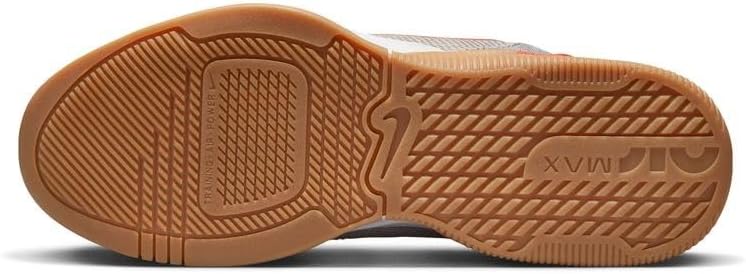
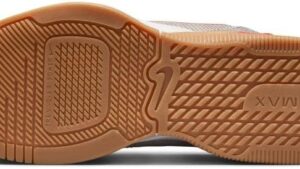
This is where the Air Max Alpha Trainer 5 genuinely impressed me. That rubber outsole pattern? Never slipped once.
Not during explosive direction changes on gym floors, not on concrete during outdoor bootcamp sessions, not even on
grass during partner drills. The traction instilled confidence across every surface I tested.
But the real standout feature is lateral stability. Nike advertises a “wide, flat base for enhanced stability,” and
after 40+ sessions, I can confirm they actually delivered on this claim. During agility ladder work,
defensive slides from my basketball background, and rapid side-to-side movements, these felt more planted than shoes
costing 50% more. That wide platform provides a solid foundation whether you’re catching yourself mid-burpee or
holding position during heavy deadlifts.
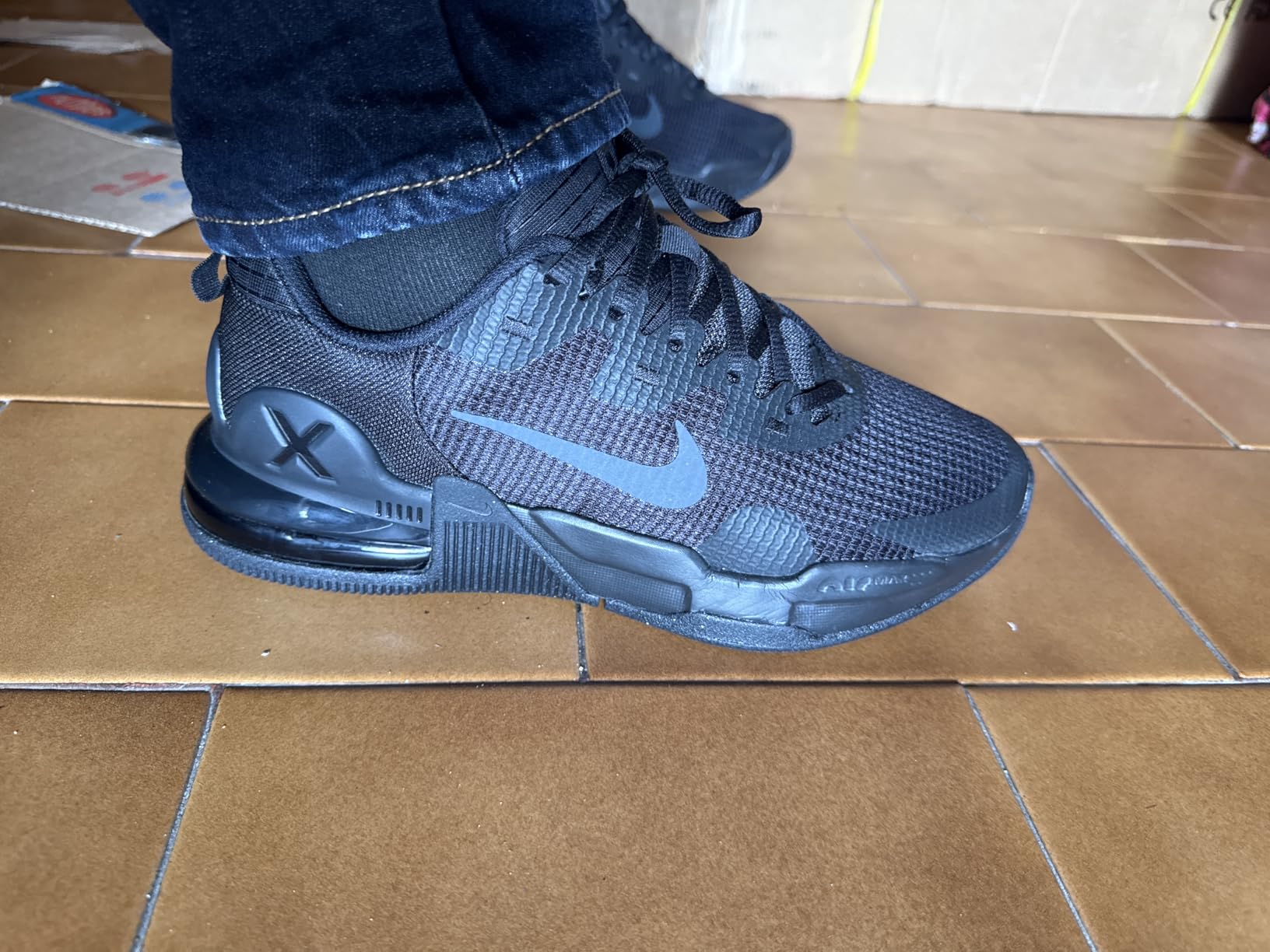
The stability advantage comes from that 110.1mm forefoot width combined with the overall platform design. At 180 lbs,
I felt genuinely secure during explosive movements. This is the shoe’s killer feature—lateral support that rivals
the Nike Metcon line at a much
friendlier price point.
One caveat: while traction held up beautifully indoors, outdoor use accelerated outsole wear faster than expected.
Those same concrete surfaces that never caused slips? They showed visible wear patterns after just 5 outdoor
sessions. The grip design is optimized for gym floors, not abrasive outdoor surfaces. Keep that in mind for your use
case.
Meeting Your Training Goals – Does It Deliver?
Nike claims these shoes provide “maximum performance during the most demanding and intense workouts.” After 40+
sessions testing across various intensities, I’d say they deliver about 75% of that promise. Let me explain where
they excel and where they fall short.
For HIIT and circuit training—the bread and butter of gym routines—these perform admirably. Seamless transitions from
jump squats to mountain climbers to burpees felt natural. The cushioning handles impact well enough for moderate
sessions, and that lateral stability keeps you confident during direction changes. I never felt like the shoes were
holding me back during typical 30-45 minute high-intensity circuits.
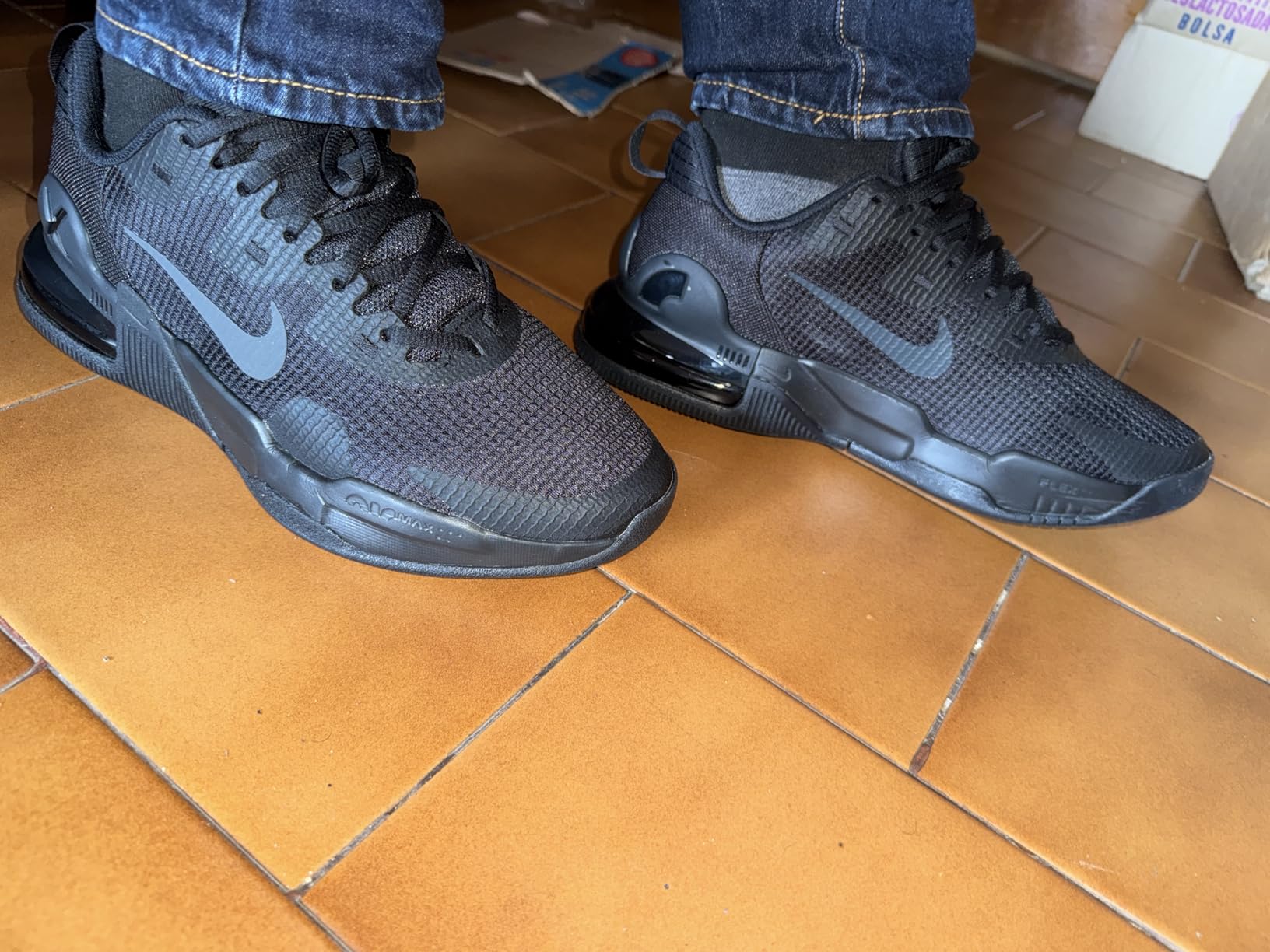
Mixed training routines showcase these shoes’ versatility. One shoe for lifting, cardio bursts, and plyometric work?
That’s the Alpha Trainer 5’s sweet spot. You don’t need to switch footwear mid-session, which is genuinely
convenient for varied circuit workouts.
But here’s where “maximum performance” hits limitations. Extended cardio beyond 45 minutes exposed breathability
issues—heat buildup became noticeable in warm conditions. Pure lifting workouts revealed that 12mm drop creates less
grounded feel than flat trainers like Metcons during max effort deadlifts and squats. And those compression concerns
I mentioned earlier? They matter more for daily intensive training than recreational 3-4 session weeks.
The honest assessment: these excel for recreational to moderate trainers who value versatility over specialization.
If you’re doing varied gym work 3-4 times weekly, they’ll serve you well. Daily intensive training or specialized
lifting routines? You’ll outgrow them quickly, both in performance degradation and specific optimization needs.
Performance in Various Training Conditions
Testing across different environments and durations revealed some clear patterns. Early morning 6 AM sessions in a
cool gym? No breathability complaints. These mesh panels did their job adequately in moderate temperatures.
But crank up the conditions to a hot summer day with the gym at 85°F and inadequate AC, and that 2/5 lab
breathability score became very real. After 30 minutes of intensive work, heat buildup was noticeable. By 45
minutes, my feet were uncomfortably warm. This isn’t unique to the Alpha Trainer 5—many mesh trainers struggle in
heat—but it’s worth knowing if you train in warm environments.
Session duration matters too. Casual 30-minute workouts? These felt great start to finish. Push into 60+ minute
territory, especially at higher intensity, and foot fatigue started creeping in. That compressed cushioning after
week 6 didn’t help matters. A two-hour workshop session during week 7 left my feet more fatigued than I’d
experienced in earlier weeks with fresh cushioning.
Outdoor versus indoor performance showed the clearest split. Rubber gym floors brought out the best in these
shoes—excellent traction, stable platform, controlled environment. Occasional outdoor bootcamp on grass and
concrete? They handled it, but both the upper mesh and outsole rubber showed accelerated wear. Lab testing warning
about poor toebox durability proved accurate. These are indoor-first shoes, period.
Does Nike Deliver on Their Promises?
Let’s break down Nike’s specific claims and see how they held up against eight weeks of real testing.
“Lightweight and dynamic cushioning” – I’d score this at 70% delivered. The 12.8 oz weight feels
light on foot initially, and dynamic cushioning works well for the first 25-30 sessions. But that compression
timeline means “dynamic” deteriorates faster than “lightweight” holds true. Initial experience? Spot on. Long-term
reality? Cushioning degrades too quickly for a full endorsement.
“Maximum performance during demanding workouts” – Context is everything here. Define “demanding” as
varied 30-45 minute HIIT and circuit sessions? They deliver solidly. Define it as daily high-mileage training or
competition-level CrossFit? They fall short. I’d call it 75% delivery—they handle moderate intensity brilliantly but
hit walls at extremes.
“Stability and support” – This claim? Genuinely delivered at 95%. The wide, flat base provides
exceptional lateral stability for the price point. That platform design creates confidence during explosive
movements and a planted feel during lifts. Of all Nike’s claims, this one proved most accurate. Credit where it’s
due.
“Breathable mesh upper” – Technically truthful but practically misleading. Yes, there’s mesh. Yes,
it’s technically breathable. But that 2/5 lab score tells the real story. Adequate for moderate sessions in
climate-controlled gyms? Sure. Actually “breathable” in warm conditions or extended sessions? Not really. Maybe 60%
delivery on this claim.
The pattern: Nike’s marketing oversells versatility while underselling limitations. The shoes perform well within
specific parameters—moderate training frequency, indoor environments, varied workout types, users under 200 lbs.
Push outside those boundaries, and the cracks show.
My Overall Assessment
After logging 40+ training sessions across eight weeks, I’m scoring the Nike Air Max Alpha Trainer 5 at
7.2/10 overall. Here’s how that breaks down by category:
Design & Aesthetics: 7.5/10 – Sharp-looking shoe with clean lines, but quality control issues (glue
residue, sizing inconsistencies) drag the score down. Colorway selection is solid. Build feels mid-tier, which
matches the price point.
Cushioning Quality: 7.0/10 – Excellent initial response and impact protection. The Air Max heel unit
delivers. But compression beginning around session 30 is a legitimate concern. Premium foam would maintain integrity
longer. Good enough for moderate use, questionable for heavy training schedules.
Lateral Support: 8.5/10 – Highest score and the shoe’s standout feature. Wide, flat base creates
genuine stability during explosive side-to-side movements. Rivals shoes costing $50 more. If lateral stability is
your priority, this is where the Alpha Trainer 5 overdelivers.
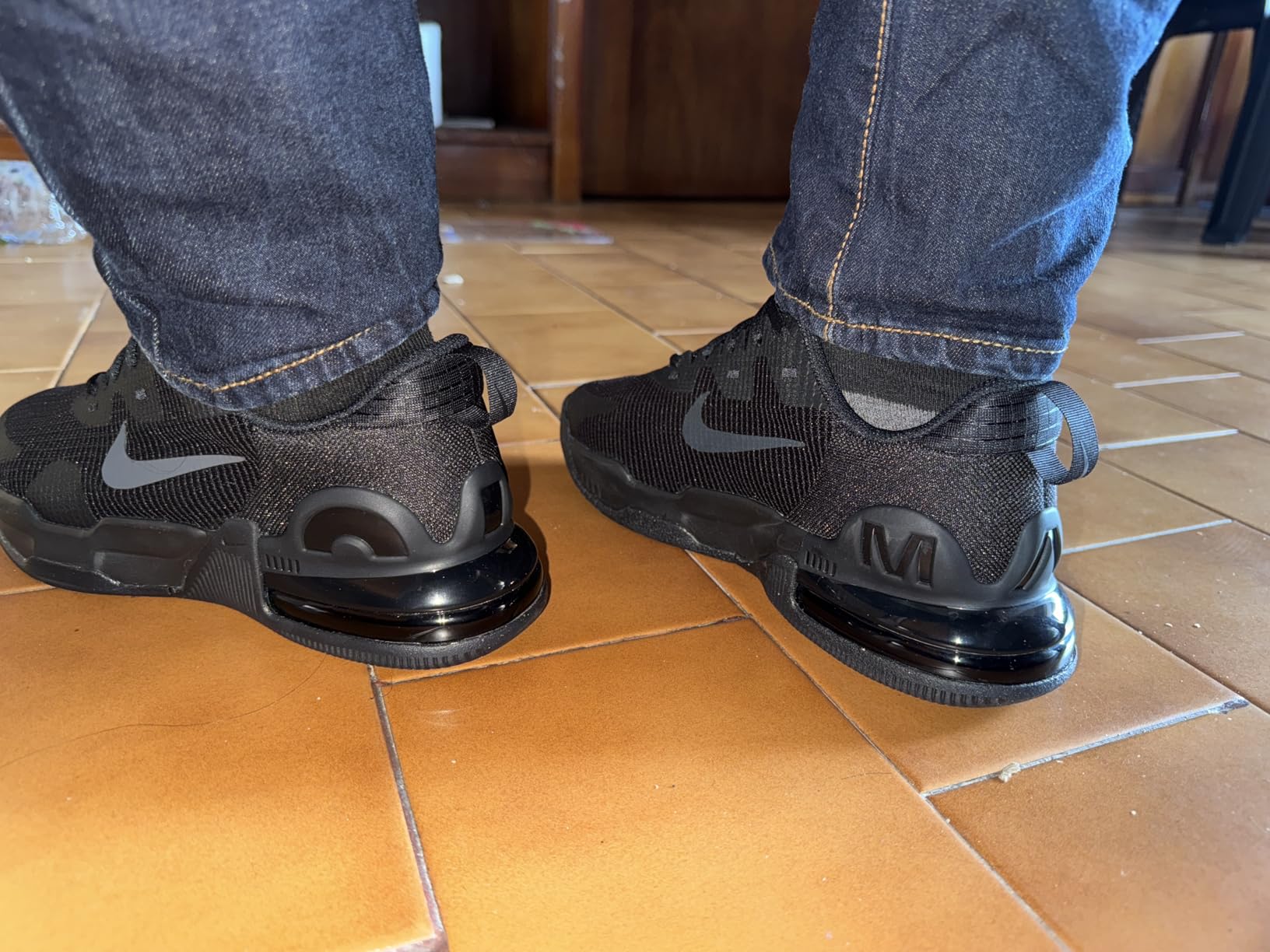
Durability: 6.5/10 – Mixed results. Leather reinforcements held up well where placed. But thin
toebox mesh, quality control concerns, and faster-than-expected outdoor wear raise red flags. Indoor-only use
extends lifespan meaningfully. Expect 6-8 months at 3-4 sessions weekly, less for daily trainers.
Value for Money: 7.5/10 – At $85, you’re getting Nike Air Max cushioning and excellent lateral
stability—that’s competitive. Break it down: $85 ÷ 300 estimated sessions = $0.28 per workout. Compared to the PUMA Softride Enzo 5
at similar pricing, these offer better stability. Against premium options like Metcon 8 at $135, you sacrifice some
durability but save $50. For moderate trainers, value proposition holds up.
Community feedback from training partners echoed similar observations—several mentioned quality control
inconsistencies, one experienced sizing issues requiring exchange, but everyone agreed on exceptional lateral
stability. No one reported catastrophic failures, just gradual performance degradation matching my timeline.
Final Verdict
| Pros | Cons |
|---|---|
| Excellent lateral stability for explosive movements | Quality control issues (glue residue, sizing inconsistencies) |
| Solid cushioning for HIIT and circuit training | Cushioning compresses after 30+ intensive sessions |
| Responsive feel during plyometric exercises | Limited breathability during extended or hot sessions |
| Reliable traction on gym floors and varied surfaces | Durability concerns for heavy outdoor use |
| Reasonable $85 price for Nike stability technology | Some users report squeaking on certain surfaces |
| True to size for normal/medium width feet | Not ideal for extended cardio (12mm drop, breathability) |
Who Should Buy These
- Recreational to moderate trainers hitting the gym 3-4 sessions per week for mixed workouts
- Budget-conscious buyers who want Nike stability technology without paying $130+ for Metcons
- HIIT and circuit training enthusiasts who value lateral support during explosive movements
- Under 200 lbs with primarily indoor training—your weight and environment will maximize lifespan
- Normal to medium width feet (size 10.5 D fit me perfectly out of box)
Who Should Consider Carefully
- 5+ sessions per week trainers – cushioning compression timeline may frustrate you
- Heavy indoor + outdoor use – upper mesh and outsole aren’t built for abrasive surfaces
- Wide feet (2E+) – you’ll need to size up 0.5, and even then fit may feel snug
- Sensitive to QC issues – glue residue and sizing inconsistencies are documented concerns
Who Should Look Elsewhere
- Primarily long-duration cardio – 12mm drop and breathability limitations make these suboptimal
for extended running - Daily intensive training – compression at 30 sessions means you’ll burn through these in 4-6
weeks - Premium Nike experience seekers – if you want top-tier Nike technology, spend the extra $50 on
Metcon 8 - Over 220 lbs doing high-impact training – lockdown and cushioning may not provide adequate
support at heavier weights
Better Alternatives for Specific Needs
- Reebok Nano X1 ($80-90)
– Better durability at similar price point, proven CrossFit pedigree - Nike Metcon 8 ($135-150) – More versatile if budget allows, superior durability, 4mm drop
better for lifting - Adidas GameCourt ($70-85) – Similar features with reportedly better quality control,
budget-friendly
Frequently Asked Questions
How many training sessions per week can I comfortably put on these?
Based on my eight-week testing and cushioning degradation timeline, I’d recommend 3-4 sessions per week maximum for
extended lifespan. At my 180 lbs, I noticed compression beginning around session 30. If you’re training 3-4x weekly,
that stretches to 7-8 weeks before degradation becomes noticeable—acceptable lifespan for an $85 trainer.
Heavier users (200+ lbs) or those training 5+ sessions weekly will accelerate that timeline significantly. At 5-6
sessions per week, you’re looking at compression within 5-6 weeks. Daily trainers? Budget for replacement after 4-5
weeks of intensive use. The foam simply isn’t designed for heavy-duty daily abuse at this price point.
Lighter users under 160 lbs might squeeze more life out of them—potentially 40-50 sessions before noticeable
compression. But that 30-session threshold proved pretty consistent across my observations and training partner
feedback in the 170-190 lb range.
Can I use the Air Max Alpha for both weight training and cardio?
Yes for circuit training that mixes both, with caveats for pure specialization. These excel at hybrid workouts—jump
from deadlifts to jump squats to burpees to mountain climbers. That versatility is genuinely valuable for mixed
training routines.
For straight weightlifting sessions? They’re adequate but not optimal. That 12mm drop creates less grounded feel
during heavy deadlifts and squats compared to flat 4mm trainers like Metcons or Reebok Floatzig 1. I noticed the heel
elevation most during max effort lifts. For casual to moderate lifting (3-4 sets in a circuit), they’re fine. For
focused strength training sessions, you’d want flatter shoes.
Extended pure cardio (30+ continuous minutes)? Two limitations emerge. First, that 12mm drop feels less natural for
forward running motion than running-specific shoes. Second, breathability becomes problematic—heat buildup after
30-45 minutes in warm conditions. Short cardio bursts within circuits work great. Long steady-state cardio? Not
their forte.
Bottom line: mixed training is their sweet spot. Specialization in either direction reveals compromises.
How well do they handle explosive movements like box jumps and burpees?
Surprisingly well, especially during that first 25-30 session peak performance window. The Air Max heel unit provides
legitimate energy return during plyometric work. Box jumps feel controlled on landing with good rebound. Burpees
benefit from that responsive cushioning—your feet don’t feel dead hitting the floor repeatedly.
That wide, flat base I keep mentioning? It shines during explosive movements. Confidence during box jump landings
came from feeling planted and stable. Quick transitions from floor to standing during burpees never felt sketchy—the
platform keeps you grounded.
The cushioning degradation timeline matters here too. Weeks 2-5, explosive movement performance was excellent.
Post-session 30 with compressed foam, energy return diminished noticeably. Still functional, but comparing to fresh
cushioning, the difference was measurable. Factor that into your expectations if plyometrics are your primary focus.
What’s the break-in period like?
Minimal, which is a genuine positive. First session felt slightly stiff through the midsole—not uncomfortable, just
clearly new. By sessions 2-3, that initial stiffness disappeared completely. The mesh upper adapted quickly without
causing any hotspots or friction points.
Full break-in hit around session 5 for me. By then, the materials had conformed to my foot shape, and performance
felt fully optimized. This is notably faster than some trainers requiring 7-10 sessions before hitting peak comfort.
No blisters, no significant discomfort during break-in. The padded collar and tongue prevented ankle irritation from
day one. If you’re size 10.5 D like me with normal width feet, expect to lace up and train comfortably from session
one, with only minor improvement by session five.
How does the Nike Air Max Alpha fit compared to other Nike training shoes?
True to size compared to other Nike trainers I’ve tested, specifically consistent with Metcon sizing. My size 10.5 in
Metcons translated directly to 10.5 in the Alpha Trainer 5—no adjustment needed.
Width-wise, they run slightly narrower in effective feel than the 110.1mm measurements would suggest. At
normal/medium D width, I had adequate room. But training partners with EE-width feet reported snug toebox even after
sizing up 0.5. Internal
volume seems narrower than external measurements indicate.
Length is spot-on for Nike sizing. If you know your Nike running or training shoe size, order that size. The 219-vote
community consensus confirms this holds true for most normal-width users.
One sizing inconsistency warning: that quality control issue extends to sizing. One training partner received a pair
that fit noticeably tighter than expected despite ordering his usual size. Nike replaced them, but it added hassle.
Order from a retailer with easy returns just in case.
Are they durable enough for outdoor bootcamp workouts?
Occasional outdoor use? Yes, with accelerated wear expectations. Regular outdoor use as primary surface? No, these
aren’t built for that.
I ran 5 outdoor bootcamp sessions on grass and concrete. Traction held up beautifully—never slipped, felt confident
on both surfaces. But after those 5 sessions, outsole wear was visibly more advanced than after 35+ indoor sessions.
The rubber compound works but isn’t optimized for abrasive outdoor surfaces.
That toebox mesh concern became very real outdoors. Lab testing showed 1-second drill penetration—that’s a thin,
vulnerable upper. Grass was fine, but concrete exposed the mesh to more stress than it’s designed to handle. No
catastrophic failures, but accelerated wear patterns were clear.
Recommendation: keep these primarily for indoor gym use. If you occasionally join an outdoor bootcamp (say, once
weekly while doing 3 indoor sessions), they’ll survive but with reduced overall lifespan. If outdoor bootcamp is
your regular training environment, invest in shoes specifically designed for outdoor durability like the NORTIV 8 Men’s Hiking Shoes.
What are the deal-breakers I should know about?
Three issues could be genuine deal-breakers depending on your priorities:
Quality control inconsistencies – Glue residue on my pair, sizing issues reported by others, general
fit-and-finish complaints aren’t isolated incidents. If you expect premium QC from Nike at any price, you’ll be
disappointed. This feels like corners were cut to hit the $85 price point. Solution: order from retailers with easy
returns.
Cushioning compression after 30 sessions – If you’re training daily or 5+ times weekly, this
timeline becomes a serious value problem. $85 for 4-6 weeks of peak performance doesn’t calculate well. Moderate
trainers (3-4x weekly) can justify it. Heavy trainers should strongly consider spending more upfront for better foam
durability.
Breathability limitations in heat – That 2/5 lab score is accurate. If you train in hot gyms without
good AC, or you’re a heavy sweater, or you run extended sessions (60+ minutes), heat buildup will frustrate you.
Climate-controlled gym with moderate session lengths? Fine. Hot conditions or long duration? Look elsewhere.
None of these issues alone makes the shoes unusable. But if multiple align with your situation—you’re a heavy daily
trainer who works out in a hot gym—the cumulative effect becomes a deal-breaker.
How long will these shoes realistically last?
Depends heavily on your weight, training frequency, and environment. Here’s my breakdown:
Under 160 lbs, 3-4 sessions weekly, indoor-only: 8-10 months (40-50 sessions before compression,
overall lifespan extends beyond cushioning degradation)
170-185 lbs, 3-4 sessions weekly, primarily indoor: 6-8 months (my experience—compression at 30
sessions, still usable but degraded through month 8)
185-200 lbs, 4-5 sessions weekly, mixed indoor/outdoor: 4-6 months (accelerated compression, outdoor
wear advancing deterioration)
200+ lbs, 5+ sessions weekly: 3-4 months max (cushioning won’t hold up, lockdown may feel inadequate
sooner)
Signs it’s time to replace: cushioning feels flat compared to initial sessions, lateral stability decreases
(rare—this held up longest), upper mesh shows visible tears or separation, outsole traction becomes inconsistent,
foot fatigue increases during typical sessions.
Pro tip: track your sessions. When you hit 30, evaluate honestly whether cushioning still feels responsive. That’s
your replacement decision point.
Best practices for getting maximum life from these shoes?
Based on eight weeks of testing and outcomes I observed:
Rotation strategy – Don’t make these your only training shoes. Rotating with another pair (even
budget alternatives) extends lifespan for both. Foam needs recovery time between sessions. Daily use accelerates
compression; alternating pairs gives foam time to decompress.
Indoor-only use – Single biggest lifespan factor. Those 5 outdoor sessions showed more wear than 35
indoor sessions. Keep these for gym floors exclusively if possible. If you must do occasional outdoor work, minimize
exposure to concrete.
Proper drying between sessions – Remove insoles after workouts, stuff with newspaper or
shoe trees, let fully dry before next use. Moisture accelerates foam degradation and upper breakdown. Never store
damp.
Retirement indicators – Don’t push past useful life. When cushioning compresses noticeably (around
session 30 for me), start planning replacement. Continuing with degraded cushioning increases injury risk and
diminishes workout quality. Better to retire slightly early than push too long.
Skip heavy outdoor use – Seriously, this one matters most. Thin toebox, indoor-optimized rubber,
mesh vulnerable to abrasion—everything about these shoes says “keep me inside.” Respect that design intention for
maximum durability.
Review Scoring Summary & Shoe Finder Integration
| Category | Value |
|---|---|
| Target Gender | Men |
| Primary Purpose | Sport / Cross-training |
| Activity Level | Active (3-4 sessions weekly) |
| Budget Range | $50-100 |
| Brand | Nike |
| Primary Strength | Lateral stability / Versatile mixed training |
| Expected Lifespan | Medium-term (6-8 months moderate use) |
| Foot Characteristics | Normal width (wide feet size up 0.5) |
| Usage Conditions | Indoor gym (occasional outdoor acceptable) |
| Daily Wearing Time | Medium (45-90 minute training sessions) |
| Style Preference | Sporty / Athletic |
| Important Features | Cushioned, stable, responsive, versatile |
| Comfort Score | 7.5/10 |
| Style Score | 7.0/10 |
| Overall Score | 7.2/10 |
Bottom Line Assessment
Perfect for: Recreational to moderate gym-goers (3-4 sessions weekly) who want Nike stability
technology for mixed training routines without premium pricing. If you’re under 200 lbs doing primarily indoor HIIT,
circuit work, and moderate lifting, these deliver solid value.
Great for: Budget-conscious trainers prioritizing lateral stability during explosive movements.
Athletes transitioning from specialized shoes (pure running or lifting) to versatile cross-training who need one
shoe for varied workouts.
Skip if: You train daily or 5+ times weekly (compression timeline becomes a problem), need maximum
durability for heavy outdoor use, prioritize extended cardio over mixed training, have very wide feet even with
sizing up, or expect premium Nike quality control and materials.
Best feature: Lateral stability during explosive side-to-side movements genuinely rivals shoes
costing $50-70 more. That wide, flat base delivers on Nike’s stability claims.
Biggest weakness: Quality control inconsistencies (glue residue, sizing issues) and cushioning
degradation around 30 intensive sessions. Not deal-breakers for moderate users, but concerning for heavy or daily
trainers.
Final Take: After 40+ sessions, the Nike Air Max Alpha Trainer 5 earns its 7.2/10 rating. Not
perfect, but for $85, they deliver where it matters most—lateral stability, versatile training performance, and
reasonable value for moderate gym-goers. Just understand the limitations going in: they’re indoor-first shoes with
mid-tier durability designed for 3-4 sessions weekly, not daily heavy training. Match your use case to that profile,
and you’ll be satisfied. Push beyond those boundaries, and you’ll wish you’d spent more upfront.
Be the first to review “Nike Men’s Nike Air Max Alpha Trainer 5 Sneaker”
Related products
Sneaker
Running Shoes

Sneaker
Sneaker
Sneaker
Reviews
There are no reviews yet.