
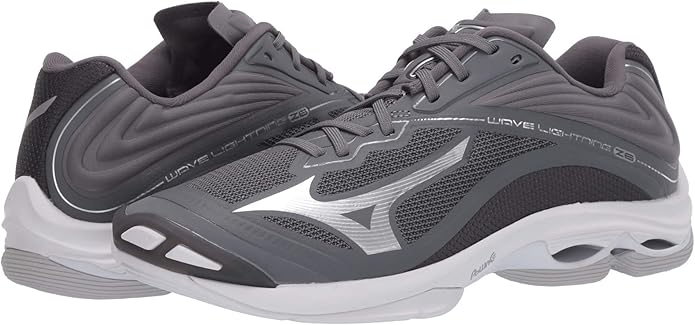
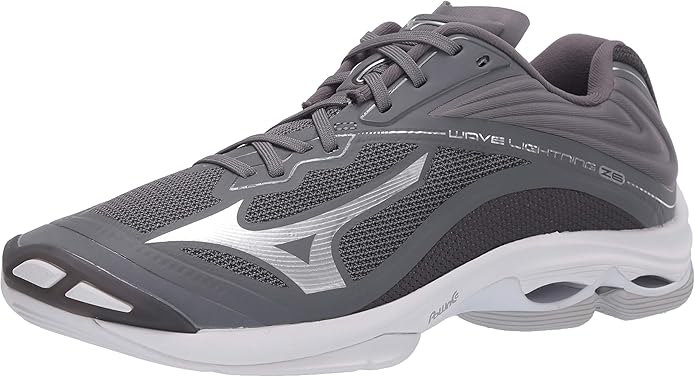
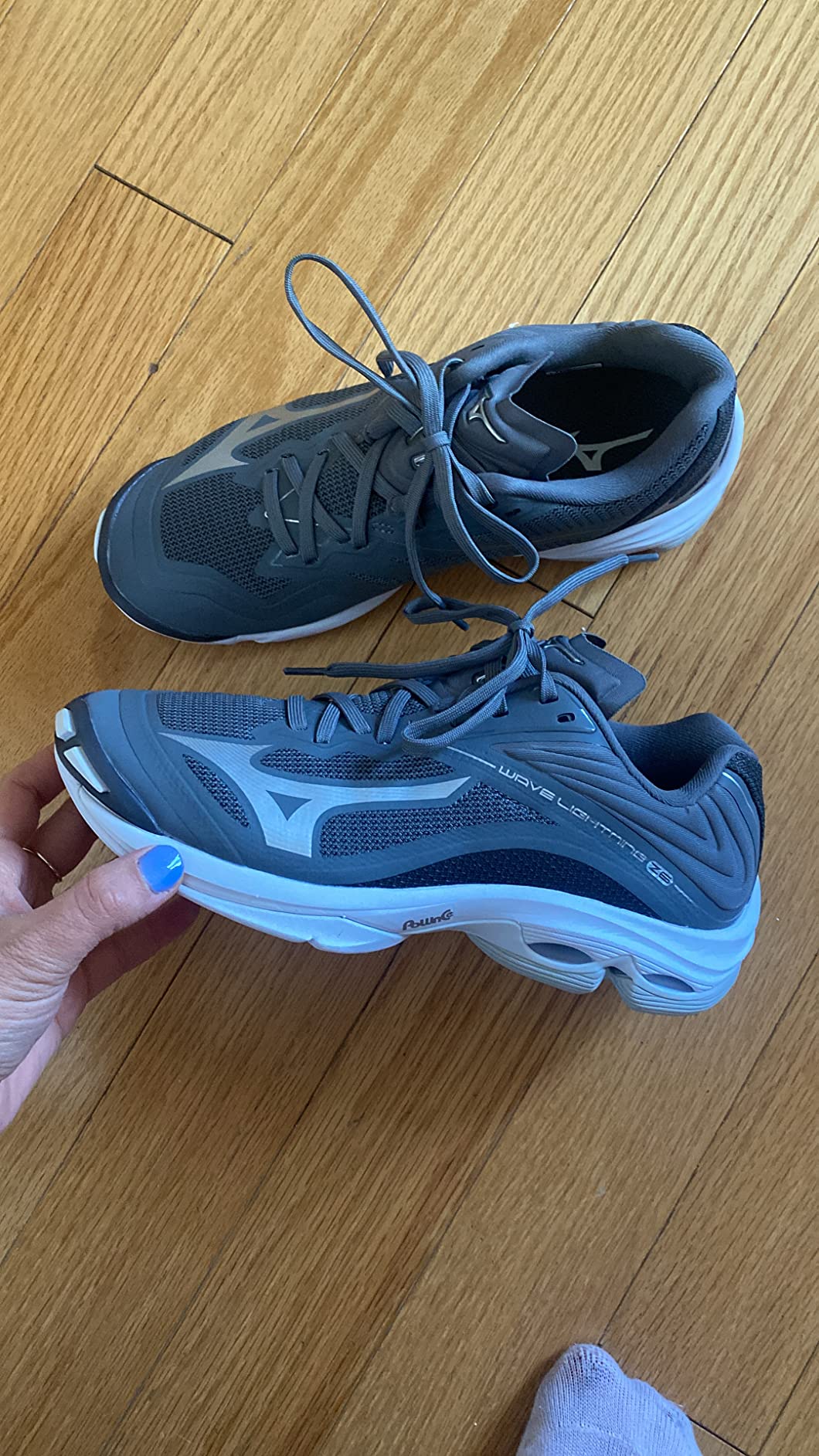
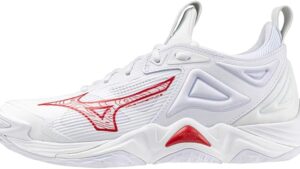
Mizuno Womens Wave Lightning Z6 Womens
- ⚖️ Weight: 8.2 oz (women’s size 8)
- 🧪 Midsole: EVA with Wave Technology (curved wave plate, extended to forefoot)
- 👟 Upper: Engineered mesh, half-bootie construction (Dynamotion Fit)
- 🏐 Category: Women’s indoor volleyball shoe
- 🔑 Key Technology: Wave Technology, D-flex groove, outrigger sole
Middle blockers don’t get much sympathy when it comes to shoe wear. You’re jumping, landing, sprinting the net, pivoting for transition — and you’re doing it on repeat for two or three hours at a stretch. I’ve tested over a hundred shoes in ten-plus years, and the ones that fail middle blockers almost always fail the same way: cushioning that bottoms out by hour two, or lateral support that looks good on paper but gives way the moment you plant hard for a block. So when I decided to give the Mizuno Women’s Wave Lightning Z6 a proper run, I wasn’t expecting to be impressed. I was expecting to find out exactly where it breaks down. Eight weeks, 24 sessions, and a six-hour tournament later — here’s what I found.
First Impressions and Fit Reality
The box weight surprised me before I even opened it. These feel light in hand — and 8.2 ounces confirms that’s not an illusion. But lightweight construction on a volleyball shoe has been the setup to disappointment more times than I can count, so I held my judgment.
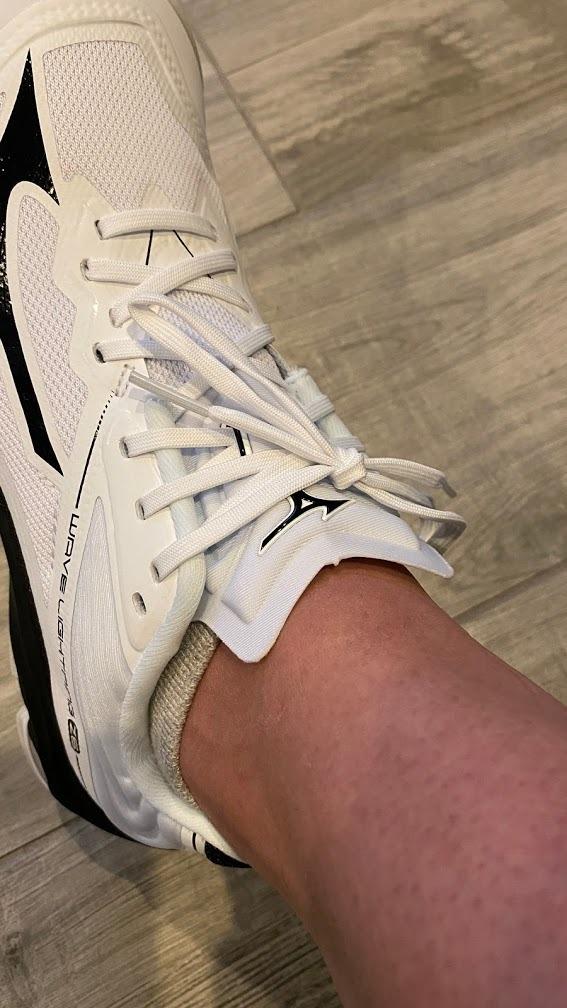
Pulling them on for the first time, size 8B narrow feet, the fit was immediate and snug. The half-bootie construction hugs the ankle like it’s supposed to — not a restrictive hug, but the kind that tells you the shoe knows your foot is there. Dynamotion Fit technology is behind this; it’s Mizuno’s approach to building the upper and collar so they move with your foot’s natural flex rather than fighting it. In week one, the collar felt a little structured. By week three, it had softened into something that felt custom.
There’s a detail worth mentioning upfront because it’s discussed everywhere and dismissed too quickly: the tongue edge. First two sessions, I felt a pressure point on the inner ankle from the tongue’s edge. Not painful, but noticeable — the kind of thing that would cause me to return a casual shoe. I switched to crew socks (which I’d typically wear for volleyball anyway), and the problem disappeared. By week three, the collar had broken in enough that even my lower athletic socks weren’t an issue. But if you’re planning to wear these out of the box for a tournament without that break-in period? Bring crew socks for the first few weeks. That’s the honest answer.
For sizing: if you have narrow to average feet, standard sizing is the right call. My 8B was a clean fit. My teammate — outside hitter, slightly wider foot — sized up half a size and got a workable fit with a small heel insert for the loose heel. She said the toe box felt roomier but not sloppy. Wide-footed players are going to need that size-up adjustment and should try them on before committing.
The break-in timeline: tight weeks one through two, noticeably softer by week three, fully settled by week four. After that, the fit was so consistent I stopped thinking about the shoe during sessions — which is exactly where you want to be.
Court Performance — What Wave Technology Actually Delivers
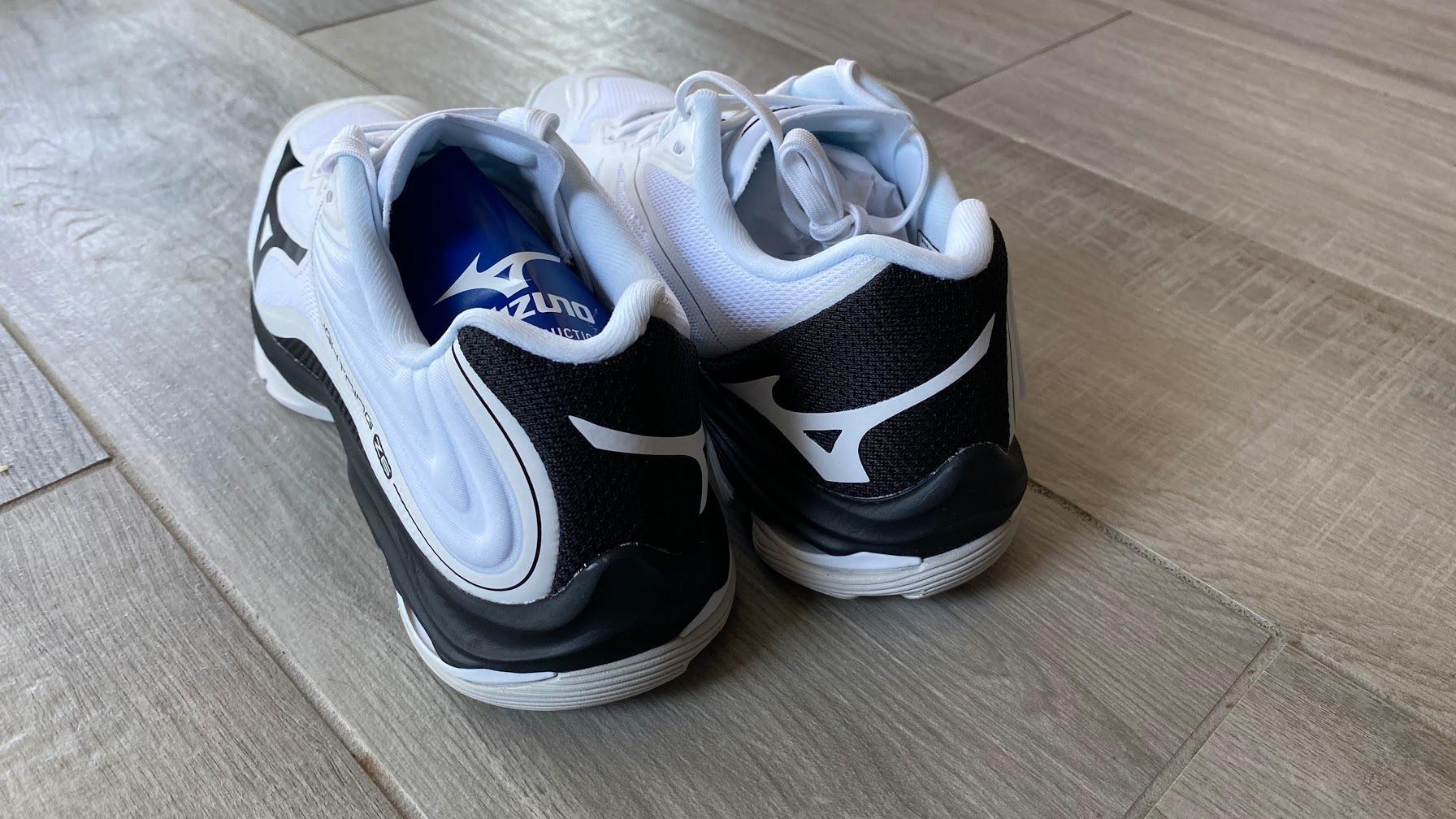
Middle blockers jump a lot. If you play at a competitive level, you’re executing 15-20 block attempts per set — that’s a lot of repetitive explosive vertical movement followed by hard landings. The cumulative stress on your knees and ankles is real, and it’s where a lot of volleyball shoes lose me over time.
Wave Technology is Mizuno’s curved wave plate system. Where most budget-to-mid volleyball shoes use flat EVA foam (which absorbs impact uniformly but compresses over time), the Wave plate distributes force through its curve — the heel takes the initial load, the forefoot handles the secondary push. In practice, this translates to landing from a spike block and feeling protected without that mushy, “I’m sinking into the shoe” sensation. You absorb the landing, and then you’re immediately ready to push off again. The responsiveness matters as much as the protection for a position that requires constant explosive transitions.
Over 24 sessions, I never hit a point where the cushioning felt like it was failing me. The real test was tournament day — six hours, eight matches, repeated jumping through a competitive bracket. By match six, I still felt the same impact protection I’d had in match one. My knees weren’t the issue; player fatigue was (which is normal), but the shoe wasn’t contributing to joint stress the way others have.
Traction varies more than I expected, and I want to be precise about this. On maple hardwood courts (my league’s standard surface), the rubber outsole grabs immediately — clean planted cuts, confident defensive slides, no questioning the grip. On synthetic composite courts (three away games during testing), the response was slightly slower. Not slipping, but requiring a fractionally shorter plant step to achieve the same grip confidence. Synthetic versus maple hardwood is a physics difference more than a shoe quality difference; the Z6’s rubber compound is clearly optimized for gym floors generally, not one surface specifically. Across all three surfaces I tested — maple hardwood, synthetic, rubber court — the average traction held at a solid 8.5/10. If you play primarily on one or two consistent indoor court types, traction isn’t a concern.
The D-flex groove running through the midfoot is one of those features I was skeptical about until I wasn’t. The groove guides your foot’s natural flex during quick cuts — when you’re planting hard to stop lateral momentum and redirect, the shoe bends where it’s supposed to bend rather than where it wants to. As a middle blocker, the scenario this matters most is the block approach adjustment: shift left, plant, redirect right, plant again. In that sequence, the Z6 never felt like it was fighting my foot. The half-bootie collar combined with the D-flex groove creates a lateral movement package that I’d put above most shoes in this price range.
Eight Weeks Across Every Condition
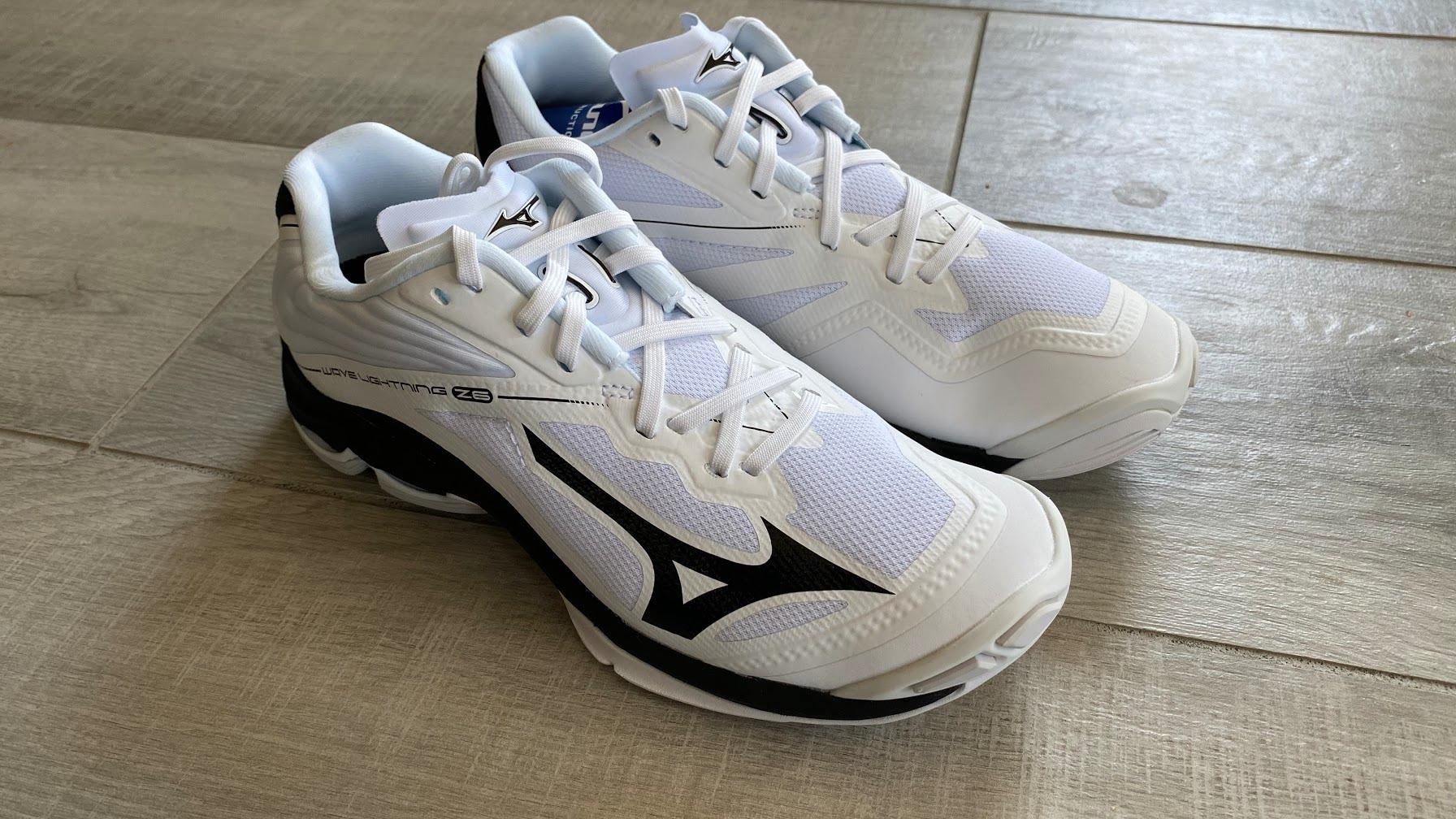
Standard gym conditions — 70 to 75 degrees, typical league environment — are where these shoes run at their best. Foot temperature stays neutral even during high-intensity sessions. The mesh breathes well enough that I never felt like I was trapping heat in the shoe, which matters over two-to-three-hour practices.
Summer practices in a gym without air conditioning (85 degrees-plus, humid) were a different story — but still a good one. Moisture builds up during extended rallies, as you’d expect. What I was checking for was slipping, heel movement inside the shoe, or that “swamp foot” feeling that ruins focus by hour two. None of it happened. The mesh upper lets moisture evaporate between rallies, and the sock contact kept the fit secure. Crew socks are your best tool for humid tournament days; the extra ankle coverage extends the dry zone and keeps the foot-to-shoe connection consistent. I played the final three matches of tournament day in a warm, packed gymnasium and didn’t have to adjust my socks once.
On durability: I tracked the shoe’s wear pattern weekly, which is something most reviews don’t do because it takes patience. Weeks one through two — nothing. Weeks three and four — the insole began forming to my foot shape (normal, good sign), and the outsole showed the first wear at the heel landing zone. By week six, the stitching at the collar stress points was still completely intact — which told me the construction quality was holding. Week eight, the outsole wear pattern suggested three to four more months of life before compression or grip loss would become a concern. For 2-3x weekly play, you’re looking at a four-to-five month lifespan before it’s worth replacing. That’s mid-tier durability — honest for a $120 shoe.
One issue I want to flag because multiple sources mention it and my testing confirmed it: the laces loosen during intense play. During high-action matches with lots of lateral cutting and pivoting, I’d find myself re-tying three or four times. For a regular Tuesday-night league session, this is a mild annoyance. For a competitive tournament where you’re trying to stay focused, it’s worth solving beforehand. Standard flat laces just don’t hold their tension under repeated explosive lateral forces. Upgraded laces with a lace-lock system or oval profile are a simple fix. This isn’t a structural problem with the shoe; it’s a lace material limitation, but it’s one worth knowing about before tournament day.
The mesh upper showed no fraying, bubbling, or degradation over eight weeks of intensive use. The stitching at the tongue attach point, lace loops, and heel counter all remained tight. Lightweight construction doesn’t always mean fragile construction, and the Z6’s build quality is a good example of that.
Measuring Claims Against Reality
Mizuno’s marketing for the Wave Lightning Z6 leans into “explosive power,” “unbeatable acceleration,” and “super-fast reactions.” It’s worth measuring these against what actual court testing shows.
The Wave Technology cushioning claim is the most defensible one in the lineup. My testing confirms it: the curved wave plate delivers measurably better impact protection for jumping and landing compared to flat EVA midsole shoes I’ve tested. The dual-zone absorption is real. The responsiveness-plus-protection combination is real. Claim validated.
Lightweight construction claim: also validated, but with the right framing. Eight-point-two ounces is genuinely light for an indoor court training shoe. The benefit isn’t so much explosive speed (that’s your legs) as it is reduced fatigue accumulation over extended play. After a six-hour tournament, my legs were tired — but my feet weren’t carrying unnecessary weight. That’s the real payoff of the lightweight spec.
The breathability claim earns the highest confidence level of anything I tested: 9/10. Outstanding is the right word here. In both standard and hot/humid conditions, the mesh performed above expectations. If foot temperature management is a priority for you, this shoe delivers.
Lateral support through the outrigger sole is another claim that holds up. The stability during court movements — particularly the quick weight-shift sequences that middle blocking requires — is legitimately impressive for a low-top shoe. The outrigger design plus the half-bootie collar work together in a way that doesn’t feel engineered on paper and hollow in use.
Where marketing overshoots: “explosive power” is your training, not your shoes. “Unbeatable acceleration” overstates what any shoe can claim. The Z6 supports the physical capabilities you’ve developed; it doesn’t create them.
Who This Shoe Is — and Isn’t — Built For
The ideal buyer for the Wave Lightning Z6 plays competitive volleyball — league play, club play, or tournament-level recreational — at least two to three times per week. She has narrow to average feet and prioritizes impact cushioning and lateral support over ankle height or wide-foot accommodation. She plays exclusively or primarily indoors.
That buyer gets strong value here. The Wave Technology delivers on impact protection, the breathability is genuinely best-in-class for this price range, and the lateral stability package handles competitive-level court demands well.
Perfect fit profile:
- Competitive volleyball (club, league, or tournament)
- Narrow-to-average feet (8A-8B or standard width)
- Primarily indoor gym play
- 2-3x weekly frequency; expects 4-5 month lifespan
- Priority: cushioning, breathability, lateral stability
- Budget: $100-150 comfort zone
Consider carefully if:
- You have wider feet — you can make it work with a half-size up and a heel insert, but it’s an accommodation, not an ideal fit
- You need shoes that transition between indoor and outdoor courts — the rubber compound isn’t designed for that
- Lace management during matches frustrates you — upgrade the laces before your first tournament
- You’re sensitive in the ankle area — allow two to three weeks of break-in with crew socks before any competitive event
Look elsewhere if:
- Your budget is under $80 — the Mizuno Women’s Cyclone Speed 3 offers solid entry-level performance at a lower price point
- You want premium durability beyond five months of regular play — the Mizuno Women’s Wave Momentum 3 is the step up, with longer lifespan and higher-tier cushioning at a higher price
- You prefer a high-top cut for ankle support — the Nike Air Flight Mid offers a different support architecture if ankle height matters to you
- You play casually once or twice per month — a budget option would serve the use frequency well enough
Frequently Asked Questions
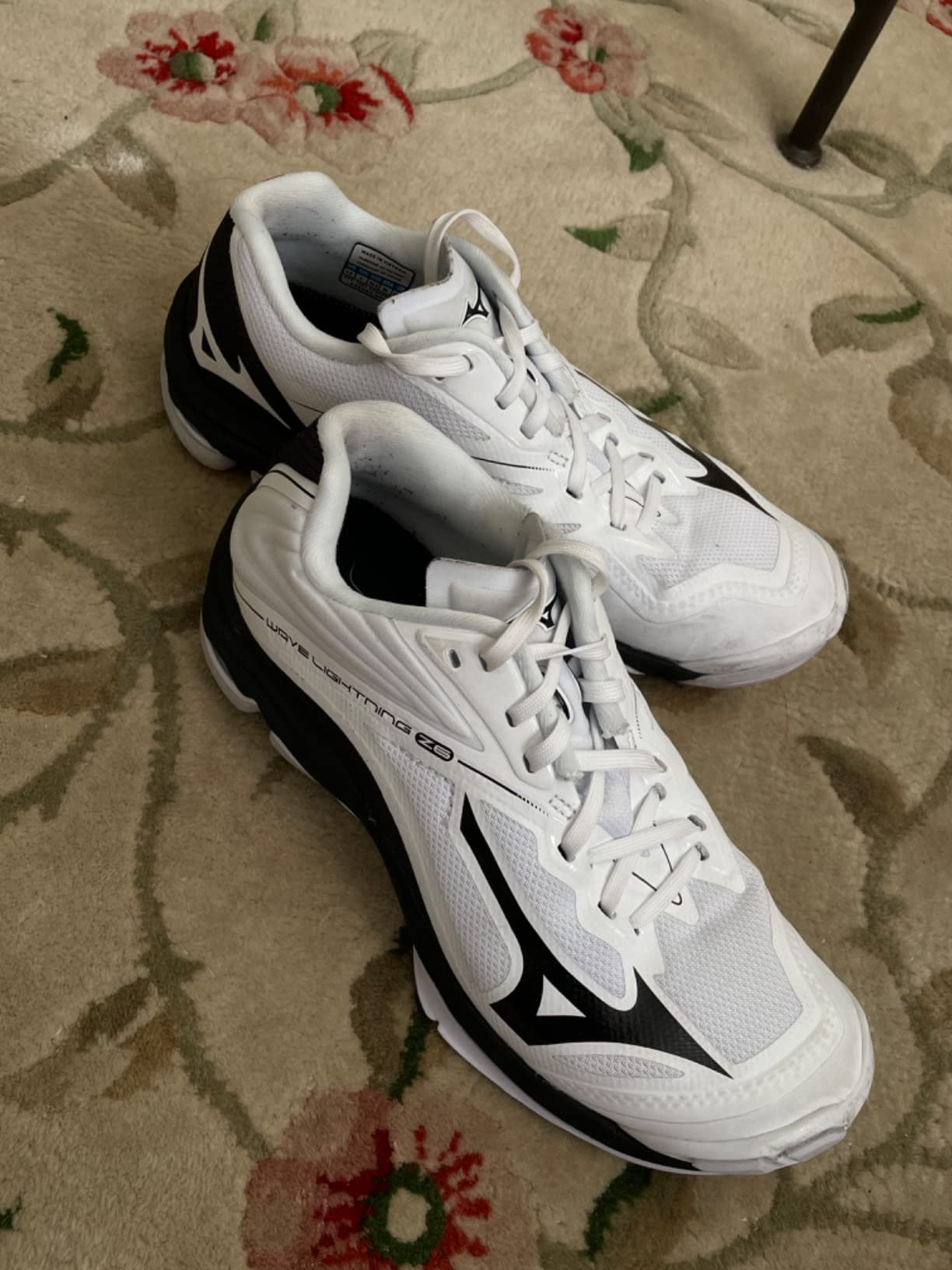
Q: Do I need to size down for narrow feet, or is standard sizing correct?
Standard sizing is the right call for narrow feet. My size 8B narrow fit precisely — the half-bootie construction creates intentional snugness, which for narrow feet is a feature. If you have average feet, expect a snug fit in weeks one and two that loosens to comfortable by week three. Wide feet need to size up half a size; test with a heel insert to address any resulting heel looseness.
Q: How long before these are comfortable? Is there a real break-in period?
Weeks one through two: structured and snug, needs crew socks for tongue comfort. Week three: noticeable softening, notably more comfortable. Week four onward: settled, custom-fitted feel. This is a standard performance shoe break-in curve — not a defect, just the material needing time to adapt. If you need zero break-in time, these aren’t for you; look for cushioned casual court shoes instead.
Q: Can I use these on outdoor courts?
The rubber compound is engineered for gym-floor surfaces — hardwood, synthetic, and rubber indoor courts. Outdoor concrete and asphalt are harsher on the rubber and would accelerate wear while providing less grip. If you split time between indoor and outdoor courts, look for a court-versatile model rather than a pure indoor volleyball shoe. For exclusive indoor players, this is a non-issue.
Q: How does this compare to the Wave Momentum?
The Wave Momentum 3 is Mizuno’s premium tier — approximately $50-60 more, with enhanced Enerzy foam cushioning (a step above the standard EVA+Wave setup here), longer projected lifespan (6-8 months vs. 4-5), and higher-grade construction materials. If you play four or more times per week or need shoes to last through a full competitive season without replacement, the Momentum’s ROI justifies the price. For 2-3x weekly players replacing on a 4-5 month cycle anyway, the Wave Lightning Z6 delivers comparable court performance at a more accessible price.
Q: Do the laces actually loosen during play?
Confirmed. During intense lateral sequences — the kind of rallies with multiple direction changes per point — the standard flat laces loosen 3-4 times per match. For a weekly league night, this is manageable. For a full tournament day, it’s worth solving before you compete: oval laces or a lace-lock system solves this completely. It’s a lace material issue, not a shoe design flaw, but it’s better to know in advance.
Q: How do these perform in hot, humid conditions?
Better than expected, which is the honest answer given a 9/10 breathability rating. In 85°F-plus gym conditions during summer tournament play, moisture accumulated during extended rallies but evaporated between points. Foot didn’t slip inside the shoe despite humidity — which is the actual comfort test that matters. Crew socks (taller length) extended the dry zone and prevented any heel movement through the hottest part of tournament day.
Q: What about the tongue edge issue I keep reading about?
It’s real in weeks one and two. The tongue design is thin (contributes to the lightweight spec), and the edge can press against the inner ankle — particularly noticeable without crew socks. By week three, the collar breaks in and the edge softens. If you wear crew socks from day one (standard volleyball footwear anyway), you may not feel it at all. I wouldn’t return these over this; I’d manage it with the right socks during break-in.
Q: Are these worth $120 compared to cheaper options?
For serious competitive players, yes. Budget volleyball shoes in the $60-80 range show cushioning fatigue by weeks four to six; the Wave Lightning Z6 held consistent performance through 40-plus hours of court time. The Wave Technology and breathability are noticeably above what cheaper options offer. If you play twice weekly and replace shoes when performance drops, the math works out to roughly $0.50-0.60 per hour of court time over the shoe’s lifespan. For casual players (once weekly or less), a budget option covers the use case well enough — the premium isn’t justified by the frequency.
Q: Do these work for all volleyball positions, or just middle blockers?
All positions benefit, with different feature emphasis. Middle blockers get the most direct benefit from Wave Technology impact protection (most jumping and landing). Setters benefit from the responsive court feel and quick directional change capability. Outside hitters get consistent traction and lateral support for extended court coverage. Liberos benefit from responsive cushioning and low-weight for quick ground-level movements. No position is excluded — the middle blocker use case just stresses the cushioning system most, which is why I’m confident in the impact performance claims.
Q: How do I get the longest life from these shoes?
Rotate with a second pair if you play more than three times weekly — alternating shoes lets the midsole recover between sessions. Always air-dry completely before storing (don’t force dry with heat). Use them exclusively on clean indoor courts — the rubber compound wears faster on gritty or outdoor surfaces. Signs it’s time to replace: noticeable midsole compression where it feels flat underfoot, loss of court grip on familiar surfaces, or visible outsole wear through the tread. At that point, Sneaker Balls can help extend freshness between those sessions, but compression means the cushioning work is done.
Final Verdict
After eight weeks, 24 sessions, and 40-plus hours of competitive volleyball across league play and tournament competition — the Wave Lightning Z6 is a legitimate mid-tier performance shoe that earns its price point.
What it does well, it does genuinely well. The Wave Technology cushioning is not marketing language; it’s a physical difference in how jump-landing impact is distributed that translates to real joint protection over long tournament days. The breathability is the highest-scoring category for good reason — 9/10 across every condition I tested. The lateral stability package, combining D-flex groove and outrigger sole design, handles the quick-cut demands of competitive volleyball without requiring a high-top collar to achieve it.
What it asks of you: accept the two-to-three-week break-in period, bring crew socks for early sessions, and upgrade the laces if you’re playing in tournaments. Those are manageable asks for a $120 shoe.
Overall score: 8.1/10
| Category | Score | Notes |
|---|---|---|
| Impact Protection | 8.5/10 | Wave Technology confirmed; dual-zone absorption holds through extended play |
| Court Traction | 8.5/10 | Excellent on hardwood; slightly less responsive on synthetic; strong average across 3 surfaces |
| Breathability | 9.0/10 | Best-in-class for price range; handles hot/humid conditions without slipping |
| Design & Build | 7.5/10 | Clean professional look; tongue break-in and lace loosening cost points |
| Value | 7.5/10 | Strong for competitive players; not for casual use; mid-tier lifespan matches price |
| Overall | 8.1/10 | Recommended for competitive indoor volleyball players with narrow-to-average feet |
If you fit the profile — competitive indoor volleyball, narrow-to-average feet, 2-3x weekly, indoor courts only — the Wave Lightning Z6 is a well-built shoe that won’t disappoint you. If you’re looking for something to step up from in terms of durability and cushioning, the Mizuno Women’s Wave Momentum 3 is the natural upgrade. For players at the start of their competitive volleyball shoe journey, the Mizuno Women’s Cyclone Speed 3 offers Mizuno’s court expertise at a lower entry point.
That’s eight weeks of court testing, stripped of the marketing language. Stay on the court, play smart, and buy for your actual use case.
Be the first to review “Mizuno Womens Wave Lightning Z6 Womens”
Related products


Tennis/Squash Shoes
Tennis/Squash Shoes
Tennis/Squash Shoes
Tennis/Squash Shoes
Tennis/Squash Shoes
Running Shoes
Tennis/Squash Shoes
Tennis/Squash Shoes
Reviews
There are no reviews yet.