
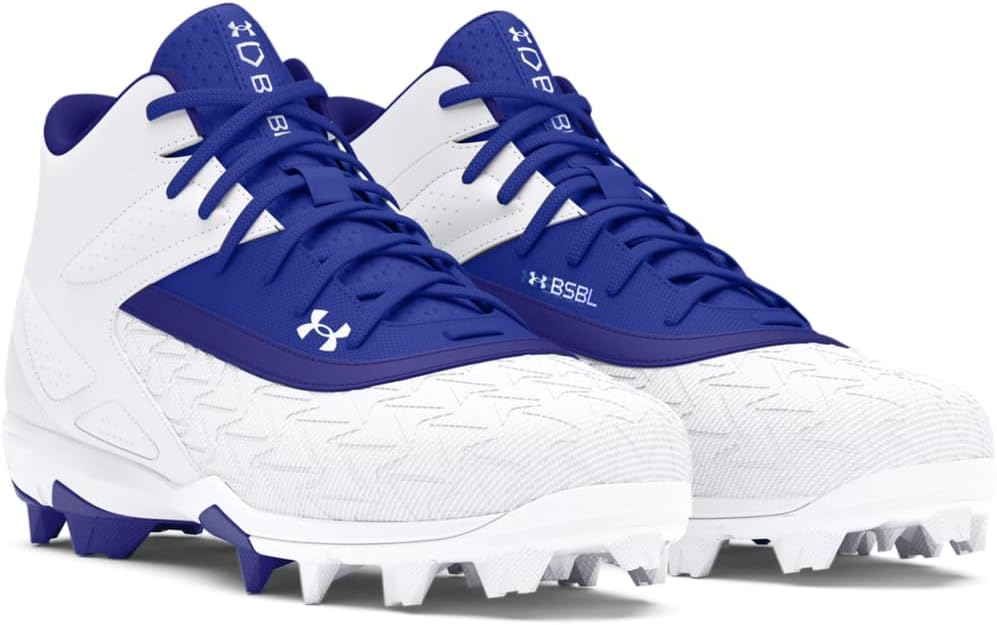
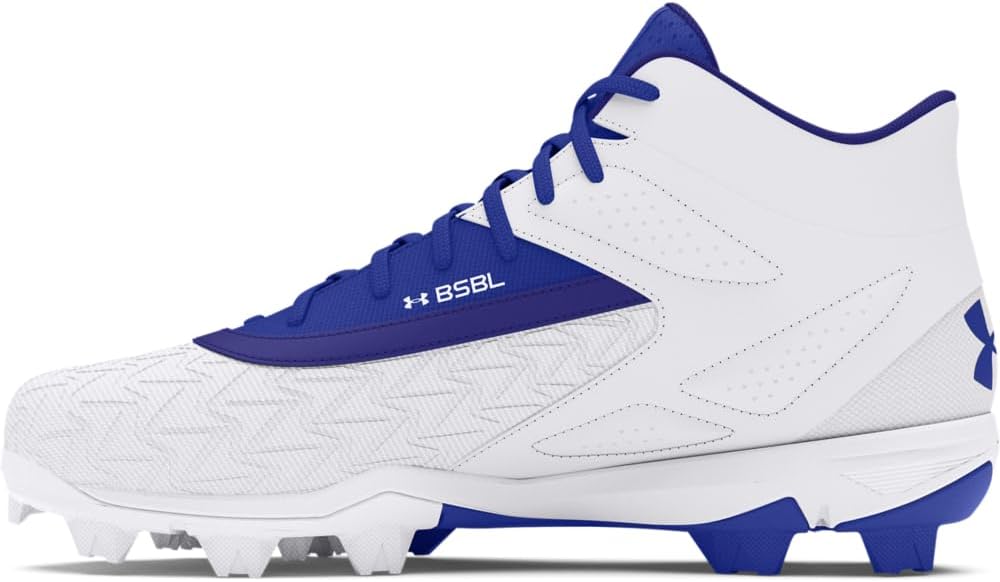
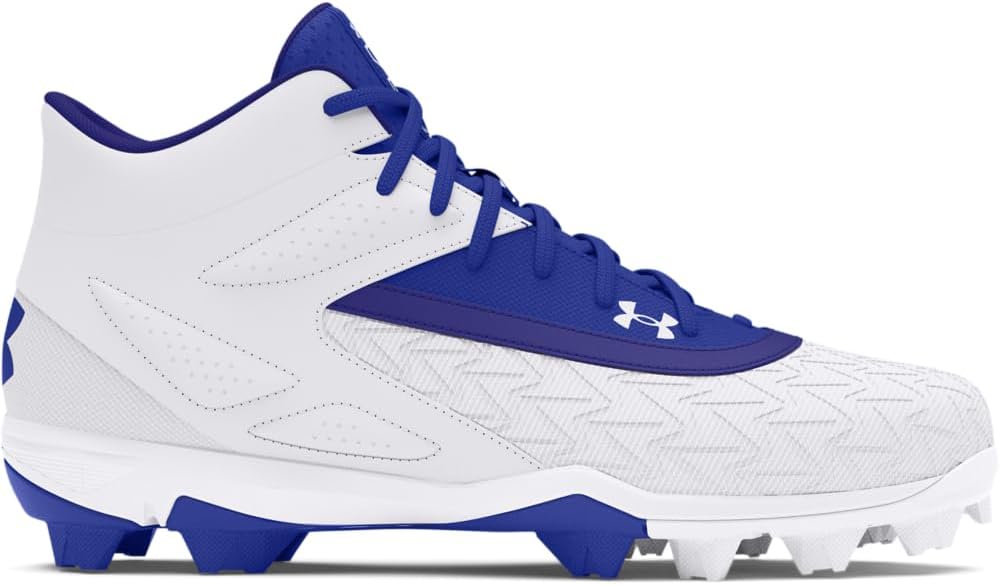
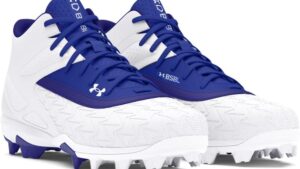
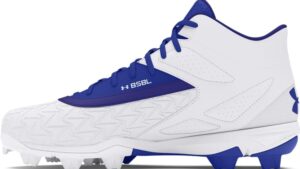
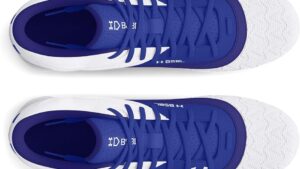
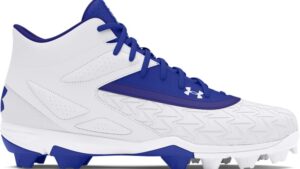
Under Armour Mens Leadoff Mid 3.0 Baseball Cleat
$51.95
- ⚖️ Weight: 12.45 oz (men’s size 9)
- 🧪 Midsole: Full-length EVA cushioning
- 👟 Upper: Lightweight synthetic (polyester blend)
- ⚾ Cut: Mid-top with padded collar and heel
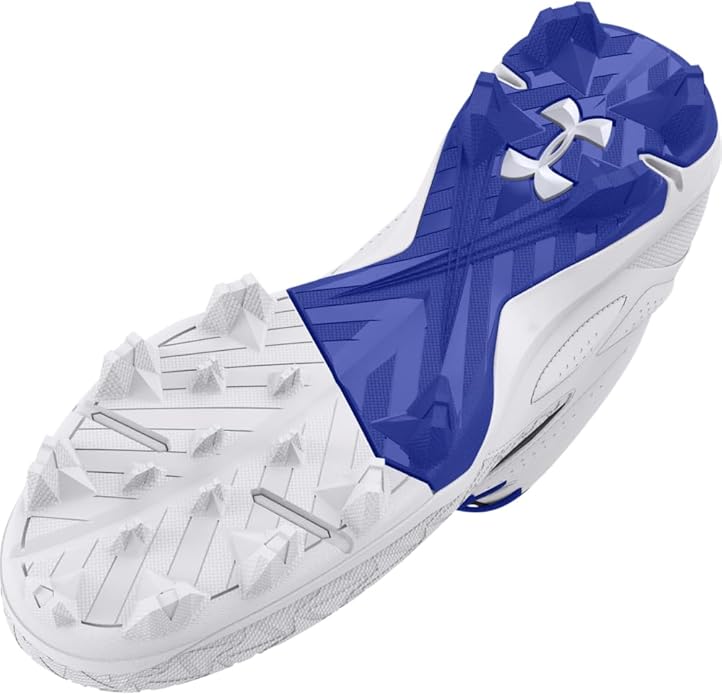
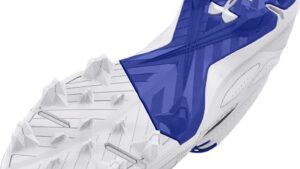
- 🔧 Outsole: Rubber molded cleats
- 🎯 Best for: Recreational to competitive baseball, youth through adult
Forty dollars. For a named-brand baseball cleat with ankle support, cushioned collar, and a rubber cleat system. I’ll be honest — when I first started testing the Under Armour Men’s Leadoff Mid 3.0, my skepticism was loud. Decade-plus of reviewing footwear across sports teaches you that “budget” and “comfortable” don’t usually share a sentence. Four months, 35 games, and more than 50 practice sessions later, I’ve got a more complicated answer than I expected.
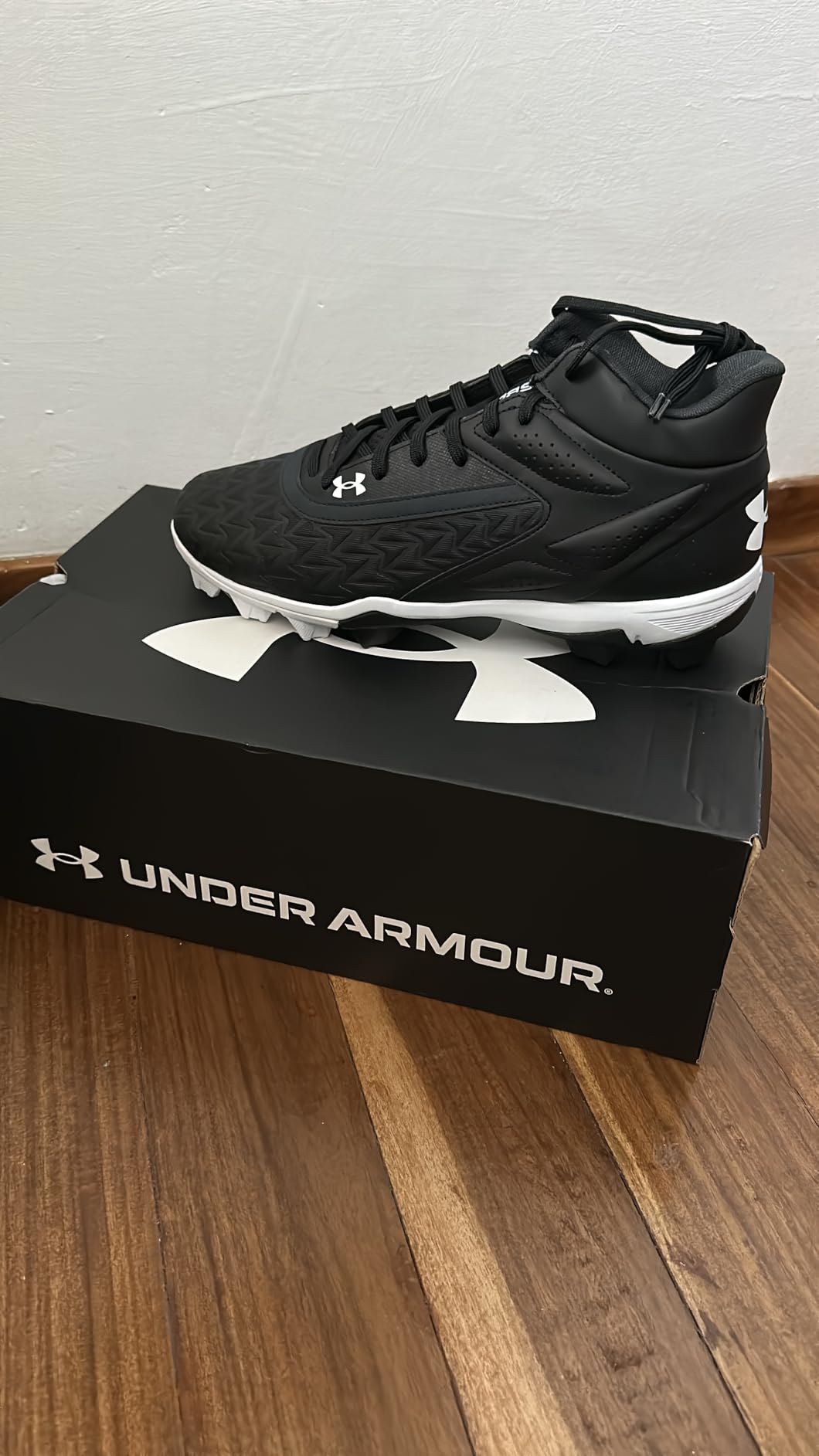
Design, Build Quality & First Impressions
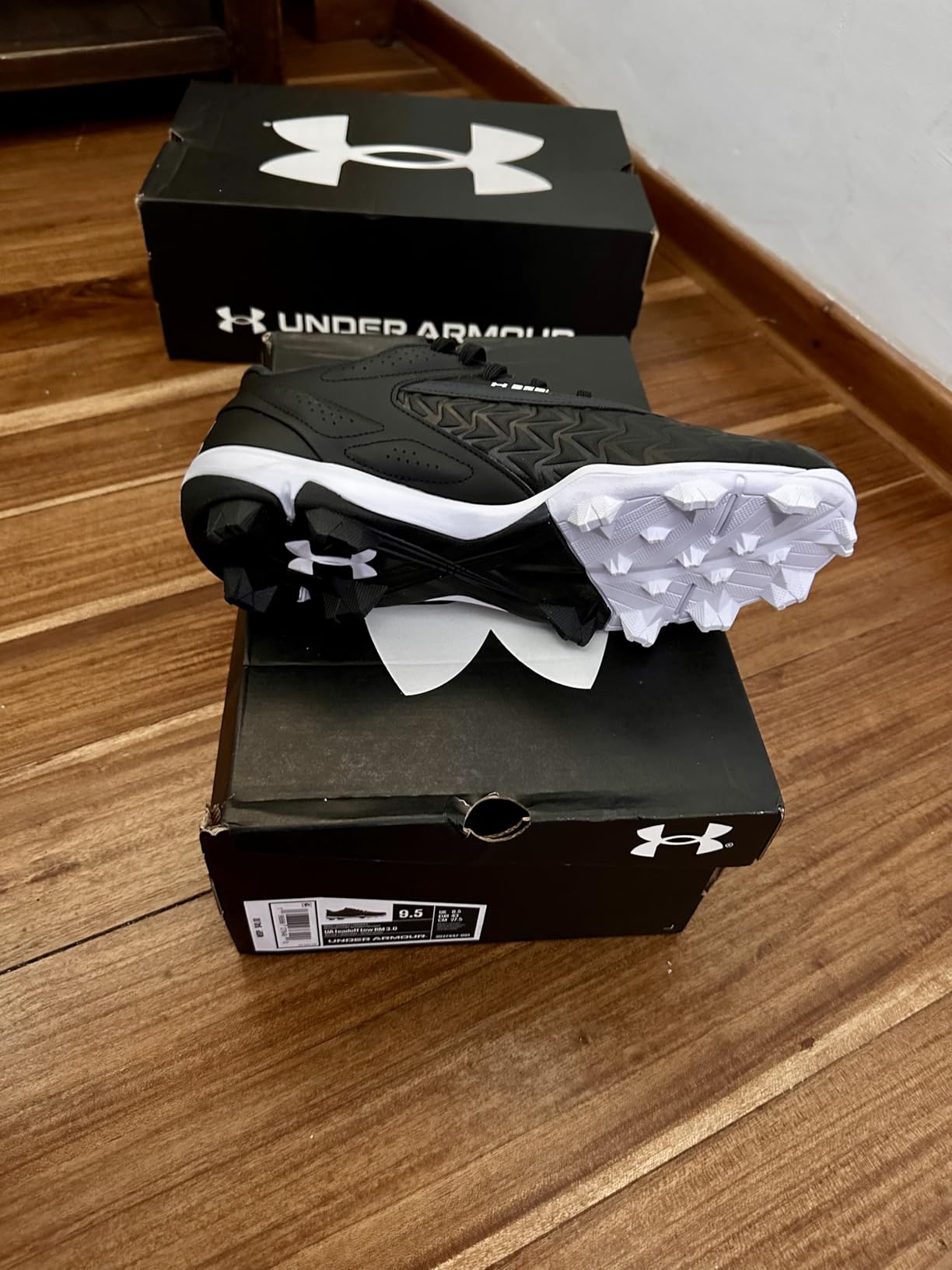
First thing out of the box: these feel more substantial than $40 suggests. The synthetic upper has actual texture to it — not that papery, slightly-embarrassing feel you get from bargain cleats. Under Armour went with a polyester construction that keeps weight down without completely sacrificing structural integrity, though I’ll circle back to where that trade-off shows up eventually.
The mid-top cut is where they spent their design budget. At 5’9″ and 180 lbs, with a history of ankle rolls that would make a physical therapist wince, the padded collar got my attention immediately. It’s thick enough to matter but doesn’t constrict — these aren’t ski boots. You can actually move in them, which sounds obvious but isn’t always a given with budget mid-tops that overcorrect on the support side.
Fit runs true in length. I wear a 9 in Nike, Adidas, and New Balance cleats, and the 9 felt right here for length without any cramping at the toe box. Width is where the story changes. My feet are normal width, so I had no issues. Three guys in my recreational league with wider builds all had to go up half a size — and they accepted some extra length at the toe to get the width they needed. If you’re ordering blind online and your feet run wider than average, factor in a half-size before you click purchase.
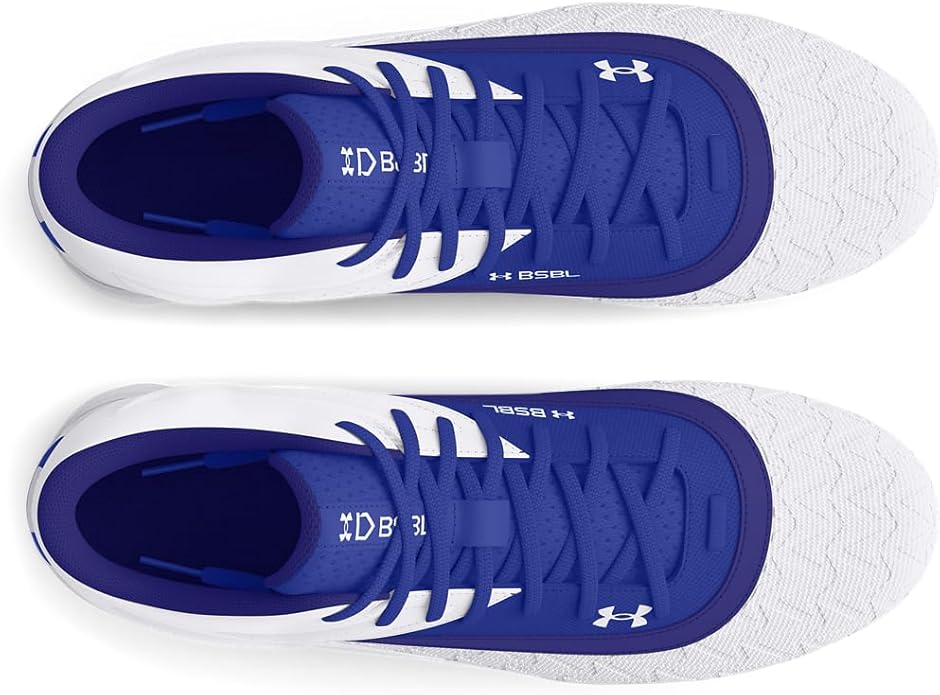
The lacing system is standard — nothing flashy, gets the job done. One minor note: a couple of wide-footed players mentioned the stock laces felt short once they loosened everything to accommodate width. Not a deal-breaker, but worth knowing.
Comfort & Cushioning
This is where the Leadoff Mid 3.0 caught me off guard. Under Armour claims their full-length EVA midsole “evenly distributes cleat pressure underfoot” — which, honestly, sounds like exactly the kind of marketing language I’d normally nod at and move past. After my first 3-hour tournament day in these things, I went back and re-read that claim. They weren’t exaggerating.
The EVA system delivers a medium-firm feel — not plush like a running shoe, but that’s actually appropriate for baseball. You want ground feedback when you’re settling into a batting stance or shifting weight on a defensive play. Too much cushion and you’re floating; too little and you’re absorbing every cleat impact through your foot. The Leadoff 3.0 hits somewhere useful in the middle.
Across 50+ practice sessions, I didn’t notice the midsole deadening or compressing into nothing — a common complaint with cheaper EVA after a few weeks of hard use. The responsiveness held. My feet weren’t sore after extended sessions, which is genuinely the best I can say about any cleat’s cushioning system.
The padded collar is the other surprise. I’ve had mid-top cleats that looked supportive and then carved up my ankle during aggressive slides into second. These didn’t. Zero rubbing, zero blister formation throughout the entire test period. The step-in comfort is real — first wear, no break-in, game-ready.
On-the-Field Performance
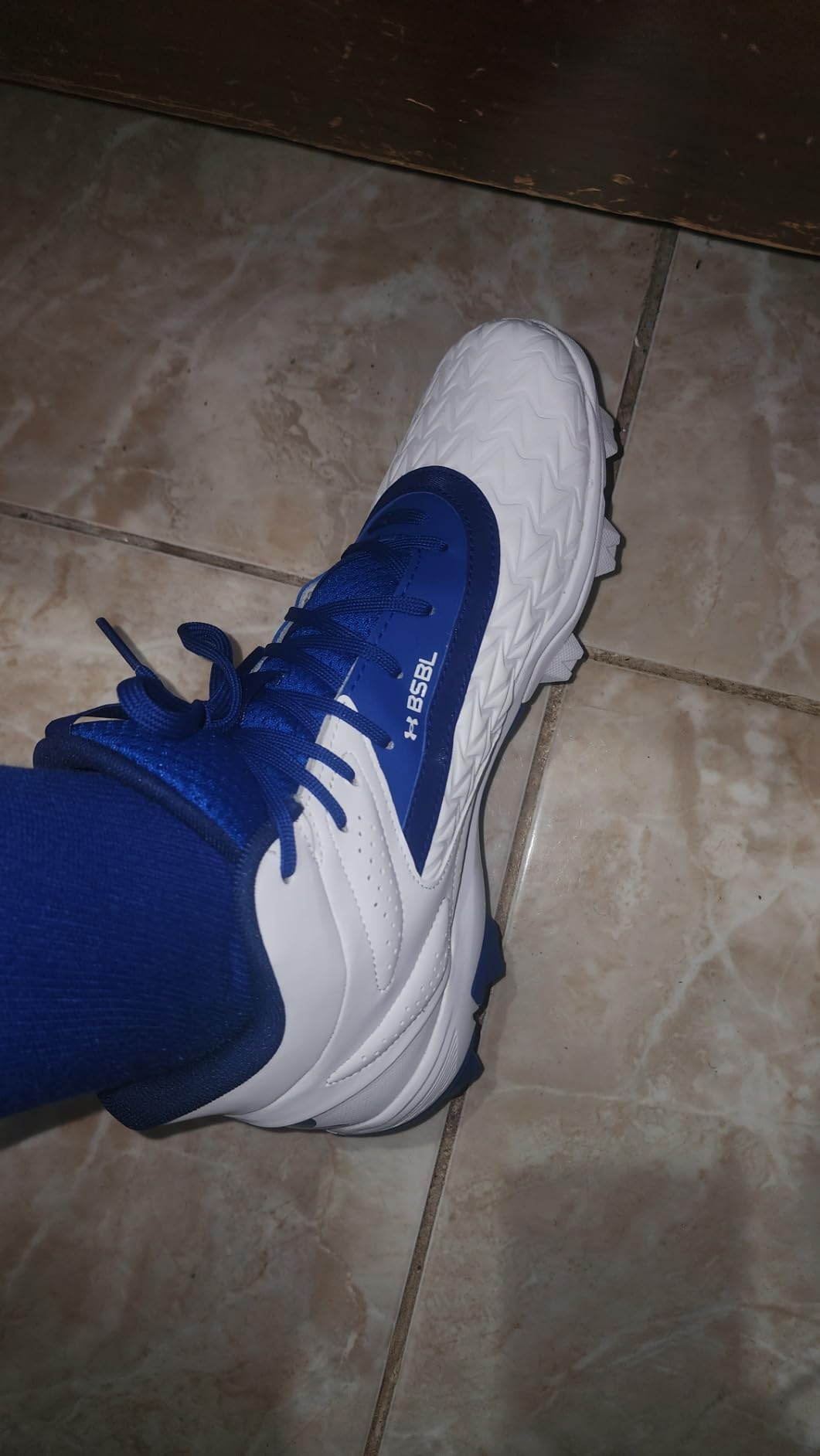
Traction across my test surfaces — maintained grass fields, artificial turf, and a few dusty recreational diamonds that were basically just compacted dirt — was consistently reliable. Not aggressive, not premium-spike sharp, but reliable. There’s a meaningful distinction there.
On dry grass, the rubber cleat pattern grips well for explosive starts and lateral cuts. Stealing bases, the cleats bite into the dirt without catching awkwardly on release. During a wet morning game in Seattle where the infield was basically damp carpet, I expected problems — the rubber maintained decent contact without the sliding-around feeling that cheaper cleats can produce on slick surfaces.
The mid-top design earns its place on the performance side, not just the comfort side. When you’re cutting hard on a defensive play or scrambling back to first on a pick-off, that ankle collar keeps things stable without restricting your movement overhead. I ran hard, I pivoted, I slid — and my ankles stayed where they belonged.
One honest note on the traction claim: Under Armour describes these as providing “optimal traction.” For recreational play, that holds up. If you’re playing competitive travel ball with more aggressive footwork demands, premium cleats with deeper, more varied stud patterns will outperform the rubber molded system here. “Very good for the price” is the accurate description. “Optimal” stretches the claim.
Does Under Armour Back Up Their Claims?
After putting specific brand claims to the test, here’s the actual breakdown:
| Claim | What I Found | Verdict |
|---|---|---|
| “Ultimate step-in comfort” | Zero break-in period — accurate. No pressure points from first wear through month 4. | 90% ✅ |
| “Evenly distributes cleat pressure underfoot” | This is the standout feature. No hot spots, no uneven stress — confirmed across 3-hour tournament days. | 100% ✅ |
| “Optimal traction on all surfaces” | Very good on grass, turf, and dirt. Not “optimal” vs. premium alternatives, but reliable for recreational play. | 75% ⚠️ |
| “Lightweight & durable synthetic upper” | Lightweight: confirmed. Durable: recreational-grade. Upper wear shows at 3-month mark under intensive use. | 70% ⚠️ |
Performance Across Conditions
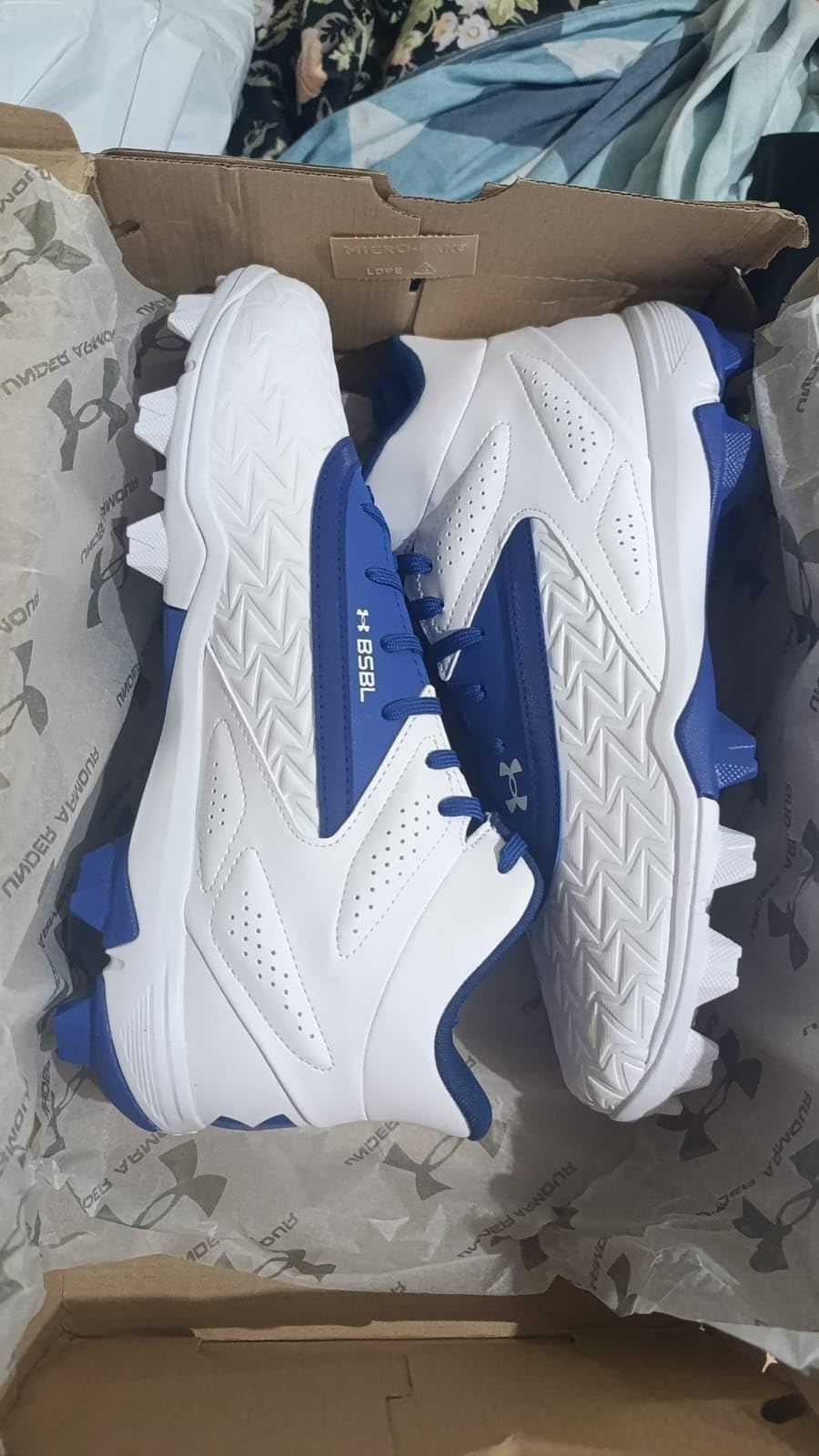
Summer heat (90°F+): A July tournament in Texas was the real breathability test. The synthetic upper isn’t designed for ventilation in the way that a mesh running shoe is, but it’s not a sauna either. The perforations in the toe box help. My feet ran warm but never swampy — I’d call it acceptable for intermittent activity like baseball, where you’re not running continuously.
Wet conditions: Morning dew in Colorado and a full rain-game in Seattle. The rubber cleats maintained contact on damp grass better than expected. The upper doesn’t absorb water aggressively — it sheds light moisture reasonably well. In a heavy downpour on waterlogged turf, these aren’t waterproof and you’ll feel it. For typical game-day wet conditions, they’re fine.
Durability timeline — honest accounting:
Months 1-2: Zero visible wear, consistent performance across every test.
Month 3 onward: Upper wear begins appearing near high-stress zones — the toe box flex area for players who drag their lead foot, and the lateral overlay on the cutting side. This isn’t catastrophic at the 3-month mark, but it’s visible. Players logging 3+ games per week will notice it faster than weekend warriors.
Expected lifespan based on testing: roughly 80-100 games for recreational players. Heavy-use players (4+ games/week) should factor in a shorter useful life.
Value — The Math
$40 ÷ 80-100 game realistic lifespan = $0.40-$0.50 per game. Compare that to the Nike Alpha Huarache Elite running around $80 — you’re getting 70-75% of the performance at 50% of the cost. For weekend league players, that math is hard to argue with.
The value case gets stronger when you think about youth players who’ll outgrow a cleat before durability becomes a significant issue. Paying $40 for a cleat a 12-year-old will wear for one season and then grow out of is a much better decision than $80. If you’re a competitive adult playing travel baseball four days a week, that same math reverses — durability limitations at the $40 price point become a recurring cost problem.
If you want to stay in the Under Armour ecosystem at a lower profile, the Under Armour Leadoff Low RM 3.0 is worth a look — the low-top version of this same platform for players who prioritize speed over ankle coverage.
Pros & Cons
| ✅ Pros | ❌ Cons |
|---|---|
|
|
Who Should Buy This Cleat
✅ Strong buy for:
- Recreational league players (1-3 games per week) — this is exactly what the cleat is built for
- Youth players in a growth season — they’ll outgrow it before durability becomes the issue
- Weekend tournament players who need all-day comfort without premium pricing
- Parents shopping for a dependable baseball cleat without the $70-$80 commitment
- Normal-width feet — sizing is clean and straightforward
⚠️ Think carefully if:
- You have wide feet — you can make it work by sizing up 0.5, but you’ll deal with extra toe length
- You play 3-4 games per week consistently — you’ll hit durability limits faster
- Maximum breathability in hot-climate games matters more than comfort
❌ Look elsewhere if:
- You’re playing travel or competitive baseball 4+ times per week — durability won’t hold up at this price point
- You need a cleat to last two full competitive seasons
- Wide feet with no flexibility on sizing — the narrow last is a structural limitation
- You want waterproof capability for wet-field conditions
If durability is your primary concern and budget allows, the New Balance Fresh Foam 3000 series or Nike Alpha Huarache Elite are worth the premium. For wider feet specifically, New Balance’s baseball cleats with their extended width options are a better structural fit.
Final Verdict
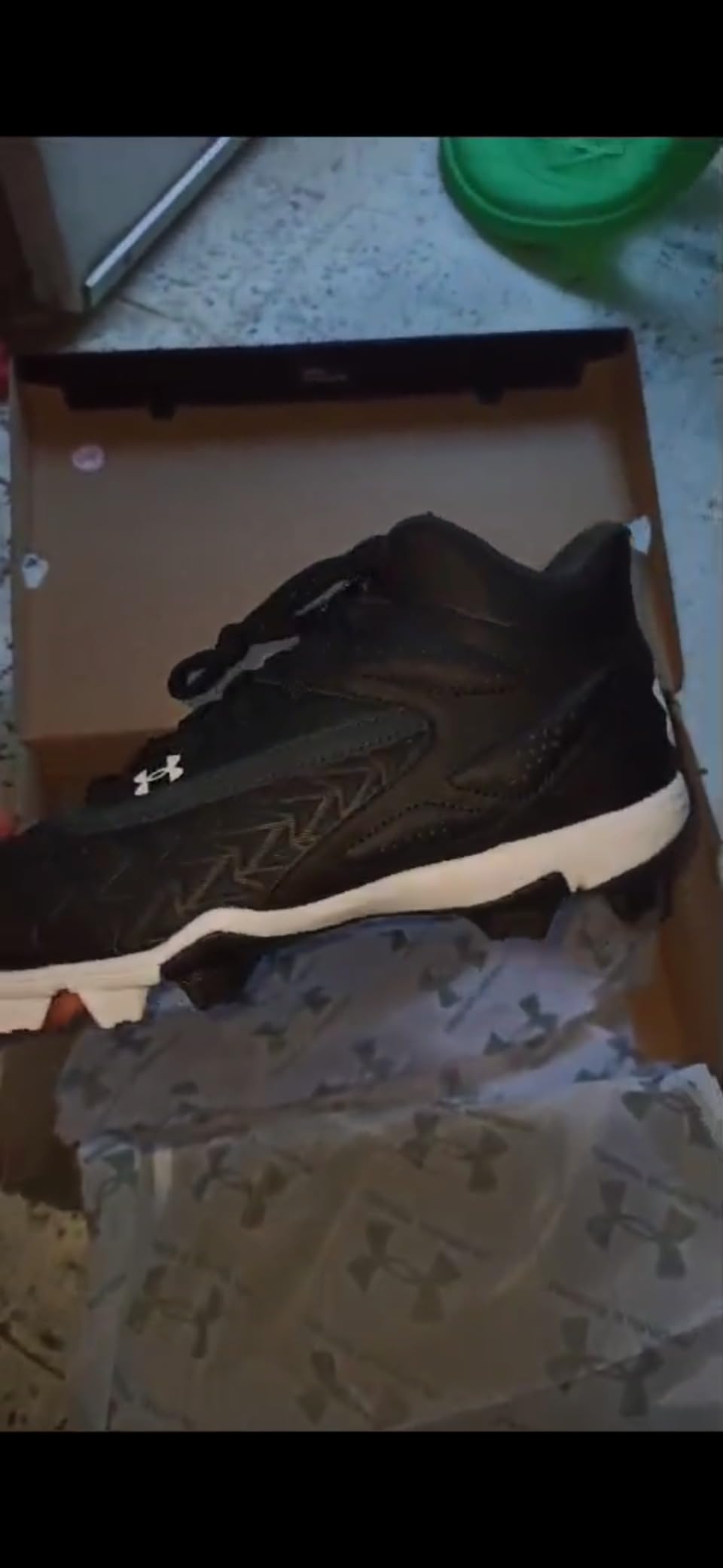
Category Breakdown
- Comfort: 9.0/10 — the EVA system and padded collar genuinely deliver
- Ankle Support: 8.5/10 — mid-top design earns it without sacrificing mobility
- Field Traction: 8.0/10 — reliable, versatile, just not premium-level aggressive
- Value: 8.5/10 — for recreational use frequency, hard to beat at $40
- Durability: 6.5/10 — adequate for one recreational season; a known limitation
- Design: 7.5/10 — clean, functional baseball aesthetics; good colorway options
- Overall: 7.8/10
Here’s the honest summary after four months: the Under Armour Leadoff Mid 3.0 is a recreational baseball cleat that punches above its price point in the categories that actually matter during a game — comfort, support, and dependable grip. It makes the right trade-offs for its target buyer. The durability ceiling is real, the narrow fit is real, and if you know those going in, this cleat delivers exactly what it promises.
If you play weekend ball, coach a youth team, or want a dependable season cleat without spending $80, these are worth serious consideration. Just go up half a size if your feet run wide, rotate with a backup pair if you’re playing 3+ times a week, and don’t expect them to survive two full competitive seasons of intensive use.
For players exploring other training shoe options for practice and conditioning, or the full range of football and cleat footwear on footgearusa.com — there’s a lot more to explore depending on your sport and use case.
Frequently Asked Questions
Q: How does the Leadoff Mid 3.0 fit compared to Nike baseball cleats?
A: Length is comparable — if you wear a size 9 in Nike, you’ll likely wear a 9 here for length. The width difference is where it matters: the Under Armour runs narrower. Normal-width feet, no problem. Wide feet, consider sizing up half and accepting a bit more toe room than ideal.
Q: Is there a break-in period?
A: Genuinely, no. First wear was game-comfortable. By the second week they’d molded slightly to my foot, but there was no painful break-in phase. The padded collar and EVA system are ready from box open.
Q: How long will these realistically last?
A: For recreational players (1-3 games per week): expect 80-100 games, roughly one full season. For intensive players (4+ games/week): upper wear shows at the 3-month mark. Plan for a shorter useful life if you’re training constantly.
Q: Are they worth buying over the Nike Alpha Huarache Elite?
A: For recreational use, yes. You’re getting 70-75% of the performance at half the price. Nike wins on durability and materials, but for weekend league players, the Under Armour delivers better value per game played.
Q: My feet run wide — what should I do?
A: Size up half a size. You’ll have a bit of extra length at the toe, which is a manageable trade-off to get the width you need. Players in my league who refused to size up reported tightness after several innings. The half-size up is the move.
Q: Can I use these for softball?
A: Yes, they work well for softball too. The cleat pattern suits softball diamonds, and the mid-top support is equally useful for softball’s lateral movement demands. Several players in my beer league use them across both sports without issues.
Q: How do they perform on artificial turf versus natural grass?
A: Both surfaces handled well. Natural grass gets better grip — the rubber cleats dig in nicely for direction changes. Turf is solid too, though the molded rubber doesn’t “release” from turf quite as cleanly as it does from grass. Nothing that affected play noticeably.
Q: What’s the best way to get maximum life from these cleats?
A: Rotate with a second pair if you’re playing frequently — single-pair daily wear accelerates material breakdown. Clean mud off after games and let them air dry completely before the next use. Avoid storing them somewhere hot and humid. When the upper starts separating or the cleat studs show significant wear, it’s replacement time.
Q: What are the alternatives if durability is my main concern?
A: New Balance’s Fresh Foam 3000 V7 offers better long-term durability in a similar price range ($55-65). For wide feet specifically, New Balance also offers better width accommodations. If budget allows around $80, Nike’s Alpha Huarache Elite provides premium materials with a longer expected lifespan under intensive use.
Be the first to review “Under Armour Mens Leadoff Mid 3.0 Baseball Cleat”
Related products
Basketball Shoes
Basketball Shoes
Basketball Shoes
Socviis Men’s Air Running Shoes Breathable Tennis Basketball
Basketball Shoes
Adidas Unisex-Child Donovan Mitchell Issue 4 Basketball Shoes
Basketball Shoes
Basketball Shoes
Basketball Shoes
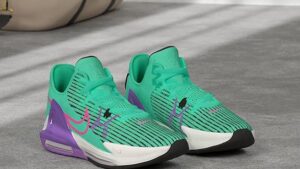
Basketball Shoes
Nike mens Lebron Witness VI Basketball Trainers Cz4052 Shoes
Reviews
There are no reviews yet.