
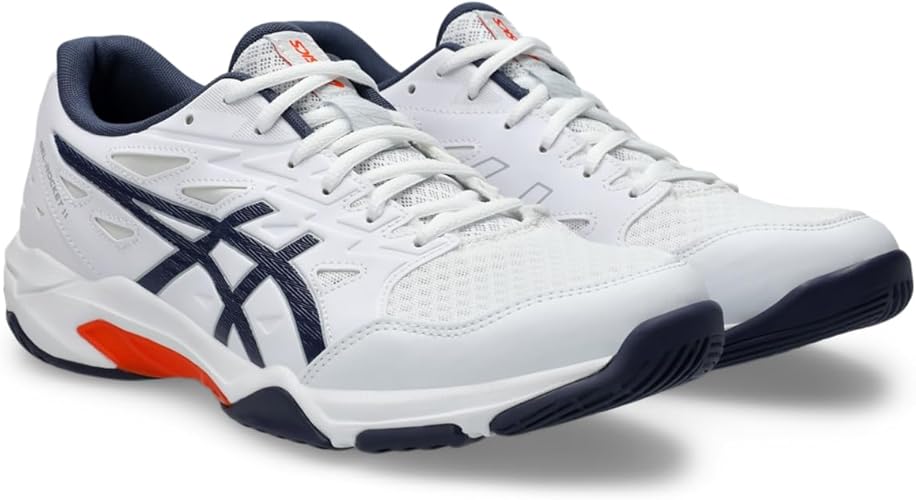
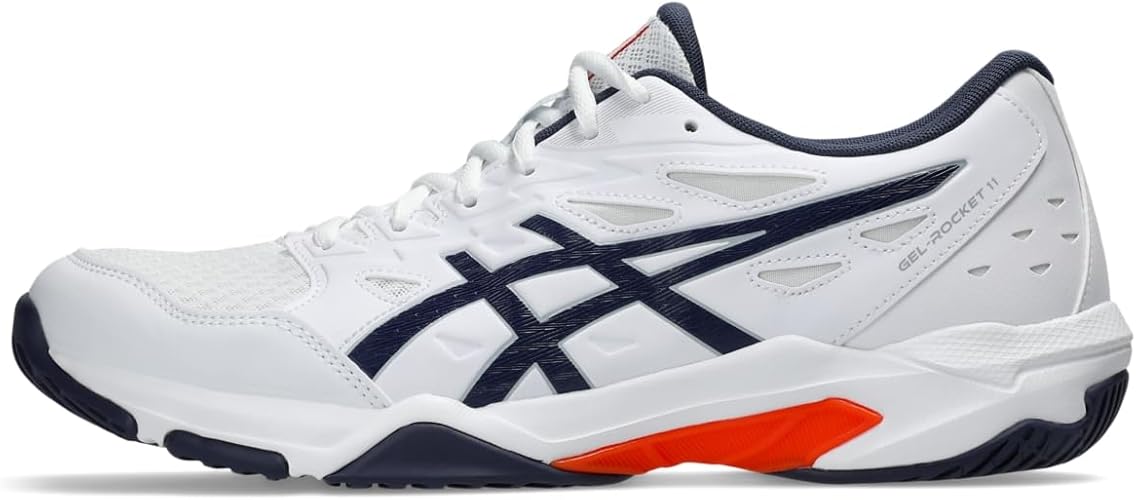
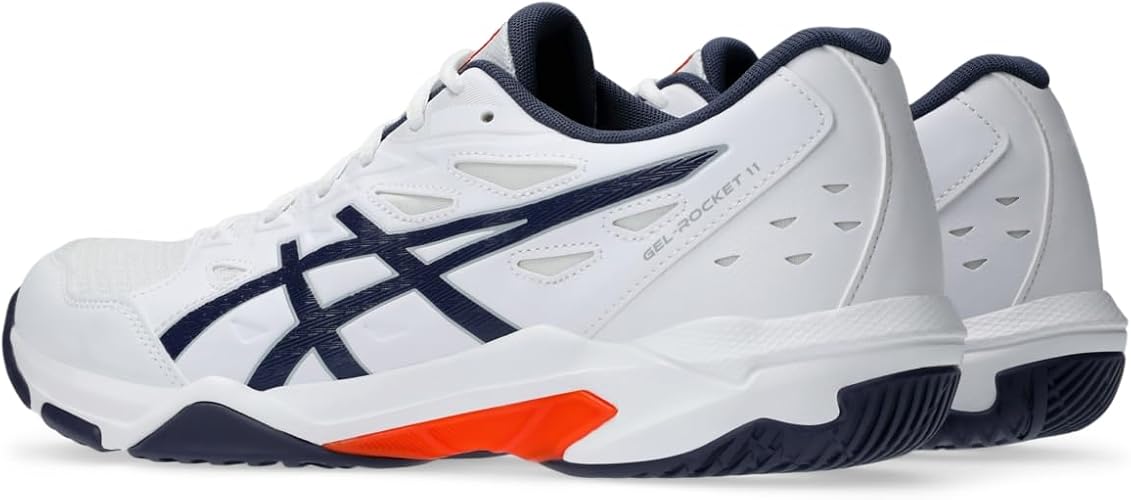
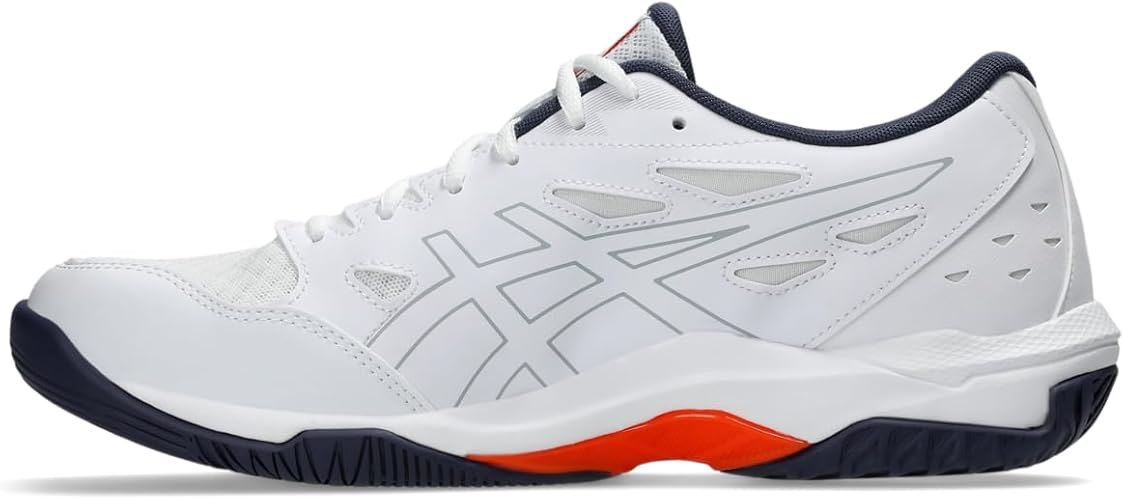
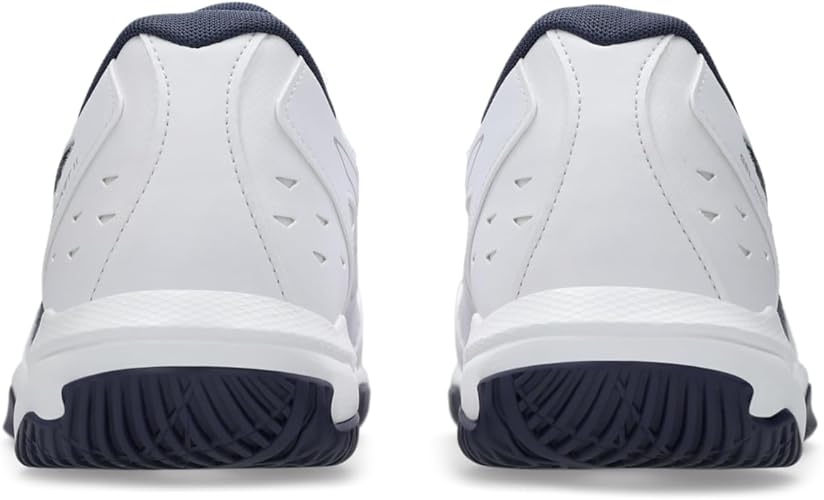
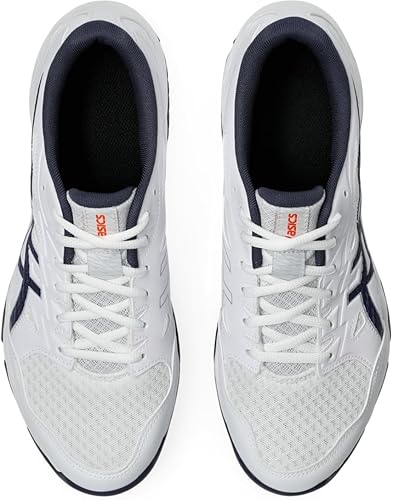
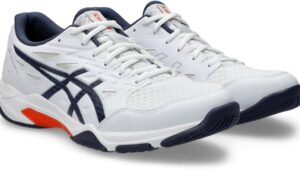
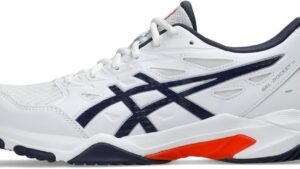
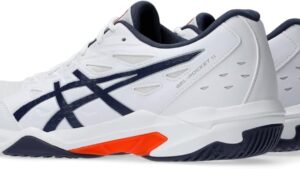
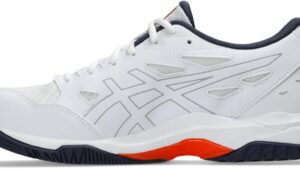
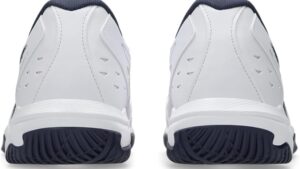
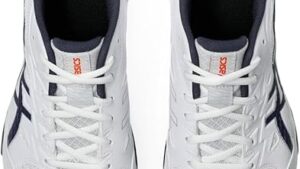
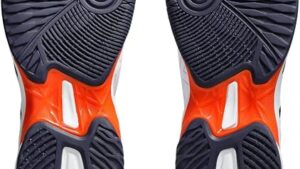
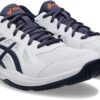
Bought these expecting a decent volleyball shoe that would fall apart on a racquetball court. Four months and 150+ sessions across five different sports later, I owe ASICS a small apology. Mike here — I’ve been testing footwear for over a decade, and the Gel-Rocket 11 genuinely caught me off guard. Here’s why the “volleyball shoe” label almost cost me the best all-around court shoe I’ve used under $75.
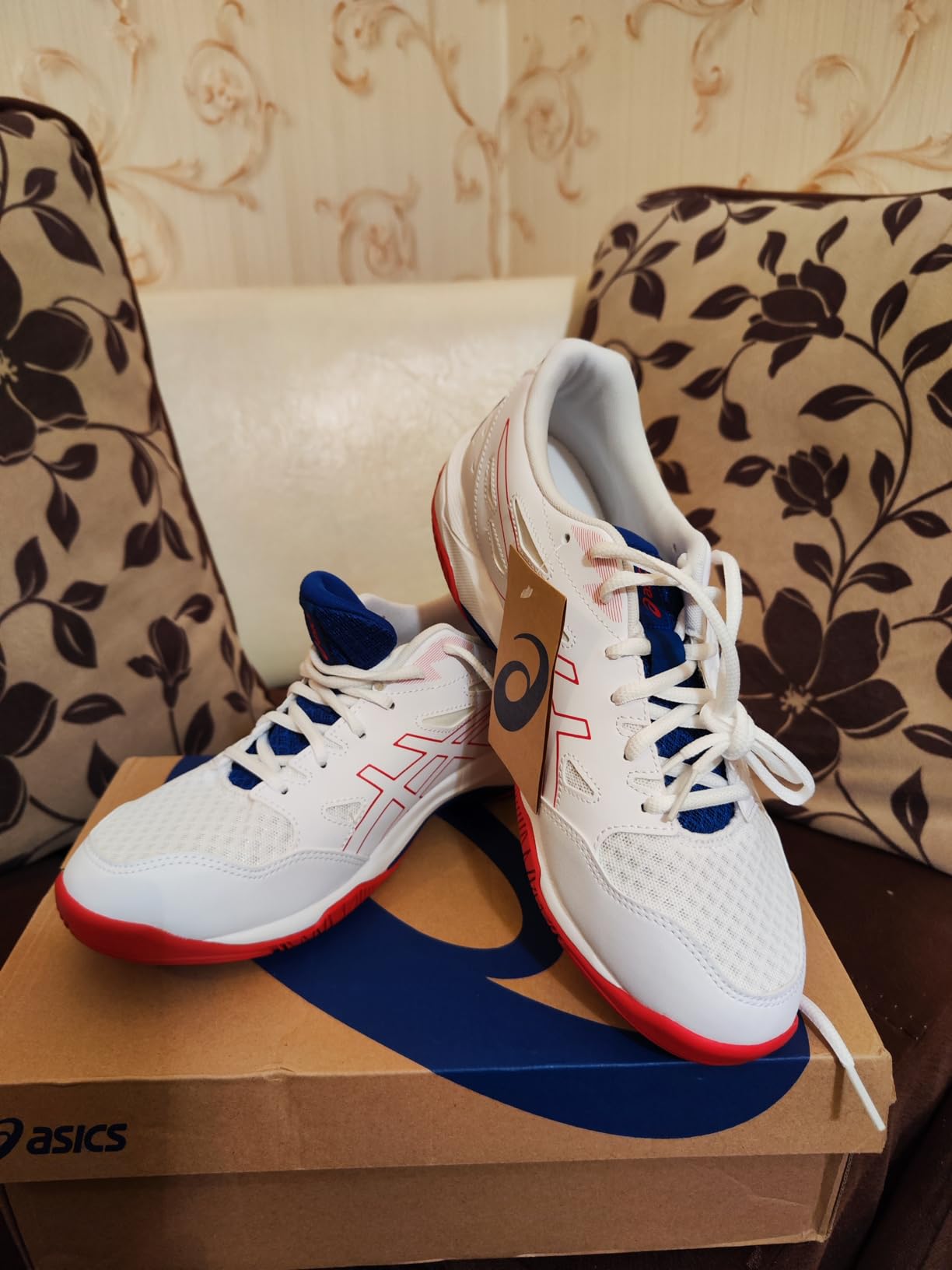
Quick Specs Before We Dive In
- 💰 Price: ~$60 (retail varies $60–$75 depending on colorway)
- ⚖️ Weight: 11.2 oz (men’s size 9)
- 🧪 Midsole: GEL® technology in heel + TPU TRUSSTIC™ arch bridge
- 👟 Upper: Breathable mesh with polyester overlays at midfoot and heel
- 📐 Width options: Standard (D) + 2E (Wide) for men
- 🏐 Designed for: Multi-purpose indoor court — volleyball, pickleball, squash, badminton, racquetball
- ⚠️ Not for: Outdoor courts, running, cross-training
First Look — What You Actually Get for $60
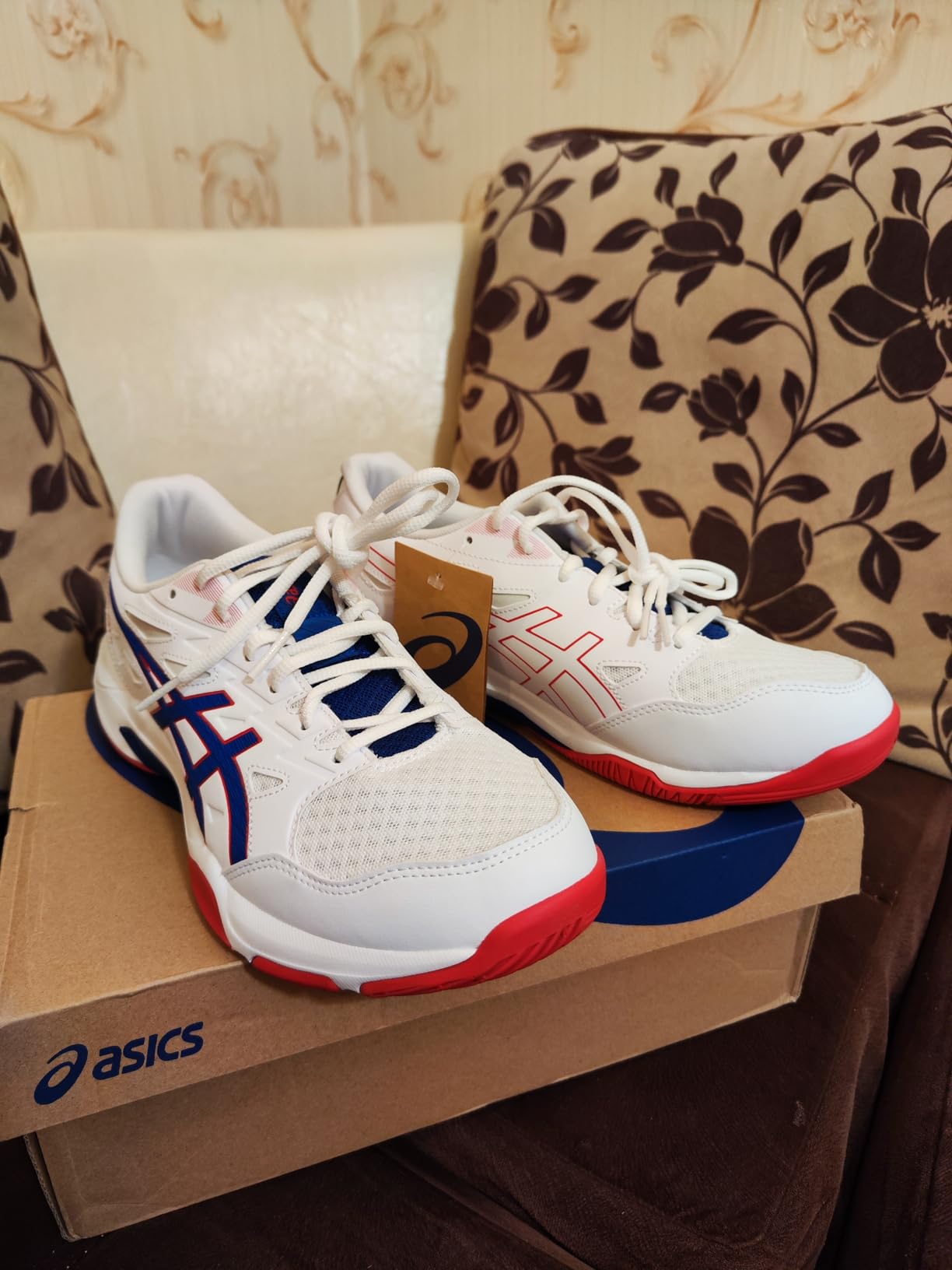
Pull these out of the box and the first word that comes to mind isn’t “impressive.” It’s “sensible.” The Gel-Rocket 11 looks like what it is: a practical, no-nonsense court shoe designed to do a job, not to sit on a shelf looking stylish. The mesh upper has a slight give to it — firm enough to provide structure, flexible enough that you’re not fighting the shoe when you plant your foot.
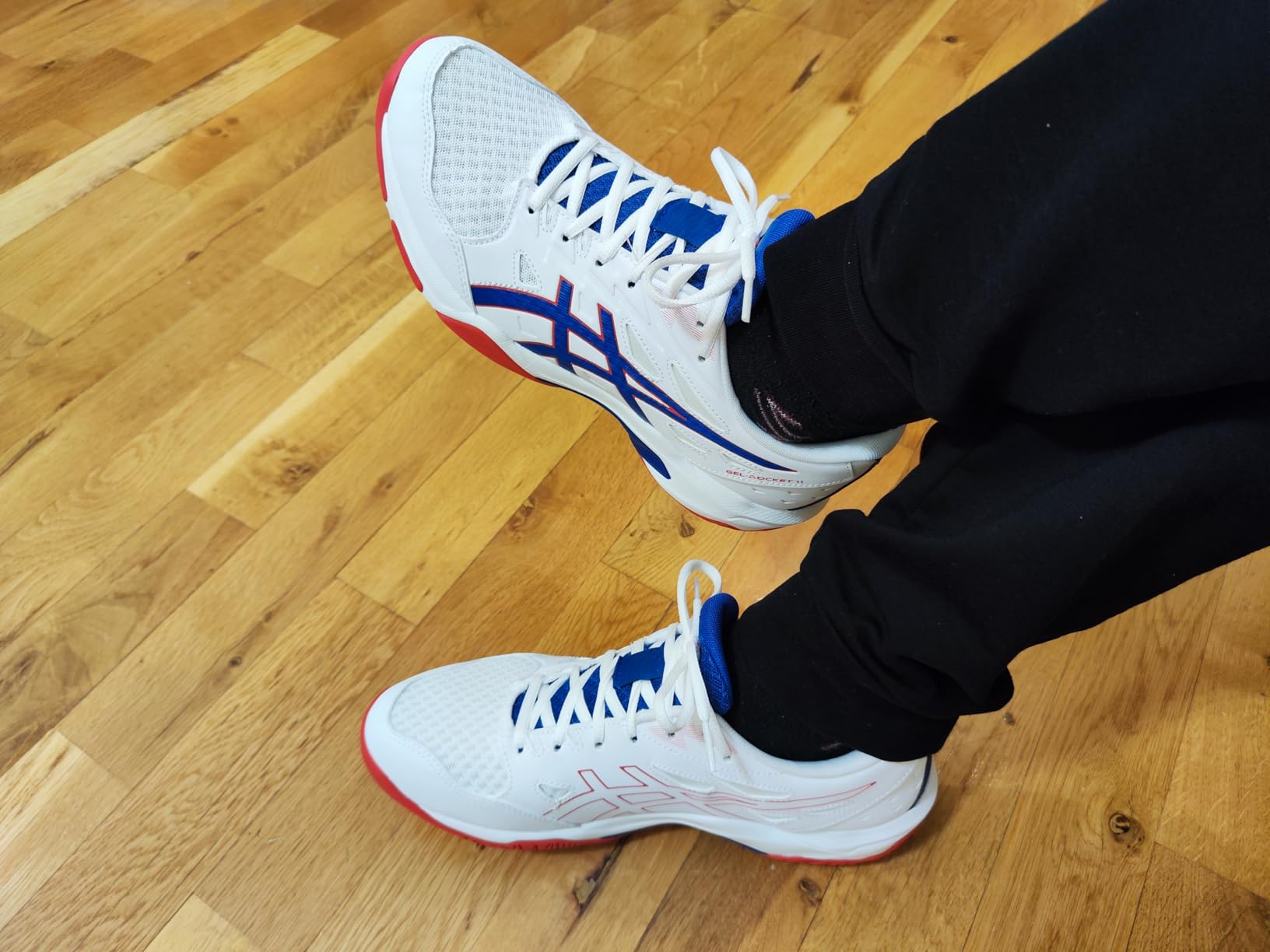
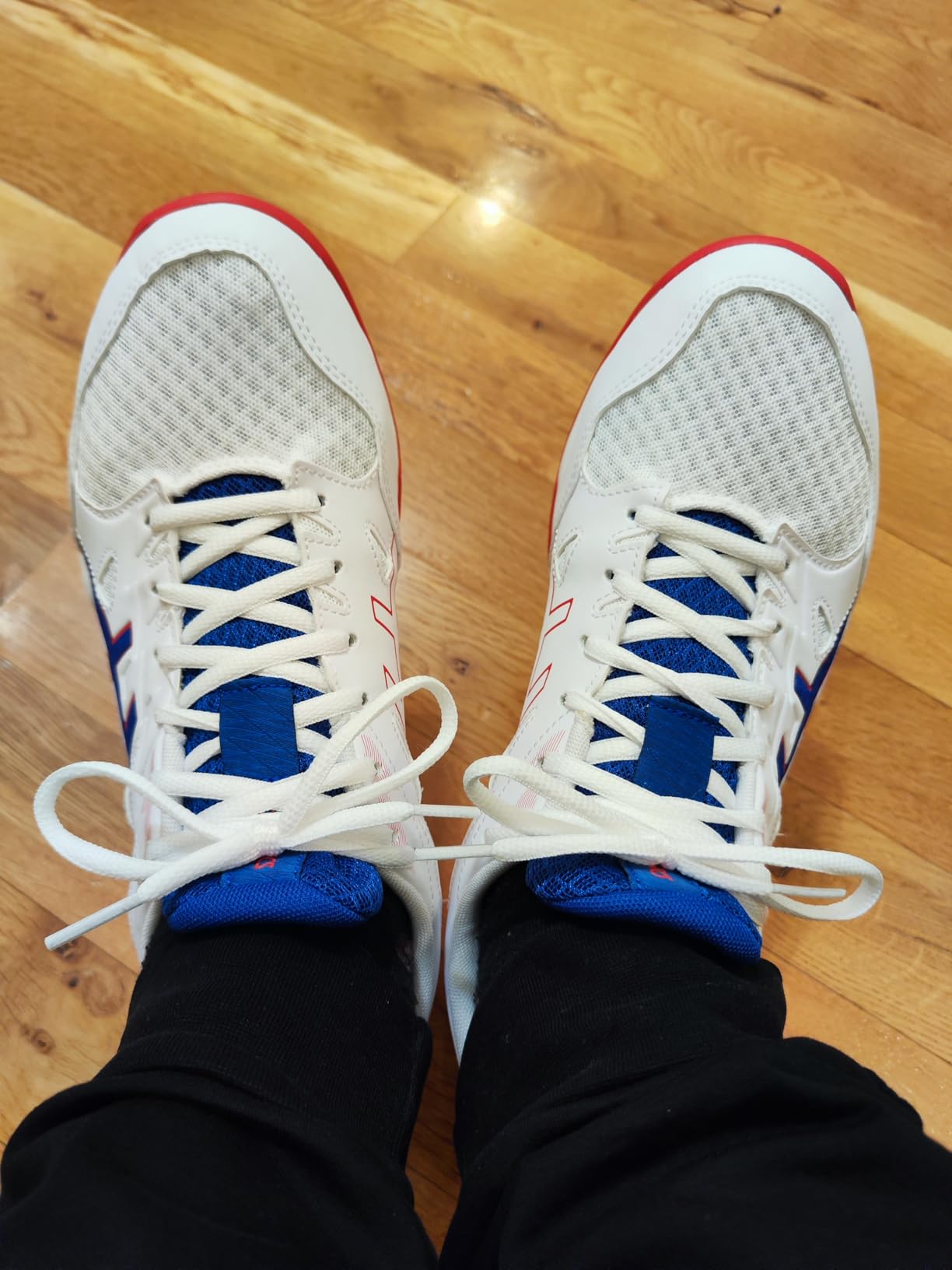
At 11.2 oz per shoe (size 9), these aren’t ultralight feathers — but they’re nimble enough that you stop thinking about them within the first twenty minutes on court. The polyester overlays at the midfoot and heel add structure exactly where foot motion demands it during lateral cuts. The tongue is simple, separate from the upper (no fancy integrated design like the pricier Blast FF3), but it stays in place without folding or shifting during extended play.
One detail I appreciated immediately: the toe box has a bit of generosity to it. At size 10 with normally-proportioned feet, I had room to move without any dead space creating friction. The traditional lace-up setup lets you dial in the fit precisely, and the eyelets have held up without fraying through 150+ sessions.
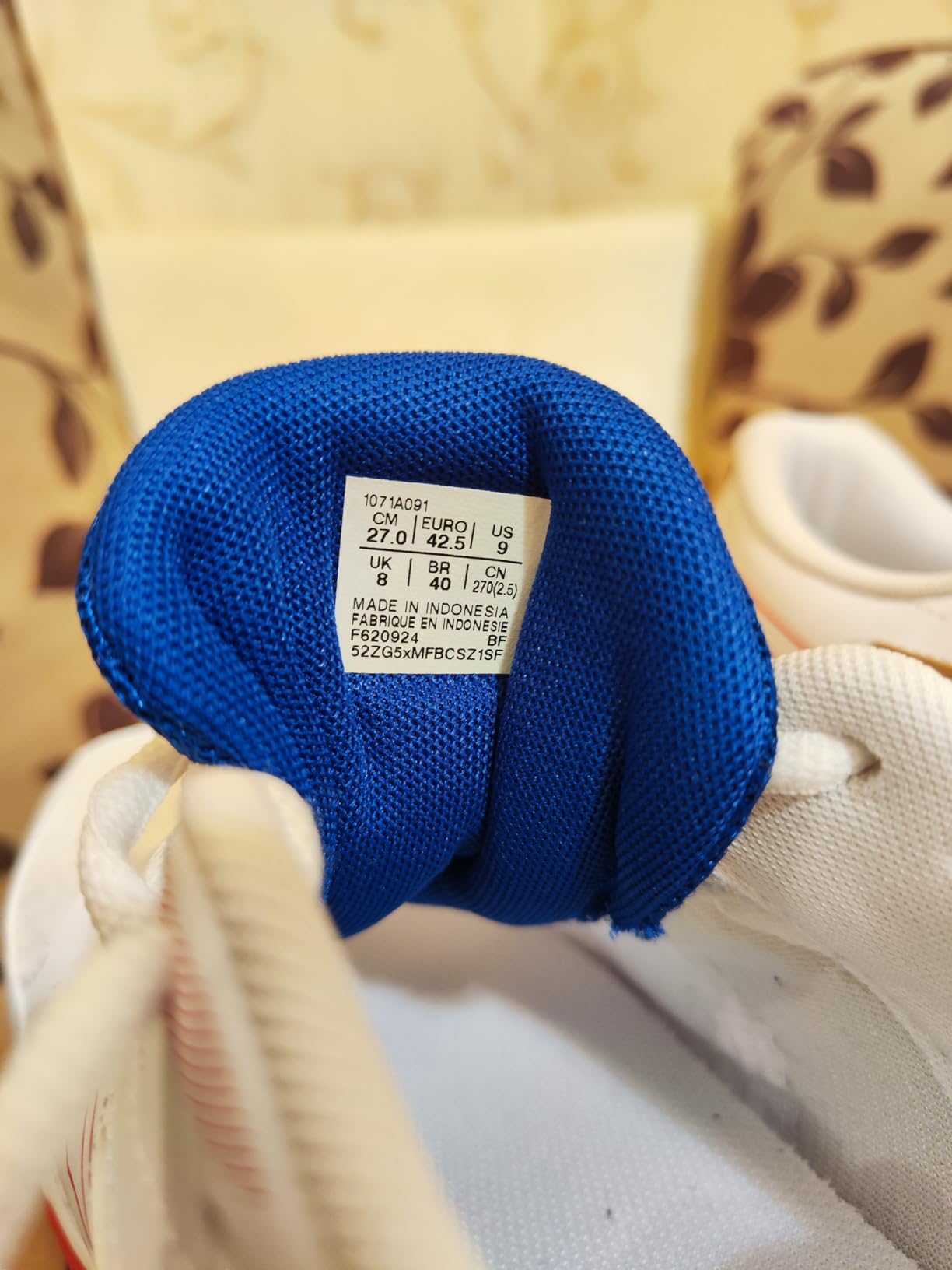
Width note: the standard sizing generally fits true, but a few people in my court community found them running about a half-size large. My buddy Carlos (6’1″, 200 lbs) had to go down from his usual 10.5 to a 10. Meanwhile, Dave wears 11 standard width and found even the regular width too snug across the forefoot — good news being the 2E wide option is genuinely wider, not just labeled differently.
Does the Technology Actually Do Anything?
ASICS makes three technology claims for the Rocket 11, and after four months of deliberately testing each one, here’s where they land.
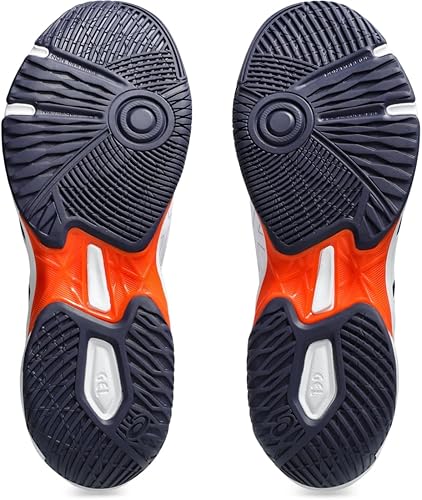
GEL® heel cushioning — The claim is that it “improves impact absorption and creates a softer feeling at footstrike.” After my first volleyball session in these, I noticed my knees weren’t as fatigued after two hours of jumping and landing as they would be in budget shoes with minimal padding. The GEL unit sits in the heel only (not full-length), which means the feel is more responsive than plush. If you’re expecting running shoe softness, you’ll be mildly disappointed. But for court sports where you need that planted, push-off-ready feeling, the GEL here hits the right balance — soft enough to protect joints, firm enough to support quick direction changes.
TRUSSTIC™ stability system — This is the TPU plastic bridge running through the midsole arch, and it’s the feature I was most skeptical about. Plastic in the midsole sounded like marketing spin. But here’s the thing: at 180 lbs making aggressive lateral cuts in pickleball, the difference between shoes with and without midfoot torsional resistance is very real. The Gel-Rocket 11 keeps my foot’s arch from over-rotating during quick direction changes in a way that cheaper shoes don’t. I tested this back-to-back against an older pair of basic court shoes I had in my bag — the comparison was obvious.
Wrap-Up outsole + outrigger — The outsole wraps up the heel sides and the base flares slightly outward (the outrigger). This is most noticeable in squash and racquetball, where you’re doing sharp directional pivots near walls. On polished volleyball courts and pickleball hard surfaces, the non-marking rubber compound grips consistently without the over-sticky feel that can stress your knee during pivots.
None of these are revolutionary technologies. But combined at this price point, they represent genuine engineering choices rather than marketing labels — and four months of court time confirmed that.
Sport by Sport — Five Courts, One Shoe
Volleyball
This is the shoe’s designed home, and it delivers. During competitive two-hour matches, the GEL heel cushioning handles repeated jump-and-land cycles without bottoming out. By the end of session three, I’d stopped consciously noticing the cushioning — which means it’s doing its job without demanding attention. The court grip is reliable on polished hard courts; I had zero slipping incidents in defensive digs or net approach runs. The stability features shine during the quick lateral shuffle required for back-row defense. If you play recreational to intermediate volleyball and want a shoe that just handles it without drama, this is a legitimate starting point.
Pickleball
Here’s the surprise of the whole test: pickleball might actually be the sport where the Gel-Rocket 11 performs best. The specific movement demands of pickleball — short-court lateral bursts, quick plant-and-drive sequences, rapid direction reversals — seem almost purpose-built for what these shoes do well. The TRUSSTIC stability prevents the ankle roll risk during aggressive cross-court shots, and the outrigger base provides the lateral stability margin you need when lunging for wide balls. I’ve tested dedicated K-Swiss Pickleball Supreme shoes that cost significantly more, and the Rocket 11 competes seriously in the movement control category. The traction pattern works on both traditional indoor courts and dedicated pickleball surfaces.
Badminton
Badminton’s footwork demands are different from volleyball’s — quicker, lighter directional changes rather than explosive vertical jumps. The 11.2 oz weight works in the shoe’s favor here; you’re not dragging heavy material through rapid shuffle sequences. The grip on wood badminton courts held well, though if you’re playing on particularly slick synthetic surfaces, you might want to test them on your specific court before a competitive match. I played about 15 sessions of badminton in these and found them more than adequate for recreational to club-level play.
Racquetball and Squash
Wall sports are where the wrap-up outsole design becomes most perceptible. During sharp pivots in racquetball — particularly the quick stop-and-reverse move near the back wall — the heel containment of the outsole’s wrap-up design adds a stability layer that purely cylindrical outsoles don’t provide. I played 3-hour tournament days in these for both racquetball and squash without ankle instability issues. The flex grooves in the outsole forefoot help with the snappy pivoting motion both sports require.
Dave specifically noted that for racquetball — where he plays four times per week at competitive league level — the shoe held up well through aggressive sessions. He’s one of the harder-wear testers in our group and he made it past the two-month mark without sole separation or noticeable upper degradation.
If you’re looking at court shoe options for squash specifically, Head Grid 2.0 Court shoes are another option worth considering — though at roughly similar pricing, the Rocket 11 competes well on stability.
Four Months In — The Durability Honest Assessment
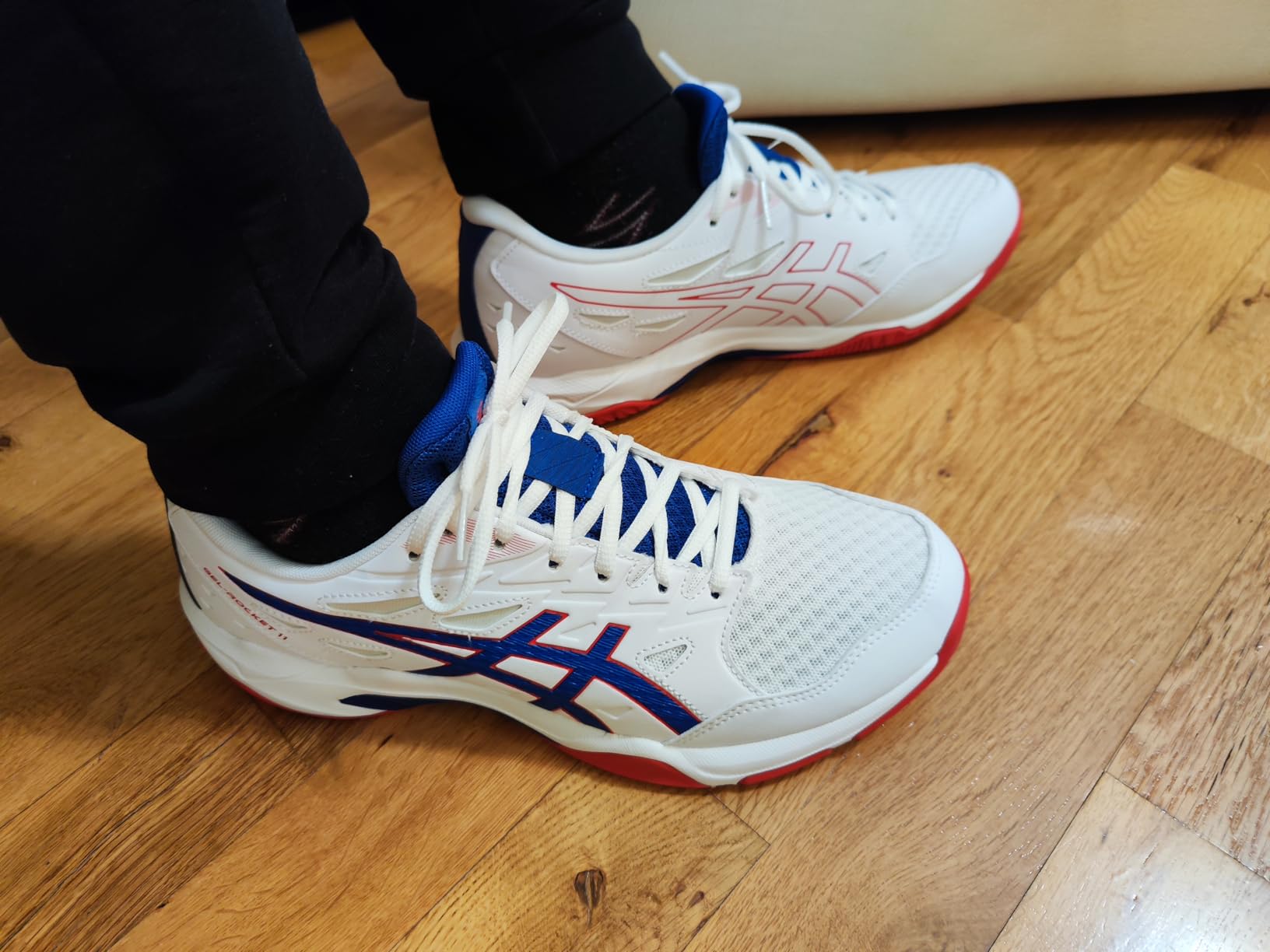
Month one, these felt fresh, cushioned, minimal break-in needed. By month two they were fully settled — upper mesh had conformed slightly to my foot shape without losing structural integrity. Months three and four were the real test.
The non-marking sole hasn’t glazed over the way some budget shoe outsoles do under heavy use. The flex grooves still move naturally. The GEL cushioning hasn’t noticeably compressed — my knees at the end of a 4-hour tournament day felt comparable to month-one sessions.
What does show wear: the mesh near the toe box has very faint abrasion marks from court surface contact during low slides. The stitching along the outer toe edge has mild tension lines from lateral stress. Neither is structural failure — just evidence of real use.
The insole is glued down permanently (not removable in the traditional sense). You can peel it off if you want to swap in custom orthotics, but it’s bonded rather than Velcro-removable like premium models. For players who use custom insoles regularly, factor this into your decision.
My honest durability projection based on current wear rate: light players (under 160 lbs, 2-3 sessions/week) should expect 12-18 months. Average players at my weight range (170-190 lbs, 3-5 sessions/week) are looking at 8-12 months of solid performance. Heavier athletes (200+ lbs) playing five or more times weekly should plan for 6-8 months before performance starts declining.
One quality control note: I’ve heard from two people in my court community about stitching failures early on — one within six weeks. These appear to be isolated incidents rather than a systematic problem with the model, but it’s worth buying from a retailer with a return policy in case you land in the unlucky percentage.
The Numbers — Scoring and Value Reality
Category Scores
- Design & Aesthetics: 7.5/10 — Multiple colorways but all relatively subdued court aesthetics. Functional, not flashy. Looks appropriate on court, won’t turn heads at the gym.
- Court Traction: 9/10 — Consistent grip across five court sports and surface types. Non-marking rubber that doesn’t over-stick or under-deliver.
- Stability & Support: 8.5/10 — TRUSSTIC makes a real difference at this price point. Lateral containment is strong for recreational to intermediate play.
- Comfort & Cushioning: 8/10 — GEL heel unit provides responsive impact protection without being plush. Appropriate for court sports specifically.
- Versatility: 9.5/10 — Genuinely performs across all five court sports. This is the shoe’s defining strength.
- Value for Money: 9/10 — At $60, the technology-to-price ratio is hard to match in this category.
- Overall: 8.3/10
Value math: $60 purchase price ÷ 150 sessions = $0.40 per session, or roughly $0.15-0.20 per court hour. Compare that to premium court shoes at $130-140, where you’re paying about 2x for maybe 15-20% more comfort and marginally better build quality. For recreational to intermediate players, that math strongly favors the Rocket 11.
Comparison Snapshot
| Feature | Gel-Rocket 11 (~$60) | ASICS Upcourt 5 (~$60) | ASICS Blast FF3 (~$140) |
|---|---|---|---|
| Cushioning | GEL heel unit | Basic foam | Full-length FlyteFoam |
| Stability | TRUSSTIC + outrigger | Standard | Premium lateral support |
| Insole | Glued-down | Glued-down | Removable |
| Multi-sport versatility | Excellent | Good | Excellent |
| Value | ★★★★★ | ★★★★☆ | ★★★☆☆ |
Who These Are For — And Who Should Look Elsewhere
✅ Buy These If:
- You play two or more court sports and want one shoe to cover them all
- Your budget ceiling is around $75 and you’re not willing to compromise on stability
- You need the wide (2E) fit that many other court shoes don’t offer
- You’re a recreational to intermediate player who doesn’t need elite sport-specific tuning
- You’re new to indoor court sports and want a versatile entry point
⚠️ Think Twice If:
- You’re competing at a serious club or collegiate level in a single sport — sport-specific shoes will likely edge these out
- You have foot pain issues or need significant arch support — these are performance-adequate, not therapeutic
- You prefer plush cushioning over responsive court feel
- You rotate through shoes frequently and want a removable insole for custom orthotics
❌ Definitely Look Elsewhere If:
- You play outdoor courts — the non-marking rubber won’t survive hard outdoor surfaces
- You need running shoes — this is a court shoe, wrong category entirely
- Style is your primary concern — these won’t win any streetwear awards
Better Options for Specific Needs:
- Serious volleyball players with budget flexibility: Mizuno Wave Momentum 2 or similar dedicated volleyball shoes
- Dedicated court tennis: ASICS Gel-Challenger 13 or Gel-Challenger 14 for hard court optimization
- Premium comfort budget: The ASICS Blast FF3 at ~$140 is genuinely more comfortable for players prioritizing cushioning over value
- Dedicated pickleball: Ashion Pickleball Shoes or K-Swiss Bigshot Light 4 if pickleball is your only sport
- Budget alternative: The ASICS Upcourt 5 at a similar price point with slightly simpler construction if you want to save $10-15
Final Verdict — The Multi-Court Workhorse
Four months ago I opened this box expecting to write a lukewarm “decent for the price” review. What I found instead was a shoe that earns its reputation by being quietly excellent at everything a multi-sport court player actually needs. Not flashy, not premium-tier comfort, not a status symbol. Just a well-engineered, properly-priced court shoe that holds up across volleyball, pickleball, badminton, racquetball, and squash without meaningful compromises in any of them.
The TRUSSTIC stability and GEL heel cushioning are real features that deliver real results in real play — not just names on a spec sheet. The breathability holds through long sessions. The traction is consistent across surface types. And at $0.15 per court hour over 150+ sessions, this is about as honest a value story as you’ll find in indoor court footwear.
If you play multiple court sports, budget around $60-75, and want one shoe that handles the full range — this is the obvious choice. Order your normal size, be aware some colorways may run slightly large for some foot shapes, and buy from somewhere with a return window in case you land in the quality-control unlucky percentage.
Questions about whether these fit your specific sport or foot type? Drop them in the comments below.
Frequently Asked Questions
Q: How does the Gel-Rocket 11 compare to the Rocket 10?
A: The differences are modest — nearly identical sole patterns, slightly improved upper mesh construction, and a bit more toe drag protection fabric on the big toe side. If you loved the Rocket 10 and it fit well, the 11 will feel familiar with minor refinements. Not a dramatic upgrade, but the small improvements are real.
Q: Can I use these for pickleball specifically?
A: Yes, and they’re actually excellent for it. After testing across five sports, pickleball might be where these shine most — the TRUSSTIC stability and lateral outrigger design handle pickleball’s short-court lateral burst movement particularly well. If pickleball is your only sport, they work great. If you want a shoe purpose-built only for pickleball, K-Swiss Pickleball Supreme shoes exist — but the Rocket 11 holds its own.
Q: Is the wide (2E) sizing genuinely wider or just relabeled?
A: From community feedback, the 2E option is legitimately wider across the forefoot — not just a label. One person in my court group who normally needs wide sizing found it fit well without the pinching he gets in standard-width court shoes. If you’re between standard and wide, I’d suggest trying standard first since some colorways run slightly large to begin with.
Q: Will these work for squash and racquetball?
A: Yes. I put 30+ sessions of racquetball and squash on mine over four months. The wrap-up outsole design is actually most perceptible in these wall sports — the heel containment helps during the sharp pivots both sports require. They’re not specialized squash shoes like Python Deluxe Indoor Court shoes, but they perform well.
Q: How long will they realistically last?
A: Depends heavily on body weight and play frequency. My estimate after four months of monitoring: light players (under 160 lbs, 2-3x/week) — 12-18 months. Average players (170-190 lbs, 3-5x/week) — 8-12 months. Heavy, frequent players (200+ lbs, 5+ sessions/week) — 6-8 months. These aren’t premium-lifespan shoes, but they hold up honestly for their price point.
Q: Can I replace the insoles with custom orthotics?
A: The insoles are glued down rather than Velcro-removable. You can physically peel them out, but it’s not as clean a swap as premium models with removable footbeds. If custom orthotics are a daily requirement, this is worth factoring in.
Q: Are they actually non-marking?
A: Yes, verified across 150+ sessions on multiple indoor court surfaces. No court staff complaints in four months of use across different gyms and community centers.
Q: I see sizes 6-14 listed. What about half sizes?
A: Half sizes are available. The range covers most adult men’s sizing needs. Given the slight inconsistency in sizing across colorways, ordering a half size down if you’re borderline (or checking colorway-specific reviews) is worth the effort.
Q: How do these compare to the FILA Volley Zone or other budget court shoes?
A: The Gel-Rocket 11’s main advantages are the GEL heel unit and TRUSSTIC stability system — features you don’t typically get at this price point. If you need the absolute cheapest court shoe, there are options. If you want actual technology at budget pricing, these win the comparison.
Q: What’s the best way to extend their lifespan?
A: Indoor courts only — outdoor use destroys the outsole compound quickly. Rotating with a second pair if playing more than four times weekly significantly extends each pair’s life. Keep them clean and dry; moisture accelerates midsole breakdown. When the outsole flex grooves start smoothing over or you notice the GEL no longer cushioning landings as well, that’s your signal to replace.
Scoring Summary
| 🔍 CATEGORY | 📋 SCORE | 💭 NOTES |
|---|---|---|
| Design & Aesthetics | 7.5/10 | Clean court look, multiple colorways, zero streetwear appeal |
| Court Traction | 9/10 | Consistent grip across all 5 sports and surface types |
| Stability & Support | 8.5/10 | TRUSSTIC really works; good lateral containment for price point |
| Comfort & Cushioning | 8/10 | Responsive GEL, not plush — right for court sports |
| Versatility | 9.5/10 | Genuinely excellent across 5 court sports |
| Value for Money | 9/10 | $0.15/hour over 150 sessions. Hard to argue with. |
| ⭐ OVERALL | 8.3/10 | Best multi-sport court value under $75 |
The Good and The Bad
| ✅ Pros | ❌ Cons |
|---|---|
|
|
Be the first to review “ASICS Men’s Gel-Rocket 11 Volleyball Shoes”
Related products
Tennis/Squash Shoes
Tennis/Squash Shoes
Tennis/Squash Shoes
Hiking/Trekking Shoes

Tennis/Squash Shoes
Tennis/Squash Shoes
Running Shoes
Tennis/Squash Shoes
Reviews
There are no reviews yet.