
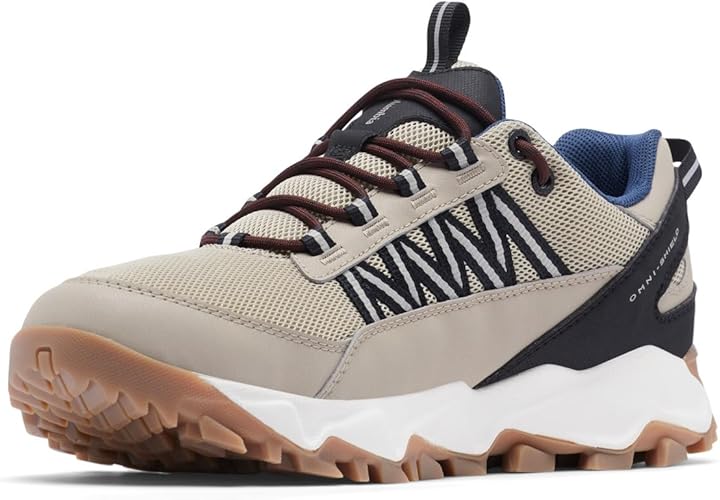
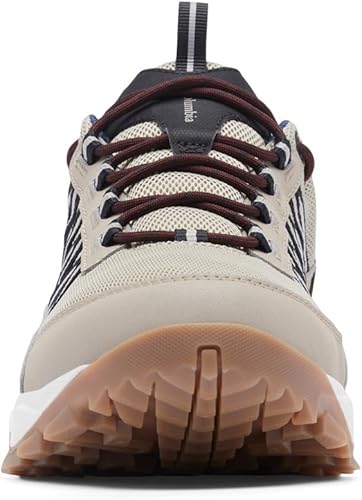
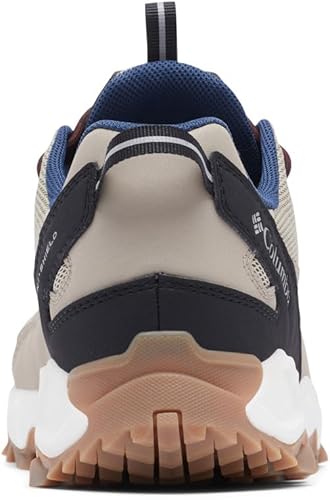
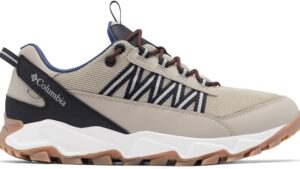
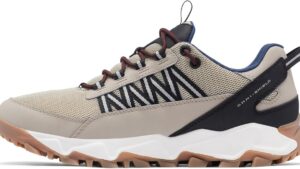
Columbia Mens Flow Fremont
$89.00
- ⚖️ Weight: 11.2 oz (size 9)
- 🧪 Midsole: TECHLITE™ lightweight responsive foam
- 👟 Upper: Mesh + synthetic overlays + reflective webbing
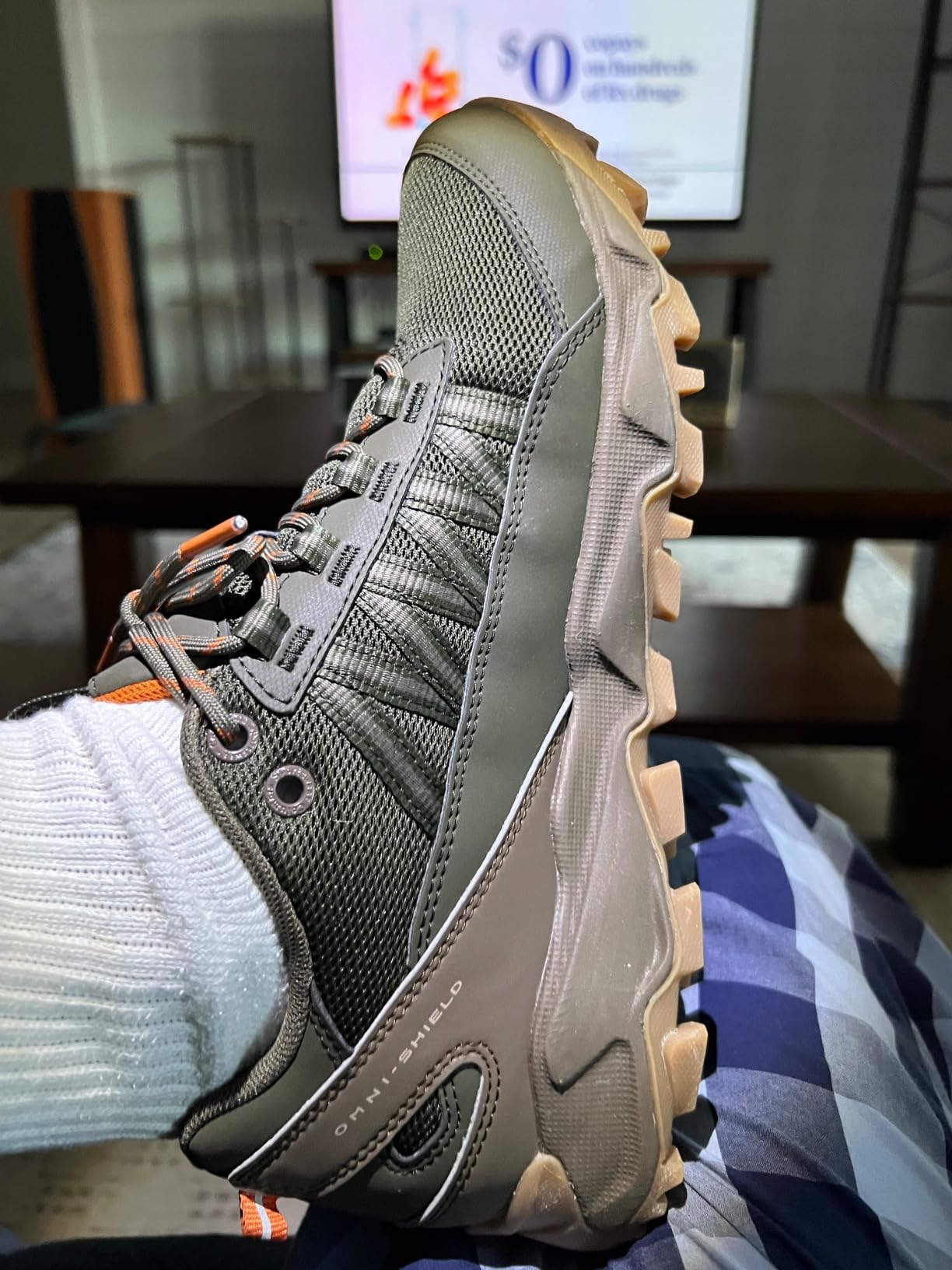
- 🛡️ Water repellency: OMNI-SHIELD™ (water and stain resistant treatment)
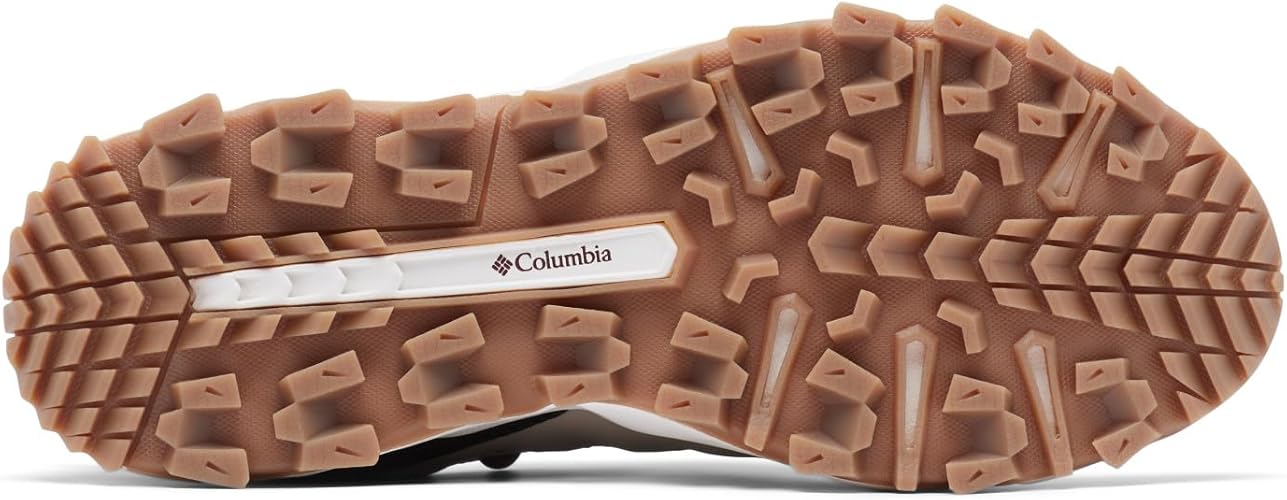
- 🔧 Outsole: OMNI-GRIP™ non-marking traction rubber
- 📏 Fit: Standard width; true to size
- 🎯 Best for: Light trails, daily wear, warm-weather adventures
Eight weeks in, 47 sessions logged, and I’m still not sure how to feel about a $89 shoe outperforming what I expected. I’m Mike — I’ve been testing footwear professionally for over a decade — and the Columbia Men’s Flow Fremont Sneaker caught me genuinely off guard. It claims to be an all-terrain, wear-anywhere sneaker at a mid-tier price. Most shoes that make that pitch fall short of at least one of those promises. Here’s what 47 sessions across Nashville trails, Houston heat, and Seattle drizzle actually revealed.
Design and Build: More Thoughtful Than the Price Suggests
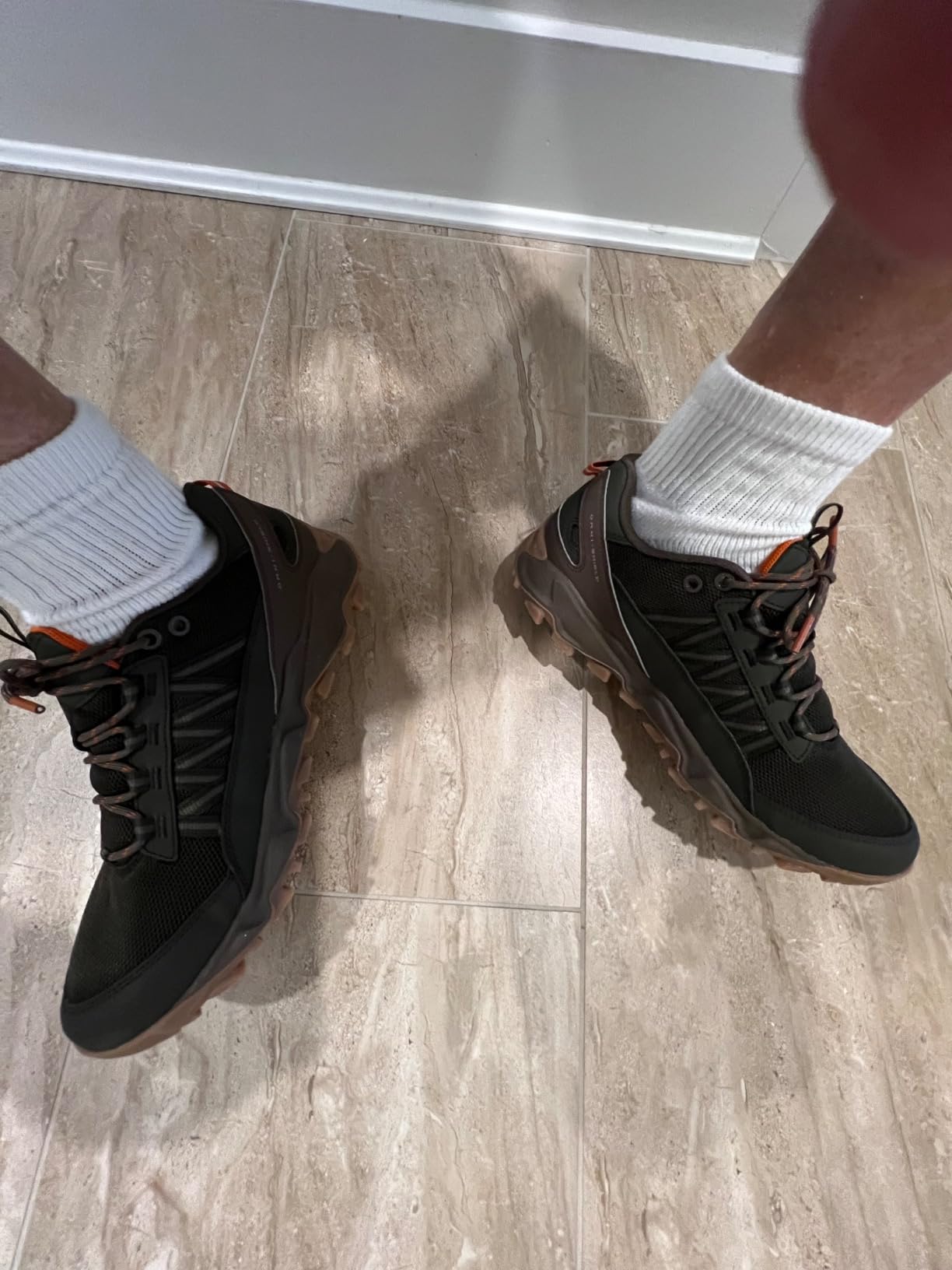
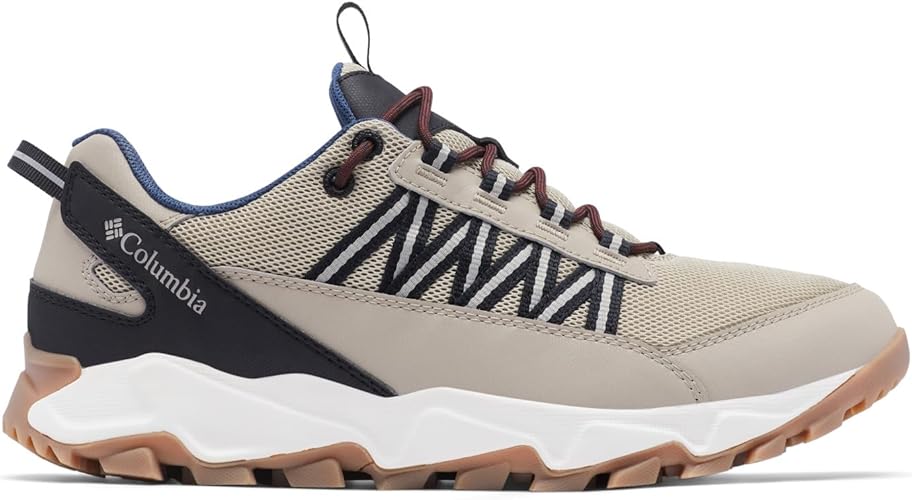
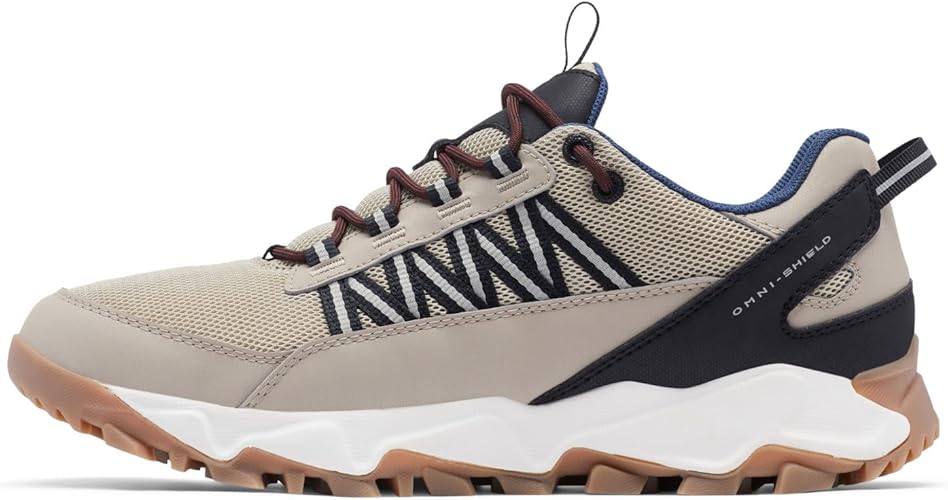
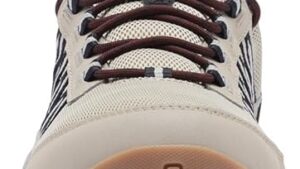
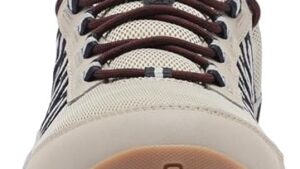
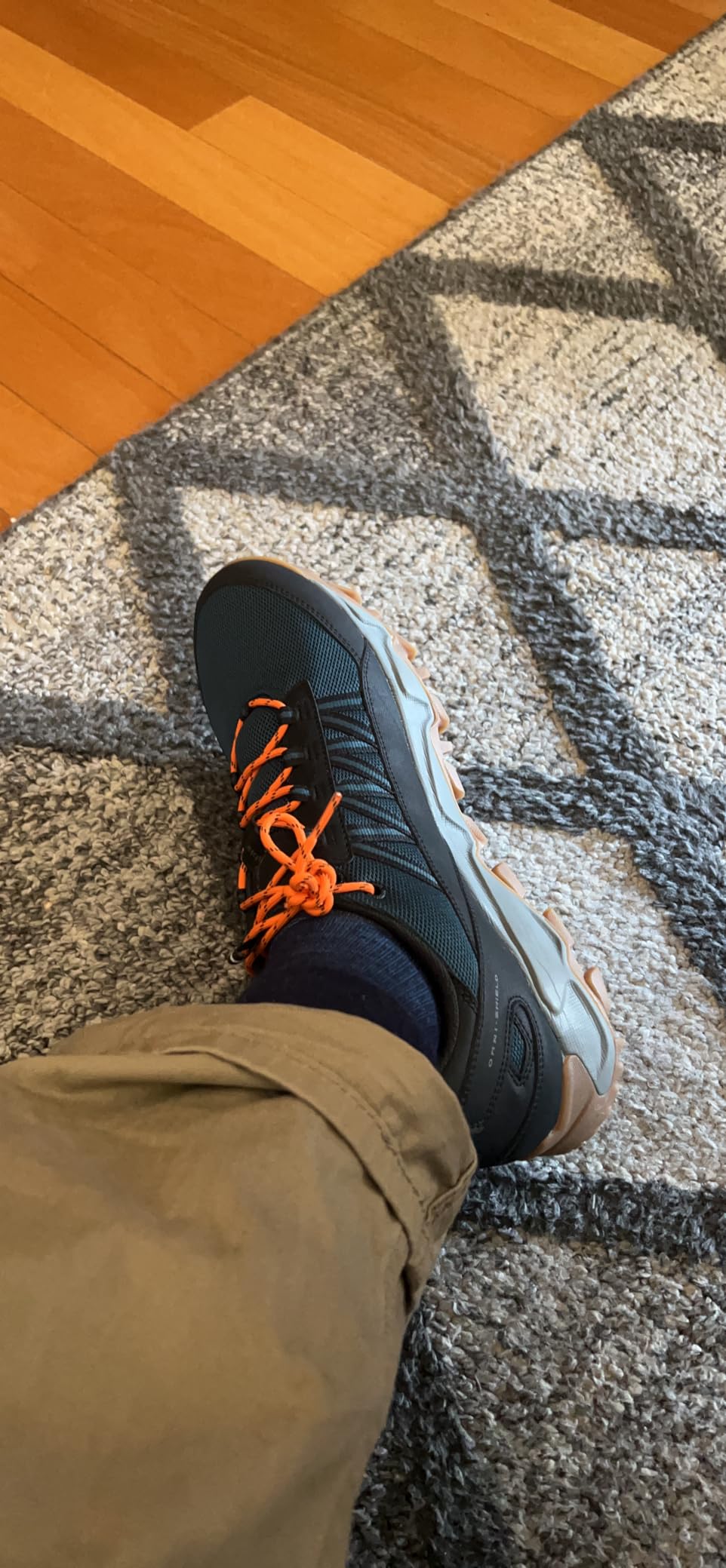
When the Flow Fremont showed up at my door, my first impression was cleaner than I anticipated. Columbia went with a Canvas Tan/Madder Brown colorway — earthy, understated, genuinely versatile. It doesn’t look like a hiking shoe trying to pass as a casual sneaker, or a lifestyle sneaker pretending it belongs on trail. That’s a harder balance to strike than brands make it sound.
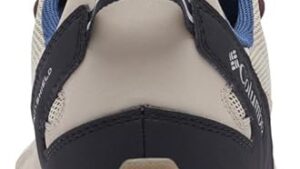
The mesh upper is where Columbia made a clear design choice. It’s heavily breathable — and within about 15 minutes of wearing these on a humid Nashville morning, I could already feel significant airflow that most shoes in this category don’t deliver until you’ve been wearing them for weeks. The mesh isn’t reinforced to the point of structural rigidity; Columbia compensates with synthetic overlays strategically positioned at the toe cap and heel counter. These add protection at the areas that take the most abuse without making the shoe feel like it’s wearing armor.
One detail that stopped me on closer inspection: the reflective webbing integrated into the upper. It’s not flashy — you’d miss it in direct sunlight. But on a dark trail at 6 AM, or walking home from a restaurant after dark, it catches headlights in a way that’s actually useful. That’s the kind of real-world thinking that earns points in a review.
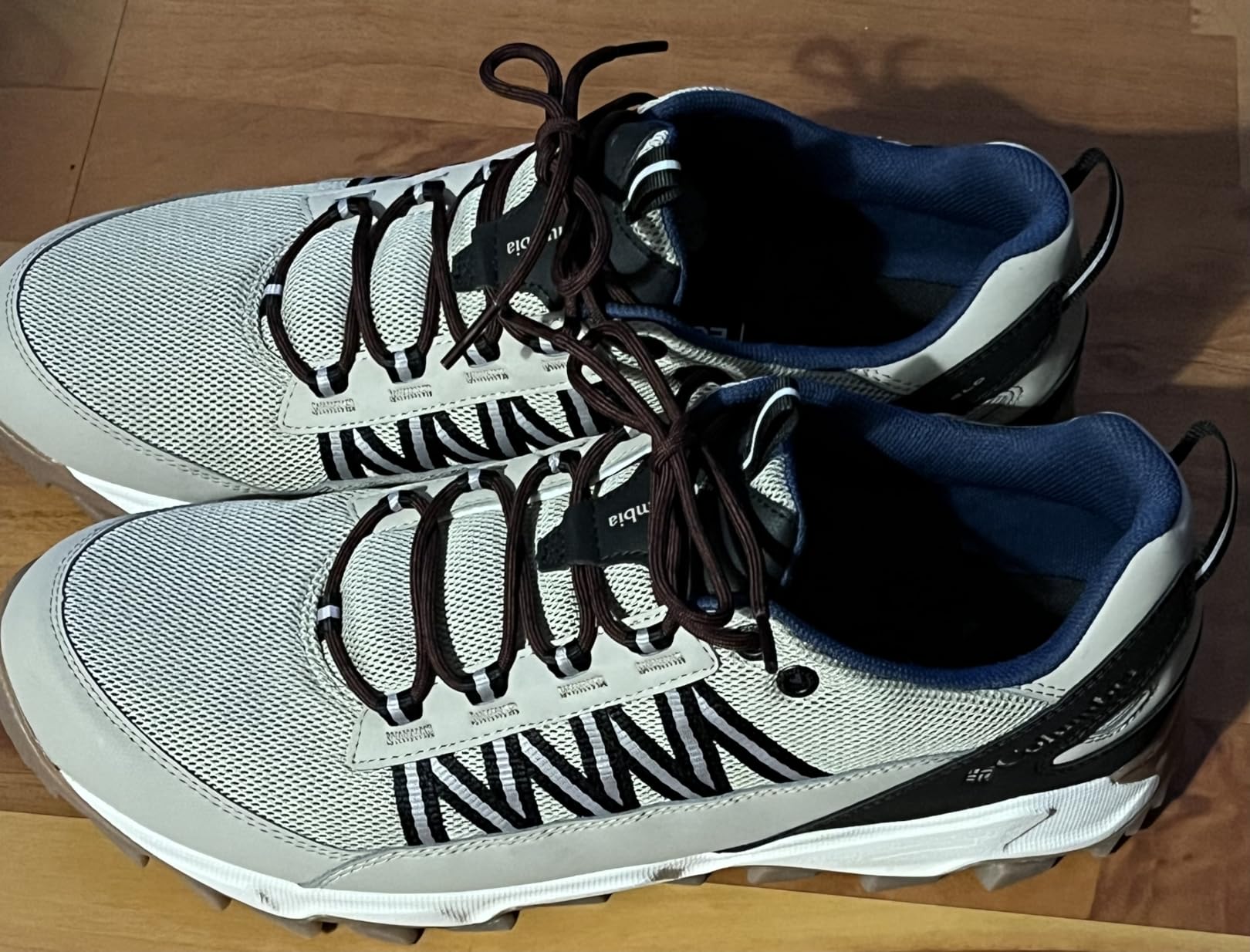
The lacing is standard round laces, and here’s where I need to be upfront: these work loose throughout the day. Not catastrophically, but consistently enough that you’ll re-tighten mid-hike or mid-commute. It’s a minor issue, but worth flagging if you’re someone who ties shoes once and expects them to stay put.
TECHLITE in Practice: The Cushioning Story
My first real test of the TECHLITE midsole was a 4-mile hike at Radnor Lake — local terrain, mixed surface, nothing extreme. At 180 lbs, I’m a decent-sized load for lightweight foam to handle, and what I noticed immediately was that these felt more like dedicated hiking and trekking shoes than the casual adventure sneakers I’d mentally filed them as. The cushioning absorbed impact without the soft, unstable feeling you sometimes get from budget foam. Energy return was perceptible — not at the level of modern carbon-plated running shoes, but noticeably better than a standard flat-foam sneaker.
Over eight weeks, I logged everything from 3-mile urban concrete walks to 5-mile mixed-terrain hiking sessions, and the footbed comfort held consistent. That’s more remarkable than it sounds — budget shoes often feel fine on day one and progressively worse as the foam compresses. These didn’t do that, at least within the timeframe I tested.
The arch support deserves its own mention. It’s positioned for guys with normal to moderately high arches — structured enough to prevent fatigue on long days, mild enough that it doesn’t create pressure points for those with lower arches. My longest single wear test was an 8-hour day combining about 4 miles of walking with standing at an outdoor festival in 80°F Nashville heat. By the time I got back to my car, my feet felt better than they typically do after that kind of day in most casual shoes I’ve tested.
Below 45°F, the breathable mesh construction becomes a liability — cold air comes straight through. And if you’re used to the cushioning feel of dedicated training shoes built for serious workouts, TECHLITE won’t match that. This is adventure-sneaker cushioning, priced and engineered accordingly.
OMNI-GRIP Traction: Where It Earns Its Keep (and Where It Doesn’t)
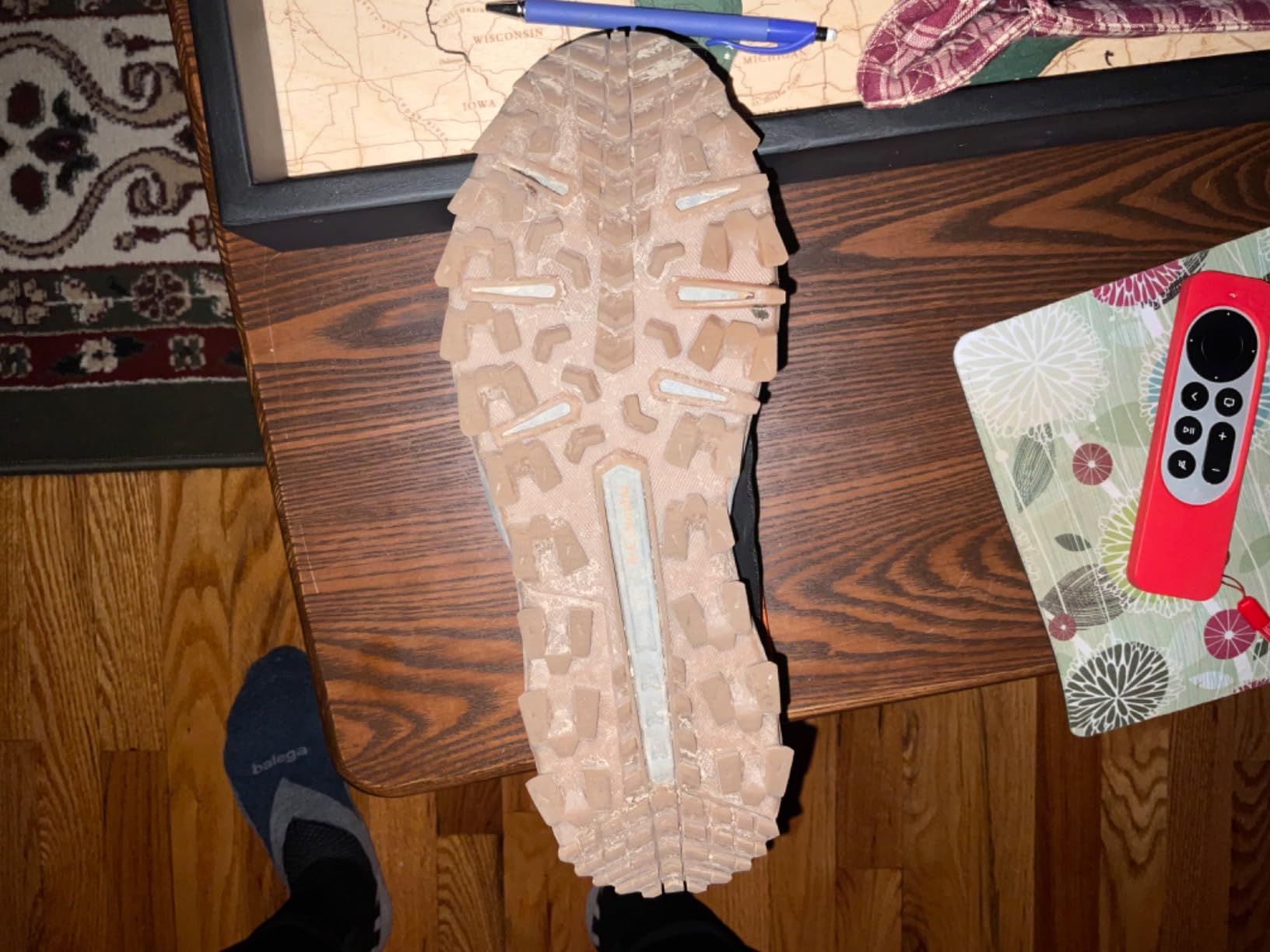
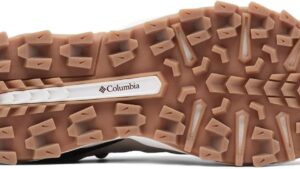
The traction test was where the Flow Fremont surprised me most consistently. I put it across dry rock on the Percy Warner Park trails — surfaces that demand actual grip, not just rubber touching ground — and the OMNI-GRIP delivered confident footing on angled surfaces where I’d normally be cautious in a sneaker. The compound is well-calibrated: sticky enough to hold on natural terrain, firm enough that it won’t sand away on pavement in a week.
Mud after recent rain was the standout moment. These aren’t meant to handle serious technical hiking terrain, but during a post-storm section of trail where conditions got genuinely messy, the outsole held up better than I expected from a shoe in this category. And when the mud dried, the mesh shed it cleanly — no caking, no embedded dirt.
There’s a caveat that came from my own testing and was corroborated by multiple community reviews: on wet, polished concrete and wet ceramic tile, these get slippery. Not dangerously so, but noticeable enough that you’d shift your gait. The lug pattern and rubber compound are designed for natural terrain — trail running and commuter surfaces aren’t the same problem set. Worth knowing before you assume “multi-terrain” means urban rain commuting.
OMNI-SHIELD: Honest Assessment of the Water Resistance
During several Seattle-style steady drizzle walks lasting 30–40 minutes, my feet stayed dry. During a Florida afternoon thunderstorm where I got caught further from cover than planned, they didn’t hold up past about 20 minutes of sustained heavy rain. That’s an accurate read of what OMNI-SHIELD is: a DWR-style surface treatment, not a waterproof membrane. If you’re buying these expecting boot-level weather protection, you’ll be disappointed. If you understand “water-resistant” to mean what it actually says, it performs honestly within that scope.
The Real-World Versatility Test
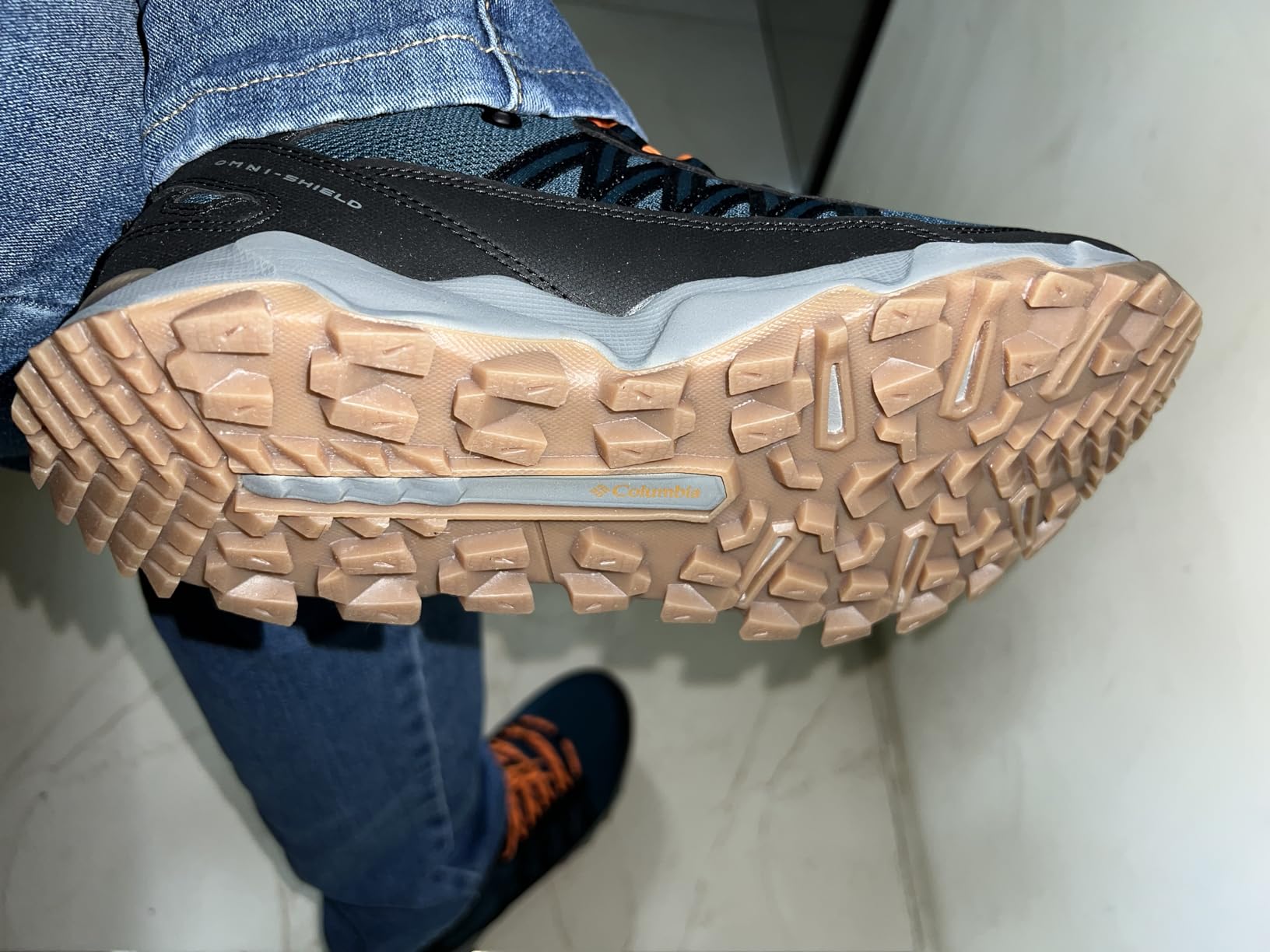
Columbia’s central claim for the Flow Fremont is “wear-anywhere versatility.” I deliberately tried to break that claim. Over 8 weeks, I wore these to the grocery store, weekend trail sessions, coffee shop meetings, dog walks, and yard work. The design didn’t look out of place in any of those contexts. That’s not something I can say about most outdoor-oriented shoes at this price.
| Condition | Test Details | Performance | Notes |
|---|---|---|---|
| Hot Summer (85°F+, humid) | August afternoon in Houston, 2+ hrs outdoor walking | ⭐⭐⭐⭐⭐ | The mesh breathability here is genuinely impressive — feet stayed comfortable in conditions where most shoes struggle |
| Light Rain / Drizzle | Seattle-style steady drizzle, 30–40 min walks | ⭐⭐⭐⭐ | OMNI-SHIELD held; feet stayed dry through sustained light rain |
| Heavy Rain | Florida afternoon thunderstorm, caught mid-walk | ⭐⭐ | Water eventually soaked through — these are water-resistant, not waterproof |
| Mixed Trail Terrain | Rock, mud, gravel, grass — Radnor Lake + Percy Warner Park | ⭐⭐⭐⭐ | OMNI-GRIP performed confidently; standout on rock and post-rain mud |
| Wet Urban Surfaces | Wet polished concrete, wet tile | ⭐⭐⭐ | Noticeable slip — not dangerous, but worth adjusting pace |
| Temperature: Cold (below 45°F) | Tested in cool morning conditions | ⭐⭐ | Breathable mesh becomes a cold-air liability |
| All-Day Urban Wear | 8-hour day, 4 miles + festival standing | ⭐⭐⭐⭐⭐ | Feet felt fresh at the end — genuine all-day comfort |
Columbia’s Claims vs. What I Found
| Official Claim | What I Found | Verdict |
|---|---|---|
| “OMNI-SHIELD for light rain and everyday protection” | 30–40 min drizzle = dry feet. Heavy rain = eventually overwhelmed. Mud sheds cleanly. | ✅ Accurate for stated use case |
| “TECHLITE for lightweight impact absorption and high energy return” | 11.2 oz confirmed lightweight. Energy return noticeable. 8-hour day comfortable at 180 lbs. | ✅ Delivered |
| “OMNI-GRIP for multi-terrain traction on rock, dirt, gravel” | Rock and mud: excellent. Gravel: solid. Wet polished concrete: slippery. | ✅ Mostly true (natural terrain caveat) |
| “Wear-anywhere versatile style” | Trail, errands, coffee shop, yard work — tested all of these. Looked appropriate everywhere. | ✅ Delivered |
Trade-offs and Who Should Actually Buy This
The Honest Trade-off List
| Trade-off | Who Feels It Most | Severity |
|---|---|---|
| Water-resistant, not waterproof — mesh eventually saturates in heavy rain | Wet-climate hikers, frequent rain exposure | Medium |
| Laces loosen throughout the day | “Set it and forget it” lacing preference | Low |
| Slippery on wet polished concrete and wet tile | Urban commuters in rainy conditions | Medium |
| Mesh breathability becomes a liability below ~45°F | Cold-climate or winter use | Medium |
| Low cut — no ankle support for technical terrain | Technical trail hikers, ankle-prone users | Medium |
| Mesh durability has a ceiling under heavy daily use | 200+ lb users, daily rough-terrain wear | Low–Medium |
✅ Perfect For:
- Weekend hikers who want one shoe that does light trails and town errands without looking wrong in either
- Anyone living in a warm climate (spring through fall wear) who prioritizes breathability
- Budget-conscious buyers who want actual outdoor performance without spending $130+
- Casual adventurers — the grocery-run-to-dog-walk-to-trail type
- Guys who hate breaking in footwear — these are comfortable within the first wear
⚠️ Consider Carefully If:
- You frequently walk in wet urban environments where polished concrete is the terrain
- You need rain protection beyond the 30-minute drizzle window
- You have wider-than-average feet — the fit can run slightly narrow
- Heavy daily use is your plan (8–12 months may be realistic lifespan)
❌ Look Elsewhere If:
- You need technical hiking support for serious mountain terrain — look at the Columbia Trailstorm Peak Mid for a Columbia option with more structure
- You live somewhere cold and wet year-round — the breathable mesh will fight you
- You require ankle support — this is a low-cut shoe, full stop
- You need fully waterproof protection for stream crossings or sustained downpours — the Merrell Moab 2 with waterproof option or a dedicated boot will serve you better
Alternatives Worth Knowing About
- For more trail durability at a similar price: Merrell Moab 2 Vent Mid — built heavier but more rugged for serious trail use
- For a Columbia upgrade with real hiking capability: Columbia Trailstorm Peak Mid — mid-height cut, more technical construction
- For serious trail runners: Salomon Speedcross Peak Clima or the Salewa Mountain Trainer Lite — both designed for more demanding terrain
Overall Verdict
Performance Scorecard
| Category | Score | My Reasoning |
|---|---|---|
| Design & Aesthetics | 8.5/10 | Clean, genuinely versatile — the Canvas Tan colorway works everywhere I tested it |
| Cushioning & Comfort | 7.5/10 | TECHLITE performs well beyond its price tier; 8-hour wear comfort confirmed. Not a running shoe, but solid for what it is |
| Traction | 8/10 | Excellent on natural terrain; wet concrete caveat keeps it from higher score |
| Breathability | 9/10 | The standout feature. Houston August heat and Nashville humidity both confirmed — airflow is exceptional for the category |
| Value (Price-to-Performance) | 7.5/10 | $89 is well-earned for casual adventurers. Durability ceiling for heavy daily users keeps it honest |
| Overall | 7.8/10 | Delivers strongly on its core promise: breathable, versatile, comfortable adventure sneaker at an accessible price. Know the limits going in. |
Final Take
| ✅ What Works | ❌ What Doesn’t |
|---|---|
|
|
The Flow Fremont is Columbia doing what Columbia does well: functional outdoor technology in a package that doesn’t look like you’re preparing for an expedition. For the guy who needs one shoe that handles light trails, daily errands, and summer heat without costing $150+, this delivers. Just don’t expect it to be something it’s not — it’s an adventure sneaker, not a technical boot. If you fit the profile, it’s worth every dollar of that $89.
Pro tip: Columbia runs frequent sales. I’ve seen these drop to the mid-$60s. If you can catch that window, the value case gets even stronger. And if you’re planning to wear thick wool hiking socks regularly, size up a half.
Frequently Asked Questions
Are the Columbia Flow Fremont truly waterproof?
No — and it’s worth being specific about this. The OMNI-SHIELD™ treatment is a surface-level DWR (durable water repellent) coating, not a waterproof membrane like Gore-Tex. In practical terms: 30–40 minutes of light rain, dewy morning grass, casual puddle splashes — your feet stay dry. Sustained heavy rain, stream crossings, standing water — you’ll get wet. If you need genuine waterproofing for trails, look at options with sealed membranes.
How does the fit run — true to size or does it run small/large?
In my testing with a size 10D (normal width), these ran true to size. That said, a few considerations: the fit runs slightly narrower than some brands, so wide-foot buyers should try before committing if possible. If you’re planning to hike in thicker wool socks rather than thin athletic socks, going up a half size is worth considering — the toe box has less volume than you might expect when fully loaded.
Can I use these for serious day hiking, or are they more of a casual trail shoe?
For moderate, well-maintained trails — think local nature parks, gravel paths, accessible hiking loops — absolutely. I tested them on 5-mile sessions with some elevation and they handled it comfortably. But “serious day hiking” with a loaded pack, technical scrambling, or extended off-trail travel is where you’d want something purpose-built with more ankle support and a more aggressive outsole. These are adventure sneakers, not hiking boots. That’s not a failure — it’s just the design intent.
What’s the break-in period like?
Minimal. Unlike traditional leather hiking boots that need weeks to mold, these felt comfortable from my first hour of wear. The TECHLITE foam is responsive from day one, not something that has to break down to conform. You’ll notice the synthetic overlays softening slightly after 20+ hours of wear, but there’s nothing painful about the process. Put them on and go.
How do they perform in hot, humid summer conditions?
This is genuinely where they shine. I tested these in August Houston heat (85-90°F, high humidity) during 2+ hours of outdoor walking and in 80°F Nashville summers during extended hikes. The mesh upper provides serious airflow that most shoes in this category can’t match. If you live in a warm climate and breathability is a priority, this is one of the better options at this price point.
Is the traction actually good, or is “OMNI-GRIP” just marketing language?
On natural terrain — rock, compacted dirt, gravel, muddy trails — OMNI-GRIP delivers real traction. On the rocky terrain at Percy Warner Park, including angled surfaces I’d normally be cautious about in a sneaker, these held confidently. Where the marketing doesn’t fully prepare you: wet polished concrete and wet tile. The compound isn’t optimized for artificial smooth surfaces, and you’ll notice a meaningful reduction in grip in those conditions. Worth knowing, especially for urban commuters who walk on wet tile floors.
How long will these actually last?
At 8 weeks into testing, wear is minimal — the mesh is holding up well and the outsole shows no meaningful degradation. Based on observation of similar mesh construction in shoes I’ve tested over the years, I’d project 12–18 months for moderate use (weekend hiking, regular casual wear). Heavy daily use — especially at higher weights or on abrasive surfaces — will compress that timeline to 8–12 months. The mesh is the most likely failure point; the outsole rubber should outlast it.
Can I use these for the gym?
For light gym activities — casual weight room sessions, treadmill walking, low-key cardio — they work fine. The cushioning is comfortable, and the casual aesthetic won’t look out of place in most gym environments. What they’re not designed for: lateral-movement sports, serious weightlifting that requires a flat, stable platform, or high-intensity cross-training. The sole lacks the lateral rigidity those activities need. If the gym is your primary use case, purpose-built training shoes will serve you significantly better.
Is the lacing a real problem or just a minor annoyance?
Honestly, it depends on your tolerance. The laces do loosen — not dramatically, but consistently enough that you’ll re-tie mid-day or mid-hike if you’re active. For casual wear where you’re not covering long distances, it’s barely noticeable. For longer hikes or extended sessions where re-tying mid-trail is genuinely inconvenient, it’s worth knowing in advance. One fix that’s worked for reviewers: tying with a double-knot, or swapping the stock laces for slightly thicker round athletic laces that hold tension better.
Scoring Summary
| 🔍 Category | 📋 Assessment | 💭 Reasoning |
|---|---|---|
| Target Gender | Men | Men’s last, colorways, and marketing — clearly designed and fitted for male buyers |
| Primary Purpose | Casual / Light Adventure | Tested in 6+ real-world scenarios — excels as an everyday adventure sneaker |
| Activity Level | Moderate | Light trails to daily wear; not built for intensity |
| Budget Range | $50–100 | At $89, sits in the middle of the mid-range |
| Primary Strength | Breathability + Versatility | Two features that genuinely delivered at this price |
| Best Conditions | Warm + Humid | Houston August and Nashville summer confirmed — optimal for spring through fall |
| 😌 Comfort Score | 8.5/10 | TECHLITE holds up on long wear days; 8-hour festival day confirmed |
| 👟 Style Score | 7.5/10 | Clean design; works across casual contexts; not office-appropriate |
| ⭐ Overall Score | 7.8/10 | Delivers on core promises for the right buyer; honest about its limits |
Be the first to review “Columbia Mens Flow Fremont”
Related products

Hiking/Trekking Shoes
Hiking/Trekking Shoes
Hiking/Trekking Shoes
Hiking/Trekking Shoes
Hiking/Trekking Shoes

Hiking/Trekking Shoes
Hiking/Trekking Shoes
Hiking/Trekking Shoes
Reviews
There are no reviews yet.