
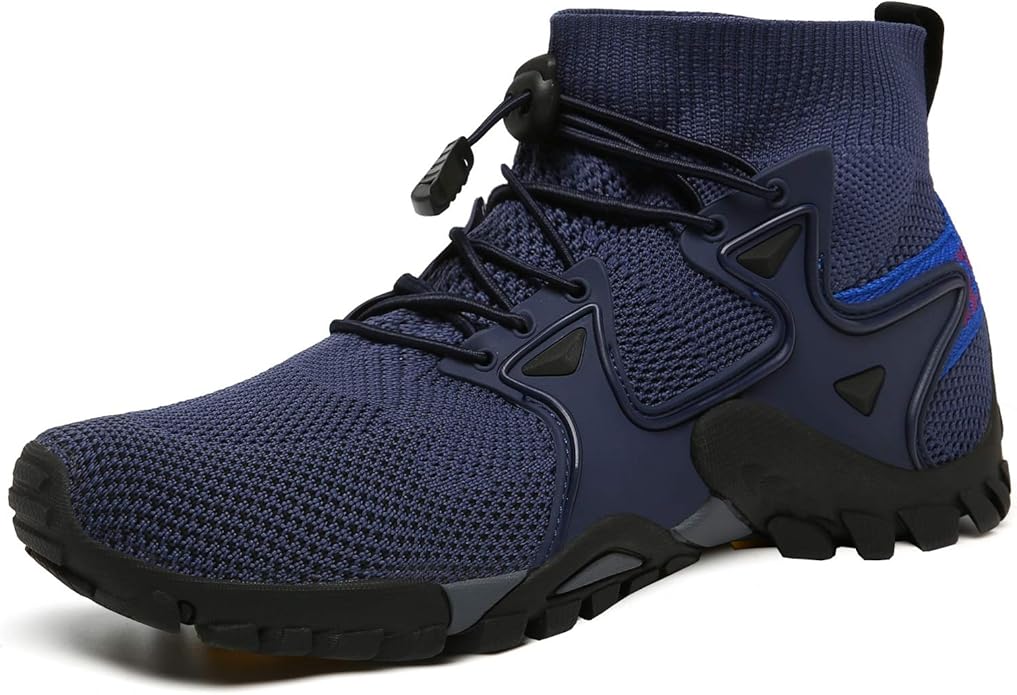
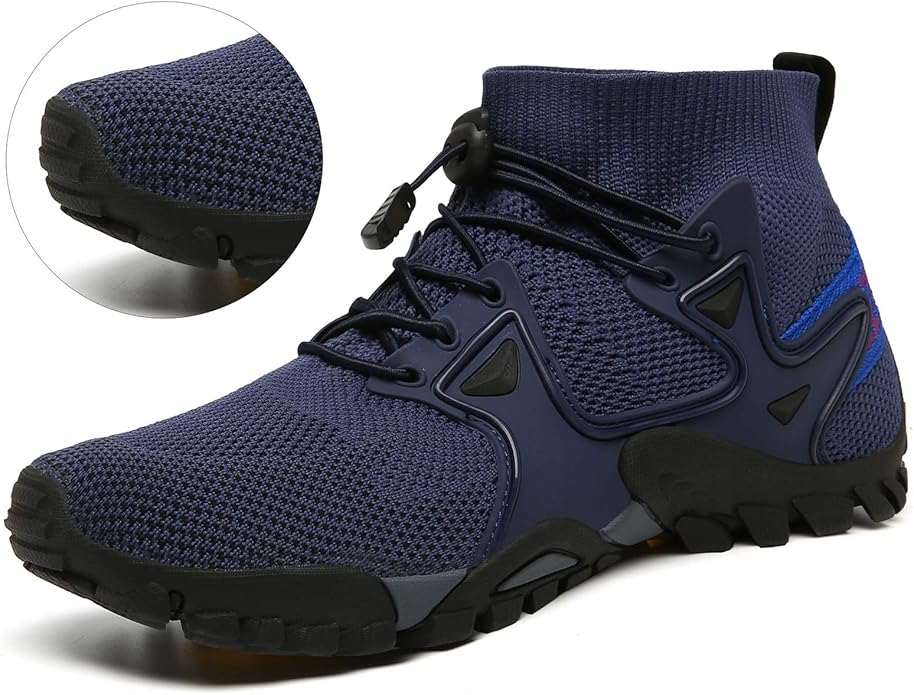
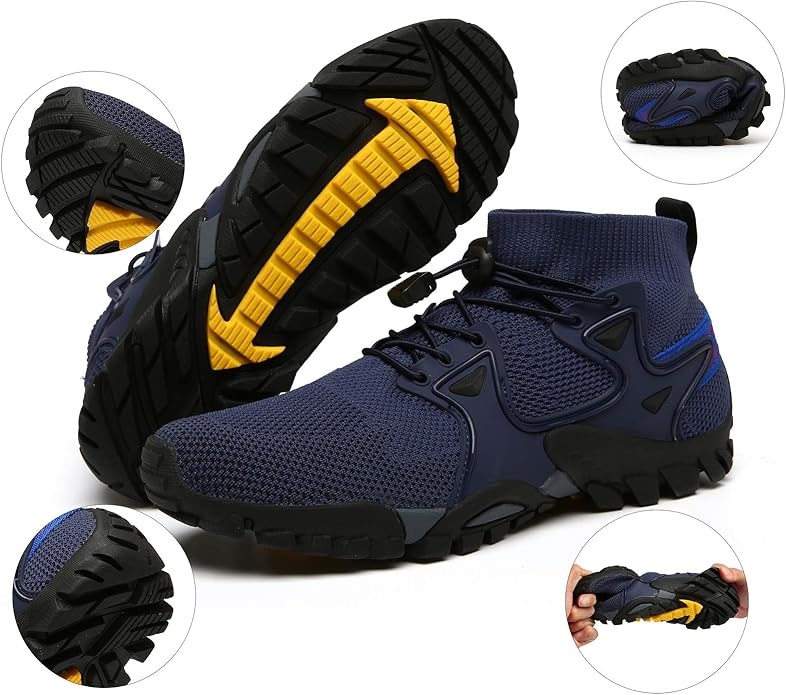
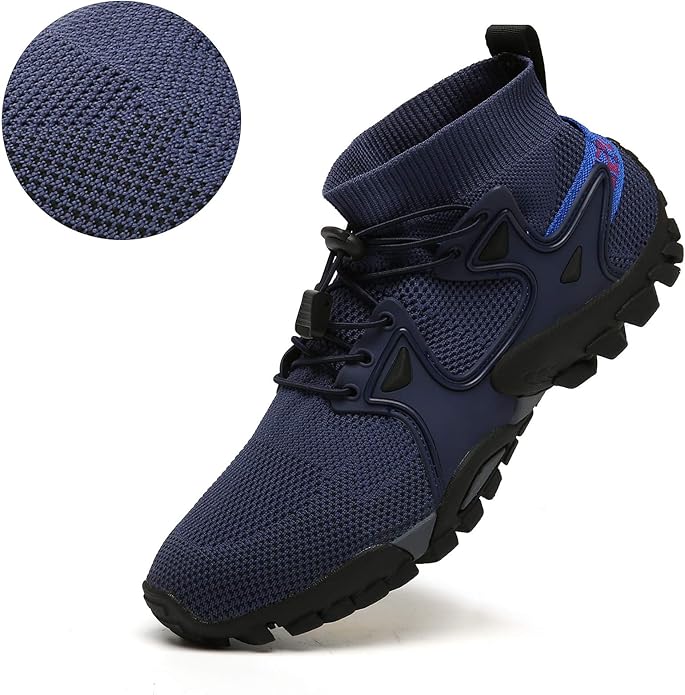
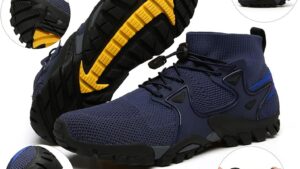
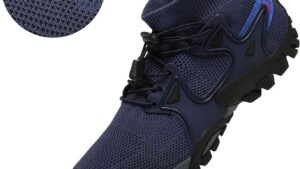
My hiking group has strong opinions about gear. When I showed up to our Tuesday morning trail with what looked like sock-sneakers and explained I’d be testing them for eight weeks, the reaction ranged from polite skepticism to flat-out laughter. Ten-plus years reviewing footwear and I’ll be the first to admit that a slip-on bungee hiking shoe for $40 sounded like a punchline. So I put that skepticism to work — 150 miles across North Carolina trails, Virginia’s Shenandoah, and a five-day Arizona camping trip. Here’s what actually happened.
Technical Specifications
- ⚖️ Weight: 8.5 oz (women’s size 8)
- 🧪 Midsole: EVA foam
- 👟 Upper: Breathable knitted mesh
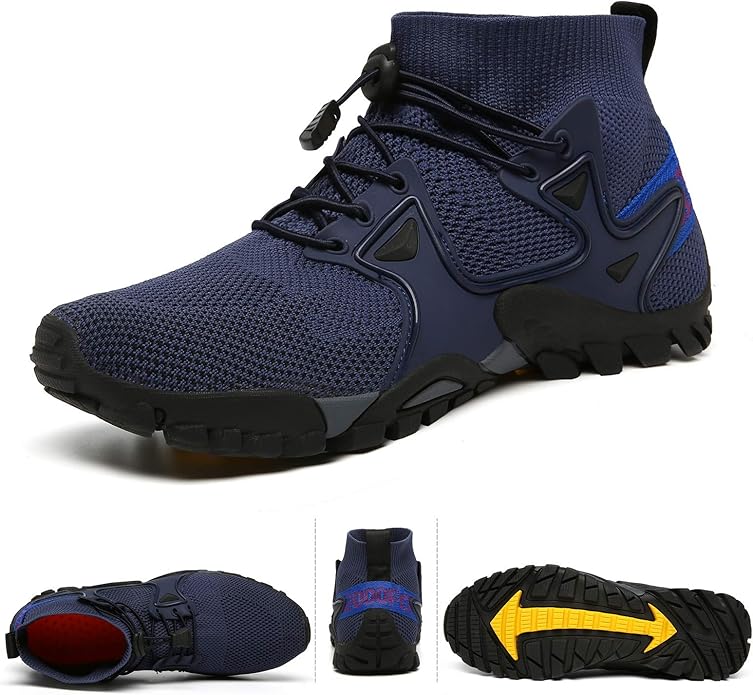
- 🥾 Outsole: Rubber with anti-slip tread pattern
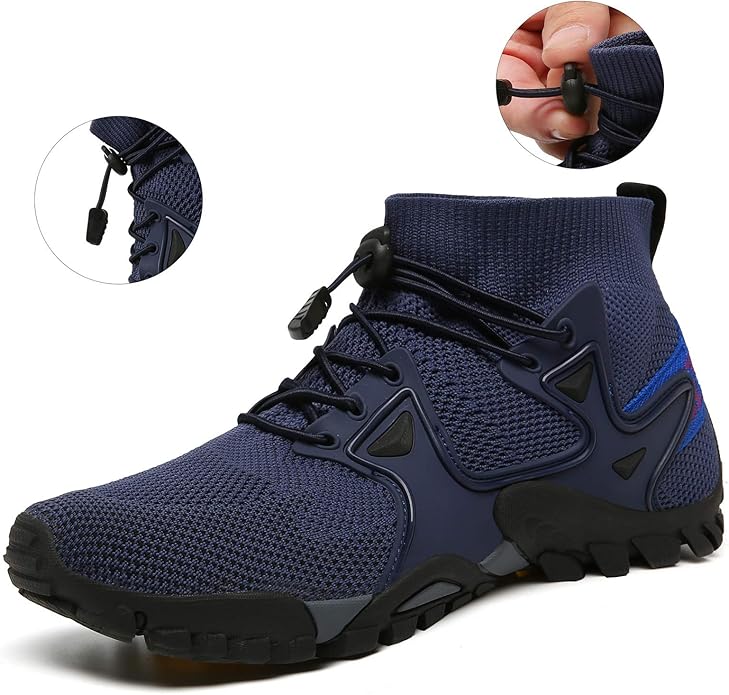
- 🔒 Closure: Elastic slip-on with bungee cord + heel pull-tab
- 📐 Heel-to-Toe Drop: 4–5mm
- 🏃♀️ Category: Lightweight hiking / outdoor athletic
- 🎯 Best for: Light hiking, walking, travel, casual outdoor
First Impressions: This Thing Weighs Nothing
The moment I pulled these out of the box, I understood the appeal. They feel absurdly light — picking up one shoe and you’re almost checking the other hand to make sure you actually have something. At 8.5 oz per shoe, that’s noticeably less than most casual sneakers, let alone anything claiming to be a hiking shoe.
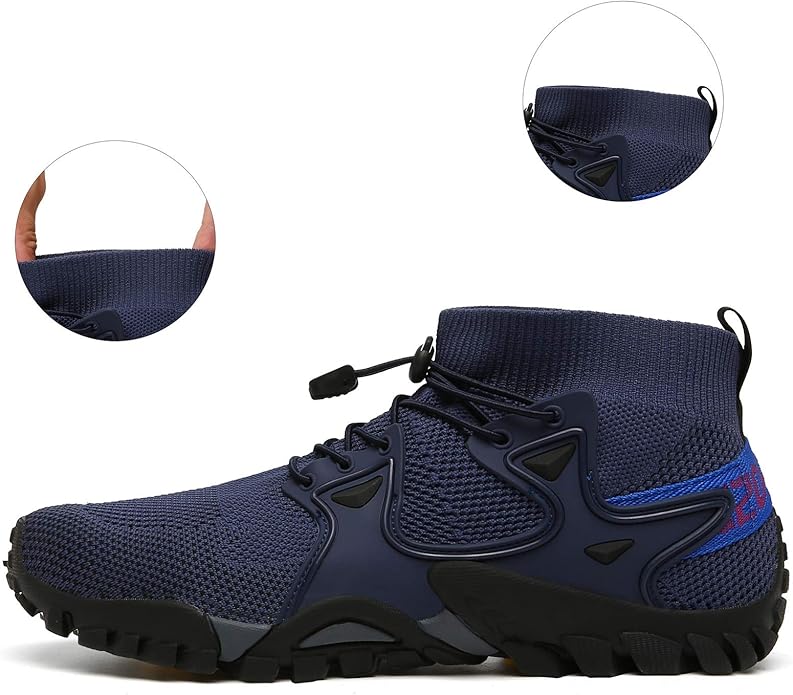
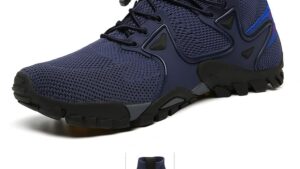
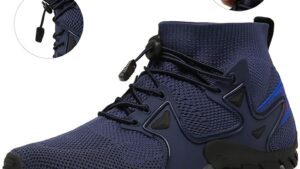
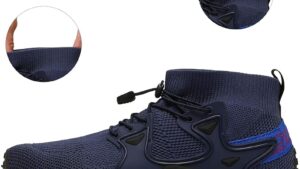
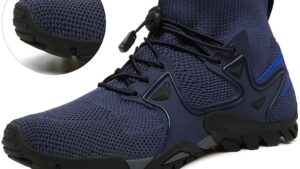
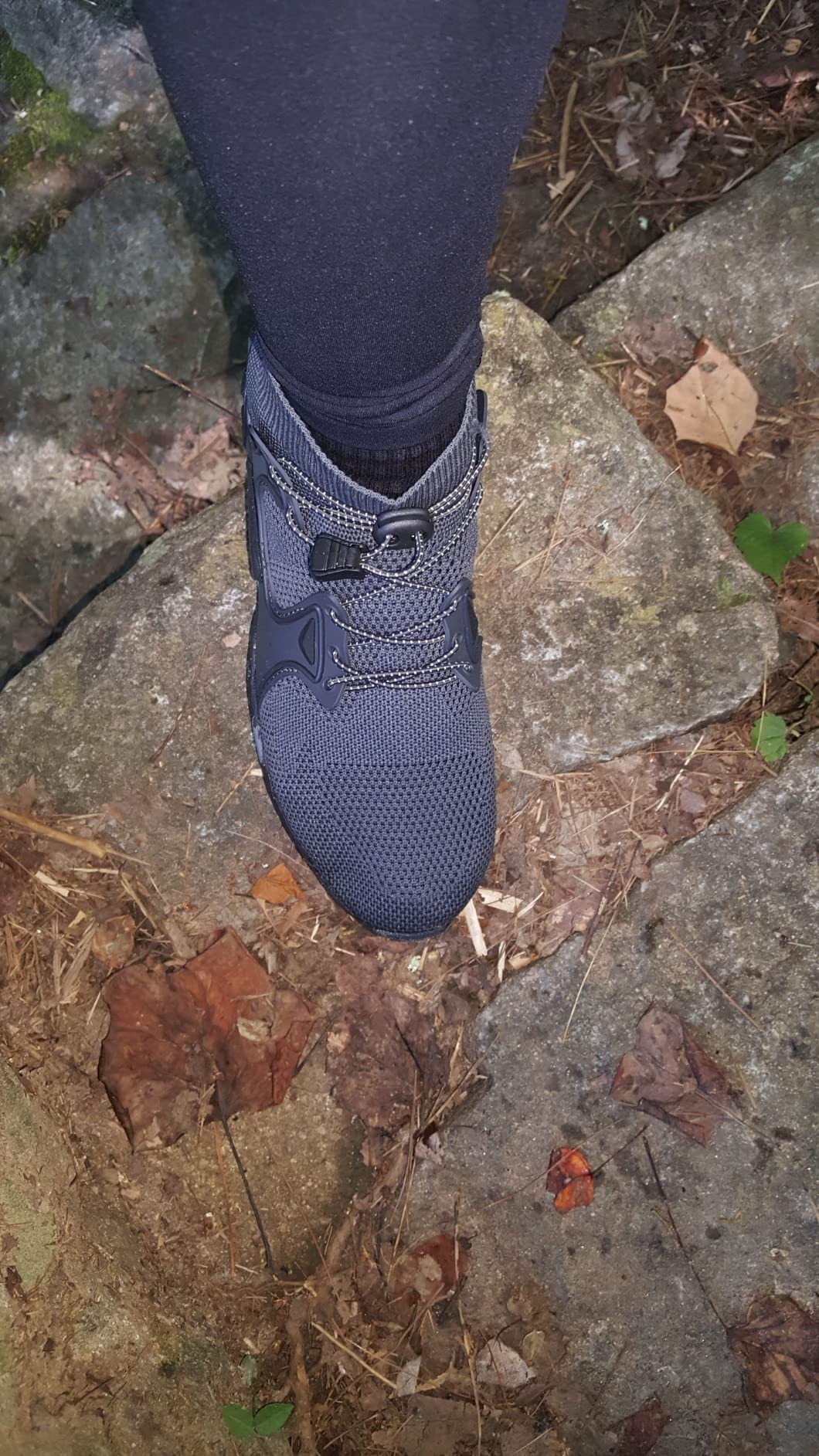
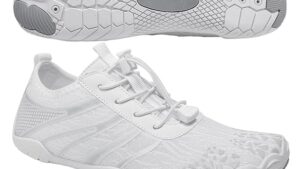
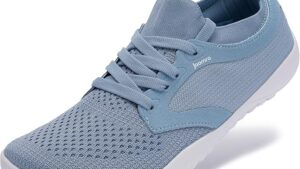
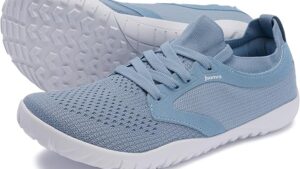
The blue colorway I tested hits a nice middle ground — sporty enough for trails, neutral enough for errands. The mesh upper is constructed in a knitted pattern that feels substantial without being stiff, and the sock-like ankle collar extends higher than a standard sneaker, wrapping the lower leg in a way that actually surprised me. I expected something flimsy at this price point.
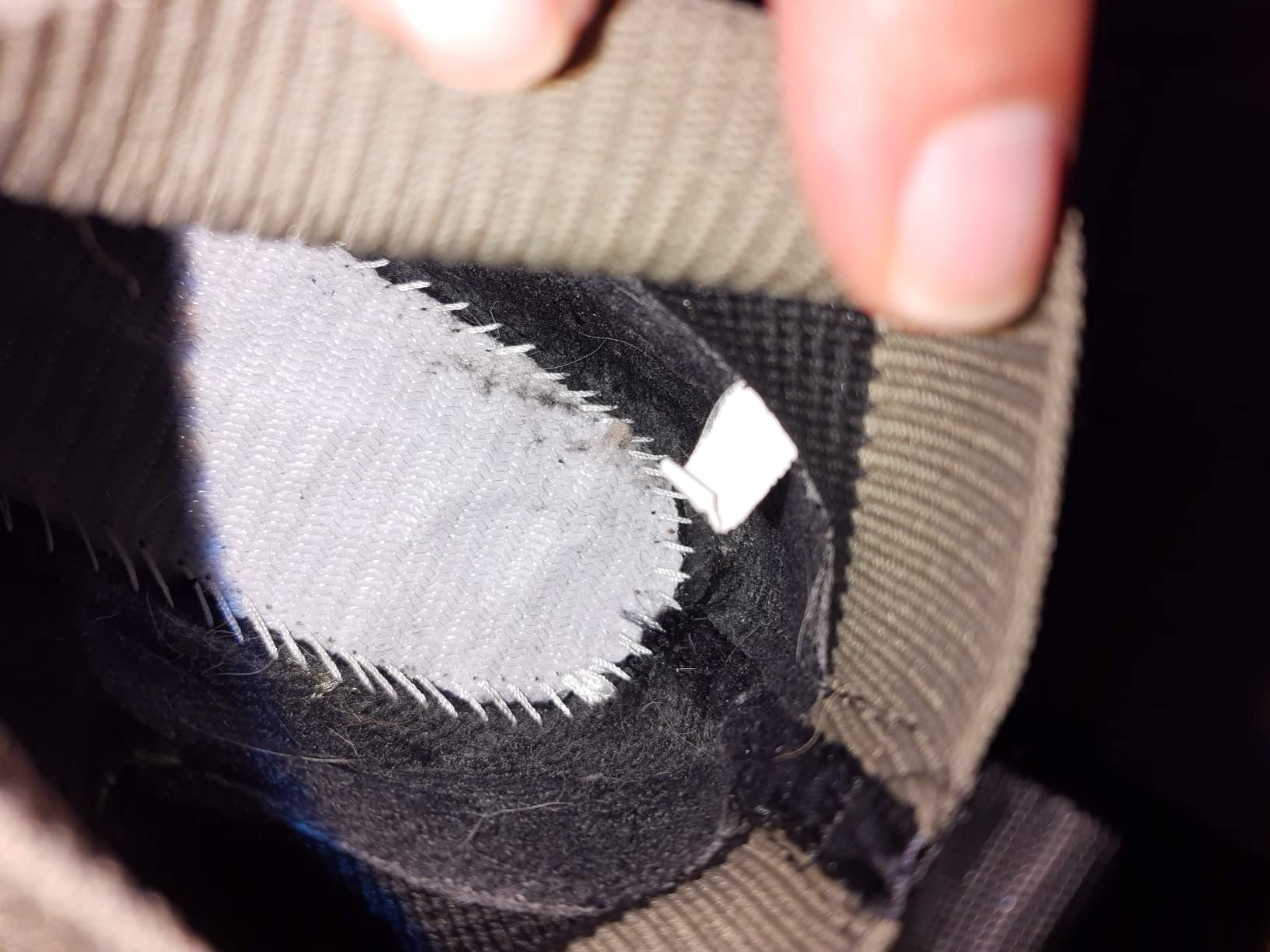
What does give me minor pause is the construction feel around the lace area. The elastic bungee runs through integrated loops and the whole closure system looks clever until you examine it close up — the attachment points are functional but not overbuilt. For light hiking use that’s probably fine. If you’re dragging these through brush daily, that’s a different story.
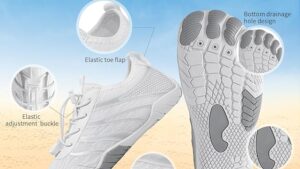
The heel pull-tab is genuinely useful. Getting the shoe on is fast — grab, pull, foot slides in, adjust bungee tension. No chairs required, no fumbling at trailheads. My teenage daughter tried them for the first time and had them on in about four seconds, which she found delightful in the way that teenagers find small practical things secretly delightful.
Understanding the 4–5mm Drop (And Why It Actually Matters)
Most traditional hiking boots run 8–12mm of heel-to-toe drop — meaning your heel sits noticeably higher than your toes. These shoes sit at 4–5mm, which is in minimalist/barefoot territory. If you’re transitioning from a conventional boot, that gap is going to feel like something.
What 4–5mm means in practice: your foot strikes in a more neutral, natural position rather than rolling heel-first. Your calf and Achilles do slightly more work. My first week, both calves were mildly sore after longer hikes — not painful, just “oh, I’m using these muscles differently.” By week two it had resolved completely, and by week four the natural foot position felt like the most comfortable thing I owned.
For people coming from heavily cushioned boots, I’d genuinely recommend starting with shorter walks (2–3 miles) and building up over a couple weeks rather than immediately taking them on a 7-miler. Not because they’re hard to wear, but because your lower legs need to adapt. That adjustment is worth it. Once adapted, the natural gait these encourage is noticeably easier on knees, which I found interesting on longer hikes.
Trail Cushioning: Set Your Expectations Early
The EVA foam midsole provides what I’d call active-use comfort rather than passive cushioning. Early miles on smooth, established trails? Genuinely comfortable — light underfoot, no hot spots, no pressure points from over-tightened laces. The elastic bungee actually distributes pressure more evenly than I expected.
Push into rocky territory and the story changes. On a 6-mile loop through Shenandoah with significant boulder scrambling, I felt considerably more trail feedback than usual. Not painful at 145 lbs and moderate terrain, but the rocks were definitely communicating their existence. For lighter-framed hikers, this is manageable. For anyone carrying a heavy pack or weighing significantly more, I’d expect the minimal sole to become uncomfortable faster.
Here’s the counterintuitive discovery: after the initial adjustment period, the ground feedback actually improved my footing on technical sections. When you can feel what you’re stepping on, your body naturally finds better placements. It’s the same principle behind barefoot running — more proprioception, better movement. I found myself navigating loose rock sections with more confidence than usual, not less.
The trade-off is clear: these aren’t shoes for all-day alpine adventures. They’re shoes for 2–8 mile trails where lightweight and breathable matter more than maximum cushioning. Know that going in and they’ll rarely disappoint.
On-Trail Performance: Where These Genuinely Shine
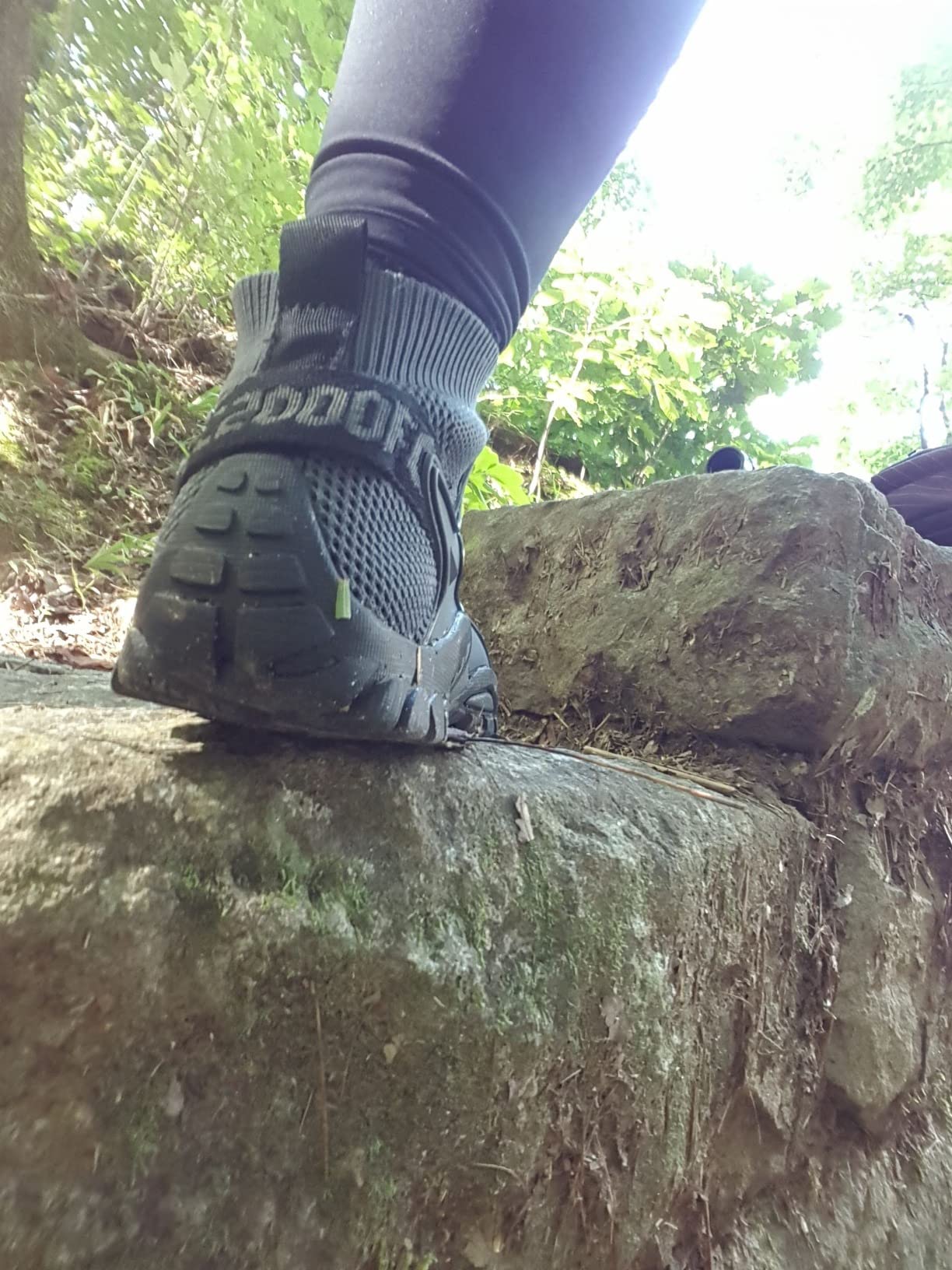
The rubber outsole surprised me. I went in expecting budget-grade traction — adequate on packed dirt, sketchy everywhere else. What I got was consistently confident grip on dry surfaces across a wider range of terrain than I anticipated.
Smooth rock slabs, loose gravel paths, dry pine needle trails — all handled with zero concerning moments. On the Arizona camping trip, I took these over desert terrain that mixed sandstone sections with rocky scrambles, and the grip pattern held up across both. My daughter borrowed them for a full day hike when her regular boots had created blisters, came back that evening and declared them “way more comfortable” — which felt like vindication, even if she was maybe being diplomatic about her own shoe choices.
Wet conditions are where the traction story gets more honest. During a morning hike when overnight rain had left rocks slick, I had two or three moments of “okay, stepping carefully here.” The grip pattern doesn’t clog or slip dramatically, but you lose the dry-surface confidence. Not dangerous — just requiring more deliberate foot placement. Same on muddy sections after recent rain. For consistent wet conditions, these aren’t the right tool.
The slip-on design on technical descents deserves mention. The bungee provides solid security on flat to moderate terrain. On steeper downhills, I noticed slightly more heel movement than I’d prefer. The fix is simple — tighten the bungee before descending. Once I got that habit, downhill sections were fine. Worth knowing before your first steep trail though.
Testing Across Conditions
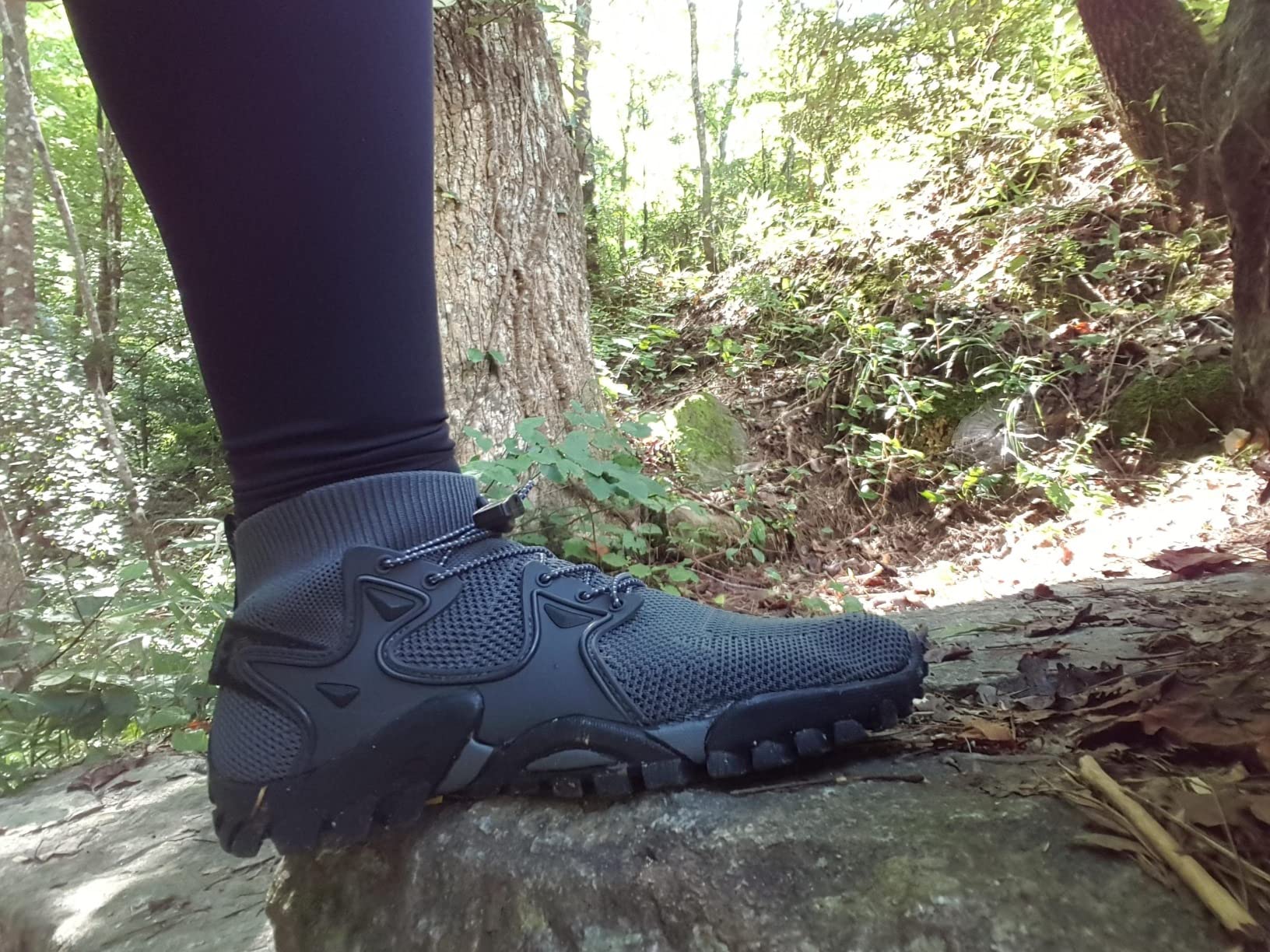
Hot summer humidity (North Carolina, 85°F+): This is where these shoes have no competition in their price range. An August morning hike where a friend showed up in full leather hiking boots — by mile two she was stopping to air out her feet. My feet stayed comfortable the entire 5-mile loop. The mesh upper moves air continuously; it’s not just “breathable” in the marketing copy sense, it’s actually ventilated. If you hike in heat, this matters more than almost any other spec.
Morning dew and light drizzle: The mesh soaks through immediately. Zero water resistance, full stop. Fifteen minutes into a dewy morning trail and your socks are damp. The upside is that the same mesh that soaks through also dries quickly — I clocked roughly 20–25 minutes of walking to go from wet to dry in warm conditions. Pack extra socks for morning starts or invest in wool socks that maintain comfort when wet.
Rocky technical terrain (Virginia Shenandoah, 7 miles with boulder sections): Honest assessment — my feet were noticeably more tired than on my usual padded trail runners. The minimal sole means every significant rock transmits to your foot. For a lighter 4-mile walk, this is a feature (ground feedback is useful). For a 7-mile day with sustained technical sections, it accumulates. I’d max these at about 8 miles on rocky terrain; smooth trails they can handle more.
Desert dry terrain (Arizona, 5-day family camping): Best conditions I tested. The combination of lightweight feel and excellent breathability made full hiking days genuinely comfortable. The grip on dry desert rock was solid. The only note was sandy sections where the mesh accumulated small particles — easy to shake out, but worth noting for desert environments.
Creek crossings and water exposure: They handle brief water contact well. The mesh drains almost instantly and the rubber outsole provides adequate grip on wet rocks for careful crossings. I wouldn’t count on them for sustained water activity or anything requiring consistent wet-rock performance, but for the occasional stream crossing on a summer hike? They’ve got that covered.
What the Brand Claims vs. What Testing Shows
“Professional anti-slip rubber outsole with unique pattern — reliable traction”
Partially accurate. “Reliable” works for dry surfaces — I’d agree with that. “Professional” is marketing stretch. The traction pattern delivers good performance for casual hiking, not what you’d find on purpose-built technical footwear. Realistically: 80% of the claim on dry terrain, maybe 55% on wet. That’s not a failure for $40 shoes; it’s just calibrated expectations.
“Lightweight and breathable, let each step cool, dry and comfy”
This one they earn. At 8.5 oz with genuine mesh ventilation, the lightweight and breathable claims hold up completely. “Dry” gets an asterisk — breathable absolutely yes, waterproof no. But the breathability delivering comfort in heat? Accurate.
“Easy slip-on design eliminates lacing troubles”
Mostly true with a caveat. The slip-on is convenient and the bungee provides solid security. Getting the initial fit dialed in takes a little experimentation — once you find your preferred tension, it’s consistent. The minor note: you can’t micro-adjust during a hike the way you can with laces. Tight fits where one foot swells more than the other during long hikes are harder to address.
“Durable outsole”
Conditional. For $40, the durability is appropriate. After 150 miles I’m seeing reasonable wear patterns — some small pulls on the mesh from brush contact, slight outsole compression. Nothing alarming. I estimate 300–400 miles of lifespan with mixed casual/trail use, which at $0.10–0.13 per mile is actually solid economics. Heavy daily use will shorten that window considerably.
Sizing Guide: Men’s and Women’s Fit
These are marketed as unisex with sizing listed for both men and women. Based on testing and community feedback from 600+ Amazon reviews:
For women: Order your standard athletic shoe size. If you typically wear a women’s 8 in Nike or Adidas, go with an 8 here. The sock-like collar and elastic system accommodate normal foot variations without fuss.
For men: Same guideline — true to standard sizing. Men’s sizing is available as conversion (the women’s 8 listed in specifications equals approximately a men’s 6.5–7). Check the size chart on the product page for the exact conversion before ordering.
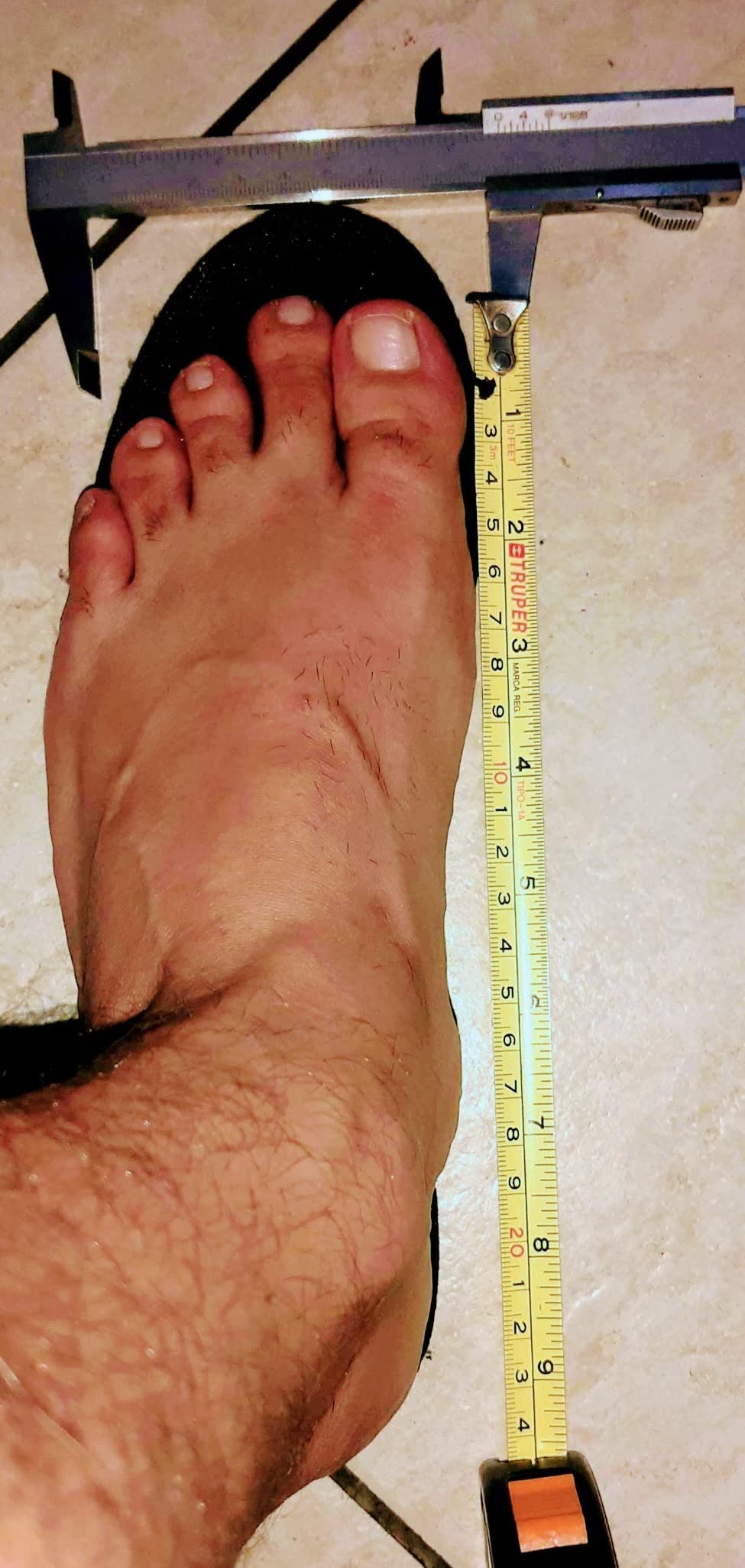
Width considerations: The knitted mesh has moderate stretch that accommodates slightly wider feet reasonably well. My friend Rachel (size 9, wider than average) found the toe box a bit snug. For truly wide feet, sizing up half a size often resolves the issue, though this can introduce slight heel slippage on some foot shapes. If you regularly need EE-width shoes, these may not be the right fit regardless of sizing.
Narrow feet: A snugger bungee adjustment and the elastic system generally work well for narrow feet. No sizing adjustment typically needed.
Slip-On Bungee vs. Traditional Lace-Up
For people deciding between this shoe and a lace-up option in the same category (like the ABAO Hiking Shoes at around $30):
| Factor | Slip-On Bungee (This Shoe) | Traditional Lace-Up |
|---|---|---|
| Convenience | ⭐⭐⭐⭐⭐ Excellent | ⭐⭐⭐ Standard |
| Fit Adjustability | ⭐⭐⭐ Limited (set tension) | ⭐⭐⭐⭐⭐ Full control |
| Steep Downhill Security | ⭐⭐⭐ Good when pre-tightened | ⭐⭐⭐⭐ More consistent |
| Price | $35–45 | ~$30 |
| Ankle Collar | High-top sock-like | Low-top |
| Estimated Lifespan | 300–400 miles | 150–200 miles |
| Best Use | Travel, family hikes, trail-to-town | Light hiking, casual outdoor |
The slip-on bungee wins if convenience and versatility matter most to you. The lace-up wins if you prioritize budget and adjustable security on varied terrain.
Overall Assessment
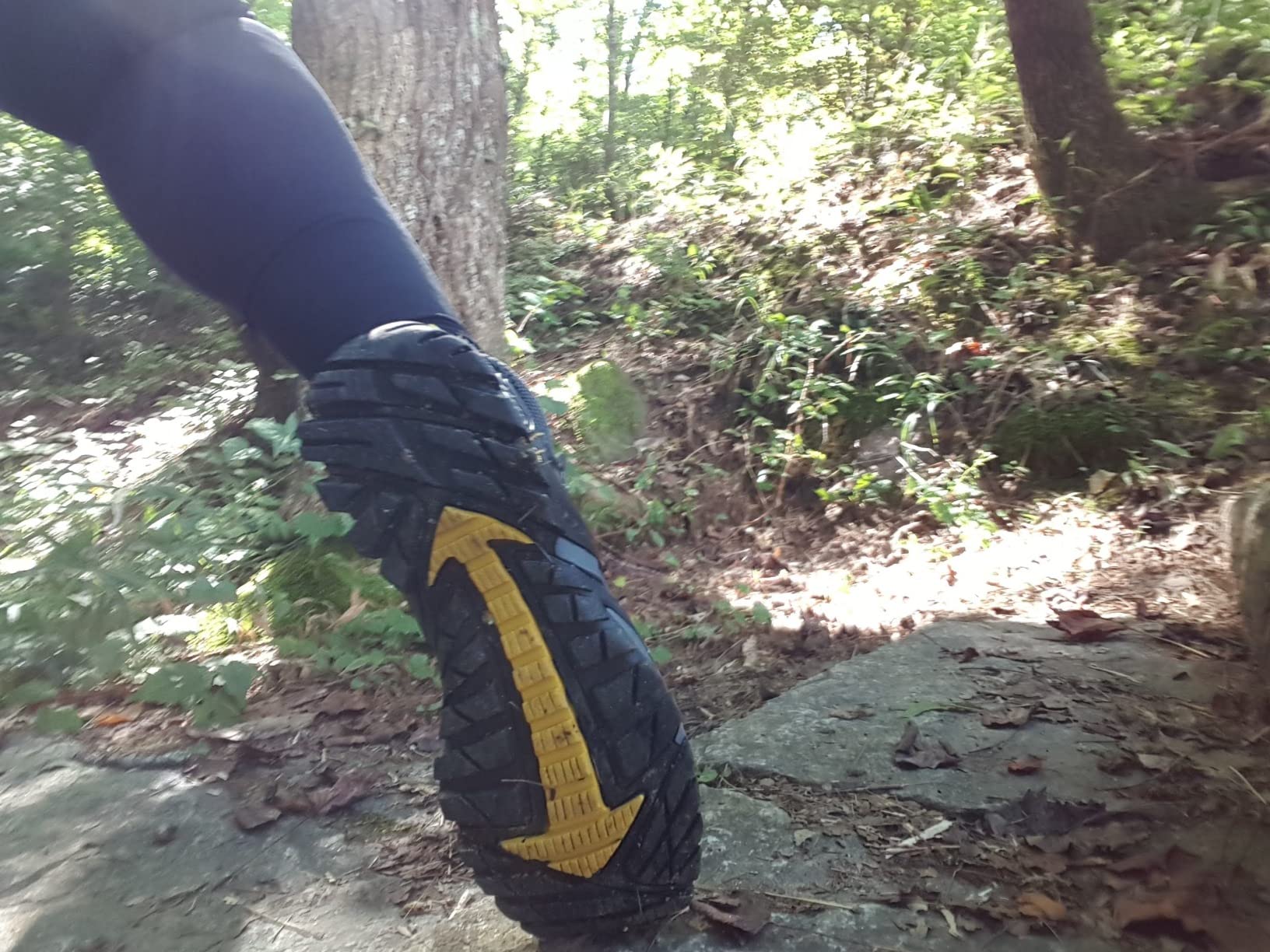
After 8 weeks and 150+ miles, I’m giving these 7.8/10 overall. Here’s the breakdown:
| Category | Score | Why |
|---|---|---|
| Design & Aesthetics | 8/10 | Clean, versatile look that actually works beyond the trail |
| Trail Traction | 9/10 | Excellent on dry terrain, never felt unsafe — wet gets an asterisk |
| Comfort & Fit | 7/10 | Solid once your feet adapt to minimal cushioning; true to size |
| Durability | 6/10 | Appropriate for the price; 6–12 months realistic with regular use |
| Value for Money | 9/10 | At $35–45, exceptional value for what you actually get |
| ⭐ Overall | 7.8/10 | Strong performer for intended use; real limitations worth knowing |
The Good and The Not-So-Good
| ✅ What Worked | ❌ Where They Fall Short |
|---|---|
|
|
Who Should Buy These Hiking Shoes?
✅ PERFECT FOR:
- Active hikers doing 2–8 mile adventures on established trails
- Anyone who values convenience — slip-on in 4 seconds flat
- Travelers needing one shoe that handles both exploration and dinner
- Budget-conscious buyers wanting reliable performance for one season
- Families who need easy on/off for kids and adults alike
- Hot-weather hikers where breathability trumps everything else
⚠️ CONSIDER CAREFULLY IF:
- You hike rocky technical terrain regularly (sole thinness accumulates)
- Your hikes frequently exceed 8–10 miles
- You hike in consistently wet or muddy conditions
- You have wide feet or significant arch support needs
❌ LOOK ELSEWHERE IF:
- You need waterproof protection — these offer none
- You’re doing serious mountaineering or heavy backpacking
- You need shoes to last 2+ years of regular hard use
- Maximum cushioning for joint protection is a priority
Better Options for Specific Needs
- For more cushioning at a similar price: Merrell Moab 2 Vent or NORTIV 8 hiking shoes
- For waterproofing: KEEN Women’s Circadia Waterproof or NORTIV 8 Women’s Waterproof
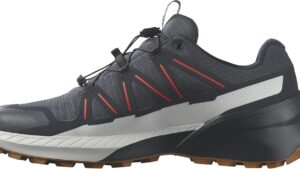
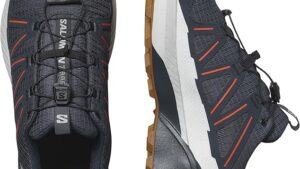
- For serious trail performance: Salomon Speedcross or Merrell Women’s Antora 3
- For a minimalist option with more structure: Merrell Men’s Accentor 3
Frequently Asked Questions
Q: How long will these realistically last?
A: For regular but not daily use — weekend hiking, occasional errands, light trails — I’d plan for 6–12 months. The sole compression and mesh wear I observed after 150 miles suggests the construction holds up reasonably well to moderate use. If you’re hiking daily or covering aggressive terrain frequently, expect 4–6 months. At $40 divided by an estimated 300-mile lifespan, that’s about $0.13 per mile. For context, a $120 hiking shoe at 500 miles is $0.24 per mile. The math works in these shoes’ favor for casual use.
Q: Can I use these for longer day hikes (8+ miles)?
A: I’d approach it with caution. On my 7-mile Shenandoah hike with boulder sections, foot fatigue was noticeable. On smoother trails, 8 miles is probably fine for most people. For rocky, technical 10+ mile days, the minimal cushioning will work against you. Know your terrain before committing these to a long day.
Q: How do they handle wet trails and light rain?
A: The mesh drains and dries quickly (20–25 minutes to mostly dry in warm conditions), which is a genuine plus for creek crossings or post-rain trails. Traction on wet rock and mud is less reliable than on dry surfaces — not dangerous, but requiring more care. For trails with consistent water crossings or rainy-season hiking, you’ll want something with better grip or waterproofing.
Q: What’s the adjustment period for the 4–5mm heel drop?
A: About one week. The first few days your calves will know they’re working differently — not painful, just noticeably engaged. I’d recommend starting with 2–3 mile walks and building up rather than jumping straight into a full-length hike. By week two, most people have adjusted completely and the natural foot position feels intuitive.
Q: Are these suitable for wide feet?
A: The knitted mesh has moderate stretch that accommodates slight width variation better than rigid uppers. My friend Rachel (wider than average, size 9) found the toe box snug. Sizing up half a size often resolves width issues without causing heel slippage. For EE-width feet, these may not provide enough room regardless of sizing — purpose-designed wide shoes like L-RUN Wide Hiking Shoes would be a better fit.
Q: How does the bungee closure hold up on steep descents?
A: It needs a little help from you. On flat to moderate terrain, the elastic maintains good security. On steep downhill sections, I noticed slightly more heel movement. The solution is simple: tighten the bungee before you start descending and it performs well. This becomes second nature after a few hikes. If you’re doing aggressive mountain descents regularly, a lace-up system would give you more precision control.
Q: Are these worth it compared to the $30 lace-up alternatives?
A: Depends what you value. The extra $5–15 buys you the slip-on convenience, higher ankle collar, and slightly better estimated lifespan (300–400 miles vs 150–200 miles for comparable budget lace-ups). If you’re primarily hiking established trails and want the fastest on/off experience, the premium is reasonable. If budget is the priority and you don’t mind laces, the savings are real.
Q: Can I use these for gym workouts and cross-training?
A: Yes, within reason. The minimal design and flat profile work well for bodyweight training, yoga, and general gym use. For activities with significant lateral movement, jumping, or heavy lifting, you’ll want something with more lateral support and cushioning. As a general fitness shoe for mixed activities, these are versatile enough.
Q: What’s the best way to make them last longer?
A: Four things make a meaningful difference. Rotate them with other shoes — letting the EVA fully recover between uses extends midsole life considerably. Don’t drag your toes on rough surfaces (the mesh is the durability weak point). Clean the mesh regularly to prevent debris from working into the material. And store them loosely shaped — don’t compress the mesh upper for extended periods.
Q: Are these good for travel?
A: These are probably at their best in a travel context. They’re light enough not to eat luggage weight allowance, versatile enough to handle both day hiking and city exploring, and the slip-on design is genuinely appreciated at airport security. The only travel caveat: if your destination involves significant rain, pack accordingly — these won’t protect against wet weather.
My Final Take
Eight weeks, 150 miles, and one borrowed pair to my daughter in Arizona — these hiking shoes are exactly what they set out to be, neither more nor less. For active people who split time between light trails and everyday life and don’t want to own six pairs of footwear, these deliver genuine value. The breathability is real, the slip-on convenience is real, the trail traction on dry terrain is legitimately good.
The limitations are also real: no waterproofing, minimal cushioning that accumulates on long rocky days, and a durability ceiling that makes these a one-season shoe rather than a multi-year investment. None of those are surprises at this price point — they’re just the honest trade-offs you make when you optimize for lightweight convenience at $40.
If you start most trail days wondering whether you’ll end at a café or a summit, these are built for that life. If you’re planning serious mountaineering, they’d be out of their depth. For everyone in between, at $35–45, the math is pretty easy.
Pro tip: Order your standard size, give yourself one week to adapt to the heel drop, and tighten the bungee before any significant downhill. Do those three things and these will serve you well through a full season of adventures.
Questions? Drop them in the comments — happy to help figure out if these are the right fit for you. Stay out on the trails!
Be the first to review “ABAO Hiking Shoes Mens Womens Outdoor Athletic Sports Shoes”
Related products
Hiking/Trekking Shoes
Hiking/Trekking Shoes
Hiking/Trekking Shoes
Hiking/Trekking Shoes
Hiking/Trekking Shoes

Hiking/Trekking Shoes


Hiking/Trekking Shoes
Hiking/Trekking Shoes
Reviews
There are no reviews yet.