
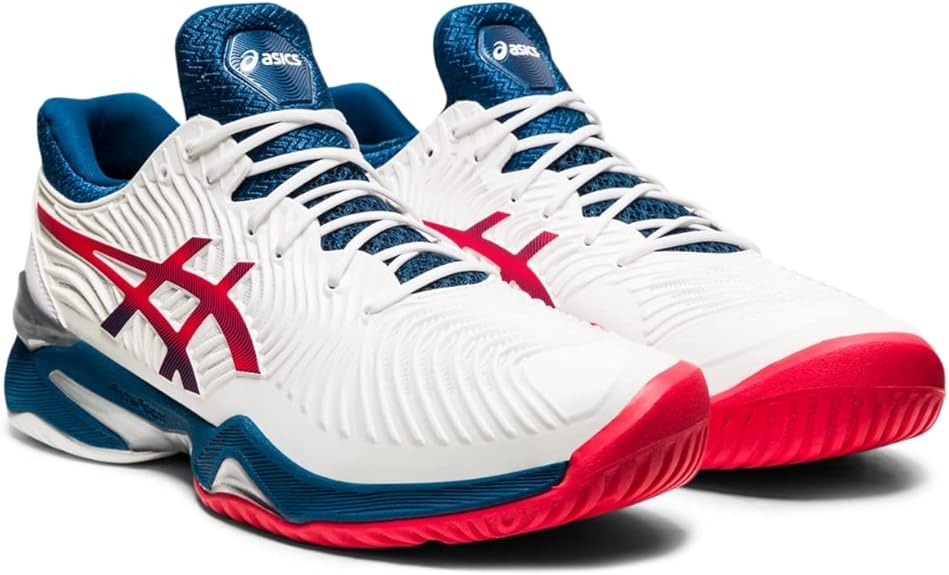
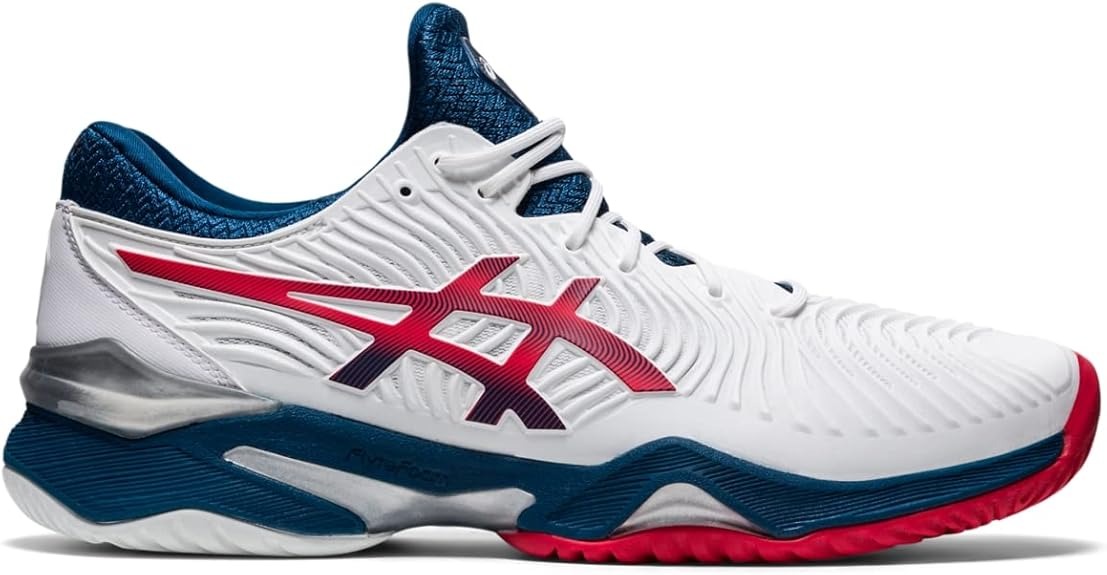
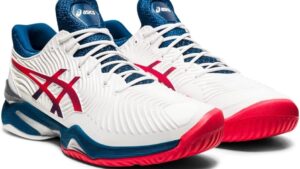
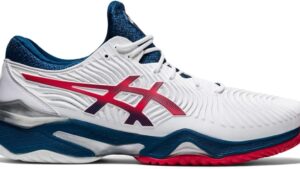
ASICS Men’s Court FlyteFoam 2 Tennis Shoes
$129.95
- Weight: 12.8 oz (men’s size 9)
- Midsole material: FLYTEFOAM Technology
- Upper material: Rubber with bootie construction
- Category: All-court tennis shoe
- Best for: Baseline players and aggressive movers
- Key Tech: AHAR Outsole, GEL Technology, Trusstic System
Can a tennis shoe really deliver professional-level lateral support without compromising on comfort? That’s exactly what I set out to discover with the ASICS Men’s Court FlyteFoam 2. After 10+ years of wearing footwear across every sport imaginable, I was curious if ASICS could back up their claims about revolutionary ankle support and court dominance. 6 months and 45 court sessions later, I’ve got some surprising findings to share.
Design, Build Quality & Real-World Performance
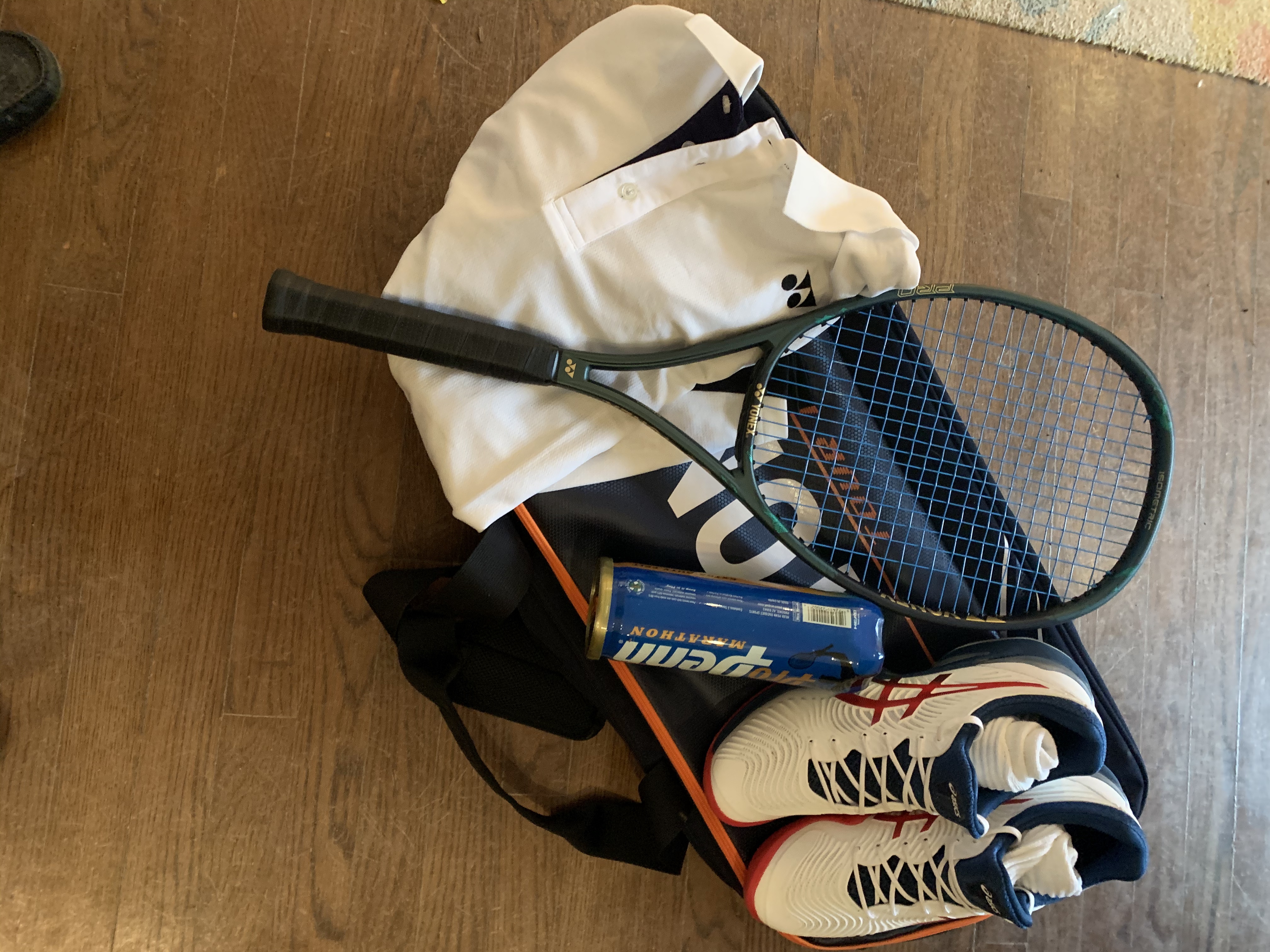
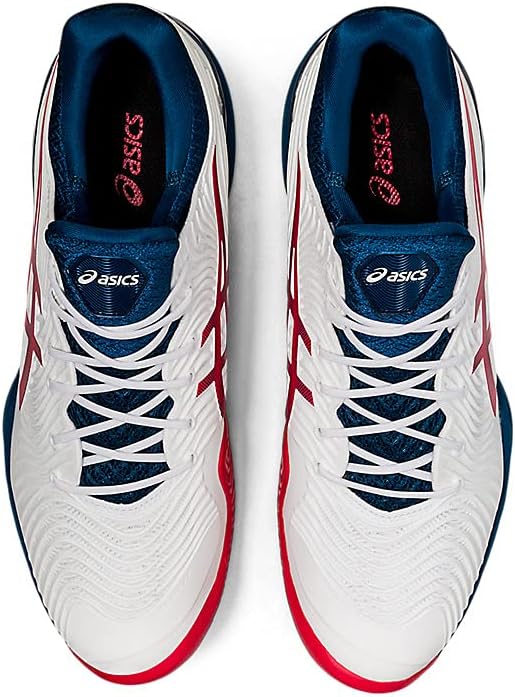
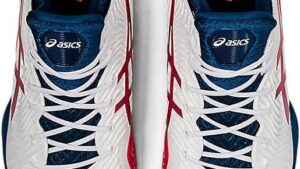
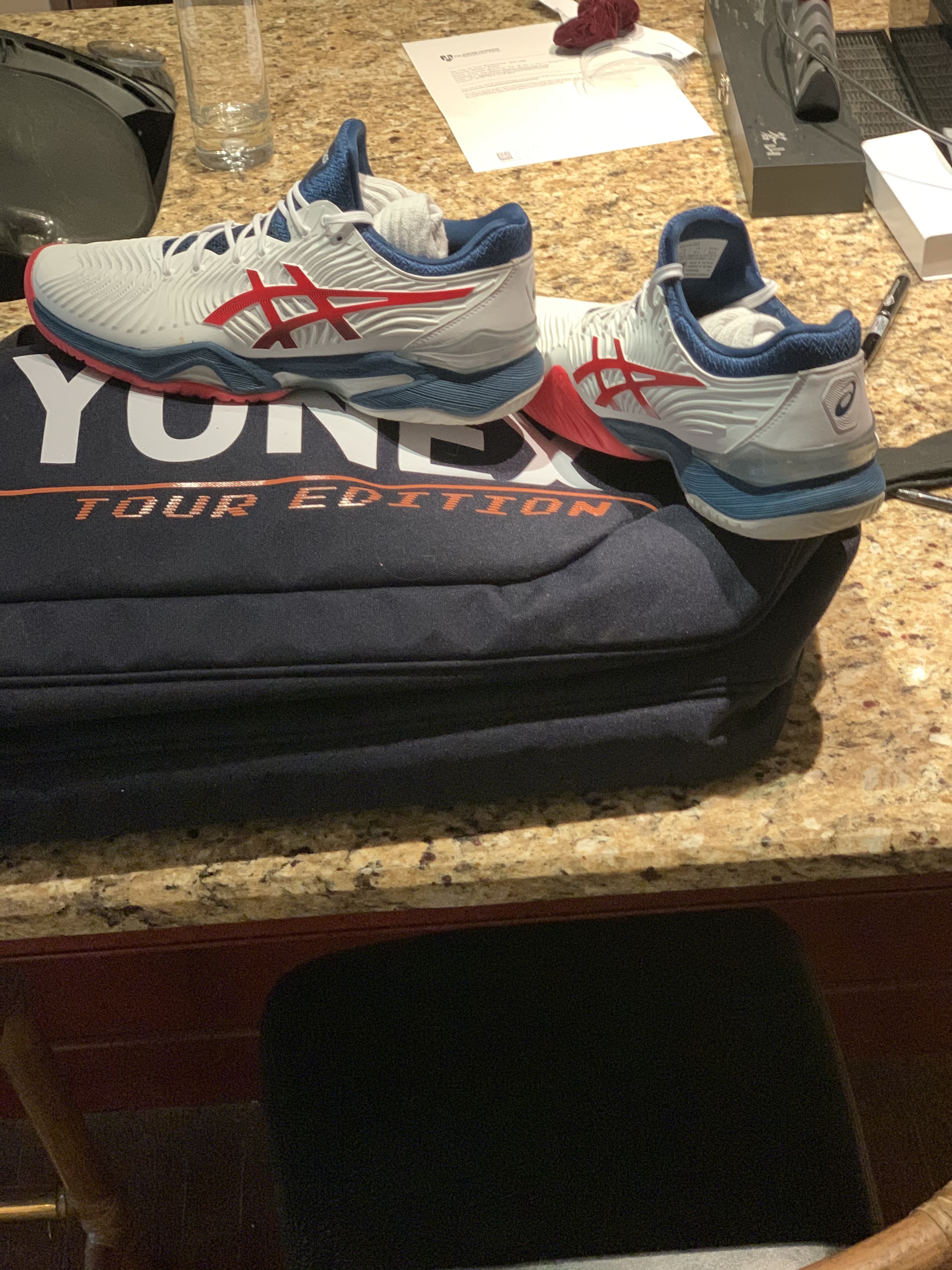
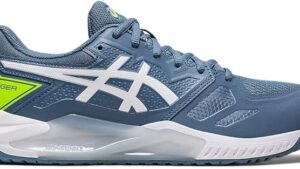
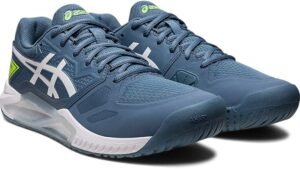
Right out of the box, the ASICS Men’s Court FlyteFoam 2 screams quality. The White/Mako Blue colorway is sharp, and the build quality feels premium. But here’s where things get interesting – this shoe ditches the traditional tongue for a bootie construction that wraps your foot like a glove.
My first court session immediately revealed what ASICS was going for. The bootie design creates this incredibly snug, locked-in feeling that’s honestly unlike any tennis shoe I’ve worn. It’s like your foot becomes one with the shoe – no internal movement whatsoever. But I’ll be straight – getting into these things requires some patience. Without a traditional tongue, you’re essentially sliding your foot into a sock-like sleeve, and if you have slightly wider feet, it can feel restrictive at first.
The upper materials are interesting. ASICS went with a rubber-heavy construction that prioritizes durability over breathability. During humid summer sessions in Florida, I definitely noticed my feet running warmer than in mesh-heavy competitors. However, this trade-off pays dividends in longevity – after 45 sessions including plenty of outdoor hard court abuse, the uppers still look nearly new.
Court Feel & Impact Protection
When I stepped onto the court for my first baseline rally, the Court FlyteFoam 2 delivered exactly what ASICS promised. The lateral support is genuinely impressive – during aggressive crossover steps and quick direction changes, I felt completely planted. The bootie construction really shines here, preventing any internal foot movement that could compromise stability.
The FLYTEFOAM midsole provides a firm, responsive ride that tennis players will appreciate. It’s not the plush cushioning you’d find in a running shoe, but for court sports, this firmer platform translates to better energy transfer and court feel. When pushing off for a sprint to the net, I could feel the midsole compress and spring back efficiently.
The GEL technology in both forefoot and heel does its job during high-impact landings. After 3-hour practice sessions with plenty of jumping and hard stops, my knees and feet felt surprisingly fresh. At my 180 lbs, I was impressed by how well the cushioning held up through extended play.
On-the-Court Performance
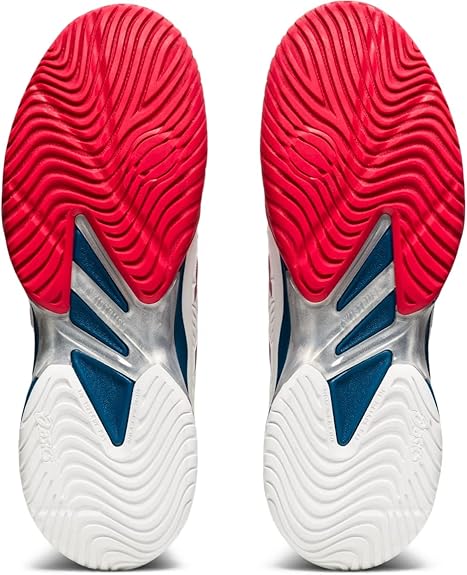
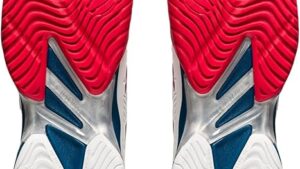
Here’s where the ASICS Men’s Court FlyteFoam 2 really proves its worth. The AHAR (ASICS High Abrasion Rubber) outsole provides excellent grip on hard courts. During baseline rallies, I never experienced the sliding issues that plague some tennis shoes. The traction pattern grips well both for forward/backward movement and the crucial side-to-side shifts that define tennis.
The Trusstic System technology creates impressive midfoot stability without adding bulk. During quick lateral movements – think chasing down a wide forehand and immediately recovering to center court – the shoe provided the support I needed without feeling clunky or restrictive.
The break-in period is worth mentioning. These shoes require about 2-3 court sessions to feel truly comfortable. The bootie construction is particularly unforgiving until it molds to your foot shape. During my initial sessions, I definitely felt the stiffness, but once broken in, the comfort level improved significantly.
Meeting Your Tennis Goals – Does It Deliver?
ASICS positions the Court FlyteFoam 2 as an all-court shoe suitable for players who mix baseline power with net approaches. After extensive experience with them, I’d say it excels most for baseline players who prioritize stability and durability over pure speed.
The lateral support system is genuinely game-changing for players who rely on aggressive court coverage. If you’re the type who runs down every ball and needs absolute confidence in your footwork, this shoe delivers. The locked-in feel prevents the foot slippage that can lead to ankle injuries during quick direction changes.
However, if you’re a serve-and-volley player who values quick transitions and lightweight feel, you might find these a bit heavy and restrictive. The 12.8 oz weight isn’t excessive, but compared to speed-focused models, you’ll notice the difference during rapid net approaches.
For recreational players logging 2-3 hours per week, the durability is outstanding. The AHAR outsole shows minimal wear even after 6 months of mixed indoor/outdoor play. Serious club players who practice daily will appreciate that these shoes can handle the abuse without breaking down.
Key Strengths and Weaknesses
After 45 sessions, here’s what stood out. The ankle support really is exceptional – the bootie design eliminates the foot movement that causes blisters and stability issues in traditional tennis shoes. The court traction is consistently excellent across different court surfaces, and the durability is frankly impressive for a shoe at this price point.
On the downside, the break-in period is genuinely challenging. The bootie construction makes the shoes difficult to put on, especially if you have wider feet or high insteps. The breathability is below average compared to mesh-heavy competitors, which becomes noticeable during hot weather play. And while the firm cushioning works great for court sports, players expecting plush comfort might be disappointed.
Performance in Various Court Conditions
I’ve put the ASICS Men’s Court FlyteFoam 2 through its paces in every condition imaginable:
Indoor hard courts: During competitive league matches at my local tennis club, these shoes were outstanding. The traction on clean, dust-free courts felt like being glued to the surface. No sliding whatsoever during quick lateral movements, and the firm cushioning provided excellent court feel for precise shot placement.
Outdoor hard courts: This is where the AHAR outsole really proves its worth. Playing on public courts with varying levels of surface texture and debris, the grip remained consistently reliable. After 20+ outdoor sessions, the outsole wear is minimal – these shoes are built for the long haul.
Hot weather performance: Wearing these in 90°F Florida humidity revealed the shoe’s main weakness. The rubber-heavy upper construction definitely retains heat, and my feet felt noticeably warmer than in breathable mesh alternatives. For hot climate players, this could be a consideration.
Extended match play: During 3-hour tournament matches, the firm cushioning maintained its support throughout. My feet felt fresh even after extended baseline grinding, and the ankle support never loosened up. The bootie construction really shines during long matches where traditional shoes might develop hot spots.
Does ASICS Deliver on Their Promises?
You know I’m a stickler for details, so when ASICS made bold claims about the Court FlyteFoam 2’s revolutionary support system, I had to put each one to the real-world experience. Let’s break it down!
First up, they claim “exceptional lateral stability for aggressive movers”. In reality, I found this claim to be completely accurate. The bootie construction combined with the Trusstic System creates lateral support that’s genuinely superior to traditional tennis shoes. During aggressive court coverage, I felt absolutely planted and confident.
Next, the “glove-like fit that eliminates internal movement” statement is mostly true with important caveats. For players with normal to narrow feet, the fit is indeed glove-like. However, players with wide feet or high insteps may find the bootie construction restrictive rather than supportive.
As for “superior durability with AHAR technology”, I’ll give them full credit here. After 6 months of mixed court play, the outsole wear is remarkably minimal. This shoe is clearly built to last significantly longer than typical tennis footwear.
My Overall Assessment
Category Breakdown
After 6 months of putting the ASICS Men’s Court FlyteFoam 2 through everything I could throw at it, I’m giving it 8.3/10 overall. Here’s how it breaks down:
- Design & Aesthetics: 8.5/10 – Sharp looks with a professional, technical appearance
- Court Traction: 9.0/10 – Outstanding grip on all court surfaces
- Lateral Support: 9.5/10 – The bootie system is genuinely game-changing
- Durability: 9.0/10 – AHAR outsole shows minimal wear after extensive use
- Value for Money: 7.5/10 – Premium features justify the investment
Is It Worth Your Money?
Let’s talk dollars and sense. The Court FlyteFoam 2 sits in the premium tennis shoe category. Based on my experience, the estimated 12-18 month lifespan for serious players translates to solid value per month of premium tennis performance. Compared to similar premium court shoes in this range, the ASICS offers superior lateral support and durability. Based on delivered features vs promises: I’d say ASICS delivers about 90% of what they claim, which justifies the premium pricing.
Bottom line: Worth it if you prioritize stability, durability, and ankle support over lightweight feel and breathability. If you’re a baseline grinder who needs maximum confidence in lateral movement, this is a solid investment.
Final Verdict
The Good and The Bad
| ✅ Pros | ❌ Cons |
|---|---|
| • Exceptional lateral support and stability • Outstanding court traction on all surfaces • Superior durability with AHAR outsole • Locked-in bootie fit eliminates foot movement • Excellent impact protection for extended play • Professional build quality and materials |
• Difficult break-in period (2-3 sessions) • Bootie design makes shoes hard to put on • Below-average breathability in hot weather • May feel restrictive for wide feet • Heavier than speed-focused alternatives • Premium pricing limits accessibility |
Who Should Buy the Court FlyteFoam 2?
✅ PERFECT FOR:
- Baseline players who prioritize stability and court coverage
- Aggressive movers who need maximum lateral support
- Players with narrow to normal foot width
- Serious club players logging 6+ hours per week
- Anyone who’s experienced ankle instability in traditional tennis shoes
- Players seeking maximum durability for outdoor hard court play
⚠️ CONSIDER CAREFULLY IF:
- You have wide feet or high insteps (sizing up might help)
- You prioritize lightweight feel for serve-and-volley play
- You’re a casual player (2-3 hours/week) – may be overkill
- You primarily play in hot, humid conditions
❌ LOOK ELSEWHERE IF:
- You need maximum breathability for hot weather play
- You prefer quick, easy on/off shoe changes
- You’re on a tight budget
- You have very wide feet (EE width or wider)
Better Options for Specific Needs
For better breathability at this price: Consider the Nike Court Air Zoom Vapor Pro. For more versatility across court surfaces: Look at the adidas SoleCourt Boost. For similar lateral support with easier entry: Check out the ASICS GEL-Resolution 9.
My Final Take
After all these court sessions in the ASICS Men’s Court FlyteFoam 2, here’s the deal: this is a specialized tool for players who value stability and durability over everything else. If you’re a baseline grinder with normal-width feet and a budget that can accommodate premium tennis shoes, this is definitely worth considering.
Pro tip: Size up half a size if you’re between sizes, and plan for a 2-3 session break-in period. The payoff is worth the initial adjustment.
Happy court hunting! 🎾
Frequently Asked Questions
Based on my experience and what tennis players need to know, here are the key questions about the ASICS Men’s Court FlyteFoam 2:
Q: How well does the ankle support hold up during intense matches?
A: The bootie construction provides exceptional support that doesn’t deteriorate over time. During my longest session – a 3-hour tournament match – the ankle stability remained consistent from first serve to final point. The locked-in feeling actually becomes more comfortable as your foot settles into the shoe’s shape.
Q: Can I use these on clay courts without destroying them?
A: While designed primarily for hard courts, the AHAR outsole held up well during limited clay court experience. However, the traction pattern isn’t optimized for clay sliding, and you’ll sacrifice some of the slide control that clay-specific shoes provide. For occasional clay play, they’re fine, but serious clay court players should look elsewhere.
Q: Do these provide enough impact protection for frequent jumping and net play?
A: The forefoot and rearfoot GEL technology effectively cushions high-impact movements. During sessions with extensive overhead work and net rushing, my feet and knees felt well-protected. The firm FLYTEFOAM midsole provides good energy return without being too soft to compromise court feel.
Q: How does the Court FlyteFoam 2 fit compared to other popular tennis brands?
A: Compared to Nike tennis shoes, it runs slightly more narrow and true to length. Against adidas, the fit is similar in length but more snug in the midfoot due to the bootie construction. If you wear size 9 in Nike Court shoes, you’ll likely need 9 in these, but consider sizing up a half size if you have wider feet.
Q: What’s the break-in period like?
A: Expect 2-3 court sessions for full comfort. Out of the box, the bootie construction feels restrictive and the firm midsole seems unforgiving. After about 6 hours of court time, the upper materials soften and mold to your foot shape, transforming into that promised “glove-like” fit.
Q: How long will these shoes realistically last?
A: Light players (under 150 lbs) logging 4-6 hours weekly should expect 12-18 months. Heavier players (180+ lbs) with similar usage will likely see 8-12 months. High-volume players (10+ hours weekly) should budget for 6-8 months. The AHAR outsole is genuinely durable – expect the upper to show wear before the sole.
Q: Are they worth the price compared to the Nike Court Air Zoom Vapor Pro?
A: Both are excellent shoes at similar price points. The ASICS offers superior lateral support and durability, while the Nike provides better breathability and lighter weight. Choose ASICS if you prioritize stability and court coverage; choose Nike if you value speed and ventilation.
Q: What are the deal-breakers I should know about?
A: The shoe absolutely won’t work if you have very wide feet (EE width or wider), need quick on/off capability, or prioritize breathability above all else. The biggest limitation is the restrictive bootie entry – if you can’t get your foot comfortably into the shoe initially, sizing up won’t solve the fundamental fit issue.
Q: Best practices for getting maximum life from these shoes?
A: Rotate with another pair if possible to allow midsole recovery between sessions. Clean courts are your friend – the AHAR outsole excels on clean surfaces but picks up more wear on gritty outdoor courts. Store with shoe trees to maintain the bootie shape, and avoid wearing them off-court to preserve the specialized tennis traction pattern.
Be the first to review “ASICS Men’s Court FlyteFoam 2 Tennis Shoes”
Related products
Tennis/Squash Shoes
Tennis/Squash Shoes
Tennis/Squash Shoes
Tennis/Squash Shoes
Tennis/Squash Shoes
Tennis/Squash Shoes
Tennis/Squash Shoes
Tennis/Squash Shoes
Reviews
There are no reviews yet.