
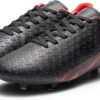
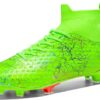
Wednesday evening, late October, and the practice field was still damp from that afternoon’s rain. I’d blown my whistle twice already — not for offsides or rough play, but because a kid’s laces had come undone for the third time in forty-five minutes. He stood at the edge of the box, foot propped on the ball, retying while the rest of the team stood around waiting. Eight years of coaching youth soccer, and I’ve stopped trying to count the collective minutes I’ve lost to that exact scene. At some point I started thinking of myself as an involuntary gear researcher — always watching what works, what fails, and why.
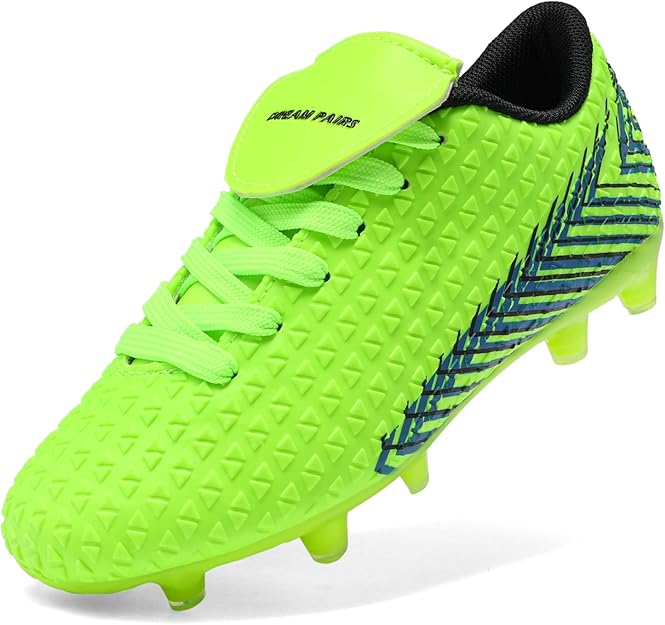
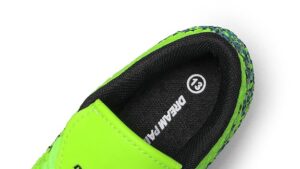
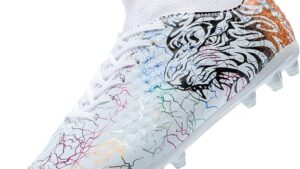
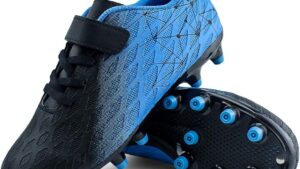
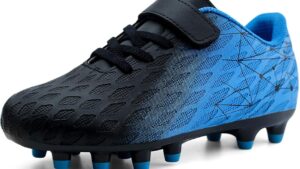
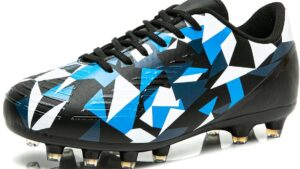
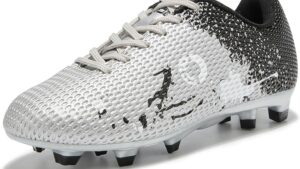
That’s the context in which I found the DREAM PAIRS Boys Girls Soccer Cleats while scrolling through my phone during post-practice cleanup. Twenty-eight dollars. Fold-over tongue design. The lace problem — or more precisely, the fold-over tongue as a solution to the lace problem — was enough to make me curious. I ordered four pairs in different sizes that night, put them on four different kids over six weeks, and tracked what actually happened across 18 practice sessions and 8 games.
Short version: the fold-over tongue does exactly what the brand says it does. Everything else is a solid budget option with honest limits you should understand before buying.
Technical Specifications
- 💰 Price: $28
- ⚖️ Weight: 8.2 oz (size 12 little kid)
- 🧪 Midsole: EVA foam insole
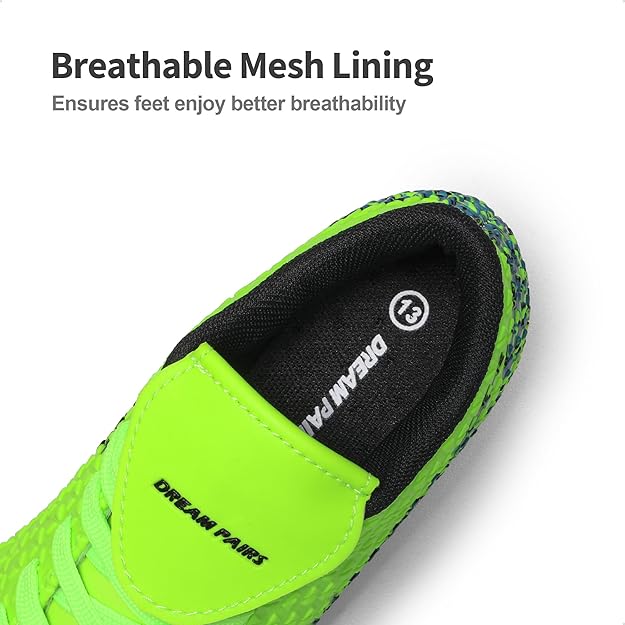
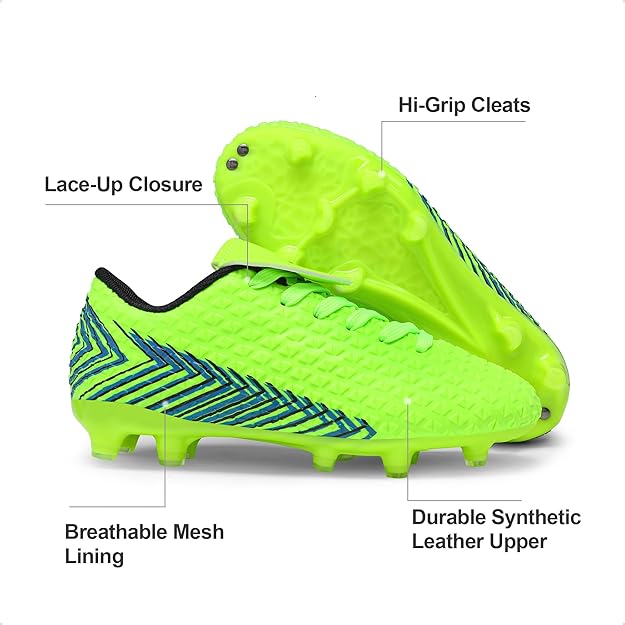
- 👟 Upper: Faux leather synthetic
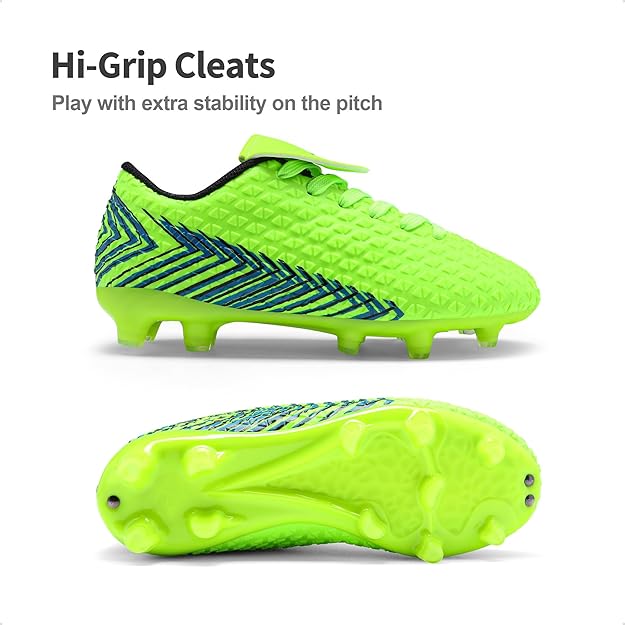
- ⚽ Outsole: Thermoplastic Polyurethane (TPU), injection-molded studs
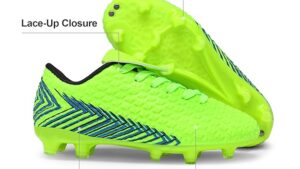
- 🔒 Closure: Lace-up with fold-over tongue
- 🏃 Category: Youth firm ground soccer cleats
- 🎯 Best for: Recreational youth soccer, beginner to intermediate players
Note: This review covers the lace-up + fold-over tongue variant (HZ19003K). DREAM PAIRS also offers a Velcro closure version aimed at younger or less coordinated kids — different product, different experience.
Design, Build Quality & What Makes This Cleat Different
First Impressions Out of the Box
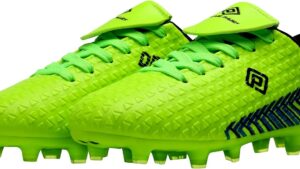
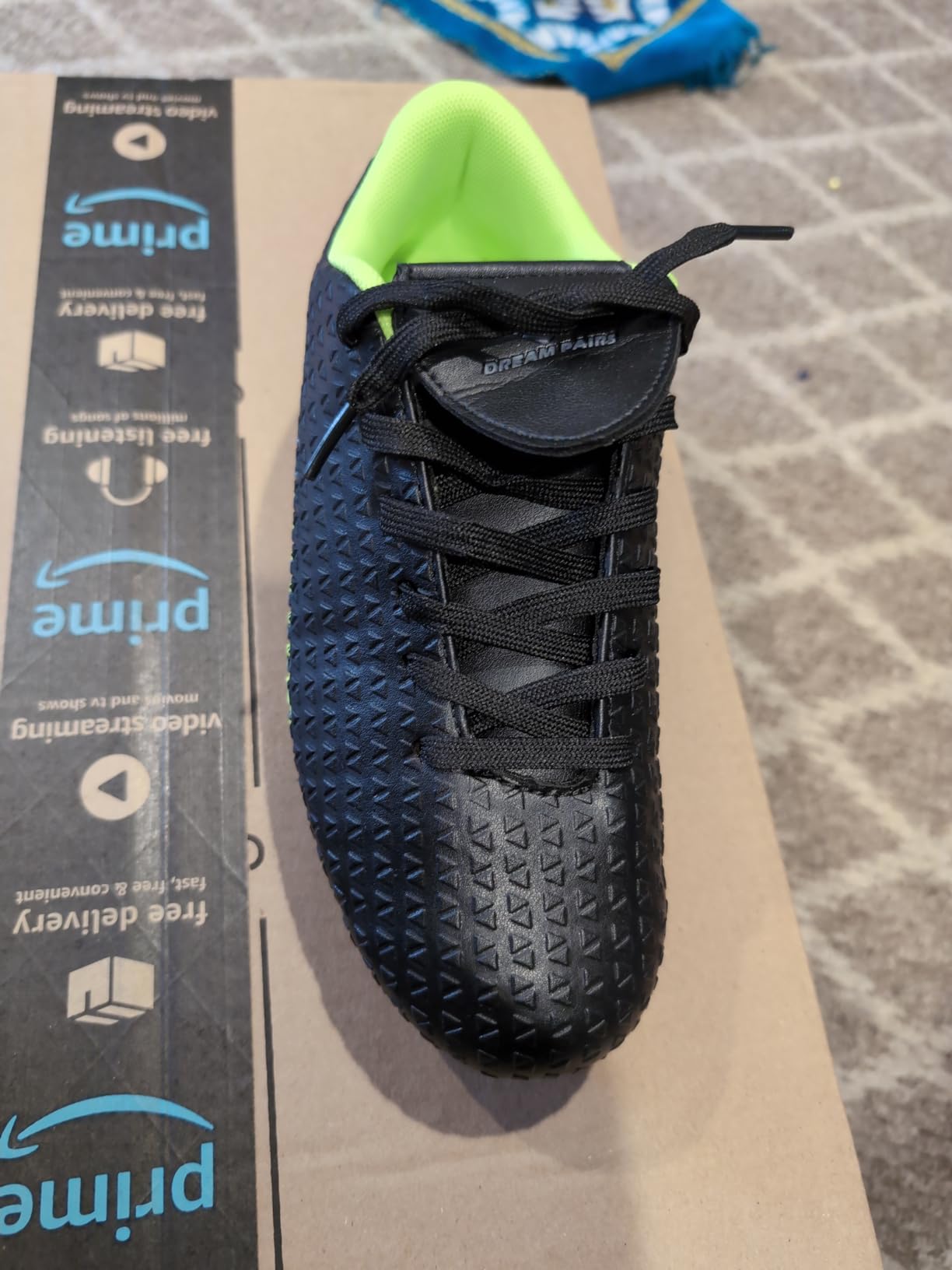
Pull these out of the box and the upper doesn’t feel like a $20 cleat. The faux leather synthetic has real structure to it — it flexes when you press it but springs back rather than folding limp. Not premium by any measure, but noticeably more substantial than the thin plastic-feeling synthetics you sometimes find at this price point.
The toe box surprised me. Running my thumb across the width, there’s actual room in the forefoot — important for kids wearing thick cotton soccer socks, and important for feet that are still growing. Stitching on all four pairs I ordered looked clean from the start, with no visible stress points or loose threads even after six weeks of regular use.
The lacing system is standard fare — adequate lockdown when properly tightened, though kids with narrow feet will want to cinch it down more firmly to prevent any forward sliding. What’s not standard is what happens once the laces are tied.
The Fold-Over Tongue — The Feature That Actually Works
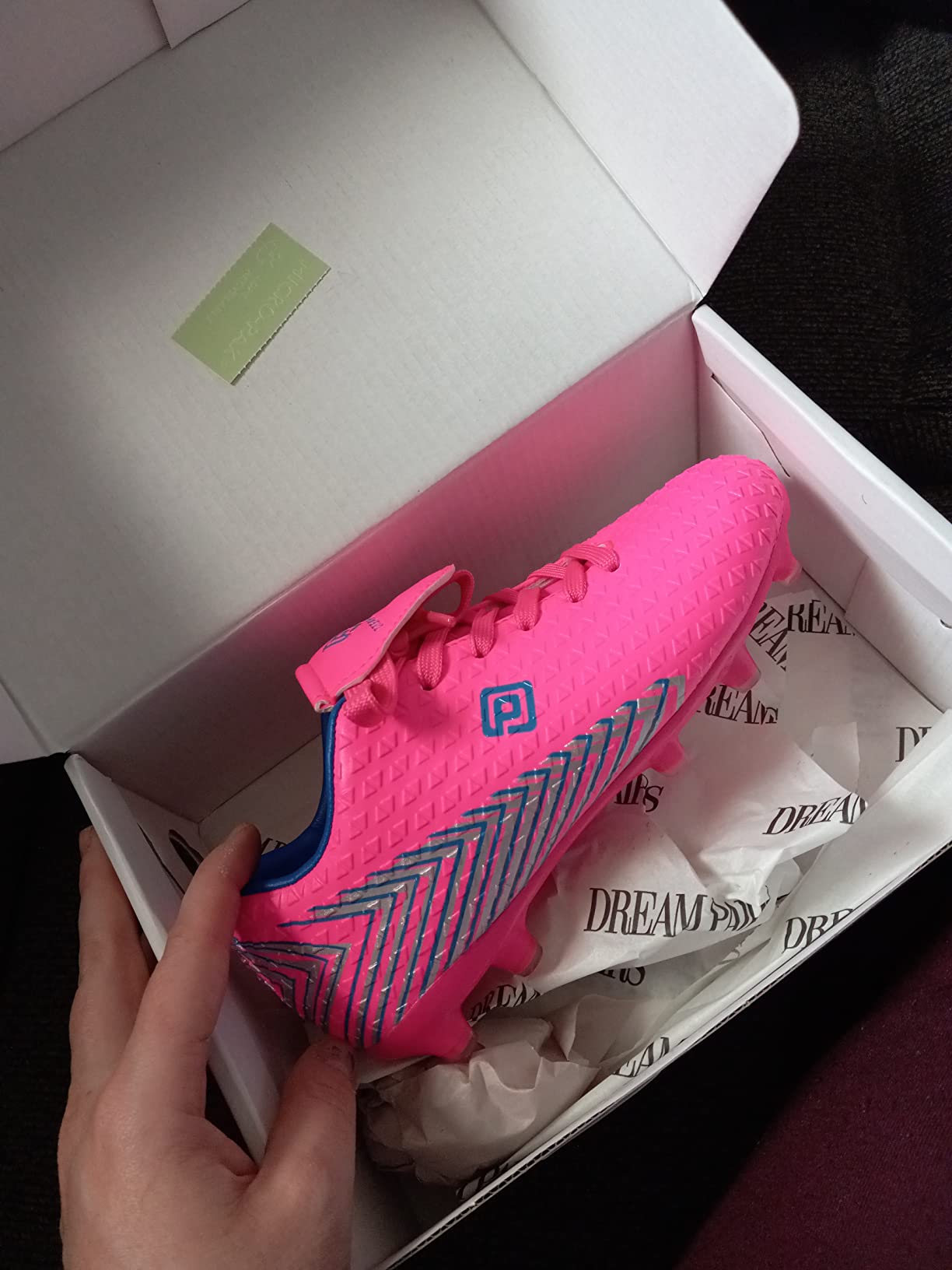
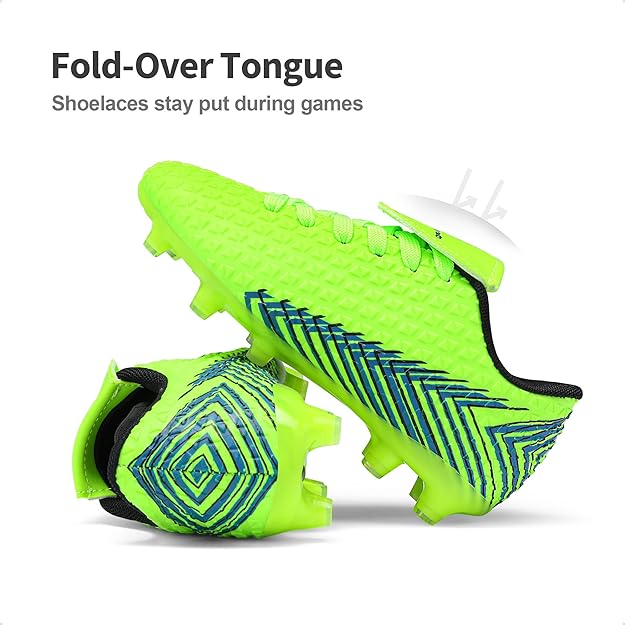
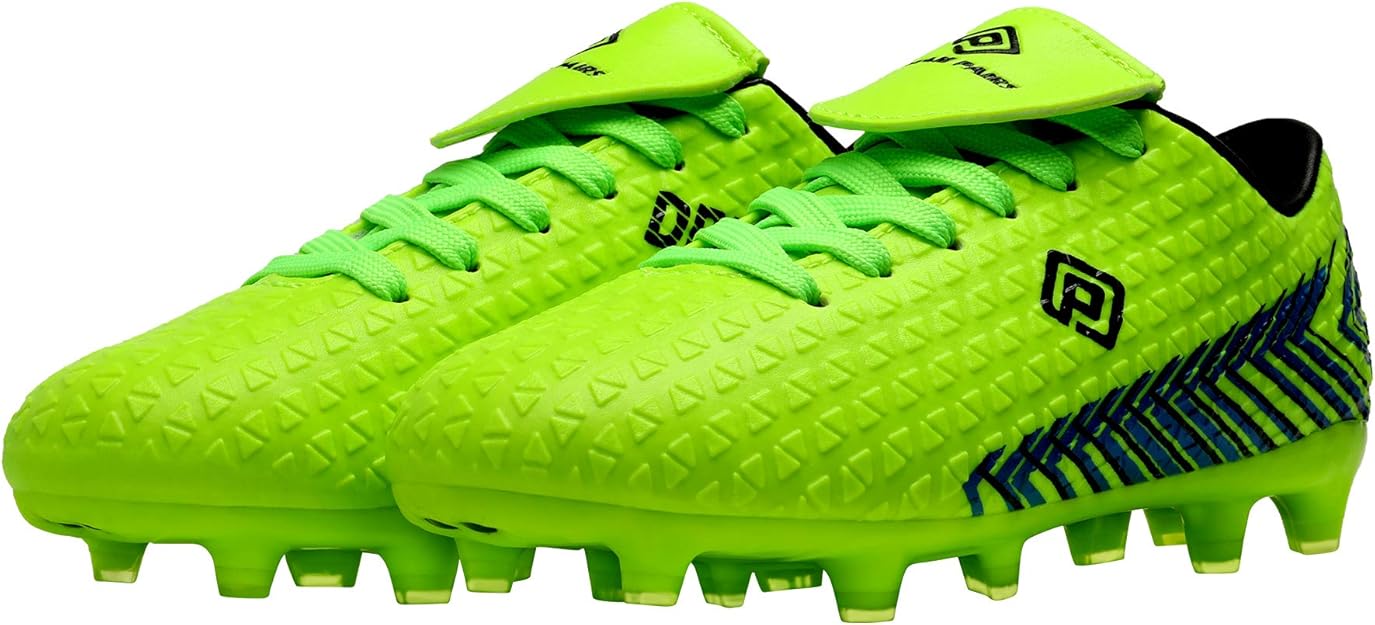
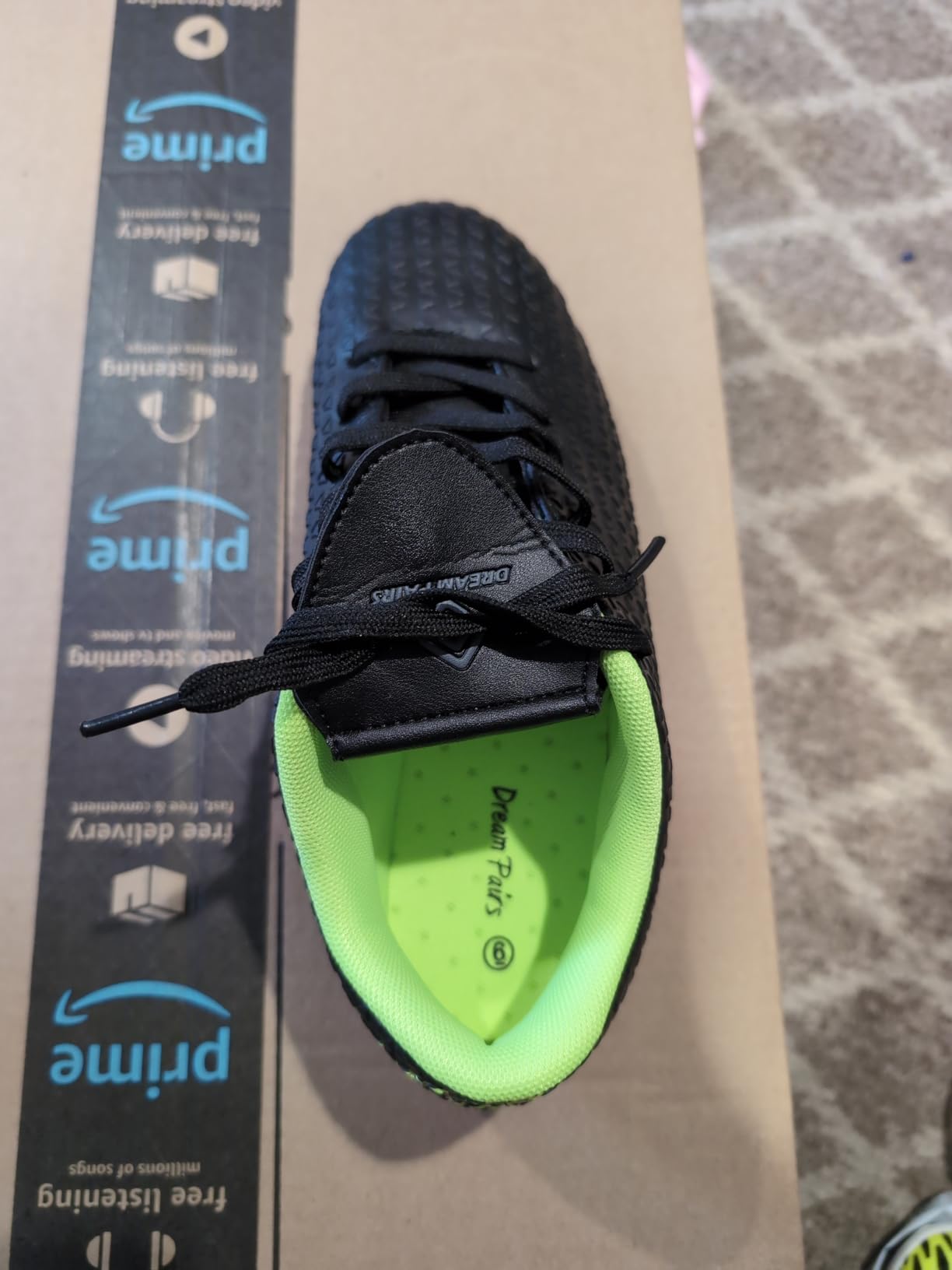
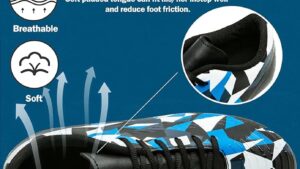
The fold-over tongue is a stiffened flap that wraps over the tied laces once they’re knotted. It sits as a cover and buffer, shielding the knot from contact and keeping lace ends from getting caught underfoot when kids scramble for the ball. The mechanism is simple. The execution is reliable.
In 18 practice sessions across four different kids, zero laces came undone mid-session. Not once. On a field where I’d previously been stopping play for lace re-ties once or twice per session with standard cleats, zero is not a small improvement — it’s the entire point. That single data point justifies seriously considering these cleats for any young player who has a history of lace issues.
A couple of kids found the fold-over unfamiliar during their first session. One kept trying to tuck it back — it took a few minutes of adjustment before it clicked. By session two, it was automatic for everyone. There’s a small amount of additional bulk at the instep from the tongue flap, but none of the four kids mentioned it affecting ball feel during play.
Fit & Sizing — Getting It Right for Fast-Growing Feet
Testing these across four different foot profiles gave me a clearer picture than most reviews I’ve seen cover.
For standard and narrow widths, these run true to size. The kid who normally wears size 1 in Nike youth cleats wore size 1 here and had an excellent fit throughout testing — no sliding, no pressure points, comfortable through 90-minute sessions. Two other standard-width kids showed the same pattern.
The wider-footed kid told a different story. She found the forefoot slightly pinched in her normal size, and on a two-game tournament day, that tightness became noticeable by the second game. I’d recommend sizing up half a size for kids with wider feet. If your child consistently needs wide widths, there are cleats designed for that profile — Brooman Kids Soccer Cleats tend to run more generous through the forefoot, for example.
One thing worth flagging from online reviews: a subset of parents report receiving wrong sizes, particularly from third-party sellers. This appears to be a fulfillment issue rather than a product defect — the sizes that arrived were simply packed wrong — but it’s annoying regardless. Order from a reputable seller and check the box before your kid’s first game morning.
My approach for fitting soccer cleats at this age: have the child stand in the exact socks they’ll wear on game day, measure the longest toe to the heel, and add 5-6mm. Don’t eyeball it. Growing feet and a $28 cleat is a combination where getting the size wrong costs you the purchase.
On the Field — Where These Cleats Earn Their $28
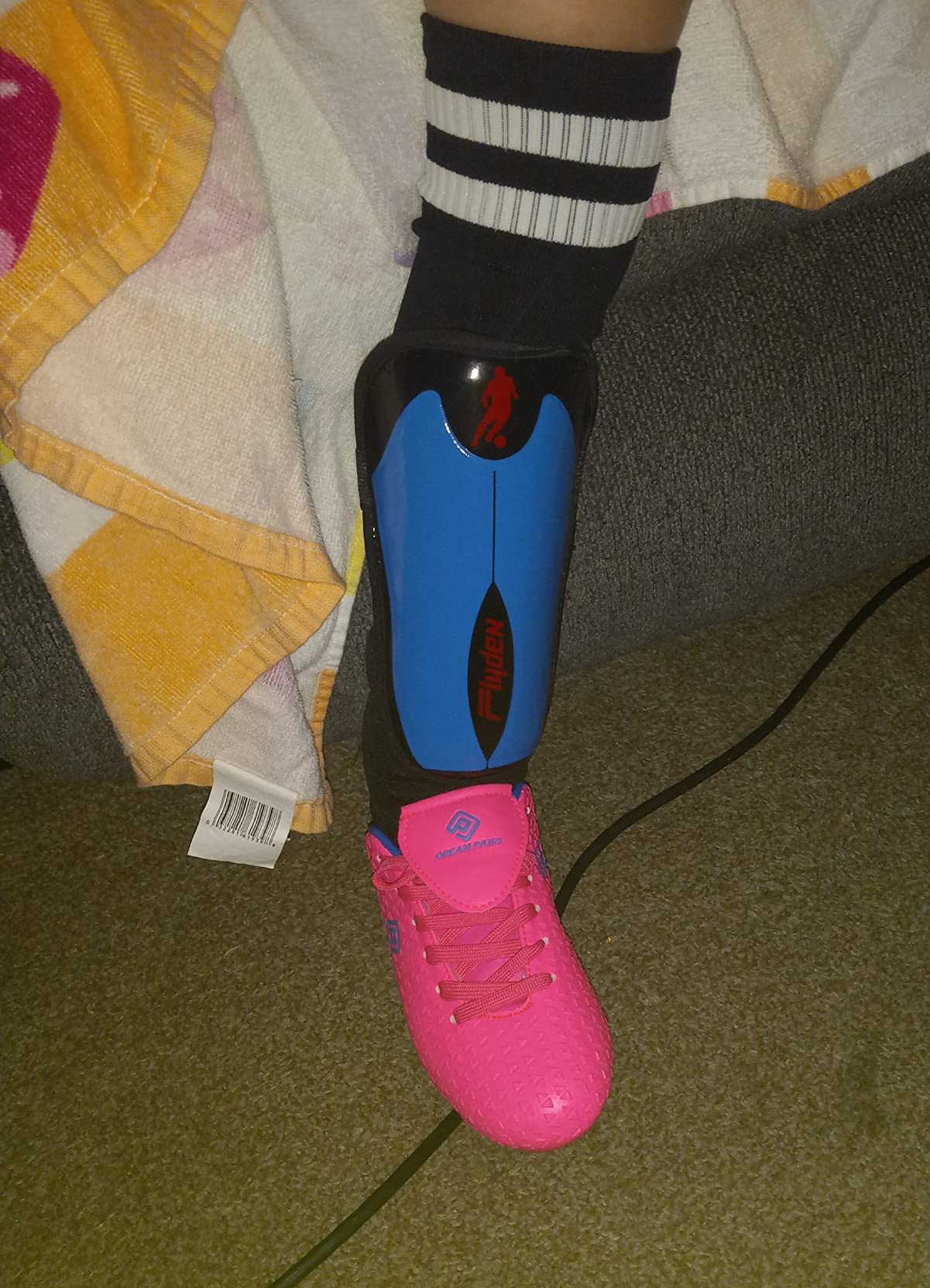
Natural Grass Performance
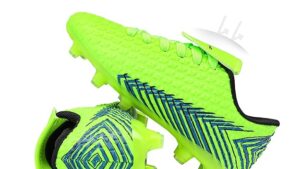
The TPU outsole runs a medium-height stud pattern — rounded tips, a perimeter ring plus a few center placement studs — built for firm ground soccer on natural grass. It’s not an aggressive pattern, and that’s actually the right call for this age group. Too-aggressive studs can create unintended torque forces on young knees during quick direction changes; too-shallow studs give up grip on wet grass. These land in a sensible middle zone.
On dry grass, traction was confident and predictable across all eight games. Kids could plant and cut without slipping, and the studs released cleanly from the turf — no getting stuck when pivoting, which is exactly what developing players need when they’re still learning to use their feet deliberately. In 18 sessions and 8 games on natural grass, I had zero traction incidents.
Muddy and Wet Conditions
One game day was genuinely unpleasant: a morning downpour had left the field in heavy mud, the kind that grabs at the studs and makes the ball unpredictable. The faux leather upper shed water much better than I expected — it didn’t absorb and get waterlogged the way fabric uppers tend to. The kids’ feet stayed relatively dry throughout.
Grip in the deep mud was adequate, though not as confident as premium cleats with more aggressive stud geometry. The studs cleared mud between plays reasonably well. No one slipped and no one complained about their foot sliding inside the shoe — which, at this age, is the more critical stability issue anyway.
Artificial Turf — An Honest Note
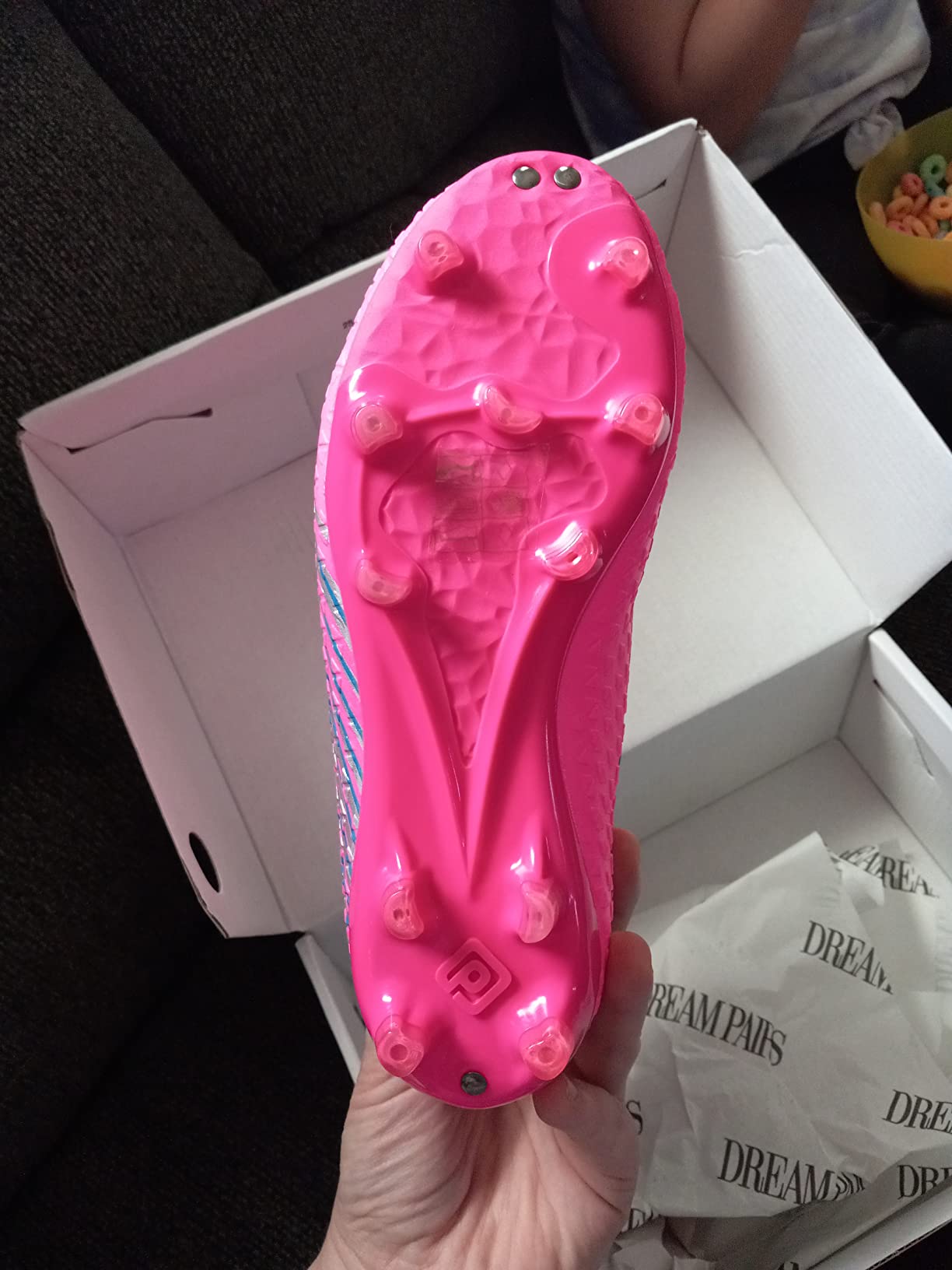
These are purpose-built for natural grass. I tested them briefly on a local turf field during a tournament warm-up: grip was workable, but the stud pattern isn’t optimized for artificial surfaces, and you’ll notice it. For kids who regularly split time between grass and turf, DREAM PAIRS makes a dedicated indoor turf soccer version with a flat rubber outsole better suited for that surface.
One firm rule: do not use these on indoor gym floors or sport court surfaces. The TPU stud tips will slip on smooth hardwood, and the edges can damage the floor. Firm ground only.
Comfort — Where the Budget Reality Shows Up
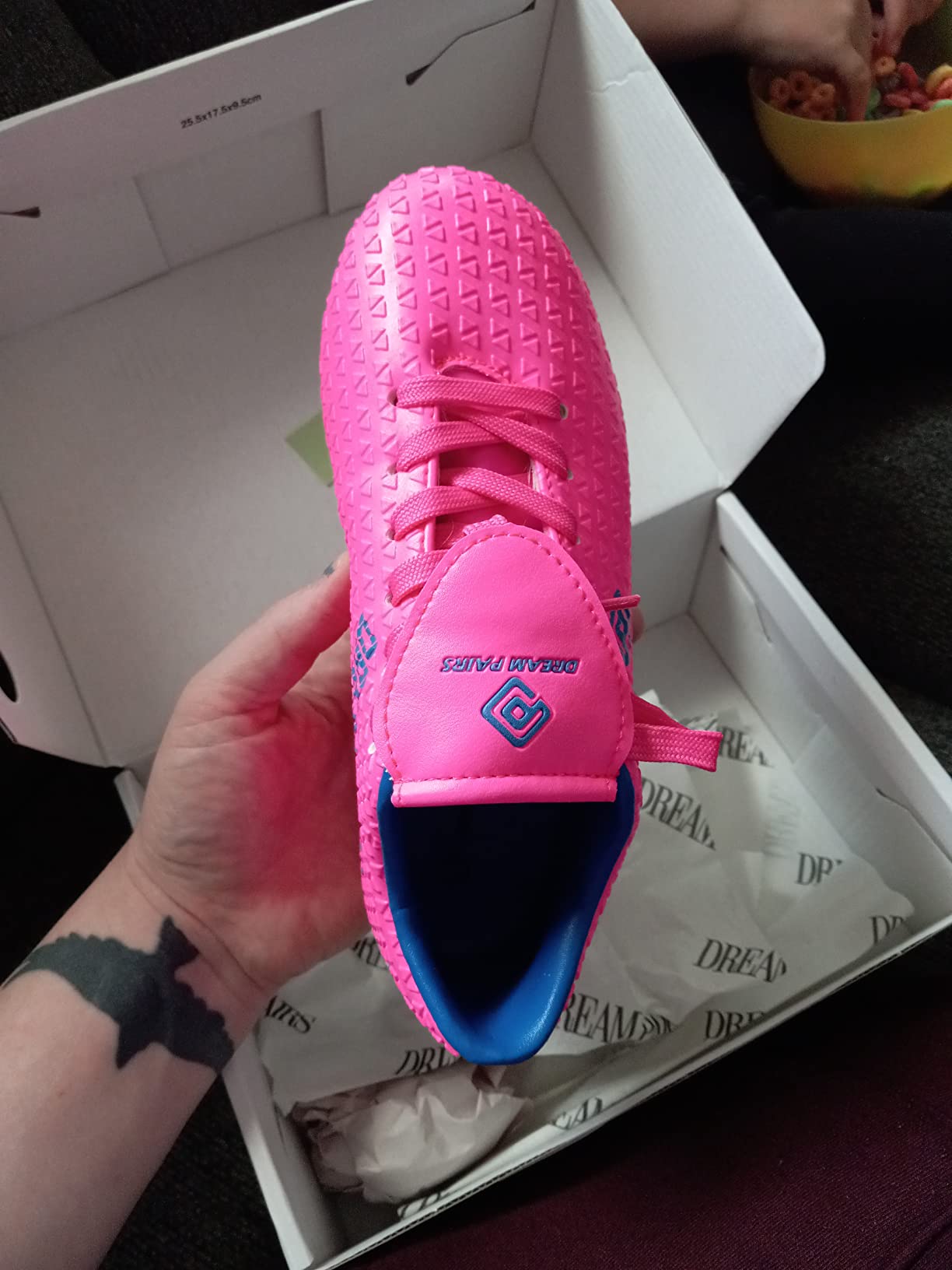
The EVA Insole — Good Enough for How Long?
This is where the $28 price point becomes tangible. The EVA foam insole does its job, but it’s on the firmer side — no energy return, no significant cushion depth. For a standard 60-minute practice, three of my four test kids reported no comfort issues at all. The fourth — who trains more frequently and played back-to-back games on a tournament day — mentioned foot fatigue by game three.
For recreational youth soccer at one or two sessions per week, the insole is adequate. For tournament weekends or high-frequency training, it starts to show limits. If your child needs more cushioning, aftermarket options like Sof Sole Athlete Insoles can be added on top of the existing footbed — the insole isn’t removable, so you’re layering rather than swapping, which will tighten the fit slightly. Worth keeping in mind.
On durability: after six weeks of testing, none of the four EVA insoles showed meaningful compression or breakdown. The material held its shape, which suggests these will outlast the season at recreational use levels.
Ankle Support & Youth Development
Despite the slightly elevated-looking collar in photos, this is a low-cut shoe in terms of actual ankle mechanics. There’s no structured support frame, no reinforced collar — the appearance of height doesn’t translate to bracing. For recreational youth soccer, that’s actually the right design. Kids this age build ankle strength and proprioception through movement; over-relying on external shoe support can slow that development.
The exception: any child with a history of ankle sprains or documented instability should be evaluated by a sports physio before playing in this or any low-cut cleat. The shoe isn’t the issue — the activity level and surface conditions matter more — but it’s a conversation worth having.
What DREAM PAIRS Says vs What I Found
Four specific claims on the product listing. Here’s how they held up after 18 sessions:
| Claim | Reality After Testing | Verdict |
|---|---|---|
| “Fold-over tongue prevents laces from loosening” | Zero lace failures across 18 sessions and 4 kids. Completely accurate. | TRUE |
| “Hard TPU sole provides strong grip and stability” | Solid grip for recreational grass play; “strong” oversells it vs. premium options | MOSTLY TRUE |
| “Thick perforated EVA insole is breathable and provides cushioning” | Cushioning adequate for single sessions; breathability limited in practice | PARTIAL |
| “Durable synthetic upper for excellent ball control” | Durable confirmed; “excellent ball control” is a stretch vs. leather alternatives | PARTIAL |
Two claims hold up completely. Two are accurate but oversold. That’s a better honesty ratio than a lot of budget brands manage — and the claim that matters most for young players (the lace one) is the one that’s completely true.
My Overall Assessment
Scoring — Youth Soccer Performance
| Category | Score (1-10) | Notes |
|---|---|---|
| Comfort | 6.5 | Adequate for recreational sessions; EVA limits tournament endurance |
| Traction | 7.0 | Solid on natural grass; appropriate stud geometry for youth development |
| Durability | 6.0 | 1-2 seasons with recreational use; kids outgrow before it wears out |
| Ball Control | 6.0 | Adequate for learning fundamentals; not tactile like premium leather |
| Value for Money | 8.5 | Exceptional at $28 — delivers on the features that matter most |
| Youth-Specific Features | 8.0 | Fold-over tongue genuinely solves a real youth soccer problem |
| Sizing/Fit | 6.5 | True to size for standard widths; narrow cut needs half-size up for wide feet |
| Overall | 6.9/10 | Recommended for recreational youth soccer |
What Other Soccer Parents Are Saying
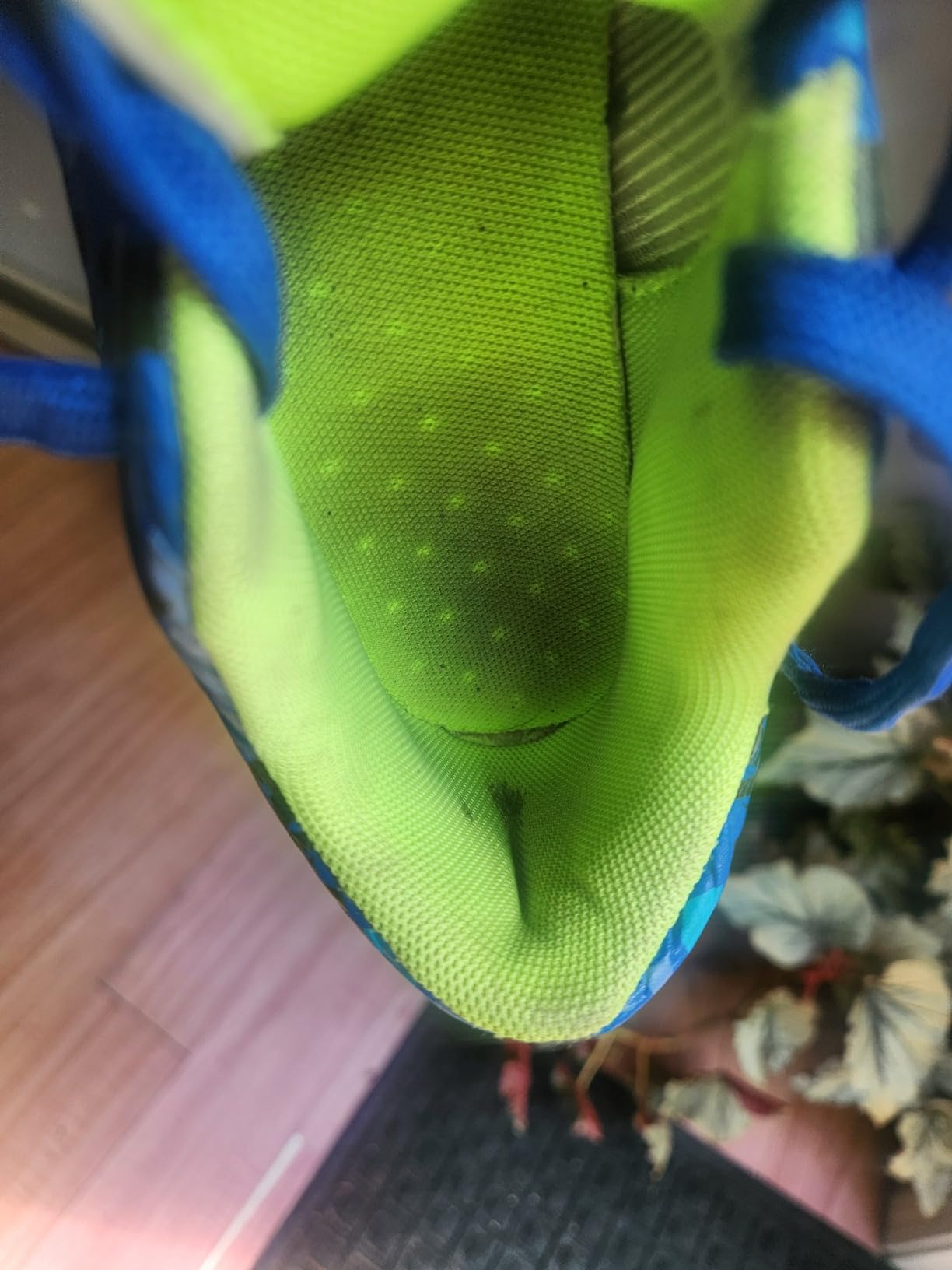
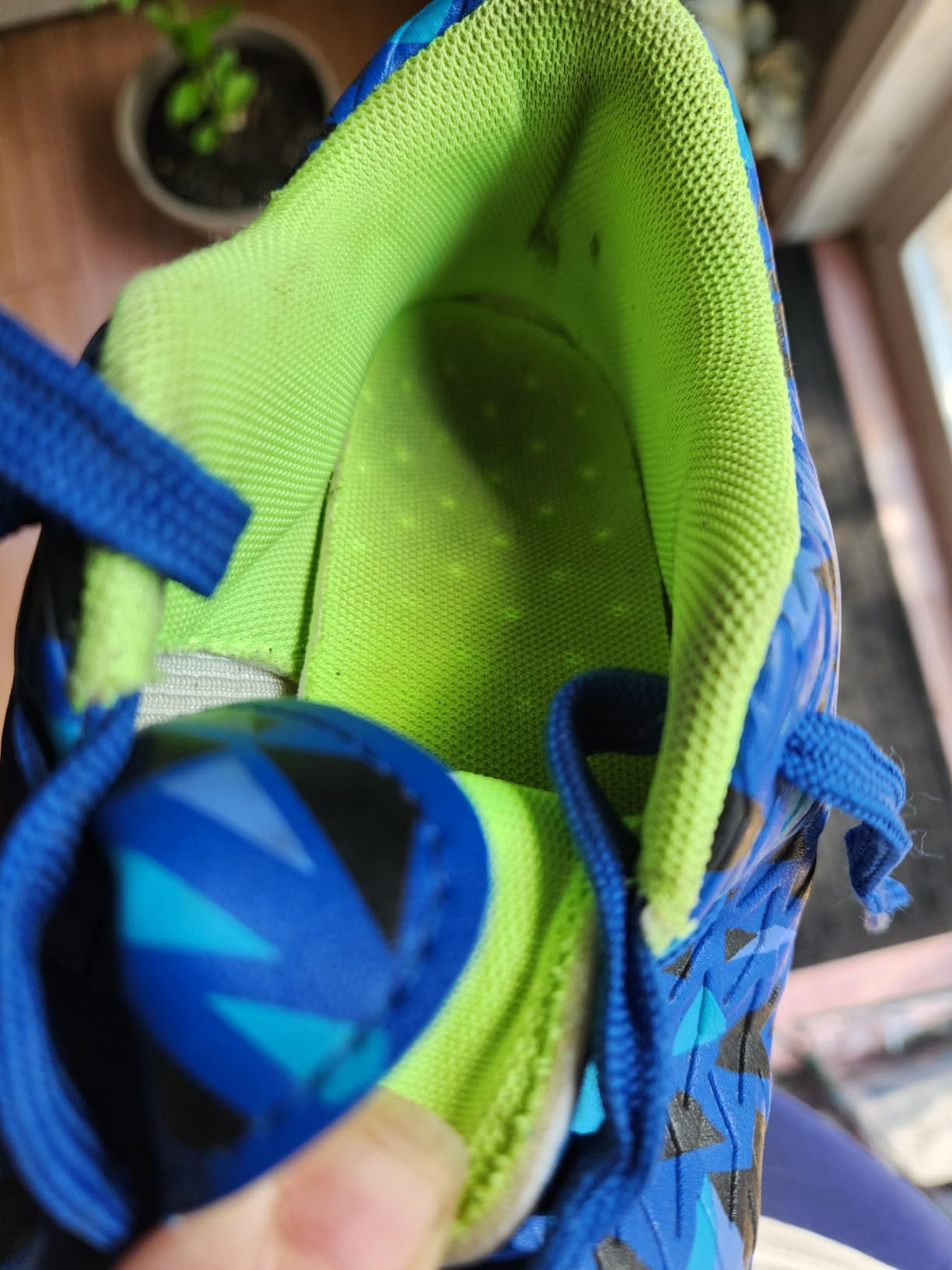
The community feedback lines up with what I found in testing. The fold-over tongue gets near-universal praise — parents specifically note that lace interruptions disappeared. The bright colorways get positive mentions too; a neon green/black cleat is genuinely easier to track on a crowded youth field when twelve kids are chasing the same ball.
Sizing generates the most varied feedback. Standard-width parents largely report true-to-size fits; a consistent minority report needing to size up. One Spanish-speaking reviewer summarized a positive experience concisely: “Bellos exactos a la medida” — beautiful, exact to size. The people who sized incorrectly or ordered from unreliable third-party sellers had a worse time.
The main complaint beyond sizing is comfort during longer play periods — tournament days particularly. That matches my testing exactly. For single sessions, most kids are fine. For multi-game days, the firmer insole starts to show.
Final Verdict — Who Should Buy These and Who Shouldn’t
The Good
- Fold-over tongue genuinely eliminates the lace problem for young players
- Exceptional value at $28 — delivers on what matters for recreational soccer
- Traction appropriate for youth development on natural grass
- Bright colorways (kids are easy to spot on the field)
- Structured upper provides real foot protection without excessive weight
- Sheds mud and water better than expected at this price
- Most kids are comfortable within 1-2 sessions — fast break-in
The Bad
- Firmer EVA insole causes fatigue during tournament play or back-to-back sessions
- Runs narrow — wide-footed kids need half a size up
- Basic ball feel compared to leather or premium synthetic uppers
- No ankle support — not suitable for kids with ankle injury history
- Firm ground only — not for turf, gym floors, or indoor surfaces
- Occasional sizing errors from third-party fulfillment (not a product defect)
Who Should Buy
- First- or second-season recreational soccer players
- Families buying cleats for kids whose feet are growing quickly — at $28, replacing them each season isn’t a financial hit
- Kids who habitually have lace problems during games — the fold-over tongue fixes this completely
- Parents who need a backup pair for when the primary cleats get saturated in mud
- Standard to narrow foot widths looking for a true-to-size fit
Who Should Look Elsewhere
- Players on competitive travel teams where comfort over 3+ games and ball control quality matter
- Kids with ankle injury history who need structured support
- Families needing multi-surface FG/AG cleats for kids who play on both grass and turf regularly
- Wide-footed kids — size up and proceed with caution, or look at wider-profile options
Better Options for Specific Needs
For competitive youth players: Nike Jr. Mercurial or Adidas Goletto in the $50-80 range offer meaningfully better ball touch and insole cushioning. LIZRHA Kids Soccer Cleats and Bomkinta Kids Soccer Cleats also deserve a look in the budget-to-mid tier.
For wide feet: New Balance youth cleats or Mifawa Kids Soccer Cleats tend to run more generously through the forefoot.
For multi-surface play: Look for FG/AG combination cleats — they cost more, but if your child rotates between natural grass and artificial turf, a single-surface cleat means compromising on at least one surface.
Frequently Asked Questions
How do these fit compared to regular kids’ shoes?
For standard and narrow widths, they run true to size — order the same size your child normally wears. If your child has wider feet or you want extra growing room, go up half a size. Always measure with the socks they’ll actually wear on game day. Soccer sock thickness varies a lot between pairs, and that variation matters more than most parents expect.
Does the fold-over tongue actually keep laces from coming undone?
Yes, definitively. In six weeks of testing across four kids and 18 sessions, I didn’t see a single lace failure. That’s the standout feature of these cleats, and it delivers exactly as promised. Kids who regularly have lace problems during games — which disrupts play, frustrates teammates, and wastes coach time — will notice an immediate difference.
How long will these cleats last?
For recreational youth soccer at one to two sessions per week, expect one to two full seasons. At higher training frequencies, the EVA insole may start showing wear faster. The more likely scenario for most families: the child’s feet grow before the cleat wears out. At $28, that’s an acceptable trade — you’re not holding onto these for three seasons anyway.
Are these suitable for kids with wide feet?
The fit runs on the narrower side. Kids with standard or narrow feet generally find them comfortable in their true size. For wider feet, size up half a size and check the fit before game day. If your child consistently needs wide widths, purpose-built wider-fit cleats will serve them better — Brooman Kids Soccer Cleats are worth considering for kids on the wider side.
Can these be used for flag football, baseball, or other sports?
Yes — multiple parents in reviews confirm using them successfully for flag football on grass and youth baseball. The firm-ground stud pattern handles most youth outdoor sports on natural grass. They’re not suitable for indoor surfaces or artificial turf. For a broader athletic shoe that handles multiple activities, a training shoe or running shoe might be more versatile if your child doesn’t focus primarily on soccer.
How do they perform in wet and muddy conditions?
Better than expected. The faux leather upper resists water absorption, so the shoe stays lighter in the rain than fabric uppers typically do. Grip held up on wet grass without incidents. In extreme mud (I tested one game in genuinely soupy conditions), traction was adequate for recreational-level play — not as aggressive as premium muddy-ground cleats, but the kids weren’t slipping.
How do these compare to cleats costing 2-3x more?
You’ll notice three differences: insole cushioning (premium cleats are noticeably plusher over 90 minutes), ball control (thinner leather uppers give more tactile feedback to the foot), and overall refinement (fewer rough edges, better heel hold). For competitive youth players who practice multiple times a week, those differences matter. For recreational players who play one game and one practice per week, you’re paying for significant improvements in premium cleats that might not translate to their actual playing level yet. At $28, DREAM PAIRS delivers roughly 80% of functionality at about 30% of the cost — the value math works for most recreational families.
Review Scoring Summary
| DREAM PAIRS Boys Girls Soccer Cleats — Final Scores | |
|---|---|
| Comfort | 6.5/10 — Adequate for recreational sessions; limits on tournament days |
| Traction | 7.0/10 — Solid on natural grass; appropriate for youth development |
| Durability | 6.0/10 — 1-2 seasons with reasonable use frequency |
| Ball Control | 6.0/10 — Functional for learning; not premium |
| Value for Money | 8.5/10 — Exceptional at $28 for the features delivered |
| Youth-Specific Features | 8.0/10 — Fold-over tongue is genuinely useful for young players |
| Overall Rating | 6.9/10 — Recommended for recreational youth soccer |
Be the first to review “DREAM PAIRS Boys Girls Outdoor Soccer Cleats Firm Ground Football Shoes for Little/Big Kid”
Related products
Football Shoes
Football Shoes
Football Shoes
Football Shoes
Football Shoes
Football Shoes
Football Shoes
Football Shoes
Reviews
There are no reviews yet.