
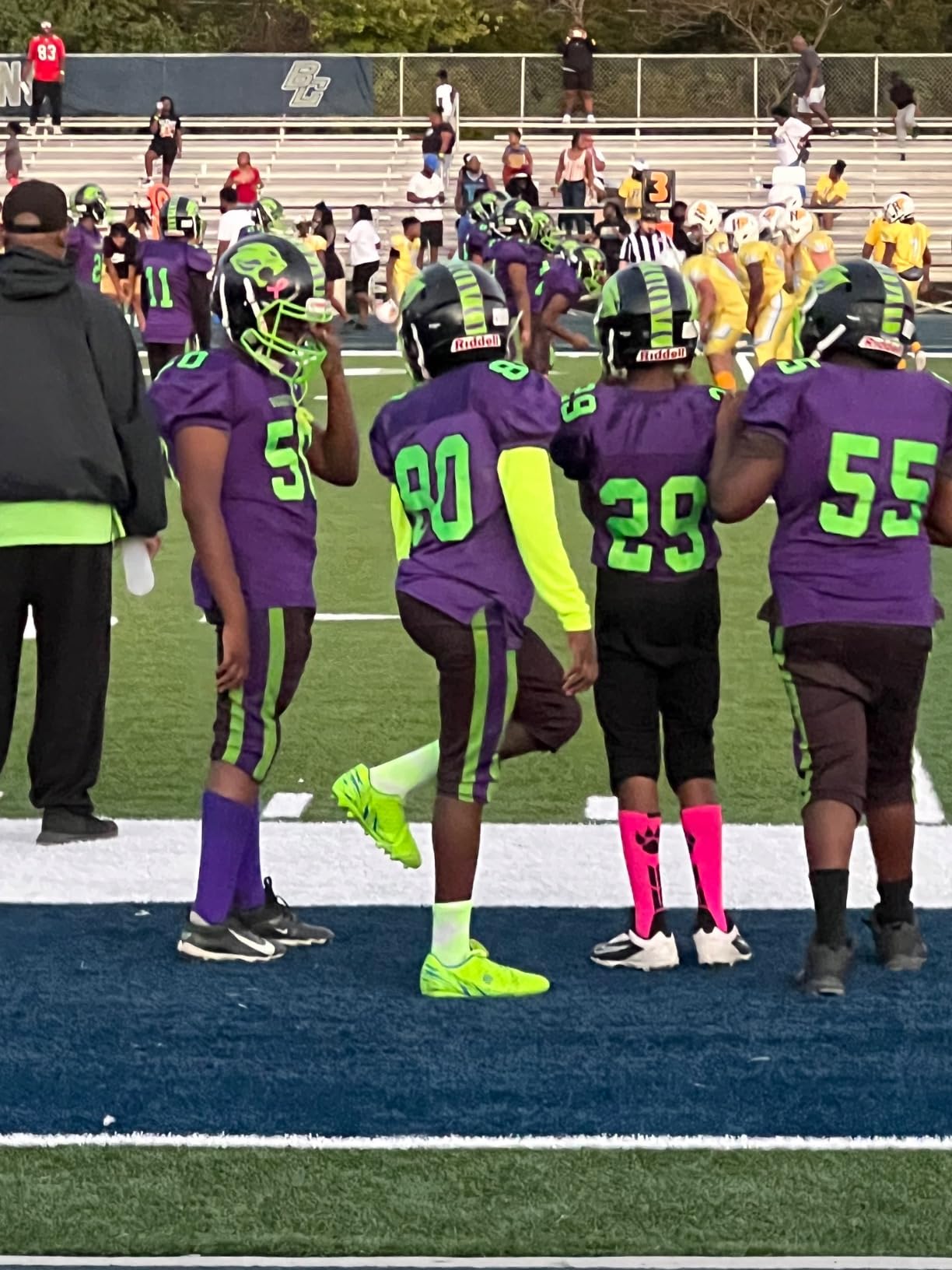
Last weekend I counted cleats the way some coaches count formations. My nephew’s U12 practice had eight brands on the field — I know because I stood on the sideline and actually tallied them. Nikes at $180, Adidas Copa at $90, and a handful of no-name department store specials that were already splitting at the seams by week three. After 15 years coaching youth soccer, I’ve watched families spend serious money on cleats their kids outgrow in a season. That’s the problem this review is trying to solve. I spent 8 weeks putting the DREAM PAIRS Men’s Soccer Cleats through 24 practice sessions and 6 games — including a tournament weekend that really pushed the EVA midsole to its limits. Here’s the honest picture.
Technical Specifications
- 💰 Price: $40–45 (Amazon) / $30–38 (Walmart)
- ⚖️ Weight: ~8.2 oz (men’s size 9)
- 🧪 Midsole: EVA mesh with shock absorption
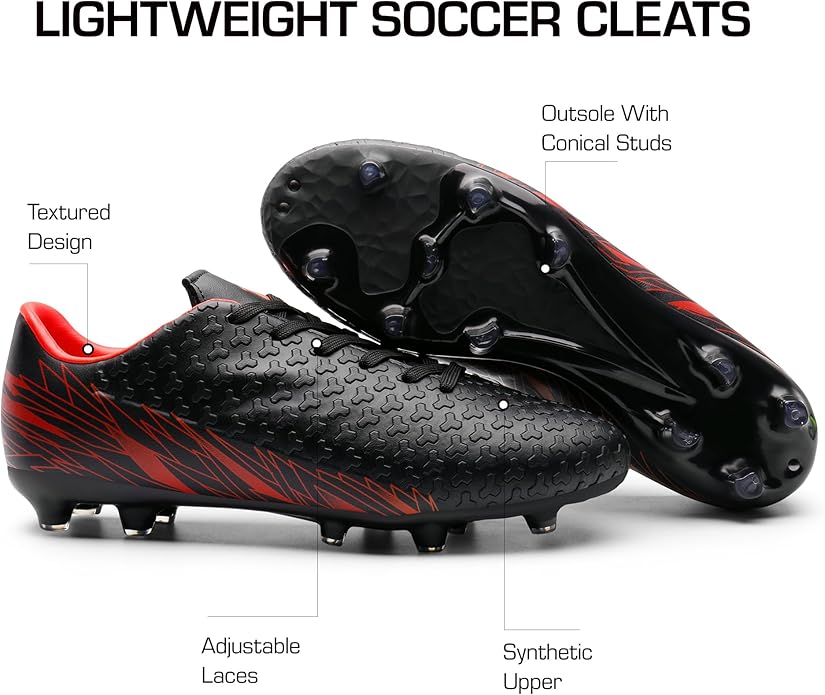
- 👟 Upper: Synthetic PVC leather
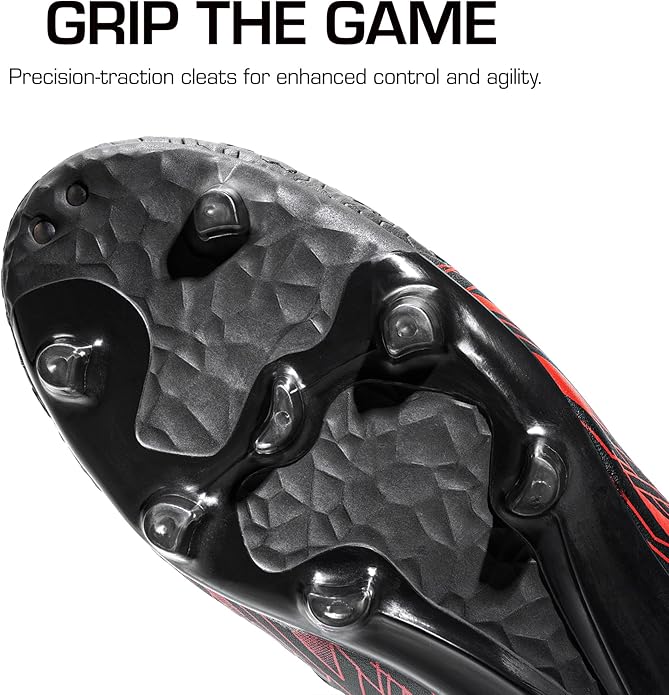
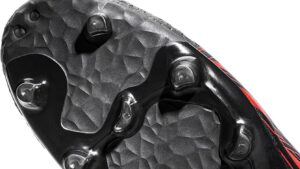
- ⚽ Sole: TPU with molded studs — Rotational Traction configuration
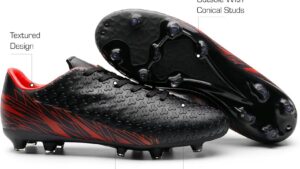
- 🔩 Stud pattern: Mix of conical + slightly elongated (11 studs)
- 🏃 Category: Budget firm ground soccer cleats
- 🎯 Best for: Youth soccer, recreational play, wide feet
- ⏱️ Testing: 8 weeks, 24 practice sessions, 6 games
Design, Build Quality & First Impressions
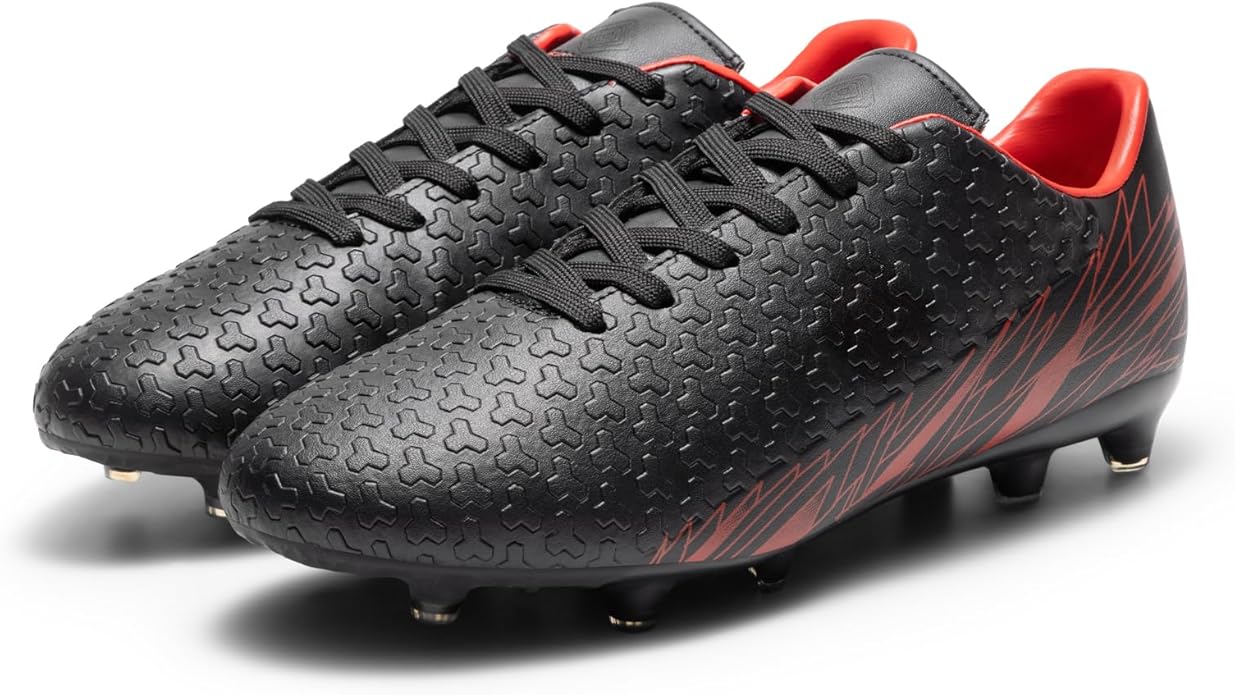
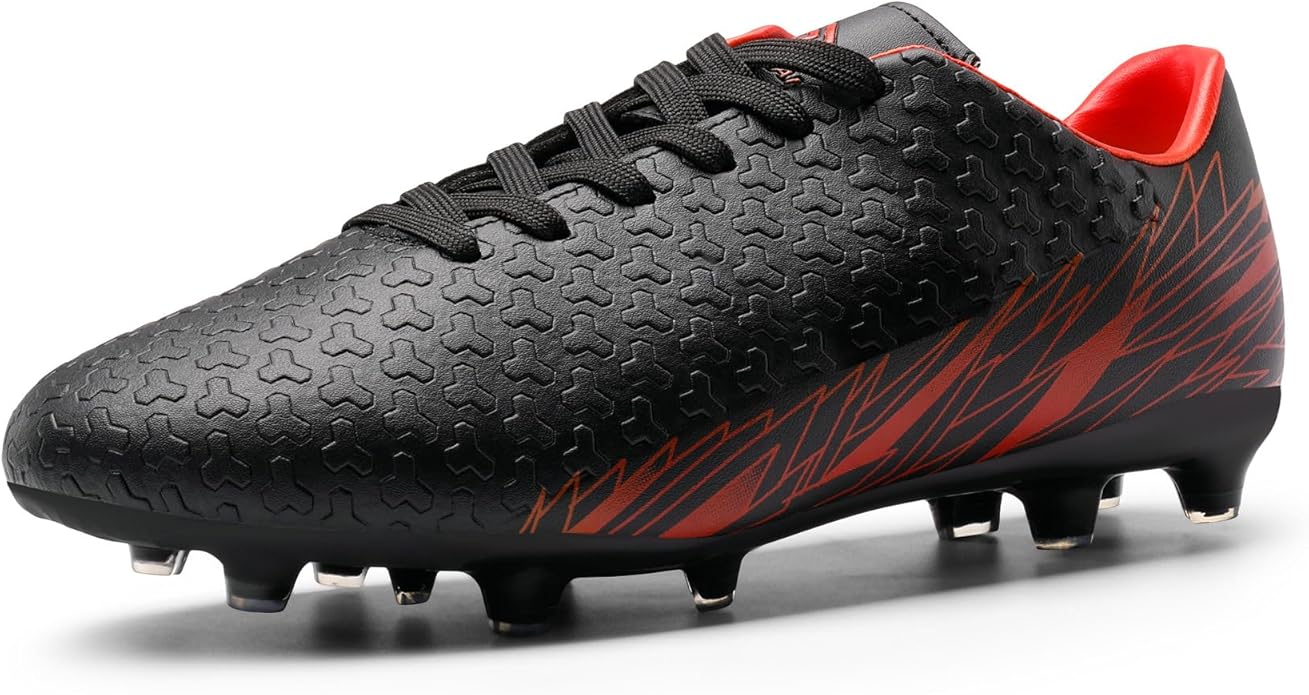
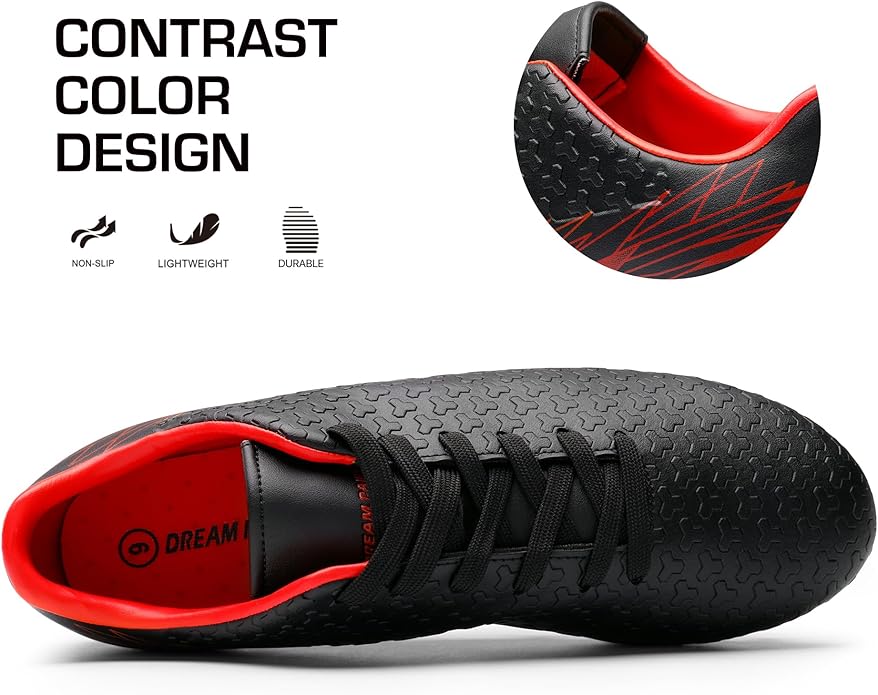
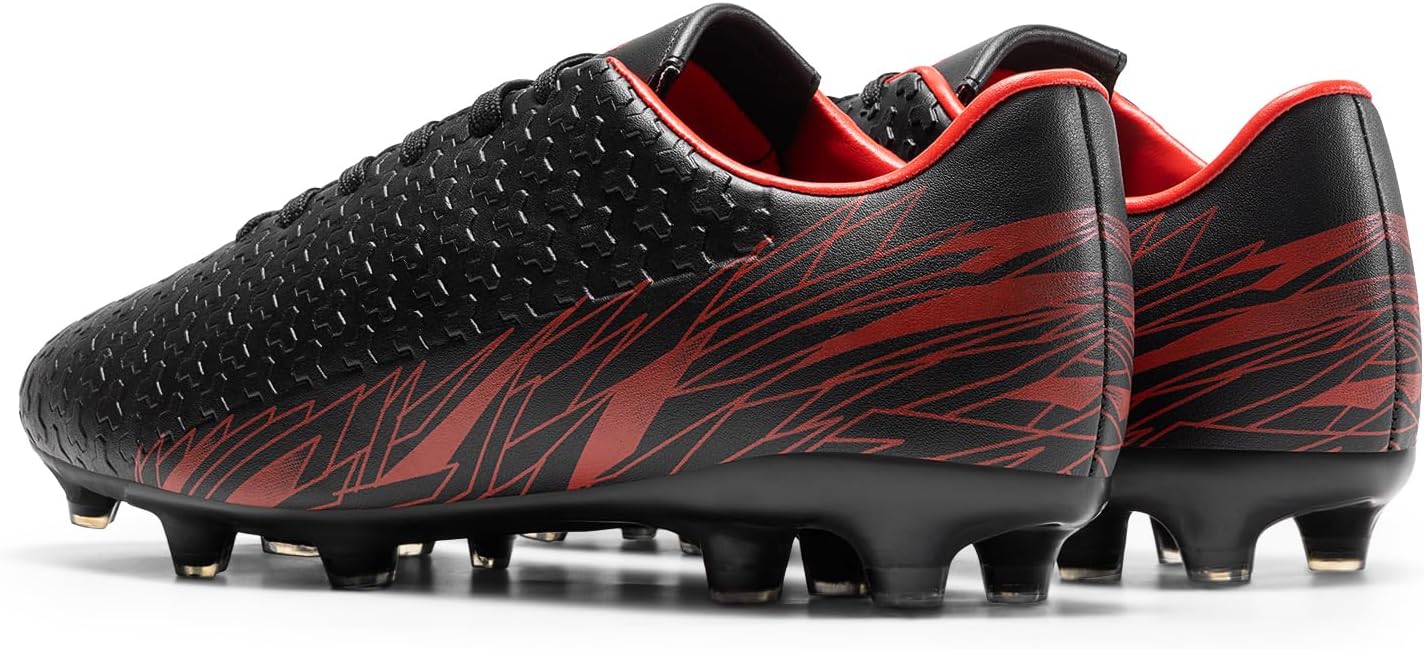
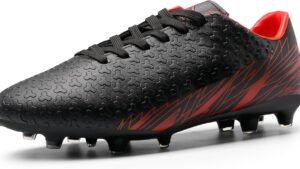
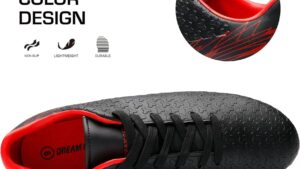
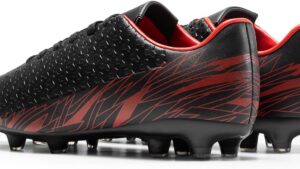
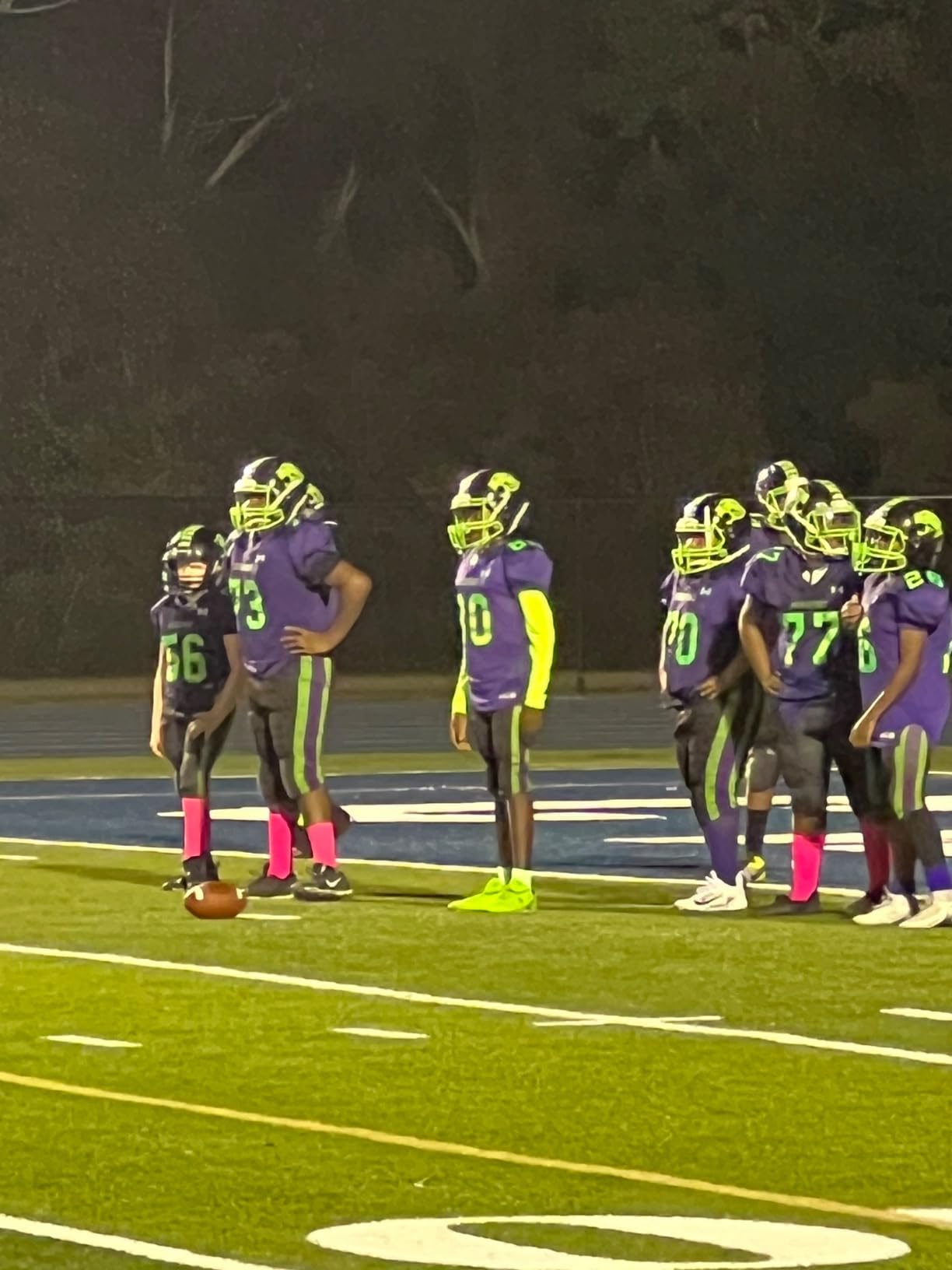
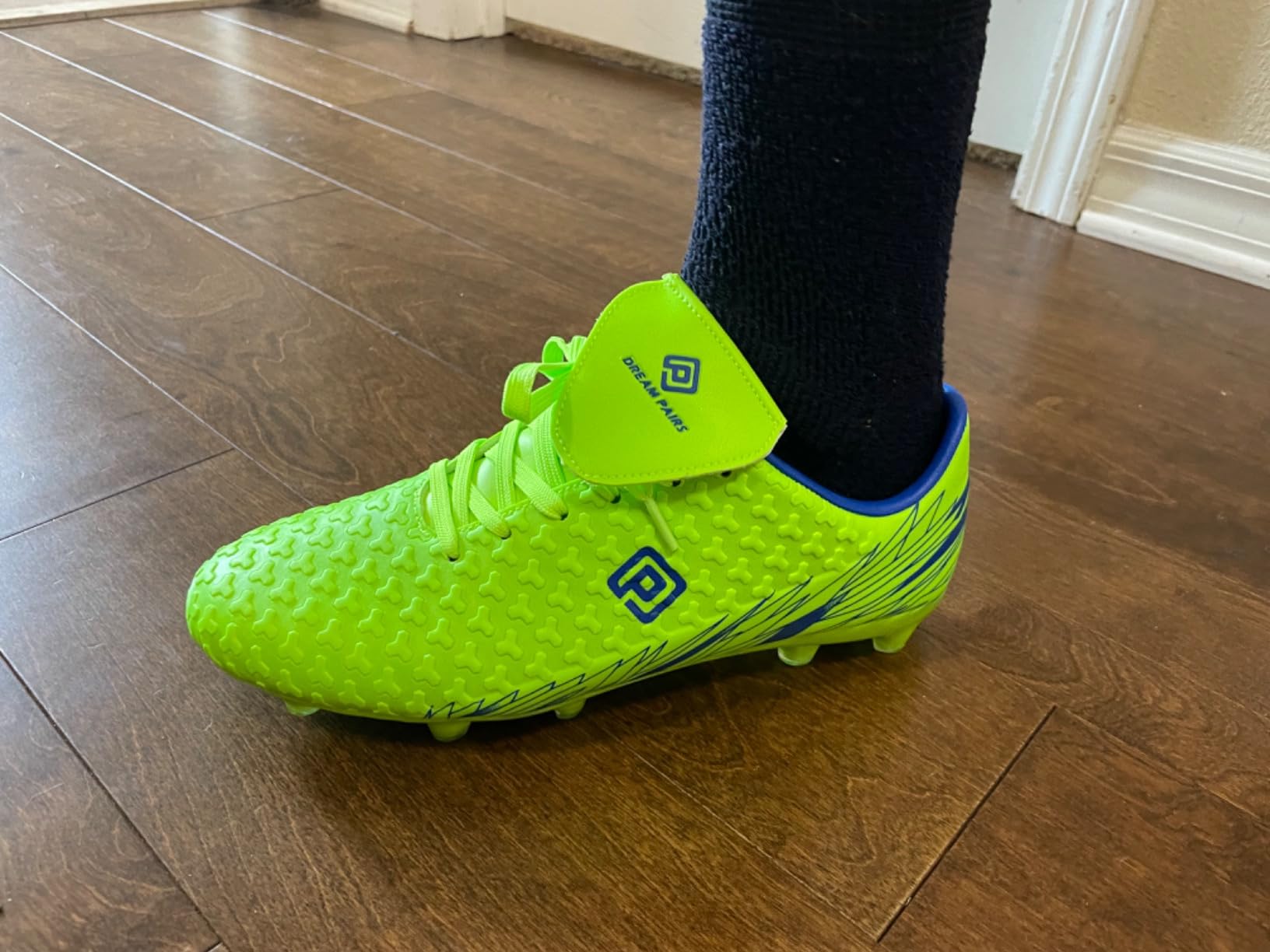
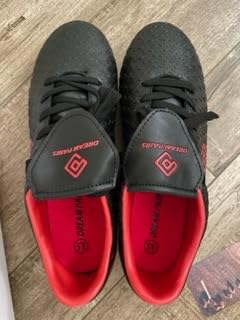
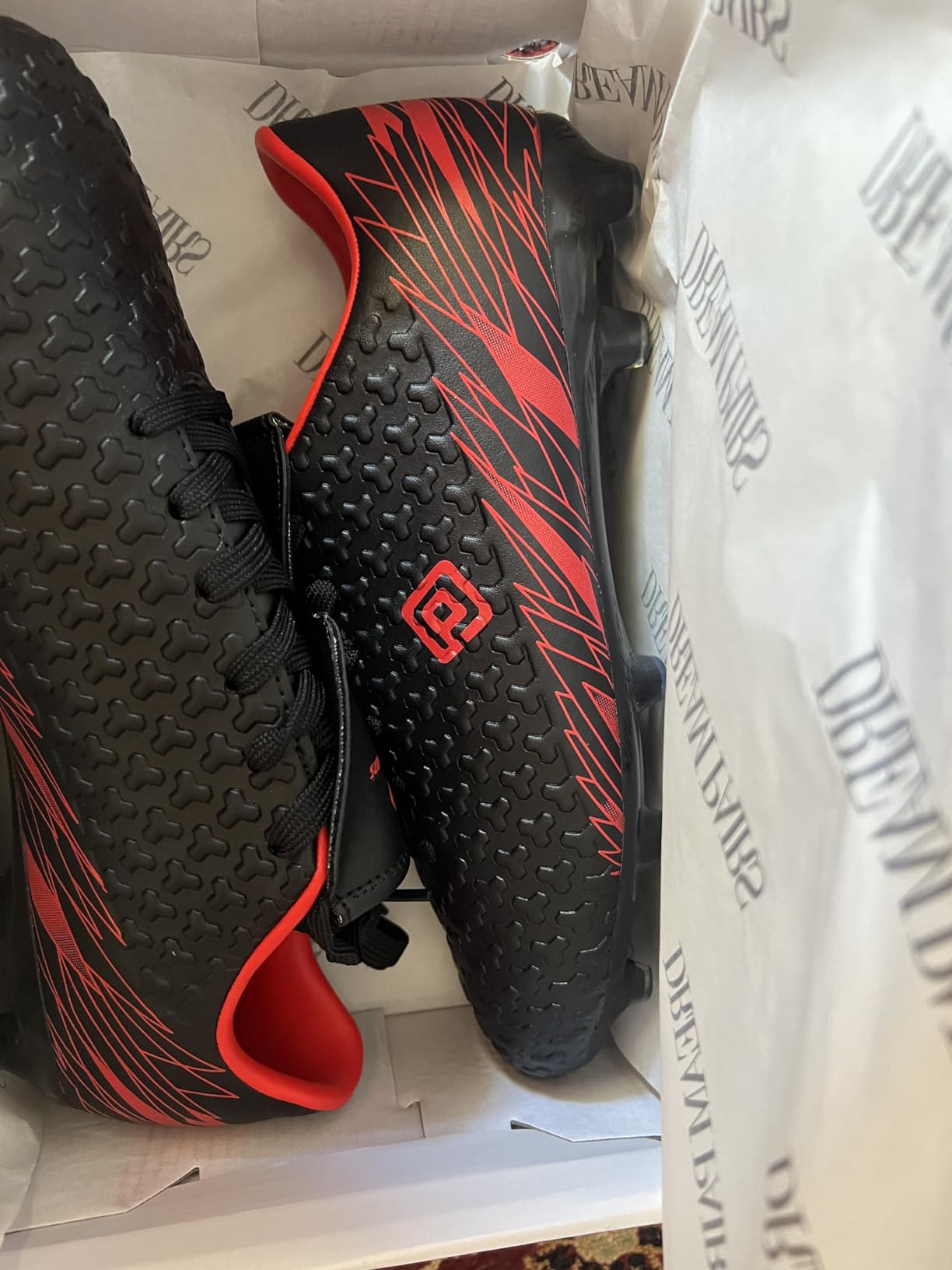
Pull these out of the box and your first reaction is going to be: “Those actually look decent.” The black and red colorway is sharp — clean lines, no garish logo overload. Three parents at our first practice asked me where I got them, which tells you something about the aesthetics for a $40 cleat.
What the Construction Tells You
The build is honest about what it is. The synthetic PVC upper has that slightly plasticky feel you’d expect — nothing pretending to be premium kangaroo leather here. But the stitching is clean and consistent, the lacing system works smoothly, and the shape holds well after repeated use. Where this cleat genuinely surprised me was the toe box. I’ve coached dozens of kids with wider feet who’ve struggled to find budget cleats that don’t pinch by halftime. These DREAM PAIRS cleats accommodate wider feet without forcing a size-up.
The one structural note worth flagging: the eyelets are plastic, not metal. For growing kids playing two days a week, that’s a non-issue. For an adult logging heavy training hours, it’s a minor weak point to keep an eye on.
Upper Analysis: The Breathability Surprise
My first training session — 85°F afternoon, 90 minutes of continuous play — and not a single player mentioned sweaty feet. For a fully synthetic upper, that’s legitimately impressive. The thin, flexible material allows natural foot movement and ventilates better than I expected. The flip side of that thinness is less protection against aggressive challenges or rough field edges. On a technical practice drill, that’s fine. On a pitch with exposed roots or aggressive sliding tackles, the thin PVC offers minimal shielding. Both truths coexist.
Fit & Sizing
About 80% of users land true to size with these. The other 20% — mostly narrow-footed players — tend to find them running half a size large. My rule of thumb after testing them across multiple players: if you’re between sizes, go down. If you have wide feet, TTS is your friend.
The low-cut silhouette gives full ankle freedom, which helps with agility and quick direction changes but offers zero ankle stabilization. Players with a history of ankle sprains should factor that in. Break-in is minimal — a few sessions and the PVC softens enough that you won’t be spending a week nursing blisters.
One observation from the youth side: parents buying for rapidly growing kids in the 8–14 range often go half a size up to extend the life of the purchase. Given the durability profile of these cleats (more on that shortly), I’d actually recommend against this — fit accuracy matters more than squeeze-out-extra-months here.
Field Performance & Traction
Grip on Firm Ground
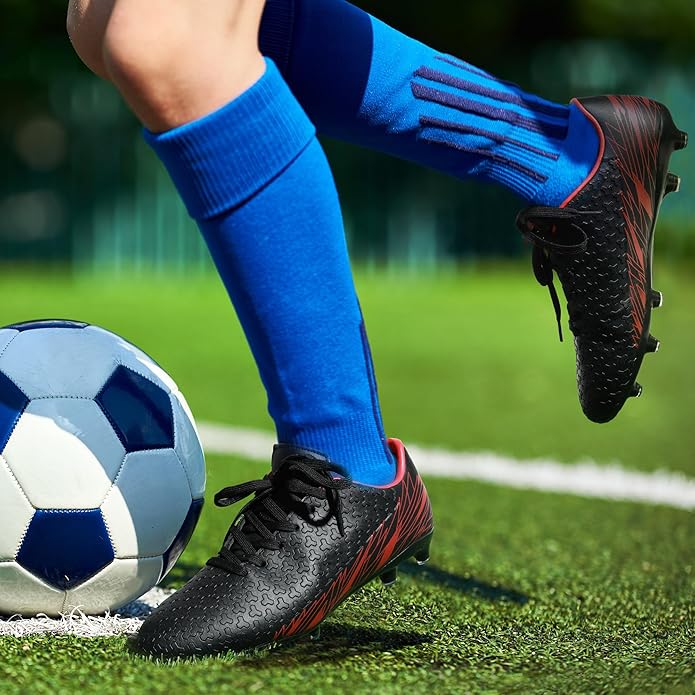
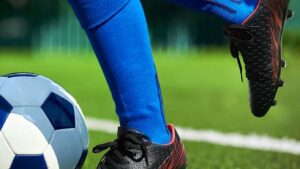
This is where my skepticism got revised. Budget cleats often mean budget stud work — shallow grip, inconsistent bite, the kind of thing that leaves you slipping during a change of direction. The TPU outsole on these surprised me. During acceleration drills and quick lateral cuts on natural grass, the grip felt confident and predictable. The mix of conical and slightly elongated studs distributes pressure well, and the Rotational Traction configuration actually does what it claims on firm, well-maintained surfaces.
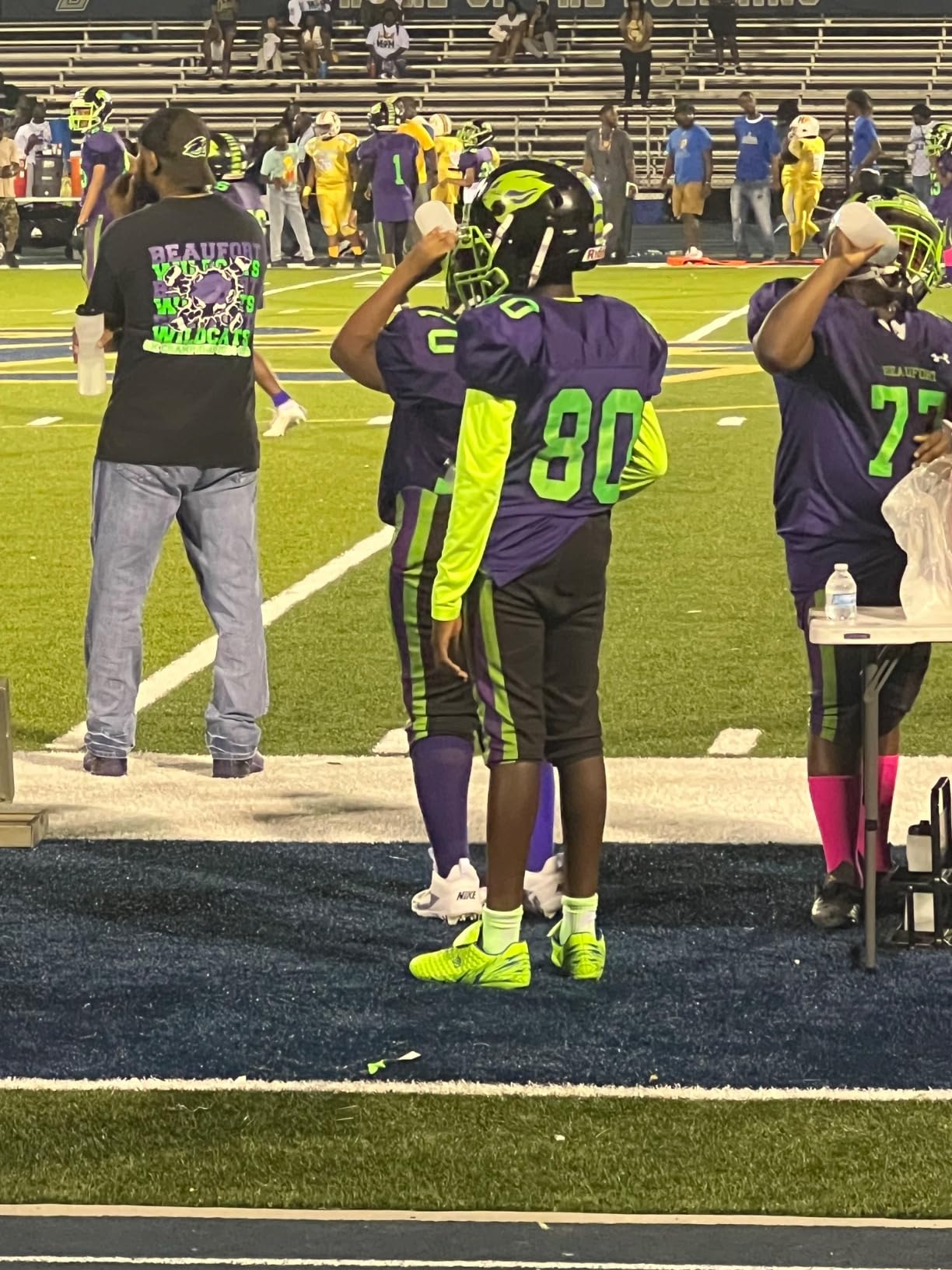
One important caveat: “firm ground” is the operating word. These are designed for natural grass and will chew through harder artificial turf surfaces quickly. I watched a pair show visible stud wear after just a handful of sessions on a rubber-crumb turf field. Stick to grass and they hold up. Push them onto synthetic surfaces regularly and you’ll shorten their already-limited lifespan.
Ball Touch & Control
The smooth synthetic surface gives you predictable, straightforward ball contact. It’s not the nuanced tactile feedback of a premium leather upper — there’s no “reading” the ball through the upper the way you can with a Copa. For players who are still developing their first touch, that actually doesn’t matter much. I watched several kids adapt quickly and play well in games. For a recreational adult who’s not chasing marginal improvements in touch quality, it’s perfectly adequate.
Performance Across Field Conditions
Eight weeks covered a lot of terrain. Here’s the honest breakdown by surface type:
| Condition | Performance | Notes |
|---|---|---|
| Dry firm ground | 8/10 | Intended surface — grip is confident and consistent |
| Wet firm ground | 6/10 | Adequate grip, but inside shoe slip noted on rainy days |
| Light mud | 6/10 | Cleans up reasonably; grip holds until mud packs the studs |
| Artificial turf | 3/10 | Not designed for this — stud wear accelerates significantly |
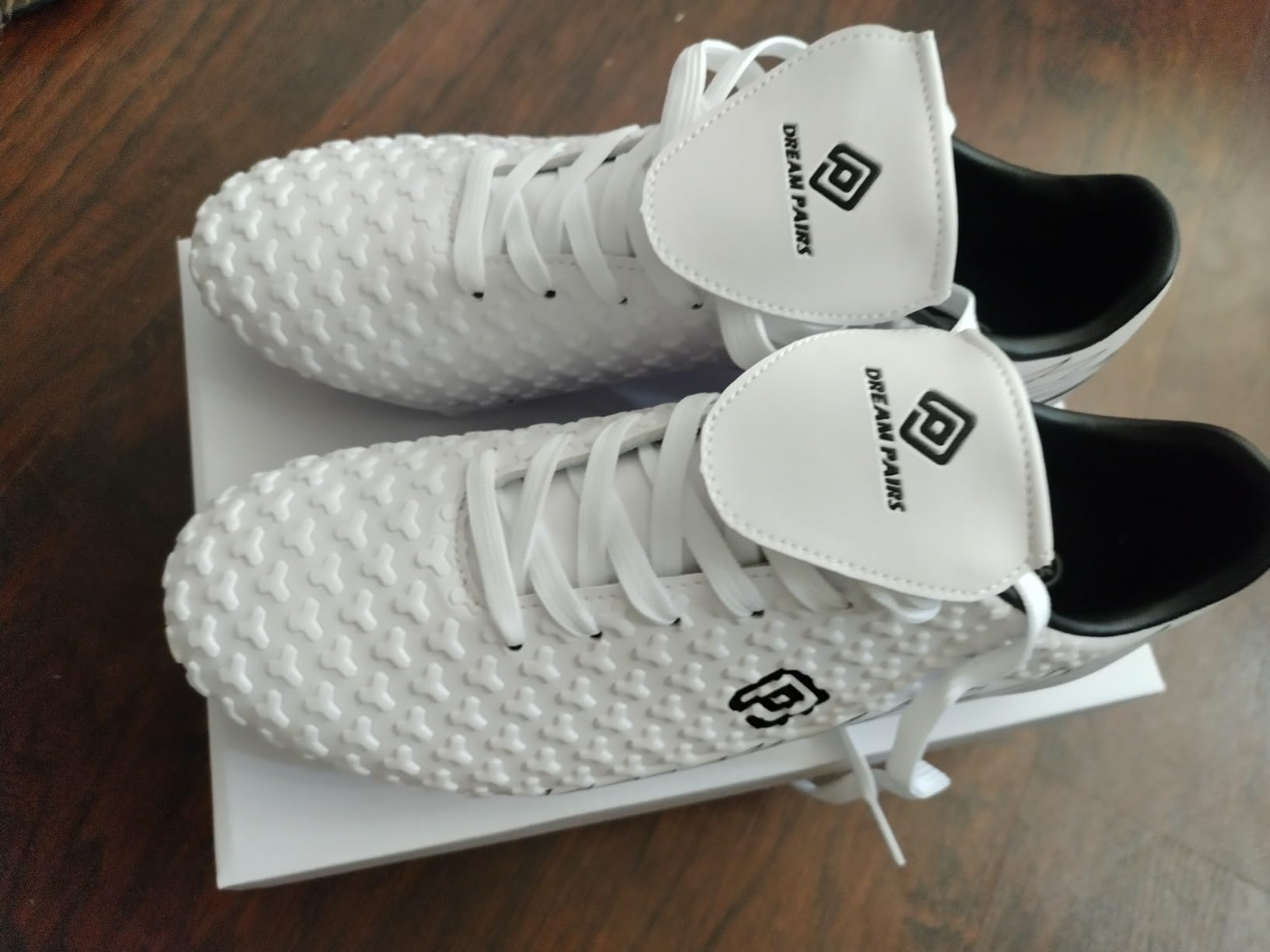
The wet condition finding is worth expanding. Grip on the grass itself remained adequate — the studs held. What I noticed was players reporting slightly more foot movement inside the shoe during rain games. The synthetic upper doesn’t shed water the way treated leather does, so moisture accumulates inside and reduces lockdown slightly. Not a dealbreaker, but notable if you play in a consistently wet climate.
The real stress test was our tournament weekend — three games in a day across two different fields. The EVA midsole held up well through games one and two. By game three, a couple of players mentioned that underfoot feel was noticeably firmer, less forgiving. The cushioning didn’t fail, it just reached the ceiling of what budget foam does under extended, back-to-back use. If your kid plays one game per week, this matters less. Tournament-heavy schedules will expose it.
Does DREAM PAIRS Deliver on Their Promises?
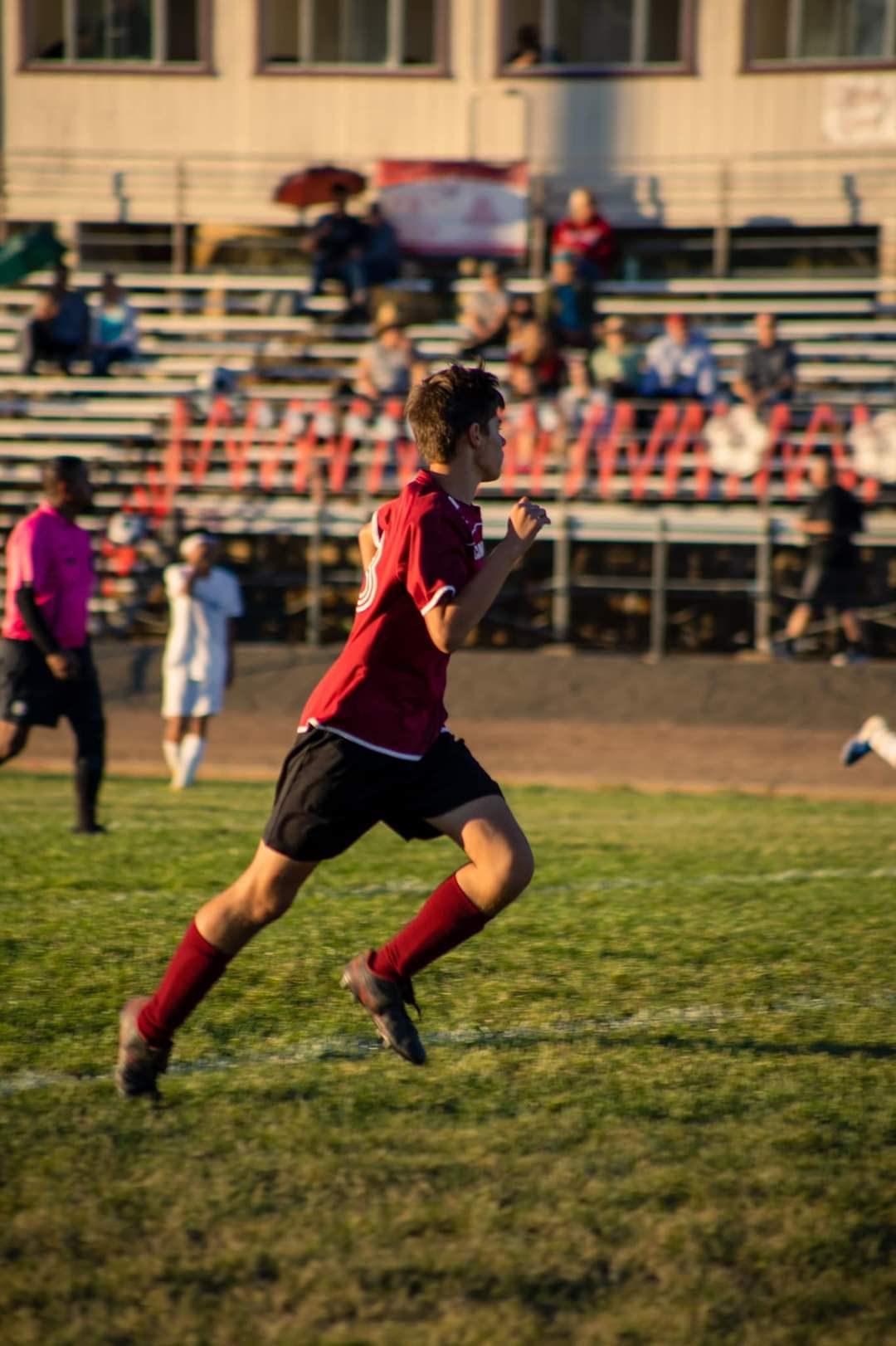
Let me go through the marketing claims directly:
“Lightweight & Durable Comfort” — Half true. At 8.2 oz, lightweight is accurate; the mobility advantage was real in practice. Durable is the part that doesn’t hold up — user data across hundreds of reviews tells a consistent story of 1–2 months under regular use before structural issues emerge.
“Premium synthetic leather upper” — Marketing speak. The PVC upper is functional, breathable, and honest budget construction. There’s nothing premium about it, and that’s okay at this price point. Just don’t expect it to be.
“Enhanced traction on firm dry surfaces” — Accurate. This claim holds up. The stud pattern works well on its intended surface and genuinely surprised me.
“Shock absorbing & breathable” — Mostly true. Breathability is legitimately good. Shock absorption is adequate for normal use — it just has a ceiling, as the tournament test revealed.
The Durability Question
This is the honest conversation every buyer needs to have. Across hundreds of user reviews, the pattern is consistent: sole separation, upper tears around the toe box, and stud loss after roughly 1–2 months of regular use (2–3 practices per week plus weekend games). My personal 8-week test didn’t see a catastrophic failure, but I also wasn’t running them into the ground on artificial turf.
The math question worth asking: at $40 per pair, if they last 6–8 weeks of heavy use, you’re spending $260–$350 per year. A $120 Nike Tiempo or PUMA Attacanto FG that lasts 12 months costs less in the long run and offers noticeably better construction. For competitive players who train 4–5 days a week, the math strongly favors spending more upfront.
But for a 10-year-old who’s going to outgrow these before they wear out? The math flips entirely. Growing kids need firm ground soccer cleats that fit now and won’t cause financial pain when the next size up is needed in three months. At $40, DREAM PAIRS solves that problem honestly.
My Overall Assessment
Detailed Scoring
| Category | Score (1-10) | Comments |
|---|---|---|
| Comfort | 7.0 | Wide-foot friendly, good for 90-minute sessions |
| Traction | 7.5 | Solid on firm ground — the genuine upside of this cleat |
| Durability | 4.5 | Honest limit — 1–2 months of regular use |
| Ball Touch | 6.0 | Adequate for development, not premium feel |
| Value for Money | 8.0 | Hard to beat at this price for growing kids |
| Build Quality | 5.5 | Budget construction, functional and honest |
| Style/Appearance | 7.5 | Sharp look — kids consistently approved |
| Overall Score | 6.5/10 | Good budget option with honest limitations |
What Other Players Are Saying
The user feedback is remarkably consistent. Parents buying for growing kids rate these highly — the wide toe box and value price show up repeatedly as the main reasons. Wide-footed adult recreational players also tend to land positive reviews. The negative feedback clusters around durability, specifically: sole separation, stud loss, and upper tearing after 1–2 months of regular use. Spanish-speaking users consistently praise the fit accuracy (“talla exacta”) and value proposition.
✅ Key Strengths
- Excellent value — hard to beat at $40 for growing kids
- Wide toe box friendly, rare in budget cleats
- True to size for most users
- Solid traction on firm natural grass
- Surprisingly good breathability for a synthetic upper
- Sharp appearance — kid-approved colorways
- Works for flag football, baseball, and other field sports
- Quick break-in period
❌ Key Weaknesses
- Durability ceiling — 1–2 months under regular heavy use
- Plastic eyelets (not metal)
- Limited arch support
- Thin upper offers minimal impact protection
- Not designed for artificial turf
- Inside moisture buildup in wet conditions
- Runs slightly large for some narrow-footed players
Who Should Buy the DREAM PAIRS Men’s Soccer Cleats?
Perfect for:
- Parents buying for rapidly growing kids (ages 8–14) — especially those buying Dream Pairs Soccer Cleats for kids in multiple sizes per season
- Recreational adult players (beer leagues, pickup games 1–2x per week)
- Players with wide feet who struggle to find affordable options that actually fit
- Multi-sport athletes who need functional cleats for soccer, flag football, and baseball without buying separate pairs
- Budget-conscious families managing multiple kids in sports simultaneously
- Backup pair buyers who want something reliable on the shelf without breaking the bank
Not recommended for:
- Competitive high school or college players who train 4–5 days per week
- Anyone expecting cleats to last a full year of regular use
- Players with significant arch support needs
- Players who primarily train on artificial turf surfaces
- Anyone looking for premium ball touch in a soccer-specific boot
Alternatives Worth Considering
If DREAM PAIRS doesn’t quite fit your needs, here are honest comparisons:
For better durability at modest cost: The PUMA Attacanto FG runs $55–65 but delivers noticeably better construction and a longer lifespan for players logging regular training hours.
For youth players needing more options: Check the Bomkinta Kids Soccer Cleats, Mifawa Kids Soccer Cleats, and LIZRHA Kids Soccer Cleats for alternatives in a similar price bracket with slightly different fit profiles.
For youth training versatility: Youth training football cleats offer a similar value profile with a training-specific outsole geometry.
For unisex options: The LEOCI Soccer Cleats serve both men’s and women’s players at a comparable price point.
Final Verdict
The DREAM PAIRS Men’s Soccer Cleats deliver exactly what the price tag suggests: functional performance for recreational players and growing kids, no more and no less. Traction on firm ground holds up, breathability is a genuine surprise, and the wide toe box fills a real gap in the budget market.
The durability limitation is real and every buyer should understand it going in. At $40, you’re buying a cleat that will likely last one season of youth play — and that’s fine, because your kid will probably need a new size by then anyway. For competitive adult players training multiple days per week, this is not the right shoe. For everyone else on this list? It’s a smart, honest purchase.
Overall rating: 6.5/10
Frequently Asked Questions
Do DREAM PAIRS soccer cleats run true to size?
For about 80% of users, yes. If you have narrow feet or you’re between sizes, size down by half. Wide-footed players tend to find TTS fits comfortably.
How long do DREAM PAIRS soccer cleats typically last?
Based on the pattern across hundreds of user reviews: 1–2 months of regular use (2–3 practices per week plus games). For light recreational use — one game every weekend — you may get a full season. For kids who outgrow their shoes every 3 months, durability almost never becomes the limiting factor.
Are these good for wide feet?
Yes, this is one of the cleat’s genuine strengths. The toe box is notably roomier than most budget options, and multiple wide-footed users — including some in my own youth program — have specifically praised the fit.
Can these be used for football, baseball, or other field sports?
Yes. The molded stud pattern works across multiple field sports. Several parents in our program use a single pair of DREAM PAIRS cleats for soccer, flag football, and youth baseball. The DREAM PAIRS Football Cleats line also offers dedicated football models if that’s the primary sport.
Are they suitable for artificial turf?
No. These are designed specifically for firm natural grass. On rubber-crumb artificial turf, stud wear accelerates significantly and you’ll shorten the already-limited lifespan. Get a dedicated pair of turf football shoes for synthetic surfaces.
Do they provide ankle support?
These are low-cut, so no — ankle freedom, not ankle support. Players with a history of ankle sprains or instability should look at mid-cut or high-top options. The DREAM PAIRS kids soccer line does include some higher-cut variants worth exploring.
What’s the best way to clean them?
Wipe off mud and grass with a damp cloth after each use. For tougher grime, a soft brush with mild soap works well. Never machine wash or put them near direct heat — both will accelerate adhesive breakdown and upper stiffening. Air dry only, stored in a ventilated area.
Are these good for kids ages 8–14?
Yes — this is probably the ideal use case. Fast-growing kids need cleats that fit well now without causing financial pain when the next size is needed. At $40, these solve that problem, and the wide toe box tends to accommodate the varying foot widths common in youth players. For structured youth programs that need multiple pairs, consider Dream Pairs youth soccer cleats alongside the men’s version.
Review Scoring Summary
| Category | Score | Weight | Weighted Score |
|---|---|---|---|
| Comfort | 7.0 | 20% | 1.40 |
| Traction | 7.5 | 20% | 1.50 |
| Durability | 4.5 | 15% | 0.68 |
| Ball Touch | 6.0 | 15% | 0.90 |
| Value for Money | 8.0 | 15% | 1.20 |
| Build Quality | 5.5 | 10% | 0.55 |
| Style/Appearance | 7.5 | 5% | 0.38 |
| Overall Weighted Score | 6.5/10 | ||
Be the first to review “DREAM PAIRS Men’s Firm Ground Soccer Cleats Shoes”
Related products
Football Shoes
Football Shoes
Football Shoes
Football Shoes
Football Shoes
Football Shoes
Football Shoes
Reviews
There are no reviews yet.