
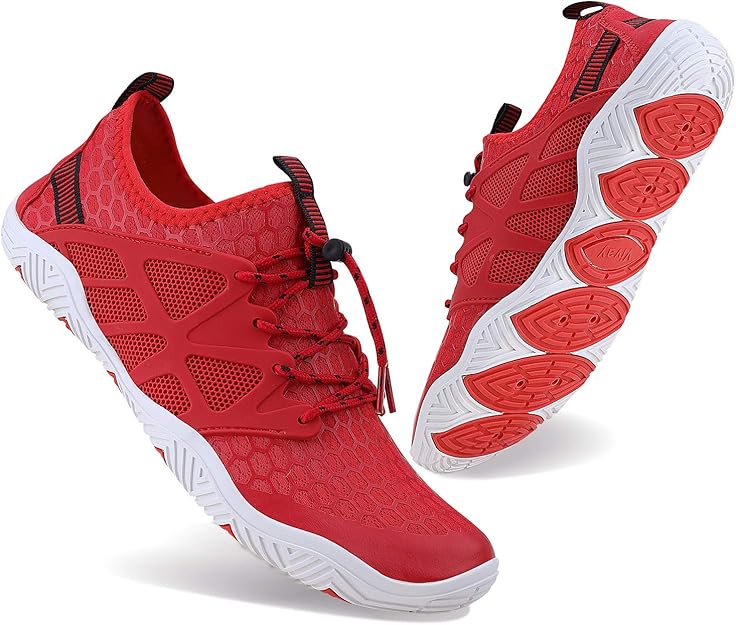
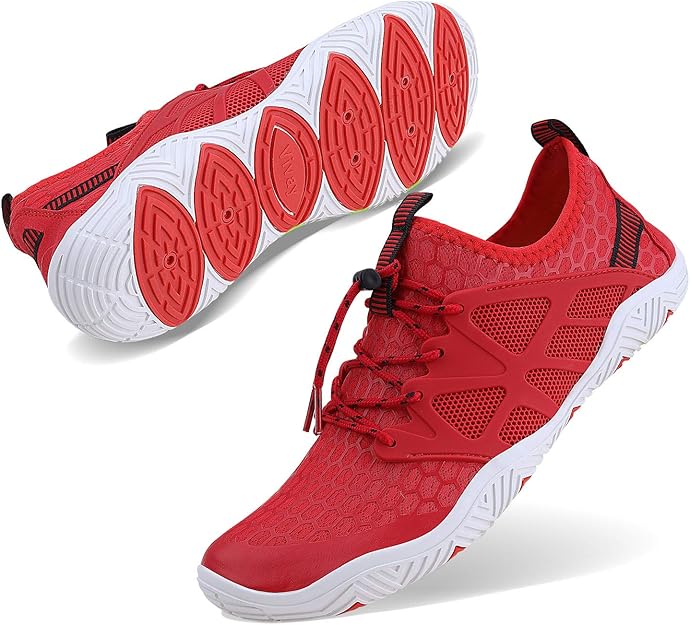
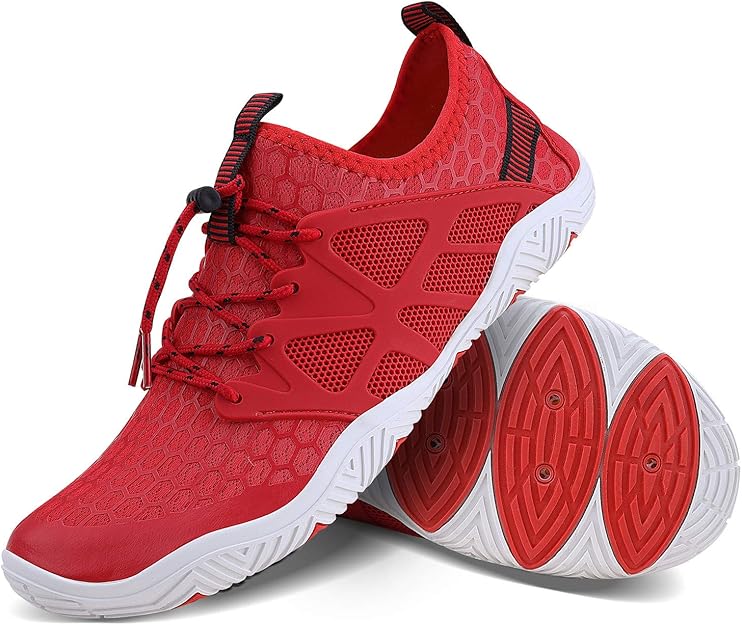
Standing in the Amazon search results staring at a $28 water shoe listed under eight different brand names, I had a simple question: does the name on the label actually matter? MAYZERO, gracosy, LINGTOM, Wonesion, JointlyCreating — same factory, same shoe, different packaging. I’m Sarah, and after 10+ years of testing footwear, I know a white-label product when I see one. So I ordered a pair under the MAYZERO label, spent 3 months and 40+ sessions putting them through pools, a Florida water park, lake kayaking, and nature trails, and here’s the honest answer: the name doesn’t matter nearly as much as what you’re going to do with the shoe.
The $30 Question — What You’re Actually Buying
Let me be upfront about something no other review will tell you: MAYZERO water shoes are almost certainly the same physical product sold under gracosy, LINGTOM, Wonesion, JointlyCreating, Centipede Demon, hiitave, and others on Amazon. This isn’t a criticism — it’s a context-setter. When you’re evaluating a $28 shoe, you’re evaluating the shoe itself, not a heritage brand with proprietary technology.
So here’s the shoe itself:
- 💰 Price: $25–35
- ⚖️ Weight: 6.2 oz (women’s size 8, reviewer-measured) / 198g brand reference size
- 🧪 Upper: Lycra stretch fabric
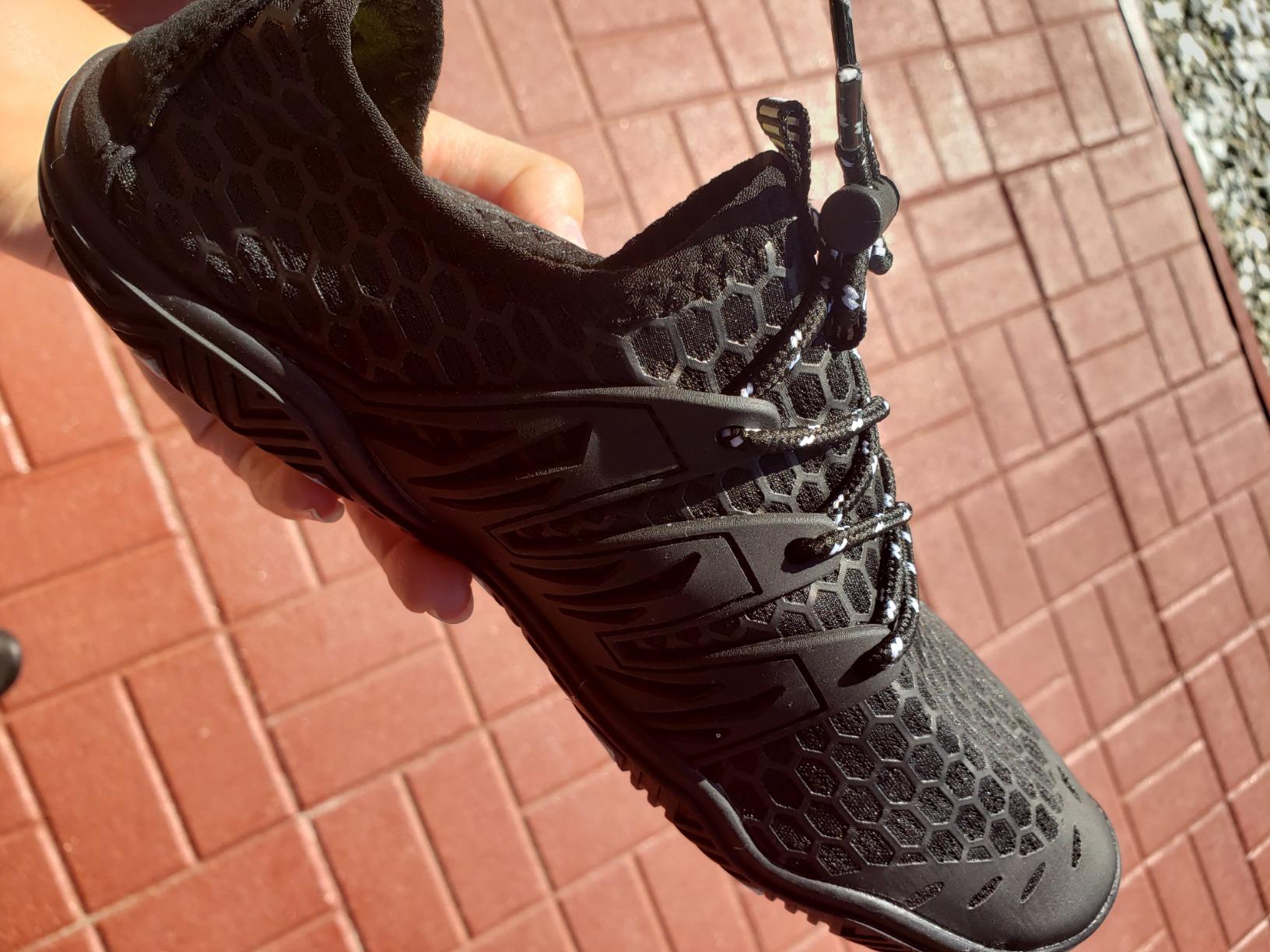
- 👟 Midsole: Thick honeycomb construction
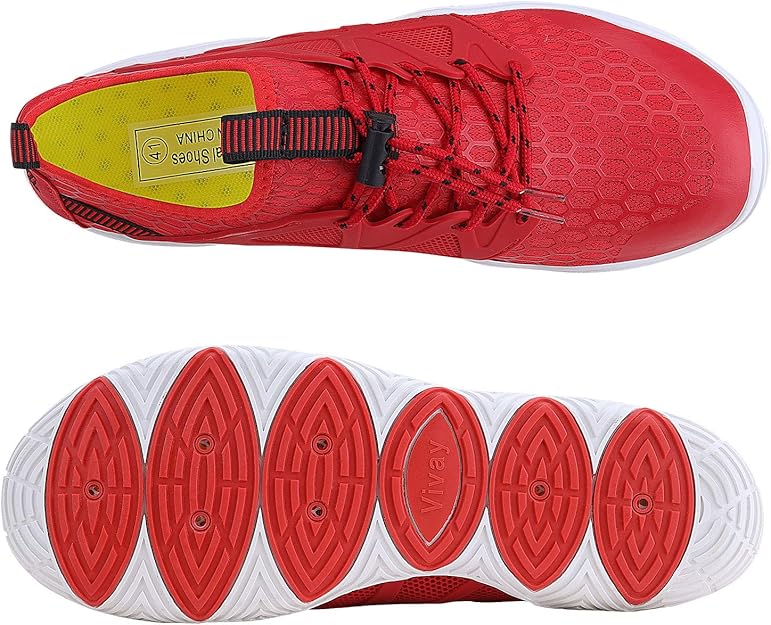
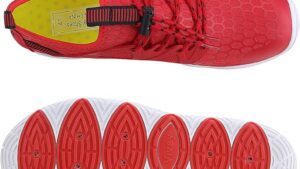
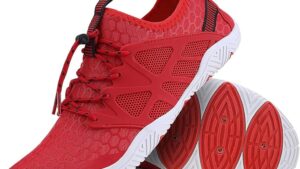
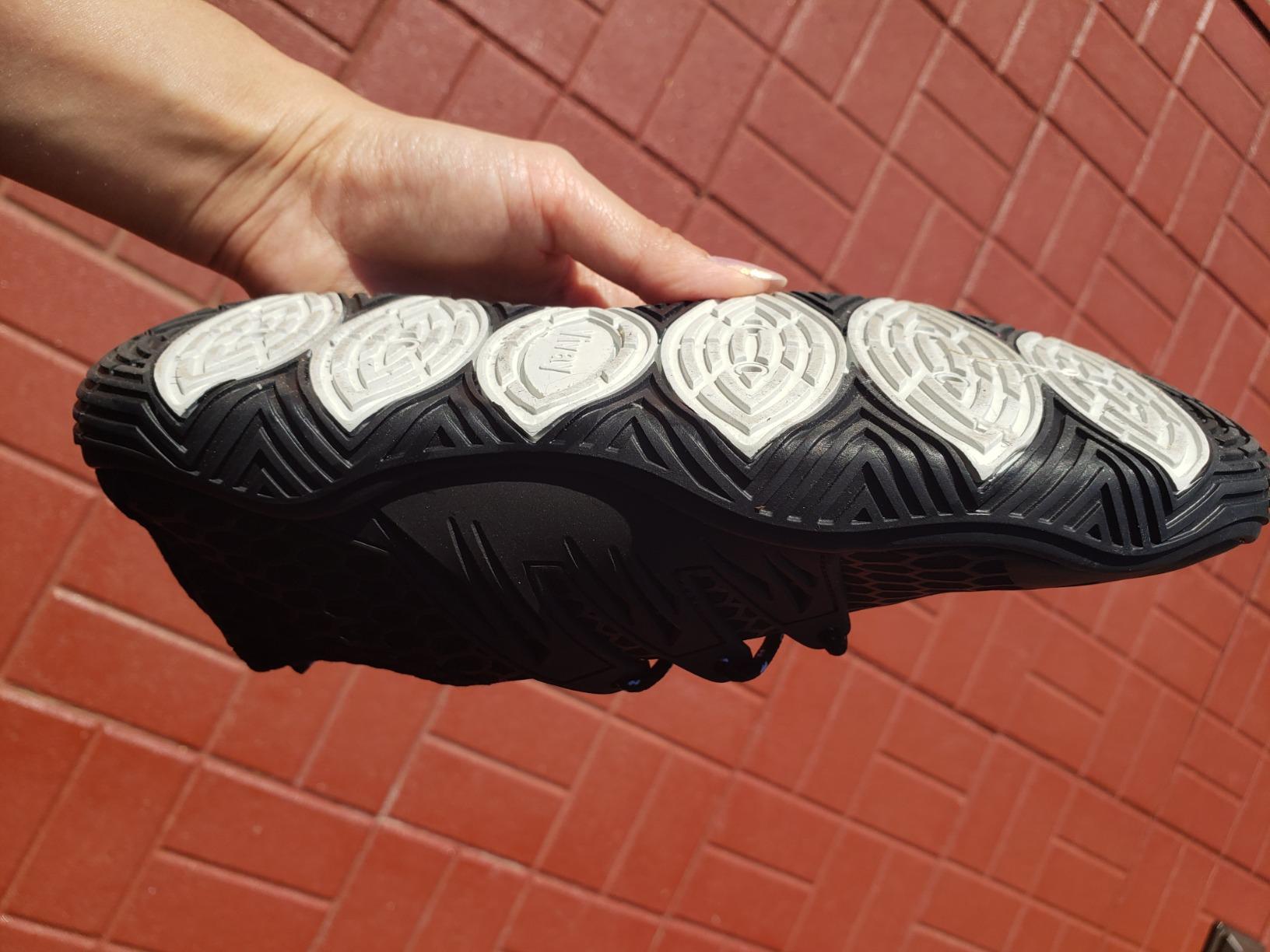
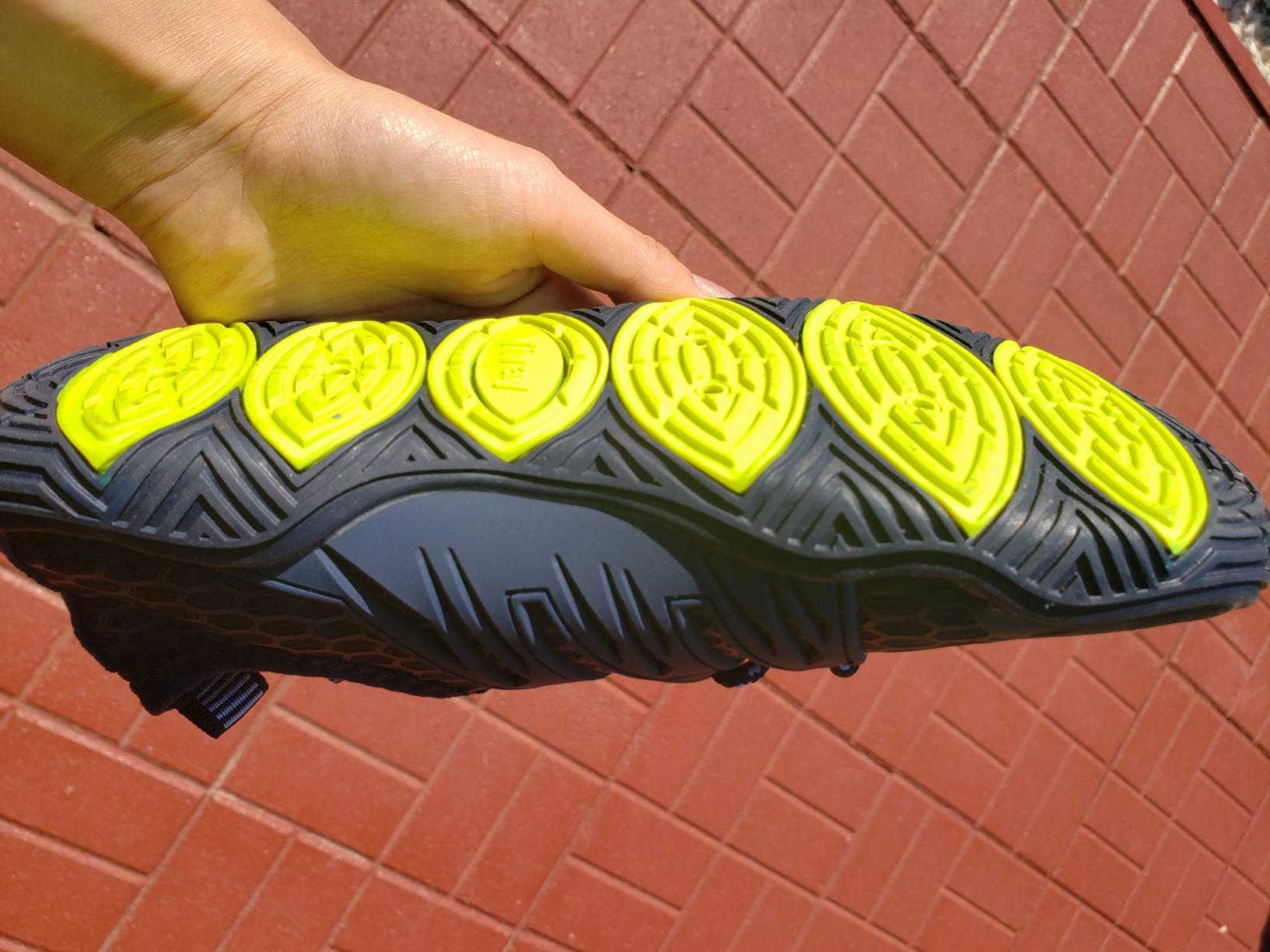
- 👟 Outsole: Rubber with drainage holes
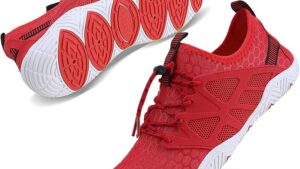
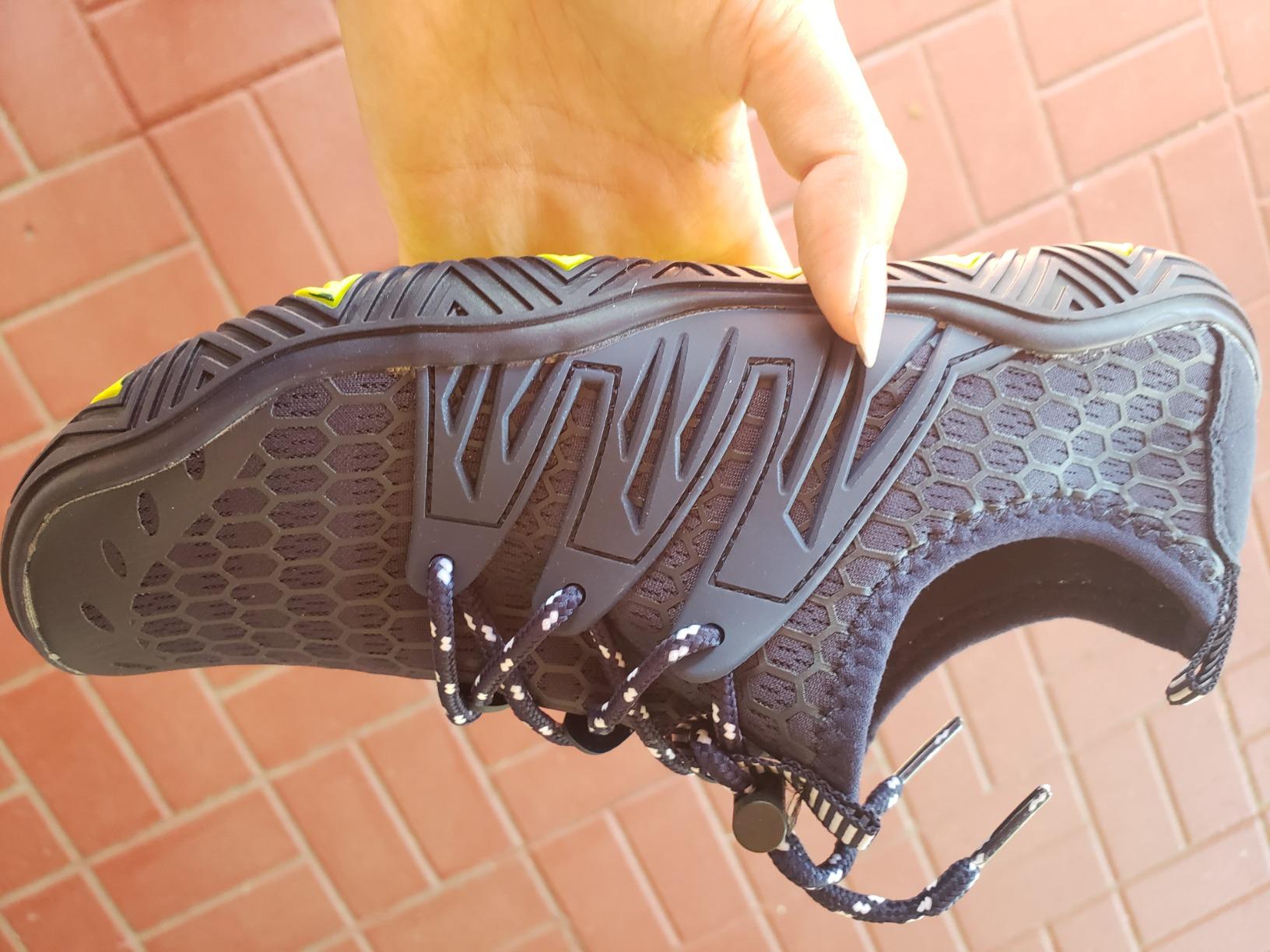
- 🔒 Closure: Elastic lace with buckle — slip-on style
- 📐 Sizes: Women’s 5.5–15 / Men’s 4–14 (13 size options)
- 🎨 Colors: 45 options
- 🏊 Category: Unisex multi-purpose water shoes
The overall score is 6.5/10. The comfort score is 9/10. The durability score is 4/10. That gap is the whole story, and I’ll explain every number.
Construction and Design — Strip It Down to What’s There
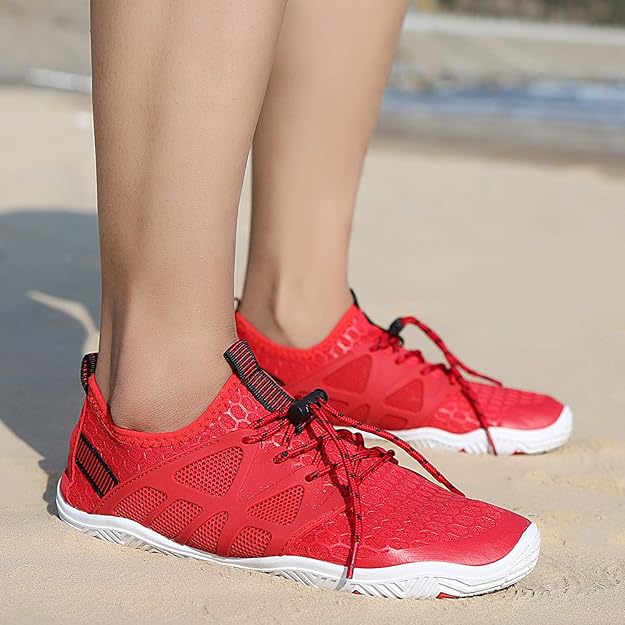
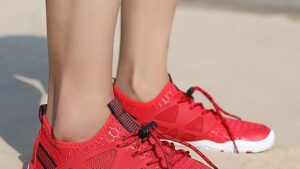
The Lycra stretch upper is the defining feature. It’s soft against bare skin, it moves with your foot instead of fighting it, and it breathes even when wet. During three hours in 90°F Florida heat, my feet didn’t feel trapped. That matters when you’re wearing a shoe in and out of water all day.
The elastic lace-with-buckle closure is where I want to address something directly. Wirecutter — which tested over 20 water shoes and is one of the most credible sources in footwear testing — noted that their MAYZERO pair had drawstring closures with no end caps, causing the slide toggles to pop off. Over my 40 sessions with the current elastic buckle model, I had zero closure failures. These appear to be different closure systems (drawstring vs. elastic buckle), which may mean different production runs. Both data points are worth knowing: lab failure on a drawstring version, real-world stability on the buckle version. Monitor the closure on yours.
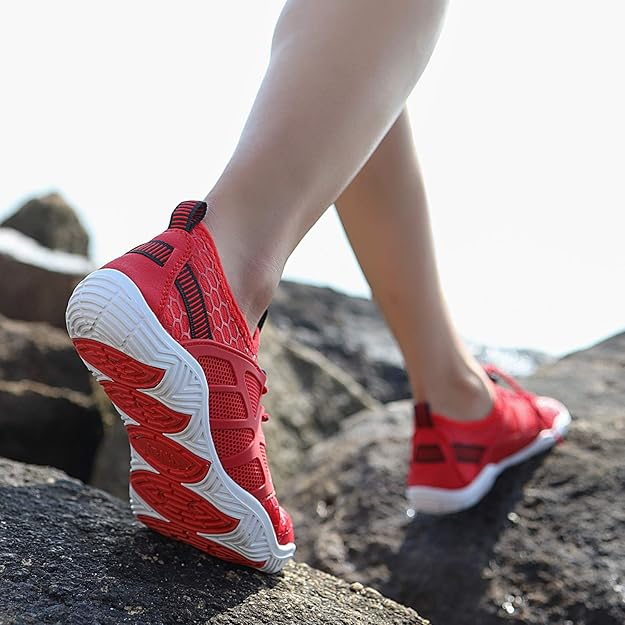
The honeycomb midsole delivers actual cushioning — not running-shoe bounce, but real underfoot comfort that I wasn’t expecting at this price point. The rubber outsole handles dual duty: grip on wet surfaces and water drainage. The ergonomically molded toe guard is a real feature — it absorbed a solid shin on a kayak hull during a clumsy launch without leaving a bruise. Just understand what it doesn’t do: protect the bottom of your foot from sharp objects on trails.
The wide toe box is genuinely wide. Normal to wide feet will have room to spread naturally. Narrow feet may find the toe box loose — consider sizing down half a size. Check out the Jackshibo Wide Toe Box Shoes or Joomra Wide Barefoot Shoes if you’re specifically shopping for wide-foot-friendly options with different sole profiles.
At 45 color options and a women’s 5.5–15 / men’s 4–14 size range, the selection is genuinely comprehensive. And they look like real shoes — not sock-style water shoes that scream “I’m wearing water shoes.”
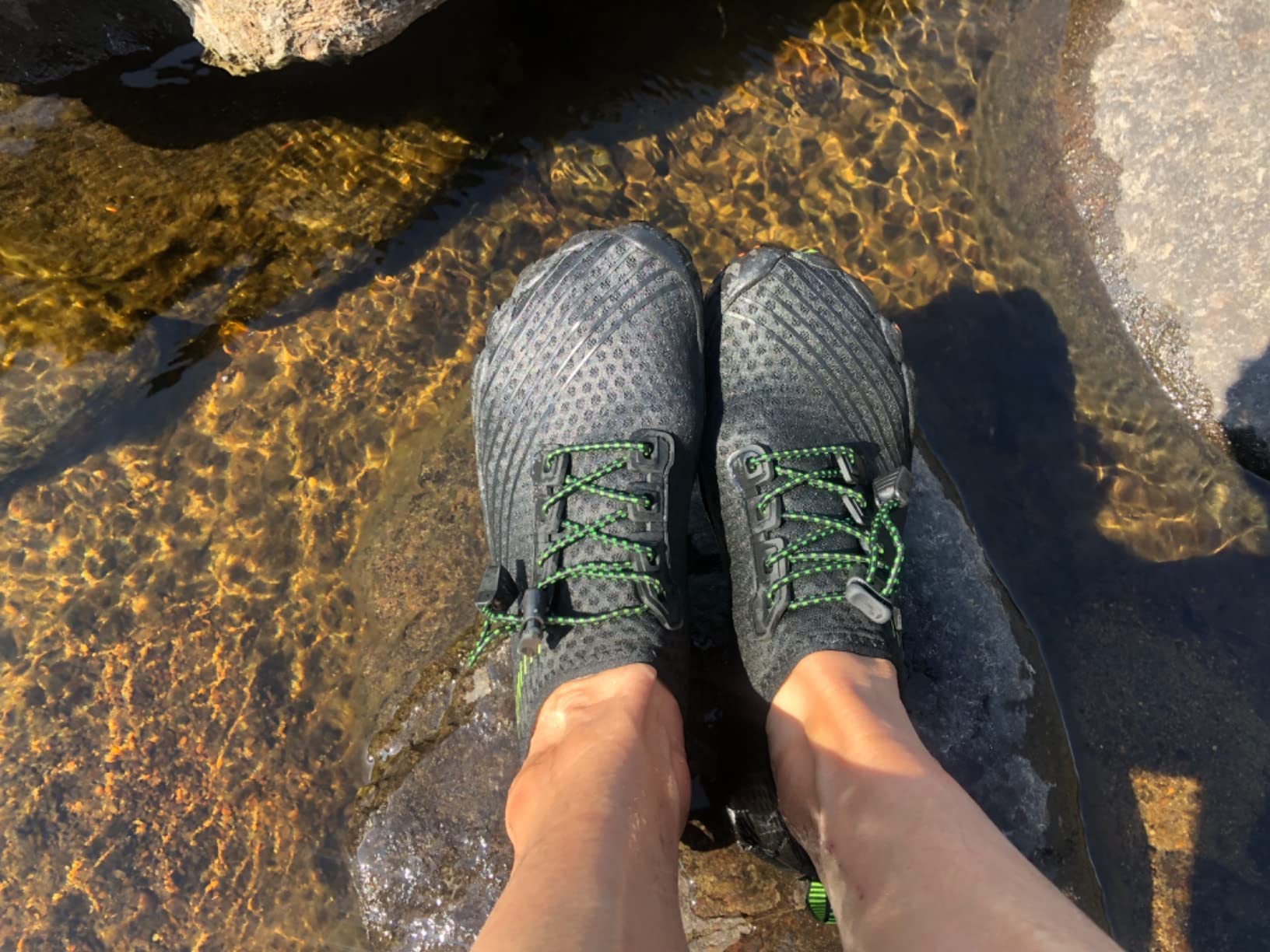
Comfort — The Number That Earned a 9
The first time I put these on, I did a double-take. The Lycra wraps around your foot like a cushioned sock. There’s no break-in period — they feel right from the first wear. By the third session, they’d shaped to my foot and felt like they’d been there for a season.
I brought in two other testers because a single data point only tells you so much. Lisa — 5’6″, 140 lbs, and someone who normally struggles to find water shoes that don’t bite into her wider forefoot — put these on and said nothing. In testing circles, silence from Lisa is a strong endorsement. Rachel, whose feet run narrower, found them a touch roomy in the toe box and had more ankle movement than she liked, though the buckle held everything in place during activity.
For extended wear, these genuinely hold up. Eight hours at a Florida water park — wet concrete, slide steps, lazy river, standing in lines, walking between attractions — and my feet felt fine at hour eight. That’s not a common finding at this price point. Most budget water shoes become uncomfortable by hour four. The honeycomb midsole is doing real work.
The breathability during wet use is a genuine advantage. Lycra doesn’t trap heat the way neoprene does, so even when the shoe is wet, your foot isn’t cooking inside it. I tested other water shoes with neoprene uppers and the difference is noticeable after a couple of hours in summer heat.
Comfort score: 9/10. The only reason it doesn’t score higher is the inner liner can shift slightly when the shoes are thoroughly soaked — a minor annoyance during active swimming rather than walking. For most uses, this won’t matter.
Three Tests That Tell the Real Story
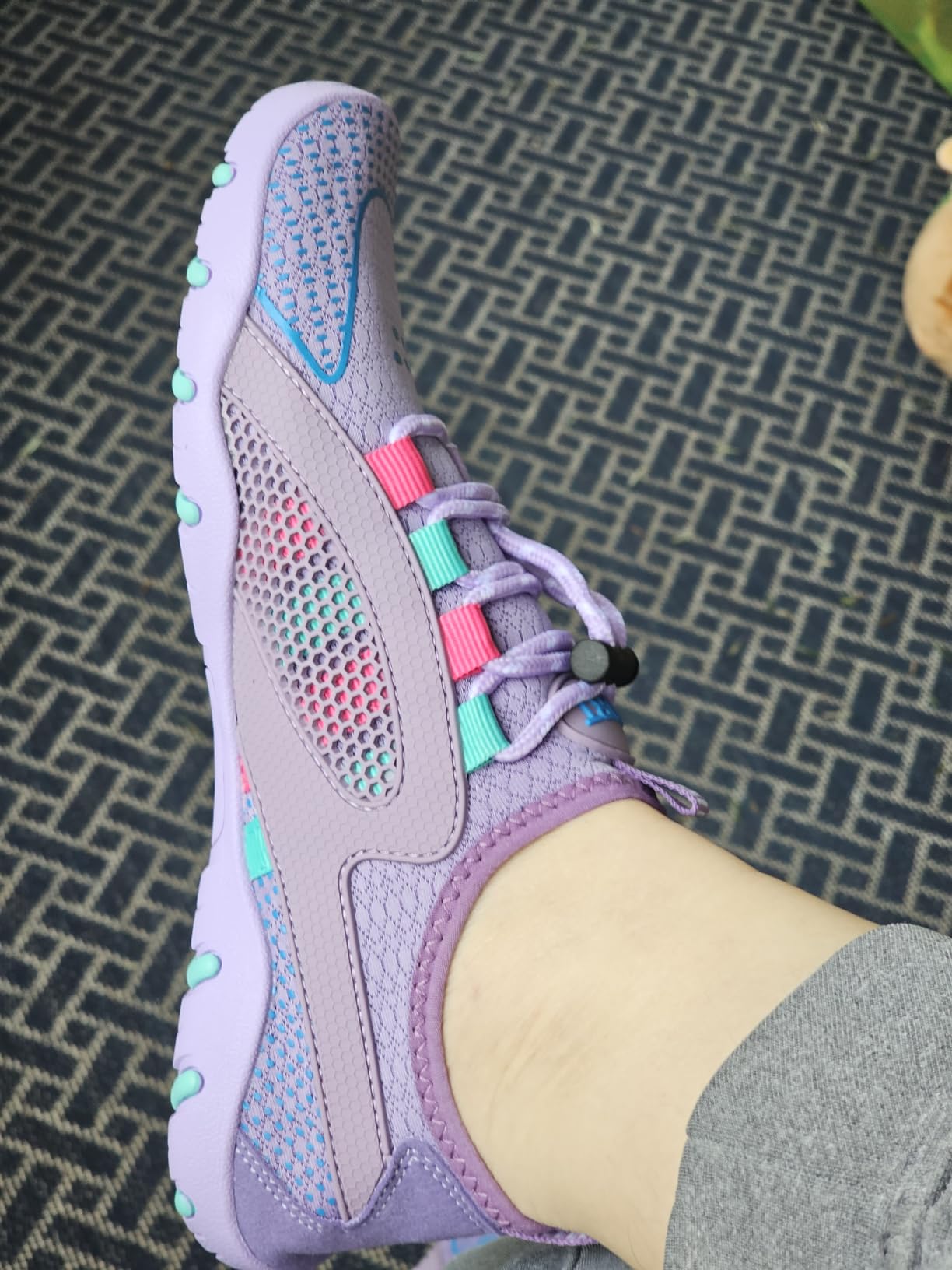
Test 1: Eight Hours at a Water Park
A Florida water park in July is as close to a stress test as a water shoe gets — 90°F heat, wet concrete, fiberglass slides, lazy rivers with rocky textured floors, and lots of walking between attractions. I wore the MAYZERO shoes from park open to close: eight consecutive hours.
The grip performed on every surface I hit — wet concrete, the fiberglass slide entry points, the pool edge steps. I never had a moment that felt genuinely unsafe underfoot. The drainage worked continuously; I never felt water-logged while walking between attractions. Quick-dry claim checks out: within 30 minutes of leaving the wave pool for the dry seating area, the shoes had gone from soaked to merely damp.
The only issue: sand from the beach area section collected in the drainage holes. It shook out mostly when the shoes dried, but during use, it created a minor gritty feeling. On a sandy beach day, plan for this — it’s the trade-off for the drainage design that makes these shoes dry so fast.
Test 2: Lake Kayaking
I launched from a rocky shore, paddled for two hours, and pulled up on a gravel bar mid-trip. The shoes handled the rocky shore launch better than I expected — the rubber outsole gripped wet rocks well enough to avoid the embarrassing slip on entry. During a clumsy hull clip with the kayak, the toe guard did its job.
This isn’t just my experience. DeepSailing rates MAYZERO as “Best for Racing” sailing shoes — specifically citing the 198g lightweight construction, the grip pattern, and the ability to handle wet deck conditions during active sailing. Dave The Kayaker (davethekayaker.com) uses MAYZERO shoes for regular paddling sessions, not as a theoretical recommendation but as his actual gear. Two independent water sport sources beyond the pool context.
After full submersion during the launch, the shoes were functionally dry within two hours in the sun. The transition window for a morning kayak to a dry-land lunch is real.
Test 3: Nature Trail (Where It Struggled)
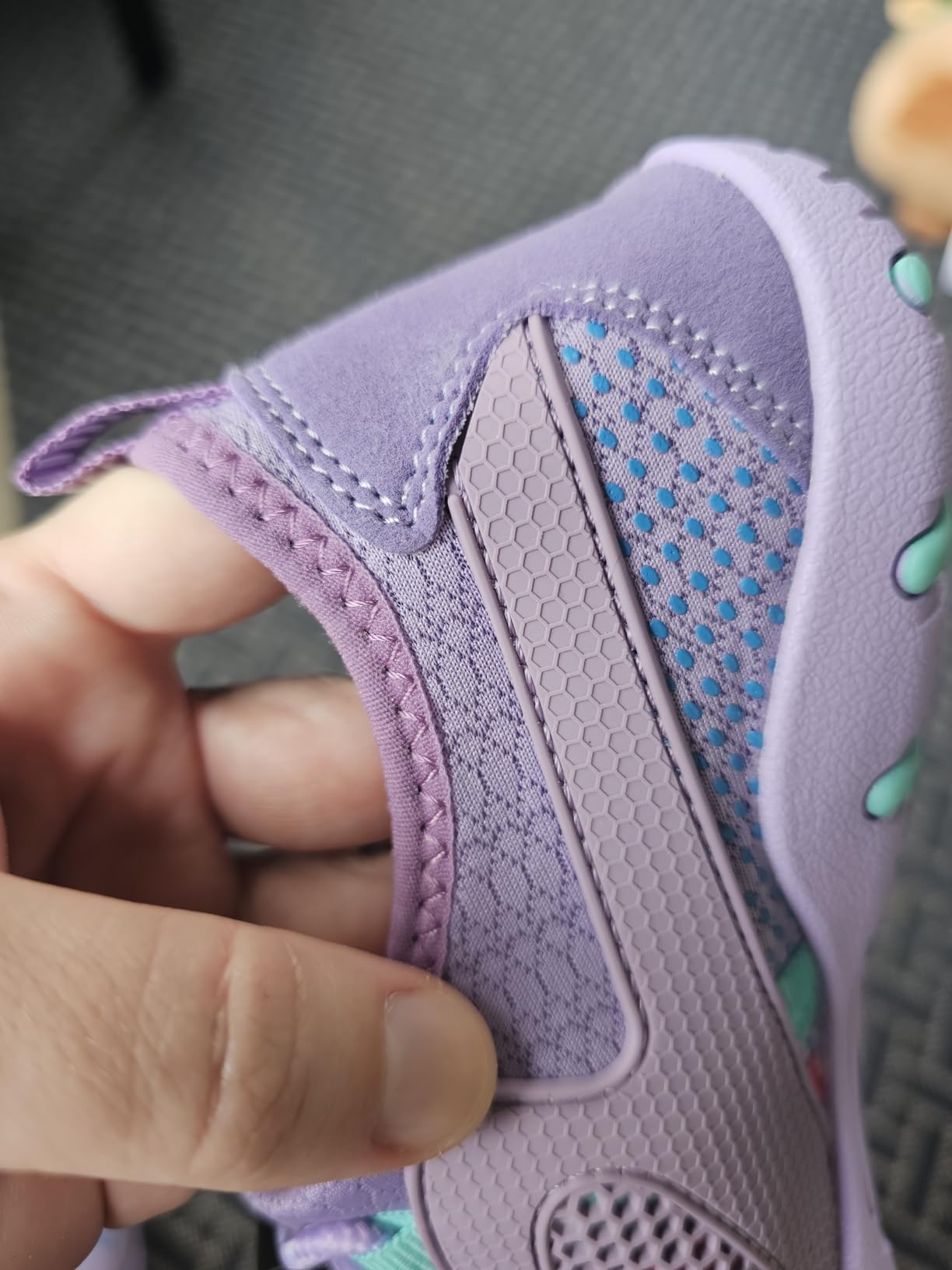
MAYZERO’s marketing lists this shoe as suitable for trail running and hiking. I tested that claim on a basic nature trail with packed dirt, some loose gravel, and desert-edge vegetation. During the trail section, a small cactus needle went straight through the sole.
This is a thin sole. It protects your feet from smooth surfaces, rocks up to a certain size, and general water-environment hazards. It does not provide the rigid protection you need for technical trails with root networks, sharp rocks, or vegetation that bites back.
Versatility score: 6/10 — excellent for everything water-related; approach trails with genuine caution. If you need a water shoe that transitions to real trail use, look at the Merrell Wildwood Aerosport or the Humtto Amphibious Water Shoes. The hiking and trekking shoe category on FootGearUSA has options with proper trail sole protection.
The Durability Clock — The Number I Didn’t Want to Write
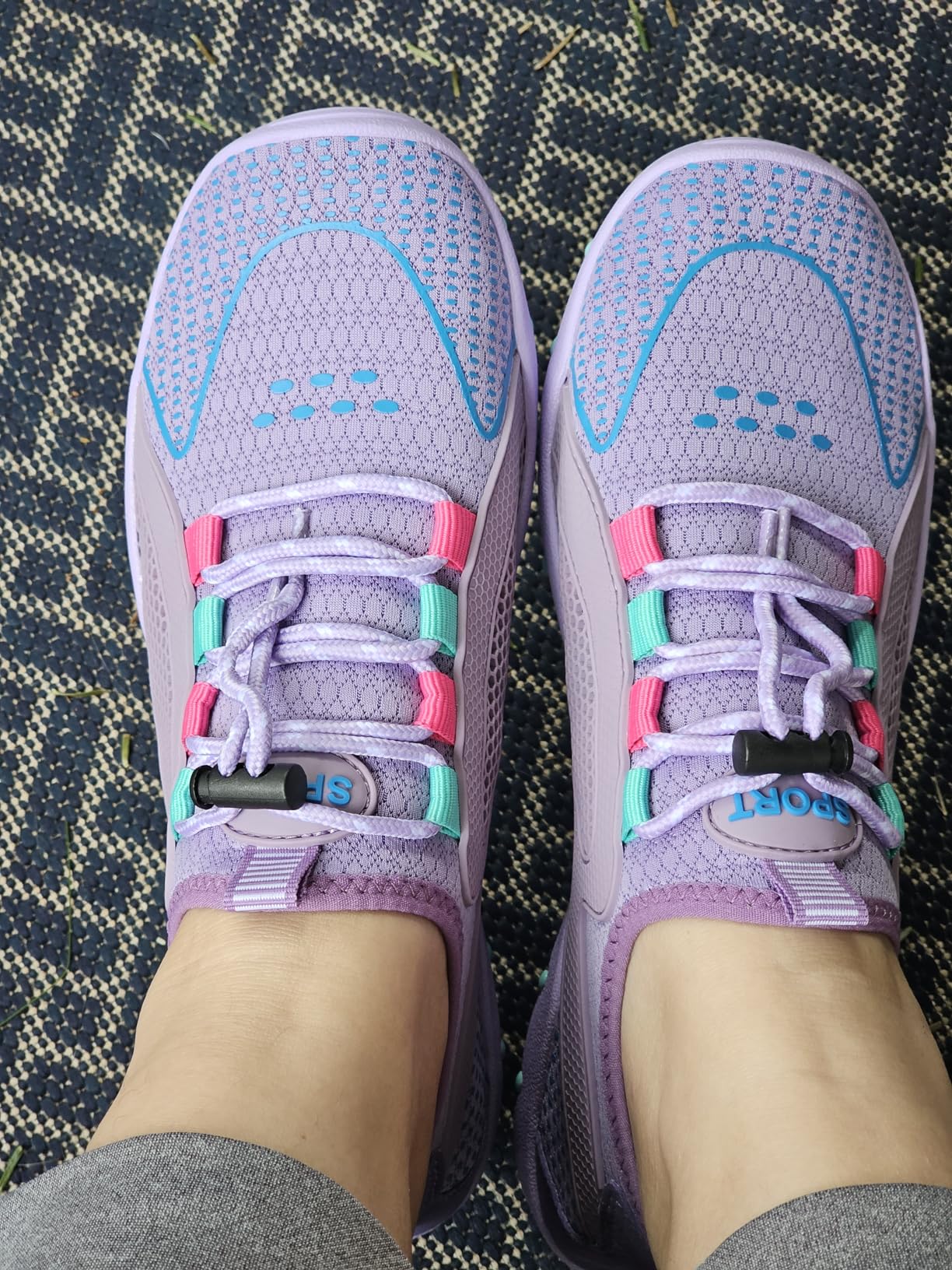
The shoe earned a 9/10 for comfort. It earns a 4/10 for durability. Both numbers are honest.
Here’s the precise timeline, because vague durability reviews help no one:
- Weeks 1–5: No issues. Looks and performs well.
- Week 6: Small separation at the heel edge, where the rubber sole meets the upper. Easy to miss if you’re not turning the shoe over after sessions.
- Week 8: Separation progressed at the heel and beginning at the toe area.
- Week 10: Significant sole separation. Still usable for casual pool wading, but structural integrity is compromised for active water sports.
Lisa’s pair failed on a similar timeline. Which tells me this isn’t a defective unit — it’s a pattern. The adhesive bond between the rubber sole and the Lycra upper is the failure point, not the fabric itself.
This connects to the white-label reality I mentioned at the start. OEM manufacturing at this price point means batch variation in adhesive quality. Some buyers get pairs that last a season. Some report failure in a single day. The average is somewhere in the 2–3 month range with regular use, which aligns with what I found.
The Wirecutter toggle failure (a different mechanism but the same root cause — component quality under stress) points in the same direction. This shoe is not engineered for longevity at $30.
If durability is your primary concern, look at the Watelves Water Shoes or step up to the L-RUN Barefoot Water Shoes for a different construction approach. For kayaking-specific durability, Wirecutter recommends the Astral Loyak — tough canvas construction with a lifetime warranty, but at $90+ and with a 5-hour drying time.
The Value Math
At $25–35, here’s the math:
- 40+ sessions over 3 months = approximately $0.60–0.85 per session
- For a vacation shoe used 10–15 times over two beach trips per year: that’s $1.75–3.50 per use — still a fair rate
- For a daily driver at 3+ sessions per week year-round: you’re replacing this every 2 months, so $150–200/year on shoes that cost $30 each
Compared to alternatives at similar price points: Wirecutter’s current top pick, the Speedo Surf Knit Pro, runs around $32 with better durability and a thicker outsole, but less comfort for wide feet. The Crocs LiteRide 360 Pacer dries fastest (1h15m confirmed by Wirecutter lab testing) but costs $50–60 and has decorative-only laces that can’t be tightened. The DigiHero at ~$12 dries nearly as fast (1h45m) but has documented QC issues including defective units and the notorious “two left shoes” complaint in multiple reviews.
At $30, MAYZERO wins on comfort for wide feet and on genuine water sport performance. It loses on durability compared to anything with a real construction budget.
My pro tip: If you find a pair that fits well, buy two. Rotate them. You’ll always have a dry pair, and the total cost for a season is $50–70 instead of $30 for a single pair that fails in 10 weeks.
For higher-tier water shoe options, the Columbia Castback PFG Water Shoe offers a step up in construction quality. And if you’re open to a different style entirely, exploring the sandals category can surface options that handle water transition with better long-term durability.
Score Breakdown and Final Verdict
| Category | Score | What It Means |
|---|---|---|
| Design & Aesthetics | 8/10 | Looks like a real shoe; wide toe box; 45 colors |
| Comfort | 9/10 | Sock-like fit; excellent for wide feet; 8-hour water park capable |
| Water Performance | 8/10 | Reliable grip on wet surfaces; drainage fast; ~2h quick-dry after full immersion |
| Versatility | 6/10 | Water sports excellent; trail use requires caution |
| Durability | 4/10 | Sole separation by weeks 6–10 with regular use |
| Value | 7/10 | ~$0.70/session is fair for vacation use; poor math for a daily driver |
| Overall | 6.5/10 | Exceptional comfort ceiling, real durability floor |
| ✅ What Works | ❌ What Doesn’t |
|---|---|
|
|
✅ Buy These If:
- You’re heading to a beach vacation or water park for 1–2 weeks
- You have normal-to-wide feet and struggle to find comfortable water shoes
- You kayak, sail, or paddle and need lightweight, quick-dry coverage
- You need multiple pairs for a family without breaking the budget
- You want a water shoe that doesn’t look like a water shoe
⚠️ Consider Alternatives If:
- You use water shoes 3+ times per week and need them to last a full season — look at the Ulogu Waterproof Hiking Shoes or Dream Pairs Hiking Sandals for better longevity
- You need trail-capable protection — try the Salomon Speedcross Peak Clima for serious terrain
- You have very narrow feet — the wide toe box may feel sloppy
- You want a water shoe that will last multiple seasons — invest $60–90 in Merrell or Astral
Browse the full FootGearUSA water and outdoor shoe selection at footgearusa.com if you want to compare options side by side.
Frequently Asked Questions
Do MAYZERO water shoes run true to size?
Yes — both my testing and DeepSailing’s independent assessment confirm true-to-size fit. If you have narrow feet, you might try a half size down to reduce the toe box looseness.
How long do MAYZERO water shoes last before the sole separates?
Based on my testing: first signs around week 6, significant separation by week 10 with regular use (3+ sessions per week). With occasional use (once or twice a week), you may get 4–6 months before the same failure occurs. The adhesive bond between sole and upper is the failure point.
Are MAYZERO water shoes good for wide feet?
Yes — genuinely. The stretch Lycra upper and wide toe box accommodate normal-to-wide feet well. I tested with two additional people who have wider forefoot widths, and both found them comfortable without the pinching typical of narrower water shoe designs. Explore more water shoe options at FootGearUSA if you want to compare fits.
Can you use MAYZERO water shoes for kayaking or sailing?
Yes — and this is one area where third-party data backs up the claim. DeepSailing independently rates MAYZERO as “Best for Racing” sailing shoes, citing the 198g lightweight construction and grip pattern. A dedicated kayaking blogger uses them as his regular paddling footwear. The quick-dry and drainage work well for water sport transitions.
Are MAYZERO water shoes the same as other cheap Amazon water shoe brands?
Almost certainly yes — MAYZERO appears to be the same factory product sold under multiple brand names (gracosy, LINGTOM, Wonesion, JointlyCreating, Centipede Demon, hiitave, and others). Same physical product, different labels. This is common for budget Chinese-manufactured goods. It doesn’t make the shoe better or worse — it’s just useful context when you’re deciding which “brand” to order from.
How quickly do MAYZERO water shoes dry?
In moderate heat (Florida, July), mine dried from soaked to functionally dry within about 30 minutes of active walking. After full immersion (kayak launch), roughly 2 hours sitting in the sun. Wirecutter’s lab-tested equivalent for budget knit water shoes (DigiHero) clocked at 1h45m; the Crocs LiteRide 360 Pacer was the fastest at 1h15m. MAYZERO is in a competitive range.
Can you wear MAYZERO water shoes for hiking?
Light nature trails on packed dirt: cautiously, yes. Actual hiking with rocks, roots, or sharp vegetation: no. A cactus needle went through the sole during my trail testing. For water-to-trail crossover use, look at something like the Merrell Women’s Moab 3, which has proper trail sole protection.
How should I care for MAYZERO water shoes to extend their life?
Rinse thoroughly after saltwater or sandy beach use — salt accelerates adhesive breakdown. Air dry completely rather than storing wet — moisture trapped between sole and upper speeds up delamination. Avoid high heat (don’t dry in a clothes dryer). Rotate pairs if you use them frequently. The “buy two pairs” approach I mentioned isn’t just about having a backup — rotating dries the adhesive between uses and extends the bond life.
Are MAYZERO water shoes machine washable?
The Lycra upper can handle a gentle cold cycle, but avoid machine washing regularly — the agitation stresses the sole-upper bond, which is already the failure point. Hand rinsing in cold water after each use is better for longevity.
Be the first to review “MAYZERO Water Shoes Men Women Swim Surf Shoes”
Related products
Training Shoes
Running Shoes
Training Shoes
Training Shoes
Training Shoes
Reviews
There are no reviews yet.