
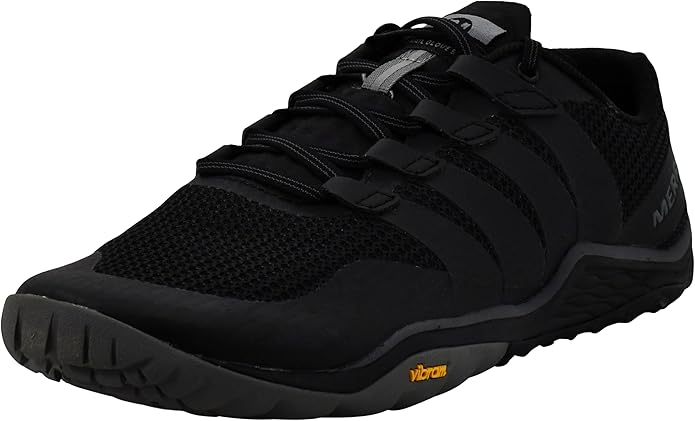
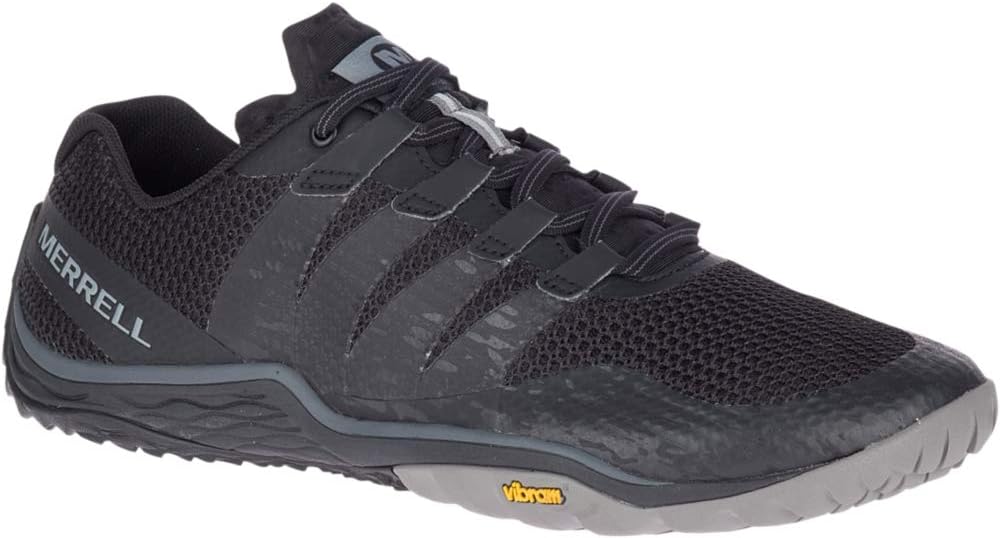
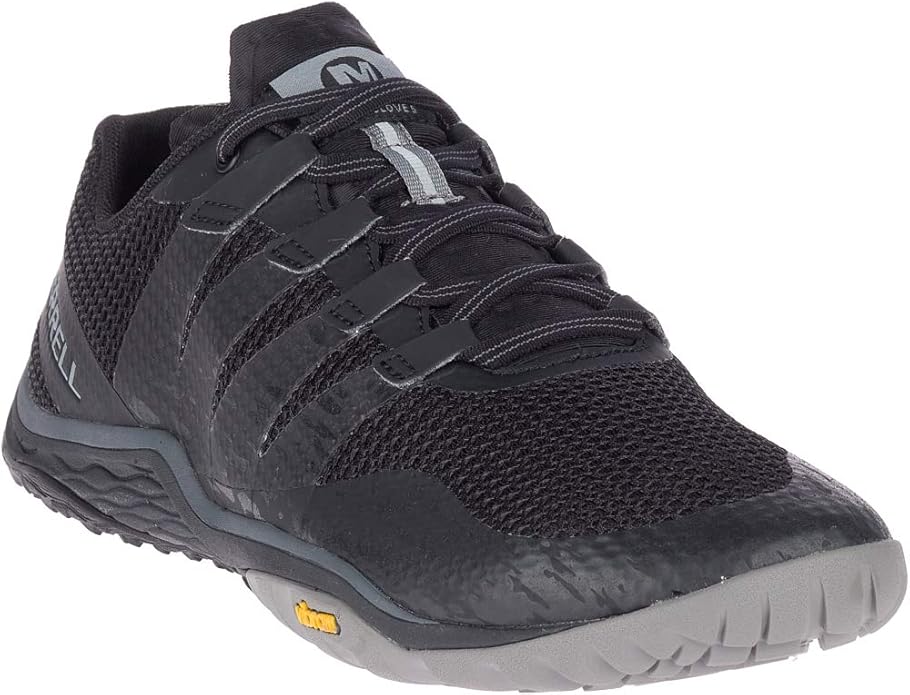
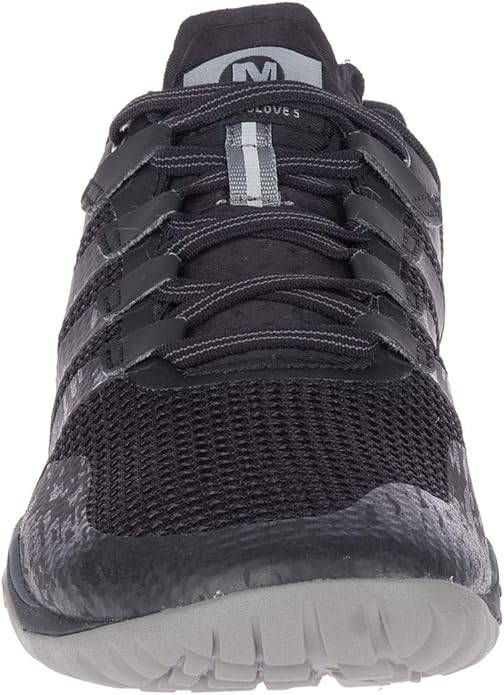
My old minimalist shoes made it 800+ miles before the sole finally gave out on a technical section in Rocky Mountain National Park. After a decade running in zero-drop footwear, I know exactly what I want: ground feel, grip, and nothing between my foot and the trail that doesn’t need to be there. The Trail Glove 5 promised all of that. Here’s what 8 weeks and 220+ miles on Colorado terrain actually delivered.
Short version: this is not a true barefoot shoe. Merrell’s Barefoot 2 construction adds midsole structure that veteran minimalists will notice immediately. But on technical Rocky Mountain trails, the Vibram TC5+ outsole earns its reputation, and the zero-drop platform turned out to work remarkably well for gym lifting too. The durability concern at 220 miles is real and worth knowing before you hand over $130.
Technical Specifications
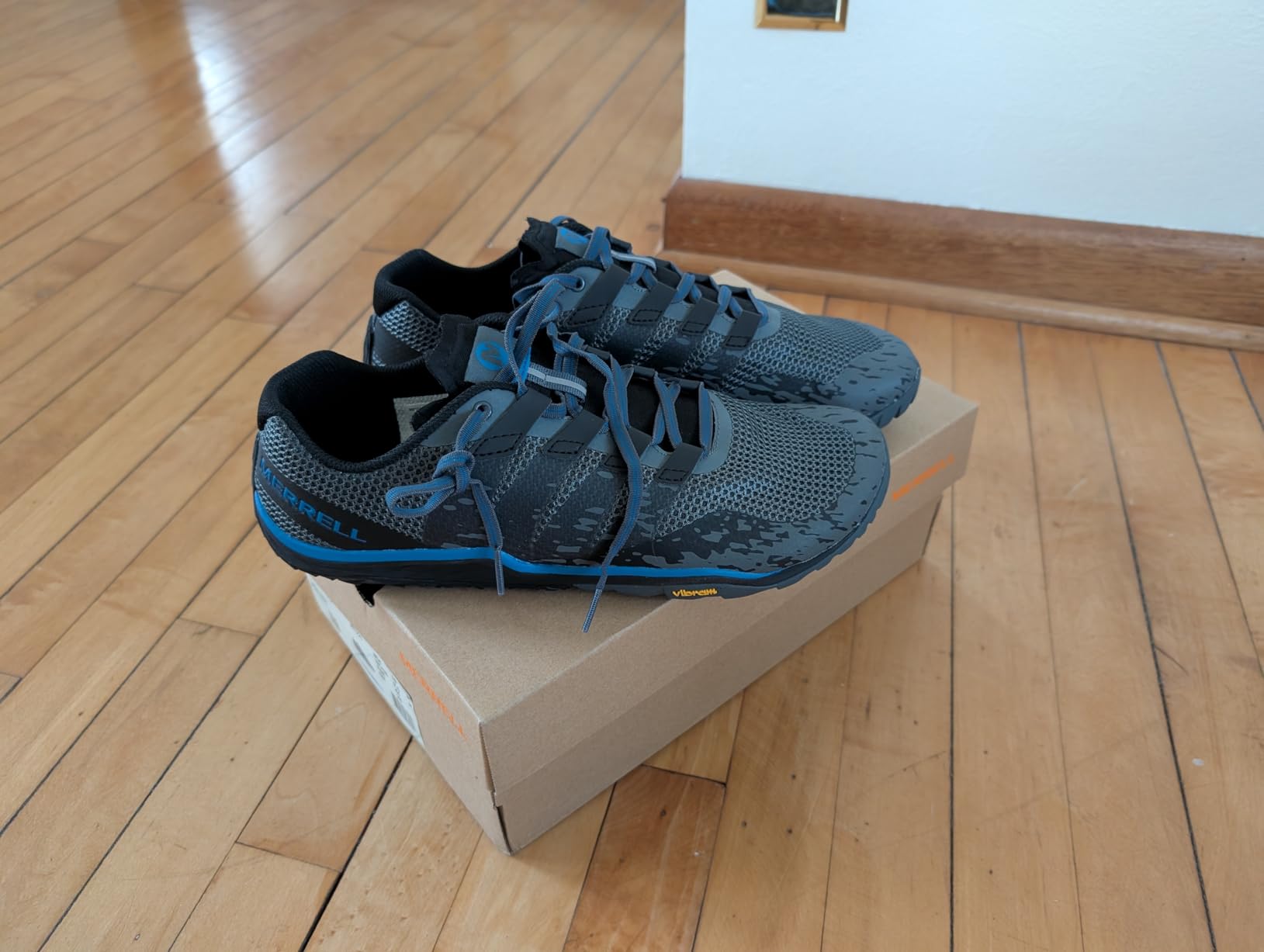
- 💰 Price: $100–120
- ⚖️ Weight: ~7.0 oz per shoe (men’s, lab-tested; varies by size)
- 📏 Heel-to-toe drop: 0mm (true zero drop)
- 📐 Stack height: 12mm total
- 🧪 Midsole: Barefoot 2 construction (EVA foam, shaped midsole)
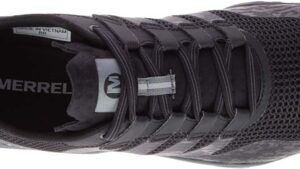
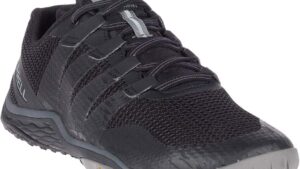
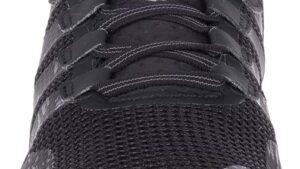
- 👟 Upper: Breathable mesh + TPU, probiotic antimicrobial treatment, machine washable
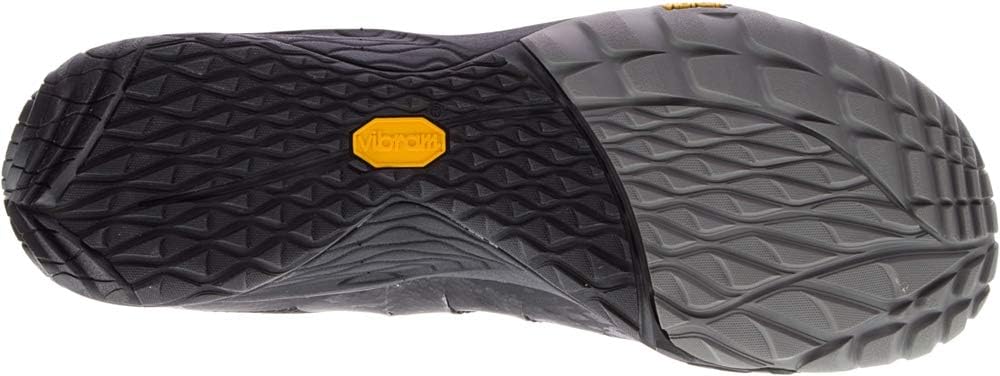
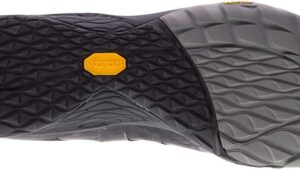
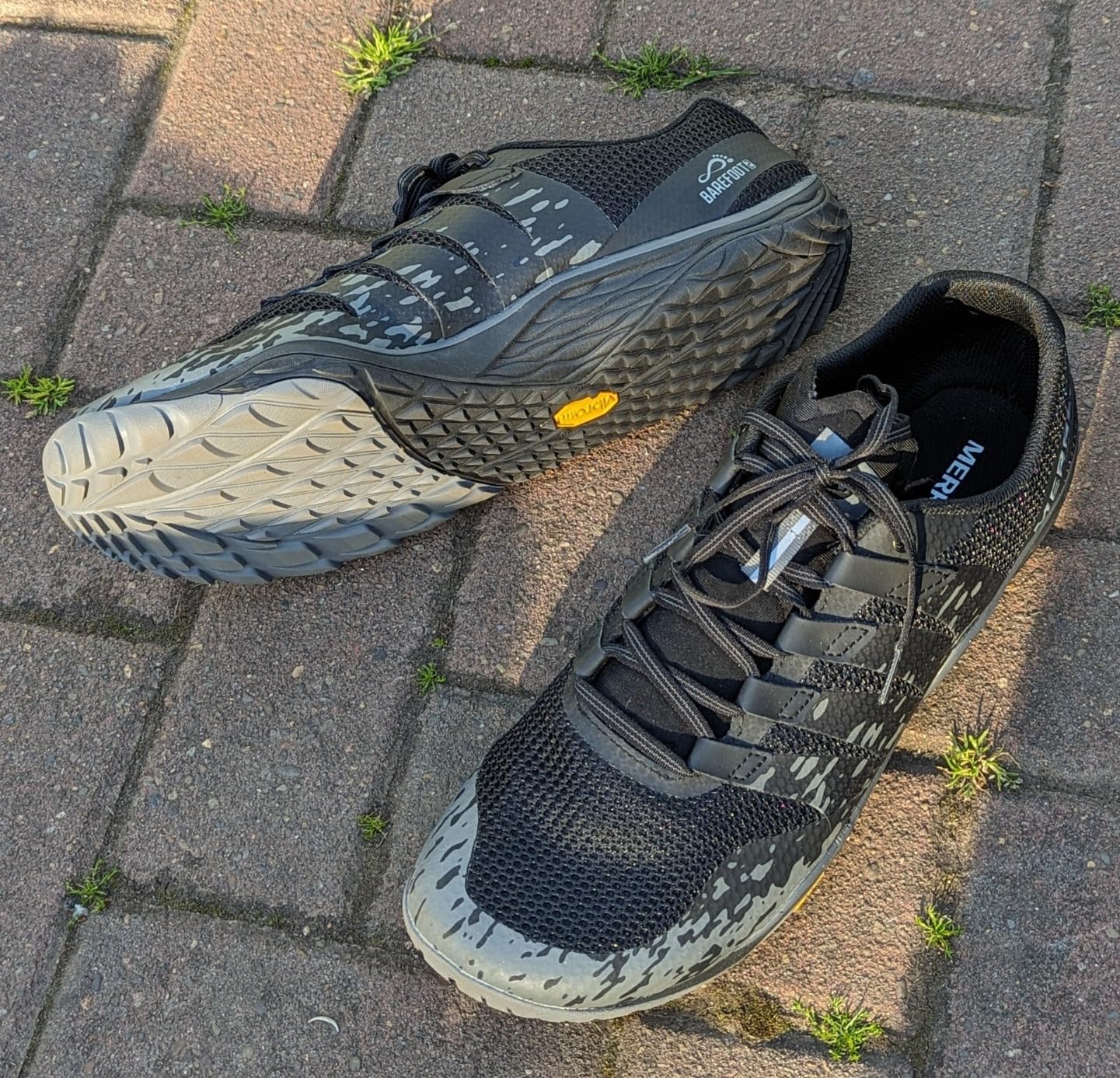
- 🦶 Outsole: Vibram TC5+, TrailProtect rock plate, 3mm interlocking diamond lugs
- 🏃 Category: Minimalist trail running / hiking / cross-training
- ⏱️ Testing period: 8 weeks, 45 trail runs, 220+ miles, 15 gym sessions
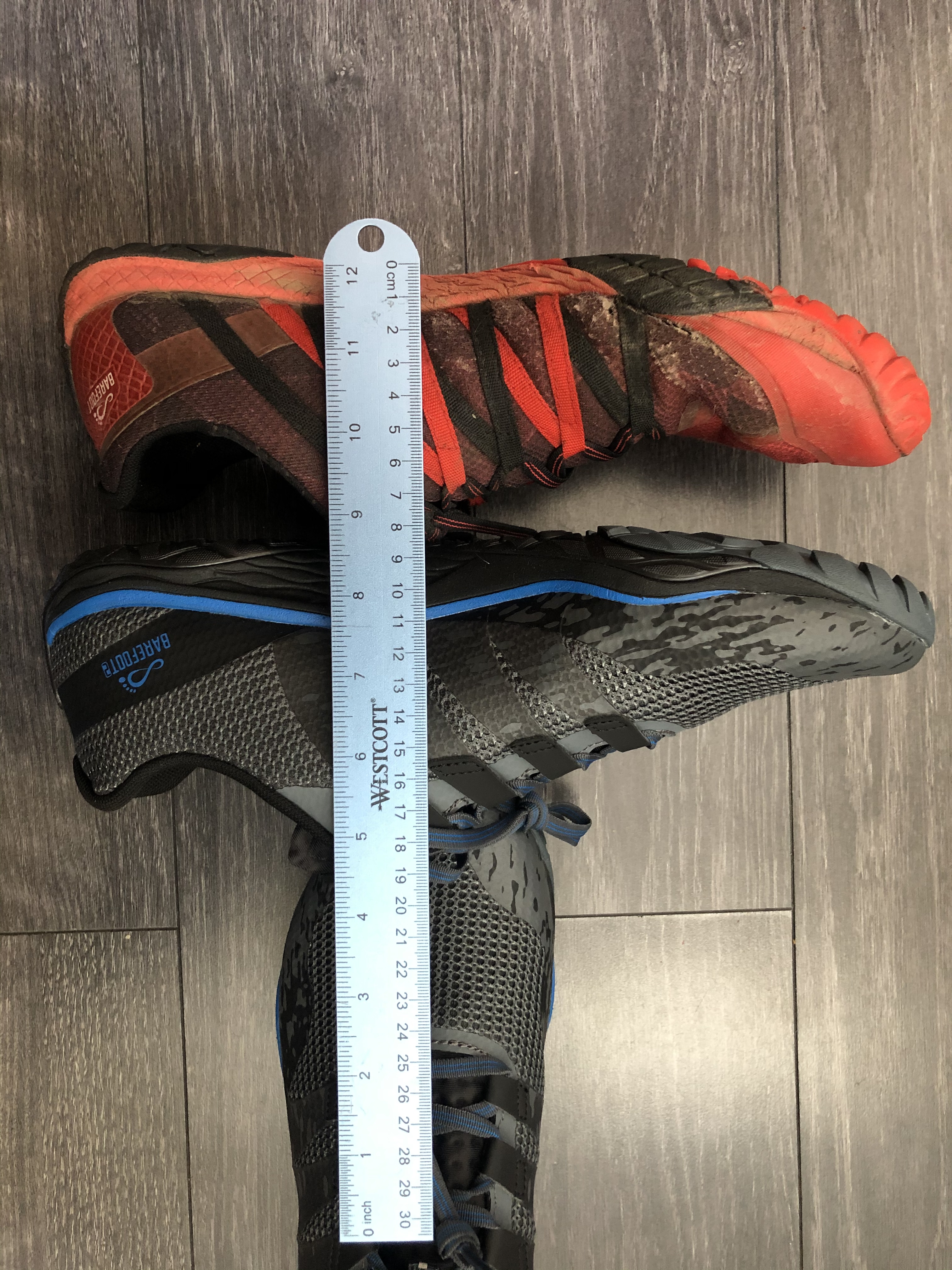
- 📌 Sizing note: Runs 0.5–1 full size large — order down
The spec sheet reads clean until you reach “Barefoot 2 construction.” That’s the name Merrell gives to a midsole layer that the original Trail Glove didn’t have — and that gap between what the marketing suggests and what the experience actually delivers is where this review spends most of its time.
Fit and Sizing — Size Down, No Debate
These run large, full stop. I wear a 10.5 in most trail shoes. I ordered a 10 after reading every credible review I could find, and the fit landed exactly right. Don’t hedge on this: if you’re between sizes, take the full size down, not the half.
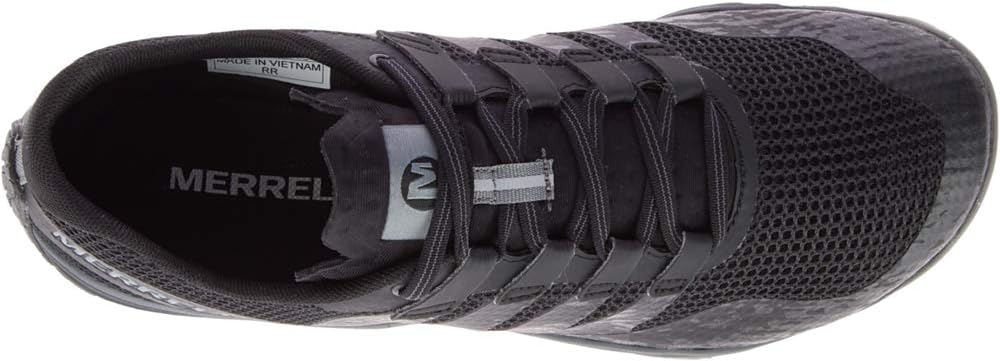
The toe box is the other half of the sizing story. It’s genuinely wide — Trail Glove DNA going back to the original. Long climbs in Rocky Mountain National Park, where my feet tend to swell after a few thousand feet of elevation gain, produced zero cramping and no black toenail threat. The heel collar sits snug without being restrictive, and on aggressive technical descents I didn’t experience any internal foot movement.
Sock thickness matters more than most reviews acknowledge. A thin cotton ankle sock leaves too much play in the heel. Merino wool — I run in Darn Tough — pulls everything into proper contact. If you’re running sockless (the machine washable design and probiotic lining exist for exactly this use case), size down an additional half size from your normal measurement. The Australian trail reviewer at HikeAusNZ figured this out after 500km and it’s a practical point that gets underreported.
For wide feet specifically: the toe box is your friend, and for narrower lasts the Jackshibo Wide Toe Box Shoes offer a purpose-built alternative. But with the Trail Glove 5, the width accommodation is genuine — just still size down in length.
One note on the product line: a roundup site claimed these fit true to size. Every other source, including Runner’s World and OutdoorGearLab, contradicts that. Ignore the outlier.
Design and Build Quality
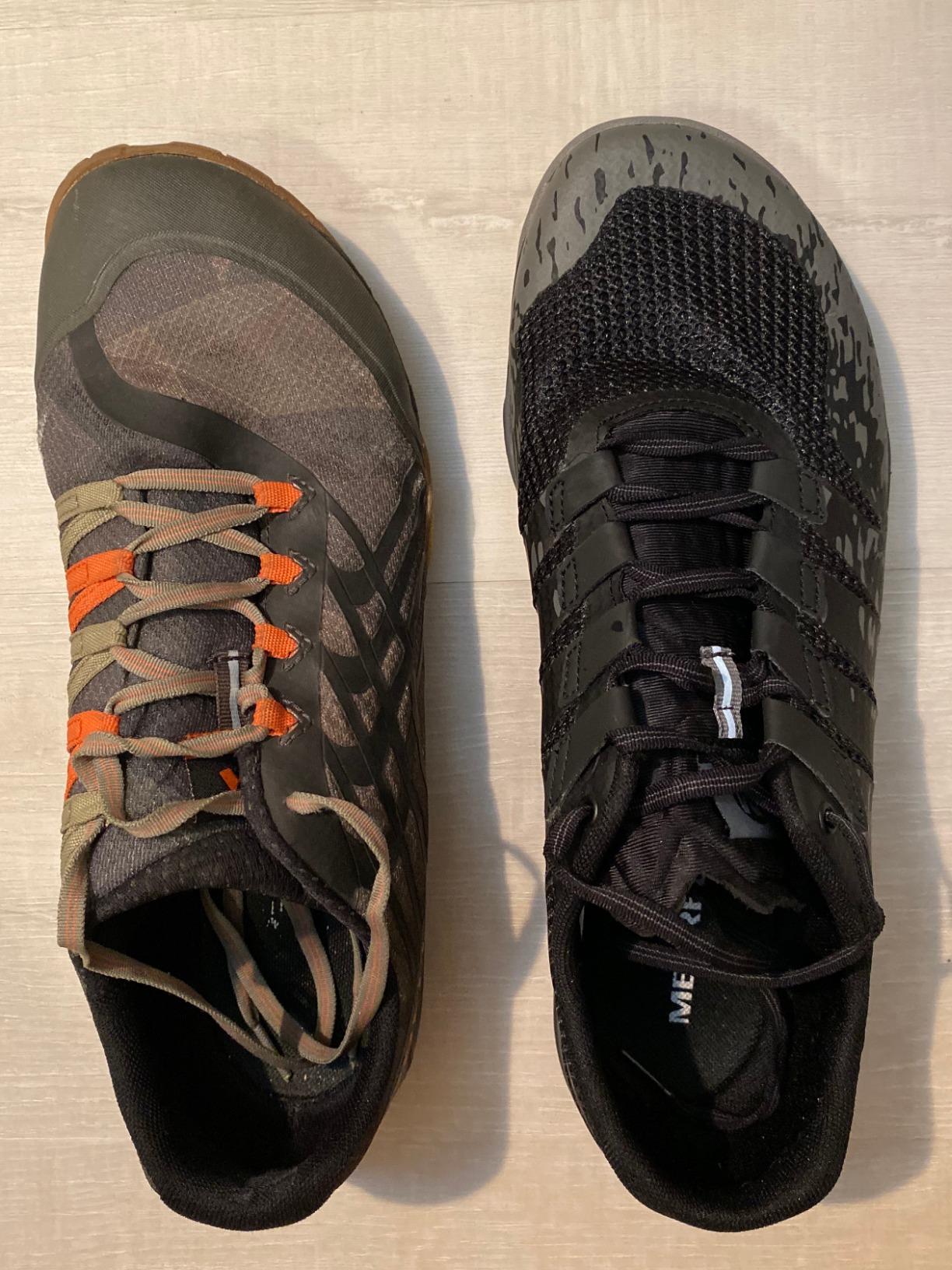
Picking these up out of the box for the first time felt almost suspicious. After years in conventional trail shoes where the upper alone registers as substantial, the Trail Glove 5 barely seems present. The TPU-reinforced mesh upper adds enough structural integrity to survive technical terrain without meaningfully impacting the overall weight. The probiotic treatment in the lining handles the real-world consequence of barefoot-adjacent running — I put these through two cold wash cycles across 8 weeks, air dried both times, and there was no structural damage, no odor problem, no mesh distortion.
The lacing system is traditional, and that’s the right call. Merrell’s previous iterations experimented with alternative closures; the TG5 returns to standard eyelets that actually lock down under load. On loose scree descents, my foot stayed where I placed it.
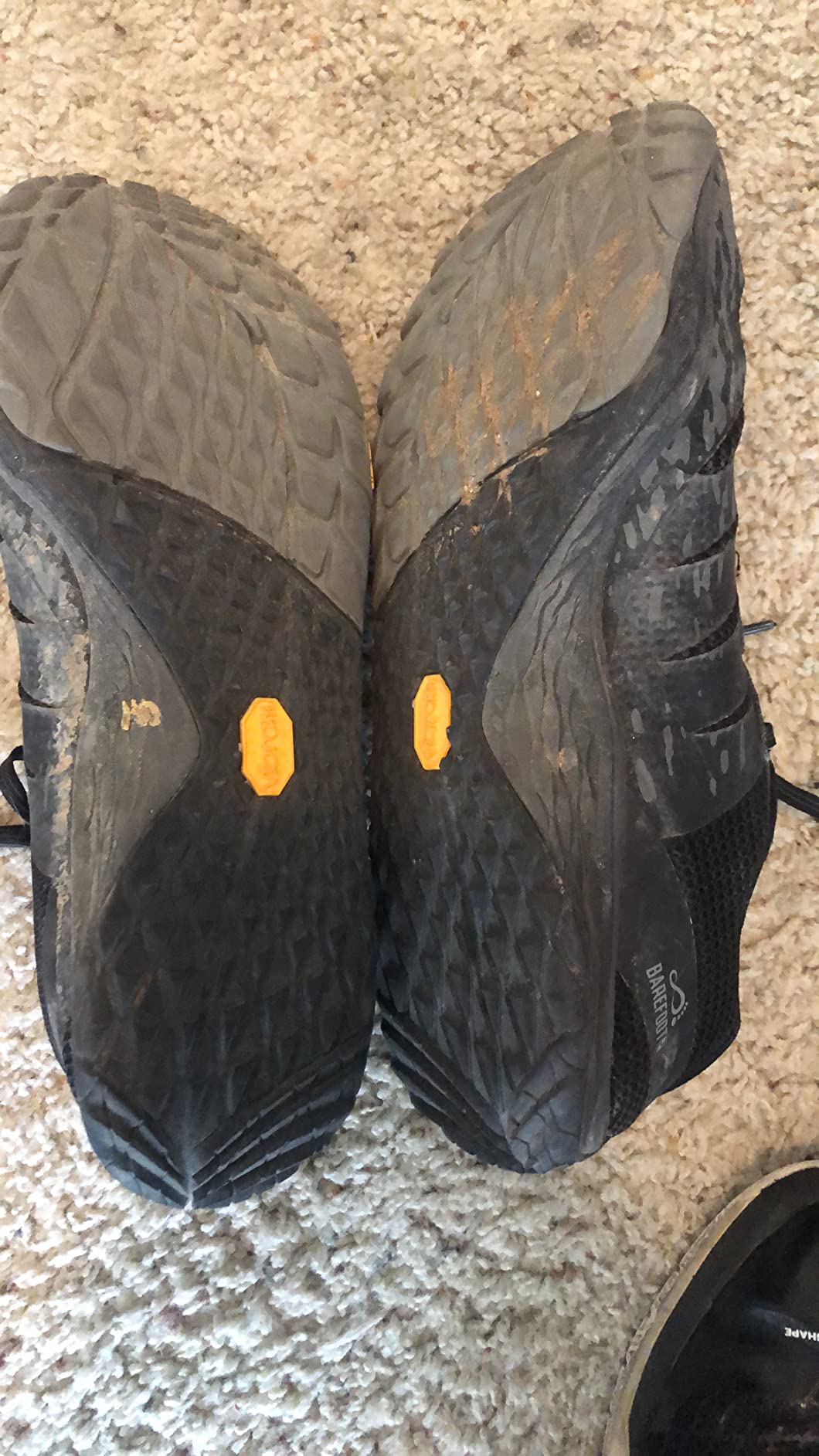
The sole stack is worth breaking down in detail because it’s where the “minimalist” claim gets complicated. The Vibram TC5+ outsole runs the full length of the shoe, climbing up the rear heel perimeter — OutdoorGearLab described the lug pattern as “chainsaw-blade” which is accurate. The lugs reverse direction at the midsole point, creating uphill bite and downhill braking in the same outsole design. A TrailProtect rock plate is embedded in the midsole foam, invisible but felt when you run over sharp granite. Then there’s the Barefoot 2 midsole layer — more on that in the next section.
Compare the overall build to the Merrell Men’s Accentor 3 Hiking Shoe, which is a fully traditional-support hiking build from the same brand. Trail Glove territory is a different category entirely — lighter, lower, more ground-connected than anything in Merrell’s hiking line.
The Arch Support Controversy — What “Barefoot 2” Actually Means
Let me be straight about this because it’s the main reason veteran minimalists remain divided.
Barefoot 2 is Merrell’s name for a shaped midsole construction that adds mild arch guidance. It’s not a traditional arch support insole — it’s the midsole itself being contoured in a way that influences how the foot loads. The original Trail Glove had essentially zero midsole intervention. The Vapor Glove line still doesn’t. The TG5 does.
When I first put these on, I felt the arch contact and sat with it for a moment. About a mile in, it stopped registering. That’s either adaptation or the support being genuinely mild — probably both. As someone who’s run thousands of miles in truly zero-intervention shoes, I can tell you this isn’t aggressive arch support by any conventional standard. It’s closer to “gentle direction” than to the traditional motion control you’d find in a stability running shoe.
OutdoorGearLab raised a more specific technical concern: their testers found the Barefoot 2 construction created a subtle supination effect — the foot tending to roll slightly outward to find its natural neutral landing. I didn’t reproduce this during my 8-week test, but I have high-neutral arches; someone with different mechanics might respond differently. This is worth knowing before buying rather than finding out on mile 10 of a long run.
The HikeAusNZ reviewer flagged something that deserves more attention: occasional discomfort in the right shoe’s arch contact that the left shoe didn’t produce. That’s not a design complaint — that’s a quality control observation. Left-right midsole symmetry may not be consistent across production units. If you buy a pair and one shoe feels meaningfully different from the other at the arch, that’s not normal break-in — that’s a QC problem worth addressing with the retailer.
Trail Performance and Traction
Eight weeks across three Colorado test zones: Rocky Mountain National Park (technical switchbacks, loose scree at elevation, root networks across trail), Betasso Preserve (loose shale, root crossings, variable soil), and Rabbit Ears Pass (wet granite slabs, alpine meadow transitions). Here’s what actually happened.
Dry hardpack and loose rock: the Vibram TC5+ is as good as its reputation. The chainsaw-blade lug pattern grips hardpack without dragging, and on loose scree the forefoot rubber — notably stickier than the rear section — provides precise placement on technical steps. I moved faster on technical terrain than I do in conventional trail shoes, partly because I could feel exactly where the foot was landing.
Wet granite at Rabbit Ears Pass: this is where I expected problems and was surprised. The sticky forefoot compound held on slabs that had given me trouble in other shoes. Not perfect — smooth wet sections required respect — but far better than I anticipated given the 12mm stack height.
Mud: adequate for Colorado’s drier, rockier soil. Deep clay mud will pack the lugs; these are not Pacific Northwest mud season shoes. They don’t pretend to be.
Snow and shoulder season: Runner’s World confirmed stability in half an inch of snow, and the rubber compound didn’t degrade noticeably in cold temperatures. Useful for fall starts and late spring.
One surface where the TG5 fails: smooth wet tile. Urban commuters take note — the outdoor traction compound doesn’t provide the right friction for polished indoor floors. For trail-specific aggressive traction, the Salomon Speedcross Peak Clima goes further into mud territory. For trail runners who also cross streams and need quick-drying water performance, the Merrell Wildwood Aerosport is purpose-built for that overlap. The Trail Glove 5 owns technical rocky trail and does it well.
The TrailProtect rock plate performed exactly as designed: you feel the terrain underfoot without the sharp bruising feedback that rocks without protection would deliver. It filters without isolating. That’s the right balance for a shoe in this category.
Gym and Daily Versatility
Session three of testing, after an early trail run, I had a strength workout scheduled and didn’t want to change shoes. I stood on the deadlift platform in Trail Glove 5s and immediately noticed something: the heel stayed flat.
That sounds basic. But most running shoes have heel cushioning that elevates the heel 10-12mm above the forefoot — and in that position, the posterior chain can’t engage through its full range of motion. Zero-drop means the heel stays at the same level as the forefoot, which is the mechanically correct starting position for deadlifts, Romanian deadlifts, and squats. Fifteen gym sessions over 8 weeks confirmed this wasn’t a one-off observation. I’d take these over any traditional running shoe for compound lifts.
The machine-washable design makes gym-to-trail rotation practical. Two wash cycles produced no degradation. The probiotic mesh lining handled back-to-back days without a laundry cycle in between.
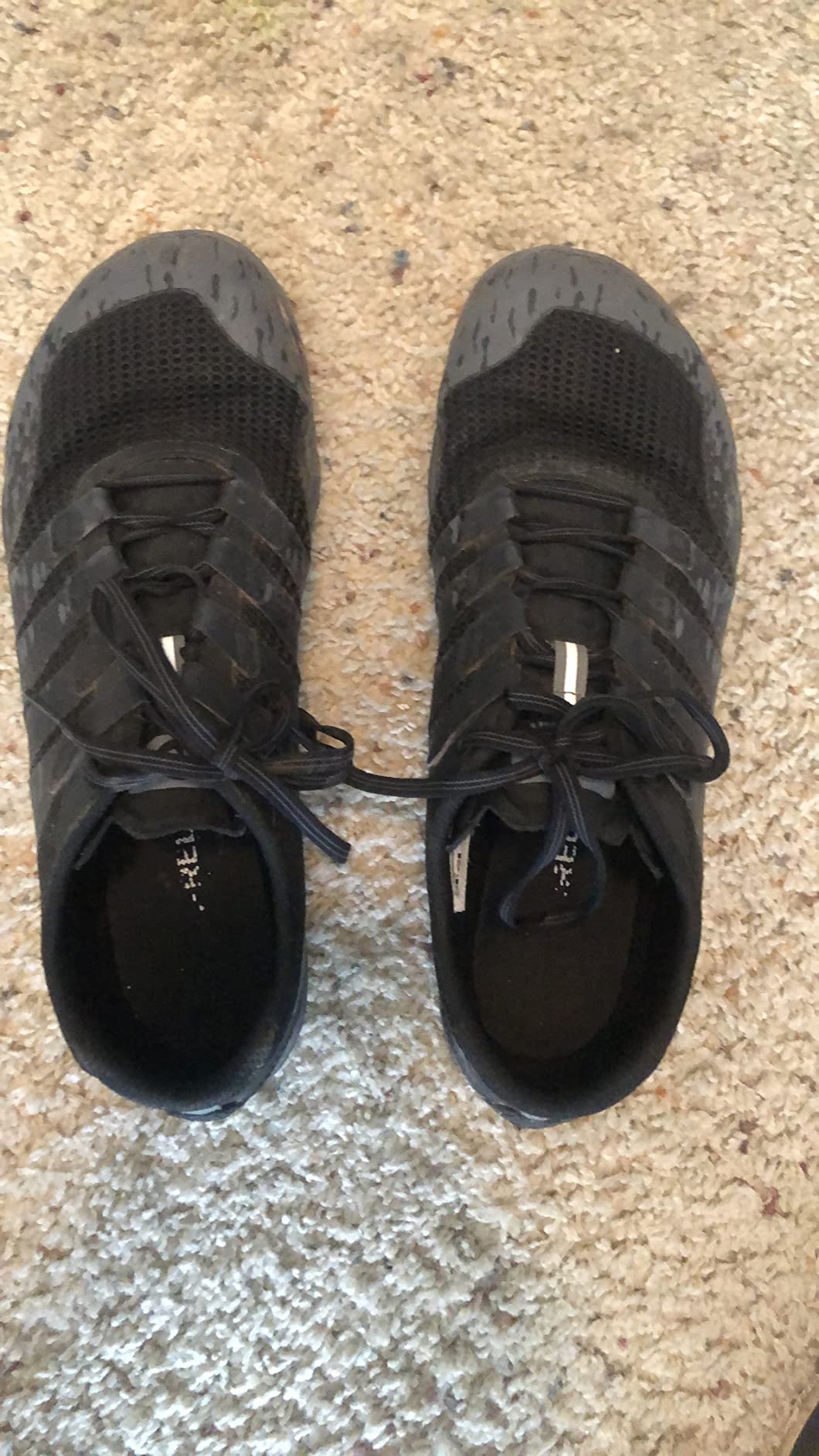
Daily wear held up through consecutive 10+ hour workdays with no hotspot development and no afternoon foot fatigue. The black colorway reads as a normal low-profile shoe rather than a trail-specific piece, which matters if you’re wearing these to and from work.
Two limitations: smooth tile is slippery (as noted in the trail section), and the zero-drop takes some adaptation if you’re coming from conventional shoes — the calf and Achilles load differently, and that can surface as soreness in the first couple of weeks of daily wear. If you need a dedicated daily barefoot or grounding shoe without the trail-focus, Addbili Grounding Shoes or the Airhas Barefoot Zero Drop are built specifically for that context.
Durability — The Honest Assessment
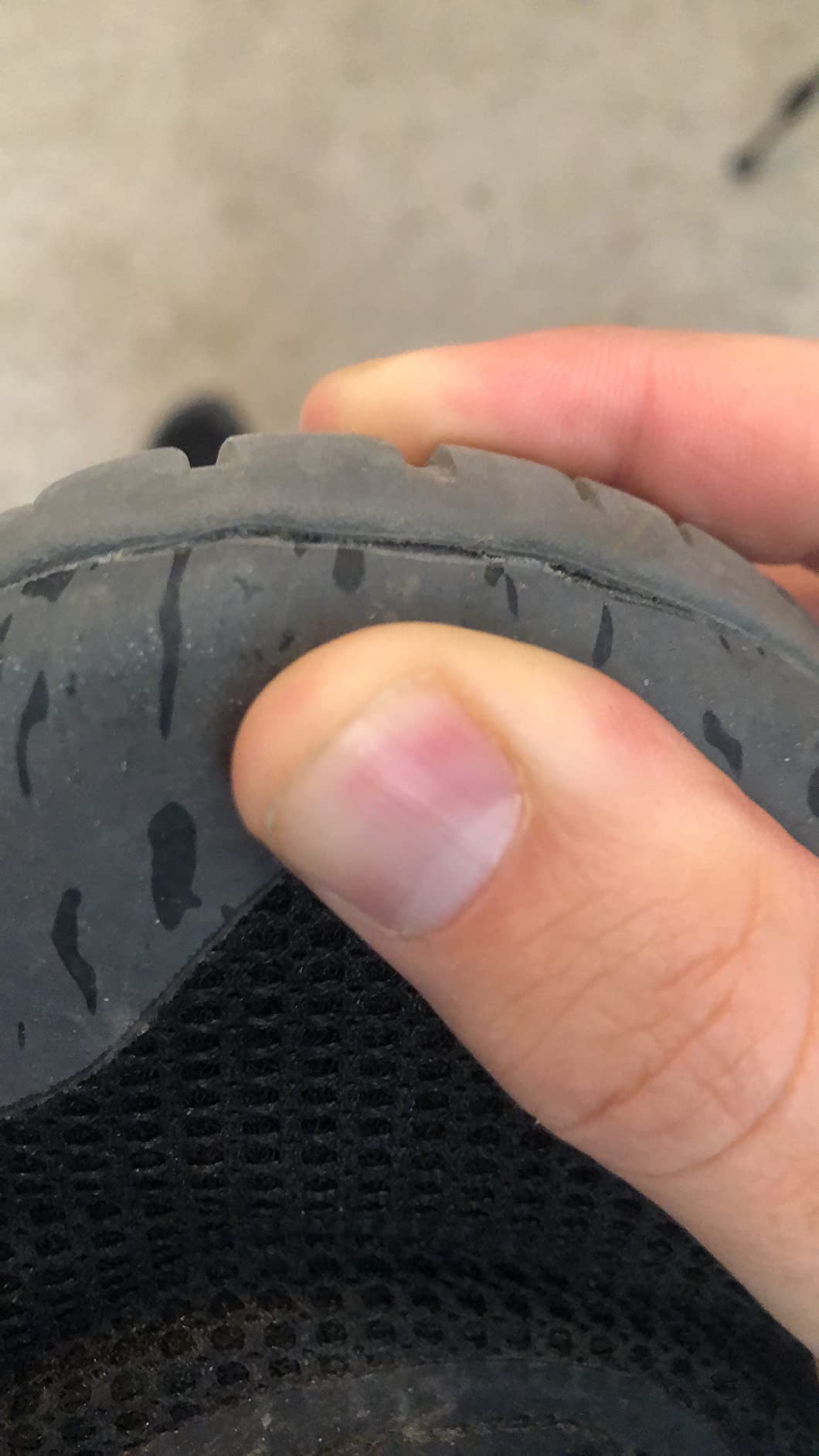
220 miles and 8 weeks in, I’m watching the bond line between the Vibram outsole and the midsole foam at the toe area. The shoe hasn’t failed. But I can see early stress in that adhesive joint that I shouldn’t be seeing at this mileage in a $130 shoe.
The HikeAusNZ reviewer put 500km (310 miles) on the same model and reported no failure. I run Rocky Mountain terrain — the impact forces on loose scree and granite are harder on equipment than Australian bush trails. This data gap is real: either my unit had an adhesive variance, or terrain intensity matters more than total mileage for predicting failure.
What’s held up without any concern: the upper mesh, the probiotic lining, the rock plate positioning, and the rubber compound on the outsole itself. The Vibram TC5+ rubber is not the problem. The outsole-to-midsole adhesive joint is where units that fail tend to fail.
My previous minimalist shoes lasted 800+ miles. At $130 for something showing sole-bond stress at 220, the value math doesn’t hold up as well as the trail performance. A useful maintenance habit: FootFitter cedar shoe trees after each run help maintain midsole shape and reduce the compressive stress on that adhesive joint. Start monitoring the toe-area bond line at 150 miles on technical terrain.
Merrell’s “Barefoot” Marketing vs. Reality
Merrell calls this a barefoot shoe. The minimalist community disagrees, and they’re correct.
True barefoot, by the standards of runners who use that term meaningfully, means zero midsole intervention, no arch guidance, maximum proprioceptive feedback. The original Trail Glove hit that mark. The Vapor Glove line still does. The Trail Glove 5, with its 4mm Barefoot 2 midsole layer and shaped arch contact, doesn’t.
What the TG5 is instead: a minimalist trail runner that delivers more stability and protection than a zero-intervention shoe while staying far below the bulk of conventional trail runners. OutdoorGearLab’s assessment lands accurately — “comfortable and responsive” but “separated from the trail.” That separation is real and perceptible for experienced minimalists. It’s probably invisible to anyone transitioning from conventional running shoes.
Merrell expanded the target audience with Barefoot 2. More structure means more accessibility for runners who aren’t ready for full barefoot commitment. That’s a legitimate product decision. But naming it “Barefoot 2” creates an expectation the shoe doesn’t fully meet if you’ve ever run in a shoe with no midsole at all. Better to know the gap before buying than to discover it on your first run.
Performance Scoring
| Category | Score | Notes |
|---|---|---|
| Trail Traction | 9.0/10 | Vibram TC5+ on Colorado technical terrain: excellent on dry and wet rock |
| Fit Accuracy | 7.0/10 | Runs large — must size down; possible left/right arch asymmetry in some units |
| Ground Feel | 7.5/10 | Present but filtered through Barefoot 2 midsole; rock plate accurate without pain |
| Durability | 5.5/10 | Sole-bond stress signs at 220 miles; major concern at $130 price point |
| Gym Versatility | 8.0/10 | Zero-drop genuinely useful for compound lifts; machine washable is a real bonus |
| Daily Comfort | 8.5/10 | 10+ hours, no hotspots; probiotic mesh manages odor across consecutive days |
| Value | 7.0/10 | $100–130 with durability questions at 220 miles; trail performance justifies price if it holds |
| Overall | 7.3/10 | Strong technical trail performer held back by durability and the “barefoot” branding gap |
What Other Trail Runners Are Saying
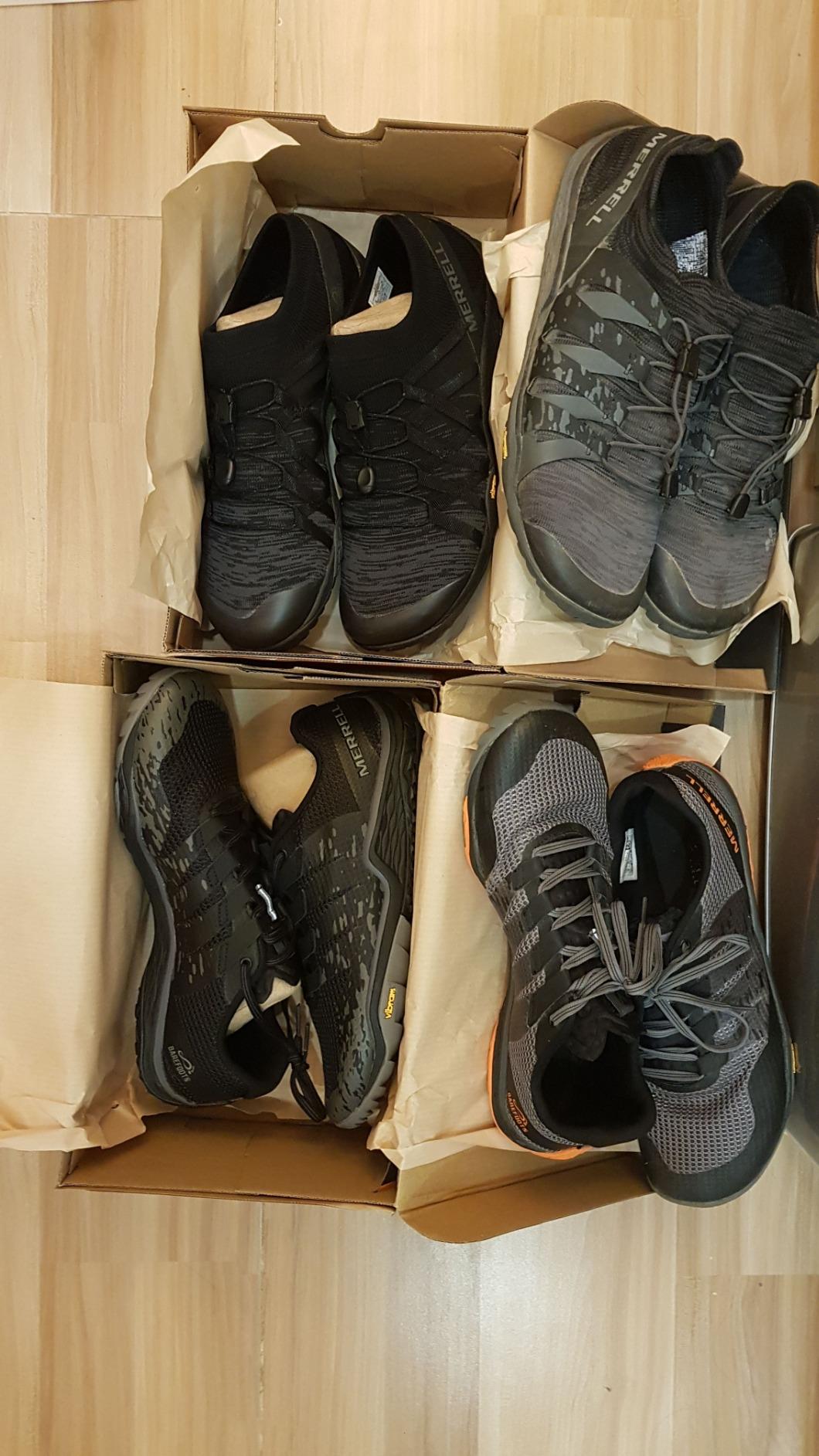
The community splits cleanly along experience lines.
Experienced minimalists — particularly runners who came up on the Trail Glove 4 — consistently describe feeling separated from the trail. OutdoorGearLab’s finding about the Barefoot 2 midsole creating a supination tendency isn’t just lab language; it’s what a lot of long-time minimalist runners are describing when they say “it doesn’t feel right.” Runner’s World testers, coming from a broader runner population, land differently: their best quote was “I barely even realized I had a shoe on” — a lightweight assessment that’s accurate and represents the experience most trail runners will have.
HikeAusNZ is the durability counterpoint: 4.5 out of 5 stars after 500km across Australian trails and urban hiking. No sole failure, no notable wear pattern. That data doesn’t mean everyone will get 500km — terrain intensity matters — but it does mean the shoe is capable of that mileage under the right conditions.
The historical context from BirthdayShoes, which reviewed the original Trail Glove against Vibram FiveFingers, is useful for understanding what the Trail Glove lineage represented to the barefoot community and why TG5 feels like a departure: the original was revered precisely because it sat so close to Vibram FiveFingers territory without the toe separation. TG5 has moved away from that.
✅ The Good
- Vibram TC5+ outsole handles Colorado’s most technical terrain convincingly
- Zero-drop platform genuinely useful for compound gym lifts
- Lightweight — barely perceptible on foot during technical running
- Machine washable mesh with probiotic odor control
- Wide toe box allows natural toe splay on long climbs
- 10+ hour daily comfort tested without hotspots
- Rock plate filters sharp impact without isolating ground feel
❌ The Not-So-Good
- Sole-bond stress signs at 220 miles — durability concern at $130
- Runs 0.5–1 full size large — unintuitive and non-negotiable
- Barefoot 2 midsole adds arch guidance that zero-intervention purists will feel
- Slippery on smooth wet tile — not an urban shoe
- Less ground contact than Trail Glove 4 or Vapor Glove line
- Possible left/right midsole arch asymmetry in some production units
Who Should Buy — and Who Should Pass
Buy if:
- You want Vibram traction and proprioceptive trail feel at minimalist weight
- You’re transitioning from conventional trail shoes toward minimalist — Barefoot 2 is a reasonable bridge
- You need one shoe for trail running and gym cross-training
- You run technical rocky terrain where outsole quality directly matters
Pass if:
- You ran the Trail Glove 4 and want the same unmediated ground contact — TG5 won’t deliver it
- You need a shoe to outlast 500 miles of hard daily trail running reliably
- Your primary surface is wet pavement or smooth tile
- You want true zero-intervention barefoot feel — look at the Vapor Glove line instead
- You’re on a tight replacement budget and need maximum longevity
If the zero-drop format is what you’re after but the Trail Glove 5’s structure isn’t quite right, the Flux Adapt Runners take a different approach to the minimalist daily category and are worth a look.
Alternatives Worth Considering
Altra Lone Peak 8: Zero-drop trail runner with a wider platform and more cushioning depth. Better for ultra-distance where midsole longevity matters more than maximum proprioceptive sensitivity. The MaxTrac outsole is excellent in its own right — different lug geometry than Vibram, competitive grip.
Merrell Moab 2 Vent Mid: The opposite end of the Merrell spectrum — traditional support, mid-height, heavy compared to Trail Glove. If you want Merrell construction quality on technical trails but without the minimalist constraint, this is the model. No comparison on weight or ground feel.
Airhas Barefoot Zero Drop: True zero-intervention barefoot construction for runners who want no midsole layer. Not a technical mountain trail shoe — the outsole isn’t Vibram-grade — but it delivers the ground-contact experience the TG5 doesn’t fully provide for barefoot purists.
Joomra Whitin Running Shoes: Budget entry point for testing the zero-drop minimalist format before committing to Merrell-level pricing. Good for confirming your feet can handle the transition before the larger investment.
Hike Footwear HF Signature Barefoot: Purpose-built for daily urban barefoot wear and gym use rather than technical trail. If your primary context is indoor/commute rather than mountain trails, this is more directly suited to that use case.
Women’s trail hikers: The Merrell Women’s Moab 3 Hiking Shoe covers Merrell’s traditional-support trail hiking category for those not interested in the minimalist route.
For the broader category of hiking and trekking shoes, the Trail Glove 5 sits at the lightweight minimalist end of the spectrum — there are heavier, more protective options if that’s what the terrain demands.
Frequently Asked Questions
Q: Does the Trail Glove 5 really run large?
A: Yes, without exception. Every credible source confirms it runs 0.5 to 1 full size large. I ordered a 10 from my normal 10.5 and the fit was correct. If you’re between sizes, go down the full size — there’s no reason to hedge this. The one product roundup site that claimed “true to size” contradicts the experience of every field tester and their own sizing notes elsewhere.
Q: Is this actually a barefoot shoe?
A: No — not by the standards the minimalist community uses. Merrell’s Barefoot 2 construction adds a shaped midsole layer with mild arch guidance that zero-intervention barefoot shoes don’t have. It’s a minimalist trail runner, which is a different thing. The Vapor Glove line is the real barefoot option in Merrell’s current lineup.
Q: How does the Trail Glove 5 compare to the Trail Glove 4?
A: The TG4 was closer to true barefoot — less midsole intervention, more immediate ground contact. TG5 added the Barefoot 2 construction (more cushion, mild arch guidance) and runs about half a size larger than TG4. The outsole grip is comparable. If you loved TG4 for its pure ground feel, expect to notice TG5’s added structure.
Q: Can I use these for gym workouts?
A: Yes, and the zero-drop is genuinely functional for it. Flat heel positions the posterior chain correctly for deadlifts and squats — elevated heels from standard running shoes change that mechanics. Fifteen sessions across 8 weeks confirmed this. Machine washable design makes gym-to-trail rotation practical. Not a replacement for dedicated lifting shoes for serious strength work, but solid for cross-training.
Q: How durable is the Trail Glove 5?
A: Variable. My unit showed early sole-bond stress at 220 miles of Colorado technical terrain. A reviewer in Australia logged 500km (310 miles) on the same model without failure. The data suggests 200–350 miles of reliable performance depending on terrain intensity. Monitor the toe-area outsole bond starting at 150 miles on hard rocky trail.
Q: What terrain does the Trail Glove 5 handle best?
A: Rocky technical trail running is the home terrain — loose scree, hard granite, root crossings, elevation change. The Vibram TC5+ outsole with chainsaw-blade lugs was built for exactly that. Less ideal for deep clay mud, smooth wet tile, or primarily paved urban commuting.
Q: Is the Trail Glove 5 machine washable?
A: Yes. Cold wash cycle, air dry. Two wash cycles over 8 weeks produced no structural damage, no mesh distortion, no shrinkage. The probiotic lining treatment maintained its function across consecutive days of use between washes.
Q: Should I transition gradually?
A: If you’re coming from conventional running shoes with significant heel drop: yes. Zero-drop loads the calves and Achilles differently — start with 2–3 shorter runs per week and build up over 4–6 weeks before running your normal volume. If you’re already in minimalist footwear, the transition to TG5 is minimal, though experienced zero-intervention runners will notice the Barefoot 2 arch guidance immediately. Check out options across the full range of running shoes and training shoes if you’re building a minimalist rotation.
Be the first to review “Merrell Mens Trail Glove 5”
Related products
Hiking/Trekking Shoes
Hiking/Trekking Shoes


Hiking/Trekking Shoes
Hiking/Trekking Shoes
Hiking/Trekking Shoes
Hiking/Trekking Shoes
Hike Footwear HF Signature Healthy & Non-Slip Breathable Barefoot Shoes
Hiking/Trekking Shoes

Hiking/Trekking Shoes
Reviews
There are no reviews yet.