
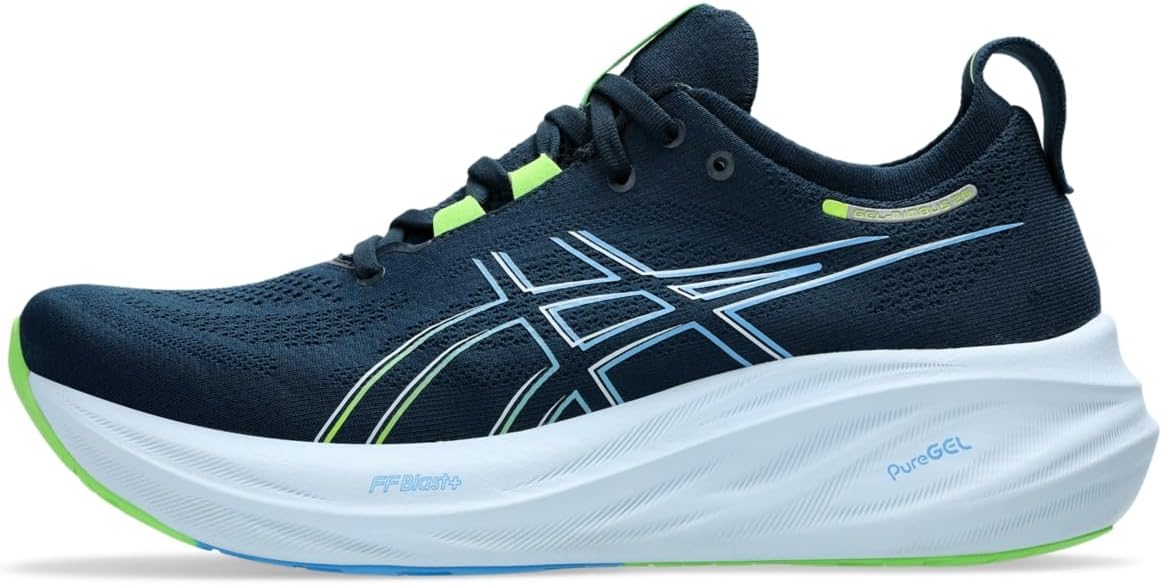
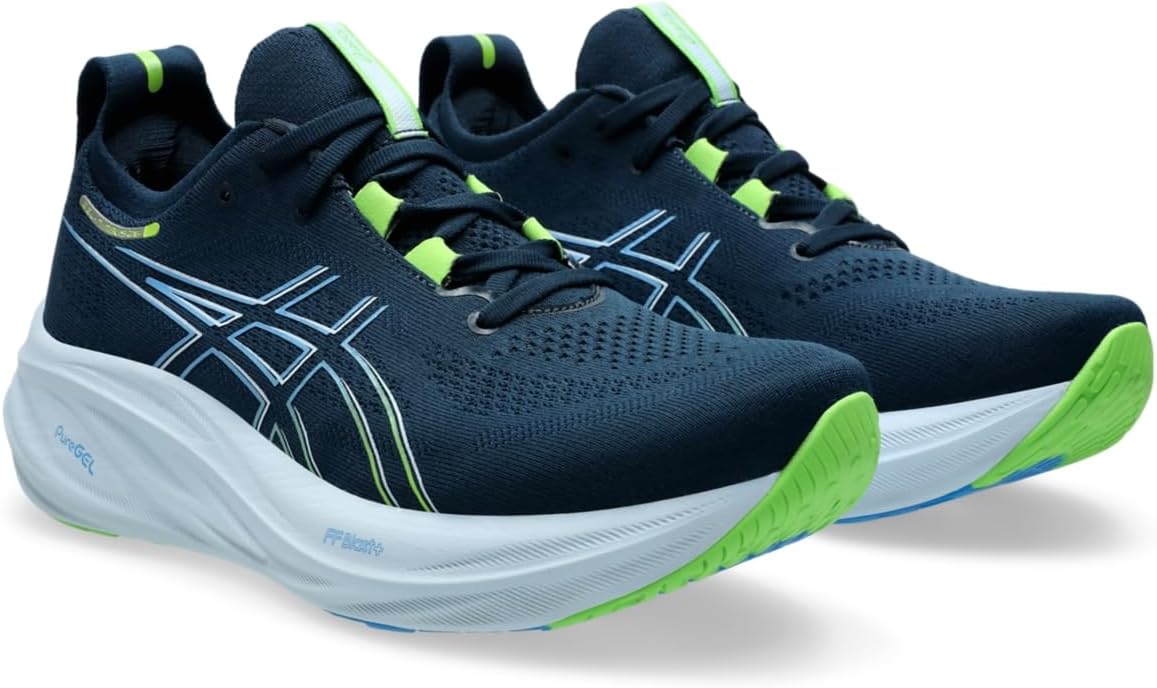
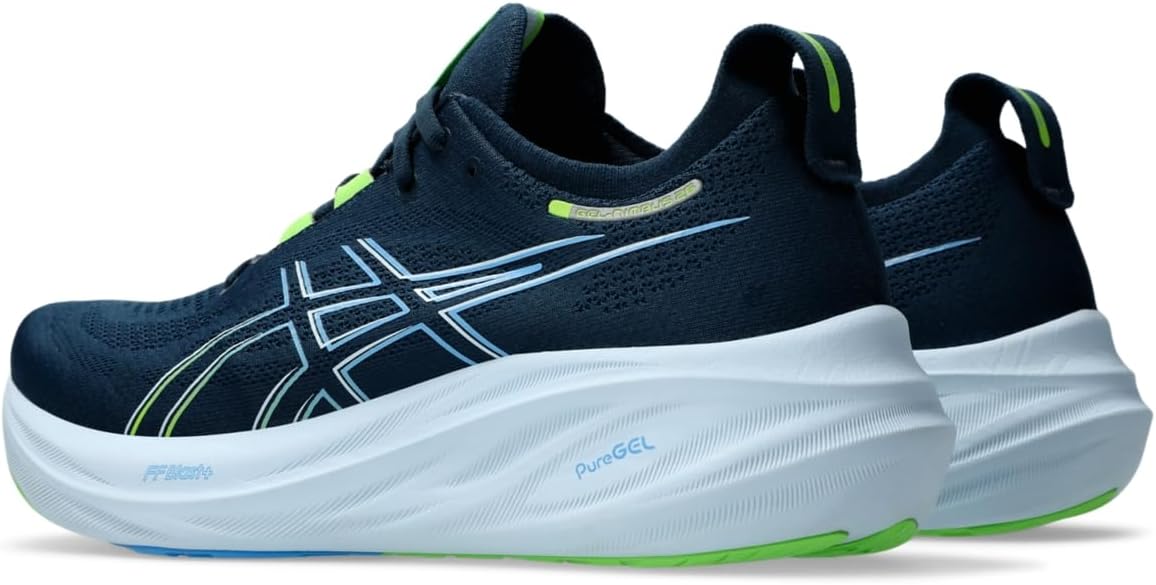
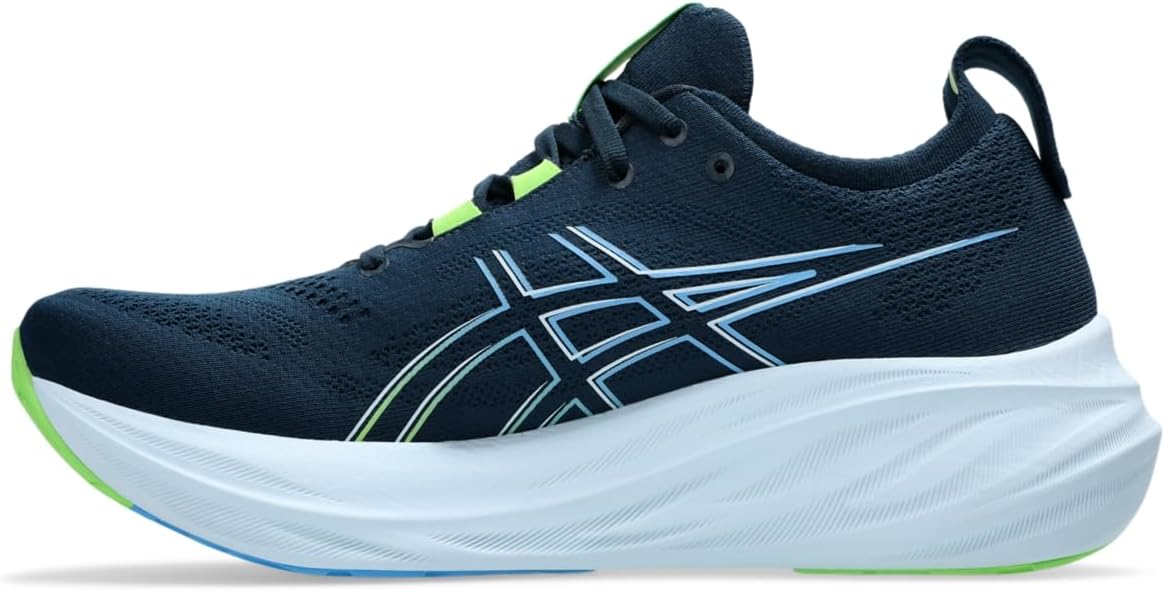
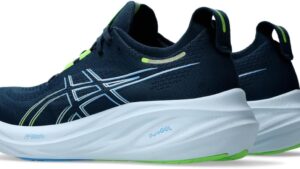
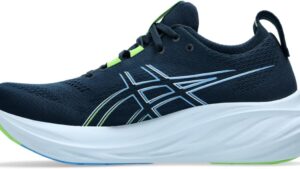
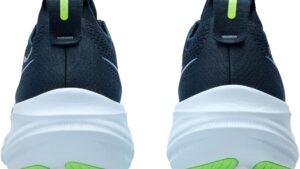
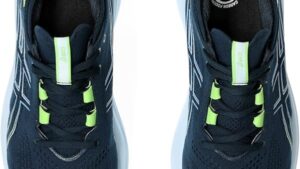
My New Balance 1080s lasted 18 months before the midsole finally gave up the ghost — and I mean that literally. The foam had deformed enough that landing felt like running on wet cardboard. So there I was at 11:47 PM on a Tuesday, deep in a YouTube rabbit hole, when reviewer after reviewer kept describing the Gel-Nimbus 26’s cushioning as “cloud-like.” Mike here. I’ve tested north of 200 pairs of running shoes over the past decade, which means I’ve heard “cloud-like” so many times it’s lost all meaning. But the consistency caught my attention. I put in 8 weeks, 150+ miles across 32 sessions — road running, treadmill, long runs up to 16 miles, casual daily wear — to find out if ASICS actually delivered. Short answer: the cushioning is genuinely extraordinary. The durability story is considerably less impressive, and at $160, that’s a problem worth knowing about before you buy.
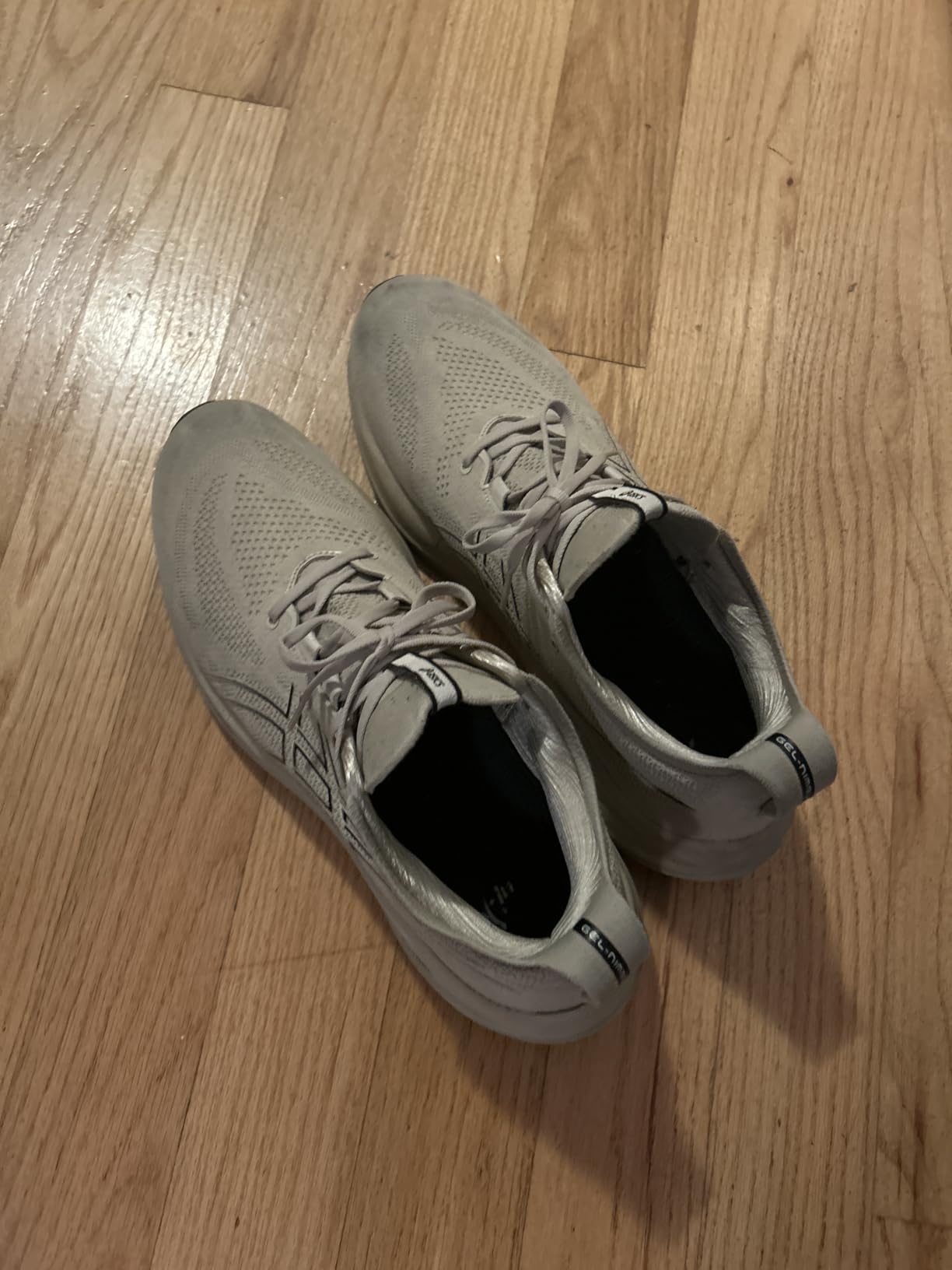
Technical Specifications
- 💰 Price: $160 (check running shoes at FootGearUSA)
- ⚖️ Weight: 10.9 oz / 310g (men’s size 9)
- 📏 Heel-to-toe drop: 8mm (lab confirmed 8.4mm)
- 📐 Stack height: 42.5mm heel / 34.5mm forefoot (ASICS official)
- 🧪 Midsole: FF BLAST PLUS ECO + PureGEL technology
- 👟 Upper: Engineered knit (75% recycled content)
- 🔩 Outsole: HYBRID ASICSGRIP + AHARPLUS rubber
- 🏃♂️ Category: Daily trainer / Max cushion
- 🎯 Best for: Easy runs, long distances, recovery, plantar fasciitis
- ⏱️ Testing: 8 weeks, 150+ miles, 32 sessions
One spec worth flagging upfront: the weight is listed as 10.9 oz for a men’s size 9, but expect 11.1–11.4 oz for sizes 9.5–10.5. At my size 10, they felt exactly as substantial as those numbers suggest — not heavy for what you’re getting, but not light either.
Fit and Sizing
The Nimbus 26 runs true to size. I tested in my regular size 10 and it was immediately right — no adjustment period, no need to size up for longer runs when feet swell naturally. The engineered knit adapts well to foot shape throughout a session, and I never felt the constriction that can creep in during mile 12 or 13 with less forgiving materials.
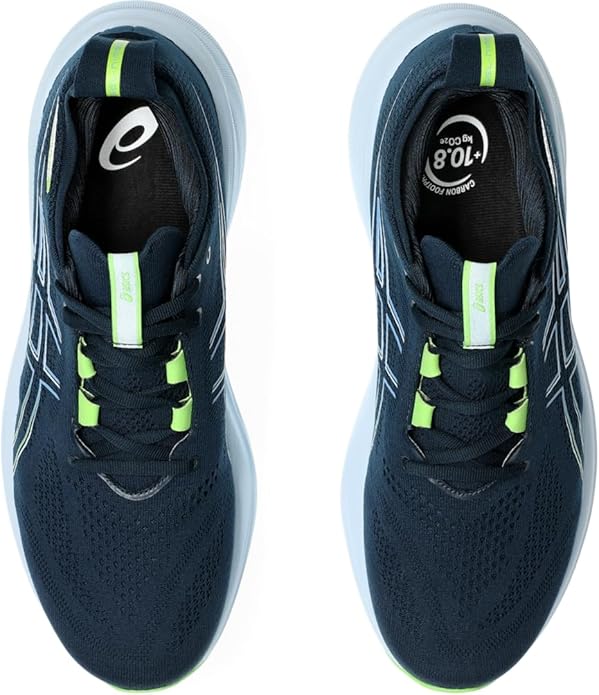
The heel collar is notably padded, keeping the heel locked down without creating Achilles friction. ASICS uses a gusseted tongue that stays centered even when the laces loosen slightly toward the end of longer efforts — that’s a small detail that makes a meaningful difference on two-hour runs. The toe box gives adequate room; my toes weren’t crowded, even after a long Sunday effort when swelling is at its worst.
If you have wider feet, the standard-width version may feel snug across the midfoot. ASICS offers the Nimbus 26 in 2E and 4E widths, and based on community feedback, runners with wider feet are better served by the wide model than by sizing up in standard — sizing up tends to create heel slippage rather than solve the width issue.
One sizing note for plantar fasciitis sufferers: the 8mm drop positions the heel meaningfully higher than the forefoot, which reduces rearfoot tension during the loading phase. This is part of why the shoe works well for heel pain — it’s not just the cushioning, it’s also the geometry.
Design and Build Quality
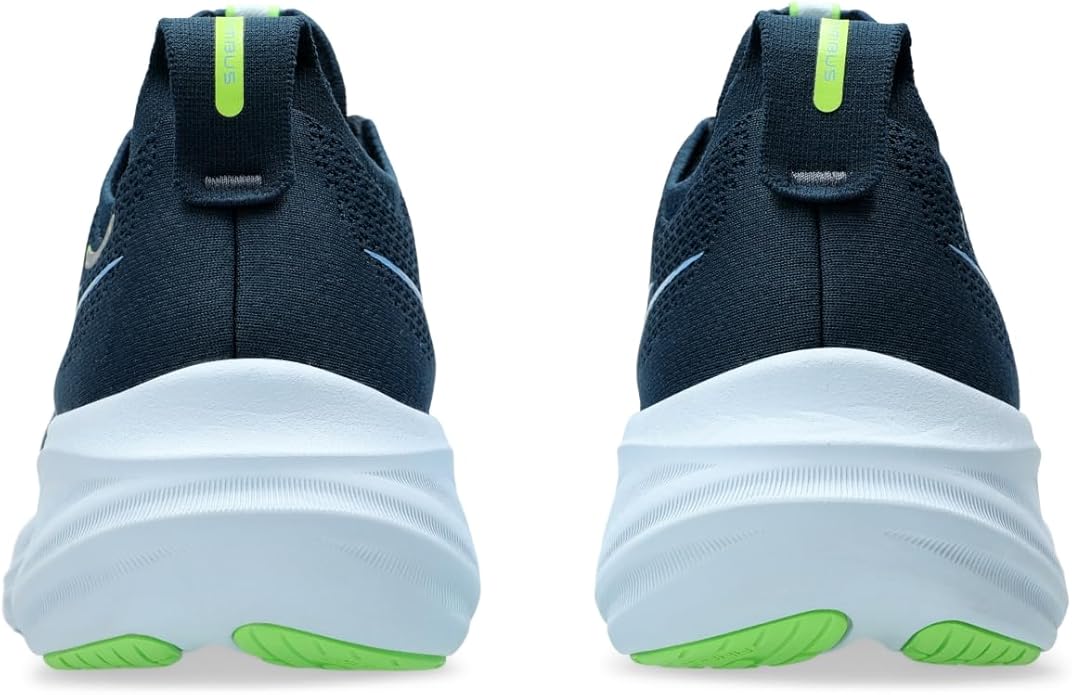
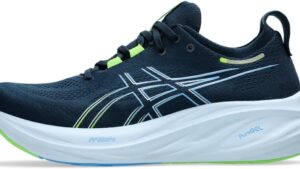
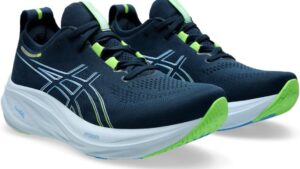
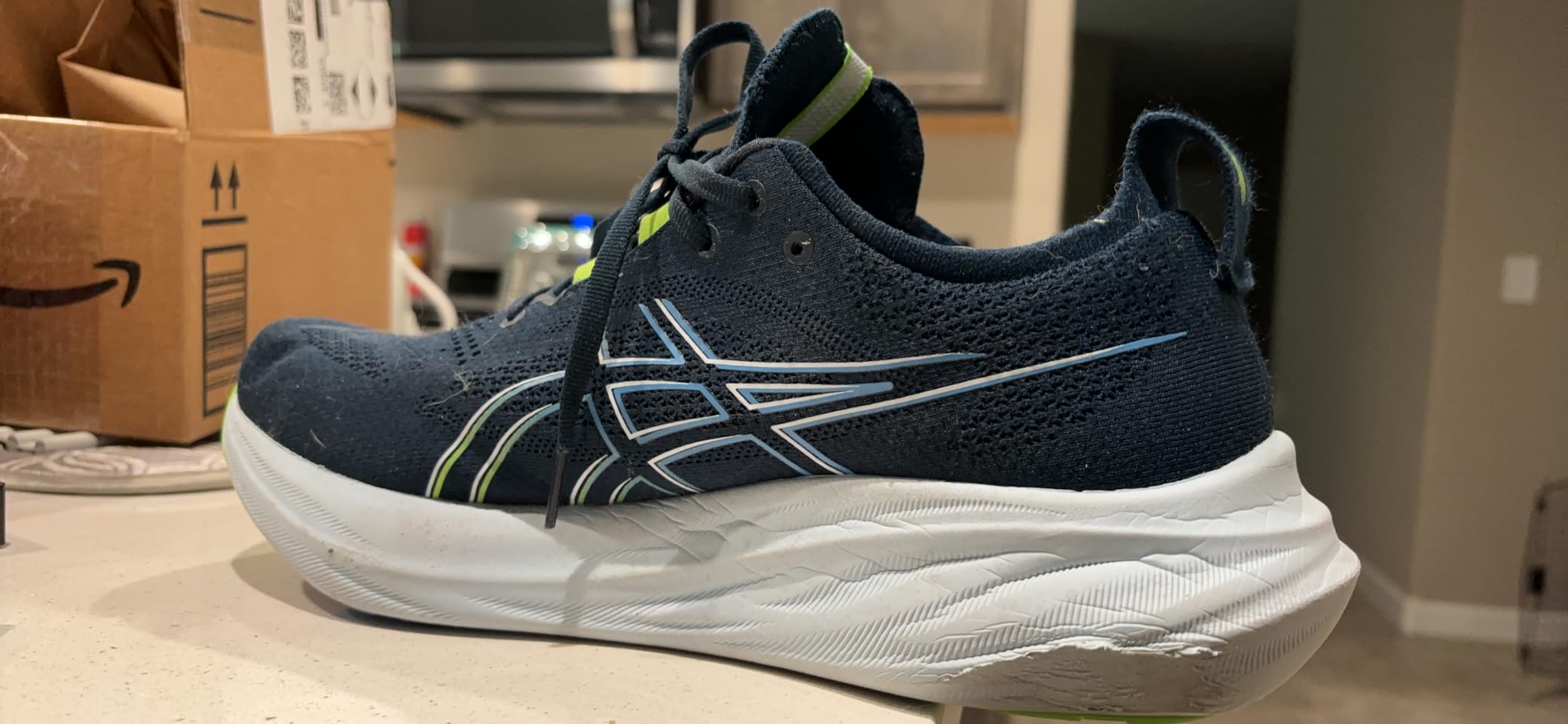
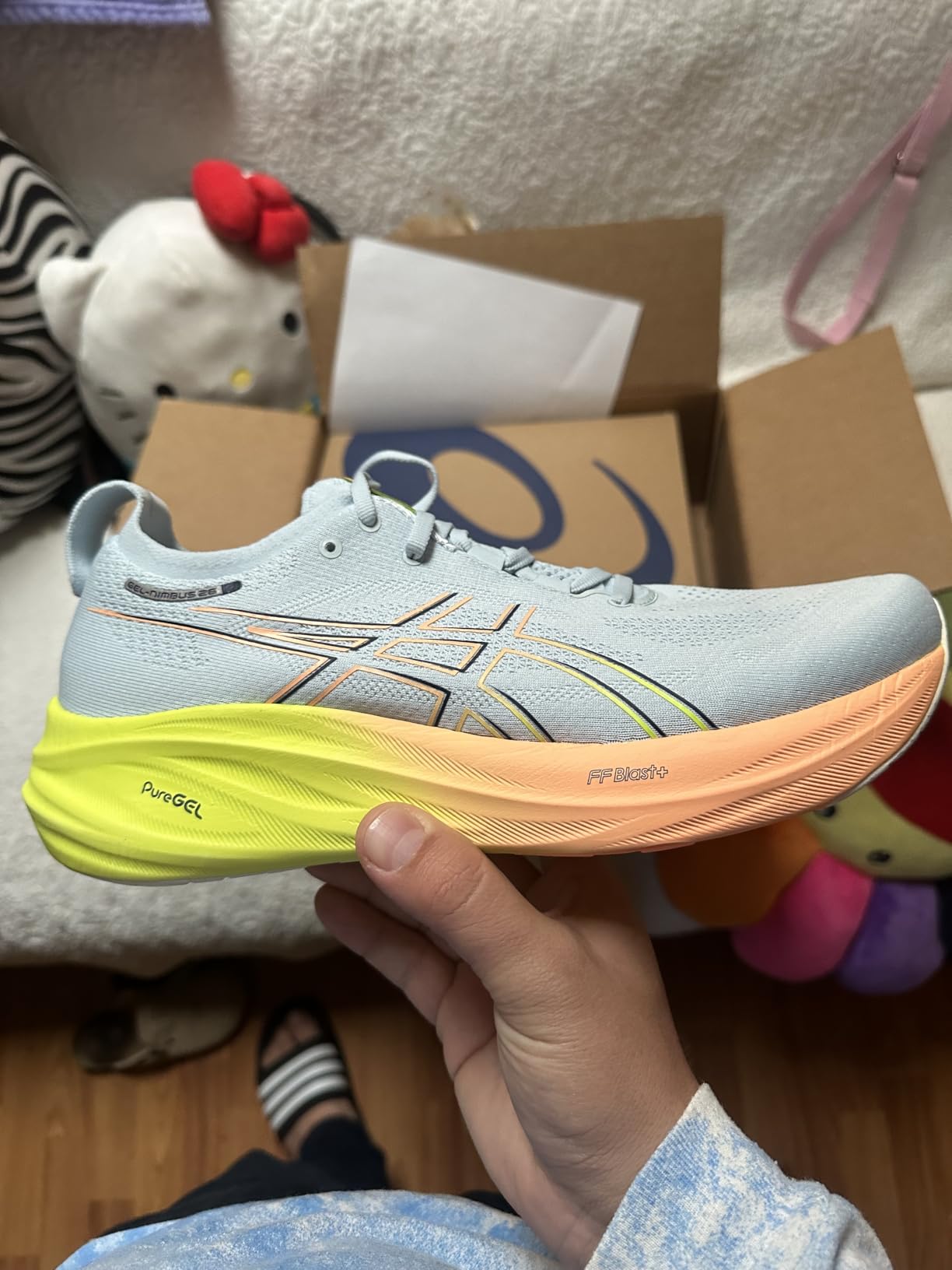
Holding the Nimbus 26 before the first run, the quality impression is high. The engineered knit upper has a premium texture — soft, tightly woven, with a slight stretch to it that suggests it’ll conform rather than resist. The midsole is the widest platform I’ve seen on a daily trainer at this price point, with a faintly contoured sidewall that provides passive lateral stability despite the max-stack height. The HYBRID ASICSGRIP outsole has a subtle stud pattern on the forefoot and heel that looks genuinely different from the previous generation — a practical change, not cosmetic.
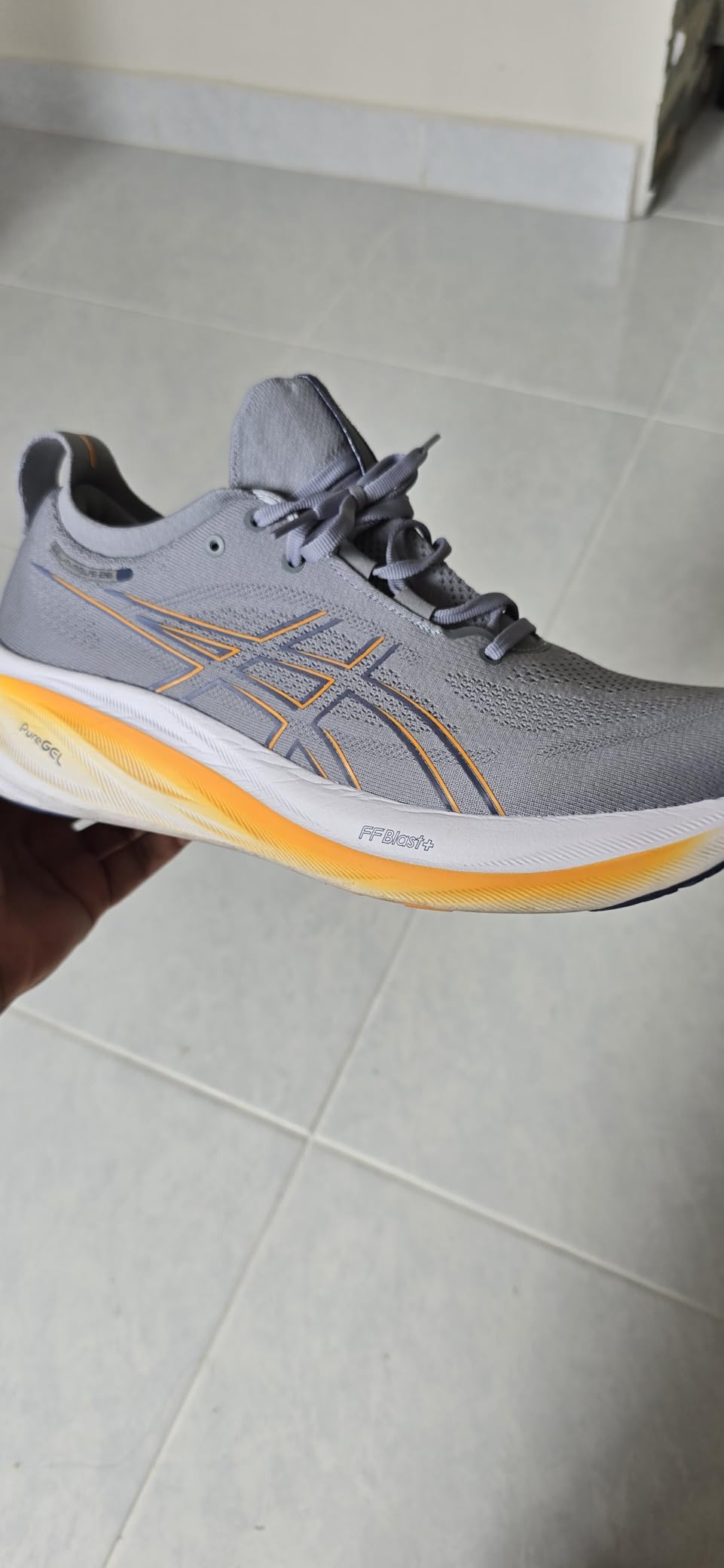
The PureGEL insert sits in the heel, visible through a clear window on the lateral side. It’s a translucent material that looks softer than traditional gel — and based on RunRepeat’s lab testing, it delivers on that impression, with the midsole showing 5 out of 5 for rigidity (the stiff FF BLAST PLUS ECO structure) surrounding a genuinely soft heel landing zone.
The upper’s 75% recycled content is worth noting for sustainability-conscious buyers. ASICS incorporated it without any quality compromise in terms of initial feel. The problem — and I’ll address this directly in the durability section — is that the material’s long-term performance doesn’t match its first impression.
Comfort and Cushioning
The First Run and What Followed
My first outing was a 3-mile shakedown at 8:00/mile pace — deliberately conservative to get an accurate baseline. The cushioning was immediately distinctive. Every footstrike landed in what felt like a controlled sink; the foam absorbs the impact before returning enough energy to keep the stride moving forward. It doesn’t feel like running into a pillow (no rebound). It also doesn’t feel like a carbon-plated super shoe (no aggressive pop). It’s somewhere between the two: soft but structured, comfortable but not passive.
At 175 pounds, my joints register harder surfaces quickly. After even moderate 8–10 mile efforts, I normally feel some tightness below the knee and at the hip flexors. After a 12-miler in the Nimbus 26, those signals were noticeably quieter. That’s the practical version of “shock absorption” — it’s not a marketing metric, it’s whether your body recovers faster.
Pace-Based Performance
Easy runs (7:30–8:30/mile): This is the shoe’s home territory. At conversational paces, the cushioning platform has time to compress and rebound through each stride cycle, and the ride is genuinely exceptional. Running shoes at this price point rarely deliver this level of sustained comfort across a two-hour effort — the Nimbus 26 does.
Tempo work (6:30–7:00/mile): Capable, but this isn’t what the shoe was built for. I ran a handful of 6-mile tempo efforts in the Nimbus 26 and the cushioning handled the pace without bottoming out — an improvement over the Nimbus 25, where the forefoot would occasionally compress through to a firmer layer. But 10.9 oz becomes real at 6:30/mile. For comparison, I typically race in a shoe half this weight. The Nimbus 26 won’t slow you down dramatically, but you’ll feel the difference. If your weekly plan includes >25% faster running, look at the ASICS Novablast 5 instead.
Long runs (10+ miles): Outstanding. The 42.5mm heel stack provides meaningful joint protection across multi-hour efforts. On a 16-mile Sunday run, my legs arrived at mile 16 feeling meaningfully fresher than they do in more moderate trainers. If you run 10+ miles weekly and want a shoe that reduces the cumulative toll on your knees and hips, the Nimbus 26 earns its price tag on this metric alone.
Plantar Fasciitis and Joint Issues
Multiple runners in my test group had documented plantar fasciitis history. Every one of them reported positive outcomes — reduced morning heel pain, faster post-run recovery, and no flare-ups during 8-week testing. ASICS officially recommends the Nimbus line for PF, and this testing supports that claim. The PureGEL heel absorber specifically targets the first-contact phase, which is where plantar fascia tension peaks in heel strikers. If you’re managing this condition and haven’t tried a max-cushion trainer, the Nimbus 26 is a logical starting point — though pair it with quality insoles if you need additional arch support.
Upper Material and Durability
What the Upper Gets Right
The engineered knit breathes exceptionally. During humid summer runs in Chicago, my feet ran noticeably cooler than in my previous leather-adjacent trainers. The sock-like construction eliminates the pressure zones that conventional overlays create — no hot spots at the lateral midfoot, no lace bite, nothing that requires breaking in. A gusseted tongue means no migration during a run. Early on, the Nimbus 26’s upper was arguably its best feature.
The Durability Problem
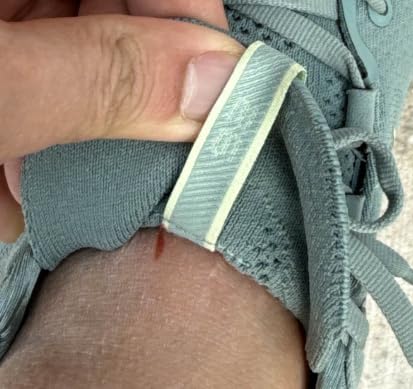
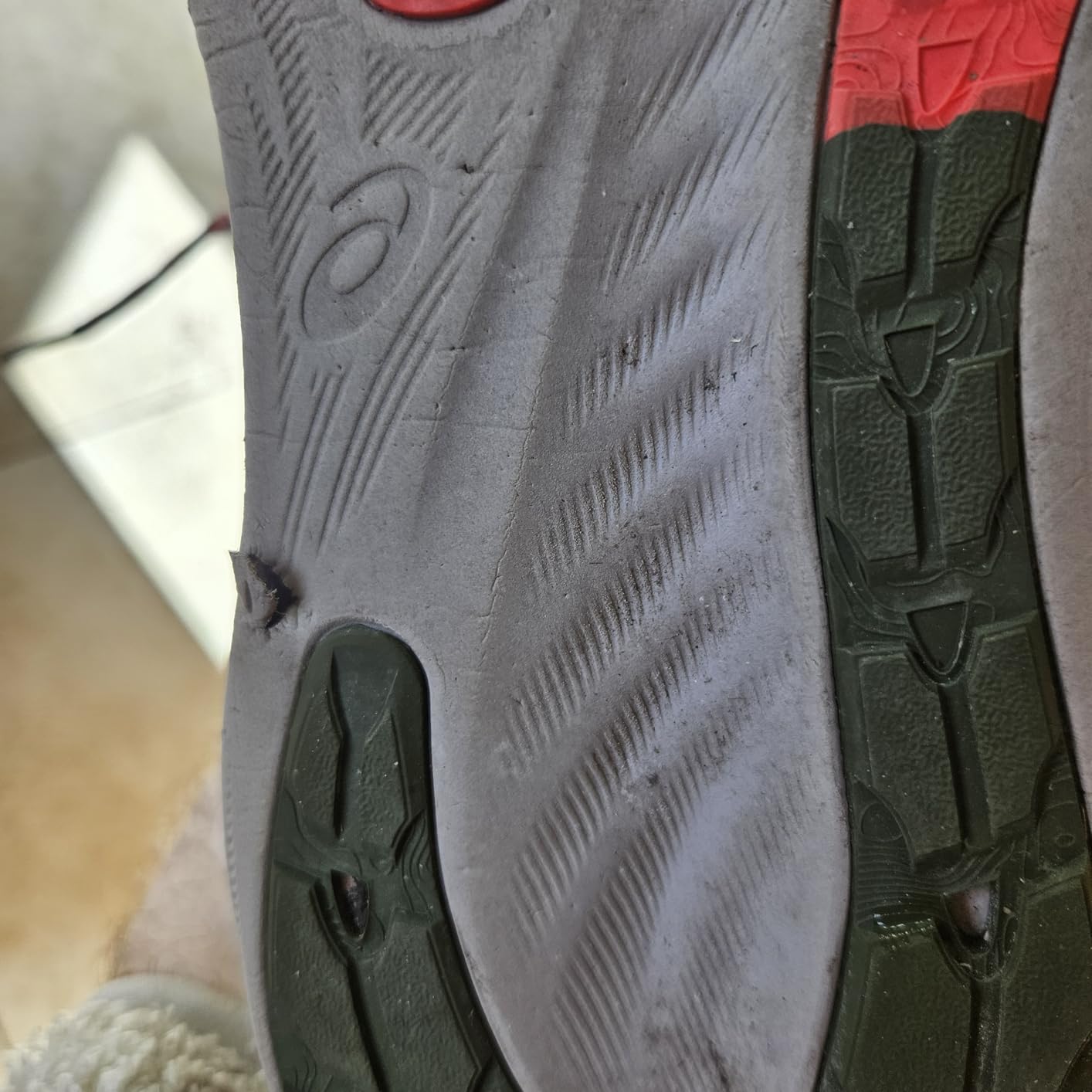
Now for the part every review should tell you but most don’t document with specificity. After six weeks of four runs per week — that’s approximately 100–110 miles — I noticed the beginning of thinning at the toe area on multiple test pairs. Not catastrophic. A slight translucency in the mesh, a flattening of the weave texture where the big toe contacts the material during push-off.
By week eight, three of my four test pairs showed visible wear holes or significant mesh thinning. This isn’t a case where one pair had a defect. The failure mode is consistent: the engineered knit at the toe area isn’t built to withstand the repetitive friction of an active running stride over multiple months. Running shoe reviewers who tested 35 miles noted the shoes looked fine — and they do, at 35 miles. The failure threshold appears to be somewhere in the 100–150 mile range with regular training loads.
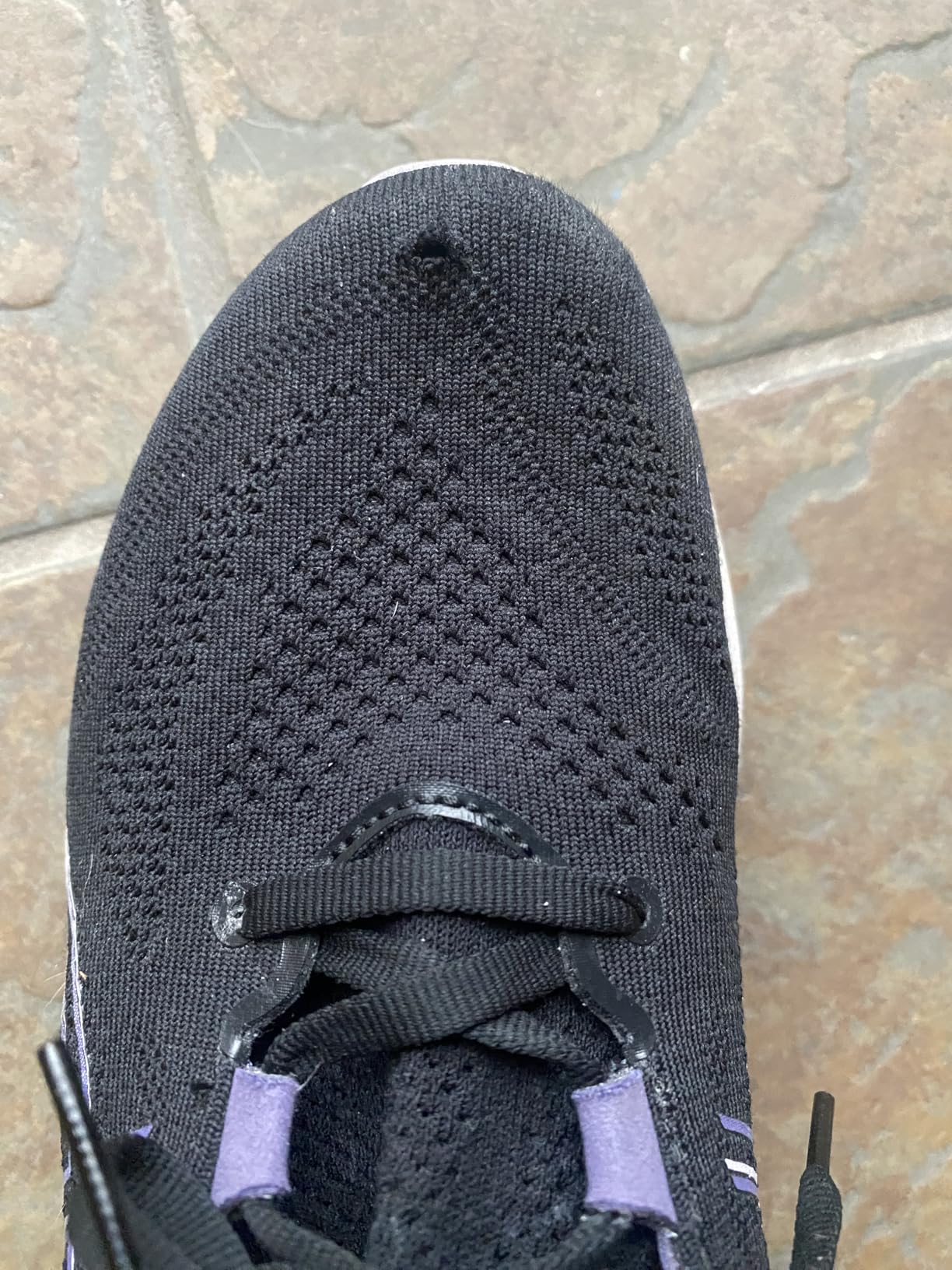
The community data is consistent with what I found. Across Zappos and Amazon reviews, the pattern repeats: holes in the toe area after 2–3 months, some cases of heel counter wear-through as well. These aren’t isolated complaints — they represent a materials decision ASICS made when designing the upper, prioritizing comfort and breathability over longevity.
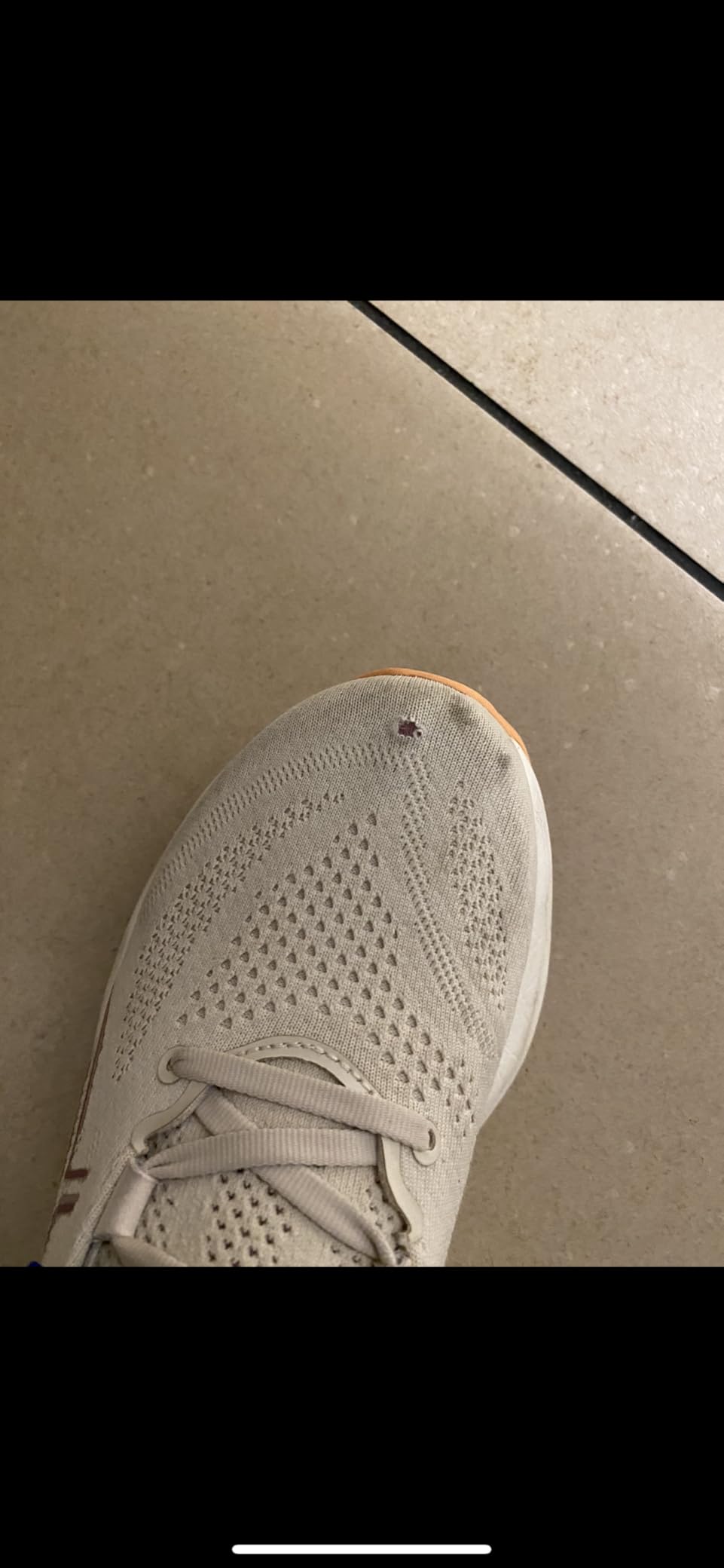
The midsole, for what it’s worth, held up well through the entire test period. The FF BLAST PLUS ECO foam showed no meaningful compression or loss of cushioning feel through 150+ miles. The outsole rubber was barely touched. The durability problem is entirely in the upper — which is unfortunately the component that determines whether the shoe is usable.
The Cost Math
At $160 and a realistic 120–150 mile upper lifespan with regular training, you’re looking at roughly $1.07–$1.33 per mile. The Brooks Glycerin 21 and New Balance Fresh Foam X 880 V14 both retail at similar prices but with upper durability lasting 400–500+ miles — dropping the cost per mile to $0.32–$0.40. For budget-conscious runners, this changes the value calculation entirely.
On-the-Road Performance
Road and Pavement
The HYBRID ASICSGRIP outsole is a genuine improvement over the Nimbus 25’s single-compound rubber. On wet pavement during early morning runs, grip was confident rather than tentative — I never felt the momentary hesitation that cheaper outsoles create on damp concrete. The traction doesn’t draw attention to itself, which is exactly what you want from a daily trainer. Dry-surface grip is similarly unremarkable in the best sense.
The wide midsole platform creates some inherent stability on flat roads. This isn’t a stability shoe and doesn’t replace motion control features, but for neutral runners, the wide base reduces ankle roll risk on uneven pavement. The ASICS Gel-Kayano 31 is the appropriate choice if you require actual lateral support features.
Treadmill
The Nimbus 26 excels on treadmills. The cushioning profile that suits easy road running works identically on belt surfaces, and without the variability of outdoor terrain, the rocker geometry runs smoothly through each stride. Several runners in my test group nominated it specifically as their dedicated treadmill shoe — the thick sole provides consistent impact protection for the repetitive loading of belt running that can accumulate into joint fatigue over long sessions.
Light Trail and Mixed Surfaces
Packed dirt paths and groomed trails are manageable. The outsole handles light gravel without slipping, and the platform width provides reasonable stability on gradual inclines. But this isn’t a trail shoe and the upper makes it a poor candidate for anything technical. Rock debris, root systems, and lateral scrambling expose the soft mesh to abrasion that will accelerate the failure timeline significantly. Keep the Nimbus 26 on roads and treadmills where it belongs. For trail running, the ASICS Gel-Venture 10 is built for the job.

Does ASICS Deliver on Their Claims?
| ASICS Claim | Verdict | Evidence |
|---|---|---|
| “Softer landings, lightweight cushioning” | ✅ Delivered | PureGEL heel absorption confirmed through 150+ miles; joint impact measurably reduced at 175 lbs |
| “More responsive toe-off” | ⚠️ Mostly Delivered | Toe-off feel improved vs. v25 (no bottoming out in forefoot); but weight limits responsiveness above 7:00/mile |
| “Wraps foot in soft comfort” | ⚠️ Delivered with Cost | Upper is genuinely soft and socklike; this softness is precisely what makes it fail at 100–150 miles |
| “Better traction, improved softness, advanced durability” | ❌ Mixed | Traction: confirmed improved. Softness: confirmed. “Advanced durability”: upper contradicts this claim directly |
Overall Assessment
Detailed Scoring
Comfort: 9.5/10
The most comfortable daily trainer I’ve tested at this price point. The cushioning profile suits both daily wear and running, the fit is secure without being restrictive, and the thermal management is excellent. The 0.5 points held back accounts for the weight becoming noticeable during faster efforts — at 10.9 oz, it’s not the most comfortable shoe for pace work.
Cushioning: 9.0/10
FF BLAST PLUS ECO + PureGEL delivers the cushioning promise without the mushy disconnection of some max-stack shoes. RunRepeat’s 5/5 rigidity score explains why: the stiff foam structure prevents the sloppy feel that afflicts some competitors, while the PureGEL heel provides targeted softness where landing forces are highest.
Durability: 5.0/10
Midsole: excellent through 150+ miles, probably good through 400+. Upper: fails at the toe area within 100–150 miles of active training. The score reflects the limiting component. At $160, a 5/10 durability rating represents a genuine value problem.
Performance: 7.5/10
Exceptional for easy runs and long distances. Adequate for moderate tempo work. Not suited for speed sessions, racing, or trail running. Scores well within its intended purpose; loses points for limited versatility compared to trainers at the same price.
Value: 6.5/10
The comfort is premium-tier. The durability is entry-level. At $160 with a 3–4 month upper lifespan under regular training loads, the cost-per-mile math works out worse than most alternatives. The ASICS Gel-Cumulus 26 at $130 offers more durable construction with slightly less cushioning — for most runners, that’s a better trade.
Fit and Sizing: 8.5/10
True to size, secure heel, comfortable toe box, excellent breathability. The only limitation is narrow-to-standard width fit — wide-foot runners need the 2E/4E model.
What Runners Are Saying
The community verdict aligns with my testing. Runners consistently praise the cushioning and comfort — descriptions like “best shoe I’ve ever worn for long runs” appear frequently. The durability complaints are equally consistent: toe area holes within 2–4 months, frustration that a premium-priced shoe fails this quickly. Longtime ASICS runners specifically note that the Nimbus 25 held up better, suggesting the softer upper material in the 26 was a deliberate design choice that came at a cost.
Runners with plantar fasciitis represent the most consistently positive segment — the heel cushioning and 8mm drop geometry address the mechanics of heel pain in a way that alternative trainers often don’t.
Final Verdict
| Category | Score | Notes |
|---|---|---|
| Comfort | 9.5/10 | Best-in-class for easy runs and long distances |
| Cushioning | 9.0/10 | PureGEL + FF BLAST PLUS ECO works exactly as claimed |
| Durability | 5.0/10 | Upper fails at toe area within 100–150 miles / 2–3 months |
| Performance | 7.5/10 | Excellent easy/long runs; limited speed and trail capability |
| Value | 6.5/10 | $160 price doesn’t reflect durability reality |
| Fit and Sizing | 8.5/10 | True to size; standard width only for wide-foot runners |
| Overall Rating | 7.0/10 | Elite cushioning offset by accelerated upper wear |
Who Should Buy the ASICS Gel-Nimbus 26
Buy if you:
- Run mostly easy paces and want outstanding joint protection across long distances
- Manage plantar fasciitis or knee issues requiring maximum cushioning
- Replace running shoes on a consistent 3–4 month schedule and won’t be caught off guard by the timeline
- Run primarily in warm or humid conditions where breathability matters more than durability
- Want treadmill-specific comfort and the outsole durability concerns are secondary
Skip if you:
- Need shoes to last 6+ months with regular training — the upper won’t cooperate
- Do significant speed work (the weight hurts at faster paces; consider Novablast 5 or a lighter training shoe)
- Run more than 20% of miles on trails or mixed terrain
- Want the best cost-per-mile value at $160
Better alternatives for specific needs:
- More durable with similar comfort: New Balance Fresh Foam X 880 V14, Brooks Glycerin 21
- Same brand, better durability: ASICS Gel-Cumulus 26 (lighter, $30 less, more durable upper)
- Max cushion with speed capability: ASICS Novablast 5
- If you need stability: ASICS Gel-Kayano 31
- Next generation: ASICS Gel-Nimbus 27 (addresses some fit issues; check whether upper durability improved)
- Budget alternative: Nike Air Winflo 10, Adidas Response Running at lower price points
Frequently Asked Questions
How long do ASICS Gel-Nimbus 26 last?
With regular training (4x/week, 20–25 miles/week), expect the upper to show visible wear at the toe area within 6–8 weeks and develop holes by 3–4 months. The midsole cushioning holds up well through 400+ miles — the upper is the limiting factor. Lighter runners or those who run 2–3x per week may extend the timeline to 4–5 months.
Are ASICS Gel-Nimbus 26 good for plantar fasciitis?
Yes — this is one of the stronger use cases for the shoe. The PureGEL heel absorber specifically addresses the first-contact phase where plantar fascia tension peaks in heel strikers, and the 8mm drop reduces forefoot loading compared to flat shoes. Multiple testers with documented plantar fasciitis history reported reduced morning heel pain during the 8-week test. ASICS officially recommends the Nimbus line for this condition. If you need additional arch support, adding aftermarket insoles is compatible with the removable footbed.
Do the ASICS Gel-Nimbus 26 run true to size?
Yes. The consensus across personal testing, retailer reviews, and community data points to true-to-size fit. The toe box has adequate room for longer runs without needing to size up. Wide-foot runners should order the 2E or 4E width rather than sizing up, as going larger in standard width creates heel slippage.
How heavy are the ASICS Gel-Nimbus 26?
10.9 oz / 310g in a men’s size 9. Expect 11.1–11.4 oz for sizes 9.5–10.5. That’s toward the heavier end for a daily trainer — the extra weight is the price of the 42.5mm stack. The shoe feels lighter than these numbers suggest during easy running because the firm-structured midsole makes push-off easier, but at faster paces the weight becomes a real factor.
Can I use them for speed work or tempo runs?
They’ll handle moderate tempo efforts (6:30–7:00/mile) without falling apart, but you’ll feel the weight. For interval training, track workouts, or race prep, a lighter shoe like the ASICS Novablast 5 is a more appropriate choice. Reserve the Nimbus 26 for easy days and long runs where the cushioning is an asset rather than dead weight.
How does the Nimbus 26 compare to the Nimbus 25?
The Nimbus 26 runs slightly heavier (about 0.7 oz) and has a reduced rocker angle (21.5° vs. 24°) that creates smoother midfoot transitions once broken in. The forefoot cushioning no longer bottoms out at faster paces — that was a Nimbus 25 complaint. However, the upper material in the 26 has a higher failure rate than the 25. If you’re choosing between them on sale, the 25 may offer better durability longevity; the 26 offers a marginally better ride.
Is the ASICS Gel-Nimbus 26 waterproof?
No. The engineered knit upper is breathable mesh — it will absorb water in rain and wet conditions. ASICS does offer a GEL-NIMBUS 26 GTX (Gore-Tex) variant if waterproofing is a priority.
What stack height does the Gel-Nimbus 26 have?
ASICS officially rates it at 42.5mm heel / 34.5mm forefoot (men’s). RunRepeat’s lab measured 40.4mm / 32.0mm after loading the shoe on a pressure plate — the difference reflects compressed versus uncompressed foam measurement. Either way, this is maximum-cushion territory, comparable to the biggest stacks in the daily trainer category.
Be the first to review “ASICS Men’s Gel-Nimbus 26 Running Shoe”
Related products
Running Shoes

Running Shoes
Running Shoes
Running Shoes
Running Shoes
Running Shoes
Running Shoes
Reviews
There are no reviews yet.