
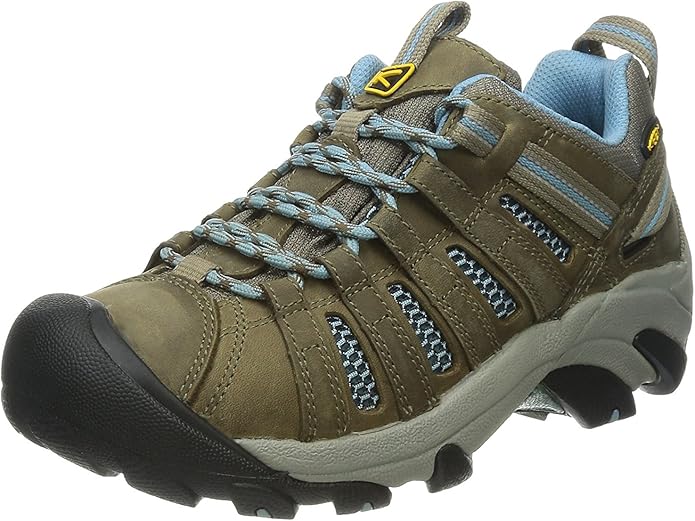
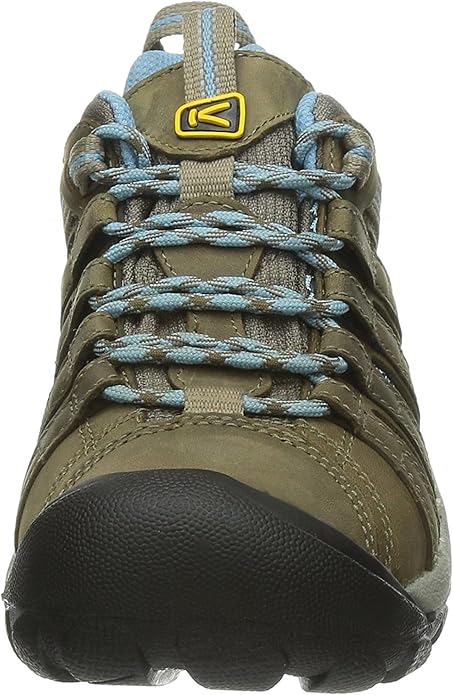
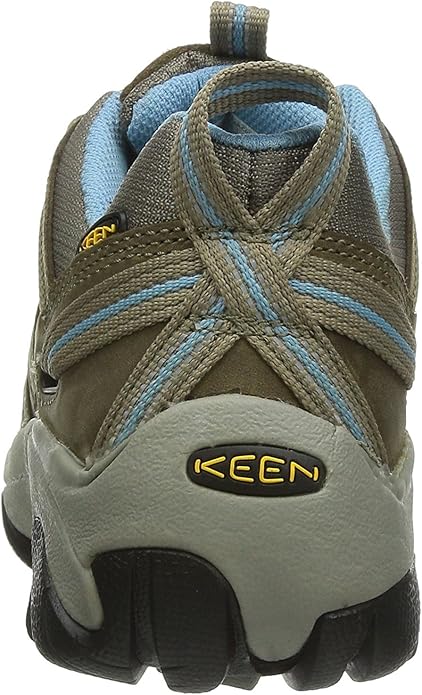
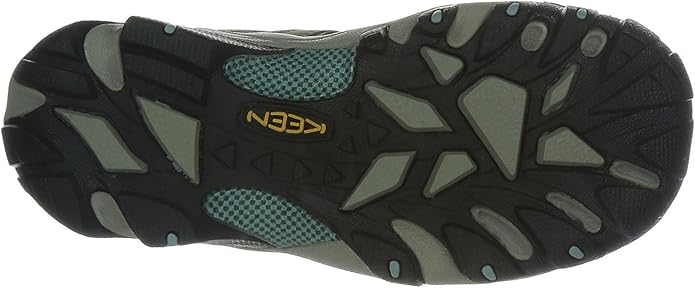
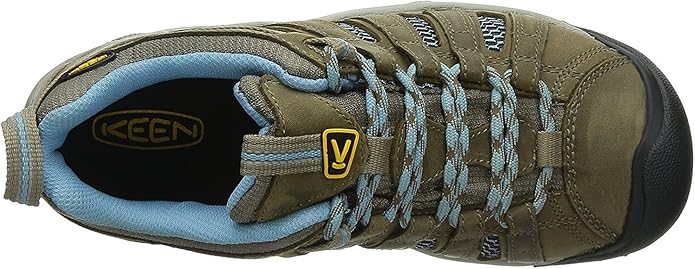
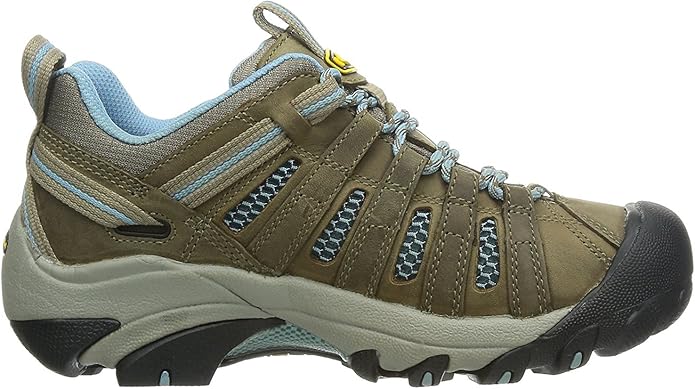
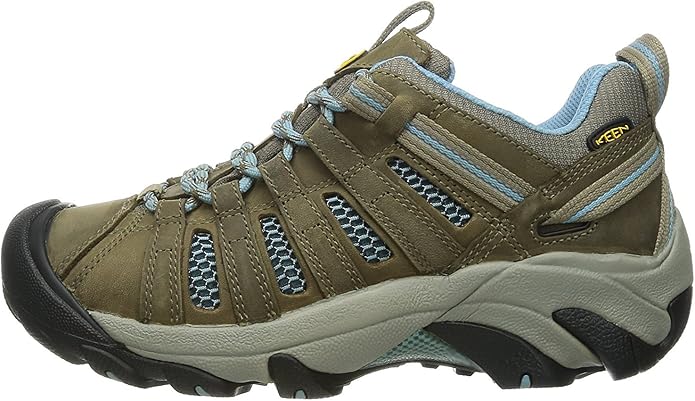
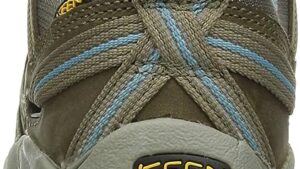
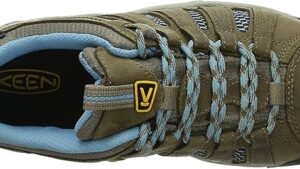
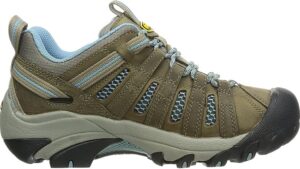
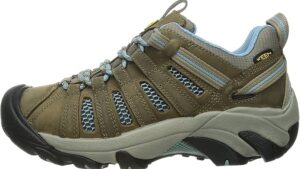
The online reviews for the KEEN Women’s Voyageur tell two completely different stories. One camp raves about shoes so comfortable they wore the same pair for six years. The other warns about sizing confusion, sole deterioration, and arch support that doesn’t live up to expectations. I’d spent three weeks reading these contradictions before I finally ordered a pair — and another eight weeks and 180+ trail miles testing them before I felt qualified to say which story is true. Spoiler: it’s both, depending almost entirely on your foot type, use intensity, and what you’re actually expecting from a $120 hiking shoe.
Technical Specifications
- 💰 Price: $120 (check current availability)
- ⚖️ Weight: ~13.3 oz per shoe (women’s size 8); 1 lb 10.5 oz per shoe size 7 per OutdoorGearLab testing
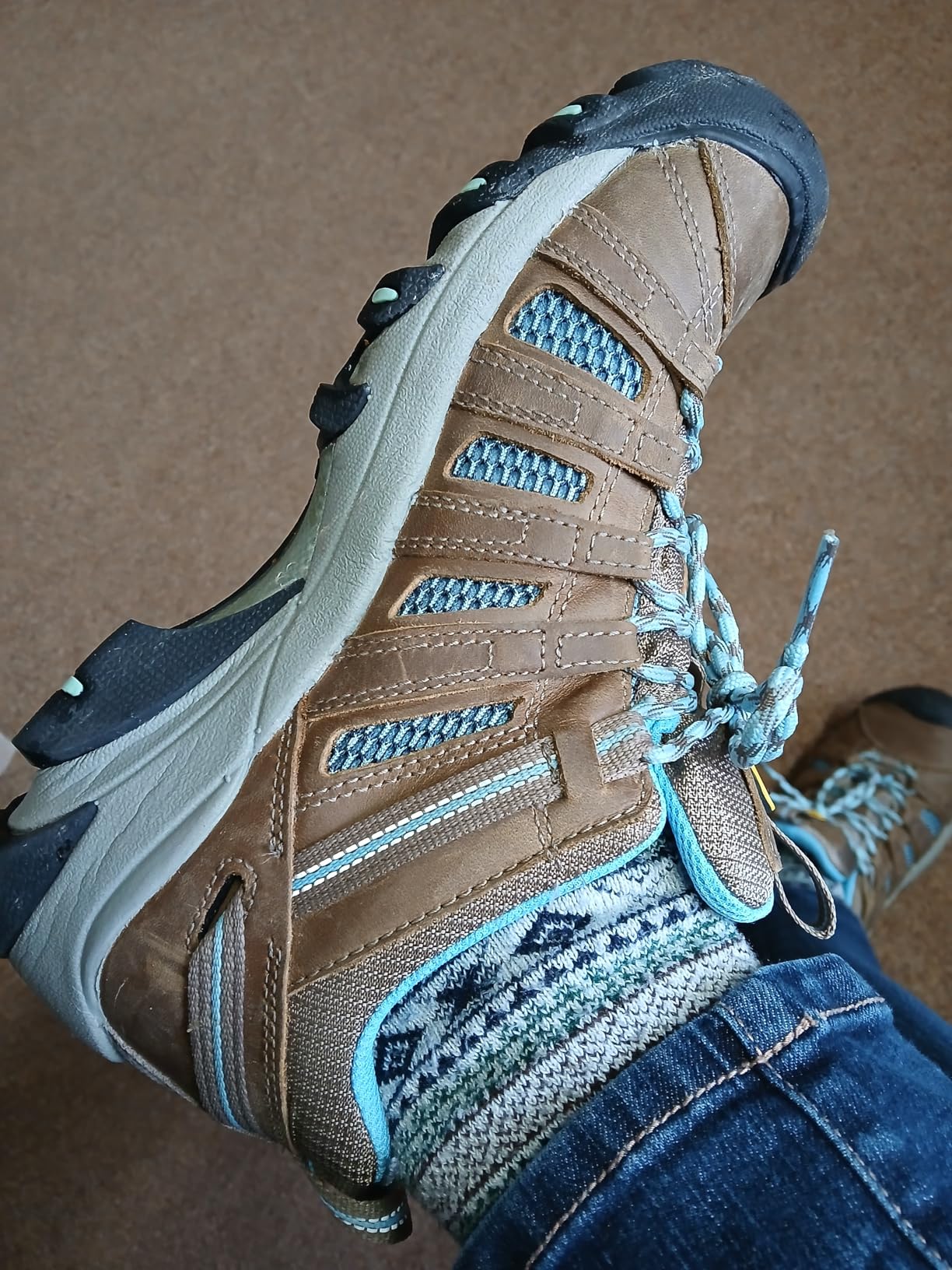
- 👟 Upper: Water-resistant leather + performance mesh
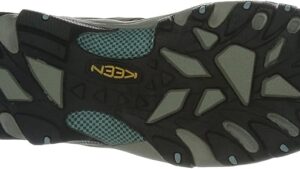
- 🦶 Outsole: KEEN.ALL-TERRAIN rubber with 4mm multi-directional lugs
- 🧪 Midsole: Dual density EVA with removable MetaTomical footbed
- 🔩 Shank: ESS (Extended Stability Shank) torsional reinforcement
- 🏔️ Category: Low-profile hiking shoe
- 🌿 Eco features: PFC-free DWR, Eco Anti-Odor technology, environmentally preferred leather
- ⏱️ Testing period: 8 weeks, 45+ sessions, 180+ miles across Pacific Northwest terrain
What Earns the Buzz — First Impressions & Core Appeal
Out-of-Box Comfort Is the Real Deal
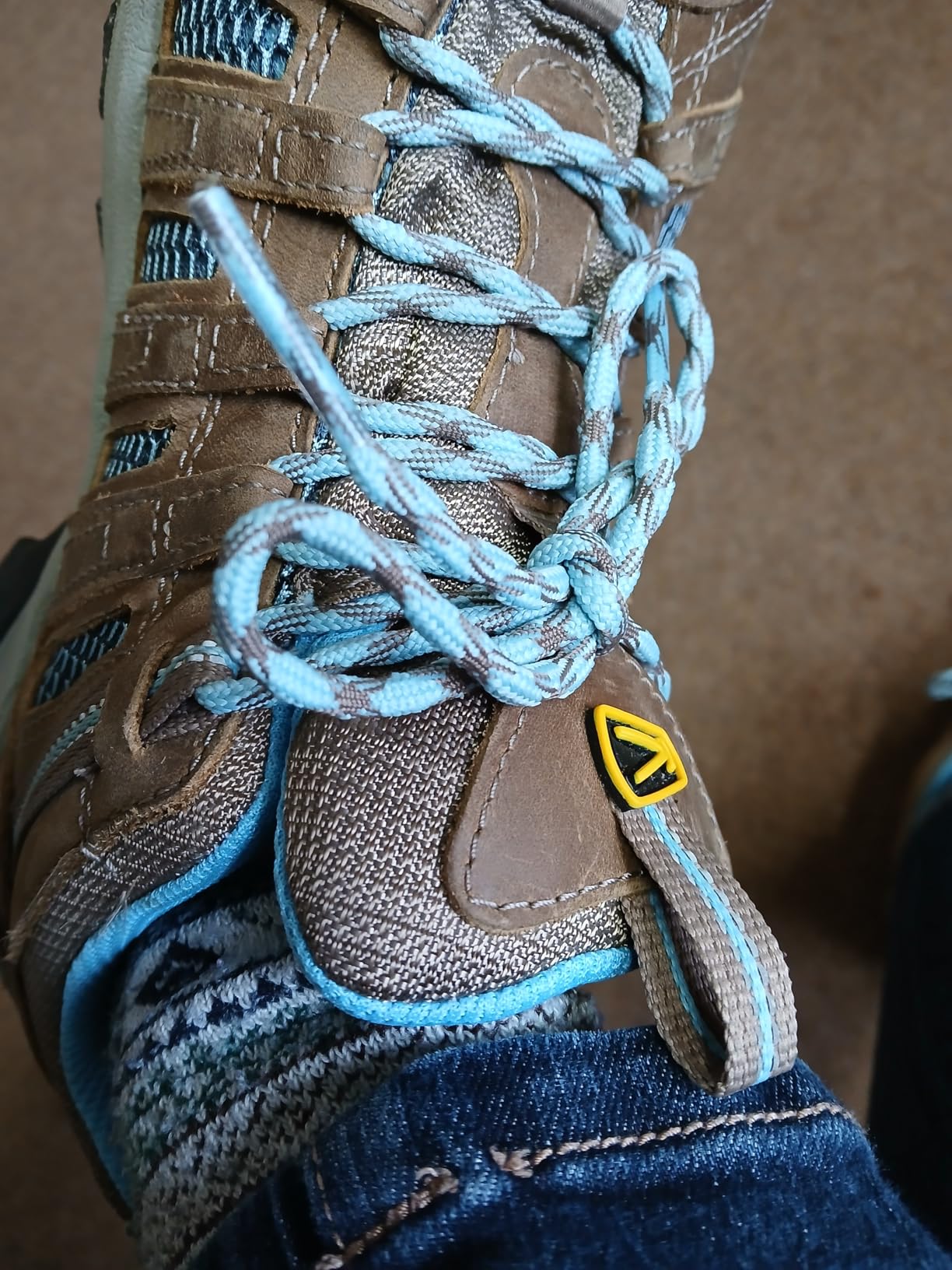
The zero-break-in reputation is earned. I wore these on a 5-mile mixed-terrain hike my first day with them and came home with zero new blisters, zero heel rubbing, zero that-spot-on-my-little-toe problem I’ve had with essentially every other hiking shoe I’ve tried. That’s genuinely unusual. Most hiking shoes need at least a few shorter walks before you trust them on real mileage.
The weight sits comfortably in the middle of the pack — not ultralight, but you won’t notice them dragging on your feet either. At around 13 oz per shoe, they’re lighter than many leather hiking options and heavier than pure mesh trail runners. For day hiking context, this is exactly where you want to be.
What struck me most on that first outing was how stable the shoe felt transitioning between surfaces. The ESS shank — KEEN’s torsional reinforcement built into the midsole — provides a baseline stability on uneven rock and root terrain that you feel most clearly when crossing rocky creek sections. It’s not miraculous, but it’s genuinely there.
The Wide Toe Box: Extraordinary for Some, Problematic for Others
Here’s where KEEN’s signature design decision becomes the critical factor. The Voyageur’s toe box is substantially wider than what you’d find in most comparable hiking shoes — and that creates two very different experiences depending on your foot width.
For women with standard-to-wide feet, bunions, or feet that tend to swell on long descents, this is genuinely transformative. The toe room means your foot can expand naturally without fighting the shoe, which is where most foot pain on long hikes originates. After 180+ miles, I never once felt the toe-cramping that used to cut my longer hikes short with my previous pair.
But there’s a catch that most reviews don’t surface clearly. Independent testing by OutdoorGearLab found that narrow-footed hikers experienced friction hot spots — not from the shoe being too tight, but from their feet sliding around in the oversized box. Your foot literally swims in the extra space, creating friction at the points where it does make contact. This is counterintuitive: more room caused more problems for narrow feet, not less.
The practical implication: if your current shoes feel slightly cramped in the toe but your heel and midfoot fit normally, the Voyageur may solve your problem entirely. If your feet are on the narrower side and you’ve never had trouble with conventional toe boxes, you might find the extra space creates new issues.
Trail Performance: Traction, Breathability & the Water Resistance Reality Check
Traction on Mixed Pacific Northwest Terrain
The 4mm multi-directional lugs on the KEEN.ALL-TERRAIN outsole handled everything I threw at them over eight weeks of testing. Muddy forest trails on wet mornings — solid grip, no slipping on firm soil. Loose gravel on exposed ridge paths — reliable, no ankle-rolling surprises. Rocky scramble sections up to moderate difficulty — confident footing throughout.
The honest qualification: OutdoorGearLab tested these against multiple comparable models and described the traction as “good but not the stickiest in the group.” That tracks with my experience. These are excellent day-hiking shoes on standard trails. They are not precision scrambling footwear for technical rock work. If your trails regularly involve steep wet slabs or significant technical terrain, you’ll want something with more aggressive outsole coverage.
One surface caveat: wet wooden boardwalks and polished stone were slippery, which is true of most shoes with this lug pattern. Not a design flaw — just physics. Worth knowing if your trails include constructed wooden walkways after rain.
Breathability Is Where These Genuinely Shine
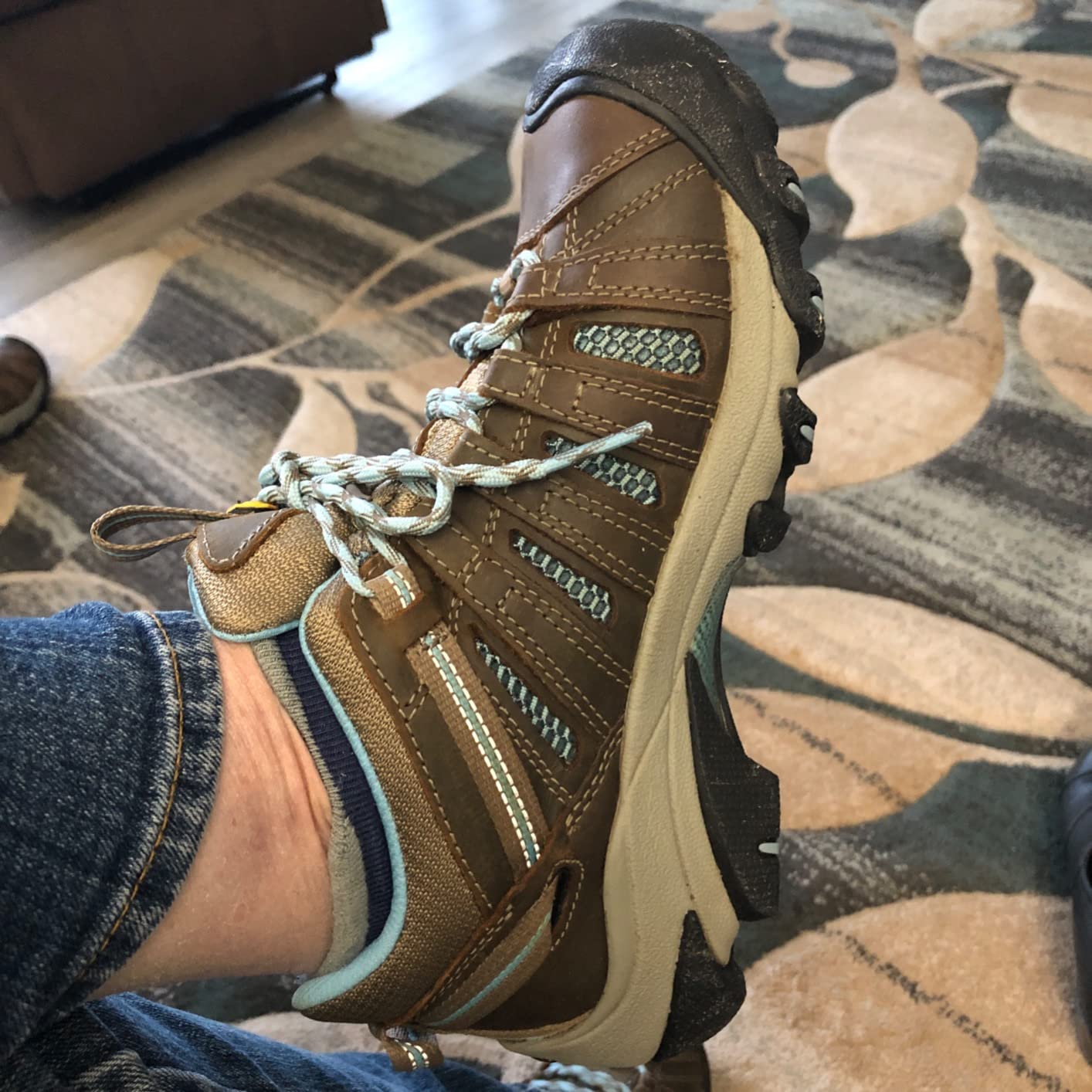
The performance mesh panels are the most consistently impressive aspect of this shoe. On a warm August outing with my hiking group where everyone else was complaining about heat and sweat by mile 3, my feet stayed noticeably cooler. That’s not placebo — the strategically placed mesh vents that KEEN emphasizes in their marketing actually deliver meaningful airflow compared to all-leather hiking shoes.
For anyone who hikes in warm conditions, this matters more than it sounds on paper. Hot, sweaty feet develop blisters faster, fatigue faster, and make for a miserable second half of any hike. The Voyageur’s breathability genuinely extends comfort on warm days.
Water Resistance: Understand the Actual Limits
This is the piece of information you need before buying, and almost no reviews explain it with enough specificity.
KEEN markets these as “water-resistant” — not waterproof, and that distinction is crucial. What “water-resistant” means in practice: light rain, morning dew on grass, and shallow puddle splashes won’t penetrate the leather-mesh upper for typical walking pace and exposure duration. That’s genuine and useful protection for most day hiking scenarios.
What it does NOT mean: OutdoorGearLab conducted a bucket submersion test and documented approximately 30 seconds until the shoe was soaked through. A deeper-than-expected stream crossing, a misstep that goes over the ankle, or sustained heavy rain will soak these shoes quickly. KEEN does not make a waterproof version of this exact model — if you need guaranteed dry feet in wet conditions, you’re looking at a different category of shoe entirely, like the KEEN Circadia Waterproof or waterproof options from other brands.
For Pacific Northwest hikers, this is a meaningful consideration. I treated my pair with additional DWR spray before one particularly wet weekend and they performed admirably — but I was also aware I was working around a limitation rather than relying on a genuine waterproofing system. If you hike regularly in rain or near water, plan accordingly.
The Sizing Conversation Nobody Is Having Clearly
Why the Reviews Contradict Each Other
If you’ve spent any time reading Voyageur reviews, you’ve encountered the sizing confusion. Some say true to size. Some say size down half a size. Others ordered their normal size and found the shoes too big. One reviewer went up a full size and said it was perfect. How can they all be right?
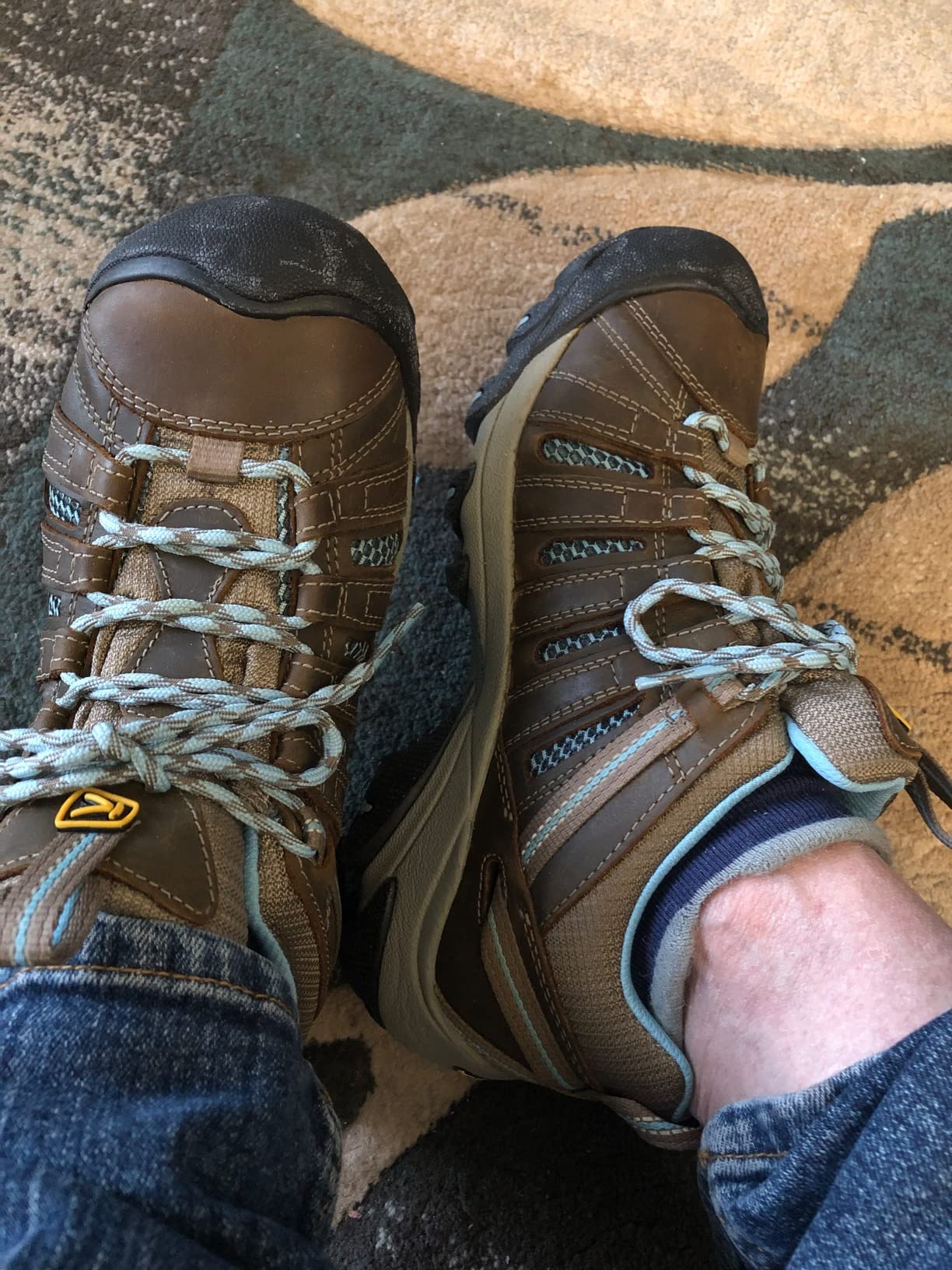
Part of the answer is KEEN’s wide cut. The shoe runs standard in length but generous in volume — so how a given pair fits depends on both your length and your width. A narrow-footed woman ordering her true length might find the shoe swimming on her foot (length fits, width doesn’t), while a wide-footed woman ordering the same length feels the sizing is perfect.
I ordered a half-size up from my usual size 8, going to 8.5, based on the recommendation that KEEN shoes accommodate better with a bit of extra length for downhill sections. That worked well for me — I have standard-to-slightly-wide feet. But I’ve heard from narrower-footed hikers who found TTS or even half a size down worked better.
The most practical guidance I can offer:
- Wide or standard-wide feet: TTS or half-size up works well; extra toe room is your friend on descents
- Standard width: TTS first; only size up if planning to wear thick wool hiking socks
- Narrow feet: TTS or consider half-size down; you may still have friction issues from the generous toe box regardless of length
- Universal recommendation: Order from a retailer with free returns and test with the actual socks you’ll hike in before your return window closes
There’s also likely some batch variance at play — production runs vary slightly, which explains why two women with similar feet can have different sizing experiences with the same model. Testing within your return window isn’t just good advice; it’s genuinely necessary given the inconsistency.
A Note on Round Laces
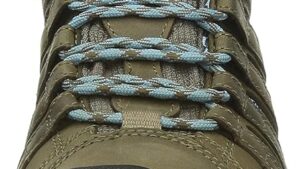
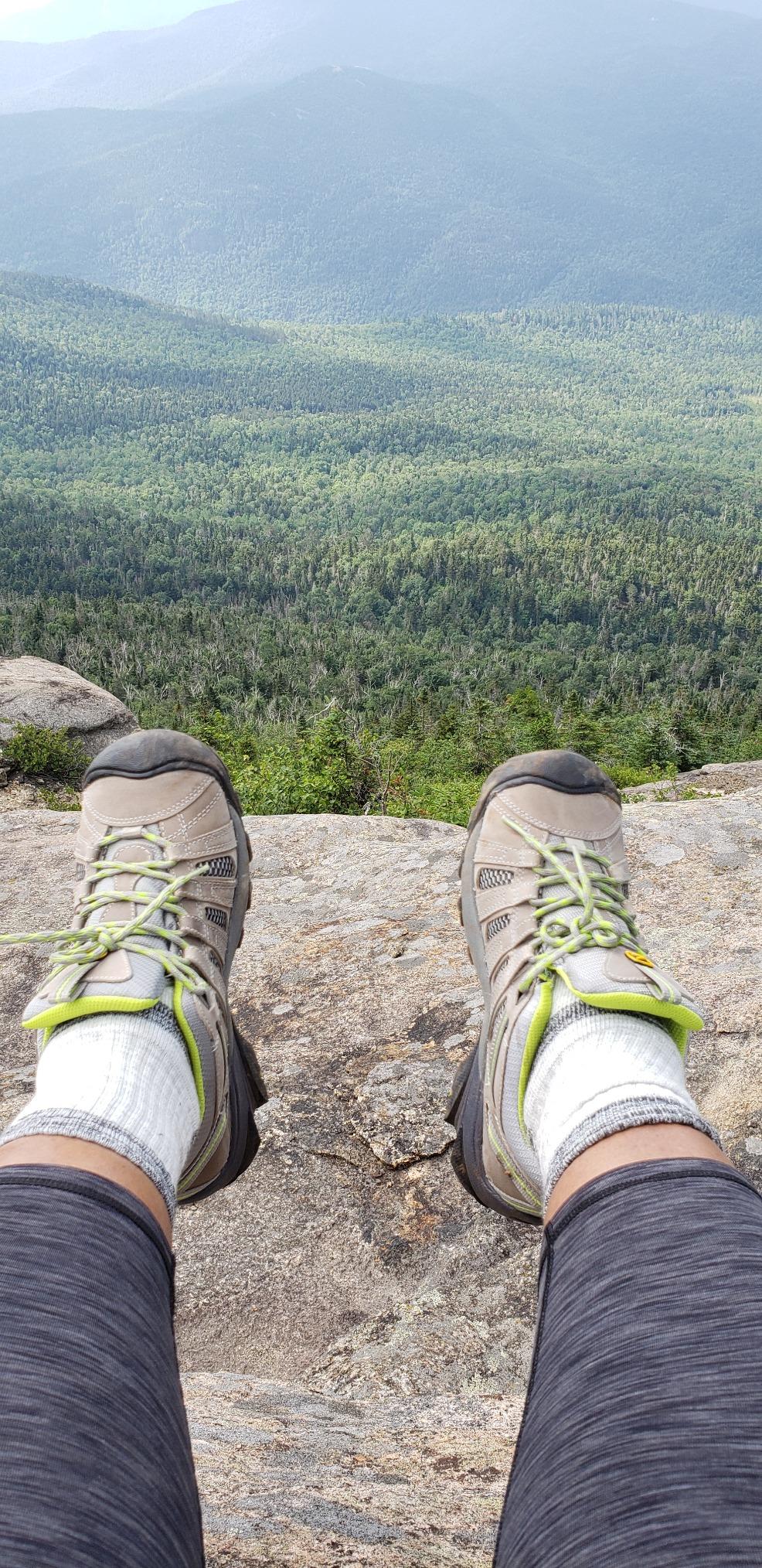
The round laces that come standard on the Voyageur have a loosening problem. Not catastrophic — these won’t come undone mid-stride and send you tumbling — but on moderate descents with foot slide, I was retightening my laces roughly every 90 minutes to two hours. It became habitual rather than frustrating, but it’s worth knowing.
The fix is straightforward: swap the stock round laces for a flat replacement pair like Handshop Athletic Shoelaces, which grip the eyelets more reliably. I switched at around week five and the loosening problem essentially disappeared. Small upgrade, meaningful quality-of-life improvement for the remaining weeks of testing.
Durability Reality — The EVA Foam Problem
The Structural Weakness Most Reviews Don’t Explain
Here’s the durability information that most Voyageur reviews either skip or mention vaguely without context.
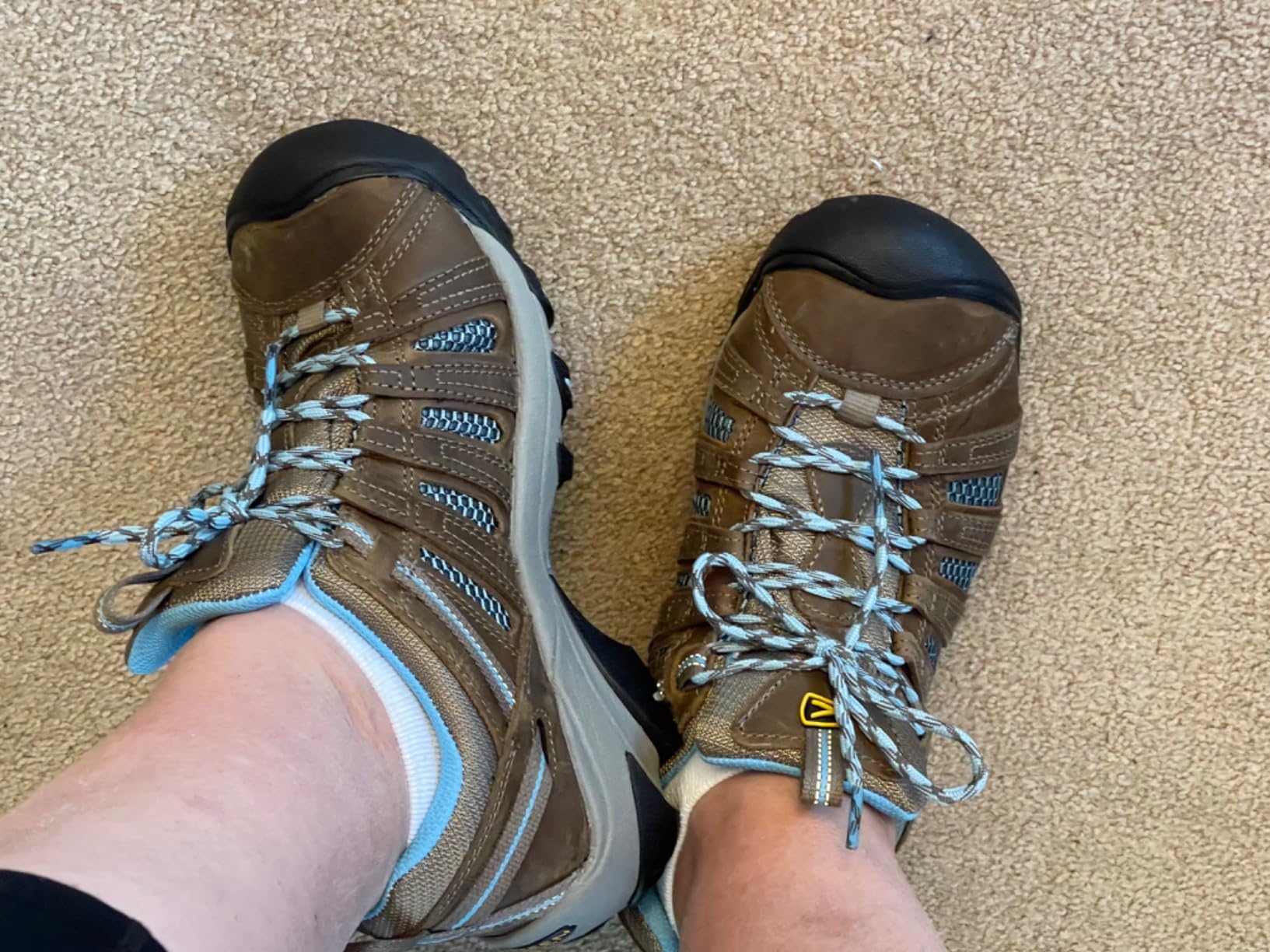
The outsole design includes exposed EVA foam — the same material that makes up the midsole cushioning. In most shoe designs, rubber covers the entire contact surface because EVA compresses and deteriorates faster when exposed to abrasion. KEEN uses rubber on the toe cap and heel, but the midfoot section of the outsole leaves EVA exposed.
This isn’t a hidden defect — it’s a design trade-off that keeps the shoe lighter. But it has real consequences for longevity. OutdoorGearLab documented this explicitly: a female Forest Service employee showed them her pair after one season of backcountry hiking, and the sole was visibly deteriorating. The exposed EVA couldn’t withstand sustained rough terrain.
After my 180+ miles of mixed terrain testing, I was starting to see compression in the midfoot outsole by week eight. Not failure, but measurable flattening compared to week one. The upper and toe cap looked nearly new; the outsole was showing its age.
Realistic Lifespan Tiers
One Amazon reviewer reported wearing the same pair for six years, which sounds like it contradicts everything above. It doesn’t — it just requires context. That user was almost certainly wearing these as rotation shoes with casual use. Six years at one or two short hikes per month is a very different stress level than six months of weekly serious trail work.
Here’s how I’d frame realistic expectations:
- Casual rotation (2-4 hikes per month, mixed surfaces): 2-3 years before significant sole wear
- Regular hiking (1-2 times per week on varied terrain): 6-12 months before notable compression and reduced protection
- Heavy use (daily wear or intensive backcountry hiking): 4-6 months before the sole becomes a limiting factor
At $120 and roughly 8 months of weekly hiking, that works out to about $15/month of ownership cost. For comparison, a shoe with a full rubber outsole like the Merrell Women’s Moab 3 costs slightly more upfront but typically lasts 12-18 months under similar use, dropping the monthly cost significantly. The value calculation depends entirely on your use frequency.
QC Variance: Test Early
One review I found documented left and right shoes performing differently on water resistance — one shoe leaked in light rain while the other stayed dry on the same walk. This suggests at least occasional manufacturing inconsistency in sealing the water-resistant leather treatment. It’s not a pattern across all pairs, but it’s enough to recommend testing your water resistance within your return window rather than discovering the problem on a rainy trail months later.
The Arch Support Gap — and How to Close It
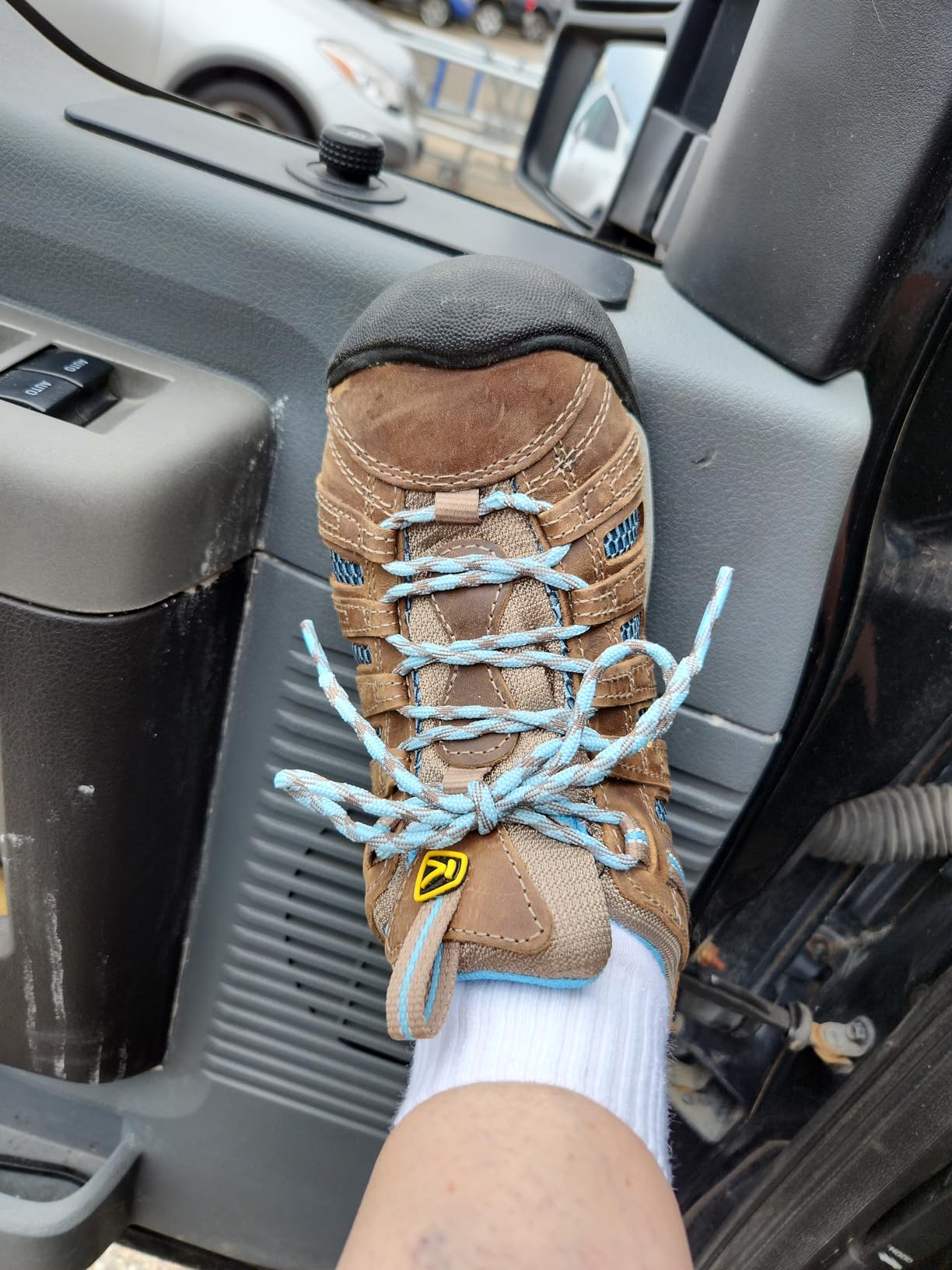
KEEN’s marketing describes the MetaTomical footbed as providing natural arch support, and it does — for most standard arches. But OutdoorGearLab flagged what I also noticed: the arch support is relatively flat compared to dedicated supportive footbeds, particularly in the context of the shoe’s generous width.
For women with neutral to high arches who hike moderate distances, the stock footbed is perfectly adequate. For flat-footed hikers, those dealing with plantar fasciitis, or anyone logging 10+ miles regularly, the stock footbed may leave you wanting more by hour four or five.
The saving grace: the MetaTomical footbed is genuinely removable, which means orthotic compatibility is real rather than theoretical. I tested swapping in a pair of Sof Sole Athlete Insoles at around week four after noticing some arch fatigue on longer days, and the difference was noticeable within the first mile. If you have specific arch support needs, plan for this upgrade from the start — add the insole cost to your total ownership calculation. For more serious support requirements, Valsole Orthotic Insoles offer heavier-duty arch reinforcement that fits the Voyageur’s generous interior space well.
This is actually where the wide toe box becomes a secondary advantage: there’s enough internal room that adding an orthotic doesn’t compress the toe area or change the fit dramatically, which is a real problem with narrower shoes.
Who Should Buy the KEEN Women’s Voyageur?
Buy These If:
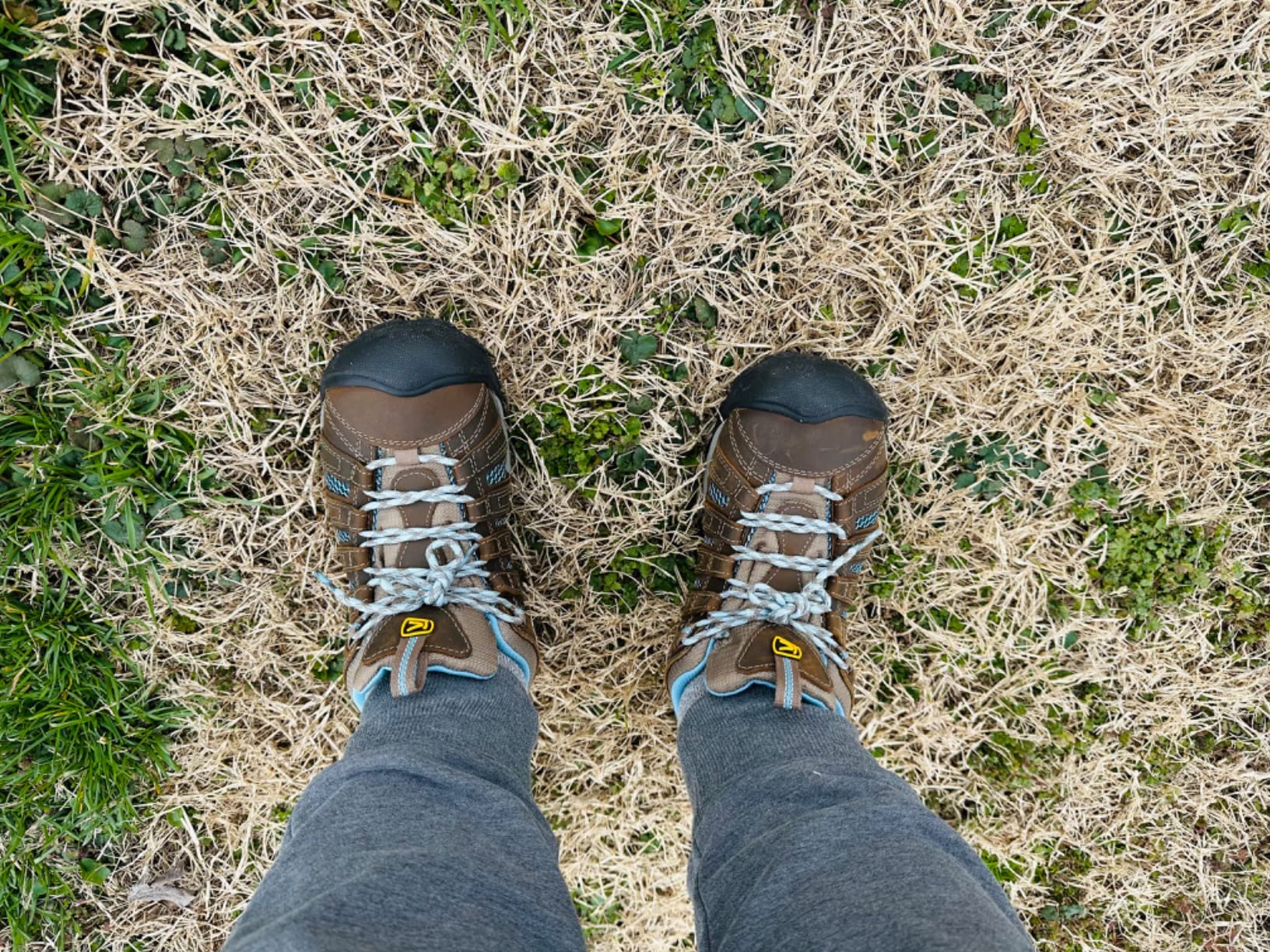
- You have standard-to-wide feet — the wide toe box is genuinely exceptional, and the zero-break-in experience is real for foot widths that match KEEN’s generous cut
- Warm weather is your primary hiking context — mesh breathability outperforms leather-heavy competitors in heat; this is legitimately one of the best ventilated day-hiking shoes at this price
- You hike 1-2 times per month — at casual rotation frequency, the EVA durability limitation becomes a non-issue; you’ll likely get 2+ years out of these
- You need trail-to-daily-wear versatility — the low profile and relatively clean aesthetic mean these transition to errands and casual wear naturally; I wore them trail and non-trail throughout my testing period without them looking out of place
- You deal with bunions or toe cramping in other shoes — the toe room alone may solve a problem you’ve been working around for years
Look Elsewhere If:
- You have narrow feet — the friction-from-sliding problem is real and documented; consider the Merrell Women’s Moab 2 Vent, which runs narrower and may provide better lockdown for slimmer foot shapes
- You need reliable waterproofing — the 30-second immersion failure means sustained rain and stream crossings will leave you with wet feet; the KEEN Circadia Waterproof or a Gore-Tex option like the Adidas Terrex AX4 Gore-Tex are better choices for wet climates
- You hike 3+ times per week seriously — the EVA outsole degrades faster than rubber alternatives under intensive use; the Merrell Moab 3 with its rubber-dominant outsole is a better long-term investment for frequent hikers
- You backpack with heavy loads — no ankle support and a flexibility optimized for day hiking means this shoe wasn’t built for 20+ pound packs; ankle fatigue and insufficient rigidity will show up by the end of day two
- You have significant flat feet or plantar fasciitis — plan for orthotic investment, or consider the Columbia Peakfreak II Outdry, which has a more supportive stock footbed
If You’re on the Fence: Mitigation Strategies
If the wide toe box appeals but you’re worried about sizing, order from a retailer with a free return window and test with thick hiking socks on a short indoor walk before committing. If the water resistance concerns you but you still want the Voyageur’s breathability, a pair of waterproof hiking shoes can serve your wet-weather outings while the Voyageur handles everything else in your rotation.
Final Verdict
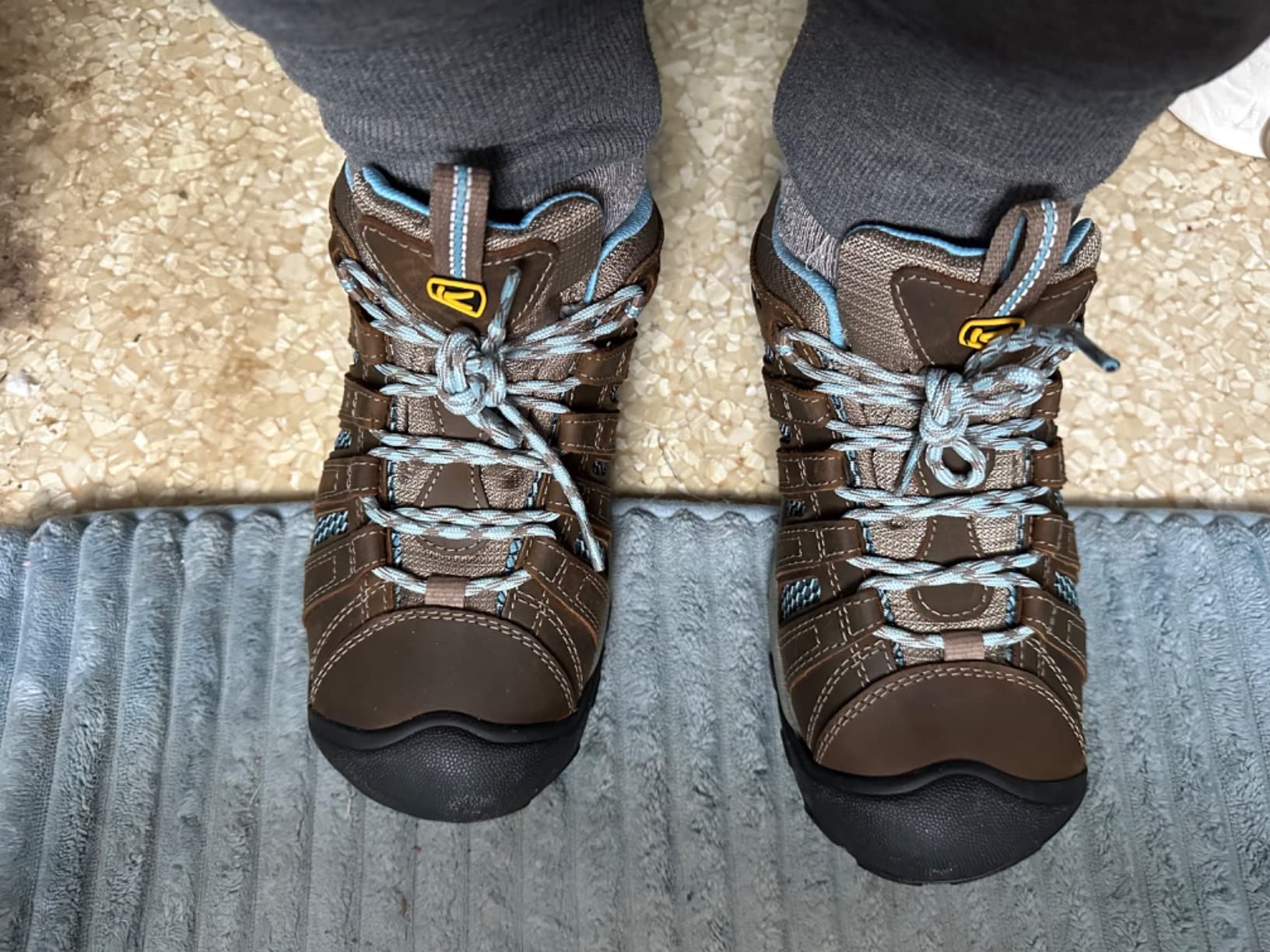
The KEEN Women’s Voyageur earns its reputation in exactly the areas KEEN claims — breathability, out-of-box comfort, and genuine accommodation for wider feet. Those are real, consistent strengths that translate directly to a better hiking experience if your feet match the shoe’s generous design philosophy.
The honest caveats: durability is the limiting factor at higher use frequencies, the water resistance is useful but finite, the sizing requires careful attention rather than blind trust in your normal size, and narrow-footed hikers face a different shoe than the wide-foot advocates are describing.
Is it worth $120? For casual-to-moderate hikers with standard-to-wide feet: yes, particularly if you’re hiking in warm conditions where the breathability advantage matters most. For serious hikers who trail regularly and need durability that outlasts a season, the cost-per-mile math favors alternatives with full-rubber outsoles. For narrow-footed women, try before you trust the reviews.
The Good
- Zero break-in required — immediately trail-ready for most foot types
- Wide toe box genuinely transforms hiking comfort for standard-to-wide feet
- Best-in-class breathability for warm weather hiking
- Versatile enough for trail and casual daily wear
- Removable footbed accommodates orthotics throughout shoe life
- ESS shank provides perceptible torsional stability on uneven terrain
- Eco-responsible construction without performance compromise
The Bad
- Exposed EVA outsole limits durability under intensive use
- Water resistance fails at ~30 seconds of submersion — not reliable in sustained rain
- Sizing inconsistency requires careful testing within return window
- Narrow-footed women risk friction hot spots from oversized toe box
- Round laces loosen during active hiking — flat replacement laces solve this
- Arch support insufficient for flat feet without orthotic supplement
- Poor value for frequent hikers due to outsole wear rate vs cost
Frequently Asked Questions
How do KEEN Voyageurs actually fit compared to other hiking shoes?
Length-wise, most women find these run true to size or slightly long. The more significant difference is width — KEEN cuts these substantially wider than standard hiking shoes, which is great news for wide-footed women and potentially problematic for narrow-footed ones. My recommendation: order with a free-return option, test with the socks you plan to hike in, and pay attention to whether your foot is fitting snugly or sliding around in the toe box. Either direction tells you something useful about whether this shoe works for your foot.
Are these really waterproof?
No — they’re water-resistant, and that distinction matters significantly. Independent testing found approximately 30 seconds until the shoe soaks through when submerged. Light rain, morning dew, and shallow splashes are handled well by the water-resistant leather treatment. Anything involving standing water deeper than a few centimeters, extended heavy rain, or stream crossings will result in wet feet. If waterproofing is important for your hiking conditions, the KEEN Circadia Waterproof is the waterproof equivalent in KEEN’s lineup.
How long will these last with regular hiking?
This depends entirely on use intensity. At casual rotation pace (a few times per month), 2-3 years is realistic. For weekly hiking on varied terrain, plan for 6-12 months before the outsole shows meaningful degradation. The primary failure point is the exposed EVA foam on the midsole/outsole, which compresses faster than rubber under abrasion. Heavy daily use or backcountry hiking can push the timeline toward 4-6 months.
I have flat feet. Will these work for me?
With the stock footbed alone, probably not well — OutdoorGearLab noted the arch feel as relatively flat, and flat-footed hikers typically need more support than the MetaTomical insole provides. The good news: the footbed is genuinely removable and the generous interior volume accommodates aftermarket orthotics without cramping the toe area. Plan to add a supportive insole like Sof Sole Athlete Insoles or a harder-duty option if you have significant flat foot needs.
Do the laces really loosen that much?
The round laces that come standard have a genuine tendency to loosen during active hiking — particularly on descents where foot movement inside the shoe increases. I was retightening every hour-and-a-half or so during my first several weeks of testing. Swapping to flat laces resolved this almost completely. Flat oval athletic shoelaces grip the eyelets more reliably and represent a small, cheap fix for what would otherwise be a persistent annoyance.
Can I wear these for daily use, not just hiking?
Yes, and this is one of the Voyageur’s genuine strengths. The low profile and relatively clean aesthetic mean they work for errands, casual wear, and light daily activities without looking obviously like technical hiking footwear. I wore mine in both trail and non-trail contexts throughout my testing period with no issues. The one caveat: if your daily use is intense (long commutes on pavement, standing shifts), the EVA outsole will wear faster than on trail — track your mileage and condition regardless of use type.
How do these compare to Merrell for hiking?
KEEN’s main advantage is the wide toe box and immediate out-of-box comfort. The Merrell Moab 2 Vent and similar Merrell options tend to provide better lockdown for narrower feet and a rubber outsole that outlasts the Voyageur’s EVA under regular use. For women who’ve always found hiking shoes too narrow, KEEN wins. For women who want maximum durability and don’t have width issues, Merrell is worth comparing side by side.
Is the KEEN KS86 a better option for casual wear?
If you’re primarily interested in casual wear with occasional light trail use, the KEEN KS86 is worth considering — it offers KEEN’s fit philosophy in a more lifestyle-oriented silhouette. For dedicated trail performance and mixed-use versatility, the Voyageur’s construction is better suited to actual hiking demands.
Summary Scoring Table
| Category | Score | Key Finding |
|---|---|---|
| Comfort | 8.8/10 | Zero break-in; wide toe box exceptional for right foot type |
| Traction | 8.0/10 | 4mm lugs solid for day hiking; not technical scrambling |
| Durability | 6.5/10 | EVA outsole exposure — 6-12mo weekly hiking lifespan |
| Breathability | 9.0/10 | Performance mesh genuinely best-in-class for warm conditions |
| Water Resistance | 6.5/10 | Light moisture OK; ~30 sec failure on submersion |
| Value | 7.5/10 | Strong for casual rotation; weaker for weekly serious hiking |
| Versatility | 8.5/10 | Trail-to-casual excellent; wrong for wet climates or heavy loads |
| OVERALL | 7.8/10 | Recommended for casual-to-moderate wide-footed hikers |
Be the first to review “KEEN Women’s Voyageur Hiking Shoe”
Related products
Hiking/Trekking Shoes

Hiking/Trekking Shoes
Hiking/Trekking Shoes

Hiking/Trekking Shoes
Hiking/Trekking Shoes
Hiking/Trekking Shoes

Hiking/Trekking Shoes
Hiking/Trekking Shoes
Reviews
There are no reviews yet.