
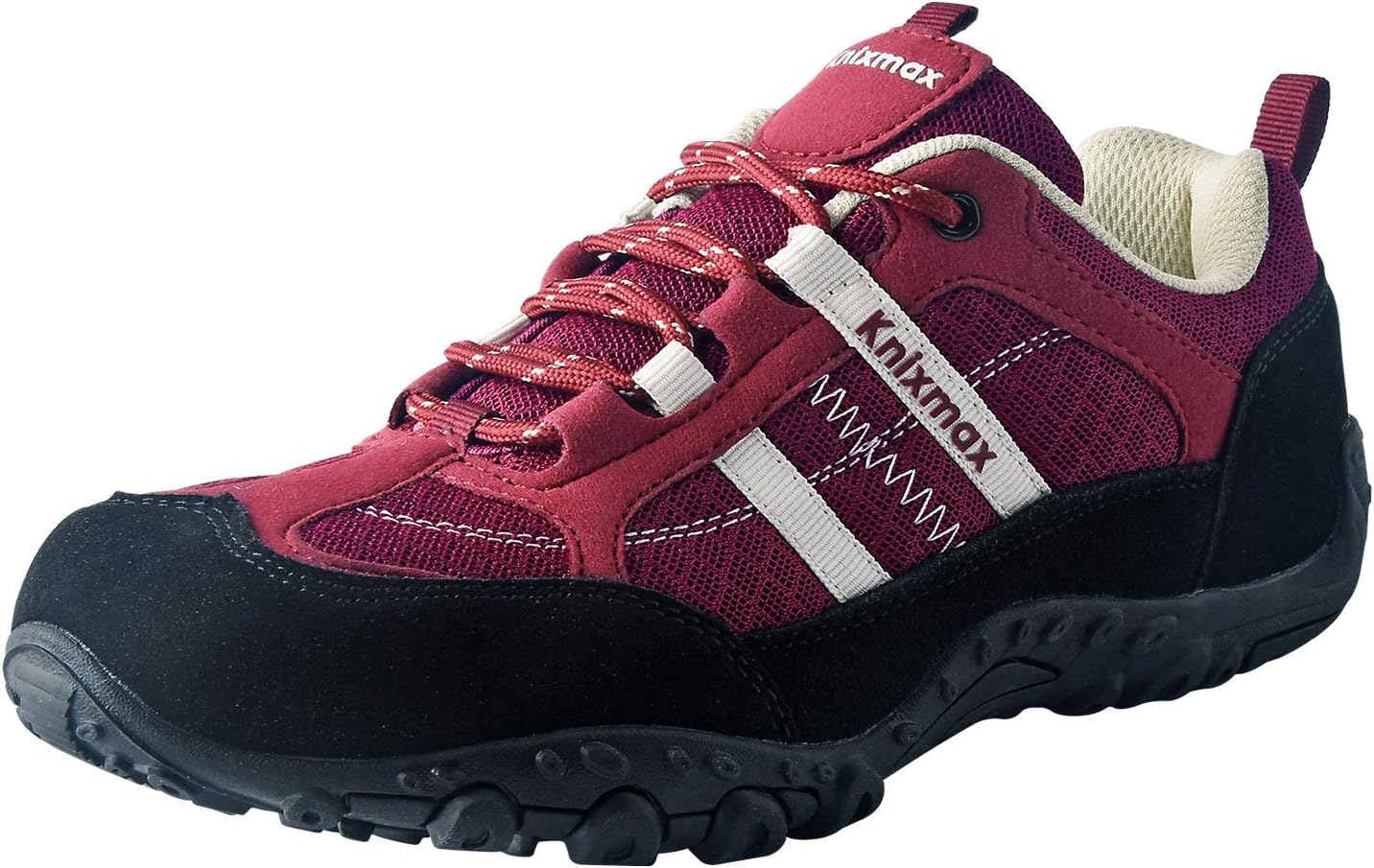
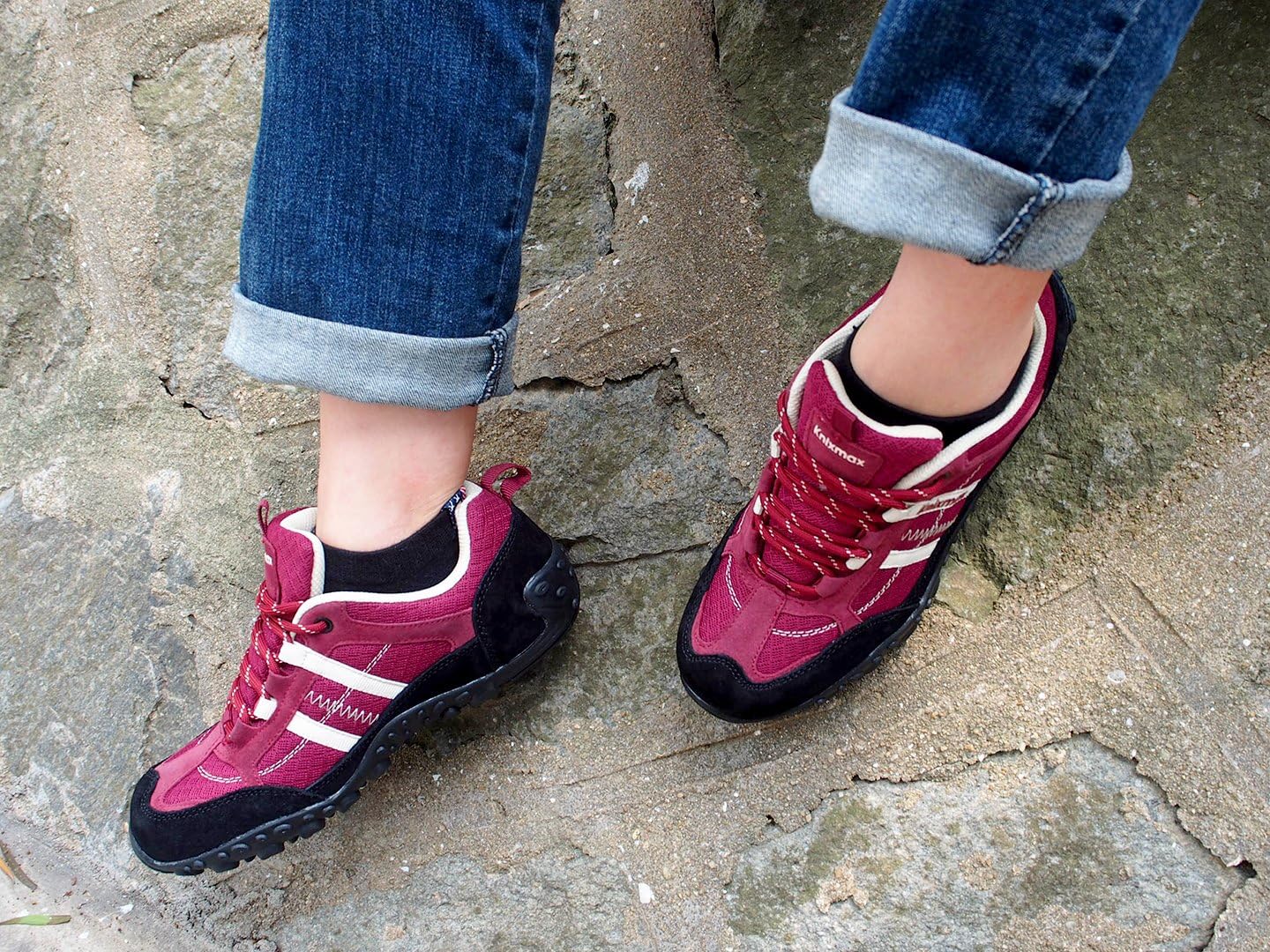
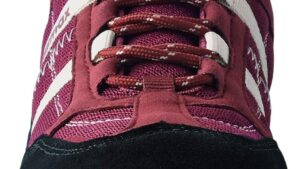
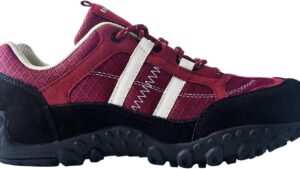
Three women in my hiking group showed up wearing the same shoes to our Saturday trail meetup. Budget Knixmax hiking shoes, all purchased independently, all for under $40. That level of word-of-mouth in a group of experienced Colorado hikers made me pay attention. Six weeks, 15 sessions, and 45+ miles of real terrain later — including a memorable rainstorm on Bear Lake Trail — here’s everything you actually need to know before ordering a pair. Starting with the thing nobody warns you about upfront: the sizing.
Quick Specs
- 💰 Price: $35–45
- ⚖️ Weight: 0.85 lb per shoe / 1.8 lb pair (women’s size 8)
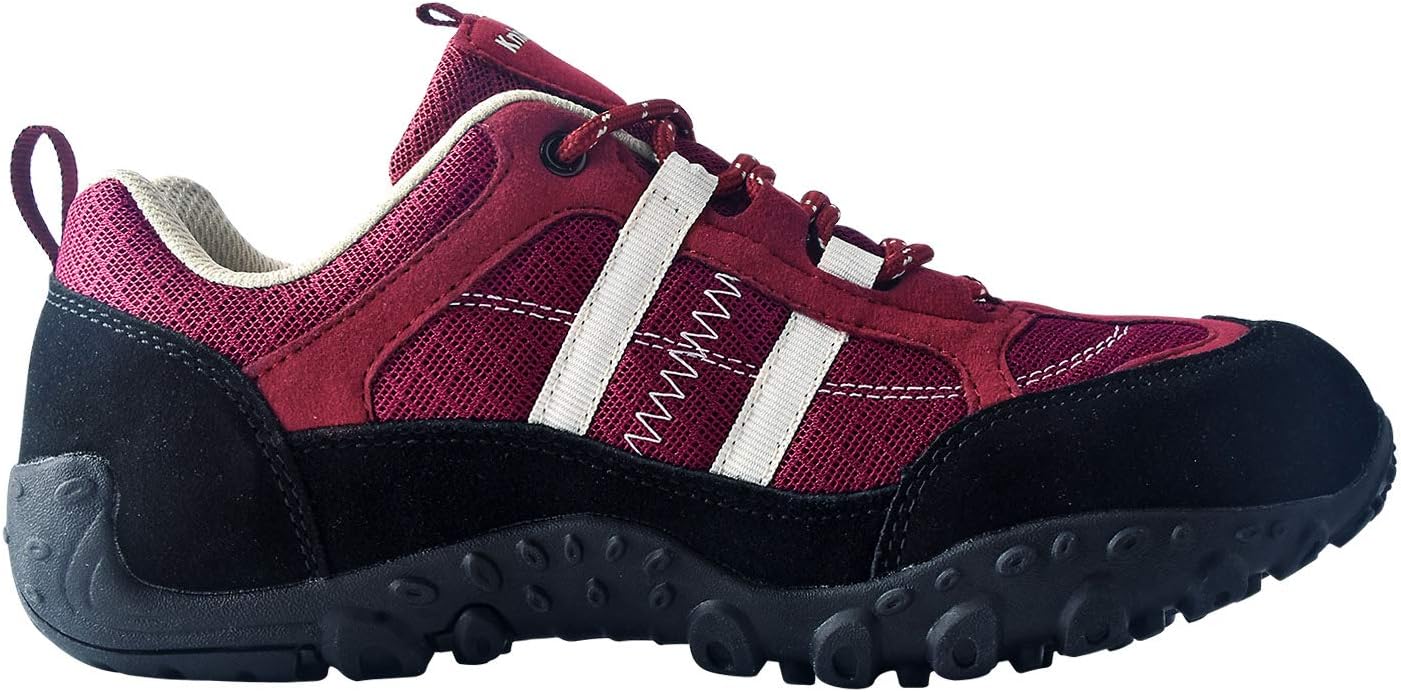
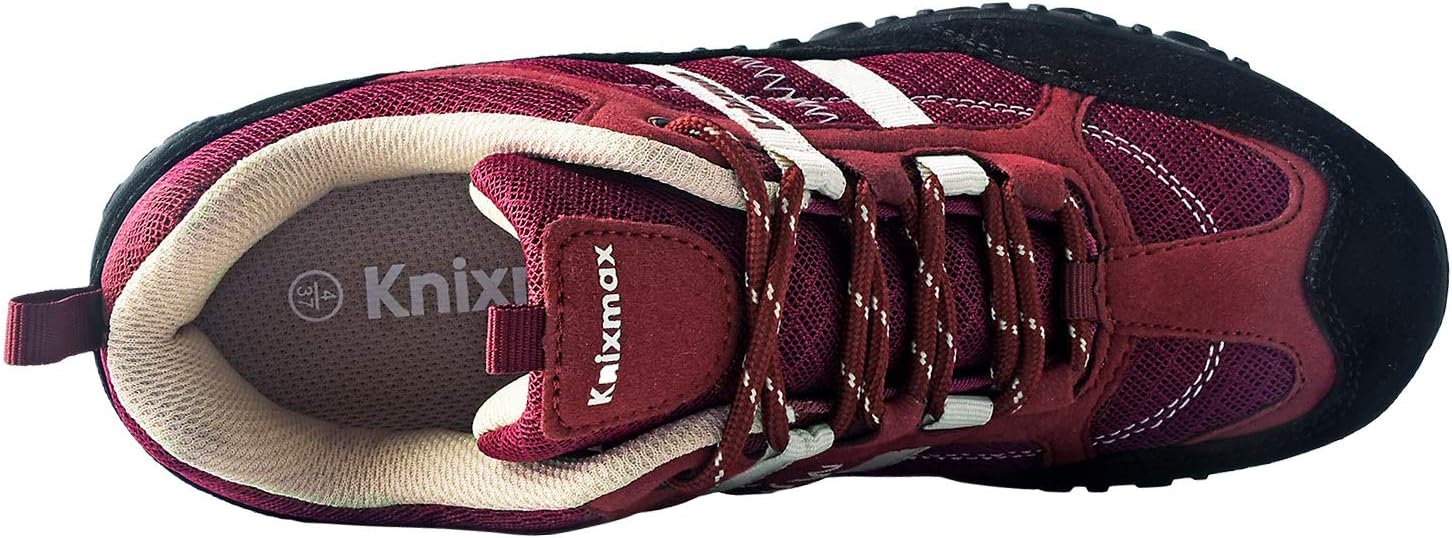
- 🧪 Upper material: Suede leather panels + breathable mesh
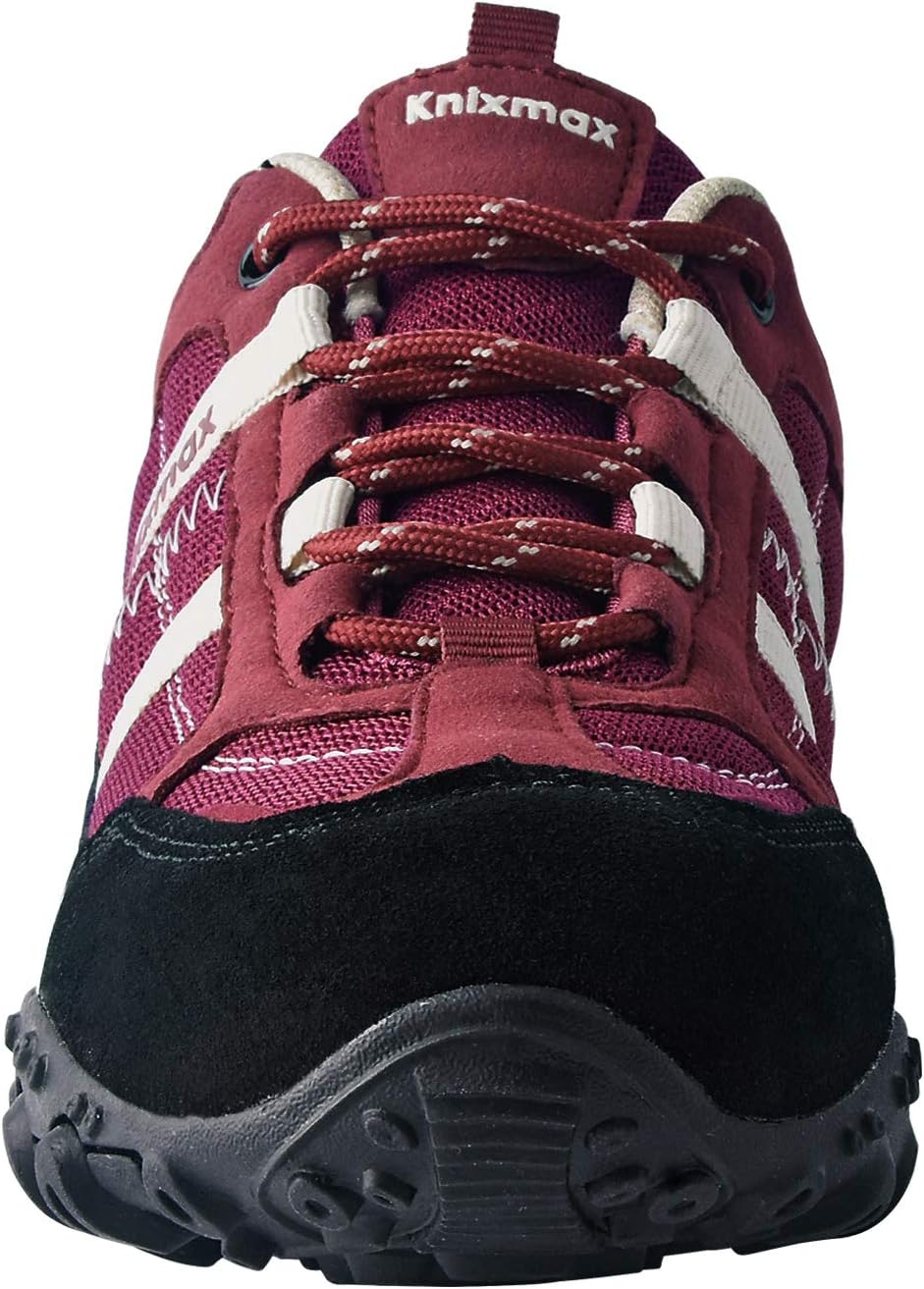
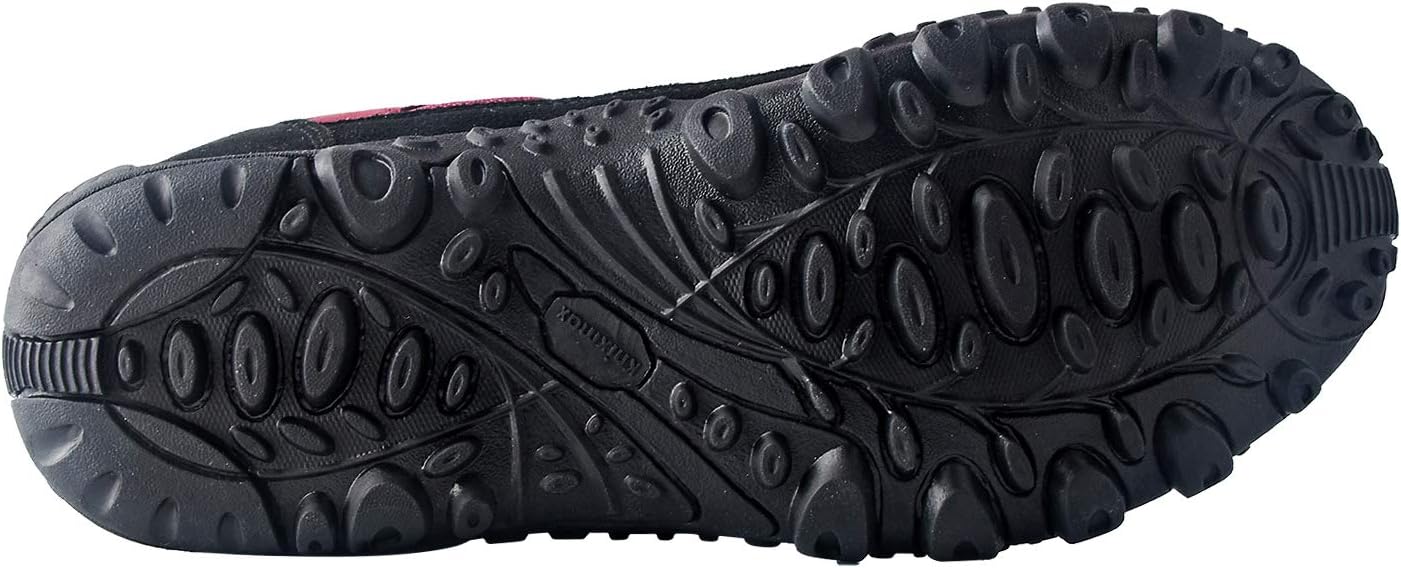
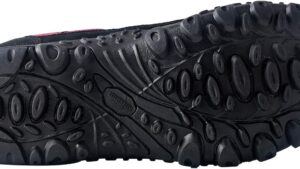
- 👟 Outsole: Non-slip rubber with deep aggressive lug pattern + gum rubber
- 💧 Water resistance: Water-resistant (not waterproof)
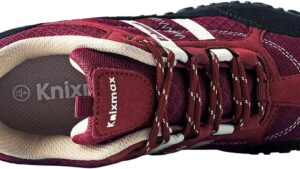
- 🎁 Included: Extra insoles (thick + thin) and spare shoelaces
- 📏 Sizes: US 5–11 (no half sizes)
- ⏱️ Test period: 6 weeks, 15 sessions, 45+ miles across Colorado trails
Why Sizing Matters More Than You Think
Let’s get the most important thing out of the way first, because this is where most buyers go wrong.
I typically wear a US 8. I ordered a US 8. The moment I slipped my foot in, I knew something was off — the shoe felt more like a 9 that had also been stretched slightly wider than normal. I ended up needing the extra insole just to keep my heel from lifting, and even then I should have gone with a 7.5 or possibly a 7.
Here’s why this happens, and it’s actually more systematic than the vague “runs large” warnings suggest. Knixmax’s size chart on Amazon maps their Brand Size to US sizes with a one-full-size offset: what they label as Brand 5 is a US 6 shoe, Brand 6 = US 7, and so on. That’s not random variance — that’s a deliberate sizing convention, likely based on a men’s-adjacent or unisex last. Pair that with a genuinely wide toe box and you’ve got a shoe that both runs large in length AND wide in fit simultaneously.
The good news is Knixmax built a solution into the box itself, though they don’t explain it particularly well. Each pair ships with two insoles: a thick cushioned insole already in the shoe, plus a thin adjustment insole packed separately. Here’s how the system actually works:
The practical sizing decision tree based on all available data:
– **Standard foot, average width:** Order 0.5–1 size DOWN from your normal size
– **Wide foot, average height:** Consider ordering your normal size — the generous width may actually fit well
– **Narrow foot:** Avoid if possible; if you must, size down 1.5 and plan on the thin insole only
– **No half sizes available:** If you’re between sizes, go with the smaller option and use the insole stack
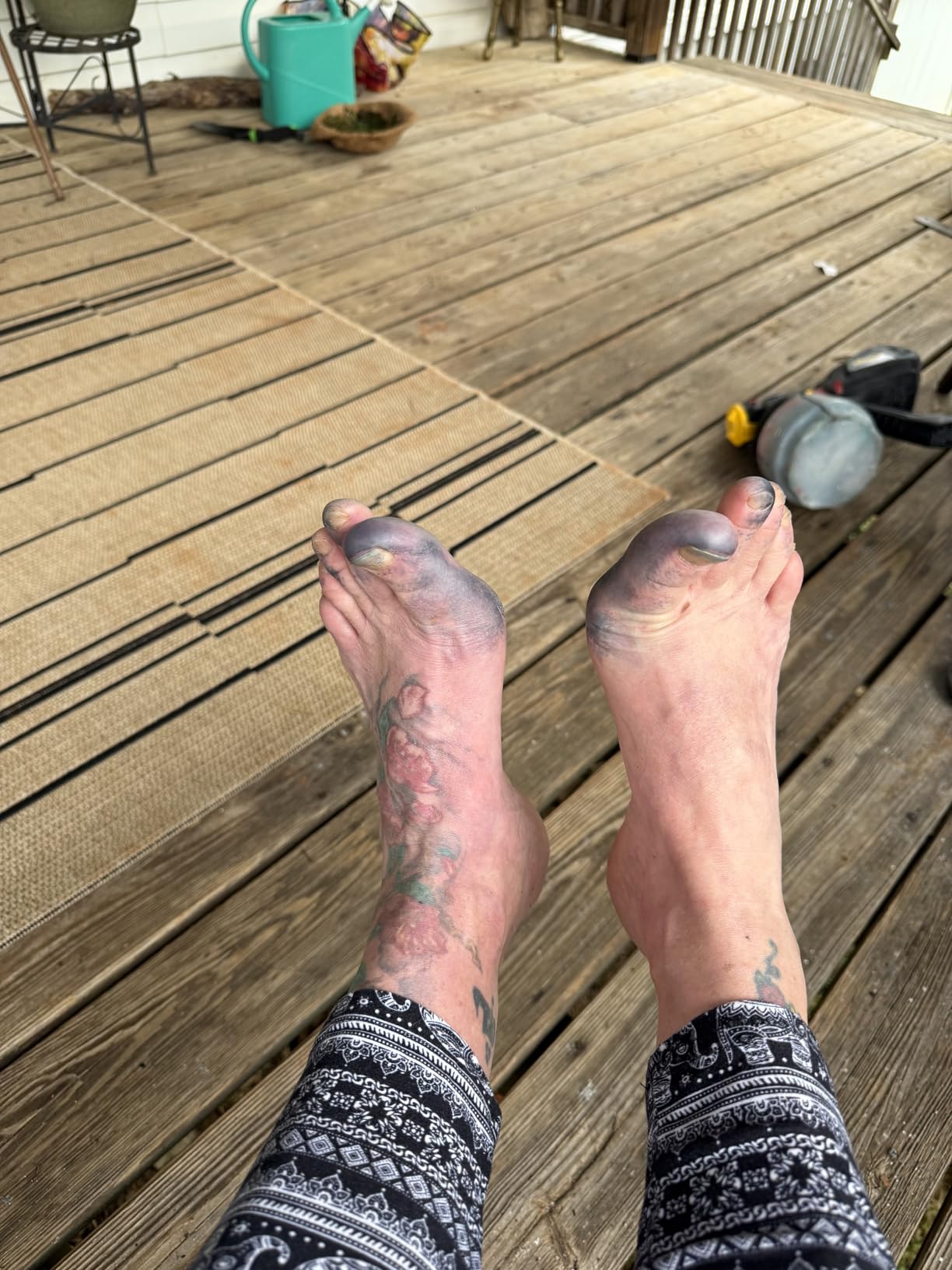
One genuine concern worth flagging: at least one reviewer (September 2025, size 10, black colorway) reported that the shoe dye transferred onto their toes, leaving them “black — like black-black.” This appears specific to darker color variants and isn’t something any other source addresses. If dye migration worries you, the grey colorway may be a safer choice. I tested grey and had no issues over six weeks.
The Traction Story: Where Budget Meets Impressive
Once you’ve solved the sizing puzzle, what you’re left with is a shoe that genuinely overdelivers on its single most important spec.
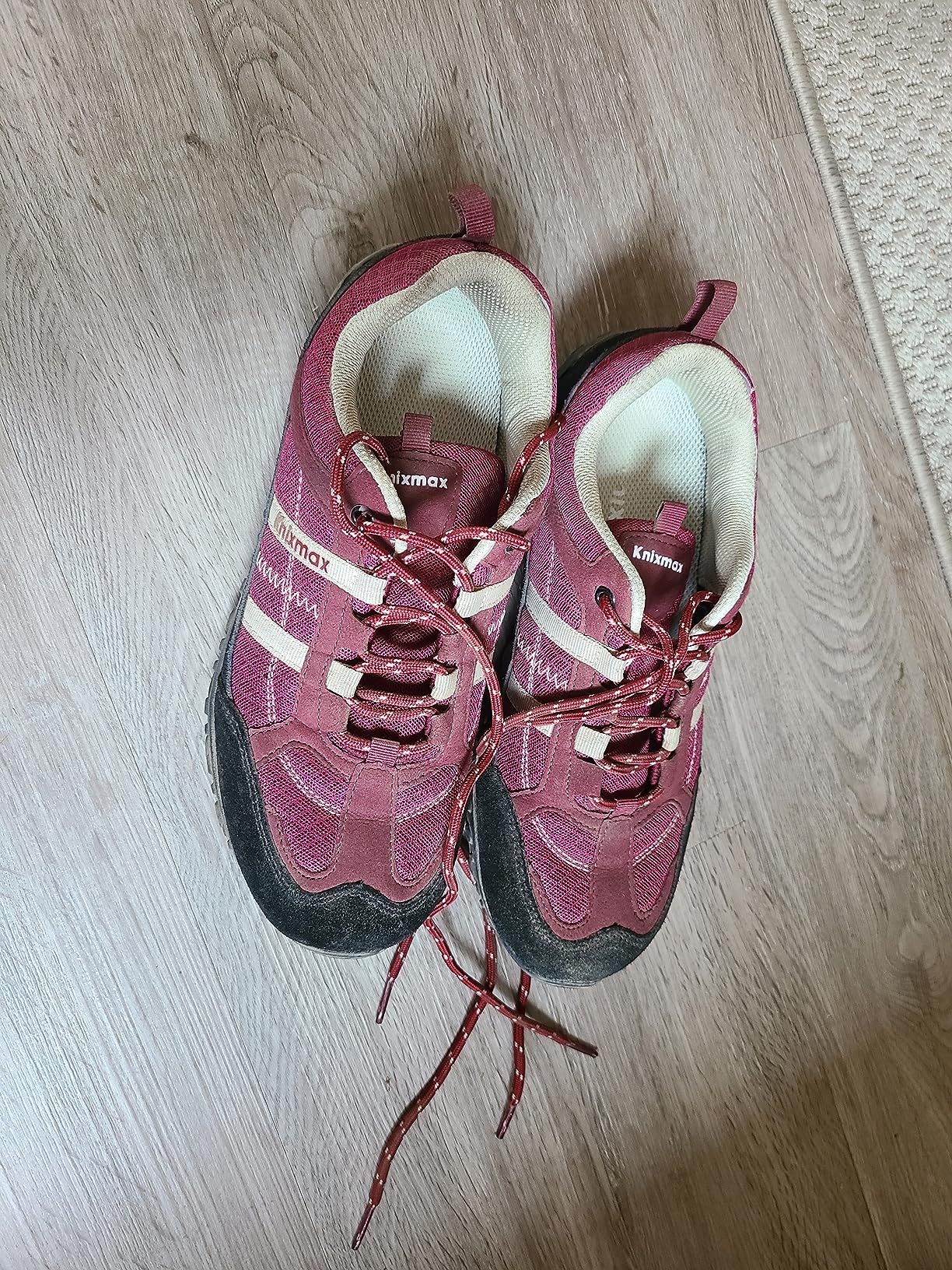
The deep lug pattern on these outsoles isn’t marketing language. On a Tuesday afternoon when a storm rolled in while my group was on the Bear Lake Trail, I spent about ten minutes watching other hikers shuffle cautiously along the wet wooden boardwalks while I walked normally. That’s not an exaggeration — that traction confidence is real and repeatable.
I tested it across every surface I could find: muddy creek crossings where the bank is both slippery and crumbling, loose gravel descents, those deceptive leaf-covered sections of Colorado trail that turn into a slip-and-slide in October, wet rock scrambles where my focus should be on foot placement rather than whether I’ll slide. The rubber held in all of them. At $35–45, the grip performance genuinely rivals options costing twice as much — and I own several of those more expensive options, so I have a basis for comparison.
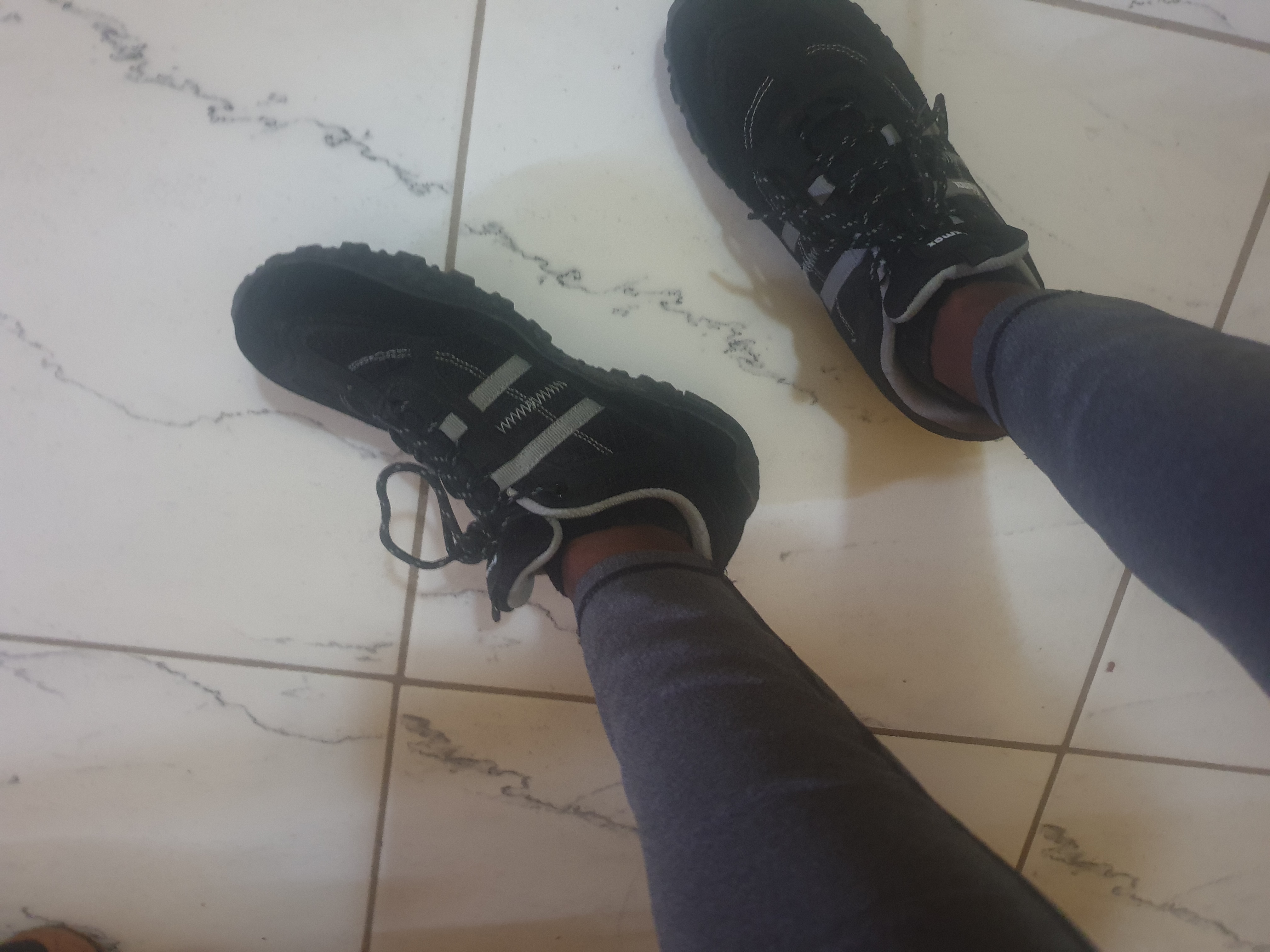
For a longer-term data point: one Amazon reviewer used these shoes for a Rim-to-Rim Grand Canyon crossing plus Buckskin Gulch — that’s serious mileage on demanding terrain. Their assessment: “they are grippy… taken a beating, held up amazingly.” That’s not a typical casual-use scenario. It’s worth knowing the traction system has been stress-tested at that level, even if your own use will likely be more modest.
The lightweight design earns its keep here too. At 0.85 lb per shoe, these are genuinely light in a way that matters after mile three. Your calves and feet fatigue differently when you’re not lifting heavier footwear. The shoes are constructed with suede leather overlays reinforcing the mesh panels — official specs list “Suede Leather & Mesh” as the upper material, which is slightly different from how the shoes are often described online. The suede provides structure and durability around high-wear areas while the mesh panels handle ventilation.
Breathability and Temperature Range
On the breathability front, these hold up well within a specific temperature window. July morning hikes in Colorado humidity — the kind where you’re already sweating before you hit the trailhead — kept my feet reasonably fresh through a five-mile loop. The mesh construction genuinely allows airflow in ways that heavier hiking boots don’t.
The sweet spot appears to be roughly 45°F–75°F. Below that, you’re relying entirely on wool socks for warmth because there’s zero insulation in these shoes. Above 80°F, some users report the interior runs warmer than expected for a mesh shoe — possibly because the suede panels hold some heat. For most three-season hiking and trekking use, though, the thermal performance is adequate.
Comfort for Shorter Hikes: Where the Budget Shows
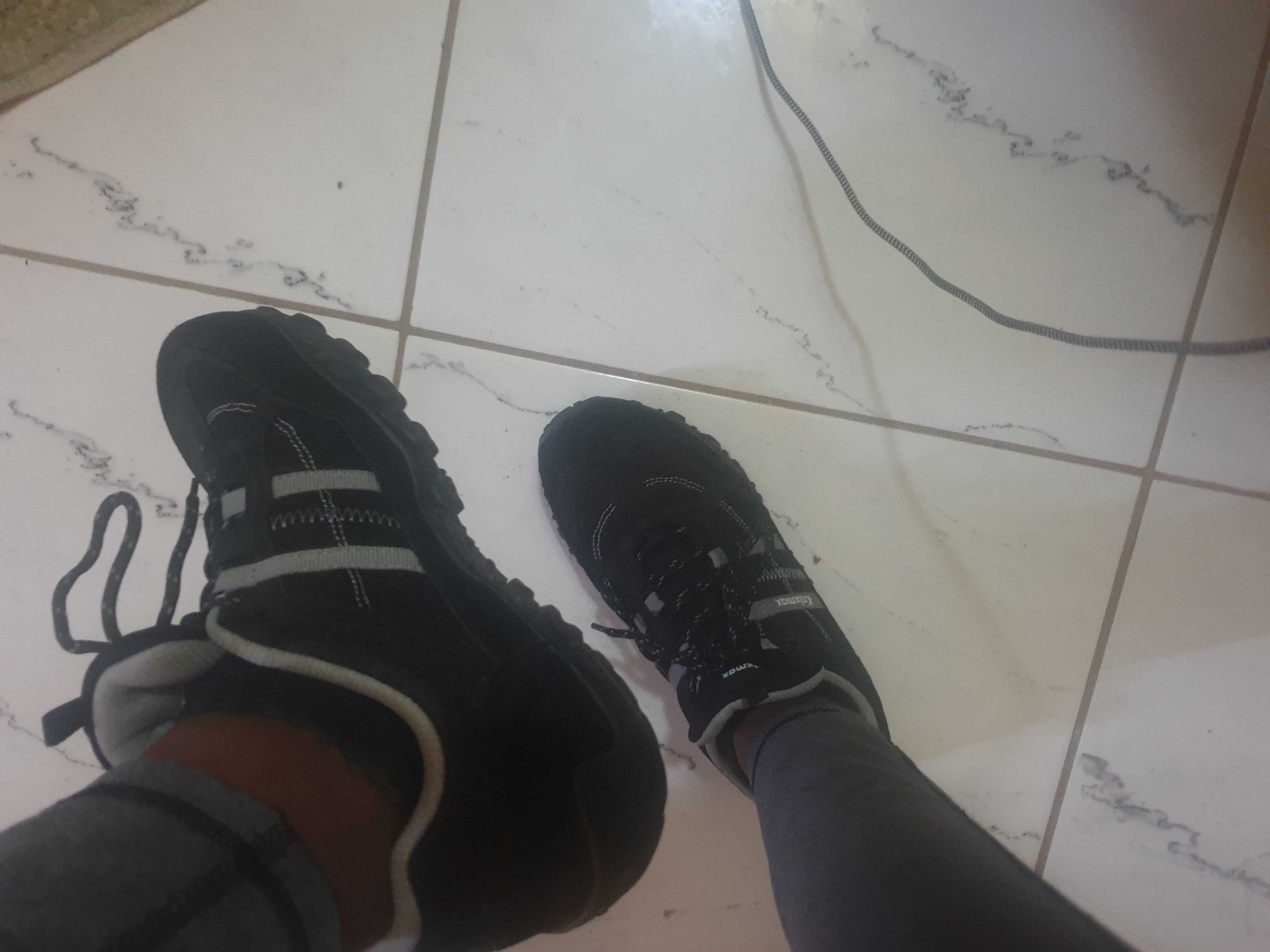
Here’s where honesty matters more than enthusiasm.
The foam midsole in these shoes is basic. Not bad — basic. It does the job for the first two hours of a moderate hike, keeping your feet comfortable over packed dirt, grass, and smooth trail surfaces. By the third mile of my Rocky Mountain National Park test hike, I was starting to feel the larger rocks through the sole. Not painfully — more like a reminder that I wasn’t wearing trail runners with a proper cushioned stack.
The arch support situation is better described by the brand’s own FAQ language: “neutral arch support.” That’s honest. These shoes don’t make claims about aggressive arch contouring, and the experience matches the claim. Standard arches are fine. If you have flat feet, high arches, or plantar fasciitis, plan on aftermarket insoles from day one. After my second hike, I pulled the factory insoles and switched to my own orthotic insoles — the difference for longer sessions was significant enough that I kept them in for every subsequent test.
This isn’t a knock on the shoe specifically. At this price point, expecting premium cushioning technology is unrealistic. What I’d recommend is budgeting $20–30 for insole upgrades when you order — the removable insole system accommodates standard aftermarket options without modification.
**The cushioning ceiling in practice:**
– 1–2 hour sessions on well-maintained trails: Comfortable without modification
– 2–4 hour day hikes on mixed terrain: Functional with standard insoles; better with aftermarket
– 4+ hours or loaded backpacking: I’d recommend shoes with a proper midsole — something like the Merrell Women’s Moab 3 at $80–100 range
The zero break-in period, though, is genuinely worth mentioning. I wore these out of the box on my first real trail session without any blisters or hotspots. That’s not universal with hiking shoes at any price point — some $120 trail runners have left me nursing heels through a two-week break-in period. Here, there was nothing. You open the box, you size correctly, and they work immediately.
Not Waterproof: Understanding the Real Boundaries
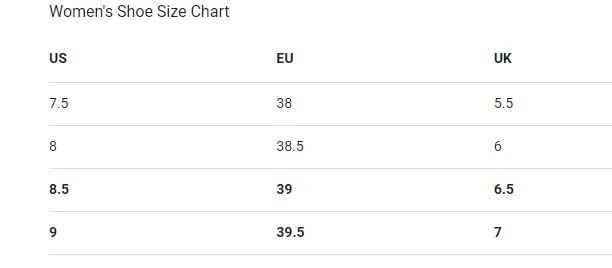
The marketing language around water on these shoes is a bit muddy, so let me be direct about what the testing showed.
The water-resistant upper handles light moisture well. Dewy grass at 6 a.m., light drizzle that catches you mid-trail, the splash from stepping near a puddle — all handled without my feet getting wet. The suede and mesh combination provides reasonable short-term moisture resistance.
What it does not do: keep your feet dry when you’re wading through standing water deeper than the upper height, crossing creeks with anything more than ankle-level flow, or hiking through sustained heavy rain for extended periods. Cross into a creek at the depth these shoes sit on your foot, and you’ll have wet feet. That’s expected behavior for water-resistant footwear — the key is knowing the line before you commit to a route.
One practical tip from Amazon reviewers: a coat of Scotchgard spray before your first wear extends the water-resistant barrier meaningfully. This isn’t a factory treatment, but it’s an easy and inexpensive enhancement. Reapply after heavy use or machine washing (though hand washing is generally recommended for these materials).
For hikers who regularly navigate stream crossings or hike in genuinely wet climates, consider options with actual waterproofing membranes. The KEEN Women’s Circadia and Columbia Granite Trail Mid Waterproof both offer genuine waterproofing in the $80–100 range. For Colorado’s quick afternoon storm pattern — fifteen minutes of rain, sun back out — the Knixmax water resistance is entirely adequate when paired with trail awareness.
Why Your Pair Might Last 6 Months or 18 Months: The QC Lottery
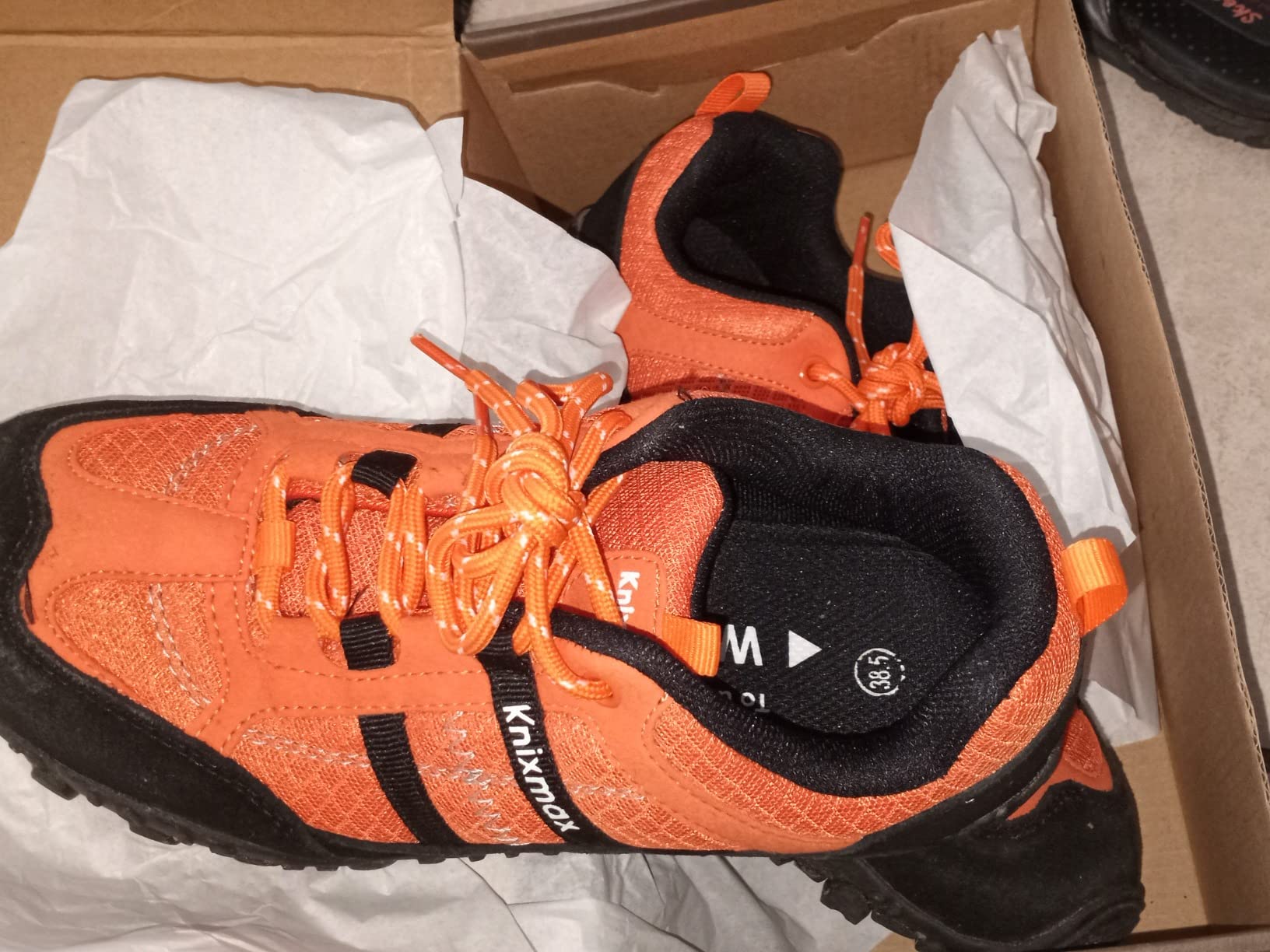
This is the part of the review that requires the most honesty, because it’s the part where your experience may differ significantly from mine.
My pair held up well through six weeks of regular testing with no structural issues. But reviews across multiple years of Amazon data show a wide variance in durability — some users report seam splitting or sole separation within the first month of intensive use, while others describe theirs lasting well over a year with careful use. One reviewer used theirs for the Rim-to-Rim Grand Canyon crossing and multiple technical canyon scrambles. Another saw sole separation at the toe box after four weeks.
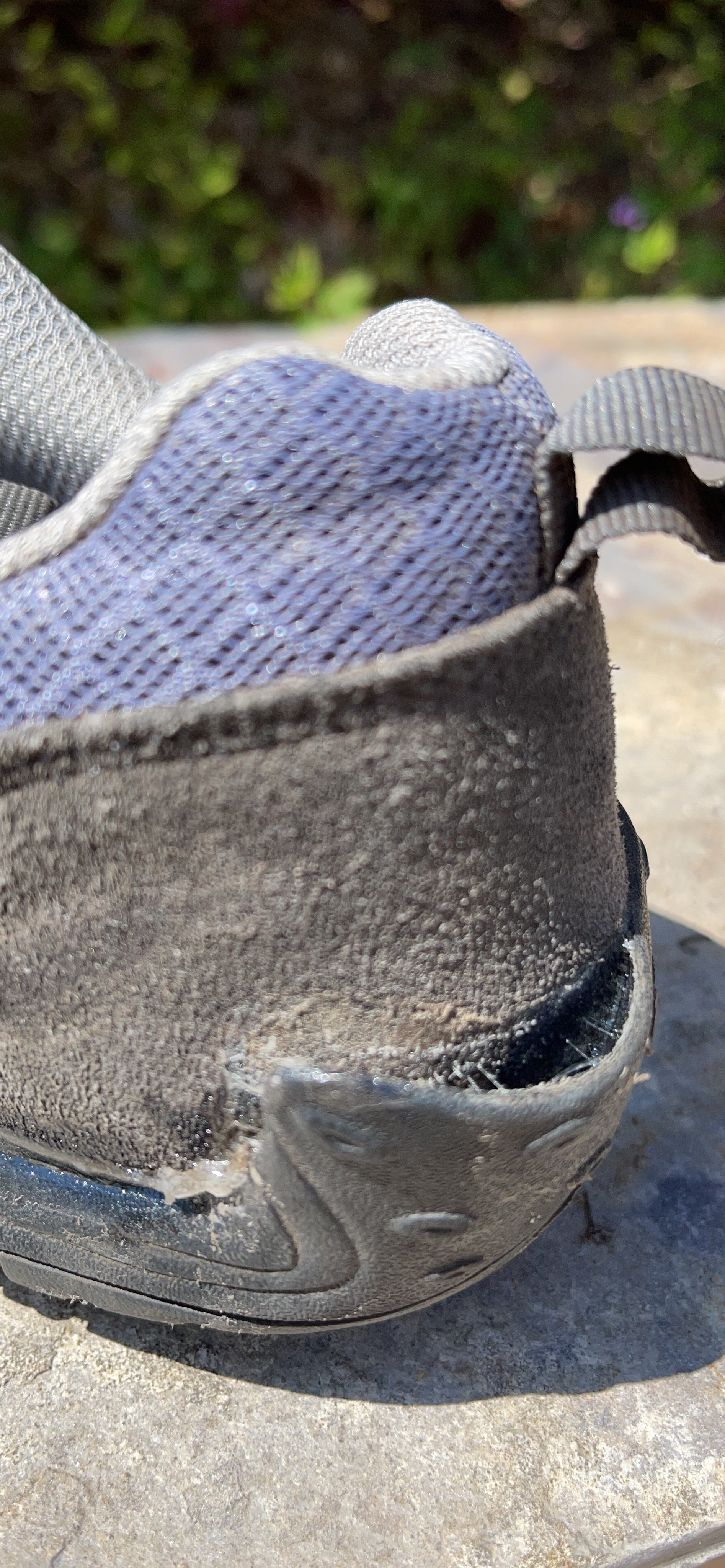
The primary failure modes, based on community data:
– **Sole separation at upper junction** — the adhesive bond at the toe box area is the most common failure point, typically appearing at 8–12 weeks under intensive use
– **Seam splitting** — particularly around high-stress areas; more common in early-production batches
– **Memory foam compression** — the thick insole loses its initial cushioning character over weeks 4–8, settling into a firmer profile
Durability by use intensity, based on community consensus:
For comparison, a Merrell Women’s Antora 3 at $80–90 typically lasts 12–24 months with regular use — roughly $4–7.50/month. The value proposition of the Knixmax holds if you’re a casual hiker and your pair reaches 12+ months. It breaks down if you’re using these intensively and they fail at three months.
**Mitigating strategies that actually help:**
– Inspect the shoe on arrival — check the glue seam at the toe box and ensure the sole is uniformly adhered before your first hike
– Rotate pairs if you hike frequently — the extra rest time genuinely extends adhesive life
– Replace laces proactively around week 8–10; the original laces show fraying before the shoe structure fails
– Amazon’s 30-day return window is your safety net if your pair shows defects early
Does Knixmax Deliver? The Honest Assessment
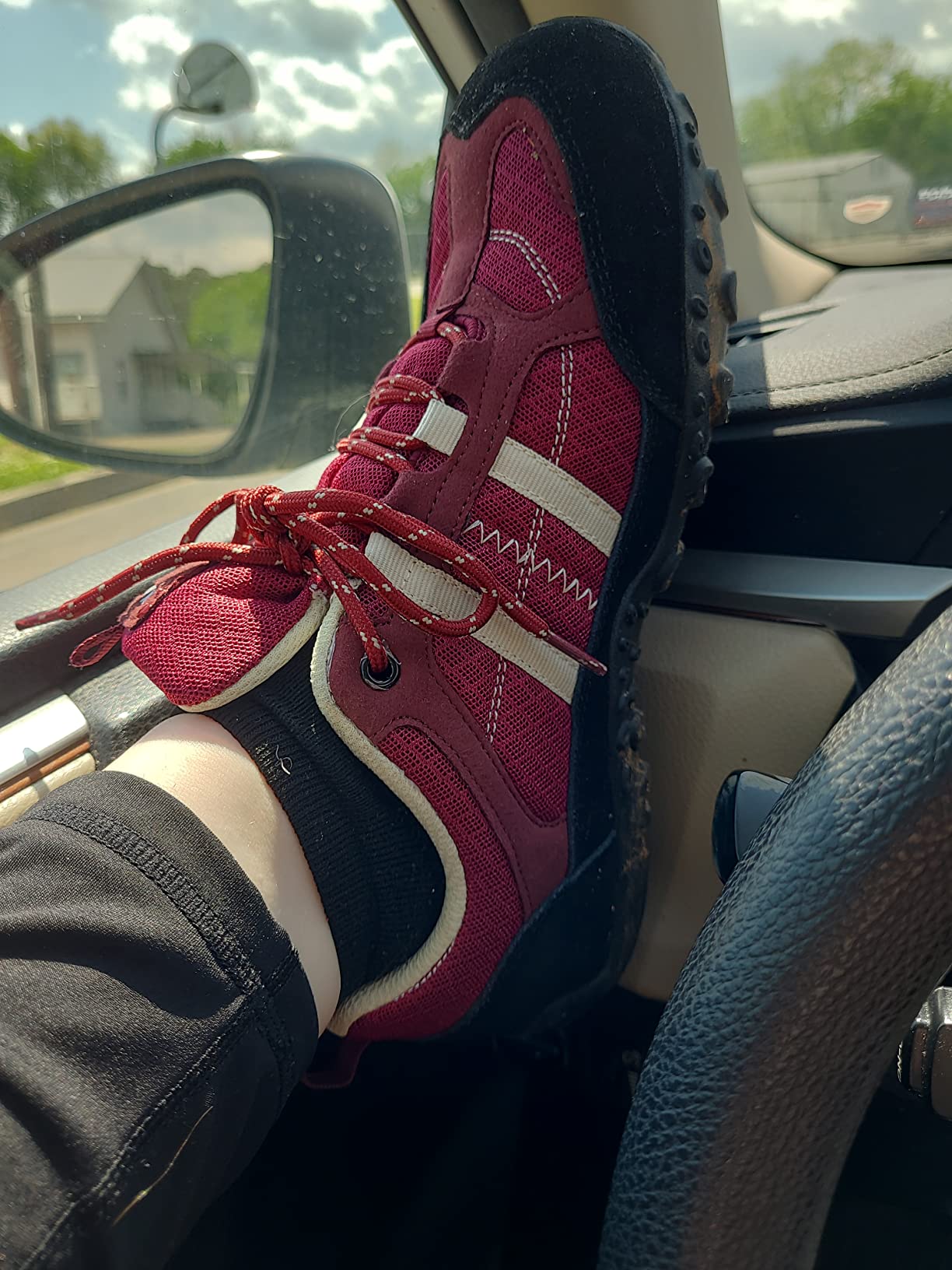
The positive community feedback is real — “excellent traction for the money,” “lightweight for backpacking,” “no break-in period needed,” “Muy cómodos.” The concerns are equally real: sizing complexity, durability variance, minimal arch support. Neither set of responses is wrong; they’re describing different aspects of the same shoe, or sometimes different QC batches of the same shoe.
The Perfect Fit Test: Is This Shoe Right for You?
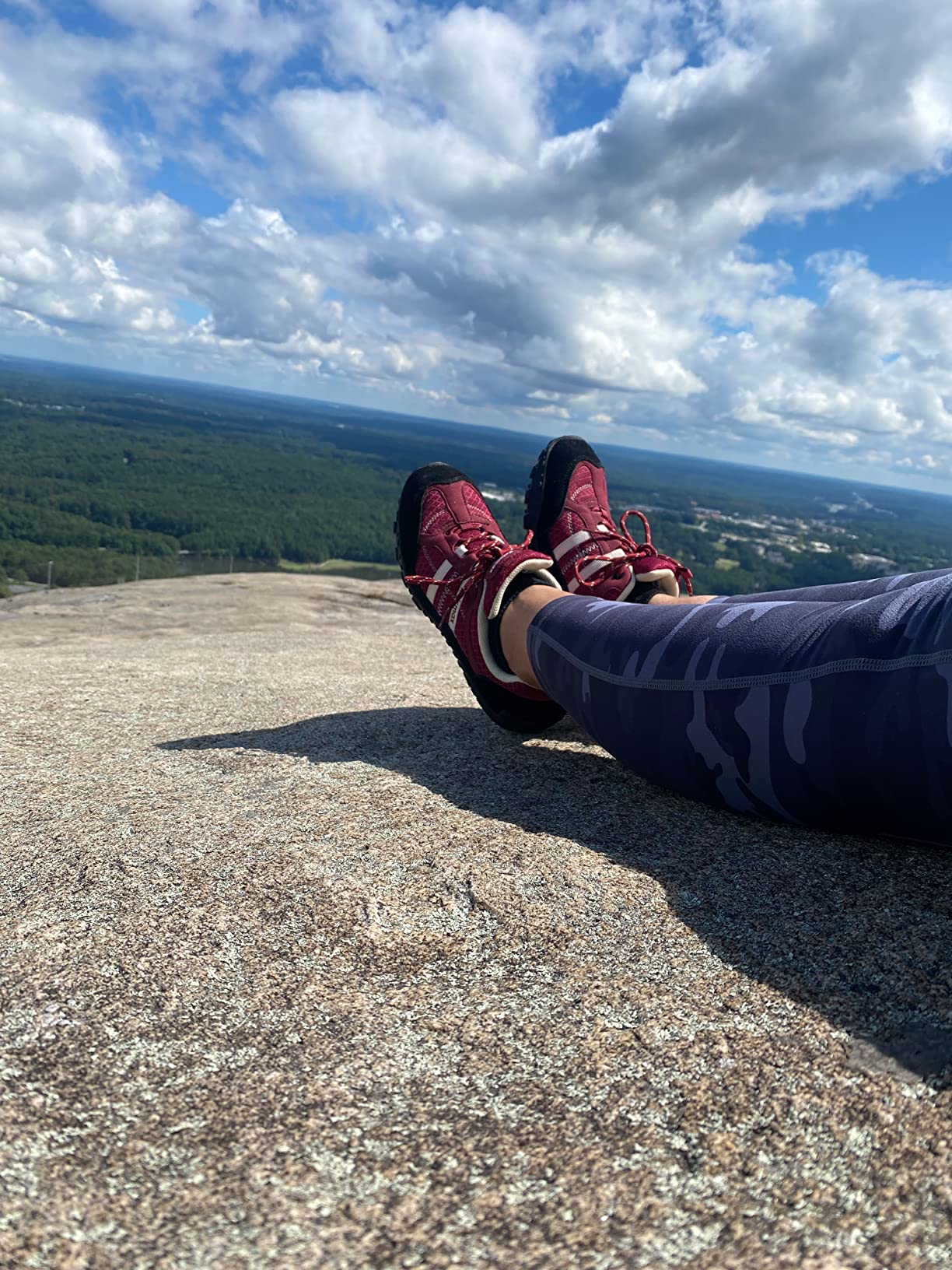
✅ Buy These If You Are:
- A budget-conscious family testing whether hiking is something you’ll keep doing
- An occasional hiker getting out 1–2 times per month
- Someone with wider-than-average feet who’s had trouble fitting in women’s hiking shoes
- A day hiker on easy-to-moderate trails with sessions under 4 hours
- An experienced hiker wanting a lightweight backup pair for travel or rotation
- A parent buying for kids or teens who’ll outgrow footwear quickly anyway
❌ Look Elsewhere If You:
- Hike 3+ times per week and need shoes that last 12+ months reliably
- Have plantar fasciitis, flat feet, or high arches needing real support
- Have narrow feet (these will swim even sized down)
- Tackle technical scrambles or multi-day loaded backpacking regularly
- Need actual waterproofing for consistent creek crossings or wet climates
- Prioritize buying a single pair that reliably lasts through heavy use
Better Options for Specific Needs
Final Recommendation: A Qualified Yes
Performance Scores
There are two ways to buy these shoes. The first is to order your normal size, skip the insole adjustment, and wonder why the reviews conflict so much. The second is to go in informed: size down, understand the QC lottery, add aftermarket insoles if you have any specific foot needs, and set your expectations around a casual day-hiking shoe that genuinely overdelivers on traction.
The three women in my hiking group who originally prompted this test? Two of them are still using their pairs at the six-week mark and planning to keep them as their light-trail rotation shoes. One had a sole separation issue at week four and returned the pair. That ratio — two good pairs, one that failed early — is actually a reasonable summary of the broader pattern in community reviews.
For occasional hikers and wide-foot women seeking budget entry into trail footwear, the traction alone justifies the price. Go in with clear expectations about cushioning and durability, solve the sizing puzzle before your first hike, and these deliver solid value for their purpose.
Frequently Asked Questions
Q: Do these hiking shoes run true to size?
A: No — they run about 1–1.5 sizes large and are noticeably wide. The brand’s size chart actually maps their Brand 5 to US 6, Brand 6 to US 7, and so on, which is a systematic one-size difference in their labeling convention. Most women should order 0.5–1 full size down. There are no half sizes available, so if you’re between sizes, go smaller and use the included insole stack to fine-tune the fit.
Q: How long will these shoes actually last?
A: It depends heavily on how often you use them and which batch you receive. Casual hikers (1–2 times per month) frequently report 12–18 months. Regular users (2–3 times per month) typically see 6–9 months before noticeable wear. Intensive hikers have reported sole separation as early as 3–6 months. The quality control variance between production batches is the real wild card — inspect the sole adhesion carefully when your pair arrives.
Q: Can I use custom orthotics in these shoes?
A: Yes. Both the thick and thin insoles are fully removable, so the insole cavity accommodates most custom orthotics directly. If you use prescription orthotics, you may want to size up slightly from your normal order recommendation to compensate for the orthotic’s volume. This is actually one of the quiet advantages of the dual-insole system — the space is generous enough for aftermarket accommodations.
Q: Are these suitable for backpacking trips?
A: For light backpacking — one to two nights, moderate pack weight (under 25 lbs), well-maintained trails — yes, the traction and weight savings work in their favor. For multi-day trips with heavy loads, the cushioning ceiling and durability concerns become more meaningful. I’d point serious backpackers toward dedicated trail runners or hiking boots with proper stack heights, like the Merrell Women’s Antora 3 for technical terrain.
Q: I’ve heard these can stain your feet — is that true?
A: One Amazon reviewer (September 2025) reported that the black colorway transferred dye onto their toes, describing the result as noticeably dark discoloration. I tested the grey colorway over six weeks with no dye issues. This appears specific to darker colors, possibly a batch-specific QC issue. If you’re concerned, the grey or lighter color options appear lower risk based on available reports.
Q: How do I use the two included insoles?
A: The thick insole ships already installed. The thin insole is in the box separately. If the shoe is slightly too large: slide the thin insole under the thick one (stacked) to take up volume. If the shoe is significantly too large: remove the thick insole and use only the thin one. If you’re a wide-foot buyer who ordered your usual size: use the thick insole as-is. Both insoles can be fully removed if you prefer to run with custom orthotics.
Q: What’s the best way to care for these shoes?
A: Remove insoles before cleaning and wash them separately. For the shoes themselves, brush off dried mud and spot clean with mild soap and water. Air dry at room temperature — the suede panels are sensitive to direct heat, which can cause cracking or shrinkage. Avoid machine washing; the agitation and heat accelerate sole adhesive breakdown. A Scotchgard spray applied before first wear and refreshed periodically will extend the water resistance noticeably.
Q: Do these work for everyday urban walking as well as hiking?
A: Yes, and several reviewers actually use them primarily for urban commuting and daily errands rather than hiking. The lightweight design and breathable upper make them comfortable for all-day walking on pavement. Durability will be lower with daily urban use (2–4 months before visible wear) versus periodic hiking rotation. For dedicated walking shoes with better arch support, consider dedicated running or walking footwear designed for consistent daily use.
Be the first to review “Knixmax Womens Hiking Shoes Lightweight Non-Slip”
Related products
Hiking/Trekking Shoes

Hiking/Trekking Shoes
Hiking/Trekking Shoes
Hiking/Trekking Shoes
Hiking/Trekking Shoes
Hiking/Trekking Shoes
Hike Footwear HF Signature Healthy & Non-Slip Breathable Barefoot Shoes
Hiking/Trekking Shoes
Hiking/Trekking Shoes
Reviews
There are no reviews yet.