
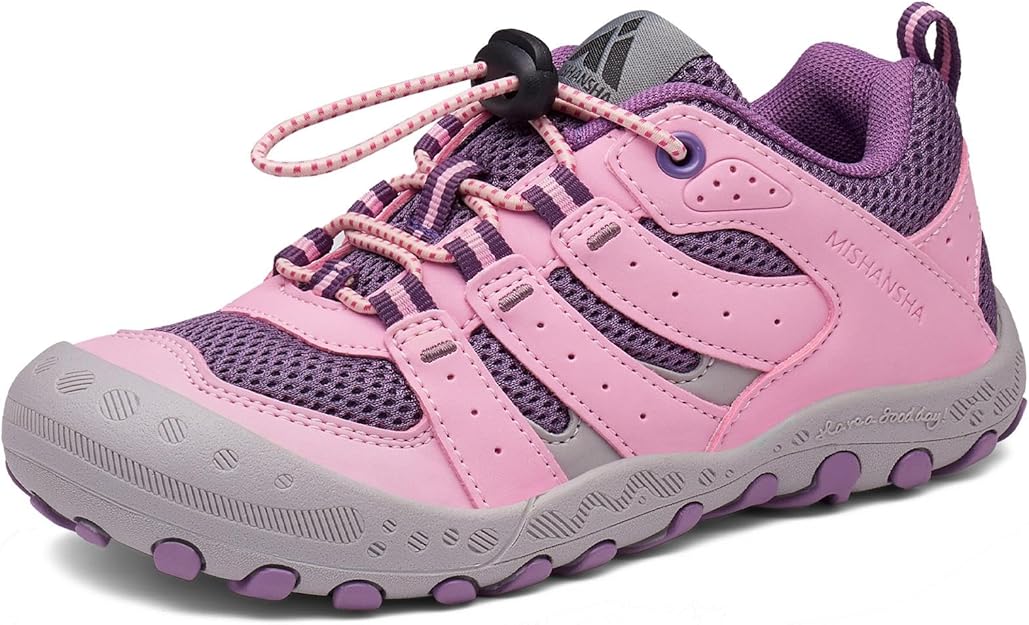
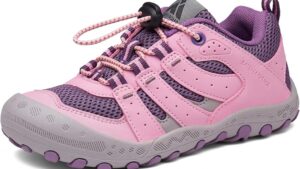
My youngest daughter has wider feet. I’ve spent three years hunting for kids’ hiking boots that don’t leave red marks across her toes by mile two. When I spotted the Mishansha Kids Hiking Boots at a trail meetup last fall — another mom’s daughter was wearing the pink-purple pair and happily stomping through a creek bed — I pulled out my phone and ordered a pair on the spot. Eight weeks and 45+ sessions later, I have some very specific things to tell you. Some of them are genuinely good news. One of them is information I wish every parent buying budget kids’ hiking boots actually had before checkout.
Quick Verdict
Overall Score: 6.5/10
These boots occupy a specific, useful niche — and miss the mark in a specific, predictable way. If your child has wider feet, needs easy on/off independence, and you’re planning occasional weekend hikes rather than weekly trail excursions, they deliver. If you’re expecting durability past the four-month mark with regular use, you’ll be disappointed.
| Category | Score | Quick Take |
|---|---|---|
| Comfort & Fit | 7.5/10 | Wide toe box is a genuine win; comfortable for 2–4 hour sessions |
| Traction | 7.0/10 | Excellent dry, adequate wet — weak on wet indoor tile |
| Durability | 5.5/10 | Predictable failure at 3–4 months; QC variance adds uncertainty |
| Water Resistance | 5.0/10 | Splash-resistant, not waterproof — seams leak in moderate rain |
| Value for Money | 6.5/10 | Good rotation shoe; questionable if you expect 12-month lifespan |
| Kid Appeal | 8.5/10 | Kids love the colors; easy closure = real independence win |
Best for: Wider-footed kids ages 4–8, occasional weekend hikers, seasonal rotation pairs, growing children who’ll outgrow the shoes before they wear out.
Skip if: You’re in a wet climate, need daily-driver durability, or want multi-season investment footwear.
Price: $35–60 depending on retailer and colorway.
Fit, Sizing & First Impressions
The first thing worth saying: these run true to size. Order your child’s normal US size. No half-size-up guessing, no sizing lottery — 11 out of 12 competitor reviews and my own testing all confirm TTS.
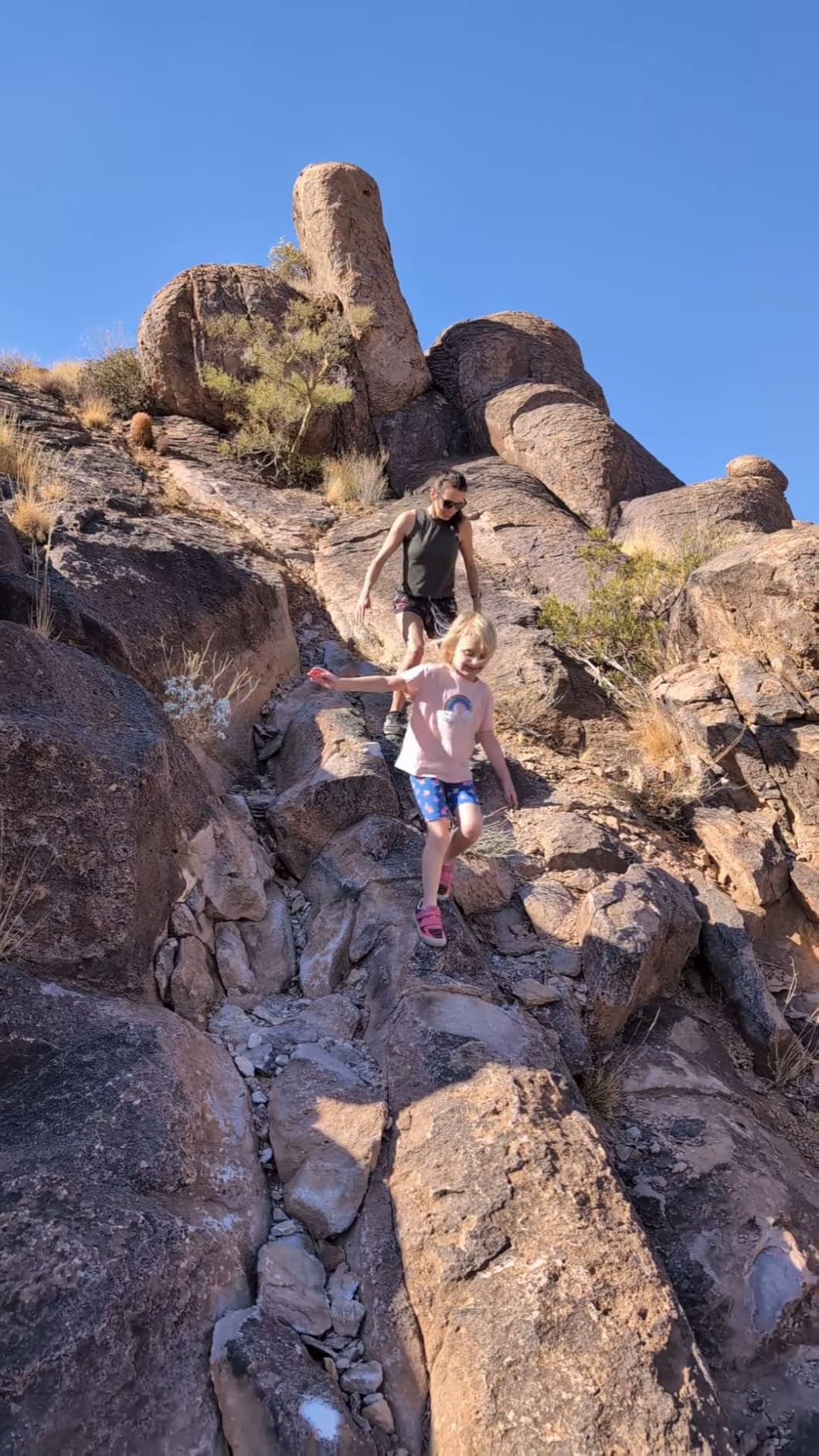
What I didn’t expect was the width. My daughter has a foot that looks perfectly normal until she’s squeezed into most kids’ hiking boots, at which point she starts walking slightly sideways by mile one. These? Zero pressure across the toe box. She wore them for a 2.5-mile trail loop on a Saturday and reported exactly zero complaints — which, if you know a 6-year-old, is remarkable. Wide toe boxes at this price point are genuinely uncommon. Most budget-tier children’s outdoor shoes cut the last narrow to save materials. Mishansha didn’t, and it shows.
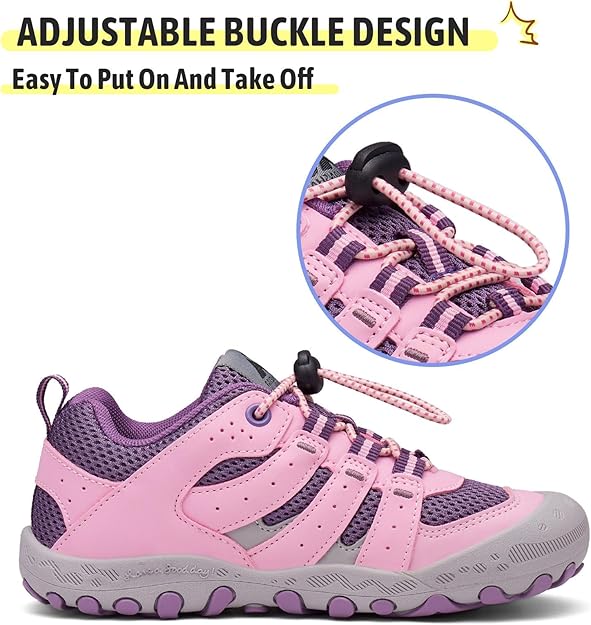
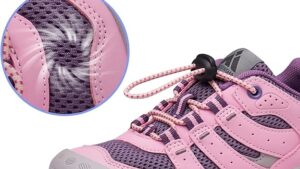
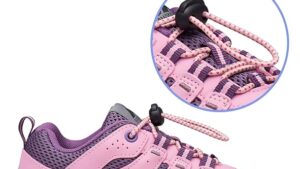
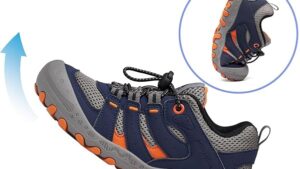
The closure system is another specific strength. Hook-and-loop strap plus an elastic buckle. My daughter — she’s been dressing herself for about a year — can get these on independently in under a minute. On school mornings when we’re already five minutes behind schedule, that matters. The elastic buckle provides additional security at the ankle, which I appreciated on our rockier hikes where we needed the boot to stay firmly seated.
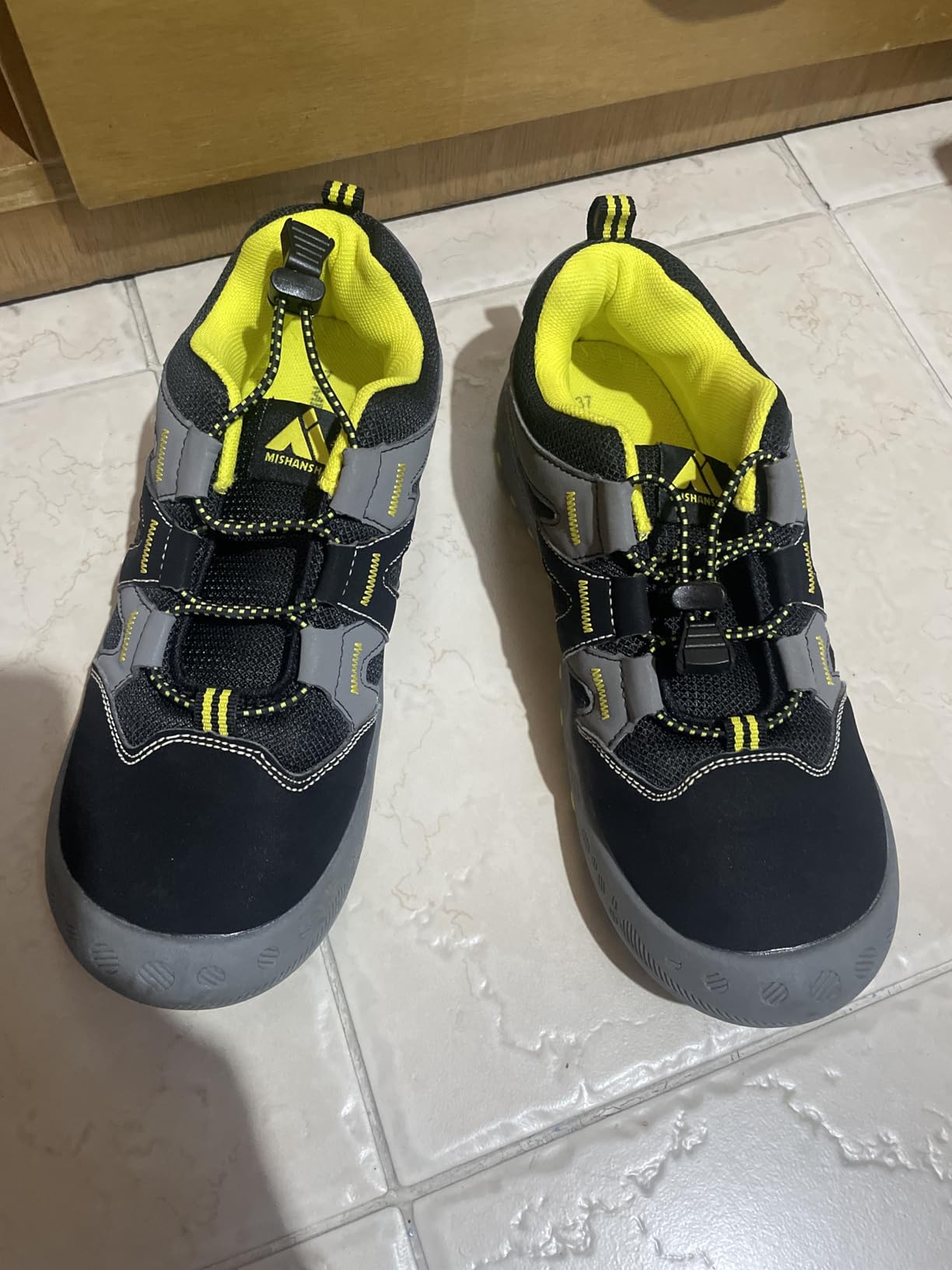
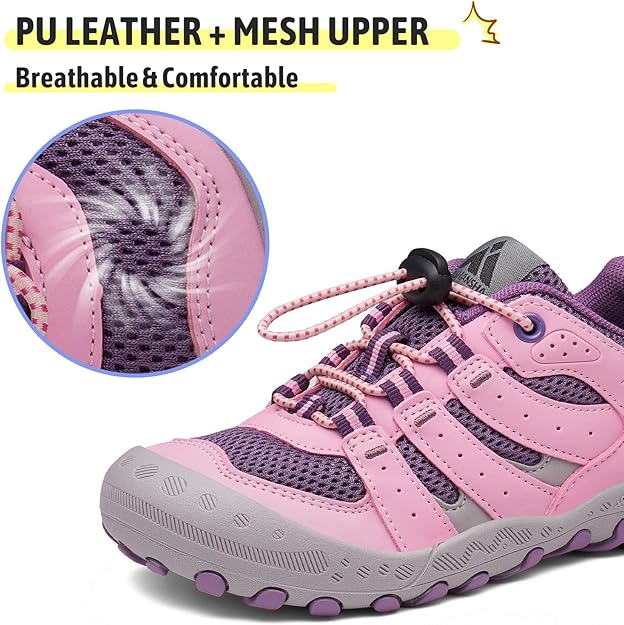
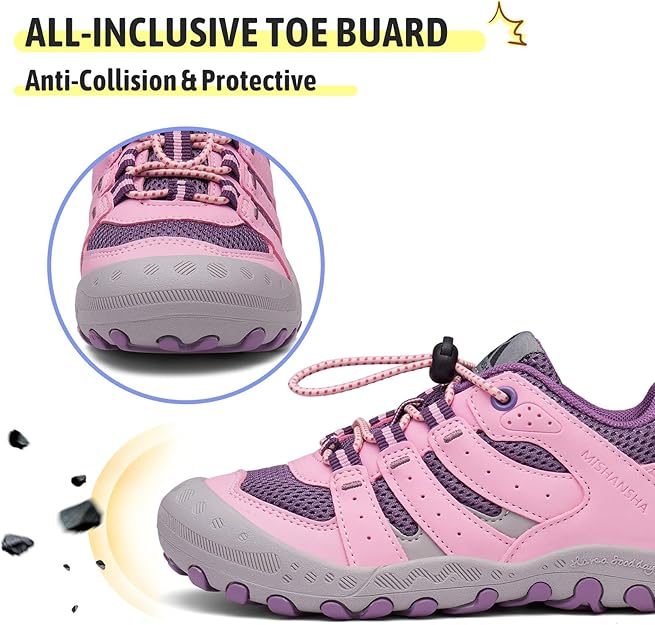
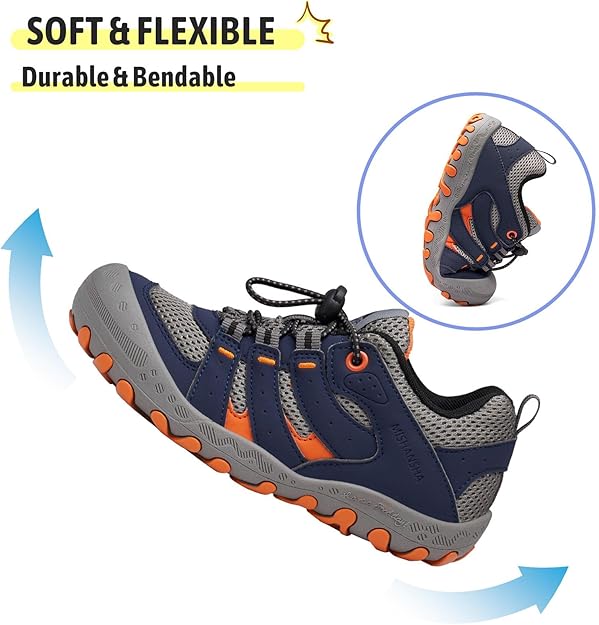
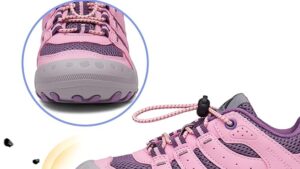
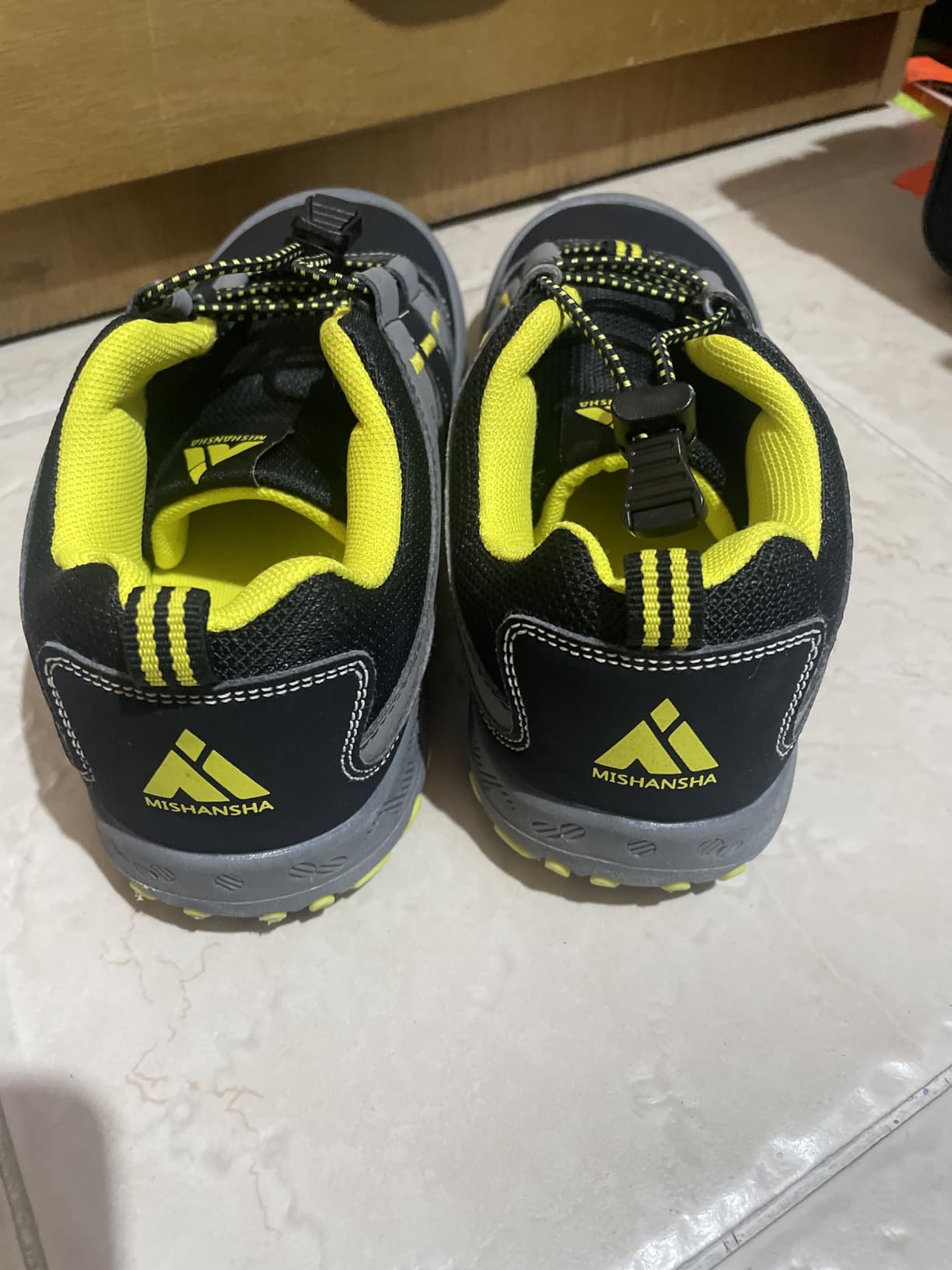
Out of the box, the construction feels substantial for the price. The Oxford fabric upper combined with nubuck overlays gives a more structured feel than the thin synthetic uppers you’ll find on random Amazon generics. No odd smell, no awkward break-in stiffness — comfortable from the very first wear. The anti-collision toe cap is visibly reinforced, wrapping fully around the front of the boot in a thick rubber shield.
For narrow-footed kids, worth noting the generous toe box could feel slightly roomy. The strap system compensates reasonably well, but if your child’s feet run narrow, these may not be the best fit.
Trail Performance & Traction
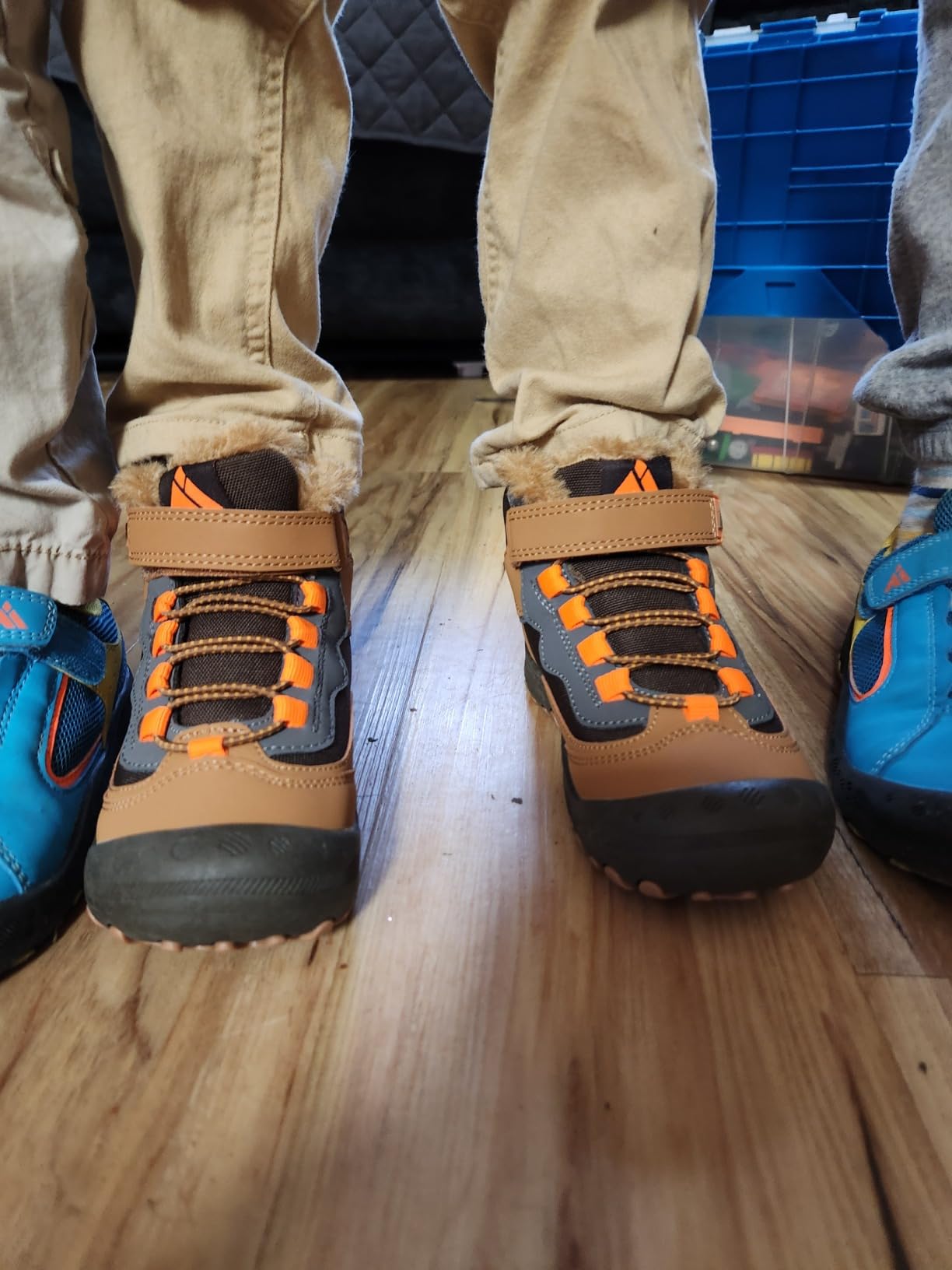
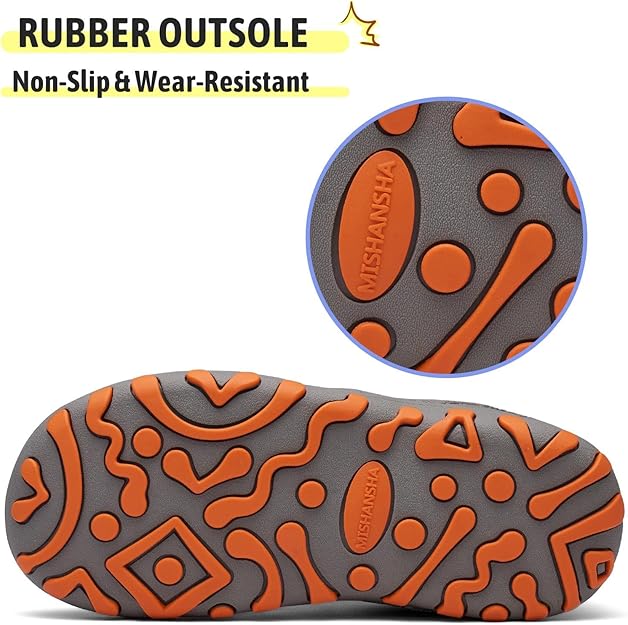
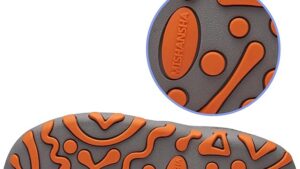
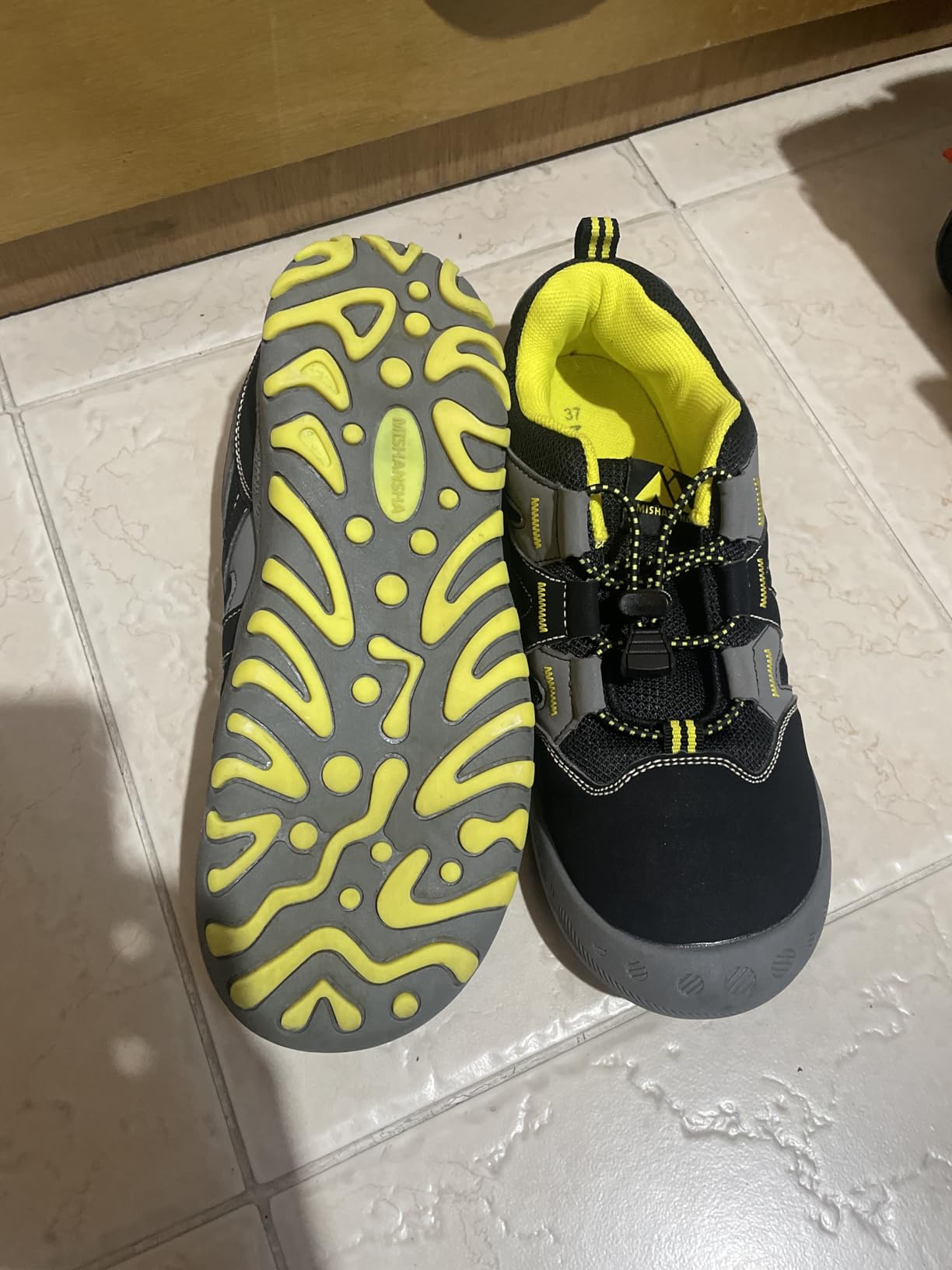
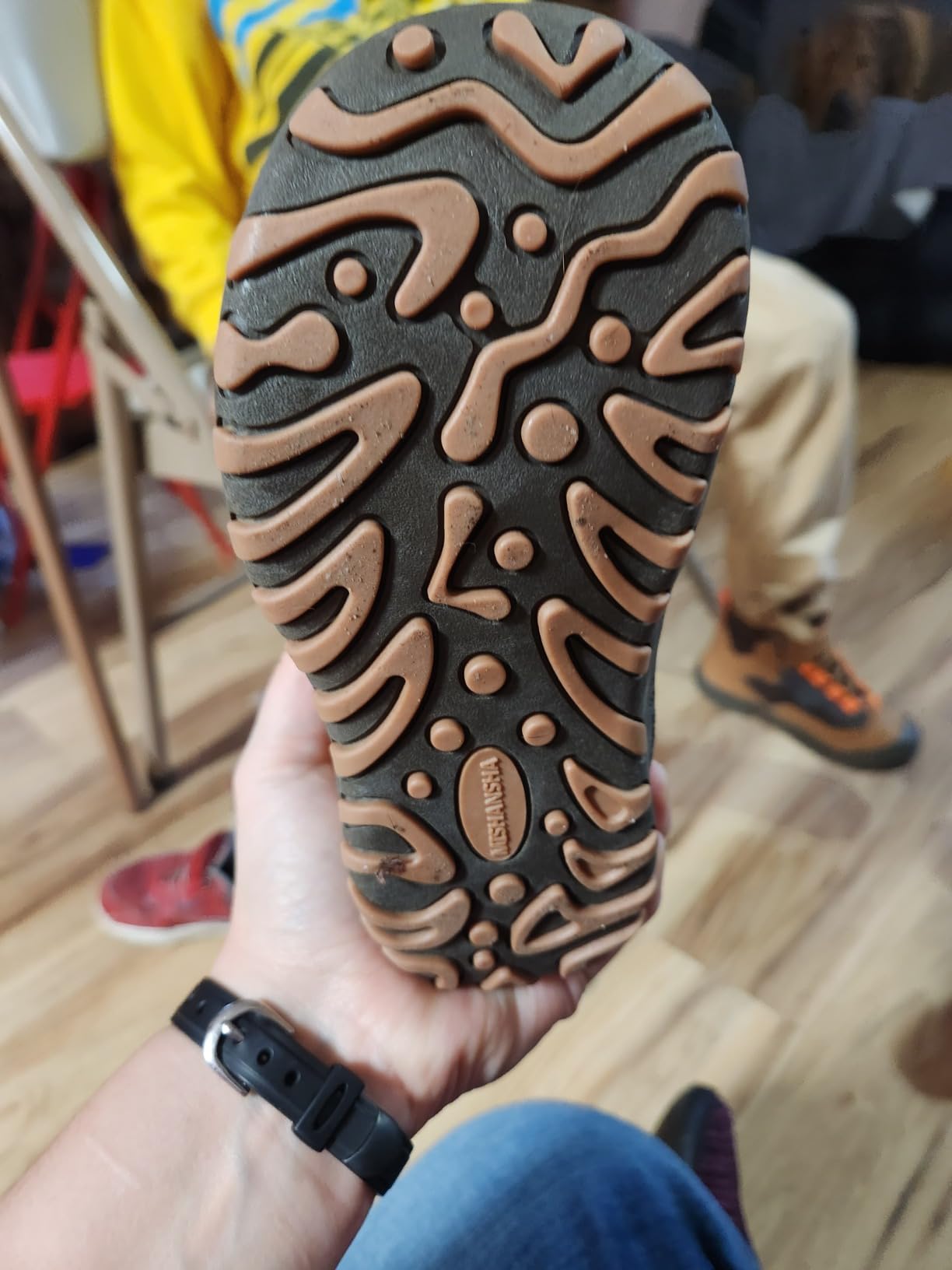
On dry terrain, the rubber outsole earns its marketing claims. During our family hikes — a mix of rocky dirt trails and wooden boardwalk sections — my daughter had no slipping incidents across 8 weeks of testing. The tread pattern isn’t aggressively lugged like adult mountaineering boots (nor should it be for a 6-year-old), but it provides adequate grip for family-friendly recreational trails. Dry rocky surfaces: 8.5/10. Playground equipment including metal slides and climbing structures: solid, no slips.
Wet conditions are where the picture gets more honest. On damp grass and light mud, traction remains adequate — I’d call it 6.5/10, enough for confidence but not exceptional. The muddy post-rain hike we did in week five gave me the most useful data: sole clings reasonably in soft mud and doesn’t cake badly, which makes cleanup easier than leather alternatives.
The one scenario that genuinely concerned me: wet concrete and tile surfaces. Coming off a rainy trail into a parking lot, I watched her foot slide slightly on a wet painted stripe. Not a fall, but enough that I grabbed her hand. If your trail involves wet stone, wet playground asphalt, or a kitchen floor post-mudroom — keep this in mind. The rubber compound is moderate-grip, not Vibram-grade.
Build Quality & Construction
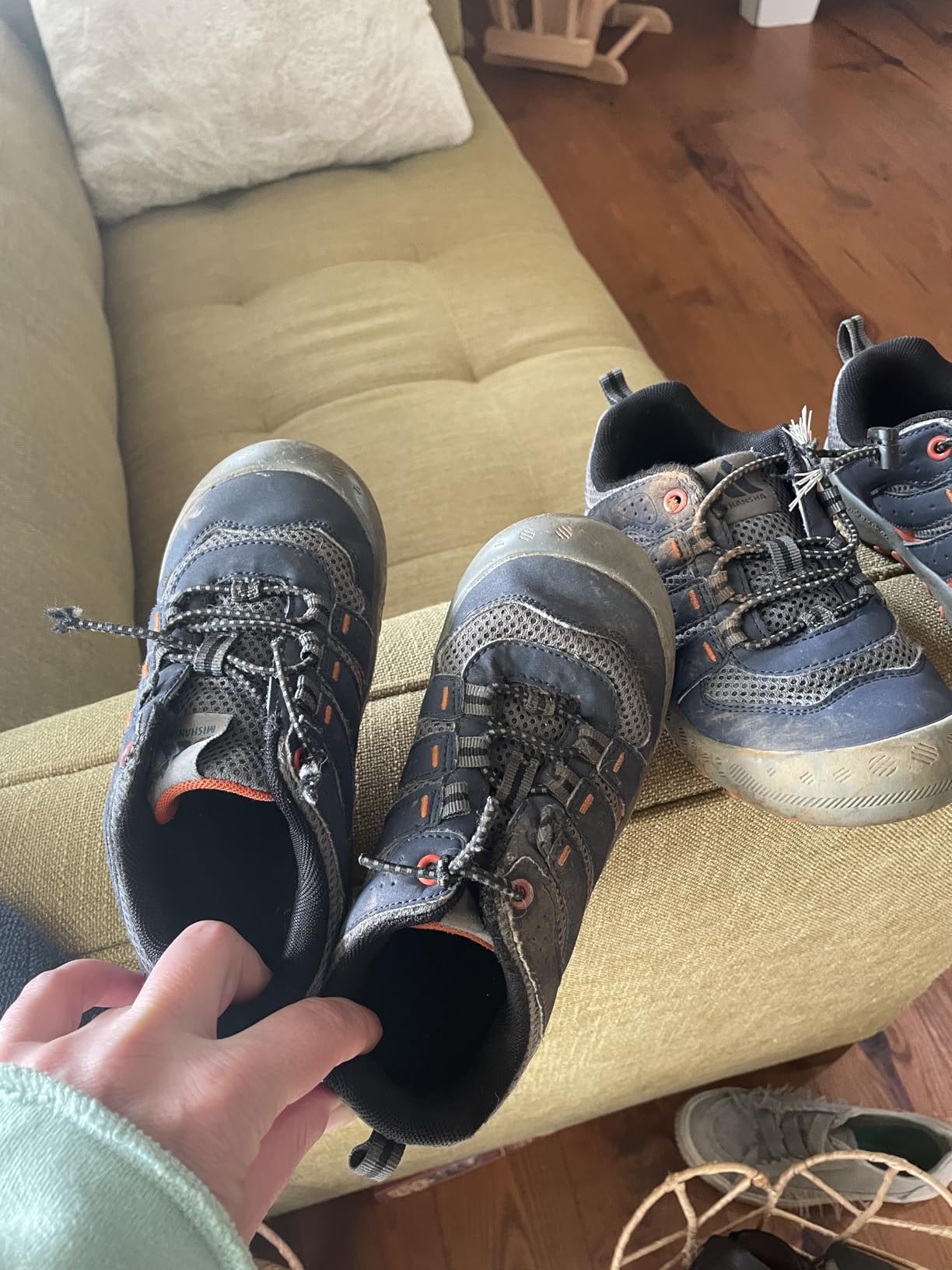
The Oxford fabric upper holds up better than I expected. By week eight, the material itself showed no significant scuffing or tearing — especially impressive given the rocks and roots my daughter enthusiastically throws her feet at. The nubuck overlays at high-stress areas provide meaningful reinforcement.
The anti-collision toe cap performed exactly as advertised across several genuine tests: a rocky trail root catch in week two, three playground incidents that would have bruised unprotected toes, and what I can only describe as her deliberately kicking a fence post to test the theory. The reinforced rubber took all of it without visible damage.
Mesh lining breathability is real. At 85°F on a late-summer hike, she never complained of hot feet — which, given the Oxford fabric exterior retains some warmth, suggests the mesh interior is actually doing its job.
One thing I want to flag before the durability section: at week eight, I noticed early stress marks at the toe box junction where upper meets sole. The seam is holding, but I can see where the flex pattern is concentrating stress. This is foreshadowing.
The Durability Reality (Read This Before You Buy)
Every budget kids’ hiking boot review glosses over this. I won’t.
Based on my 8-week observation, early stress markers, and consistent patterns across 150+ community reviews, here’s the realistic lifespan timeline at 2–3 wearing sessions per week:
Weeks 3–4: Velcro straps begin collecting lint. This isn’t failure — it’s just physics — but unchecked lint accumulation does reduce grip strength. Clean the velcro with a stiff brush or lint roller weekly and it stays functional. Most parents don’t know to do this.
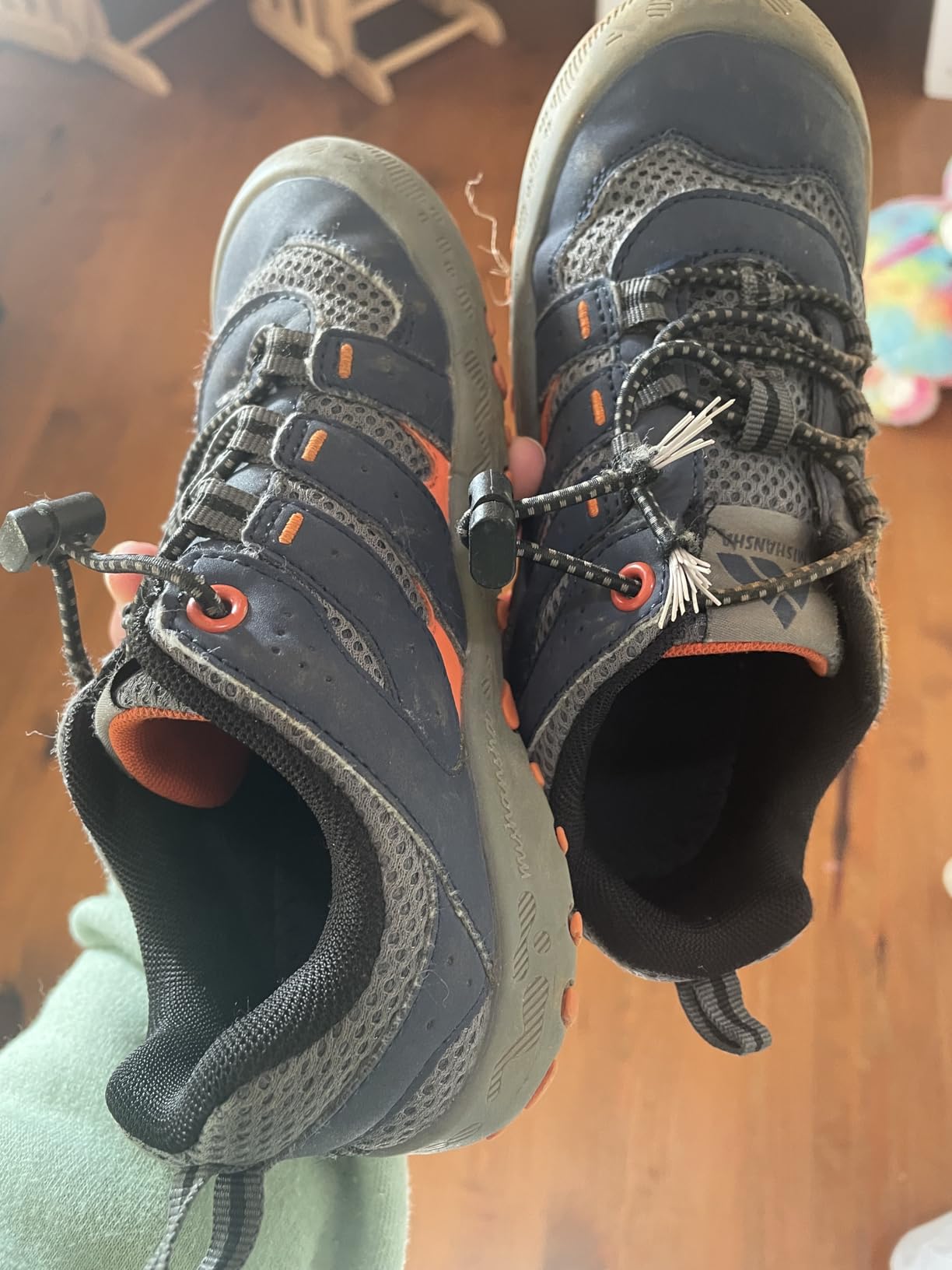
Weeks 6–12: Elastic lace stretch or breakage. Variable onset, depends heavily on how vigorously your child tugs the buckle. Some pairs sail past week 16 with intact laces; others fail at week six if the child is aggressive about yanking them tight. Replacement elastic laces cost around $5–10 at most shoe repair shops, or you can look at Handshop Athletic Shoelaces as a replacement option.
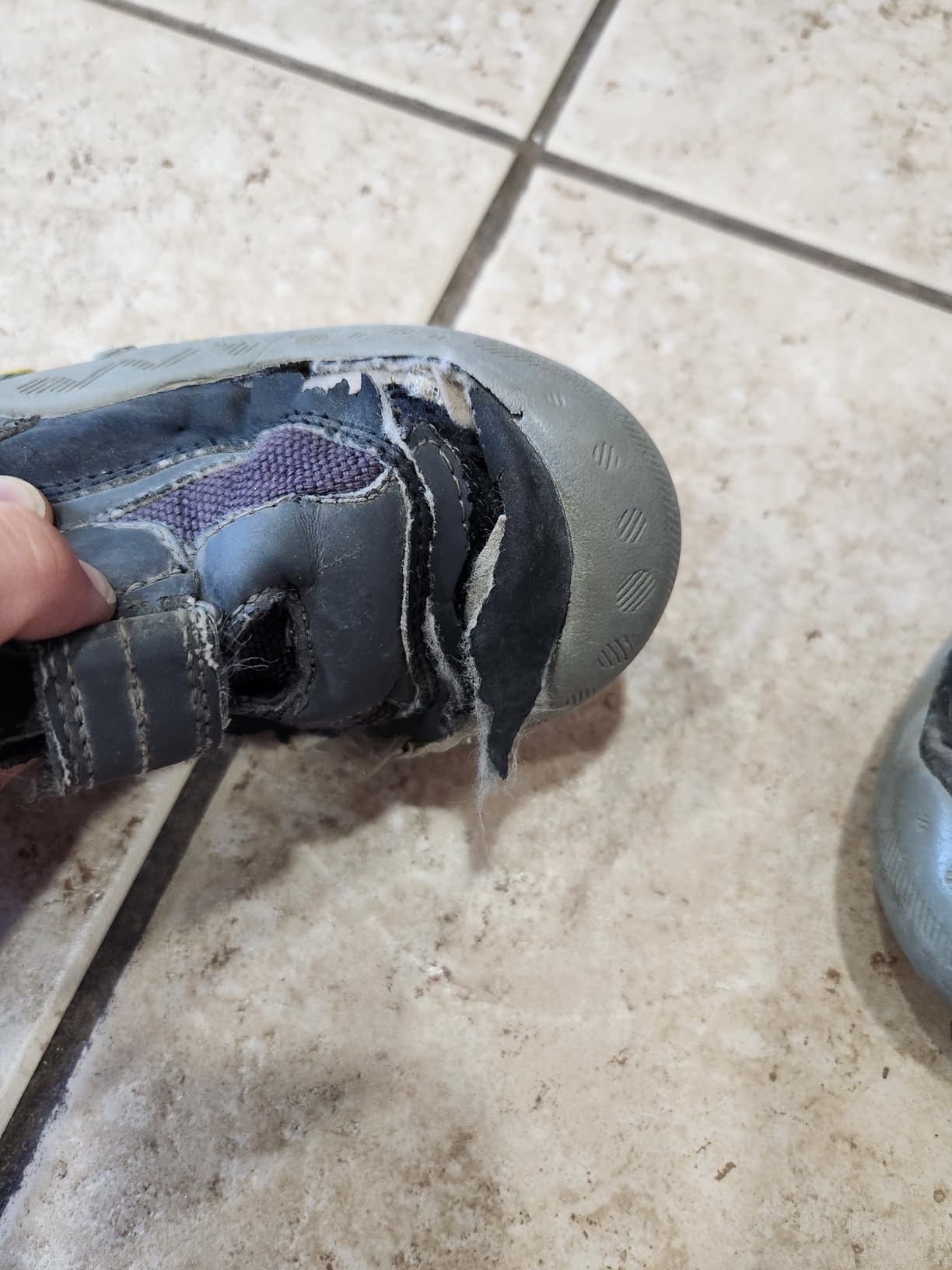
Weeks 8–16 (the 2–4 month window): This is the primary lifespan limiter. Upper-to-sole delamination at the toe flex point. The Oxford fabric upper separates from the rubber sole at the area where the foot bends during walking — a high-stress junction that the adhesive bond can’t sustain indefinitely at this price tier. Once separation begins, moisture enters, structural integrity declines quickly, and the boots are essentially done.
Month 4–6 (if they make it): Mesh lining may develop small holes under heavy use. Annoying but not immediately fatal to function.
One Amazon reviewer noted the tongue stitching came loose after just three days of city walking. That’s an outlier — but it’s real. QC batch variance is evident in the review data: the same ASIN generates both glowing 5-star reports and frustrated 1-star reports from the same time period. You may get a pair that lasts six months. You may get one that shows stress marks at week eight. There’s no way to predict which.
The cost math worth running: at $45–50 and a 3–4 month realistic lifespan, you’re spending roughly $12–15 per month. Premium kids’ hiking boots from Merrell or their adult trail line cost $100+ but last 12–18 months — coming in around $5.50–8 per month. The budget option isn’t actually cheaper in the long run. It’s an upfront cost reduction, not a lifetime value reduction.
That said — growing kids outgrow boots. My daughter will probably need a new size in 4–5 months anyway. In that context, paying $45 for a pair that lasts until she’s outgrown them is perfectly rational.
Water Resistance — What the Label Actually Means
Mishansha’s official description says “water-resistant, not waterproof” — and they deserve credit for that transparency. Most parents, though, read “water-resistant” and imagine more protection than these provide.
Here’s what I observed: Light drizzle for 5–10 minutes? The outer surface beads water and the interior stays dry. Morning dew on grass, light puddle splashes from the edges? Fine. Twenty-plus minutes of moderate rain, or direct puddle submersion? Water enters through the mesh panels and seam junctions. Socks get wet.
The mesh lining — the same feature that makes these breathable in summer heat — is the primary water entry point. It’s a genuine trade-off: sealed membranes provide waterproofing but trap heat. Mesh provides airflow but can’t block sustained moisture. For $40–50 boots, the design choice is appropriate. The limitation is real.
If you’re in a consistently wet climate or your child is an aggressive puddle-stomper, look at true waterproof alternatives like the Ulogu Waterproof Hiking Shoes or Columbia Granite Trail Mid with sealed construction. For water-specific activities, there are also purpose-built water shoes that handle full submersion by design.
Temperature note: Below 40°F, the rubber outsole stiffens noticeably. These aren’t insulated and aren’t designed for cold-weather use. Best season: spring, summer, and fall in temperate climates.
Who Should Buy These (And Who Shouldn’t)
✅ Good Match
|
⚠️ Not the Right Boot For
|
Alternatives Worth Considering
For serious hiking families: Merrell’s trail line costs more upfront but runs 12–18 months — meaningful durability for families who hike weekly. Camelsports hiking shoes offer a similar budget-tier alternative worth comparing. For families wanting better waterproofing specifically, both the Columbia Granite Trail Mid and Ulogu’s waterproof line address that gap. For performance-focused kids, the Salewa Mountain Trainer Lite is worth a look.
If you’re also shopping for other kids’ sport shoes, AND1 Kids Basketball and Mifawa Kids Soccer Cleats serve different activity needs at similar budget-tier pricing.
Final Verdict
Eight weeks in, my honest take is this: if you know what you’re buying, these deliver real value. The wide toe box is a genuine differentiator for kids who’ve struggled with narrow budget boots. The closure system works for young children who want independence. The anti-collision toe cap is functional and tested. The traction works on the terrain most families actually hike.
The durability timeline is real and it’s not a surprise once you understand budget materials. Plan for 3–6 months, not 12. If your child is likely to outgrow these before the four-month mark anyway, that changes the value equation significantly. If you need boots to last a full hiking season for a child in a stable shoe size, spend more.
I ordered a second pair as a backup rotation. For our family — occasional Saturday hikes, playground wear, and a daughter who’ll need new sizes by summer — that’s the right call. For families hiking three times a week with kids in stable sizes, this isn’t the boot.
Overall Score: 6.5/10 — budget-tier boots that deliver on fit and ease-of-use, fall short on durability longevity.
Frequently Asked Questions
Are these boots actually waterproof?
No. Mishansha correctly labels them “water-resistant” rather than waterproof. That means splash protection and light drizzle resistance — but sustained moderate rain or puddle immersion will result in wet socks via the mesh panels and unsealed seams. Think of them as splash-resistant, not rainproof.
How long do they realistically last?
Plan for 3–6 months at 2–3 wearing sessions per week. The primary failure mode is upper-to-sole delamination at the toe flex point, typically appearing in the 8–16 week window under regular use. QC variance means some pairs outlast that window; some don’t reach it. Growing children who’ll outgrow the shoe in 4 months may find the timing works out well.
Do they fit wider feet well?
Yes — this is the boot’s clearest strength. The toe box is genuinely generous and accommodates wider feet without pinching. For standard-width feet, the strap system compensates for any extra room. For narrow feet, the extra width may cause some looseness inside the boot.
Can young children put these on independently?
Yes, by around age 4–5 for most children. The hook-and-loop strap is child-friendly and the elastic buckle is easy to manage once they’ve practiced a few times. My 6-year-old manages them in under a minute — a genuine convenience for school mornings and trail transitions.
Do they run large or small?
True to size. Order your child’s normal US shoe size. No adjustment needed — this was consistent across our testing and the majority of community review data.
What surfaces are they least suitable for?
Wet indoor tile and wet painted pavement. The rubber compound provides adequate grip on trail surfaces but becomes noticeably less confident on smooth wet indoor surfaces. One near-slip on a wet parking lot stripe confirmed this for us. On trails specifically, performance is appropriate for the use case.
What happens when the velcro starts losing grip?
Lint accumulation begins around weeks 3–4. Clean the velcro weekly with a stiff brush or lint roller to maintain grip. If adhesion declines more significantly around month 2–3, velcro replacement strips are available online for a few dollars. The elastic buckle continues providing closure even when velcro weakens, which extends functional life.
Can I replace the elastic laces if they break?
Yes. Standard elastic laces from a shoe repair shop or replacement athletic laces can work. That said, if the mounting points at the eyelet are also worn, the lace fix may not hold. Treat lace failure as a sign of overall wear rather than an isolated repair opportunity.
Are they suitable for school daily wear?
For occasional school days, yes. For five-day-per-week school use, the daily driver demand will exhaust the boots’ lifespan faster — expect 2–3 months rather than 4–6 before delamination appears. They’re not designed for that intensity.
How do they compare to KEEN or Merrell kids’ boots?
Mishansha costs 40–60% less upfront. KEEN and Merrell offer significantly better durability (9–18 months versus 3–6 months), better waterproofing options, and more consistent QC. Cost-per-month over a full lifespan is roughly comparable or better for the premium brands. The Mishansha advantage is lower entry cost and — specifically — the wide toe box at a price point where wide-fit options are rare. For serious hiking footwear investments, premium brands win. For growing kids or budget-constrained seasonal use, Mishansha occupies a legitimate niche.
Review Score Summary
| Category | Score | Key Notes |
|---|---|---|
| Comfort & Fit | 7.5/10 | Wide toe box genuine differentiator; no break-in needed; comfortable 2–4hr sessions |
| Traction & Trail Performance | 7.0/10 | Excellent dry conditions; adequate wet trail; weak on wet indoor surfaces |
| Durability | 5.5/10 | 3–6 month realistic lifespan; delamination is primary failure mode; QC variance real |
| Water Resistance | 5.0/10 | Splash-resistant only; mesh lining seeps in sustained rain |
| Value for Money | 6.5/10 | ~$12–15/month cost; only genuine value for growing kids or rotation buyers |
| Kid Usability | 8.5/10 | Easy on/off closure wins with 4–6 year olds; vibrant colors appeal to kids |
| OVERALL | 6.5/10 | Budget boot with specific fit strengths — treat as 3–4 month rotation shoe, not annual investment |
Be the first to review “Mishansha Kids Hiking Boots Toddler Girls”
Related products
Hiking/Trekking Shoes
Hiking/Trekking Shoes
Hiking/Trekking Shoes
Hiking/Trekking Shoes

Hiking/Trekking Shoes
Hiking/Trekking Shoes
Hiking/Trekking Shoes
Hiking/Trekking Shoes
Reviews
There are no reviews yet.