
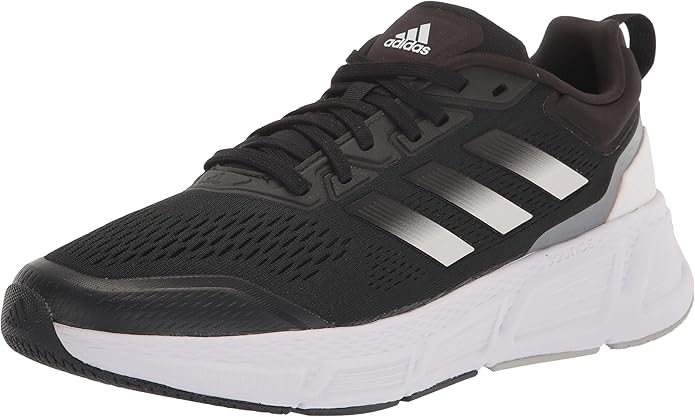
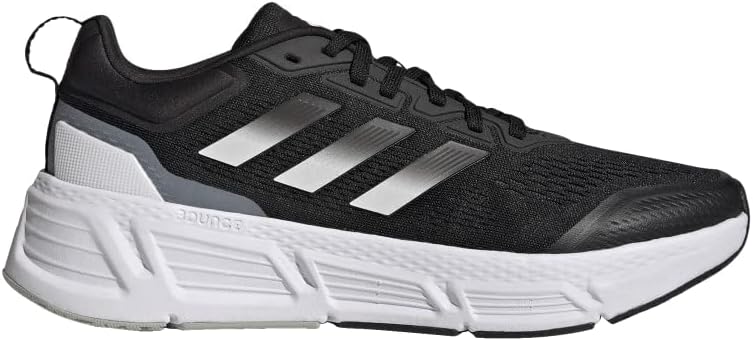
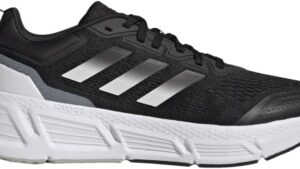
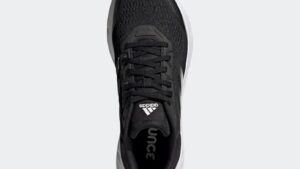
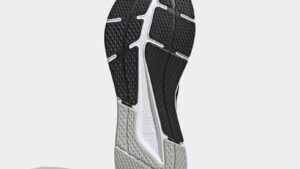
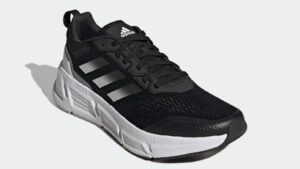
Tuesday morning, my buddy Carlos mentioned these Adidas Questars he’d been wearing daily for his construction work. “Best $60 I’ve spent on shoes,” he said. After years testing hundreds of budget to premium shoes, I was skeptical—could a sub-$70 shoe really deliver? That conversation led me to spend 8 weeks putting the original Questar through every test I could imagine: 12-hour work days on concrete, gym sessions, weekend walks. Here’s what actually happened.
The 8-Week Reality Check: What the Questar Actually Delivers
I’m going to save you time: the Adidas Questar punches above its weight for casual use, work shifts, and light gym work. But it’s not a distance runner, and durability clocks in around 6-12 months depending on how hard you use them. If you’re looking for a comfortable daily shoe that won’t break the bank, keep reading. If you need a marathon trainer, skip to the alternatives section.
After 8 weeks—roughly 200+ miles across construction sites, gym floors, and suburban sidewalks—the Bounce cushioning still feels decent, but I’ve noticed compression starting around week 5. The wide toe box claim holds up, the mesh breathes reasonably well, and Geofit ankle collar genuinely prevents irritation during 12-hour shifts. Cost-per-wear math works out to about $0.40 for my usage, which is solid for this category.
Note on sizing: This review covers the original Adidas Questar (April 2022 release) with Bounce cushioning, not Questar Flow (Cloudfoam midsole) or Questar 3 (2025 model). Specs and fit differ between versions, so if you’re shopping online, make sure you’re looking at the right shoe.
First Week Impressions: Fit, Sizing, and the Toe Box Surprise
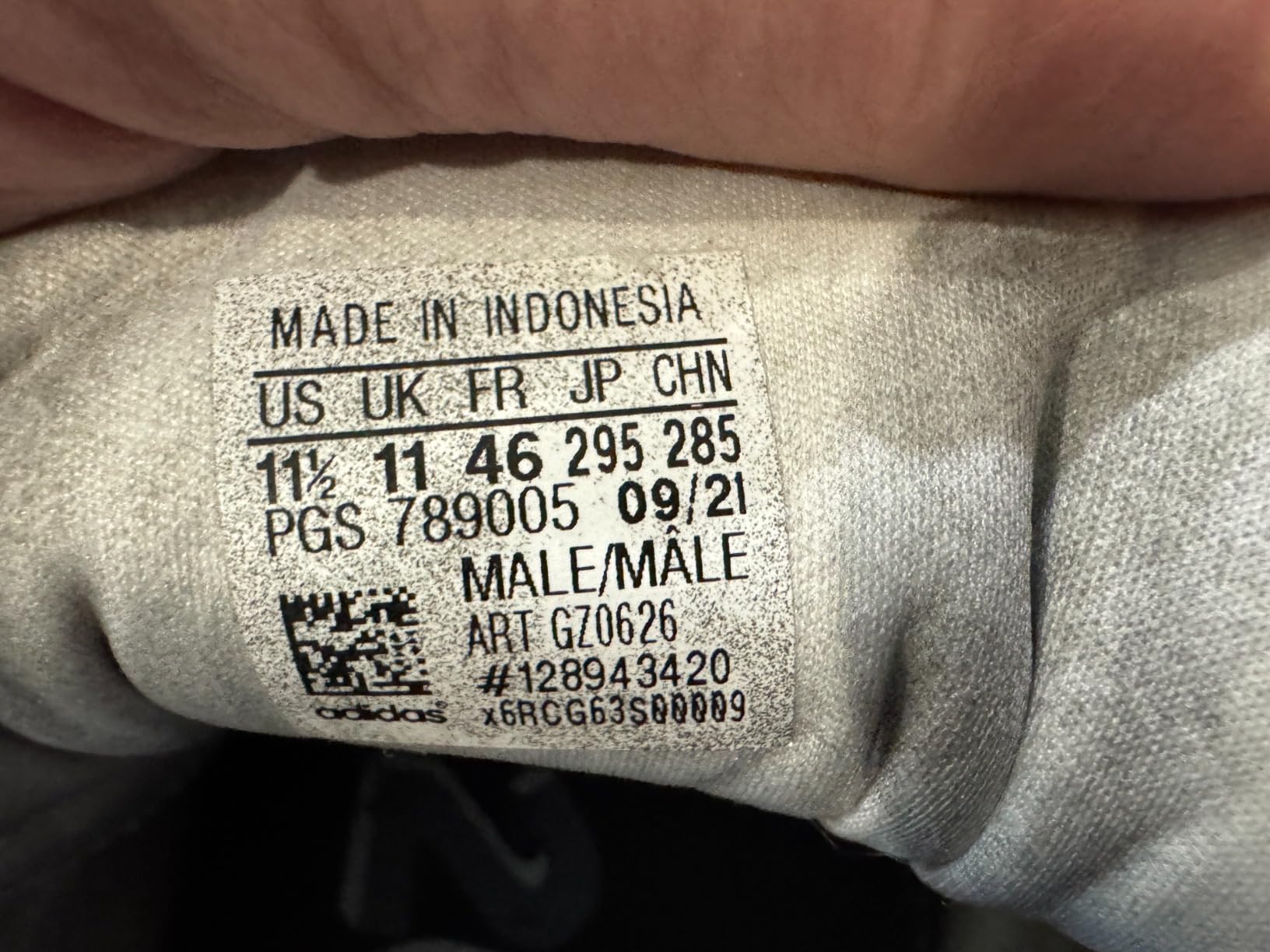
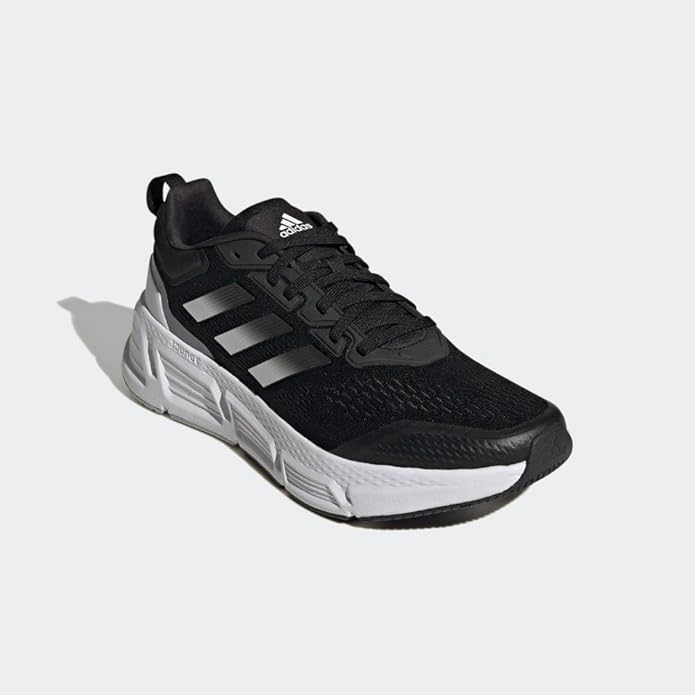
Unboxing these, the textile upper felt more substantial than I expected at this price point. The mesh sections looked breathable without being flimsy, and synthetic overlays provided structure around the midfoot. Weight-wise, at roughly 10.9 oz, they’re not ultralight territory, but they don’t feel clunky on foot.
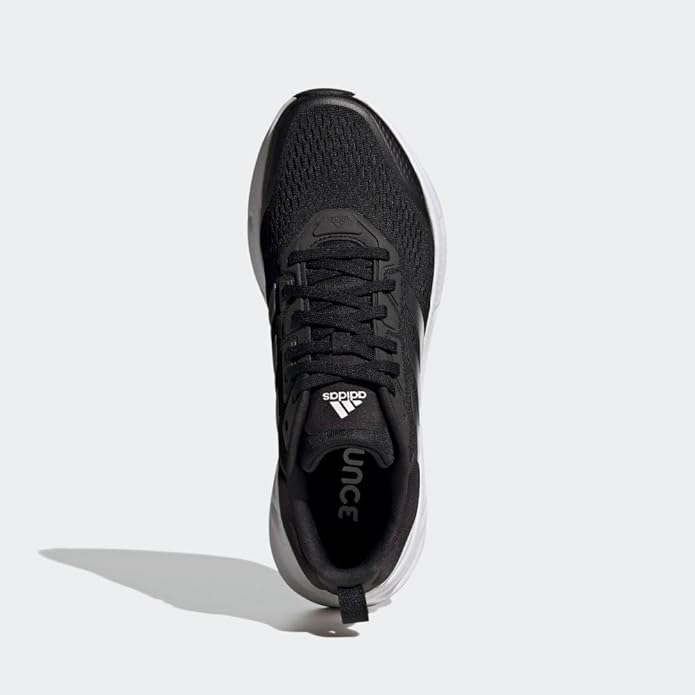
Sizing caused some initial confusion—online reviews split between “true to size” and “size up half.” Turns out, that’s because people confuse the original Questar with Questar Flow (which does run small). At my normal size 10, these fit spot-on. The toe box was the real surprise: genuinely spacious for a budget shoe. After 12 hours on concrete at 185 lbs bodyweight, zero pinching or cramping. Compared to tight-fitting budget trainers I’ve tested, this is a major win for all-day wear.
The midfoot feels snug without being constrictive—Geofit technology (Adidas’ padded ankle collar) actually works. No heel slippage during treadmill sessions or work movements. Break-in was minimal, maybe 2-3 wears before the synthetic overlays softened up.
Sizing Decision Tree: Who Fits, Who Doesn’t
Standard width feet: Order true to size. I’m a 10 in most brands (Nike, New Balance, ASICS), and 10 worked perfectly here.
Wide feet (EE width): Here’s where it gets tricky. The toe box is generous compared to budget competitors, but online feedback suggests genuinely wide feet still feel snug. If you’re between sizes or have wide feet, size up half or test before committing. Adidas doesn’t offer a wide variant for the original Questar, unfortunately.
Narrow feet: You might find these slightly roomy. Tighter lacing controls midfoot fit, but the toe box stays spacious. That’s by design—good for standing jobs, potentially loose for precision activities.
Sock thickness note: I tested with both thin gym socks and thick work socks. With work socks, fit was snug but not tight. If you plan to wear heavy socks, consider sizing up half.
The Construction Worker Test: 8 Weeks on Concrete
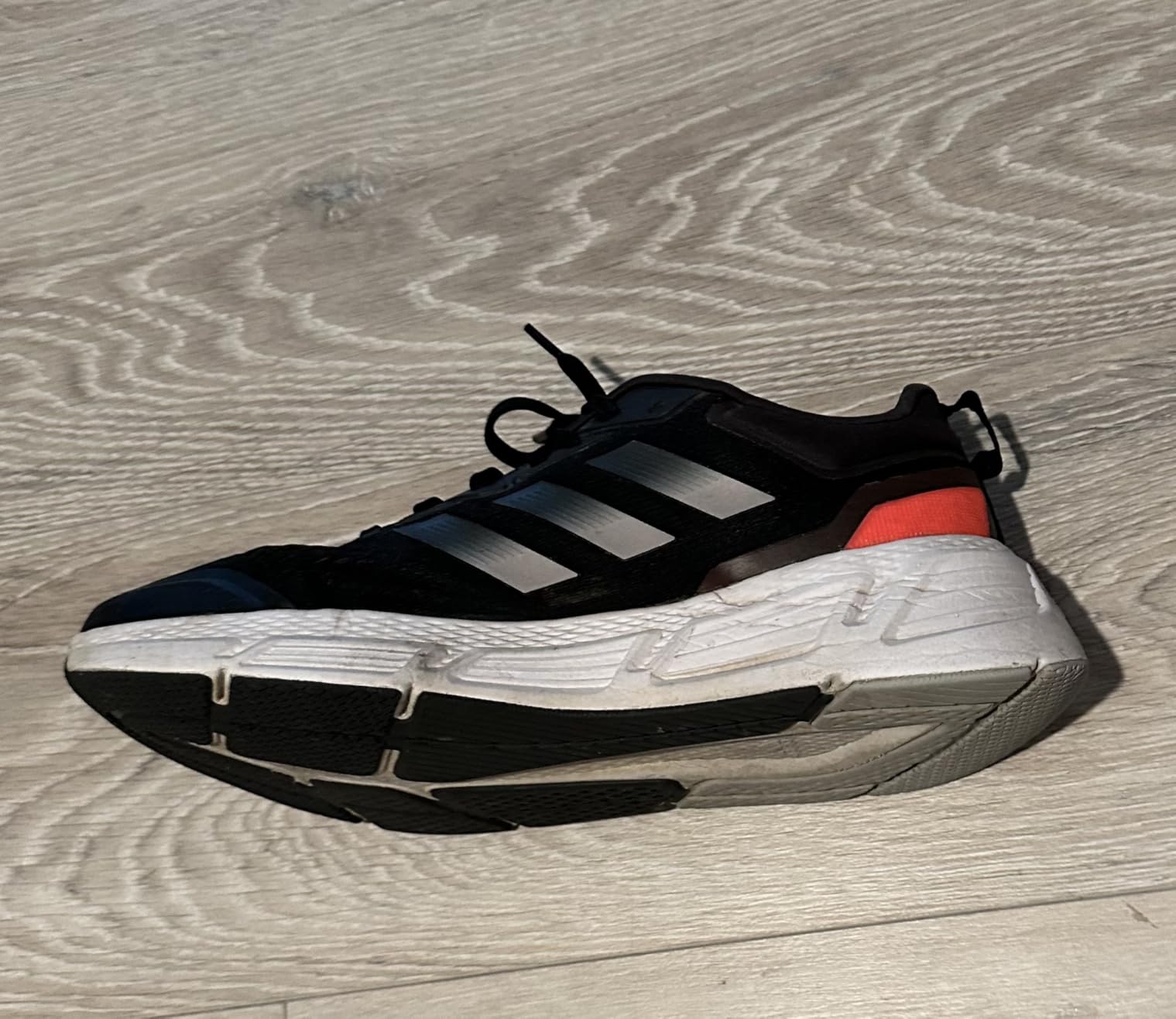
This is where my testing angle differs from typical gym-focused reviews. I wore these during actual 12-hour construction shifts—walking on concrete, climbing temporary stairs, standing for equipment setup. The Bounce cushioning held up better than expected for short-to-moderate durations, but showed clear limits.
Week 1-2: Honeymoon Phase
Initial comfort was excellent. Bounce felt genuinely responsive—not Ultraboost-level, but way better than generic EVA foam at this price. During the first four hours on concrete, feet felt supported. Impact absorption was noticeable compared to my old work boots. The breathable mesh prevented the swampy feeling I get with non-ventilated shoes.
Week 3-4: Compression Signals
Around week 3, I started feeling the midsole compress. Not dramatically, but that initial “springy” feel diminished. After the 6-hour mark on long shifts, my feet felt the concrete more directly. The cushioning was still adequate—I wasn’t in pain—but the comfort ceiling became apparent. For gym sessions under 90 minutes, still perfectly comfortable.
Week 5-6: The Durability Arc
By week 5, the Bounce felt noticeably firmer. The shoe still worked for work shifts, but I started rotating with another pair toward the end of long days. Weekend walks (3-4 miles) remained comfortable. Treadmill sessions showed the cushioning couldn’t handle speed work—fine for easy pace, inadequate for tempo runs.
Week 7-8: Long-Term Projection
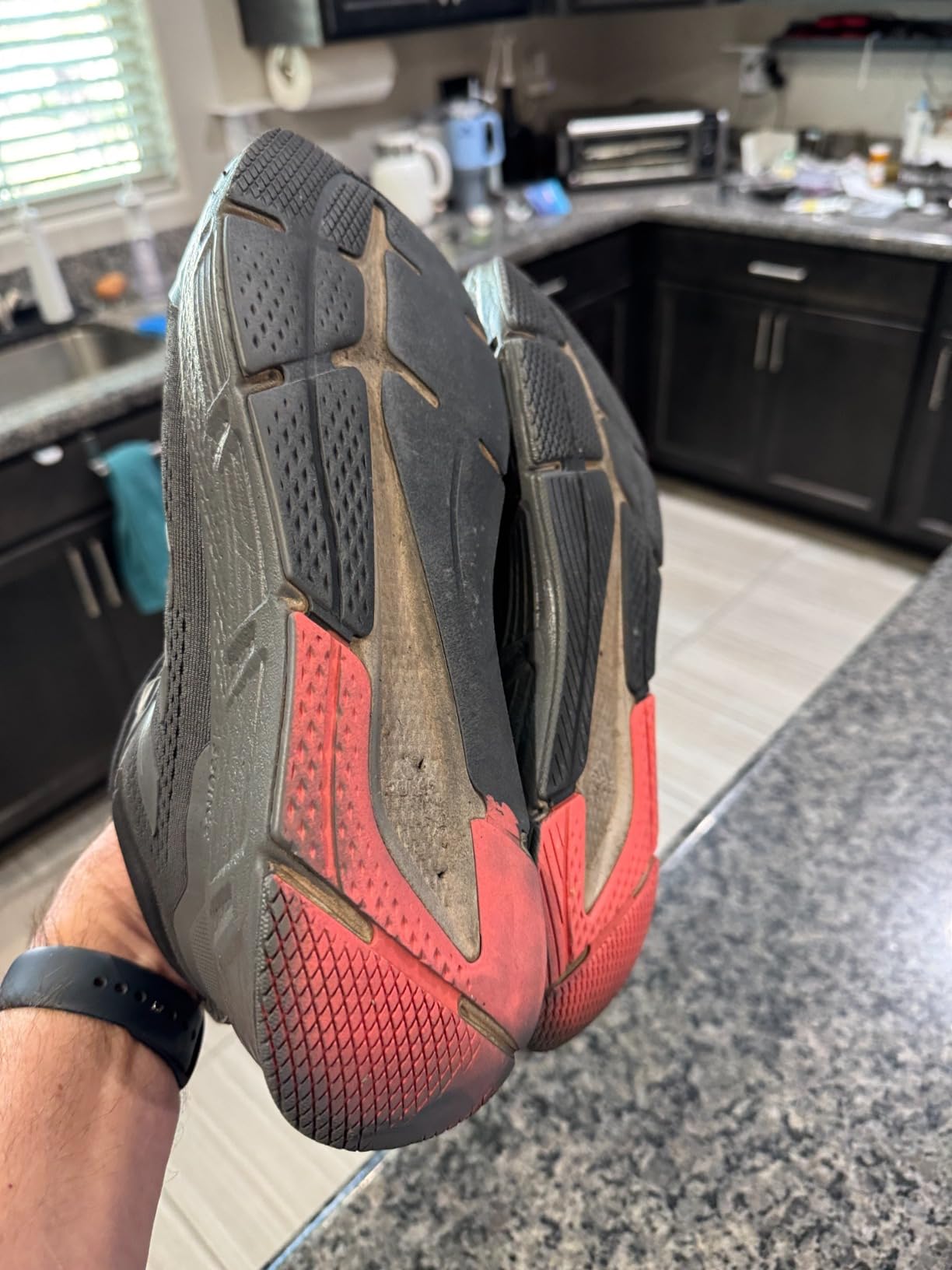
At 8 weeks with heavy daily use, I’m projecting 6-9 months total lifespan for my usage pattern. The outsole shows heel wear (visible tread reduction), upper mesh is intact, and the Bounce still functions—just not at week-1 levels. For casual rotation (3x/week gym and walking), I’d estimate 12-18 months.
Hour-by-Hour Comfort Reality
Based on 8 weeks of varied testing, here’s the honest comfort timeline:
Hours 1-4: Excellent. Bounce absorbs impact well, feet feel fresh, no fatigue signals.
Hours 4-6: Still good. Minor compression noticeable if you’re paying attention, but comfort holds for most people.
Hours 6-8: Adequate. Midsole feels flatter, feet start feeling the surface more directly. Fine for finishing a shift, not ideal for starting a second activity.
Hours 8-12: Fatiguing. At this point, the Bounce is mostly compressed for the session. Feet feel tired—not painful, but ready to be done. This is where premium shoes with better foam tech pull ahead.
Gym sessions under 90 minutes stayed in the “excellent” zone throughout 8 weeks. Light trail walks (suburban paths, 3-5 miles) remained comfortable. It’s the extended standing and walking on hard surfaces where compression matters most.
Materials Breakdown: Where the $70 Goes
Upper: Textile Mesh + Synthetic Overlays
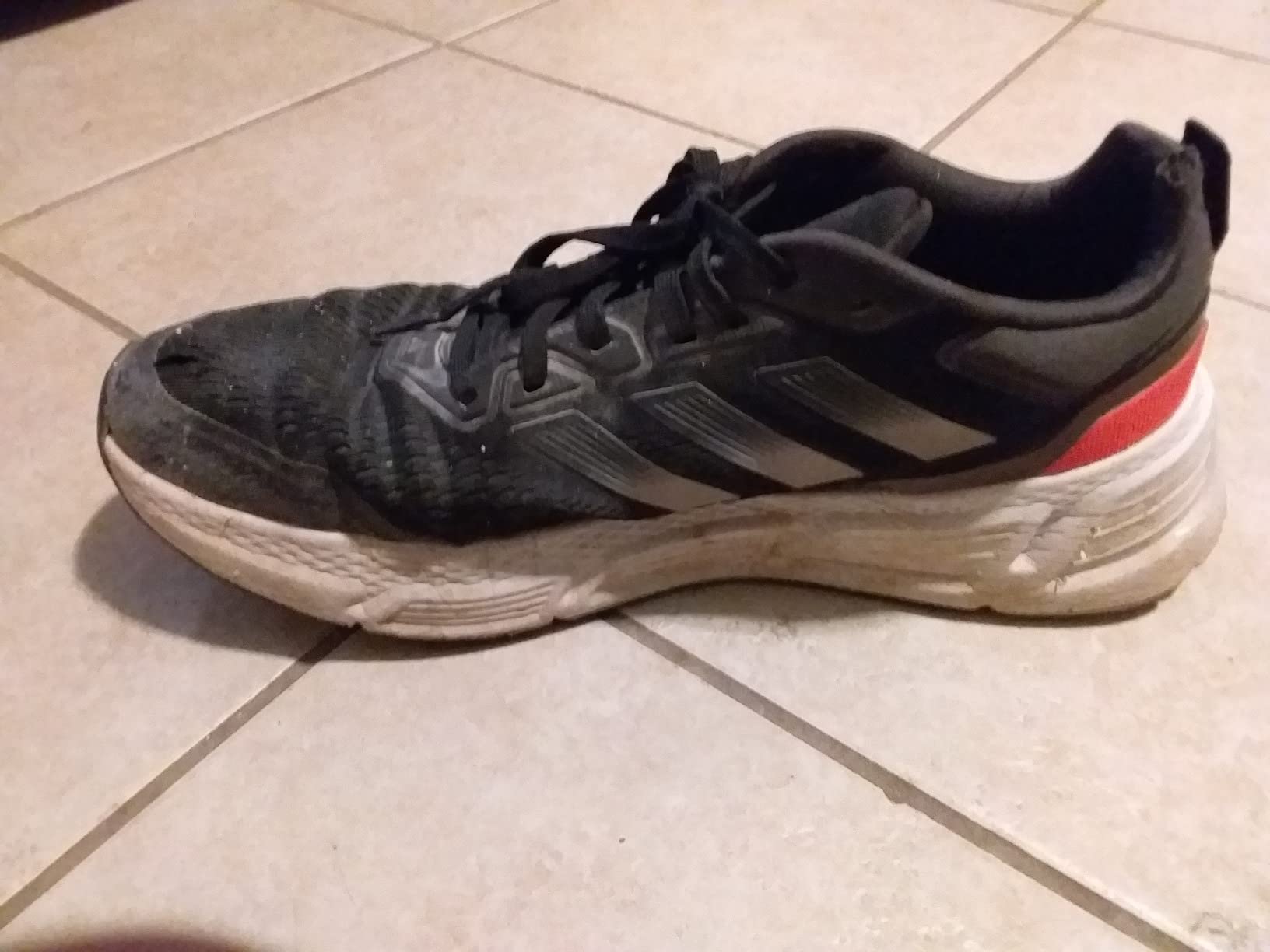
The upper uses breathable textile mesh (50% recycled materials, per Adidas) with synthetic overlays at stress points. After 8 weeks, no tears or fraying. The mesh breathes well enough for warehouse work in 85°F heat—not elite-level ventilation, but adequate. In 40°F morning temperatures, I needed thicker socks for warmth since there’s zero insulation.
The three-stripes design uses reflective elements, which is a nice safety touch for early-morning or evening wear. Toe box mesh held up to daily toe-drag during equipment maneuvering. No signs of the inner toe box wear that some reviewers mention for the Questar Flow variant.
Midsole: Bounce Cushioning Technology
Bounce is Adidas’ mid-tier cushioning—softer than basic EVA, firmer than premium Boost foam. It delivers on the “responsive” claim for light-to-moderate use. The sensation is bouncy (hence the name) without feeling mushy. For standing and walking, it provides genuine impact absorption.
The trade-off: Bounce compresses faster than premium foams. By week 5, the springiness reduced noticeably. This isn’t a defect—it’s the nature of budget cushioning materials. You get good initial comfort, shorter lifespan than $120+ shoes. For $70, I consider this acceptable.
Stack heights (32mm heel, 22mm forefoot, 10mm drop) provide decent ground protection without feeling heavy. The 10mm drop takes load off Achilles during standing, which I appreciated during long shifts.
Outsole: Durable Rubber with Basic Tread
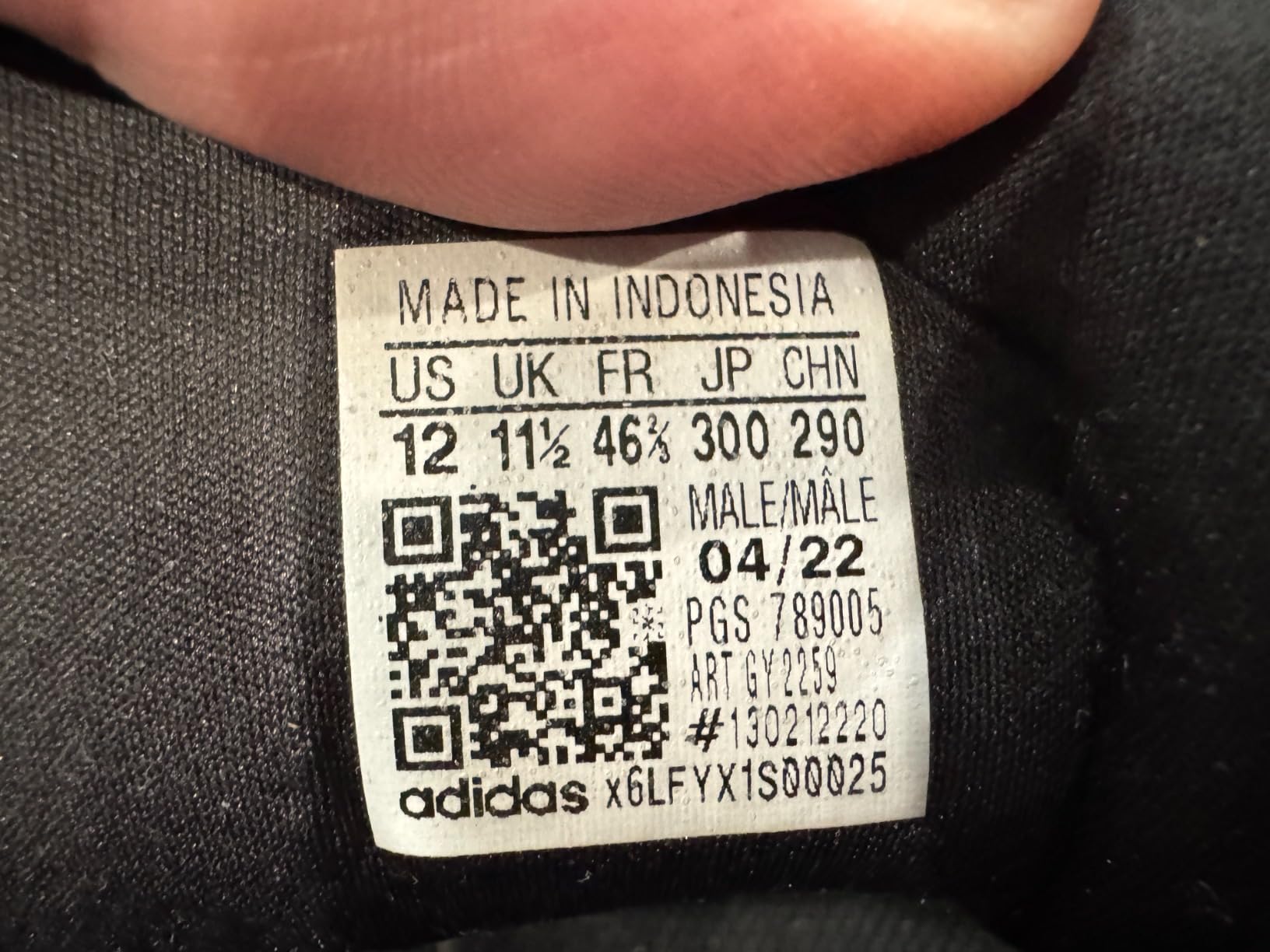
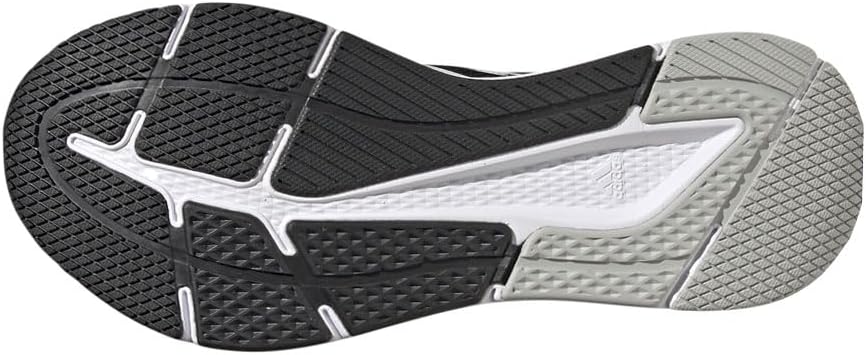
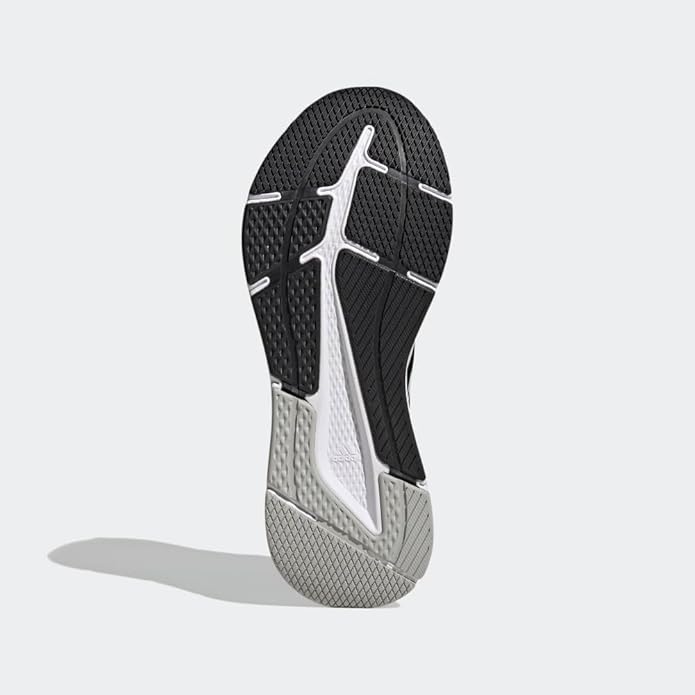
The rubber outsole uses a simple tread pattern—not aggressive, just functional. On concrete, warehouse floors, gym surfaces, and suburban sidewalks, traction was reliable. I had zero slip incidents during work or gym. On light trails (packed dirt, established paths), grip was adequate for casual walking but not technical terrain.
Wet pavement performance was fine in light rain. I didn’t test in heavy downpours since the mesh upper isn’t waterproof anyway (it soaks through quickly). For outdoor work in unpredictable weather, these aren’t the move.
After 8 weeks, heel strike area shows visible wear—tread smoothing in a ~2-inch diameter circle. The rest of the outsole looks solid. Extrapolating forward, I’d expect the heel tread to wear smooth around month 6-9 with heavy daily use.
Removable Insole: Orthotic-Friendly
The insole lifts out easily, which is a win for people needing custom orthotics. The stock insole is basic foam—comfortable enough, but it compresses along with the Bounce midsole. By week 6, I noticed the insole felt flatter. For around $15-25, you could upgrade to aftermarket insoles and extend the comfort life a few months.
Performance Testing: Gym, Roads, and Work Sites
Gym Performance
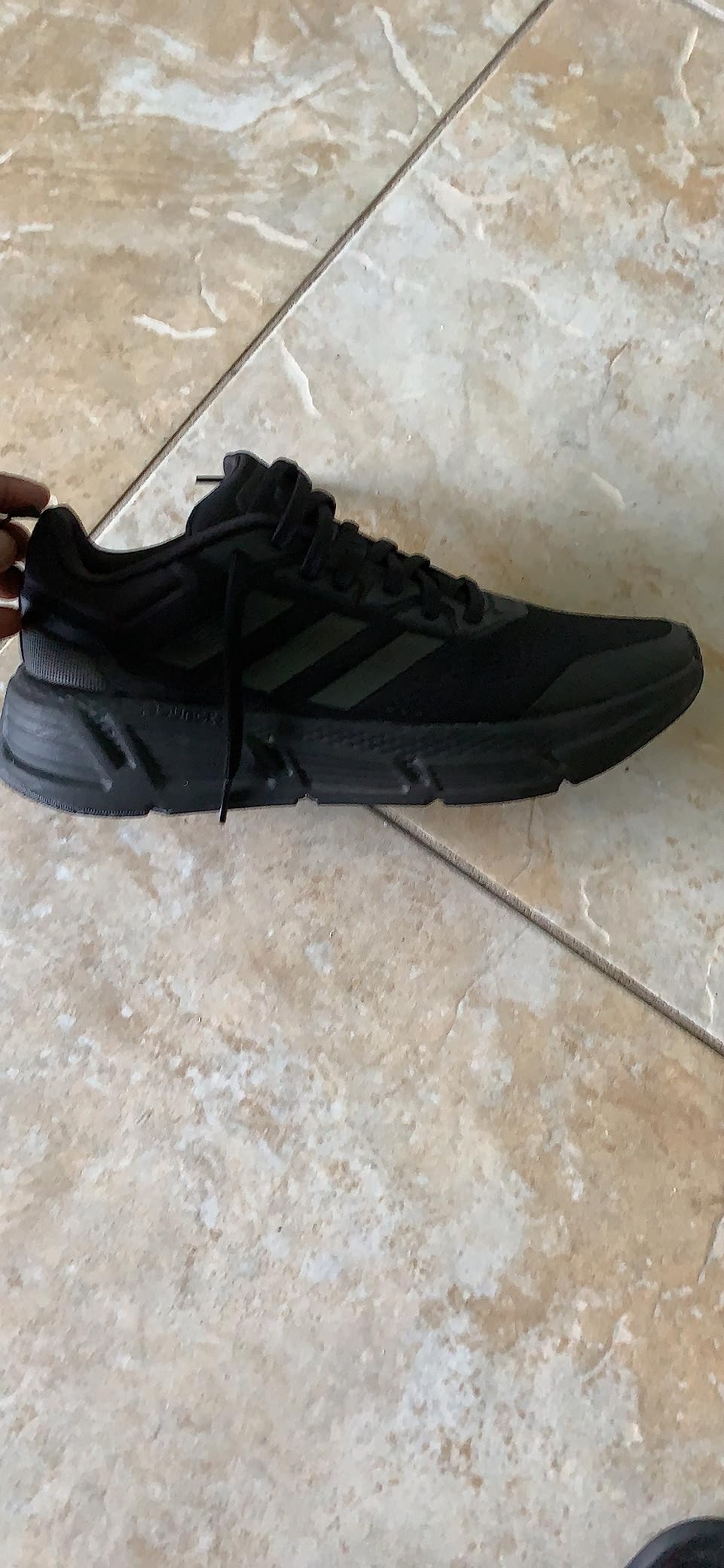
For general gym work—treadmill walking, elliptical, stationary bike, light weight training—these perform well. The platform feels stable enough for squats and deadlifts (though dedicated lifting shoes would be better for serious strength training). Lateral movements during warm-ups felt secure thanks to the midfoot lockdown.
Treadmill comfort held up for 30-45 minute sessions throughout 8 weeks. Beyond 60 minutes, the cushioning felt less responsive. If your gym routine involves long cardio sessions, budget for that comfort ceiling.
CrossFit/circuit training note: The Bounce provides decent shock absorption for box jumps and burpees. Rope climbs were fine. For intensive CrossFit training multiple times weekly, I’d want something with better lateral stability and faster-rebounding foam. For casual circuit classes, these work.
Road Walking and Light Running
Weekend walks (3-5 miles, suburban sidewalks) remained comfortable across all 8 weeks. The Bounce handles steady-pace walking well. I tested a few light jogs (2-3 miles, easy pace) and found them adequate for occasional running but not ideal. The 10.9 oz weight feels noticeable during running, and the cushioning isn’t responsive enough for speed work.
If you’re a casual runner looking for a budget option for recovery runs or walk-jog intervals, these can work. For regular runners training 3+ times weekly, look at Nike Downshifter 12 or similar dedicated running shoes.
Construction Sites and Outdoor Work
This is my unique testing angle: actual blue-collar work. For moderate labor (equipment setup, walking between job sites, climbing stairs, standing for long periods), the Questar outperformed my expectations. The Bounce cushioning genuinely reduces foot fatigue compared to flat work boots. The breathable upper prevented overheating during summer shifts.
The limitations: These aren’t safety shoes (no steel toe, no puncture resistance), and the mesh offers zero protection from dropped materials or sharp debris. For light-duty work where safety footwear isn’t required—warehouse jobs, delivery work, retail, healthcare—these are solid. For heavy construction or industrial environments, you need proper work boots.
Concrete grip was reliable (zero slips across 8 weeks). Dusty/muddy surfaces were fine. Wet metal surfaces (rain on steel plates) felt slightly less secure—not dangerous, but I paid attention to footing.
Breathability, Temperature, and Weather Reality
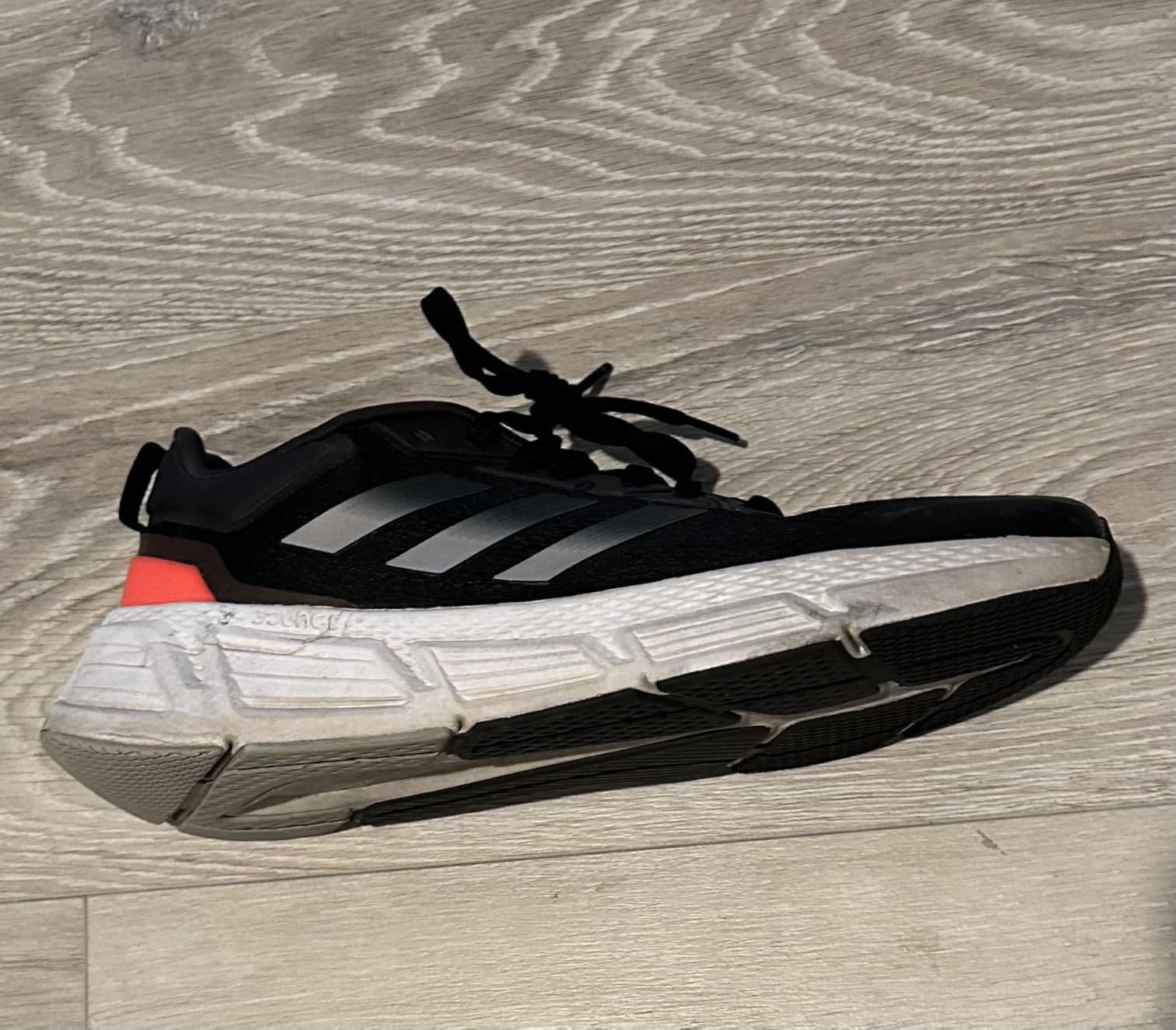
The textile mesh upper delivers on breathability for moderate conditions. During 4-hour gym sessions or work shifts in 60-75°F temps, my feet stayed comfortable—no swampy sock feeling. In 85°F warehouse heat, the mesh helped but didn’t work miracles. My feet felt warm, just not unbearable.
Temperature envelope:
- 50-75°F: Optimal range. Breathability shines, no overheating or cold spots.
- 40-50°F: Usable with thick socks. Mesh doesn’t insulate, so feet feel the cold.
- 75-85°F: Warm but manageable. Better than synthetic uppers, not as cool as premium engineered mesh.
- Below 40°F or above 85°F: Not ideal. Too cold without heavy socks, too warm in extreme heat.
Rain performance: The mesh soaks through in light rain within 10-15 minutes. If you get caught in a shower, your socks will be wet. The shoe dries reasonably fast (2-3 hours in direct sun), but this isn’t a wet-weather shoe. For rainy climates or unpredictable weather, look for waterproof hiking shoes or weather-resistant trainers.
Bonus for construction/outdoor work: Dust and dirt shake out easily from the mesh. After dusty job sites, I’d bang the shoes together and most debris fell out. The breathability that makes them vulnerable to rain also makes cleaning easier.
Durability Deep Dive: When These Shoes Fail
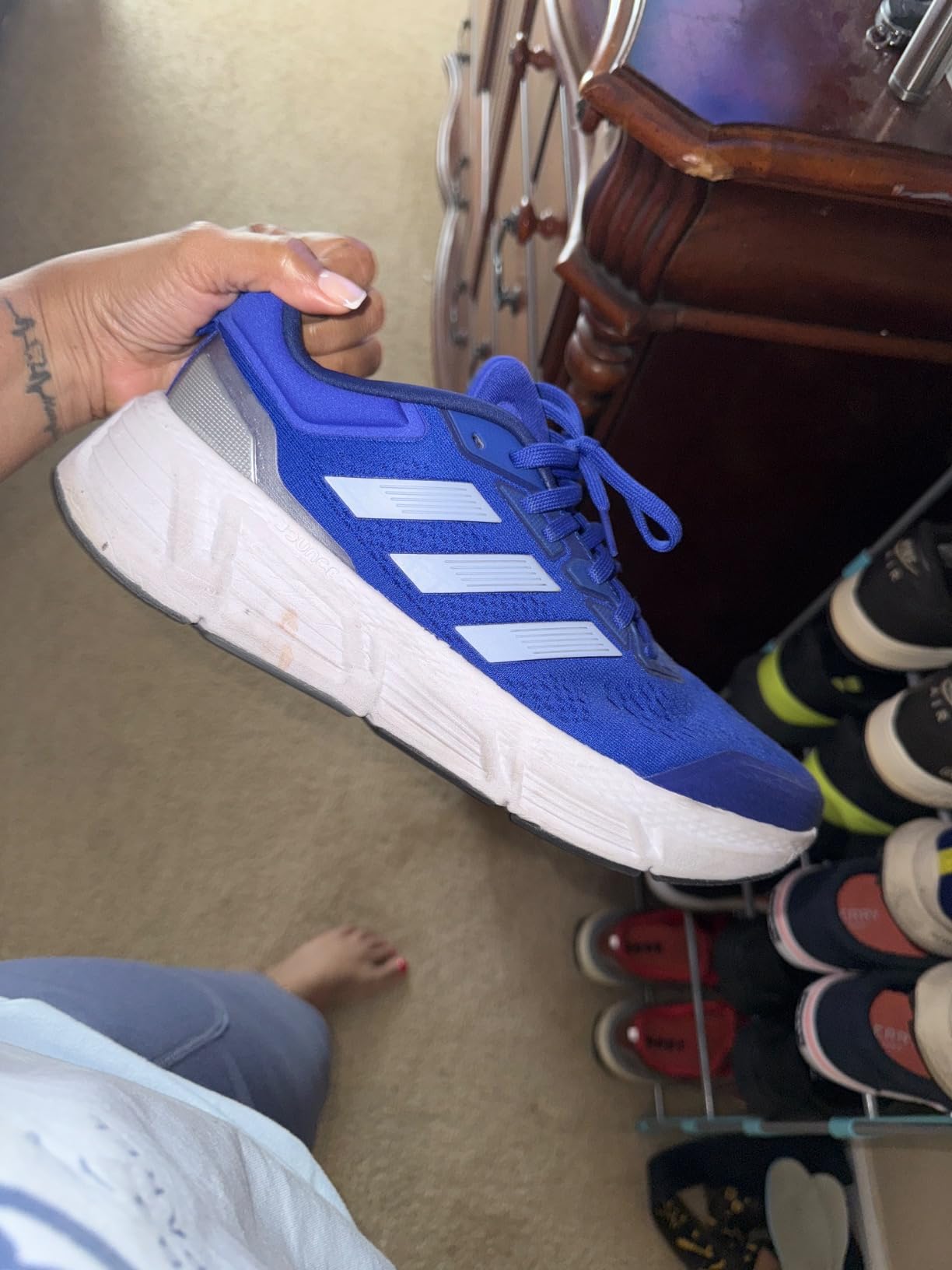
After 8 weeks of heavy use, here’s what I observed and how I’m projecting lifespan:
Midsole Compression Timeline
- Weeks 1-2: Bounce feels fresh and springy. No compression noticeable.
- Weeks 3-4: Slight firmness creeping in. Still comfortable, just less bouncy than new.
- Weeks 5-6: Compression apparent if you’re paying attention. Comfort ceiling drops from 8+ hours to 6 hours for standing work.
- Weeks 7-8: Bounce significantly firmer. Still functional but clearly past prime. For my usage, projecting complete flatness by month 6-9.
Outsole Wear Pattern
The heel strike zone (lateral heel, ~2 inches diameter) shows tread smoothing after 8 weeks. At current wear rate, I’d expect the heel tread to be mostly smooth by month 6. The midfoot and forefoot outsole still look new—wear concentrates at heel strike for my gait.
Upper Integrity
After 8 weeks, the mesh shows zero tears, the synthetic overlays are intact, and stitching is solid. The upper is outlasting the midsole, which is common for budget shoes—foam compresses before materials fail. I’d expect the upper to hold 12-18 months for casual use.
Lifespan Estimates by Usage
Casual/gym rotation (3x/week walking, gym): 12-18 months. Midsole compression will be the limiting factor, but at lower frequency use, it’ll last longer.
Regular work use (5x/week, 8-12 hour shifts): 6-9 months. My projected timeline based on 8-week compression rate. Midsole flattens, heel tread wears smooth, comfort drops below acceptable.
Heavy daily wear (7x/week as primary shoe): 3-6 months. Continuous compression and wear accelerates deterioration.
Light occasional (1-2x/week): 18-24 months. Minimal stress extends both midsole and outsole life.
Cost-Per-Month Analysis
At $70 purchase price:
- 12-month lifespan (casual) = $5.83/month
- 6-month lifespan (heavy work) = $11.67/month
- 18-month lifespan (light use) = $3.89/month
Compare to a $120 premium trainer lasting 18 months: $6.67/month. For casual users, the Questar delivers comparable cost-per-month. For heavy users, you’re essentially buying disposable comfort every 6-9 months.
Comparisons: What Else Should You Consider?
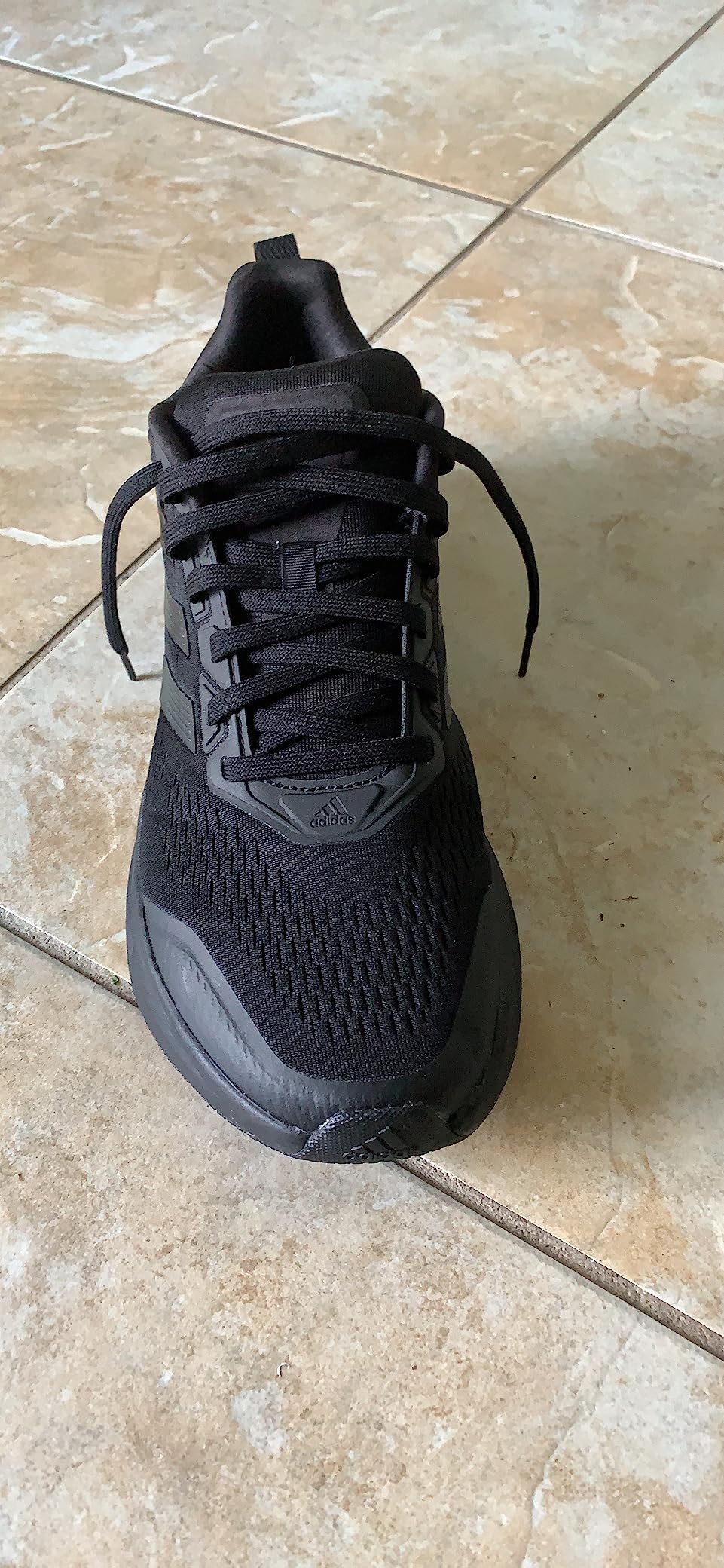
vs. Nike Downshifter 12: The Downshifter is lighter (around 9 oz) and slightly more responsive for running. If your primary use is actual running (not walking or standing work), the Downshifter edges out the Questar. For all-day standing comfort, the Questar’s Bounce and wider toe box feel better. Price is similar ($60-80 range).
vs. Adidas Duramo SL: The Duramo uses Lightmotion cushioning, which feels firmer than Bounce. Duramo is better for longer runs and tends to last a few months longer. Questar is softer and more comfortable for casual/work use. If you prioritize longevity over initial softness, Duramo wins. If you want comfort now and accept shorter lifespan, Questar wins.
vs. ASICS Contend series: ASICS Contend shoes typically offer more arch support and run narrower. If you have high arches or prefer a snugger fit, Contend might suit you better. The Questar’s wide toe box and softer cushioning make it better for all-day standing and wider feet. ASICS usually costs $10-20 more.
vs. Budget work boots: For construction work specifically, a $70-90 work boot would offer better protection and probably last longer. But the Questar is way more comfortable for walking and standing. If your work doesn’t require safety footwear and you value comfort over protection, Questar is the better choice.
Who Should (and Shouldn’t) Buy These
Perfect For:
- Construction/outdoor workers in non-safety-footwear roles who spend 8-12 hours on feet
- Healthcare workers (nurses, aides) needing comfortable shoes for long shifts on hard floors
- Gym-goers wanting a versatile shoe for cardio machines, light weights, and walking
- Budget-conscious casual runners doing easy-pace recovery runs under 5 miles
- Daily walkers covering 3-8 miles on sidewalks or treadmills
- Retail/warehouse workers standing and walking all day
- People with normal-width feet who appreciate roomy toe boxes
Probably Not Right For:
- Serious runners training for races or running 10+ miles regularly
- Heavy trail hikers needing aggressive traction and ankle support
- People with wide feet (EE+ width) who need genuinely wide shoes
- Those needing maximum durability and willing to pay $120+ for 18-24 month shoes
- Wet-climate users requiring waterproof footwear
- Heavy construction workers needing steel-toe or puncture-resistant safety shoes
- Speed-focused athletes wanting responsive, lightweight racing trainers
Care and Maintenance Tips
To maximize the 6-18 month lifespan:
Rotation strategy: If possible, alternate between two pairs. Giving the Bounce foam 24-48 hours to decompress between wears extends midsole life. Two $70 pairs rotated will outlast one pair worn daily.
Cleaning: Hand wash with mild soap and water. The mesh cleans easily. Avoid machine washing—the agitation can separate midsole adhesive and damage the Bounce foam. Air dry only; dryer heat degrades foam faster.
Storage: Keep in a cool, dry place. Heat accelerates foam degradation. If you leave them in a hot car regularly, expect faster compression.
Insole upgrade: Around month 3-4, consider aftermarket insoles ($15-25). The stock insole compresses along with the Bounce. Fresh insoles can extend the perceived comfort life by a few months.
When to retire: Replace when: (1) Outsole heel tread is smooth, (2) Midsole feels flat/unresponsive, or (3) Upper mesh tears. For most users following my timeline, that’ll be month 6-18 depending on usage intensity.
Final Verdict: Solid Value with Clear Limitations
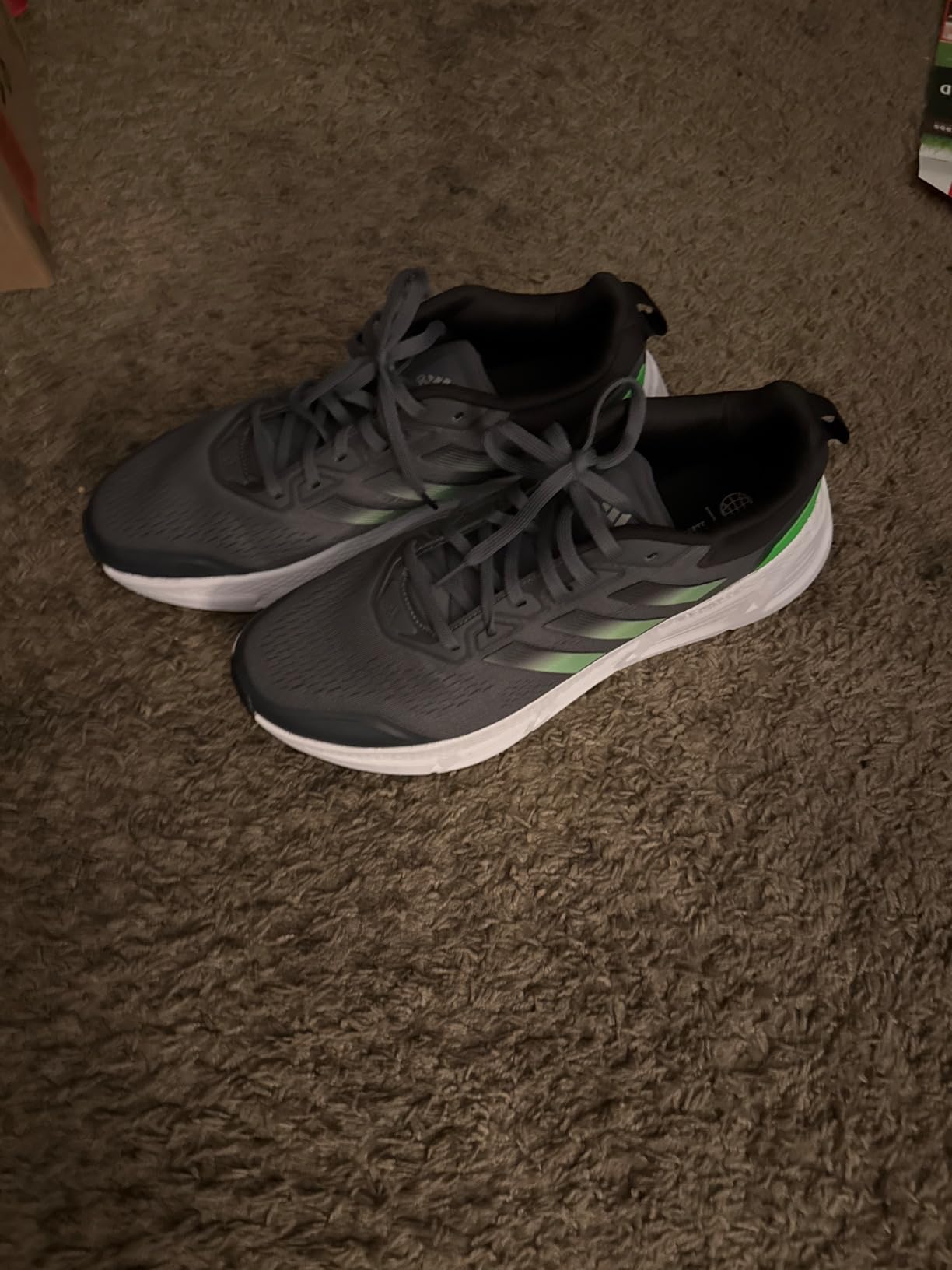
After 8 weeks testing the Adidas Questar in real-world construction work, gym sessions, and weekend walking, I’m landing on 7.8/10 overall. That breaks down to excellent value (9/10), solid comfort (8.5/10), adequate performance for intended use (7/10), but durability concerns (6.5/10) hold it back from a higher score.
The Questar delivers on its core promise: comfortable, affordable footwear for casual use and standing work. The Bounce cushioning genuinely works for short-to-moderate durations. The wide toe box prevents pinching during long shifts. The $70 price point makes it low-risk to try.
The trade-offs are real: Bounce compresses faster than premium foams, limiting lifespan to 6-18 months usage-dependent. The mesh breathes well but offers zero waterproofing. It’s not a distance running shoe despite the “running shoe” label.
Would I buy them again? Yes, for specific uses. For construction work, gym sessions, and casual walking, they’re delivering exactly what I need at a price I’m comfortable with. The projected 6-9 month lifespan at my usage intensity means I’m spending about $11.67/month—acceptable for the comfort benefit. If I rotated two pairs, I’d extend that to $5-6/month, which is excellent value.
Would I recommend them to you? Depends entirely on your use case. If you match the “perfect for” list above—work standing, casual gym, budget-conscious, normal-width feet—absolutely. If you need durability, wet-weather protection, or serious running performance, keep shopping.
For $40-70 (current pricing varies by colorway and retailer), the original Adidas Questar offers legitimate comfort and function. Just go in with realistic expectations: you’re getting great initial comfort and solid value, not premium durability or technical running performance. At that price point with those trade-offs, I’m calling it a win for the right buyer.
Frequently Asked Questions
Are these true to size or should I size up?
For the original Adidas Questar (Bounce cushioning), order true to size if you have standard-width feet. I’m normally a size 10 across brands, and 10 fit perfectly with room in the toe box. The confusion online comes from people mixing up the original Questar with Questar Flow (which runs small and requires sizing up half). If you have wide feet or are between sizes, consider going up half a size. Test with your typical sock thickness—the fit is snug with thick work socks, roomy with thin gym socks.
Can I use these for marathon training or long-distance running?
No, these aren’t ideal for marathon training or regular long runs. The Bounce cushioning has a comfort ceiling around 5-8 miles, and the 10.9 oz weight feels heavy for distance running. Multiple runners report knee discomfort beyond 3-4 miles. These work for easy recovery runs, walk-jog intervals, or casual 5K distance at easy pace. For serious training, look at dedicated running shoes with better cushioning tech and lighter weight. Think of the Questar as a lifestyle trainer that can handle occasional short runs, not a running shoe that works for casual wear.
How long do they actually last with daily wear?
Based on my 8-week testing, here are realistic lifespans: Heavy daily work use (12-hour shifts, 5-7 days/week): 6-9 months before midsole compresses too much. Regular casual use (gym 3-4x/week, daily walking): 12-18 months. Light rotation (2-3x/week as backup shoes): 18-24 months. The limiting factor is midsole compression, not upper durability—the Bounce foam flattens faster than the mesh tears. Outsole heel wear becomes noticeable around month 6 for heavy users. If you rotate two pairs, you’ll get better total value than wearing one pair until it dies.
Are they good for people with wide feet?
Partially. The toe box is notably spacious compared to budget competitors—I had plenty of wiggle room even after 12-hour shifts. However, online feedback from people with genuinely wide feet (EE width and wider) suggests these still run snug overall. If you’re normal width but appreciate roomy toe boxes, these are great. If you typically need wide-width shoes, test before committing or size up half. Unfortunately, Adidas doesn’t offer a wide variant of the original Questar. For genuinely wide feet, you might have better luck with training shoes that explicitly offer wide widths.
Can they replace work boots for construction jobs?
Only if your work doesn’t require safety footwear. These have no steel toe, no puncture resistance, and the mesh offers zero protection from dropped materials or sharp debris. For moderate labor where safety shoes aren’t mandated—warehouse work, light construction, delivery, retail, healthcare—the Questar is way more comfortable than heavy work boots and handles 12-hour shifts well. For heavy construction, industrial environments, or any job requiring OSHA-rated footwear, you need proper work boots. I wore these successfully for equipment setup and standing work, but I’d never use them around heavy machinery or active construction zones.
Are they waterproof or even water-resistant?
No. The breathable mesh upper soaks through in light rain within 10-15 minutes. If you get caught in a shower, your socks will be wet. The shoe dries reasonably fast (2-3 hours in direct sun), but these are strictly dry-weather or indoor shoes. For wet climates, rainy seasons, or unpredictable weather, you need waterproof hiking shoes or weather-resistant trainers. The breathability that makes them comfortable in summer heat is the same feature that lets water in. Consider them great for sunny days, gym use, and indoor work—terrible for Pacific Northwest weather or spring/fall rain.
How do they compare to Adidas Ultraboost for comfort?
Ultraboost is significantly more comfortable due to superior Boost foam technology, but it costs $180+ vs. $70 for Questar. Boost foam is softer, more responsive, and lasts longer than Bounce. If you can afford Ultraboost and want maximum comfort for running or all-day wear, it’s worth the premium. The Questar delivers maybe 70% of Ultraboost comfort at 40% of the price. For my construction work use case, the Questar’s comfort-to-cost ratio made more sense—I’m going to wear through shoes in 6-9 months regardless, so why spend $180? But if comfort is your top priority and budget isn’t tight, Ultraboost wins decisively.
Can I use custom orthotics or insoles with these?
Yes, the insole is removable, which makes the Questar orthotic-friendly. The stock insole is basic foam that compresses along with the Bounce midsole. If you need custom orthotics, they’ll fit without issue—just check that your orthotics’ thickness doesn’t make the shoe too snug (you might need to size up half if using thick orthotics). Even if you don’t need medical orthotics, consider upgrading to aftermarket insoles ($15-25) around month 3-4 to extend the perceived comfort life. Fresh insoles can add a few months of comfortable use after the Bounce starts feeling flat.
What’s the difference between Questar, Questar Flow, and Questar 3?
Original Questar (2022): Bounce cushioning, textile mesh upper, 10mm drop, 309g weight. This review. Best for comfort-focused casual use. Questar Flow: Cloudfoam midsole (firmer than Bounce), runs half size small, lighter weight. Better for casual fashion wear, worse for all-day standing. Questar 3 (2025): Latest version with updated Bounce, 5mm drop (vs. 10mm), slightly different fit. Specs and performance differ significantly. When shopping online, make sure you’re looking at the right model—reviews and sizing advice often get mixed up between these three distinct shoes.
Are they good for CrossFit or gym workouts?
Solid for general gym work and light CrossFit, but not ideal for intensive training. The Bounce provides decent shock absorption for box jumps, burpees, and rope climbs. The platform feels stable enough for squats and deadlifts (though dedicated lifting shoes would be better for serious strength work). For casual CrossFit classes or circuit training 2-3x/week, these work fine. For serious CrossFit athletes training 5+ days/week with heavy barbell work and intense metcons, you’d want something with better lateral stability and faster-rebounding foam. The Bounce cushioning has a comfort ceiling around 90 minutes for high-intensity work.
Do they run hot or breathe well in summer?
The mesh breathes reasonably well—adequate, not amazing. In 60-75°F conditions, my feet stayed comfortable during 4-hour gym sessions and work shifts. In 85°F warehouse heat, the mesh helped but didn’t work miracles—feet felt warm, just not unbearable. These are noticeably cooler than synthetic leather shoes but not as ventilated as premium engineered mesh. Best temperature range is 50-80°F. Above 85°F, you’ll feel the heat. Below 50°F, you’ll want thicker socks since the mesh offers zero insulation. For summer use in moderate climates, they’re fine. For extreme heat (Phoenix summer, Florida humidity), dedicated running shoes with better ventilation would be more comfortable.
Be the first to review “Adidas Questar Running Shoes”
Related products
Running Shoes
Running Shoes
Running Shoes
Hiking/Trekking Shoes
Running Shoes
Running Shoes

Running Shoes
Running Shoes
Reviews
There are no reviews yet.