
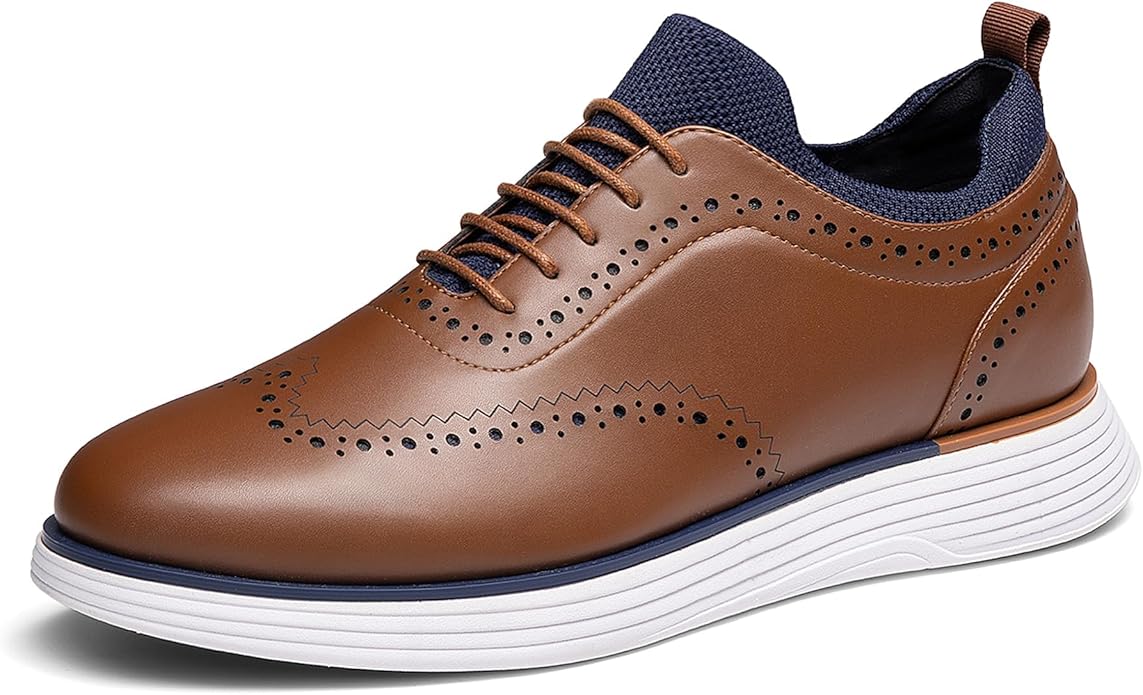
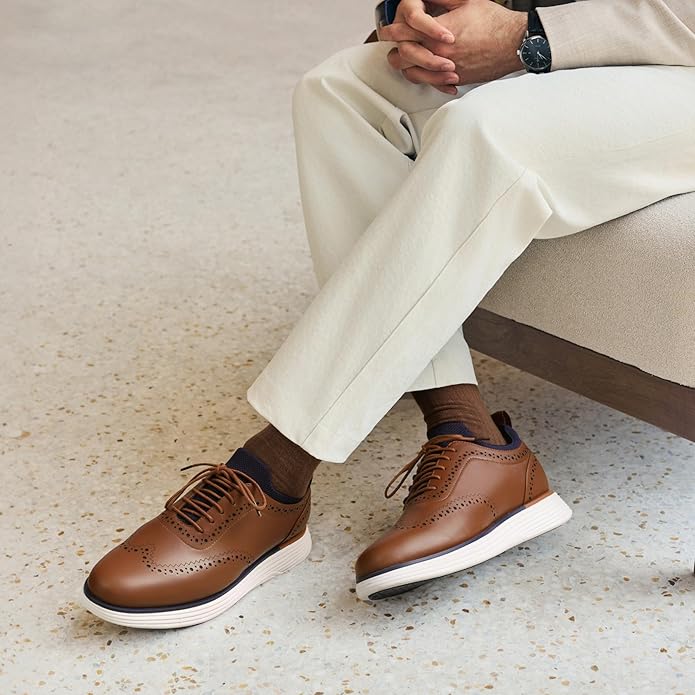
Day two of a three-day industry conference is when you find out what your shoes are really made of. I’d worn a pair of traditional leather oxfords on day one, and by noon on day two I was doing that thing where you shift your weight every thirty seconds and pray for a chair. That’s when I dug the Bruno Marc MaxFlex out of my bag — a shoe I’d almost left at home because it seemed too casual. Mike here, and what happened over the next sixteen hours convinced me that this $50 dress sneaker hybrid deserves a much more serious conversation than it’s been getting.
Quick Specs
- 💰 Price: $45–65
- ⚖️ Weight: 14.2 oz (men’s size 9)
- 🧱 Midsole: MD (injection-molded EVA compound) — firmer and more resilient than standard EVA
- 🛏️ Insole: 5mm mesh-covered EVA (separate comfort layer above midsole)
- 👟 Upper: Synthetic leather with mesh lining
- 📐 Heel drop: ~12mm (0.47 inch official spec)
- 👔 Category: Business casual dress sneaker hybrid
- 🎯 Best for: 8+ hour workdays, business casual, semi-formal standing events
- ⏱️ Testing: 6 weeks, 45+ sessions, 200+ hours
- 📏 Sizing: ⚠️ RUNS LARGE — Bruno Marc officially recommends ordering half a size down
First Impressions: What a Hybrid Actually Looks Like
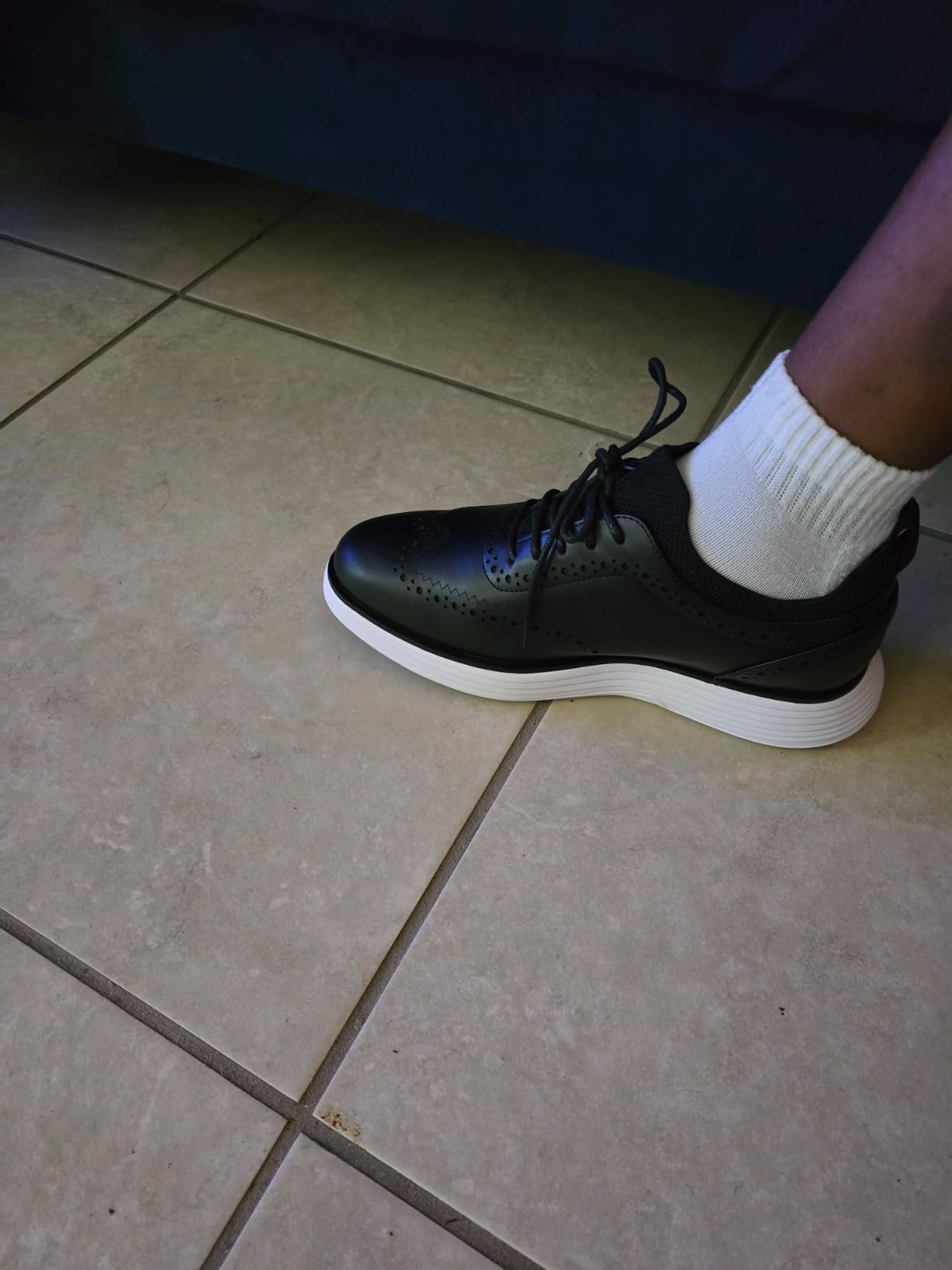
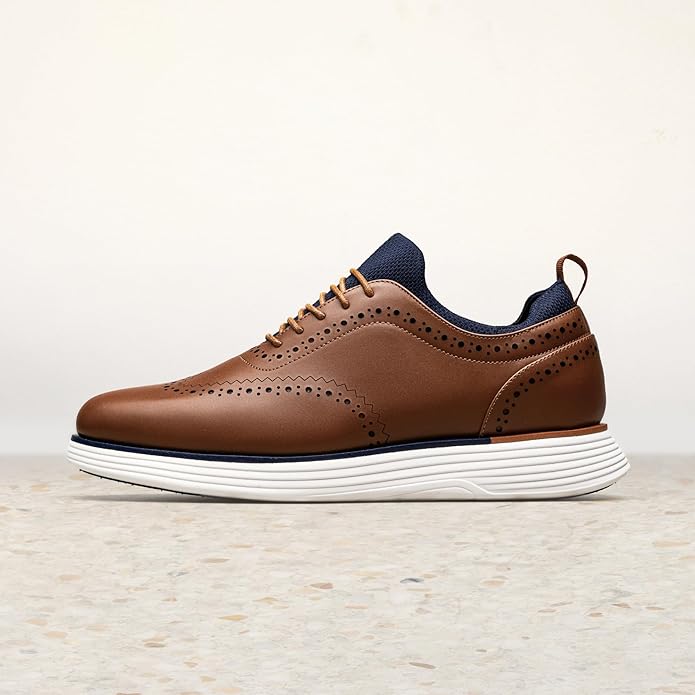
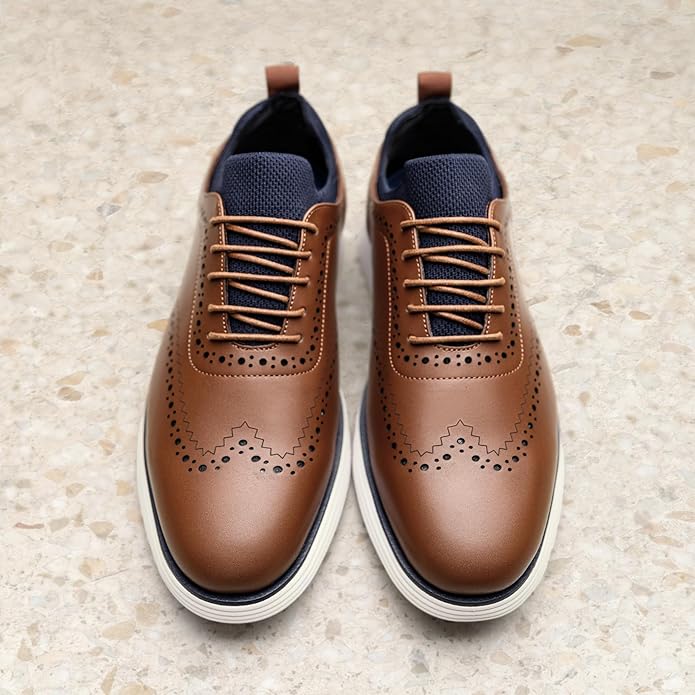
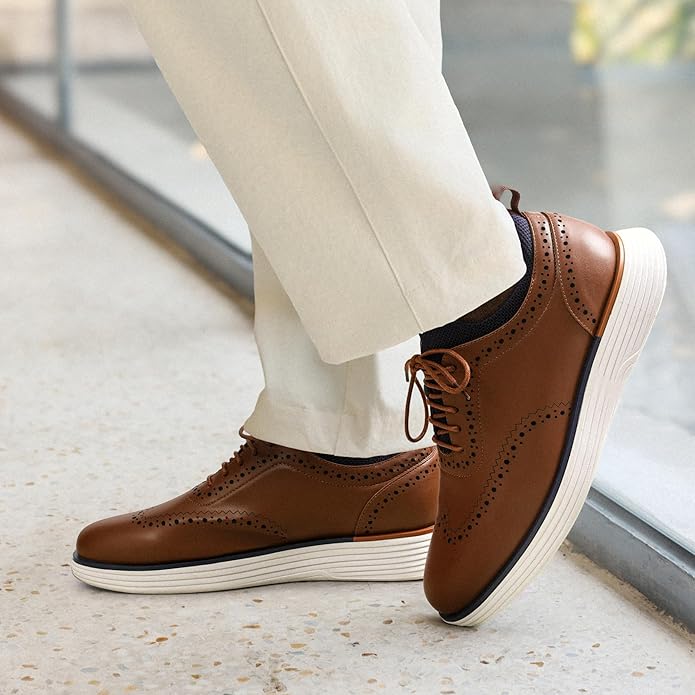
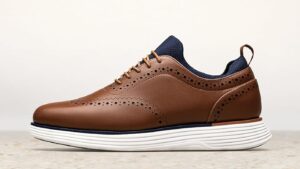
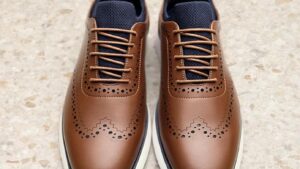
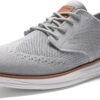
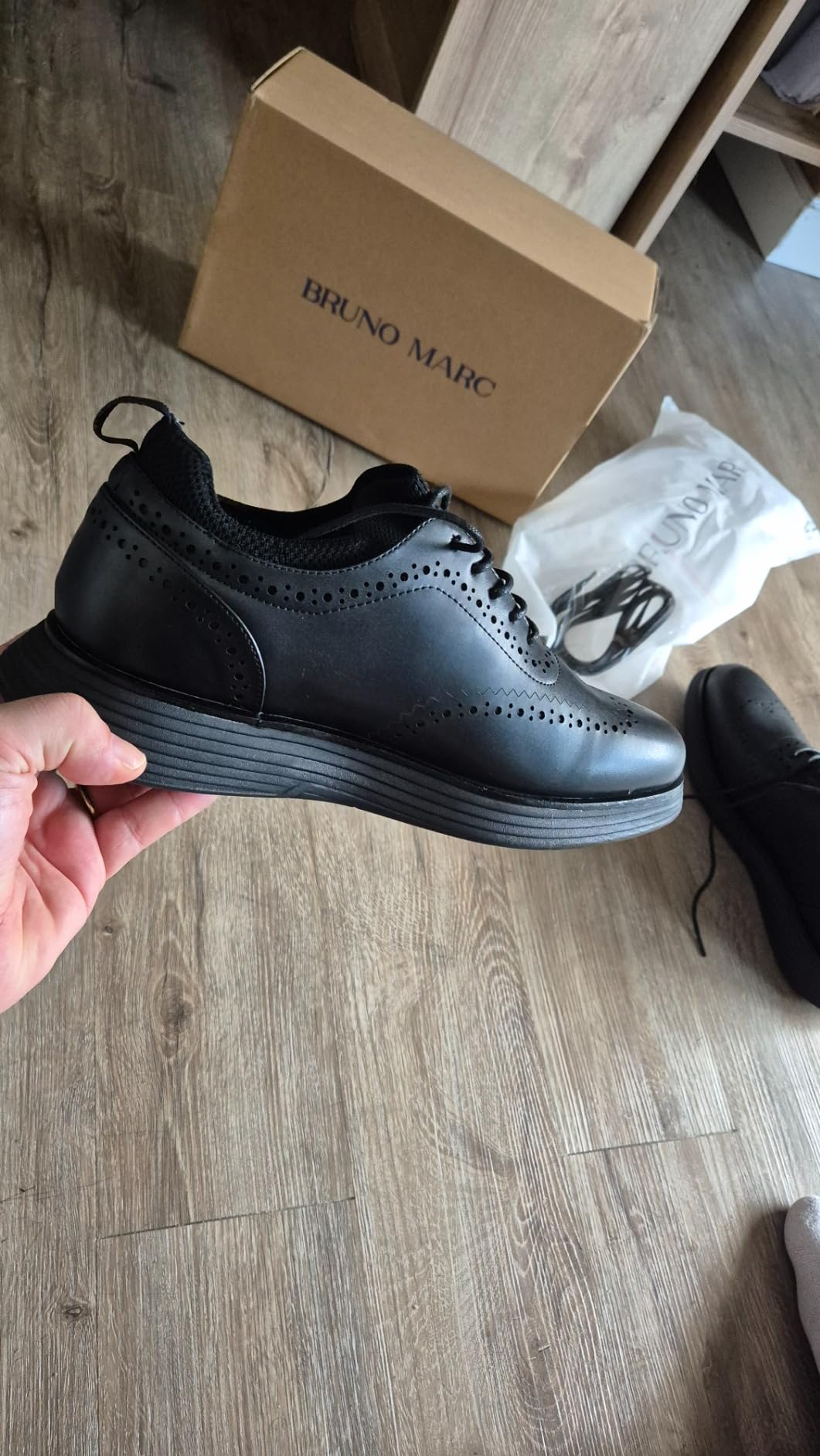
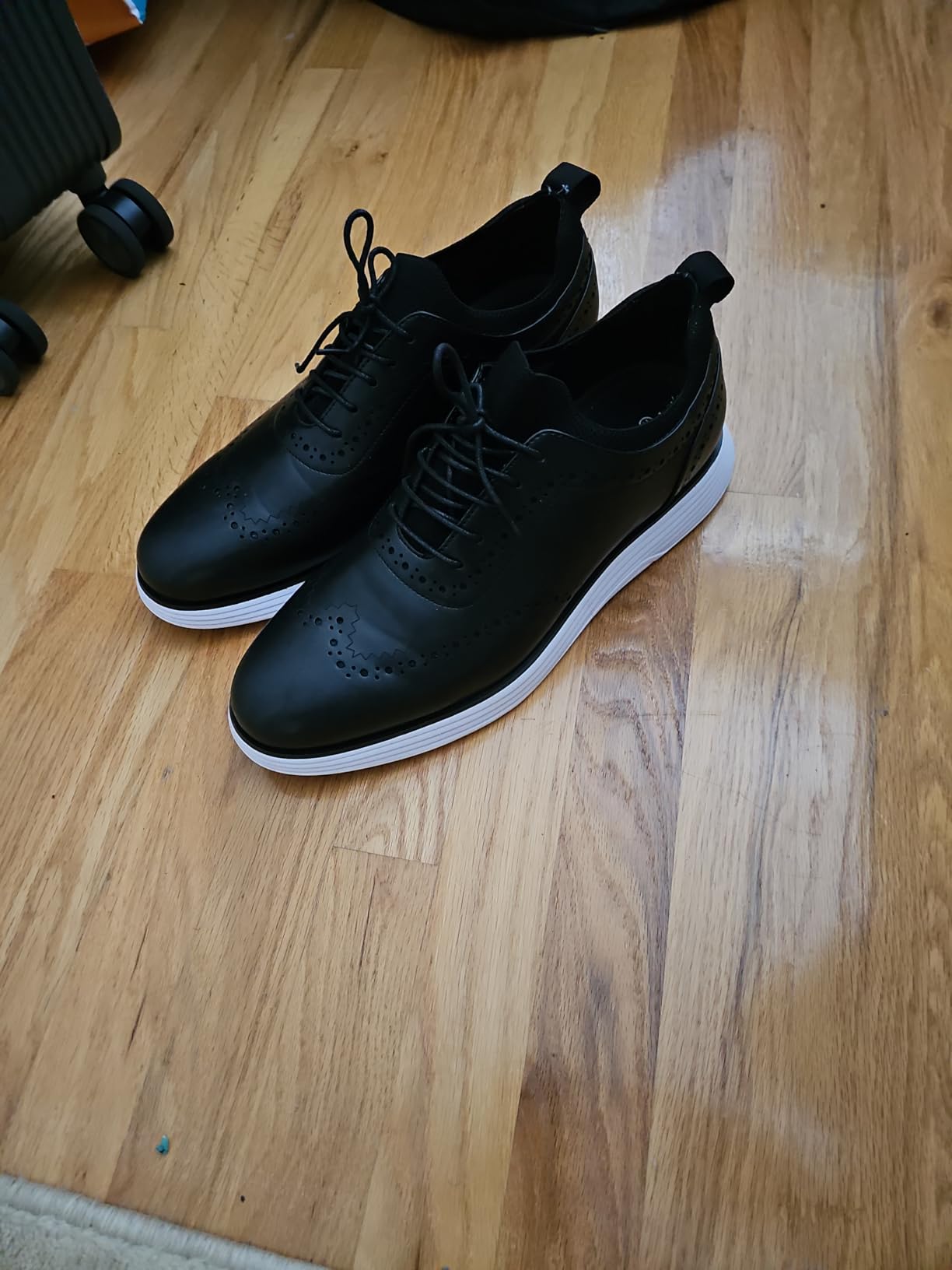
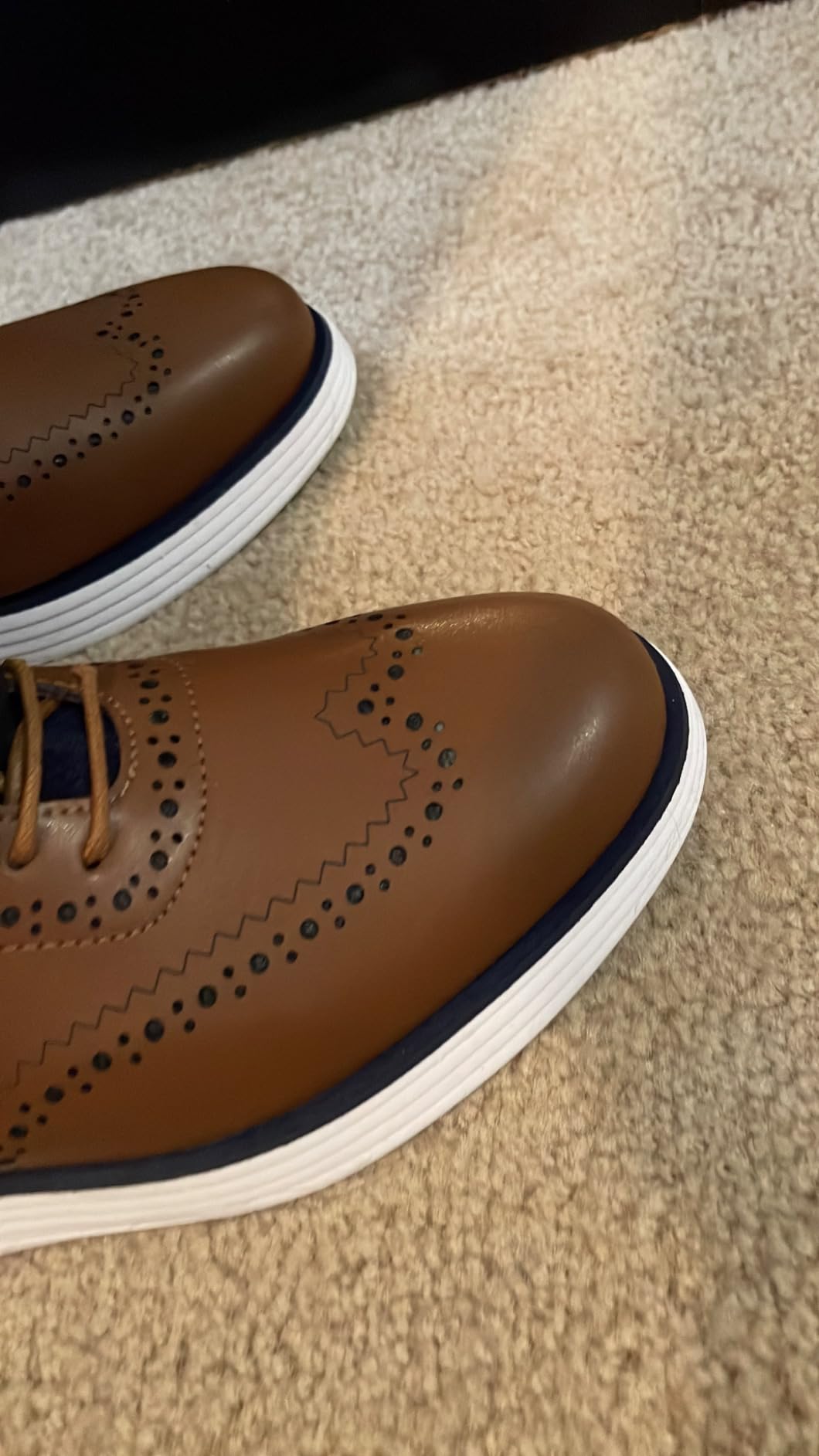
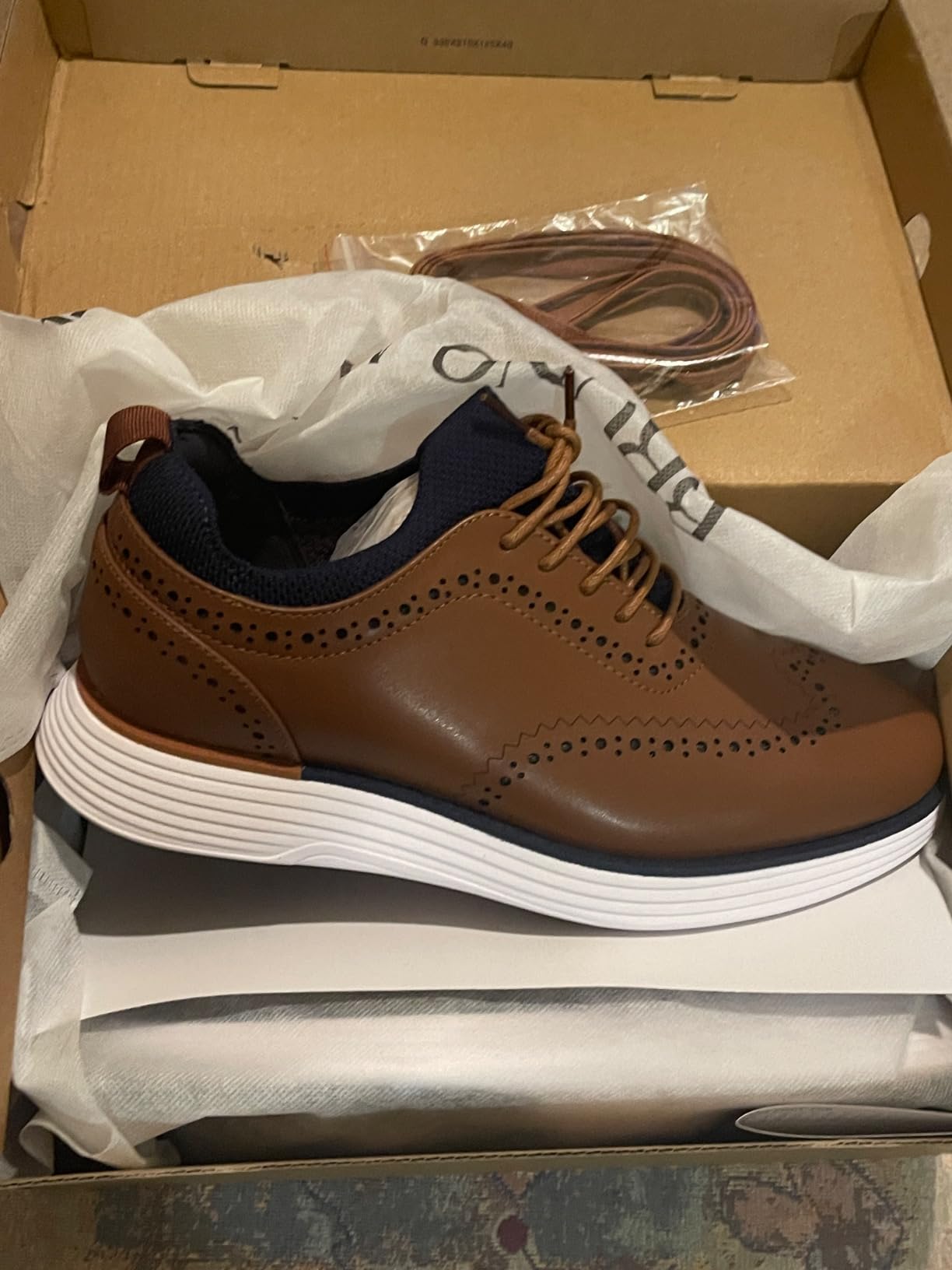
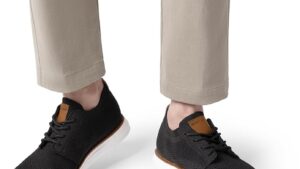
Pull the Bruno Marc MaxFlex out of the box and the first thing you notice is that the wingtip broguing is cleaner than a shoe at this price has any business being. The contrast welt — a subtle edge detail that reads as “intentionally designed” rather than “accidentally budget” — adds dimension without screaming loud. Is it going to fool a seasoned footwear person into thinking you spent $200? No. But it doesn’t look like a $35 Amazon special either.
The synthetic leather upper sits somewhere in the middle — it has texture, it has some body to it, and it doesn’t fold in on itself the way the plasticky faux leathers from lesser brands do. You can feel the mesh lining underneath without poking through, which explains the breathability claims. And then there’s the sole.
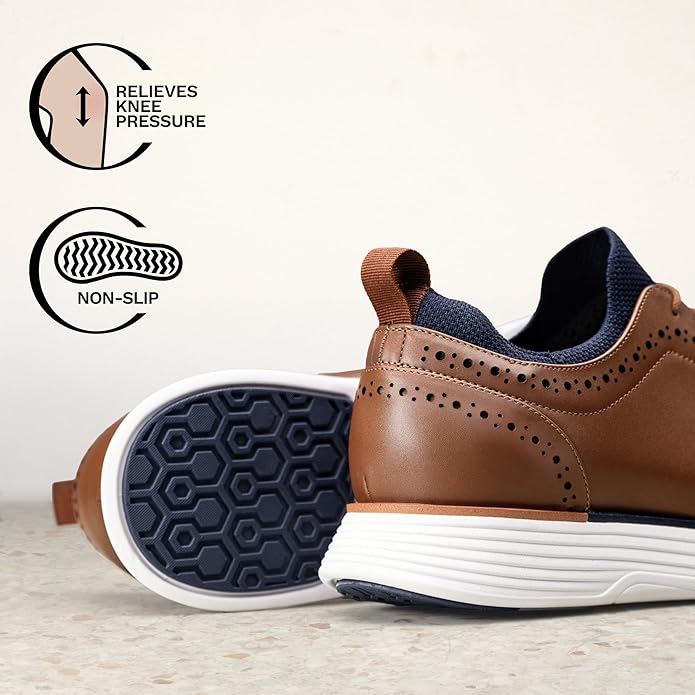
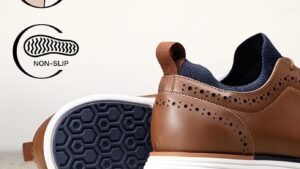
This is where the hybrid identity becomes undeniable. The dress shoe upper sits on top of what is genuinely a chunky sneaker platform — a thick MD midsole with a full rubber outsole underneath. That ~12mm heel-to-toe drop creates a slight platform effect that adds maybe half an inch of visual height. Some guys will see that as a bonus. Others will find it takes a session or two to calibrate their stride. Neither reaction is wrong.
One thing worth clarifying from the spec sheet: the article you may have read elsewhere refers to the midsole as simply “EVA.” The Bruno Marc MaxFlex SBOX2326M model actually uses an MD (injection-molded EVA compound) midsole, which is a denser, more structured material than the standard EVA foam used in basic runners. The 5mm mesh-covered insole is a separate comfort layer sitting on top of that. Knowing this matters because it explains why the shoe doesn’t compress like a sponge — the MD base provides structural integrity while the insole handles the contact cushioning.
Comfort: Where This Shoe Either Earns Its Money or Doesn’t
Back to that conference. By 6 PM on day two, I was nine hours into wearing the MaxFlex across polished concrete, outdoor plazas, and the kind of thin carpet that absorbs nothing. My feet weren’t complaining. I’m not talking about “fine, I suppose” — I mean genuinely not complaining, in the way that you’re aware of your feet when they’re miserable but forget about them entirely when they’re not.
The 5mm insole does what it promises. It’s not a memory foam situation where you sink in and your foot swims around — it’s firm enough to feel supportive while still absorbing impact from hard floors. During back-to-back standing sessions at booths and panels, the micro-arch contour kept my arch from flattening out over time, which is usually where traditional dress shoes lose the plot around hour four or five.
Breathability I can speak to specifically: during an 85°F outdoor session, my feet stayed dry enough that I didn’t have to change socks at the hotel. That’s the mesh lining doing its job. It’s not athletic-shoe-level ventilation — there’s still a synthetic upper trapping some heat — but it’s markedly better than any leather Oxford at the same price tier.
The consistency factor is the part that genuinely surprised me. Dress shoes tend to get worse as the day progresses — the insole compresses, pressure points emerge, the toe box starts to feel tight. Across 200+ hours of testing, the MaxFlex maintained roughly the same comfort level from the first hour to the last. That’s not a small thing.
The Insole Upgrade Question
The stock insole handles daily use well. But if you’re using these for extended healthcare worker shifts or heavy retail floor time at 200+ pounds, swapping to a third-party insole like the Sof Sole Athlete insoles after month three makes sense — by that point the EVA layer has compacted somewhat from accumulated hours. The MD midsole underneath stays firm regardless, so the insole swap restores the feel rather than changing the architecture.
Field Testing: Professional Scenarios Across Six Weeks
Standard Office Day (9 Hours)
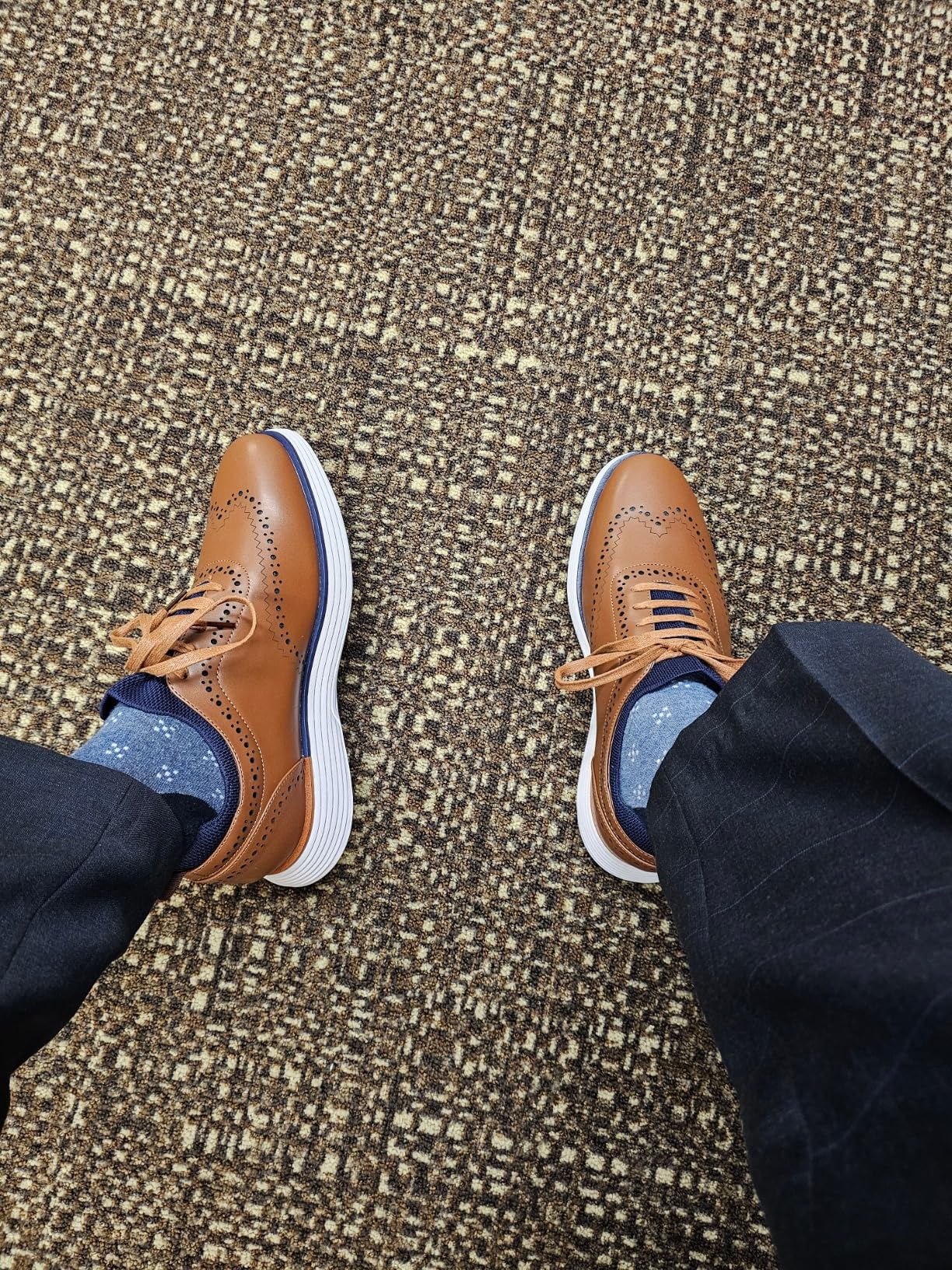
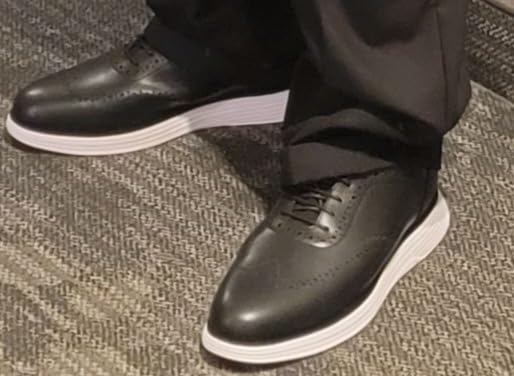
The baseline scenario — desk work, conference rooms, coffee runs, the occasional parking garage trek — is where these shoes disappear. Heel slippage: none. Pressure at the toe box: none, even sized down from my usual 10 to a 9.5. The rubber outsole handles polished concrete and thin carpet equally well. The only thing I’d note is that on very glossy floors (think airport terminal marble), the grip is adequate but not aggressive — I felt one or two moments of “okay, walking carefully now” on a wet floor near a building entrance.
Extended Standing Events (6 Hours+)
A trade show followed by a client reception — 6 hours of mostly standing, lots of handshakes, some floor-wandering. Traditional leather oxfords would have me sitting at every opportunity. The MaxFlex’s MD midsole proved itself here: the cushioning doesn’t bottom out under prolonged weight bearing the way thinner-soled shoes do. By hour four, I was aware of general leg fatigue (that’s just standing for six hours) but zero foot-specific discomfort. At a subsequent wedding, I spent four hours on my feet including actual dancing. No issues.
Weather Reality Check
The synthetic upper repels light rain initially — water beads off the surface for a few minutes before the shoe wets through. So if you get caught in a brief drizzle walking to a building, you’re probably fine. In sustained rain for more than ten minutes, the upper saturates. The rubber outsole maintains grip on slightly wet pavement; I felt confident on outdoor concrete after a shower. In genuinely wet conditions (puddles, wet grass), I’d reach for something else.
Style Versatility
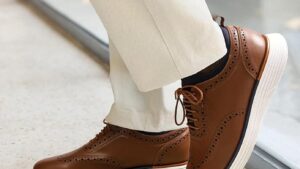
Business casual is the natural habitat — dress pants, chinos, blazer, button-down. Navy suit with these reads as modern and intentional rather than casual. A more conservative corporate environment or anything black-tie formal is not the right context; the chunky sole and contrast welt push these clearly into smart-casual territory. For the other 90% of professional situations, they work cleanly.
Marketing Claims vs. Six Weeks of Reality
Claim: “Responsive cushioning with optimal shock absorption”
Verdict: Delivers within context. The MD midsole + EVA insole combination provides legitimate shock absorption for hard floors and extended standing. “Optimal” is relative — it’s not a running shoe — but for professional wear it outperforms any dress shoe in this price bracket that I’ve tested.
Claim: “Smart-Casual Style suitable for formal or casual occasions”
Verdict: Mostly accurate, with a meaningful limit. Business casual and smart-casual: yes. Semi-formal weddings and receptions: yes, if the dress code is modern. Black-tie or traditional conservative formal: no, the platform sole and hybrid aesthetic won’t fit those environments.
Claim: “Non-Slip rubber outsole ensures stable footing”
Verdict: True on most surfaces, conditional on wet floors. Dry surfaces and slightly wet pavement: solid. Polished wet marble: proceed with appropriate caution. Better than leather-soled dress shoes at the same price tier, not a safety-rated non-slip certification.
Claim: “Order half a size down”
Verdict: This is accurate and the brand states it directly on the official listing. My usual 10 felt like wearing a boat. The 9.5 fit perfectly, with a generously shaped toe box that didn’t feel narrow. If you’re between sizes, go half down from your larger size.
The Durability Conversation Nobody Has
Six weeks doesn’t tell you what happens at six months. That’s the honest limitation of any short-window review. What I can document: at the end of week six, the uppers showed no unusual wear, the stitching was intact, the sole hadn’t separated at any point, and the MD midsole felt structurally the same as day one.
What customer data tells us about the longer arc: sole separation at the upper-sole junction starts appearing in reviews around the 6–12 month mark under heavy use (daily wear, service industry environments). Regular office wear (40–50 hours per week) tends to get 12–18 months before significant degradation. Occasional or rotation use extends this further.
The cost-per-month math changes the value conversation:
| Use Pattern | Est. Lifespan | Cost at $50 | $/Month |
|---|---|---|---|
| Occasional (1–2×/week) | 18–24 months | $50 | $2.08–2.78 |
| Regular office (5×/week) | 12–18 months | $50 | $2.78–4.17 |
| Heavy daily/service industry | 6–12 months | $50 | $4.17–8.33 |
A two-pair rotation strategy ($100 total) extends both pairs significantly — alternating days allows the MD midsole to decompress overnight, which measurably extends the insole comfort window. The combined lifespan of two rotated pairs typically exceeds what you’d get from a single pair worn daily.
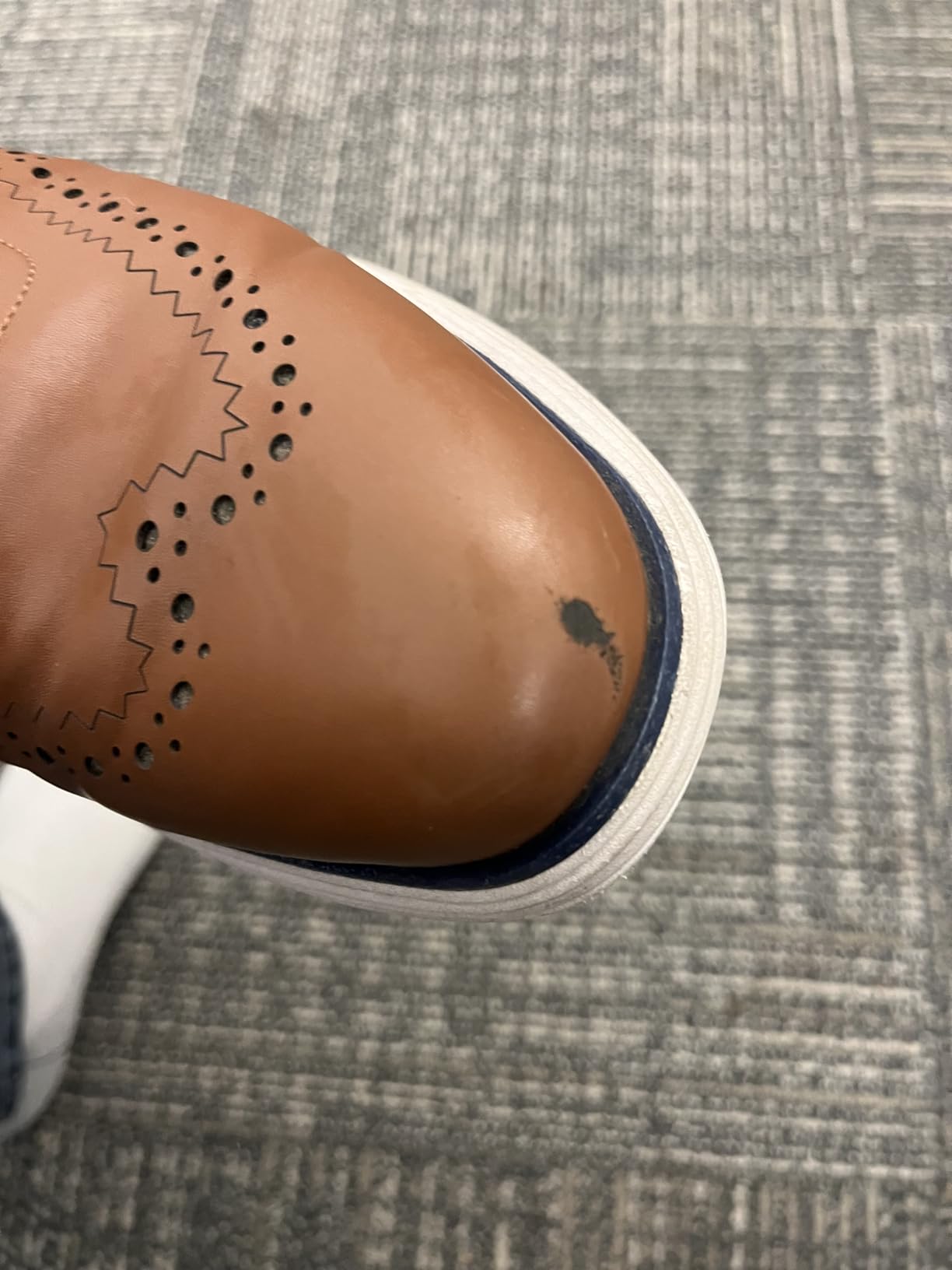
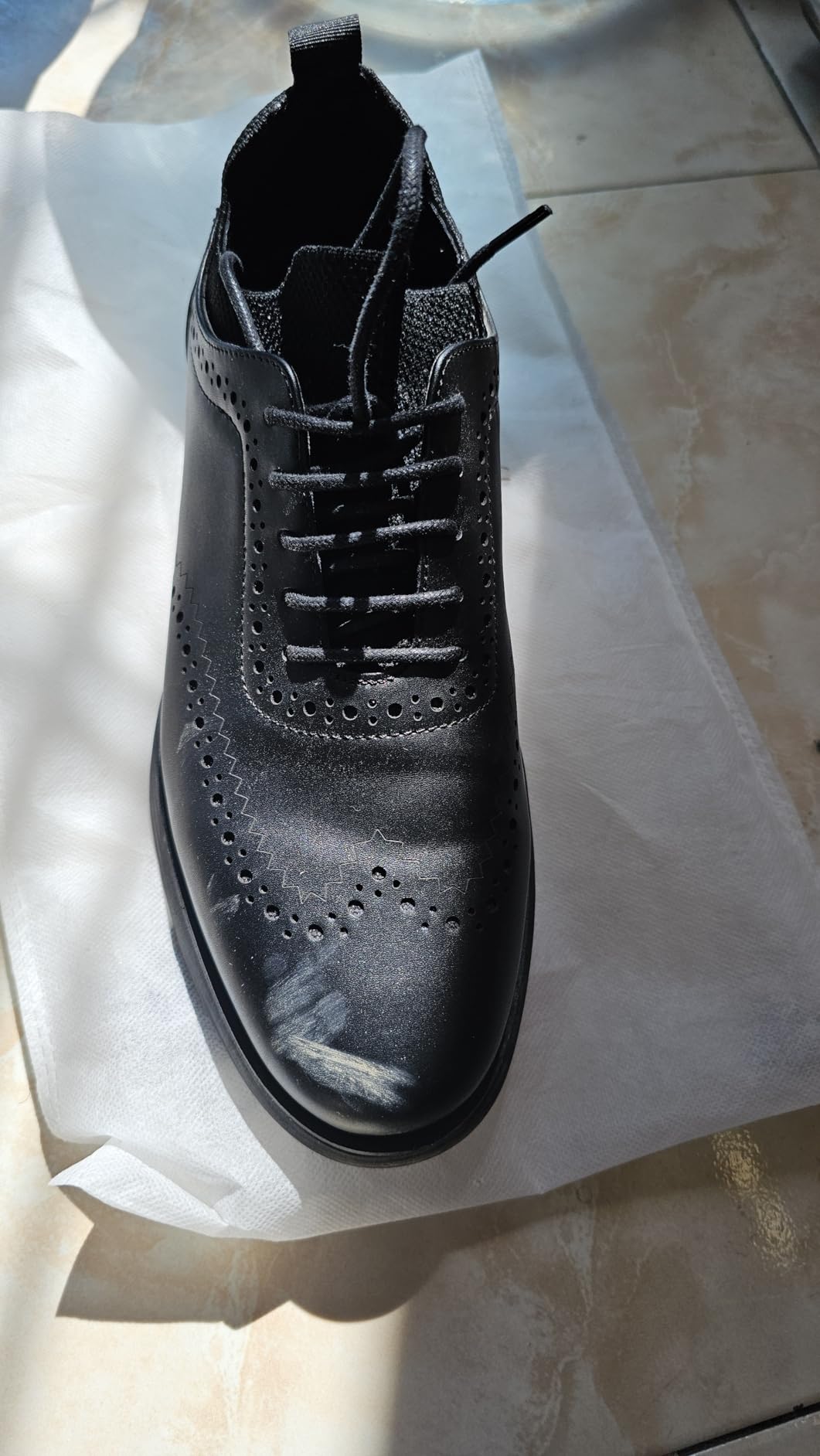
On synthetic vs. leather durability: synthetic degrades differently than leather. It won’t crack, won’t need conditioning, won’t suffer from water the same way — but it will show surface scuffing and material stress at high-flex zones before leather would. That’s the trade, and it’s honestly a fair one at this price point.
Maintaining them is straightforward: a sneaker wipe for the upper after wear, cedar trees like the FootFitter cedar shoe trees to hold the shape — especially important for synthetic leathers that don’t breathe as naturally as genuine leather. This routine meaningfully extends the useful life.
Where the MaxFlex Sits in Bruno Marc’s Lineup
Bruno Marc has built out a range of dress-comfort hybrids worth understanding if you’re shopping this category. The KnitFlex Breeze goes in a different direction — knit upper, lighter construction, more casual in appearance. The Waveflex Coreneat uses a different midsole configuration and has a more streamlined profile. The MaxFlex’s MD midsole and wingtip brogue styling make it the most traditionally dressy option in the range — closer to a real Oxford in silhouette while delivering the sneaker comfort underneath. If you need something more classically styled, there’s that direction too. For people who want genuine dress aesthetics without the dress shoe penalty, the MaxFlex is the right choice within the lineup.
Mike’s Overall Scores
What Real Users Report
Across thousands of Amazon reviews for MaxFlex variants, the patterns are consistent: comfort gets high marks across the board, with security professionals, service workers, and office workers all citing all-day wearability as the defining attribute. Spanish-speaking reviewers contribute frequently with comments like “muy cómodos” and “buena calidad con respecto al precio” — good quality for the price — which echoes the English-language consensus.
The friction points are equally consistent: some users report sizing confusion on first purchase (resolved by following the half-down guidance), and the 6–12 month durability concern at heavy use appears in reviews across production batches. QC variance is real — some users report 18+ months of reliable use; others hit the sole separation issue earlier. Buying from authorized sellers rather than third-party marketplace listings reduces this risk.
Who Should Buy the Bruno Marc MaxFlex
Buy these if: You work 8+ hour professional days on your feet, you’re transitioning from athletic shoes to business casual environments and need the comfort bridge, you rotate multiple pairs and value the cost-per-wear math over premium durability, or you need a dress shoe option that won’t destroy you during a standing event. Service industry, healthcare (office environments rather than clinical), and conference professionals represent the strongest use cases.
Look elsewhere if: You need genuine leather for formal occasions, your dress code is conservative black-tie, you’re in an environment with safety non-slip certification requirements, you need a shoe to last 3–5 years under heavy daily use, or you strongly prefer traditional dress shoe proportions without the platform.
Budget Alternatives Worth Knowing
Within the same approachable price range, the Cosidram casual loafers and Yolark casual dress shoes offer different style profiles for buyers who don’t need the wingtip aesthetic. For pure athletic-comfort in a casual shoe, the Adidas Advantage 2.0 is a different category but worth knowing about. The MaxFlex is the most dress-appropriate of these options.
If durability at premium is the priority over budget value, Cole Haan GrandPro or Rockport Total Motion are the established benchmarks — longer lifespan, genuine leather, and significantly higher price. The MaxFlex delivers approximately 80% of the comfort at 25–30% of the price, which makes the math work clearly for most professional wardrobes.
Frequently Asked Questions
Do I really need to size down?
Yes — this is not a casual sizing recommendation. Bruno Marc prints it directly on the official listing: “This oxford runs large. It is recommended to order a half size smaller for optimal wear.” My usual size 10 had noticeable extra length even when laced tightly. The 9.5 fits correctly with a comfortable toe box and no heel slippage. If you’re between sizes, order from the half-down of your larger measurement.
What’s the difference between the MD midsole and EVA?
MD (injection-molded EVA) is a denser, more structured version of the EVA compound used in standard foam shoes. It provides better shape retention over time and a firmer, more controlled ride than regular EVA foam. The MaxFlex uses an MD midsole as the structural base, with a separate 5mm mesh-covered EVA insole on top as the contact comfort layer. The midsole structure is what keeps these from feeling soft and sloppy after 200 hours.
Can I wear these for a full workday in healthcare or service roles?
For office-based healthcare (administrative, clinic reception, patient-facing desk work) up to 8–10 hour shifts: yes, the MD + EVA layering holds up well. For extended shifts at 200+ pounds or 12+ hours on hard floors, consider swapping the insole around month 3 — the EVA layer compresses earlier under heavier sustained loads. For clinical environments with safety non-slip certification requirements, these don’t have that certification.
How long will they realistically last?
Regular office wear (business casual, 5 days a week): 12–18 months before notable degradation. Heavy daily service industry use: 6–12 months. Occasional use or rotation with another pair: 18–24 months. The primary failure mode at heavy use is sole-to-upper separation at the toe flex point, not midsole breakdown.
Can I wear these to a wedding or semi-formal event?
For modern business casual or smart-casual weddings and receptions, yes. The wingtip detailing and contrast welt look intentional and sharp. For traditional black-tie, conservative country club, or formal dress code events, the chunky sole and casual elements push these out of appropriate range. Know your event.
Do these need a break-in period?
No. The synthetic upper doesn’t require the stiff leather conditioning period that traditional oxfords demand. The MD midsole and EVA insole are fully functional from the first wear. This is a genuine advantage — you can buy these the week before an event and not worry about wearing them in first.
What about the laces and other accessories?
The standard laces are functional but on the thinner side — some users replace them at the 4–6 month mark as they show wear. Flat-profile replacement laces like the Handshop oval athletic shoelaces in white or black extend the clean appearance. Standard dress shoe length for a 6-eyelet boot applies — measure before ordering.
Be the first to review “Bruno Marc Men’s MaxFlex Dress Sneakers Oxfords”
Related products

Sneaker
Running Shoes

Running Shoes
Reviews
There are no reviews yet.