
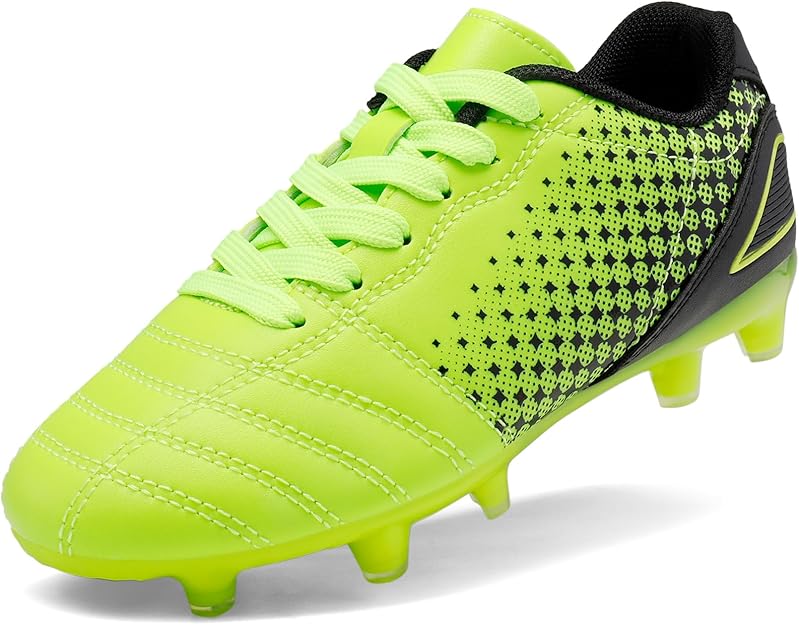
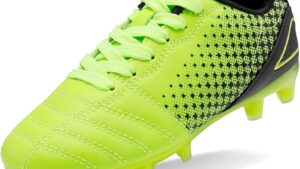
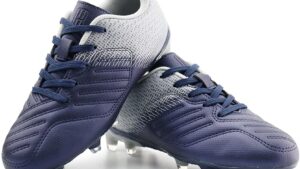
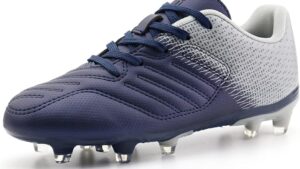
Between school registration chaos and the annual scramble for youth sports gear, the DREAM PAIRS Boys Girls Soccer Cleats keep surfacing as one of the most-discussed budget options in recreational soccer circles. With two kids in youth leagues and cleats getting outgrown every six to eight months, the $40-45 price tag on these is either a smart budget move or a false economy waiting to happen. After six weeks of real-world use across practices, weekend games, and everything in between, here’s what actually holds up — and what doesn’t.
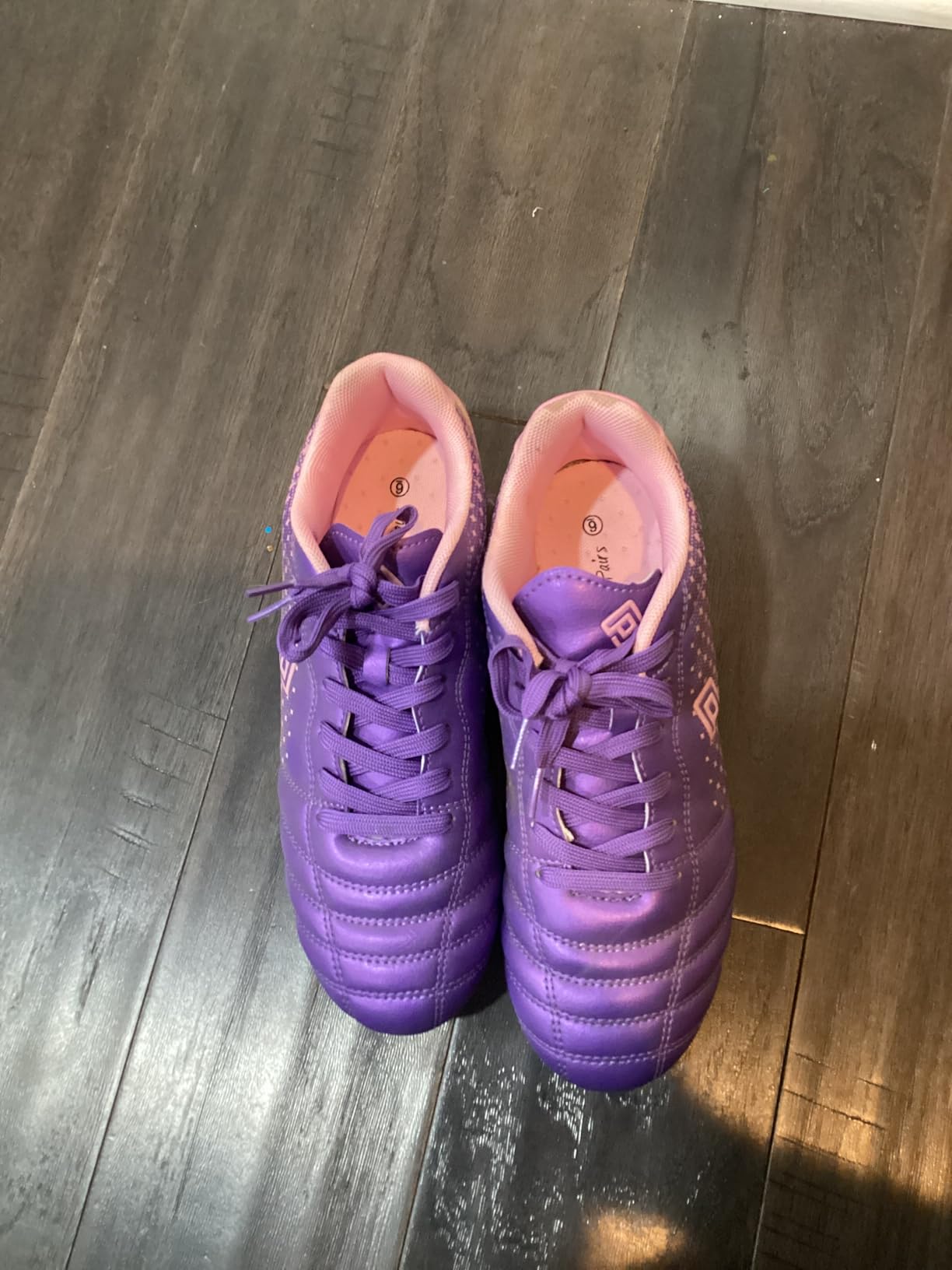
Quick Specs
- Upper material: Waterproof synthetic faux leather (PU)
- Sole material: Thermoplastic Polyurethane (TPU), injection-molded
- Weight: 8.2 oz (size 6 big kid)
- Closure: Traditional lace-up
- Category: Youth recreational soccer cleats — firm ground
- Best for: Youth league soccer, ages 5–14, multi-sport use
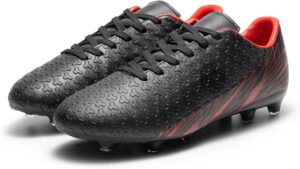
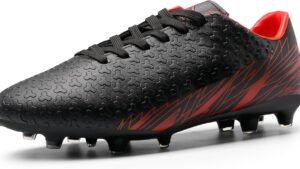
- Available colors: Multiple colorways including Neon/Green/Black, Fuchsia/Black, Black/Red
Thicker Build Than the Price Suggests
Right out of the box, these cleats carry more substance than the budget tier typically delivers. The synthetic faux leather upper has real structure to it — not the papery, flex-on-arrival material that shows up in cheaper youth options. The waterproof treatment adds a slight stiffness initially, but that same firmness is what keeps them from collapsing under the lateral stress of repeated cuts and direction changes.
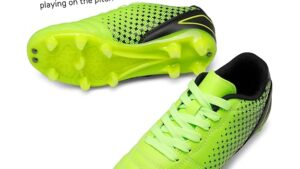
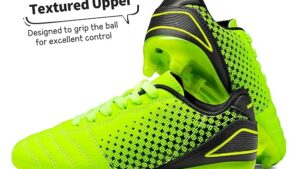
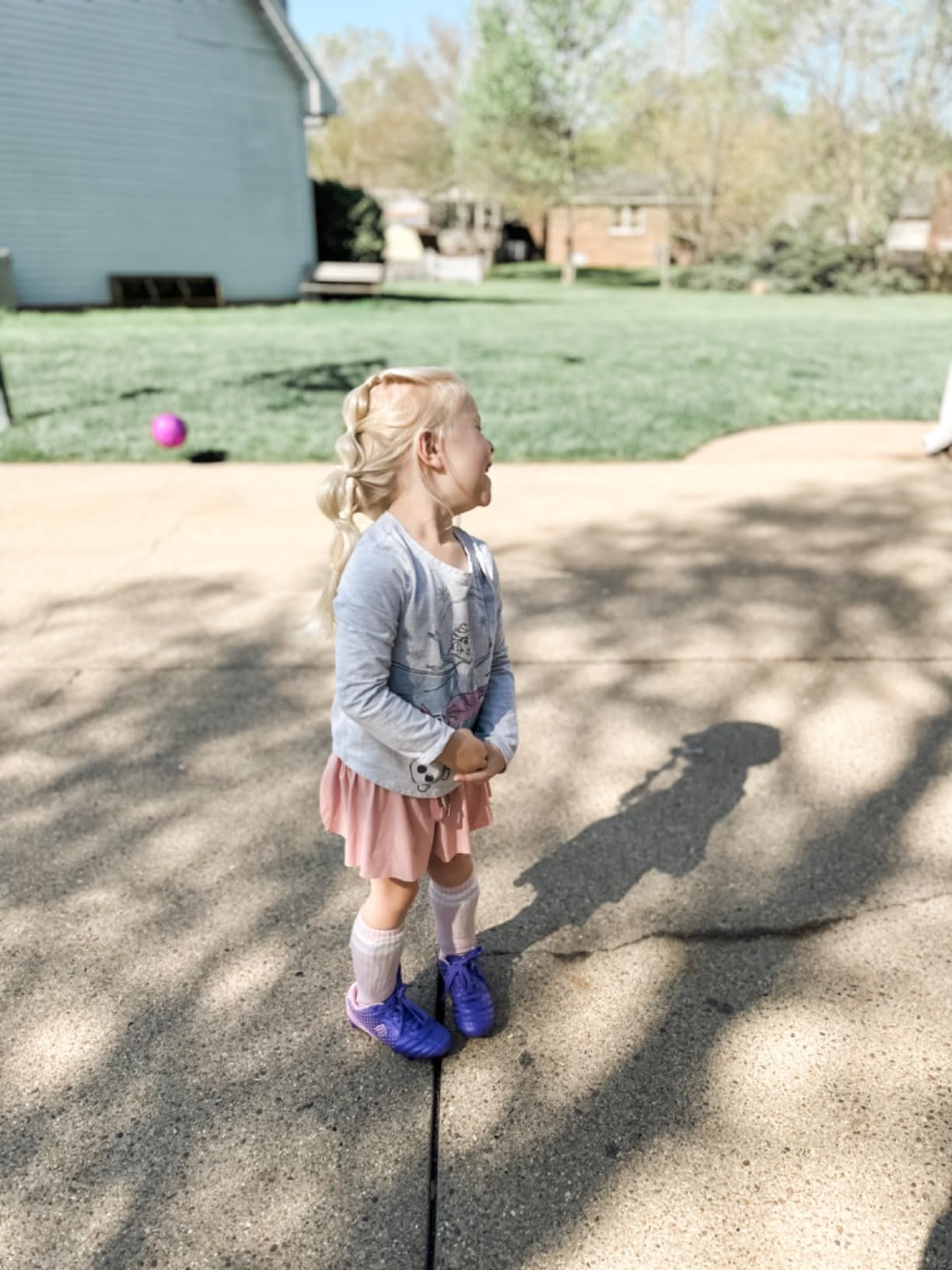
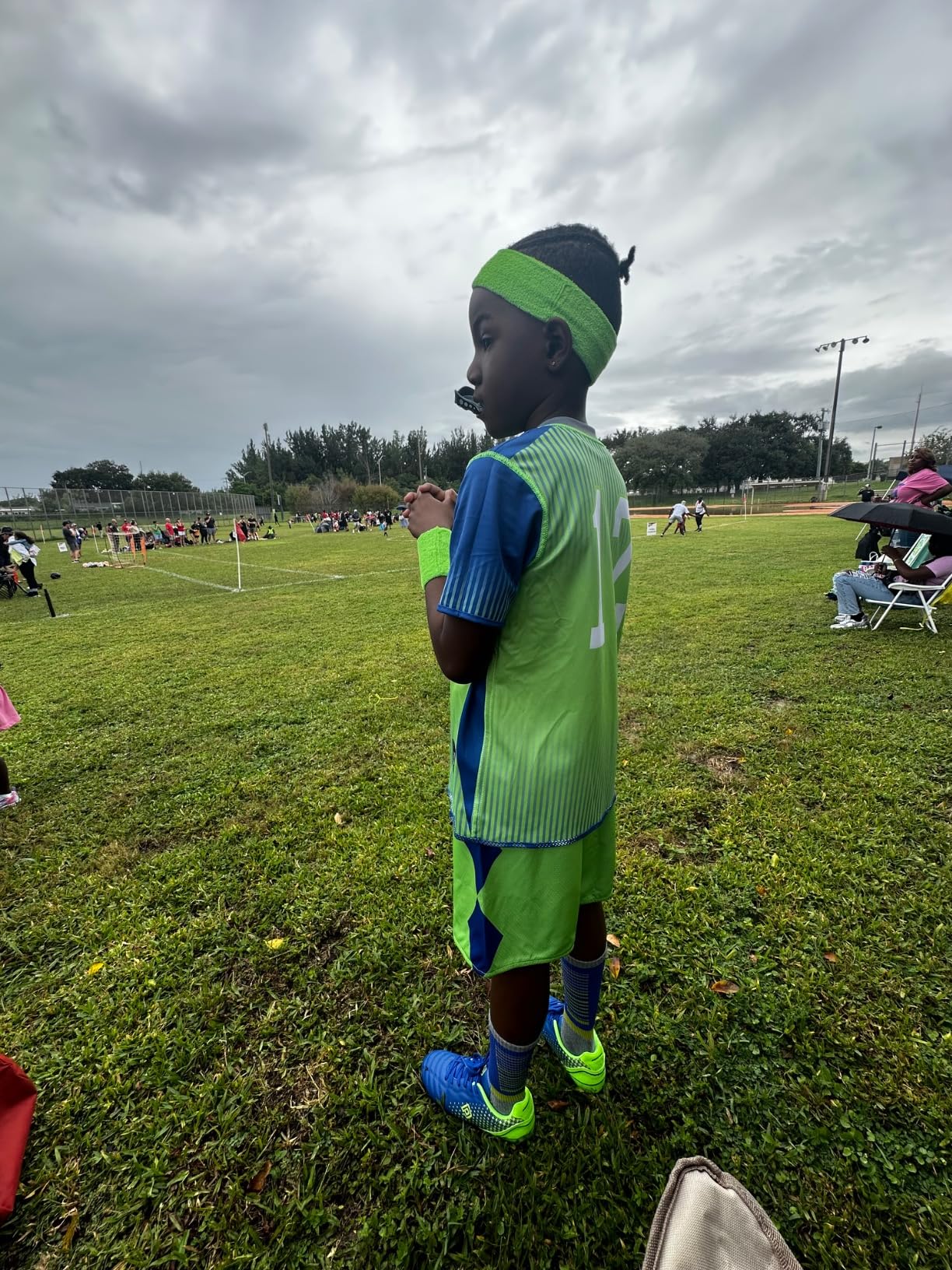
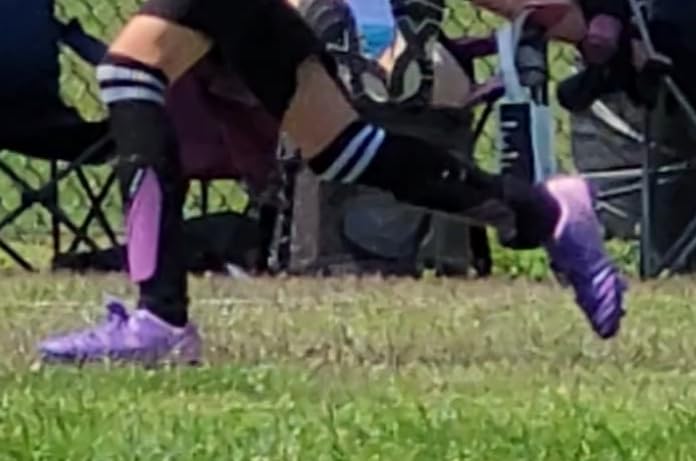
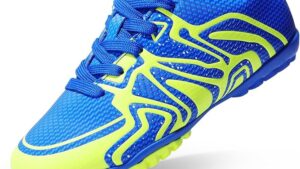
The neon green and black colorway is genuinely easy to spot on a crowded field of 22 kids chasing a ball in every direction. That visibility factor turns out to be more practical than it sounds. The colors held through six weeks of muddy games and regular washing without significant fading — a detail that matters when a season runs three to four months.
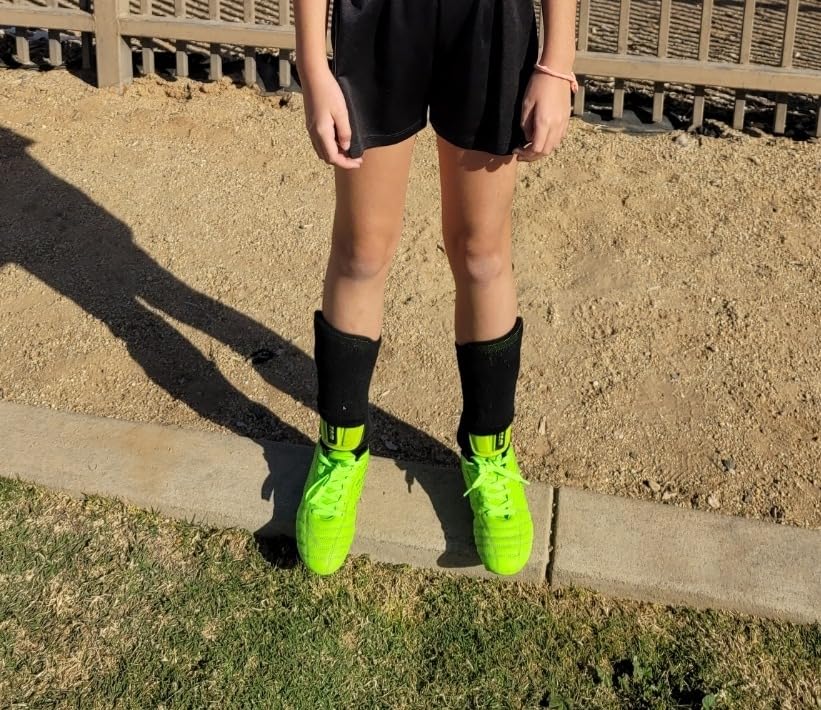
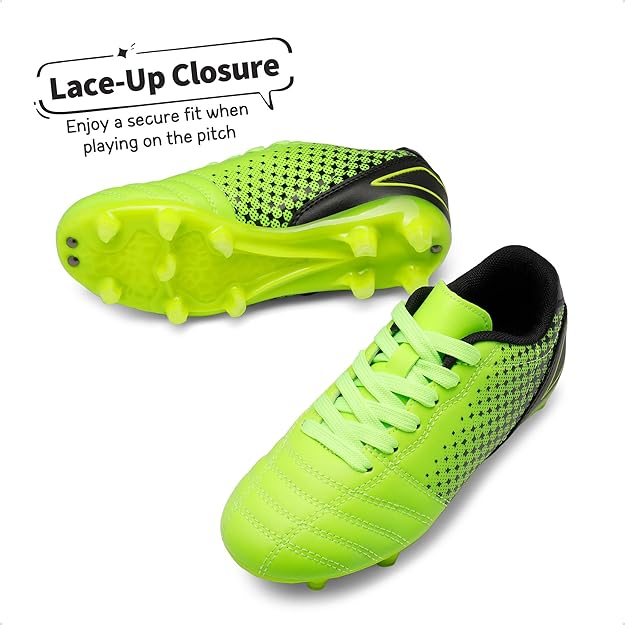
The lacing system is traditional and no-frills — which is honestly what youth cleats need. Nothing to fiddle with, nothing to malfunction. The tongue isn’t gusseted (that’s a feature reserved for higher-end builds), but it stays in a reasonable position throughout play. The padded collar provides decent ankle security without restricting movement.
The Sizing Reality Nobody Leads With
Sizing deserves a dedicated conversation before anything else, because getting this wrong means a return trip before a single practice.
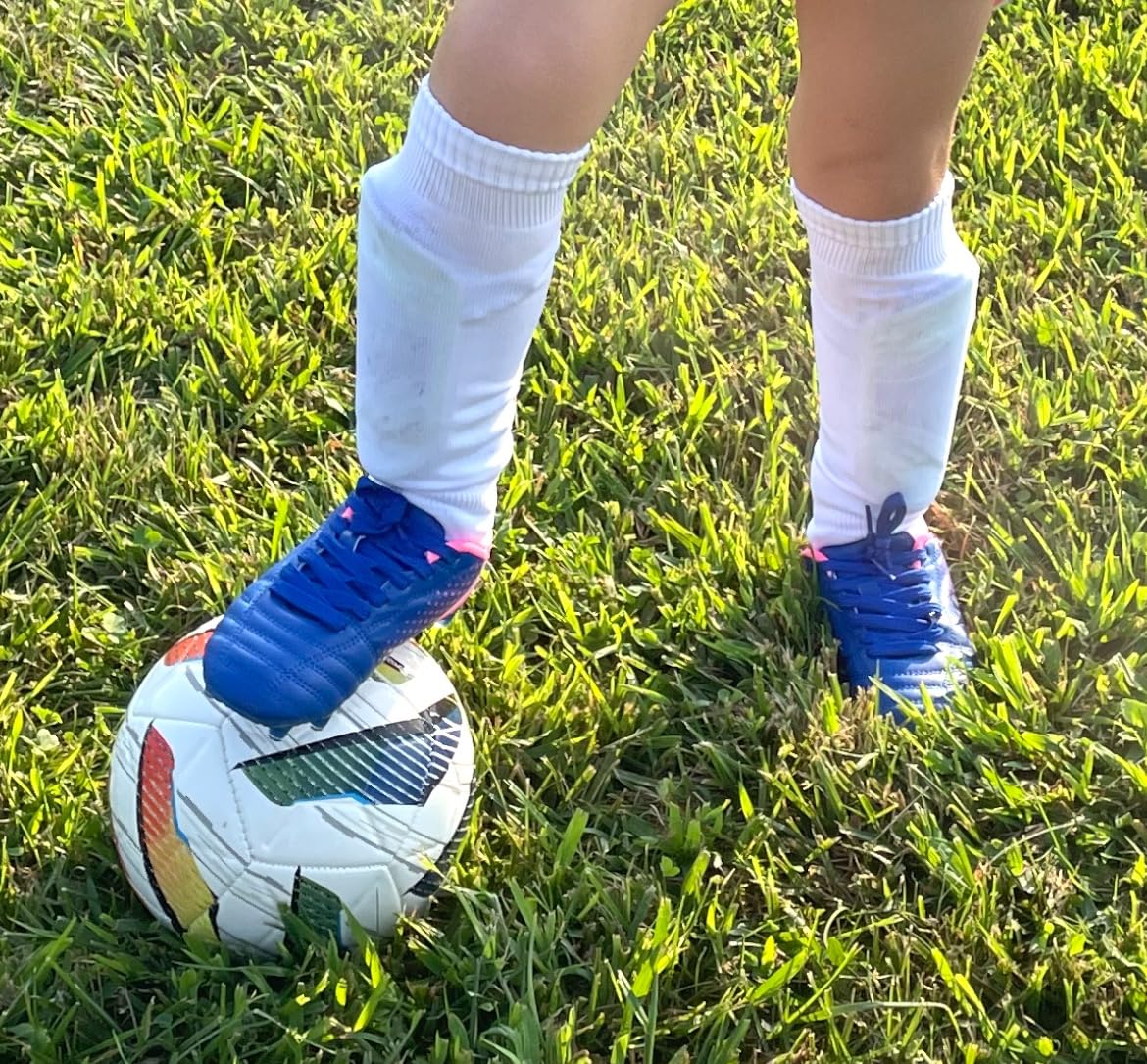
These cleats run notably snug — the internal width profile sits narrower than most comparable youth athletic shoes. Where length tends to align with standard sizing, the width becomes apparent the moment thick soccer socks enter the equation. For kids with average to wide feet, the fit challenge surfaces immediately. The smart move: order at least a half size up from regular sneaker size, and a full size up for wider feet or any growth room.
That said, once the fit is dialed correctly, the lockdown is solid. The lace-up system allows independent tightening along the foot, and the snug internal profile that causes fit trouble for wider feet actually translates to better heel hold and less internal movement for narrower-footed players. The toe box has enough volume for natural toe splay during play — the width issue concentrates more through the midfoot.
For families considering alternatives at a similar price, Brooman Kids Soccer Cleats and Lizrha Kids Soccer Cleats run slightly more generous in width — worth considering for kids who struggle to find a comfortable fit here.
On-Field Performance: Where the TPU Sole Earns Its Keep
The traction story on the DREAM PAIRS Boys Girls Soccer Cleats is better than the price point sets up to expect.
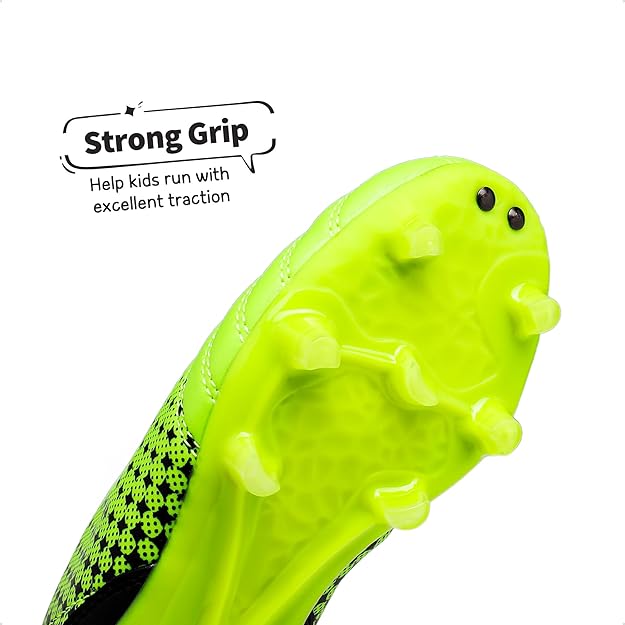
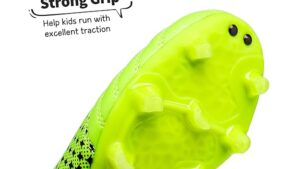
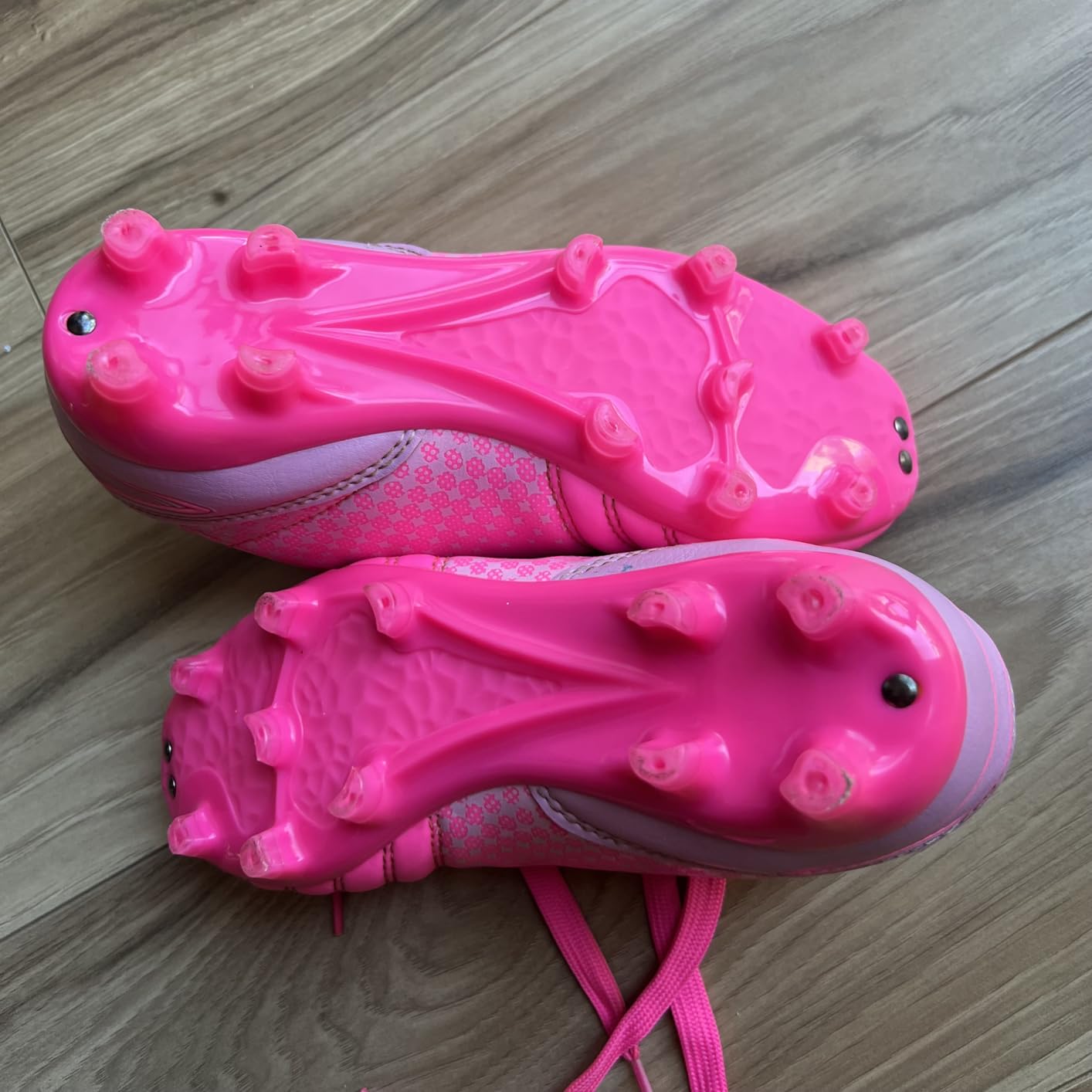
The injection-molded TPU sole with strategically positioned rubber studs handles dry grass, slightly damp morning fields, and artificial turf with consistent grip. The rotational stud configuration — often dismissed as marketing language — does create multi-directional traction that holds during sharp cuts and sprint accelerations. On dry conditions, no slipping, no unexpected releases. On lightly wet grass, grip remained workable. Standing water or genuinely muddy conditions push the limits of what the molded stud pattern can handle, but that’s a limitation shared across this entire price category.
Artificial turf is actually where these cleats perform most confidently. The shorter, more distributed stud pattern suits the even surface of synthetic turf well — no awkward grip-and-release that can stress young ankles, no excessive stick. The TPU material holds up to the abrasive nature of turf use better than softer rubber compounds found on some indoor-only options. After six weeks of regular turf sessions, wear patterns across the sole were minimal and even.
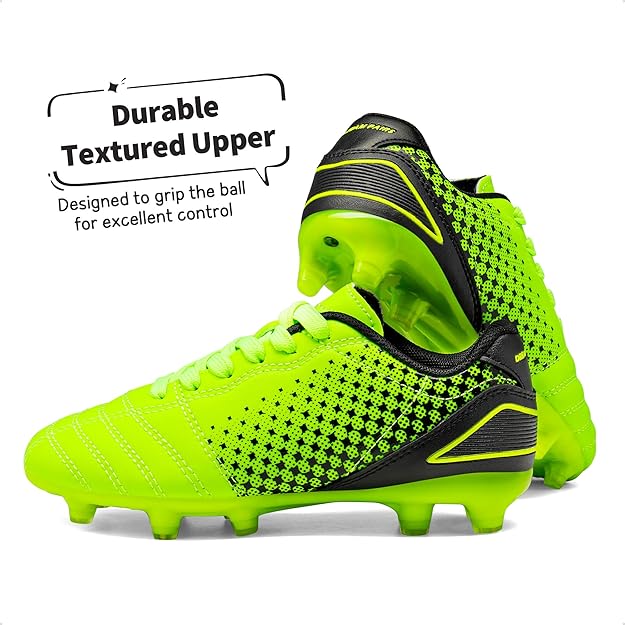
Ball feel is functional for the price point. The synthetic PU upper isn’t as responsive as leather or premium synthetics, but the textured surface creates enough friction to give developing players confidence during close dribbling, first touch, and passing sequences. At 8.2 oz, the lightweight build reduces fatigue through longer games — the kind of detail that matters more as kids move through the 60 to 90-minute range.
Does $40 Actually Cover a Full Season?
For recreational play — two to three sessions per week across a standard youth league season — the durability math works out. The construction handles the demands of youth recreational soccer without coming apart at the seams or showing significant sole degradation within the timeframe most kids use them before sizing out anyway.
The stud configuration held up through multiple weeks of practice and game use with minimal wear. That durability holds for recreational intensity. Daily intensive use, or club-level training schedules that push six or more sessions per week, would expose the construction limits faster.
The cost-per-use calculation favors these cleats. A $40-45 investment spread across a 20-game season works out to roughly $2 per game — and that math improves further when the multi-sport versatility gets factored in. The cleat pattern performs well enough across T-ball, flag football, and general outdoor play that these often pull double and triple duty across a family’s activity calendar.
For families who need functional youth firm ground soccer cleats without paying $80-100 for a pair that gets outgrown in six months, the value proposition holds.
What the Marketing Claims Look Like Under Pressure
“Lightweight and low-profile design provide better ball feel” — The 8.2 oz weight claim is accurate and measurable. Ball feel is adequate for recreational youth players, not exceptional. The low-profile design does reduce bulk around the foot in a way that supports natural movement.
“Largely waterproof synthetic material upper” — Water-resistant is the more accurate description. Light rain and damp surface conditions don’t result in immediate soaked feet. Extended wet conditions or standing water will eventually penetrate. Expecting true waterproofing at this price point sets up disappointment.
“Cushioned insole for added comfort” — The insole delivers basic cushioning appropriate for youth feet through 60-90 minute games. It’s not plush, and it won’t impress anyone coming from premium footwear. For the intended use case, it gets the job done.
“Rotational traction configuration” — The cleat pattern does deliver multi-directional grip. The stud placement works. The marketing framing oversells it, but the underlying performance backs up the core claim on most surfaces.
The Ankle Support Gap Worth Knowing About
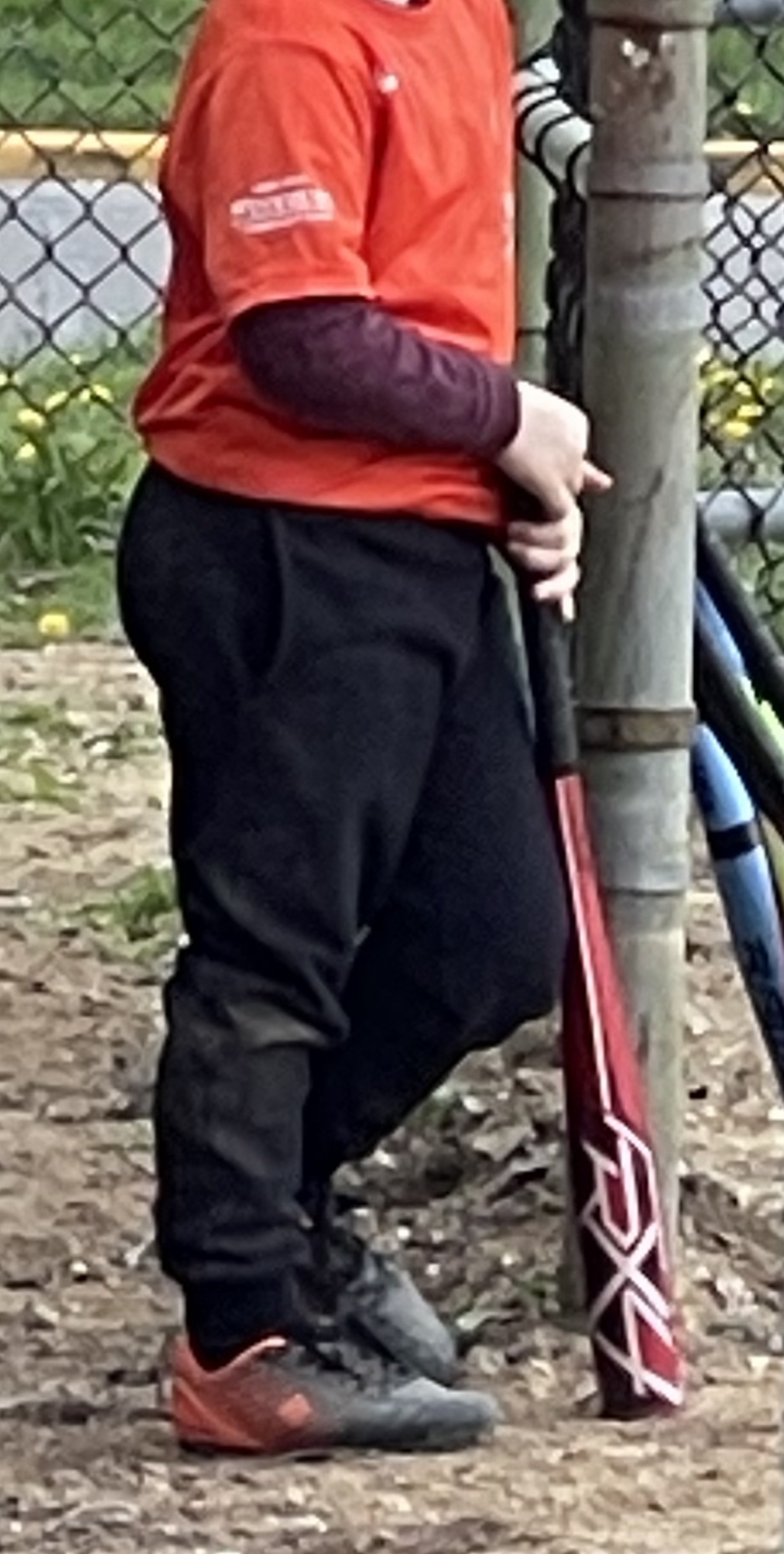
These are low-cut cleats — mobility-first design, minimal ankle restriction. For most recreational youth soccer players, that’s the right tradeoff. The sport requires lateral movement and quick changes of direction, and low-cut construction doesn’t get in the way of that.
For kids with any history of ankle instability or previous sprains, this is a legitimate consideration. The minimal ankle support is a design choice, not a flaw per se, but it’s worth weighing against the individual player’s needs. Mid-cut options with additional ankle protection exist at comparable price points from brands like Nike and Adidas if this is a priority.
The DREAM PAIRS Boys Girls Soccer Cleats aren’t trying to solve ankle support — they’re optimized for the movement demands of recreational soccer, and within that scope, they perform as intended.
How These Stack Up Against the Budget Field
At $40-45, the DREAM PAIRS Boys Girls Soccer Cleats sit in a contested space alongside options like Bomkinta Kids Soccer Cleats and Mifawa Kids Soccer Cleats. What separates the DREAM PAIRS entry is the brand’s broader sizing range (covering little kid through big kid sizes), the colorway variety that resonates with younger players who care about how their gear looks, and a traction profile that performs consistently across natural grass and turf.
Against $80-120 options from Nike Mercurial or Adidas Predator youth lines, the gap is real — premium materials, better flex profiles, superior ankle systems, more sophisticated stud patterns. For club-level players training daily, that investment is justified. For recreational players going through cleats every season or two, the performance gap doesn’t match the price gap.
The DREAM PAIRS Kids Indoor Turf Soccer Cleats offer a parallel option worth considering for players who split time between outdoor and indoor facilities — the rubber sole construction on that model reduces joint stress on harder indoor surfaces in ways the firm-ground TPU outsole here isn’t designed for.
Personal Rating Breakdown
Comfort: 7.2/10 — Adequate cushioning carries through typical game lengths without complaints. Not premium, but functional for recreational demands.
Performance: 7.5/10 — Consistent multi-surface traction and a lightweight build that doesn’t drag on foot speed. Ball feel is appropriate for the developmental stage these cleats are built for.
Durability: 6.8/10 — Holds up for recreational intensity across a full season. Shows limitations under daily intensive use.
Value: 8.4/10 — The strongest number in the breakdown, and the one that matters most for the intended buyer.
Design: 7.0/10 — Clean, functional build with colorways that kids actually like.
Overall: 7.4/10
My Final Take
The DREAM PAIRS Boys Girls Soccer Cleats deliver on exactly what youth recreational soccer actually needs: a cleat that grips reliably, keeps feet comfortable through a full game, survives a season of regular use, and doesn’t require a second mortgage when outgrown in six months.
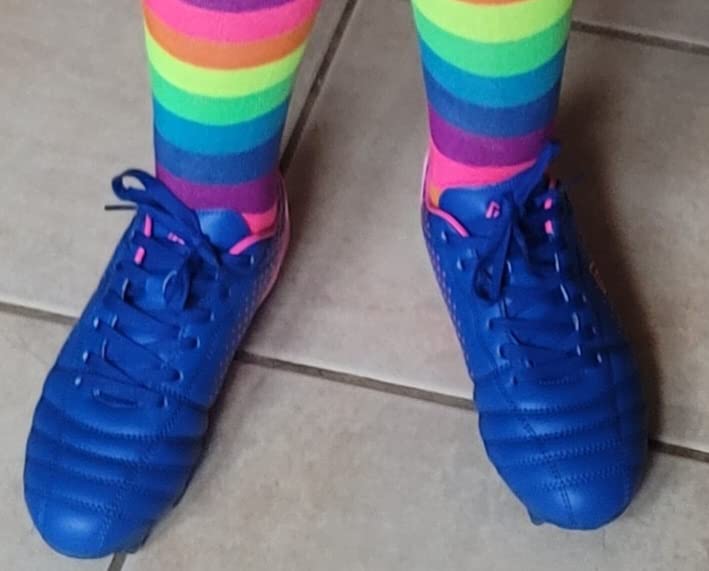
The sizing quirks are real — ordering up is genuinely necessary for most kids, especially those with wider feet or thick soccer socks. Quality control inconsistencies exist across batches. These aren’t built for elite-level demands.
But for the family with a kid in recreational youth soccer playing once or twice a week, these cleats hit the brief. They don’t hold young players back, they hold up for the season, and at $2 per game they make straightforward financial sense. The verdict is solid recommendation with eyes open on sizing.
Perfect for: Recreational youth soccer players ages 5–14, budget-conscious families, multi-sport athletes, first-time players.
Consider alternatives if: Your child plays competitive club soccer daily, ankle support is a priority due to injury history, the child has very narrow feet, or truly waterproof footwear is required.
Frequently Asked Questions
Are these suitable for club soccer or just recreational play? The construction and materials are calibrated for recreational use. Daily club-level training will expose the build limits faster — investing in higher-end cleats with reinforced materials makes more sense at that intensity.
How do they perform on artificial turf vs natural grass? Artificial turf is actually where performance is strongest. The distributed stud pattern and TPU sole suit synthetic surfaces well. Natural grass performance is solid in dry and lightly wet conditions; genuinely muddy fields reveal the limits of the molded stud pattern.
Do these work for indoor soccer? No — the molded outdoor cleats aren’t appropriate for indoor courts. Flat-soled or minimal-tread indoor soccer shoes are the right tool for indoor facilities.
Should sizing go up for soccer socks? Yes. Ordering a half size up from regular sneaker size is the baseline recommendation. Kids with wider feet or any preference for growing room should go a full size up.
Are they good for wide feet? The toe box has reasonable volume, but the midfoot runs narrow. Kids with wider feet consistently find them constrictive — sizing up and accepting a slightly longer fit is the practical workaround.
How long do they typically last? For recreational use at two to three sessions per week, expect one to two seasons — or until outgrown, whichever comes first. Daily intensive training shortens that lifespan.
Are they really waterproof? Water-resistant is accurate. Light rain and damp surfaces are handled well. Standing water and extended wet conditions will eventually penetrate.
Can they be used for other sports? Yes — the cleat pattern works across T-ball, flag football, and general outdoor play. The multi-sport versatility adds meaningful value for active families with kids in multiple activities.
How should they be cleaned? Soap and water. The synthetic upper cleans easily and the colors hold through regular washing without significant fading.
Review Scoring Summary
| Category | Score | Notes |
|---|---|---|
| Comfort | 7.2/10 | Good for youth feet, adequate cushioning for 90-minute games |
| Performance | 7.5/10 | Solid multi-surface traction, lightweight design, adequate ball feel |
| Durability | 6.8/10 | Appropriate for recreational use, 1–2 season lifespan |
| Value | 8.4/10 | Excellent value at $40–45 for functional youth cleats |
| Design | 7.0/10 | Clean, functional design with eye-catching colorways |
| OVERALL SCORE | 7.4/10 | Recommended for recreational youth soccer |
Be the first to review “DREAM PAIRS Boys Girls Outdoor Sport Football Shoes Soccer Cleats for Little/Big Kid”
Related products
Football Shoes
Football Shoes
Football Shoes
Football Shoes
Football Shoes
Football Shoes
Football Shoes
Reviews
There are no reviews yet.