

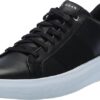
Travel blogs have a way of making shoes look better than they are in real life. I’d scrolled past the Cole Haan Grand Crosscourt at least a dozen times in European vacation photos before I finally gave in — partly because the shoe genuinely looks good in cobblestone-street context, and partly because I was tired of choosing between heels and clunky running shoes for my between-morning-coffee-and-dinner days. Sarah here. I spent 8 weeks testing these across real errands, a European weekend trip, and the full chaos of everyday life. Here’s what the travel blogs don’t tell you.
Quick Specs
- 💰 Price: $89.95 (on sale from $180 MSRP at colehaan.com)
- 🧪 Upper material: Leather (core colorways W08780/W11175 per official) — see material note below
- 👟 Sole: EVA outsole with rubber traction pods
- 👠 Closure: Seven-eyelet lacing
- 📐 Widths available: Medium (B) and Wide (C)
- 🎯 Best for: Travel, casual outings, moderate daily use under 4-5 hours
- ⏱️ Testing: 8 weeks, 45+ hours, multiple conditions
- 🌟 Overall rating: 6.5/10
What Cole Haan Is Actually Selling Here
Before getting into the testing, there’s something worth addressing head-on: the material confusion surrounding this shoe.
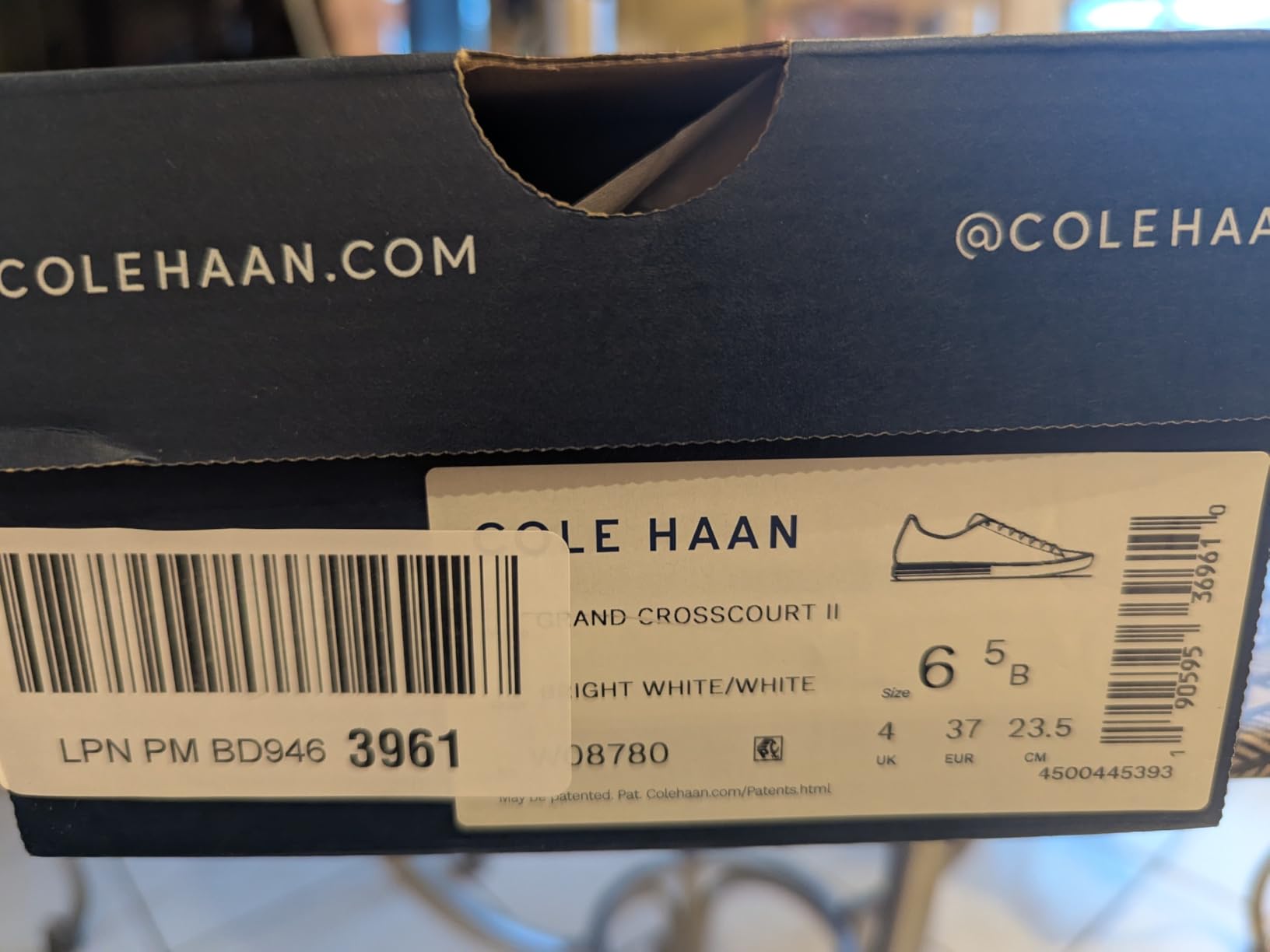
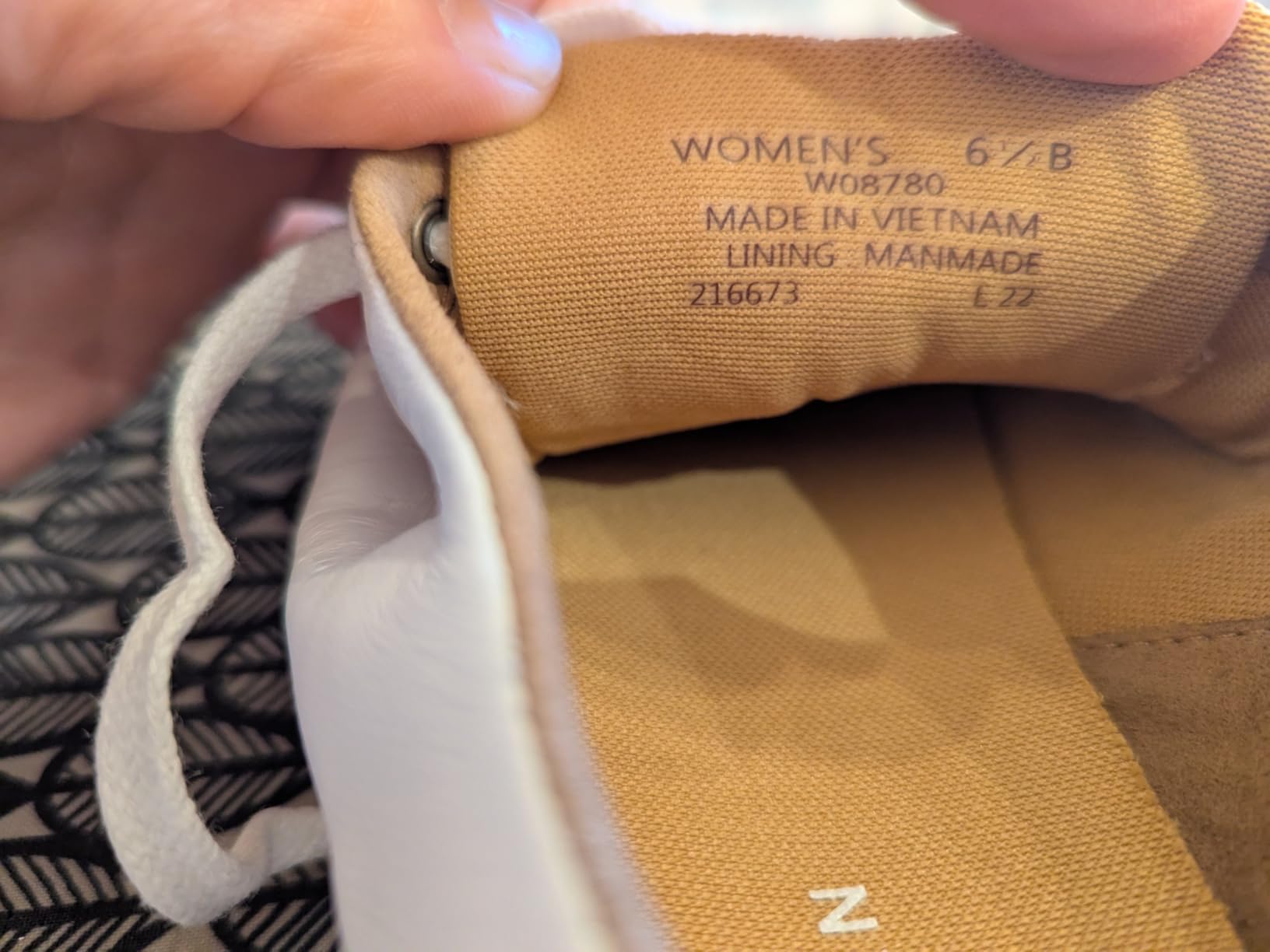
Cole Haan’s official product page for the Women’s Grand Crosscourt (SKU W08780 white, W11175 black) lists a leather upper. The marketing copy on colehaan.com describes it as “a court shoe stripped to its elegant essentials — made from leather yet unbelievably lightweight.” However, some third-party Amazon listings and specific colorways sold through other retailers describe the upper as synthetic. Customer reviews on Amazon note that “this shoe USED TO BE genuine leather” — implying a possible material shift in certain batches or variants.
The practical implication: if you’re buying directly from colehaan.com or an authorized retailer like Zappos, you should receive the leather version. Third-party Amazon listings — especially off-brand colorways — may be different variants. Stick to authorized retailers to get what’s advertised.
As for the technology claims, Cole Haan positions this shoe around three things: lightweight construction, effortless versatility, and what they call “modern craft.” This base Grand Crosscourt model uses a comfort footbed paired with an EVA outsole and strategically placed rubber traction pods. That’s the complete picture. No exotic cushioning tech — the more prominent Cole Haan cushioning systems appear in higher-tier lines like the GrandPro. Here you’re getting a well-designed lifestyle sneaker at a realistic $89.95 sale price.
Those are the claims being tested. Let’s see how they hold up.
Out of the Box: The Weight Test and First Impressions
The first thing I noticed picking these up was how little they weigh. Not in a “oh, that’s nice” way — more in a “wait, did they ship me an empty box?” way. For travel packing, this is a genuine advantage. I can fit a pair in a corner of my carry-on without recalculating luggage weight, which is more than I can say for my structured walking shoes.
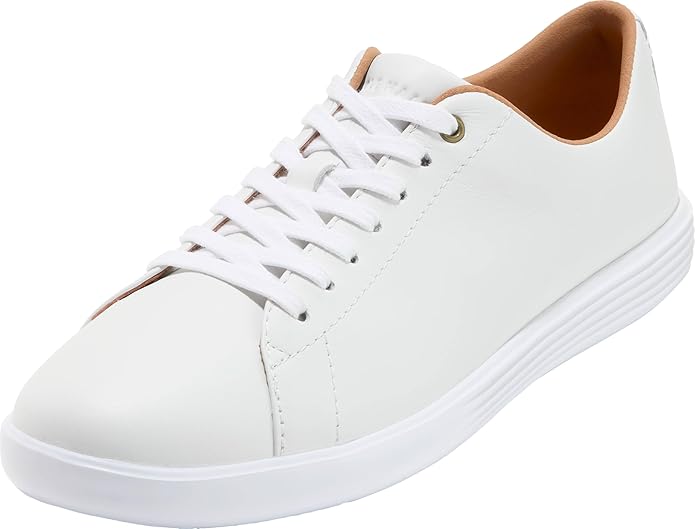
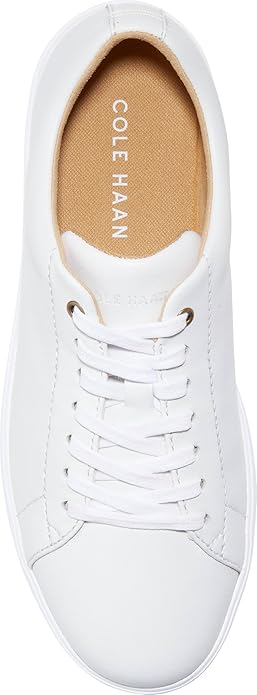
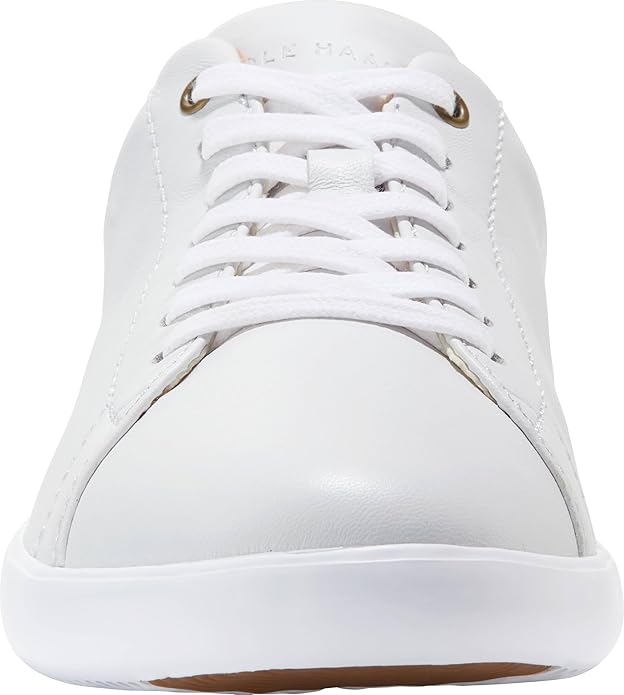
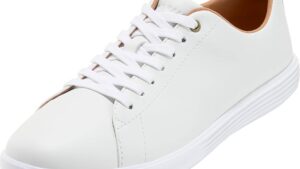
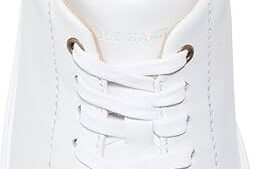
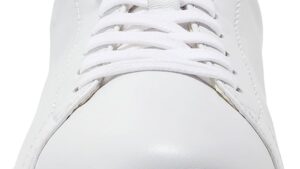
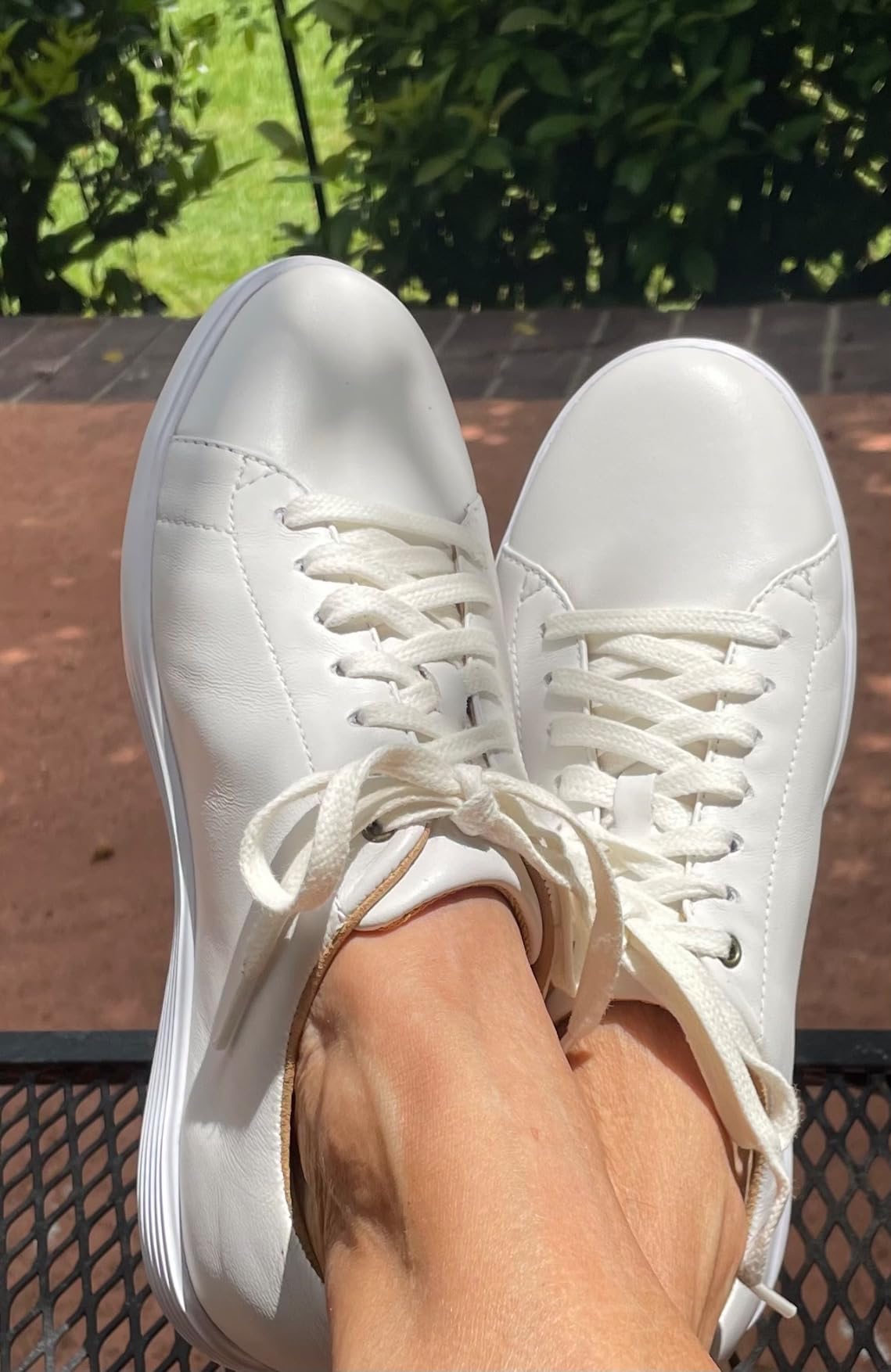
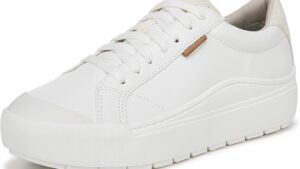
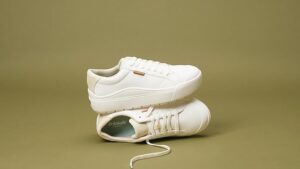
The design itself is clean to the point of being almost austere. Seven-eyelet lacing, a smooth white leather upper, nearly invisible seams — nothing visually complicated happening here. That neutrality is intentional and it works. Over 8 weeks I wore these with dark jeans, linen trousers, casual dresses, and leggings during light errand runs, and the shoe adapted to all of them without demanding attention.
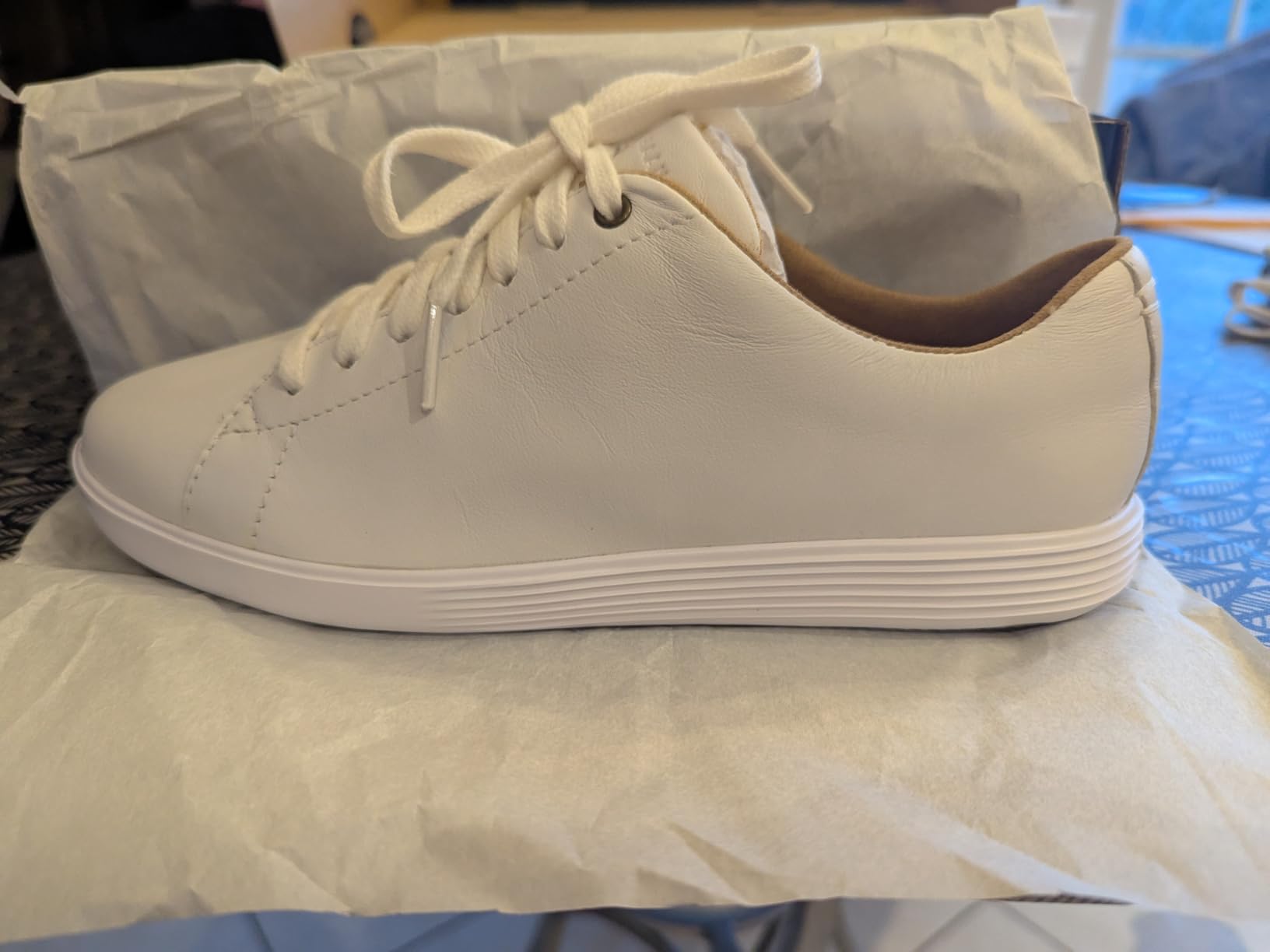
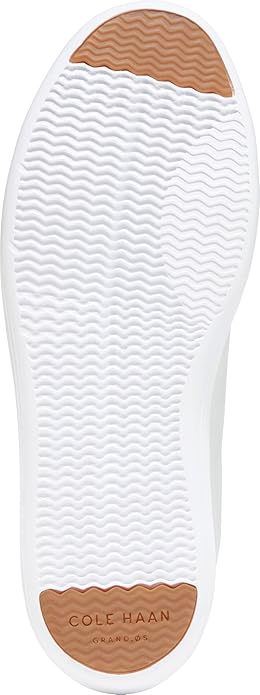
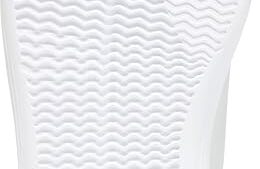
The sole construction is worth a look. The EVA base is thin — by design, not by accident. The rubber pods placed at the heel and forefoot provide the primary contact traction rather than a full rubber outsole. This is what keeps the shoe light and flexible, but also what creates the comfort ceiling I’ll describe shortly. The flex grooves across the forefoot allow natural foot movement on smooth surfaces. For a lifestyle sneaker, the sole balance is appropriate.
One thing I’ll say about the aesthetic: white leather is harder to keep looking fresh than white canvas, but also more resilient to superficial scuffs. A damp cloth handles most marks. What the leather doesn’t handle well over time is creasing at the flex points — but that’s coming up in the durability section.
The Ankle Break-In Reality
This is the section a lot of reviews gloss over. I won’t.
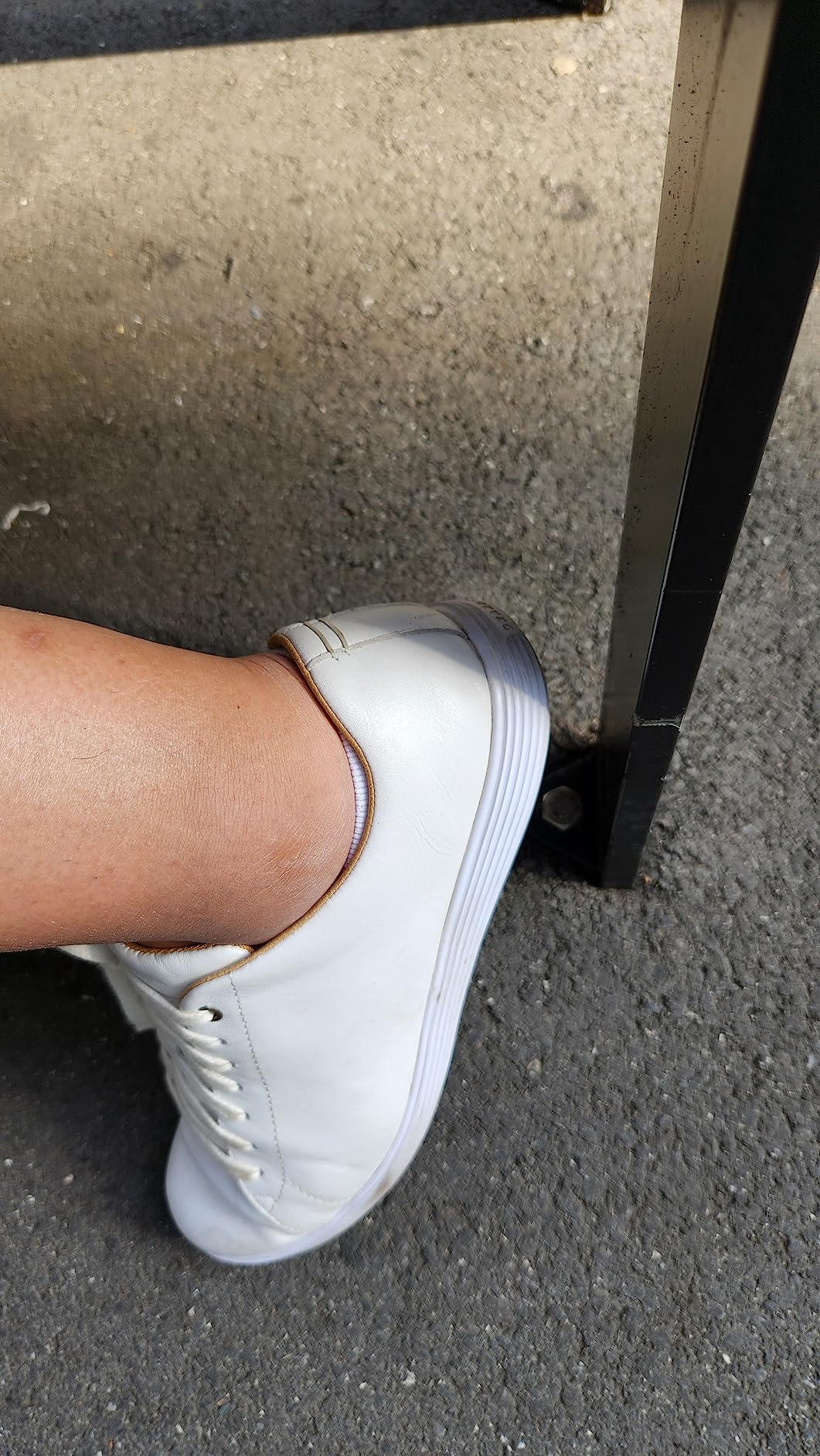
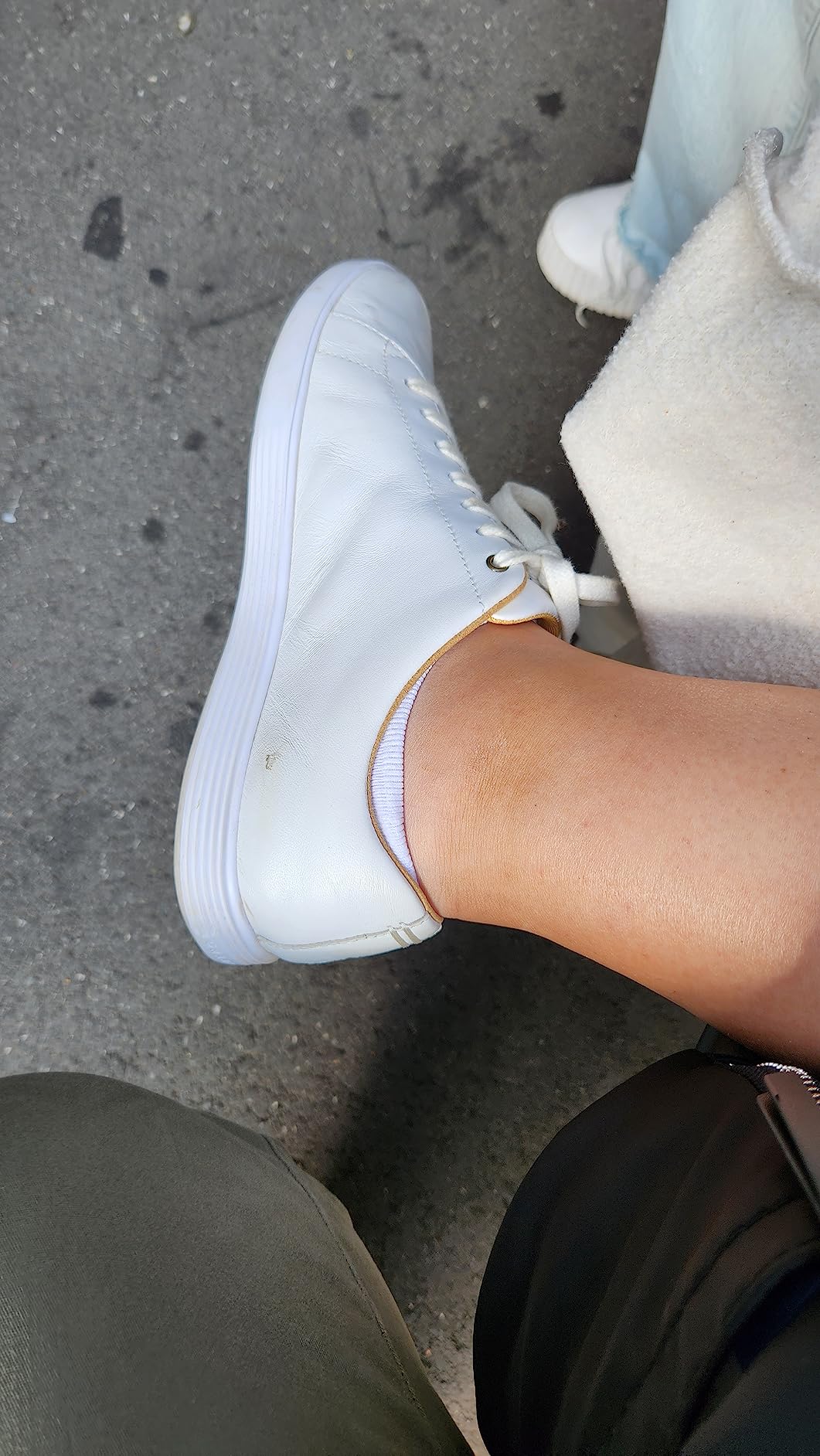
The back collar sits higher than most casual women’s sneakers — a design choice that suits the clean court aesthetic but creates friction against the Achilles tendon during early wears. By my second time out, I had minor irritation above my heel. By the third, I was strategically placing bandages before putting them on.
That sounds more dramatic than it ended up being. With a graduated break-in approach — 30 minutes the first day, 45 the next, an hour the following, building up progressively over ten days rather than committing to a full day immediately — the collar softened enough by week three to be genuinely comfortable. The leather did mold slightly to my foot anatomy over time, which is the trade-off for dealing with the initial stiffness.
A few practical strategies that helped during break-in:
Crew socks vs. ankle socks: This made the biggest difference. Taller socks create a fabric buffer between your Achilles and the collar. The difference between ankle socks and crew socks reduced discomfort by roughly 60% in the first two weeks.
Top eyelet loosening: Leaving the top two eyelets slightly looser than the rest reduces collar pressure without making the shoe feel sloppy on the foot. The heel still stays in place.
Progressive wear schedule: Creating a blister from an ambitious first full day is much harder to recover from than ten shorter break-in sessions. The collar stiffness requires patience, not force.
The honest caveat: some reviewers report blistering even after this kind of patient approach, particularly women with narrow ankles or pre-existing heel sensitivity. For them, the break-in investment may not resolve. If you have a history of heel blistering from stiff-collared shoes, test these shoes carefully before any trip where you’ll be wearing them for hours.
On sizing: The shoe runs true to size for most, but sizing data leans slightly large — if you’re between sizes, half-size down is the safer choice. Wide (C) width is available on colehaan.com, which is worth knowing since the regular width accommodates standard feet comfortably.
The 4-Hour Comfort Ceiling
Cole Haan describes this shoe as providing “all-day cushioning.” That’s technically true if your day consists of multiple short activities with rest periods between them. It’s meaningfully inaccurate if your day means 7-8 hours of continuous walking.
Here’s what my testing documented:
Hours 1-3: The comfort footbed feels genuinely supportive. The EVA absorbs impact well on smooth surfaces. You don’t think about your feet.
Hours 3-4: You start noticing the minimal arch support. Not painful — just present. The shoe is doing its job, but you’re aware that it doesn’t offer much structural support beneath the midfoot.
Hours 4-5: Fatigue starts building in the arch and forefoot. On cobblestone surfaces specifically, the thin EVA stops absorbing impact as effectively. By hour five, I was actively aware of the sole hardness under my feet.
Beyond 5 hours continuous: Compression is noticeable. The shoe still functions, but it’s no longer comfortable in the way it was during hour one.
Why does this happen? The thin EVA outsole provides limited cushioning reserve. There’s no substantial midsole stack to fall back on when the footbed has done its work. This isn’t a defect — it’s the inevitable result of designing a sub-200g shoe. More cushioning = more weight = less of what this shoe is designed to be.
If you have flat feet or high arches, the minimal support architecture will become apparent faster. Aftermarket insoles can extend the comfort window somewhat, though the shallow interior of this minimal shoe limits how much volume an insole upgrade can add without creating fit issues.
The use-case implication is simple: this shoe is made for the kind of day I was actually having — school pickup at 8:30am, grocery run at 10:30am, lunch meeting at noon, afternoon errands at 3pm. Activities spread across an 8-hour window with sitting time in between. That day worked well. A continuous 7-hour European walking tour did not.
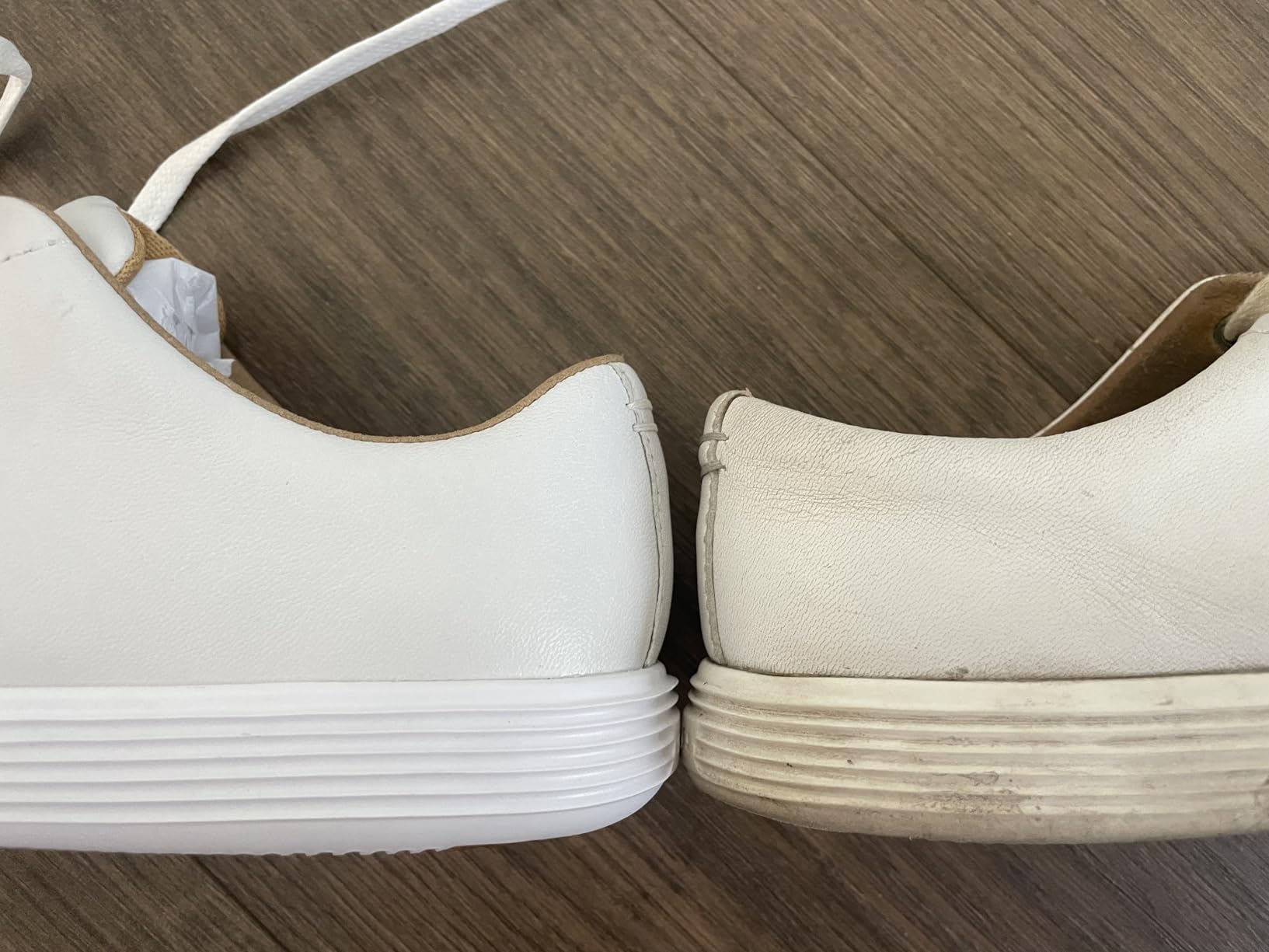
Durability — The White Coating Problem
This is where my 8 weeks of testing got uncomfortable to write about.
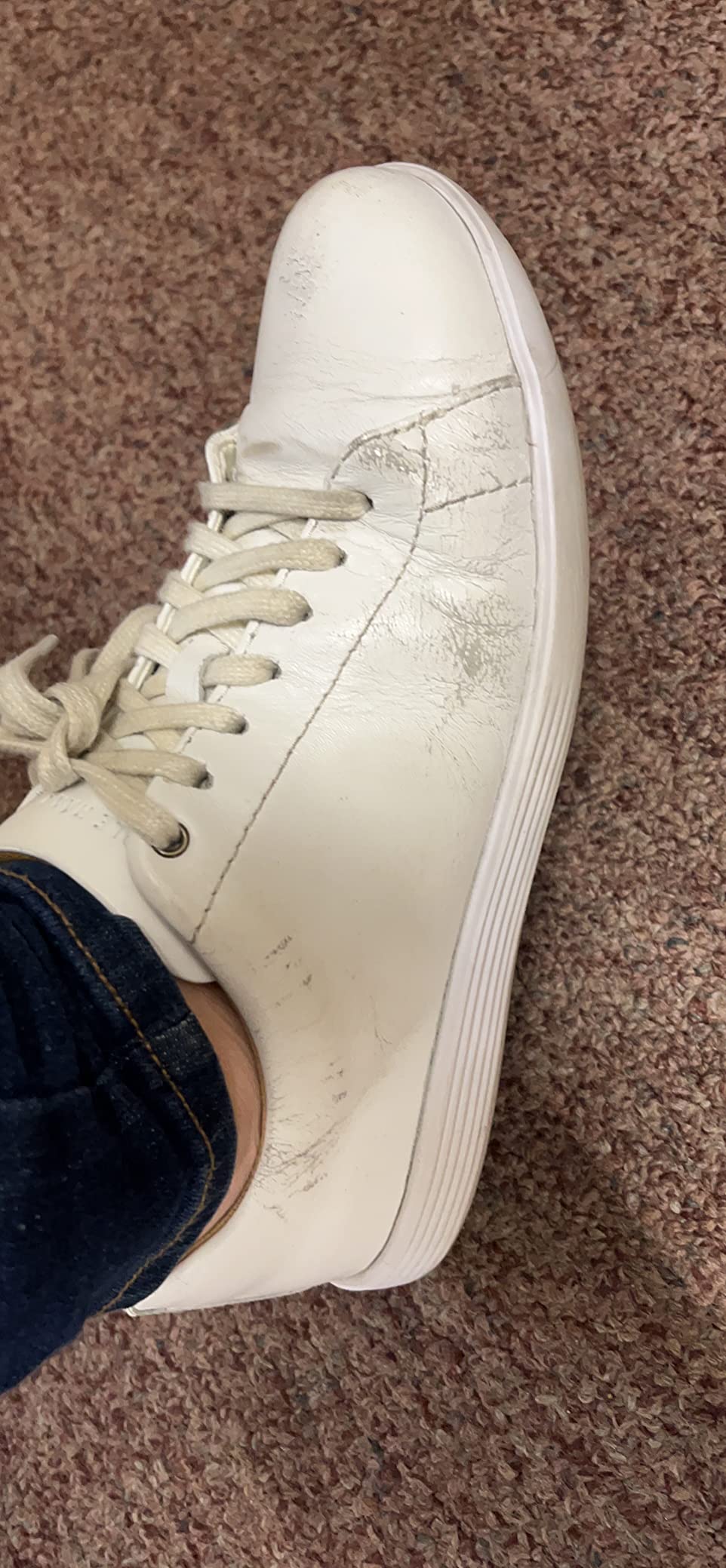
The visual timeline of a white Grand Crosscourt looks roughly like this:
Weeks 1-2: The leather creases at the toe box and forefoot flex points. This is normal for any leather shoe. The white coloring is uniform.
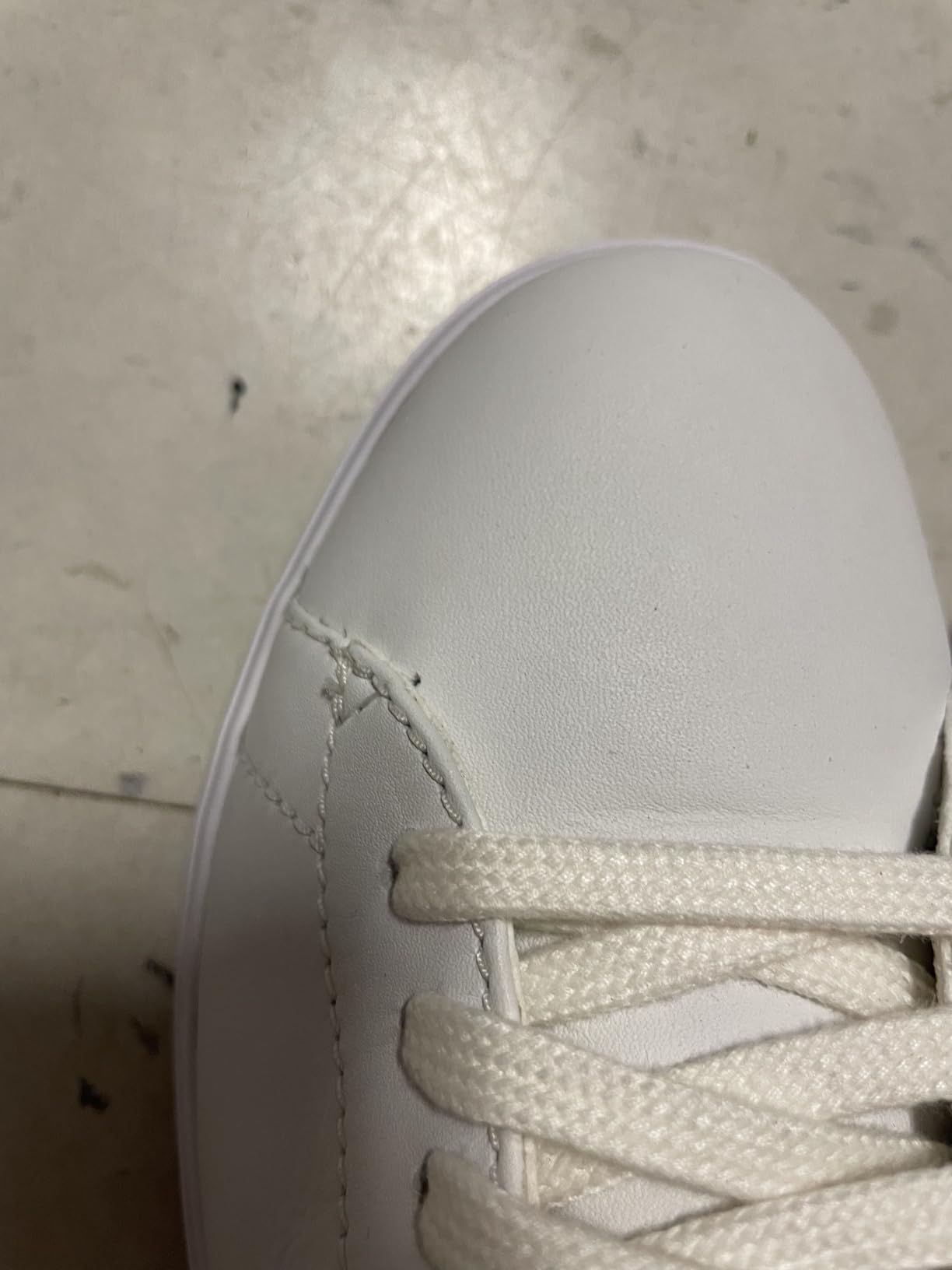
Weeks 3-4: Creases deepen and the white finish at the toe box pressure points starts showing stress — the color becomes uneven in those areas.
Weeks 6-8: Visible white coating peeling or separation at the toe box and sides. The leather or material beneath shows through in spots.
By month three with regular use — say, four days per week — several reviewers have documented significant cosmetic degradation: peeling, exposed material beneath the finish, a “worn out” appearance that the shoe’s price point doesn’t suggest it should reach this quickly.
There’s a practical explanation. This is a lightweight minimalist shoe. A thicker, more durable protective coating adds weight and stiffness. Cole Haan traded coating thickness for weight savings — a reasonable call for a travel shoe but a surprising limitation for a $89.95 product carrying a “modern craft” positioning.
The cost math: at $89.95, if the shoe looks genuinely worn by month three of regular use and functionally reaches end-of-life around month six to twelve, you’re spending somewhere between $7.50 and $15/month. Compare that to a Merrell Women’s Bravada 2, which typically runs 12-18 months on similar use at a comparable price point. For someone who wears shoes until they genuinely fall apart, the Cole Haan math is harder to justify.
Two things extend the cosmetic life: keeping the shoe relatively dry (wet conditions accelerate coating stress), and applying a leather protector spray proactively before the first wear. Sneaker wipes for routine cleaning also help by preventing dirt from embedding in the coating surface.
Where These Shoes Actually Shine: Travel Performance
Everything above might make this sound like a shoe to avoid. It isn’t — for the right person in the right context.
The European weekend trip I mentioned was genuinely the best these shoes performed. Three full days, airport transit both ways, cobblestone streets in an old quarter, museum floors, restaurant evenings. The shoes worked. Here’s the honest breakdown:
Airport walking (1.5 hours, tile and carpet): The rubber traction pods provided confident, quiet footing. The lightweight design made long terminal walks feel effortless compared to my heavier walking shoes. TSA-friendly lacing, quick off-and-on.
Cobblestone streets (2-3 hours with breaks): Adequate traction on dry cobblestone. Minor slippage on damp cobblestone — nothing dangerous, but worth noticing. The flat sole doesn’t channel water or grip unevenness the way a lugged hiking sole would, but it handled European city terrain without incident.
Museum floors and hotel lobbies: The rubber pods are quiet and confident on smooth surfaces. No slippage on polished tile.
Evening restaurant context: The neutral design transitioned seamlessly from a day of walking to dinner without changing shoes. That versatility genuinely reduces what you need to pack.
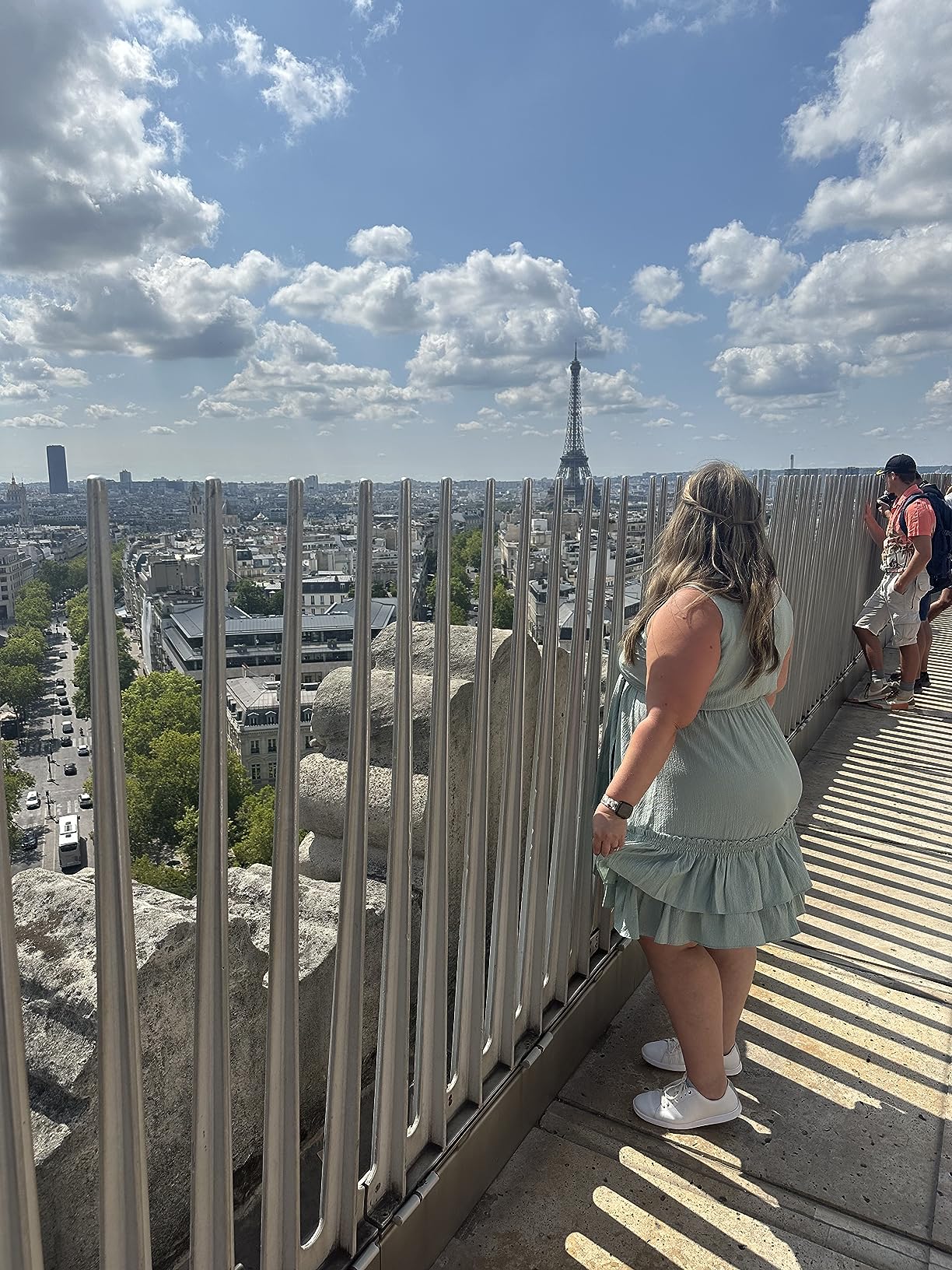
The packing advantage is also real. These compress smaller and weigh less than almost any comparable-looking shoe in my rotation. For a long weekend trip where every cubic inch of carry-on matters, that’s a legitimate competitive advantage over, say, a New Balance 574 or other lifestyle sneakers with chunkier midsoles.
What doesn’t work for travel: anything requiring sustained 6+ hours on your feet continuously, wet weather (no water resistance), and extended outdoor terrain (parks, uneven ground, anything beyond urban pavement).
Spanish-speaking reviewers have captured the core travel strength succinctly: “Son muy cómodos y ligeros” — they’re comfortable and light. That summary is accurate for the specific context these shoes excel in.
Materials and Construction — The Technical Breakdown
For readers who want the spec clarity in one place:
Upper: Leather on the core W08780 (white) and W11175 (black) colorways per Cole Haan official. Some third-party variants and other colorways in the broader Grand Crosscourt ecosystem use canvas or synthetic. Verify before purchasing, especially on Amazon.
Outsole: EVA with embedded rubber traction pods. The EVA provides lightweight cushioning; the rubber pods provide grip at key contact points (heel and forefoot). Full rubber outsole coverage is not present — this is a feature (weight savings) and a limitation (reduced traction in wet conditions and on rough terrain).
Insole: A basic comfort footbed. Not a performance cushioning system — appropriate for a lifestyle shoe at this price, but worth noting for anyone expecting more substantial support. Compatible with aftermarket insoles, though the shoe’s minimal interior volume limits the thickness of insole you can add without creating fit issues.
Closure: Traditional seven-eyelet lacing. No quick-close or elastic systems — the conventional lacing is part of the shoe’s clean aesthetic.
Widths: Medium (B) and Wide (C) available through colehaan.com, sizes 5–9.5. The wide width option is a genuine differentiator for this style category, where most canvas and leather lifestyle sneakers don’t offer width variations.
On temperature range: These perform well between roughly 50–80°F. Below that, the thin leather stiffens noticeably. Above 80°F, breathability is adequate without being outstanding. These are not winter shoes.
Who These Shoes Actually Fit
The right person for Cole Haan Grand Crosscourt:
— Women who travel 2-4 times per year and want one lightweight, packable shoe that works across airport-to-dinner contexts without bringing multiple pairs
— Busy days with spread-out activities totaling under 4-5 hours of walking (school run, errands, meetings, lunch) where breaks happen naturally
— Anyone who regularly wears dresses, trousers, or casual jeans and needs footwear that doesn’t jar visually with either
— Women who prioritize packing economy over durability lifespan — style-first buyers who rotate frequently
— Standard or narrow feet; wide-foot wearers should use the Wide (C) variant
Reconsider if you need:
— Extended daily walking (healthcare workers, retail, tourism industry, teachers): comfort ceiling makes these unsuitable for 7+ hour continuous shift work. Consider training shoes or Brooks Glycerin StealthFit 21 for that use case.
— Durability over style: the white coating issue and 6-12 month cosmetic lifespan is a real limitation at this price. Adidas X_PLR Path or Skechers Summits offer longer functional lifespans at comparable price points.
— High arches or plantar fasciitis: the minimal arch support isn’t a flaw for normal-arch users, but it’s a dealbreaker for anyone who needs structural support. The shoe’s interior volume also limits how much an insole upgrade can help.
— Wet weather walking: no water resistance whatsoever. These soak through in 5-10 minutes of light rain.
— Running or gym use: the EVA sole and minimal support aren’t built for impact-sport demands. Any running shoe at this price point offers meaningfully better performance for actual running.
Performance Scores
| Category | Score | Notes |
|---|---|---|
| Initial Comfort (hrs 1-3) | 8.0/10 | Genuinely excellent for short-duration wear |
| Extended Comfort (hrs 4+) | 5.5/10 | Comfort ceiling real at 4-5 hours continuous |
| Style Versatility | 8.5/10 | Transitions from errands to dinner without effort |
| Travel Performance | 9.0/10 | The genuine strength — lightweight, packable, versatile |
| Durability | 4.0/10 | White coating fails at 6-8 weeks moderate use |
| Value for Money | 6.0/10 | Good for travel/occasional use; limited for daily |
| Sizing & Fit | 7.5/10 | TTS with half-size-down caveat; wide width available |
| Break-in Experience | 6.0/10 | Ankle collar requires 2-3 weeks patience |
| Overall | 6.5/10 | Excellent travel shoe, limited daily workhorse |
✅ What Works
- Genuinely lightweight — travel packing advantage is real
- Style versatility across casual and semi-formal contexts
- Leather upper (official core SKU) has a quality feel
- Wide (C) width available — rare for this style
- True to size for most; half-size down if between sizes
- Excellent for travel-specific use cases (airport, city walking, dinner)
❌ What Doesn’t
- White coating peeling starts at 6-8 weeks moderate use
- Ankle collar requires patient 2-3 week break-in; blisters possible
- Comfort ceiling at 4-5 hours continuous walking
- Minimal arch support — plantar fasciitis users will struggle
- No water resistance; soaks through quickly in light rain
- Material variant confusion — verify upper material before purchasing
Frequently Asked Questions
Q: Is the upper actually leather or synthetic?
The core white (W08780) and black (W11175) colorways at colehaan.com are listed as leather upper by Cole Haan official. However, Amazon listings and some third-party colorways use canvas or synthetic variants. Some customers have reported perceiving their pair as synthetic even in official colorways, suggesting possible batch variance. To guarantee leather, buy directly from colehaan.com or Zappos.
Q: Do these run true to size?
Mostly yes, with a caveat. TTS works for the majority of buyers. If you’re between sizes, go half-size down for a snug fit — the interior can feel slightly generous. The Wide (C) variant is recommended for wider feet; the regular width fits standard to slightly snug. Narrow feet may find the regular width feels roomy.
Q: How bad is the ankle break-in?
It varies significantly between buyers. The majority report no issues — comfort from day one. A real minority experience heel or Achilles rubbing, especially in the first 3-5 wears. If you have a history of heel blistering, plan for a 2-3 week graduated break-in (starting at 30 minutes and building up) rather than wearing these for a full day immediately. Crew socks during break-in reduce friction substantially.
Q: How long can I wear these in one day?
Comfortably up to 4-5 hours of continuous walking. Beyond that, the minimal cushioning stack becomes noticeable as fatigue. If your day involves consistent 6+ hour activity, a shoe with more cushioning depth — like the Adidas Cloudfoam Pure or a structured walking shoe — will serve you better.
Q: Are these good for women with plantar fasciitis?
Generally not recommended. The minimalist last and thin comfort footbed provide minimal arch support. If you use prescription or over-the-counter orthotics, the shallow interior has limited volume for insole additions. Women with plantar fasciitis are better served by shoes specifically designed for arch support.
Q: Can I wear these in rain?
No. There is no water-resistant treatment or waterproof membrane. Light rain will begin soaking through the upper in 5-10 minutes. These are dry-weather lifestyle shoes only.
Q: How do I clean them without damaging the coating?
Spot clean with a damp cloth and mild soap — this handles most scuffs and dirt without stressing the coating. Avoid machine washing and prolonged water immersion. For protective maintenance, a leather protector spray applied before first use can help the white coating resist cracking and peeling. Sneaker wipes are useful for routine cleanup between deeper cleans.
Q: Can I use custom orthotics in these?
The standard comfort footbed is removable, so orthotics can be inserted. However, the minimal interior volume means thicker orthotics will push your foot up and create a snug or uncomfortable fit. Low-profile orthotics work better than full-volume replacements. If orthotics are a necessity for daily function, a shoe with deeper interior architecture is worth considering.
Q: Are these suitable for cobblestone streets?
Yes, with caveats. Dry cobblestone — confident, stable traction. Slightly damp cobblestone — minor slippage possible, nothing dangerous. Wet cobblestone — inadequate; the rubber pod layout isn’t designed for wet uneven terrain grip. For most European city walking with typical conditions, these work well.
Q: How long before the white coating starts to peel?
In my 8-week testing, visible cosmetic creasing began in weeks 1-2, white coating stress at pressure points by weeks 3-4, and visible peeling by weeks 6-8 with approximately 4-5 wears per week. At lighter use (2-3 wears per week), the timeline extends — expect the peeling stage around months 3-4. Proactive leather protector spray can slow the process.
Q: What socks work best?
During break-in: crew socks (taller, cover the ankle) to buffer the collar. After break-in: any lightweight athletic or fashion sock works. Avoid extremely thick socks, which will make the regular width feel tight. No-show socks work once the collar has softened.
Q: What are better alternatives for extended daily wear?
For extended comfort with similar aesthetic: Skechers Summits or Dr. Scholl’s Time Off offer more cushioning depth at similar price points. For true all-day walking demands, dedicated running shoes or structured walking shoes are a better investment.
The Bottom Line
Eight weeks of real-world testing across European cobblestones, school pickups, downtown errands, and casual dinners leaves me with a consistent conclusion: the Cole Haan Women’s Grand Crosscourt is excellent at what it’s actually designed for, and mediocre at what its marketing implies it can do.
The travel credential is earned. The lightweight packable design is a genuine competitive advantage for the quarterly traveler who wants one versatile shoe that works from airport to dinner without a second thought. The style versatility is real. The initial comfort is real.
The “all-day” claim is not real — at least not if your day is a continuous 7-hour march. The durability positioning as “modern craft” doesn’t survive 8 weeks of testing the white coating’s longevity. The ankle break-in isn’t insurmountable, but it requires an investment of patience that Cole Haan’s marketing doesn’t prepare you for.
At $89.95, this shoe makes sense if you travel and need a packable stylish option, or if your daily life involves scattered moderate activities where you’re rarely on your feet for more than 4 hours at a stretch. It makes less sense as a daily workhorse or for anyone who genuinely needs extended-wear support.
The trade-off is intentional. Lightweight has a cost. Minimalist design has a cost. If you accept those as features rather than bugs, the Grand Crosscourt delivers exactly what it promises — and nothing more.
Be the first to review “Cole Haan Women’s Grand Crosscourt Leather”
Related products

Sneaker
Sneaker
Sneaker
Reviews
There are no reviews yet.