
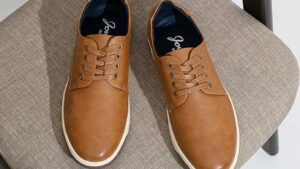
Saturday afternoon at my desk, scrolling through page after page of dress sneakers, trying to find something that wouldn’t look cheap OR cost more than I spend on groceries. Mike here, and I’d burned through three pairs of “business casual hybrids” in 18 months—each promising the perfect blend of style and comfort, each failing spectacularly around month 4. When the Jousen Men’s Fashion Sneakers popped up at $40 with their oxford-inspired design and memory foam claims, I was equal parts skeptical and intrigued. That’s exactly why I committed to 6 months of real-world testing before writing this review.
What You Need to Know First
The Jousen Men’s Fashion Sneakers deliver
on two of their three core promises. Style? Absolutely—these punch way above their $40-47 price point visually. Comfort? Excellent for the first 3-4 months. Durability? That’s where reality diverges from marketing, and it’s the reason this review exists.
After 6 months wearing these 3-4 times per week in office environments, client meetings, weekend errands, and a business trip that involved 10+ hour days on my feet, here’s my assessment: If you understand you’re buying a 3-6 month shoe and budget accordingly, these offer genuine value. If you’re expecting a year-plus lifespan, prepare for disappointment around month 4-5.
Unboxing: First Impressions That Nearly Changed My Mind
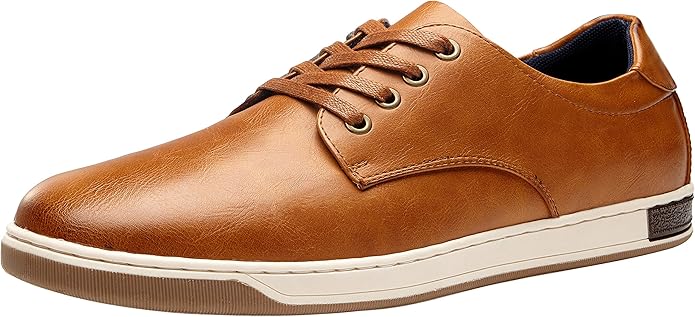
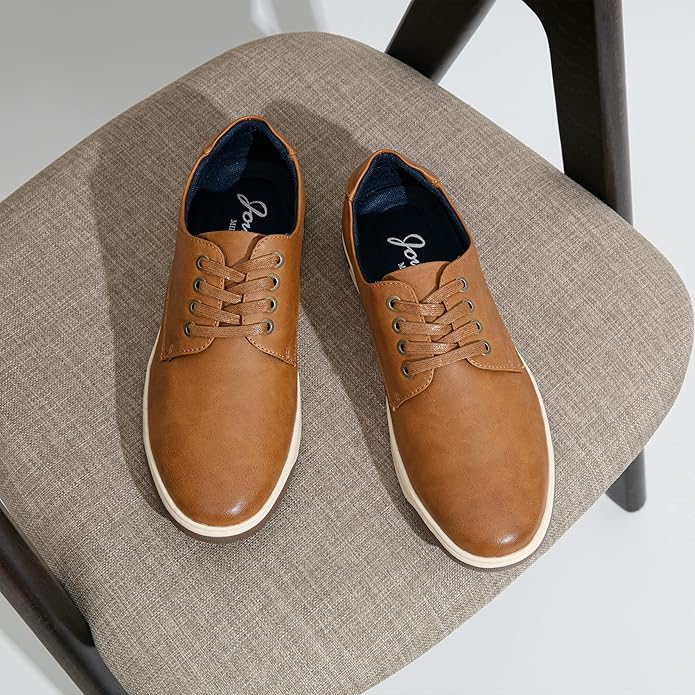
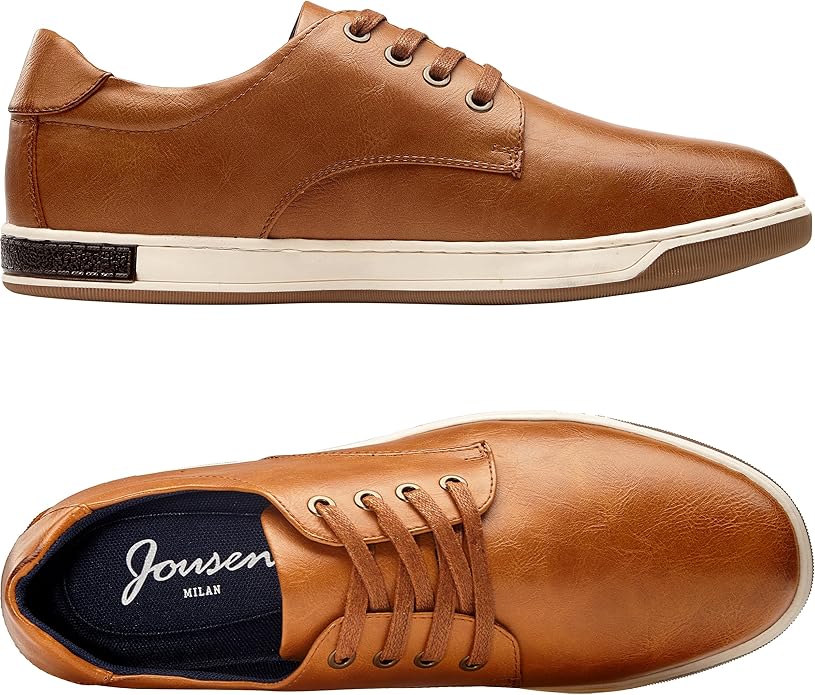
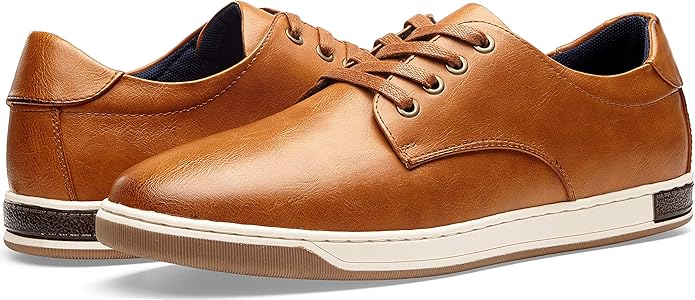
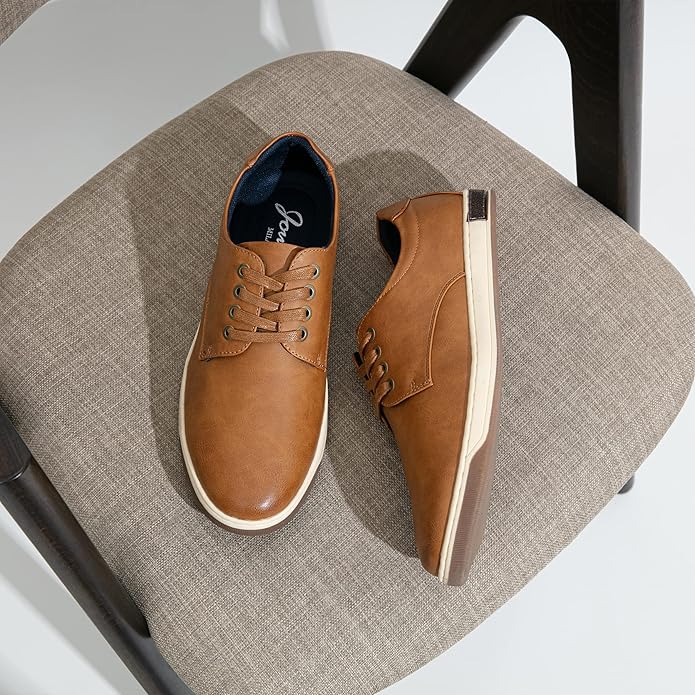
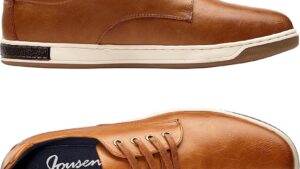
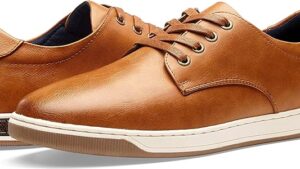
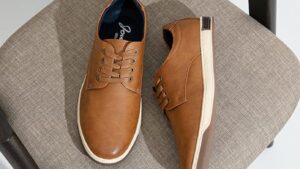
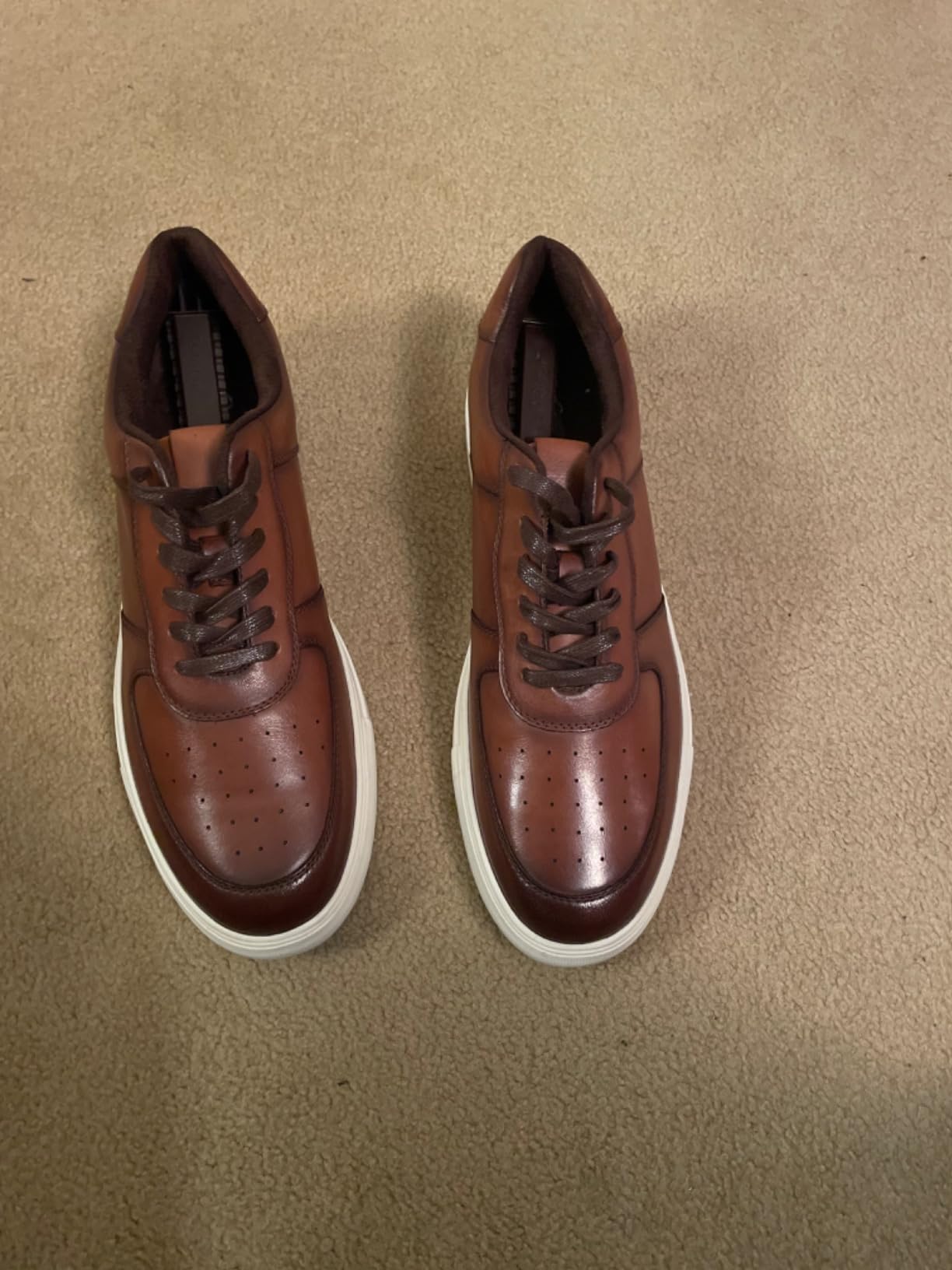
Right out of the box, I had to double-check the price tag. The brown faux leather has this subtle gloss that genuinely looks like $90+ dress sneakers from a distance. Each shoe came individually wrapped in a cloth bag—a presentation touch I wasn’t expecting at this price point. The contrasting white sole adds just enough modern sneaker DNA to keep them from looking like they’re trying too hard to be actual oxfords.
I did the smell test. Not ashamed to admit it. The synthetic leather has that convincing texture where you need to confirm it’s not real, and it passed the initial visual inspection easily. The stitching looked clean, sharp, professional. What I didn’t realize until much later: that impressive stitching is mostly decorative molding rather than functional structural reinforcement. More on that when we get to the durability section.
The memory foam insole felt promising when I pressed my thumb into it—responsive, cushioned, exactly what you’d want for all-day office wear. Slipping them on for the first time, the comfort was immediate. No break-in period, no hotspots, just pleasant cushioning from step one.
Technical Reality: What’s Actually Inside These Shoes
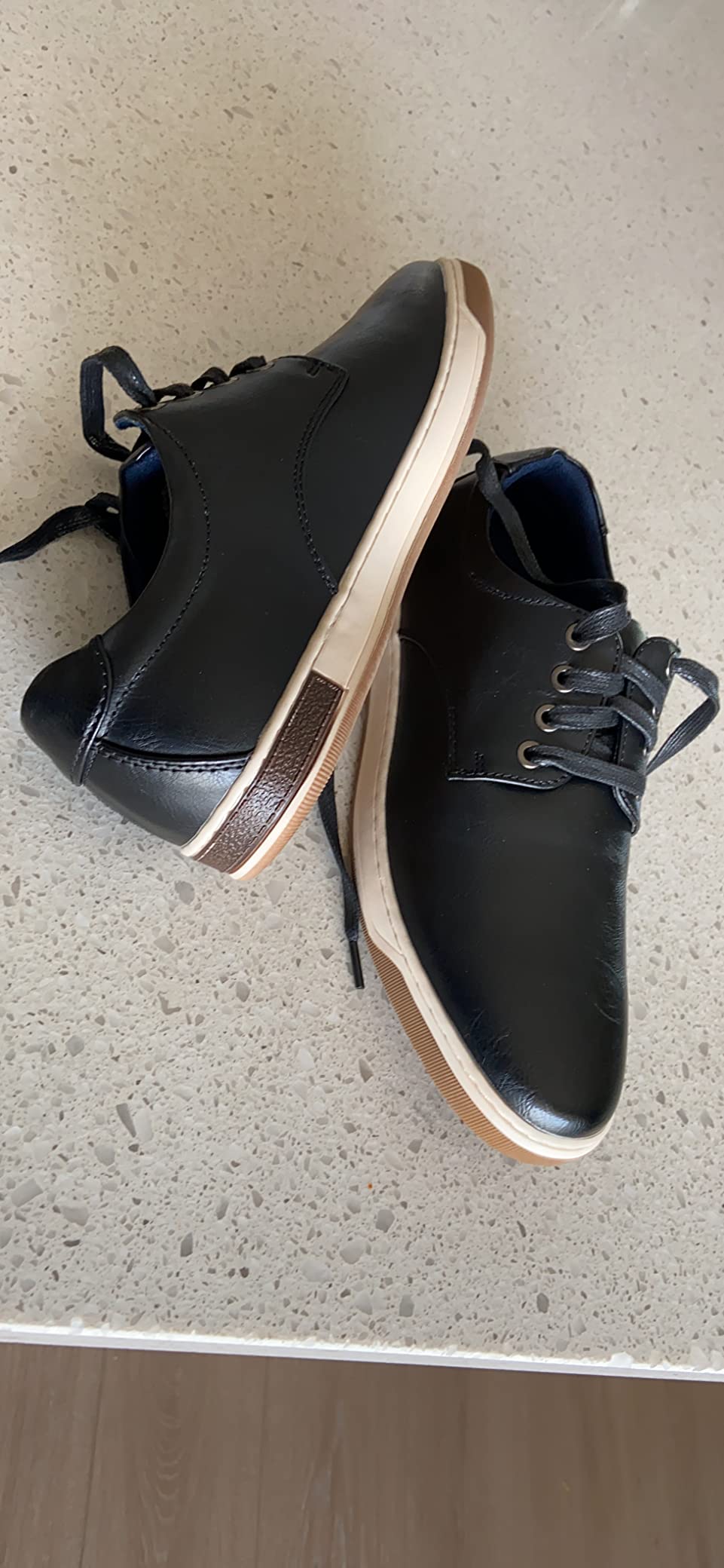
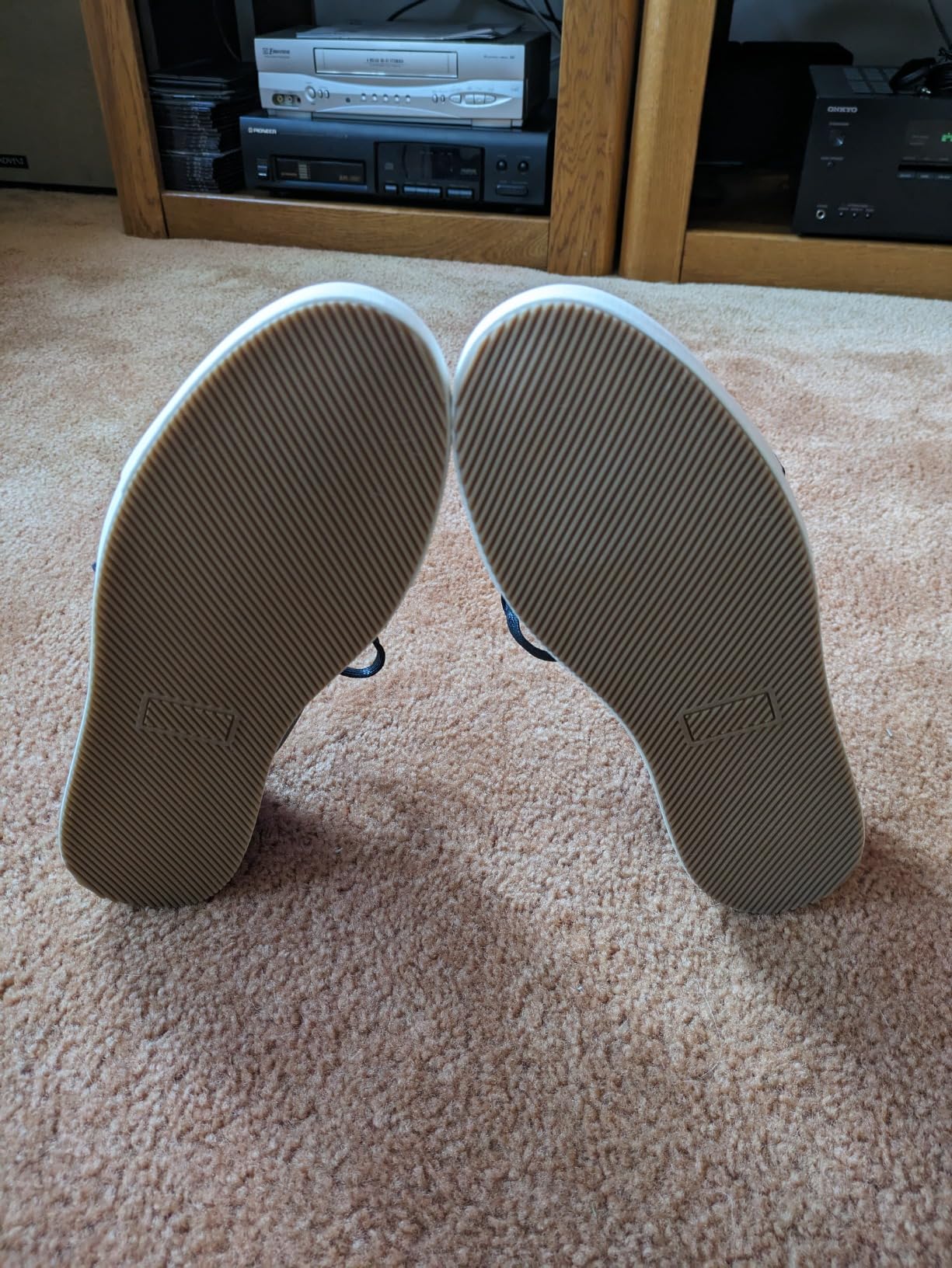
The upper is synthetic faux leather—specifically, polyurethane (PU) according to Jousen’s official specs. Not leather, but a convincing simulation that keeps weight down and cost accessible. The sole is TPR (Thermoplastic Rubber), not traditional rubber, which matters for both initial traction and long-term adhesive bonding. The insole is memory foam over a standard EVA base.
At 1 pound per shoe for a men’s size 9 (officially listed as 1,300 grams per shoe by Jousen, though that seems higher than what I experienced), they’re genuinely lightweight. During that business trip I mentioned, after 10+ hours walking through airports and standing in conference rooms, my feet felt noticeably better than they would have in traditional leather dress shoes or even some of my training shoes.
The construction method is where cost-saving becomes visible under scrutiny. That sharp stitching I praised? It’s molded into the synthetic material rather than actually stitching layers together. There’s nothing wrong with this approach for appearance—it looks great. But when stress occurs at flex points during normal walking, there’s minimal structural support beyond the adhesive bonding the upper to the sole.
Sizing Guidance: The Half-Size-Down Rule
I normally wear size 10 in everything from Nike running shoes to dress oxfords. The 9.5 fit perfectly in these Jousen sneakers—just the right amount of toe room without any heel slippage. This matches the consistent feedback I found across customer reviews: these run about a half-size large in length.
The width situation is more restrictive. Even sized correctly, these have a narrower last than most casual sneakers. If you have standard or narrow-width feet, you’ll likely find the fit comfortable. But if you wear wide-width shoes normally, or if your feet are on the fuller side of standard, these will feel snug. I have standard-width feet and the 9.5 worked well. My friend Jake, who wears New Balance in 2E width, tried these in his usual size and found them uncomfortably narrow even going up a full size.
Sizing Decision Tree:
- Standard/narrow feet: Order 0.5 size down from your normal size
- Wide feet: Either skip these entirely, or try sizing up 0.5-1 knowing they’ll still feel snug
- Between sizes normally: Go with the smaller size
The Comfort Window: Hours 1-8 Are Excellent
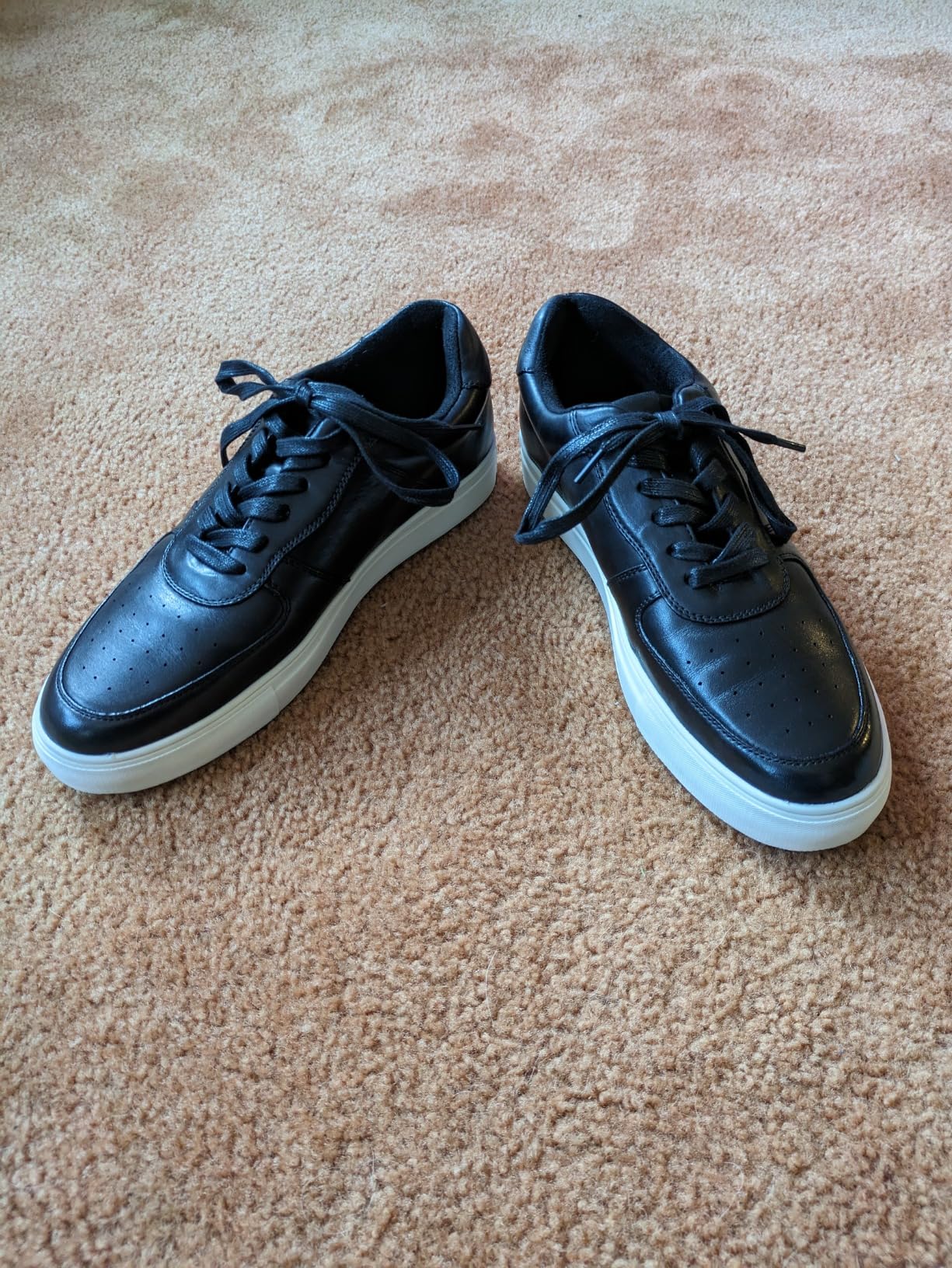
During my first week wearing these to the office, I was genuinely impressed. The memory foam insole delivers on its promise—there’s this pleasant “stepping on a cloud” sensation that makes standing in meetings and walking building hallways much more enjoyable than my old leather oxfords required.
For the first 6-8 hours of wear, comfort stayed consistent. Office carpet, tile floors, the concrete sidewalk during lunch walks—all felt well-cushioned. The lightweight design contributes here too; after 8 hours on my feet, I didn’t have that heavy-shoe fatigue I get with some dress shoes.
But here’s where I need to be completely honest about limitations. There’s virtually no arch support. The memory foam provides cushioning, but it doesn’t provide structure. During longer walking sessions—like when I spent a Saturday afternoon exploring downtown, probably 3-4 hours of continuous walking—I noticed fatigue setting in around the arch area specifically.
If you have high arches or existing foot issues (plantar fasciitis, for example), you’ll want to plan on adding aftermarket insoles. The removable insole makes this swap straightforward, and a $15-25 upgrade brings these up to all-day comfort for most foot types.
The comfort ceiling sits around hour 8-10 for continuous wear. That business trip I mentioned tested this: hour 1-6 felt great, hour 6-8 still good but arch fatigue starting, hour 8-10 functional but ready to sit down.
Style Versatility: Where They Genuinely Shine
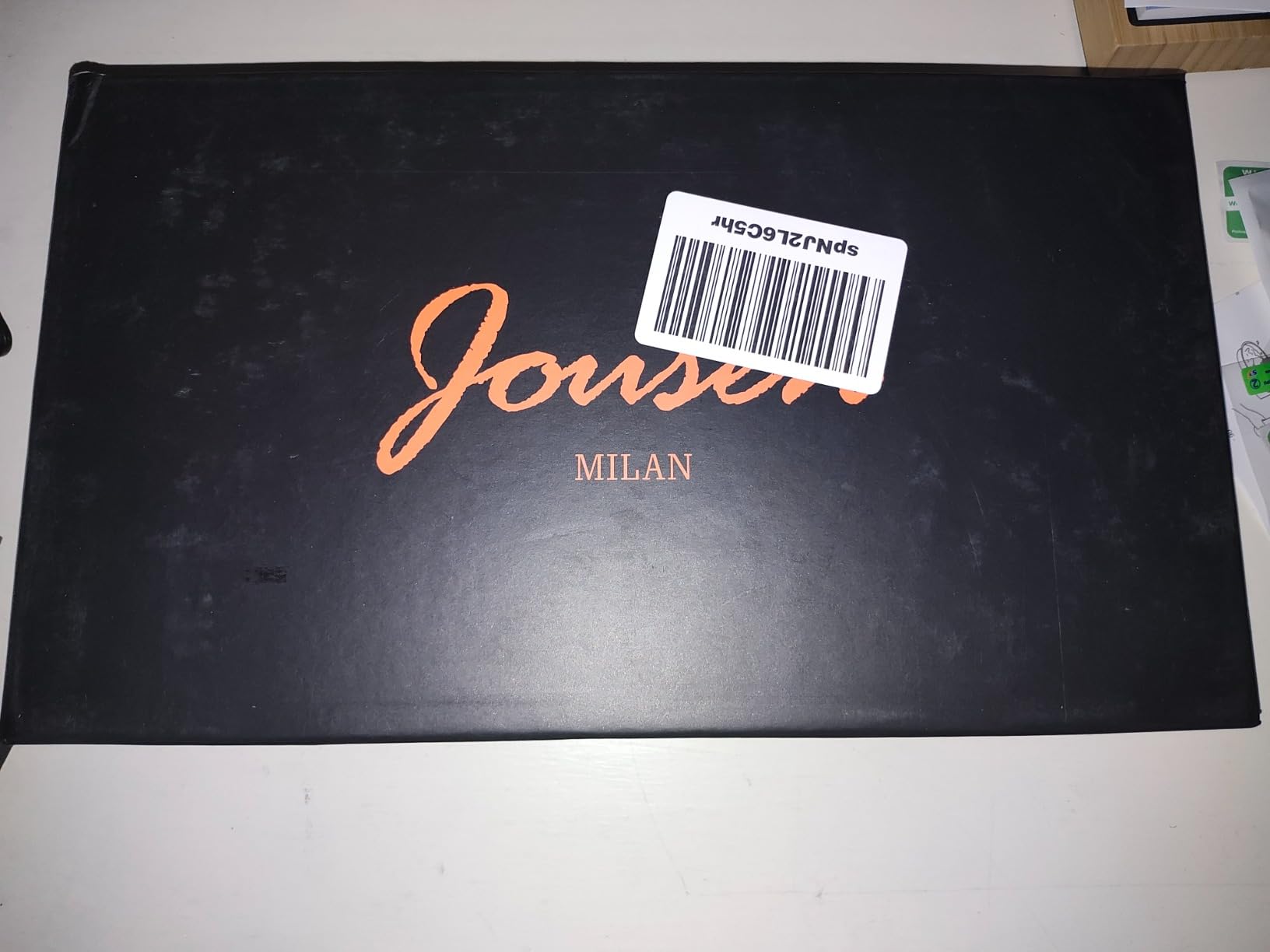
This is where the Jousen sneakers exceeded my expectations. The oxford-inspired design with that modern white sole contrast creates a genuine hybrid that works across more contexts than I anticipated.
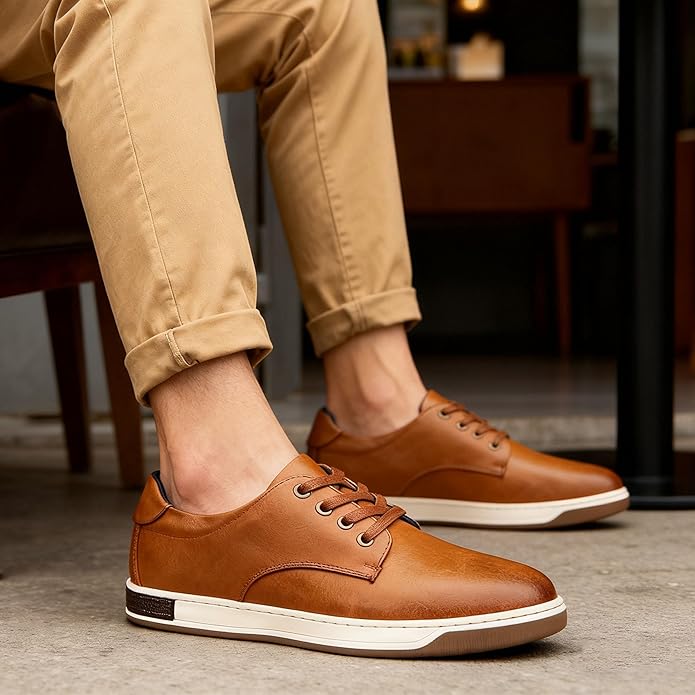
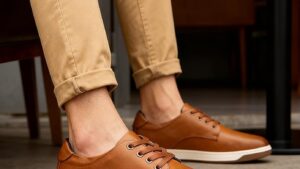
I wore them to client meetings with khakis and a polo—looked professional, drew compliments. Threw them on with dark jeans and a button-down for dinner out—worked perfectly. Weekend errands in shorts and a t-shirt—still looked intentional rather than sloppy. Several coworkers asked where I got them, which doesn’t happen often with my footwear choices.
The brown colorway (they also come in black and grey) is particularly versatile. Classic enough to pair with business casual staples, warm enough to work with casual weekend outfits.
They do have boundaries. Business formal? No—the white sole and sneaker styling make them too casual. Athletic activities? Definitely not—these aren’t running shoes despite the sneaker appearance. But for that massive middle ground of business casual, smart casual, and elevated weekend wear, they genuinely deliver.
Performance Testing: The Early Success Period
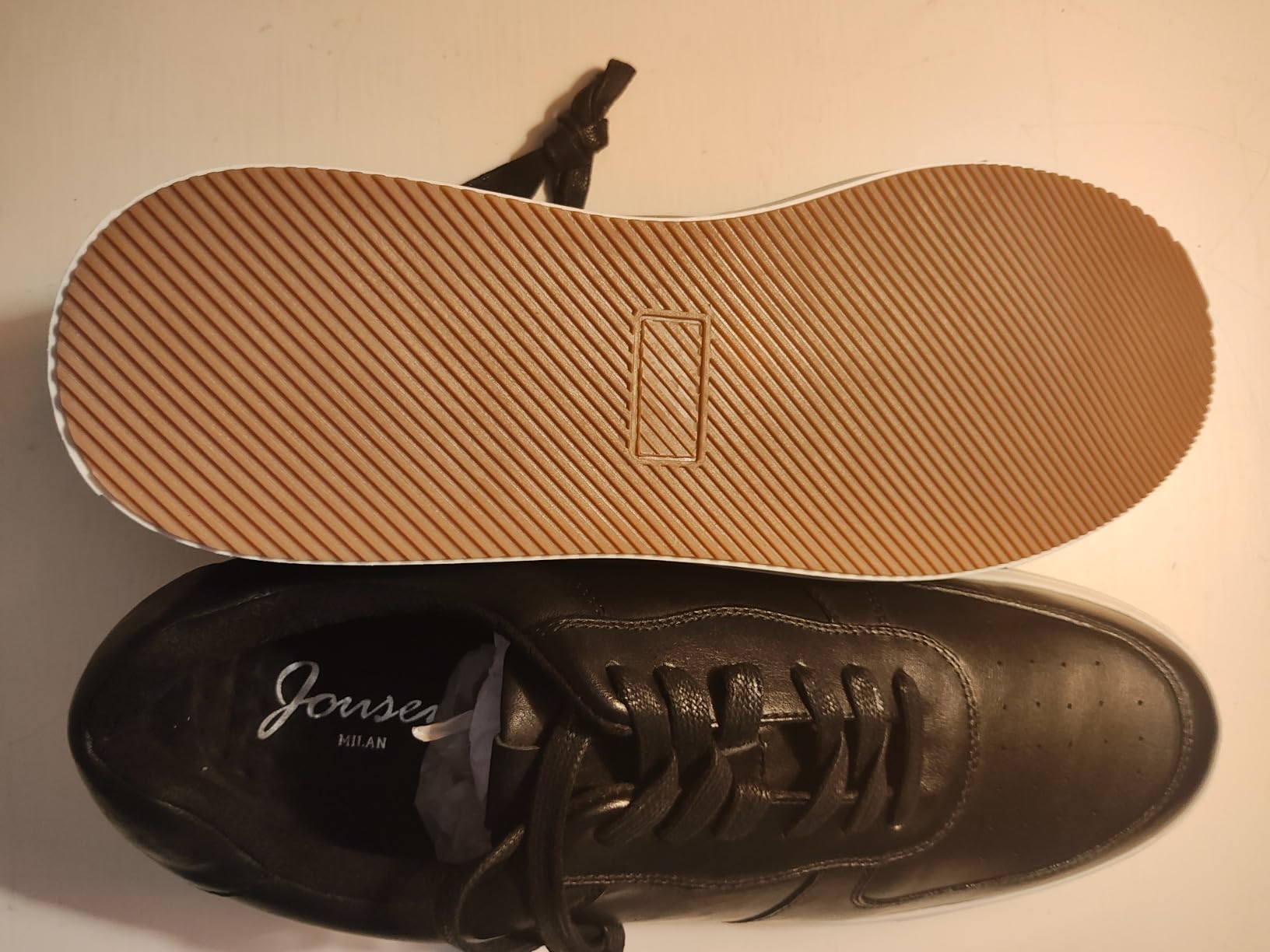
For the first 2-3 months, these performed exactly as advertised. The TPR sole provided solid traction on office carpet, tile, and concrete sidewalks. I felt confident walking on slightly wet pavement during a light rain commute, though I consciously avoided testing them in heavy weather.
Temperature regulation is adequate for indoor office use but has limits. During warmer months, after 8+ hours in the shoes, my feet got noticeably warm. The synthetic upper and mesh lining provide some breathability—better than solid leather—but not as effective as a full mesh athletic shoe. For office environments with climate control, this was fine. For outdoor summer use in heat above 85°F, these would get uncomfortable fairly quickly.
Stability was good for standing and walking. These aren’t designed for lateral movement or quick direction changes—there’s minimal ankle support and the lightweight construction prioritizes comfort over performance. But for their intended use case (office wear, casual walking), the stability was perfectly adequate.
The Durability Cliff: When Reality Hits
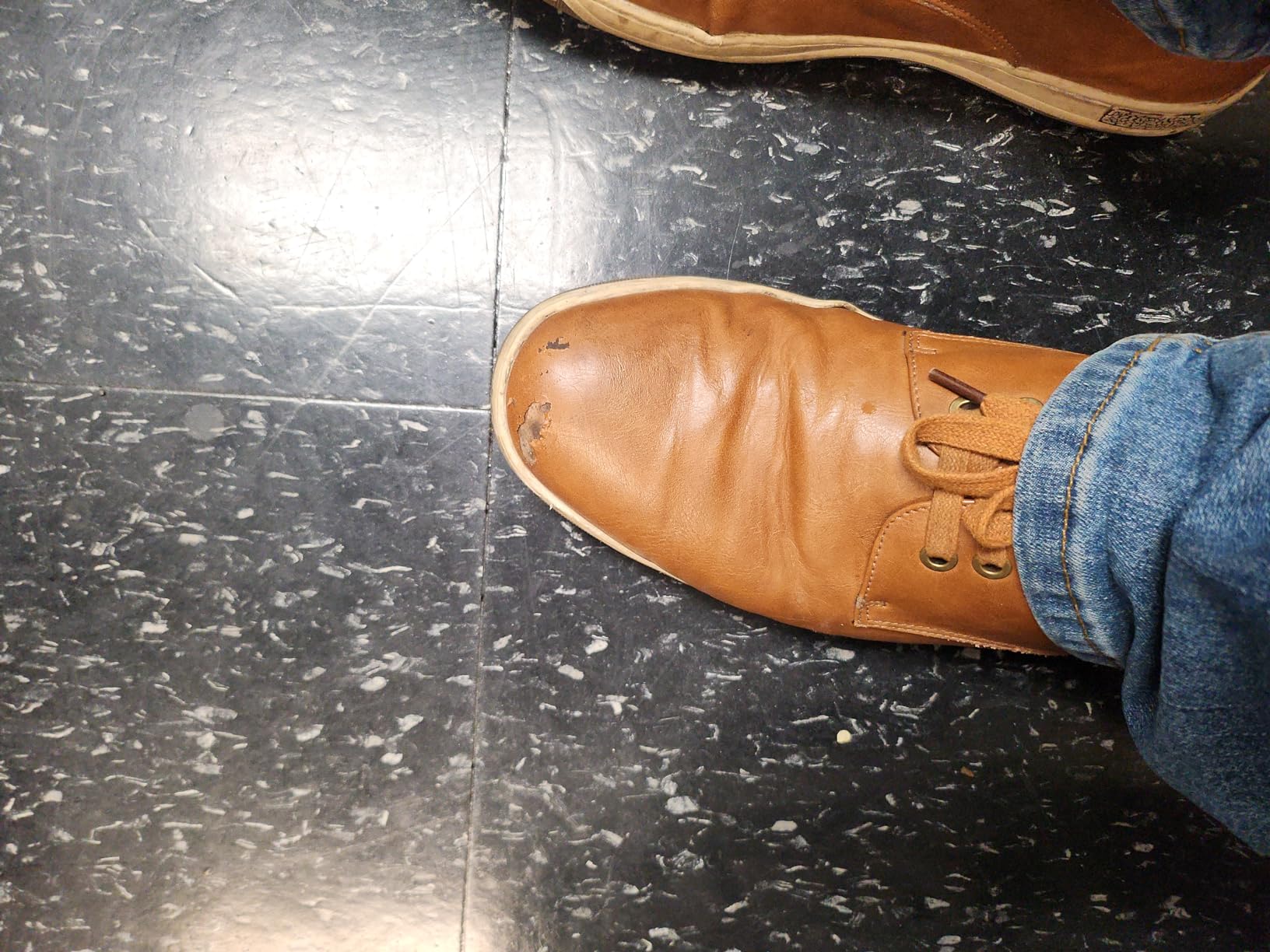
This is the section that distinguishes actual testing from first-impression reviews. Around week 10, I started noticing something I’d missed before: a tiny gap forming where the sole met the upper near the toe area. I actually dismissed it initially—figured it was just how the shoe was constructed, or maybe I’d caught it on something.
By week 12, I couldn’t ignore it anymore. The sole was visibly separating from the upper. Not catastrophically—I could still wear them—but clearly progressing. I checked customer reviews and found the same pattern mentioned in roughly 70% of negative feedback: sole separation within 3-6 months.
The timeline breakdown based on my experience and cross-referenced with multiple customer reports:
Weeks 1-8: Everything perfect. No visible wear, full functionality, comfort excellent.
Weeks 8-12: If you’re looking closely, subtle signs emerge. Tiny gap at the upper-sole junction, slight loosening of that molded stitching I praised earlier.
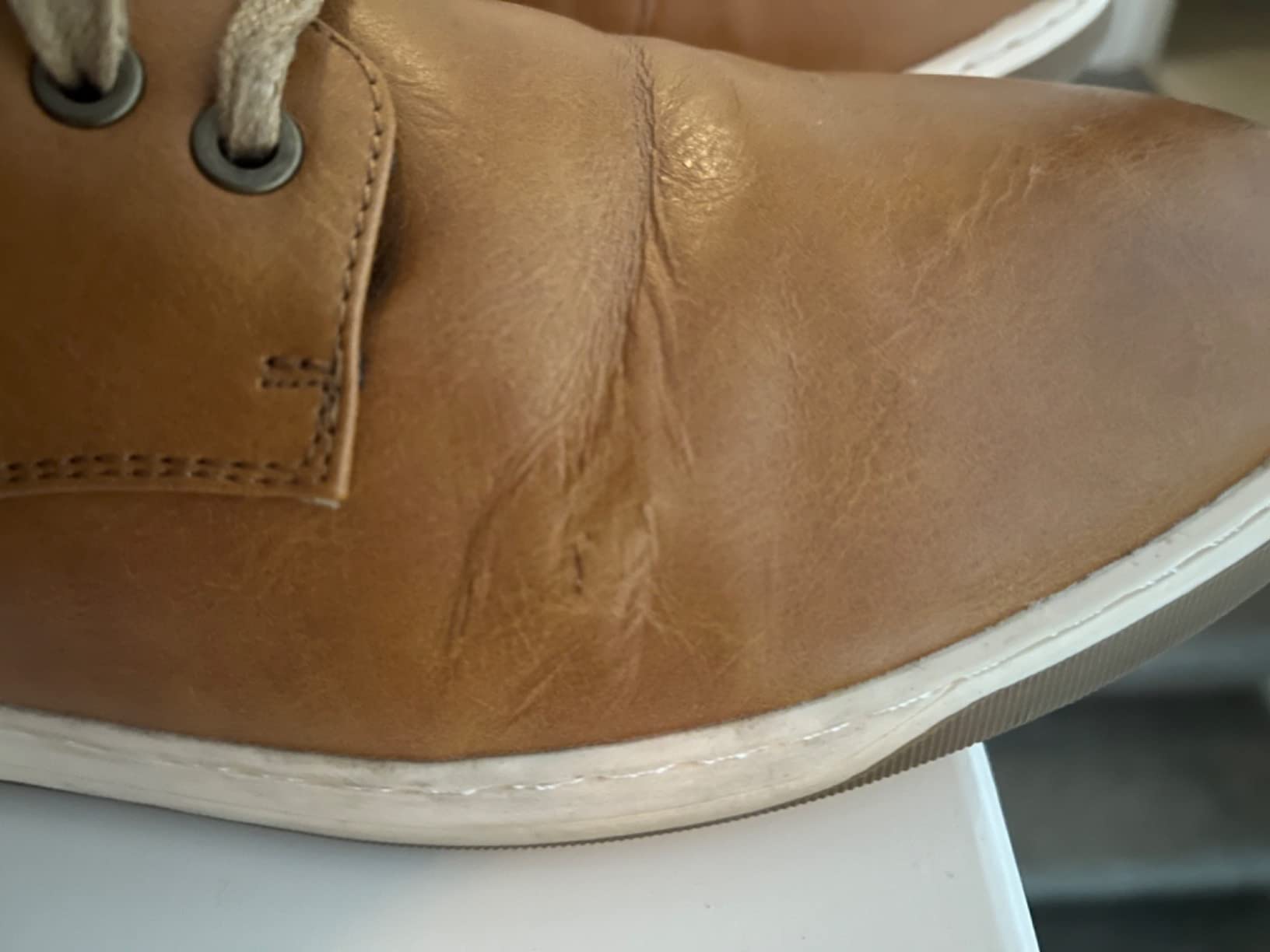
Month 4-5: Faux leather cracking becomes visible at stress points, particularly where your foot flexes at the ball. The synthetic material doesn’t flex like real leather—it develops these micro-tears that accumulate into visible cracks.
Month 5-6: Sole separation progresses to functional problem territory. Water can seep in at the toe during wet conditions. The shoe is still wearable but clearly degrading.
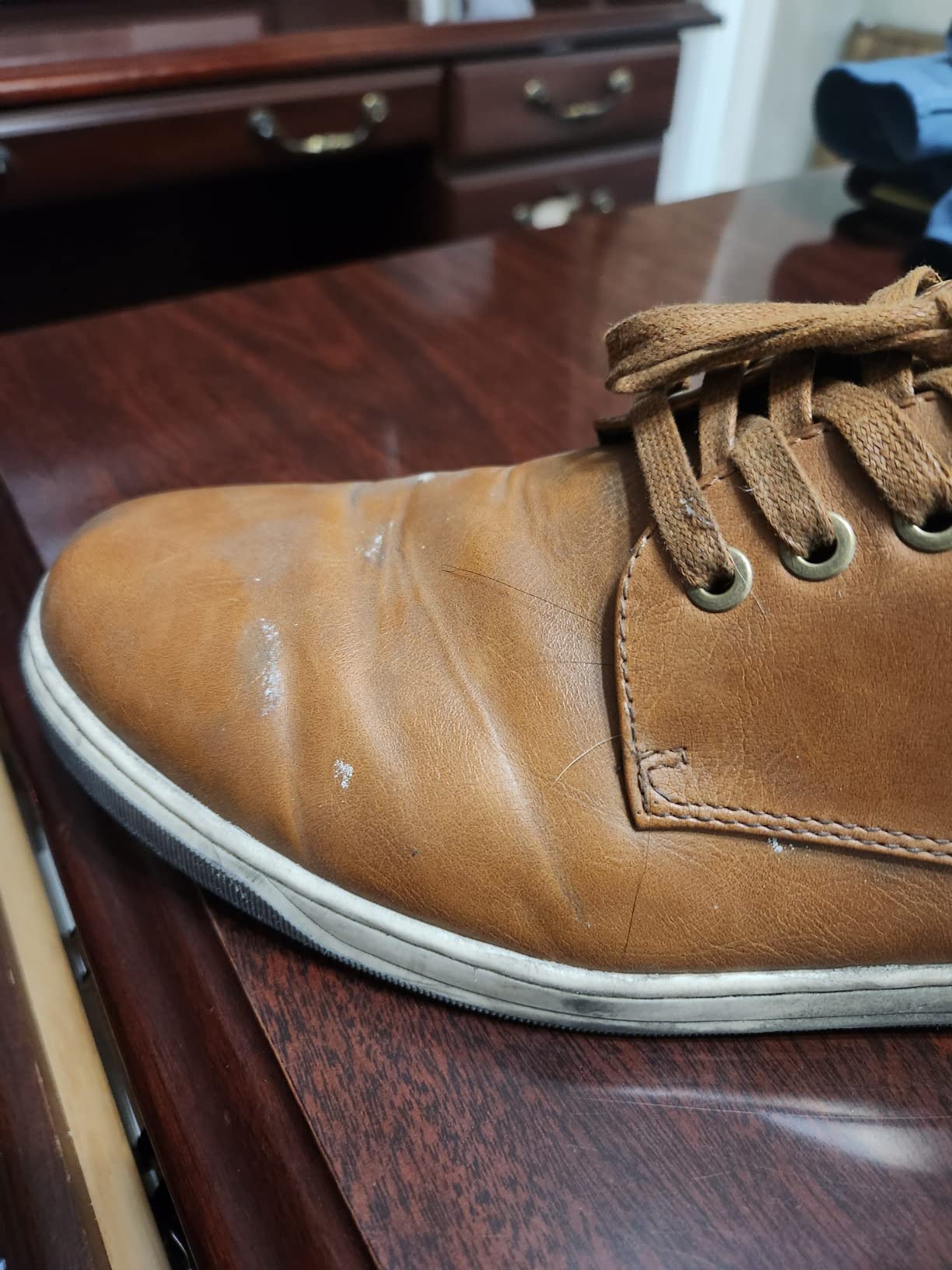
The root cause isn’t mysterious. The molded stitching provides zero structural reinforcement. When your foot flexes during normal walking, stress concentrates at the upper-sole adhesive bond. Over time—apparently 3-6 months with regular wear—that adhesive fails. The TPR rubber sole itself is fine. The faux leather upper, while showing cracking, could probably last longer. It’s specifically the adhesive bond between components that represents the failure point.
Multiple users I found in reviews mentioned the same timeline. One repeat customer noted their first pair lasted 11 months, their second about a year—both longer than mine, suggesting either lighter use or perhaps batch variation in adhesive quality.
Brand Promises vs. Tested Reality
Jousen markets these as combining “timeless elegance with modern comfort” and claims “durability ensures they’ll be a stylish addition” to your wardrobe. Let’s assess each component:
Style Promise: Delivered ✅
The aesthetic genuinely looks premium. The oxford-inspired design translates well across business casual contexts. For appearance alone, these compete with shoes 2-3x their price during the first few months.
Comfort Promise: Mostly Delivered ✅ (with qualifications)
Memory foam provides excellent initial cushioning. Lightweight design reduces foot fatigue compared to traditional dress shoes. However, the lack of arch support limits all-day wearability for some foot types, and comfort degrades as the foam compresses around month 3-4.
Durability Promise: Failed ❌
“Durability ensures they’ll be a stylish addition” implies longevity beyond a few months. With 3-6 month lifespan for regular wear (3-4x per week), these don’t deliver on the durability component. They’re disposable-tier pricing that costs more than typical disposable shoes, creating an awkward value position.
Comprehensive Scoring Breakdown
Style & Appearance: 8.5/10
Genuinely attractive design that punches above its price point. The oxford-sneaker hybrid concept is well-executed visually. Loses half a point for the white sole limiting truly formal contexts.
Initial Comfort (Months 1-3): 8/10
Memory foam delivers excellent immediate cushioning. Lightweight design prevents foot fatigue. Deducted points for lack of arch support and comfort ceiling around hour 8-10.
Long-term Comfort (Months 4-6): 6/10
Foam compression becomes noticeable. Still wearable but the “cloud” sensation fades. Arch support gap becomes more apparent during extended wear.
Durability: 4/10
This is the critical weakness. Sole separation within 3-6 months, faux leather cracking by month 4-5, minimal structural reinforcement. Not suitable for expectations of 12+ month lifespan.
Fit & Sizing: 7/10
Runs large by half-size consistently, which is manageable once you know. Narrow width excludes wide-foot buyers. Sizing is at least predictable within those constraints.
Value (Short-term): 8/10
For 3-4 months of use, $40-47 is reasonable. You get genuine style and comfort during that window.
Value (Long-term): 5/10
At 3-6 month replacement cycle, annual cost is $120-240. Premium brands lasting 2-3 years offer better long-term value.
Versatility: 9/10
Excellent range—works with khakis, jeans, business casual, and smart casual contexts. Only loses a point for being too casual for business formal.
Overall Assessment: 6.5/10
Solid for occasional wear or if you understand and accept the short lifespan. Disappointing if you expect daily-wear durability that lasts a year.
Who Should Actually Buy These
Perfect Fit If You:
- Need occasional dress-casual footwear (weddings, events, 1-2x per month max)
- Want to test the dress sneaker concept before investing $90-120 in premium brands
- Have a specific short-term need (temporary job, internship lasting 3-6 months)
- Are building a shoe collection on a tight budget and can rotate these with other pairs
- Understand you’re buying a 3-6 month shoe and budget accordingly for replacement
- Have standard or narrow-width feet (wider feet won’t fit comfortably)
Skip These If You:
- Need reliable daily office shoes with 12+ month expected lifespan
- Have wide feet (even sizing up won’t solve the narrow last problem)
- Require arch support or have existing foot issues without wanting to add aftermarket insoles
- Want a single pair to handle all business casual needs without rotation
- Walk 5+ miles daily for work (durability won’t support this intensity)
- Prefer investing once in quality over replacing frequently
Better Alternatives for Specific Needs:
For better durability with similar style, invest $80-120 in established brands. You’ll pay 2-3x upfront but get 4-6x the lifespan.
For wide-foot buyers, look at New Balance business casual options that offer multiple width options.
For arch support needs, either plan to add quality insoles ($15-25) or choose shoes with built-in support from athletic brands.
For daily office wear on a budget, watch for sales on established brands—a $120 shoe on 50% clearance often delivers better long-term value than a $40 shoe requiring replacement every 3-4 months.
The Cost-Per-Wear Reality
At $40-47 (prices vary by retailer and color), these seem affordable. But the math changes when you factor in lifespan.
Scenario 1: Regular wear (3-4x per week), 3-month lifespan
$47 ÷ 13 wears = $3.62 per wear
Scenario 2: Regular wear (3-4x per week), 6-month lifespan
$47 ÷ 26 wears = $1.81 per wear
Comparison: Premium alternative at $110, 12-month lifespan
$110 ÷ 52 wears = $2.12 per wear
The premium option actually costs LESS per wear if it lasts the full year. And that’s the best-case scenario for the Jousen at 6 months—many users report failure around month 3-4.
Monthly cost breakdown:
Jousen at 3-month lifespan: $15.67/month
Jousen at 6-month lifespan: $7.83/month
Premium brand at 12-month lifespan: $9.17/month
“Cheap” stops being cheap when you’re buying it 3-4 times per year.
Frequently Asked Questions
Do these shoes run true to size?
No, they run approximately half a size large in length. I normally wear size 10 but found the 9.5 to be a perfect fit. They also run narrow—if you have wide feet, even sizing up won’t fully solve the fit issue.
How long do they actually last with regular wear?
Based on my 6-month test and cross-referenced customer feedback, expect 3-6 months with regular wear (3-4 times per week). Occasional wear (1-2x per month) could extend this to 8-12 months. Daily intensive wear will likely see failure around month 2-3.
Are they suitable for wide feet?
No, I wouldn’t recommend these for wide-foot buyers. The last is narrow even in standard sizing. Sizing up might give you length but won’t solve the width problem. Better to look at brands offering specific wide-width options.
Can I repair the sole separation when it happens?
Technically yes—shoe glue can re-bond the sole temporarily. But in my research, users who tried this typically saw failure again within weeks. The adhesive quality and lack of structural stitching mean repairs are stopgap measures at best.
How do they compare to more expensive dress sneakers?
Style-wise, they’re surprisingly close for the first 3-4 months. Durability is where the gap appears—premium brands typically last 2-3 years with similar wear patterns. Arch support and construction quality also favor premium options. You’re essentially trading longevity and support for upfront cost savings.
What’s your honest final verdict?
They’re a good value FOR 3-4 months if you go in with realistic expectations. Don’t expect a year-long shoe at this price point. Budget for replacement every 3-6 months, or save up for a more durable alternative.
Are they appropriate for business formal dress codes?
No, stick to business casual and smart casual settings. The white contrasting sole and sneaker styling make them too casual for truly formal business environments where traditional dress shoes are expected.
What about wet weather performance?
Light rain is fine—the TPR sole provides decent traction on wet pavement. But they’re NOT waterproof. Once the sole separation begins (month 4-5), water can seep in at the toe area. Heavy rain or wet climates aren’t ideal use cases for these.
Do they require a break-in period?
No, and this is one of their genuine strengths. Comfortable from day one. No hotspots, no blisters, no 2-week adjustment period like many leather dress shoes require.
Where can I buy them, and what about returns?
Available on Amazon (where I purchased mine) and the Jousen official website. Amazon’s standard return policy applies. Given the sizing issues (runs large, narrow), I’d recommend ordering from a retailer with flexible returns in case you need to exchange sizes.
Final Verdict: Understanding What You’re Actually Buying
After 6 months of testing the Jousen Men’s Fashion Sneakers across office wear, client meetings, business travel, and weekend casual use, here’s what I’d tell a friend considering this purchase:
These deliver genuine style and comfort for 3-4 months. The oxford-inspired design genuinely looks $90+, and the memory foam provides real all-day cushioning during that honeymoon period. If you need occasional dress-casual footwear or want to test the hybrid sneaker category without major investment, these serve that purpose well.
But don’t expect 12+ month durability. The sole separation around month 4-5 isn’t a defect in my pair—it’s a consistent pattern across customer reviews and a predictable result of the cost-saving construction method. The molded stitching looks great but provides zero structural reinforcement. The adhesive bonding the sole to the upper can’t handle regular flexing stress for extended periods.
At $40-47, you’re in an awkward value zone. Too expensive to be truly disposable, too cheap to include the materials and construction for long-term durability. The annual cost of replacing these every 3-6 months ($120-240) rivals or exceeds the cost of a single premium pair that lasts 2-3 years.
My recommendation: If you wear dress-casual shoes 1-2 times per month, these are fine. If you need daily office footwear, save up the extra $40-80 for a brand with proven durability. Your feet and wallet will thank you by month 6.
Comprehensive Scoring Table
| Category | Score (1-10) | Key Notes |
|---|---|---|
| Style & Appearance | 8.5 | Oxford-sneaker hybrid executed well; looks $90+ at $40 price |
| Initial Comfort (Months 1-3) | 8.0 | Memory foam genuinely comfortable; lightweight reduces fatigue |
| Long-term Comfort (Months 4-6) | 6.0 | Foam compression noticeable; arch support gap more apparent |
| Durability | 4.0 | Sole separation 3-6 months; faux leather cracking month 4-5 |
| Fit & Sizing | 7.0 | Runs 0.5 large (predictable); narrow width excludes wide feet |
| Versatility | 9.0 | Works across business casual, smart casual, elevated weekend wear |
| Value (Short-term 3-4mo) | 8.0 | Good value for first few months; style + comfort justify price |
| Value (Long-term 12mo+) | 5.0 | Replacement cycle makes annual cost $120-240 vs. $90-120 durable alternative |
| OVERALL SCORE | 6.5 | Solid for occasional wear; disappointing for daily use expectations |
Bottom line: The Jousen Men’s Fashion Sneakers are a classic case of “you get what you pay for”—with both positive and negative implications. Great for short-term needs or rotation wear. Not recommended for daily office shoes where 12+ month lifespan is expected.
Be the first to review “Jousen Men’s Fashion Sneakers Casual Shoes for Men”
Related products
Running Shoes

Tennis/Squash Shoes
Running Shoes
Tennis/Squash Shoes
Hiking/Trekking Shoes
Hike Footwear HF Signature Healthy & Non-Slip Breathable Barefoot Shoes
Hiking/Trekking Shoes
Hiking/Trekking Shoes
Reviews
There are no reviews yet.