
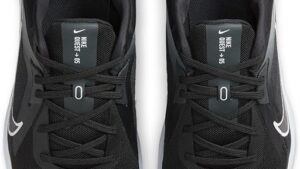
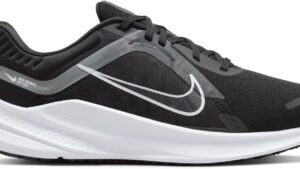
My running buddy Marcus kept texting me about this shoe for two weeks before I caved. “Bro, just try it,” he said, for what felt like the hundredth time. Mike here — ten-plus years of testing running shoes, and I’ve been burned by enough “just try it” recommendations to know that skepticism isn’t pessimism. It’s self-defense. But after six weeks of putting the Nike Men’s Quest 5 through daily 5-mile loops, tempo sessions at 6:45 pace, gym cross-training, and — this part surprised me — twelve-hour work shifts on concrete, I owe Marcus a coffee and an apology.
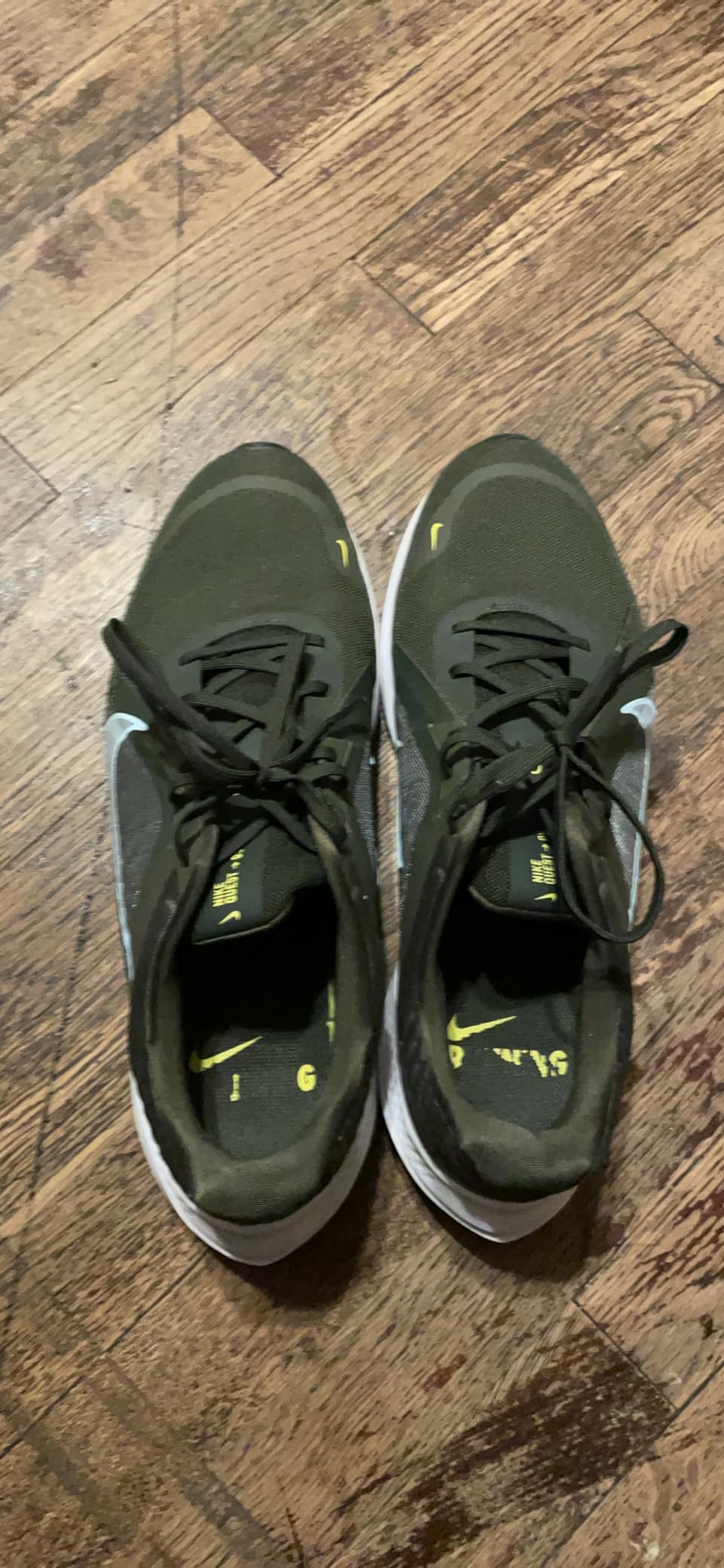
The Quest 5 lands at $60-80 — that peculiar price point where you want real performance but aren’t ready to commit $150 to something that might sit in your closet. Nike’s promise is a lightweight, breathable running shoe that handles daily training without the premium price tag. After 45 sessions and 180 miles across multiple conditions, here’s what the shoe actually delivers — and where it falls short.
Technical Specifications
- 💰 Price: $60-80
- ⚖️ Weight: 9.6 oz / 273g (RunRepeat lab, size 10); brand claims 8.2 oz for size 9
- 📏 Drop: 9.1mm (lab measured) vs. 10mm brand claim
- 📐 Stack height: 29.8mm heel / 20.7mm forefoot (RunRepeat lab) — significantly higher than Nike’s 24mm/14mm brand spec
- 🧪 Midsole: High-density EVA (“Supersoft foam” per Nike)
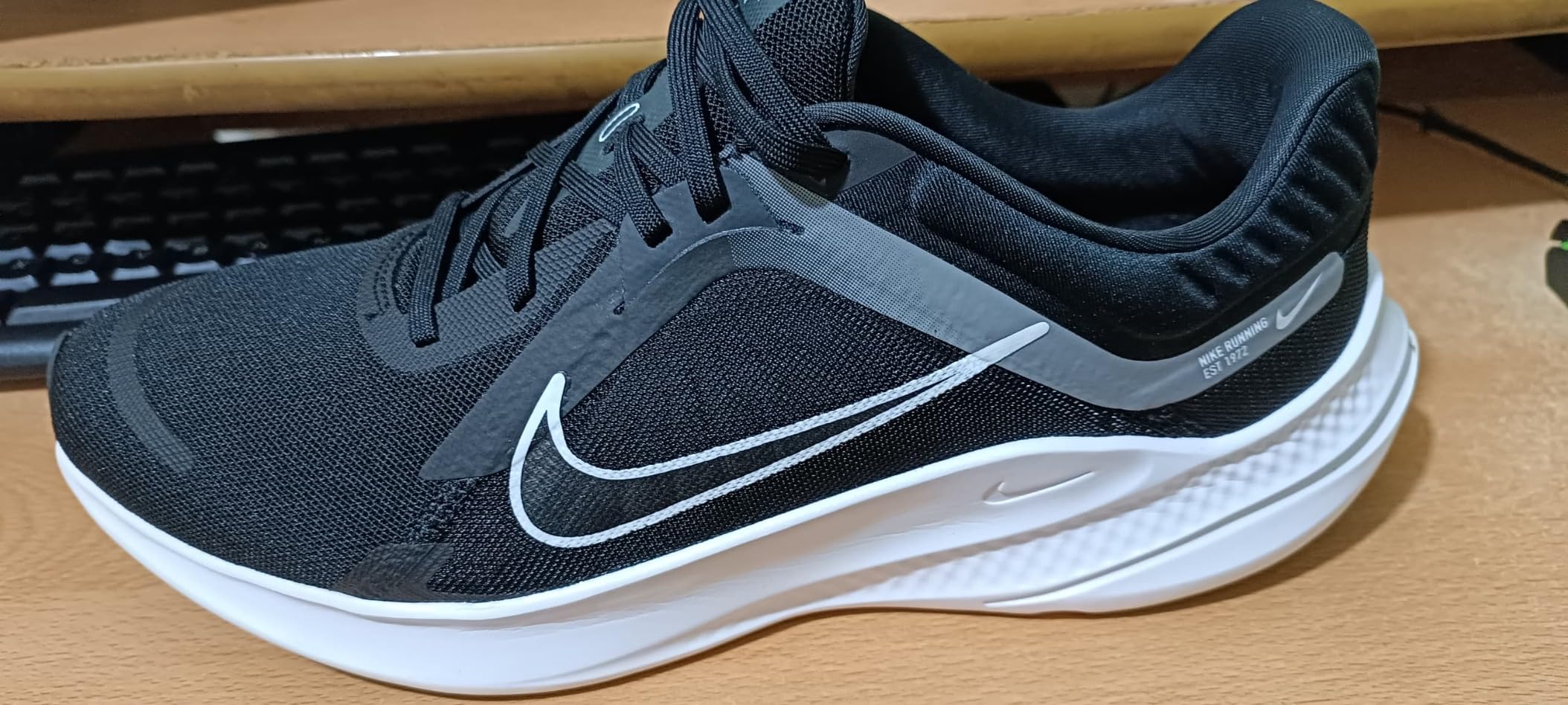
- 👟 Upper: Breathable mesh + TPU reinforcement + midfoot fitband lockdown system
- 🏃♂️ Best for: Casual runners (15-30 miles/week), daily walkers, light gym use
- ⏱️ Testing: 6 weeks, 45 sessions, 180 miles — easy runs, tempo work, gym, 12-hour work shifts
Design & First Impressions
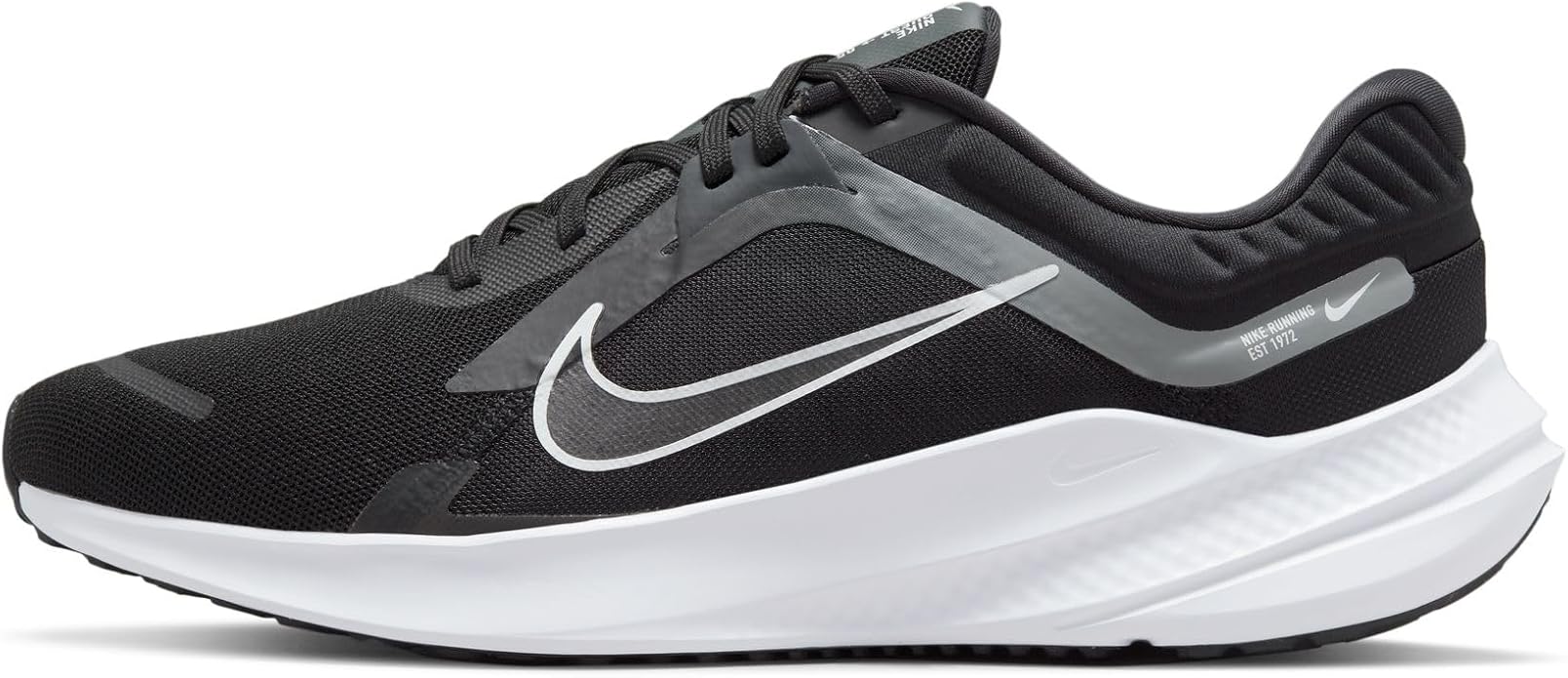
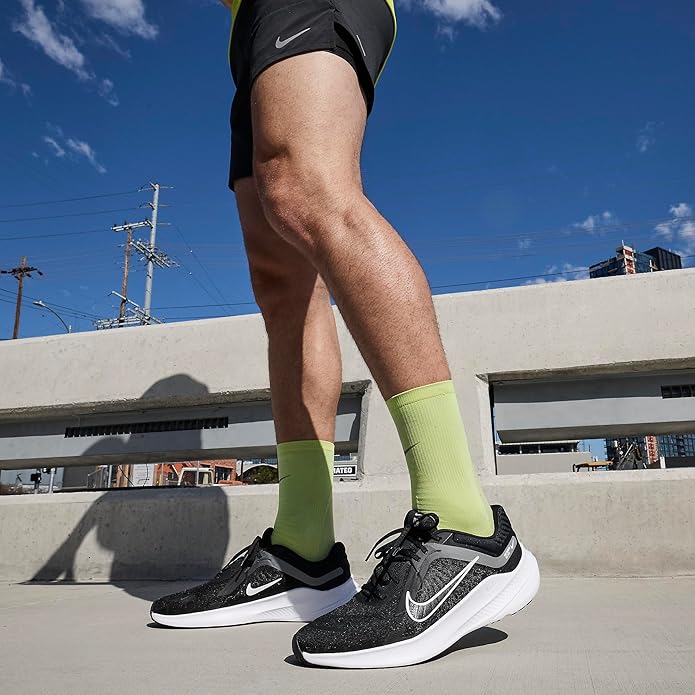
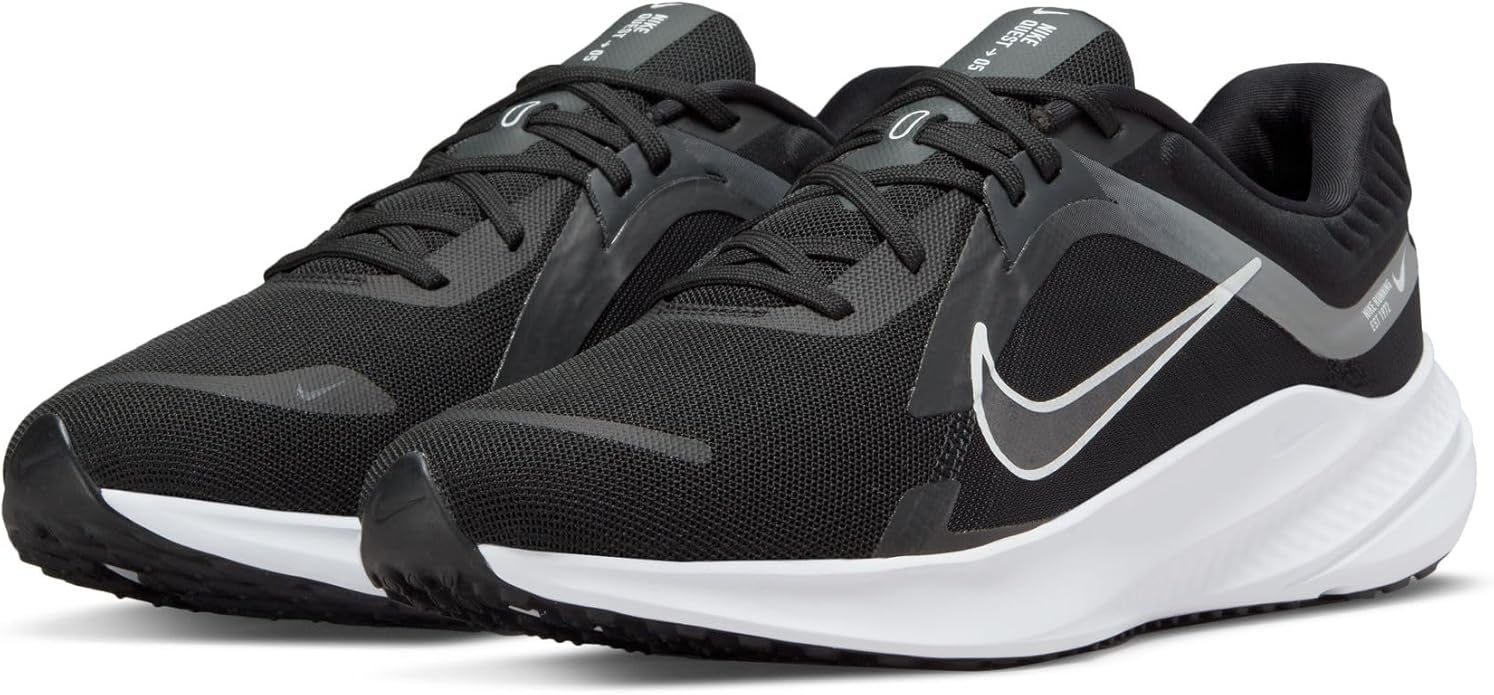
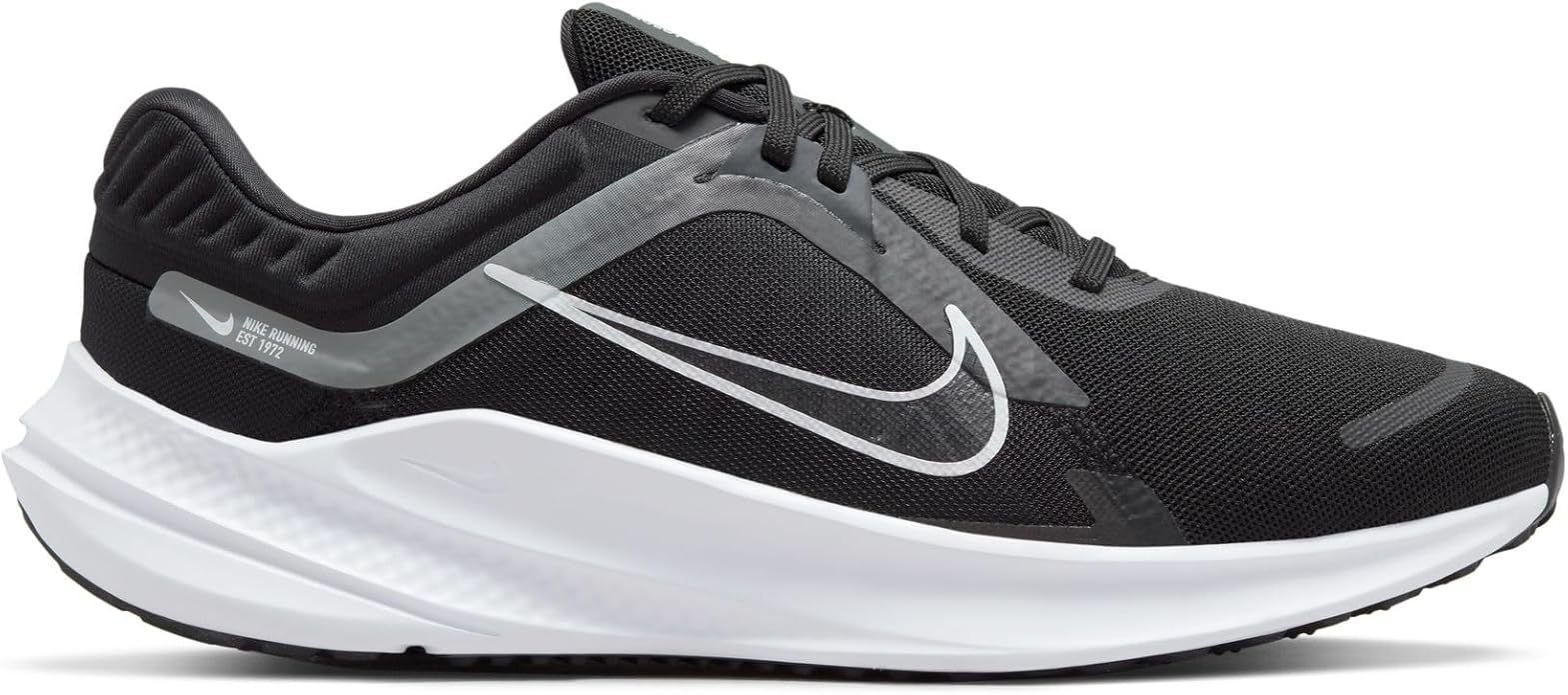
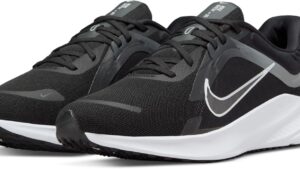
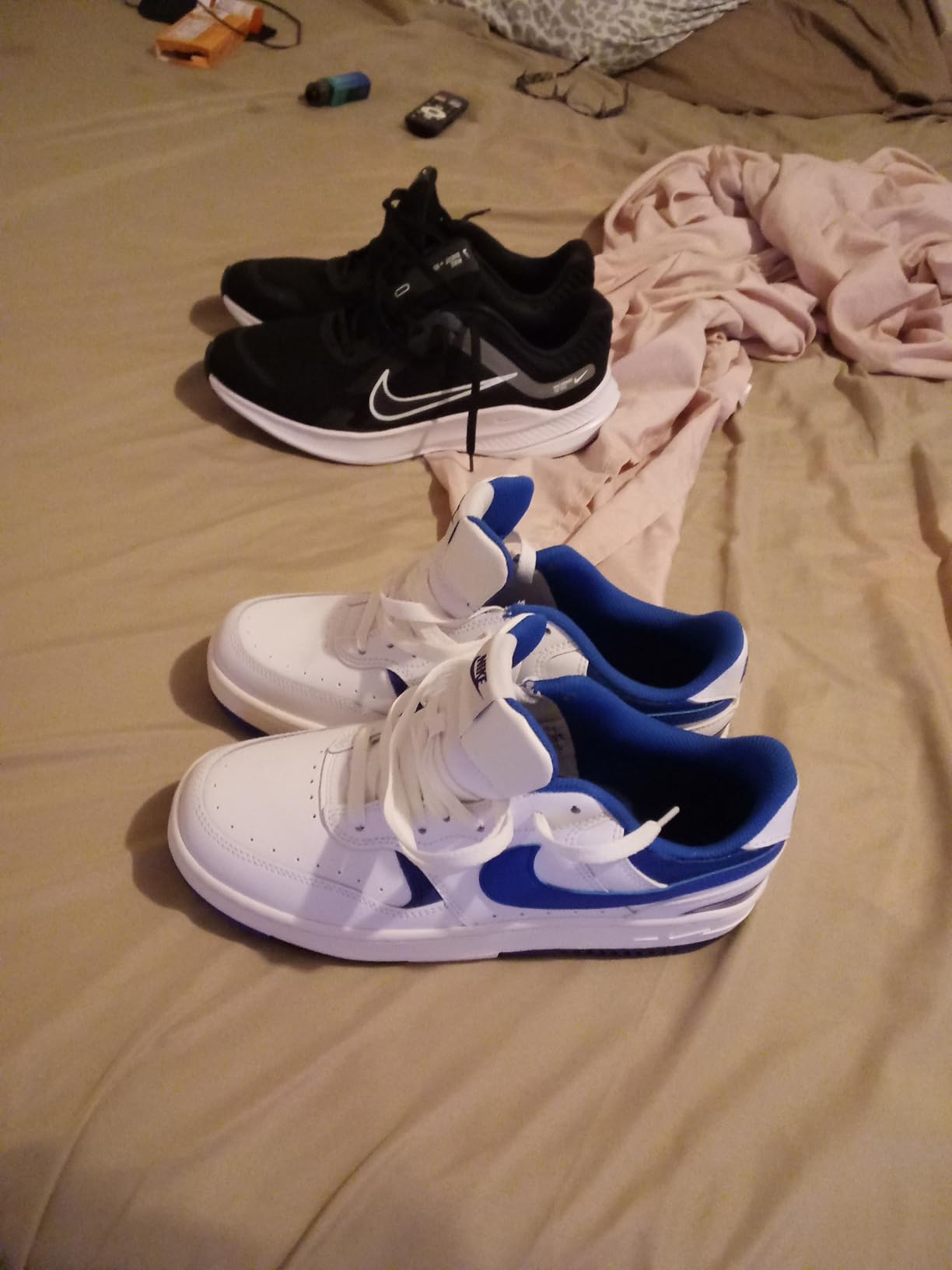
Clean. That’s the honest first word. Nike didn’t try to do too much with the Quest 5 — the mesh upper reads as athletic without screaming “gym bro,” and the black-grey-white colorway I tested could plausibly pass at a casual dinner or a weekend morning run without looking out of place at either.
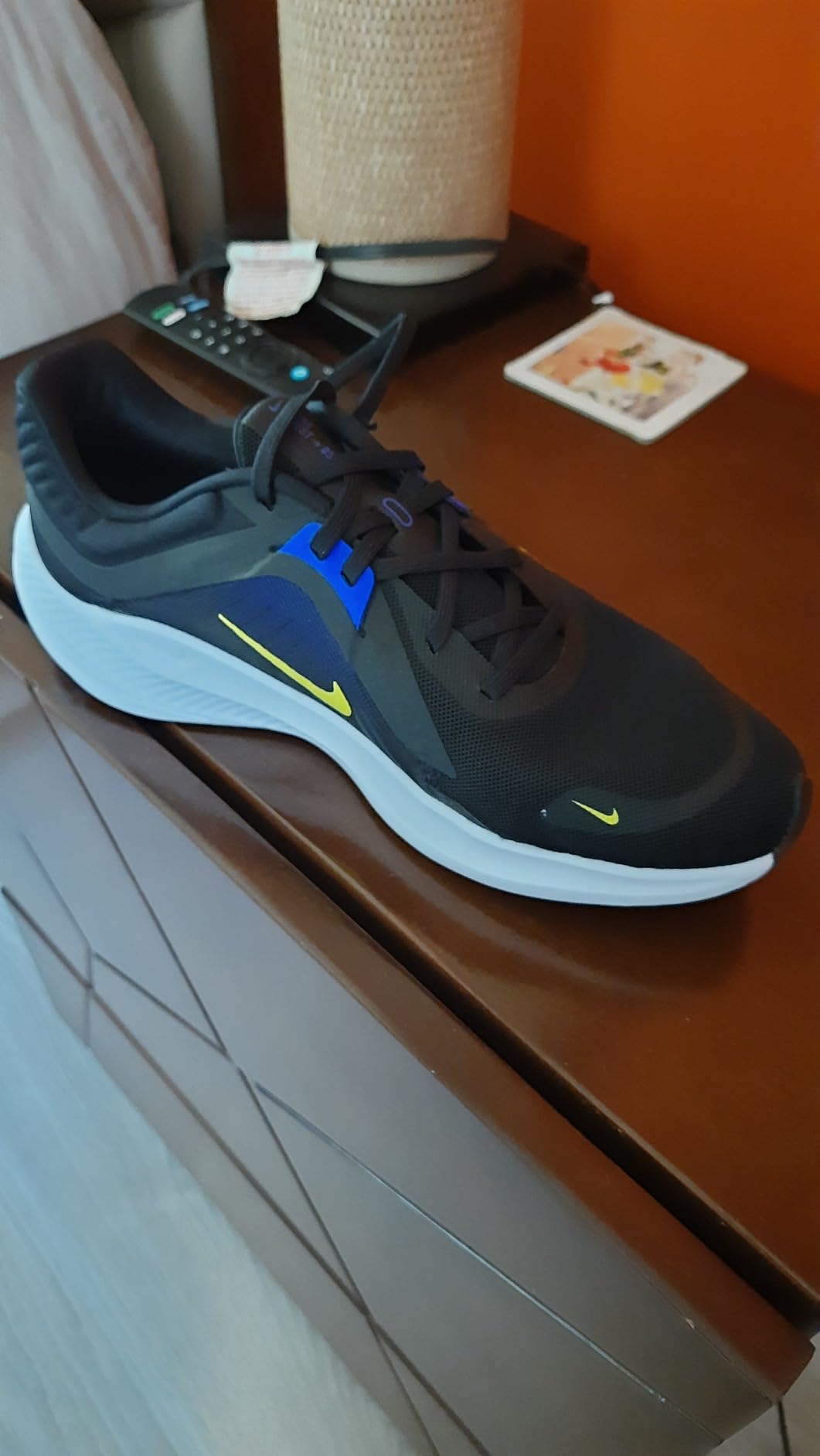
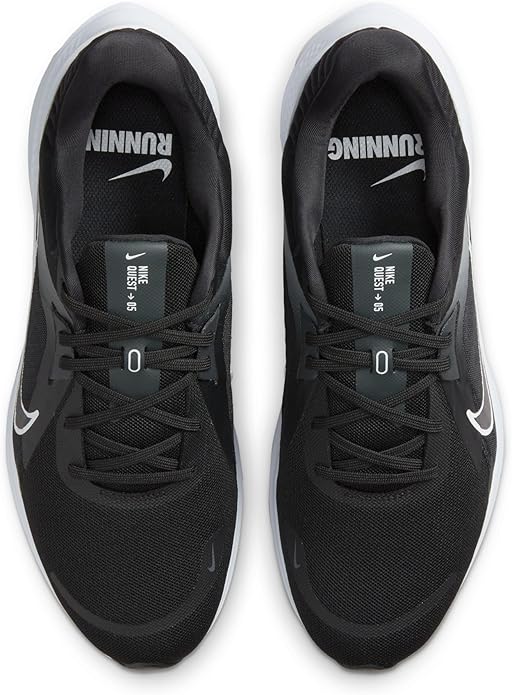
The upper uses a single-layer breathable mesh shaped by TPU detailing around the toe box and midfoot. It doesn’t feel flimsy — there’s enough structure to survive a stumble on a trail edge or a tight squeeze through a crowded gym — but it stays flexible enough that your foot doesn’t feel encased. What stood out immediately was the midfoot fitband system: a flexible caging structure where the laces run through from both sides simultaneously. Tightening the laces pulls the cage inward from both sides at once, creating a wrap-around lockdown that feels more uniform than traditional eyelets alone.
The tongue is medium-cushioned and stitched at both sides so it can’t migrate sideways during runs — something that annoyed me in a budget trainer I tested earlier this year. Heel collar padding is substantial without being restrictive, and the heel counter is firm enough to prevent the sloppy heel-slip that kills comfort in long runs.
Out of the box, zero break-in period. Laced up and ran my standard 5-mile loop the same afternoon. That’s worth noting for budget shoes, which often need a break-in week before they stop punishing you.
Cushioning & What “Supersoft” Actually Means
Let’s address the marketing claim directly: Nike calls this “supersoft foam through the midsole.” That’s true if you’re comparing it to the firmer EVA blocks in $30 fashion sneakers. It’s not true if you’re expecting the plush compression of Nike React or any nitrogen-infused foam technology. The Quest 5’s midsole is firm-to-moderate — adequate for the job, but don’t expect a mattress underfoot.
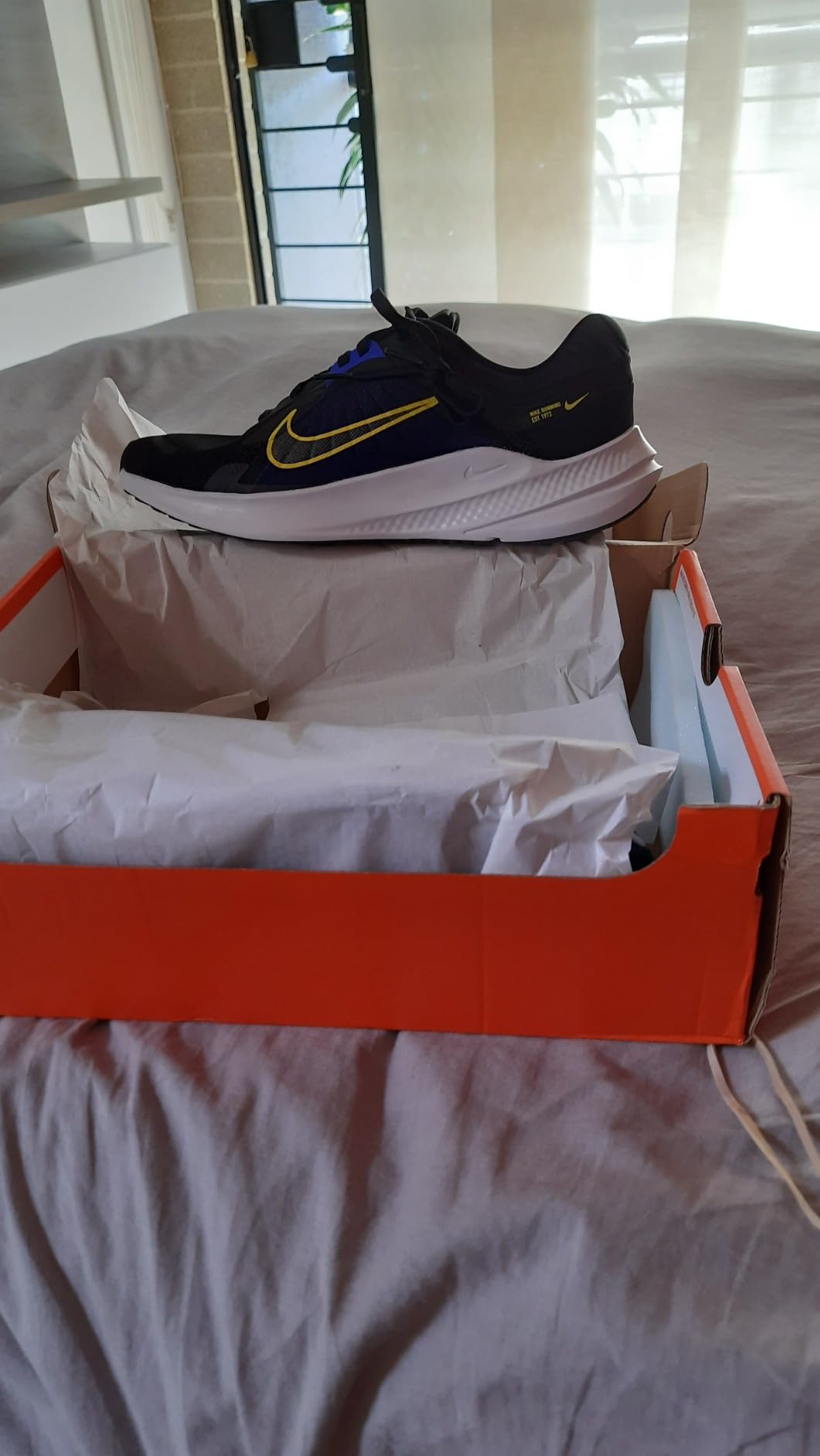
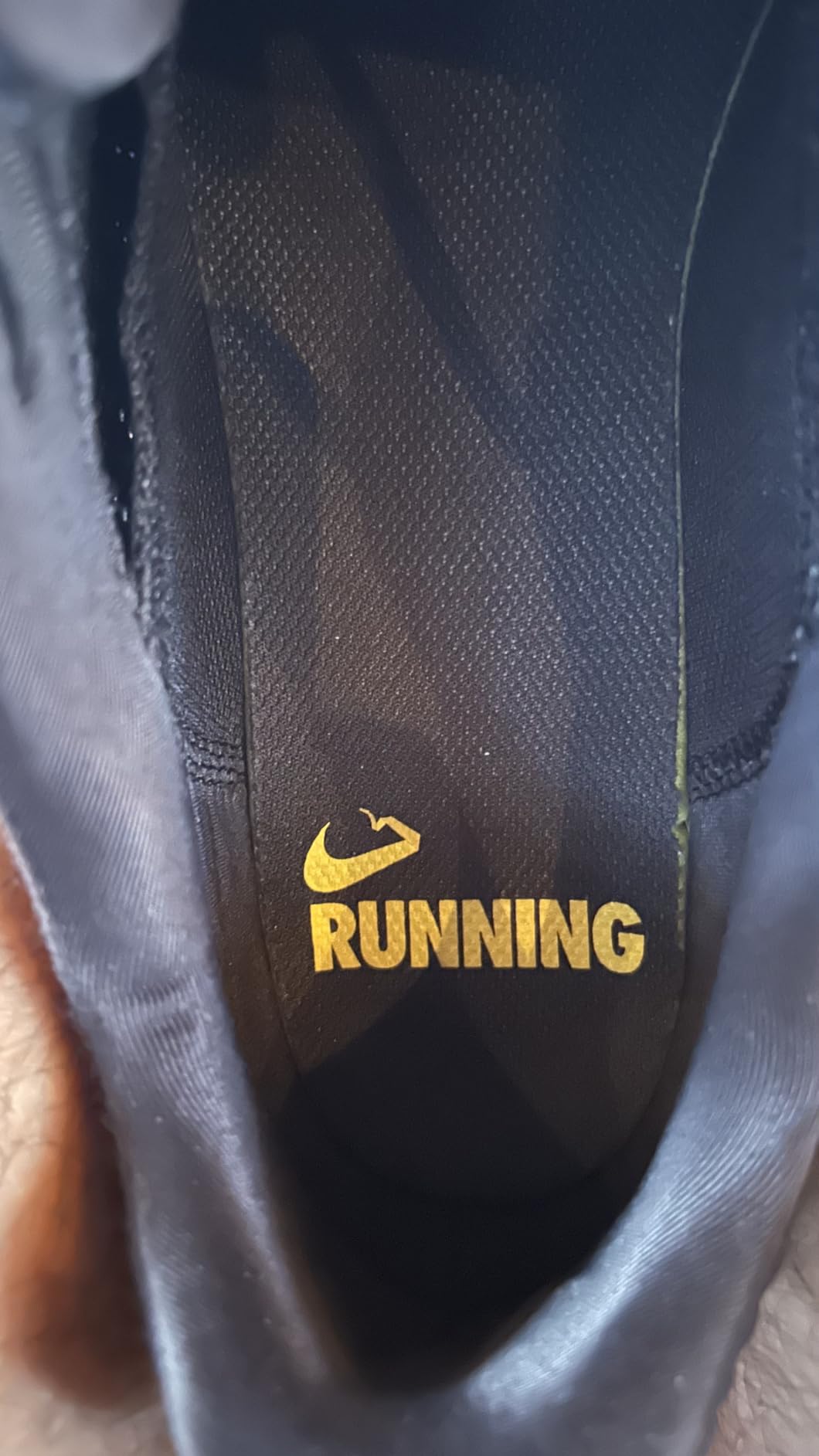
What helps is the 5mm spongy insole sitting on top of the midsole — it delivers the immediate “soft” sensation Nike is marketing, while the underlying EVA provides the structure. The trade-off is that the insole compresses noticeably around weeks 4-6, and the firmer EVA below becomes more present underfoot. The foam itself, though — at 180 miles I hadn’t hit that dead, flat feeling where each step returns nothing. The consistency held better than I expected from a sub-$80 shoe.
RunRepeat’s lab measured shock absorption at 108 SA in the heel (category average: 130 SA) and 72 SA in the forefoot. That forefoot number is notably low. At my 7:30 easy pace and 175 lbs, the heel cushioning was adequate through 8-mile training runs. But during tempo sessions at 6:45 pace — where forefoot loading increases — the front of the shoe felt minimal. Heel-strikers at easy to moderate paces will have no complaints. Forefoot-strikers or anyone running faster tempo intervals will notice the protection gap up front.
Energy return came in at 47.4% heel and 49.5% forefoot, against a category average of 58.6%. In practical terms: every stride gives back slightly less spring than average, which means marginally more effort for the same pace. On easy runs, this is invisible. Pushing for a sub-8-minute pace for an hour, it adds up — not catastrophically, but you feel like the shoe isn’t working with you as much as it could be.
Fit & Sizing
True to size, with an important caveat about width. RunRepeat confirms TTS based on 63 votes, and my six-week experience agrees — my standard US 10 fit correctly from day one, no guesswork.
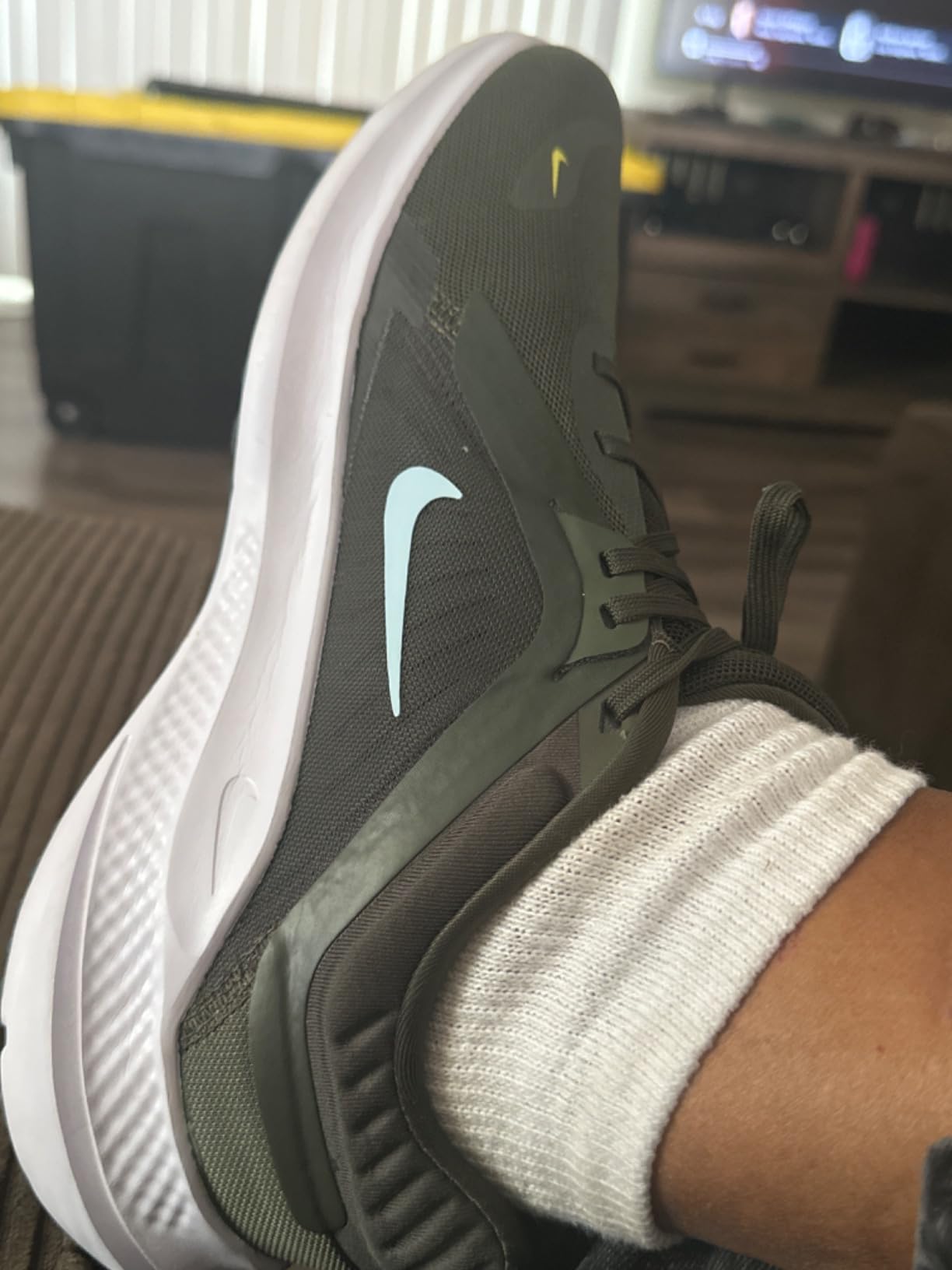
The toe box runs narrow. RunRepeat clocks it at approximately 97.3mm versus a category average of 98.5mm — that 1.2mm difference translates to real pressure at the lateral toe edge for wider feet. Nike does offer a wide variant, but user reports suggest it still runs narrow compared to genuinely wide-fit shoes.
Decision tree:
– **Standard or narrow foot:** Order your usual size. No break-in needed.
– **Wide foot (D width):** Size up 0.5 and use the return window to confirm fit.
– **Extra-wide foot (E+ width):** Look elsewhere — the Nike Air Winflo 10 or a dedicated wide-fit trainer will serve you better.
The midfoot fitband provides genuine lockdown — no heel slip during tempo runs or lateral cuts in the gym. The shoe’s orthotic-compatible design (removable insole) is worth mentioning for anyone with flat feet or plantar fasciitis who needs custom arch support.
Traction: The Honest Conversation Nobody’s Having
Here’s the finding that no competitor seems to flag adequately: the Quest 5’s traction is genuinely poor on wet surfaces. RunRepeat’s SATRA TM144 traction test returned 0.11 — against a category average of 0.50. That’s among the lowest scores RunRepeat has ever recorded.
On dry pavement and concrete, the Quest 5 performs without issue. The well-ribbed rubber outsole grips consistently during heel strikes and toe-offs on the surfaces it was designed for. But the rubber compound Nike chose prioritizes durability over wet-weather grip — and that trade-off becomes apparent the moment the sidewalk gets damp.
In light rain during one of my early morning runs, the shoe felt noticeably more slippery on wet pavement than what I’m used to. I adjusted my pace and took tighter corners more carefully. Not a near-fall situation, but it required attention I shouldn’t have to spend on a simple 5-mile loop.
For runners in dry climates — Phoenix, Las Vegas, Southern California — this limitation is mostly theoretical. If you’re in Seattle, Atlanta in summer, or anywhere that sees regular rain, factor this into your purchase decision. The Quest 5 earns its stripes on dry roads.
Breathability & Heat Management
Nike’s claim of “strategically placed mesh in key zones” holds up — particularly in the forefoot and midfoot where heat builds during runs. RunRepeat’s smoke test returned a 3/5 breathability rating, which translates to practical: your feet stay noticeably cooler than they would in a synthetic upper, but you’re not getting exceptional airflow.
During easy 5-mile morning runs at 75°F with high humidity, the mesh did its job. Feet stayed comfortable. Compared to a synthetic-upper budget trainer I used earlier this season, the difference is real. During longer runs above 85°F, the shoe runs warm — the rubber outsole retains some ground heat that transmits upward, and the single-layer mesh isn’t engineered for extreme thermal regulation.
One clear limitation: the mesh absorbs water quickly in rain and takes two to three hours to fully dry. After getting caught in a light shower on mile four of a six-mile run, the last two miles felt like running in wet socks. Not a deal-breaker if you avoid wet conditions, but not a comfortable experience if you don’t.
Durability & the QC Lottery
At 180 miles over six weeks, the Quest 5 held together well. The mesh showed no fraying or delamination at the seams, the outsole hadn’t worn through at the heel or toe, and the midsole maintained consistent compression without dead spots. For what I experienced, the build held up.
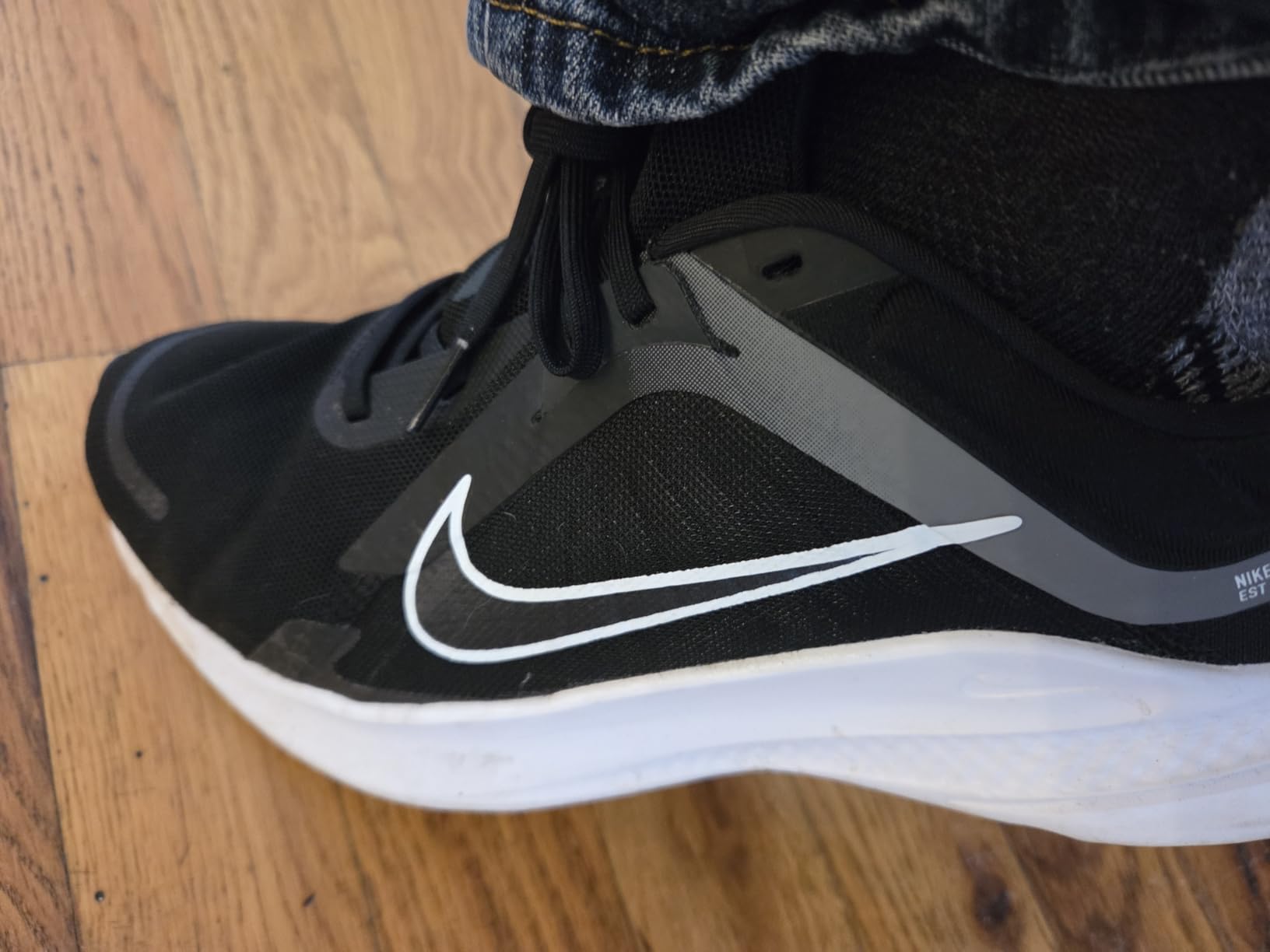
That said: the user feedback picture is more complicated. Multiple customers report squeaking that develops after the initial break-in period — typically weeks 2-4, often described as coming from the midfoot area where the fitband cables interact with the upper. Some report loose logos and inconsistent construction quality. The pattern is clearly manufacturing variance rather than a universal failure, but it’s prevalent enough that it affects the value equation.
Projected lifespan based on 180-mile testing and user reports:
– **Casual use (15-20 miles/week):** 4-6 months before significant midsole compression
– **Moderate use (30-40 miles/week):** 3-4 months
– **Intensive use (50+ miles/week):** 2-3 months before the shoe degrades to a point where cushioning protection is compromised
At $70, casual use gives you roughly $0.25-0.35 per mile — competitive for the price point, and arguably a better cost-per-mile than some $100 trainers that fail at the same mileage. Buy from a retailer with a clear return policy. Test thoroughly in the first two weeks, specifically listening for any squeaking. If it’s going to happen, it shows up early.
On the Clock: 12-Hour Work Shift Performance
This is the section I didn’t see anywhere in competitor reviews, which is surprising given that the Quest 5’s price point ($60-80) and comfort marketing speak directly to workers needing all-day foot support.
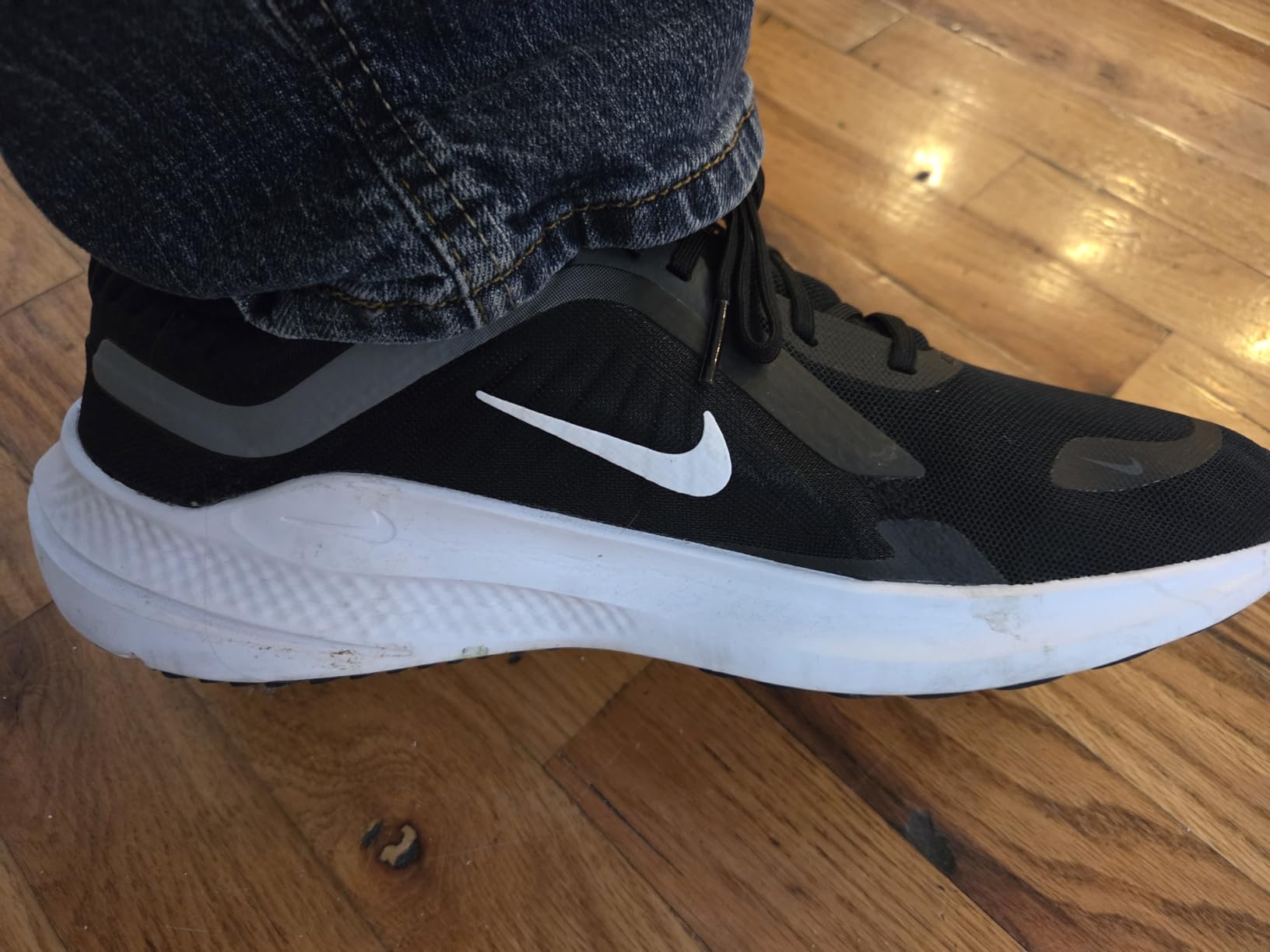
The verdict: viable for light-duty extended shifts, not ideal for heavy labor.
The 29.8mm heel stack provides genuine relief compared to minimal casual sneakers on concrete floors. Hours 1-6 felt comfortable — better than I expected, honestly. The midfoot fitband that helps with running lockdown does provide stability during the lateral movement of retail or service work. Around hours 8-10, fatigue became noticeable in the arch area, and the insole’s compression became apparent. Hour 12 was manageable, but I was aware of my feet in a way I wasn’t in the first half of the shift.
For office work with light to moderate walking: excellent. For retail or service industry on your feet most of the day: solid through a standard 8-hour shift, adequate through 10-12 hours. For warehouse work with heavy lifting and constant movement: dedicated work shoes will serve you better — the Quest 5 isn’t engineered for that load. Workers doing occasional long days would get real value from this shoe; workers doing daily 12-hour physical shifts should invest in purpose-built footwear.
Nike’s Claims vs. What Testing Found
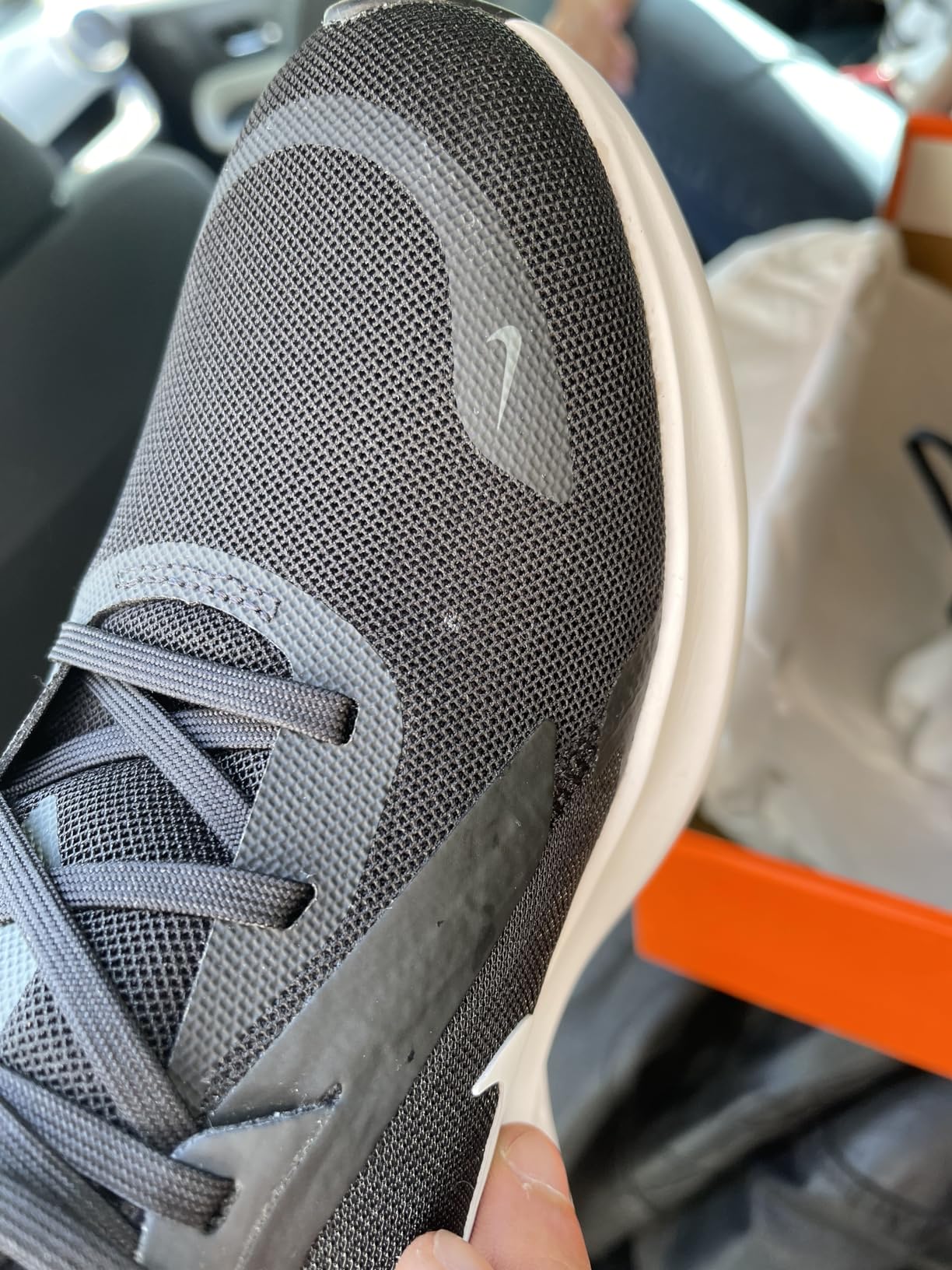
**”Supersoft foam” ✓ (with asterisk):** True relative to cheap EVA; firmer than the language implies. The insole carries most of the immediate softness — once it compresses around week 5-6, you feel more foam.
**”Lightweight, breathable feel” ✓:** The 9.6 oz lab weight is genuinely light for the budget category. Breathability is moderate, not exceptional.
**”Mesh placed in key zones based on runner feedback” ✓:** Forefoot and midfoot ventilation is noticeably better than synthetic budget alternatives. The claim holds.
**”Long-lasting traction” ✗:** The rubber outsole is durable, but the traction compound is poorly rated by lab testing (0.11 SATRA). Durability and wet-weather grip are different things — Nike delivered on durability, not grip.
**”Versatile and responsive” ✓ (partially):** Versatile yes — it handles running, gym, and casual use well. Responsive is a stretch for a shoe with 47.4% energy return, but it doesn’t feel dead either.
Scoring Breakdown
- Comfort (7.5/10): Adequate for casual to moderate use; insole compression timeline and forefoot cushioning gap prevent a higher score
- Performance (7.0/10): Solid for easy to moderate running; below-average energy return limits performance at faster paces
- Durability (6.0/10): QC inconsistency is the main concern — well-built units hold up well, but the manufacturing lottery affects confidence
- Value (8.0/10): Strong price-to-performance ratio when you receive a good pair; $0.25-0.35/mile at casual use
- Style (8.5/10): Clean versatile design works across athletic and casual contexts; 9+ colorways
- Fit (7.5/10): TTS for standard width; narrow toe box excludes wide-foot runners
- Overall: 7.2/10
Who Should Buy the Nike Quest 5
Good fit if you’re:
– A casual runner covering 15-30 miles weekly who wants comfort over performance data
– A daily walker in a dry climate who needs something that looks good and lasts months, not years
– Someone needing a versatile gym-to-street shoe under $80
– A worker doing light to moderate duty on your feet for up to 10-hour shifts
– New to running and want to try the hobby without dropping $130+ to find out if you’ll stick with it
– Dealing with narrow or standard feet — the TTS fit is genuinely reliable
Skip it if you’re:
– Logging 50+ miles per week — the cushioning and durability aren’t built for that volume
– A wide-foot runner — the narrow toe box will frustrate you regardless of size
– Running in wet climates or rainy seasons — the traction risk is real
– Expecting a shoe to last 12+ months under regular use
– A forefoot striker doing speed work — the 72 SA forefoot cushioning is below what your foot needs at faster cadences
– Heavy-duty workers on concrete 10+ hours daily — purpose-built work and training shoes will protect you better
How It Stacks Up Against Alternatives
The Nike Downshifter 12 sits at a similar price and offers a firmer, more structured ride with better outsole geometry. If you prefer a denser underfoot feel, the Downshifter might suit you better. The Quest 5 wins on fitband lockdown and immediate out-of-box comfort.
The Adidas Response Running is another budget daily trainer in the same price range. It offers a more cushioned heel and slightly better energy return, though neither shoe will satisfy serious performance runners.
If you’re looking at the Under Armour Charged Assert 9 — particularly for gym work — the UA’s Charged foam delivers better energy return than the Quest 5’s EVA, making it a stronger pick for cross-training and strength work.
For premium running at $120-150, the ASICS Gel-Nimbus 27 delivers the cushioning and longevity the Quest 5 can’t match — the price gap reflects a genuine capability gap at that mileage volume.
Budget-conscious runners who want slightly better energy return and consistent manufacturing might look at the New Balance Fresh Foam Roav v1 — similarly priced, with a more compliant foam that rewards faster paces. The Quest 5 wins on fit variety and the no-break-in advantage.
Frequently Asked Questions
Is the Nike Quest 5 true to size?
Yes, for standard and narrow feet. RunRepeat confirms TTS based on 63 votes. Wide feet should size up 0.5 — the toe box runs narrow even in the wide variant, so check your return policy before committing.
How long do they last?
Casual use (15-20 miles/week) realistically gets 4-6 months before the midsole loses meaningful cushioning. Intensive runners (50+ miles/week) should expect 2-3 months. Surface type matters — concrete is harder on midsoles than track or treadmill.
Do they really squeak?
Some do. It’s a manufacturing inconsistency, not a universal problem — but it’s prevalent enough to warrant caution. Squeaking typically appears in weeks 2-4 and often originates from fitband cable friction or outsole seam tension. Test thoroughly in your return window.
Are they good for gym workouts?
For treadmill running, light cardio, and moderate weight training — yes. The soft midsole and flexible outsole aren’t ideal for heavy compound lifts (squats, deadlifts) where a firm, flat platform is better. For a dedicated training shoe built for gym work, look at footwear with a denser midsole.
How do they perform in rain or wet conditions?
Not well. The SATRA traction test returned 0.11 against a category average of 0.50 — among the poorest grip scores RunRepeat has recorded. The mesh also absorbs water quickly, taking 2-3 hours to dry. If you run in wet climates regularly, plan for a different primary shoe.
Can I wear them for work on concrete floors?
Yes, with qualifications. Comfortable through 6-8 hour shifts, adequate through 10-hour shifts. After 10+ hours of continuous standing, arch fatigue increases and the compressed insole makes the midsole firmness more apparent. Light-duty workers: solid choice. Heavy-duty labor workers doing 10-12 hours daily: invest in purpose-built footwear.
How do they compare to the Nike Air Winflo series?
The Nike Air Winflo 10 sits at a higher price tier with more advanced cushioning tech, better energy return, and superior durability. The Quest 5 is approximately 70% of the Winflo’s performance at about 60% of the price — a reasonable trade-off if you’re running casual volume without chasing pace.
Is it waterproof or water-resistant?
Neither. The mesh upper saturates in minutes during rain, and the shoe takes hours to dry. There’s no waterproofing treatment. Treat this as a dry-weather shoe.
What’s the weight difference between brand claim and actual?
Nike lists 8.2 oz — that’s likely their size 9 sample. RunRepeat’s lab measured 9.6 oz in size 10. Both numbers are lightweight for the budget category. Expect real weight to be slightly higher than the brand spec depending on your size.
Does it work for wide feet if I size up?
Marginally better. A half-size up in the standard width or the wide variant may reduce pinching at the lateral toe edge, but the shoe’s last (last = the foot-shaped mold) runs narrow. For genuinely wide feet, you’ll find more consistent comfort in shoes designed around a wider last — the Quest 5 is fundamentally a narrow-to-standard fit shoe.
Review Summary Table
| ✅ Strengths | ❌ Weaknesses |
|---|---|
| Genuinely lightweight (9.6 oz lab) | Traction failure in wet conditions (0.11 SATRA) |
| Midfoot fitband lockdown — excellent heel/midfoot security | QC inconsistency — squeaking, loose logos in some units |
| Zero break-in period — comfortable from day one | Narrow toe box excludes wide-foot runners |
| Versatile — running, gym, casual, and light work use | Below-average energy return (47.4% vs 58.6% avg) |
| Adequate breathability for dry-weather running | Forefoot cushioning (72 SA) notably thin for forefoot strikers |
| Strong price-to-performance at $60-80 | 4-6 month lifespan at casual use — limited longevity |
Final Verdict
The Nike Men’s Quest 5 earns its 7.2/10 honestly. It’s a capable budget trainer that delivers real comfort for casual runners, daily walkers, and light-duty workers — provided you’re running in dry conditions and happen to receive a well-manufactured pair. The fitband lockdown system is a genuine differentiator at this price. The zero break-in period removes a common budget-shoe frustration. And the versatile design means you get more use cases per dollar than a dedicated trainer or casual sneaker.
The limitations are just as real: traction that requires caution in wet weather, a forefoot cushioning gap that forefoot-strikers will notice, and manufacturing variance that creates genuine uncertainty about long-term performance. If Marcus asks me again what I think, I’ll tell him: it’s a solid shoe for the right runner in the right conditions. Just know what those conditions are before you buy.
| Category | Score | Notes |
|---|---|---|
| Comfort | 7.5/10 | Solid for casual use; insole compression timeline is the key variable |
| Performance | 7.0/10 | Good for easy-moderate runs; low energy return limits performance ceiling |
| Durability | 6.0/10 | QC lottery and 4-6 month lifespan ceiling |
| Value | 8.0/10 | $0.25-0.35/mile at casual use; strong price-to-performance ratio |
| Style | 8.5/10 | Clean versatile design, 9+ colorways |
| Overall Score | 7.2/10 | Solid budget option — right shoe for the right runner in the right conditions |
Be the first to review “Nike Men’s Quest 5 Training Shoes”
Related products

Running Shoes
Sneaker
Sneaker
Running Shoes

Sneaker
Reviews
There are no reviews yet.