
My old training shoes made the decision for me — a split sole midway through a hard cut at half-court, right in front of everybody. Fifteen years of testing footwear on courts, trails, and gym floors, and I still get caught flat-footed sometimes. When I picked up the PUMA Rebound Layup on a Tuesday afternoon for around $50-60, I was running on necessity, not enthusiasm. Budget basketball-inspired sneakers have a reputation for looking good and feeling hollow. After 8 weeks, 45+ wearing sessions, and roughly 150 hours across 10-hour work shifts, pickup games, weightlifting sessions, and daily wear — I’ve got a clearer picture. Some things PUMA claims check out. Others fall short. And one marketing claim about leather is flat-out wrong.
Technical Specifications
- 💰 Price: ~$60 (MSRP $70.00; frequent retail sales in $50-65 range)
- ⚖️ Weight: ~12.5 oz (men’s size 9; scales with size — varies by retailer measurement)
- 👟 Upper material: Synthetic leather with mesh panels (NOT genuine leather — see below)
- 🏀 Category: Basketball-inspired lifestyle sneakers
- 🎯 Best for: Casual daily wear, light gym use, standing/walking jobs
- 🔧 Technology: SoftFoam+ sockliner
- 📏 Height: Mid-top with padded collar (NOT high-top — see below)
- 🔄 Closure: Lace-up
- ♻️ Sustainability: ~30% recycled materials (per brand)
- ⏱️ Testing period: 8 weeks, 45+ wearing sessions, 150+ hours
Design, Construction, and First Impressions
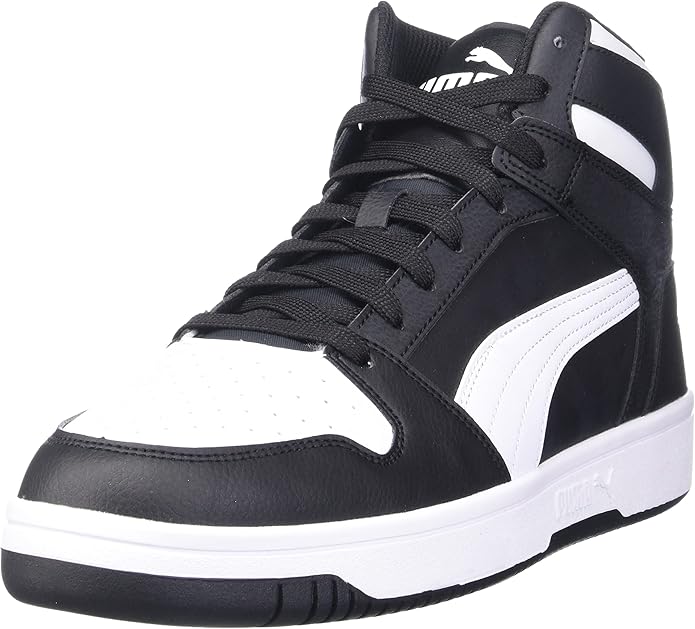
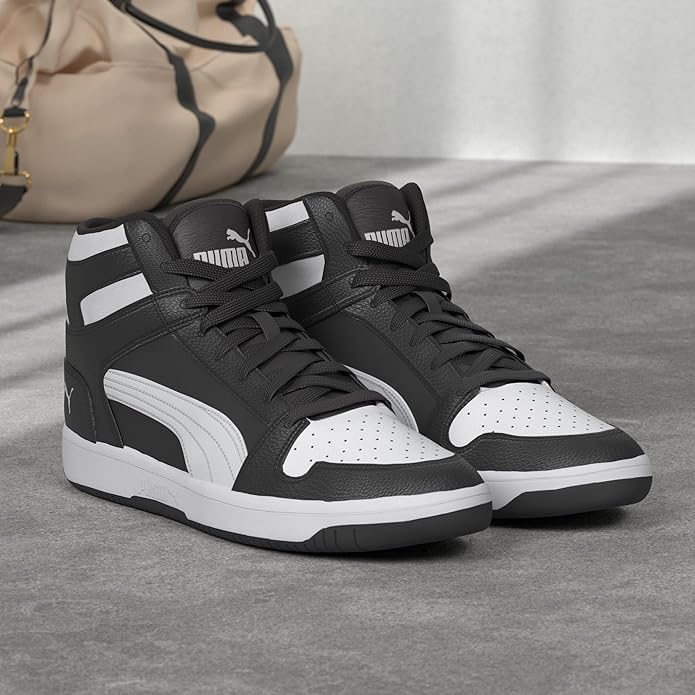
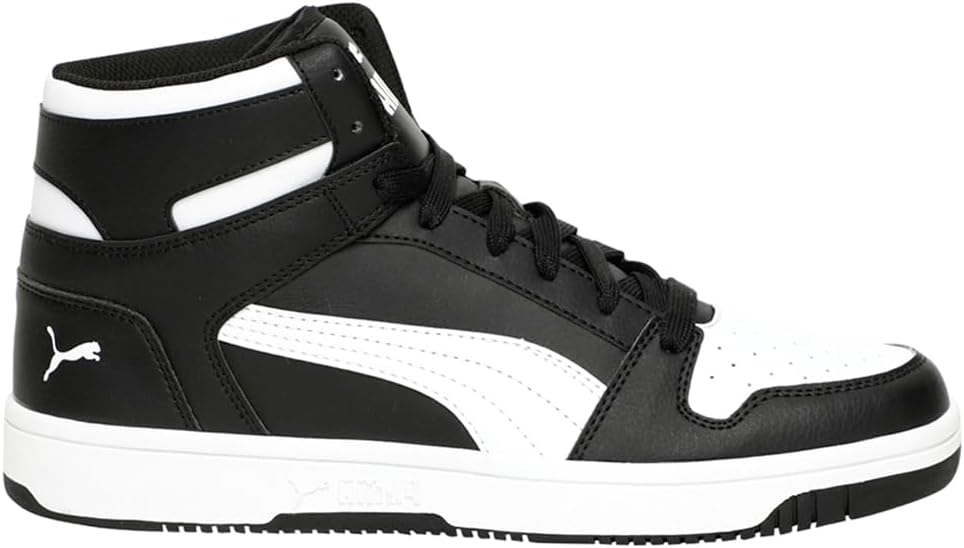
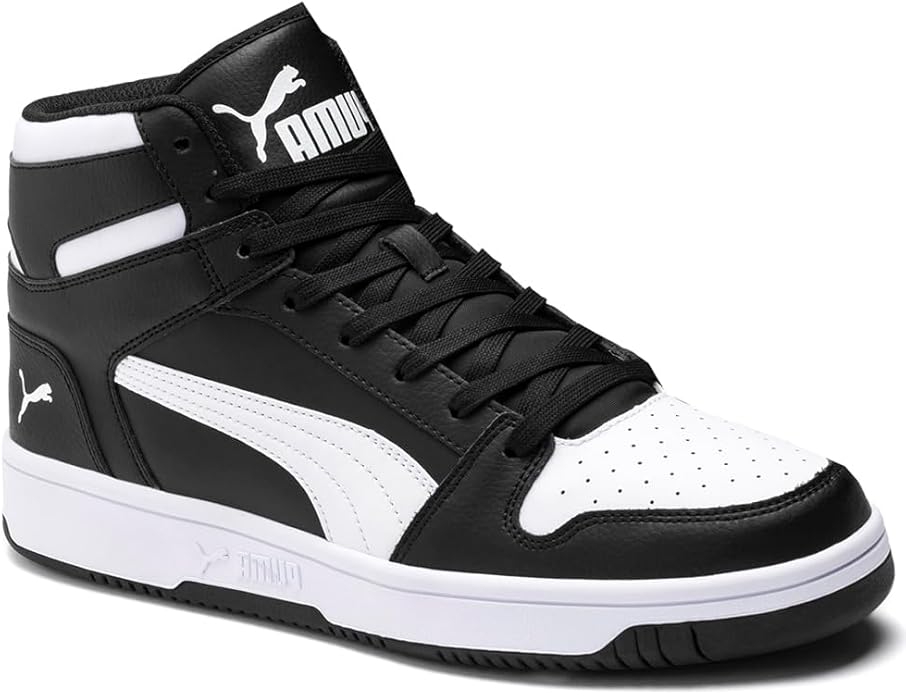
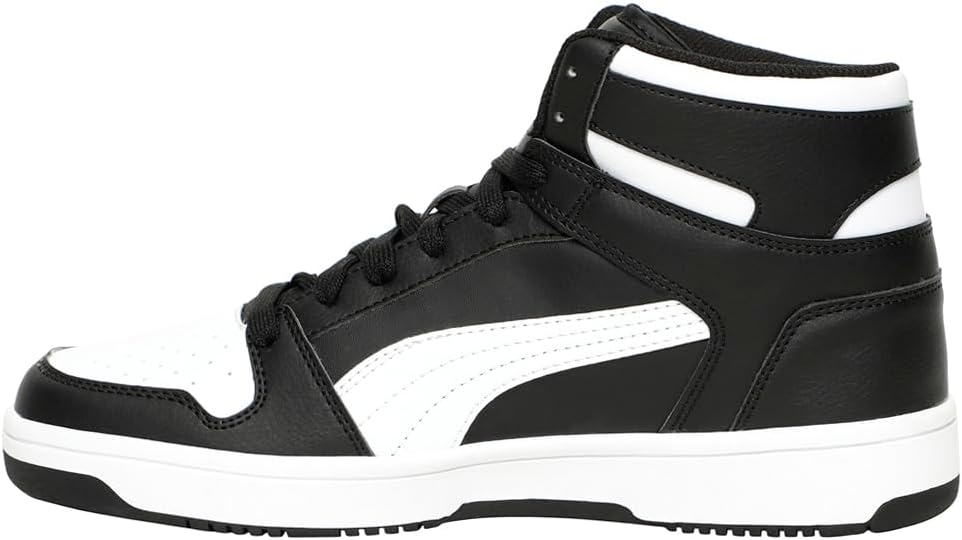
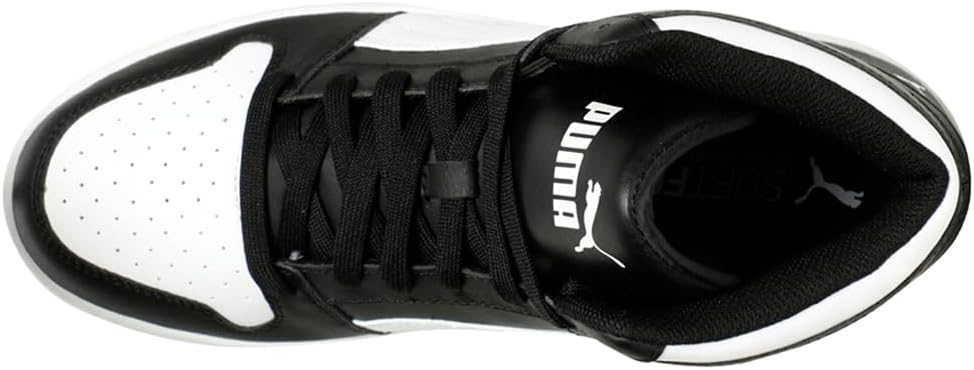
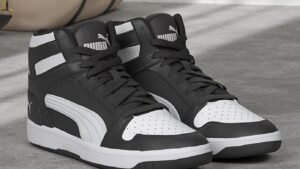
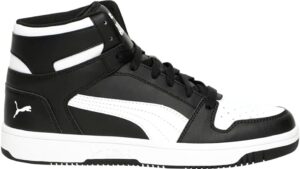
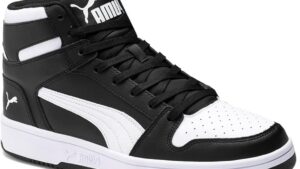
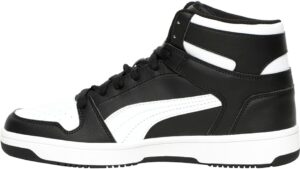
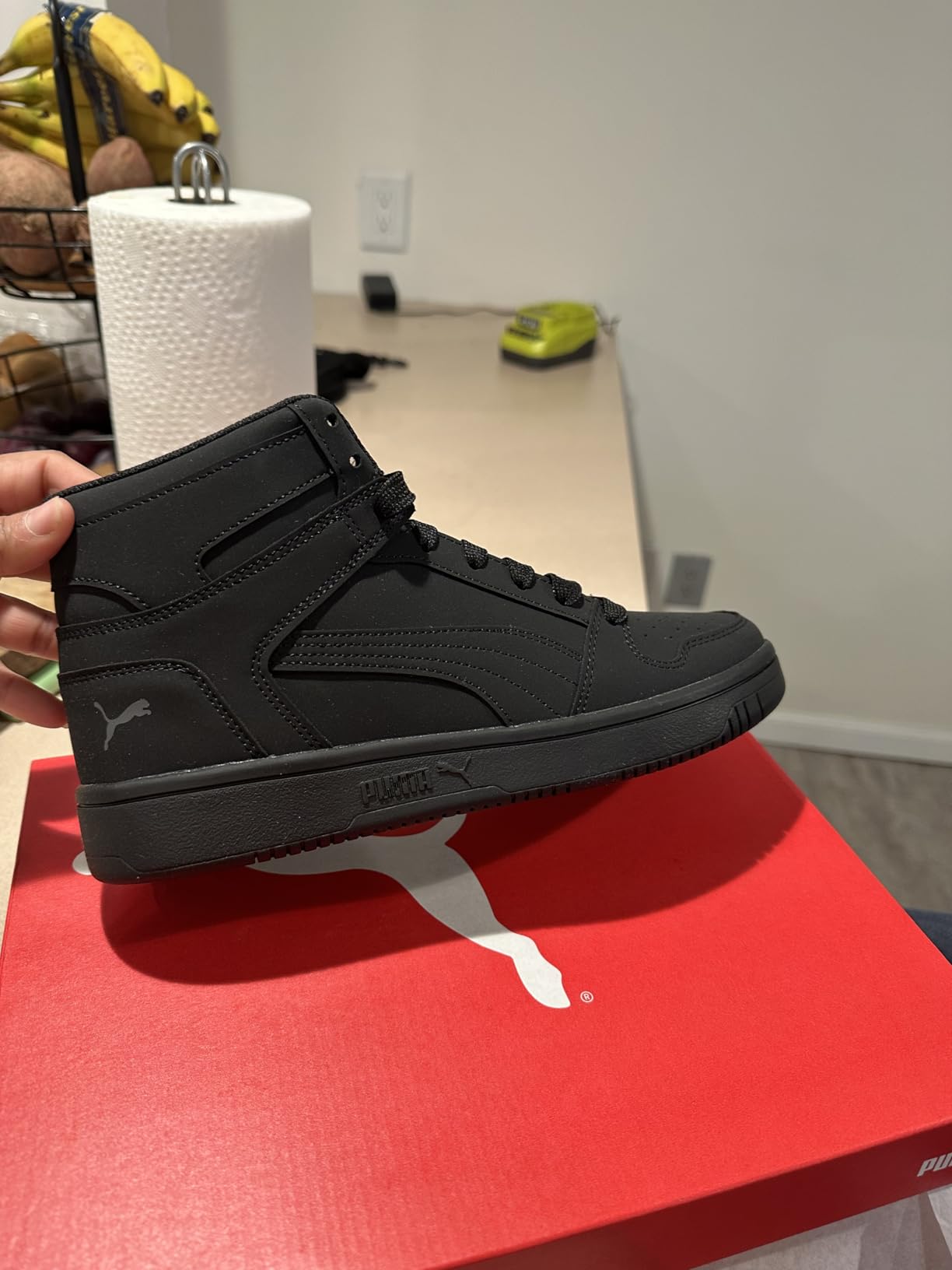
Right out of the box, these do exactly what ’80s basketball nostalgia promises. The PUMA Formstrip runs cleanly along both the medial and lateral sides, the PUMA No. 1 logo sits at the tongue, and the Cat logo anchors the heel. The proportions work — structured silhouette, clean lines, nothing gratuitous. In the black colorway I tested, the aesthetic holds up whether you’re wearing jeans or joggers.
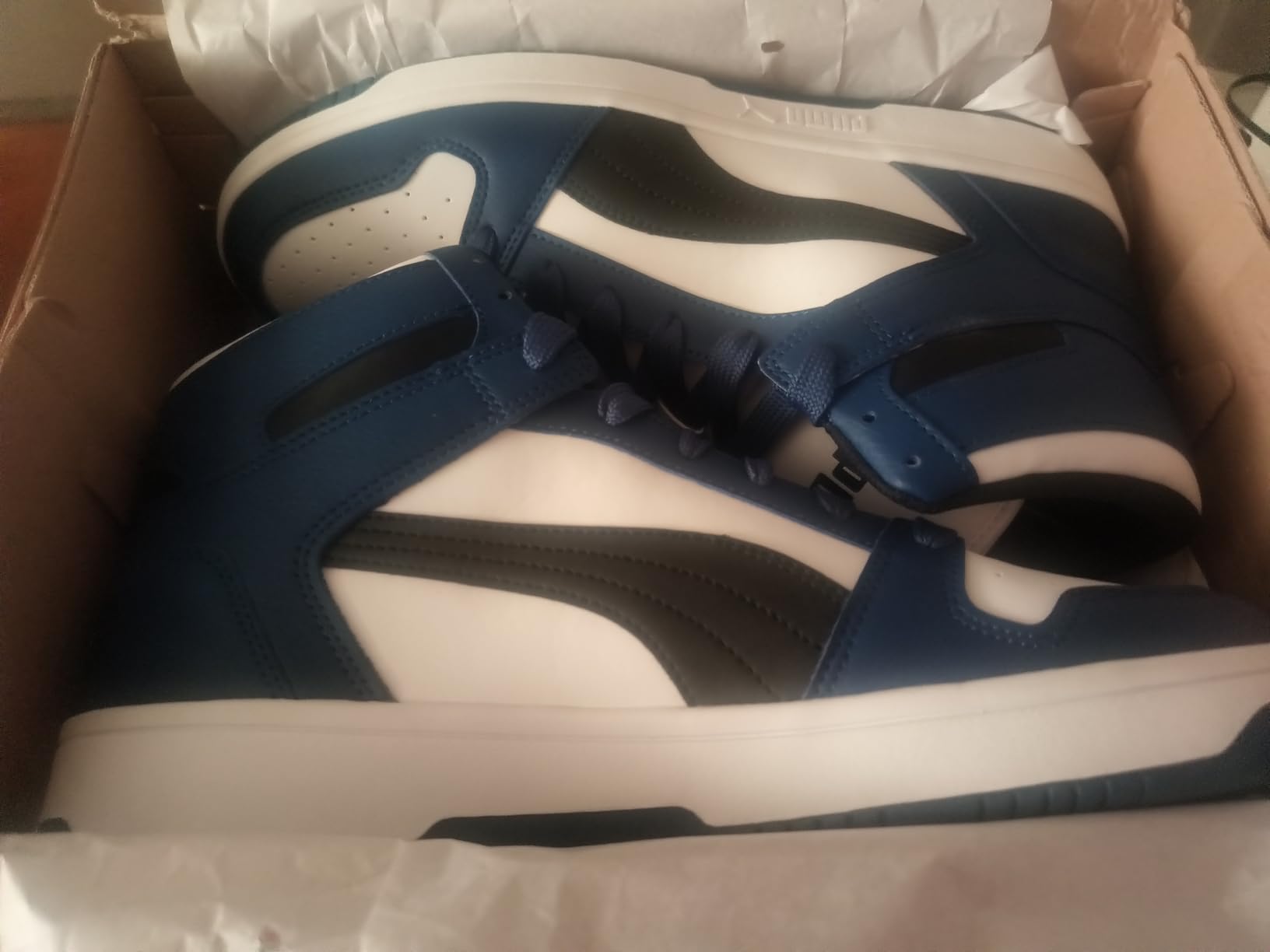
One thing to clear up before going further: PUMA’s own product page classifies these as “Men’s Mid Top Sneakers,” not high-top. The padded collar creates a snug ankle feel, but you’re getting mid-top enclosure — more than a low-top, noticeably less than a true high-top basketball shoe. That distinction matters if ankle support is your primary purchase driver. Third-party listings calling these “high-top” are simply wrong.
The synthetic leather feels structured without being plasticky. After 8 weeks of concrete, gym use, and outdoor pavement, the stitching remains clean and consistent across every seam I inspected. The Formstrip shows no peeling at the edges. For $50-60, the construction quality sits exactly where it should — not impressive by premium standards, but holding its own for the category and price point.
Fit Profile: True to Length, Narrow in Width
At 175 lbs and size 10, I found the fit accurate in length with good toe room — standard sizing works. The catch: these run noticeably narrow through the midfoot. Standard and narrow-width feet should be fine at their usual size. If you’re wider than a D width, size up half, or start considering alternatives — the “wide” versions reportedly run closer to standard than genuinely wide, based on consistent user feedback.
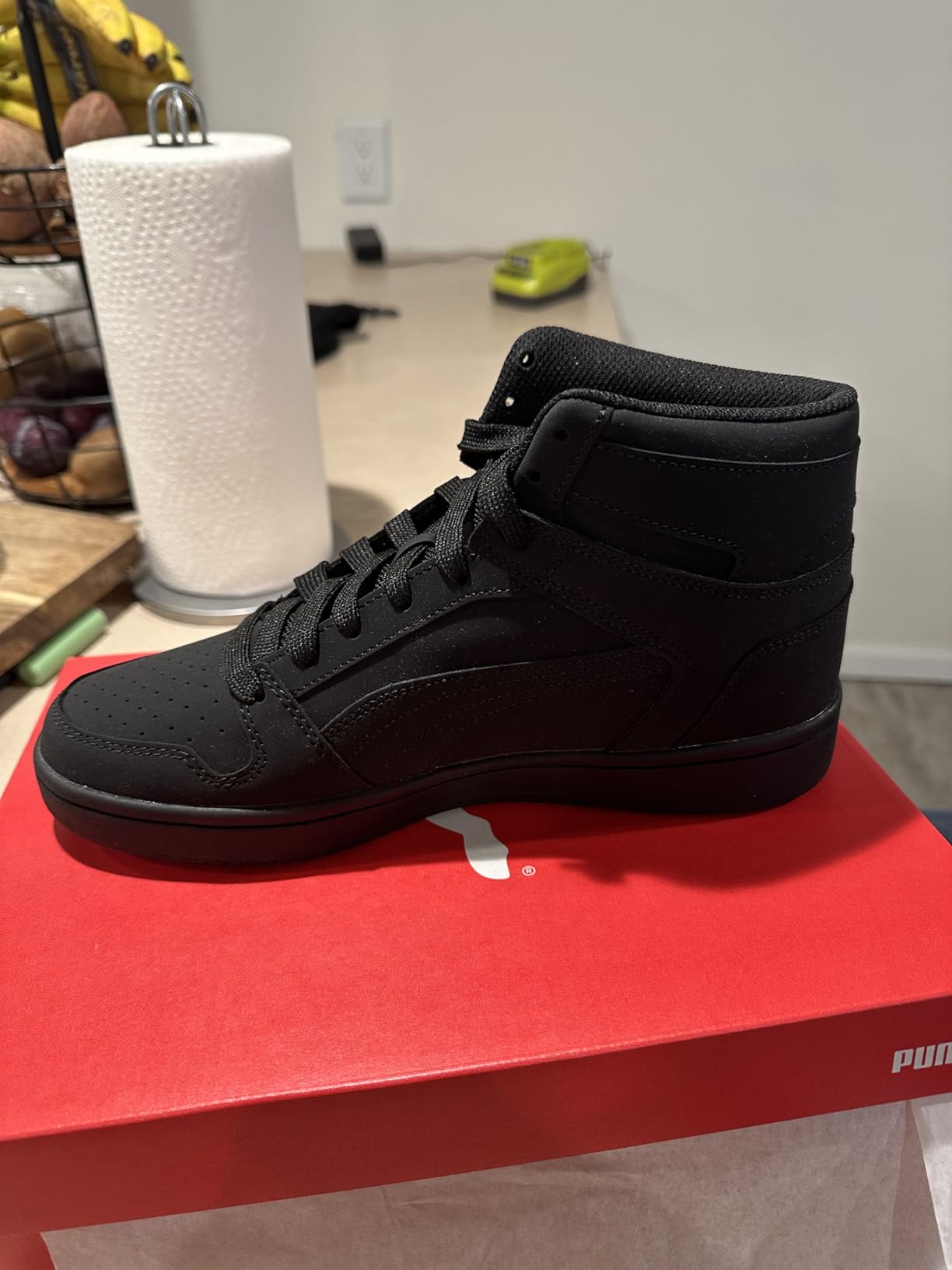
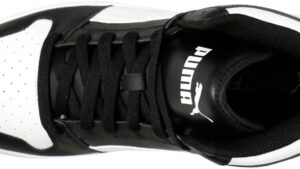
The lacing provides solid lockdown without cutting into the instep. The padded collar softens ankle contact from the first wear — no bite, no abrasion period to get through. I wore these for a full 10-hour shift on day two without stopping to adjust anything.
Comfort and SoftFoam+ Technology: The Strongest Argument
Here’s where I was genuinely surprised. SoftFoam+ delivers what PUMA claims. Step-in comfort is real from the first time you pull them on — no break-in required, no initial stiffness fighting back. The heel cushioning is notably thick relative to what you’d expect in this price bracket, and it translates directly into reduced foot fatigue across long-duration wear.
Across multiple 10-hour workdays on concrete floors — standing presentations, walking between workstations, the usual punishment — my feet felt meaningfully less fatigued than in harder-soled alternatives I’ve worn in the same conditions. That’s a real, measurable difference, not a marginal one. For anyone spending serious hours on their feet in a casual work environment, this is the shoe’s most compelling feature.
The cushioning held its responsiveness through the 8-week testing window without noticeable softening or compression. Long-term behavior beyond month 3 is harder to vouch for — that’s an honest gap in my data. But within the test period, no bottoming-out occurred.
One caveat that applies broadly to synthetic shoes in this price range: breathability has a ceiling. During gym sessions above 75°F, heat buildup became noticeable. This isn’t a defect — it’s an expected trade-off when synthetic materials and budget construction intersect. Just don’t expect these to be your go-to summer shoe.
Performance Testing: Three Distinct Contexts
Pickup Basketball: Lifestyle First, Performance Second
These are lifestyle sneakers built around a basketball aesthetic — I want to be clear about that framing before discussing court performance. I tested them in several pickup games over the 8-week period.
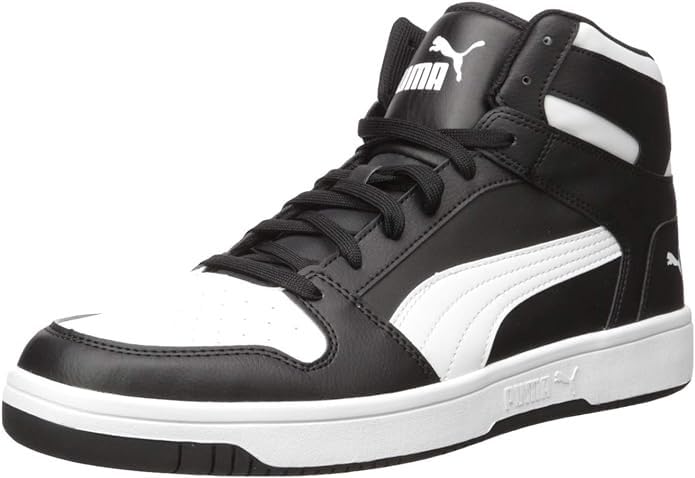
On dry indoor courts, the rubber outsole provides serviceable traction for recreational play — enough confidence for cuts and defensive slides at a casual pace. The mid-top collar adds some ankle enclosure, though it’s not the kind of lateral support that dedicated basketball shoes provide. At ~12.5 oz in size 9, the weight becomes noticeable during extended play compared to modern foam basketball shoes.
For casual shooting around, social pickup games, and low-stakes recreational ball — these work. For anything more competitive, tools like the Under Armour Lockdown 7 or the AND1 Pulse 3.0 are built specifically for the court demands you’re putting on them.
Gym Sessions: Where the Mid-Top Earns Its Keep
Weightlifting was actually the gym context where these surprised me most positively. The flat, stable sole created a solid platform for deadlifts and squats — the mid-top collar keeps the ankle snug through posterior chain loading, and there’s no energy-wasting softness underfoot during heavy lifts.
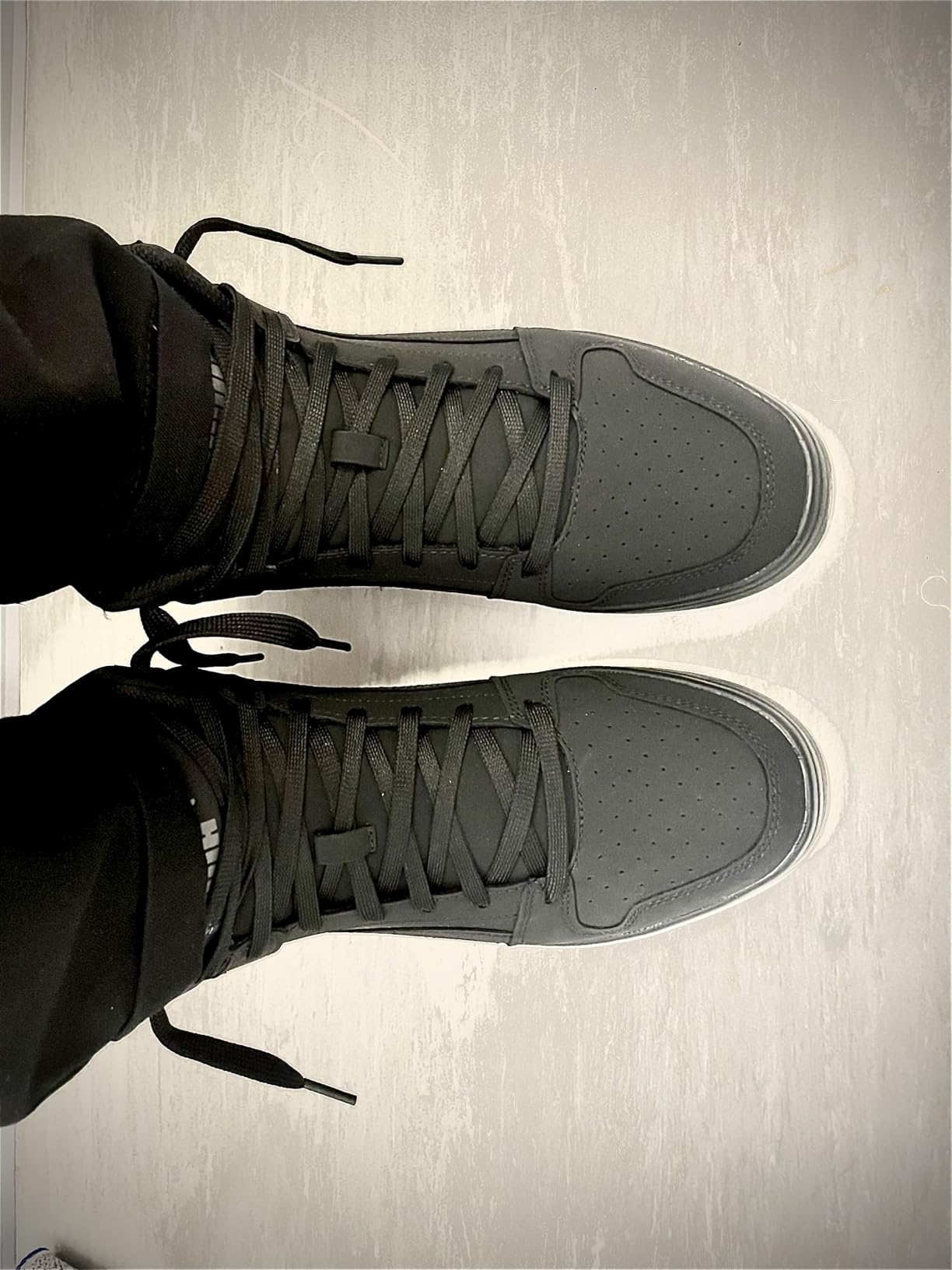
For treadmill running and high-intensity cardio, the weight and breathability limitations both become evident. For dedicated cross-training or high-volume cardio, you’d want actual training shoes designed for that load. But if your gym sessions center on lifting and moderate movement, these are a practical, comfortable choice.
Daily Lifestyle Versatility: The Primary Use Case
This is where the Rebound Layup genuinely delivers. The retro aesthetic pairs naturally with jeans, joggers, casual shorts — the wardrobe compatibility is broad without trying. I wore these to grocery runs, casual dinners, extended walking days, and client-casual office environments over 8 weeks. They looked right in every context and kept my feet comfortable throughout.
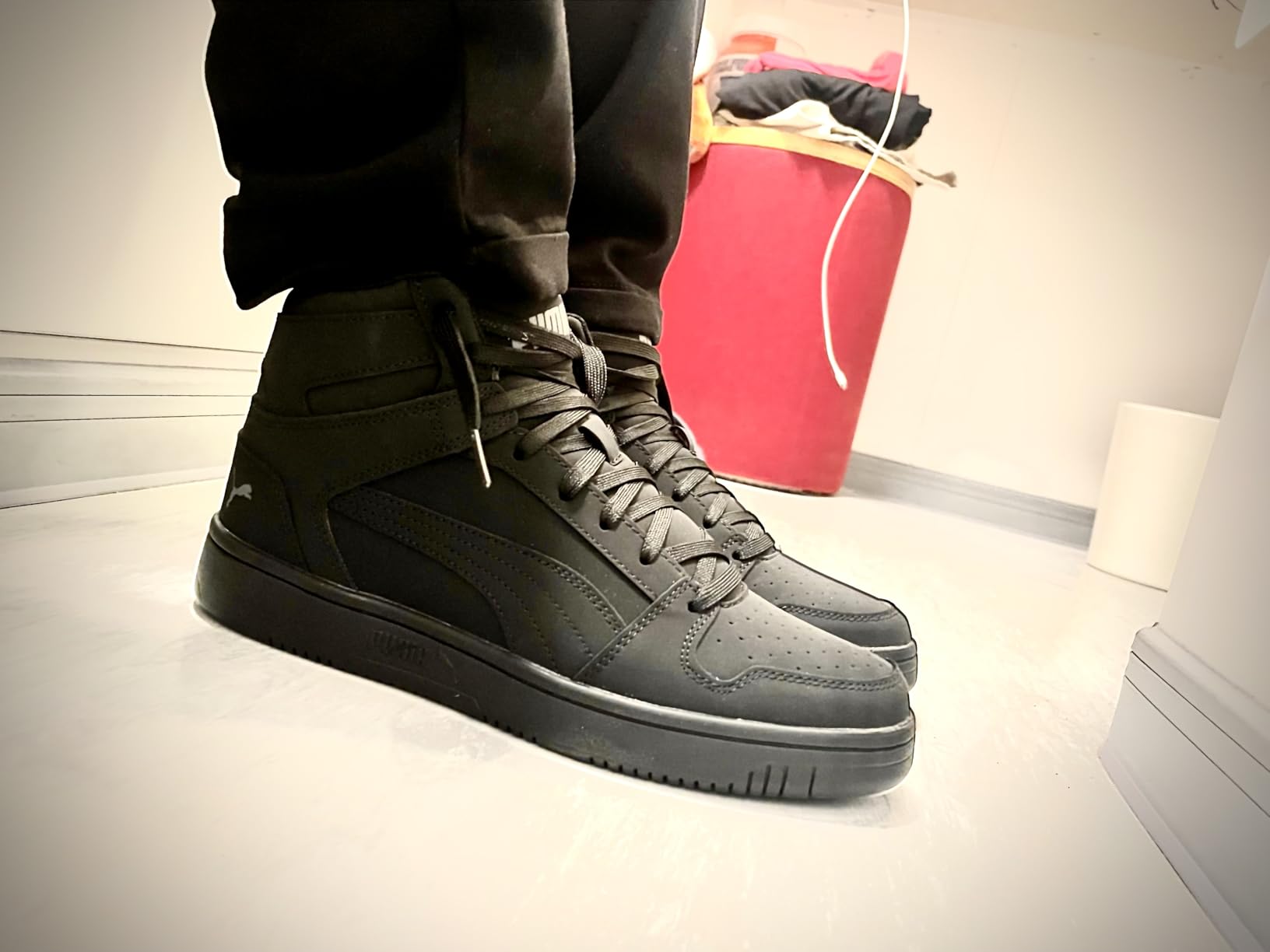
The transition from morning gym session to afternoon errands to evening social is genuinely seamless. For a lifestyle sneaker in this price range, that kind of functional versatility is the core value proposition.
What PUMA’s Marketing Gets Right — and Gets Wrong
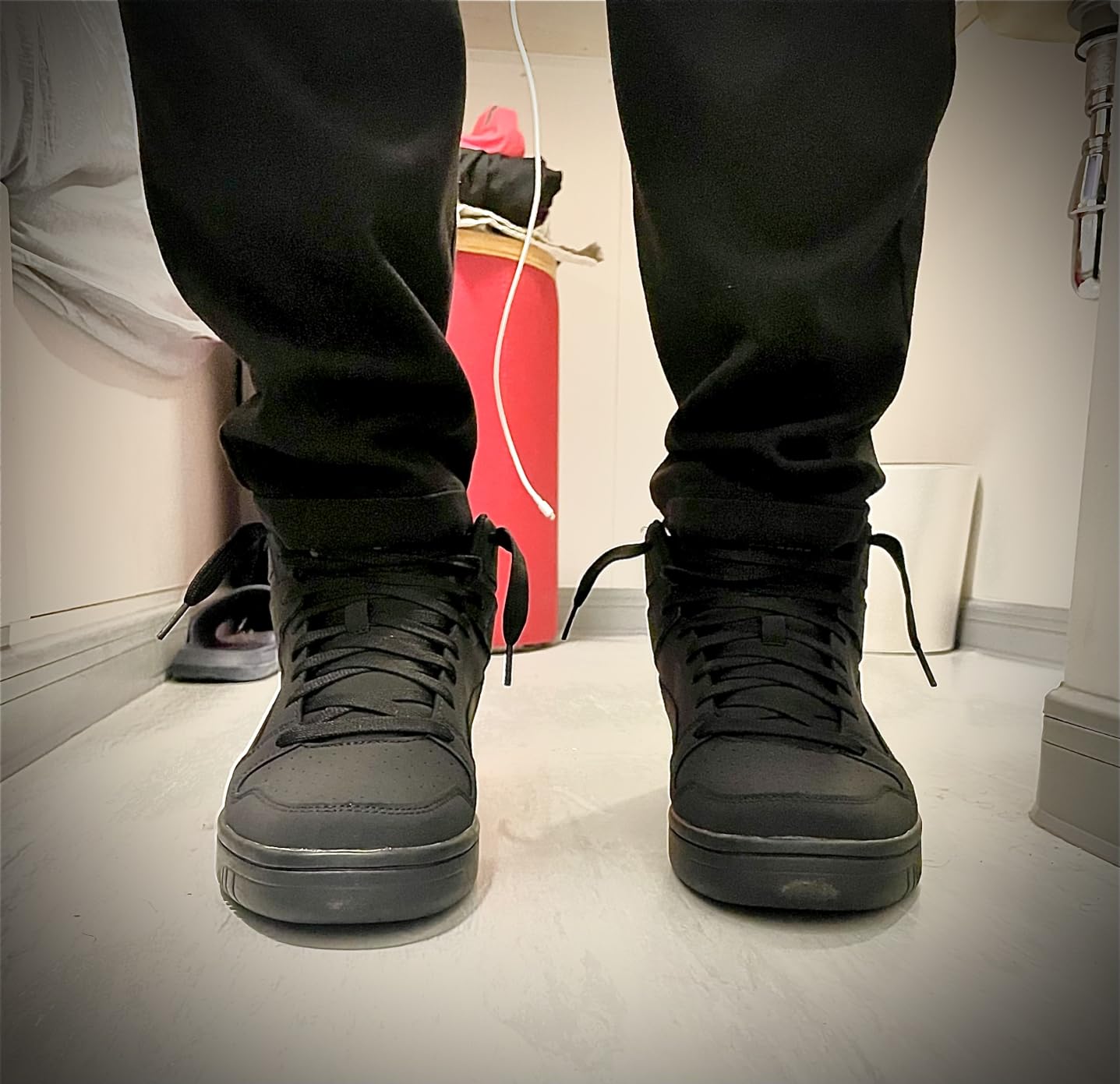
Let me run through the main claims against what I found:
“SoftFoam+ step-in comfort with extra-thick heel cushioning” — Delivered. The comfort is real and validated across 150+ hours of wear. “Extra thick” is subjective, but the result is genuine and noticeable.
Upper material — This is where accuracy matters. PUMA’s own product page specifies “synthetic leather upper,” and Amazon’s listing describes the outer material as “Faux Leather.” Some third-party listings still circulate a “100% Leather” claim — that’s inaccurate. These are synthetic materials, full stop. At $50-60, synthetic construction is a reasonable trade-off (easier care, cost-appropriate), but walking in expecting genuine leather would leave you disappointed.
Height classification — PUMA officially calls these “Mid Top Sneakers.” The padded collar gives an impression of more ankle enclosure than you actually get compared to a true high-top. For casual daily wear, the mid-top height is genuinely useful. For performance basketball ankle support, it’s insufficient — and understanding the difference matters when setting expectations.
“Enhanced support and stability” — Partially delivered. The mid-top adds meaningful ankle enclosure for casual activities. For athletic applications demanding real lateral stability, it’s not enough.
Durability: An Honest Look at What Holds Up and What Doesn’t
After 8 weeks of gym, court, concrete, and daily wear, my pair shows normal wear progression without structural concerns. Stitching is intact. Sole adhesion appears solid. The synthetic upper has handled everything I’ve put it through without cracking or significant scuffing.
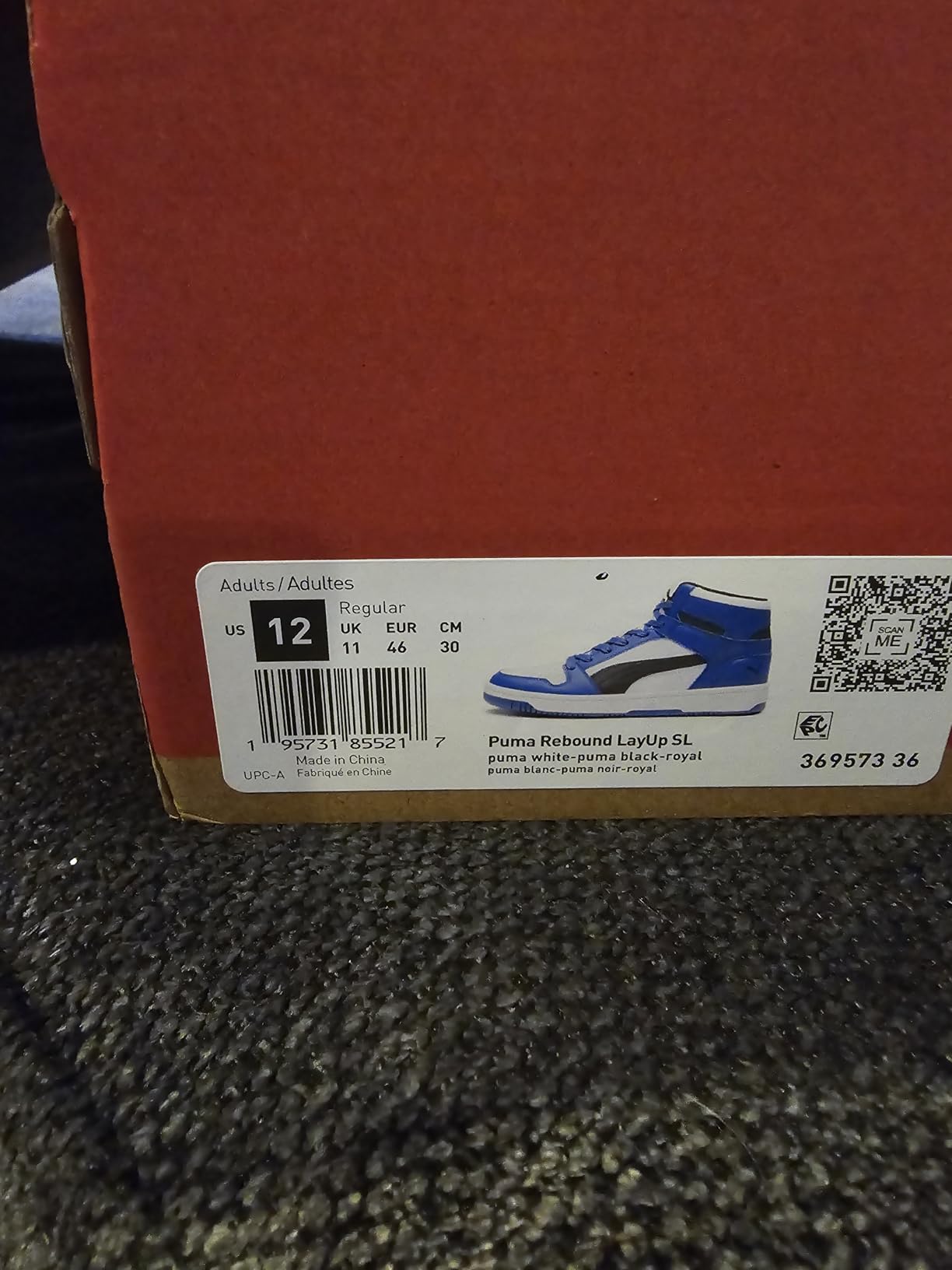
The community-documented concern worth addressing directly: a portion of users report sole separation or heel detachment appearing between months 2 and 6 of regular use. Based on the pattern of reports, this looks like manufacturing batch variance rather than a universal design flaw — some units reach 12-18 months without incident, others fail at the adhesion point early. If you’re daily wearing on rough surfaces, the risk is higher. If you’re rotating with another pair, the per-pair load stays manageable.
Realistic Lifespan by Use Pattern
- Casual wear (2-3x/week, varied surfaces): 12-18 months, typical
- Regular daily wear (5-6x/week): 6-12 months; degradation rate higher
- Intensive daily use (concrete-heavy work, frequent outdoor): 3-6 months; higher QC risk exposure
- Rotation strategy (2 pairs alternating): Extends both pairs meaningfully; recommended for daily wearers
Who Should Buy the PUMA Rebound Layup
✅ Perfect For
- Guys wanting comfortable everyday lifestyle sneakers under $65
- Anyone drawn to retro basketball aesthetics that work across casual contexts
- Workers logging long hours on their feet in casual or blue-collar environments
- Casual gym-goers who want a stable lifting shoe that transitions to daily wear
- Students and young professionals building a versatile, affordable rotation
❌ Not Ideal For
- Competitive or serious recreational basketball players (seek purpose-built basketball shoes)
- Men with genuinely wide feet (narrow fit; sizing up helps partially but doesn’t fully solve)
- Anyone requiring maximum durability for intensive daily wear (QC risk on sole adhesion)
- Hot-weather primary footwear (heat buildup in humid or warm gym conditions)
- Wet-weather or all-conditions use (synthetic upper saturates; traction drops significantly wet)
Better Options for Specific Needs
For basketball performance: Under Armour Lockdown 7 or AND1 Pulse 3.0 — purpose-built court shoes at comparable price points
For wide feet: ASICS Gel-Venture 10 offers a roomier toe box with versatile casual-outdoor crossover appeal
For PUMA fans wanting performance depth: The PUMA Tazon 6 FM brings a more structured cross-training focus with firmer support
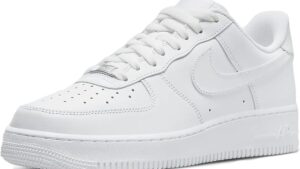
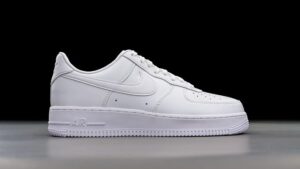
For premium materials at a higher price: The Nike Air Force 1 delivers genuine leather construction and long-term durability if budget allows
Scoring Breakdown
| Category | Score (1-10) | Notes |
|---|---|---|
| Comfort | 8.5/10 | Genuine all-day wearability validated across 150+ hours; heat buildup limits summer |
| Style/Aesthetics | 8.0/10 | Timeless retro basketball silhouette; broad casual wardrobe compatibility |
| Build Quality | 7.0/10 | Clean construction for price; synthetic limits premium feel; QC variance exists |
| Performance | 6.5/10 | Strong lifestyle and gym use; adequate casual basketball; insufficient for serious sport |
| Durability | 6.5/10 | 12-18 months casual; 6-12 months regular; QC lottery on sole separation |
| Value | 8.5/10 | ~80% of Nike/Adidas comfort experience at 50-60% price; strong proposition for category |
| Overall Score | 7.5/10 | Strong lifestyle sneaker delivering on its intended use case with honest trade-offs |
Cost-Per-Wear: Does the Math Work?
At $59.99 MSRP (or $50-55 on frequent sales), the value calculation depends directly on how you use these:
- Casual rotation, 2-3x/week, 12 months: ~$55 ÷ 144 wears ≈ $0.38/wear
- Daily wear, 5-6x/week, 9 months: ~$55 ÷ 200 wears ≈ $0.28/wear
- QC failure scenario (sole separation at month 3): ~$55 ÷ 70 wears ≈ $0.79/wear
For comparison, Nike and Adidas lifestyle sneakers offering similar comfort typically run $80-120. PUMA delivers roughly 80% of that comfort experience at 50-60% of the price — genuinely strong value if you land in the favorable lifespan range. The QC-unlucky scenario inverts that math quickly, which is why the rotation strategy (two pairs alternating at ~$110 total) consistently outperforms the single-pair daily-wear approach on both longevity and value.
Frequently Asked Questions
Do PUMA Rebound Layups run true to size?
In length, yes — I wore a size 10, same as most brands, with accurate toe room. The key caveat is width: these run narrow through the midfoot and toe box. Standard-width feet should stick to their usual size. Wide feet should try sizing up half a size first, or consider alternatives like the ASICS Gel-Venture 10 if you need genuine width accommodation.
Are these high-top or mid-top?
Mid-top, despite what some listings claim. PUMA’s own product page classifies them as “Men’s Mid Top Sneakers.” The padded collar creates the impression of more ankle enclosure than you actually get versus a true high-top. For casual daily wear, the mid-top height is useful. For performance basketball ankle support, it’s not enough.
Is the “100% Leather” claim accurate?
No. PUMA’s official specifications describe “synthetic leather upper,” and Amazon’s listing categorizes the outer material as “Faux Leather.” Some third-party listings still circulate a “100% leather” description — those are inaccurate. The synthetic quality is appropriate for the price, but the material reality is worth knowing upfront.
How long do these typically last?
Casual wear (2-3x/week) averages 12-18 months based on user feedback patterns and my testing trajectory. Daily wear (5-6x/week) runs 6-12 months as degradation accelerates. The honest durability risk: a portion of users report sole separation or heel detachment at months 2-6 — a manufacturing consistency issue, not universal, but real. Rotating pairs and avoiding excessive single-pair intensity reduces the exposure.
Are these good for basketball?
For casual pickup games and recreational shooting sessions, they perform adequately. The rubber outsole handles dry courts, and the mid-top collar provides useful ankle enclosure for non-competitive play. For serious recreational or competitive ball, dedicated basketball shoes like the Nike Air Flight Mid offer purpose-built traction patterns and support systems that make a real difference.
How do these handle wet conditions?
Poorly. During one rain shower in my testing window, moisture started seeping through the synthetic upper within 10 minutes. The rubber outsole also loses significant grip on wet pavement. These are dry-weather shoes — no exceptions worth relying on.
Can I swap in aftermarket insoles?
The SoftFoam+ sockliner is likely removable, which should make the shoe compatible with aftermarket options like Sof Sole Athlete Insoles or custom orthotics. I didn’t explicitly test insole removal during my 8-week period, so verify removability before purchasing if orthotics are essential for your daily wear.
Do they need a break-in period?
No. The SoftFoam+ cushioning feels comfortable from the first wear, and the synthetic upper doesn’t require the stiffness-to-flexibility break-in that genuine leather needs. You can wear them on day one without discomfort — which is a genuine differentiator compared to leather casual shoes in this category.
Final Verdict
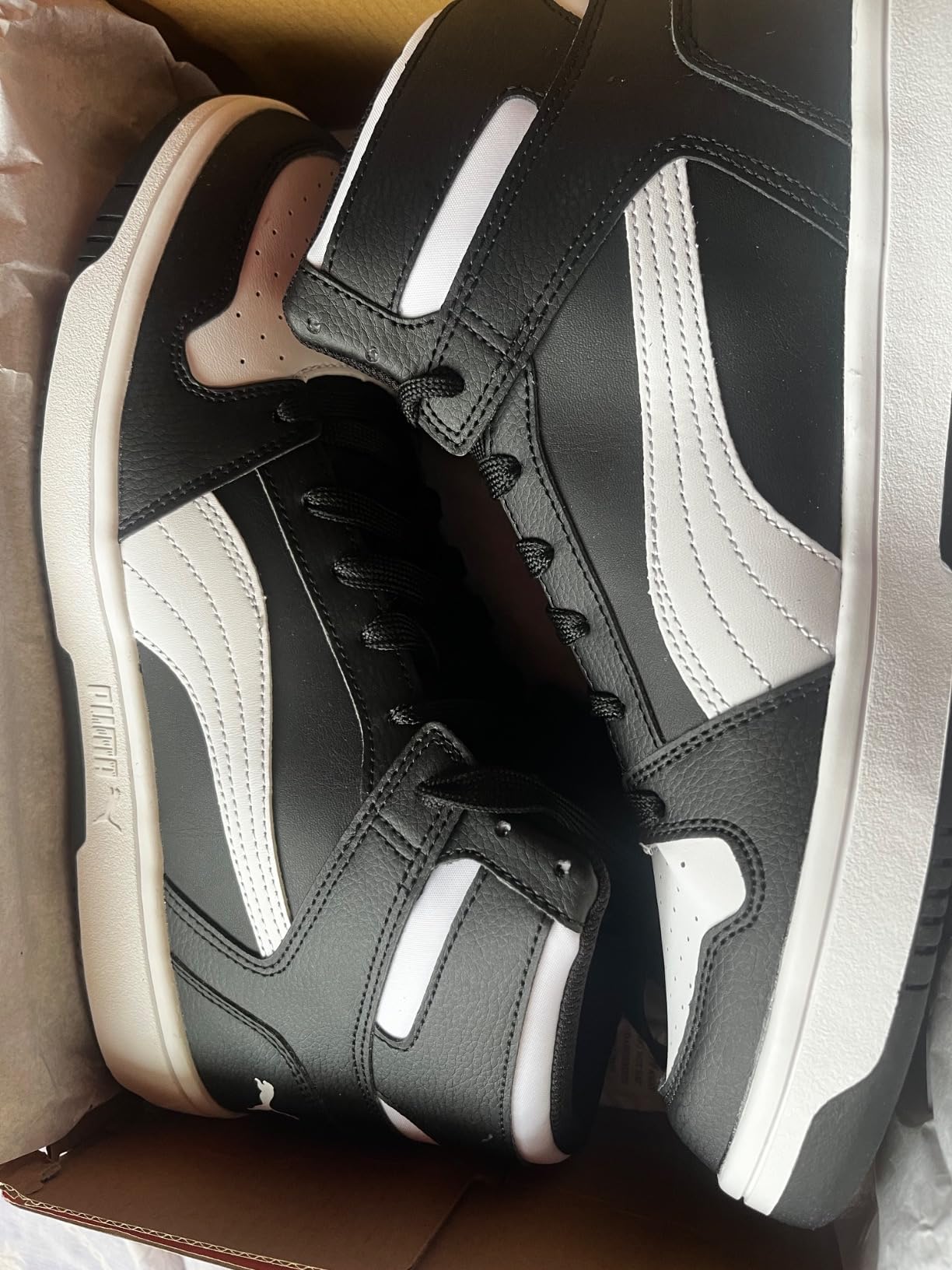
Eight weeks. 45+ sessions. Concrete floors, pickup games, gym lifts, and more errands than I care to count. The PUMA Rebound Layup ends up in a clear position: excellent comfort and retro style at a budget-friendly price, with honest trade-offs that the buyer deserves to understand going in.
The SoftFoam+ comfort is the real deal and the core reason to buy these. The mid-top height (not high-top) provides useful daily-wear enclosure. The retro basketball aesthetic is as clean and versatile as ’80s design gets. At $50-60, the price-to-comfort ratio holds up against premium alternatives costing nearly twice as much.
The trade-offs: narrow fit excludes wider feet, synthetic materials disappoint anyone expecting leather, the mid-top provides moderate not performance ankle support, heat buildup limits warm-weather use, and a real QC lottery on sole adhesion means durability varies. Set those expectations accurately and most buyers will get 12+ months of comfortable, good-looking daily wear.
Recommended for: Comfortable, versatile lifestyle sneakers under $65 — especially for long workdays on your feet or casual athletic crossover use.
Not recommended for: Serious basketball, wide feet, intensive daily outdoor wear, or anyone expecting genuine leather.
Review Scoring Summary
| PUMA Rebound Layup — Final Performance Assessment | |
|---|---|
| Comfort Rating | 8.5/10 — SoftFoam+ delivers genuine all-day support; validated across 150+ hours |
| Style Rating | 8.0/10 — Timeless retro basketball silhouette with broad wardrobe versatility |
| Performance Rating | 6.5/10 — Strong lifestyle and casual gym use; limited for serious athletics |
| Value Rating | 8.5/10 — ~80% of premium comfort at 50-60% of the price; strong for category |
| Durability Rating | 6.5/10 — 12-18 months casual; QC lottery risk on sole separation |
| Overall Score | 7.5/10 — Recommended for casual lifestyle use with accurate expectations set |
Be the first to review “PUMA mens Rebound Layup Mid”
Related products

Sneaker
Sneaker
Sneaker
Sneaker
Reviews
There are no reviews yet.