
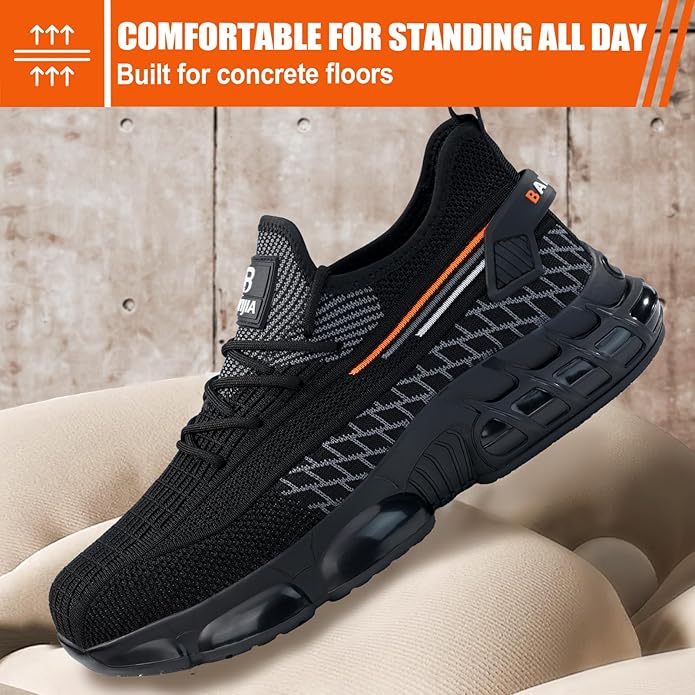
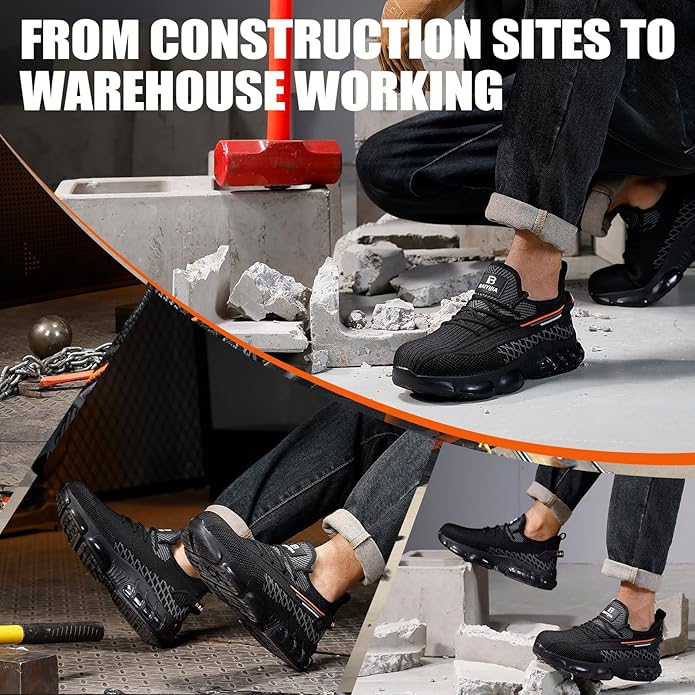
Three pairs of “work shoes” in one calendar year. That’s my personal record, and not something I’m proud of. Mike here — I’m a construction worker, and I’ve learned the hard way that most budget safety footwear falls apart somewhere between the promise on the box and the reality of a 10-hour demolition shift. When these Steel Toe Work Shoes showed up in my Amazon feed at $50, I almost kept scrolling. I didn’t. Six weeks and 45+ work days later, I have a specific answer for anyone considering them.
Technical Specifications
- 💰 Price: ~$50 (check current price on Amazon — ASIN B0C6D6HW4Z)
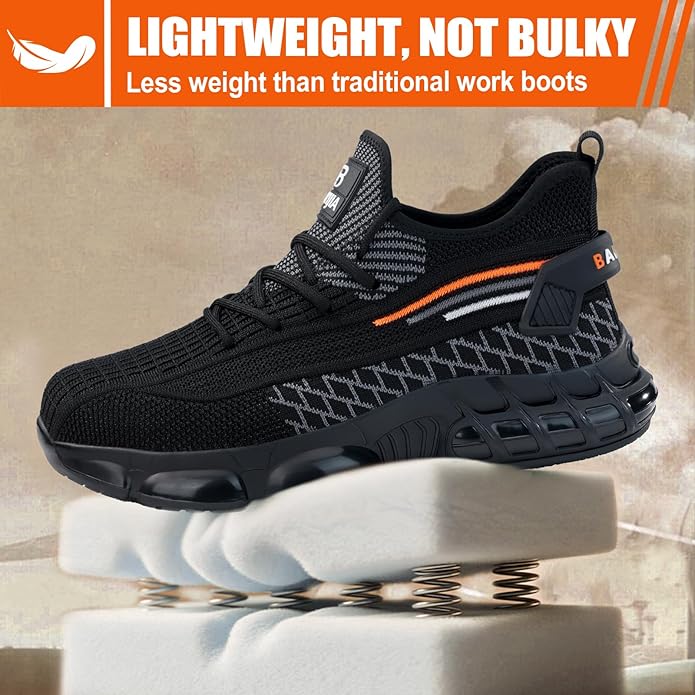
- ⚖️ Weight: ~2.2 lbs per pair (men’s size 10)
- 🔒 Safety Standard: ASTM F2413-18 certified — 200J impact resistance, 15KN compression resistance
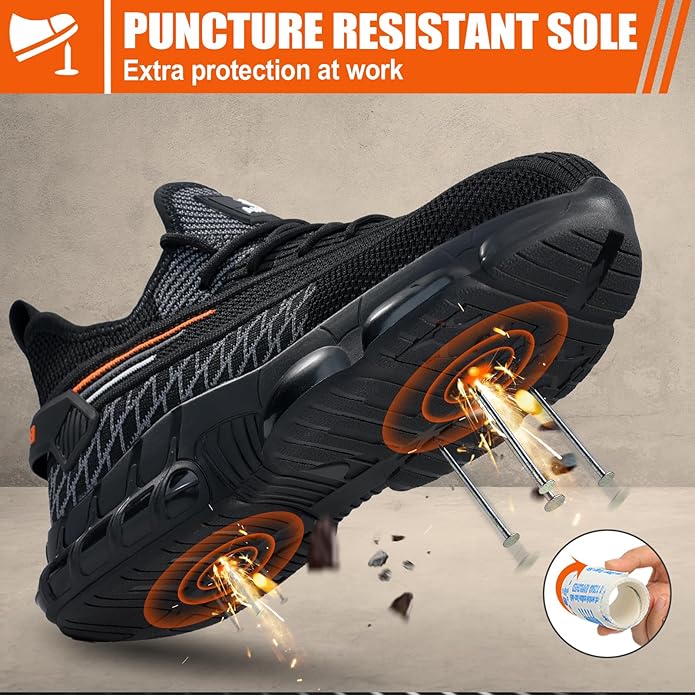
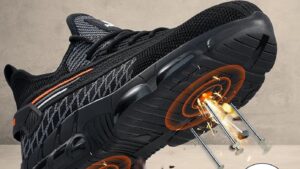
- 🛡️ Protection: Steel toe cap + Kevlar puncture-resistant midsole (≥1,100N puncture strength)
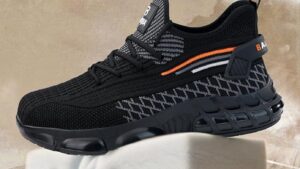
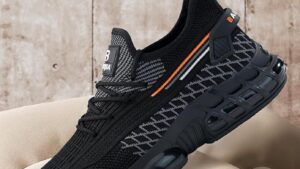
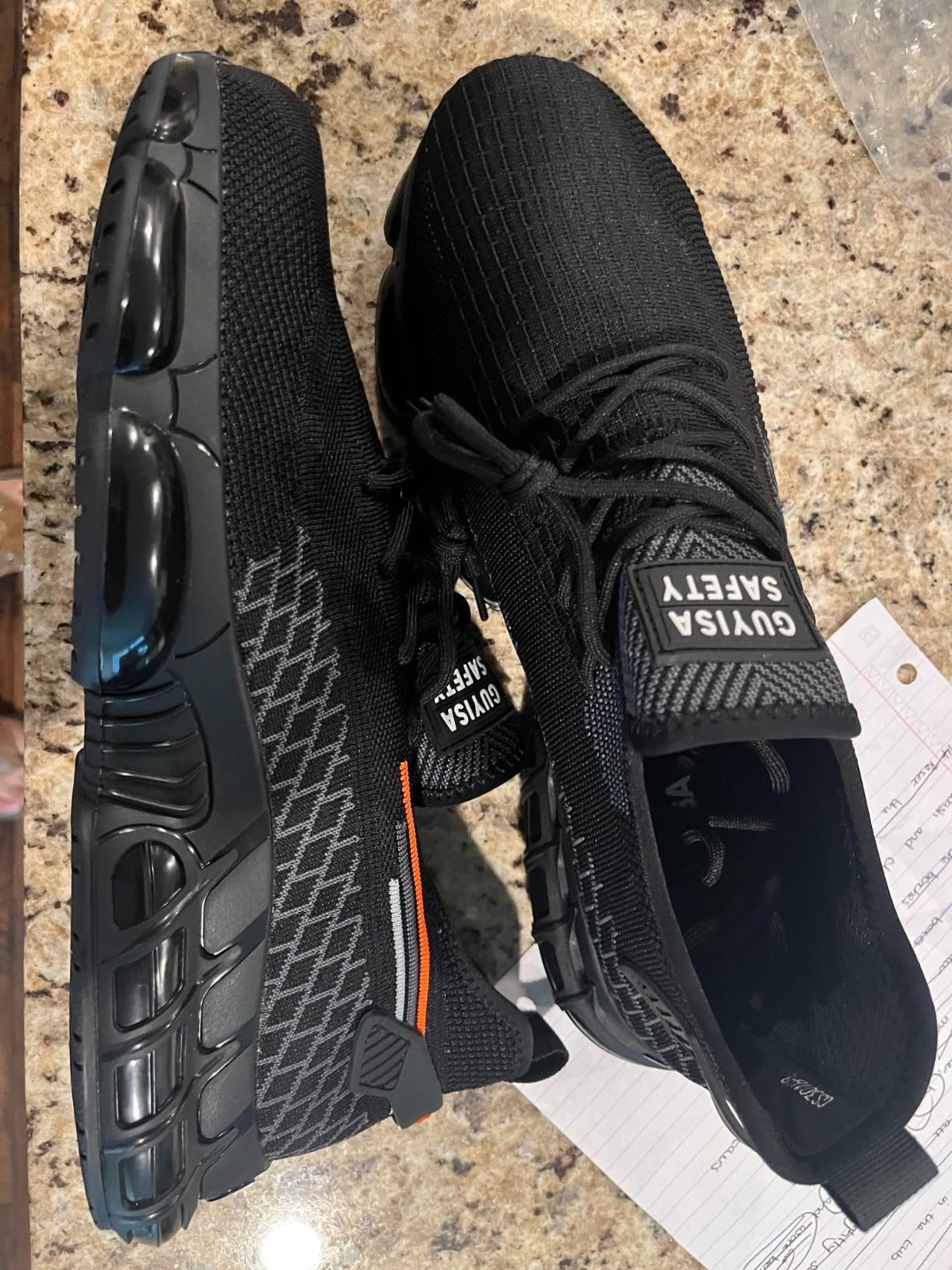
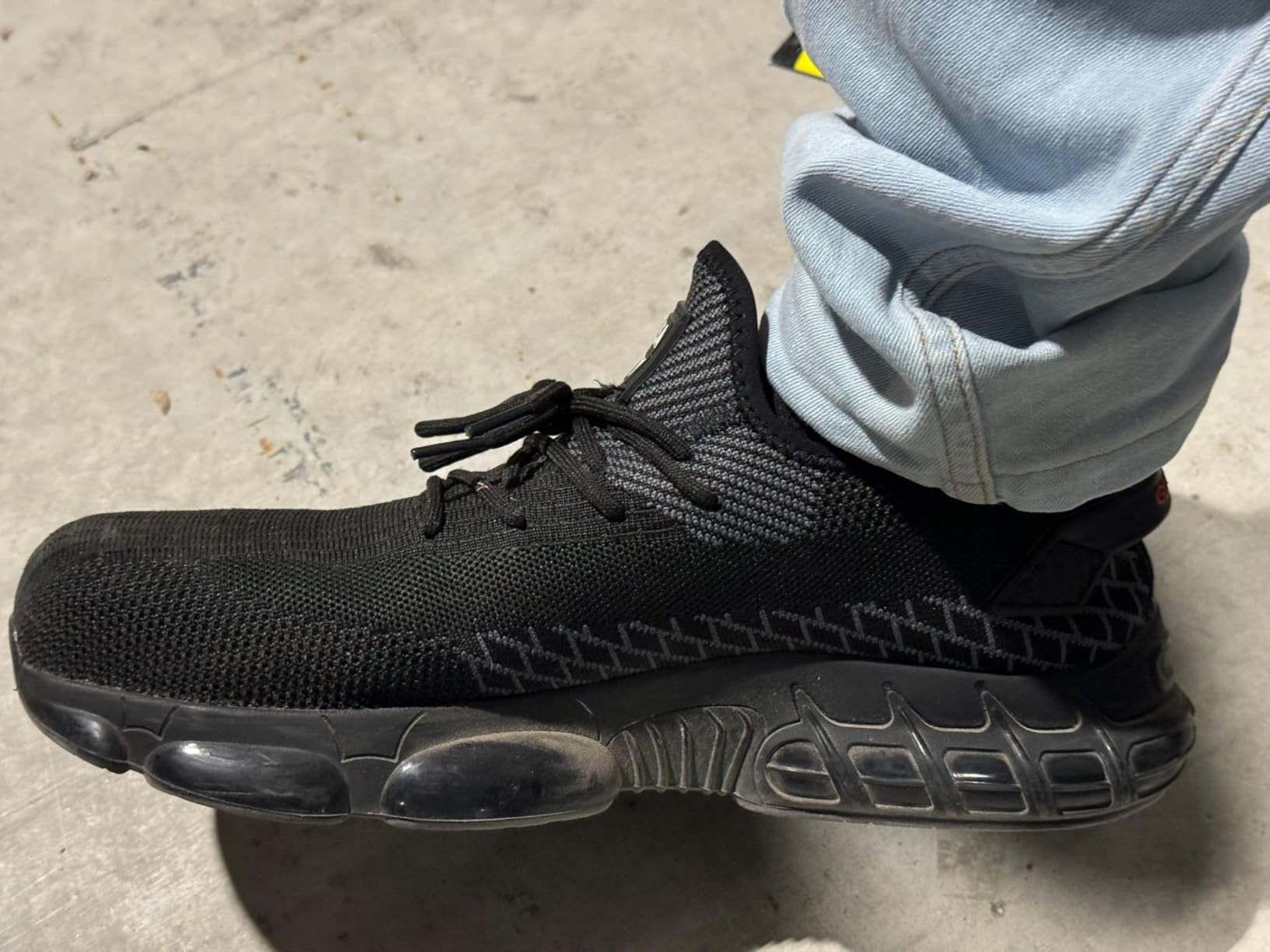
- 👟 Upper material: Fly weaving breathable mesh (knitted construction)
- 🦶 Sole material: Thermoplastic Polyurethane (TPU) with integrated air cushion
- 🔧 Category: Budget-tier industrial safety sneaker
- 🎯 Best for: Warehouse work, light construction, manufacturing, climate-controlled industrial environments
- ⏱️ Testing period: 6 weeks, 45+ work days — concrete pours, framing, demolition, warehouse simulation
Quick note on that ASTM rating: The ASTM system has two parts — F2412 covers the test methods (how labs evaluate footwear) and F2413 covers the performance requirements (what the shoe must actually achieve). The 200J impact resistance and 15KN compression standards are what matter in practice. These shoes meet them. That’s confirmed below with real-world results, not just a number on a tag.
Build Quality: What You’re Actually Getting for $50
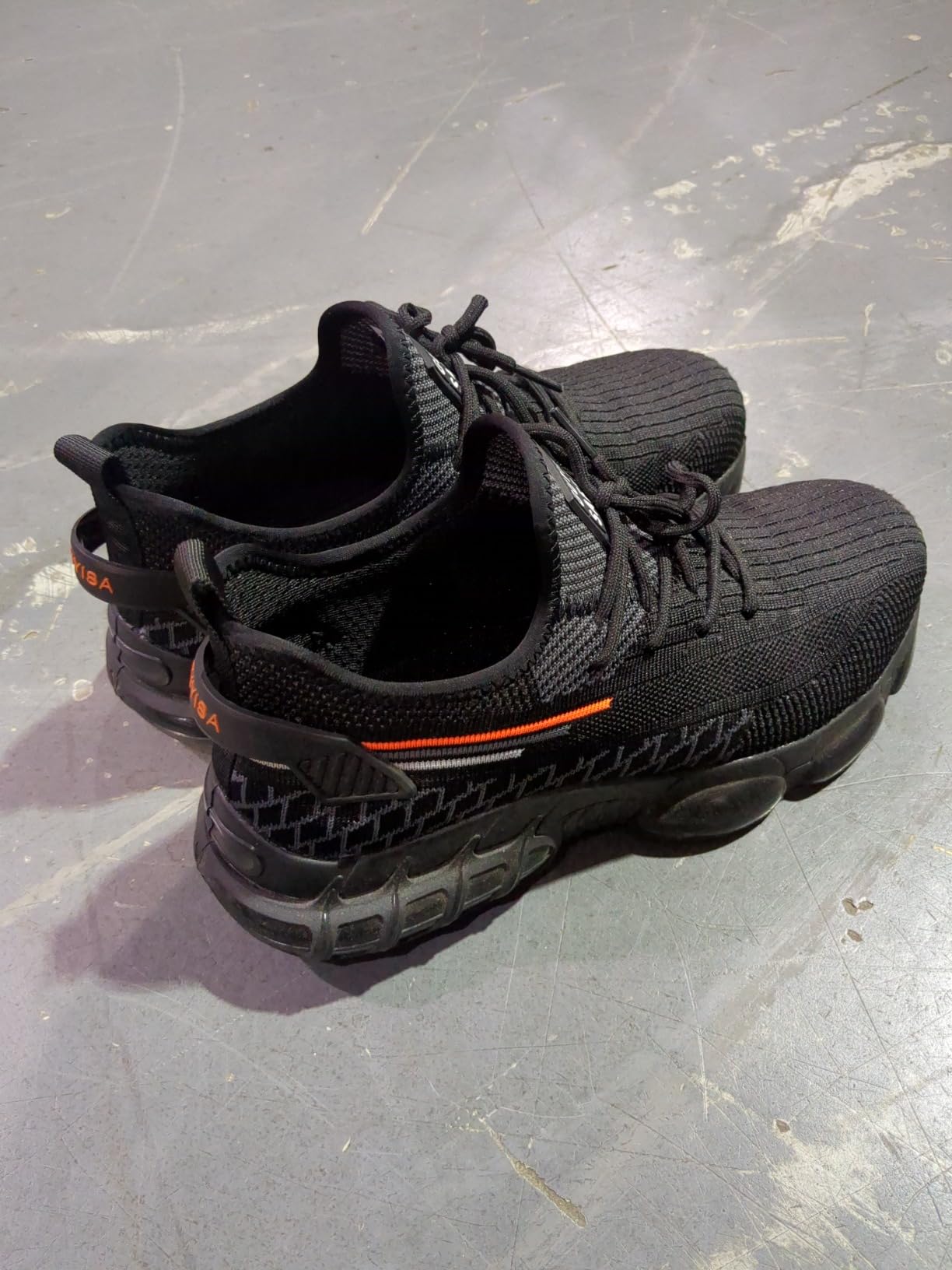
Pulling these out of the box, my first thought was that they didn’t feel like a $50 shoe. That’s not a compliment I give easily — I’ve been burned too many times by things that look solid in packaging and fall apart by month two.
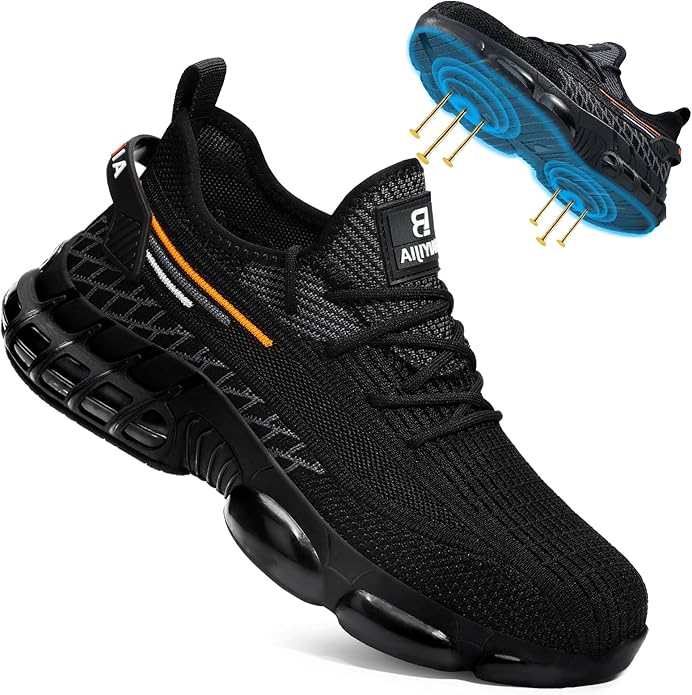
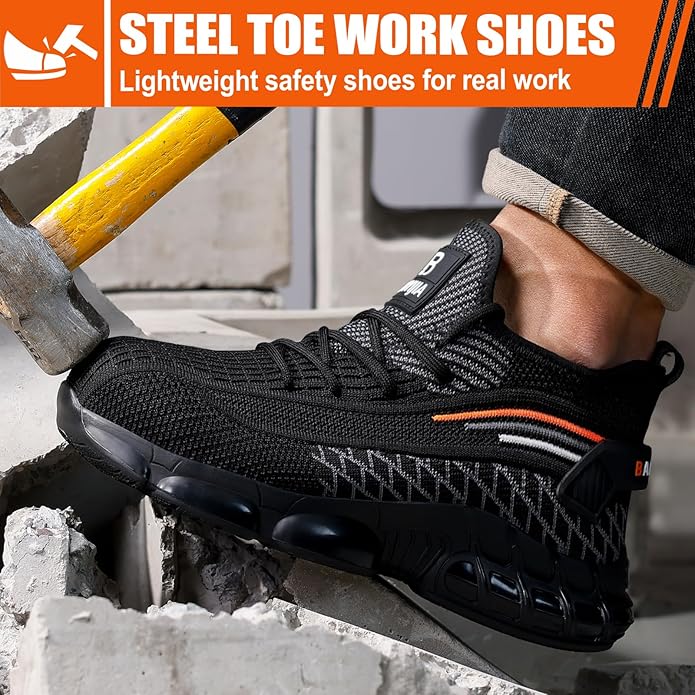
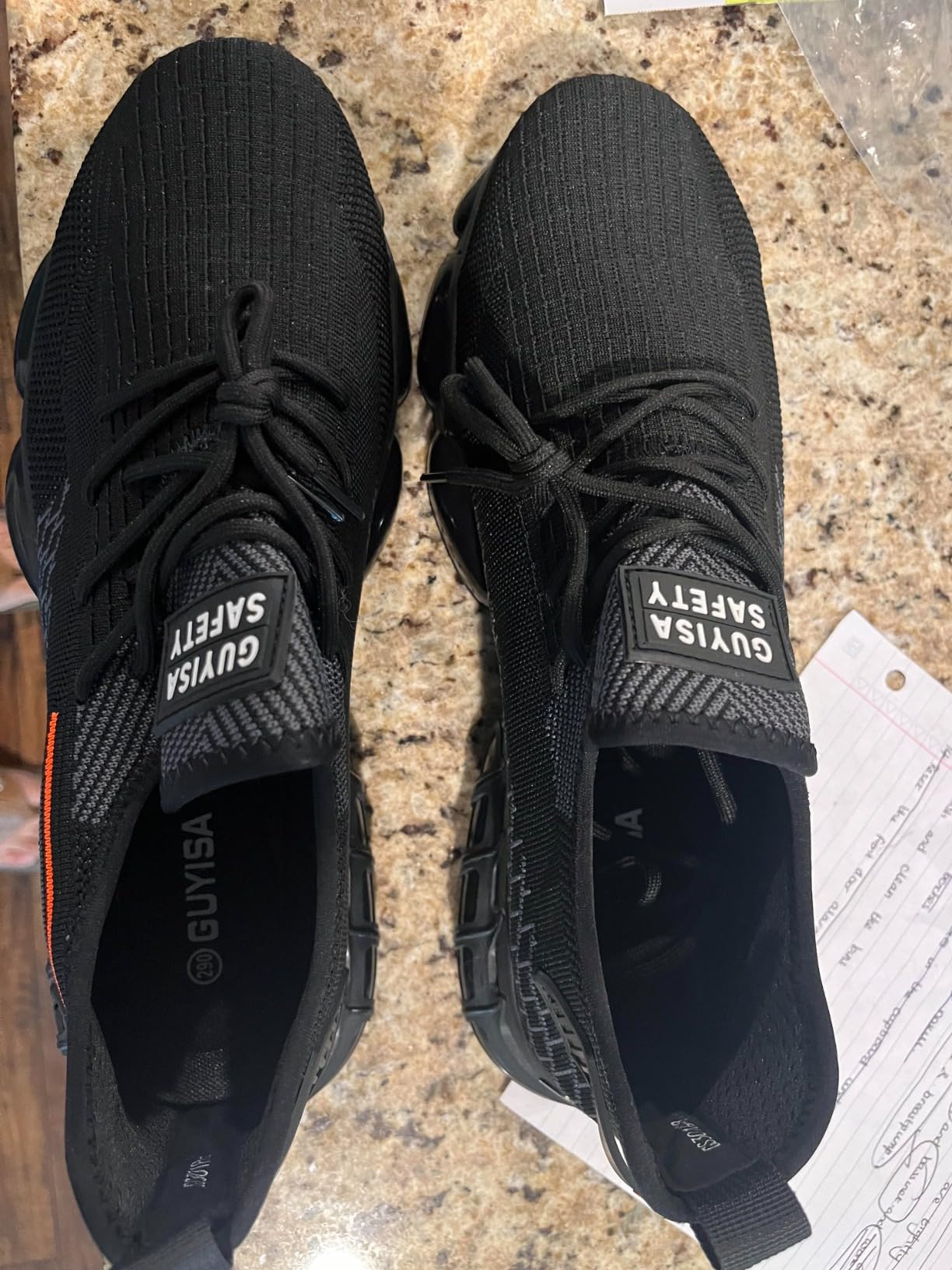
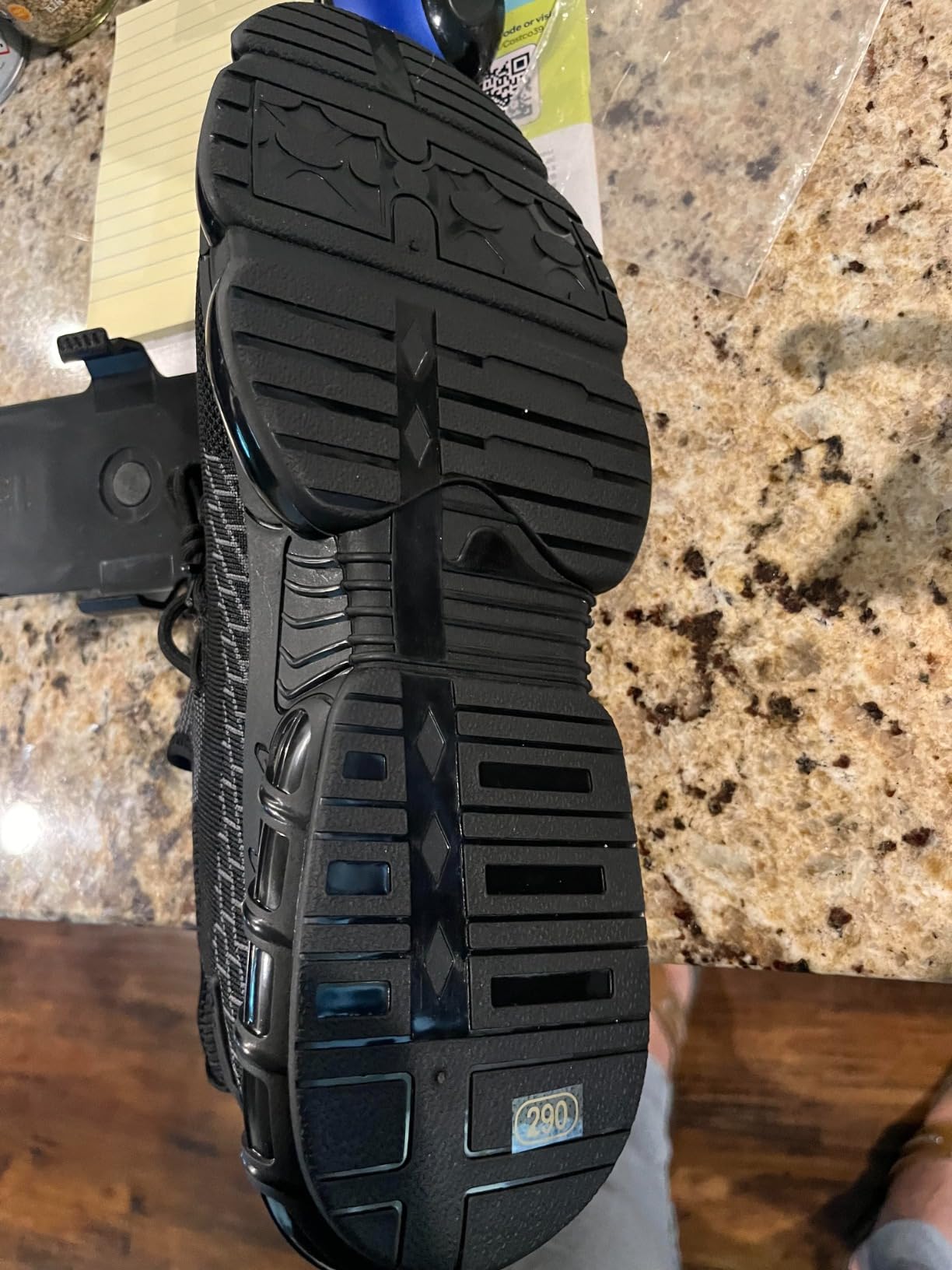
The fly weaving mesh upper has a texture somewhere between a lightweight running shoe and a proper work boot — structured enough that brushing against rough concrete doesn’t immediately threaten the material, breathable enough that you can feel airflow. Press on the toe box and the steel underneath is immediately obvious. Not a composite cap, not a plastic shell — actual steel, and you can tell.
The eyelets are reinforced, which matters because my last pair’s first failure mode was lace eyelets pulling through the upper at week six. These haven’t shown that problem. The lacing itself is straightforward, nothing technical, which on a work shoe is actually what you want — fewer moving parts to fail.
Where the budget shows: the insole. Right out of the box, you can feel it compress under thumb pressure. More on that in the comfort section.
Safety Testing: The Part That Actually Matters
What the Steel Toe Actually Survived
Week three of testing, I was on a demolition job — pulling rebar on a residential teardown — and a piece hit the floor wrong and bounced up onto my left foot. Rough estimate: 18 to 20 pounds, fell maybe two feet. I felt the impact travel through the steel cap and disperse, but nothing reached my actual toes. No pain, no bruising. I kept working.
That’s the test. Not a drop machine in a lab, but the kind of thing that happens on real sites. The steel toe cap did its job — and the ASTM 200J rating isn’t just marketing copy in this case. The toe box also has enough internal width that I wasn’t cramped after hour eight. That matters when protection is worthless if the shoe is too uncomfortable to wear through a full shift.
Kevlar Puncture Resistance: Tested on Real Debris
During cleanup on a concrete work site — the kind of floor that has screw tips, nail fragments, and metal shavings scattered around — I deliberately stepped on debris instead of routing around it. Nothing came through the Kevlar midsole layer. The ≥1,100N puncture spec held up across six weeks of that kind of exposure.
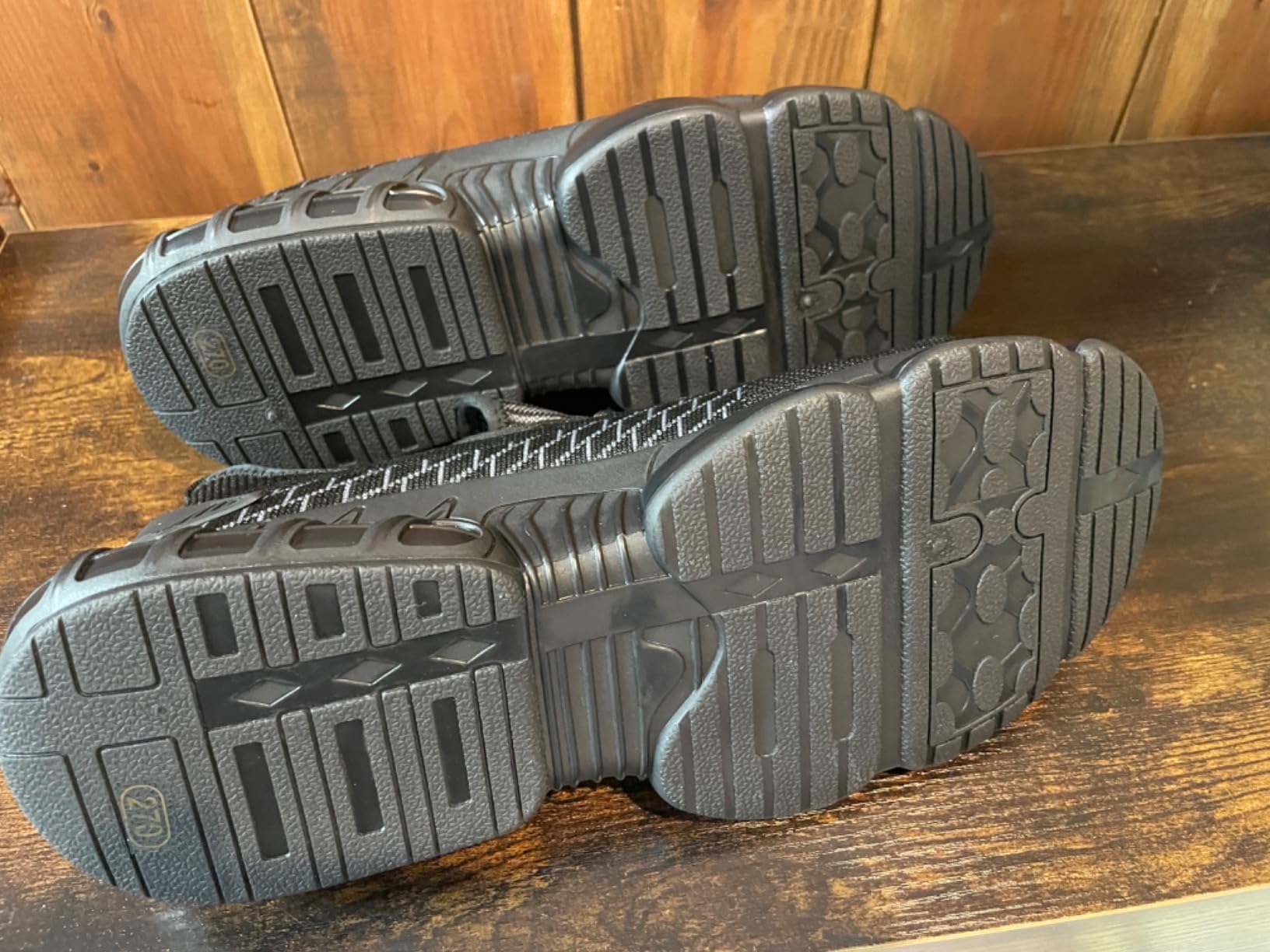
The honest caveat: this is the midsole Kevlar layer, and it functions independently of the TPU outsole. The outsole itself started showing wear on the heel by week four. Protection from puncture through the sole? Maintained. Protection from wearing down the outer rubber compound? That’s a different issue, covered in durability below.
Fit and Sizing: The Decision Tree
Sizing ran true for me at a size 10 — my standard across work boots and training shoes — with enough room to wear thicker construction socks comfortably. Based on my testing and the wider review community:
- Standard width feet: Order your normal size. TTS.
- Wide feet: The steel toe area is actually more generous than most budget safety shoes — several wide-foot reviewers report good fit here. However, the heel area runs slightly narrow. Order TTS and verify heel fit carefully.
- Narrow feet: Consider a half-size down — the shoes run slightly generous overall.
- Between sizes: Stick with your normal size. The slight roominess creates a buffer for thick socks, which you’ll want for all-day construction wear.
One thing I didn’t expect: the toe box width for this price point. Budget safety shoes often squeeze the toes against the steel cap, which creates a different kind of discomfort. These don’t do that. Wide-foot construction workers in particular might find the fit better than what they’re used to at this price.
Comfort and All-Day Wearability
The First Five Hours
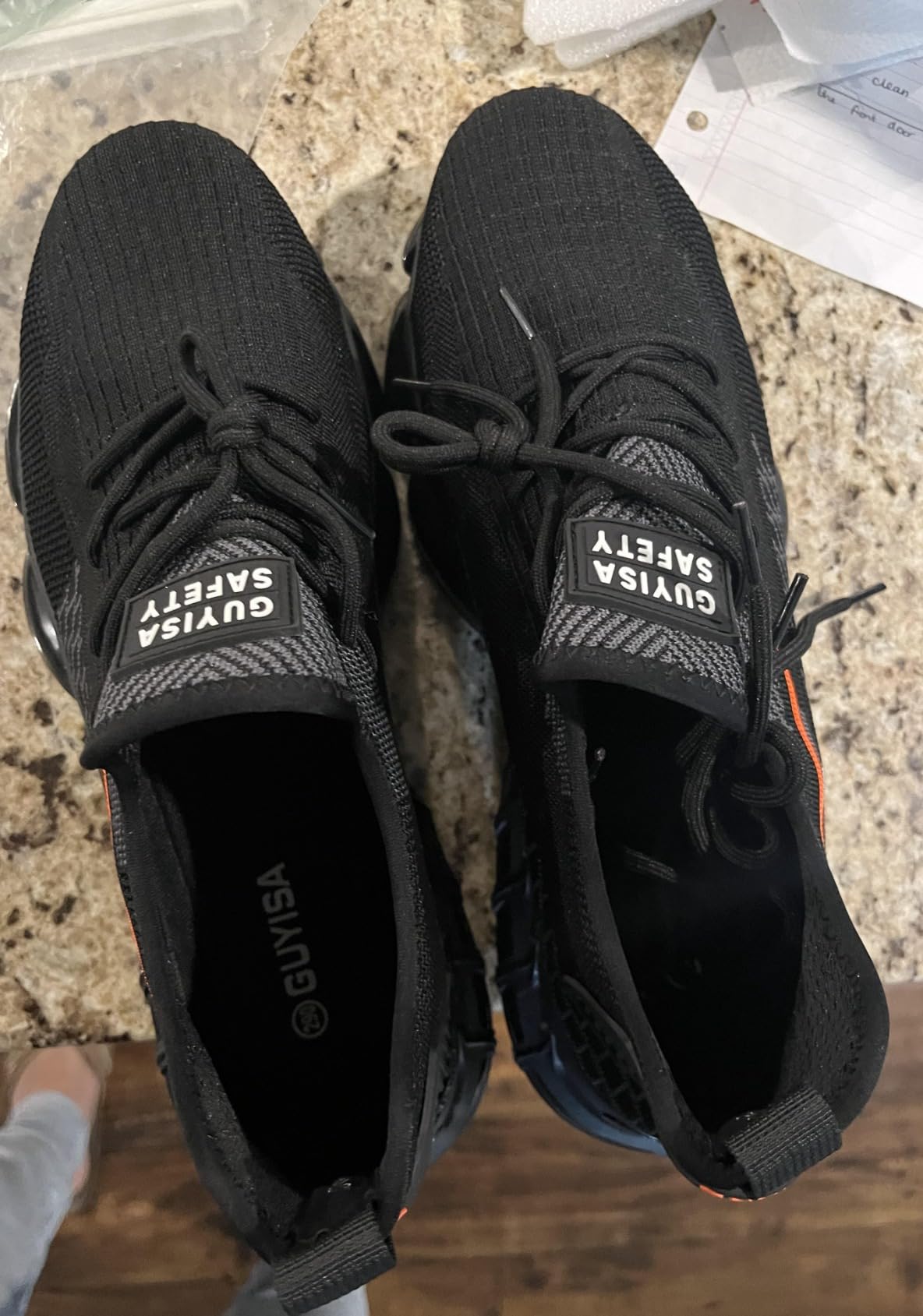
Out of the box, these feel genuinely comfortable — better than I expected. The air cushioning in the TPU sole provides noticeable shock absorption compared to traditional flat-soled work boots. Day one on a warehouse walk-through, no complaints.
The problem appears around hour five or six of continuous concrete work. The stock insole — thin, single-layer foam — compresses under sustained load and stops doing much. At that point, the cushioning advantage shrinks and foot fatigue accumulates faster.
I bought aftermarket insoles at the end of week one, and the difference was significant. The $20-25 investment extended the real comfort window from 5-6 hours to 8+ hours. My recommendation: budget for the insole upgrade when you order these shoes. Think of it as part of the purchase, not an optional add-on.
The Breathability Advantage
This one genuinely delivered. We had a stretch in July — outdoor site work, temperatures hitting 95°F — and my feet didn’t feel like they were in a pressure cooker the way they do in traditional leather or synthetic work boots. The mesh upper moves air continuously. Sweat management noticeably better than what I’d worn before.
The trade-off is direct: breathable mesh means no water resistance. These shoes are not waterproof and don’t pretend to be. Light rain soaks through the upper in under five minutes. If you work outdoors in wet climates, that breathability advantage evaporates and becomes a liability. More on that in the performance section.
Durability: Week-by-Week Reality
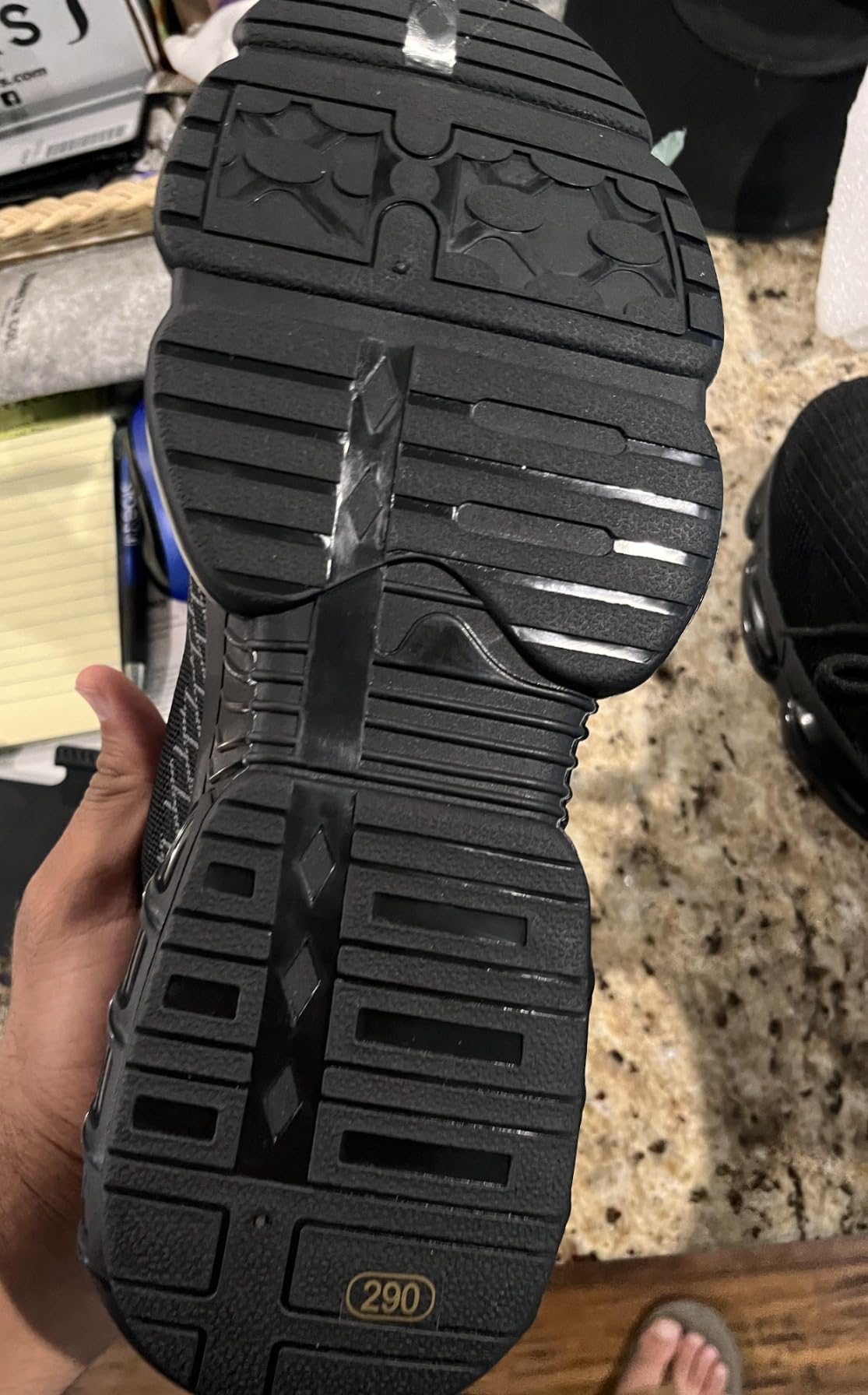
This is where the $50 price tag starts making sense — and not always in a good way.
| Timeline | What I Found | Status |
|---|---|---|
| Weeks 1-3 | No visible wear, eyelets solid, mesh intact | ✅ Green |
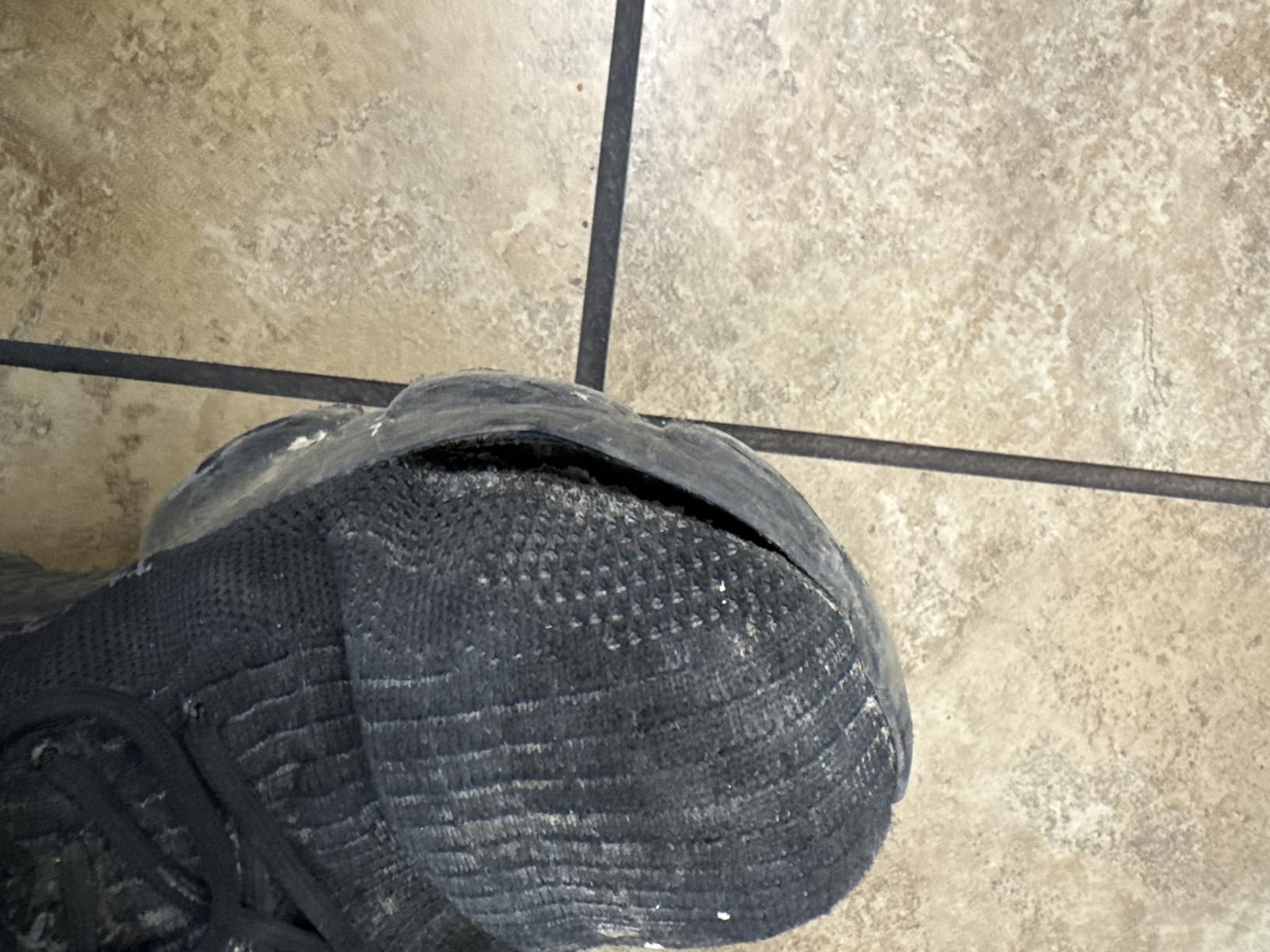
| Week 4 | Heel TPU shows color change and compression marks; sole edges creasing | ⚠️ Yellow |
| Week 5 | Separation beginning at toe box flex point — visible gap when shoe bends | 🔴 Red flag |
| Week 6 | Usable for moderate work; concerning for heavy daily construction | ⚠️ Caution |
Multiple Amazon reviewers echo the same timeline independently, which tells me these aren’t just my shoes — they’re a pattern. Sole separation at the toe box flex point around the 5-8 week mark for heavy users appears to be a known failure mode for this construction.
Realistic lifespan by use intensity:
- Light (2-3 shifts/week): 6-12 months
- Moderate (4-5 shifts/week): 3-6 months
- Heavy daily construction (40+ hrs/week): 1-3 months before sole integrity becomes a concern
The cost math that matters: Add aftermarket insoles and your total investment is $70-75. At heavy daily use, that’s roughly $25/month. Compare that to the Skechers Nampa work shoe at ~$70 averaging 8-10 months, or a $130 Timberland PRO over 18 months — your monthly cost actually converges more than the sticker price suggests. The upfront advantage is real. The long-term math depends entirely on how hard you use them.
Performance by Work Environment
Warehouse and Indoor Work: Strong Suit
This is where these shoes make the most sense. Climate-controlled warehouse environments, manufacturing floors, food distribution — the lightweight construction means less leg fatigue on long walking shifts, and the steel toe does its job protecting against pallet drops, forklift incidents, and heavy equipment proximity without adding the boot weight that kills you by hour seven.
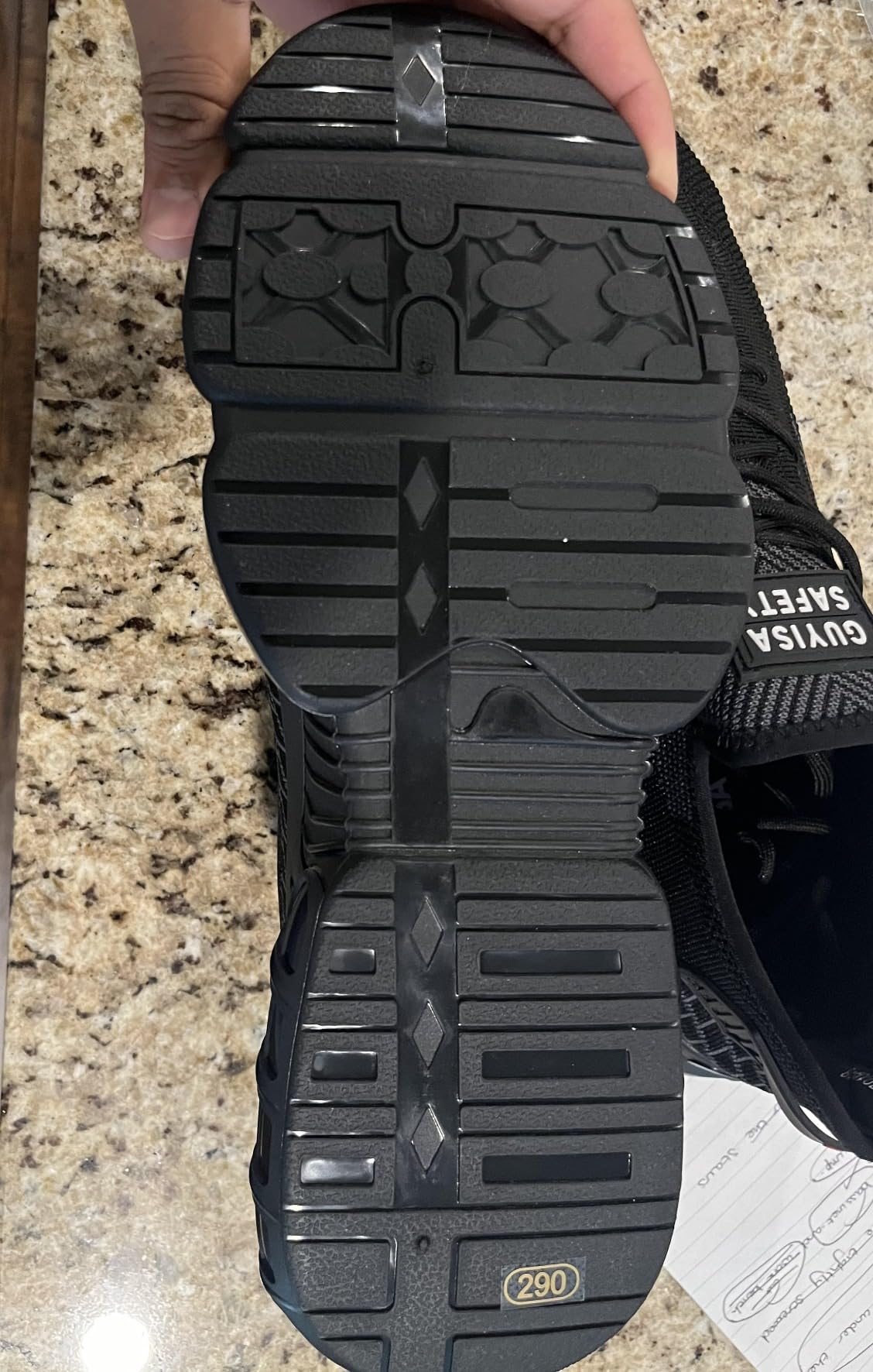
On smooth indoor floors, the grip is adequate for normal work movement — 7/10 dry, which is fine for warehouse conditions. Sole wear also progresses slower on smooth concrete than on rough outdoor surfaces.
Construction Site Reality
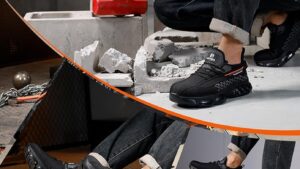
Outdoors on rough terrain is where the performance picture becomes more complicated. I tested across concrete pours, framing work, electrical installation, and demolition — the full range of what a general construction worker encounters.
Grip on textured dry concrete: functional, around 6-7/10. On smooth concrete, wet metal surfaces, or any surface that had even light moisture: that number drops to 3/10 and becomes a genuine safety concern. This isn’t a subtle performance gap — it’s the kind of thing that catches you on a wet morning when you step off a truck. Several reviewers flagged this and I confirmed it firsthand. These shoes are not a replacement for dedicated slip-resistant footwear in wet outdoor conditions.
Sole wear on rough outdoor surfaces accelerated faster than on smooth indoor floors — noticeably faster. The TPU compound that feels great indoors takes a harder beating on asphalt and construction aggregate.
Outdoor and Wet Conditions
The mesh upper that makes these breathable in July makes them water-vulnerable in October. This isn’t a design flaw in the sense that it’s a claimed feature working against the user — the breathability is real and intentional. But if you’re considering these for outdoor hiking or trail work, the mesh will fail you the first time it rains. Wet conditions on job sites? Be cautious and have alternatives available.
Marketing Claims: Honest Audit
| Claim | Verdict | Reality |
|---|---|---|
| Lightweight design | ✅ Confirmed | 2.2 lbs vs. 4-5 lbs for traditional steel-toe boots — fatigue difference is real over long shifts |
| Air cushioned sole | ✅ Partial | Cushioning exists and helps hours 0-5. Insufficient solo for 8+ hour concrete shifts — insole upgrade mandatory |
| Breathable upper | ✅ Confirmed | Genuine standout advantage — real improvement over leather/synthetic in heat. Trade-off: no water resistance |
| Exceeds safety standards | ✅ Confirmed | ASTM-certified steel toe (200J) and Kevlar puncture resistance (1,100N) both held up in real-world testing |
| Multi-use versatility | ✅ Partial | Works for casual wear and light outdoor tasks. Not appropriate for serious hiking or climbing |
| All-day comfort | ⚠️ Qualified | True with aftermarket insoles. False with stock insoles on concrete beyond 5-6 hours |
| Slip resistant | ❌ Overstated | Grip adequate on dry/textured surfaces. Inadequate on wet concrete, metal, or smooth floors — confirmed safety concern |
Who Should Buy and Who Should Skip
These Work Well For
- Warehouse and indoor industrial workers who walk long distances all day — the lightweight design significantly reduces end-of-shift fatigue, and indoor conditions play to the shoe’s strengths
- Part-time construction workers or weekend project DIYers who need safety footwear a few days a week rather than daily
- Budget-constrained workers who need legitimate ASTM-certified protection now, not after saving three months for premium alternatives
- Workers in climate-controlled environments — manufacturing facilities, food distribution, auto assembly — where the wet-weather weakness doesn’t apply
- Casual testers who want to verify steel-toe fits their work routine before committing to a $120+ investment
Look Elsewhere If You
- Work heavy daily construction and need a shoe to survive 6+ months — budget for Skechers work options or New Balance lightweight options at $70-100, or Timberland PRO at $130 for maximum longevity
- Need waterproof protection — mesh upper fails fast in rain, full stop
- Require genuine slip resistance on wet or oily surfaces — these don’t have it
- Expect 12+ months from a single pair with daily wear
- Need ankle support for uneven terrain — sneaker-profile safety shoes are a different category than ankle boots, and no amount of price adjusting changes that
Frequently Asked Questions
Are these true to size?
In my testing, yes — size 10 fit accurately with room for thick work socks. The shoes run very slightly generous overall, so if you’re between sizes, your normal size is the safer call. Wide feet: the steel toe area is roomier than most budget safety shoes, but the heel runs a touch narrow — TTS is still the right answer, just verify heel lockdown before wearing on site.
How long do they realistically last?
Depends heavily on your use intensity. I saw heel wear beginning at week four and toe separation warning signs at week five under heavy daily construction use. That tracks with the Amazon reviewer consensus of 3-6 months for heavy use, and 6-12 months for lighter duty. Don’t buy these expecting them to survive a year of 50-hour construction weeks.
Do I really need separate insoles?
Yes, if you’re on your feet for 8+ hour shifts on concrete. The stock insole is thin single-layer foam that compresses under sustained load. I added aftermarket work insoles at the end of week one and the comfort difference through the second half of shifts was substantial. Budget $20-25 for this. Think of it as part of the shoe cost.
What’s the actual slip resistance situation?
On dry, textured surfaces — adequate. On wet concrete, metal surfaces, smooth polished floors, or anything with oil or moisture — genuinely inadequate, and I’d call it a safety concern. This is one of the few areas where you shouldn’t rationalize your way into a compromise. If your job site has wet conditions regularly, you need dedicated slip-resistant footwear, not these.
Are they waterproof at all?
No. Not water-resistant either in any meaningful way. The breathable mesh that makes them comfortable in heat absorbs moisture just as readily. Light rain soaks through in a few minutes. Fine for dry outdoor work, problematic for anything involving puddles, rain, or wet conditions.
How do these compare to traditional steel-toe boots?
Significantly lighter — about half the weight — and noticeably more breathable. You pay for that with less ankle support, less weather protection, and durability that doesn’t match construction-grade boots. If weight and heat are your main complaints about your current boots, these address both. If you need weather protection or ankle support, they don’t.
Good fit for wide feet?
Better than expected at this price point. The steel toe area is more generous than most budget safety shoes, and multiple wide-foot reviewers report comfortable fit. The one caveat: the heel area runs narrower, which can create a mismatch for wide-footed workers with wide heels. The toe box is fine; verify the heel before committing.
What about shoe care to extend lifespan?
Rotating between two pairs significantly extends overall lifespan — one pair dries while you wear the other. Air dry only, never use heat. Clean mud and debris off after each shift; abrasive particles embedded in the mesh accelerate sole wear. A set of cedar shoe trees helps maintain shape and absorb moisture between shifts. You can find these and similar shoe care accessories that extend the working life of budget footwear significantly. These aren’t premium shoes, but proper care can push the moderate-use lifespan toward the higher end of the 3-6 month range.
Can I wear these off the job site?
The sneaker-profile design makes them more versatile than traditional work boots — most people won’t immediately read “safety shoe” when they see them. Adequate for errands, casual walks, the kind of thing you’d wear to lunch. Not appropriate as running shoes or for any athletic use that requires lateral stability or sport-specific cushioning.
Performance Scoring
| Category | Score | Rationale |
|---|---|---|
| Safety Protection | 8.5/10 | Steel toe (200J) and Kevlar puncture resistance confirmed in real use; ASTM-certified |
| Breathability | 8.5/10 | Standout performance at 95°F; significant improvement over leather/synthetic in heat |
| Value for Money | 7.5/10 | Strong upfront value; monthly cost math becomes less favorable for heavy daily users |
| Versatility | 7.0/10 | Works across multiple environments; styling doubles for casual wear |
| Comfort | 6.5/10 | Solid hours 0-5; requires insole upgrade for all-day concrete work |
| Slip Resistance | 5.0/10 | Dry surfaces adequate; wet/metal surfaces — confirmed safety concern |
| Durability | 5.5/10 | Heel wear week 4, toe separation warning week 5 under heavy construction use |
| OVERALL SCORE | 6.8/10 | Solid safety protection at a budget price; durability and slip resistance are genuine limitations |
Final Verdict
These steel toe work shoes deliver the thing that matters most: legitimate, tested safety protection at a price point that doesn’t require you to plan around. The steel toe is real. The Kevlar puncture resistance is real. The breathability advantage over traditional boots is real and significant in summer conditions. All of that for $50 is a genuine value proposition.
The limitations are equally real: a 5-6 hour comfort ceiling without an insole investment, durability concerns starting around week four for heavy users, slip resistance that isn’t adequate for wet conditions, and a mesh upper that moves air beautifully in both directions — including rain. These aren’t surprises if you read past the marketing language, but they are dealbreakers for specific use cases.
What works: ASTM-certified protection, half the weight of traditional boots, excellent ventilation, wide toe box for budget tier, decent versatility between job site and casual wear
What doesn’t: Stock insoles (upgrade immediately), wet surface traction (genuine risk), durability for heavy daily construction, no weather protection
The honest recommendation: If you work in a warehouse, climate-controlled facility, or part-time outdoor construction, and you want real safety protection without paying for features you don’t need — these deliver. Add aftermarket insoles from day one, rotate with a second pair if you’re wearing them daily, and replace them before sole separation becomes a structural concern rather than an aesthetic one.
For heavy daily construction workers expecting 6-12 month lifespan from a single pair, invest more upfront. The monthly cost math will work in your favor, and your feet will thank you. Browse our training and work shoe options for durable mid-range alternatives that bridge the gap between budget and premium.
Bottom line: $50 + $20-25 insoles = $75 total investment. For light-to-moderate work at that price, it’s hard to argue with the protection-to-dollar ratio. Just know what you’re buying — and what you’re not.
Be the first to review “BAIYIJIA Steel Toe Work Shoes for Men”
Related products
Hiking/Trekking Shoes
Training Shoes
Hiking/Trekking Shoes
Running Shoes
Running Shoes
Tennis/Squash Shoes
Running Shoes

Hiking/Trekking Shoes
Reviews
There are no reviews yet.