
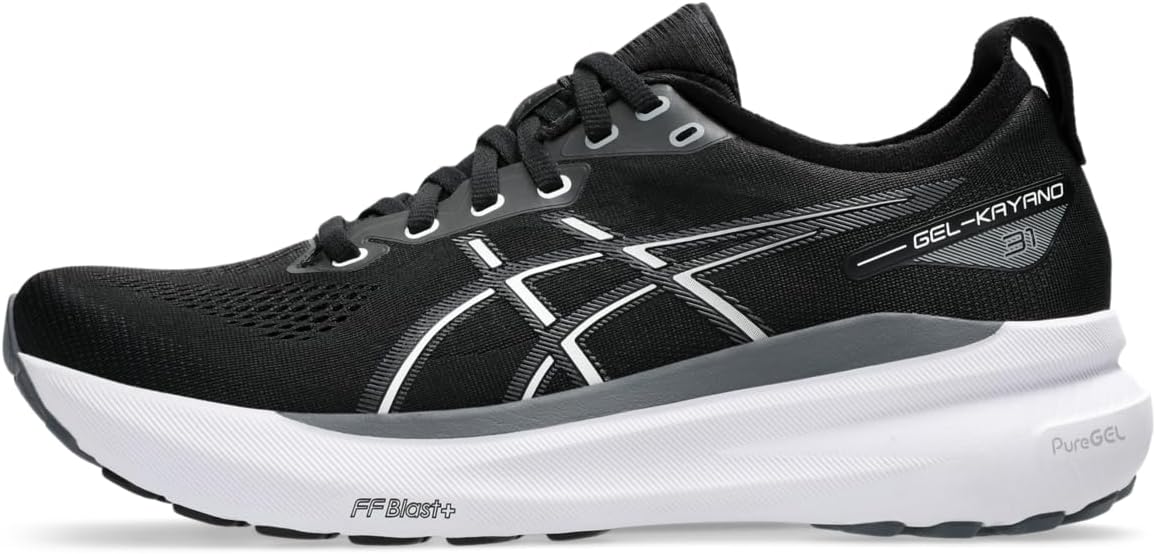
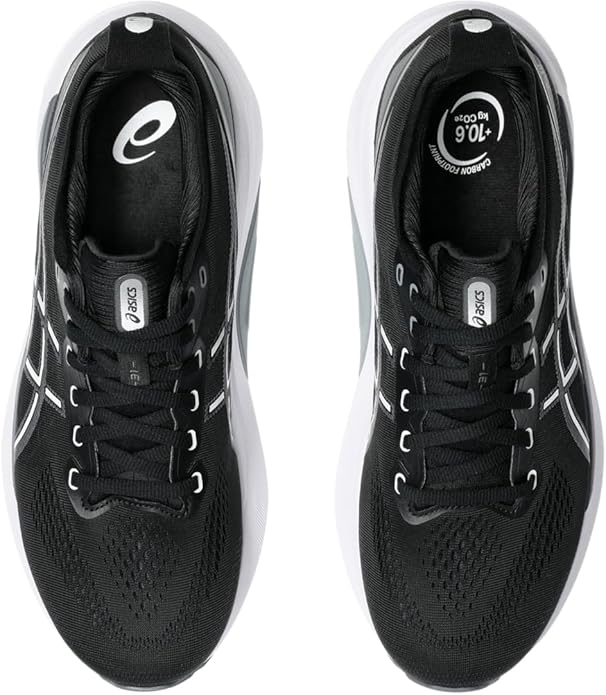
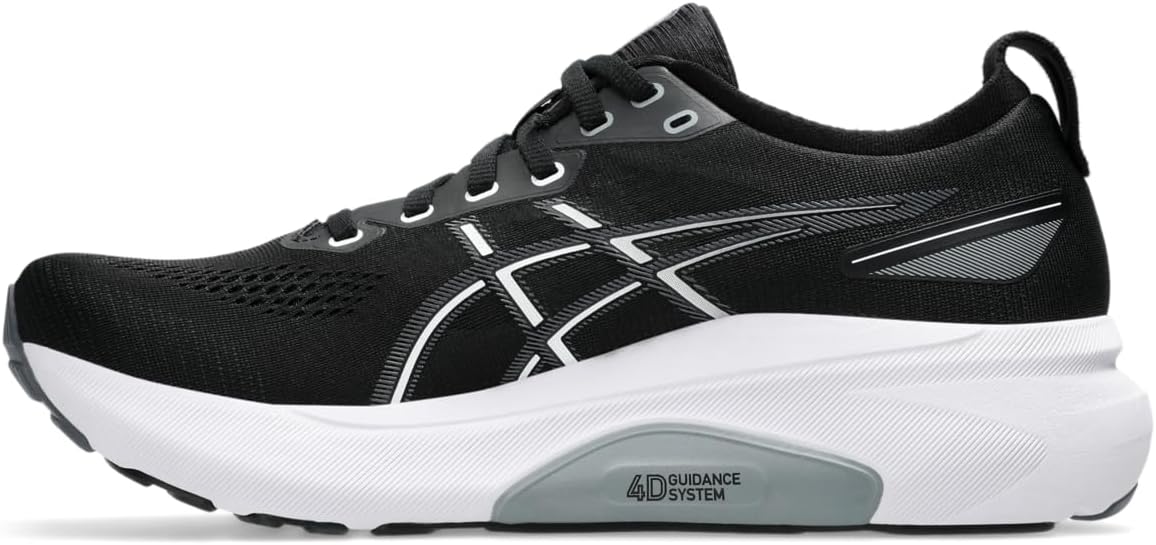
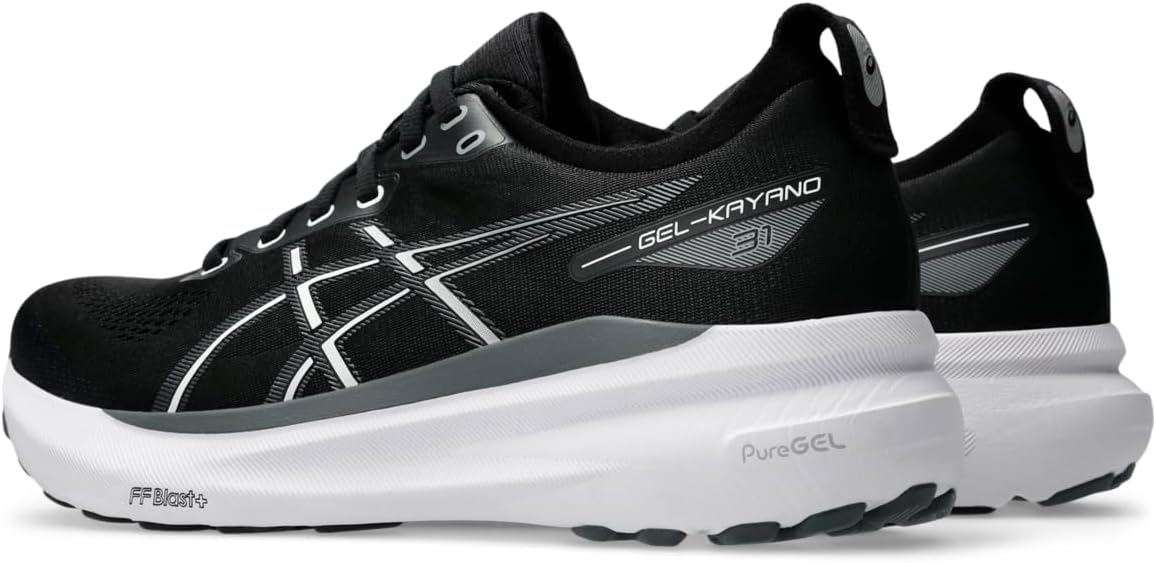

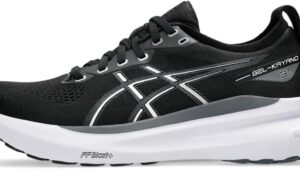
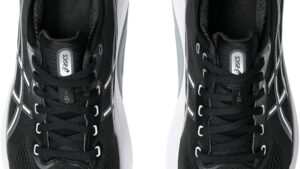
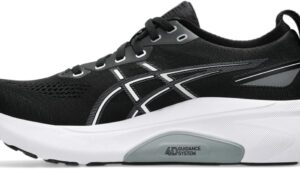
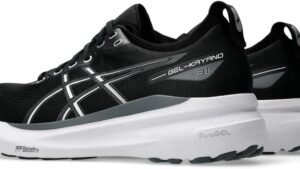
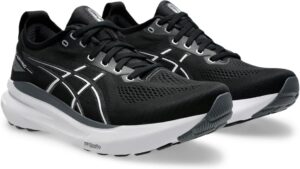
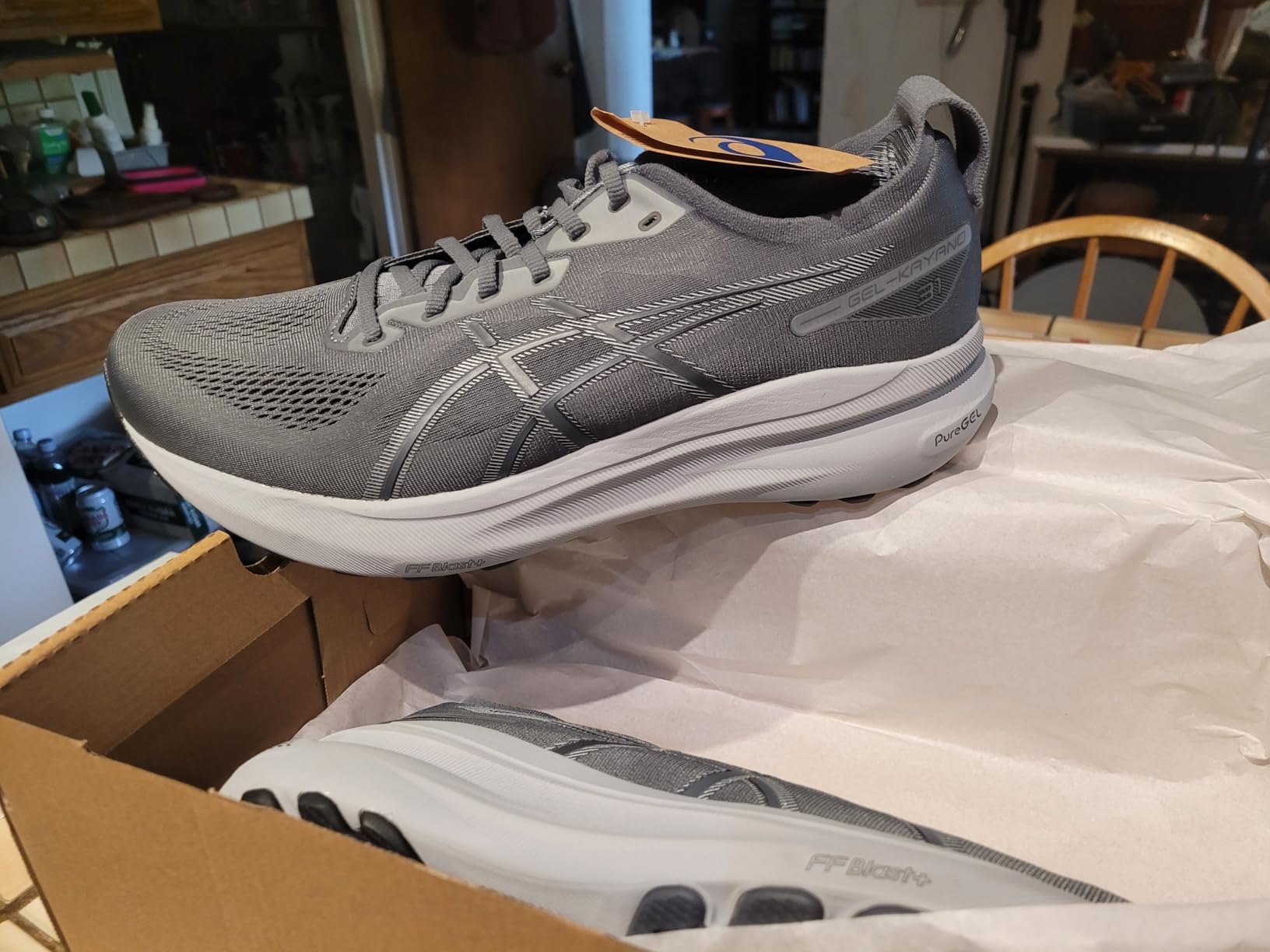
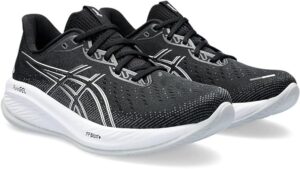
ASICS Mens Gel-Kayano 31
- Weight: 10.9 oz (men’s size 9) – measured slightly lighter at 10.7-10.8 oz in independent lab tests
- Heel-to-toe drop: 10mm advertised, though lab measurements consistently show 11.5-12mm actual drop
- Stack height: 40mm heel / 30mm forefoot (some measurements show up to 42mm heel)
- Midsole material: FF BLAST PLUS ECO with PureGEL technology in rearfoot
- Upper material: Engineered mesh with redesigned knit collar construction
- Stability system: 4D Guidance System utilizing variable foam densities and supportive sidewalls
- Category: Premium stability daily trainer for overpronators and runners with flat feet
- Outsole: HYBRID ASICSGRIP with strategic rubber pod placement
- Comparison weight: Similar to Brooks Glycerin GTS (10.9 oz) and Mizuno Wave Horizon 7
Can a $165 stability trainer genuinely deliver premium cushioning without sacrificing the support that overpronators need? After spending 4 months and logging over 400 miles across varying conditions, terrain, and paces—from recovery jogs to marathon-pace efforts—the ASICS Gel-Kayano 31 proves itself as more than just another iteration in a long-standing series. The shoe represents what happens when a legacy stability platform meets modern cushioning technology, and the results challenge some long-held assumptions about what a stability shoe can feel like underfoot.
First Unboxing: What Sets This Apart From Previous Kayanos
The redesigned knit collar immediately distinguishes the Gel-Kayano 31 from its predecessors. This isn’t just aesthetic modernization—the step-in feel mimics a slipper-like fit that previous Kayano editions never achieved. The added pull tab transforms what used to be a wrestling match into an effortless slide-on experience, particularly valuable during rushed pre-run mornings or post-workout shoe changes.
After 400+ miles, the engineered mesh upper continues performing as intended, though with one notable caveat worth addressing upfront. The breathability improvements over the Kayano 30 are measurable during moderate-temperature runs (50-70°F), but the slightly thicker mesh construction becomes apparent when temperatures climb above 85°F. Extended summer sessions revealed that ventilation, while improved from previous models, still lags behind pure performance trainers focused exclusively on airflow. The trade-off comes in durability—the reinforced construction shows zero signs of breakdown even after four months of consistent use.
The heel lockdown deserves specific attention. ASICS completely redesigned this area, and the result eliminates the occasional slippage that plagued some earlier Kayano versions. The external heel counter combined with enhanced padding around the collar creates what can only be described as a secure embrace that never crosses into restriction. Throughout the entire 400-mile span, including multiple 20+ mile training runs where form deteriorates and feet swell, heel movement remained non-existent.
The Cushioning Reality: Lab Data Meets Road Experience
Lab measurements using a Shore A durometer revealed a softness rating of 15.6 HA—marginally softer than the Kayano 30 and positioned firmly in “plush” territory for stability shoes. This matters because it quantifies what the legs experience during extended efforts: the FF BLAST PLUS ECO foam (the same compound found in the popular Novablast 4 and Nimbus 26) delivers legitimate cloud-like comfort without the unstable mushiness that plagues some heavily cushioned trainers.
The 40mm heel stack height provides substantial impact protection, though it’s worth noting that some independent measurements recorded up to 42mm. Combined with the PureGEL technology strategically embedded in the rearfoot, heel strikers experience noticeably softer landings compared to traditional gel units. During a particularly telling 20-mile training run, leg fatigue at mile 18 remained markedly lower than comparable efforts in other shoes—a direct benefit of how the cushioning system manages impact forces over extended distances.
However, the PureGEL technology involves a deliberate trade-off. While it maximizes landing comfort, it slightly reduces energy return compared to pure foam systems. This design choice reveals ASICS’ clear priority: protecting the body over maximizing speed. For marathon training runs and daily mileage accumulation, this philosophy pays dividends. For track workouts or efforts faster than 6:30 pace, the energy return deficit becomes noticeable enough that lighter racing flats make more sense.
The actual drop measurement consistently tests at 11.5-12mm across multiple independent reviews, despite ASICS’ advertised 10mm specification. This 1.5-2mm discrepancy isn’t particularly problematic—if anything, it benefits heel strikers by providing additional cushioning differential while still offering adequate comfort for midfoot strikers seeking to reduce Achilles and calf stress.
What Makes the 4D Guidance System Different From Traditional Stability?
Unlike traditional stability shoes that force correction through firm medial posts, the 4D Guidance System employs a more sophisticated approach using variable foam densities, strategic sidewall positioning, and a resilient midfoot block designed to guide rather than dictate foot motion. After 400+ miles including runs when form collapsed during late-stage fatigue, the system proves its worth through subtle but consistent guidance.
The upper width measures 98.9mm at the broadest section—noticeably wider than many competing stability trainers. This generous platform creates a stable base that allows the foot to spread naturally while the sidewalls provide gentle boundaries preventing excessive collapse. The system becomes most valuable exactly when needed: miles 18-20 of long runs when fatigue compromises natural biomechanics and overpronation tendencies amplify.
What distinguishes this approach from competitors like the Brooks Adrenaline GTS 24 (which uses the more intrusive GuideRails system with pronounced medial posting) is the adaptability. Neutral runners report being able to wear the Kayano 31 comfortably thanks to the non-aggressive correction, while moderate overpronators find adequate support. Heavy overpronators or those requiring motion control might need more aggressive intervention, but for the majority of runners needing stability assistance, the 4D system hits the sweet spot.
The resilient midfoot block—a firmer foam section positioned under the arch—creates a springboard effect that actively supports the foot against pronation forces rather than passively resisting them. During testing at various paces from 8:30 recovery shuffles to 6:45 tempo efforts, this active support mechanism maintained consistent performance without becoming intrusive or noticeable in a negative way.
Performance Testing: Beyond the Marketing Claims
Lab testing revealed the outsole achieved a traction score of 0.83—among the highest ratings recorded for running shoes in wet conditions. Real-world validation came during multiple runs through Seattle-area drizzle and one particularly memorable Florida thunderstorm session. The HYBRID ASICSGRIP outsole maintained reliable contact even on painted crosswalks and metal grates where most shoes start sliding. This represents a significant improvement over the Kayano 30, which hovered closer to average in identical testing protocols.
The non-rockered design featuring a nearly flat profile from heel to toe spring creates a distinctive ride character. Unlike shoes with aggressive forefoot rockers that promote quick turnover, the Kayano 31 emphasizes stability and control throughout the gait cycle. This proves beneficial during long, slow distance work where maintaining consistent form matters more than explosive propulsion. However, it also contributes to why the shoe feels less responsive during faster-paced sessions compared to more performance-oriented stability options.
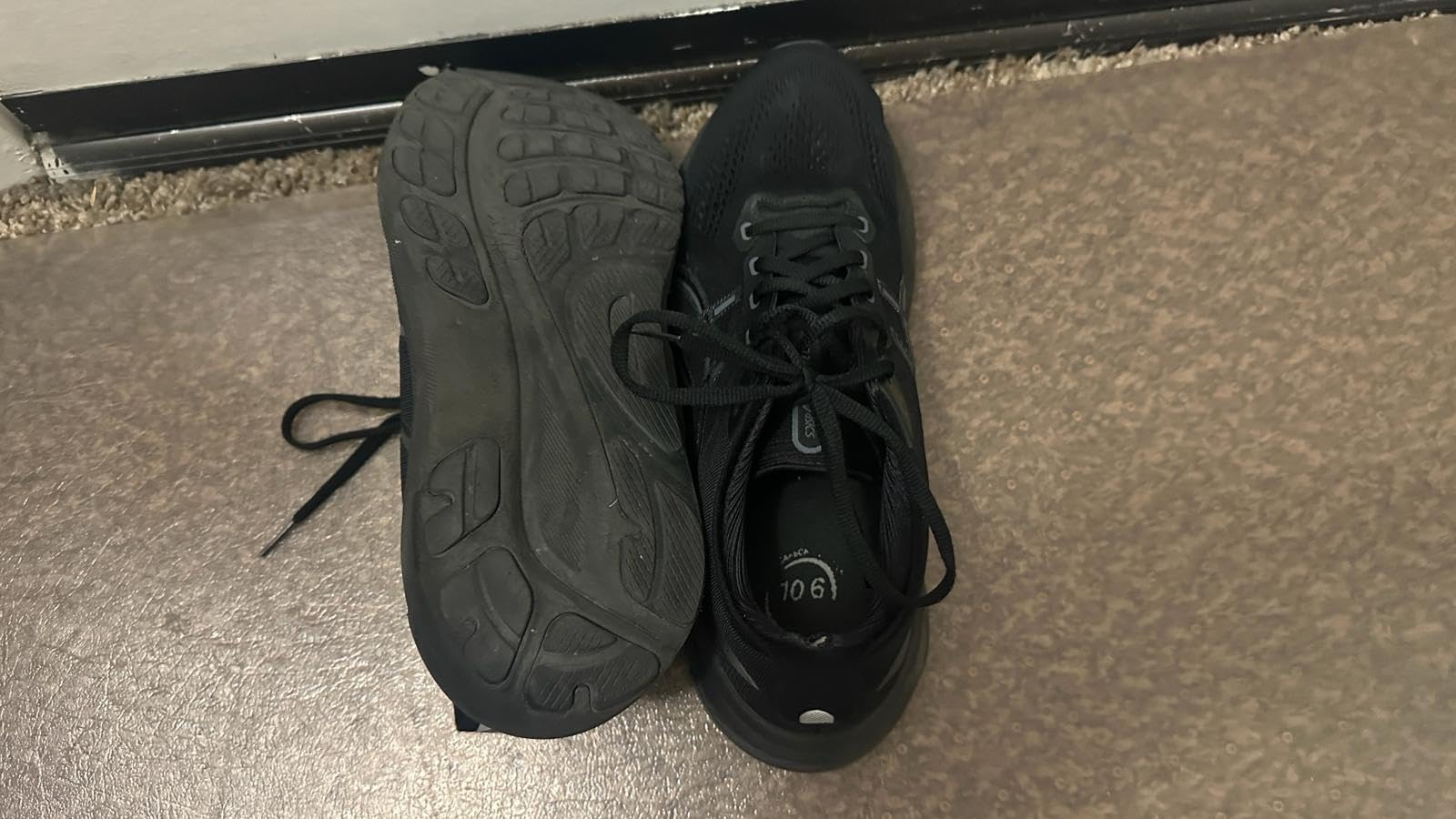
After 400+ miles, outsole wear patterns reveal the strategic rubber pod placement working as intended. Thick coverage across the heel, forefoot, and especially the medial side shows minimal degradation despite consistent road running. ASICS slightly reduced coverage in the lateral heel and forefoot compared to the Kayano 30—a calculated move to trim weight without compromising durability in high-impact zones. The decision proves sound, with current wear patterns suggesting 550-600 total miles before replacement becomes necessary for average-weight runners (170-185 lbs).
Where It Excels: The 400-Mile Reality Check
Four distinct scenarios revealed where the Gel-Kayano 31 genuinely excels beyond marketing hype:
Extended Distance Comfort: Multiple 20+ mile training runs produced consistently positive results. The combination of ample cushioning, reliable stability, and proper heel lockdown meant leg fatigue at mile 18-20 remained noticeably lower compared to experiences in other stability trainers. The shoe’s 10.9 oz weight becomes less relevant when cushioning quality prevents the cumulative impact stress that creates late-run breakdown.
Hot Weather Performance (with caveats): Summer sessions in 90°F+ temperatures with high humidity revealed both strengths and limitations. The engineered mesh provides adequate breathability to prevent complete swamp-foot disaster, but falls short of performance trainers designed exclusively for ventilation. Reasonable expectation: comfortable enough for summer training, but not exceptional. For runners in consistently hot climates, rotating with a more breathable neutral shoe for easier days makes sense.
Wet Surface Reliability: The 0.83 lab traction score translates to genuine confidence on rain-slicked surfaces. Multiple runs through wet conditions—from light drizzle to heavy downpours—demonstrated that the HYBRID ASICSGRIP outsole delivers on its promises. The shoe doesn’t become waterproof (no road running shoe does), but it dries relatively quickly and maintains grip throughout wet sessions.
Form Deterioration Support: The most valuable quality emerged during late-stage fatigue when running form naturally breaks down. The 4D Guidance System proves its worth precisely when it matters most—providing consistent support as biomechanics deteriorate during marathon training sessions. This represents the fundamental value proposition of stability shoes executed properly.
Does the $165 Price Point Justify What You Actually Get?
At $165, the Gel-Kayano 31 sits $25 above the Brooks Adrenaline GTS 24 ($140), creating a legitimate value question worth examining closely.
vs Brooks Adrenaline GTS 24: The Adrenaline provides 35mm heel / 23mm forefoot cushioning (12mm drop) using DNA Loft V3 nitrogen-infused foam that feels firmer and more responsive. Its GuideRails system creates more noticeable, intrusive stability—beneficial for runners wanting pronounced correction, potentially restrictive for those preferring subtle guidance. The Adrenaline excels at uptempo and tempo work thanks to its firmer, more responsive character, while the Kayano 31 dominates on easy and long runs through superior cushioning. The $25 premium buys 5mm additional stack height, plusher comfort, and more adaptive stability. For runners prioritizing maximum cushioned comfort and logging 25+ weekly miles predominantly at easy paces, the Kayano justifies its premium. For versatility spanning easy to tempo work with tighter budgets, the Adrenaline delivers comparable stability for less money.
vs Hoka Clifton 10: While technically a neutral shoe, the Clifton 10’s wide base and ample cushioning create inherent stability that works for many mild overpronators. Its lighter weight and more responsive character suit runners questioning whether they truly need stability features. The Kayano 31 provides explicit stability technology and marginally better durability, but the Clifton offers similar comfort at lighter weight and often lower price points.
vs Previous Kayano Models: Compared to the Kayano 30, this iteration maintains the major redesign introduced last year while refining the upper construction, slightly increasing midfoot bounce, and improving outsole grip. The changes feel evolutionary rather than revolutionary—exactly what owners of the well-received Kayano 30 should want. For those still wearing Kayano 29 or earlier, the difference is substantial: softer, more adaptive stability replacing the traditional firm medial post approach.
The Trade-Offs Nobody Mentions: Where Premium Pricing Shows Limitations
Weight Reality: At 10.9 oz, the shoe sits firmly in “heavy stability trainer” territory alongside similar models like the Brooks Glycerin GTS. ASICS possesses the technical capability to reduce weight (as evidenced by their lighter neutral offerings), but chose to prioritize cushioning and protection. The weight becomes most noticeable during speed work faster than 6:30 pace, where lighter shoes provide noticeable advantages in leg turnover and efficiency.
Speed Work Limitations: Despite ASICS’ claims of versatility, the Kayano 31 underperforms during track workouts and interval sessions. The generous cushioning that excels during long steady efforts becomes a liability when trying to maintain quick cadence and explosive turnover. The non-rockered geometry and 10.9 oz weight create a shoe better suited for protection than propulsion. Serious runners need a lighter, more responsive option for quality speed sessions.
Breathability Trade-offs: The reinforced engineered mesh delivers excellent durability but compromises breathability compared to lighter, more ventilated uppers. In temperatures above 85°F during extended efforts, foot temperature becomes noticeably elevated compared to performance trainers optimized for airflow. This isn’t a deal-breaker—the shoe remains usable in summer—but sets realistic expectations for hot-weather performance.
Toe Box Constraint: While the midfoot and heel fit generously, several extended sessions revealed the toe box runs slightly snug compared to the overall roomy character. Runners with wider forefeet or those prone to swelling during long runs might consider going up half a size or exploring the 2E width option. This represents the one fit element that doesn’t match the otherwise accommodating construction.
Four Months Later: The Honest Assessment
After 400+ miles spanning recovery runs, tempo efforts, marathon-pace sessions, and everything between, the ASICS Gel-Kayano 31 delivers on its core promise: maximum cushioned comfort combined with reliable stability for overpronators logging serious mileage. The shoe doesn’t try to be all things to all runners—it excels within its defined role and makes no apologies for prioritizing protection over speed.
The $165 price point positions it as a premium option, but the investment calculation depends entirely on running volume and intensity distribution. Runners logging 25+ weekly miles predominantly at easy to moderate paces will extract full value from the cushioning quality and durability. The cost-per-mile calculation (approximately $0.28-$0.30 based on 550-600 mile lifespan) compares favorably to shoes requiring more frequent replacement.
Conversely, runners seeking versatility spanning easy days through speed work, or those logging fewer than 15-20 weekly miles, might find better value in lighter, more affordable stability options. The Kayano 31 represents specialized equipment for a specific use case—outstanding when deployed properly, less optimal when forced outside its wheelhouse.
The durability after 400 miles suggests the shoe will comfortably exceed 500 miles for average-weight runners (170-185 lbs), with lighter runners potentially reaching 600+ miles. The midsole shows minimal compression, the outsole exhibits strategic but minimal wear, and the upper maintains structural integrity despite consistent use. Quality control concerns reported by some users haven’t materialized during this extended evaluation, though purchasing from retailers with strong return policies provides sensible protection.
Breaking Down the Numbers
Comfort: 9.5/10 — Exceptional cushioning requiring zero break-in, outstanding for long distances, minor deduction for weight during faster efforts.
Stability: 9.0/10 — The 4D Guidance System delivers reliable pronation control without feeling intrusive or restrictive, particularly valuable during late-run fatigue.
Durability: 8.5/10 — Showing excellent wear patterns projecting 550+ miles, though 400-mile evaluation can’t definitively confirm maximum lifespan.
Versatility: 7.5/10 — Excels at its intended purpose (easy to moderate-paced distance running) but underperforms for speed work and hot weather.
Value: 8.0/10 — Premium price reflects premium construction, justified for high-mileage runners prioritizing comfort, less compelling for casual or versatile-shoe seekers.
Overall: 8.7/10 — Outstanding execution of its specific mission with clear understanding of limitations.
Making the Decision
Perfect for: Moderate to heavy overpronators logging 25+ weekly miles predominantly at easy to moderate paces who prioritize cushioned comfort and reliable stability. Marathon trainers needing maximum protection during long sessions. Runners with flat feet or low arches requiring supportive platforms. Those transitioning back from injury who value protection over performance.
Worth considering: Runners currently in Brooks Adrenaline seeking additional cushioning. Neutral runners with mild pronation tendencies open to adaptive stability. Anyone logging serious mileage in the Kayano 30 looking for refined improvements rather than dramatic changes.
Look elsewhere: Runners needing versatile shoes spanning easy days through speed work. Those prioritizing light weight and responsiveness for faster-paced training. Runners in consistently hot climates wanting maximum breathability. Casual runners logging fewer than 15 weekly miles where premium pricing doesn’t justify usage. Anyone requiring motion control beyond moderate stability correction.
Alternative Considerations
For similar stability at lower cost, the ASICS GT-2000 13 delivers comparable performance to the Kayano 32 at a price closer to the Brooks Adrenaline. For more responsive stability without sacrificing cushioning, the Saucony Tempus offers a livelier ride. For maximum cushioning in a neutral package, the ASICS Gel-Nimbus 27 provides comparable softness without stability features at the same price point.
The final assessment comes down to honest self-evaluation of running patterns and priorities. The Gel-Kayano 31 doesn’t pretend to be a do-everything shoe—it’s specialized equipment for distance runners needing stability and willing to pay premium prices for maximum protection and comfort.


Be the first to review “ASICS Mens Gel-Kayano 31”
Related products
Running Shoes
Sneaker
Running Shoes
Running Shoes

Running Shoes
Sneaker
Hiking/Trekking Shoes
Reviews
There are no reviews yet.