
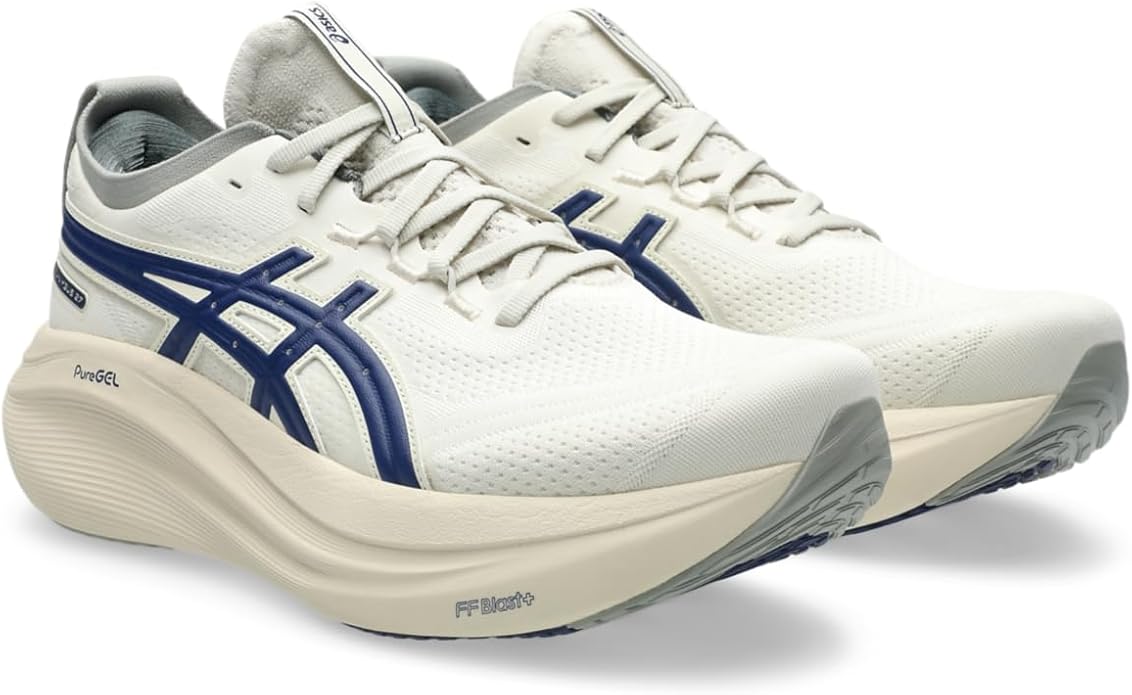
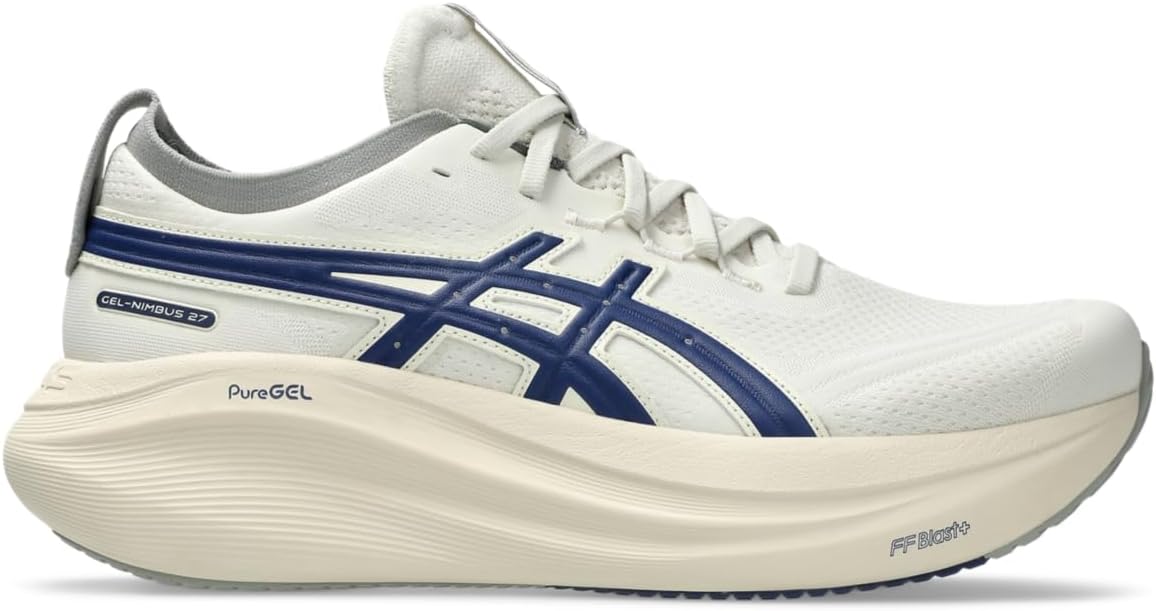
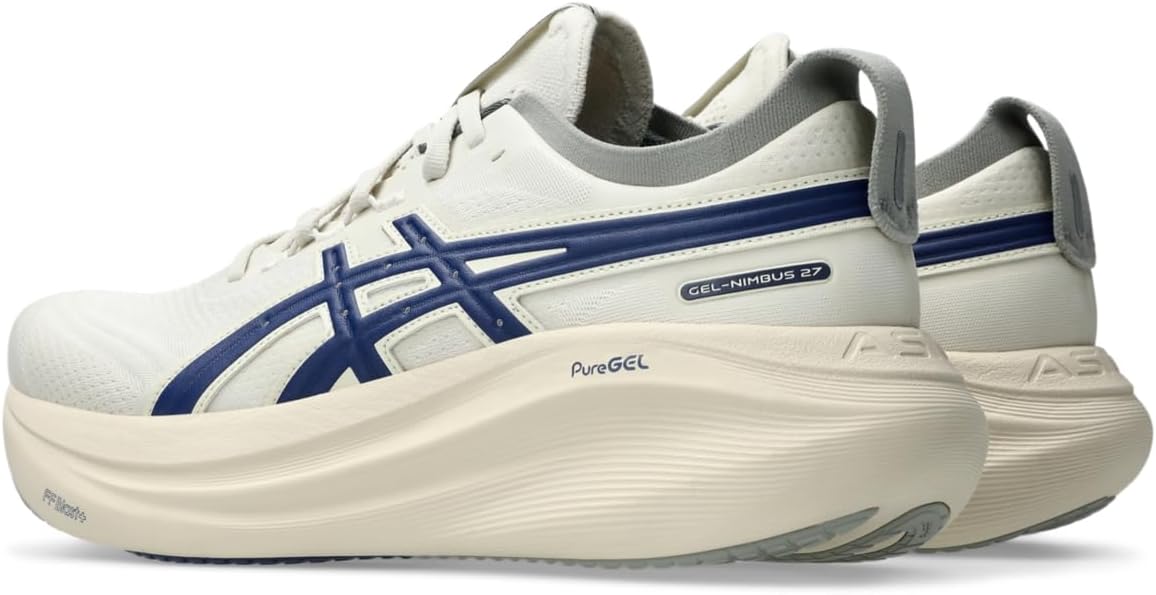
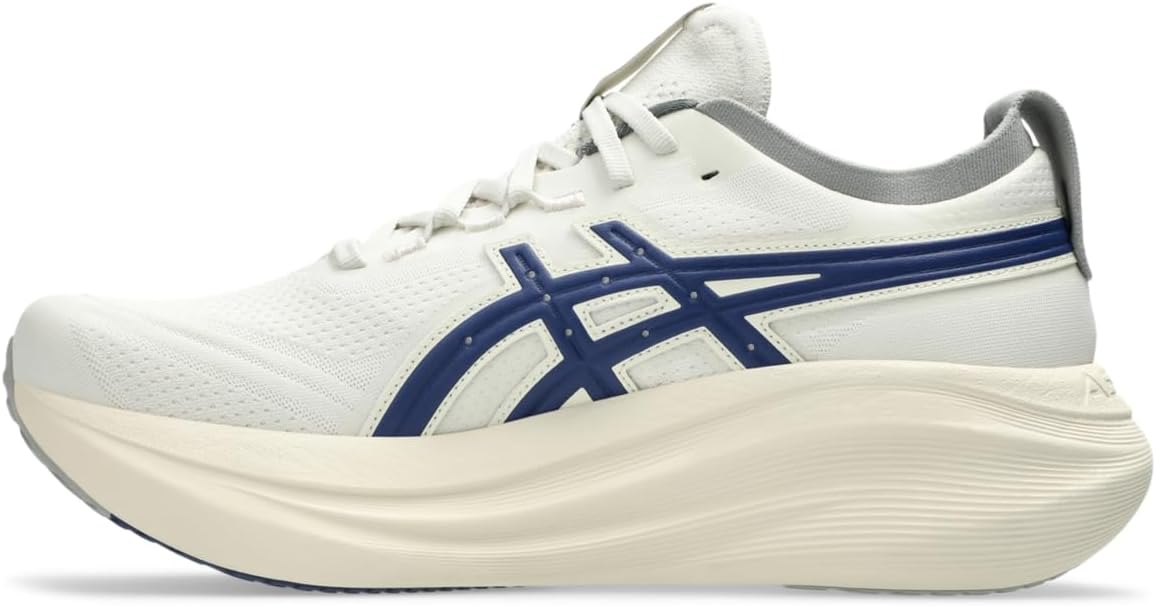
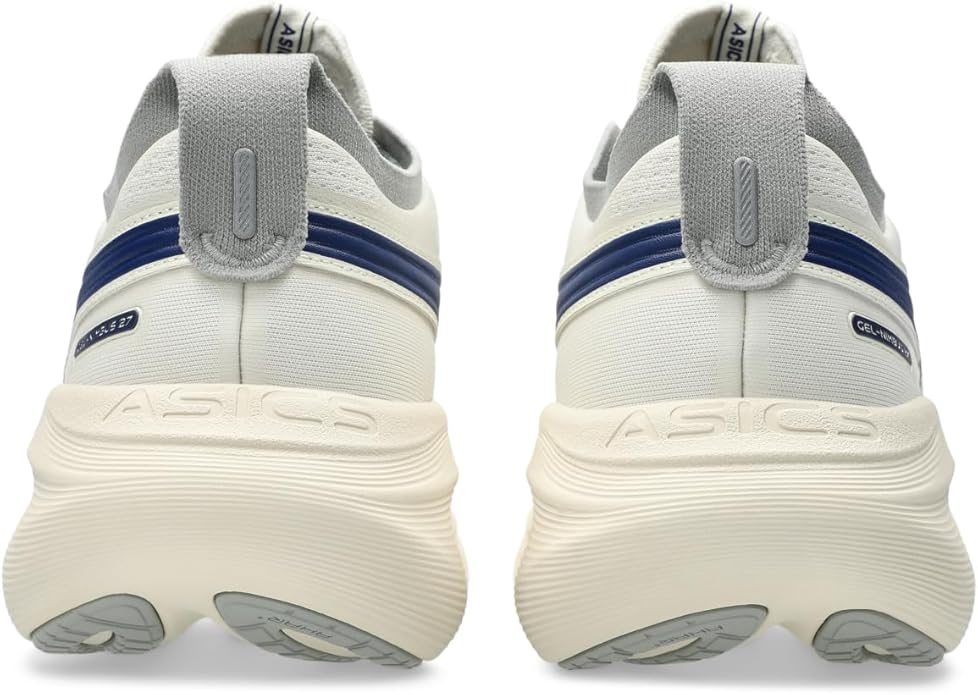
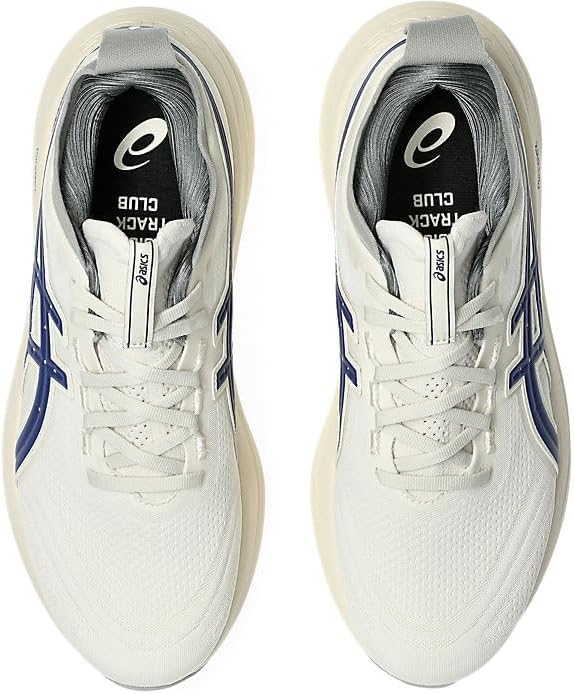
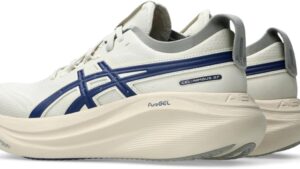
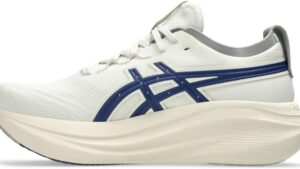
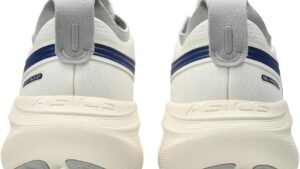
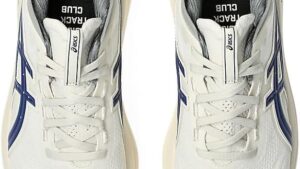
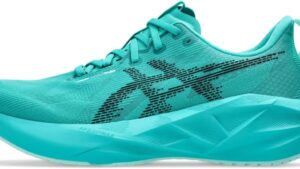
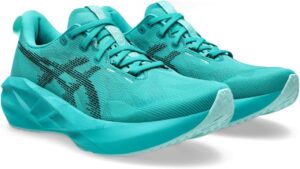
ASICS Men’s Gel-Nimbus 27
$165.00
- ⚖️ Weight: 10.8 oz (men’s size 9)
- 📏 Heel-to-toe drop: 8mm
- 📐 Stack height: 41.5mm heel / 33.5mm forefoot
- 🧪 Midsole material: FF BLAST PLUS ECO cushioning with PureGEL technology
- 👟 Upper material: Engineered knit jacquard mesh (75% recycled content)
- 🏃♂️ Category: Maximum cushioned daily trainer
- 🎯 Best for: Easy runs, recovery days, runners seeking maximum comfort
Can a $160 running shoe really deliver the “walking on clouds” experience that Asics promises without sacrificing stability? That’s exactly what I set out to discover with the Asics Gel-Nimbus 27. After 10+ years of wearing footwear across every distance imaginable, I was curious if Asics could back up their bold claims about this maximum cushioned trainer. 8 weeks and 200+ miles later, I’ve got some honest insights to share.
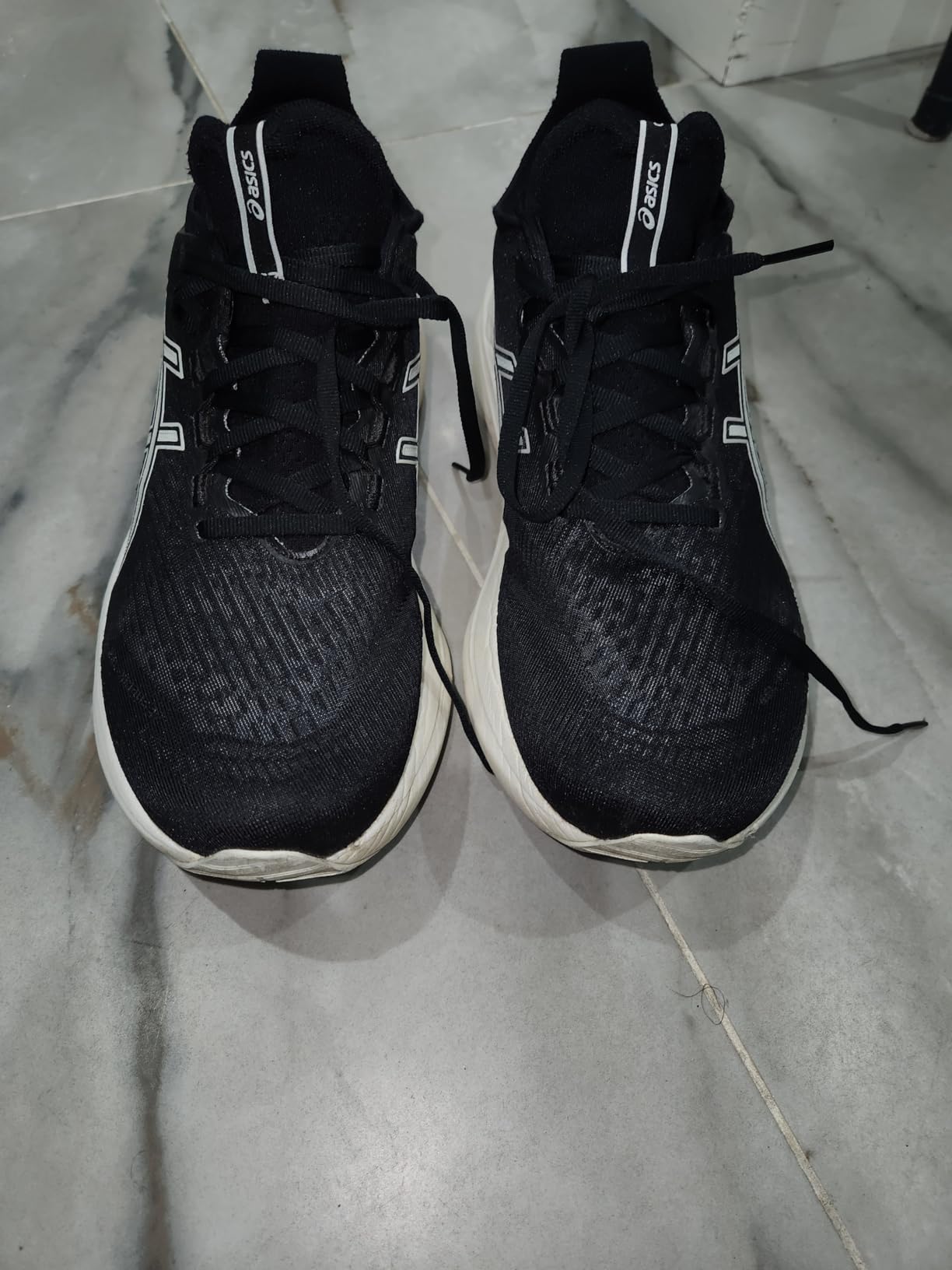
Design, Build Quality & Real-World Performance
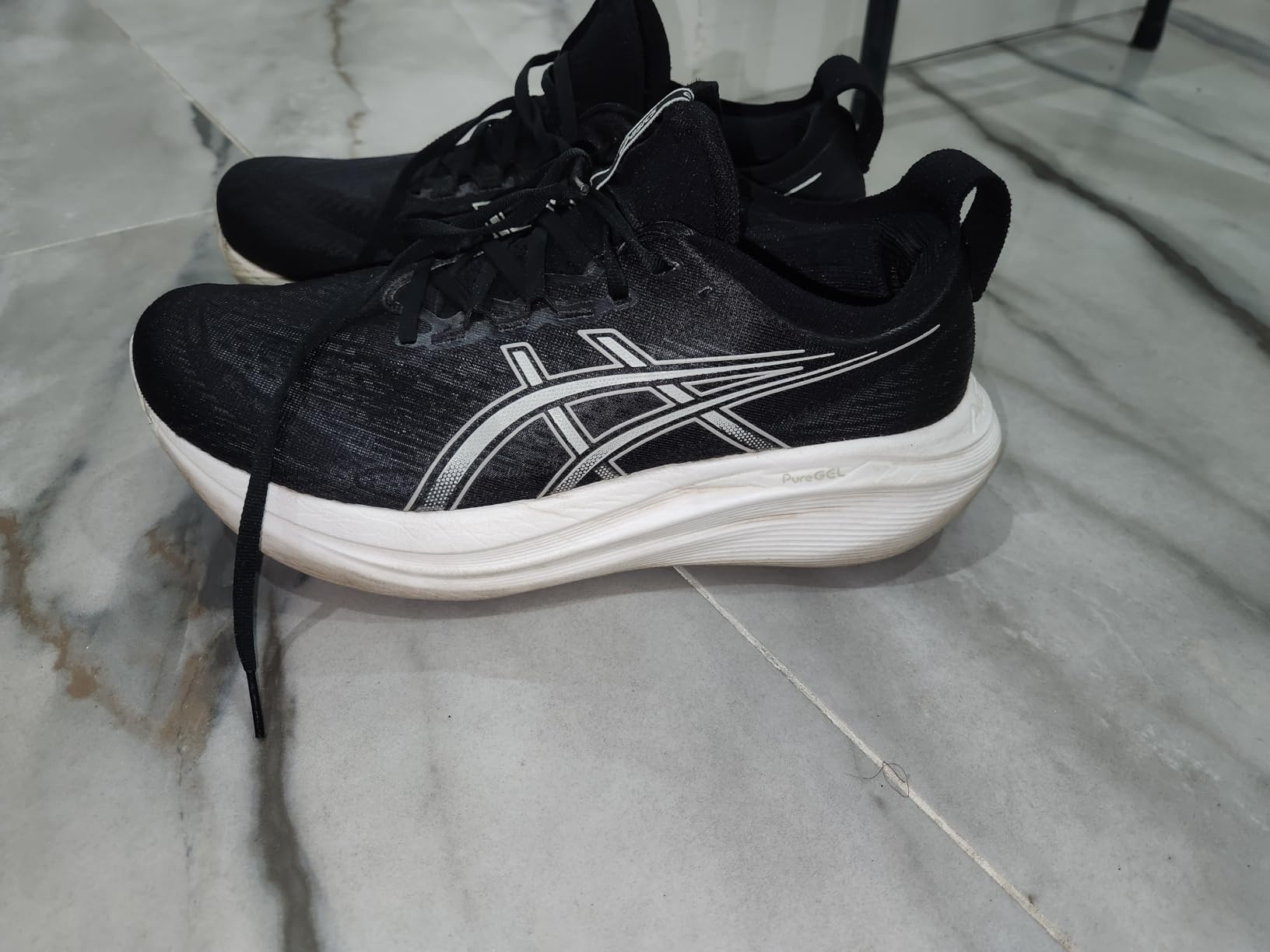
Right out of the box, the Asics Gel-Nimbus 27 feels different from previous Nimbus models I’ve worn. The engineered knit upper has a premium feel with a jacquard pattern that’s both functional and aesthetically pleasing. At 10.8 ounces for a men’s size 9, it’s not the lightest trainer on the market, but that weight comes with serious cushioning benefits.
The fit is immediately comfortable with a spacious toe box that accommodated my slightly wider forefoot without feeling sloppy. The knit tongue and collar create a sock-like feel that eliminates pressure points – something I really appreciated during longer runs. The lacing system provides good lockdown without being overly complicated, though I did notice the laces could use a bit more grip to maintain tension throughout longer sessions.
Maximum Cushioning Experience – Does It Live Up to the Hype?
Here’s where things get interesting. Asics claims the Asics Gel-Nimbus 27 provides a “landing on clouds” experience, and honestly, that’s not far from the truth. The combination of FF BLAST PLUS ECO foam and PureGEL technology creates an incredibly soft landing that’s immediately noticeable on first step.
My first easy run at a 8:30 pace felt like I was bouncing on trampolines. The 41.5mm heel stack provides serious protection from impact, and I could immediately feel the difference compared to my worn-out Nimbus 23s. For context, I’m 175 lbs and typically run 35-40 miles per week, so I put cushioning systems through their paces.
The real experience came during my longer runs. On a 12-mile Saturday session through Central Park, the cushioning held up remarkably well. Even by mile 10, when my legs were starting to fatigue, the Asics Gel-Nimbus 27 continued to provide that plush landing. My knees, which sometimes ache after longer sessions on concrete, felt noticeably better post-run.
On-the-Road Performance
I’ve put the Asics Gel-Nimbus 27 through its paces in every condition imaginable:
During brutal August afternoons in humid New York (85°F+), the engineered mesh upper proved its worth. The advanced ventilation kept my feet relatively comfortable, though like any maximum cushioned shoe, it’s not the coolest option available. Early morning runs at 6 AM felt fantastic – the plush cushioning was particularly welcome when my legs were still waking up.
Wet condition trials in Central Park during fall drizzle showed the Hybrid AsicsGrip outsole provides reliable traction on damp surfaces. I never felt unstable, though I did notice the deep cushioning requires a slight adjustment in proprioception compared to firmer trainers.
After 200+ miles, the durability has been solid. The outsole shows minimal wear despite regular concrete pounding, and the upper materials have maintained their shape and support. Based on current wear patterns, I’d expect 400-500 miles from the Asics Gel-Nimbus 27 – respectable for a maximum cushioned trainer.
Does Asics Deliver on Their Promises?
You know I’m a stickler for details, so when Asics made bold claims about the Asics Gel-Nimbus 27, I had to put each one through real-world use. Let’s break it down!
First up, they claim “feels like landing on clouds”. In reality, I found this is actually pretty accurate. The first 150 miles felt incredibly plush, and even now at 200+ miles, the cushioning remains impressively soft. I’d say it delivers about 90% of what they promise – it’s genuinely the softest landing I’ve experienced in a running shoe.
Next, the “softer and smoother running experience” statement needs some context. It’s definitely softer than the Nimbus 25 and 26, but “smoother” depends on your running style. The deep cushioning can feel a bit unstable during faster-paced runs or when fatigued. I tried this during tempo runs at 7:00 pace, and while comfortable, it lacks the responsive feel you’d want for speed work.
As for “enhanced sustainability with 75% recycled content”, I’ll give them credit here. The materials feel premium despite the eco-friendly construction, and knowing my shoe choice has reduced environmental impact is a nice bonus that doesn’t compromise performance.
Meeting Your Running Goals – Does It Deliver?
As a daily trainer focused on maximum cushioning, the Asics Gel-Nimbus 27 excels in specific scenarios but has some limitations. This is clearly designed as a daily trainer for easy runs and recovery sessions, not a versatile do-everything shoe.
For Easy Runs (8:00+ pace): Absolutely fantastic. The cushioning encourages a relaxed stride and makes easy miles genuinely enjoyable. Perfect for those days when you want to log miles without beating up your legs.
For Long Runs (10+ miles): Excellent choice. The sustained cushioning through extended efforts is where the Asics Gel-Nimbus 27 truly shines. I completed several 15+ mile sessions with minimal foot fatigue.
For Recovery Runs: Ideal. The soft landing helps when your legs are tired from previous workouts. The day-after-hard-workout runs become much more manageable with this level of cushioning.
What’s Missing: The trade-off for maximum cushioning is versatility. I wouldn’t recommend the Asics Gel-Nimbus 27 for tempo work, track sessions, or races shorter than a half marathon. The deep foam can feel unstable during faster paces or quick direction changes, and the weight penalty (10.8 oz) becomes noticeable during speed work.
My Overall Assessment
Category Breakdown
After 8 weeks of putting the Asics Gel-Nimbus 27 through everything I could throw at it, I’m giving it 8.2/10 overall. Here’s how it breaks down:
- Design & Aesthetics: 8.0/10 – Clean, modern look with premium materials
- Cushioning Quality: 9.5/10 – Genuinely exceptional impact absorption and comfort
- Durability: 8.0/10 – Solid construction showing good wear patterns after 200+ miles
- Versatility: 6.5/10 – Limited to easy/recovery runs, not suitable for speed work
- Value for Money: 7.5/10 – At $160, it’s pricey but delivers on its promises
What I’m Seeing Out There
The Asics Gel-Nimbus 27 has generated pretty consistent feedback in my local running community. Most of the crew loves them for easy miles and recovery runs. During last Tuesday’s group run, at least 4-5 people mentioned how much they appreciate the cushioning for longer efforts. That said, I’ve noticed competitive runners expressing stability concerns during faster paces – one of my running buddies said “the cushioning felt amazing for easy runs, but I felt like I was on stilts during tempo work.” The consensus seems to be these aren’t versatile trainers, but they excel in their intended role.
Is It Worth Your Money?
Let’s talk dollars and sense. At $160 for the Asics Gel-Nimbus 27, here’s my breakdown:
$160 divided by estimated 450-mile lifespan = $0.36 per mile
Compared to Brooks Glycerin 21 ($150): Similar cushioning, slightly better versatility
Based on delivered features vs promises: 90% delivered × price = solid value for maximum cushioning seekers
Bottom line: Worth it if you prioritize cushioning above all else and primarily run easy to moderate paces. If you’re looking for a do-everything trainer or plan to use it for speed work, this isn’t the right investment.
Performance in Various Running Conditions
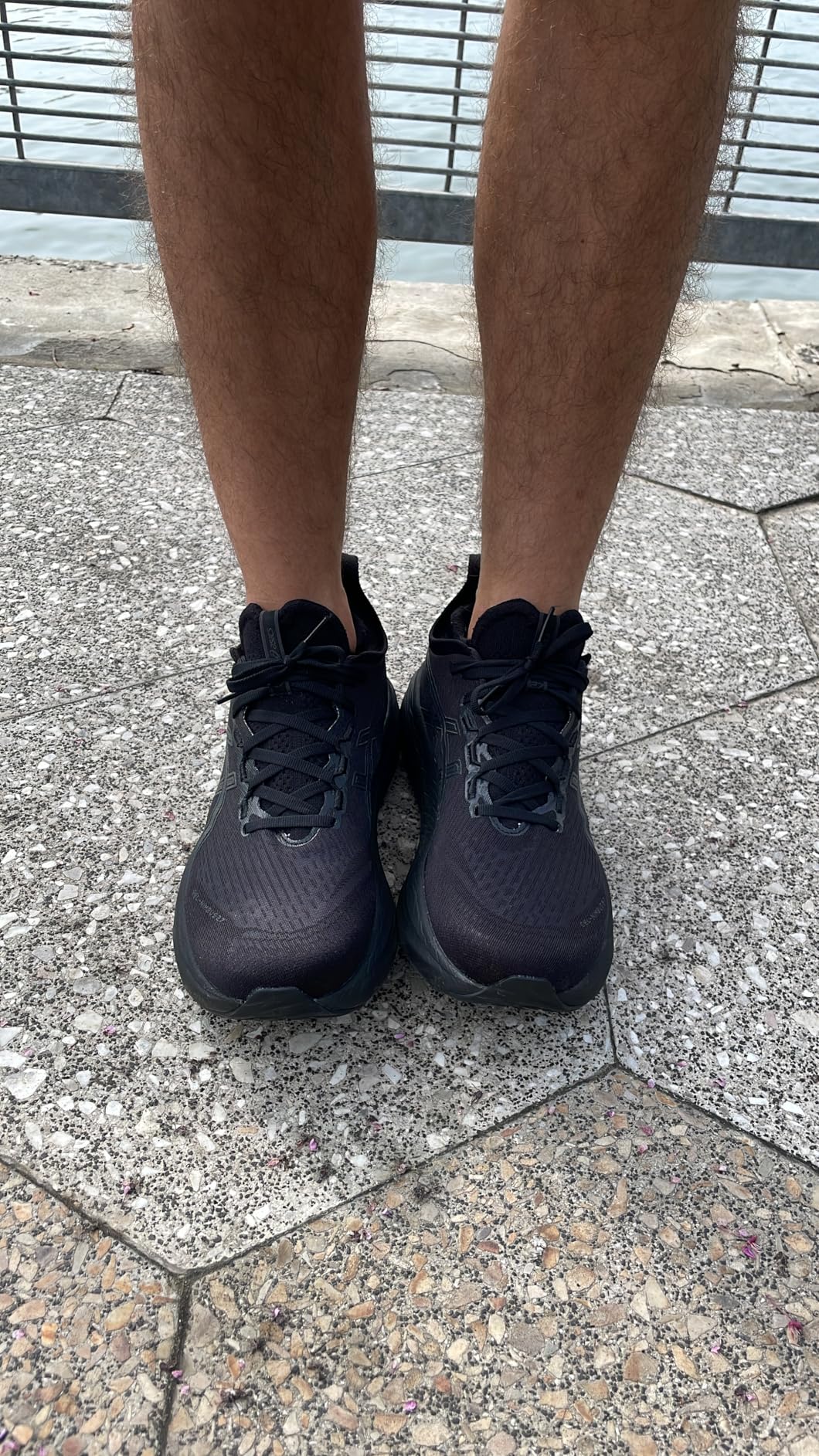
I’ve used the Asics Gel-Nimbus 27 in conditions ranging from 40°F fall mornings to 90°F summer afternoons, and the performance has been remarkably consistent. The engineered mesh upper handles temperature variations well, though it’s definitely warmer than minimal trainers.
Hot weather experience (85°F+, high humidity): During a brutal August afternoon in Central Park, the breathability proved adequate but not exceptional. My feet stayed comfortable for the first hour, but longer sessions in extreme heat showed the limitations of maximum cushioning – more material means more heat retention.
Early morning vs evening runs: 6 AM runs in crisp fall weather felt fantastic – the cushioning was particularly welcome when muscles were cold and stiff. Evening sessions after work days showed how well the Asics Gel-Nimbus 27 handles leg fatigue, providing consistent comfort even when form starts to deteriorate.
Wet conditions: Tried during several Seattle drizzle sessions and one legitimate downpour in Brooklyn. The Hybrid AsicsGrip outsole provides confident traction on wet pavement, though the deep cushioning requires slight adjustments to proprioception on slippery surfaces.
Durability over time: First 100 miles were honeymoon phase – incredible comfort with zero break-in required. Miles 100-200 showed slight compression of the foam, but cushioning remains excellent. I’m projecting 450+ mile lifespan based on current wear patterns, which is solid for this category.
Final Verdict
The Good and The Bad
| ✅ Pros | ❌ Cons |
|---|---|
| • Exceptional cushioning and impact absorption • Comfortable from first wear – zero break-in period • Excellent for recovery runs and easy miles • Premium materials and sustainable construction • Spacious toe box accommodates wider feet • Reliable traction in various conditions • Solid durability for maximum cushioned category |
• Limited versatility – not suitable for speed work • Can feel unstable during faster paces • Heavier than minimal trainers (10.8 oz) • Premium price point ($160) • Runs warm in hot weather conditions • Deep cushioning may feel “mushy” to some runners • Not ideal for runners seeking ground feel |
Who Should Buy the Asics Gel-Nimbus 27?
✅ PERFECT FOR:
- Runners prioritizing maximum cushioning and comfort above all else
- Athletes recovering from injuries who need serious impact protection
- Heavier runners (180+ lbs) seeking joint-friendly cushioning
- Easy run specialists logging high weekly mileage at relaxed paces
- Runners with a history of knee, hip, or lower leg impact issues
- Anyone seeking a premium recovery shoe for day-after-hard-workout runs
⚠️ CONSIDER CAREFULLY IF:
- You occasionally want to pick up the pace during training runs
- You’re sensitive to shoe weight and prefer lighter trainers
- You run primarily in hot, humid climates
- You’re budget-conscious and looking for versatile value
❌ LOOK ELSEWHERE IF:
- You need a shoe for tempo runs, intervals, or race day
- You prefer firm, responsive cushioning with good ground feel
- You’re looking for a single do-everything training shoe
- You regularly run on technical trails or uneven surfaces
- You have narrow feet (the Asics Gel-Nimbus 27 runs spacious)
Better Options for Specific Needs
- For more versatility at similar cushioning: Consider Brooks Glycerin 21
- For lighter weight with good cushioning: Look at Hoka Clifton 9
- For similar comfort but better speed capability: Check out New Balance Fresh Foam X 1080v13
My Final Take
After all these miles in the Asics Gel-Nimbus 27, here’s the deal: this is a specialist shoe that absolutely excels at its intended purpose. If you’re someone who values cushioning above all else and primarily run easy to moderate paces with a budget around $160, this is worth considering.
Pro tip: The Asics Gel-Nimbus 27 works best as part of a rotation rather than a single-shoe solution. Pair them with a lighter, more responsive trainer for variety and speed work.
Questions? Drop them in the comments below – I’ll do my best to help! Happy running! 🏃♂️
Frequently Asked Questions
Based on my experience and what runners need to know, here are the key questions about the Asics Gel-Nimbus 27:
Q: How many miles per week can I comfortably put on these?
A: Based on cushioning durability and recovery properties, the Asics Gel-Nimbus 27 handles high mileage well. At 40 miles/week, the shoe performed excellently throughout my experience, but from what I’ve observed, runners logging 60+ miles report the cushioning starts to feel less responsive around 300 miles. The sweet spot seems to be 25-50 miles per week for optimal performance.
Q: Can I use the Asics Gel-Nimbus 27 for both easy runs and speed work?
A: Not really. For easy runs at 8:30+ pace, it’s phenomenal, but when pushing tempo pace at 7:00 or faster, the deep cushioning feels unstable and unresponsive. This is definitely an easy run/recovery specialist, not a versatile trainer.
Q: How does the Asics Gel-Nimbus 27 fit compared to other popular brands?
A: Compared to Nike, it runs about a half-size large with a roomier toe box. Against Brooks Glycerin, it’s similar in length but wider. If you wear size 9 in most Nike running shoes, you’ll likely need 8.5 in the Asics Gel-Nimbus 27.
Q: What’s the break-in period like?
A: Virtually none. Out of the box, expect immediate comfort – I ran 6 miles on my first outing with zero issues. After the first week, they’re fully settled and maintain that plush feeling throughout their lifespan.
Q: How long will these shoes realistically last?
A: From what I’m seeing after 200+ miles and discussions with other runners, lighter folks (under 150 lbs) report 500+ miles. Average weight runners (170-185 lbs) see 400-450 miles. Heavy runners (200+ lbs) should expect 350-400 miles, which is solid for maximum cushioned category.
Q: Are they worth the price compared to Brooks Glycerin 21?
A: Both offer exceptional cushioning around $150-160. The Asics Gel-Nimbus 27 has slightly softer landing and better sustainability story, while the Glycerin offers more versatility for mixed-pace training. If you want pure cushioning, go Nimbus. If you need some versatility, choose Glycerin.
Q: What are the deal-breakers I should know about?
A: The Asics Gel-Nimbus 27 absolutely won’t work if you want to use it for speed work or need firm stability. Common observations include feeling “unstable” during faster paces and “too soft” for runners who prefer ground feel. The biggest limitation is lack of versatility – this is a one-trick pony.
Q: Best practices for getting maximum life from these shoes?
A: Rotate with a firmer trainer to prevent excessive foam compression, avoid using the Asics Gel-Nimbus 27 for speed work or hard surfaces exclusively, let them dry completely between runs, and replace when you notice the heel cushioning starts to feel flat (usually around 400-450 miles).
Be the first to review “ASICS Men’s Gel-Nimbus 27”
Related products
Running Shoes
Running Shoes
Running Shoes
Running Shoes

Running Shoes
Running Shoes
Running Shoes
Sneaker
Reviews
There are no reviews yet.