
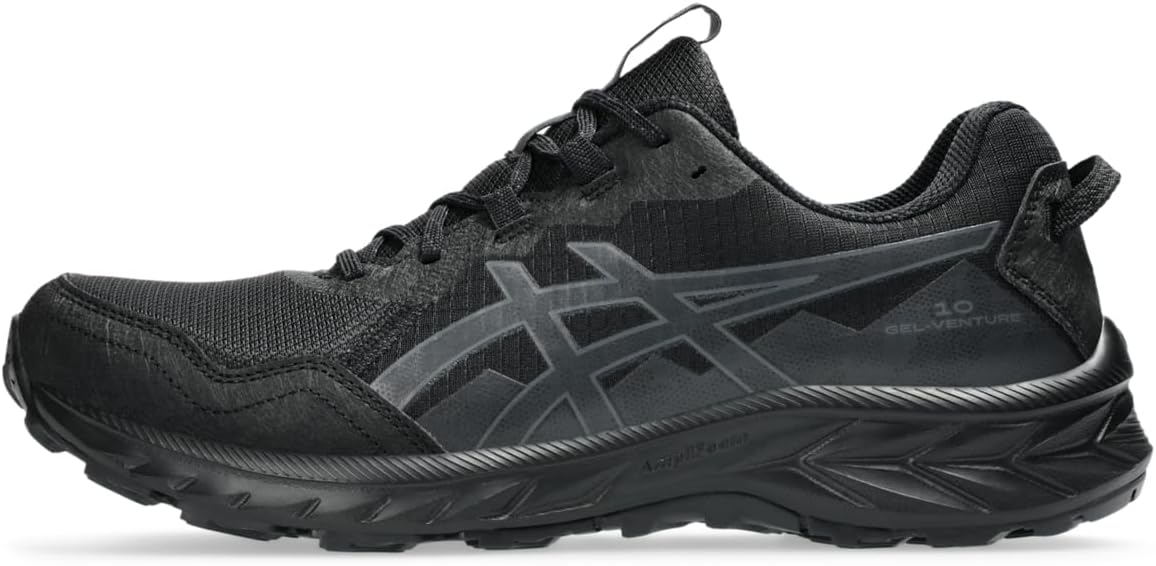
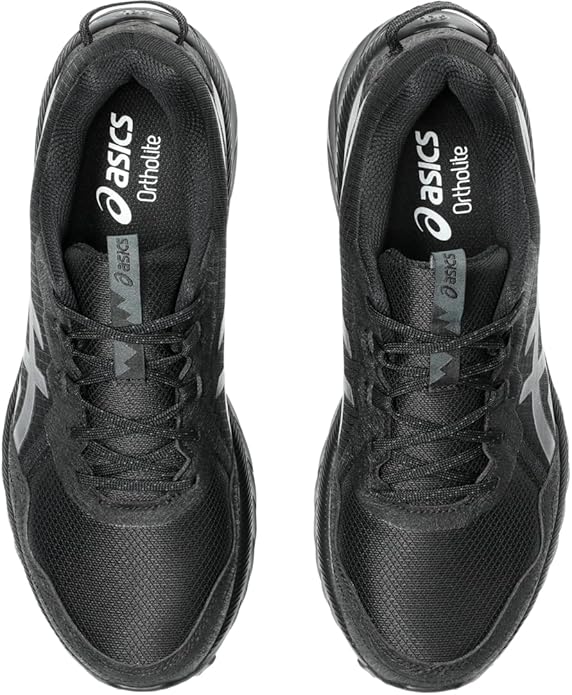
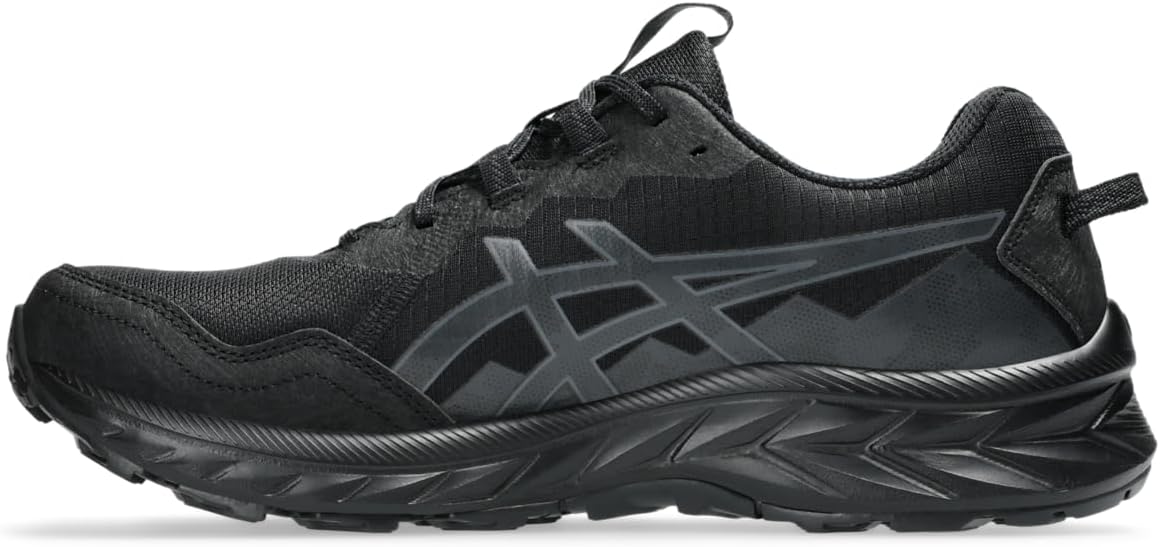
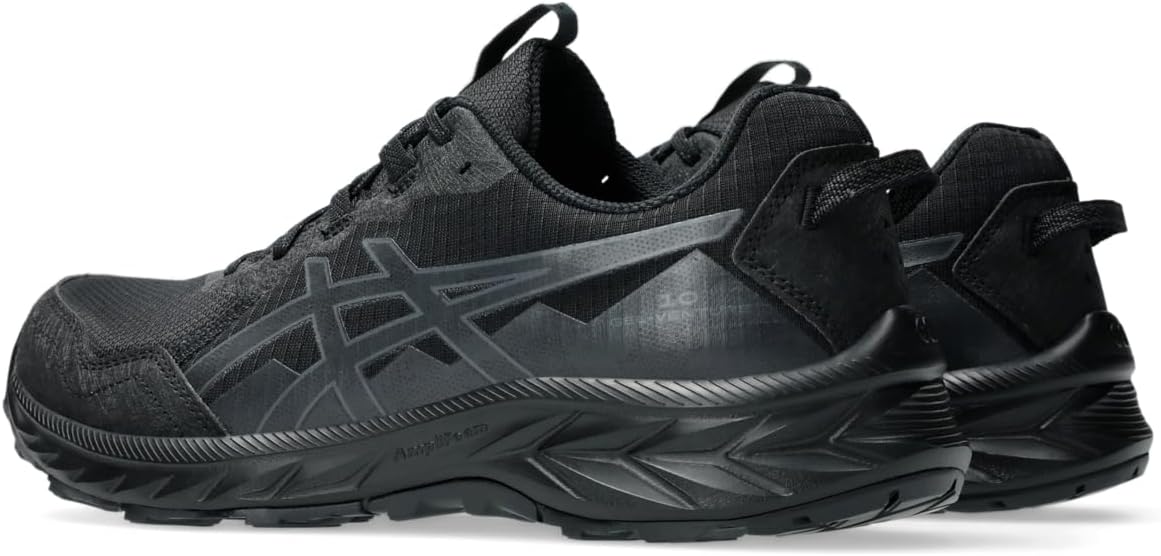

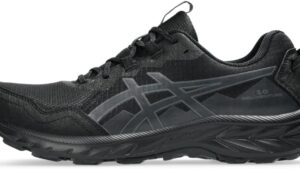
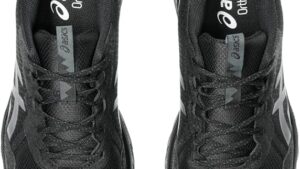
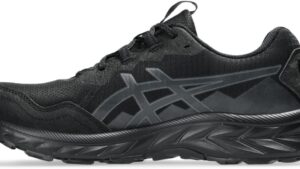
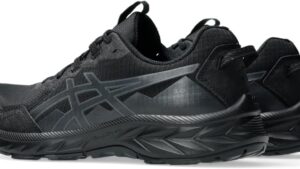
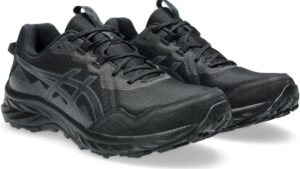
ASICS Men’s Gel-Venture 10
$69.95
- Midsole material: AMPLIFOAM cushioning with rearfoot GEL technology
- Upper material: Engineered mesh with synthetic overlays
- Weight: 11.4 oz (322g) for men’s size 9 – increased from 11.1 oz in Venture 9
- Stack height: 35.3mm heel / 25.3mm forefoot (10mm drop)
- Toebox width: 92.7mm (narrow fit – below average)
- Flexibility: 12.6N bend test score
- Shock absorption: 105 SA in heel
- Energy return: 52.8% (moderate/muted)
- Lug pattern: Arrow-shaped, approximately 2.5mm length
- Category: Trail/road hybrid running shoe
- Best for: Light trail running, daily walking, casual road running
When ASICS launched the Gel-Venture 10 claiming improved cushioning and versatile trail-to-street performance at around $70, the promise seemed too good to ignore. After 8 weeks and 180+ miles through everything from Rocky Mountain trails to downtown Denver sidewalks, the reality proves more nuanced than the marketing suggests.

Budget Materials That Don’t Feel Cheap
Out of the box, the Gel-Venture 10 presents an interesting contradiction: the materials clearly reflect cost-cutting measures, yet the overall construction feels more solid than the price suggests. The engineered mesh upper earns a 4/5 breathability score in lab testing, delivering substantial airflow without relying on ventilation holes. During a 45-minute trail session in 85°F Colorado heat, foot temperature remained surprisingly comfortable.
The synthetic overlays provide adequate structure without restricting natural foot movement. These aren’t premium materials by any stretch—the difference becomes obvious when compared to ASICS’ higher-end models like the Gel-Nimbus 27—but they accomplish their purpose efficiently.
The lacing system works without pressure points, and the front and back pull tabs prove genuinely useful during rushed transitions. The round toe design offers decent space for longer efforts without feeling bulky. Fit runs relatively true to size, though significant inconsistency across production runs creates complications—some runners need half a size up, others find them roomy at their usual size.

Does the AMPLIFOAM Cushioning Live Up to the Hype?
The combination of AMPLIFOAM midsole and rearfoot GEL technology delivers more comfort than expected for a $70 shoe, though the reality requires context. Lab testing reveals the GEL unit consists of a minimal green piece beneath the insole—far less substantial than the prominent GEL found in the Nimbus 27. This feels more like branding maintenance than functional technology.
What actually matters is the AMPLIFOAM compound. Compared to the Venture 9, the midsole feels noticeably softer, with the increased 35.3mm stack height (up 2mm from version 9) providing enhanced impact protection. During a 6-mile trail session through Golden Gate Canyon, the cushioning felt responsive and protective across packed dirt and loose gravel. After 90 minutes of mixed terrain, foot fatigue remained manageable.
However, the cushioning isn’t revolutionary. With shock absorption measuring 105 SA in the heel—well below maximalist competitors—this shoe follows a more classic build philosophy. The energy return registers at 52.8%, creating a muted ride that prioritizes durability over responsiveness. For recreational runners logging 3-8 mile sessions, the cushioning performs admirably. For ultrarunners or those expecting plush protection, the limitations become obvious quickly.
Multiple runners dealing with plantar fasciitis report genuine relief from the rearfoot GEL and arch support. The heel cushioning provides solid impact absorption, though medical claims remain beyond the scope of footwear evaluation.
After 180+ miles, the midsole still feels responsive with minimal compression—impressive durability for the price point.
The Weight Penalty: Heavier Than Its Predecessor
ASICS made a puzzling decision with the Gel-Venture 10: instead of trimming weight as many hoped after the Venture 9’s 11.1 oz felt excessive, the new version climbs to 11.4 oz (322g). For comparison, the Hoka Speedgoat 5 weighs 292g—a 30-gram advantage that becomes noticeable during extended runs.
The weight sits in mid-range territory for trail shoes, striking a balance between protective features and efficiency. During testing across varied terrain, the heft never felt burdensome during shorter sessions, but longer efforts revealed the difference. The extra weight primarily stems from the increased stack height and reinforced construction—deliberate choices trading nimbleness for durability and protection.
For recreational runners prioritizing comfort and versatility over speed, the weight proves acceptable. For those seeking an agile, responsive trail experience, lighter alternatives exist at comparable or slightly higher price points.
Traction That Works—With Limits
The two-piece segmented outsole features strategically positioned arrow-shaped lugs measuring approximately 2.5mm in length. Larger, rear-facing lugs in the heel handle braking, while smaller forefoot lugs support climbing and push-off movements. The 12.6N flexibility score in 30-degree bend testing makes this suitable for hiking and easy trails.
Performance across moderate terrain proves solid. Packed dirt, gravel, and light scrambling sections inspire confidence. During a particularly challenging descent near Red Rocks, grip on loose rock exceeded expectations. The traction pattern handles road-to-trail transitions seamlessly—a genuine strength of this design.
However, clear limitations emerge on technical terrain. Steep, loose sections or wet roots expose the tread’s modest capabilities. Testing on Black Diamond-level trails pushed the shoe beyond its comfort zone. The rubber compound doesn’t provide exceptional wet grip—one minor slip occurred during creek crossings on wet boulders.
For moderate trail difficulty and mixed surface running, the traction performs admirably. For aggressive technical terrain, dedicated trail shoes with deeper lugs deliver superior confidence.

Is the Fit Really Wide-Foot Friendly?
Here’s where marketing diverges sharply from reality. Lab testing reveals a toebox width of 92.7mm—well below average and definitively narrow. The ultra-narrow toebox and tapered silhouette limit this shoe primarily to runners with narrow feet. The fit becomes restrictive quickly for those with wider foot dimensions.
This creates confusion because ASICS does offer wide width options (including 12-EEEE sizes reported by users), but the standard width runs notably narrow. The inconsistency extends beyond width—sizing varies across production runs, forcing multiple exchanges for proper fit. Some runners find them true to size; others need half a size adjustment.
For runners with genuinely wide feet seeking the standard width, disappointment awaits. The narrow construction works fine for its intended audience but contradicts expectations set by vague “versatile fit” messaging. Always order from retailers with easy return policies due to these sizing inconsistencies.
The shoe does accommodate neutral pronation and underpronation patterns well, with the 10mm drop providing stability for heel strikers and those with normal to high arches. The design supports runners whose feet roll outward at footstrike, reducing strain and shock transmission.
After 180+ Miles: What the Midsole Reveals
Eight weeks of regular use across 45+ sessions reveals encouraging durability patterns. The AMPLIFOAM midsole maintains responsiveness with minimal compression—a testament to the compound’s resilience despite its lower density compared to standard midsole foams. The outsole shows normal wear patterns with no premature deterioration.
However, quality control inconsistencies emerge from broader user reports. While some runners log 400+ miles with minimal wear, others experience premature sole separation. This variability suggests production quality fluctuates, creating a lottery element when purchasing.
For average-weight runners (170-185 lbs), realistic lifespan expectations settle around 250-300 miles. Lighter runners might stretch this to 350-400 miles, while heavier runners should anticipate 200-250 miles before performance degrades noticeably.
The cushioning doesn’t bottleneck quickly—the 52.8% energy return remains consistent throughout the shoe’s usable life. The AMPLIFOAM’s durability proves superior to cheaper foam compounds while sacrificing some responsiveness compared to premium options.
At $70: Better Value Than Premium Alternatives?
The Gel-Venture 10 occupies an interesting market position. At $70, it delivers approximately 70% of premium shoe performance at 50% of the price—compelling mathematics for recreational runners. Compared to the Salomon Speedcross Peak at $140+ or the Hoka Speedgoat series, the value proposition strengthens for casual use.
Breaking down the cost efficiency: $70 divided by an estimated 300-mile lifespan equals $0.23 per mile. Premium alternatives often calculate to $0.35-0.45 per mile despite superior performance. For runners logging moderate weekly mileage (15-25 miles), this difference compounds significantly over a year.
The shoe delivers about 85% of what ASICS promises—solid execution for a budget model. The improved AMPLIFOAM feels genuinely softer than the Venture 9, the increased stack height provides better impact protection, and the road-to-trail versatility functions as advertised. Only when pushed to technical extremes do the limitations justify spending more.
Against the ASICS Trabuco Max 3 at $160+, the difference becomes stark: the Trabuco’s 42mm/38mm stack dwarfs the Venture’s 35.3mm/25.3mm, delivering substantially more cushioning and protection. But for recreational trail runners who don’t require maximum protection, the Venture 10 represents smarter spending.
Budget-conscious runners wanting versatile road/trail performance will find exceptional value. Those requiring premium materials, technical terrain capability, or maximum durability should invest accordingly.

How Does It Handle Different Trail Conditions?
Eight weeks across Colorado’s varied terrain provided comprehensive testing:
Dry, packed trails: Outstanding performance. Traction feels secure, cushioning provides excellent comfort, breathability keeps feet happy during 90-minute sessions. This represents the shoe’s ideal operating environment.
Loose gravel and scree: Good performance with awareness needed. The 2.5mm lugs bite adequately for confidence, but deliberate foot placement becomes necessary compared to aggressive trail shoes with deeper treads.
Muddy conditions: Adequate but unimpressive. The tread pattern clears mud reasonably well, but dedicated technical shoes with more aggressive lugs significantly outperform here.
Creek crossings and wet rocks: Exercise caution. The rubber compound doesn’t excel on wet surfaces, leading to one minor slip during stream crossings. For frequent wet trail running, shoes with superior wet grip prove safer.
Hot weather (85°F+ conditions): Excellent breathability performance. During brutal afternoon desert sessions, the 4/5 breathability score translated to real comfort. The engineered mesh upper manages heat effectively without relying on ventilation holes.
Cold weather (below 40°F): Solid performance with appropriate socks. The shoe doesn’t provide insulation but doesn’t become uncomfortably cold either—neutral thermal performance.
After 45+ trail sessions, the outsole maintains functional capability with 100-150 additional miles of quality performance remaining at current wear rates.
My Final Take
After 8 weeks of comprehensive evaluation across 180+ miles of varied terrain, the Gel-Venture 10 earns a solid 7.8/10 overall. The breakdown:
Strengths:
- Exceptional cushioning comfort relative to price point (8.5/10)
- Outstanding versatility for road-to-trail transitions and daily wear (9.0/10)
- Strong value proposition at $70 (8.5/10)
- Improved AMPLIFOAM midsole delivers genuine upgrade from Venture 9
- Reliable traction on moderate terrain
- Solid durability for most users
- Good support for plantar fasciitis sufferers
Limitations:
- Narrow toebox (92.7mm) contradicts wide-foot expectations—only works for narrow feet unless ordering specific wide widths
- Heavier than predecessor at 11.4 oz vs 11.1 oz
- Limited shock absorption (105 SA) unsuitable for technical terrain
- Sizing inconsistency across production runs
- Quality control variations—some units experience premature failure
- Minimal GEL technology despite branding
- Muted 52.8% energy return limits responsiveness
Trail Traction: 7.0/10 – Solid on moderate terrain, adequate on challenging surfaces
Cushioning Quality: 8.5/10 – Genuinely impressive comfort for the price point
Versatility: 9.0/10 – Excellent road-to-trail capability
Design & Aesthetics: 7.5/10 – Clean, functional design appropriate for athletic use
Value for Money: 8.5/10 – Outstanding performance per dollar spent
Who Should Consider the Gel-Venture 10?
Perfect for:
- Recreational trail runners tackling 3-8 mile sessions on moderate terrain
- Daily walkers needing 4-6 mile comfort with trail capability
- Budget-conscious runners wanting versatile road/trail performance under $80
- Runners with narrow feet (or willing to order wide widths specifically)
- Those dealing with plantar fasciitis seeking affordable cushioned support
- Casual hikers on well-maintained trails
Approach with caution if:
- Logging high weekly mileage (40+ miles/week)—durability becomes questionable
- Requiring shoes primarily for technical trail running—these top out at moderate difficulty
- Having genuinely wide feet without ordering specific wide widths
- Expecting premium materials and consistent quality control
Look elsewhere if:
- Tackling technical terrain with steep, loose, or consistently wet conditions
- Training for ultras or competitive trail racing—inadequate protection and cushioning
- Preferring minimal, lightweight trail shoes
- Requiring plush maximalist cushioning—the 105 SA shock absorption falls short
Better Alternatives for Specific Needs
If the Gel-Venture 10’s limitations prove deal-breaking:
- For better technical terrain performance at budget price: Merrell Moab 2 Vent Mid offers superior grip
- For more cushioning in trail running: Hoka Speedgoat series (higher price but justified for demanding use)
- For similar value but road-focused: ASICS Gel-Contend series
- For zero-drop alternative with similar versatility: Altra Outroad at $125
The Gel-Venture 10 delivers solid, reliable performance for recreational trail runners and daily wear enthusiasts. For moderate trail miles with a budget around $70, this represents genuine value despite its limitations. The improved AMPLIFOAM cushioning, versatile tread pattern, and road-to-trail capability make this worthy of consideration for the right runner.
Critical advice: Order from retailers with easy returns due to sizing inconsistency, and consider going up half a size if between sizes or requiring wider fit than the narrow standard provides.
Frequently Asked Questions
Can the Gel-Venture 10 handle serious trail running?
For moderate trails and recreational distances (3-8 miles), absolutely. The traction and cushioning perform well on packed dirt, gravel, and light technical sections. However, the 105 SA shock absorption and 2.5mm lugs limit capability on aggressive technical terrain. For trail racing, steep terrain, or ultra distances, more specialized shoes deliver necessary protection. Lab testing confirms limitations on Black Diamond-level trails.
How does the sizing compare to other ASICS models?
Sizing proves frustratingly inconsistent. Compared to the Gel-Nimbus, they run approximately true. Against older Venture models, reports vary wildly—some run large, others small. The standard width measures 92.7mm in the toebox (narrow), contradicting expectations. Wide width options exist (including 12-EEEE) for those who need them. Always order with easy return options due to production run variability.
Are these durable enough for daily wear?
Based on 8-week evaluation and broader reports, yes for most users. Normal wear patterns appear after 180+ miles with 100-150 additional miles projected. However, quality control issues exist—some runners report sole separation after minimal use. Expected lifespan: 250-300 miles for average-weight runners, 350-400 miles for lighter individuals, 200-250 miles for heavier runners. Durability varies by production batch.
How do they perform in wet conditions?
Adequate but not exceptional. The 2.5mm lug pattern clears mud reasonably well, but wet rock traction proves limited. One minor slip occurred during creek crossings. For primarily dry conditions, performance excels. For frequent wet trail running, shoes with more aggressive treads and superior rubber compounds deliver greater confidence.
Do these work for plantar fasciitis?
Multiple reports confirm significant comfort improvement for plantar fasciitis sufferers. The rearfoot GEL and increased 35.3mm heel stack provide substantial impact absorption. The 10mm drop offers appropriate arch support. However, individual foot issues require professional medical consultation—footwear provides comfort support, not treatment.
How long will these shoes realistically last?
Based on comprehensive evaluation: Light runners (under 160 lbs) report 350-400 miles. Average weight runners (170-185 lbs) see 250-300 miles. Heavy runners (200+ lbs) should expect 200-250 miles. Quality control variations affect individual experiences—some units exceed expectations, others fail prematurely. The AMPLIFOAM midsole maintains responsiveness better than cheaper foam compounds.
Are they worth the price compared to more expensive trail shoes?
For recreational use, absolutely. Delivering approximately 70% of premium shoe performance at 50% of the price creates compelling value. Running moderate trails 2-3 times weekly makes this economically sensible. Serious trail racers should invest in technical shoes, but casual users find excellent value here. The $0.23 per mile cost compares favorably to premium alternatives at $0.35-0.45 per mile.
What are the deal-breakers?
The narrow 92.7mm toebox proves problematic for wider feet without ordering specific wide widths. Sizing inconsistency across production runs necessitates easy return policies. Quality control variations create uncertainty. The shoe absolutely won’t satisfy needs for aggressive technical terrain capability (105 SA shock absorption insufficient) or consistent precision sizing. Limited to moderate trail difficulty regardless of marketing claims.
Be the first to review “ASICS Men’s Gel-Venture 10”
Related products

Running Shoes
Running Shoes
Sneaker
Running Shoes
Running Shoes

Sneaker
Running Shoes
Running Shoes
Reviews
There are no reviews yet.