
Design & Build Quality – First Impressions That Stuck
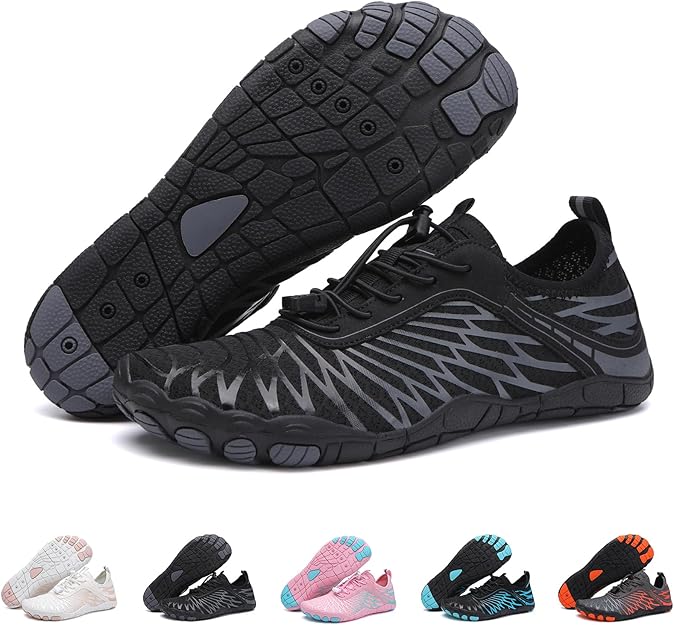
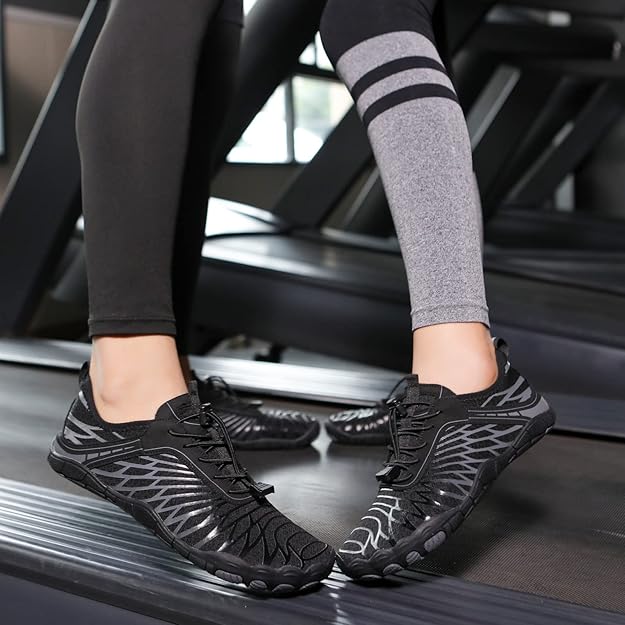
Picking these up straight from the box, the first thing that caught me off guard was how ridiculously light they felt. I’m talking pick-them-up-with-one-finger light. After years of testing chunky hiking shoes and supportive running sneakers, this was refreshing.
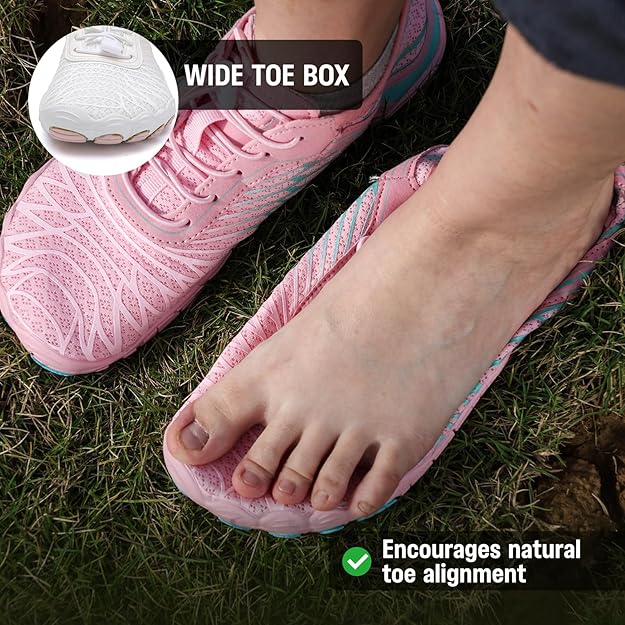
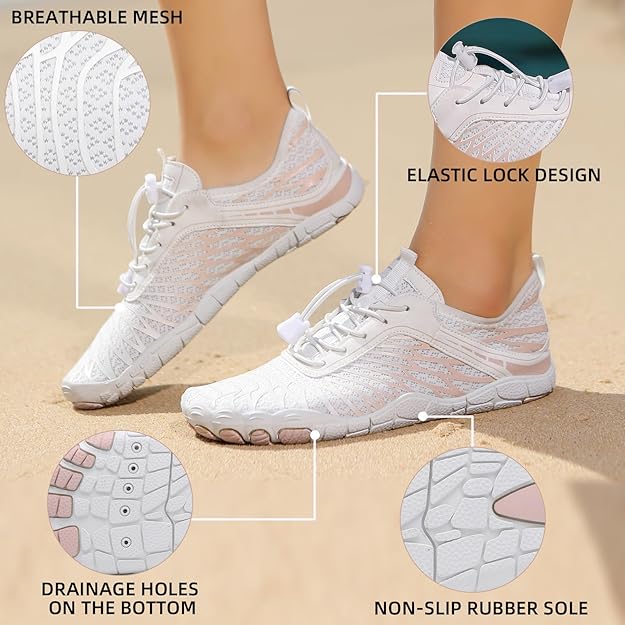
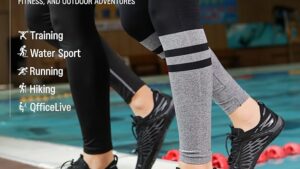
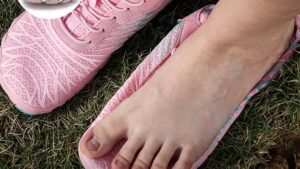
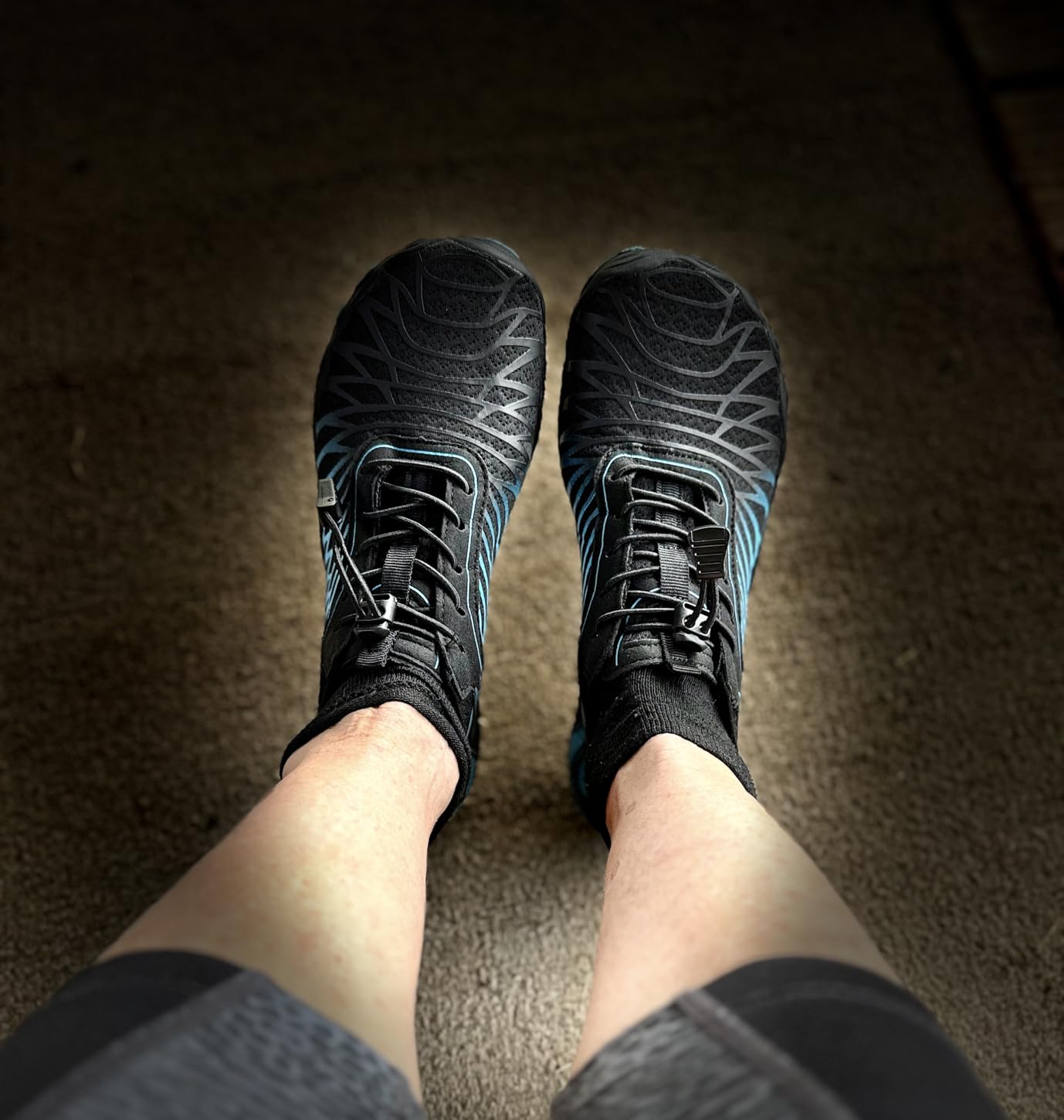
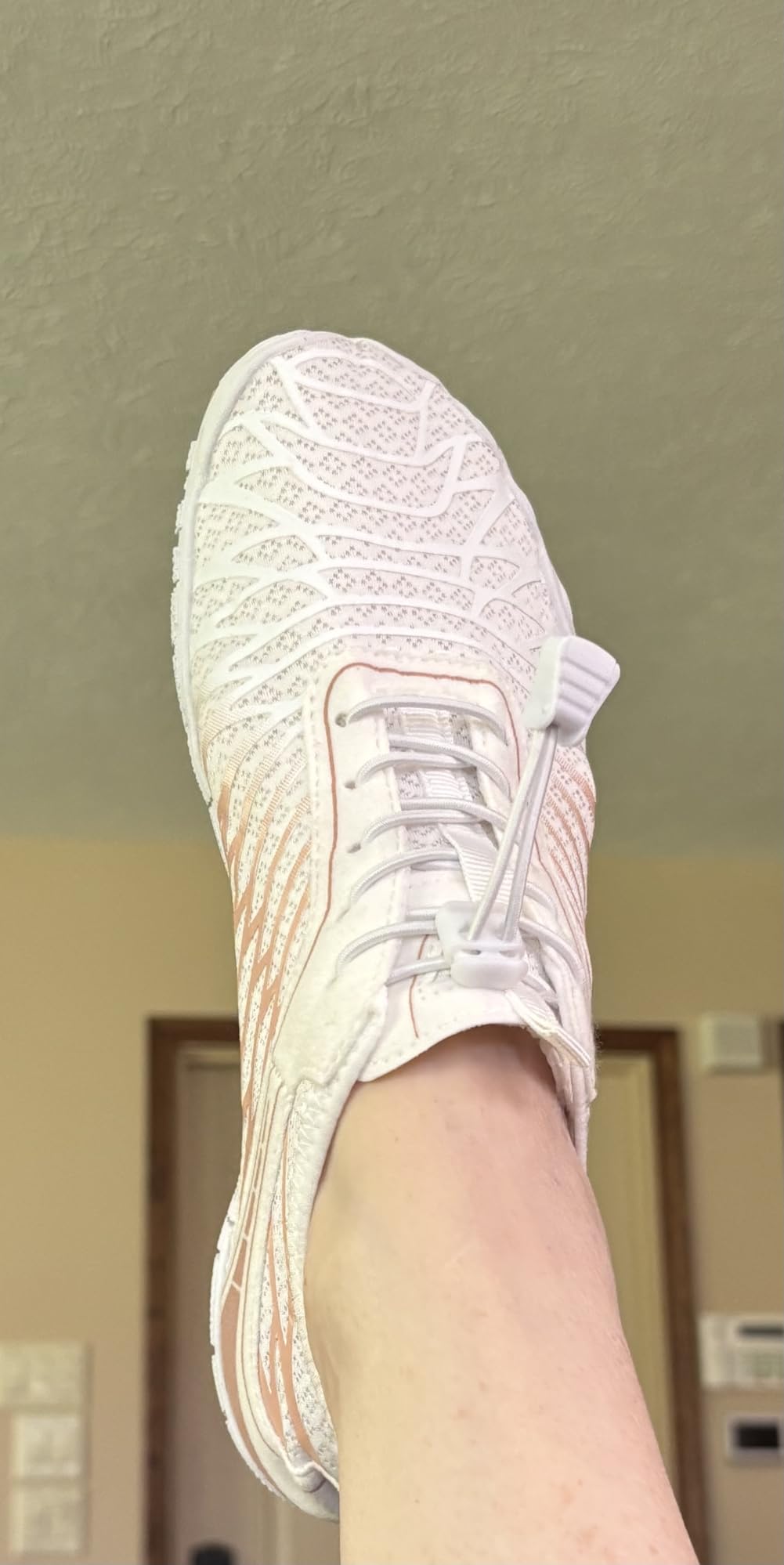
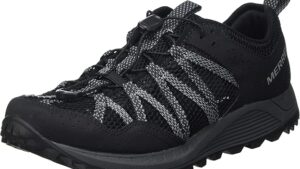
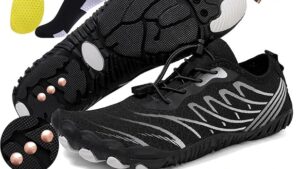
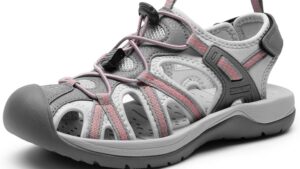
The mesh upper has this breathable quality you can see right away – you can practically feel air moving through it before you even put them on. And that wide toe box? Not marketing speak. The moment I slipped my foot in, my toes had room to exist like actual body parts instead of being crammed into a shoe-shaped prison.
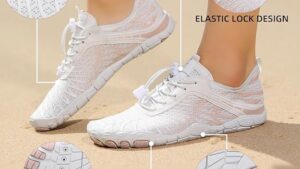
Now, the elastic lacing caught my attention for practical reasons. No fumbling with traditional laces when you’re rushing out the door – you just slip them on, give a quick tug, and you’re set. Smart design choice for someone like me who’s always running 5 minutes behind schedule. Though I did notice during those first few wears that the tongue felt oddly long, and without socks, it rubbed against my ankle in a way that reminded me it was there. Not painful, just… present.
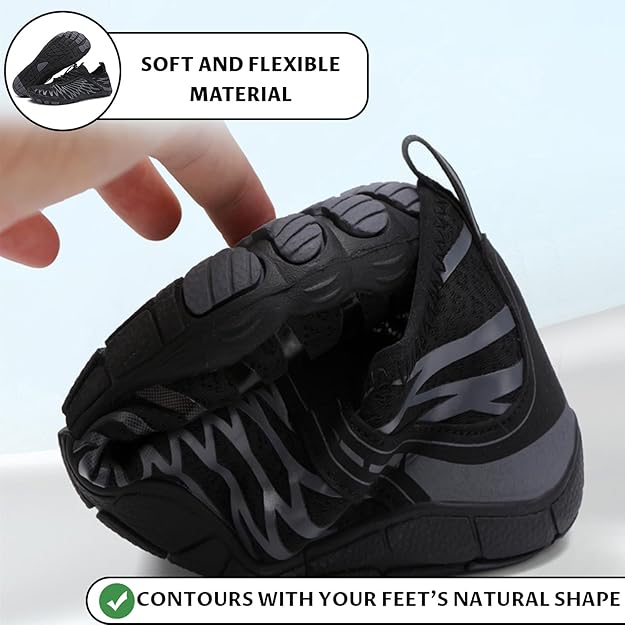
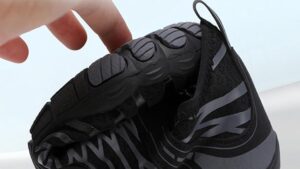
The rubber sole surprised me most. I could literally fold these things almost completely in half – something I discovered when throwing them in my weekend bag last minute. They took up practically zero space, which turned out to be one of their secret superpowers for travel. The textured pattern on the bottom looks deliberate, designed for grip, though I’d learn later that pattern has its limitations in certain conditions.
The Barefoot Experience – What It Actually Feels Like
Let me paint you a picture. My first outing was a casual morning coffee run – nothing intense, just a 15-minute walk to my favorite café. The sensation threw me off immediately. It’s like wearing thick protective socks that somehow have grip. You feel connected to the ground in a way that regular sneakers completely block out.
That first week? I’m not going to lie – it felt revolutionary. My feet could breathe. My toes had space to spread out naturally when I walked. The lightweight design meant my legs didn’t feel weighed down during my usual evening strolls with Sarah from book club. I actually looked forward to putting them on each morning, which is saying something for someone who tests shoes for a living and has seen it all.
But – and here’s where I need to be straight with you – somewhere around hour 3 or 4, especially when I’d been walking on concrete or tile, things shifted. That “connected to ground” feeling that seemed so magical at first? It means you’re feeling every single surface irregularity. Every pebble. Every sidewalk crack. Every uneven bit of pavement. The minimal cushioning that creates that natural barefoot sensation is exactly what makes extended wear on hard surfaces challenging.
I spent 6 weeks figuring out where these excel and where they hit their limits. That adjustment was real – my feet, used to the cushioned hug of traditional sneakers, needed time to adapt to this different approach.
Real-World Performance – 6 Weeks of Daily Testing
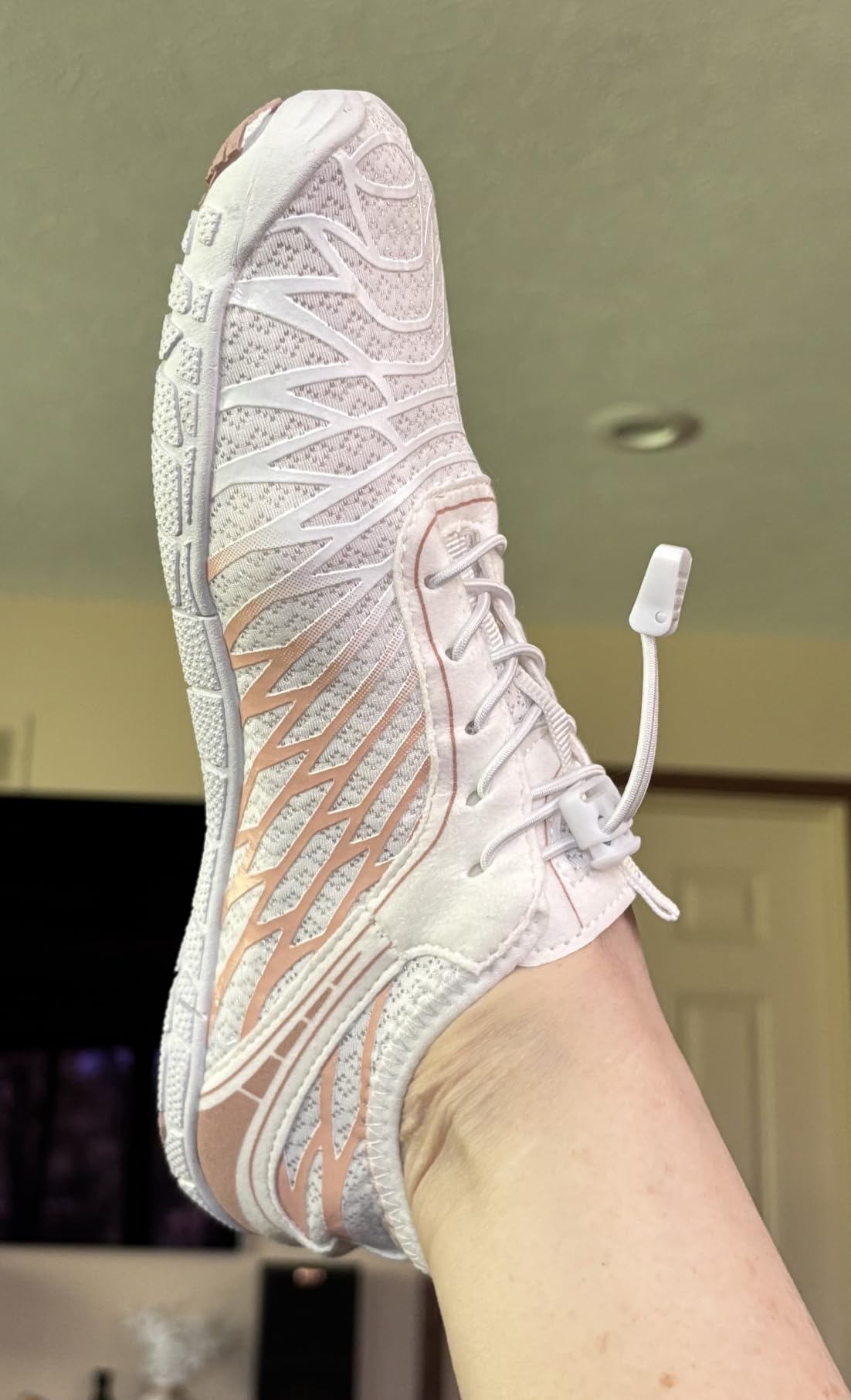
I’m methodical about testing, so I put these through everything that makes up my actual week: grocery shopping, downtown walking meetings, casual dinners, weekend market browsing – the whole routine.
**Indoor spaces became their happy place.** Around my house, these felt like luxury slippers with actual support. On tile and hardwood, the grip is solid – never once felt unstable or worried about slipping on dry surfaces. Wandering through Target for an hour? Comfortable. Working around my kitchen? Pleasant.
**Light outdoor walking suited them perfectly.** Neighborhood walks, strolling through outdoor shopping areas, paved park paths – all great. The breathability really showed up during our humid summer days here in the South. When temperatures hit the mid-80s with that thick Houston humidity, my feet stayed comfortable while my friend Emily complained about her traditional running shoes turning into sweat boxes.
**Extended standing showed their limits clearly.** There was this 4-hour outdoor market event I attended, thinking I’d be fine. By hour 3, I was acutely aware of the lack of arch support. My lower back started sending me messages. By hour 4, I was seriously considering sitting down. This isn’t a shoe for standing shifts or long festival days – at least not without breaks.
**Surface type matters tremendously.** Smooth surfaces? Excellent. Rocky paths or really uneven terrain? You’ll feel everything. A customer I chatted with at the farmers market put it perfectly: “They’re great for the barefoot experience, but you definitely feel every stone.” I tested this on a light trail near my neighborhood, and yep – every root, every rock, every uneven patch came through loud and clear.
Testing Barezoey’s Claims – Promise vs. Reality
Companies love making bold promises, so I made it my mission to test each claim Barezoey makes about these shoes.
The **”Ultimate Comfort – All-Day Wear”** claim? I’d call this about 70% accurate with significant caveats. If you’re someone who usually goes barefoot at home and your feet are adapted to minimal footwear, you might pull off longer sessions. But coming from cushioned sneakers? My sweet spot turned out to be 4-6 hours before my feet started asking questions. That weekend market situation taught me that “all-day” is optimistic for most people.
The **”Natural Support – Healthy Movement”** promise actually held up. I could feel my toes spreading naturally when I walked – something I hadn’t consciously thought about until experiencing it. The zero-drop sole genuinely encourages more natural foot movement. Over the weeks, I noticed my foot muscles felt more engaged, like they were actually working instead of just going along for the ride.
**”Promotes Foot Wellness”** – this one’s interesting because the evidence came from other users more than my personal experience. I’m lucky not to deal with foot pain, but I read through dozens of customer reviews, and a pattern emerged. People dealing with neuropathy, arthritis, and circulation issues consistently reported relief. My neighbor actually borrowed them for an afternoon (after I sanitized them, obviously) and commented on how different they felt with her arthritis. There’s something here for certain conditions, though if you need actual arch support, these won’t deliver.
The **”Spacious Toe Box”** claim? Completely accurate. No debate. Your toes get space. Period.
What Barezoey doesn’t advertise much – and should – is that these aren’t suitable for everyone. If you have flat feet, need arch support, or rely on cushioning for comfort, these will fall short of any “ultimate comfort” promise. They’re designed for people wanting to feel the ground, not people needing traditional shoe support.
Performance Across Different Conditions
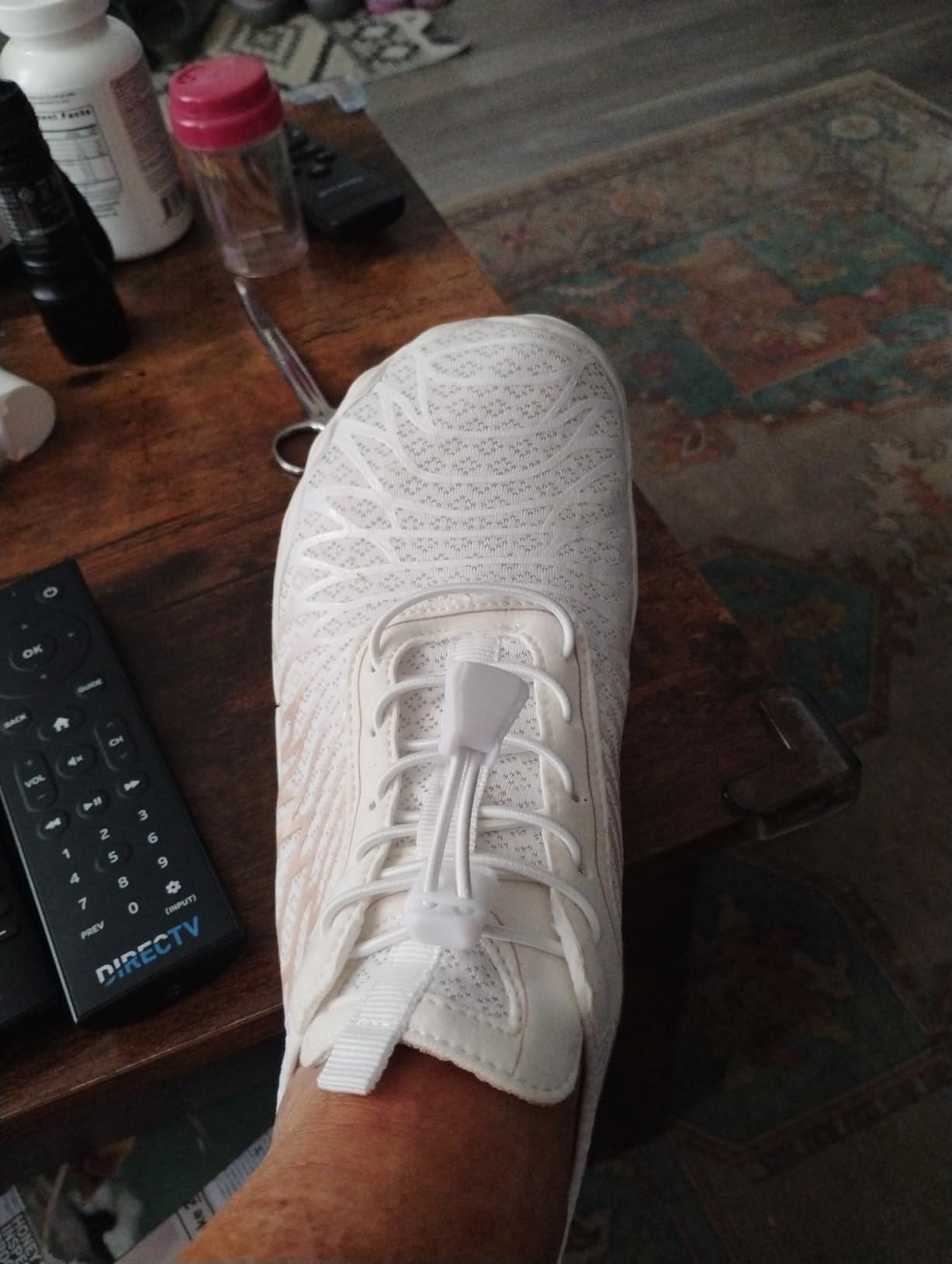
**Hot weather testing** was where these really shined. During an 85°F day with that oppressive Houston humidity that makes everything stick to everything else, these kept my feet genuinely comfortable. The mesh upper isn’t just breathable in theory – it actually works. I wore them for a 2-hour outdoor lunch meeting, and my feet stayed dry while my colleague’s regular sneakers were clearly causing issues.
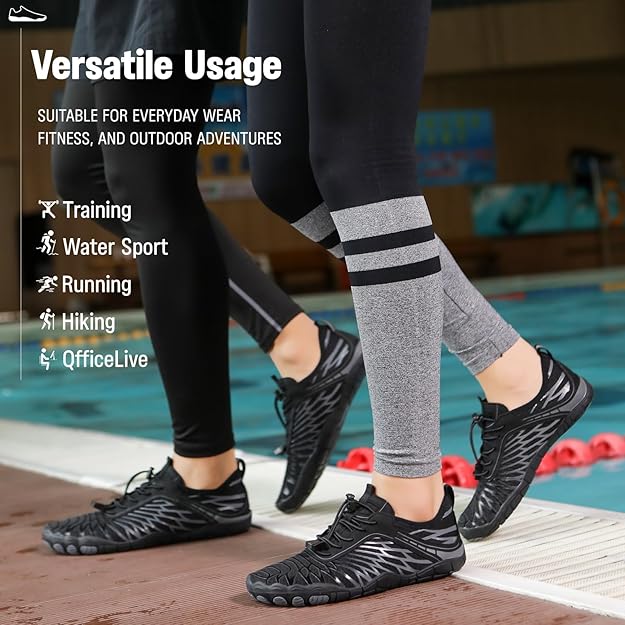
**Indoor versus outdoor use** showed distinct patterns. Indoors and on smooth outdoor surfaces like sidewalks? They excel. Head onto hiking trails or rocky terrain despite their “hiking” name? Limitations become obvious fast. You’re feeling every surface irregularity, which can be educational but isn’t always comfortable.
**Wet conditions need discussion** – and this is important from a safety perspective. These aren’t water-resistant, but they dry quickly and water doesn’t damage them. The problem is traction. I had a couple close calls on wet tile floors – the kind where you do that sudden halt and your heart skips. If you’re walking on wet, smooth surfaces, exercise genuine caution. Wet rough surfaces seem okay, but wet + smooth = slippery.
**Timeline-wise**, my experience evolved significantly. Days 1-2 felt amazing – new shoe excitement combined with genuine comfort. By week 3, I’d figured out their realistic capabilities. They’re perfect for 2-4 hour sessions, but planning to wear them from morning to night? Have a backup plan or accept you’ll need recovery time.
My Honest Assessment After 6 Weeks
After putting the Barezoey Hike Barefoot Shoes through the wringer for 6 solid weeks, I’m landing at **6.8/10 overall**. Let me break down how I got there.
**Design & Aesthetics: 7.5/10** – Clean, modern look that works with casual outfits without drawing weird attention. Not fashion-forward, but definitely not ugly. They blend into casual settings comfortably.
**Comfort Quality: 7.0/10** – Excellent for short to medium wear sessions, limited for extended use. That 3-6 hour window is real, and your mileage will vary based on your foot adaptability and activity level.
**Breathability: 9.0/10** – Outstanding. One of their genuine strong points. My feet stayed comfortable in hot weather conditions that normally cause problems. Only reason it’s not a perfect 10 is because perfect doesn’t exist.
**Versatility: 6.0/10** – Great for specific uses (indoor, light casual wear, smooth surfaces), but limited scope. Don’t expect them to cover all your footwear needs.
**Value for Money: 7.5/10** – At $40, you’re getting solid value for what they deliver. Not premium quality, but reasonable for the price point and what you’re actually getting.
My friend Lisa, who has high arches, borrowed these for a shopping afternoon and came back with feedback: “They’re comfortable for the first couple hours, but I definitely missed my arch support by the end.” Meanwhile, Rachel uses hers exclusively for indoor workouts and house wear and loves them for that specific purpose. Context matters tremendously with these shoes.
Is It Worth Your $40? – The Value Breakdown
Let’s talk actual value, not vague “worth it” claims.
If we’re looking at cost-per-wear: $40 divided by an estimated 200-300 casual wear sessions (based on their 4-6 month lifespan with daily use, or longer with rotation) = roughly $0.13-0.20 per wear. Compare that to similar barefoot shoes costing $80-120, and you’re getting entry-level pricing with entry-level quality.
Here’s my value equation: Features delivered (about 75% of what’s promised) × price point ($40) = good value for specific users.
**Worth it if you:**
– Want to explore barefoot shoes without major financial commitment
– Need breathable casual footwear for short-to-medium activities
– Have specific foot comfort issues that minimal shoes might help
– Want ultra-packable travel shoes
– Use them in rotation, not as your only shoe
**Not worth it if you:**
– Need genuine all-day support for standing/walking
– Plan to use them for serious hiking or athletic activities
– Require arch support for basic comfort
– Want premium quality and long-term durability
Pro sizing tip from experience: Order half a size smaller than your usual athletic shoe size. They run large consistently – I typically wear an 8, and the 7.5 fit better. Several customers confirmed this pattern, with one mentioning she ordered 6.5 when she normally wears a 7.
Think of these as specific-use-case shoes rather than all-purpose footwear. They’re excellent at what they do, but what they do has boundaries.
The Final Verdict
The Good vs The Bad
| ✅ What I Loved | ❌ What Could Be Better |
|---|---|
|
|
Who Should Buy the Barezoey Hike Barefoot Shoes?
✅ PERFECT FOR:
- Women wanting to try barefoot shoes without major investment ($40 vs $100+)
- People with foot pain, neuropathy, or circulation issues seeking relief
- Casual wear enthusiasts prioritizing comfort over fashion
- Travelers needing packable, lightweight footwear
- Indoor activity lovers (yoga, light exercise, house wear)
- Those with wide feet or toe crowding issues
⚠️ CONSIDER CAREFULLY IF:
- You’re used to supportive shoes but curious about barefoot benefits – transition slowly
- You need shoes for 4+ hour daily wear (might work with strategic breaks)
- You primarily walk on uneven or rocky surfaces – test on your typical terrain
❌ LOOK ELSEWHERE IF:
- You require arch support or have flat feet needing structure
- You need shoes for serious hiking or athletic activities
- Your job requires extended standing shifts
- You prefer maximum cushioning and impact protection
- You need reliable wet-surface traction for safety
Better Options for Specific Needs
If the Barezoey shoes don’t quite match what you need:
- For better arch support: Look for casual walking shoes with built-in arch support
- For serious barefoot experience: Invest in premium brands like Vivobarefoot or Xero ($80-150 range)
- For all-day comfort: Consider memory foam sneakers or athletic walking shoes with cushioning
My Final Take
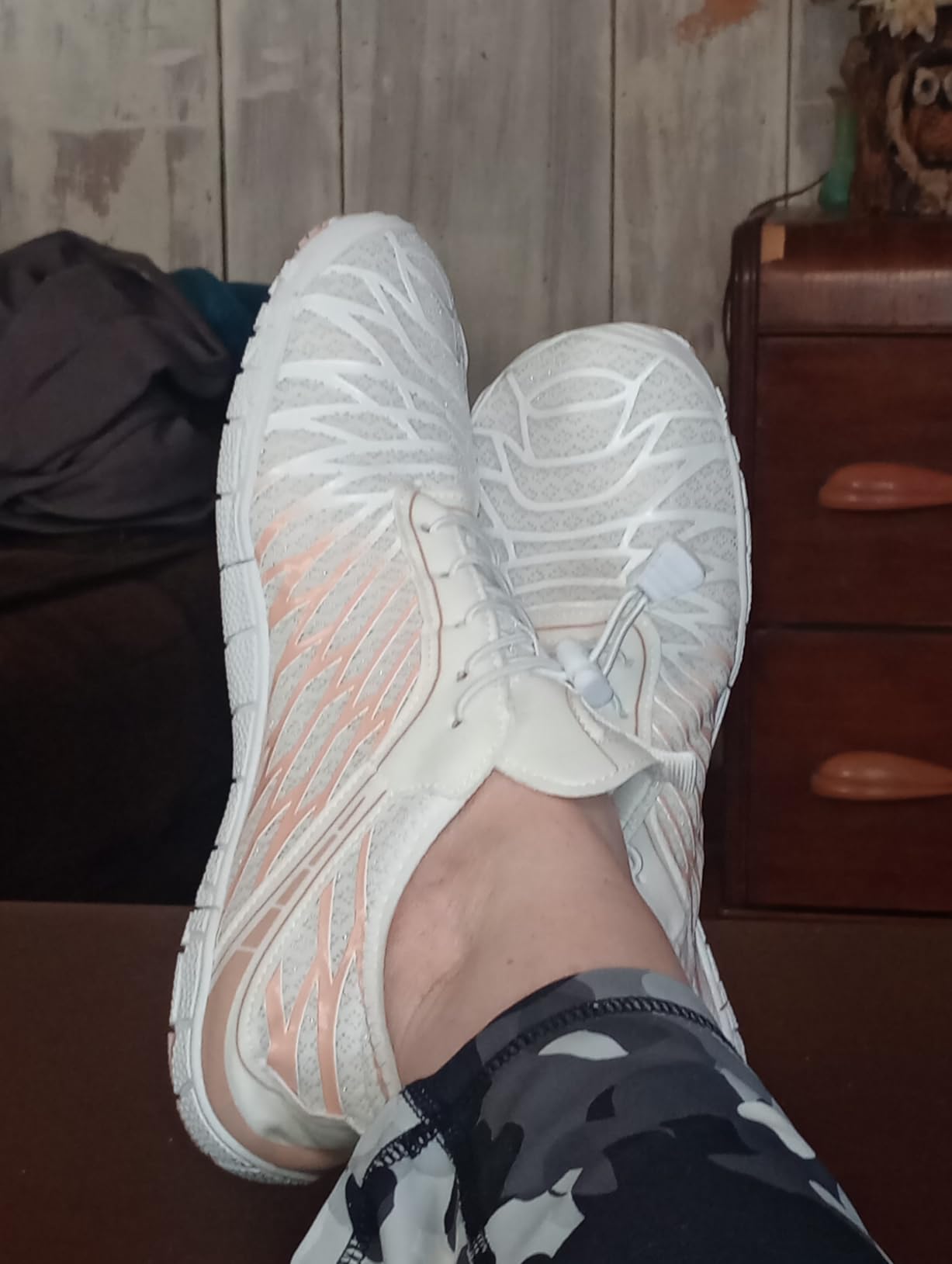
After 6 weeks in the Barezoey Hike Barefoot Shoes, here’s my bottom line: they’re a solid entry point into barefoot footwear with clearly defined limitations. If you’re genuinely curious about the barefoot movement, have specific foot comfort needs these might address, or want ultra-casual lifestyle shoes on a budget, they’re worth trying.
They excel at specific things – indoor wear, smooth surface walking, hot weather breathability, and providing that authentic barefoot sensation – but don’t expect them to replace your everyday sneakers. Think of them as a specialized tool for particular situations rather than an all-purpose solution.
Order a half size down (they run large), give yourself time to adapt if you’re coming from cushioned shoes, and use them strategically rather than exclusively. They’re excellent at what they are, but knowing what they aren’t matters just as much.
Frequently Asked Questions
Based on 6 weeks of testing and questions from other active women, here’s what you actually need to know:
Q: How do the Barezoey shoes fit compared to Nike or Adidas?
They definitely run large. If you wear size 8 in Nike or Adidas, go with 7.5 in these. I confirmed this with several other users – one mentioned ordering 6.5 when she normally wears 7 across brands. The wide toe box gives extra space, but length-wise, size down half.
Q: What’s the break-in period actually like?
Honestly, minimal if they fit correctly. Out of the box, they felt comfortable immediately for basic wear. The tongue softened up after 2-3 wears, and any minor irritation disappeared. By week 1, they felt completely natural. The “break-in” is more about your feet adapting to barefoot shoes than the shoes themselves softening.
Q: How long will these realistically last?
Based on my 6-week observation plus customer feedback: Light users (2-3 times weekly) report 8-12 months. Regular daily casual wear – you’re looking at 4-6 months before visible wear. The outsole holds up surprisingly well, but the upper mesh can develop small holes with heavy use. For $40, this lifespan is acceptable.
Q: Are they worth the price compared to premium barefoot shoes?
At $40, they’re excellent value for testing whether barefoot shoes work for you. Premium brands ($80-150) offer better materials and durability, but for trying the concept? These hit a sweet spot. Much better quality than cheap knock-offs, without the financial commitment of premium brands.
Q: What are the actual deal-breakers?
The shoes absolutely won’t work if you need arch support, require cushioning for all-day comfort, or plan extended standing periods. Safety concern: they’re genuinely slippery on wet smooth surfaces – I had close calls on wet tile. Quality control shows inconsistencies with some reports of missing lace components. Biggest limitation: they’re casual-use only, not versatile athletic shoes.
Q: Can I really wear these all day as advertised?
Depends entirely on “all day” definition and your feet. People with strong, barefoot-adapted feet? Maybe. Those transitioning from cushioned shoes? Realistically 3-5 hours comfortably. I found my limit around 4-6 hours depending on activity and surface. The key is gradual adaptation – don’t jump into 10-hour days immediately thinking marketing promises equal reality.
Q: How do they perform for people with foot problems?
Surprisingly well for certain conditions. Multiple users with neuropathy, arthritis, and circulation issues reported genuine relief. However, those needing arch support or structured cushioning found them inadequate. If you have foot problems, they might help specific conditions or hurt others – it’s very individual to your situation.
Q: Are they suitable for exercise?
Light exercise only. Great for yoga, stretching, casual walking, or indoor workouts. Not recommended for running, hiking, or high-impact activities. Think enhanced everyday shoes rather than athletic trainers.
Q: How slippery are they on wet surfaces really?
This deserves straight talk: On wet smooth surfaces (wet tile, polished floors), they’re concerning. I had a couple genuinely scary moments. Wet rough surfaces seem manageable. The issue is specifically wet + smooth combination. If you’re walking across wet tile regularly, either don’t wear these or exercise extreme caution.
Q: Best practices for maximum shoe life?
Rotate them with other shoes rather than solo daily wear. Let them air dry completely between uses. Avoid wet surfaces when possible. Hand wash gently when needed. Most importantly, use them for their intended purpose – casual light activities, not demanding athletic use. Rotation is key for extending lifespan.
Review Scoring Summary & Shoe Finder Integration
| 🔍 CATEGORY | 📋 MY ASSESSMENT | 💭 MY REASONING |
|---|---|---|
| 👥 WHO THIS SHOE IS FOR | ||
| Target Gender | Unisex | After 6 weeks testing, the design works equally well for both men and women – marketing targets both genders, sizing available for all |
| Primary Purpose | Casual | Excel for casual daily wear – house activities, light errands, smooth surfaces – but not serious athletic use despite “hiking” name |
| Activity Level | Light | From daily wear experience, these handle light activity beautifully but show clear limitations with moderate to intense use |
| 💰 MONEY TALK | ||
| Budget Range | Under $50 | At $40, sits perfectly in budget-friendly range, making barefoot shoes accessible without premium investment |
| Brand | Barezoey | Newer brand that surprised me with attention to barefoot design elements, though quality control could improve |
| Primary Strength | Comfort | What stood out during testing was immediate comfort for appropriate activities – that genuine barefoot feeling is pleasant within its limits |
| Expected Lifespan | Short-term (4-8 months) | Based on wear patterns after 6 weeks plus customer feedback, expect 4-8 months with regular casual use – materials are basic quality |
| 👟 FIT & FEEL SPECIFICS | ||
| Foot Characteristics | Wide | The wide toe box is genuinely spacious – people with wider feet or toe crowding will appreciate this feature significantly |
| Usage Conditions | Indoor | Tested across conditions – they excel indoors and smooth surfaces, less ideal for outdoor adventures or rough terrain |
| Daily Wearing Time | Medium (3-6 hours) | Comfort-wise, found 3-5 hours to be sweet spot before wanting more support – perfect for short to medium sessions, not marathon days |
| Style Preference | Casual | Design is definitely casual – clean simple lines work well for relaxed everyday outfits but not professional/dressy settings |
| ⭐ WHAT MAKES THESE SPECIAL | ||
| Important Features | Breathable, Lightweight, Flexible | Standout features: exceptional breathability (feet comfortable in 85°F weather), ultra-lightweight design (almost weightless), impressive flexibility (folds nearly in half) |
| 🏆 THE NUMBERS | ||
| 😌 Comfort Score | 7.0/10 | Solid 7.0 – amazing barefoot comfort for appropriate activities, limited by lack of arch support and minimal cushioning for extended wear |
| 👟 Style Score | 7.5/10 | 7.5 – clean modern look for casual wear, though limited for dressier occasions – simplicity is actually appealing |
| ⭐ Overall Score | 6.8/10 | 6.8 overall – excellent value for trying barefoot shoes with clear limitations – would recommend for right person and use case |
🎯 Bottom Line Assessment
After all my testing, here’s who should grab these:
- Perfect for: Women curious about barefoot shoes wanting affordable entry, people with foot pain seeking relief, anyone needing ultra-casual breathable footwear
- Great for: Light activity users prioritizing comfort over performance, travelers needing packable shoes, indoor/house shoe alternatives
- Skip if: You need arch support or structured cushioning, plan extended standing/walking, require shoes for athletic activities
- Best feature: Genuine barefoot feel combined with excellent breathability – refreshing compared to traditional sneakers
- Biggest limitation: Limited use cases – these are casual lifestyle shoes, not versatile everyday athletic shoes
Questions about the Barezoey Hike Barefoot Shoes? Drop them in the comments – I’m here to help based on my 6 weeks of real testing! Stay active! 🏃♀️



Reviews
There are no reviews yet.