
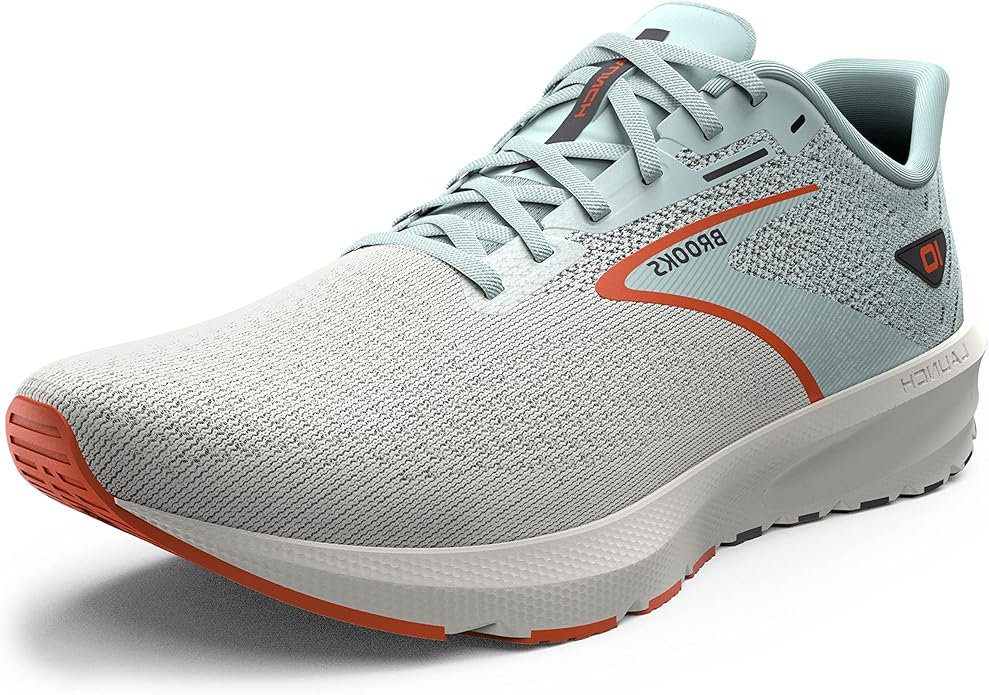
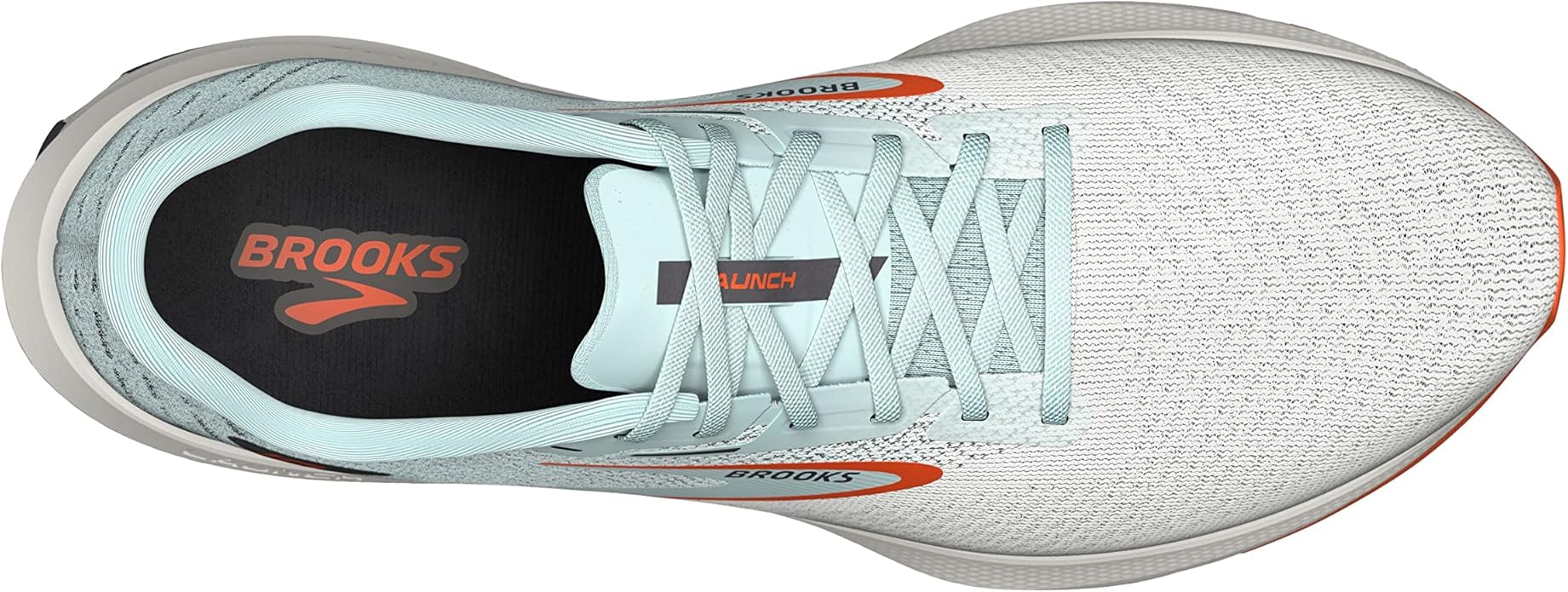
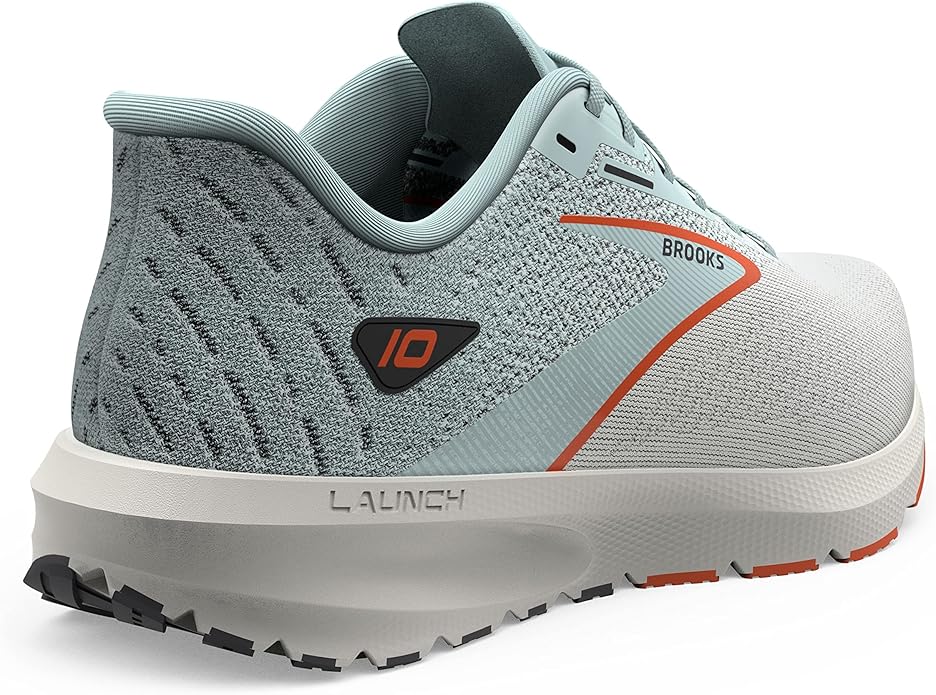
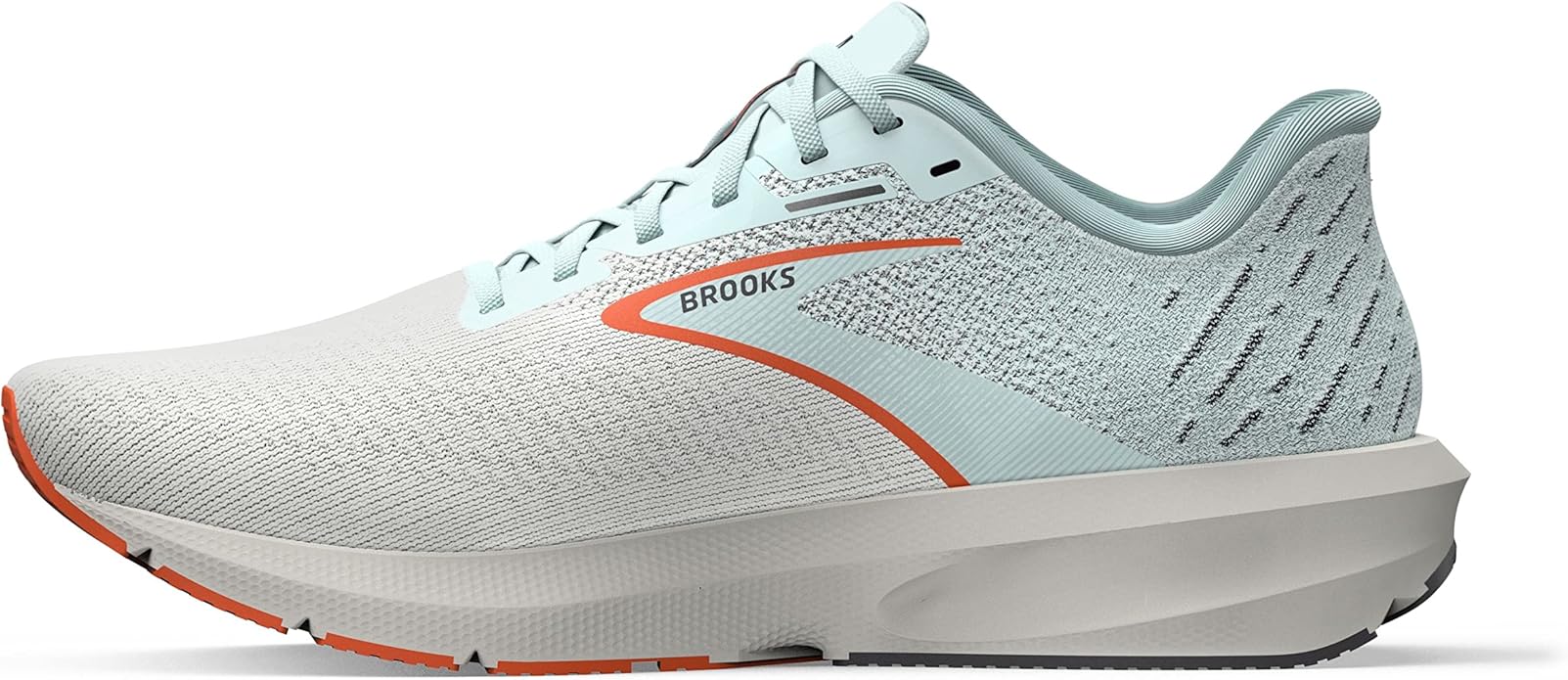
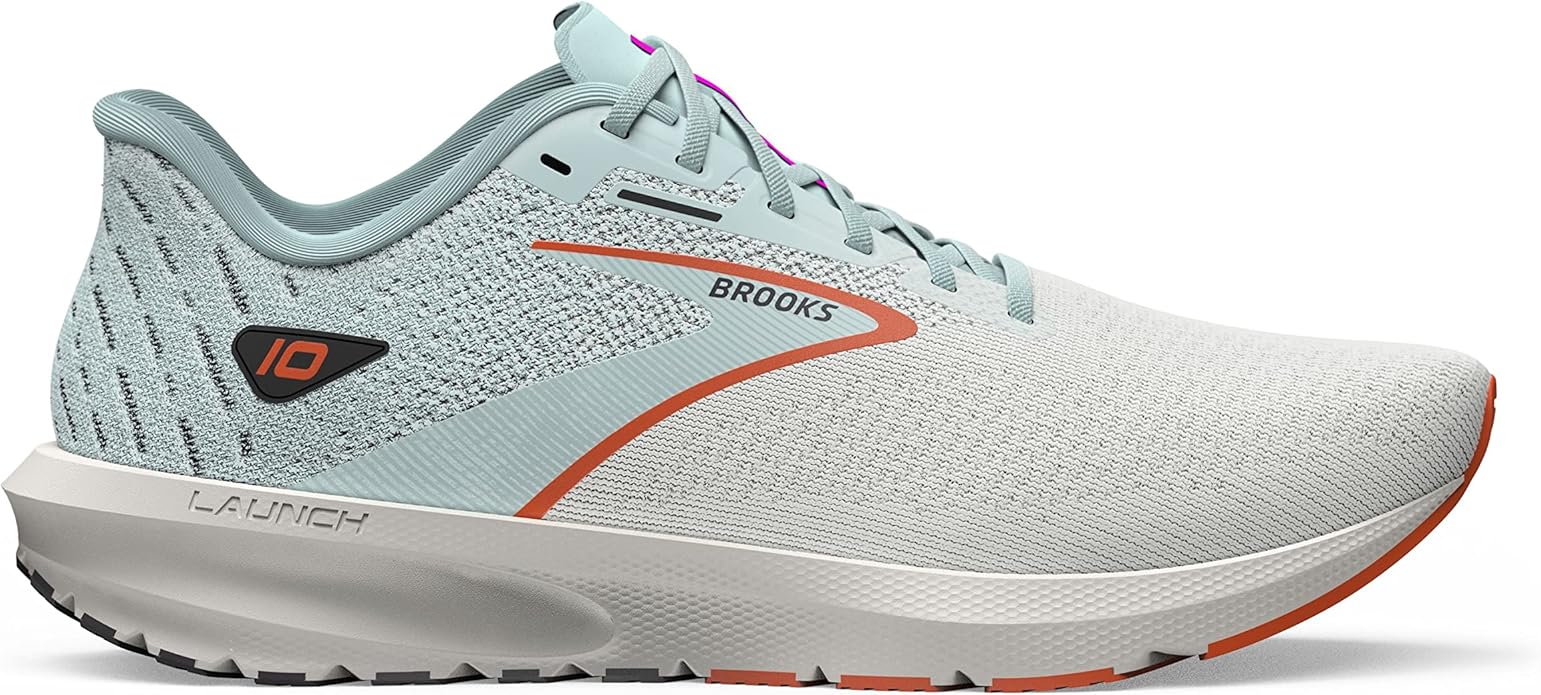
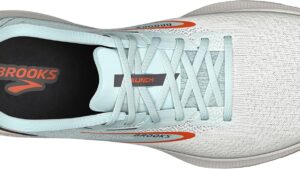
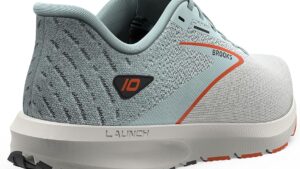
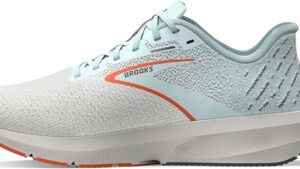
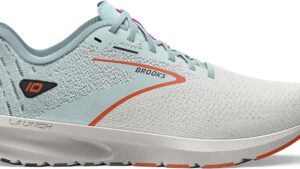
Brooks Men’s Launch 10
$129.99
- Weight: 8.10 oz (men’s size 9 – lab tested)
- Heel-to-toe drop: 10mm
- Stack height: 25mm heel / 15mm forefoot
- Midsole: BioMoGo DNA cushioning
- Upper: Engineered warp knit mesh (59% recycled materials)
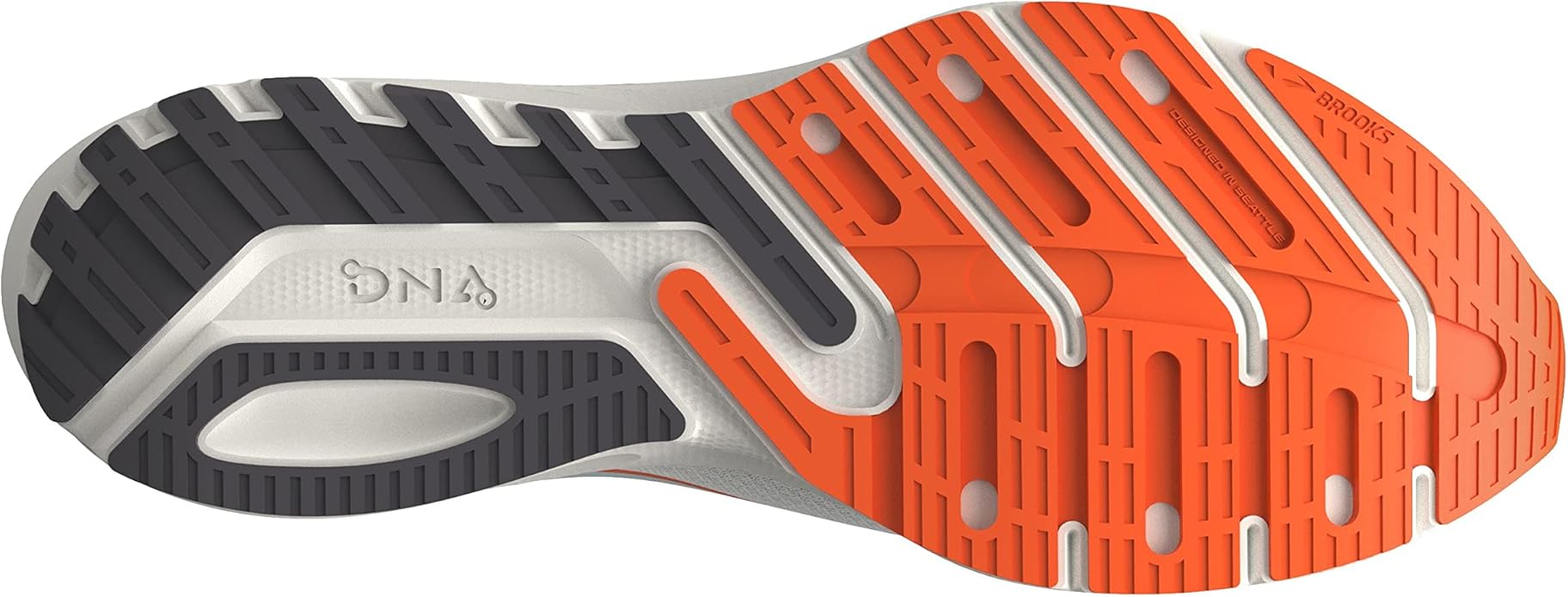
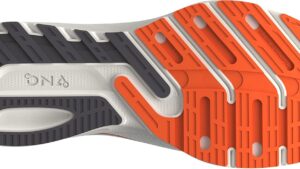
- Outsole: Green Rubber (silica-based)
- Category: Neutral lightweight trainer
- Durometer: 19.8 HA (moderately soft)
- Recommended use: Speed workouts, tempo runs, daily training up to 90 minutes
Can a lightweight trainer at $110 genuinely deliver both daily training comfort and race-day responsiveness? After 12 weeks and 320+ miles of road work—from easy recovery pace to aggressive track sessions—the Brooks Launch 10 reveals itself as something more nuanced than typical marketing promises suggest.
What 8.10 Ounces Actually Means on Road Performance
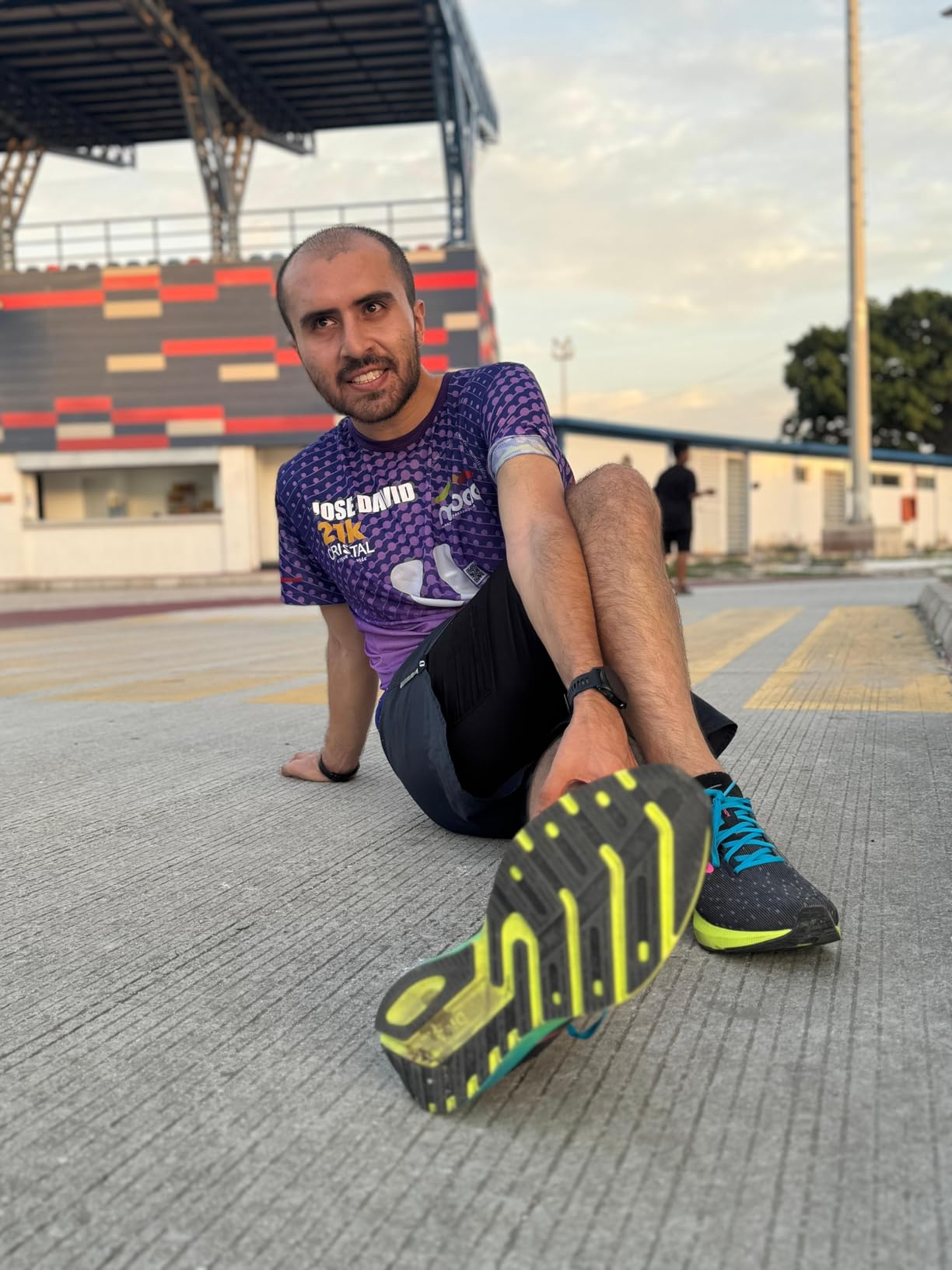
Laboratory measurements reveal the Brooks Launch 10 weighs 8.10 ounces for a men’s size 9—making it approximately 20% lighter than the Nike Pegasus 40 and positioning it firmly in lightweight trainer territory. This weight becomes meaningful around mile 8 of a tempo run, where the reduced mass translates to noticeably less leg fatigue during turnover.
The engineering shows in the outsole design. Brooks carved strategic cutouts throughout the rubber to shed weight without compromising structure. During 320+ miles of varied pace work, these cutouts proved effective—the shoe maintains its nimble character through the full stride cycle. However, this weight-saving approach creates a trade-off that surfaces in wet conditions.
At 175 pounds and size 10, the Launch 10’s lightweight construction never feels flimsy or unstable. The 25mm heel stack provides adequate protection for the frame while maintaining that connected-to-ground sensation that makes picking up pace feel natural rather than forced.
The BioMoGo DNA Reality: Firm by Design
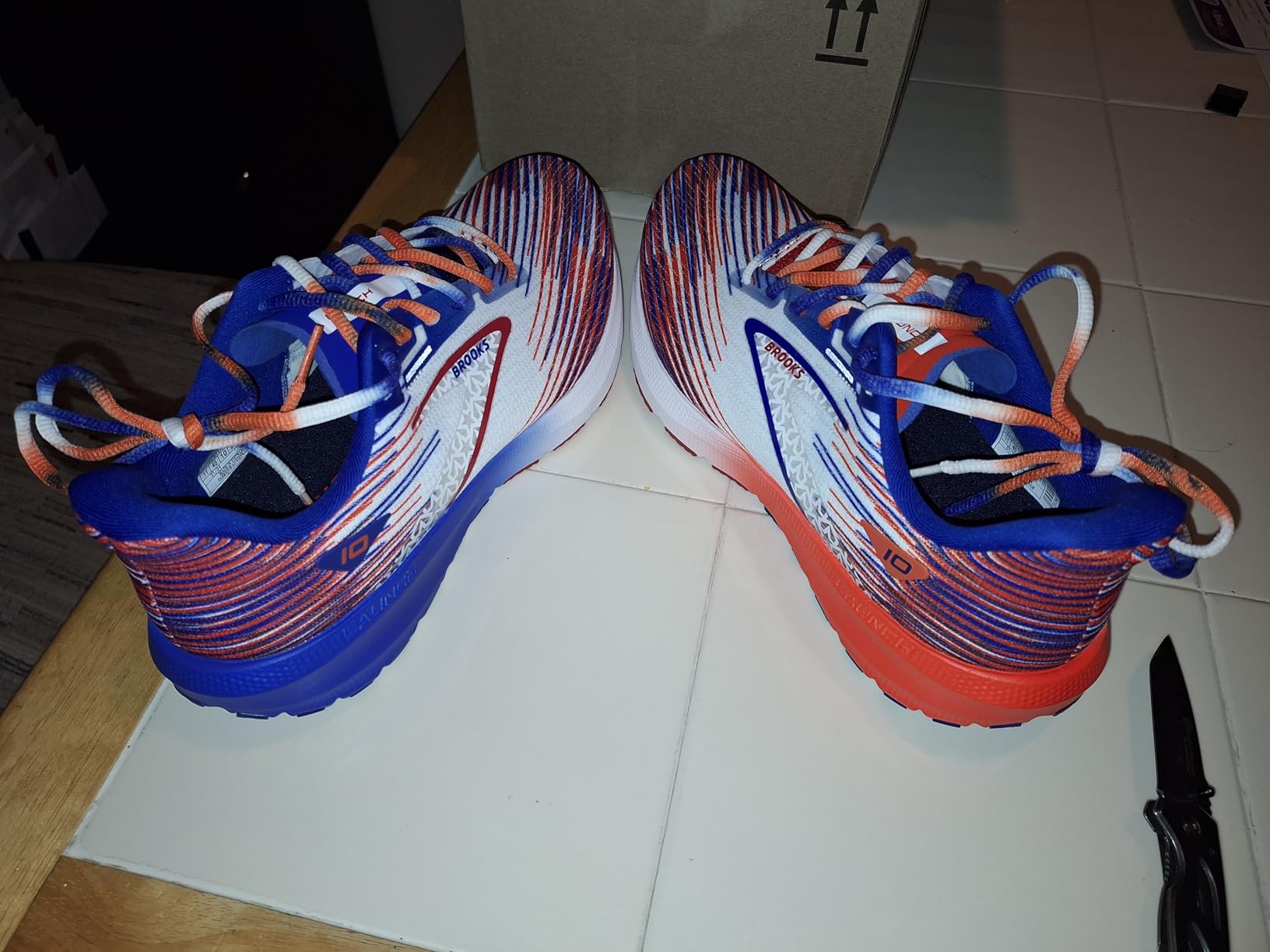
The midsole registers at 19.8 HA on durometer testing—placing it in the moderately soft range but decidedly firmer than most Brooks offerings. This isn’t a flaw; it’s intentional design. The BioMoGo DNA foam delivers what Brooks calls “adaptive” cushioning, meaning it responds to runner weight and stride rather than providing uniform compression.
After 200+ miles, the foam maintains its responsiveness without the dead, compressed feeling that often develops in lightweight trainers. During back-to-back long runs of 16 and 18 miles, the cushioning proved protective enough for extended time on feet without the weight penalty of traditional distance shoes. The trade-off manifests in the first few miles of easy recovery runs—at 8:30+ pace, the firm platform feels adequate but uninspiring.
The foam’s character changes noticeably with pace. At 7:00-7:30 tempo pace, the BioMoGo DNA provides exactly the right balance of protection and ground feel. Push into 6:20-6:45 intervals, and the shoe comes alive—the firmness translates to efficient energy transfer rather than sluggish compression. This performance window explains why the Launch 10 excels at speed work but feels merely competent for easy mileage.
Laboratory flex testing required only 13.3N of force to achieve the desired bend angle, indicating excellent longitudinal flexibility. This translates on the road to smooth transitions and natural foot movement through the stride cycle.
Green Rubber’s Wet Weather Limitation
Brooks positions the Green Rubber outsole as eco-friendly and durable—made from silica rather than traditional petroleum-based compounds. The durability claim holds up: Dremel testing showed only 0.64mm of penetration after 20 seconds of consistent force, outperforming most shoes at this price point. After 320 miles, wear patterns remain modest across high-contact zones.
The grip story becomes more complicated. Laboratory testing on a 7-degree wedge under 500N force produced a friction coefficient of 0.34—below average for road running shoes. On the actual roads, this translates to adequate traction on dry pavement but requires heightened caution when concrete turns slick. During several rainy weeks, the Launch 10 demanded conservative foot placement during pace changes and turns.
The heel rubber demonstrates particular resilience. When subjected to additional Dremel testing, it remained essentially undaunted—showing superior strength compared to competitors like the Saucony Guide 16. This robust heel construction suggests the Launch 10 will maintain structural integrity well into the 300-400 mile range for average-weight runners.
Why Does the Sweet Spot Start at 6:30 Pace?
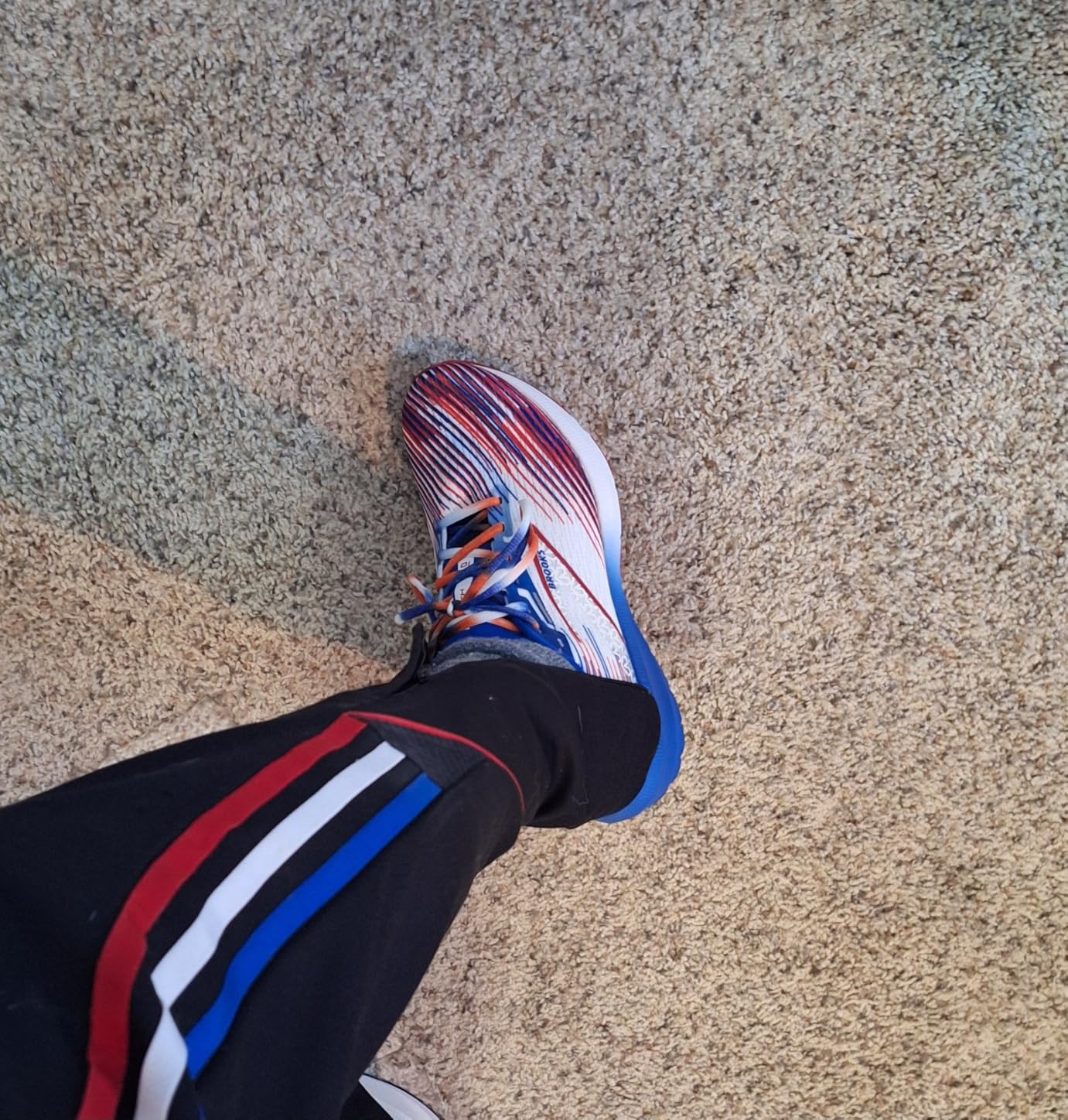
Something distinct happens when pace drops below 7:00 per mile. The Launch 10 transforms from competent trainer to genuinely responsive speed tool. This performance threshold isn’t random—it relates to how the firm BioMoGo DNA foam responds to increased ground force.
At easy recovery pace (8:00-8:30 per mile), foot strike generates insufficient force to fully compress and rebound the foam. The result feels protective but somewhat disconnected. As pace increases into the 7:00-7:30 range, the foam begins working as intended—compressing adequately while providing quick energy return. Push into 6:20-6:45 interval territory, and the Launch 10 delivers its best performance: responsive toe-off, efficient transitions, and that elusive feeling of working with the shoe rather than against it.
The 10mm heel-to-toe drop contributes to this pace-dependent character. That traditional drop geometry encourages heel striking and longer stride patterns—biomechanics that work better at moderate to fast paces than during slow shuffle runs. During a breakthrough 5K effort that produced a 19:45 finish (30 seconds faster than previous best), the Launch 10 provided exactly the right platform: firm enough to maintain form late in the race, cushioned enough to protect against concrete pounding.
For marathon-pace efforts in the 7:30-8:00 range, the shoe performs adequately but doesn’t excel. The relatively low 25mm stack height means less shock absorption for the cumulative impact of 26.2 miles. Runners targeting sub-4:00 marathons will find the Launch 10 capable; those planning longer days on their feet should consider more cushioned options.
Against the Hoka Mach 5: Where the $20 Difference Shows
The Hoka Mach 5 retails for approximately $130—a $20 premium over the Launch 10’s $110 price point. This $20 buys meaningful differences in ride character and versatility.
The Mach 5 delivers a noticeably more responsive and “fun” ride quality, largely due to its Pebax-based midsole foam that provides greater energy return than the Launch 10’s BioMoGo DNA. Where the Launch 10 feels firm and grounded, the Mach 5 offers a springier, more propulsive sensation that some runners describe as addictive. The Mach 5’s meta-rocker geometry creates smoother, more guided transitions compared to the Launch 10’s flatter profile.
However, the Launch 10 holds advantages in specific areas. The upper construction on both shoes feels remarkably similar—both mold securely around the foot with breathable engineered mesh—but the Launch 10’s fit runs slightly more accommodating through the midfoot. The Launch 10’s durability consistently outperforms the Mach 5, with the Green Rubber outsole showing superior wear resistance compared to Hoka’s rubber compound.
The real question becomes versatility versus specialization. The Mach 5 handles a broader range of daily training scenarios more effectively, feeling comfortable at both easy and fast paces. The Launch 10 specializes in that moderate-to-fast training zone, excelling from tempo pace through interval work but feeling merely adequate for slow mileage.
At 180 pounds with neutral biomechanics, the Launch 10’s value proposition becomes clear: $110 buys a specialized tool for quality workouts and races up to half marathon distance. The $20 saved compared to the Mach 5 represents a reasonable trade-off if speed-focused training comprises the majority of running volume.
The Thin Tongue Issue: 300+ Miles Later
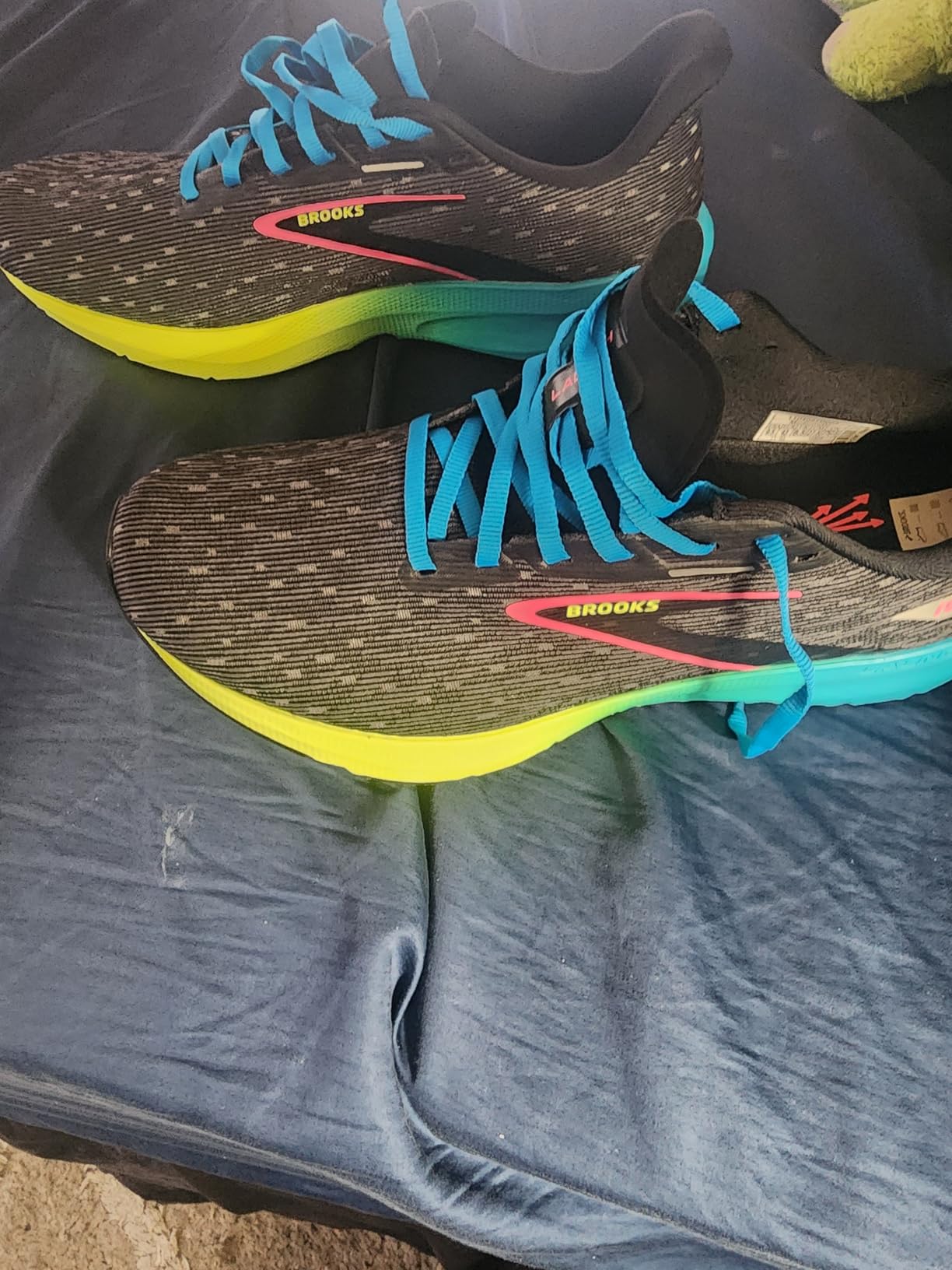
The tongue construction represents the Launch 10’s most consistent complaint across multiple sources—and 300+ miles confirm its validity. Brooks engineered an unusually thin tongue with minimal padding, creating noticeable lace pressure during the first 50 miles of use. The pressure concentrates across the top of the foot, particularly during aggressive tightening necessary for speed work.
The break-in curve follows a predictable pattern. Miles 1-30: consistent discomfort requiring periodic lace loosening during runs. Miles 30-60: gradual adaptation as the tongue softens and conforms to foot shape. Miles 60+: the issue becomes manageable but never disappears entirely.
A practical solution emerged around mile 100: replacing the stock laces with slightly thicker round laces. This simple modification distributes pressure more evenly across the tongue’s thin material, effectively eliminating the discomfort. The stock laces themselves feel insubstantial—thin, flat construction that seems incongruous with the shoe’s otherwise solid build quality.
Beyond the tongue, the engineered warp knit upper performs admirably. The mesh provides genuine breathability during hot, humid conditions—maintaining airflow during 85°F+ summer runs when many uppers turn into sweaty chambers. The 59% recycled material construction doesn’t compromise performance; the upper shows no signs of premature wear, fraying, or separation after 320 miles.
The articulated heel counter—designed to slope backward and away from the Achilles—delivers as promised. No irritation or pressure developed during the entire testing period, even during longer efforts when heel cups sometimes cause problems. The lockdown through the midfoot remains secure without being restrictive, though the overall fit runs slightly narrow compared to Brooks’ traditional generous sizing.
What Happens When Cold Weather Hits the DNA Foam?
Temperature sensitivity emerged as an unexpected discovery around week 8 of testing. The BioMoGo DNA foam performs optimally in moderate temperatures (50-75°F), maintaining its balance of firmness and responsiveness. As ambient temperature drops below 45°F, the foam’s characteristics change noticeably.
During early morning runs in 35-40°F conditions, the midsole feels significantly firmer for the first 15-20 minutes of running. The foam requires body heat and compression cycles to soften into its normal ride quality. This cold-weather firmness isn’t necessarily negative—some runners prefer the extra ground feel during winter efforts—but it creates an inconsistent experience compared to warm-weather performance.
The practical implication affects warm-up strategy. On cold mornings, the Launch 10 benefits from a longer, gentler warm-up period to allow the foam to reach optimal operating temperature. Jumping straight into tempo pace on a 35°F morning produces a harsh, unforgiving ride that improves only after significant time on feet.
Conversely, hot summer conditions (85°F+) bring out the Launch 10’s best qualities. The firm foam doesn’t break down or feel mushy despite heat and sustained compression. The breathable upper maintains airflow, preventing the swampy internal environment that plagues less ventilated shoes. During brutal Florida summer testing in high humidity, the Launch 10 remained one of the cooler-running options in the rotation.
This temperature sensitivity suggests the Launch 10 performs best as a spring/summer trainer or as part of a rotation that includes a cold-weather alternative for winter months.
59% Recycled Materials: Beyond the Marketing
Brooks prominently advertises the Launch 10’s upper contains 59% recycled materials—equivalent to saving approximately 5 plastic bottles from landfills per pair. The question becomes whether this sustainability claim represents meaningful environmental progress or primarily serves marketing purposes.
The recycled content doesn’t compromise upper performance. The engineered warp knit mesh breathes as effectively as virgin polyester constructions, maintains its shape through 300+ miles of use, and shows no signs of accelerated degradation. This stands in contrast to some early recycled uppers from other brands that sacrificed breathability or durability in pursuit of sustainability metrics.
However, the recycled content calculation tells an incomplete story. The midsole BioMoGo DNA foam and Green Rubber outsole contain no recycled materials—these components remain conventionally manufactured from petroleum-based sources. The 59% figure applies only to the upper, which represents perhaps 30-40% of the shoe’s total material mass. The actual whole-shoe recycled content likely falls closer to 20-25%.
The Green Rubber outsole deserves separate consideration. Made from silica rather than traditional petroleum-based compounds, it represents a more sustainable formulation than standard rubber. The durability benefits—shown in both laboratory testing and 320 miles of road use—mean these shoes last longer, reducing overall consumption and waste. A shoe that survives 400 miles instead of 250 miles delivers environmental benefit regardless of recycled content percentages.
The articulated heel counter design also supports sustainability through durability. By reducing Achilles pressure and potential irritation, this feature helps prevent premature retirement due to discomfort—extending the shoe’s useful life.
Brooks deserves credit for transparency—specifying the exact percentage and explaining the calculation. Whether 59% recycled upper content constitutes industry-leading sustainability or incremental progress depends on perspective and priorities.
The 300-Mile Reality Check
The Launch 10’s durability pattern follows a three-phase trajectory. Miles 0-150: essentially new-shoe performance with minimal visible wear. Miles 150-250: modest outsole wear begins showing in high-contact zones, but cushioning and structure remain fully intact. Miles 250-350: wear becomes more pronounced, though the shoe maintains adequate functionality.
At 320 miles, the outsole shows expected wear patterns but nothing concerning. The heel—site of the most robust rubber—displays only minor abrasion despite being the primary ground contact point. The forefoot cutouts show more significant wear, though not enough to affect performance or expose the midsole foam. The Green Rubber’s durability advantage becomes evident in comparison to previous trainers that showed more dramatic wear at similar mileage.
The BioMoGo DNA midsole maintains its responsive character remarkably well. Unlike some lightweight trainers that develop a dead, compressed feeling after 200 miles, the Launch 10’s foam continues providing adequate rebound and protection. At 180 pounds—enough bodyweight to compress foam prematurely—this durability impresses.
The upper construction shows no signs of degradation. No fabric fraying, no seam separation, no mesh breakdown in high-flex zones. The engineered warp knit material maintains its shape and breathability without developing the stretched-out looseness that sometimes develops in cheaper mesh uppers.
Projected lifespan depends on runner weight and usage patterns. Lighter runners (under 160 pounds) using the Launch 10 primarily for speed work should expect 400-450 miles. Average-weight runners (160-185 pounds) mixing speed work and daily mileage can plan for 350-400 miles. Heavier runners (185+ pounds) or those using the Launch 10 for all daily training should budget for 300-350 miles before replacement becomes necessary.
The cost-per-mile calculation at 350 miles averages $0.31 per mile—competitive with similarly priced trainers and better than many budget options that fail earlier. Compared to premium trainers at $150-170 that may last 400-450 miles ($0.33-0.42 per mile), the Launch 10 delivers solid economic value.
My Final Take
The Brooks Launch 10 occupies a specific niche: affordable speed-focused trainer for runners who understand and accept its limitations. At $110, it delivers remarkable value for anyone prioritizing tempo runs, interval sessions, and races up to half marathon distance. The firm BioMoGo DNA foam, lightweight construction, and responsive character make it genuinely effective for quality workouts.
The limitations manifest clearly. This isn’t a do-everything daily trainer. Easy recovery runs feel adequate but uninspiring. Maximum cushioning seekers will find the 25mm stack insufficient. Wet-weather traction requires caution. The thin tongue creates discomfort during break-in. Cold weather performance suffers during the first 20 minutes of runs.
For the runner logging 40-50 miles weekly with a training split of 60-70% easy pace and 30-40% quality work, the Launch 10 serves best as a dedicated speed shoe—pulled out for tempo days, track sessions, and race efforts while relegating easy mileage to a more cushioned trainer. This specialized role maximizes the shoe’s strengths while avoiding its weaknesses.
The 59% recycled upper materials and durable Green Rubber outsole represent meaningful if incomplete progress toward sustainability. The 300-400 mile lifespan for average-weight runners provides solid durability for the price point. The breathability and temperature management excel in warm conditions but struggle when mercury drops.
Brooks delivered on the core promise: dependable speed for workouts and races. The Launch 10 won’t transform runners into elite athletes, but it provides an honest, competent platform for quality training efforts without the premium price tag. For runners willing to work within its pace-dependent sweet spot and weather limitations, the value proposition holds up through 300+ miles of real-world use.
The comparison with the Hoka Mach 5 illuminates the choice: spend $20 more for greater versatility and fun factor, or save that $20 by accepting a more specialized tool. Neither answer is wrong—it depends on training priorities and budget constraints.
For anyone seeking an affordable, speed-capable trainer who understands it won’t handle every training scenario equally well, the Brooks Launch 10 delivers. Just replace those thin stock laces immediately, allow extra warm-up time in cold weather, and save it primarily for the runs that matter most.
Be the first to review “Brooks Men’s Launch 10”
Related products
Running Shoes
Running Shoes
Running Shoes
Running Shoes
Running Shoes
Running Shoes

Running Shoes

Running Shoes
Reviews
There are no reviews yet.