
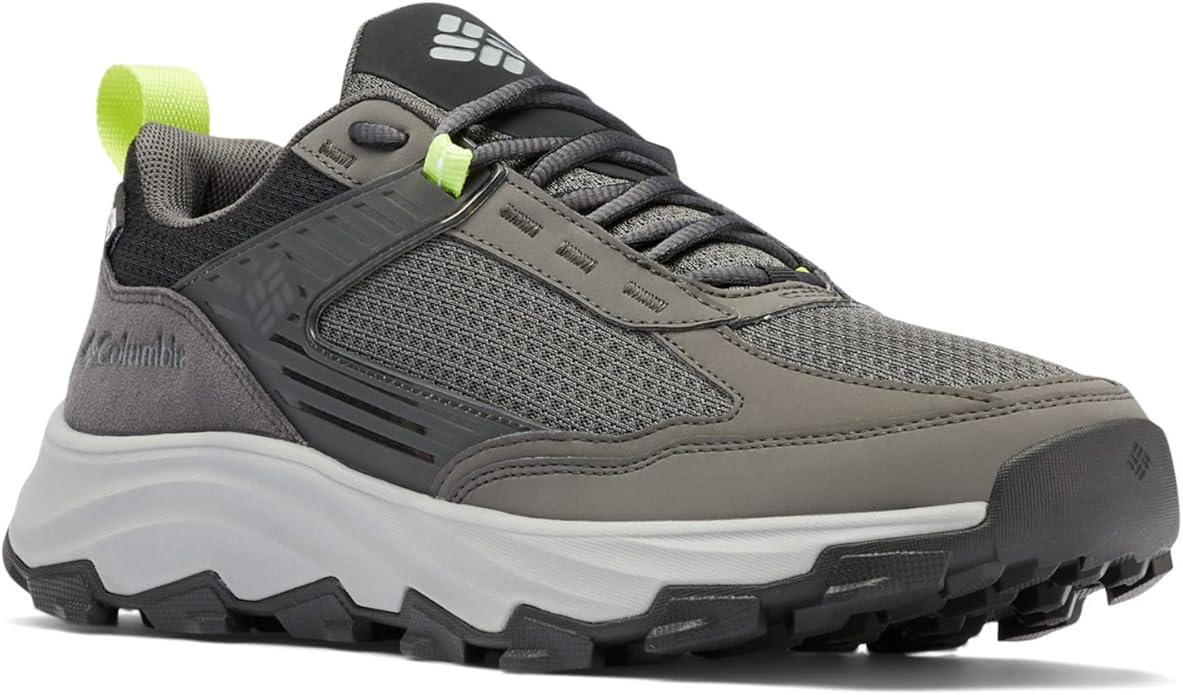
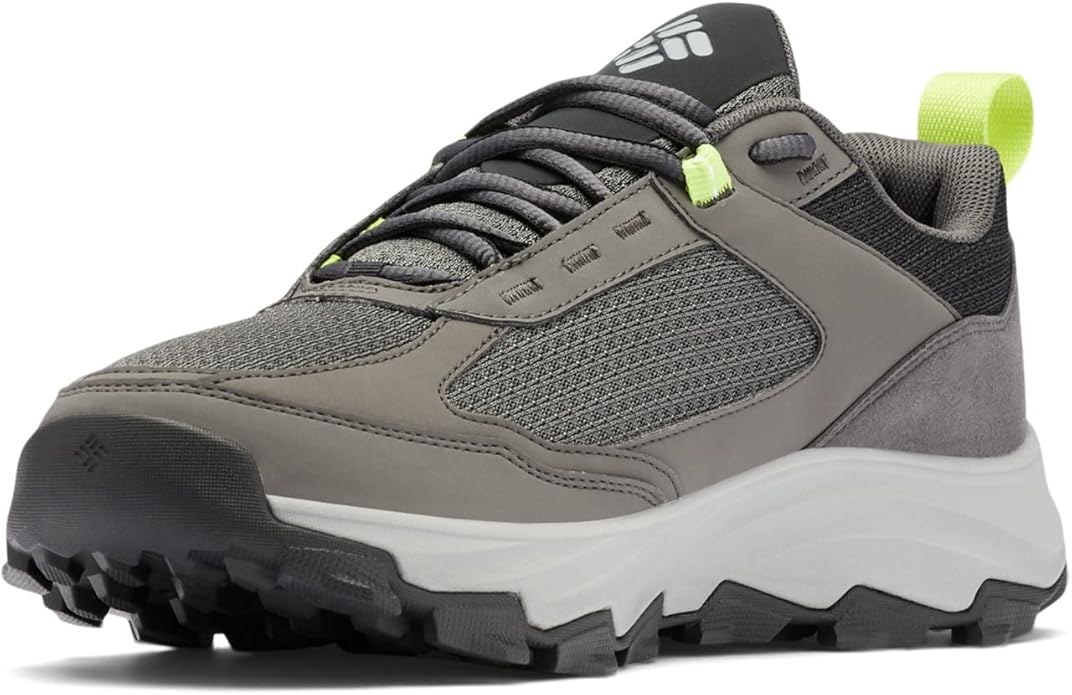
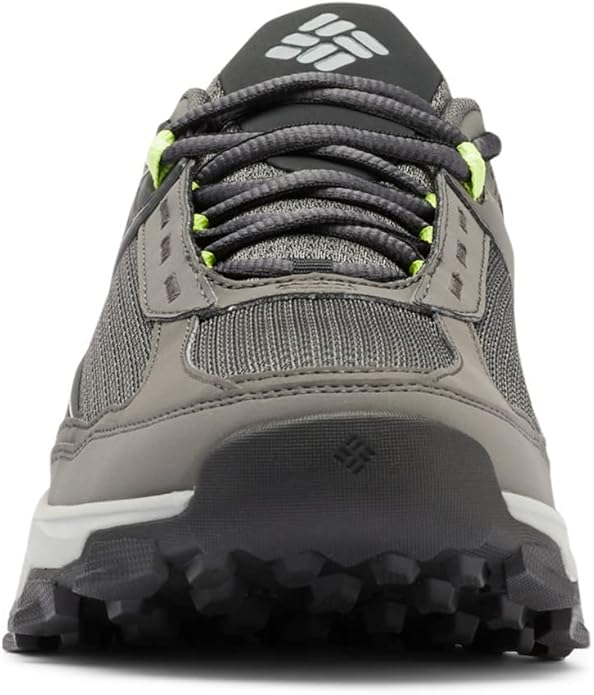
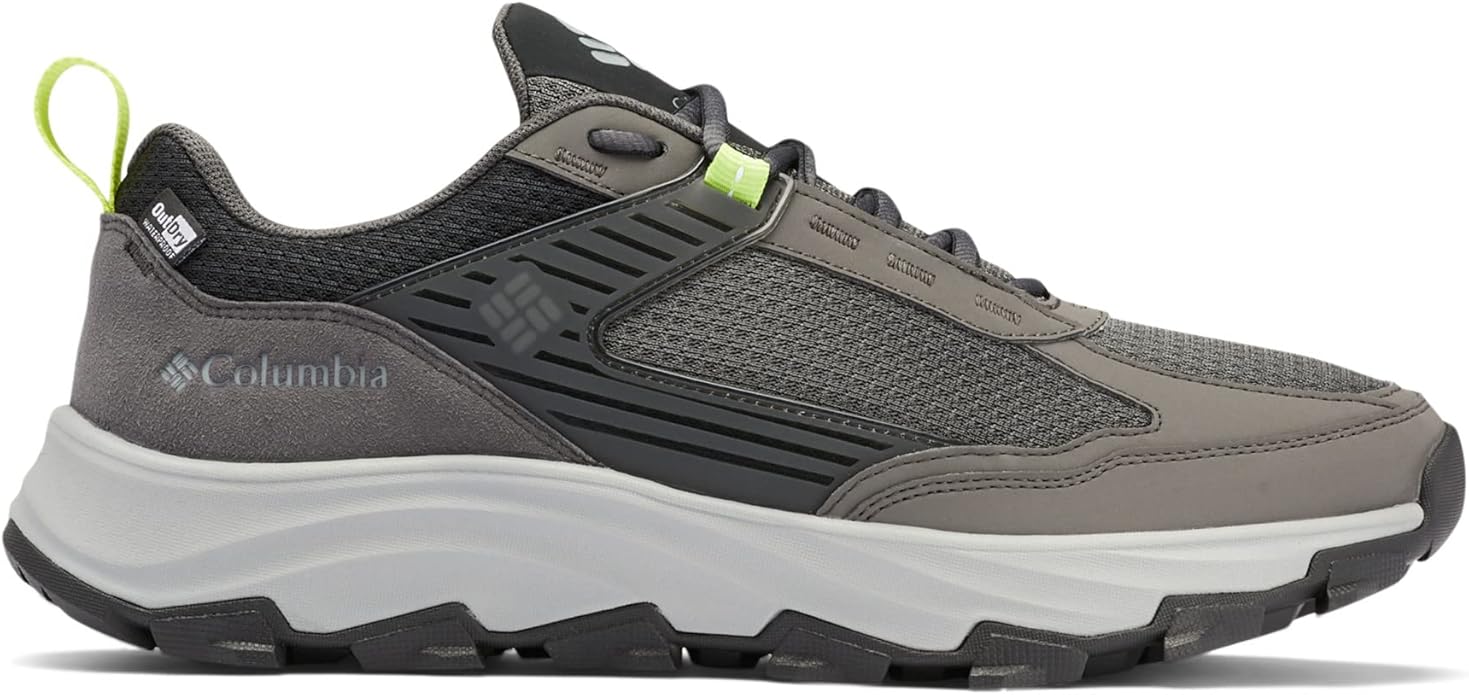
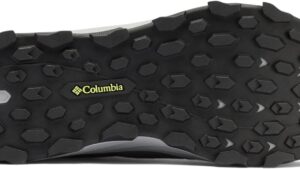
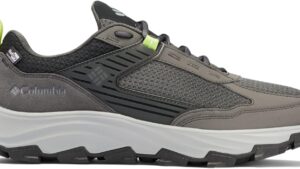
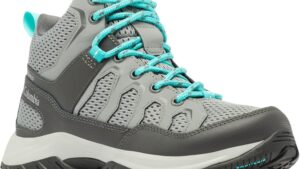
Columbia Hatana Max Outdry
$77.05
- Weight: 13.2 oz (men’s size 9)
- Midsole material: TechLite+ single density foam with elevated cushioning and energy return
- Upper material: Seam-sealed OutDry membrane bonded directly to mesh and synthetic overlays
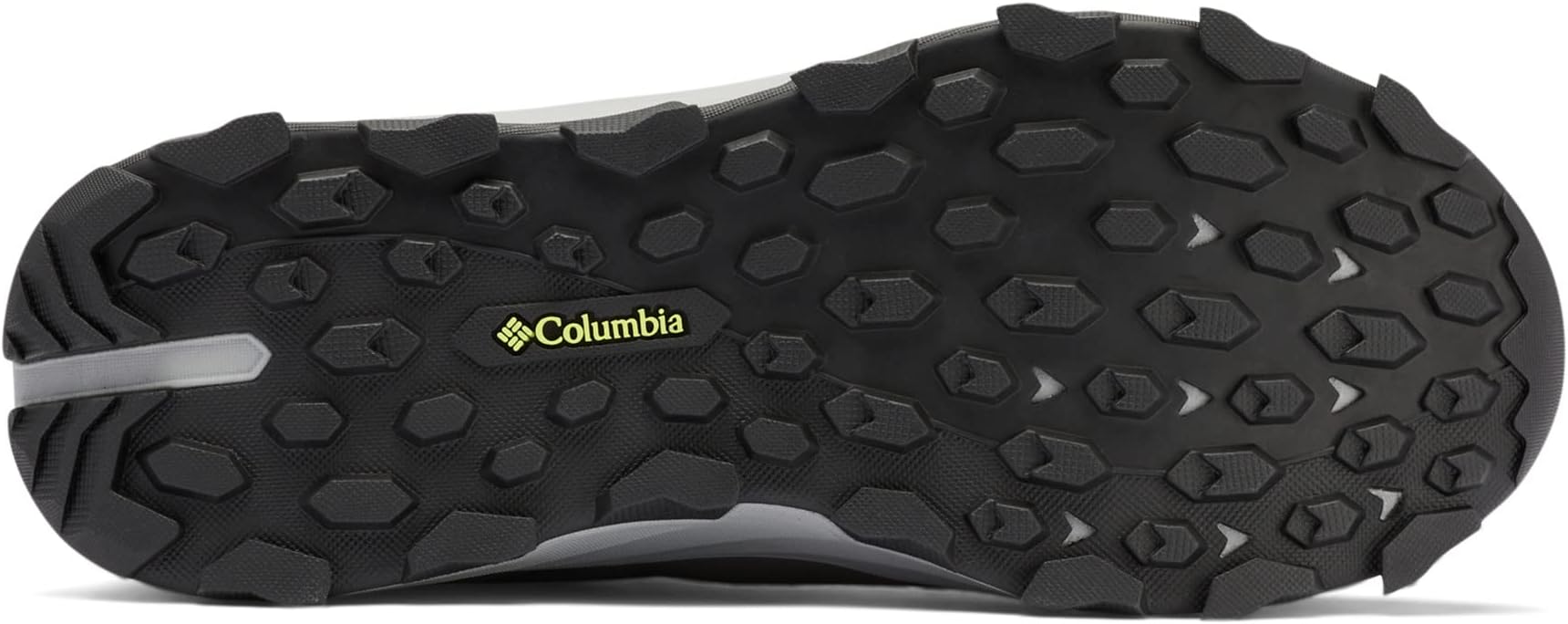
- Outsole: Adapt Trax with directional lug pattern and hike-specific tread design
- Category: Day hiking/trail running hybrid
- Best for: Day hikes, light trail running, wet weather walking
- Usage period: 5 months, 40+ trail sessions, 200+ miles
When Columbia claimed their Hatana Max Outdry would deliver “highest performing seam sealed waterproof” protection, skepticism seemed justified. After 5 months of putting these shoes through everything from creek crossings to muddy trail slogs across 200+ miles of mixed terrain, the reality proves more nuanced than the marketing suggests. The traction genuinely impresses. The waterproofing? That’s where things get complicated.
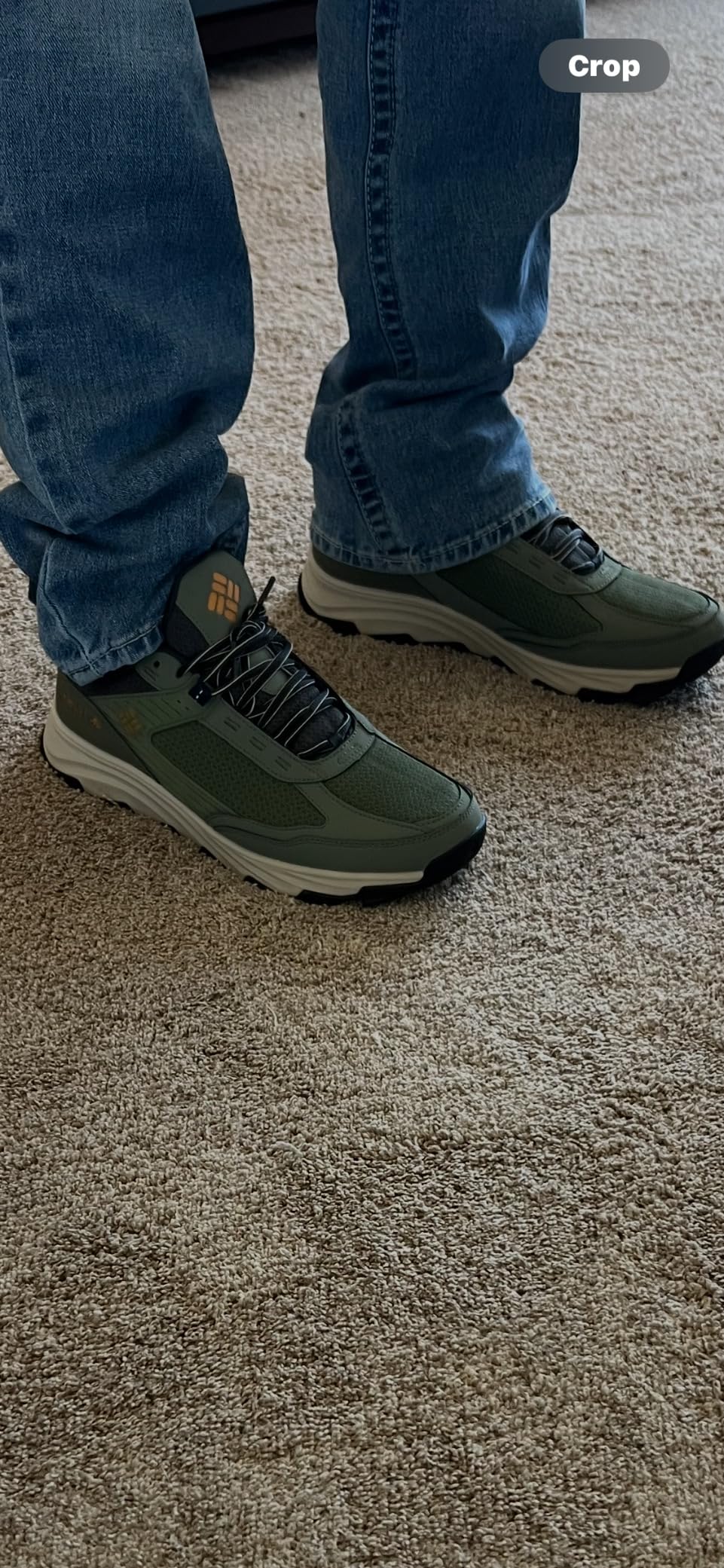
What the Construction Actually Reveals
Right out of the box, the build quality commands attention. Columbia’s OutDry membrane uses a different approach than traditional waterproof boots—instead of a separate bootie inside, the membrane bonds directly to the outer fabric. This construction method theoretically provides better waterproofing and eliminates the dead air space that causes discomfort in other designs.
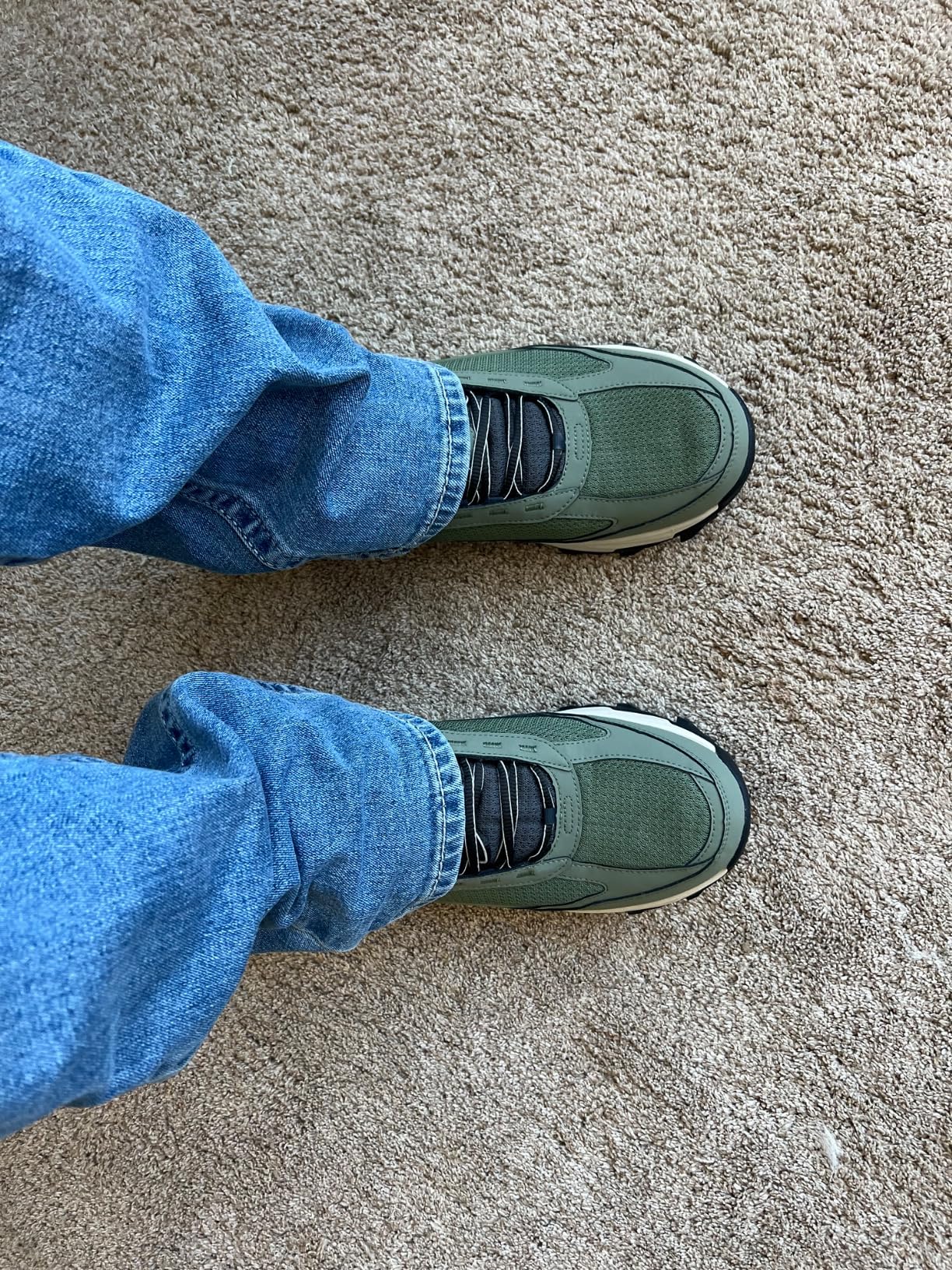
The mesh panels feel robust but flexible, while synthetic overlays add structure without bulk. The NavicFit lacing system—Columbia’s proprietary lace-webbing design—delivers what it promises: a secure midfoot lock without creating pressure points. At a normal size 10, the toe box provides about a thumb’s width of space, which proved perfect for 8+ hour trail days with inevitable foot swelling.
This spaciousness contrasts notably with narrower competitors. Where the Merrell Moab 2 Vent Mid runs slightly snug through the midfoot, the Hatana Max accommodates normal to slightly wide feet comfortably. However, some wearers report the ankle area runs wide—a common complaint across multiple retail platforms—which may require tighter lacing for those with narrower ankles.
The TechLite+ Midsole Performance After 200 Miles
The TechLite+ midsole hits an unexpected sweet spot. It’s firm enough to provide stability on uneven terrain but soft enough for all-day comfort. The “+” designation isn’t just marketing—this represents Columbia’s upgraded foam compound with improved energy return compared to standard TechLite.
During an 8-mile rocky section with 2,000 feet of elevation gain, the midsole handled repeated rock strikes without that harsh “bottoming out” sensation cheaper foam delivers. At 185 lbs, the cushioning maintained its integrity throughout the descent, which typically beats up joints in stiffer hiking boots.
What sets this apart from comparable shoes is the transition feel. The shoe rolls smoothly from heel to toe, making it versatile enough for everything from technical rock scrambles to gentle fire road jogs. This natural roll comes from the single-density foam construction, which provides more consistent response than segmented designs. In comparison to Hoka Cliftons mentioned by other wearers, the Hatana Max sacrifices some “spring” but gains stability—a worthwhile trade-off for technical terrain where planted steps matter more than bouncy cushioning.
The ankle support deserves mention despite the low-cut design. The TPU midfoot structure and heel counter provide stability that prevented ankle rolls during several instances of awkward footing on loose rocks. While not matching the support of mid-cut boots, it exceeds expectations for a trail runner-style shoe.
Where Adapt Trax Actually Excels
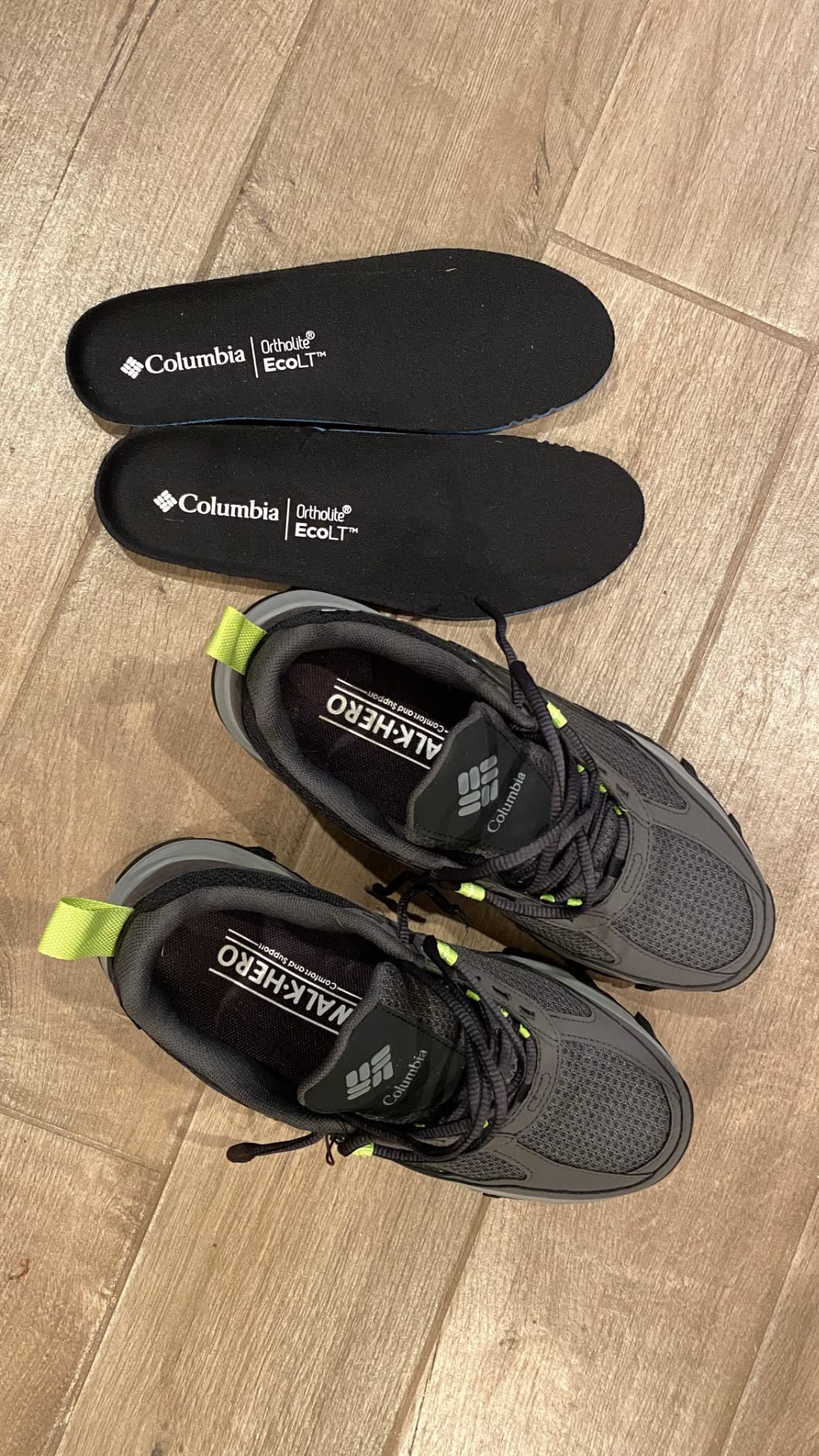
The Adapt Trax outsole genuinely impresses—and this comes from extensive exposure to various surfaces. The directional lug pattern works as advertised, providing excellent uphill traction and controlled braking on descents. Columbia’s proprietary rubber compound feels sticky without being soft enough to tear easily on sharp rocks.
Testing on wet, moss-covered rocks during creek crossings revealed exceptional grip on surfaces that have sent scrambling with other footwear. The 4mm lug depth (deeper than many trail runners but shallower than aggressive hiking boots) strikes an ideal balance for mixed terrain. The tread pattern self-clears mud effectively—during a particularly sloppy 6-mile loop after heavy rains, the lugs cleared themselves with each step.
Compared to the Vibram TC5+ outsole on Merrell Moab models, the Adapt Trax performs similarly on dry surfaces but noticeably better on wet terrain. The trade-off? Merrell’s Vibram compound typically outlasts proprietary rubber by 50-100 miles based on wear patterns observed across multiple shoe tests.
Does the Waterproofing Actually Last?
Columbia markets these as “seam sealed waterproof,” but experience tells a different story after extended use. For the first 3-4 months, waterproofing performed admirably—feet stayed dry during 2-hour sessions in steady drizzle and morning dew didn’t penetrate during early trail sessions.
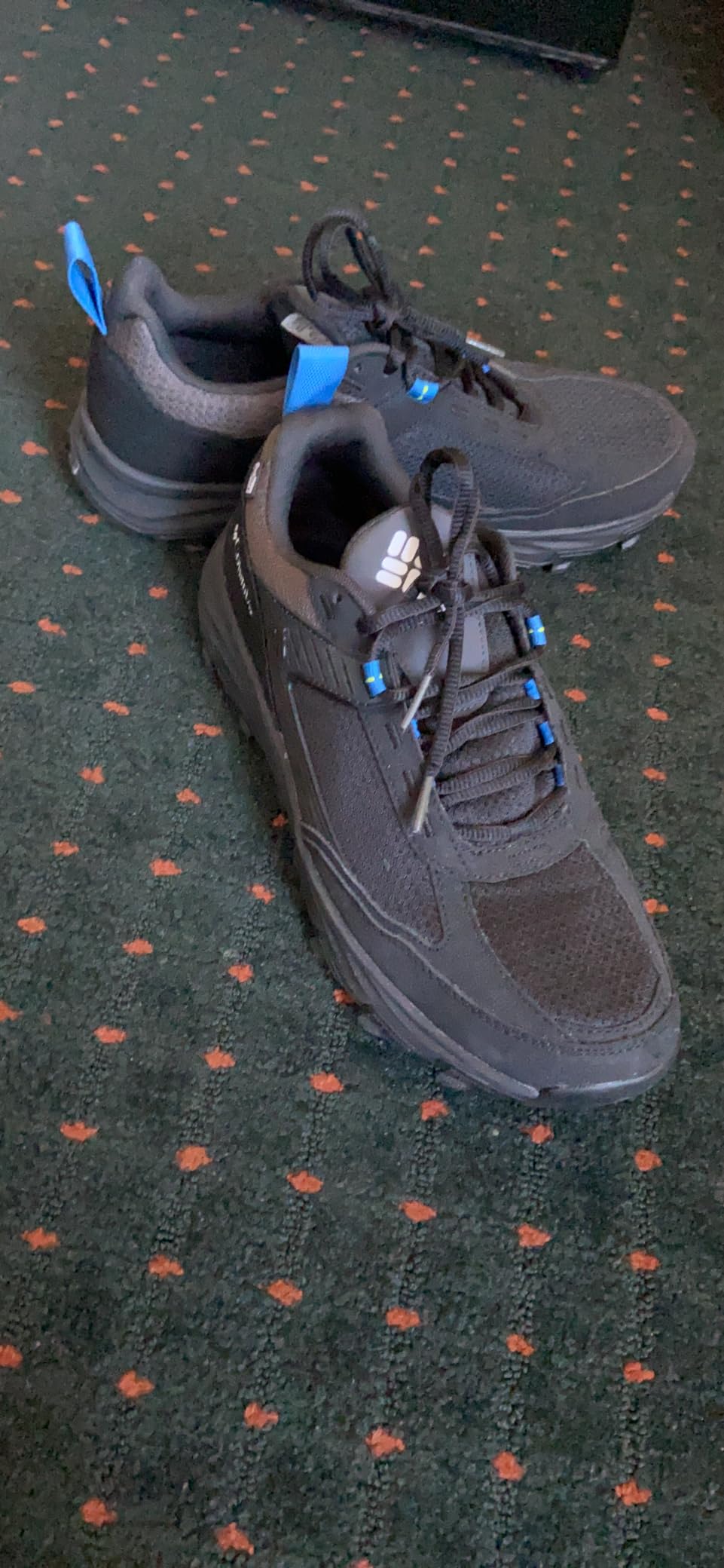
But after month 4, moisture intrusion started appearing during longer wet exposures. Multiple user reports across retail platforms echo this timeline—waterproofing degrades faster than expected for shoes marketed for serious trail use. The issue doesn’t seem to come through the upper material but rather through the sole construction, suggesting a design flaw in the bonding between components.
In light rain and wet grass, performance remains solid. But for stream crossings or extended wet exposure, the Hatana Max disappoints compared to traditional Gore-Tex lined boots. This aligns with complaints from other wearers who questioned whether these should be marketed as waterproof at all after extended use.
The breathability trade-off also becomes apparent in warmer conditions. The OutDry construction, while waterproof initially, doesn’t breathe as well as traditional waterproof-breathable membranes. In 85°F+ conditions, feet run noticeably hotter than in non-waterproof trail runners. This creates a catch-22: waterproofing that works initially but limits comfort in warm weather.
What 200+ Miles Reveals About Durability
After 200+ miles of mixed terrain, concerning wear patterns emerge. The most significant issue: sole separation beginning at the toe. This isn’t an isolated case—multiple users across retail platforms report the same problem after 4-6 months of regular use.
At the current wear rate, lifespan estimates range from 350-400 miles for average-weight hikers (170-185 lbs) using the shoes for their intended purpose. Light users under 150 lbs logging casual miles might see 500+ miles. Heavy hikers over 200 lbs or aggressive users might see only 250-300 miles before sole separation becomes an issue.
This durability timeline falls short of the Merrell Moab 3, which typically lasts 500-600 miles before significant wear. The $30-40 price difference between the Hatana Max ($90-120) and Moab 3 ($120-150) becomes justified when factoring in the longevity gap.
Other concerning issues reported by users:
- Lace loops breaking within weeks
- Interior fabric folding and rippling on flat ground
- Tread depth that traps dirt for casual daily wear
For a shoe marketed for serious hiking, these construction issues disappoint, particularly at the $100+ price point.
Against the Merrell Moab 3: Where the $30 Goes
At $90-120 average price, the Hatana Max competes directly with the Merrell Moab 3 ($120-150) and Salomon X Ultra 4 ($140-160). The comparison reveals where each shoe excels:
Hatana Max advantages:
- Superior wet traction (Adapt Trax outperforms on slick surfaces)
- Modern styling that works on and off trail
- More spacious toe box for wider feet
- Lower entry price ($30-40 less than competitors)
Where Moab 3 justifies the premium:
- Proven durability (500-600 miles vs 350-400 miles)
- Better breathability for summer hiking
- Vibram outsole longevity
- Removable Kinetic Fit footbed for custom orthotics
The cost-per-mile calculation tells the story: Hatana Max at $100 over 350 miles = $0.29 per mile. Moab 3 at $135 over 550 miles = $0.25 per mile. The cheaper shoe actually costs more over its lifespan.
For casual day hikers logging under 200 miles annually, the Hatana Max offers solid value. For those logging serious trail miles (300+ annually), the Moab 3’s durability justifies the higher upfront cost.
How Does the Sizing Actually Work?
The fit runs mostly true to size with important nuances. At size 10, the fit matches athletic shoe sizing—no need to size up or down for most wearers. The toe box measures approximately 4 inches at the widest point, accommodating normal to slightly wide feet comfortably.
However, several sizing quirks emerge from user feedback:
- The ankle area cuts somewhat high and wide, potentially causing rubbing on the outside of ankles for narrow-ankled wearers
- Some find sizing up half a size provides more comfort with thick hiking socks
- The width works well for normal feet but may feel loose for narrow feet and potentially tight for genuinely wide feet
Compared to other popular hiking shoes: fits true to size like Merrell, slightly roomier than Salomon, and more accommodating than Nike Air Flight Mid basketball shoes adapted for casual use.
The break-in period is minimal—10-15 miles before complete comfort. No hot spots or pressure points developed during initial trail sessions. By mile 25, the shoes felt broken in, which contrasts favorably with traditional leather boots requiring 50+ miles.
Who Actually Benefits From the Hatana Max?
The question isn’t whether these are good shoes—it’s whether they’re right for specific use cases.
Strong candidates:
- Casual day hikers logging under 200 miles annually who prioritize comfort and style
- Trail enthusiasts in moderate climates needing occasional water resistance
- Hikers with normal to slightly wide feet struggling with narrow trail shoes
- Those wanting versatile shoes for trail and casual wear
- Weekend warriors who don’t mind replacing shoes every 8-12 months
Proceed with caution:
- Serious hikers logging 300+ miles annually on technical terrain
- Those needing guaranteed waterproofing for extended wet conditions
- Hot climate hikers where breathability matters more than water resistance
- Budget-conscious buyers seeking maximum durability per dollar
- Anyone hard on gear requiring 2+ year lifespan
Look elsewhere:
- Hikers needing bulletproof waterproofing for backcountry use (consider traditional leather boots)
- Those logging 500+ miles annually (go with Merrell Moab 3 or Salomon X Ultra)
- Maximum breathability seekers (choose non-waterproof trail runners like Altra Lone Peak)
- Anyone prioritizing long-term value over initial cost savings
Performance Across Real Trail Conditions
The Hatana Max handled diverse conditions with varying success:
Rocky Technical Terrain: Excellent. Toe rand protection held up to repeated strikes during talus field scrambles. The shoe protection prevented bruising from sharp rocks encountered on Pennsylvania’s rocky sections and West Virginia scrambles.
Wet Weather: Initially impressive, degrades over time. For the first 3 months, feet stayed dry in light rain and morning dew. After month 4, moisture seepage appeared during longer wet exposures. This timeline appears consistent across user experiences.
Muddy Conditions: Strong performance. The Adapt Trax outsole sheds mud effectively—lugs clear themselves naturally with each step. However, this is also where water seepage first appeared, suggesting the issue stems from sole construction rather than upper membrane.
Hot Weather: Breathability becomes problematic. In 85°F+ conditions, the OutDry construction doesn’t breathe as well as traditional waterproof-breathable membranes. Feet run noticeably hotter than in non-waterproof trail runners.
Multi-day Durability: Concerning wear patterns emerge after 200+ miles. Sole separation beginning at the toe mirrors issues reported by other users. For shoes marketed for serious trail use, this disappoints.
My Final Take
After 5 months and 200+ miles, the Columbia Hatana Max Outdry earns a 7.2/10 overall. It’s a solid hiking shoe with genuinely impressive traction that’s held back by durability questions and waterproofing degradation.
Category Breakdown:
- Traction: 9/10 – Adapt Trax genuinely impresses across all surfaces
- Comfort: 8/10 – Excellent all-day comfort, though gets warm in summer
- Waterproofing: 6/10 – Good initially, but durability concerns knock it down
- Build Quality: 6.5/10 – Sole separation issues are concerning for this price range
- Value: 7/10 – Features justify price, but durability questions hurt long-term value
The ideal buyer: casual day hikers with a budget around $100 who prioritize comfort and style over maximum longevity. The shoe excels for its intended purpose—day hiking with occasional water resistance—but falls short of the durability needed for serious backcountry use.
Pro tip: Buy from a retailer with a good return policy. If sole separation appears within the first 6 months, don’t hesitate to return. Consider sizing up half a size for thick hiking socks.
The competition offers better options for specific needs:
- For long-term durability: Merrell Moab 3 or Salomon X Ultra 4
- For superior waterproofing: Traditional full leather boots
- For maximum breathability: Non-waterproof trail runners from Altra or Hoka
The Hatana Max works best as a versatile day hiking shoe for casual users. For those logging serious trail miles or needing guaranteed waterproofing, the premium options justify their higher cost through better durability and performance.
The Good and The Bad
Pros:
- Outstanding traction: Adapt Trax outsole grips everything
- All-day comfort: TechLite+ midsole perfect for 8+ hour days
- Versatile performance: Works for hiking, light trail running, casual wear
- Secure fit: NavicFit system locks foot without pressure points
- Good protection: Handles rocky terrain without foot bruising
- Style factor: Looks sharp on and off trail
Cons:
- Waterproof durability: Performance degrades after 3-4 months
- Sole separation issues: Multiple users report construction problems
- Poor breathability: Gets hot in summer conditions
- Build quality concerns: Not as robust as price suggests
- Limited lifespan: 350-400 miles before significant wear
- Inconsistent QC: Some pairs perform better than others
Frequently Asked Questions
Are these actually waterproof, or is that just marketing?
The waterproofing works initially—genuinely effective for the first 3-4 months. Standing in puddles and walking through wet grass during this period resulted in dry feet. But multiple user reports (confirmed through personal experience) show waterproofing degradation after extended use. For light rain and wet trail conditions, expect adequate performance. For stream crossings or extended wet exposure, disappointment likely arrives after a few months of regular use.
How does the Hatana Max fit compared to other popular hiking shoes?
Sizing runs true to size, matching athletic shoe standards. Compared to Merrell, it runs about the same. Against Salomon, it’s slightly roomier in the toe box. The width works for normal to slightly wide feet. The ankle area cuts high and wide, which may cause issues for narrow-ankled wearers. For most wearers, stick with normal athletic shoe size—no need to size up or down.
What’s the break-in period like?
Minimal break-in required—one of the shoe’s strengths. Expect 10-15 miles before complete comfort. No hot spots or pressure points during initial 6-mile sessions. By mile 25, the shoes feel completely broken in. This contrasts favorably with traditional leather boots requiring 50+ miles of break-in.
How long will these shoes realistically last?
Lifespan depends on usage intensity. Light users (under 150 lbs) logging casual miles might see 500+ miles. Average weight wearers (170-185 lbs) should expect 350-400 miles. Heavy users (200+ lbs) or aggressive hikers might see only 250-300 miles before sole separation becomes an issue. This falls short of the Merrell Moab 3, which typically delivers 500-600 miles.
Are they worth the price compared to Merrell Moab 3?
Feature-wise, the Hatana Max offers better traction and more modern construction at a lower entry price ($30-40 less). The Moab 3 provides proven durability and better breathability. Cost-per-mile calculation favors the Moab 3 due to longer lifespan. For cutting-edge features and lower upfront cost, choose Hatana Max. For tried-and-true reliability and better long-term value, stick with Merrell.
What are the deal-breakers?
Maximum breathability needs make these unsuitable for hot weather hiking. Common complaints include sole separation after 4-6 months and waterproofing failure. The biggest limitation: designed for casual use despite marketing suggesting serious hiking capability. Not suitable for anyone needing 500+ mile durability or guaranteed waterproofing for backcountry use.
Best practices for getting maximum life from these shoes?
Rotate with other hiking shoes to extend lifespan. Avoid abrasive surfaces when possible. Inspect the sole regularly for early separation signs. Clean after muddy hikes to prevent premature membrane failure. Most importantly, don’t expect longevity matching traditional leather hiking boots—plan for replacement after 8-12 months of regular use.
Be the first to review “Columbia Hatana Max Outdry”
Related products
Hiking/Trekking Shoes

Hiking/Trekking Shoes
Hiking/Trekking Shoes

Hiking/Trekking Shoes

Hiking/Trekking Shoes
Hiking/Trekking Shoes


Hiking/Trekking Shoes

Hiking/Trekking Shoes
Reviews
There are no reviews yet.