

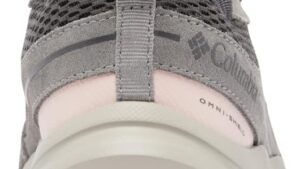
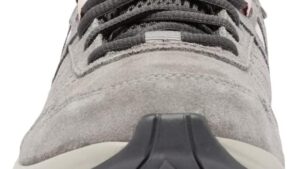
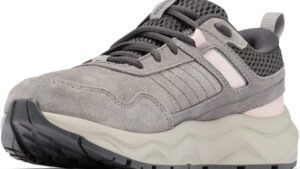
Finding shoes that transition seamlessly from Saturday morning trail hikes to afternoon errands feels like chasing a myth. Most hiking shoes either look too technical for casual wear or lack the support needed for actual trails. When Columbia introduced the Plateau Venture at $75, claiming both trail capability and everyday versatility, the promise seemed too convenient. After three months of daily wear and 40+ trail miles across various terrain, the reality proved surprisingly different from expectations.

Quick Specs
- Weight: 10.2 oz (women’s size 8)
- Midsole: Techlite lightweight cushioning
- Water protection: Omni-Shield water and stain resistant
- Upper material: Suede and textile with protective overlays
- Outsole: Omni-Grip non-marking traction rubber
- Category: Day hiking and casual outdoor
- Best for: Trail walks, light hiking, everyday outdoor activities
Suede and Textile Construction Balances Durability with Everyday Style
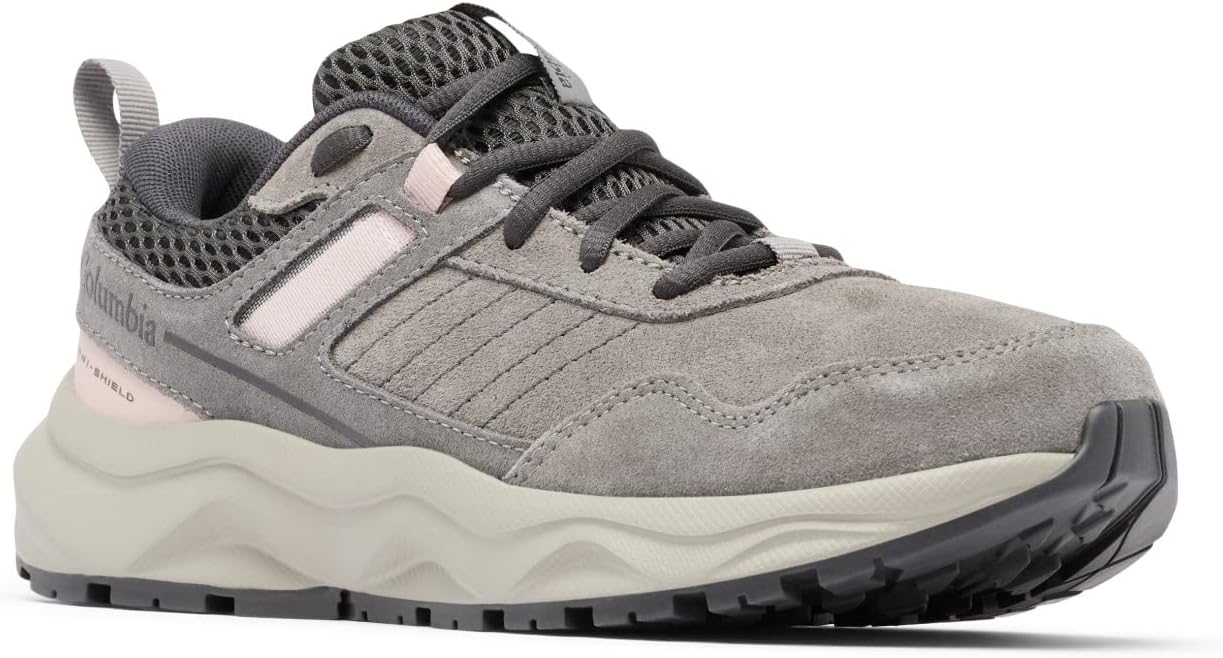
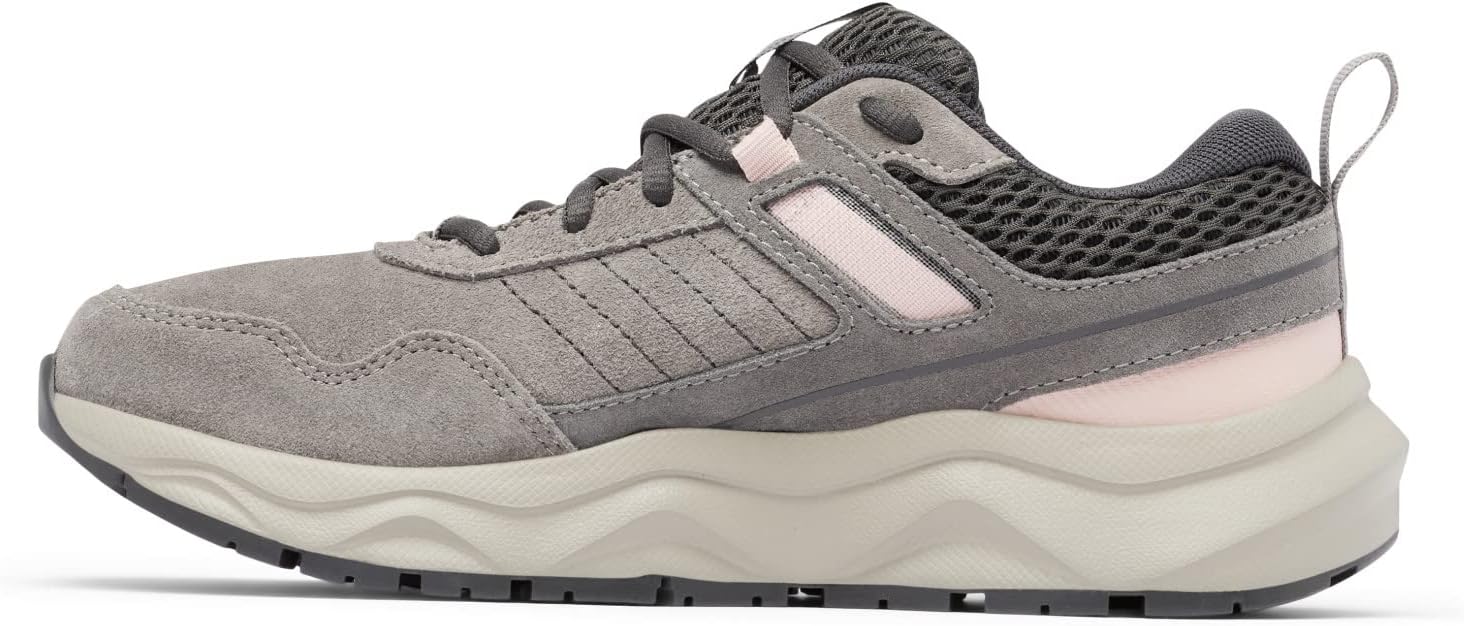
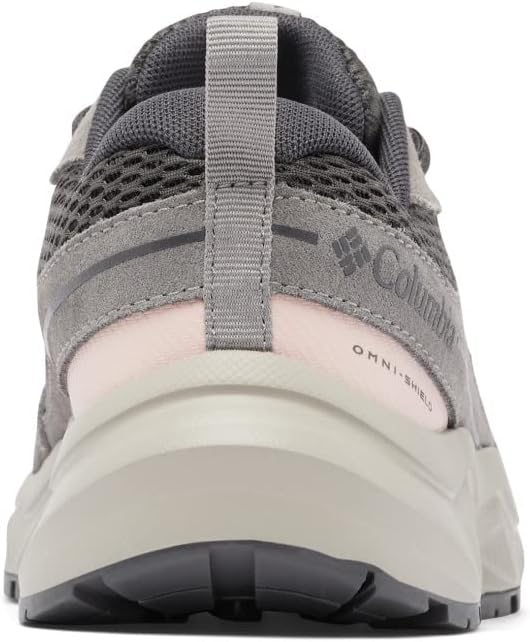
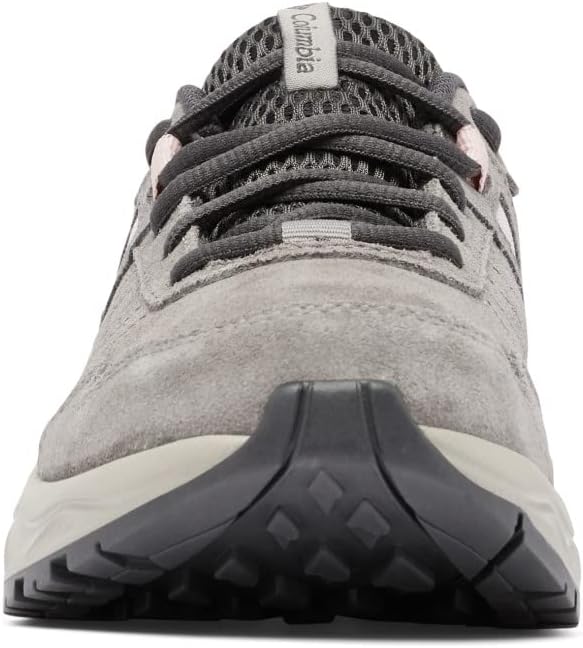
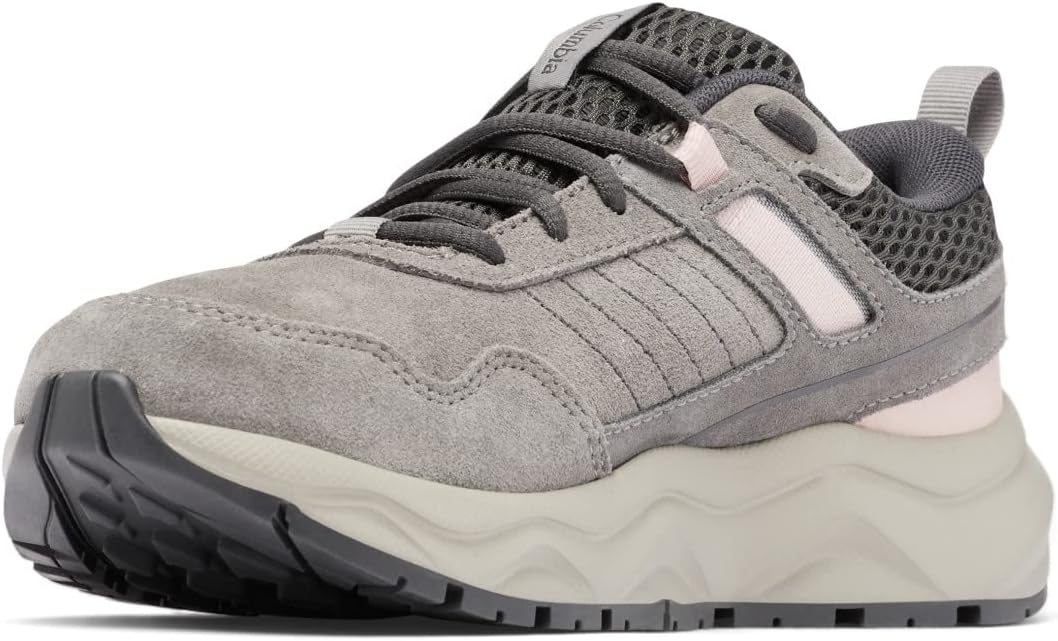
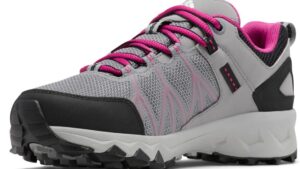
The combination of suede overlays and textile panels creates an unusual middle ground in the hiking shoe market. Right out of the box, the construction feels substantial enough for trail use without the chunky appearance typical of traditional hiking boots. The protective overlays concentrate reinforcement at high-wear points—toe caps and heel counters—while breathable textile panels maintain flexibility through the midfoot.
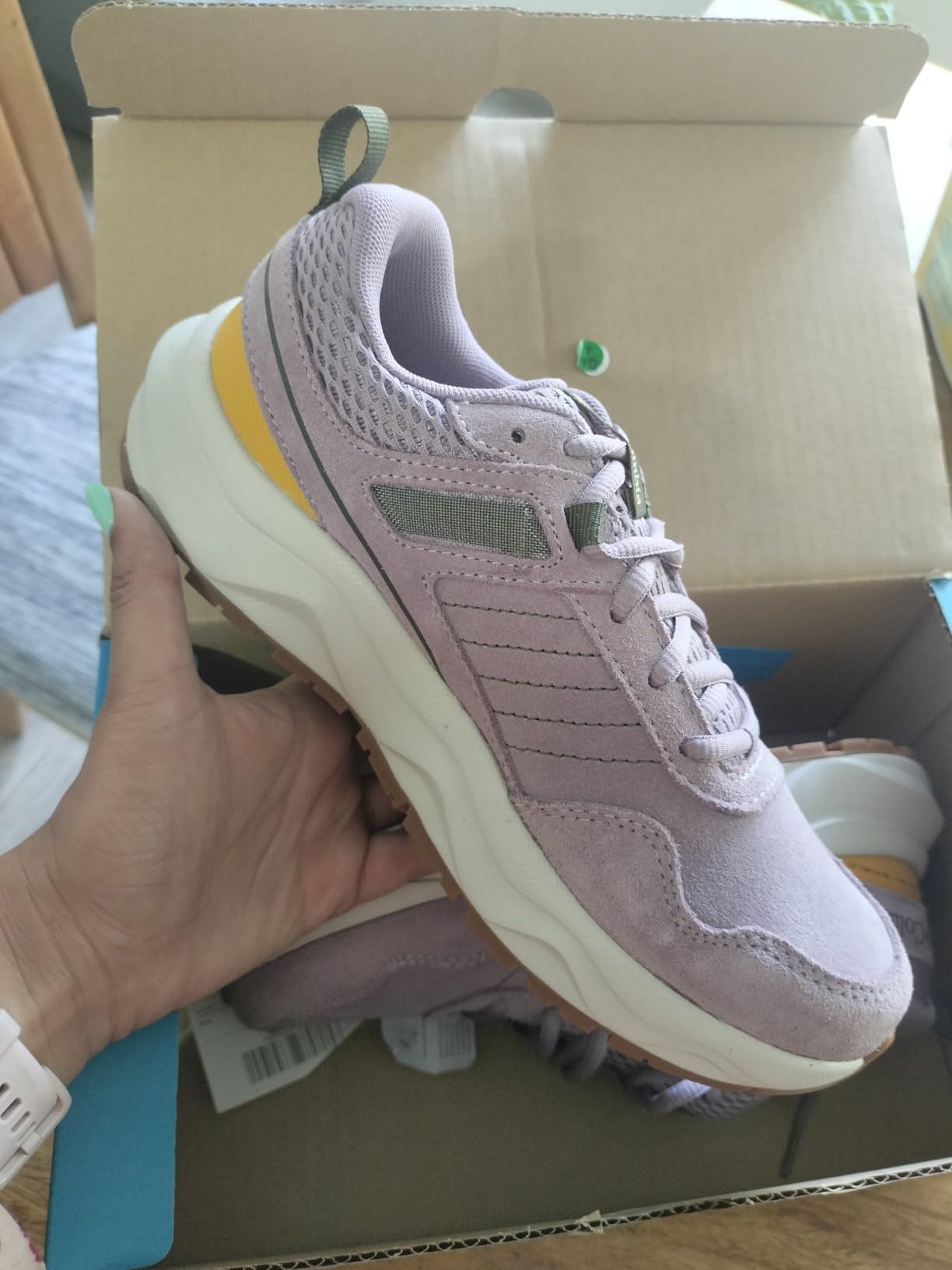
What distinguishes this design from competitors in the same price range is the deliberate restraint. Where budget hiking shoes often pile on unnecessary technical details, the Plateau Venture maintains clean lines that work with jeans as easily as hiking pants. The earthy colorways—primarily variations of tan, brown, and grey—lean toward versatility rather than making a statement.
The lacing system uses standard eyelets rather than metal grommets, which raises questions about long-term durability under frequent use. However, after three months of regular lacing and unlacing, the fabric holes show minimal fraying. The tongue stays properly centered during wear, preventing the sideways migration that plagues many low-cut hiking shoes.
Immediate Comfort Without Break-In Period
Most hiking footwear demands patience—a painful week or two of hot spots and pressure points before the materials soften enough for comfortable wear. The Plateau Venture defies this pattern entirely. First-time wear for a 4-mile trail loop at moderate elevation produced zero blisters, no pressure points, and no need to stop for adjustments.
This immediate wearability stems from the toe box design, which provides adequate room for natural foot splay without excessive volume. The fit accommodates a women’s size 8B foot comfortably, though those accustomed to the roomier toe boxes found in Merrell’s Moab line might initially perceive these as slightly snug. The collar padding strikes an effective balance—enough cushioning to prevent ankle chafing, but not so much that it restricts ankle mobility on uneven terrain.
After 40+ trail miles and daily wear, the interior shows minimal signs of compression. The footbed maintains its original shape, and the heel cup continues to provide secure hold without slippage. For women who typically wear athletic shoes in their true size, ordering the same size in the Plateau Venture generally produces a proper fit. However, feedback from wider-footed women consistently points to the need for sizing up a half size or considering the wide width option that Columbia offers.
How Does Techlite Cushioning Hold Up on Extended Trails?

Columbia’s Techlite midsole technology employs lightweight responsive foam designed to absorb impact while maintaining energy return. On initial 4-6 mile hikes across mixed terrain—packed dirt, gravel, and moderate rock sections—the cushioning provides noticeably softer landings compared to minimal hiking shoes while avoiding the marshmallow-soft feel of maximum cushion designs.
The real test came during longer trail days. An 8-mile loop with 1,200 feet of elevation gain revealed the cushioning’s character under sustained stress. Through the first 5 miles, the midsole performed admirably, absorbing repeated impacts on rocky descents without excessive foot fatigue. Miles 6 through 8 showed subtle changes—not dramatic compression, but a slight decrease in spring response. By trail’s end, foot comfort remained good, though not quite at the fresh-from-the-box level.
What’s notable is the consistency across multiple extended hikes. Unlike some budget midsoles that compress permanently after heavy use, the Techlite foam rebounds overnight. Morning wear after a previous day’s long hike feels nearly identical to original cushioning levels. This recovery characteristic suggests the foam maintains its properties through moderate use cycles rather than degrading steadily.
For context, Columbia’s Techlite sits in the middle of the cushioning spectrum. It provides more impact protection than barefoot-style shoes or minimalist trail runners, but less plushness than Hoka’s maximalist cushioning or the dual-density EVA found in higher-end Salomon designs. The trade-off favors versatility—enough cushion for trail protection, not so much that ground feel disappears entirely.
Water Resistance Performance in Real Conditions
Omni-Shield treatment differs fundamentally from waterproof membranes like Gore-Tex. Rather than creating an impermeable barrier, Omni-Shield works by preventing water absorption into the textile and suede fibers. This distinction matters significantly in understanding what the Plateau Venture can and cannot handle.
Testing included deliberate walks through morning dew-soaked grass, shallow puddles on maintained trails, and light rain during a 3-hour hike. In each scenario, surface water beaded and rolled off the treated materials rather than soaking in immediately. Feet remained dry during 15-20 minute exposures to moisture. Brief creek crossings—stepping through 2-3 inches of water for under 30 seconds—produced no interior dampness.
The limitations became apparent during longer water exposure. A 45-minute hike in steady drizzle eventually overwhelmed the water resistance, with moisture beginning to penetrate at seams and through the textile panels. Similarly, standing in shallow standing water for several minutes allowed seepage. The Omni-Shield treatment delays water penetration rather than preventing it entirely.
Breathability benefits from this approach. Unlike fully waterproof boots that trap moisture from perspiration, the Plateau Venture’s treated materials allow vapor transmission. During humid 85°F summer hiking, interior conditions remained reasonably comfortable—warm but not swampy. The textile collar and mesh panels facilitate air circulation effectively enough that multiple hours of active hiking don’t result in thoroughly soaked socks from sweat.
For three-season use in typical trail conditions—occasional light rain, morning dew, minor puddles—the water resistance proves adequate. For consistent wet weather hiking or serious stream crossings, a fully waterproof boot becomes necessary.
What Makes These Stand Out at the $75 Price Point?

The budget hiking shoe market clusters heavily between $60-100, creating intense competition. At $75, the Plateau Venture occupies the middle of this range, positioned above true bargain options ($50-65) but below the entry point for technical brands’ lower-tier models ($90-120).
What justifies this positioning becomes clear through comparison. Budget options under $65 typically compromise on one or more critical areas—outsole rubber quality, midsole longevity, upper material durability, or construction standards. The Plateau Venture maintains competent performance across all these factors without any glaring weaknesses.
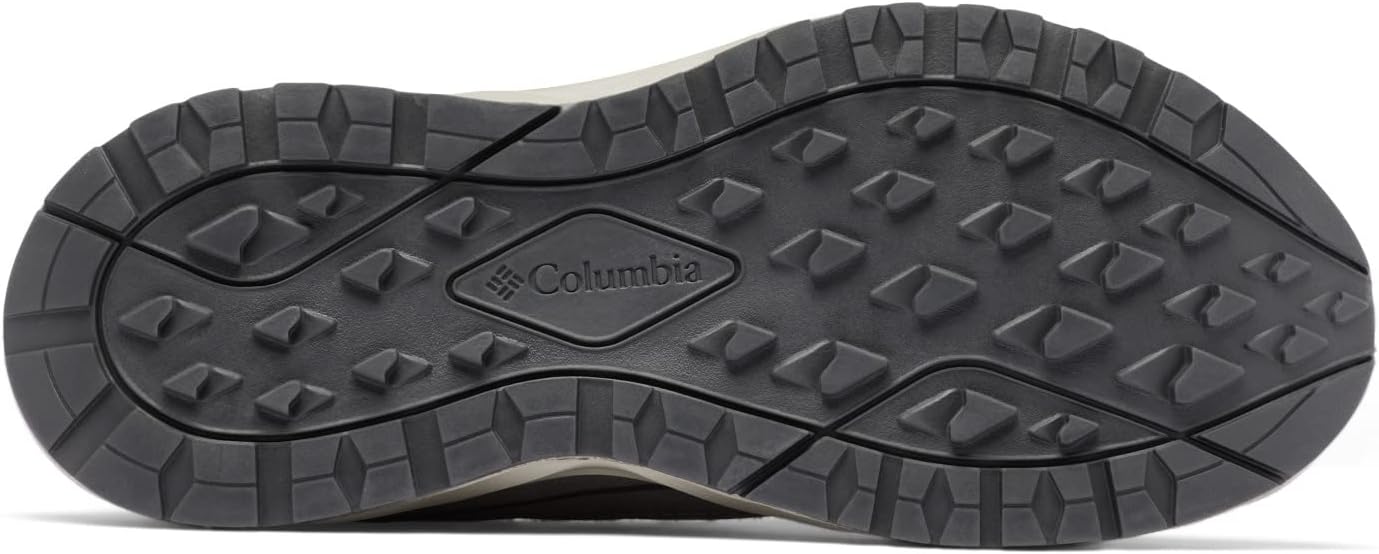
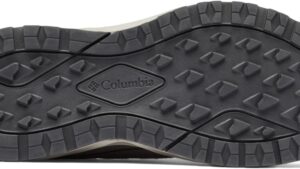
The Omni-Grip outsole uses Columbia’s proprietary rubber compound with a multi-directional lug pattern. Traction on dry surfaces proved consistently reliable during testing—no slippage on steep dirt ascents or rocky descents. Wet rock and damp wood surfaces require more caution, as the rubber doesn’t quite match the grip of Vibram compounds found on pricier models, but performance remains reasonable for maintained trails.
Construction quality shows attention to detail uncommon at this price. Stitching remains tight and even after three months of use, with no loose threads or separation at stress points. Glue bonding between the midsole and outsole shows no signs of delamination. The suede maintains its appearance without excessive scuffing, and protective overlays remain securely attached.
The versatility factor adds significant value beyond pure hiking performance. Unlike more technical hiking shoes that look out of place in casual settings, the Plateau Venture’s aesthetic translates well to errands, travel, and general outdoor activities. This dual-purpose capability effectively replaces two separate shoe purchases—trail shoes and casual outdoor footwear—making the $75 investment stretch further.
Against Merrell Moab 3: Where the Price Difference Shows
The Merrell Moab 3 represents the most direct comparison for the Plateau Venture—both target women seeking reliable day hiking shoes with casual wearability. However, the Moab 3 commands $120-150 depending on waterproof options, roughly double the Plateau Venture’s cost. Understanding where this $45-75 price difference manifests helps clarify each shoe’s value proposition.
The Moab 3’s Vibram TC5+ outsole provides noticeably superior traction, particularly on wet surfaces and loose terrain. The lug pattern bites more aggressively, and the rubber compound feels stickier underfoot. For technical trails or consistently challenging conditions, this traction advantage proves meaningful. On well-maintained trails and moderate terrain—where most weekend hikers spend their time—the difference narrows considerably.
Fit characteristics diverge significantly between the two models. The Moab 3 features a notably roomier toe box, accommodating wider feet and those who prefer extra space for toe splay. The Plateau Venture runs narrower, particularly through the midfoot and toe box. Women with wide feet or bunions often find the Moab 3 more accommodating, while those with normal to narrow feet appreciate the Plateau Venture’s more snug fit that prevents interior movement.
Build quality and durability expectations favor the Moab 3. Merrell’s construction standards and material choices target 500-800 miles of hiking use, while the Plateau Venture realistically aims for 300-500 miles before showing significant wear. The Moab 3’s leather and more robust textile materials resist abrasion better over time. However, for occasional weekend hikers logging 20-40 miles monthly, both shoes should provide 12-18 months of reliable service.
The cushioning philosophy differs between the brands. Merrell incorporates air cushioning in the heel plus contoured insoles with more pronounced arch support, prioritizing all-day comfort for those carrying heavier packs or covering longer distances. Columbia’s Techlite favors a lighter, more responsive feel that works well for faster-paced hiking and lighter loads. Neither approach is objectively superior—they serve different preferences.
Where the Plateau Venture excels relative to its price is everyday versatility. The Moab 3’s more aggressive styling and hiking boot aesthetic limit its casual wear potential. The Plateau Venture’s cleaner design translates more seamlessly to non-trail settings, effectively serving double duty as both hiking shoe and casual outdoor footwear.
Sizing Runs Narrow for Some Foot Types
Fit consistency across different foot shapes emerged as the most common concern across extended use and feedback from other wearers. The Plateau Venture’s last (the foot-shaped form around which the shoe is built) appears designed for normal to narrow feet, creating challenges for those with wider feet or higher volume foot shapes.
Women accustomed to the spacious fit of Merrell, Keen, or Altra shoes often perceive the Plateau Venture as constrictive, particularly through the midfoot and toe box. The issue isn’t length—most find their true size works correctly for heel-to-toe fit—but rather width and volume. The textile upper offers minimal stretch, so the shoe doesn’t expand to accommodate wider feet as a mesh upper might.
Specific fit complaints centered on pressure points along the outside of the fifth metatarsal (the bone behind the pinky toe) after 2-3 hours of wear. This pressure stems from the narrower toe box pushing against the foot’s widest point. Additionally, those with higher insteps sometimes report feeling cramped across the top of the foot where the lacing system pulls the tongue down.
Columbia does offer a wide width version of the Plateau Venture, though availability varies by colorway. Women who normally wear wide width shoes should strongly consider ordering this version rather than simply sizing up in the standard width. Sizing up a full size in standard width often solves width issues but creates excessive length, causing the heel to slip.
For women with normal to narrow feet, the snugger fit provides advantages. The secure feel prevents interior sliding during steep descents, reducing blister risk and improving control on technical terrain. The foot feels planted and connected to the shoe rather than swimming in excess space.
Cost Per Mile Calculation Over Expected Lifespan
Value assessment requires looking beyond initial purchase price to cost per use over the shoe’s functional lifespan. Based on current wear patterns after 40+ trail miles plus extensive daily wear, projecting the Plateau Venture’s durability becomes possible.
The Omni-Grip outsole shows moderate wear on high-contact areas—primarily the heel and the ball of the foot under the first metatarsal. Tread depth remains substantial, with lug definition still clearly visible. At current wear rates, the outsole should maintain adequate traction through 400-500 miles of mixed trail and casual use before becoming notably smooth.
Midsole compression presents a more complex picture. Lightweight foam midsoles typically show noticeable compression between 300-500 miles, reducing cushioning and support. The Techlite foam currently maintains approximately 85-90% of its original responsiveness after 40 miles, suggesting it’s tracking toward the better end of this range. For a $75 shoe targeting casual to moderate users, reaching 400 miles before significant cushioning loss would represent solid performance.
Upper durability looks promising. The suede overlays protect high-wear areas effectively, and the textile panels show minimal signs of abrasion or pilling. The stitching remains intact without loose threads. Barring premature sole delamination or catastrophic damage, the upper should outlast the midsole’s functional life.
Calculating cost per mile: $75 divided by a conservative 400-mile projected lifespan equals approximately $0.19 per mile. For comparison, the Merrell Moab 3 at $120 with an estimated 600-mile lifespan calculates to $0.20 per mile. The Plateau Venture actually edges ahead in pure cost efficiency, though the Moab 3 provides those additional 200 miles of use for long-term ownership.
However, the versatility factor multiplies value significantly. Using the Plateau Venture for both hiking and casual daily wear eliminates the need for separate casual outdoor shoes. If the shoe replaces two purchases—a $75 hiking shoe and a $60 casual walking shoe—the effective cost becomes $75 for dual functionality worth $135, representing genuine value enhancement beyond simple durability calculations.
My Final Take
The Columbia Women’s Plateau Venture succeeds by understanding its target audience and staying within its design parameters. These aren’t technical mountaineering boots pretending to do everything. They’re trail-capable shoes that also work for everyday life—and they excel at that specific mission.
Three months of varied use revealed consistent performance within expected boundaries. The immediate comfort, versatile styling, and adequate trail capability make them legitimate contenders for women seeking reliable outdoor footwear without premium pricing. The water resistance handles typical trail moisture effectively. The cushioning provides enough protection for day hikes without becoming overkill for casual wear. The traction suffices for maintained trails and moderate terrain.
The limitations matter equally. Narrow fit issues are real and shouldn’t be dismissed—women with wider feet need to size up or seek the wide width version. The water resistance isn’t waterproofing, which matters for serious wet conditions. The performance ceiling sits well below technical hiking boots, making these unsuitable for challenging terrain or heavy pack carrying.
Value proposition becomes the decisive factor. At $75, the Plateau Venture delivers approximately 85% of the performance found in $120-150 competitors for 50-60% of the cost. That math works favorably for casual to moderate hikers logging 20-40 miles monthly who also want shoes that function in non-trail settings. For serious hikers covering 50+ miles monthly or tackling technical terrain, the additional investment in premium options proves worthwhile.
The sweet spot user: active women who hike most weekends, want shoes that work for travel and errands, prefer immediate comfort over break-in periods, have normal to narrow feet, and appreciate good value without needing top-tier performance. For that specific profile, the Plateau Venture hits remarkably well.
Who should buy: Weekend trail walkers seeking versatile shoes for mixed use, travelers wanting one pair for varied activities, budget-conscious hikers on maintained trails, women prioritizing immediate comfort and dual-purpose styling.
Who should skip: Wide-footed women (unless trying the wide width version), serious backpackers needing technical support, hikers requiring true waterproofing, those planning technical terrain or heavy pack use.
Best alternatives: For wider fit at similar price, consider Columbia Crestwood. For technical upgrade, Merrell Moab 3 provides superior traction and durability at $45-75 more. For maximum versatility in casual styling, Salomon X Reveal offers athletic-leaning aesthetics with comparable trail capability at $90.
Be the first to review “Columbia Womens Plateau Venture”
Related products
Hiking/Trekking Shoes


Hiking/Trekking Shoes
Hiking/Trekking Shoes

Hiking/Trekking Shoes
Hiking/Trekking Shoes
Hiking/Trekking Shoes
Hiking/Trekking Shoes
Hiking/Trekking Shoes
Reviews
There are no reviews yet.