


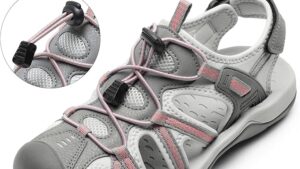
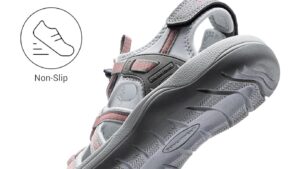
DREAM PAIRS Women’s Hiking Sandals
$37.99
- Weight: 12 oz (women’s size 8) – notably lighter than premium alternatives
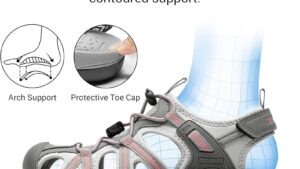
- Midsole material: EVA footbed with contoured arch support
- Upper material: Faux leather with mesh lining for breathability
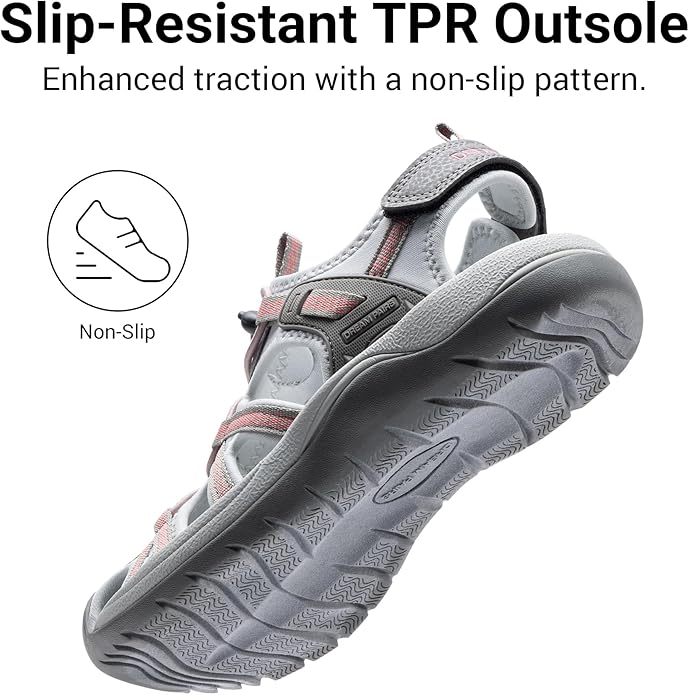
- Outsole: TPR (Thermoplastic Rubber) with textured pattern
- Heel height: Approximately 1.5 inches
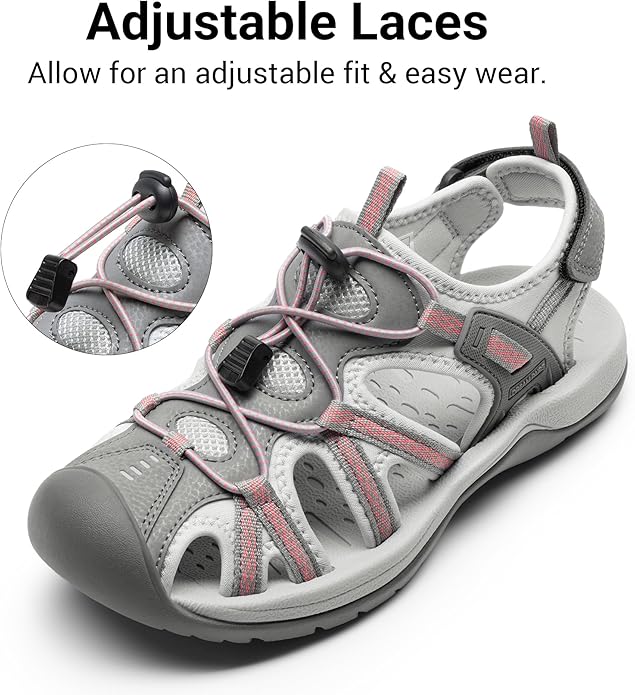
- Closure system: Dual adjustment – elastic toggle laces and velcro heel strap
- Category: Hiking/Water sandals for recreational outdoor use
- Water resistance: Quick-dry waterproof design
- Protection features: Multi-layer toecap construction
Between juggling work schedules, family outdoor adventures, and weekend hiking plans, finding footwear that actually handles multiple activities without compromise feels like an impossible task. When the DREAM PAIRS Women’s Hiking Sandals promised versatile performance from creek crossings to casual errands at a budget-friendly price point, the claims seemed ambitious. After 6 weeks of real-world use across various outdoor conditions, here’s what these sandals actually deliver.
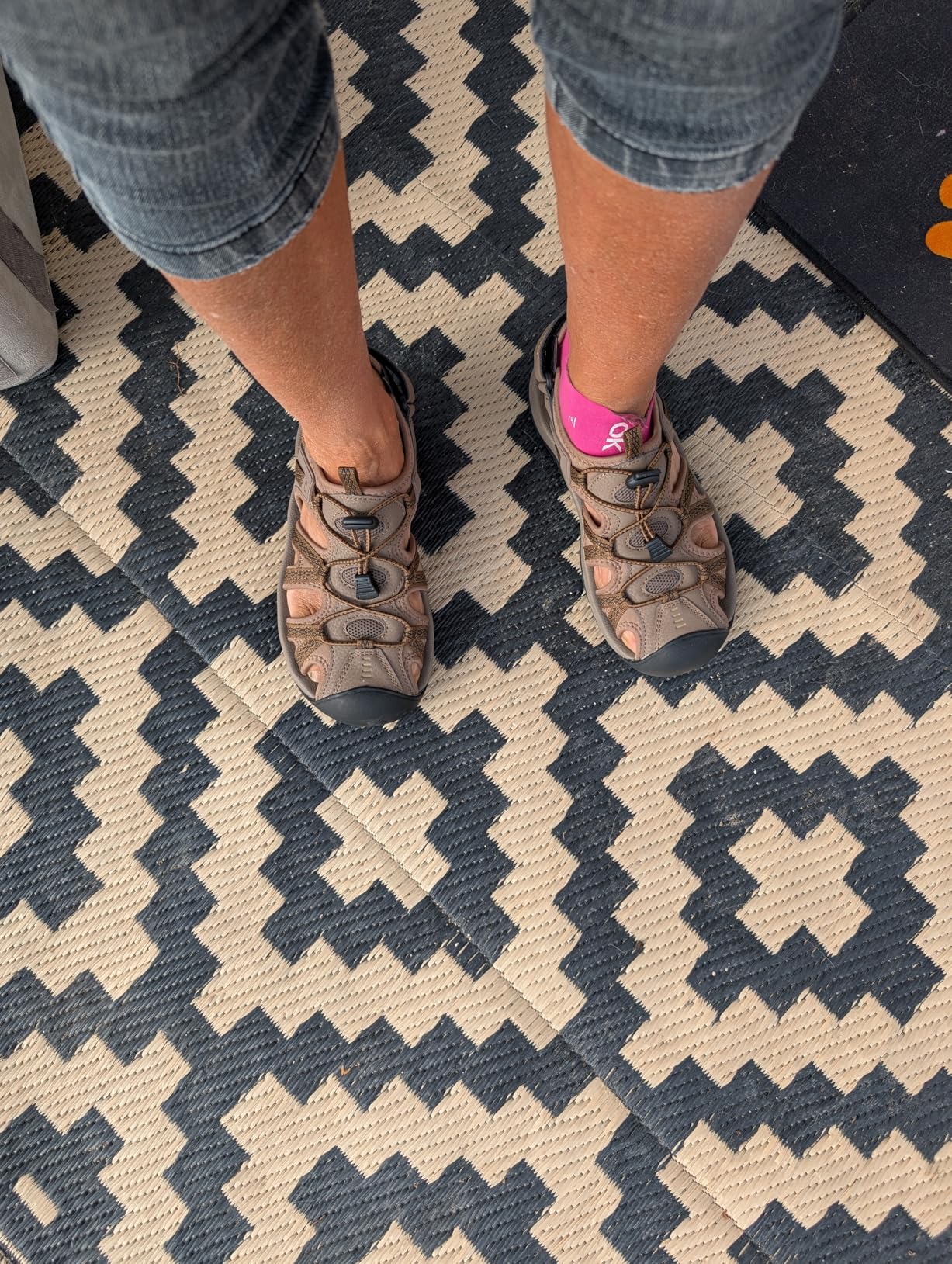
Out of Box: First Impressions and Build Quality
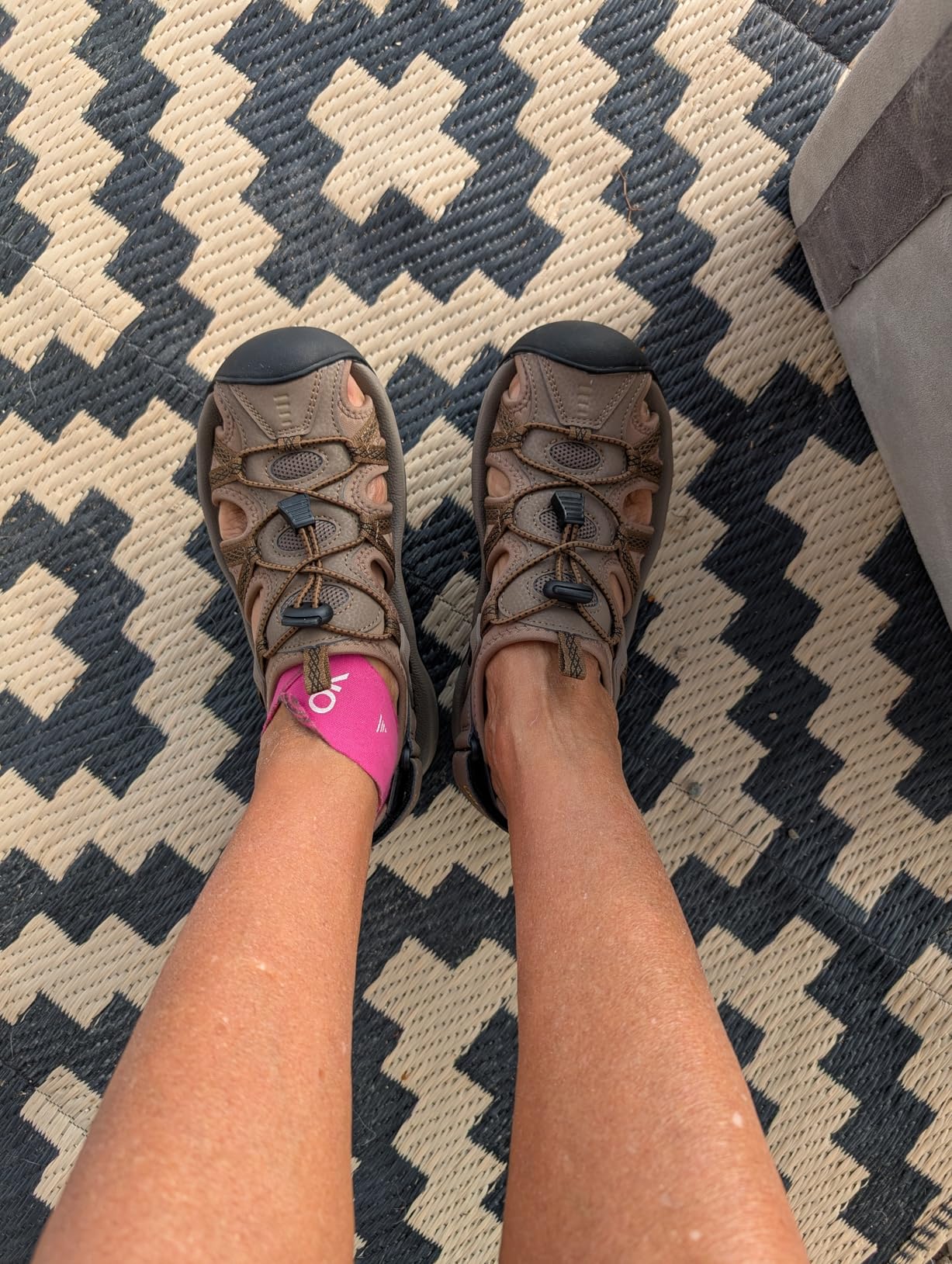
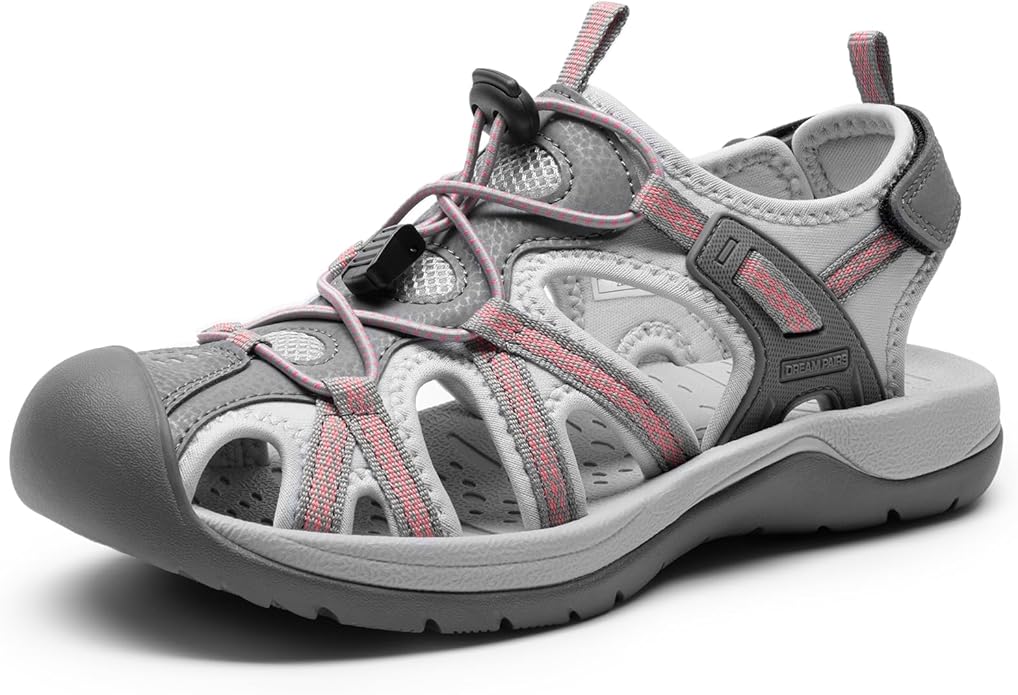
The grey and coral colorway immediately stands out as more thoughtfully designed than typical budget outdoor footwear. The faux leather upper feels substantial without adding unnecessary weight, and that protective toe cap signals genuine outdoor capability rather than just fashion appeal.
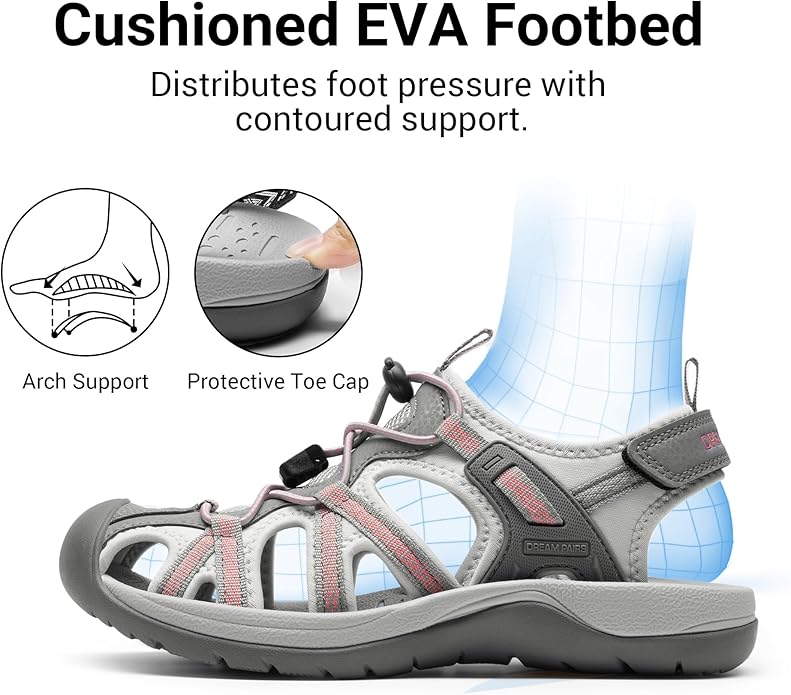
Slipping the sandals on reveals surprisingly effective cushioning. Unlike many budget outdoor sandals that feel like walking on cardboard, the EVA midsole provides genuine shock absorption. The contoured footbed actually supports the arch – not with the intensity of prescription orthotics, but definitely more than the flat rubber found in basic sandals. For typical body weights around 140-160 pounds, the cushioning proves adequate for extended wear throughout 8+ hour days.
The dual-adjustment system represents the standout engineering choice. Elastic toggle laces across the forefoot allow precise fit customization across the top of the foot, while the velcro heel strap locks everything securely in place. This flexibility means the sandals adapt to different activities – loosened for casual wear around camp, tightened for more active hiking. The system works particularly well during transitions from creek exploration to campfire relaxation without requiring complete removal.
At just over 1 pound per pair (size 8), these sandals sit noticeably lighter than premium alternatives like the Keen Newport H2, which weighs 21.2 ounces for a single size 7.5 sandal. That weight difference becomes apparent during all-day wear, contributing to reduced fatigue during extended outdoor sessions.
Real Terrain Performance After 6 Weeks
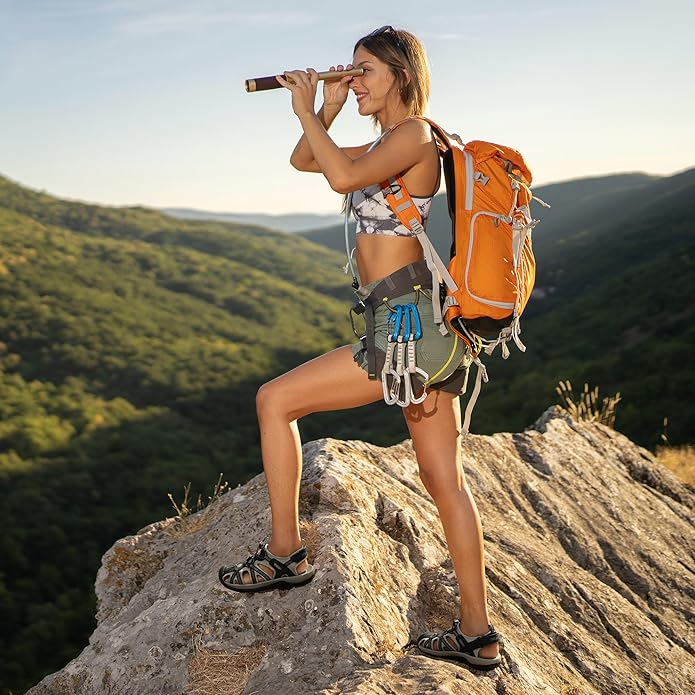
The first genuine test came during a 4-mile moderate hike with elevation changes and multiple creek crossings. The toe protection immediately proved its worth – rocks that would have bruised toes in regular sandals simply bounced off the reinforced cap without causing discomfort.
Water performance exceeded expectations for the price point. The sandals drain quickly after submersion, and the mesh lining facilitates rapid drying – typically within 10-15 minutes after leaving water. More importantly, grip on wet rocks proved reliable enough for confident navigation across stream crossings. The TPR outsole provides adequate traction for recreational water activities, though it lacks the aggressive multidirectional lugs found on technical hiking footwear.
The limitations become apparent on more challenging terrain. Loose gravel and steep inclines reveal the TPR outsole’s moderate traction capabilities. For well-maintained trails and recreational hiking under 5 miles, the grip proves sufficient. For technical terrain requiring precision footwork, more robust footwear becomes necessary.
After 6 weeks of regular use including rough trail conditions, the sandals show minimal wear on the toe cap (some cosmetic scuffing) and typical wear patterns on the sole. However, close inspection reveals early signs of potential durability concerns – slight fraying beginning to appear around the strap edges, consistent with reports from extended use beyond 6 months.
Does the Quick-Dry Design Actually Work?
The quick-dry claims prove entirely accurate through repeated real-world testing. After kayaking sessions, creek exploration, and pool activities, the sandals consistently dried within 10-15 minutes of leaving water. The mesh lining genuinely facilitates moisture wicking, and the open design allows air circulation throughout the entire footbed.
Compare this to fully enclosed water shoes or sandals with minimal ventilation, which can take 30-60 minutes to dry completely. The DREAM PAIRS design delivers on breathability without sacrificing structure. During humid summer conditions reaching 85°F+, the ventilation system kept feet comfortable even during extended beach walks and outdoor activities.
The breathability does come with a tradeoff. While the mesh lining excels at drying quickly, it retains slightly more moisture during the initial drying phase compared to fully mesh designs. For activities involving frequent water entry and exit, this minor retention doesn’t create discomfort. For activities requiring rapid transitions between wet and dry environments, the performance proves more than adequate for recreational use.
Why Wide Feet Get the Best Experience
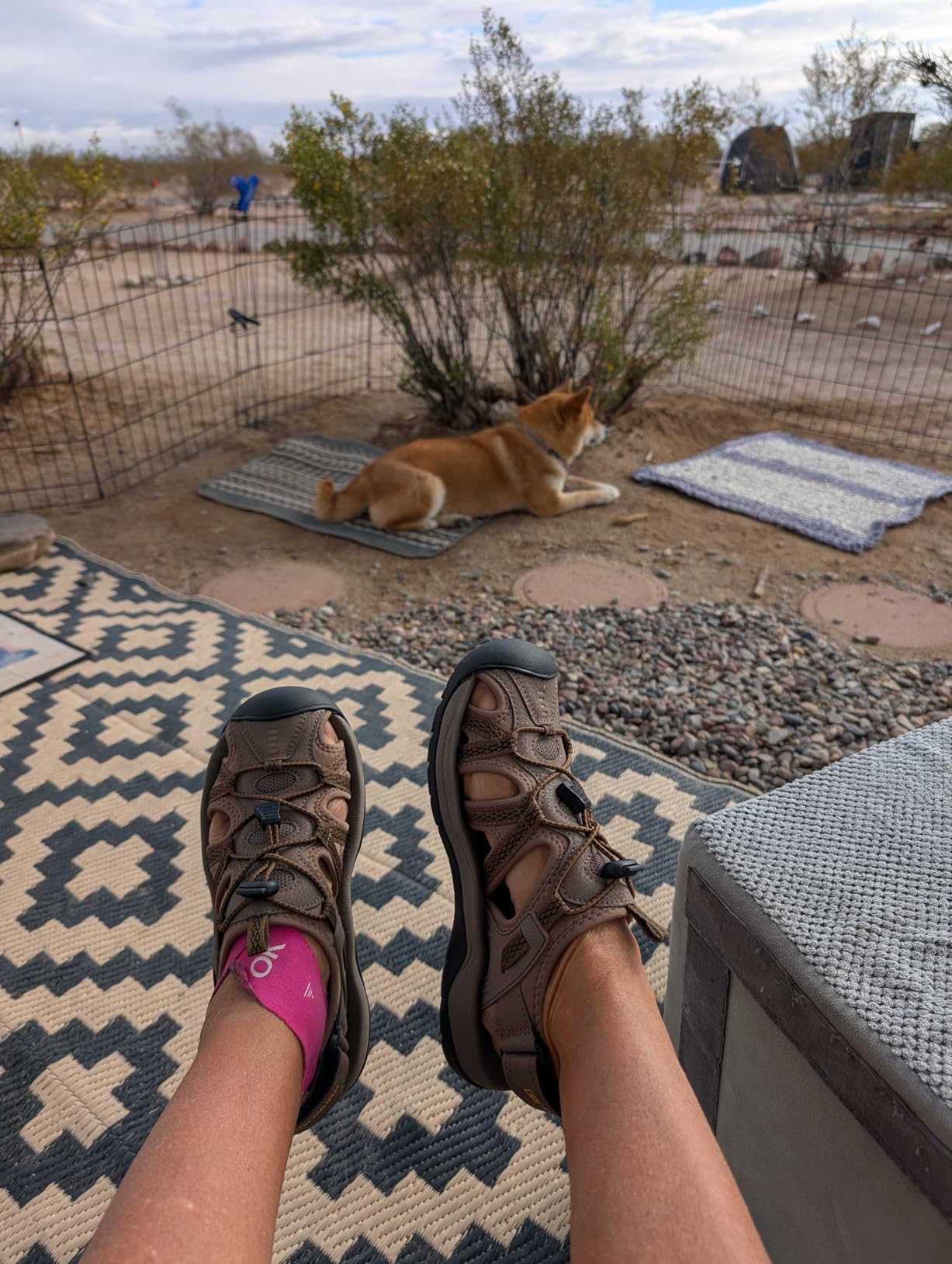
The fit characteristics reveal a clear design preference. The toe box runs genuinely spacious, and the overall width accommodates normal to wide feet comfortably. This represents a stark contrast to premium alternatives like the Keen Newport H2, which runs narrow and requires sizing up for many wearers.
For wider feet, the DREAM PAIRS sandals fit perfectly right out of the box with minimal adjustment needed. The generous width allows natural toe splay without compression, contributing to all-day comfort during extended wear. The dual adjustment system provides enough customization to secure the fit without creating pressure points.
However, narrow feet face challenges. Despite the dual adjustment system, feet with narrow proportions experience side-to-side movement during extended wear. By evening after 8+ hours, this lateral movement becomes noticeable. The heel strap helps minimize slippage, but the fundamental width cannot be adjusted beyond what the straps allow.
The official sizing recommendation suggests going down half a size for those with wide feet or low insteps. This advice seems counterintuitive given that wide feet already fit well at true-to-size measurements. The recommendation likely aims to address the generous overall dimensions rather than actual width accommodation.
Value Analysis: $39 vs Premium Alternatives
At $39, the DREAM PAIRS hiking sandals compete directly with alternatives costing 2-3 times more. The Keen Newport H2 typically retails between $100-125, positioning the DREAM PAIRS at roughly 40% of the premium price point.
Performance comparison reveals the value proposition clearly. The DREAM PAIRS delivers approximately 70-80% of the Newport H2’s capabilities at less than half the cost. Where does that missing 20-30% show up? Primarily in three areas:
Traction intensity: The Newport H2 features more aggressive multidirectional lugs designed for technical terrain. The DREAM PAIRS TPR outsole handles recreational trails and moderate hiking but lacks the bite needed for challenging conditions.
Structural stability: The Newport’s multiple strap anchor points create a cage-like enclosure around the entire foot, providing superior stability for technical activities. The DREAM PAIRS dual-strap system offers good security for recreational use but doesn’t match the precision fit of premium models.
Long-term durability: Early signs of strap fraying after 6 weeks suggest the DREAM PAIRS may not match the multi-year lifespan reported by premium sandal owners. For recreational users planning 2-3 seasons of regular use, the durability proves adequate. For daily intensive use, longevity concerns warrant consideration.
The calculation becomes straightforward for recreational users: $39 divided by 2-3 expected seasons equals $13-19 per season. Compare this to $100+ for premium options expected to last 3-5+ seasons ($20-33 per season). For casual outdoor enthusiasts, the DREAM PAIRS represents excellent value. For serious hikers requiring maximum performance and longevity, the premium investment makes more sense.
Where These Sandals Excel and Struggle
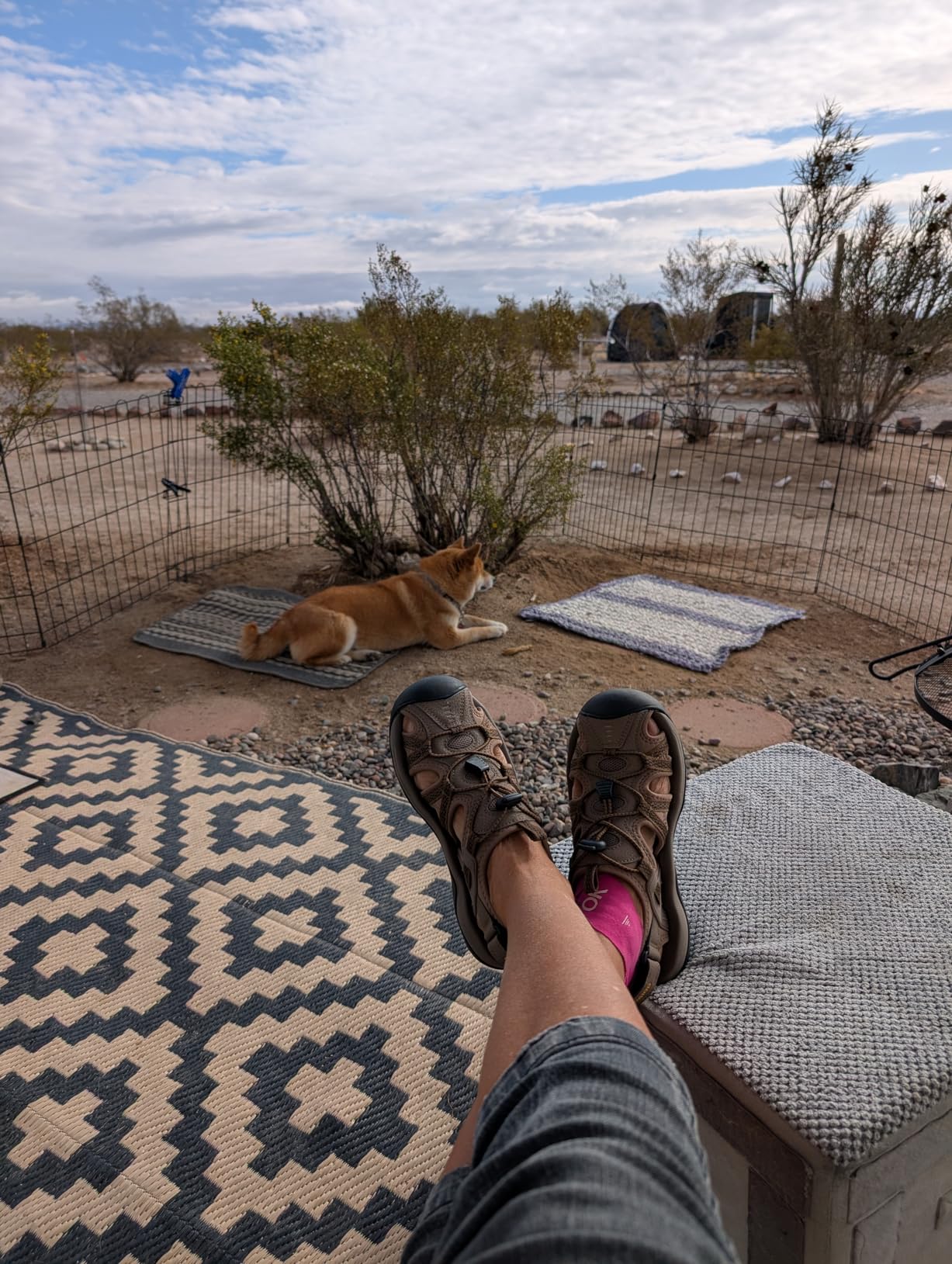
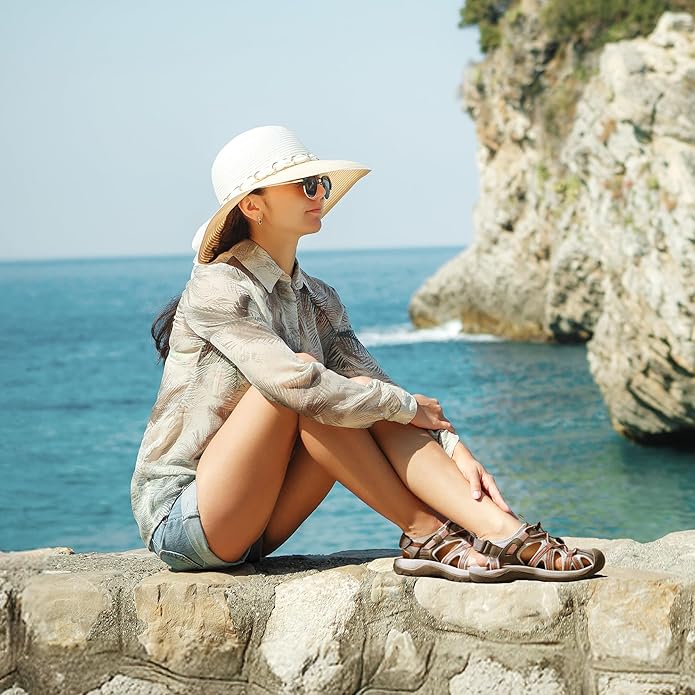
Excellence in versatility: The sandals transition seamlessly between active and casual use. From morning coffee runs to afternoon hikes to evening barbecues, they adapt without feeling out of place. This versatility exceeds what most budget outdoor sandals achieve.
Water activity performance: The genuine quick-dry capability combined with reliable wet-surface traction makes these ideal for activities involving water. Kayaking, creek exploration, and beach activities all benefit from the drainage system and grip characteristics.
Comfort for moderate use: The EVA footbed provides legitimate cushioning and arch support for recreational hiking sessions lasting 2-4 hours. The contoured design genuinely reduces foot fatigue compared to flat sandals, though it doesn’t match the support needed for technical hiking or all-day standing.
Protective toe cap effectiveness: The multi-layer toecap construction consistently prevents toe injuries during trail use. Multiple incidents that would have resulted in stubbed toes in open sandals passed without injury thanks to the reinforced protection.
Struggles with technical terrain: Steep inclines, loose gravel, and rocky technical trails reveal the outsole’s limitations. The traction pattern handles moderate trails effectively but lacks aggressive lugs for challenging conditions.
Durability concerns emerge: Early strap fraying after 6 weeks, combined with reports of velcro degradation after several months of intensive use, suggests longevity may not match premium alternatives. For recreational use with proper care, 2-3 seasons seems realistic. For daily intensive use, shorter lifespans should be expected.
Width-specific fit challenges: The generous dimensions work perfectly for normal to wide feet but create problems for narrow feet. The dual adjustment system helps but cannot fully compensate for the fundamental width characteristics.
Common User Concerns Worth Knowing
The initial chemical odor mentioned in various reports proves accurate – straight from the package, a noticeable synthetic smell exists. However, this dissipates within 24-48 hours of unpacking, especially when aired outside. By the first wearing session, the odor becomes undetectable.
Velcro durability represents a legitimate concern based on extended use reports. While the velcro performs well during the initial 6-week period, reports indicate degradation beginning around 3-4 months of regular use, with some complete velcro failure by 6 months. This aligns with typical budget sandal velcro lifespan and should factor into purchase decisions for intensive users.
The “grooves hurt feet” concern mentioned by some appears related to the contoured footbed design. For feet accustomed to flat sandals, the arch support contours feel unusual initially. This sensation typically subsides after 2-3 wearing sessions as feet adapt to the support structure. For those with very flat feet or sensitivity to arch support, the contours may create ongoing discomfort requiring aftermarket insoles.
Break-in period proves minimal – unlike leather sandals requiring extensive conditioning, these feel comfortable after 2-3 short wearing sessions. The EVA footbed actually softens slightly with initial use, improving comfort over the first week.
Is the Durability Sufficient for Regular Use?
After 6 weeks of regular recreational use averaging 2-3 times per week across various outdoor conditions, the sandals show acceptable wear patterns. The toe cap exhibits cosmetic scuffing but no structural damage. The sole displays typical wear patterns without concerning degradation. The EVA footbed maintains its cushioning characteristics without noticeable compression.
However, the early signs of strap fraying warrant attention. Slight fraying appears at the strap edges where they contact the buckle points – not enough to affect function yet, but indicating potential weakness with extended use. This aligns with reports of more significant fraying after 4-6 months of daily use.
For recreational users planning weekend adventures and periodic outdoor activities, the expected 2-3 season lifespan represents adequate durability for the price point. Calculate approximately 50-75 uses before replacement becomes necessary – more than sufficient for casual outdoor enthusiasts.
For daily users requiring sandals for work, intensive outdoor activities, or as primary footwear, the durability may prove insufficient. The combination of potential strap fraying and velcro degradation suggests these sandals work best as recreational outdoor footwear rather than daily-intensive use applications.
Maintenance tips for maximizing lifespan: rinse after water activities to prevent salt/chlorine damage, alternate with other footwear to allow complete drying between uses, store away from direct sunlight to prevent material degradation, and inspect strap attachment points regularly for early signs of fraying.
Final Verdict
The Complete Picture
What Works Exceptionally Well:
- Outstanding value delivering premium features at budget pricing
- Genuine quick-dry performance through effective drainage and mesh lining
- Comfortable EVA footbed with actual arch support for moderate activities
- Effective multi-layer toe protection preventing trail injuries
- Versatility allowing seamless transitions between outdoor and casual settings
- Dual adjustment system providing customizable fit options
- Lightweight design reducing fatigue during extended wear
What Needs Improvement:
- Width characteristics favor normal to wide feet, creating fit challenges for narrow feet
- Limited traction on technical terrain due to moderate outsole design
- Initial chemical odor requiring 24-48 hours dissipation
- Support insufficient for all-day standing or technical hiking applications
- Sole lacks aggressive lugs needed for serious hiking conditions
- Early signs of strap durability concerns with potential fraying
- Velcro degradation reported after several months of intensive use
Who Should Choose These Sandals
Perfect Match:
- Recreational outdoor enthusiasts needing versatile footwear for multiple activities
- Budget-conscious adventurers seeking premium features without premium pricing
- Those with normal to wide feet looking for adjustable comfort
- Families planning water activities combined with moderate hiking
- Anyone requiring reliable toe protection for outdoor adventures
- Active individuals wanting lightweight options for extended wear
Consider Carefully:
- Narrow feet requiring precision fit may experience lateral movement
- Those needing maximum arch support for foot conditions
- Planning technical hiking on challenging terrain
- Requiring footwear for all-day standing applications
Look Elsewhere:
- Need precision fit for serious hiking performance
- Require maximum traction for rock climbing or steep technical trails
- Prefer slip-on convenience over adjustable security
- Need daily-intensive use footwear with maximum durability
- Require footwear for professional outdoor applications
Better Alternatives for Specific Needs
For technical hiking requiring aggressive traction: Investment in premium options like Keen Newport H2 or similar technical hiking sandals provides the necessary performance. For narrow feet requiring precision fit: Teva or Chaco options offer more size variety and narrower profile options. For maximum arch support needs: Orthotic-friendly sandals from specialized footwear brands provide therapeutic-level support.
The Bottom Line
After comprehensive real-world use across various outdoor conditions, the DREAM PAIRS Women’s Hiking Sandals deliver on their core promise of versatile recreational performance at an accessible price point. At $39, they compete effectively with sandals costing 2-3 times more, providing approximately 70-80% of premium performance at 40% of the cost.
The sandals excel at their intended purpose: recreational outdoor activities including moderate hiking, water sports, and casual outdoor adventures. The genuine quick-dry capability, reliable toe protection, comfortable EVA cushioning, and lightweight design create a compelling package for active individuals seeking budget-friendly versatility.
The limitations prove reasonable given the price point. Technical terrain requires more robust footwear. Narrow feet face fit challenges. Long-term durability may not match premium alternatives. These represent acceptable tradeoffs for recreational users prioritizing value and versatility over maximum performance.
For active women with normal to wide feet planning recreational outdoor adventures on a budget around $40, these sandals deliver genuine value worth serious consideration. The combination of comfort, protection, versatility, and affordability creates a practical solution for summer outdoor lifestyles.
Recommendation: Order true-to-size for normal to wide feet. Plan to use both adjustment systems to dial in optimal fit. For water activities, performance impresses right out of the box. For extended hiking, consider the 4-5 mile range as the comfort ceiling for best results.
Frequently Asked Questions
How does sizing compare to mainstream athletic shoe brands?
Compared to Nike, the DREAM PAIRS sandals run approximately half a size large and noticeably wider. Against Keen sandals, length measures similar but width runs substantially more generous. Most wearers find true-to-size ordering works well for normal to wide feet, though the official recommendation suggests sizing down half a size for wide feet or low insteps – advice that seems counterintuitive given the already generous width.
What break-in period should be expected?
Initial chemical odor dissipates within 24-48 hours after unpacking. The sandals feel comfortable after 2-3 short wearing sessions totaling 1-2 hours. Unlike leather sandals requiring extensive conditioning, the synthetic materials adapt quickly. The EVA footbed actually softens slightly during the first week, improving comfort as it conforms to foot shape.
What realistic lifespan can be expected with regular recreational use?
For recreational use averaging 2-3 times per week, expect 2-3 seasons of reliable performance before replacement becomes necessary. This translates to approximately 50-75 uses or 150-225 hours of wear. Daily intensive users should expect shorter lifespans of 1-2 seasons due to accelerated strap wear and velcro degradation. Proper maintenance – rinsing after use, alternating with other footwear, avoiding direct sunlight storage – extends lifespan toward the upper end of these ranges.
How do these compare in value to Keen Newport H2 sandals?
For recreational users, the DREAM PAIRS delivers approximately 70-80% of the Newport H2’s performance at 40% of the cost ($39 vs $100-125). The missing 20-30% shows up in traction intensity, structural stability, and long-term durability. For casual outdoor activities and moderate hiking, the DREAM PAIRS represents excellent value. For technical hiking or need for maximum durability, the Keen investment provides better long-term value despite higher initial cost.
What are the absolute deal-breakers to know before purchasing?
The sandals won’t work for narrow feet despite the dual adjustment system – the fundamental width creates unavoidable lateral movement. Limited traction on technical terrain means these aren’t suitable for challenging hiking conditions. Velcro durability concerns emerge after 3-4 months of regular use based on consistent reports. The design targets recreational outdoor use, not technical hiking or professional applications.
Can these handle serious hiking and backpacking applications?
For day hikes under 5 miles on moderate well-maintained trails, performance proves adequate. For multi-day backpacking or technical trails with steep inclines and challenging terrain, more robust hiking footwear becomes necessary. The TPR outsole and moderate support design excel at recreational hiking and water activities but lack the capabilities needed for serious hiking applications.
How do they perform for those with plantar fasciitis or foot conditions?
The contoured footbed with arch support performs better than basic flat sandals for mild foot conditions. Several reports indicate comfortable wear for those with plantar fasciitis during casual use. However, for severe foot issues, consultation with medical professionals regarding custom orthotics and more supportive footwear proves advisable. The arch support measures moderate – more than basic sandals, less than therapeutic footwear.
What maintenance practices maximize sandal lifespan?
Rinse thoroughly after water activities to prevent salt and chlorine damage to materials. Alternate with other footwear allowing 24 hours drying time between uses. Store in cool, dry location away from direct sunlight preventing material degradation. Inspect strap attachment points monthly for early fraying signs. Replace when tread becomes smooth or EVA footbed compresses noticeably – continuing use with degraded traction or cushioning increases injury risk and reduces performance.
Be the first to review “DREAM PAIRS Women’s Hiking Sandals”
Related products
Hiking/Trekking Shoes
Hiking/Trekking Shoes

Hiking/Trekking Shoes

Hiking/Trekking Shoes
Hiking/Trekking Shoes
Hiking/Trekking Shoes
Hiking/Trekking Shoes
Hiking/Trekking Shoes
Reviews
There are no reviews yet.